City, University of London Institutional Repository
Citation:
Brown, B., Gude, W. T., Blakeman, T., van der Veer, S. N., Ivers, N., Francis, J.
ORCID: 0000-0001-5784-8895, Lorencatto, F., Presseau, J., Peek, N. and Daker-White, G.
(2019). Clinical Performance Feedback Intervention Theory (CP-FIT): a new theory for
designing, implementing, and evaluating feedback in health care based on a systematic
review and meta-synthesis of qualitative research. Implementation Science, 14, 40.. doi:
10.1186/s13012-019-0883-5
This is the accepted version of the paper.
This version of the publication may differ from the final published
version.
Permanent repository link:
http://openaccess.city.ac.uk/22273/
Link to published version:
http://dx.doi.org/10.1186/s13012-019-0883-5
Copyright and reuse: City Research Online aims to make research
outputs of City, University of London available to a wider audience.
Copyright and Moral Rights remain with the author(s) and/or copyright
holders. URLs from City Research Online may be freely distributed and
linked to.
City Research Online:
http://openaccess.city.ac.uk/
[email protected]
S Y S T E M A T I C R E V I E W
Open Access
Clinical Performance Feedback Intervention
Theory (CP-FIT): a new theory for designing,
implementing, and evaluating feedback in
health care based on a systematic review
and meta-synthesis of qualitative research
Benjamin Brown
1,2*, Wouter T. Gude
3, Thomas Blakeman
2, Sabine N. van der Veer
1, Noah Ivers
4, Jill J. Francis
5,6,
Fabiana Lorencatto
7, Justin Presseau
6,8,9, Niels Peek
1and Gavin Daker-White
2Abstract
Background:Providing health professionals with quantitative summaries of their clinical performance when treating specific groups of patients (“feedback”) is a widely used quality improvement strategy, yet systematic reviews show it has varying success. Theory could help explain what factors influence feedback success, and guide approaches to enhance effectiveness. However, existing theories lack comprehensiveness and specificity to health care. To address this problem, we conducted the first systematic review and synthesis of qualitative evaluations of feedback interventions, using findings to develop a comprehensive new health care-specific feedback theory.
Methods:We searched MEDLINE, EMBASE, CINAHL, Web of Science, and Google Scholar from inception until 2016 inclusive. Data were synthesised by coding individual papers, building on pre-existing theories to formulate hypotheses, iteratively testing and improving hypotheses, assessing confidence in hypotheses using the GRADE-CERQual method, and summarising high-confidence hypotheses into a set of propositions.
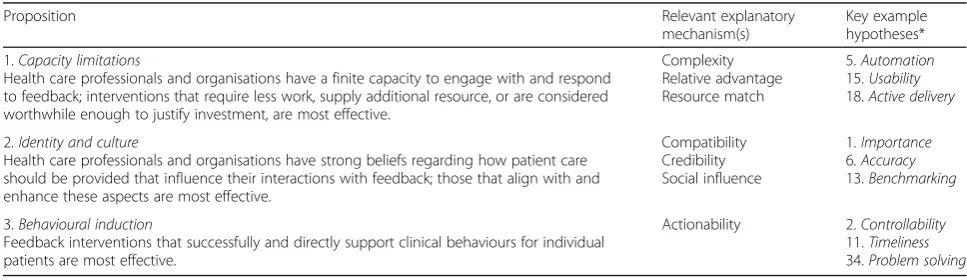
Results:We synthesised 65 papers evaluating 73 feedback interventions from countries spanning five continents. From our synthesis we developed Clinical Performance Feedback Intervention Theory (CP-FIT), which builds on 30 pre-existing theories and has 42 high-confidence hypotheses. CP-FIT states that effective feedback works in a cycle of sequential processes; it becomes less effective if any individual process fails, thus halting progress round the cycle. Feedback’s success is influenced by several factors operating via a set of common explanatory mechanisms: the feedback method used, health professional receiving feedback, and context in which feedback takes place. CP-FIT summarises these effects in three propositions: (1) health care professionals and organisations have a finite capacity to engage with feedback, (2) these parties have strong beliefs regarding how patient care should be provided that influence their interactions with feedback, and (3) feedback that directly supports clinical behaviours is most effective.
(Continued on next page)
© The Author(s). 2019Open Access This article is distributed under the terms of the Creative Commons Attribution 4.0 International License (http://creativecommons.org/licenses/by/4.0/), which permits unrestricted use, distribution, and reproduction in any medium, provided you give appropriate credit to the original author(s) and the source, provide a link to the Creative Commons license, and indicate if changes were made. The Creative Commons Public Domain Dedication waiver (http://creativecommons.org/publicdomain/zero/1.0/) applies to the data made available in this article, unless otherwise stated. * Correspondence:[email protected]
1Centre for Health Informatics, University of Manchester, Manchester, UK
2Centre for Primary Care, University of Manchester, Manchester, UK
(Continued from previous page)
Conclusions:This is the first qualitative meta-synthesis of feedback interventions, and the first comprehensive theory of feedback designed specifically for health care. Our findings contribute new knowledge about how feedback works and factors that influence its effectiveness. Internationally, practitioners, researchers, and policy-makers can use CP-FIT to design, implement, and evaluate feedback. Doing so could improve care for large numbers of patients, reduce opportunity costs, and improve returns on financial investments.
Trial registration: PROSPERO, CRD42015017541
Keywords: Clinical audit, Feedback, Quality improvement, Performance measurement, Qualitative research, Theory, Qualitative evidence synthesis, Learning health system
Background
Providing health professionals with quantitative sum-maries of their clinical performance when treating spe-cific groups of patients has been used for decades as a quality improvement strategy (Table 1) [1]. Such ap-proaches may be called “audit and feedback”, “clinical performance feedback”, “performance measurement”,
“quality measurement”, “key performance indicators”,
“quality indicators”, “quality dashboards”, “scorecards”,
“report cards”, or“population health analytics”[2–4]. In this paper, we use the term “feedback” intervention to encompass all these approaches and to refer to the en-tire process of selecting a clinical topic on which to im-prove, collecting and analysing population-level data, producing and delivering a quantitative summary of clin-ical performance, and making subsequent changes to clinical practice.
Feedback has been extensively researched in numerous quantitative and qualitative studies [5]. However, despite its popularity, the mechanisms by which it operates are poorly understood [5]. In this paper, we define mecha-nisms as underlying explanations of how and why an intervention works [6]. Three consecutive Cochrane re-views have found feedback produces “small but poten-tially important improvements in professional practice” [7] with wide variations in its impact: the most recent demonstrated a median clinical practice improvement of 4.3%, ranging from a 9% decrease to a 70% increase [8]. When feedback interventions target suboptimally per-formed high-volume and clinically impactful practices, such as hypertension management or antimicrobial stewardship, this variation can translate to thousands of quality-adjusted life years [9,10].
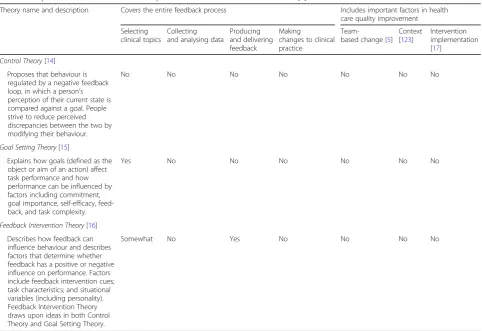
Policymakers and practitioners only have a tentative set of best practices regarding how feedback could be optimally conducted [5,11]; thus there is a need to bet-ter understand how and why feedback works in order to maximise their impact [5, 7]. One approach is to con-sider the underlying theory of feedback, which has often been over-looked [5,12]. In this paper, we define theory as a “coherent description of a process that is arrived at by inference, provides an explanation for observed phe-nomena, and generates predictions”[13]. In the 140 ran-domised controlled trials in the most recent Cochrane review, 18 different theories were used in only 20 (14%) of the studies, suggesting a lack of consensus as to which is most appropriate for feedback [12]. More recently, three theories have gained popularity in the feedback lit-erature: [5] Control Theory [14], Goal Setting Theory [15], and Feedback Intervention Theory [16]. However, these theories address only part of the feedback process, and even if used in conjunction may still miss potentially important factors specific to health care (Table2).
Qualitative evaluations of quality improvement inter-ventions can generate hypotheses regarding their effect modifiers (i.e. variables that influence success) and mechanisms of action [17]. For example, by helping ex-plain why a particular intervention was ineffective (e.g. [18]), or developing a logic model for success (e.g. [19]).
Contributions to the literature
Providing quantitative summaries of clinical performance when treating specific groups of patients (“feedback”) is a
widely used quality improvement strategy, yet it has varying success.
Theory could help explain what factors influence feedback success; however, existing theories lack detail and specificity
to health care.
This is the first systematic review and meta-synthesis of qualitative evaluations of feedback interventions and pre-sents the first comprehensive health care-specific feedback
theory that can be used to design, implement, and evaluate feedback (Clinical Performance Feedback Intervention The-ory; CP-FIT).
Synthesising findings from different qualitative studies can help build theories of how interventions may be op-timally designed and implemented [20]. Such approaches have been used to improve interventions in tuberculosis therapy [21], smoking cessation [22], skin cancer preven-tion [23], and telephone counselling [24]. A similar ap-proach may therefore be useful for feedback and, to the best of our knowledge, has not yet been attempted.
Aims and objectives
We aimed to synthesise findings from qualitative research on feedback interventions to inform the development of a com-prehensive new health care-specific feedback theory. In-formed by our definition of theory [13], our objectives were to (1) describe the processes by which feedback interventions effect change in clinical practice, (2) identify variables that may predict the success of these processes, (3) formulate ex-planatory mechanisms of how these variables may operate, and (4) distil these findings into parsimonious propositions.
Methods
[image:4.595.57.292.98.356.2]We published our protocol on the International Pro-spective Register of Systematic Reviews (PROSPERO; registration number CRD42015017541 [25]).
Table 2Popular theories to model clinical performance feedback in the literature [5]
Theory name and description Covers the entire feedback process Includes important factors in health
care quality improvement
Selecting clinical topics
Collecting and analysing data
Producing and delivering feedback
Making
changes to clinical practice
Team-based change [5]
Context [123]
Intervention implementation [17]
Control Theory[14] Proposes that behaviour is regulated by a negative feedback loop, in which a person’s perception of their current state is compared against a goal. People strive to reduce perceived discrepancies between the two by modifying their behaviour.
No No No No No No No
Goal Setting Theory[15]
Explains how goals (defined as the object or aim of an action) affect task performance and how performance can be influenced by factors including commitment, goal importance, self-efficacy, feed-back, and task complexity.
Yes No No No No No No
Feedback Intervention Theory[16] Describes how feedback can influence behaviour and describes factors that determine whether feedback has a positive or negative influence on performance. Factors include feedback intervention cues; task characteristics; and situational variables (including personality). Feedback Intervention Theory draws upon ideas in both Control Theory and Goal Setting Theory.
[image:4.595.57.540.400.731.2]Somewhat No Yes No No No No
Table 1Examples of feedback interventions used in health care
Example
A group of clinicians choose a clinical topic on which to focus (e.g. sepsis, frailty), determine standards of care relating to that topic (e.g. patients with sepsis should receive antibiotics within 1 hour of diagnosis, all patients with frailty should have an annual medication review), then collect data to measure their current performance (e.g. from medical records), and calculate the proportion of patients meeting the standards. They present their findings to colleagues in a team meeting, and as a group they identify and implement changes. They re-measure their performance at a later date.
Health managers decide goals that are most important to their organisation (e.g. reducing hospital admissions, increasing vaccination uptake, reducing medication safety errors) and collect data to measure their current performance (e.g. from patient registries or administrative data). To account for the influence of patient characteristics, the results are adjusted for age and sex. These data are sent to health professionals as reports (e.g. electronic documents) and may also be made publically available. There may be financial rewards associated with achieving particular levels of performance.
Population-level data from electronic sources are automatically extracted and analysed across a range of topics (e.g. rates of antibiotic
Search strategy
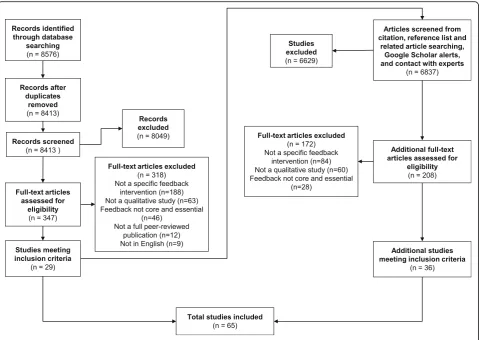
We replicated the latest Cochrane review’s search strategy [8], adding qualitative research filters [26–28] (Additional file 1). MEDLINE (Ovid), EMBASE (Ovid), and CINAHL (Ebsco) were searched without time limits on 25 March 2015. Citation, related article, and reference list searches were undertaken up to 31 December 2016 for all included studies, relevant reviews, and essays (e.g. [5, 11,12,29–37]) [38]. Further studies were found through international experts and Google Scholar alerts.
Study selection and data extraction
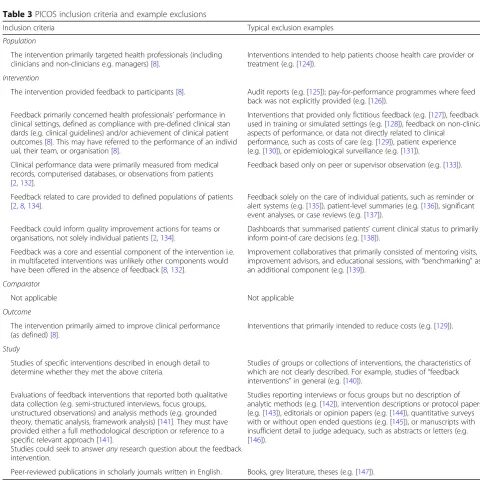
Table 3 describes our inclusion criteria. Two reviewers independently screened titles and abstracts. Full
[image:5.595.54.535.78.558.2]manuscripts of potentially relevant citations were ob-tained and the criteria re-applied. Data from included ar-ticles were extracted independently by BB and WG regarding the study [39] and feedback intervention de-tails [40, 41] (Additional file 2; e.g. study setting, who provided the feedback, and what information the feed-back contained). Critical appraisal was conducted con-currently using 12 technical and theoretical criteria including the appropriateness of data collection and ana-lysis methods, adequacy of context description, and transferability of findings [42]. Any disagreements were resolved through discussion, with the wider team con-sulted as necessary.
Table 3PICOS inclusion criteria and example exclusions
Inclusion criteria Typical exclusion examples
Population
The intervention primarily targeted health professionals (including clinicians and non-clinicians e.g. managers) [8].
Interventions intended to help patients choose health care provider or treatment (e.g. [124]).
Intervention
The intervention provided feedback to participants [8]. Audit reports (e.g. [125]); pay-for-performance programmes where feed back was not explicitly provided (e.g. [126]).
Feedback primarily concerned health professionals’performance in clinical settings, defined as compliance with pre-defined clinical stan dards (e.g. clinical guidelines) and/or achievement of clinical patient outcomes [8]. This may have referred to the performance of an individ ual, their team, or organisation [8].
Interventions that provided only fictitious feedback (e.g. [127]), feedback used in training or simulated settings (e.g. [128]), feedback on non-clinical aspects of performance, or data not directly related to clinical
performance, such as costs of care (e.g. [129]), patient experience (e.g. [130]), or epidemiological surveillance (e.g. [131]).
Clinical performance data were primarily measured from medical records, computerised databases, or observations from patients [2,132].
Feedback based only on peer or supervisor observation (e.g. [133]).
Feedback related to care provided to defined populations of patients [2,8,134].
Feedback solely on the care of individual patients, such as reminder or alert systems (e.g. [135]), patient-level summaries (e.g. [136]), significant event analyses, or case reviews (e.g. [137]).
Feedback could inform quality improvement actions for teams or organisations, not solely individual patients [2,134].
Dashboards that summarised patients’current clinical status to primarily inform point-of care decisions (e.g. [138]).
Feedback was a core and essential component of the intervention i.e. in multifaceted interventions was unlikely other components would have been offered in the absence of feedback [8,132].
Improvement collaboratives that primarily consisted of mentoring visits, improvement advisors, and educational sessions, with“benchmarking”as an additional component (e.g. [139]).
Comparator
Not applicable Not applicable
Outcome
The intervention primarily aimed to improve clinical performance (as defined) [8].
Interventions that primarily intended to reduce costs (e.g. [129]).
Study
Studies of specific interventions described in enough detail to determine whether they met the above criteria.
Studies of groups or collections of interventions, the characteristics of which are not clearly described. For example, studies of“feedback interventions”in general (e.g. [140]).
Evaluations of feedback interventions that reported both qualitative data collection (e.g. semi-structured interviews, focus groups, unstructured observations) and analysis methods (e.g. grounded theory, thematic analysis, framework analysis) [141]. They must have provided either a full methodological description or reference to a specific relevant approach [141].
Studies could seek to answeranyresearch question about the feedback intervention.
Studies reporting interviews or focus groups but no description of analytic methods (e.g. [142]), intervention descriptions or protocol papers (e.g. [143]), editorials or opinion papers (e.g. [144]), quantitative surveys with or without open ended questions (e.g. [145]), or manuscripts with insufficient detail to judge adequacy, such as abstracts or letters (e.g. [146]).
Data synthesis
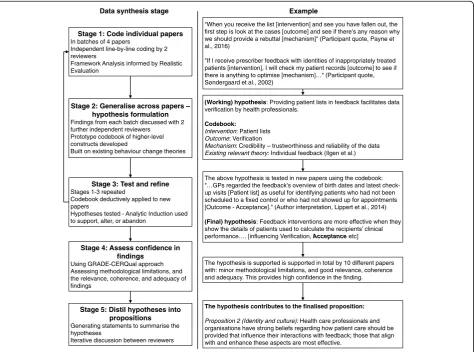
Study findings were extracted as direct quotations from participants and author interpretations [143, 43] found in the abstract, results, and discussion sections. Data were synthesised in five stages (Fig. 1; please see Add-itional file3for details): coding excerpts from individual papers in batches using framework analysis [44] and realistic evaluation [6], generalising findings across pa-pers [45] and building on pre-existing theories to formu-late hypotheses [36], iteratively testing and improving these hypotheses on new batches of papers using Ana-lytic Induction [46], assessing confidence in our hypoth-eses using the GRADE-CERQual method [47], and summarising high-confidence hypotheses into a core set of propositions.
Results
Study characteristics
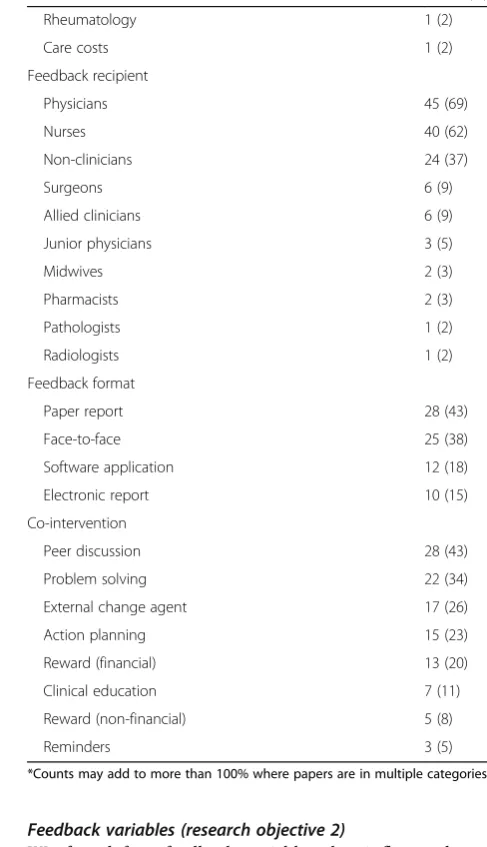
We screened 15,413 papers (Fig. 2). Sixty-five were ul-timately included, reporting 61 studies of 73 feedback in-terventions involving 1791 participants, from which we synthesised 1369 excerpts. Table 4 summarises their
main characteristics, full details of which are in Additional file4.
Meta-synthesis: Clinical Performance Feedback Intervention Theory (CP-FIT)
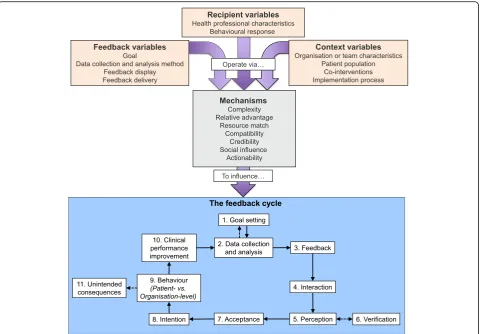
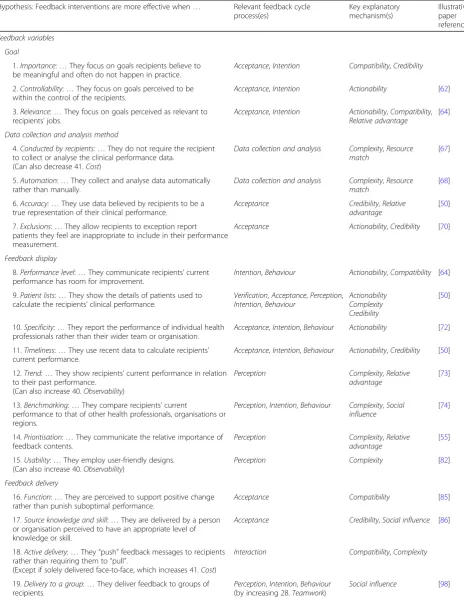
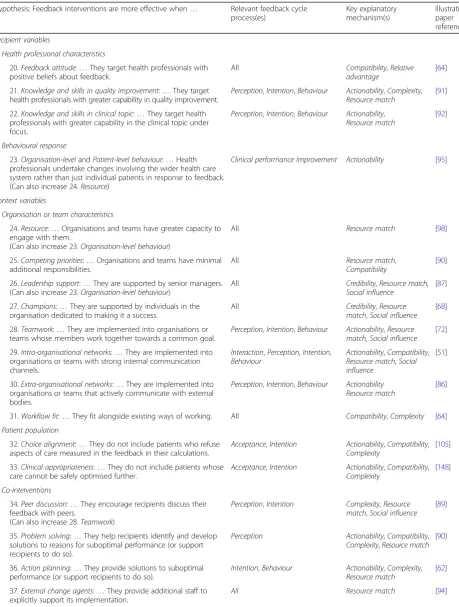
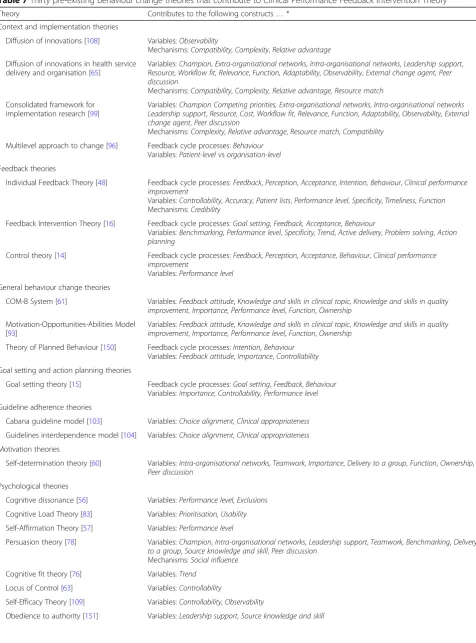
From our synthesis, we developed Clinical Performance Feedback Intervention Theory (CP-FIT). CP-FIT argues that effective feedback works in a cycle, the success of progressing round which is influenced by variables oper-ating through a set of common explanatory mechanisms related to the feedback itself, the recipient, and wider context (Fig. 3). How these variables and mechanisms influence the feedback cycle is illustrated by 42 high-confidence hypotheses (Table5), which are in turn summarised by three propositions (Table 6). CP-FIT draws on concepts from 30 pre-existing behaviour change theories (Table 7) and has over 200 lower confi-dence hypotheses (Additional file5).
We describe CP-FIT in detail below. To maintain readability, we focus on its high-confidence hypotheses and provide only key example references to supporting studies and theories. CP-FIT’s constructs are in italics.
Data synthesis stage Example
Stage 1: Code individual papers
In batches of 4 papers
Independent line-by-line coding by 2 reviewers
Framework Analysis informed by Realistic Evaluation
Stage 2: Generalise across papers – hypothesis formulation
Findings from each batch discussed with 2 further independent reviewers
Prototype codebook of higher-level constructs developed
Built on existing behaviour change theories
Stage 3: Test and refine
Stages 1-3 repeated
Codebook deductively applied to new papers
Hypotheses tested - Analytic Induction used to support, alter, or abandon
Stage 4: Assess confidence in findings
Using GRADE-CERQual approach Assessing methodological limitations, and the relevance, coherence, and adequacy of findings
"When you receive the list [intervention] and see you have fallen out, the first step is look at the cases [outcome] and see if there’s any reason why we should provide a rebuttal [mechanism]" (Participant quote, Payne et al., 2016)
"If I receive prescriber feedback with identities of inappropriately treated patients [intervention], I will check my patient records [outcome] to see if there is anything to optimise [mechanism]…" (Participant quote, Søndergaard et al., 2002)
(Working) hypothesis: Providing patient lists in feedback facilitates data verification by health professionals.
Codebook:
Intervention: Patient lists
Outcome: Verification
Mechanism: Credibility – trustworthiness and reliability of the data
Existing relevant theory: Individual feedback (Ilgen et al.)
The above hypothesis is tested in new papers using the codebook: "…GPs regarded the feedback’s overview of birth dates and latest check-up visits [Patient list] as useful for identifying patients who had not been scheduled to a fixed control or who had not showed up for appointments [Outcome - Acceptance]." (Author interpretation, Lippert et al., 2014)
(Final) hypothesis: Feedback interventions are more effective when they show the details of patients used to calculate the recipients’ clinical performance.… [influencing Verification, Acceptance etc]
The hypothesis is supported is supported in total by 10 different papers with: minor methodological limitations, and good relevance, coherence and adequacy. This provides high confidence in the finding.
Stage 5: Distil hypotheses into propositions
Generating statements to summarise the hypotheses
Iterative discussion between reviewers
The hypothesis contributes to the finalised proposition:
Proposition 2 (Identity and culture):Health care professionals and organisations have strong beliefs regarding how patient care should be provided that influence their interactions with feedback; those that align with and enhance these aspects are most effective.
[image:6.595.64.539.364.716.2]Table 8 provides example illustrative quotes and Add-itional file 5 contains the full descriptions of constructs, with references to supporting papers and theories. Add-itional file 6 provides case studies demonstrating how CP-FIT can explain the success of different feedback in-terventions included in the synthesis.
The feedback cycle (research objective 1)
Similar to existing feedback [14, 16, 48], goal setting [15], and information value [49] theories, we found that success-ful feedback exerts its effects through a series of sequential processes, each of which required a non-trivial work com-mitment from health professionals (Fig. 3). This started with choosing standards of clinical performance against which care would be measured (Goal setting), followed by collection and analysis of clinical performance data (Data collection and analysis); communication of the measured clinical performance to health professionals (Feedback); reception, comprehension, and acceptance of this by the re-cipient (Interaction, Perception, and Acceptance respect-ively); a planned behavioural response based on the feedback (IntentionandBehaviour); and ultimately positive
changes to patient care (Clinical performance improve-ment). A further step ofVerification could occur between
Perception and Acceptance where recipients interrogated the data underlying their feedback (e.g. [50]). The cycle then repeated, usually starting with furtherData collection and analysis. Feedback interventions became less effective if any of the above processes failed, halting progress round the cycle. For example, if Data collection was not con-ducted (e.g. [51]), or a recipient did notAcceptthe feedback they were given (e.g. [52]; Table8, quote 1).
In addition to potentially improving clinical perform-ance, we found both positive and negative unintended outcomes associated with feedback. Health care organi-sations often noted improved record-keeping (e.g. [53]), and recipient knowledge and awareness of the feedback topic (e.g. [54]). However, it could also result in: Gam-ing, where health professionals manipulated clinical data or changed the patient population being measured scru-tiny to artificially improve their performance (e.g. [55]), or Tunnel vision, where health professionals excessively focused on the feedback topic at the detriment of other clinical areas [56,57] (Table8, quote 2).
[image:7.595.59.539.87.427.2]Feedback variables (research objective 2)
We found four feedback variables that influenced pro-gress round the feedback cycle: (1) the goal, (2) data col-lection and analysis methods, (3) feedback display, and (4) feedback delivery.
[image:8.595.65.322.106.724.2] [image:8.595.291.535.109.533.2]Goal This variable refers to the clinical topic and the as-sociated clinical behaviours or patient outcomes mea-sured by the feedback intervention. For example, the proportion of diabetic patients with controlled choles-terol in primary care [58], or whether nutritional advice is provided to nursing home residents [59]. Similar to feedback-specific [15] and general behaviour change the-ories [60,61], we found Acceptance and Intention more likely when feedback measured aspects of care recipients thought were clinically meaningful (Importance; Table8, quote 3).Acceptanceand Intentionwere also more likely when feedback targeted goals within the control of
Table 4Frequency of main paper characteristics
Count (%)*
Publication date
2012–2016 42 (65)
2007–2011 13 (20)
2002–2006 4 (6)
1996–2001 6 (9)
Quality appraisal
No limitations 0 (0)
Minor limitations 9 (14)
Moderate limitations 47 (72)
Major limitations 9 (14)
Continent
Europe 37 (57)
North America 22 (34)
Africa 2 (3)
Australia 2 (3)
South America 2 (3)
Setting
Hospital inpatient 30 (46)
Primary care 28 (43)
Hospital outpatient 3 (5)
Nursing home 3 (5)
Mental health 1 (2)
Feedback topic
Chronic care (general) 15 (23)
Patient experience 14 (22)
Prescribing 11 (17)
Health care structures 10 (15)
General nursing 8 (12)
Surgery 7 (11)
Cancer 5 (8)
Diabetes 5 (8)
Stroke 5 (8)
Obstetrics 5 (8)
Preventive care 4 (6)
Infectious disease 3 (5)
Patient demographics 2 (3)
Staff experience 2 (3)
Intensive care 2 (3)
Mental health 1 (2)
General surgery 1 (2)
Heart failure 1 (2)
Orthopaedics 1 (2)
Paediatrics 1 (2)
Physiotherapy 1 (2)
Table 4Frequency of main paper characteristics(Continued)
Count (%)*
Rheumatology 1 (2)
Care costs 1 (2)
Feedback recipient
Physicians 45 (69)
Nurses 40 (62)
Non-clinicians 24 (37)
Surgeons 6 (9)
Allied clinicians 6 (9)
Junior physicians 3 (5)
Midwives 2 (3)
Pharmacists 2 (3)
Pathologists 1 (2)
Radiologists 1 (2)
Feedback format
Paper report 28 (43)
Face-to-face 25 (38)
Software application 12 (18)
Electronic report 10 (15)
Co-intervention
Peer discussion 28 (43)
Problem solving 22 (34)
External change agent 17 (26)
Action planning 15 (23)
Reward (financial) 13 (20)
Clinical education 7 (11)
Reward (non-financial) 5 (8)
Reminders 3 (5)
recipients (Controllability e.g. [62]) [48, 63] and that were relevant to their job (Relevancee.g. [64]) [65,66].
Data collection and analysis method When undertaken by feedback recipients themselves (Conducted by recipi-ents e.g. [67]) or performed manually (Automation e.g. [68]), we found theData collection and analysis process was inhibited, often due to a lack of time or skills. In ex-treme cases, the Goal setting process was re-visited in order to find more suitable methods (e.g. [69]).
We foundAcceptancewas more likely when recipients believed the data collection and analysis process pro-duced a true representation of their clinical performance (Accuracy) [48], which often related to the positive pre-dictive value of the feedback (i.e. its ability to correctly highlight areas of clinical performance requiring im-provement). If perceived Accuracy was low, recipients were also more likely to undertakeVerification(Table8, quote 4).
Likewise,Acceptancewas facilitated when feedback re-cipients could exception report patients they felt were inappropriate to include in feedback (Exclusions e.g.
[70]) [56]. Potential reasons for exception reporting are discussed in the“Patient population”section.
Feedback display We found Intention and Behaviour
were more likely when feedback communicated recipi-ents’performance level had room for improvement ( Per-formance level). This violated their perception they delivered high-quality care, thus providing motivation and opportunity to change (e.g. [64]) [16,56,61]. It also encouraged Verification as recipients often wanted to clarify this alternative view of their achievements them-selves (e.g. [50]). We found some support for theories that suggested the feedback process could be inhibited if performance was so extreme that improvement was un-likely: [16, 56] for example, non-Acceptance if current performance was too low (e.g. [71]), or Goal setting
re-visited if performance too high (e.g. [53]); though these findings were inconsistent.
Feedback that detailed the patients included in the clinical performance calculation (Patient lists) facilitated Verifica-tion,Perception,Intention, andBehaviourby enabling recipi-ents to understand how suboptimal care may have occurred,
[image:9.595.59.540.87.421.2]Table 5Forty-two high-confidence hypotheses from Clinical Performance Feedback Intervention Theory
Hypothesis: Feedback interventions are more effective when… Relevant feedback cycle process(es)
Key explanatory mechanism(s)
Illustrative paper reference
Feedback variables Goal
1.Importance:…They focus on goals recipients believe to be meaningful and often do not happen in practice.
Acceptance,Intention Compatibility,Credibility
2.Controllability:…They focus on goals perceived to be within the control of the recipients.
Acceptance,Intention Actionability [62]
3.Relevance:…They focus on goals perceived as relevant to recipients’jobs.
Acceptance,Intention Actionability,Compatibility,
Relative advantage
[64]
Data collection and analysis method
4.Conducted by recipients:…They do not require the recipient to collect or analyse the clinical performance data.
(Can also decrease 41.Cost)
Data collection and analysis Complexity,Resource match
[67]
5.Automation:…They collect and analyse data automatically rather than manually.
Data collection and analysis Complexity,Resource match
[68]
6.Accuracy:…They use data believed by recipients to be a true representation of their clinical performance.
Acceptance Credibility,Relative advantage
[50]
7.Exclusions:…They allow recipients to exception report patients they feel are inappropriate to include in their performance measurement.
Acceptance Actionability,Credibility [70]
Feedback display
8.Performance level:…They communicate recipients’current performance has room for improvement.
Intention,Behaviour Actionability,Compatibility [64]
9.Patient lists:…They show the details of patients used to calculate the recipients’clinical performance.
Verification,Acceptance,Perception,
Intention,Behaviour
Actionability Complexity Credibility
[50]
10.Specificity:…They report the performance of individual health professionals rather than their wider team or organisation.
Acceptance,Intention,Behaviour Actionability [72]
11.Timeliness:…They use recent data to calculate recipients’ current performance.
Acceptance,Intention,Behaviour Actionability,Credibility [50]
12.Trend:…They show recipients’current performance in relation to their past performance.
(Can also increase 40.Observability)
Perception Complexity,Relative advantage
[73]
13.Benchmarking:…They compare recipients’current
performance to that of other health professionals, organisations or regions.
Perception,Intention,Behaviour Complexity,Social influence
[74]
14.Prioritisation:…They communicate the relative importance of feedback contents.
Perception Complexity,Relative advantage
[55]
15.Usability:…They employ user-friendly designs. (Can also increase 40.Observability)
Perception Complexity [82]
Feedback delivery
16.Function:…They are perceived to support positive change rather than punish suboptimal performance.
Acceptance Compatibility [85]
17.Source knowledge and skill:…They are delivered by a person or organisation perceived to have an appropriate level of knowledge or skill.
Acceptance Credibility,Social influence [86]
18.Active delivery:…They“push”feedback messages to recipients rather than requiring them to“pull”.
(Except if solely delivered face-to-face, which increases 41.Cost)
Interaction Compatibility,Complexity
19.Delivery to a group:…They deliver feedback to groups of recipients.
Perception,Intention,Behaviour
(by increasing 28.Teamwork)
Table 5Forty-two high-confidence hypotheses from Clinical Performance Feedback Intervention Theory(Continued)
Hypothesis: Feedback interventions are more effective when… Relevant feedback cycle process(es)
Key explanatory mechanism(s)
Illustrative paper reference
Recipient variables
Health professional characteristics
20.Feedback attitude:…They target health professionals with positive beliefs about feedback.
All Compatibility,Relative advantage
[64]
21.Knowledge and skills in quality improvement:…They target health professionals with greater capability in quality improvement.
Perception,Intention,Behaviour Actionability,Complexity,
Resource match
[91]
22.Knowledge and skills in clinical topic:…They target health professionals with greater capability in the clinical topic under focus.
Perception,Intention,Behaviour Actionability,
Resource match
[92]
Behavioural response
23.Organisation-levelandPatient-level behaviour:…Health professionals undertake changes involving the wider health care system rather than just individual patients in response to feedback. (Can also increase 24.Resource)
Clinical performance improvement Actionability [95]
Context variables
Organisation or team characteristics
24.Resource:…Organisations and teams have greater capacity to engage with them.
(Can also increase 23.Organisation-level behaviour)
All Resource match [98]
25.Competing priorities:…Organisations and teams have minimal additional responsibilities.
All Resource match,
Compatibility
[90]
26.Leadership support:…They are supported by senior managers. (Can also increase 23.Organisation-level behaviour)
All Credibility,Resource match,
Social influence
[87]
27.Champions:…They are supported by individuals in the organisation dedicated to making it a success.
All Credibility,Resource match,Social influence
[68]
28.Teamwork:…They are implemented into organisations or teams whose members work together towards a common goal.
Perception,Intention,Behaviour Actionability,Resource match,Social influence
[72]
29.Intra-organisational networks:…They are implemented into organisations or teams with strong internal communication channels.
Interaction,Perception,Intention,
Behaviour
Actionability,Compatibility,
Resource match,Social influence
[51]
30.Extra-organisational networks:…They are implemented into organisations or teams that actively communicate with external bodies.
Perception,Intention,Behaviour Actionability Resource match
[86]
31.Workflow fit:…They fit alongside existing ways of working. All Compatibility,Complexity [64]
Patient population
32.Choice alignment:…They do not include patients who refuse aspects of care measured in the feedback in their calculations.
Acceptance,Intention Actionability,Compatibility,
Complexity
[105]
33.Clinical appropriateness:…They do not include patients whose care cannot be safely optimised further.
Acceptance,Intention Actionability,Compatibility,
Complexity
[148]
Co-interventions
34.Peer discussion:…They encourage recipients discuss their feedback with peers.
(Can also increase 28.Teamwork)
Perception,Intention Complexity,Resource match,Social influence
[89]
35.Problem solving:…They help recipients identify and develop solutions to reasons for suboptimal performance (or support recipients to do so).
Perception Actionability,Compatibility,
Complexity,Resource match
[90]
36.Action planning:…They provide solutions to suboptimal performance (or support recipients to do so).
Intention,Behaviour Actionability,Complexity,
Resource match
[62]
37.External change agents:…They provide additional staff to explicitly support its implementation.
helping them take corrective action (where possible) for those patients and learn lessons for the future (e.g. [50]). It also facilitated Acceptance by increasing transparency and trustworthiness of the feedback methodology [48] (Table8, quote 5).
Feedback focusing on the performance of individual health professionals rather than their wider team or or-ganisation increasedAcceptance,Intention, andBehaviour
because, similar to Controllability and Relevance (see
“Goal” section), it was more likely to highlight situations for which they had responsibility (Specificitye.g. [72]) [48]. Using recent data to calculate recipients’current perform-ance (Timeliness) had a similar effect because it was based on what recipients could change currently, rather than events that had long passed (e.g. [50]).
Feedback often compared recipients’current performance to other scores, such as their past performance (Trende.g. [73]), others’ performance (Benchmarkinge.g. [74]), or an expected standard (usually determined by experts; Target
e.g. [75]). We found that Trend facilitated Perception by helping recipients interpret their current performance in a historical context [16, 76]. Benchmarking worked in a
similar fashion by helping recipients understand how they performed relative to other health professionals or organi-sations, stimulatingIntention and Behaviour because they wanted to do better than their colleagues and neighbours [77].Benchmarkingalso worked by motivating recipients to maintain their social status when they saw others in their peer group behaving differently [78, 79]. These findings contradicted Feedback Intervention Theory, which predicts that drawing attention to other’s performance reduces the impact of feedback [16]. It was unclear whether Bench-marking was more effective when the identities of the health professionals were visible to each other, or to which health professionals’performance should be compared. We found only minimal evidence thatTargetsinfluenced feed-back effectiveness despite their prominence in existing feedback theories [14–16].
Feedback was more effective when it communicated the relative importance of its contents (Prioritisation) and employed user-friendly designs (Usability) [80,81], because it reduced cognitive load by helping recipients decide what aspects of their performance required attention (e.g. [55,
[image:12.595.63.538.98.280.2]82]) [83]. Studies provided little detail on how this could be
Table 5Forty-two high-confidence hypotheses from Clinical Performance Feedback Intervention Theory(Continued)
Hypothesis: Feedback interventions are more effective when… Relevant feedback cycle process(es)
Key explanatory mechanism(s)
Illustrative paper reference
Implementation process
38.Adaptability:…They are tailored to the specific needs of the health care organisation and its staff.
(Can also increase 31.Workflow fit)
All Compatibility,Complexity [69]
39.Training and support:…They provide training and support regarding feedback (not the clinical topic under scrutiny).
Perception,Intention,Behaviour
(by increasing 21.Knowledge and skills in quality improvement)
Actionability,Resource match
[91]
40.Observability:…They demonstrate their potential benefits to recipients.
All Relative advantage [88]
41.Cost:…They are considered inexpensive to deploy in terms of time, human or financial resources.
All Resource match [67]
42.Ownership:…Recipients feel they“own”it, rather than it has been imposed on them.
All Compatibility [149]
Table 6Clinical Performance Feedback Intervention Theory’s three propositions
Proposition Relevant explanatory
mechanism(s)
Key example hypotheses*
1.Capacity limitations
Health care professionals and organisations have a finite capacity to engage with and respond to feedback; interventions that require less work, supply additional resource, or are considered worthwhile enough to justify investment, are most effective.
Complexity Relative advantage Resource match
5.Automation
15.Usability
18.Active delivery
2.Identity and culture
Health care professionals and organisations have strong beliefs regarding how patient care should be provided that influence their interactions with feedback; those that align with and enhance these aspects are most effective.
Compatibility Credibility Social influence
1.Importance
6.Accuracy
13.Benchmarking
3.Behavioural induction
Feedback interventions that successfully and directly support clinical behaviours for individual patients are most effective.
Actionability 2.Controllability
11.Timeliness
34.Problem solving
[image:12.595.55.539.577.717.2]Table 7Thirty pre-existing behaviour change theories that contribute to Clinical Performance Feedback Intervention Theory
Theory Contributes to the following constructs…*
Context and implementation theories
Diffusion of innovations [108] Variables:Observability
Mechanisms:Compatibility,Complexity,Relative advantage
Diffusion of innovations in health service delivery and organisation [65]
Variables:Champion,Extra-organisational networks,Intra-organisational networks,Leadership support,
Resource,Workflow fit,Relevance,Function, Adaptability,Observability,External change agent, Peer discussion
Mechanisms:Compatibility,Complexity, Relative advantage, Resource match
Consolidated framework for implementation research [99]
Variables:Champion Competing priorities, Extra-organisational networks,Intra-organisational networks Leadership support,Resource,Cost,Workflow fit,Relevance,Function,Adaptability,Observability, External change agent,Peer discussion
Mechanisms:Complexity,Relative advantage,Resource match,Compatibility
Multilevel approach to change [96] Feedback cycle processes:Behaviour
Variables:Patient-levelvsorganisation-level
Feedback theories
Individual Feedback Theory [48] Feedback cycle processes:Feedback,Perception,Acceptance,Intention, Behaviour,Clinical performance improvement
Variables:Controllability,Accuracy,Patient lists,Performance level,Specificity,Timeliness,Function
Mechanisms:Credibility
Feedback Intervention Theory [16] Feedback cycle processes:Goal setting,Feedback, Acceptance,Behaviour
Variables:Benchmarking,Performance level,Specificity, Trend,Active delivery,Problem solving,Action planning
Control theory [14] Feedback cycle processes:Feedback,Perception,Acceptance,Behaviour,Clinical performance improvement
Variables:Performance level
General behaviour change theories
COM-B System [61] Variables:Feedback attitude,Knowledge and skills in clinical topic,Knowledge and skills in quality improvement,Importance,Performance level,Function,Ownership
Motivation-Opportunities-Abilities Model [93]
Variables:Feedback attitude,Knowledge and skills in clinical topic,Knowledge and skills in quality improvement,Importance,Performance level,Function,Ownership
Theory of Planned Behaviour [150] Feedback cycle processes:Intention,Behaviour
Variables:Feedback attitude,Importance,Controllability
Goal setting and action planning theories
Goal setting theory [15] Feedback cycle processes:Goal setting,Feedback,Behaviour
Variables:Importance,Controllability,Performance level
Guideline adherence theories
Cabana guideline model [103] Variables:Choice alignment,Clinical appropriateness
Guidelines interdependence model [104] Variables:Choice alignment,Clinical appropriateness
Motivation theories
Self-determination theory [60] Variables:Intra-organisational networks,Teamwork,Importance,Delivery to a group,Function,Ownership,
Peer discussion
Psychological theories
Cognitive dissonance [56] Variables:Performance level,Exclusions
Cognitive Load Theory [83] Variables:Prioritisation,Usability
Self-Affirmation Theory [57] Variables:Performance level
Persuasion theory [78] Variables:Champion,Intra-organisational networks,Leadership support,Teamwork,Benchmarking,Delivery to a group,Source knowledge and skill,Peer discussion
Mechanisms:Social influence
Cognitive fit theory [76] Variables:Trend
Locus of Control [63] Variables:Controllability
Self-Efficacy Theory [109] Variables:Controllability,Observability
practically achieved, though strategies may include limiting the number of clinical topics in the feedback (Number of metrics e.g. [55]) or using charts (Graphical elements e.g. [84]) [76]. We found insufficient evidence that feedback’s effectiveness was influenced by whether it was presented positively or negatively (Framing) [16,48].
Feedback delivery Recipients often rejected feedback whose purpose they believed was to punish rather than support positive change because it did not align with their inherent motivation to improve care (Functione.g. [85]) [60, 61]. Similarly, when feedback was reported to external organisations or the public, it often drew nega-tive reactions with little evidence of impact on clinical performance (External reporting e.g. anxiety and anger [75]; Table8, quote 6).
Acceptance was also less likely when delivered by a person or organisation perceived to have an inappropri-ate level of knowledge or skill (Source knowledge and skill). This could relate to the clinical topic on which feedback was provided (e.g. [86]) or quality improvement methodology (e.g. [85]) [48]. We found inconsistent evi-dence that the location of feedback delivery, for example whether internal or external to the recipients’ organisa-tion, influenced effectiveness (Source location).
Feedback that was “pushed” to recipients facilitated
Interaction more than those requiring them to “pull” it (Active delivery). For example, feedback sent by email
(e.g. [87]) was received more frequently than when pub-lished in a document that was not distributed (e.g.[75]). An exception was feedback solely delivered in face-to-face meetings, as the significant time commit-ments often meant health professionals could not attend (e.g. [88]).
Feedback delivered to groups of health professionals improved Teamwork(see“Organisation or team charac-teristics” section) by promoting engagement and facili-tating discussion (Delivery to a group e.g. [89]) [60, 78]. There was inconsistent evidence on the effects of how often feedback was delivered (Frequency) [5], and little insight into whether it was best delivered electronically or on paper (Medium) [5,16].
Recipient variables (research objective 2)
We found two recipient variables that influenced pro-gress round the feedback cycle: (1) health professional characteristics and (2) their behavioural response.
[image:14.595.55.537.102.376.2]Health professional characteristics Often health pro-fessionals did not possess the knowledge and skills to ef-fectively engage with and respond to feedback. This included technical quality improvement skills such as interpreting data or formulating and implementing action plans, rather than the clinical topic in question (e.g. [90]). We found interventions targeting those with greater
Table 7Thirty pre-existing behaviour change theories that contribute to Clinical Performance Feedback Intervention Theory (Continued)
Theory Contributes to the following constructs…*
Sociological theories
Social comparison theory [77] Variables:Benchmarking
Mechanisms:Social influence
Reference group theory [79] Variables:Intra-organisational networks,Teamwork,Benchmarking,Delivery to a group,Peer discussion
Mechanisms:Social influence
Normative Social Influence [100] Variables:Champion,Intra-organisational networks,Teamwork,Delivery to a group,Peer discussion
Mechanisms:Social influence
Social Learning Theory [106] Variables:Extra-organisational networks,Training and support,External change agent,Peer discussion
Mechanisms:Social influence
Social Norms Theory [152] Variables:Benchmarking
Mechanisms:Social influence
Technology theories
Value chain of information [49] Feedback cycle processes:Interaction
Fit between Individuals, Task, and Technology framework [80]
Variables:Workflow fit,Usability,Cost,Training and support
Mechanisms:Compatibility,Complexity
Task-Technology-Fit Model [119] Variables:Workflow fit,Training and support
Mechanisms:Compatibility,Complexity
Technology Acceptance Model [66] Variables:Feedback attitude,Relevance,Usability
Mechanisms:Relative advantage
Model of Information Systems Success [81]
Variables:Usability
Mechanisms:Relative advantage
Table 8Example quotes from included papers
Number Quote CP-FIT constructs illustrated
1 Physicians’disagreement with the assessment process results in no action. When they feel performance is based on a small sample of patients that is not representative of the care they provide they ignore the feedback and do not take any action…
“The N is incredibly tiny. These patients may not be representative of our typical patient, yet these numbers are taken very seriously.”(Author interpretation and participant quote of a feedback intervention in US primary care [50])
Feedback cycle processes:Acceptance,Behaviour
Variables:Data collection and analysis method
Mechanisms:Credibility
2 Many participants argued that much quality assurance work is being done within the field of diabetes care. As a counterweight, many felt that conditions like hypertension and chronic obstructive pulmonary disease (COPD) were in more need of attention. (Author interpretation of a feedback intervention focusing on diabetes care in Denmark [82])
Feedback cycle processes:Tunnel vision
Variables:Importance
Mechanisms:Credibility,Compatibility
3 All GPs interviewed highly valued the process of reviewing patients identified as receiving high-risk NSAID [non-steroidal anti-inflammatory drug] or antiplatelet prescrip-tions.“The topic is, I would go so far as to say, essential. I do not even think you can say it’s urgent. It’s essential that practices are doing this. They could be killing patients totally unnecessarily”(Author interpretation and participant quote regarding feedback on potential medication safety errors in Scotland[94])
Feedback cycle processes:Acceptance,Intention
Variables:Importance
Mechanisms:Compatibility
4 The California physicians…[complained] strongly about the accuracy of the data on which their performance was judged...“I have 91 diabetics,”one explained, of whom 32 were reported as“missing either a haemoglobin A1C or an LDL or [to] have elevated levels from September to August‘07.”But, when he went through the labs and charts,
“just on the first two pages I found that six of them were incorrect”(Author
interpretation and participant quote regarding feedback in primary care in the US [153])
Feedback cycle processes:Verification,Acceptance
Variables:Accuracy
Mechanisms:Credibility
5 The informants suggested that the identities of the inappropriately treated patients should be revealed in prescriber feedback… “It was frustrating that I had a quality problem without being able to do something about it... (but)... I am not sure whether I actually have a quality problem”(Author interpretation and participant quote regarding feedback on medication prescribing in Denmark [154])
Feedback cycle processes:Verification,Acceptance,
Perception,Intention,Behaviour
Variables:Patient lists
Mechanisms:Credibility,Actionability
6 Interviewees expressed even greater scepticism about public reporting of performance data… “Sharing [performance data] with [patients] without the opportunity first to improve things might be viewed as punitive.”(Author interpretation and participant quote regarding hospital-based feedback on stroke in the US [155])
Feedback cycle processes:Acceptance
Variables:Function
Mechanisms:Compatibility
7 No participants reported using the feedback to set specific goals for improvement or action plans for reaching these goals. Even when prompted, most participants could not envision ways for the practice to facilitate pro-active chronic disease management
…(Author interpretation of feedback focusing on chronic diseases in Canada [90])
Feedback cycle processes:Intention,Behaviour
Variables:Knowledge and skills in quality improvement
Mechanisms:Actionability,Resource match
8 Increased awareness of suboptimal performance usually resulted in the intention to“try harder”to do more during each patient visit, rather than“work smarter”by
implementing point-of-care reminders or initiating systems to identify and contact pa-tients for reassessment…Such findings help to explain the small to moderate effects generally observed in randomised trials of audit and feedback. (Author interpretation of feedback intervention focusing on chronic diseases in Canada [90])
Feedback cycle processes:Intention,Behaviour,
Clinical performance improvement
Variables:Organisation-level behaviour, Patient-level behaviour
Mechanisms:Actionability
9 In both interviews and observed meetings, the executive team expressed a deep commitment to ensuring the safety and quality of the services provided by the hospital. Members of the team identified the [feedback system] as a major strategic component of this commitment and made an accordingly heavy investment (approximately UK£25 million or US$38 million over ten years). (Author interpretation of a hospital-based feed-back intervention in England [87])
Feedback cycle processes: Nil Variables:Leadership support,Resource
Mechanisms:Resource match,Social influence
10 That effective surgical site infection [SSI] prevention requires a team effort was a preponderant view…Interprofessional collaboration between clinicians, especially between surgeons and anesthesiologists, was invariably viewed as an integral part of the consistent application of best practices and, ultimately, the successful prevention of SSIs. (Author interpretation of a feedback intervention focusing on the reduction of surgical site infections in Canada [72])
Feedback cycle processes:Behaviour(patient-level) Variables:Teamwork,Intra-organisational networks
Mechanisms:Actionability,Compatibility,Social influence
11 Most providers (as well as some managers) expressed helplessness in their ability to respond [to feedback], especially when large proportions of the list consisted of challenging patients that, despite best efforts, could not achieve treatment goals…. the link between results and evaluation can be undermined when criteria…do not align with treatment guidelines, the latest evidence, and especially principles of patient-centered care. (Author interpretation of feedback focusing on diabetes treatment in US primary care [58])
Feedback cycle processes:Intention,Behaviour
(patient-level),Clinical performance improvement
Variables:Choice alignment,Clinical appropriateness
Mechanisms:Actionability,Compatibility,
Complexity
capability (both technical and clinical) were more effective because recipients were more likely to successfully proceed through thePerception,Intention, and Behaviour
feedback processes (Knowledge and skills in quality im-provementand theclinical topic, respectively; e.g. [91,92]) [61,93]. This seemed to undermine the rationale of inter-ventions predicated on addressing health professionals’ presumed lack of clinical knowledge (e.g. [94]; Table 8, quote 7).
Understandably, health professionals with positive views on the potential benefits of feedback were more likely to engage with it (Feedback attitudee.g. [64]) [66,
93]. And although health professionals often had pro-found emotional reactions to feedback, both positive and negative (e.g. [85]), we found no reliable evidence that these directly influenced the feedback cycle.
Behavioural response We found two main types of ac-tion taken by recipients (if any) in response to feedback: those relating to the care of individual patients one-at-a-time (Patient-level) or those aimed at the wider health care system (Organisation-level).Patient-level be-haviours included retrospectively “correcting” subopti-mal care given in the past, or prospectively providing
“better” care to patients in the future. For example, re-solving medication safety errors by withdrawing previ-ously prescribed medications [86] versus optimising treatment when a patient with uncontrolled diabetes is next encountered [90]. In contrast, Organisation-level
behaviours focused on changing care delivery systems. For example, changing how medications are stored in hospital [87], or introducing computerised decision sup-port software to supsup-port clinician-patient interactions [95]. We found Organisation-level behaviours often led to greater Clinical performance improvement because they enabled multiple Patient-level behaviours by aug-menting the clinical environment in which they occurred [96]. For example, changing how medications were stored reduced the likelihood of delayed administration to all patients [87], and decision support software could remind clinicians how to optimally treat diabetic patients [95]. Conversely, by definition, Patient-level
behaviours only ever affected one patient (Table8, quote 8). We found no clear evidence that feedback success was affected if it required an increase, decrease, change, or maintenance of recipients’current clinical behaviours to improve their performance (Direction) [5,7].
Context variables (research objective 2)
We found three context variables that influenced progress round the feedback cycle: (1) organisation or team charac-teristics, (2) patient population, (3) co-interventions, and (4) implementation process.
Organisation or team characteristics We found all or-ganisations and teams had a finite supply of staff, time, finances, and equipment (e.g. [90]), stretched by the complexity of modern health care, such as serving in-creasing numbers of elderly multimorbid patients and dealing with wider organisational activities such as exist-ing quality improvement initiatives and re-structures (e.g. [97]). Consequently, if an organisation had less cap-acity (Resource) or significant other responsibilities (Competing priorities), they were less able to interact with and respond to feedback (e.g. [90, 98]) [65, 99]. However, if senior managers advocated for the feedback intervention or individuals were present who were dedi-cated to ensuring it was a success, they often influenced others and provided additional resource to enable more meaningful engagement with feedback (Leadership sup-port e.g. [87] and Champions e.g. [68], respectively; Table8, quote 9) [78,100].
Increased Resource and Leadership support also in-creased the likelihood thatOrganisation-level behaviours were undertaken (see “Behavioural response” section), because they often required process redesign and change management (e.g. [82]). In turn, Organisation-level
behaviours also had the potential to further increase
Resource, for example by recruiting new staff (e.g. [101]) or purchasing new equipment (e.g.[75]), which in turn further increased their capacity to engage with and re-spond to feedback.
[image:16.595.60.540.96.214.2]Feedback was more successful when members of orga-nisations and teams worked effectively towards a
Table 8Example quotes from included papers(Continued)
Number Quote CP-FIT constructs illustrated
planning of regular team meetings for discussions of scores, possible problems and solutions, and appointing a responsible person to take action. This approach was lacking in teams C and D, as confirmed by the surgeon from team D:“We should have looked at the data more often and also discussed the results to discover weaknesses.” (Author interpretation and participant quote regarding feedback on breast cancer surgery in The Netherlands [62])
Intention,Behaviour
Variables:Peer discussion,Problem solving,Action planning
Mechanisms:Actionability,Compatibility,
Complexity,Social influence,Resource match
13 In Cuba and Bolivia, clinicians saw improvements as a direct result of the audit. Clinicians therefore considered audit a worthwhile activity and found it to be a key motivational factor and facilitator in improving clinical practice. (Author interpretation of feedback targeting tuberculosis diagnosis in South America [97])
Feedback cycle processes:Interaction,Intention
Variables:Observability
common goal (Teamwork; e.g. [72]), had strong internal communication channels (Intra-organisational networks; e.g. [51]), and actively communicated with other organi-sations and teams (Extra-organisational networks; e.g. [86]) [65,99]. These characteristics often co-existed and provided practical support for feedback recipients during
Interaction,Perception,Intention, andBehaviour(Table8, quote 10).
Organisations and teams also commonly had long-established systems and processes that were often difficult to change, such as methods of care delivery and technical infrastructure (e.g. [102]). Therefore, if the feedback intervention fitted alongside their existing ways of working (Workflow fit) [65, 80], it required less effort to implement (e.g. [64]).
Patient population Health professionals felt it was in-appropriate to include certain patients in the their clin-ical performance calculation [103, 104]. For example, patients that refused the aspects of care measured by the feedback (Choice alignment; e.g. [105]), or those who already received maximal therapy or had relevant clinical contraindications (e.g. medication allergies; Clinical ap-propriateness; Table8, quote 11). Including such patients in their clinical performance calculation inhibited Ac-ceptanceand Intention, with some evidence it may have also led to Gaming ( “The feedback cycle (research objective 1)”section e.g. [101]).
Co-interventions Synthesised papers used eight differ-ent quality improvemdiffer-ent intervdiffer-entions alongside feed-back (Table 4). However, only four appeared to impact feedback success because they addressed specific bar-riers. The provision of support for health professionals to discuss their feedback with peers (Peer discussion) and to identify reasons for and develop solutions to sub-optimal performance (Problem solving and Action plan-ning) facilitated Perception, Intention, and Behaviour. These co-interventions addressed shortcomings in health professionals’ quality improvement skills (see
“Health professional characteristics” section). Peer dis-cussion had the added benefit of improving Teamwork
(see“Organisation or team characteristics” section) [60]. Such approaches often co-existed, and could be deliv-ered in different ways, for example as didactic work-shops (e.g. [89]) or led by recipients themselves (e.g. [90]), though it was unclear which was most effective (Table8, quote 12).
Co-interventions that provided additional staff to ex-plicitly support the implementation of feedback helped overcome time and staffing issues (see“Organisation or team characteristics” section; External change agents) [65, 99]. These personnel could either be directly in-volved in feedback processes (e.g. carrying out
improvement actions [86]), or indirectly support recipi-ents (e.g. facilitatingPerceptionandIntention[94]) [106]. We found little support for education (Clinical educa-tion) or financial incentives (Financial rewards). There was some evidence that Financial rewards could nega-tively impact feedback success by conflicting with recipi-ents’motivation and sense of professionalism (e.g. [107]) [60,61].
Implementation process How feedback was introduced into clinical practice impacted all feedback cycle pro-cesses. Feedback tailored to the specific requirements of the health care organisation and its staff appeared more successful because it aligned with their needs and im-proved Workflow fit (see“Organisation or team charac-teristics” section;Adaptability) [65, 99]. For example, if quality indicator definitions could be amended to fit existing data sources [69] or focus on local clinical prob-lems [91].
When training and support were provided on how to use an intervention (not the clinical topic under scru-tiny; Training and support), it improved recipients’
Knowledge and skills in quality improvement (see
“Health professional characteristics” section; e.g. [91]) [80,106]. Further, if the training demonstrated the inter-vention’s potential benefits (Observability), recipients were also more likely to engage with it [65, 108]. These benefits could be to recipients themselves, such as im-proved feedback user-friendliness (Usability, the “ Feed-back display” section; e.g. [98]), or to patient care (e.g. [88]).Trend (see “Feedback display” section) could also increase Observability if its trajectory was positive (Table8, quote 13) [109].
Interventions considered “expensive” to deploy, in terms of time, human, or financial resources, were gen-erally less effective because they required more resource or effort (Cost) [80,99]. Examples of expensive interven-tions included when data collection was Conducted by recipients (see “Data collection and analysis method” section; e.g. [67]) or when feedback was delivered solely face-to-face (see“Feedback delivery”section; e.g. [88]).
We found more consistent evidence to support inter-ventions that made recipients feel like they “owned”the feedback intervention rather than those imposed via ex-ternal policies or directives [65, 99] because they har-nessed their autonomy and internal motivation to improve patient care (Ownership) [60, 61]. Despite this, we found little support for seeking input from recipients into the design and implementation of feedback (Linkage at the development stage) [65].
Mechanisms (research objective 3)
from existing theories of context and implementation [65, 99, 108], and variables often effected change through multiple mechanisms (Table5).
ComplexityComplexityis how straightforward it was to undertake each feedback cycle process. This could refer to the number of steps required or how difficult they were to complete. Simple feedback facilitated all feed-back cycle processes.
Relative advantage Relative advantage refers to whether health professionals believed the feedback had a perceived advantage over alternative ways of working, including other feedback interventions. Understandably, variables operating via this mechanism depended on the specific circumstances into which they were imple-mented. Relative advantagefacilitated all feedback cycle processes.
Resource match Resource matchdetails whether health professionals, organisations, and teams had adequate re-sources to engage with and respond to those required by the feedback intervention. It included time, staff capacity and skills, equipment, physical space, and finances. When Resource match was achieved, all feedback cycle processes were facilitated.
Compatibility Compatibilitycharacterises the degree to which the feedback interventions aligned with the be-liefs, values, needs, systems, and processes of the health care organisations and their staff. Compatibility facili-tated all feedback cycle processes.
Credibility Credibility was how health professionals perceived the trustworthiness and reliability of the feed-back. Recipients were more likely to believe and engage with credible feedback [48], which facilitatedInteraction,
Verification,Acceptance,Intention, andBehaviour.
Social influence Social influence specifies how much the feedback harnessed the social dynamics of health care organisations and teams. ExploitingSocial influence
could facilitate all feedback cycle processes.
Actionability Actionability describes how easily health professionals could take action in response to feedback and in turn how directly that action influenced patient care. Actionability facilitated Intention, Behaviour, and
Clinical performance improvement.
Propositions (research objective 4)
We distilled the above hypotheses of how context and intervention variables influenced feedback cycle pro-cesses (Table 5) into three propositions that govern the
effects of feedback interventions (Table6). Each propos-ition summarised multiple variable hypotheses, though only related to a mutually exclusive set of explanatory mechanisms.
Discussion
Summary of findings
CP-FIT describes causal pathways of feedback effective-ness synthesised from 65 qualitative studies of 73 inter-ventions (Table 4), and 30 pre-existing theories (Table 7). It states that effective feedback is a cyclical process of Goal setting, Data collection and analysis,
Feedback, recipient Interaction, Perception, and Accept-ance of the feedback, followed by Intention, Behaviour, and Clinical performance improvement (the feedback cycle; Fig.3). Feedback becomes less effective if any indi-vidual process fails causing progress round the cycle to stop and is influenced by variables relating to the feed-back itself (its Goal, Data collection and analysis methods, Feedback display, and Feedback delivery), the recipient (Health professional characteristics, and Behav-ioural response), and context (Organisation or team characteristics, Patient population, Co-interventions and
Implementation process). These variables exert their ef-fects via explanatory mechanisms of Complexity, Rela-tive advantage, Resource match, Compatibility,
Credibility, Social influence, and Actionability (Table 5) and are summarised by three propositions (Table6).
Applying CP-FIT in practice and research