This is a repository copy of Identifying patterns of communication in patients attending memory clinics: a systematic review of observations and signs with potential diagnostic utility.
White Rose Research Online URL for this paper: http://eprints.whiterose.ac.uk/130391/
Version: Accepted Version
Article:
Bailey, C., Poole, N. and Blackburn, D.J. orcid.org/0000-0001-8886-1283 (2018)
Identifying patterns of communication in patients attending memory clinics: a systematic review of observations and signs with potential diagnostic utility. British Journal of General Practice, 68 (667). E123-E138. ISSN 0960-1643
https://doi.org/10.3399/bjgp18X694601
[email protected] https://eprints.whiterose.ac.uk/ Reuse
Items deposited in White Rose Research Online are protected by copyright, with all rights reserved unless indicated otherwise. They may be downloaded and/or printed for private study, or other acts as permitted by national copyright laws. The publisher or other rights holders may allow further reproduction and re-use of the full text version. This is indicated by the licence information on the White Rose Research Online record for the item.
Takedown
If you consider content in White Rose Research Online to be in breach of UK law, please notify us by
Identifying Patterns of Communication in Patients Attending
Memory Clinics: A Systematic Review of Observations and Signs
with Potential Diagnostic Utility
Authors:
Corresponding Author:
Dr Cate Bailey, MBBS MRCPsych
SpR in Old Age and General Adult Psychiatry East London Foundation Trust
City and Hackney Mental Health Care for Older People Unit 1, 30 Felstead St
London E9 5LG
Dr Norman Poole, MBChB MRCPsych MSc MD Consultant Neuropsychiatrist
South West London and St George’s Mental Health NHS Trust Neuropsychiatry Service
Clare House
St George’s Hospital Blackshaw Road London
SW17 0QT
Dr Daniel Blackburn BSc, MBChB, MRCP, PhD
Senior Lecturer and Honorary Consultant Neurologist Sheffield Institute for Translational Neuroscience (SITraN), University of Sheffield
385A Glossop Road Sheffield
S10 2HQ
Abstract
Background:
Subjective cognitive complaints are commonly encountered in primary care and often result in memory clinic referral. However, meta-analyses have shown such concerns do not consistently correspond to objective memory impairment or predict future dementia. Memory clinic referrals are increasing, with greater proportions of patients attending who do not have dementia. Studies of interaction during memory clinic assessments have identified conversational profiles which can differentiate between dementia and functional disorders of memory. Such profiles could reduce unnecessary investigations in patients without dementia.
Aims:
To date studies exploring communication patterns for the purpose of diagnosis have not been reviewed. This review therefore aimed to identify and collate signs and observable features of communication, which could clinically differentiate between dementia and functional disorders of memory.
Design and Setting:
This review systematically reviewed and synthesised evidence from studies with heterogeneous methodologies.
Methods:
A qualitative, narrative description and typical memory clinic assessment were employed as a framework.
Results:
16 studies were met criteria for selection. Two overarching themes emerged: 1) Observable clues to incapacity and cognitive impairment during routine assessment and interaction and 2) Strategies and accounts for loss of abilities in people with dementia.
Conclusion:
Whether the patient attends with a companion, how they participate, give autobiographical history, demonstrate working memory, and qualitative observations during routine cognitive testing are all useful in building a diagnostic picture. Future studies should explore these phenomena in larger populations, over longer periods, include dementia subtypes, and develop robust definitions of functional memory disorders to facilitate comparison.
249 words
Key words: Dementia diagnosis, memory clinic, subjective memory impairment, functional memory disorder
Background and Introduction
trigger referral to memory clinics (1). These complaints are of potential clinical import, might indicate cognitive decline and dementia, and are criterion for Mild Cognitive Impairment (MCI) (1). However, recent literature has cast doubt on their validity as a marker of MCI due to the poor correlation between subjective and objective memory performance and the fact that subjective reports do not consistently predict future dementia (2, 3).
The National Dementia Strategy (4) and Prime Minister’s Challenge (5), reflected a drive to increase dementia diagnoses. Accordingly, UK memory clinics assessed, on average, 30.9% more patients in 2014 compared to 2013 (6).However, this increase appears to reflect a greater number of patients attending without neurodegenerative conditions (7).
Although much of the recent dementia diagnostic research focuses on increasing use of technology and biomarkers, some authors are exploring clinical skills (8). Creavin and colleagues are currently undertaking a Cochrane review of GP
judgement in the diagnosis of dementia (8). A previous meta-analysis found that GPs were able to identify 75% of people with dementia based on clinical impression (9). Doctors are known to use various types of reasoning to reach diagnoses including pattern recognition, which can have heuristic value but is also prone to particular types of error (10). Objective assessment of diagnostic processes, and identification of factors contribute to “gut-feeling” may demonstrate significant utility in
understanding and improving clinical judgement in both GPs and secondary care physicians.
Although depression and other psychiatric or medical disorders account for some non-dementia presentations to memory clinics, there remains a significant proportion of patients who lack a diagnosable condition (7) (11). Functional disorders of
memory are attracting increased research interest, as have other such “Medically Unexplained Symptoms” (MUS) (1).
Schmidtke and Metternich proposed criteria for “Functional Memory Disorder” (FMD); a potentially reversible memory complaint thought to be secondary to
psychological or emotional factors in the absence of major psychiatric disorder (12). Aetiological factors include overwork, interpersonal conflict, somatic illness,
adjustment disorder, dysthymia and “Alzheimer Phobia” (13). A longitudinal study of 46 patients with a diagnosis of FMD followed up for a mean of 20 months found that symptoms persisted in 39 patients, though only one was later diagnosed with
dementia (13).
It is increasingly understood that patients with MUS present frequently to both primary (14) and secondary care services (15) and often receive unnecessary investigations resulting in significant costs to the health system (15).
Conversation analysis in healthcare involves observation of clinical interaction occurring in real time (20). There now exists a robust body of evidence
demonstrating that looking at how patients communicate, as well as what they say, can help to differentiate between epileptic and non-epileptic attacks during a single neurological assessment (21, 22).
Two recent studies identified divergent interactional profiles which could help differentiate between neurodegenerative and non-neurodegenerative disorders, ie: dementia and functional disorders of memory (23, 24). To date studies exploring the diagnostic utility of communication during cognitive assessments in discriminating between FMD and dementia have not been reviewed.
Methods
This systematic review sought to undertake a narrative, clinically-focused synthesis of existing evidence of features of communication, which could potentially
discriminate between neurodegenerative and functional memory disorders. Narrative reviews are recognized as tools for drawing together evidence where the review question necessitates the inclusion of a variety of research designs; including qualitative and quantitative data (25).
The review questions were:
1. What is the current evidence for features of communication, interaction or clinically observable signs which can help differentiate dementia from functional memory disorders in a memory clinic assessment?
2. What are the features of communication in dementia which could represent future points of comparison to functional disorders of memory?
A computer assisted systematic literature search was undertaken to find published studies comparing observable signs and features of communication in functional memory disorder and dementia. Databases included: Books@Ovid, CINAHL, Embase, Medline, London Health Libraries, PsychInfo, PubMed, Google Scholar and the Cochrane Library. The initial search had a date range up to 2017. The terms for the functional memory disorder searches were developed through consensus with co-authors, and based on previous reviews (1, 16, 17, 26, 27). These terms were also informed by a recent survey which explored how UK doctors describe functional memory symptoms (28). Forward and back citation searching of any included articles was performed, as well as direct inquiry with specialists in the area.
Only a few papers directly comparing communication in these two diagnoses were found, so further searches were undertaken exploring communication in dementia in order to identify future areas for comparison.
relevant papers published since the initial review. The search terms are described in table 1.
Included studies observed communication in patients attending memory clinic or where cognition was assessed or discussed. Qualitative and easily observable aspects of behaviour during neuropsychological testing were included. Excluded studies were those focusing on population prevalence of subjective cognitive complaints, as these had been recently reviewed (30). Also excluded were studies comparing quantitative results and patterns of neuropsychological testing as this is not part of initial memory clinic assessment. Studies requiring computerized analysis, or those including interactions with interpreters were excluded. Communication in patients with formally diagnosed major mental illnesses were also excluded. Full details of the exclusion criteria are detailed in appendix 2.
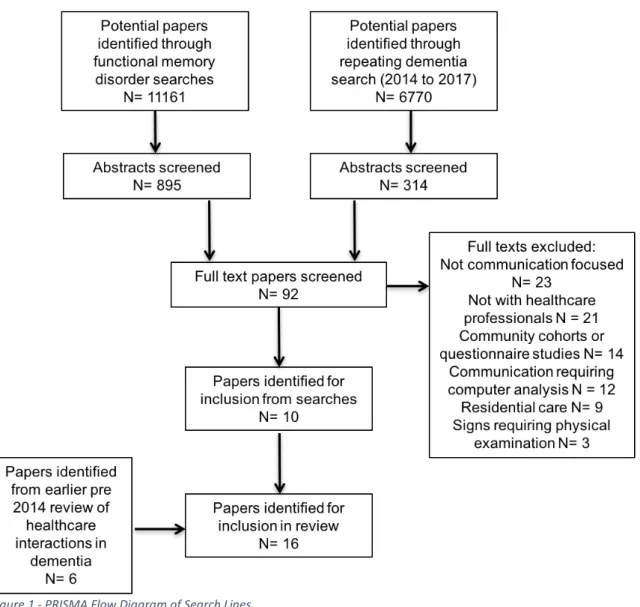
Search results are included in a PRISMA diagram (figure 1).
The main author performed all searches and screened titles and abstracts against criteria. For any papers where there was ambiguity the full text was sourced. If the main author was unsure whether particular studies met criteria the full text of this paper was shared between the authors and a consensus agreement was reached. A total of 17931 papers were identified, and all titles assessed. 1209 abstracts were then screened. 92 full text papers were identified for further assessment. 10 papers from the combined searches were identified, which were then added to 6 papers identified from the previous systematic review (29) to reach 16 final papers for review.
Quality was assessed by the lead author using the Quality Assessment Tool for Studies with Diverse Designs (QATSDD) (31). Data extraction, data analysis and interpretation was conducted based on the protocol for narrative synthesis (25) and completed by the lead author. The analysis employed techniques such as grouping, clustering, and thematic analysis (25). The synthesis was then developed through a process of “ideas webbing”, “reciprocal translation” and “conceptual triangulation” to generate themes which explained or interpreted findings across studies (25).
Results
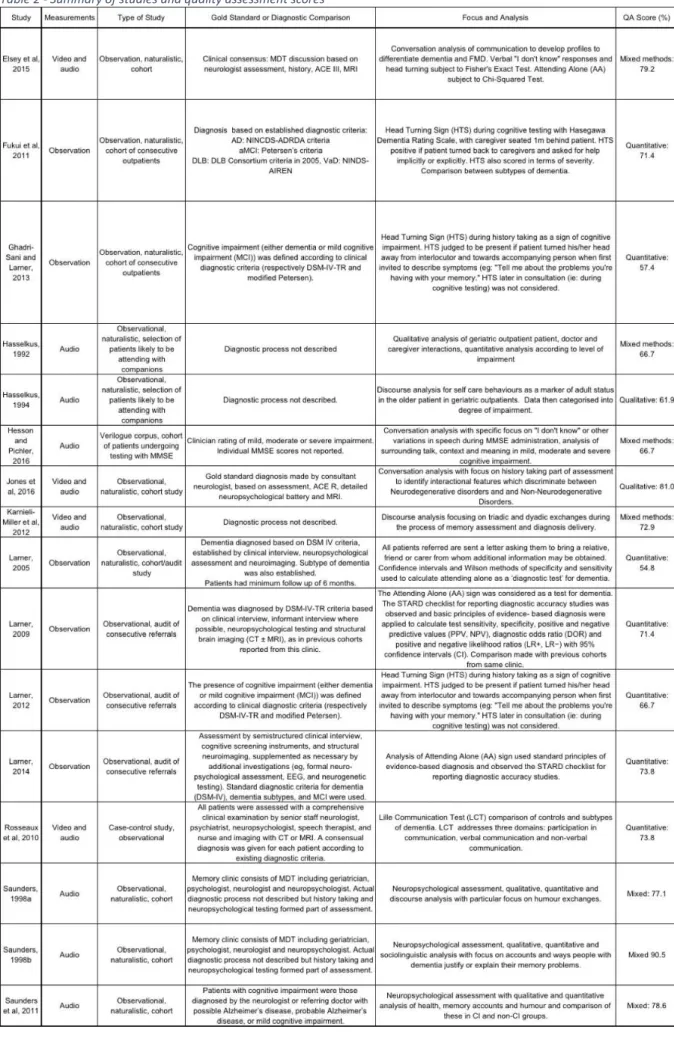
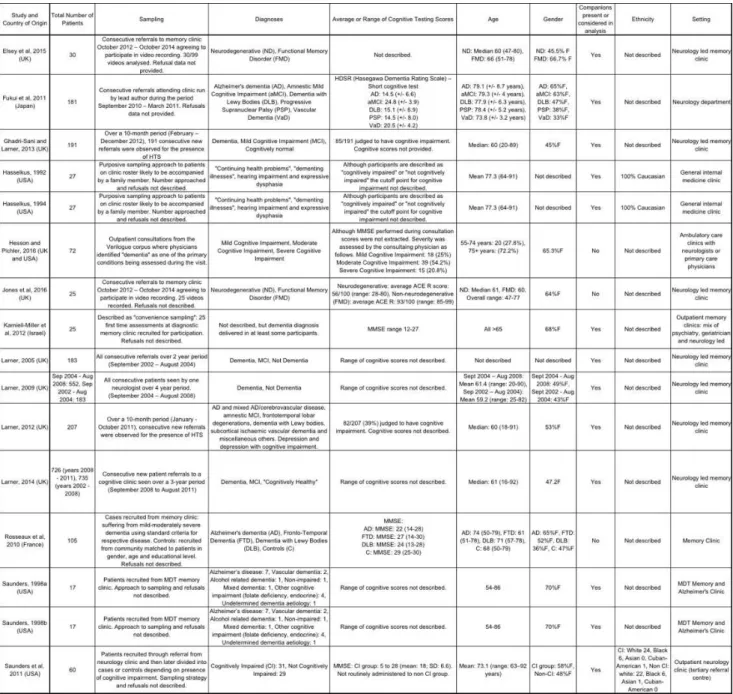
The characteristics of the 16 included studies, including citation, sample and quality assessment score can be found in table 2. Characteristics of participants and further details of the studies are contained in table 3. Following the narrative synthesis processes described above three overarching themes emerged.
Narrative Synthesis - Themes
1. Clues to incapacity and cognitive impairment
Presence of an accompanying person (n=6)
Most memory clinics request that patients bring an accompanying person to their assessment (32-34). Nevertheless, a number of patients attend alone. Over cohorts of consecutive referrals, Larner and colleagues assessed Attending Alone (AA) as a diagnostic test of preserved cognitive function (32-34). The sensitivity of AA to identify cognitively normal individuals ranged from 0.93 – 1.0 (32-34) but specificity was low: 0.35 – 0.41 (32-34).
A small study primarily focused on interaction reported that 90.9% of patients with either early dementia or amnestic MCI (neurodegenerative disorders: ND) were accompanied, whilst 60% of patients with functional memory disorder (FMD) attended alone (p<0.0008) (24).
Another study observed that all patients who later received a dementia diagnosis were accompanied, compared with only 5/16 with FMD (23). Saunders noted that in patients attending a general outpatient neurology clinic 96.7% with cognitive
impairment attended with family or a carer, whilst only 34.4% of cognitively normal persons did (35).
Patient’s Abil
ity to Answer and Participate in Consultation (n=3)
Two papers studied patients’ ability to recall and describe memory concerns (23, 24). One compared patients with dementia to FMD (23). Another included patients
defined as having ND (described above) (24). Both noted patients with dementia or ND had difficulty answering; sometimes giving no response or saying “um” or “er” (23, 24). Occasionally persons with ND would provide a generic answer, eg. “it happens all the time,” or sought assistance from their companion (24). Patients with dementia were often unable to provide autobiographical information (23).
Patients with ND or dementia were unable to elaborate beyond the literal parameters of questions asked, took a long time to respond, and gave brief undetailed answers even when prompted (23, 24).
In a quantitative analysis of 11 patients with ND there were 45 responses indicating “I don’t know” (29 verbal and 16 embodied in the form of head turning towards a companion). Conversely, patients with FMD provided quick, relevant, detailed and even sometimes unsolicited accounts of memory problems (23, 24). A significant difference was found between the number of verbal “I don’t know” responses between the ND and FMD groups (24).
One study utilized the Lille Communication Test in 58 patients with dementia (36). They found verbal and non-verbal communication scores correlated with the Dementia Rating Scale (P<0.001) suggesting ability to participate in conversation may have a relationship to dementia severity (36).
Head Turning Sign (n=5)
contributors to head turning frequency were Alzheimer’s related diseases (dementia or amnestic MCI), female gender and increasing dementia severity (37).
Larner observed HTS in response to requests for examples of memory “failures” during history taking (38). In later studies HTS proved specific (0.98, 95%CI: 0.95 - 1.0) but not sensitive (0.6, 95%CI: 0.49 – 0.7) for the presence of neurodegenerative disorder. Larner suggests HTS is an easily observed clinical sign which has a high positive predictive value for progressive cognitive impairment (39). Although not meeting criteria for a screening observation due to low sensitivity, presence of HTS does suggest further investigation is required (39).
In the two small conversation analysis studies, no statistically significant difference in HTS between cognitively impaired and normal individuals was found (23, 24).
However other verbal and non-verbal requests for assistance were observed (23, 24). Responses from people with dementia were often delayed and lacking detail, which may leave their companion to step in (23).
Companion Involvement (n=6)
In profiling the triadic (three party) interaction in geriatric appointments, Hasselkus identified consultations with persons with cognitive impairment had a
disproportionate number of prolonged dyadic (two party) interactions between companion and doctor (40). It was noted sometimes the physician shifts the conversation, sometimes the caregiver “interrupts”; answering a question initially directed at the patient (23, 40).
In a later paper Hasselkus noted patients with cognitive impairment often “allow” companions to explain their impairments (41). In cases of “marked impairment” evidence for incapacity came from the patient’s own discourse: incoherence, non-responsiveness, or frequent need for the doctor to repeat questions (41). Sometimes companions would overtly communicate that the patient was not going to contribute, eg: “She (the patient) is not going to understand,” or correct, add to, prompt or paraphrase the patient (41).
Conversely in consultations with patients without cognitive impairment patients demonstrated self-responsibility and autonomy with some control over the
appointment agenda (41). However the results are limited by the fact that patients with cognitive impairment and sensory deficits are analysed collectively (41). In outpatient neurology appointments companions contributed a greater number of comments in consultations where patients had cognitive impairment (35). Karnieli-Miller and colleagues graphically represented the shifts in a triadic memory clinic interaction over the course of an initial assessment (42). They too noted the
companion tended to interject when the patient gave “incorrect” information or when the physician directed the conversation towards the companion (42).
Anosognosia and who is more worried? (n=3)
Anosognosia refers to loss of insight or awareness of impairments which commonly occurs in dementia (43). When asked who was more worried about the memory impairment patients with FMD would express that they were the most concerned (24). In 4/5 consultations with patients with early dementia the patient would often not respond at all, and the companion expressed more concern (24).
Saunders also noted that patients with cognitive impairment frequently made attempts to normalize, minimize or account for their memory impairments, for example “(I’m) just like my grandma. I can’t remember anything, but who could?” (44).
Assessment of cognition during natural interaction (n=2)
One study looked at responses to compound questions, such as “Could you tell me a little about your background, where’re you’re from? And where did you go to
school?” (24). Patients with ND or dementia responded to a single component of such questions, then required repetition or simplification of the question (24). Conversely those with FMD were able to address all parts of the question in a prolonged and detailed response (24).
Jones and colleagues noted the effort and compensation patients with FMD
demonstrate in responding to compound questions. When asked a two-part question they were able to respond to both components in detail (23). Any repetitions were acknowledged with phrases, eg. “As I said earlier” which the authors argue
demonstrates awareness of repetition, and preserved working memory (23). Patients with dementia, however, can be repetitive and do not preface their
repetitions with acknowledgements (23). Doctors are generally advised against the use of compound questions. However, the authors of the above studies argue selected use could reflect a method of assessing working memory within natural interaction reducing the later need for more formal and confrontational testing (23, 24).
2. Strategies and accounts for loss of abilities in persons with
dementia
Face-saving and accounts (n=5)
“Saving face,” is a sociological construct often applied in analyzing how persons with dementia manage situations where they are unable to provide an appropriate response (45). Many papers focused on what is probably the most “face-threatening” component of a memory clinic assessment: formal cognitive testing. Studies
examined compensatory strategies including humour (46), accounts and metaphor (35, 44) and the function and meaning of particular types of “I don’t know” (IDK) responses (47).
initiated only 1.4% (46). Patients with dementia tended to use more dominant and self-denigrating humour (46). An example of dominant humour is the patient’s statement to the psychologist “You’re out of your mind,” when asked to copy a line drawing, where the author argues the implicit communication is the patient is unable to perform the task (46)
Saunders also describes how patients excuse their difficulties in the form of cognitive, experiential, comparative and emotional accounts and explanations of ability and attention (44). Patients with cognitive impairment used “object metaphors” such as images of tools or machinery (eg: “my brain is off key” ) as the cause of their inability to recall the answer (44). In accounting for the experience of memory loss patients would sometimes assign blame to lack of knowledge, for example when unable to name a paint palette the patient says “I don’t know that because I worked with cars” (44). Patients with cognitive impairment would also use attention or ability when unable to complete tasks, eg: “I didn’t pay that much attention” (44). Saunders argues that metaphors serve to maintain a “competent identity” and create distance from a “forgetful identity” (44).
Saunders and colleagues later found justifications for memory lapses were more likely to happen in consultations involving persons with cognitive impairment and most occurred during the testing stage of the examination (35).
Hesson and Pichler specifically explored the function if “I don’t know” (IDK) responses during MMSE (Mini-Mental State Examination) administration (47). Responses which the authors describe as “Knowledge reinforcing tokens”, such as “My brain is going to hell. I can’t remember everything,” appear very similar to Saunders’ accounts and metaphors (44, 47).
Qualitative aspects of cognitive testing (n=1)
Closely related to face-saving and accounts are considerations of the qualitative aspects of cognitive testing. Many clinicians recognize the clinical value of qualitative observations during formal cognitive screening including the patient’s approach and effort (48).
Hesson and Pichler examined all “I don’t know” responses during cognitive testing to explore what this phrase communicates beyond a lack of knowledge (47). They interpreted that immediate IDK responses, or those following a pause signified lack of knowledge (47). “Face saving” IDK (described above) and “knowledge reinforcing tokens” were perceived to demonstrate inability to answer due to lack of knowledge. “Turn final” IDK tokens such as “Chicago, Cadillac, I dunno,” (when asked to recall three objects), were also interpreted as a desire to terminate the sequence due to trouble remembering (47).
Non-lack of knowledge IDKs included hedging responses, such as “Oh I don’t know, but I guess we’re still in ___ city,” and bridging responses, which were felt to buy time (47). Resistance responses were also included under the “Non-lack of
impairment was statistically predictive of the use of “I don’t know” lack of knowledge phrases (47). However, the grading of cognitive impairment was based solely on clinician report rather than objective measures so the application of statistical measures may not be appropriate (47).
Taken as a cohort the papers exploring qualitative aspects of cognitive testing
generate evidence that the talk occurring around formal testing, and the approaches, responses and accounts patients with dementia provide can be illuminating.
However, this area of inquiry is limited by the lack of comparison to cognitively normal individuals.
Synthesis of evidence within clinical framework of memory
assessment
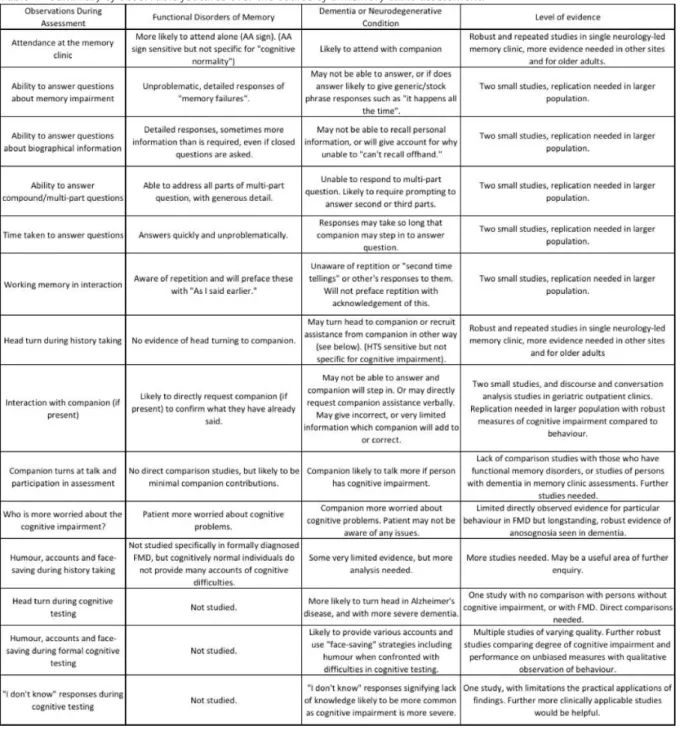
As described, the final aspect of the synthesis draws together existing evidence in the order of a naturalistic memory clinic from start to finish. A summary of the
features, levels of evidence and gaps in current knowledge are described in table 4.
Discussion
Summary
This review collated and synthesized evidence from 16 studies with heterogeneous methodologies using a narrative and clinical framework. The review found relatively firm conclusions in specific populations, and promising areas for future
consideration. In relatively small and select samples there was robust and replicated evidence for the sensitivity of the HTS in identifying cognitive impairment, and for the attended alone sign (AA) in identifying cognitive “normality”. Other less replicated and more difficult to operationalize signs of interaction and communication could, collectively, provide the foundations of conversational profiles to differentiate between dementia and functional disorders of memory.
Strengths and Limitations
A strength of this review is the comprehensive search strategy and ability to draw together findings in a clinically relevant framework. Limitations include the use of a single author to extract and assess the quality of data. The author attempted to minimize the risk of study selection and extraction bias by discussion with co-authors.
Both patients with neurodegenerative conditions and functional memory disorders are heterogeneous groups. Patients with functional memory disorders remain poorly understood. Additionally, the heterogeneity of terms clinicians use to describe similar but not necessarily interchangeable concepts is also problematic in drawing
comparisons (28).
caution. The vagueness in reporting “cognitive impairment” casts potential doubt on the rigor of clinical diagnosis.
The cross sectional nature of the studies included, and lack of biomarkers or novel neuroimaging is also a limitation. Cross sectional methodologies cannot provide iron-clad evidence that cognitively normal individuals who are presenting to memory clinic now will not develop dementia in the future. It should also be noted that the
participants in the study were attending secondary care services and may not be directly representative of all patients seen in general practice with memory concerns.
Comparison with Existing Literature:
The concept of cognitive examination as a quantitative and qualitative exercise has been reported during focus groups with clinicians working in memory clinics (48). This review adds weight to these reports and highlight that observations of the
patient’s approach, comments and interaction during cognitive testing are valuable in diagnosis. The use of humour, “face saving” explanations and accounts for incorrect answers, and even the meaning of “I don’t know” responses can be informative. Historically “I don’t know” responses have been suggested as a sign of depressive pseudo-dementia (49). However, this review highlights that such responses reflect nuanced and subtle communications, and further studies could be illuminating. The use of conversation analytic (CA) interventions is well established in first seizure clinics (20, 50) and can be taught relatively easily. A one-day training course resulted in junior neurologists allowing more time before first interrupting patients during assessments and increased ability to differentiate between epileptic and non-epileptic events (51). A CA informed approach to cognitive assessments could facilitate both diagnostic clarity and formulation for patients presenting to memory clinics who do not have dementia (see teaching website link below on how to look for interaction in memory clinic). Such methods would be aligned with the now favoured method where MUS are approached as positive diagnosis rather than one of
exclusion (52).
Implications for research and practice
In routine memory clinic consultations whether the patient attends with a companion, how they interact, account for difficulties, give basic autobiographical details,
demonstrate working memory, and approach formal cognitive testing, are useful in building a diagnostic picture. No one sign is likely to prove diagnostic, nor would observation replace clinical examination or blood and imaging investigations where appropriate. However, equipping clinicians with an increased repertoire of
observational tools could aid both those working in and referring to memory clinics. If qualitative aspects of routine assessments can be interpreted alongside brief
screening tools such as the GPCOG (53), GPs may be more able to confidently decide who is appropriate to refer for further assessment. For example high
something is wrong and refer on for further testing. Observing responses to occasional multi-part questions, and the interaction between patient and relative could represent less confrontational ways for GPs to assess cognition in patients who might refuse to participate in formal cognitive testing. Conversely, identifying signs suggestive of functional disorders of memory might prompt GPs to explore the meaning of the cognitive concerns and provide reassurance or consider watchful waiting. This would be in keeping with recognized approaches to MUS. With the increased numbers of patients without dementia attending both primary and secondary care, it is vital that clinicians develop evidence-based skills which empower them to avoid unnecessary neuropsychological testing and imaging investigations.
Future studies should explore these observations in larger populations and in primary care settings; for example, replicating HTS and AA in older groups and dementia subtypes. Direct comparison of qualitative and quantitative findings of cognitive testing will be helpful. Additionally, developing robust definitions of subjective memory complaints and functional memory disorders will allow more definite comparison between and within groups. The use of follow up studies, biomarkers and novel neuroimaging techniques represent opportunities for clinical signs to be compared with quantitative measures to add weight to existing
observations.
How this fits in
This review found observations during interaction in cognitive assessments can help differentiate between dementia and functional disorders of memory. Whether the patient attends with a companion, how they participate, give autobiographical history, and qualitative observations during cognitive testing are useful in building a
diagnostic picture. For GPs the observations in this review may augment existing screening tools and maximize limited time available to inform decisions about onward referral.
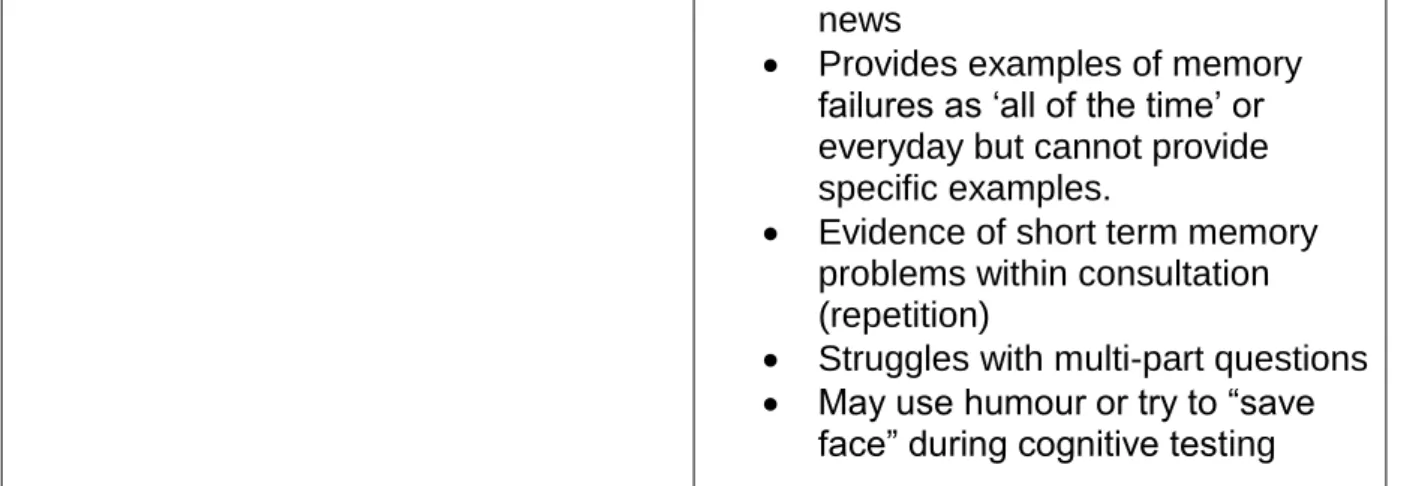
Summary Box: What a busy clinician can look out for in patients presenting with cognitive problems
Signs suggestive of functional disorder of memory
Signs suggestive of neurodegenerative disorder
More likely to attend clinic alone Worried about their memory Providing clear personal history
and explicit, detailed examples of memory failures
Demonstrates working memory within the interaction (refer to things they have said earlier) Able to answer multi-part
questions
Attending with companion, and companion is more worried about memory than patient
May turn head towards companion when unable to answer
news
Provides examples of memory failures as ‘all of the time’ or everyday but cannot provide specific examples.
Evidence of short term memory problems within consultation (repetition)
Struggles with multi-part questions May use humour or try to “save
face” during cognitive testing
Link to education module of following website that provides examples of real life cases showing the signs described in this paper (http://sitran.blymi.com)
3998 words
Functional Memory Disorders (Non-neurodegenerative) Search (up to and including 2017):
Dementia Search (2014 – 2017): Search terms from existing review of healthcare interactions in dementia (29)
Terms (Combined by OR): Subjective cognitive decline Subjective cognitive complaints Subjective memory complaints Subjective forgetfulness Functional memory disorder Functional memory symptoms Functional cognitive disorder Cogniform disorder
Cogniform condition Fear of dementia Dementia worry Worried well AND: Assess* Diagnos* Interact* Communica* Talk* Discour* Interview* Dialog* Conversation
Terms (Combined by OR): Alzheimer* Dement* Cognitive impair* Memory Neurocogni* Neuro-cogni* Cogni* disor* Cogni* func* AND: Assess* Diagnos* Interact* Communica* Talk* Discour* Interview* Dialog* Conversation
References
1. Blackburn DJ, Wakefield S, Shanks MF, Harkness K, Reuber M, Venneri A. Memory difficulties are not always a sign of incipient dementia: a review of the possible causes of loss of memory efficiency. Br Med Bull. 2014;112(1):71-81.
2. Burmester B, Leathem J, Merrick P. Assessing subjective memory complaints: a comparison of spontaneous reports and structured questionnaire methods. Int Psychogeriatr. 2015;27(1):61-77. 3. Silva D, Guerreiro M, Faria C, Maroco J, Schmand BA, Mendonca A. Significance of subjective memory complaints in the clinical setting. J Geriatr Psychiatry Neurol. 2014;27(4):259-65.
4. D.O.H. National Dementia Strategy. In: Health Do, editor. Leeds2009.
5. D.O.H. Prime Minister's Challenge on Dementia 2020. In: Health Do, editor. London2015. 6. Hodge S, Hailey S. Second English National Memory Clinics Audit Report. London:
Department of Health and RCPsych, 2015.
7. Larner A. Impact of the National Dementia strategy in a neurology-led memory clinic: 5 year data. Royal College of Physicians: Clinical Medicine. 2014;14(2):216.
8. Creavin S, Noel-Storr A, Richard E, Creavin A, Cullum S, Ben-Shlomo Y, et al. Clinical judgement by primary care physicians for the diagnosis of all-cause dementia or cognitive impairment in symptomatic people (Protocol). Cochrane Database Syst Rev. 2017(2). 9. Mitchell AJ, Meader N, Pentzek M. Clinical recognition of dementia and cognitive impairment in primary care: a meta-analysis of physician accuracy. Acta Psychiatr Scand. 2011;124(3):165-83.
10. Elstein AS. Thinking about diagnostic thinking: a 30-year perspective. Adv Health Sci Educ Theory Pract. 2009;14 Suppl 1:7-18.
11. Hogh P, Waldemar G, Knudsen G, Bruhn P, Mortensen H, Wildschiodtz G, et al. A
multidisciplinary memory clinic in a neurological setting: diagnostic evaulation of 400 consecutive patients. European Journal of Neurology. 1999;6:279-88.
12. Schmidtke K, Metternich B. Validation of two inventories for the diagnosis and monitoring of functional memory disorder. J Psychosom Res. 2009;67(3):245-51.
13. Schmidtke K, Pohlmann S, Metternich B. The syndrome of functional memory disorder: definition, etiology, and natural course. Am J Geriatr Psychiatry. 2008;16(12):981-8.
14. Rosendal M, Carlsen A, Rask M, Moth G. Symptoms as the main problem in primary care: A cross-sectional study of frequency and characteristics. Scand J Prim Health Care. 2015;2015(33):91-9.
15. Burton C, McGorm K, Richardson G, Weller D, Sharpe M. Healthcare costs incurred by patients repeatedly referred to secondary medical care with medically unexplained symptoms: a cost of illness study. J Psychosom Res. 2012;72(3):242-7.
16. Pennington C, Newson M, Hayre A, Coulthard E. Functional cognitive disorder: what is it and what to do about it? Pract Neurol. 2015;15(6):436-44.
17. Stone J, Blackburn D, Reuber M, Thekkumpurath P, Carson A. Functional (Psychogenic) Cognitive Disorders: A perspective from the Neurology Clinic. Journal of Alzheimer's Disease. 2015;49(s1):S5-S17.
18. Coebergh J, Stanton B, Isaacs J. Re: Pennington et al. Functional cognitive disorder: what is it and what to do about it? Pract Neurol [Internet]. 2016; 15(6).
19. Manthorpe J, Samsi K, Campbell S, Abley C, Keady J, Bond J, et al. From forgetfulness to dementia: clinical and commissioning implications of diagnostic experiences. Br J Gen Pract. 2013;63(606):e69-75.
21. Plug L, Sharrack B, Reuber M. Conversation analysis can help to distinguish between epilepsy and non-epileptic seizure disorders: a case comparison. Seizure. 2009;18(1):43-50.
22. Robson C, Drew P, Walker T, Reuber M. Catastrophising and normalising in patient's accounts of their seizure experiences. Seizure. 2012;21(10):795-801.
23. Jones D, Drew P, Blackburn D, Wakefield S, Harkness K, Reuber M. Conversational
assessment in memory clinic encounters: interactional profiling for differentiating dementia from functional memory disorders. Aging and Mental Health. 2016;20(5):500-9.
24. Elsey C, Drew P, Jones D, Blackburn D, Wakefield S, Harkness K, et al. Towards diagnostic conversational profiles of patients presenting with dementia or functional memory disorders to memory clinics. Patient Educ Couns. 2015;98(9):1071-7.
25. Popay J, Roberts H, Sowden A, Petticrew M, Arai L, Rodgers M, et al. Guidance on the Conduct of Narrative Synthesis in Systematic Reviews. ESRC, 2006.
26. Griem J, Stone J, Carson A, Kopelman MD. Psychologic/functional forms of memory disorder. Handb Clin Neurol. 2017;139:407-17.
27. Kessler E-M, Bowen CE, Baer M, Froelich L, Wahl H-W. Dementia worry: a psychological examination of an unexplored phenomenon. European Journal of Ageing. 2012;9(4):275-84. 28. Bailey C, Bell SM, Blackburn DM. How the UK describes functional memory symptoms. Psychogeriatrics. 2017.
29. Dooley J, Bailey C, McCabe R. Communication in healthcare interactions in dementia: a systematic review of observational studies. Int Psychogeriatr. 2015;27(8):1277-300.
30. Mitchell AJ, Beaumont H, Ferguson D, Yadegarfar M, Stubbs B. Risk of dementia and mild cognitive impairment in older people with subjective memory complaints: meta-analysis. Acta Psychiatr Scand. 2014;130(6):439-51.
31. Sirriyeh R, Lawton R, Gardner P, Armitage G. Reviewing studies with diverse designs: the development and evaluation of a new tool. J Eval Clin Pract. 2012;18(4):746-52.
32. Larner A. "Who came with you?" A diagnostic observation in patients with memory problems? J Neurol Neurosurg Psychiatry. 2005;76(12):1739.
33. Larner A. "Attended Alone" sign: validity and utility for the exclusion of dementia. Age Ageing. 2009;38(4):476 - 8.
34. Larner A. Screening Utility of the "Attended Alone" Sign for Subjective Memory Impairment. Alzheimer Dis Assoc Disord. 2014;28(4):364-5.
35. Saunders P, de Medeiros K, Bartell A. "Oh He Was Forgettable": Construction of self identity through the use of communicative coping behaviours in the discourse of persons with cognitive impairment. Dementia. 2011;10(3):341-59.
36. Rousseaux M, Seve A, Vallet M, Pasquier F, Mackowiak-Cordoliani MA. An analysis of communication in conversation in patients with dementia. Neuropsychologia. 2010;48(13):3884-90. 37. Fukui T, Yamazaki T, Kinno R. Can the 'head-turning sign' be a clinical marker of Alzheimer's disease? Dement Geriatr Cogn Dis Extra. 2011;1(1):310-7.
38. Larner A. Head turning sign: pragmatic utility in clinical diagnosis of cognitive impairment. J Neurol Neurosurg Psychiatry. 2012;83(8):852-3.
39. Ghadiri-Sani M, Larner A. Head Turning Sign for Diagnosis of Dementia and Mild Cognitive Impairment: A Revalidation. J Neurol Neurosurg Psychiatry. 2013;84:e2.
40. Hasselkus B. The Family Caregiver as Interpreter in the Geriatric Medical Interview. Medical Anthropology Quaterly. 1992;6(3):288-304.
41. Hasselkus B. Three-Track Care: Older Patient, Family Member and Physican in the Medical Visit. Journal of Aging Studies. 1994;8(3):291-307.
43. Vogel A, Mortensen EL, Hasselbalch SG, Andersen BB, Waldemar G. Patient versus informant reported quality of life in the earliest phases of Alzheimer's disease. Int J Geriatr Psychiatry.
2006;21(12):1132-8.
44. Saunders P. "My Brain's On Strike": The Construction of Idendity Through Memory Accounts by Dementia Patients. Research on Aging. 1998;20(1):65-90.
45. Perkins L, Whitworth A, Lesser R. Conversing in dementia: a conversation analytic approach. J Neurolinguistics. 1998;11(1-2):33-53.
46. Saunders P. "You're Out of Your Mind!": Humor as a Face-Saving Strategy During Neuropsychological Examinations. Health Communication. 1998;10(4):357-72.
47. Hesson AM, Pichler H. Interpreting "I don't know" use by persons living with dementia in Mini-Mental State Examinations. Patient Educ Couns. 2016;99(9):1534-41.
48. B C D J M C R H D making and communicating a diagnosis of dementia. (unpublished). 2017.
49. Kang H, Zhao F, You L, Giorgetta C, D V, Sarkhel S, et al. Pseudo-dementia: A neuropsychological review. Ann Indian Acad Neurol. 2014;17(2):147-54.
50. Jenkins L, Cosgrove J, Chappell P, Kheder A, Sokhi D, Reuber M. Neurologists can identify diagnostic linguistic features during routine seizure clinic interactions: results of a one-day teaching intervention. Epilepsy Behav. 2016;64(Pt A):257-61.
51. . !!! INVALID CITATION !!! (20, 50).
Exclusion Criteria
Studies focusing on community or population prevalence or longitudinal outcomes of subjective cognitive complaints will be excluded as these have already been reviewed (30).
Studies comparing neuropsychological patterns and co-morbidities in patients presenting with subjective and objective cognitive impairment in a memory clinic population will also be excluded as these are the subject of a recent meta-analysis (2).
Studies which report solely on the results of specialist neuropsychological testing.
Studies not published in English.
Studies examining the cognitive assessment where interpreters are used. Studies which require computerized analysis of speech to differentiate between diagnoses.