THEMATIC EVALUATION OF POPULATION AND DEVELOPMENT
ORIENTED PROGRAMMES IN EC EXTERNAL CO-OPERATION
March 2004
Final Report
Volume 2
For the
Consortium composed by PARTICIP GmbH
CIDEAL ECDPM IDC SEPIA
Lead Company: PARTICIP GmbH
Consultants for development & environment
Hildastr. 66
D - 79102 Freiburg Germany
www.particip.de
THEMATIC EVALUATION OF POPULATION AND DEVELOPMENT ORIENTED PROGRAMMES IN EC EXTERNAL CO-OPERATION
March 2004 Final Report Volume 2
Prepared by
Landis MacKellar (Team Leader)
European Consultants:
Solon Ardittis Jane Cole René Madrid
Emma Achili Cornelia Schmitz
Oliver Schmitz
Consultants of EC Partner Countries:
Salah A. Abdel Tawab (Egypt) Mamuka Alavidze (Georgia)
Shiva Halli (India) Boniface Koyugi (Kenya) Ricardo Valladares (Guatemala)
Backstopper:
René Madrid
For the Consortium composed by
PARTICIP GmbH CIDEAL
ECDPM IDC SEPIA
Lead Company: PARTICIP GmbH
Consultants for development & environment
Hildastr. 66 D - 79102 Freiburg Germany
www.particip.de
Final Report
Volume 1 Synthesis Report
Volume 2 Country reports Annexes
Table of content Volume 2
Report 1 : Country Report for Egypt
Report 2 : Country Report for Georgia
Report 3 : Country Report for Guatemala
Report 4 : Country Report for India
Report 5 : Country Report for Kenya
Acknowledgements
The international evaluation team is deeply grateful to all those – EC HQ and Delegation staff, international and national experts, project staff and beneficiaries, etc. – who took time to speak with us, to help in making arrangements, to find and make available documentation, and generally to facilitate our work. We would particularly like to thank the delegation staff who responded to the questionnaire survey, often with a depth and candour that exceeded our expectations. The international team was also fortunate in the national experts with whom it worked. If the Country Mission Reports prepared as part of this evaluation are held to be insightful, it is largely due to their excellent work.
List of abbreviations
ACP African, Caribbean and Pacific countries ALA Asia and Latin America (ALA) countries
BA Budget Aid
CARDS Community Assistance for Reconstruction, Development and Stabilisation covering the Western Balkans
CED Committee for Economic Development CRIS Database Common Relex Information System Database CSE Country Strategy Evaluation
CSP Country Strategy Paper
DAC Development Assistance Committee (OECD)
EC European Commission
EDF European Development Fund
EU European Union
FP Family Planning
HAP Health Aid and Population HIPC Highly Indebted Poor Countries
HIV/AIDS Human Immunodeficiency Virus / Acquired Immune Deficiency Syndrome ICPD International Conference on Population and Development
IDP Internally displaced person
IMF International Monetary Fund
MEDA Measures to accompany the reforms to the economic and social structures in the Mediterranean non-member countries
MS Member State
NGO Non-Governmental Organisation
NIDI Netherlands Interdisciplinary Demographic Institute
NIP National Indicative Programme
NPC National Planning Commission
NSA Non-State Actor
OECD Organisation for Economic Cooperation and Development PHARE Aid for Economic Restructuring
PRSP Poverty Reduction Strategy Paper
RD Rural Development
RH Reproductive Health
STIs Sexually Transmitted Infections SWAP Sector Wide Approach Programme
TACIS Technical Assistance for the Commonwealth of Independent States TB Tuberculosis
TOR Terms of reference
UN United Nations
UNDP United Nations Development Programme UNFPA United Nations Population Fund
UNHCR United Nations High Commissioner for Refugees US AID United States Agency for International Development
WB World Bank
WHO World Health Organisation
WTO World Trade Organisation
Analytical descriptors in population and development database ICPD core sectors
FP Family planning
Pol-Mgmt Policy and management
RH Reproductive health
STIs/HIV/AIDS Sexually transmitted infections / HIV/AIDS
Health
Basic Basic health care
Infect Infectious disease control
Infra Basic health infrastructure
Pol-Mgmt Policy and management
Sector Health sector support
Trng Health personnel development
Displaced persons, refugees, emergency humanitarian assistance, etc.
DispPop Displaced population
EmRel Emergency relief
IntDisPop Internally displaced population Migr Migration
PostCon Post conflict
ReconRel Reconstruction relief
THEMATIC EVALUATION OF POPULATION AND DEVELOPMENT ORIENTED PROGRAMMES IN EC EXTERNAL CO-OPERATION
COUNTRY REPORT FOR EGYPT
Landis MacKellar and Salah Abdel-Atty
January 2004
For the
Consortium composed by PARTICIP GmbH CIDEAL
ECDPM IDC SEPIA
Lead Company: PARTICIP GmbH
Consultants for development & environment
Hildastr. 66 D - 79102 Freiburg Germany
www.particip.de
PARTICIP GmbH has prepared this report for the Commission of the European Communities. The authors accept sole responsibility for this report. The report does not
CONTENTS
1. INTRODUCTION...1
1.1 Background to the mission...1
1.2 Why Egypt? ...3
1.2.1 Introduction ...3
1.2.2 Country profile: demographic situation and population policy priorities....6
1.3 Summary of the mission ...8
1.4 Constraints ...9
2. EVALUATIVE QUESTIONS...10
2.1 Evaluative Question 1...10
2.2 Evaluative Question 2...11
2.3 Evaluative Question 3...16
2.4 Evaluative Question 4...21
2.5 Evaluative Question 5...22
2.6 Evaluative Question 6...23
2.7 Evaluative Question 7...26
2.8 Evaluative Question 8...28
2.9 Evaluative Question 9...30
2.10 Evaluative Question 10 ...32
3. OVERALL ASSESSMENT...34
3.1 Relevance ...34
3.2 Effectiveness ...35
3.3 Efficiency ...36
3.4 Sustainability...37
3.5 Impact ...38
3.6 Internal / external coherence ...39
FIGURES and TABLES
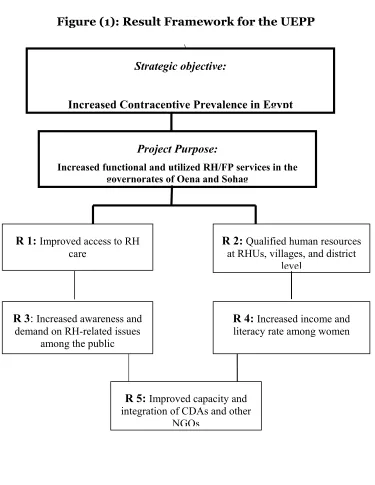
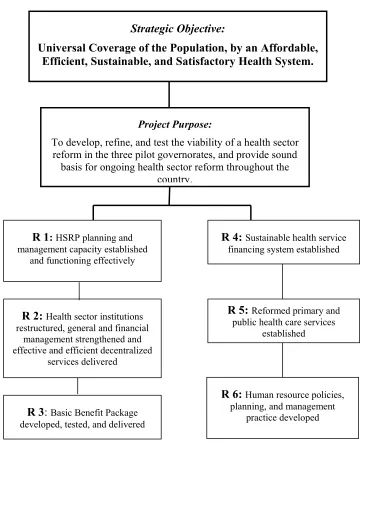
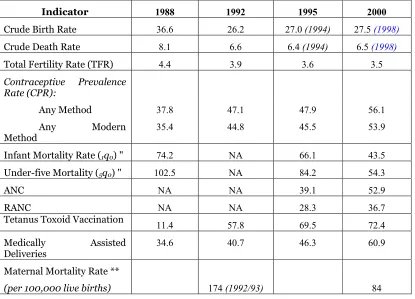
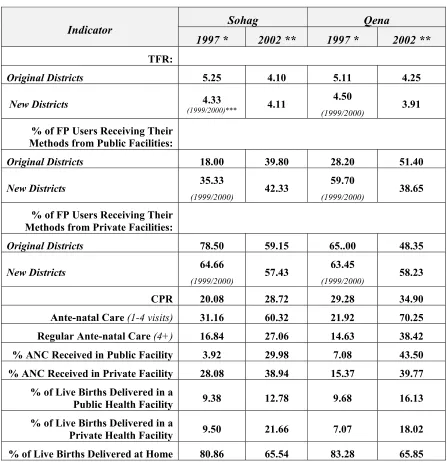
Figure (1): Result Framework for the UEPP ... 41 Figure (2): Result Framework for the HSRP ... 42 Table (1): Demographic Indicators Egypt 1988-2000 ... 43 Table (2): Comparative Indicators of the Baseline and End-line Surveys, Upper Egypt Population Programme... 44
ANNEXES
Annex 1: Chronology and list of persons interviewed Annex 2: List of documents consulted
1. INTRODUCTION
1.1 Background to the mission
On 29 November, 2001 the Board of EuropeAid requested the European Commission's Evaluation Unit to undertake an evaluation of the population theme in EC external assistance over the period 1994-2002 in order to “… verify the logic and consistency of individual actions with the stated objectives and expected impacts.” This evaluation represents the first-ever global assessment of the theme “Population and Development in EC external cooperation programmes." The objective of this evaluation is to provide the Commission with an independent expertise to assess the nature and evolution of its objectives and policies on population and development in external co-operation programmes, the evolution and volume of the programmes concerned, to assess its relevance, effectiveness, efficiency, sustainability and impact, and internal/external coherence.
Population is a multi-dimensional concept at the EC, and this evaluation is similarly intended to take a broad view of population and development. The template adopted is the International Conference on Population and Development (ICPD) Programme of Action, spanning the entire field of demography, from reproductive health (including sexually transmitted infections and HIV/AIDS) and family planning through age- and spatial distribution of populations, urbanisation, international and internal migration (including refugees, internally displaced persons, and asylum seekers), disabled persons, population data collection and analysis, and policy making. Information, education, and communication (IEC) activities and activities aimed at gender equality and equity are an important component.
The EC plays a significant role in international population assistance, providing approximately 5-10% of global support for the ICPD goals focusing on six areas:
• Maintaining and increasing the gains already made in providing access to sexual and reproductive health services,
• Ensuring that women have the opportunity of safe pregnancy and childbirth,
• Promoting the sexual and reproductive health of young people,
• Limiting the spread of HIV/AIDS and caring for those who live with the virus,
• Addressing problems of gender-based violence and sexual abuse, especially of young women and children,
• Building partnerships with civil society.
The legal bases for population assistance for the period covered by this evaluation (1994-2002), which contain the relevant policy objectives are:
- for reproductive health and family planning: the 1992 Council Communication on Family Planning and the 1997 Council Regulation 1484/97 on aid for population policies and programmes in developing countries.
- for sexually transmitted diseases, HIV and AIDS : the 1994 Communication on Health COM(94)78, Council Regulation 550/97 on HIV/AIDS-related operations, the Communication on Accelerated Action Targeted at Major Communicable Diseases Within the Context of Poverty Reduction (COM (2000) 585).
- for distress migration, internally displaced people and refugees : Council Regulation 1257/96 concerning humanitarian aid, Council Regulation 2258/96 covering rehabilitation and reconstruction operations, and Council Regulation 2130(2001) on operations to aid uprooted people in Asia and Latin America. While the Regulation covers only ALA, it can be construed as expressing EC policy broadly speaking in other regions of the world.
Almost all budget lines and the EDF have been found to finance population-related activities. This evaluation is therefore not limited to any particular financial instrument. The overall objective of this evaluation was to achieve improved coherence and application of the Commission's approach to Population and Development in partner countries through improved decision-making and project management. The evaluation was to have been implemented through provision of independent expertise to assess the nature of policies and objectives related to population in external cooperation programmes, the evolution and volume of programmes concerned, and their relevance, effectiveness, efficiency, sustainability, impact, and internal / external coherence. The focus was on a verification/testing of the logic and consistency of EC-funded actions with the stated objectives and expected results.
The evaluation concentrated on the period 1994-2002. It took into consideration, however, issues which were of more recent vintage such as the emerging importance of Sector Wide Approaches (SWAPs). The evaluation covered the Commission’s actions in the field of Population and Development in Asia and the Pacific, Latin America, the Caribbean, Africa (including the Mediterranean area), the Balkans, the Commonwealth of Independent States, and the non-accession countries in Central and Eastern Europe.
The thematic scope of the evaluation was bound by the following considerations: - Gender aspects of Population and Development should be discussed with
reference to the on-going evaluation of this area. Work in the ongoing Rehabilitation evaluation will also be taken into account.
- The analysis of international migration was limited to migratory movements between countries in the same region and within countries and was to include displaced persons / uprooted people. Migration from partner countries to Europe was not covered in the analysis.
- Only limited attention was be given to population, development and education; however, the work on education and communication of DG EAC was be taken into account.
Co-ordination, coherence, and complementarity with other key international actors in Population and Development were a key subject of the analysis; as were co-ordination, complementarity and coherence with NGOs.
Field visits
A major component of the Completion Phase of the evaluation consisted of five country field visits: Egypt, Georgia, Guatemala, India, and Kenya. The purpose of the country visits was to test and verify the logic and consistency of project and programme actions against stated objectives and anticipated impacts. Through consideration of Evaluative Questions, the evaluation team has assessed the relevance, effectiveness, and coherence of EC Population and Development strategy(ies) and programmes.
Each mission was carried out by a senior international consultant, who collaborated with a national expert recruited in advance of the mission. The duration of each country mission was approximately 10 days plus two days mission preparation and four days report drafting. Approximately five days were be dedicated to meeting different stakeholders, in the EC delegation, in partner organisations (line Ministries, NGOs, bilateral funders, etc.) and national actors involved in population issues. Donors (multilateral and bilateral) as well as major NGOs involved in population were interviewed for bench-marking of EC approach to population. A mixture of participatory techniques, including face-to-face interviews and focus group discussions were used. Approximately five days were dedicated to an assessment of selected programmes or projects. Techniques will include interviews and focus groups with beneficiaries (women and men), local implementers and other key stakeholders.
1.2 Why Egypt?
1.2.1 Introduction
EGYPT COUNTRY PROFILE
LAND AREA 1 million km²
POPULATION
Total Population (estimate 2003): 67.313
Total Population 2021 (millions): 89.4
Population Growth 1996-2001: 2.1
Urban Population (%): 43
FERTILITY AND CONTRACEPTION
Crude birth rate (births per 1,000 of a population in a
given year): 27.5 (1998)
Total Fertility Rate (Sum of the age-specific fertility rates
in a given year): 3.5 (2000)
Women aged 15-49 using contraception (all methods)
(%): 56.1
Women aged 15-49 using contraception (modern
methods) (%): 53.9
MORTALITY
Crude Death Rate (deaths per 1,000 of a population in a
given year): 6.5 (1998)
Average Life expectancy in years (men): 65.0
Average Life expectancy in years (women): 68.1
Infant Mortality Rate (Number of deaths to infants under one year of age per 1,000 live births in a given year): 43.5 Maternal Mortality Rate (Number of deaths to women due to pregnancy or childbearing complications per 100,000
live births in a given year): 84
HEALTH
Population with access to :
Health services %: Urban
Rural 100.0 99.0
Piped water %: Total Rural 91.3 82.1
Sanitation %: Total Rural
EDUCATION AND EMPLOYMENT
Literacy Rate (men) (%): 67%
Literacy Rate (women) (%): 44%
Combined basic and secondary enrolment ratio %
(2000/2001) 86.0
Unemployment rate %:
Total Female Adults 15 – 29 Urban Rural Unemployment rate by education 15+ %:
Below secondary Secondary University 9.0 19.8 20.4 8.9 9.2 1.5 22.4 8.8 ECONOMY:
Natural resources: Oil, natural gas, phosphates. GDP:
- total: € 90.7 billion, (Egy £364.8 billion). - per capita: € 1396
- real growth rate 4.9 % (EIU report 2.5) GDP growth:
4.6% (average 1997/98-2001/02)
3% (2001/02)
National budget:
(fiscal year 2002-2003):
- revenue: £ Egy 111.5 billion. (27.5% of GDP) - balance: £ Egy – 30.2 billion (7.5 % of GDP) - net deficit: - 17.2 (4.3 % of GDP)
Imports from the EU:
€ 4.2 billion (30 % of total imports)
Exports to the EU:
€ 1.5 billion (31.4 % of total exports)
Trade balance: - € 2.7 billion
Exchange rate:
€ 1 = £ Egy 7 (official rate is £ Egy 1= $6.95)
Inflation:
3% (average, 1998-02)
2.7% (average, 2002)
Sources:
• The Central Agency for Public Mobilization and Statistics (CAPMAS), 2003
Egypt was one of the earliest countries to cite rapid population growth as a barrier to development prospects, and policy statements have placed a strong emphasis on reducing the rate of demographic increase. EU support to social development in Egypt focuses directly on basic education, basic health, and poverty alleviation. The Health Sector Reform Programme covers the phased rationalisation of Egypt’s health care delivery system, prioritizing access, equity, quality and efficiency and provision of a cost effective basic health care package. A large population policy implementation project with a focus on safe motherhood, family planning and reproductive health (the Upper Egypt Population Programme) spanned the years of this evaluation.
1.2.2 Country profile: demographic situation and population policy priorities
Egypt is a lower-middle income country and has the demographic profile typical of a country at this stage of development: rapid population growth, relatively high age-specific fertility rates, relatively high age-age-specific mortality rates, and a relatively young age structure which guarantees considerable demographic momentum (see the accompanying chart and Table 1 at the end of this report). The latter means that even if age-specific fertility rates decline rapidly, population growth will continue to be rapid as large cohorts move through their childbearing years. Also typically, there is a pronounced urban-rural gap in fertility and mortality, with the countryside characterized by high fertility and high mortality. There is also a regional dimension, Upper Egypt being characterized by much higher fertility and mortality than Lower Egypt. The Egyptian Demographic and Household Survey for 1995 (EHDS95) showed that contraceptive prevalence among women in Upper Egypt was 24 percent, as opposed to 53 percent among women in Lower Egypt and 42 percent among married women in the Frontier Governates.
policy call for the attainment of replacement level fertility (ca. 2.1 births per woman) by 2017.
Funding for family planning services is provided primarily by the Government of Egypt (GoE) and donor agencies. A study of the cost of family planning during the period 1999-2000 found that, of the total cost of activities conducted by the public (i.e., not-for-profit) sector, GoE provided 58 percent of funding, donor agencies provided 36 percent, while client payments covered 6 percent. Government financed the overwhelming majority of services delivered (LE 159 million pounds out of an estimated total expenditure on family planning of LE 165 million), including not only direct provision but also subsidization of drugs and contraceptive supplies and insurance payments. However, service delivery (as opposed to finance) is primarily private: most women obtain RH/FP services from the private sector and most pregnant women receive ante- and post-natal care privately as well. Part of the explanation for this apparent paradox is that, public salaries for doctors being exceedingly low, Government allows doctors to receive private patients in public clinics outside office hours. There is a strong and accurate perception that the quality of public-sector services is low as compared to the private sector, often meaning that the same doctor will offer higher quality services to a private client than to someone coming during public consultation hours. “Quality” is a multi-dimensional term, but aspects include privacy, pleasant surroundings, sensitive client service, choice of physician and continuity of service (i.e., seeing the same doctor every visit) wide choice of contraceptive method, responsive attitude of staff, etc. It is observed in Egypt (and confirmed by project documentation reviewed below) that privacy is an especially important consideration in Egypt. Despite the wide availability of public RH/FP services, most consultations take place in the private sector. To put it simply, a woman with available resources will seek private, not public, service provision. Widely cited as a problem, this cloud may, however, have a silver lining, as it gives evidence of significant willingness to pay, even on the part of poor women. This suggests, in turn, opportunities for cost recovery and enhanced sustainability. The idea that primary health care should require zero out-of-pocket expenditure retains considerable appeal, however, and any discussion of cost recovery in RH/FP is controversial, requiring considerable dialogue among stakeholders before policy decisions can be made.
The Ministry of Social Affairs (MoSA) is responsible for supervising voluntary organizations in the field of population and family planning. MoSA supervises the activities of the Egyptian Family Planning Association (EFPA), which operates about 450 service delivery units. In addition, MoSA provides training of workers and community leaders in population and family planning. Other government ministries and agencies involved include Ministry of Information, Ministry of Education, Ministry of Local Government, and the Central Agency for Public Mobilization and Statistics (CAPMAS). Organisations active in research and training include Cairo Demographic Center (CDC) and the universities. Religious organizations, both Muslim and Christian, play a role in encouraging provision of family planning services.
Current policy concerns include a slowdown in the increase of contraceptive prevalence, which appears to have reached a plateau in the 1990s. The highly medically-oriented delivery system needs to be supplemented by a strong outreach programme. Another area of concern is high rates of discontinuation among contraceptive users. This pattern of discontinuation necessitates putting more effort into screening and counseling of prospective users on the appropriate method to be used and widening the range of methods offered. Despite the relative availability of trained health personnel and facilities, a significant number of Egyptian mothers do not receive ante-natal care, and relatively few receive the targeted standard of at least four ante-natal consultations. Non-trained health personnel continue to assist in the majority of births.
Egypt is also notable in that it is one of the relatively few developing countries to have an official policy on population distribution. Concentration of the vast majority of Egyptians on a small portion of the territory (the Nile Valley) and urban sprawl in Cairo and Alexandria have long been policy concerns. Government is embarking on three major land reclamation projects in Sinai and Toshka in Upper Egypt, with the goal of providing job opportunities and settlements away from the Nile Valley. Past experience has not, however, provided grounds for optimism: past projects have attracted no more than a single-digit fraction of the targeted population.
1.3 Summary of the mission
The mission was carried out by Mr. Landis MacKellar, international consultant based in Vienna, Austria, and Mr. Salah Abdel-Atty, national consultant based in Cairo. The evaluation was carried out at two levels. At national level, the team worked with staff from the EC Delegation, other international agencies, NGOs, and research organizations. AN examination of the Population-Development Project Database developed as part of the evaluation (see Annex 3) indicated that two projects dominated in monetary terms, so the evaluation focused on these::
this project in detail. The reason for selection of these projects were (i) UEPP was the EC’s flagship population project in Egypt and (ii) capacity built and progress made by UEPP will need to be carried forward by the HSRP.
The approach to the evaluation involved review of literature, including financing documents, project monitoring and evaluation reports, project final reports and impact studies, the Egypt Country Strategy Paper and National Indicative Programme, interviews with key informants and stakeholders, and site visits.
A detailed chronology of the mission and list of persons interviewed is given as Annex 1 of this Country Report. A list of documents consulted is given as Annex 2. Annex 3 gives an overview on major ICPD Interventions in Egypt, by thematic cluster.
1.4 Constraints
Time available was, as usual, the principal constraint. The EC Delegation official responsible for the health and population portfolio had taken it over only several weeks prior to arrival of the team. It should also be pointed out that neither member of the team has a medical background and their comments on strictly medical aspects of the projects should be considered in this light. It would be fair to say that the team has learned more in depth about the UEPP than the HSRP: not only was this project focused on population, but it has completed the entire project cycle and a substantial amount of evaluation and impact assessment material is available.
2. EVALUATIVE QUESTIONS
2.1 Evaluative Question 1
Since 1995, what has the European Commission put in place, in terms of global policies, strategies, and programmes (Cotonou agreement, TACIS, MEDA, ...) to operationalise its engagements with the ICPD Plan of Action and ICPD+5? To what extent are the EC policies, strategies and programmes coherent with ICPD?
This Evaluative Question is being answered via Brussels-based interviews, document analysis, etc. The Preparatory Phase concluded that the EC’s population policy focus has shifted from concern with rapid population growth as a deterrent to economic development to concern with the right to adequate sexual and reproductive health. In addition to its focus on women, the EC has actively targeted adolescents. This evolving population policy has been externally coherent with shifts in the stance of other policy institutions. Moreover, the internal coherence of EC population policy has improved over time. There is little sign from policy documents, however, that the EC has sought to exploit synergies with other areas of EC assistance (apart from health and support to refugees / internally displaced persons). Nor has there been adequate consideration of strategic linkages between population policy and policies in other areas.
In view of needs in poor countries and the scarcity of resources, the relevance of EC population assistance appears to be assured. The Preparatory Phase did not reach a judgment on whether EC assistance has been effective in pursuing policy goals. The validity of the efficiency criterion is diminishing with the move towards a human-rights based approach, however, as poor reproductive and sexual health particularly affect vulnerable groups, and as the unit costs of most interventions are low, the EC’s population activities may be very efficient means of addressing inequities. The Preparatory Phase also did not reach a conclusion regarding sustainability; however, it is widely known that available international financing falls far short of needs and governments are reluctant to commit resources.
2.2 Evaluative Question 2
To what extent did EC third country co-operation strategies (especially CSPs, NIPs, etc.) reflect an overall population and development sector approach, and respond to the needs of the Cairo Action Plan?
At the level of countries: Were country strategies internally coherent from the standpoint of population and were these population components coherent with the global development policy of the EU?
General overview of EC assistance
The Egypt Country Strategy Paper (CSP) 2002-2006 provides a strategy framework for assistance, setting out co-operation objectives, policy responses, and priority fields based on an analysis of the partner country’s policy agenda and situation. The National Indicative programme (NIP) 2002-2004 sets forth the programme objectives, expected results, and conditionalities in more detail.
EU co-operation objectives with Egypt are based on the Barcelona Declaration, which identified three main goals: creating an area of peace and stability based on respect for human rights and democracy, creating an area of shared prosperity through sustainable and balanced socio-economic development (and notably through progressive establishment of free trade), and improvement of mutual understanding among peoples of the region and development of an active civil society. Barcelona objectives are pursued through bilateral Association Agreements; negotiations for the EU-Egypt Association Agreement began in 1994 but were only concluded in 1999 and signed in 2001. The MEDA programme provides financial support for the objectives of the Barcelona Declaration.
As of September 2000, the overall policy agenda of GoE included the following elements:
• Continued denationalization of public sector interests
• Expansion and modernization of infrastructure
• Savings and investment promotion
• Fiscal, monetary, and financial sector reform
• Bureaucratic and industrial modernization
• Natural and human resource development
There is widespread recognition that social sector has lagged behind the economic reform process, especially that job opportunities created are running far behind population growth. A National Conference on Social Development (2000) moved social development closer to the centre of overall development policy. In its dialogue with donors, the GoE has expressed its wish to involve the international community more closely in social sector development. Key priorities are health sector reform, educations sector reform, and application of the Social Fund for Development (SFF) as a tool for promoting grassroots development and the development of civil society. Government commitment to the population sector is made clear by section 1.b above. Public pronouncements in the area are often nuanced by the need to avoid conservative social and religious backlash. However, President Mubarek has recently emphasized population in his speeches. The reflection of GoE population policies in EC assistance is discussed below.
From 1977 to 1996, EC-Egypt co-operation was carried out under four succeeding bilateral protocol agreements (under the last of which the UEPP was financed). Since 1996, cooperation has been financed under MEDA. The latter has been devoted to two main goals: support to economic transition and socio-economic balancing. The former has concentrated on the Industrial Modernisation Programme (Euro 250 million) and the latter on three components: the Education Enhancement Programme (Euro 100 million), the HSRP (Euro 110 million) and the SFD (Euro 155 million). The first two are sector-wide multi-donor reform programmes with large technical assistance components; the latter is also multi-donor but is distinguished by the large degree of self-responsibility for planning and execution.
Priority action areas for assistance identified by the CSP and NIP are
• Support to trade enhancement
• Support to comprehensive restructuring
• Supporting the process of economic transition through
o human resource development,
o financial and investment sector reform, and
o adoption of an “innovation culture”; and
• Supporting stability and balanced and sustainable socio-economic development through
o Decentralized and integrated local development initiatives (particularly addressing development disparities in South Sinai and Upper Egypt),
o Support to social development and the development of civil society structures, and
The population sector falls under support to social development. To get an
idea of the importance of the social sector in EC cooperation, Annex II of the CSP 2002-2006 lists interventions ca. 1995 – 2006 totaling Euro 845 million. The UEPP, the SFD, the Education Enhancement Programme, and the HSRP thus account together for 44 percent of EC assistance.
Population in EC assistance
The Egypt CSP 2002-2006 contains repeated references to rapid population growth and GoE concerns in the area. These concerns are grounded in the problems of unemployment and limitations on the natural resource base (i.e., concentration of population onto a fraction of the land area). The jobs issue, in particular cuts across all sectors of GoE policy and EC assistance and is repeatedly placed in the context of demographic pressure against the poor job-creation performance of the Egyptian economy.
The GoE is committed to reducing the goal of fertility to replacement level by 2017 in order to slow population growth. While it has not abandoned quantitative targets and a general orientation towards family planning, the GoE has embraced the broad approach of the International Conference on Population and Development (ICPD) Programme of Action, as evidenced by the document “Population and Development Strategies 2002 / 2007” prepared by the Population and Family Planning Sector of MoHP under the aegis of the UNFPA-funded Population and Development Strategies Project. EC policy has been evolving similarly, as discussed at length in the Final Report of the Preparatory Phase of this evaluation. The background paragraphs of Regulation 1484/1997 on aid for population policies and programmes make it clear that reduction of fertility rates and deceleration of population growth were central EC population goals in the late nineties, even 3 years after such quantitative goals had been de-emphasised by ICPD. However, to judge from the new EC council regulation on Sexual and Reproductive Health now (July 2003) under consideration, the EC is increasingly aligning itself with the broad view of population and development implicit in the ICPD Programme of Action.
Council Regulation 1484/97 on aid for population policies and programmes in the developing countries calls on targeting population assistance towards those countries furthest from ICPD targets and those which have failed to experience the onset of demographic transition. Egypt meets neither of these criteria yet, paradoxically, the population project database constructed during the Preparatory Phase of the evaluation reveals that the UEPP was by far the most significant EC-supported project tightly focused on goals (excluding HIV/AIDS projects, which correspond more closely to Council Regulation 550/97 than to 1482/97). Why would a country that would normally receive low priority in terms of population assistance the recipient of such significant support? The answer is clearly the strong commitment of GoE to population policy. However, this raises the paradox that countries targeted by the relevant regulation, i.e. those most in need of population assistance, may attach low priority to the sector.
The second project implemented over the evaluation period having major ICPD components was the Health Sector Reform Programme (HSRP). As a project aiming to provide universal access to a comprehensive primary health care package called the Basic Benefit Package (BBP), the HSRP is less focused on population concerns than was the UEPP; however, RH/FP and MCH are key components of the BBP. Three governates (just increased to five) were covered by the HSRP during the evaluation period: Alexandria, Menoufia, and Sohag. Note that the latter is in Upper Egypt and was also a focal point of the UEPP. The HSRP began in 1998 (with the Programme Support Stage commencing in 2001) and is expected to end in 2005, with EC support amounting to Euro 100 million.
While the evaluation team has devoted less attention to it, the SFD supported many Community Development Associations (CDAs) in activities related to population. These included renovation of clinics offering RH/FP services, outreach and awareness-creation activities, as well as women's literacy and income generation projects. Somewhat less closely related to population, but connected through the health impact, the SFD has also supported many sanitation projects.
Finally, the EC has funded several environmental actions in South Sinai which have provided clear understanding of the population-development imbalances affecting the region. Through its policy dialogue with GoE, the EC has injected environmental concerns into one component of GoE population policy, namely regional development projects to encourage population to move into now-sparsely inhabited zones.
Overall answer to Evaluative Question 2
2.3 Evaluative Question 3
Reproductive health: How far have EC supported actions in this field addressed specific objectives related to Chapter 7 of the ICPD and those of Regulation 1484/97?
Health (including primary health and health sector), morbidity, and mortality incl. HIV/AIDS: To what extent have EC supported actions addressed specific objectives related to Chapter 8 of the ICPD and those of Regulation 550/97?
This question will not repeat the evaluation of “AIDS and population” of 2000, but rather provide an update where relevant.
Reproductive health
Through the UEPP, the HSRP, and the SFD, the EC has supported a broad and comprehensive range of activities related to Chapter 7 of the ICPD and to the relevant Council Regulation 1484/97. Within the constellation of ICPD activities, the emphasis has been on FP within the broader context of RH.
Components of the UEPP include - Improved access to RH/FP
- Putting-in-place of qualified human resources at rural health units (RHUs), villages, and district capitals (district FP referral centres)
- Increased awareness and demand on RH-related issues among the public - Increased income and literacy among women
- Increased capacity and integration of NGOs.
In addition to providing RH/FP services, with an emphasis on the latter, the project produced and disseminated IEC materials targeting both women and men, promoted outreach, and empowered women through literacy activities and income generation projects based in rural health units (RHUs).
To summarise, actions relative to Chapter 7 of the ICPD which have been supported by the EC include family planning counseling, IEC services; education and services for prenatal care, safe delivery and post-natal care and infant and women's health care; prevention and treatment of infertility (provided at District Health Centers supported by the UEPP); abortion as specified in paragraph 8.25 of the ICPD Programme of Action, treatment of reproductive tract infections, sexually transmitted infections (STIs) and other reproductive health conditions; and IEC on human sexuality, reproductive health and responsible parenthood. Specific actions related to family planning supported by the EC include those designed to help couples and individuals meet their reproductive goals; to prevent unwanted pregnancies and reduce the incidence of high-risk pregnancies and morbidity and mortality; to make quality services affordable, acceptable and accessible to all who need and want them; to improve the quality of advice, IEC and services; to increase the participation and sharing of responsibility of men in the actual practice of family planning (through men’s groups sponsored by the UEPP). Actions related to prevention and treatment of STIs and HIV/AIDS have been less visible and it is not apparent that the EC has “promoted and distributed high-quality condoms as integral components of all reproductive health-care services” as called for by the ICPD. The EC has not focused on adolescents and youth, however, it has supported non-formal education and community-based efforts designed to reach adults, efforts supporting active and open discussion of the need to protect women from abuse, including actions designed to stop the practice of female genital mutilation and protect women and girls from all similar unnecessary and dangerous practices. As discussed below, the evaluation indicates that actions related to female genital mutilation have not had significant impact.
Referring to Council Regulation 1482/97 on aid for population policies and programmes in the developing countries, EC actions in Egypt have supported the establishment, development, and increased availability of RH services; improved RH services, supported IEC campaigns addressed at promoting better RH, provided FP services, supported (especially through the SFD and the outreach component of the UEPP) development of grassroots structures for the implementation of programmes. It is not clear that the EC has provided help with drafting legislation or with broad population policy development, however, these areas have been effectively supported by USAID and UNFPA. In addition, capacity-building needs in these areas are limited, since Egypt already has substantial expertise in place.
Primary health care, safe motherhood, and child survival
to ensure access to health-care services for all people and especially for the most underserved and vulnerable groups, and to make basic health-care services more sustainable financially, while ensuring equitable access. The EC has supported actions to extend, within the framework of primary health care, integrated reproductive health-care and health services, including safe motherhood, child-survival programmes and family planning services, to all the population and particularly to the most vulnerable and underserved groups, to reduce the major childhood diseases, particularly infectious and parasitic diseases, and to prevent malnutrition among children. In the area of women’s health and safe motherhood, the EC has supported actions to expand the provision of maternal-health services in the context of primary health care, to prevent, detect and manage high-risk pregnancies and births, to engage men's support for maternal-health and safe motherhood, to devise strategies to ensure that men share responsibility for sexual and reproductive health, to reduce the number of deaths and morbidity from unsafe abortion, and to improve the health and nutritional status of women, especially pregnant and nursing women.
The EC has undertaken few actions in Egypt in the area of HIV/AIDS. Experts interviewed were of two minds on this. Some felt that Egypt is a genuinely low-prevalence country and likely to remain that way; others pointed to the existence of significant risk groups (homosexuals, prostitutes, drug users) with significant needs. A MoHP survey of STIs apart from HIV/AIDS showed very high rates of prevalence among high-risk groups, a finding that can only cause concern as regards future transmission of the HIV virus. The MoHP is discreetly addressing itself to high-risk groups, through hot lines and other outreach and information efforts, but must step carefully to avoid a religious and social backlash.
One area in which survey results indicate that the UEPP achieved little progress was in changing attitudes towards female genital mutilation (FGM). Attitudes continue to be strongly supportive of FGM and ethnographic investigation suggested that there is a significant amount of resentment over what is perceived to be external interference in cultural traditions. This is despite significant change in attitudes regarding other aspects of RH/FP and MCH, some of which can be attributed to the highly successful IEC, outreach, and awareness-raising components of the UEPP.
Are these positive results of the UEPP, and others not evident in the statistics, likely to continue? Are they likely to be replicated in other areas of the country? In answering a later Evaluative Question, we concern ourselves with project sustainability. Here we ask more generally whether contraceptive prevalence is likely to continue to rise, RH to improve, etc.
Our answer is a qualified "yes." First, while the impact of EC-financed activities has been significant, it is important to note that these favourable trends, which are summarized in Table 1 at the end of the Country Report, ante-dated EC support for population in Egypt. They are driven by three factors. One is the strong policy stance of the GoE in all matters related to population, and its capacity to deliver on its commitment. The second is rapid attitudinal change; while much of the Egyptian population is poor, it is not isolated. Satellite dish TVs, mobile telephones, bicycles, etc. are common even in poor communities, in significant degree because of Gulf remittances. Civil society, a key ingredient of information dissemination and attitudinal change, is well developed. Third, some favourable developments in the population field are due to problems in the economic sphere that are unlikely to be solved soon. Age at marriage has risen with breathtaking speed as young couples find it harder to set up a household.
We qualify the answer because, several experts interviewed underscored that diminishing returns are becoming apparent in some areas, particularly those having to do with contraceptive prevalence. The easy gains, according to this view, have already been made, with over half of all Egyptian women already practicing contraception. Further gains will have to be made by concentrating on issues such as quality and the closely related issue of reaching out to women who adopted contraception but later abandoned it because of dissatisfaction with the method.
One area where there are considerable opportunities to be exploited is adolescents, a key concern of the ICPD Programme of Action in which the EC has taken little initiative (somewhat contrary to the guidance given in Council Regulation 1484/97). A widening gap has emerged between age at sexual maturity and age at marriage, and the resulting health and information needs must be met. Despite the controversial nature of anything having to do with adolescent sexuality, all GoE officials interviewed expressed strongly the view that GoE is ready and willing to take on these issues.
Overall answer to Evaluative Question 3
2.4 Evaluative Question 4
Refugees, IDPs, and distress migration: How far How have EC supported actions addressed specific objectives related to the relevant subsections of Chapters 9 and 10 of the ICPD for all countries, and of Regulation 2130/2001 for Asian and Latin American countries?
The answer to the question will take account of the results of the ongoing evaluation on rehabilitation.
Internally displaced persons (IDPS) have not been a problem in Egypt since the displacements associated with the Aswan Dam.
Cairo accommodates a large foreign population consisting mostly of Sudanese, followed by Ethiopians, Eritreans, and refugees from the Great Lakes region. The vast majority of these, although they have left their homes under distressed conditions, do not have legal refugee status as determined by the UN High Commission for Refugees (UNHCR). Thus, whereas estimates of the number of Sudanese in Egypt range from a few hundred thousand to 2-3 million, the total number of legally registered asylum seekers, recognized refugees, and resettled refugees of all nationalities does not exceed 20,000. The EC has not supported significant activities in the area of refugees.
Overall answer to Evaluative Question 4
2.5 Evaluative Question 5
Population composition (incl. age structure, indigenous populations, and people with disabilities) and distribution (incl. internal migration apart from displaced persons, large urban agglomerations, and international migration apart from migration into Member States): To what extent have EC supported actions addressed specific objectives related to the relevant subsections of Chapters 6, 9 and 10 of the ICPD?
The GoE has expressed concern over the over-concentration of population in core areas of the Nile Valley and rapid growth of the Cairo urban agglomeration. It is engaged in two large regional development schemes, one in Upper Egypt (the Toshka project) and one in the Sinai. Each is based on large-scale irrigation and the attempt to attract commercial farmers into the regions. However, GoE intends to pursue broader-based regional development, including putting in place factories for the processing of agricultural products, housing, etc.
This is not a new approach. Egyptian planners have long dreamt of expanding cultivation and settlement beyond the Nile Valley, simultaneously bringing new agricultural land under cultivation, providing employment, and relieving pressure on the major cities of Cairo and Alexandria. De-concentration projects do not, however, have a good track record in Egypt, as despite many years of effort, population and livelihoods continue to be concentrated in traditional areas.
The EC has not been explicitly involved in population re-distribution projects, However, via policy dialogue, the EC has worked to ensure that environmental considerations are integrated into the Sinai development project. The EC does not support the introduction of population on anything approaching the scale envisioned by GoE planners into the affected region of Sinai.
Its reason is that even the existing population is placing a strain upon the resource base. The impact of newcomers on the indigenous Bedouin population also needs to be taken into account. Through the policy dialogue, EC experts are expressing these views. Thus, the EC is attempting to place its imprint on GoE policies corresponding to the following key actions identified in the ICPD: promotion of sustainable development in sending and receiving regions, addressing inequitable access to available land, encouraging the growth of small- and medium-sized urban centers, and seeking to develop rural areas by supporting access to land-ownership and water resources.
Overall assessment of Evaluative Question 5
2.6 Evaluative Question 6
To what extent has the design of EC supported actions facilitated (or not) progress towards the achievement of tangible improvements in the lives of target populations? This includes the choice of beneficiaries (including identifying needs for capacity building and gender), the funding instruments, the planning process, …
The UEPP was carefully formulated in order to maximise impacts on target populations. In terms of regional targeting, Upper Egypt is well known to be a demographic "hot spot" characterised by high fertility, low contraceptive prevalence, poor RH, and high prevalence of practices and traditions injurious to women. A community-based needs assessment in 1994 informed the design of project approaches. The foundation for careful monitoring and evaluation was laid in a thorough baseline survey documenting limited autonomy of women in making decisions and substantial unmet need for FP.
Local communities were involved in project evaluation, as evidenced by the Impact Assessment document. The success of the IEC component of the project was attributed by senior MoHP advisers as due to involvement of the local population in developing materials.
Community seminars and meetings were an integral part of the UEPP and successes and failures in this regard were analysed in both the Final Report and the Impact Assessment. All clinic staff interviewed, as well as local MoHP officials, agreed that the main constraints to improved RH and MCH in Qena and Sohag are traditional attitudes, not lack of facilities, human capacity, or drugs and equipment.
It is clear that the UEPP was relevant to target population needs and made a tangible improvement in their lives (this was also a strong conclusion of the mid-term evaluation report prepared in 1999 by EPOS Health Consultants). That the target populations were poor is not in question, mostly because any woman with resources available would go to a private provider, or to a clinic operated by the Egyptian Family Planning Association (EFPA), not to a public clinic. The reasons for this are succinctly given: better surroundings, choice of physician, continuity of care (i.e., seeing the same physician on subsequent visits) and, by far the most important, privacy.
experienced by the female respondents, and the lack of education. There is little doubt that they would wish their mothers had had access to a programme like the UEPP.
How could the tangible improvements have been strengthened, and what lessons can be learned for the population components of the HSRP? It is clear from the ethnographic interviews cited above that, for many women, visiting a public RH/FP provider is an unpleasant experience, whether the provider is clinic-based or mobile, whether the physician is male or female, and whether the clinic is EC-supported or not. The women complain of insensitive treatment and a one-size-fits-all approach boiling down to the insertion of IUDs. Clinic doctors, for their part, complained in interviews of the traditional attitudes which lead women to avoid necessary treatment and of the persistence of cultural habits (FGM, home delivery, etc.) damaging their health. This is a classic low-level equilibrium trap – doctors blame women for being backward, women blame doctors for being insensitive—which can only be resolved by sensitising doctors, on the one hand, and accelerating attitudinal change in the target population, on the other.
Moral hazard problems in service delivery are acute and difficult to address effectively. Doctors expressed the view that the only reasons for having a MoHP appointment were (i) to have a steady “basic income,” (ii) to qualify for a pension, and (iii) the have the ability to get their private patients into public facilities when a serious procedure was required. During public visiting hours, doctors are fatigued from the hours spent in their private practices (essentially, they are working two jobs) and fully aware of which side the bread is buttered on as regards their income. It is essential that the HSRP break out of vicious circle in which doctors receive little pay for their public-clinic functions and thus provide low-quality service; in which clients pay low fees but receive concomitantly poor service in return.
There is no question that secondary beneficiaries, such as doctors, nurses, and staff, all benefited from working with the UEPP. There has been substantial training and capacity building. A MoHP official expressed his view that training in management information systems, accountancy, and the like has been especially useful and that the benefits will persist long after the project has ended.
The evaluation team has no reason to believe that the HSRP, while by necessity more macro- in conception, has been less sensitive to beneficiaries' needs than the UEPP. The BBP has been designed by a group of consultants in conformity with international protocols and RH/FP concerns are addressed. The MoHP has a strong track record in IEC, outreach, and awareness training, and this will be evident in all HSRP activities.
Overall answer to Evaluative Question 6
2.7 Evaluative Question 7
To what extent have implementation set-ups (i.e. suitable structures for planning, implementation, monitoring and evaluation), management mechanisms/tools and processes facilitated (or not) the achievement of expected impacts?
All persons interviewed have expressed the view that, while co-ordination is well established at the policy level (mostly through the Health and Population Sub-Committee of the Donors’ Assistance Group), co-ordination at the implementation level is poor. One example gives an idea of the situation. In the UEPP, an innovative component carried out women's income generation and literacy activities in the MoHP RH/FP facilities funded by the project. District MoHP officials, including a clinic supervisor, were not aware of these activities. Why? Because they had been implemented by UNICEF, not MoHP. In Qena and Sohag, the team learned, UEPP and a large USAID funded Systems Development Project operated side by side with no attempt at co-ordination. The result seems to have been not so much duplication as the failure to explore possibilities for cooperation and the likely failure to realize synergies. The establishment of the Administration for Technical Support and Projects within the MoHP is an important step in the right direction to address this problem.
The team did not encounter systematic evidence of problems in equipment procurement, drug supply, maintenance, etc. in EC-supported facilities. One doctor dismissed, as follows, a question about procurement: "This is equipment a doctor would dream of working with. So what if it is a few months late?"
Incorporating beneficiary views into project implementation and changing strategies on the basis of that input, was a significant feature of the UEPP. While on first reading it might appear to be a “classic” vertical family planning project, the UEPP was in fact notable for its attempt to incorporate FP into a broader RH and MCH context. The fact that both the UEPP and HSRP have been implemented by the MoHP is a plus factor for sustainability. While some problems were noted in getting technical assistance for the UEPP off the ground (essentially, difficulty in getting appropriate international staff in place), these were fairly quickly resolved. The EC chief technical adviser for the HSRP was aware of RH/FP issues and keenly interested in ensuring that these are taken into account in the HSRP.
recommendation of the latter, to extend the project in view of its ambitious goals, was implemented. MoHP officials affiliated with the HSRP praised the quality of monitoring missions and expressed their view that the regular meetings with Delegation staff regarding implementation issues were highly effective.
Both the UEPP and the HSRP have been implemented on the basis of annual work plans, with disbursement of next year's allocation dependent on review of progress in the current year. While highly labour intensive, because it involves the Delegation in tracking all expenditures, this approach appears to be best suited for present circumstances. In only one component – the Family Health Fund (FHF) – is the HSRP being implemented on the less hands-on "sector support" basis. Delegation staff report that there are issues to be resolved regarding the use of funds that have been allocated to the FHF. The same staff were of the opinion that the sector support approach, and much less the broad budget support approach (in which funds are disbursed not to MoHP but the Ministry Of Finance) would not work at present in Egypt because accounting systems are still insufficiently developed to be able to adequately track expenditures.
Overall answer to Evaluative Question 7
2.8 Evaluative Question 8
How far has necessary capacity (planning, integrating population into development policy and planning, implementation, monitoring, evaluation, etc.) been created (country level, EC delegations; EC headquarter) to support and facilitate preparation and implementation of population and development strategies and action?
At the level of the GoE, capacity-creation needs are limited by the fact that there are few countries in the world, which can match Egypt for the depth and quality of capacity already in place in the area of population and development. This ranges from the statistical agency CAPMAS, which is responsible for the Census, through the National Population Council (research wing of MoHP), through the Cairo Demographic Center (research wing of CAPMAS), through the Institute of National Planning (research wing of the Ministry of Planning), through the National Council on Population and Development (NCPD) supported by USAID and UNFPA. Policy makers are abundantly supplied with timely, high quality demographic analysis and statistics. Egypt is a world leader in the integration of population concerns into development planning.
In the MoHP, the presence of a Technical Assistant for health care reform financed by the EU is increasing capacity.
The range of ICPD concerns is covered through various units in the MoHP, which are represented at the Undersecretary level and staffed with a high level of expertise: there is a family planning unit, an MCH unit, a primary health care unit, etc. Less visible is an HIV/AIDS unit. In the past, the vertical nature of MoHP has been a problem – for example, the MCH unit not communicating with the FP unit and vice versa. This led, inter alia, to considerable waste and duplication at lower levels. Clinic staff would find themselves engaged in multiple reporting systems, staff were pulled out too often for narrow sector-specific training, etc. One of the contributions of the UEPP – which affected only two governates – was to demonstrate that FP could be integrated with RH and MCH concerns, and one of the goals of the HSRP is to integrate the various units through their contribution to the BBP. Thus, reporting will be based on provision of the BBP, training will take the BCB as its unifying theme, etc. If successful, this will be a major step forward.
In general, drugs and commodities appear to be in adequate supply in EC-funded health facilities. This is in contrast to MoHP facilities not receiving support. For example, the team visited a MoHP family planning facility in Aswan that was essentially devoid of supplies.
Similarly, due to effective outreach and IEC, the general level of awareness of the Egyptian population regarding RH/FP and MCH is good. However, if quality of service in much of the country remains low (as, for example, in the one MoHP clinic visited by the team which received no international support and was, as a result, suffering severe shortages of equipment and supplies), this awareness will not translate into practice or better health outcomes.
At the level of the Delegation, this mission did not perhaps occur at the best time to judge capacity. The health and population sector expert left several weeks before the team arrived and the dossier is being temporarily looked after by a regional development expert (who is responsible for policy dialogue with the GoE regarding the two large regional development projects in Sinai and Toshak). The evaluation team was assured that this “caretaker” situation – which is not sustainable in view of the large size of the EC commitment to HSRP – will not persist, however, concerns were expressed that the putting-in-post of a new expert might take time.
Overall answer to Evaluative Question 8
2.9 Evaluative Question 9
To what extent have cross cutting themes (gender, environment, population and poverty, human rights, etc.) been taken into account during the implementation process and whether synergies between the different pillars of population and development have been sufficiently exploited?
Gender issues have been a major component of EC-supported activities in the area of population and development. As seen above, the UEPP contained a significant component related to women's empowerment through literacy and income generation. Its outreach and awareness-creation seminars were carried out through Women's Clubs, Men's Clubs, and mass meetings open to both women and men. Increasing the availability of female physicians was a central goal of the project. Also important is that the project led to substantial efforts to collect data on women’s well being and health, and on the attitudes of both men and women.
The GoE has taken a strong, although not yet very effective, stand against FGM, and the UEPP included efforts to discourage the practice. However, the self-assessment in the Final Report, supported by attitudinal surveys carried out among project beneficiaries, was that these efforts had borne only limited fruit. Researchers in Cairo interviewed by the evaluation team believe they have uncovered evidence of considerable, though still latent, attitudinal change regarding FGM. This suggests an opportunity for the HSRP to make considerable progress in this difficult area.
The team did not notice any striking gender imbalance in staff met, whether at the highest level in the MoHP in Cairo or at the level of clinics.
Regarding the integration of various pillars of population and development in development planning, the situation in Egypt is very good. Employment and labour market analyses are based on high-quality demographic data and analyses. The GoE and experts interviewed are keenly aware of the linkages between education of girls and future fertility; experts interviewed (admittedly none of them GoE officials) are willing to entertain the idea that investing in girls' education may, in the long run prove more effective in reducing fertility than investing directly in the provision of family planning. This indicates that international best-practice understanding of the dynamics of fertility decline has been taken on board. The team did not see any hard evidence that population trends had been taken into account in poverty-reduction strategies, however, this is implicitly the case because the core of the GoE approach to reducing poverty is addressing the long-run issue of jobs creation and the explicit goal of population policy in Egypt is to reduce pressure on the labour market by slowing population growth.
Overall answer to Evaluative Question 9
2.10 Evaluative Question 10
How sustainable are the effects and impacts of EC-supported policies and programmes in the field of population and development, both at the level of individuals and at institutional and policy level in the partner countries?
Egypt at the moment presents an excellent opportunity to consider this question. As concerns the ability of the GoE to pursue population policy objectives, it is clear from the discussion above that the evaluation team is optimistic.
As concerns the Delegation, it is urgent that a full-time staff member dedicated to health and population issues be put in post. If not, given long lead times in country programming, continued EC support to the HSRP (which has a 15-20 year time horizon) may be compromised. Recall that the current support framework expires in 2005.
As concerns projects and beneficiaries, the picture is mixed. The UEPP, by almost all measures a success, has just ended. The HSRP, which will ensure RH/FP and MCH needs for all Egyptians in the future, is underway in 3 governorates (just raised to 5).
Not surprisingly, UEPP staff in clinics visited expressed concern at the withdrawal of international support. However, the evaluation team took these complaints with a grain of salt. Two aspects were brought out repeatedly. One was that referrals from RHUs to District Family Planning Referral Centers had slowed dramatically because RHU staff is no longer being paid a modest "bounty" for each patient referred. Yet this system is so replete with moral hazard that a significant proportion of the referrals previously made must have been on fairly flimsy grounds. The odds that women with a health-threatening condition will not be referred because there is no longer a financial incentive to do so strikes the team as low. On the other hand, it must be admitted that RHU staff may be no longer bothering to refer women whose health is not endangered, but who have special needs. This again falls under the general issue of quality.
The second theme raised by clinic staff was that, after international support ceased, it was no longer possible to obtain state-of-the-art cytological examination of pap smears. However, in a burdens-of-disease sense, cervical cancer is not a serious problem in Upper Egypt (this reflects not just the evaluation team’s speculation but responses of physicians interviewed). In other words, money spent on detecting cervical cancer through the pap smear programme would have saved more lives and avoided more sickness had it been spent on other areas of RH/FP. In one District Referral Center, not a single case had been detected in the entire life of the UEPP. Moreover, as the evaluation team discovered after it had expressed concerns, many similar concerns about the pap smear programme – its relevance, cost-effectiveness, and sustainability --were raised by the EPOS evaluation team in 1999.