Occurrence and genetic and pathogenic characterisation of
Pyrenophora teres
f.
teres
,
P. teres
f.
maculata
and
their hybrids.
A Thesis submitted by
Barsha Poudel, MSc (Bioinformatics)
For the award of
Doctor of Philosophy
Abstract
Pyrenophora teres is the causal agent of net blotches, which are important foliar diseases of barley (Hordeum vulgare) worldwide. Pyrenophora teres has two forms, P. teres f. teres (Ptt) and P. teres f. maculata (Ptm), which causes the net and spot forms respectively based on the symptoms that they induce on barley. The life cycles of both forms are almost identical in which they can undergo both sexual and asexual reproduction. Sexual reproduction contributes to genetic and pathogenic evolution and provides challenges for development of commercial resistant cultivars. It is necessary to understand the genetic and pathogenic diversity of P. teres to effectively breed commercial barley cultivars with resistance. This will improve productivity for barley growers and industry and help reduce reliance on chemical fungicides.
The two forms of P. teres consist of different virulence genes. Sexual recombination between two forms of P. teres provides a potential threat to breeding for resistance as it may result in combination of virulences from the two forms. Hybrids have been reported occasionally in the field. This study was conducted to investigate the frequency of Ptt x Ptm hybrid development in the field where both forms of P. teres co-exist. For this purpose, three field trial sites were established for three successive years and Ptt and Ptm of opposite mating types were inoculated to facilitate hybridisation. In addition, samples collected from barley growing regions in Australia during 1976–2015 were analysed. To identify hybrids between the two forms, twelve Ptt and Ptm specific markers were developed using a whole genome comparative approach. These markers provided a more efficient and robust method than previously developed markers for identification of hybrids. No Ptt x Ptm hybrids were identified in the collected samples. This indicates that sexual recombination between the two forms of P. teres was rare, even where conditions were conducive. Further, pre- and post-mating barriers which may be responsible for reproductive isolation between Ptt and Ptm were reviewed.
iii
identified which indicated that gene flow combined with sexual recombination plays a prominent role in rapidly changing the structure of Ptt populations.
Barley grass (H. leporinum) is an alternative host to P. teres and can harbour virulent pathotypes of P. teres which can infect barley cultivars. Genetic diversity between P. teres collected from barley grass and barley showed that P. teres from the respective host were distinct, which suggested genetic isolation. Pathogenicity assay result showed that virulent P. teres from barley grass were avirulent on barley. This indicated that barley grass contributes little to the genetics of the P. teres population and negligible risk to commercial barley cultivars although the two hosts are often grown in close proximity.
Certification of Thesis
This Thesis is entirely the work of Barsha Poudel except where otherwise acknowledged, with
the majority of the authorship of the papers presented as a Thesis by Publication undertaken by
the Student. The work is original and has not previously been submitted for any other award,
except where acknowledged.
Principal Supervisor: Dr. Anke Martin
Associate Supervisor: Professor Mark W. Sutherland
Associate Supervisor: Dr. Mark S. Mclean
v
Acknowledgement
I embarked on my PhD journey three and half years back and today I am at the end of this journey because of many people to whom I owe my gratitude. First and foremost, I would like to express my sincere gratitude to my supervisor Dr Anke Martin for her continuous support, motivation and valuable guidance throughout my PhD. I highly appreciate her patience and willingness to help me with my queries on daily basis. I would also like to thank my co-supervisors Prof Mark Sutherland and Dr Mark Mclean for their continuous guidance during my PhD and providing vital feedback to improve my research in every possible way. I would like to extend my thanks to all my supervisors for helping me to become a better researcher.
My sincere thanks to all researchers and staffs in Centre for Crop Health for their support and encouragement. My earnest thanks to Prof John Thompson and Dr Kirsty Owen and all the members of Action Learning Group for providing me with their valuable suggestions to improve my manuscripts and continuous motivation. I also would like to extend my thanks to Greg Platz, Judy Mcilory and Ryan Fowler from Hermitage Research Facility for their kind assistance and support during my field experiments and this study. I also would like to thank Dr. Celeste Linde and Leon Smith from Australian National University and Dr. Sanjiv Gupta from Murdoch University from providing fungal isolates for the research.
I would like to acknowledge Grain Research & Development Corporations for partly funding this project. I also would like to thank University of Southern Queensland for providing me with infrastructure, requisite materials and resources without which this research would not have been possible and for providing me with USQPRS scholarship.
all times. Big thanks to my besties Kiruba, Dani and Mela for always being there for me. This journey would not have been so enjoyable without you all.
vii
Statement of Authorship
Chapter 2: Rare Pyrenophora teres hybridization events revealed by development of sequence-specific PCR markers. Poudel B, Ellwood SR, Testa AC, McLean M, Sutherland MW, and Martin A. Phytopathology, DOI: 10.1094/PHYTO-11-16-0396-R
Barsha Poudel (BP) contributed 70% towards the concept of the manuscript, designing of the PCR primers from provided sequences using Primer3 software, optimisation of the primers, analysis of data obtained by amplifying isolates from barley and barley grass using developed PCR primers and AFLP markers, literature collection and interpretation, writing and drafting of the manuscript. Alison C. Testa contributed 10% towards obtaining sequences using comparative genomic approach. Anke Martin (AM), Mark W. Sutherland (MWS), Mark McLean (MM) and Simon R. Ellwood contributed 5% each towards critical revision of the article and final editorial input for publication.
Chapter 3: Investigating hybridisation between the forms of Pyrenophora teres based on Australian barley field experiments and cultural collections. Poudel B, McLean MS, Platz GJ, Mcilroy JA, Sutherland MW, and Martin A. Submitted to European Journal of Plant Pathology.
BP contributed 65% towards the concept of the manuscript, collection of leaf samples and stubble from the field and isolation of conidia and ascospores, DNA extraction of field collected and cultural collections, amplification of isolates using sequence specific and mating type markers, analysis of the obtained data, literature collection, writing and revision of the manuscript. AM and MM contributed 10% towards the concept and design, critical revision of the manuscript and final editorial input. Greg J. Platz (GJ) and Judy A. Mcilroy contributed 5% each to field experiment, data collection and final approval of the version for publication. MWS contributed 5% towards revision of the article and final editorial input.
Chapter 4: Investigating the genetic structure of Pyrenophora teres f. teres populations over time in an Australian barley field. Poudel B, Vaghefi N, McLean MS, Sutherland MW, and Martin A. This chapter was prepared according to the instructions to authors given by the
BP contributed 70% towards the concept of the manuscript, data refinement and analysis of the DArT data using Poppr package in R, MultiLocus and STRUCTURE softwares, literature collection, writing and revision of the manuscript. Niloofar Vaghefi contributed 10% each towards the data analysis, critical revision and final editorial input of the manuscript. GJ contributed 5% to field experiment, data collection and editorial input. AM, MWS and MM contributed 5% towards critical revision of the article and final editorial input.
ix
List of Publications and Submitted Articles
Poudel B, Ellwood SR, Testa AC, McLean M, Sutherland MW, and Martin A (2017). Rare Pyrenophora teres hybridization events revealed by development of sequence-specific PCR markers. Phytopathology, DOI: 10.1094/PHYTO-11-16-0396-R.
Poudel B, McLean MS, Platz GJ, Mcilroy JA, Sutherland MW, and Martin A. Investigating hybridisation between the forms of Pyrenophora teres based on Australian barley field experiments and cultural collections (Manuscript submitted to European Journal of Plant Pathology).
List of Conferences attended
Poudel B, Ellwood SR, Testa AC, McLean M, Sutherland MW, and Martin A. “Development, optimisation and validation of sequence-specific PCR markers for characterisation of Pyrenophora teres hybrids.” Participated in poster and elevated pitch presentation at 17th
Australian Barley Technical Symposium, 2015 held at Sydney, Australia.
List of Abbreviations and Units:
AFLP – Amplified fragment length polymorphism DArT – Diversity Arrays Technology
cv – cultivar
HMG – High mobility group HRS – Hermitage Research Station HRF – Hermitage Research Facility
LMWC – Low molecular weight compounds MAT – Mating type locus
MLG – Multi-locus genotype NFNB – Net form of net blotch ORF – Open reading frame
PCR – Polymerase chain reactions PDA – Potato dextrose agar
PrCP – Proportion of compatible pairs of loci PCoA – Principle coordinates analysis Ptt – Pyrenophora teres f. teres
Ptm – Pyrenophora teres f. maculata
RAPD – Random amplified polymorphisms DNA SFNB – Spot form of net blotch
SNP – Single nucleotide polymorphism SSR – Simple sequence repeats
QTL – Quantitative trait loci
xi bp – base pair
cm – centimeter °C – degree Celsius g – gram
h – hour ha – hectare kg – kilogram L – litre m – meter mm – millimetre mM – micromolar μm – micrometer μL – microlitre μM - micromolar Mbp – Mega base pair ng – nanogram
Table of Content
Abstract ... ii
Certification of Thesis... iv
Acknowledgement ... v
Statement of Authorship ... vii
List of Publications and Submitted Articles ... ix
List of Abbreviations and Unites ………...x
Chapter 1: Literature Review ... 1
1.1 Pyrenophora teres ... 1
1.2 Hosts ... 2
1.2.1 Barley... ………... 2
1.2.2 Barley grass and other alternative hosts ... 3
1.3 Life Cycle ... ………... 4
1.4 Symptoms ... ………5
1.5 Molecular Characterisations ... 6
1.6 Recombination in Pyrenophora teres ………. ... . 7
1.6.1 In vitro Recombination ... 8
1.6.2 In vivo Recombination ... 9
1.7 Genetic Variation ... 9
1.8 Pathogenic Variation ... 10
1.9 Management of the disease ... 13
xiii
1.10 Objectives of study ... 15
References ... 17
Chapter 2: Pyrenophora teres hybridization events revealed by development of sequence- specific PCR markers ... 25
Chapter 3: Investigating hybridization between the forms of Pyrenophora teres based on Australian barley field experiments and cultural collections ... 33
Chapter 4: Investigating the genetic structure of Pyrenophora teres f. teres populations over time in an Australian barley field ... 57
Chapter 5: Genetic diversity and virulence of Pyrenophora teres isolates collected from barley grass, Hordeum leporinum ... 78
Chapter 6: Conclusion and Future Recommendations ... 99
6.1 Key Findings of this study ... 99
6.2 Future Recommendations ... 100
6.3 Conclusion ... 101
References ... 103
Chapter 1
Literature Review
1.1 Pyrenophora teres
Pyrenophora teres Drechsler (anamorph Drechslera teres [Sacc.] Shoem.)is the fungal pathogen
that causes net blotch, a foliar disease of barley. The pathogen belongs to the phylum Ascomycota
within the class Dothideomycetes and order Pleosporales. The pathogen is classified in two forms,
Pyrenophora teres f. teres (Ptt) and Pyrenophora teres f. maculata (Ptm),based on the symptoms
incited in barley. Both Ptt and Ptm are morphologically similar but genetically distinct (Crous et
al. 1995; Ellwood et al. 2012; Rau et al. 2005; Smedegård-Petersen 1971).
Net form of net blotch (NFNB) caused by Ptt appears as elongated, dark brown netted lesions
(net form) and was first described by Atanasoff and Johnson (1920). The spot form of net blotch
(SFNB) caused by Ptm appears as dark brown spots (spot form) accompanied by chlorosis of the
surrounding tissue in susceptible barley cultivars (Smedegård-Petersen 1971). Two other
Pyrenophora species, P. japonica Ito & Kurib. [anamorph Drechslera japonica (Ito & Kurib.)
Shoem. = Drechslera tuberosa (Atk.) Shoem.] and P. hordei Wallwork, Lichon & Sivanesan
(anamorph Drechslera Shoem) are morphologically very similar to SFNB and also cause foliar
disease on cultivated barley. They are considered as different species based on the small
differences in morphology (size and shape) conidia and ascospores (Ito & Kuribayashi 1931;
Wallwork et al. 1992). Pyrenophora teres f. maculata when first identified by McDonald (1967)
was considered as the mutant strain of P. teres as he was able to cross the isolates of spot form
with the net form of P. teres. Later, Smedegård-Petersen (1971) renamed the spot type fungus as
a new form of P. teres and proposed the name P. teres f. maculata for isolates producing spot-type
symptoms and P. teres f. teres for those producing net-type symptoms. This finding was validated
by Crous et al. (1995) using an AT rich DNA polymorphism marker, in which banding patterns of
isolates of net and spot form showed high similarity with one another.
Net blotches caused by Ptt have been reported since the 1920s in Denmark (Shipton 1966) and
have been reported in Australia, Canada, the United States of America, Argentina, Britain, Turkey,
Steffenson et al. 1996; Tekauz & Mills 1974) . The first two spot form isolates identified were
from Canada and Israel and later it was reported to occur in Denmark, Canada, Morocco, Tunisia,
Turkey, the USA (Bockelman et al. 1983; Liu et al. 2011; McDonald 1967; Smedegård-Petersen
1971). In Australia, spot form of net blotch was first reported at Nawaba in Western Australia in
1977 (Khan & Tekauz 1982) and is now prevalent in many barley growing regions (McLean et al.
2009). Reduced or zero tillage practices have drastically increased the incidence of SFNB since
the early 1990s (McLean et al. 2009) and they are now common throughout the barley growing
regions of Australia. The two forms of net blotch have a different global distribution pattern,
mainly due to cultivation of different barley cultivars, stubble retention practices and climatic
conditions across the globe.
Net blotches can cause yield loss of 10-40% and reduce grain quality attributes such as
plumpness, weight, protein and carbohydrate content, lowering brewing quality (Khan 1987;
Mathre 1982; McLean et al. 2009; Shipton 1966; Shipton et al. 1973). Yield and quality loss is
variable depending on the severity of the disease in response to environmental conditions and
susceptibility of cultivars (Liu et al. 2011; Mathre 1982; McLean et al. 2016). Complete yield loss
can occur if susceptible cultivars are planted under conditions favourable for disease (Mathre 1982;
Murray & Brennan 2010), causing devastating economic losses to barley growers and downstream
industries.
1.2 Hosts
1.2.1 Barley
Barley (Hordeum vulgare) was originally domesticated in the Fertile Crescent approximately
10,000 years ago from the wild progenitor H. spontaneum (Badr et al. 2000). It is now an important
crop worldwide, used to produce malt for beer brewing and as animal feed (Mathre 1982). Barley
cultivars have both spring and winter growth habits, while spike morphology is classified as either
two or six-row depending on the number of fertile spikelets.
Barley is an important commodity with global production of 146 million tonnes per year (The
Food and Agriculture Organization 2014). In Australia, barley is second to wheat in grain
cultivation and is grown from Southern Queensland to Western Australia. Australia produces
approximately 3.9 million hectares (Australian Bureau of Statistics 2015-2016). On a commodity
basis, barley contributes a gross value production of AUD $2.2 billion to the Australian economy.
Barley in Australia can be affected by 41 different foliar, root or crown diseases that can cause
estimated average annual losses of AUD $252 million to barley industries (Murray & Brennan
2010). Of these diseases, net blotches caused by P. teres cause the greatest loss, averaging an
estimated AUD $62 million annually (Murray & Brennan 2010).
1.2.2 Barley grass and other ancillary hosts
Barley grass (H. leporinum) is a subspecies of H. murinum and is an ancillary host to P. teres
(McLean et al. 2009). It is an annual weed which germinates during autumn and grows alongside
barley in the cereal growing regions of Australia. Barley grass can act as an inoculum source of P.
teres. Barley grass can be controlled by burning stubble, early hay production, grazing and
collecting seeds at harvest or by applying herbicides. However, management is difficult due to
seed dormancy and prolific seed set (Moore et al. 2014). Other volunteer plants and grasses
infected by P. teres includes wheat (Triticum aestivum), oat (Avena sativa), Agropyron, Bromus,
Elymus, Hordelymus, Stipa, and other Hordeum spp. (Brown et al. 1993; van den Berg 1988). The
contribution of volunteer plants and these grass species as an inoculum source is largely unknown.
Genetic studies of P. teres collected from barley grass have not been undertaken. Previous
studies have shown low virulence on barley cultivars and suggested host specialisation (Brown et
al. 1993; Khan 1973). However, in a recent study by Fowler et al. (2017), one barley grass isolate
was shown to be virulent on a number of barley cultivars. This suggests that a new source of
virulence could be transferred from barley grass to barley. A similar example has been observed
in a study by Linde et al. (2016), where virulent strains of Rhynchosporium commune (causal agent
of barley scald)collected from barley grass were capable of infectingbarley cultivars. In that study,
more pathotypes and higher virulence diversity of R. commune was found in barley grass as
compared to barley, which suggests that barley grass poses a greater threat to the barley industry
if not managed properly. Future studies are necessary to assess the importance of ancillary hosts
1.3 Life Cycle
Pyrenophora teres is a stubble-borne pathogen. The life cycles of both forms of P. teres are almost
identical and involve both sexual and asexual stages (Figure 1). The sexual stage consists of
pseudothecia on the surface of stubble. Pseudothecia are 1–2 mm in diameter and are covered with
dark setae. Each pseudothecia contains asci with ascospores. Asci are club-shaped, rounded at the
apex, bitunicate with a short stalk at the base and 30–61 x 180–274 µm in size. Ascospores are
light brown and ellipsoidal with three transverse septa and one or two longitudinal septa in the
median cells and measure up to 18–28 x 43–61 µm in size (Mathre 1982). Ascospores are
forcefully ejected into the air as far as 35 cm during favourable conditions and can travel long
[image:17.612.74.507.316.606.2]distances and are responsible for initial crop infection (van den Berg 1988).
The asexual, or anamorph, stage of P. teres produces conidia. Conidia are 15–23 x 30–175
µm in size and develop at the tip of olive to brown coloured conidiophores, which occur singly or
in groups of two to three. Conidia are straight and cylindrical with rounded ends, sub-hyaline to
yellowish brown in colour and have 1–14 pseudosetae (Liu et al. 2011; Mathre 1982; McLean et
al. 2009). Spores produced on infected stubble serve as primary inoculum and those produced on
the surface of lesions are responsible for secondary inoculum. The formation and dispersal of
conidia occurs within 14–20 days after primary infection. Conidia are dispersed by winds up to
about 7 m or by rain splash with cycles of infection repeated throughout the growing season during
favourable climatic conditions (Mathre 1982).
The infection process begins with ascospores or conidia landing on the leaves of barley.
Spores germinate within a few hours under optimal temperatures of 15–25°C and relative humidity
of about 100% (Mathre 1982). The infection rate is higher when humid conditions continue for
10–30 or longer hours (Liu et al. 2011; Mathre 1982). The fungus can survive over winter on the
surface of stubble, grass weeds and as seed borne mycelium in the case of Ptt (McLean et al. 2009)
and act as a source of inoculum for the next growing season.
1.4 Symptoms
Symptoms of NFNB and SFNB are initially very similar. The lesions appear as small circular or
elliptical spots on susceptible barley cultivars but develop into two distinct types of lesions. In the
case of net-form, the lesions elongate and form dark brown, longitudinal or transverse streaks
creating characteristic net-like patterns (Figure 2a) (Smedegård-Petersen 1971). The lesions can
extend up to 25 mm in length (Shipton et al. 1973). In contrast, the spot-form symptoms develop
into dark brown elliptical or fusiform lesions (Figure 2b) which measure up to 3x6 mm in size (
Smedegård-Petersen 1976). Symptoms can occur on the lamina and sheaths of the leaves and
occasionally on the head (Smedegård-Petersen 1971). Symptoms appear within 24 hours of
infection and secondary spore development can occur within a week (Liu et al. 2011).
Net and spot form lesions can be surrounded by a chlorotic zone of varying width which
can eventually extend to kill the entire leaf. Symptoms produced by isolates of P. teres are partially
of the disease is a result of the extent of necrosis and chlorosis and can be significantly inhibited
by host resistance. Resistant barley cultivars generally show small pin-point sized lesions that do
not increase in size and normal growth of the leaves occurs (McLean et al. 2009;
Smedegård-Petersen 1971).
[image:19.612.73.518.172.226.2]
Figure 2: Typical symptoms of net (a) and spot (b) form of net blotch on leaf of barley cultivar.
1.5 Molecular Characterisation
Molecular markers can differentiate between the two forms of P. teres without symptoms analysis.
This is important as it can be difficult to distinguish the forms using symptom expression due to
pinpoint lesion on resistant host genotypes and/or environmental factors (Liu et al. 2011;
Smedegård-Petersen 1971; Williams et al. 2001). In addition, the spot-type symptom produced by
Ptm is very often confused with barley spot blotch caused by Bipolaris sorokiniana, and
examination of the spore type is necessary to characterize the pathogen. Thus, molecular markers
can be used to more reliably identify the two forms especially where symptom expression is not
conclusive.
Specific primer sets have been identified and designed for Ptt and Ptm isolates. Williams et al.
(2001) developed a specific primer set that amplifies a 378 bp sized DNA fragment from Ptt
isolates, and a 411 bp sized fragment from Ptm isolates. Similarly, nine diagnostic simple sequence
repeat (SSR) markers that amplify DNA of different sizes in each form have been developed
(Keiper et al. 2008). Two specific mating type markers for net form (PttMAT1-1-1 and Ptt
MAT1-2-1) and two specific to spot form (PtmMAT1-1-1 and PtmMAT1-2-1) can also be used for this
purpose (Akhavan et al. 2015; Lu et al. 2010; Rau et al. 2007; Rau et al. 2005). A polymerase
chain reaction (PCR) based form-specific marker has been developed from an amplified fragment
length polymorphism (AFLP) fragment of P. teres (Leisova et al. 2005(b)) and a real time PCR
based assay has been developed to identify and quantify the occurrence of the two forms of P.
teres from infected barley leaves (Leisova et al. 2006). All of these markers are specifically
designed to differentiate between the two forms of P. teres and have not been assessed to
distinguish hybrids from Ptt and Ptm isolates.
AFLPs and Random Amplified Polymorphisms DNA (RAPD) techniques can be used to
identify hybrids between the two forms of P. teres (Campbell et al. 1999; Campbell et al. 2002).
AFLPs have some advantages over RAPDs in that they are highly reproducible and can better
distinguish closely related isolates (Purwantara et al. 2000; Serenius et al. 2005). The AFLP
procedure is based on the selective amplification of genomic restriction fragments. AFLPs can
amplify DNA fragments without previous knowledge of the sequence using a limited set of
universal primers followed by PCR-based amplification (Vos et al. 1995). However, both of these
methods depend on gel electrophoresis resulting in low throughput.
Diversity Arrays Technology (DArT) markers have been developed for fungal species (Sharma
et al. 2014; Wittenberg et al. 2009). This method may also be applicable for the detection of Ptt x
Ptm hybrids. Diversity Arrays Technology (DArT) is a genotyping method that uses array
hybridisations technology to score hundreds of polymorphic markers across a whole genome in a
single assay (Jaccoud et al. 2001). DArT is a microarray-based genotyping platform and requires
no previous sequencing information. DArT polymorphism results from nucleotide polymorphisms
within restriction enzymes recognition sites and indels and polymorphisms are scored based on
presence/absence of hybridisation.
1.6 Recombination in Pyrenophora teres
Sexual reproduction in P. teres is regulated by mating type genes. Pyrenophora teres has a single
mating type locus (MAT) with two alternate forms (idiomorphs) designated as MAT1-1 and
MAT1-2 (McDonald 1963). Each gene within an idiomorph consists of an open reading frame
(ORF) encoding a protein with an alpha box motif (MAT1-1) or a high mobility group (HMG)
motif (MAT1-2). The gene is indicated by the idiomorph symbol followed by a dash and a number
i.e. MAT1-1-1 or MAT1-2-1 (Kronstad & Staben 1997; Rau et al. 2007; Turgeon & Yoder 2000).
These genes encode transcriptional factors which regulate mating type specific pheromone genes.
Each haploid cell secretes pheromones and cells of one mating type that will bind with pheromones
fusion forming a diploid nucleus which undergoes two meiotic divisions to form four haploid
nuclei. These four nuclei then divide mitotically to produce eight haploid ascospores (Fincham
1971). Meiosis results in recombination of the parental genotypes to produce offspring with
recombinant genotypes. Recombination plays an important role in increasing the level of
divergence of pathogens and also alters the virulence profile of the disease (Milgroom 1996).
1.6.1 In vitro Recombination
Recombination within and between forms of P. teres has been observed in culture (Afanasenko et
al. 2007; Campbell et al. 1999; Crous et al. 1995; Jalli 2011; Lai et al. 2007; McDonald 1963;
Shjerve et al. 2014; Smedegård-Petersen 1971) indicating genetic compatibility. Symptoms
produced by Ptt x Ptm hybrids are similar to those induced by either of the parents i.e. Ptt or Ptm
or alternatively, intermediate symptoms (Figure 3) (Campbell et al. 1999; Jalli 2011;
Smedegaard-Petersen 1976; Smedegård-Smedegaard-Petersen 1971). Out of 80 Ptt x Ptm laboratory produced hybrids, 67%
isolates had spot-type, 16% had net-type symptoms while the remaining were inconclusive (ElMor
[image:21.612.192.419.403.454.2]2016).
Figure 3: Spot like lesion produced by field collected hybrid WAC10721 on leaf of barley.
The virulence patterns of hybrid isolates have been shown to differ when compared to the
parent isolates, with some isolates being highly virulent on some of the genotypes tested (ElMor
2016; Jalli 2011). Campbell et al. (1999) found reduced sensitivity to triazole fungicides in hybrids
as compared to the parents. Hybrids appear to retain their virulence and fertility over generations
and to be genetically stable (Campbell & Crous 2003). This indicates that if hybridisation between
the two forms occurs in the field, the resulting hybrids could potentially overcome established host
resistance and exhibit increased insensitivity to fungicides, thereby making disease control more
1.6.2 In vivo Recombination
A number of studies have used different molecular markers to investigate the genetic variation of
P. teres populations from Australia, South Africa, Italy, Finland, America, and Russia
(Lehmensiek et al. 2010; Rau et al. 2003; Serenius et al. 2005). A ratio of almost 1:1 of each mating
type has been reported in Ptt and Ptm populations collected from barley fields in Australia
suggesting the possibility of sexual recombination (Bogacki et al. 2010; McLean et al. 2010;
Serenius et al. 2007; Serenius et al. 2005). High levels of genetic variation have been observed
within individuals of Ptt or Ptm field populations indicating frequent sexual recombination within
the two types (Bogacki et al. 2010; McLean et al. 2014; Rau et al. 2003; Serenius et al. 2005).
Recombination between Ptt and Ptm and the development of hybrids is rare in the field and
the two appear to be genetically isolated (Ellwood et al. 2012; Rau et al. 2003; Serenius et al.
2007). To date four hybrids have been identified with one in South Africa (Campbell et al. 2002),
two in the Czech Republic (PTM-15 and PTM-16) (Leisova et al. 2005) and one in Australia
(WAC10721) (McLean et al., 2014). This suggests that hybrids could be in the field and perhaps
have not been reported due to lesion based identification of pathogen. During the regular disease
diagnosis, Ptt and Ptm pathogen is differentiated based on the symptoms, which could be
misleading in case of Ptt x Ptm hybrids as they resemble those of either of the parents. Therefore,
molecular characterisation of field collected P. teres pathogens is required to identify hybrids in
the field.
1.7 Genetic Variation
Genetic variation refers to the naturally occurring genetic differences between individuals of the
same species. The pattern of this genetic variation defines population structures (Milgroom 1996).
Sexual recombination has a profound effect on the pattern of genetic variation in populations.
During sexual recombination, independent assortment and recombination within chromosomes
occurs which produce recombinant genotypes that can adapt to changing environmental
conditions, increasing the level of genotypic diversity within populations (Fincham 1971). When
a pathogen exhibits both sexual and asexual reproduction modes, as in the case of P. teres, adapted
reproduction on its own results in offspring that are genetically identical leading to clonal
population structures (Milgroom 1996).
In recent decades, molecular markers such as RAPD, AFLP and SSR have been extensively
used to characterise genetic variability to understand the contribution of sexual and asexual modes
of reproduction in P. teres populations (Bogacki et al. 2010; Jonsson et al. 2000; Lehmensiek et
al. 2010; Leisova et al. 2005; McLean et al. 2010; Peever & Milgroom 1994; Peltonen et al. 1996;
Rau et al. 2003; Serenius et al. 2007; Wu et al. 2003). Studies have shown that Ptt and Ptm
populations are separated into two distinct divergent genetic groups. A high level of genetic
variability is observed within P. teres populations indicating a significant level of sexual
reproduction occurring in the field within each form of P. teres. This analysis of genetic structure
in P. teres populations has been conducted in a wide range of geographical locations worldwide,
including Canada, Germany, USA (Akhavan et al. 2015; Liu et al. 2012; Peever & Milgroom
1994), Finland (Peltonen et al. 1996; Serenius et al. 2005), Sweden (Jonsson et al. 2000), Italy
(Rau et al. 2003), the Czech and Slovak Republic (Leišová-Svobodová et al. 2014; Leisova et al.
2005(a)), South Africa (Campbell et al. 2002; Lehmensiek et al. 2010) and Australia (Bogacki et
al. 2010; Lehmensiek et al. 2010; McLean et al. 2010; McLean et al. 2014; Serenius et al. 2007).
Genetic differentiation was shown to be strongly associated with geographical distances. Low
genetic variation was observed between closely located areas suggesting that genetic exchange is
very likely to occur at field or regional level (Bogacki et al. 2010; Jonsson et al. 2000; Serenius
et al. 2005). However, the variation level increased between widely separated geographical areas
(between different states, countries and continents) (Lehmensiek et al. 2010; Serenius et al. 2007)
suggesting limited gene flow at this level. Sexual reproduction has shown to be an important factor
in many P. teres populations and relatively few sexually derived individuals per generation is
enough to generate high genetic diversity in a population (Rau et al. 2003).
1.8 Pathogenic Variation
The ability of an organism to produce disease can be assessed as pathogenicity or virulence.
Characterising the variation in virulence in the pathogen population is essential in understanding
series of host cultivars (differentials) possessing defined resistance genes and observing disease
phenotype.
Phenotypic methods such as seedling assays and detached leaf assays (DLA) have been
used to study pathotype diversity in P. teres (Afanasenko et al. 2007; Afanasenko et al. 2009;
ElMor et al. 2018; Khan & Boyd 1969a; Steffenson & Webster 1992). In the seedling assays fungal
inoculum is sprayed onto the leaves of barley seedlings (Khan & Boyd 1969b; Steffenson &
Webster 1992). Seedling assays are mostly used for pathotype screening and require the use of
large controlled environment cabinets which mimic field conditions of temperature, humidity and
light (Arraiano et al. 2001). In the DLA-droplet method, a drop of conidial suspension is placed
onto detached barley leaf segments of approximately 2 cm length and a tray containing the leaf is
covered with glass plate and incubated under optimum light and temperature conditions
(Afanasenko et al. 2007; Afanasenko et al. 2009). The DLA-droplet method is useful where a
biosecure environment is required or when space is limited. However, the leaf material used in this
method is only 2 cm in length and doesnot produce distinct lesions making it difficult to distinguish
between Ptt and Ptm. Recently, the improved DLA method was developed in which detached
whole leaves are sprayed with inoculum (ElMor et al. 2018) . Using this method, symptoms of Ptt
and Ptm can be clearly distinguished.
The host response to the pathogen is scored using the Tekauz (1985) scale (For Ptt 1–10
Figure 4a and for Ptm 1–9 Figure 4b) or percentage of leaf area damaged (Steffenson & Webster
1992). Based on relative lesion size and lesion type (presence of chlorosis and necrosis) observed
while screening disease severity on barley leaves (Figure 4b), it was not possible to capture all the
lesion variations without including score 4 and 6 in the Tekauz (1985) scale for Ptm.. Isolates were
grouped into two classes avirulent when score is 1–5 and virulent when score 6–10. Based on the
Pathogenic variation in populations of P. teres have been studied globally (Bockelman et al.
1983; Khan & Boyd 1969b; Khan & Tekauz 1982; Steffenson & Webster 1992; Tekauz 1990;
Tuohy et al. 2006). In Ptt populations: three pathotypes have been identified among 17 Ptt isolates
from Western Australia (Khan & Boyd 1969b), 13 pathotypes among 91 Ptt isolates from
California (Steffenson & Webster 1992), five pathotypes among 29 isolates of Ptt from France and
Syria (Arabi et al. 2003), 11 pathotypes among the 29 Ptt isolates from New Zealand (Cromey &
Parkes 2003) and 16 pathotypes from 39 isolates collected from Western Canada (Akhavan et al.
2016). Similarly, for Ptm populations: 20 pathotypes were identified among 39 Ptm in Western
Australia (Tekauz 1990), 13 pathotypes from 27 isolates collected from Western Canada (Akhavan
et al. 2016). In addition, Wu et al. (2003) collected 23 Ptt and eight Ptm isolates from 12 different
barley growing regions of the world and identified 15 and four pathotypes respectively. Although
these studies have identified distinct pathotypes and high variability in the pathogenicity of P. teres
populations, the number of pathotypes or level of virulence is highly dependent on the sets and
number of differential barley genotypes used. Furthermore, different studies have used different
sets and numbers of genotypes, making it difficult to compare pathotypes among different studies.
Therefore, a set of barley differential lines as a standard for international use have been identified
(Afanasenko et al. 2009; Fowler et al. 2017; McLean et al. 2014) and is now available for use in
future pathogenic studies.
1.9 Management of the disease
Net blotches can be managed using crop rotation, stubble management, application of fungicides
and growing resistant barley cultivars (McLean et al. 2009; Shipton et al. 1973). Seed and foliar
fungicides can be used for control of net blotches when adequate host resistance is not available.
Fungicide seed treatments reduce primary inoculum and can be effective during the emergence
and tillering stages of crop development (Liu et al. 2011; Walters et al. 2012). Foliar fungicides
applied at stem elongation and head emergence can delay disease development and maintain green
leaf thus reducing yield loss caused by the disease but may require repeat applications during key
stages (Entz et al. 1990; McLean et al. 2016; Sutton & Steele 1983; Walters et al. 2012).The most
effective and sustainable method is to grow resistant barleycultivars. This provides less reliance
1.9.1 Breeding for disease resistance
Resistance breeding that incorporates resistance genes into new barley cultivars is an effective and
sustainable method to control net blotches (Liu et al. 2011; McLean et al. 2009). A major objective
of barley breeding programs is to develop disease resistance to net blotch while maintaining or
improving yield, grain quality and other agronomic traits in commercially grown barley cultivars.
Genes or quantitative trait loci (QTL) associated with net blotch resistance are localised on
different barley chromosomes. Resistance can be effective at the seedling and/or adult stages.
Resistance against NFNB has been reported on all seven barley chromosomes with QTL of large
effect identified on 6H in many barley lines (Cakir et al. 2011; Cakir et al. 2003; Friesen et al.
2006; Gupta et al. 2010; Lehmensiek et al. 2008; Manninen et al. 2006; Raman et al. 2003; St.
Pierre et al. 2010). For SFNB, seedling resistance has been reported on chromosome 2H, 4H and
7H while adult resistance has been mapped to chromosomes 4H, 5H, 6H, and 7H (Friesen et al.
2006; Grewal et al. 2008; Molnar et al. 2000; Williams et al. 2003). The Rpt4 gene located in
chromosome 7HL region has been associated with seedling resistance to SFNB (Williams et al.
2003). Identification of these genomic regions will be useful in marker assisted selection programs
seeking to introgress stable NFNB resistance.
A major challenge for the deployment of durable resistance is the rapid evolution of the
pathogen in response to selection pressure. Pyrenophora teres is able to overcome resistances
(McDonald & Linde 2002) and such instances have been documented. Barley cultivar Gilbert,
which was resistant to net blotch when released in Queensland in 1992, was susceptible a year
later suggesting variation in the population (Platz et al. 2000). Similarly, a major shift in the
pathogen population has been shown in Western Australia, where resistance in the cultivar Beecher
was overcome by the emergence of virulent pathotypes within a decade (Khan & Tekauz 1982).
Recently, in South Australia, cultivars Skiff, Keel and Maritime which were originally shown to
be resistant or moderately resistant to NFNB showed moderate to severe symptoms indicating
emergence of new pathotypes in the field (Wallwork et al. 2016).
Knowledge of the genetic and pathogenic structure of P. teres populations has important
implication for resistance breeding. The genetic structure will indicate how rapidly a pathogen is
overcome the major sources of resistance present in current commercial barleycultivars. This
information is necessary for assessing the effectiveness and durability of resistance sources present
in the current and future cultivars.
1.10 Objectives of study
The occurrence of sexual recombination in P. teres can combine the pathogenic traits of the two
parental genomes causing new virulences in the offspring. The occurrence of new virulent
pathotypes is a threat to the effectiveness of current resistance sources and disease management
strategies. Therefore, this study focused on better understanding the genetic diversity, pathogenic
structure and evolutionary potential of P. teres. The results of the studies undertaken in this thesis
will be useful in providing recommendations to better manage deployed resistances for net blotch
and to improve management strategies.
The objectives of this study were to:
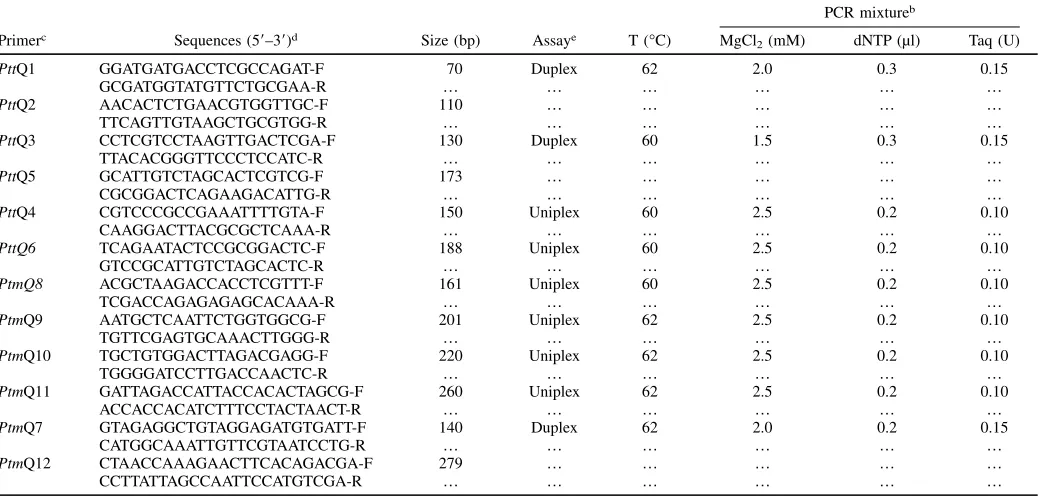
1. Develop markers for accurate characterisation of Ptt x Ptm hybrids (Chapter 2)
The lesions produced by the majority of progeny of crosses between Ptt and Ptm resemble
those of the parental isolates making visual identification of hybrids challenging. Currently
available form specific and mating type markers were mainly developed for the identification
of either form of P. teres and are not suitable for identification of hybrids. Hybrids have been
identified using RAPD and AFLP techniques, but they are either difficult to reproduce between
laboratories and/or are technically challenging to use as a regular diagnostic tool. Therefore,
sequences specific to Ptt and Ptm were identified using a whole genome comparative approach
to develop PCR based markers for characterisation of hybrids.
2. Determine the occurrence of hybrids in a field (Chapter 3)
Although recombination between Ptt and Ptm is possible, it is believed to be rare in the field.
To date studies have not been undertaken to determine whether hybrids will be produced in an
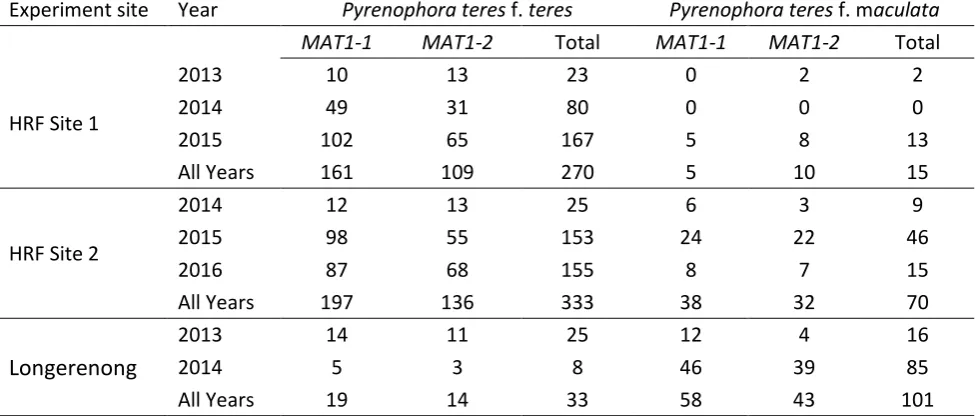
annually for three years where susceptible barley cultivars were infected with both Ptt and Ptm
isolates of opposite mating type. Sequence specific markers were amplified across DNA
extracted from single spore isolates and ascospores obtained from the leaf samples and stubble
to establish the presence of hybrids.
3. Determine whether hybrids are present in Australian cultural collections of P. teres (Chapter
3)
The original identification of the isolates collected from barley growing region of Australia
was based on lesion appearance. Considering that the lesions produced on hybrids are similar
to those of one of their parents, hybrids could have been misidentified as Ptt or Ptm. Thus, the
sequence specific markers were amplified across isolates of P. teres collected from major
barley growing regions of Australia during 1967–2015 to verify previous identifications and
to determine if any of these isolates were hybrids.
4. Investigate the genetic changes occurring in Ptt population in a field across three successive
years (Chapter 4)
No studies have been conducted in Australia to determine the change in genetic structure of
Ptt populations that may occur over time. A field experiment was conducted in the years 2013–
2015 where barley was inoculated with a Ptt isolate. Samples collected from each year were
genotyped using DArT markers to investigate possible changes in the genetic composition of
the population in the field across three cropping seasons.
5. Determine the genetic and pathogenic variation between P. teres collected from barley grass
and barley (Chapter 5)
As barley grass can be found growing alongside barley fields, virulent strains of P. teres of
barley grass have the potential to introduce new pathotypes into barley fields. The genetic
structure of P. teres collected from barley grass is unknown. Using DArT markers, genetic
differences between P. teres collected from barley grass and barley were examined and the
References
Afanasenko, O, Mironenko, N, Filatova, O, Kopahnke, D, Krämer, I & Ordon, F 2007, 'Genetics of host-pathogen interactions in the Pyrenophora teres f. teres (net form) – barley (Hordeum vulgare) pathosystem', European Journal of Plant Pathology, vol. 117, no. 3, pp. 267-80.
Afanasenko, OS, Jalli, M, Pinnschmidt, HO, Filatova, O & Platz, GJ 2009, 'Development of an international standard set of barley differential genotypes for Pyrenophora teres f. teres', Plant Pathology, vol. 58, no. 4, pp. 665-76.
Akhavan, A, Turkington, TK, Askarian, H, Tekauz, A, Xi, K, Tucker, JR, Kutcher, HR & Strelkov, SE 2016, 'Virulence of Pyrenophora teres populations in Western Canada', Canadian Journal of Plant Pathology, vol. 38, no. 2, pp. 183-96.
Akhavan, A, Turkington, TK, Kebede, B, Tekauz, A, Kutcher, HR, Kirkham, C, Xi, KQ, Kumar, K, Tucker, JR & Strelkov, SE 2015, 'Prevalence of mating type idiomorphs in Pyrenophora teres f. teres and P. teres f. maculata populations from the Canadian prairies', Canadian Journal of Plant Pathology, vol. 37, no. 1, pp. 52-60.
Arabi, M, Al‐Safadi, B & Charbaji, T 2003, 'Pathogenic variation among isolates of Pyrenophora teres, the causal agent of barley net blotch', Journal of Phytopathology, vol. 151, no. 7‐8, pp. 376-82.
Arraiano, LS, Brading, PA & Brown, JKM 2001, 'A detached seedling leaf technique to study resistance to Mycosphaerella graminicola (anamorph Septoria tritici) in wheat', Plant Pathology, vol. 50, no. 3, pp. 339-46.
Atanasoff, D & Johnson, AG 1920, 'Treatment of cereal seeds by dry heat. ', Journal of Agricultural Research, vol. XVIII, no. 7, pp. 379-90.
Australian Bureau of Statistics 2015-2016, 7121.0 - Agricultural Commodities, Australia, 2015-2016. , Australian Government, viewed 11 November 2017, <http://www.abs.gov.au/>.
Badr, A, Sch, R, Rabey, HE, Effgen, S, Ibrahim, H, Pozzi, C, Rohde, W & Salamini, F 2000, 'On the origin and domestication history of barley (Hordeum vulgare)', Molecular Biology and Evolution, vol. 17, no. 4, pp. 499-510.
Bockelman, HE, Sharp, EL & Bjarko, M, E. 1983, 'Isolates of Pyrenophora teres from Montana and the Mediterranean region that produce spot-type lesions on barley.', Plant Disease, vol. 67, pp. 696-7.
Bogacki, P, Keiper, FJ & Oldach, KH 2010, 'Genetic structure of South Australian Pyrenophora teres populations as revealed by microsatellite analyses', Fungal Biology, vol. 114, no. 10, pp. 834-41.
Brown, M, Steffenson, B & Webster, R 1993, 'Host range of Pyrenophora teres f. teres isolates from California', Plant Disease, vol. 77, no. 9, pp. 942-7.
Cakir, M, Gupta, S, Li, C, Hayden, M, Mather, DE, Ablett, GA, Platz, GJ, Broughton, S, Chalmers, KJ & Loughman, R 2011, 'Genetic mapping and QTL analysis of disease resistance traits in the barley population Baudin× AC Metcalfe', Crop and Pasture Science, vol. 62, no. 2, pp. 152-61.
Campbell, GF & Crous, PW 2003, 'Genetic stability of net x spot hybrid progeny of the barley pathogen Pyrenophora teres', Australasian Plant Pathology, vol. 32, no. 2, pp. 283-7.
Campbell, GF, Crous, PW & Lucas, JA 1999, 'Pyrenophora teres f. maculata, the cause of Pyrenophora leaf spot of barley in South Africa', Mycological Research, vol. 103, no. 3, pp. 257-67.
Campbell, GF, Lucas, JA & Crous, PW 2002, 'Evidence of recombination between net- and spot-type populations of Pyrenophora teres as determined by RAPD analysis', Mycological Research, vol. 106, no. 5, pp. 602-8.
Cromey, M & Parkes, R 2003, 'Pathogenic variation in Drechslera teres in New Zealand', New Zealand Plant Protection, pp. 251-6.
Crous, PW, Janse, BJH, Tunbridge, J & Holz, G 1995, 'DNA homology between P. japonica and P. teres', Mycological Research, vol. 99, no. 9, pp. 1098-102.
Ellwood, SR, Syme, RA, Moffat, CS & Oliver, RP 2012, 'Evolution of three Pyrenophora cereal pathogens: recent divergence, speciation and evolution of non-coding DNA', Fungal Genetics and Biology, vol. 49, no. 10, pp. 825-9.
ElMor, IM 2016, 'Investigating the virulence of isolates produced by sexual recombination between different Pyrenophora teres isolates', Traditional thesis, University of Southern Queensland, Australia.
ElMor, IM, Fowler, RA, Platz, GJ, Sutherland, MW & Martin, A 2018, 'An improved detached-leaf assay for phenotyping net blotch of barley caused by Pyrenophora teres', Plant Disease, pp. PDIS-07.
Entz, MH, Berg, CGJVD, Stobbe, EH, Rossnagel, BG, Lafond, GP & Austenson, HM 1990, 'Effect of late-season fungicide application on grain yield and seed size distribution in wheat and barley', Canadian Journal of Plant Science, vol. 70, no. 3, pp. 699-706.
Fincham, JRS 1971, Using fungi to study genetic recombination. , Oxford biology readers, Oxford University Press, London.
Fowler, RA, Platz, GJ, Bell, KL, Fletcher, SEH, Franckowiak, JD & Hickey, LT 2017, 'Pathogenic variation of Pyrenophora teres f. teres in Australia', Australasian Plant Pathology, vol. 46, no. 2, pp. 115-28.
Friesen, T, Faris, J, Lai, Z & Steffenson, B 2006, 'Identification and chromosomal location of major genes for resistance to Pyrenophora teres in a doubled-haploid barley population', Genome, vol. 49, no. 7, pp. 855-9.
Grewal, T, Rossnagel, B, Pozniak, C & Scoles, G 2008, 'Mapping quantitative trait loci associated with barley net blotch resistance', Theoretical and Applied Genetics, vol. 116, no. 4, pp. 529-39.
Ismail, I, Godfrey, D & Able, A 2014, 'Fungal growth, proteinaceous toxins and virulence of Pyrenophora teres f. teres on barley', Australasian Plant Pathology, vol. 43, no. 5, pp. 535-46.
Ito, S & Kuribayashi, K 1931, 'The ascigerous forms of some graminicolous species of Helminthosporium in Japan', Journal of the Faculty of Agriculture, Hokkaido Imperial University, vol. 29, no. 3, pp. 85-125.
Jaccoud, D, Peng, K, Feinstein, D & Kilian, A 2001, 'Diversity arrays: a solid state technology for sequence information independent genotyping', Nucleic Acids Research, vol. 29, no. 4, pp. e25-e.
Jalli, M 2011, 'Sexual reproduction and soil tillage effects on virulence of Pyrenophora teres in Finland', Annals of Applied Biology, vol. 158, no. 1, pp. 95-105.
Jonsson, R, Sail, T & Bryngelsson, T 2000, 'Genetic diversity for random amplified polymorphic DNA (RAPD) markers in two Swedish populations of Pyrenophora teres', Canadian Journal of Plant Pathology, vol. 22, no. 3, pp. 258-64.
Jordan, V 1981, 'Aetiology of barley net blotch caused by Pyrenophom teres and some effects on yield', Plant Pathology, vol. 30, no. 2, pp. 77-87.
Keiper, FJ, Grcic, M, Capio, E & Wallwork, H 2008, 'Diagnostic microsatellite markers for the barley net blotch pathogens, Pyrenophora teres f. maculata and Pyrenophora teres f. teres', Australasian Plant Pathology, vol. 37, no. 4, pp. 428-30.
Khan, T 1973, 'Host specialization by Western Australian isolates causing net blotch symptoms on Hordeum', Transactions of the British Mycological Society, vol. 61, no. 2, pp. 215-20.
Khan, T & Boyd, W 1969a, 'Environmentally induced variability in the host reaction of barley to net blotch', Australian Journal of Biological Sciences, vol. 22, no. 5, pp. 1237-44.
Khan, T & Boyd, W 1969b, 'Physiologic specialization in Drechslera teres', Australian Journal of Biological Sciences, vol. 22, no. 5, pp. 1229-36.
Khan, TN 1987, 'Relationship between net blotch (Drechslera teres) and losses in grain-yield of barley in Western Australia', Australian Journal of Agricultural Research, vol. 38, no. 4, pp. 671-9.
Khan, TN & Tekauz, A 1982, 'Occurrence and pathogenicity of Drechslera teres Isolates causing spot-type symptoms on barley in Western Australia', Plant Disease, vol. 66, pp. 423-5.
Kronstad, JW & Staben, C 1997, 'Mating type in filamentous fungi', Annual Review of Genetics, vol. 31, pp. 245-76.
Lai, Z, Faris, JD, Weiland, JJ, Steffenson, BJ & Friesen, TL 2007, 'Genetic mapping of Pyrenophora teres f. teres genes conferring avirulence on barley', Fungal Genetics and Biology, vol. 44, no. 5, pp. 323-9.
Lehmensiek, A, Platz, G, Mace, E, Poulsen, D & Sutherland, M 2008, 'Mapping of adult plant resistance to net form of net blotch in three Australian barley populations', Australian Journal of Agricultural Research, vol. 58, no. 12, pp. 1191-7.
Leišová-Svobodová, L, Minaříková, V, Matušinsky, P, Hudcovicová, M, Ondreičková, K & Gubiš, J 2014, 'Genetic structure of Pyrenophora teres net and spot populations as revealed by microsatellite analysis', Fungal Biology, vol. 118, no. 2, pp. 180-92.
Leisova, L, Minarikova, V, Kucera, L & Ovesna, J 2005, 'Genetic diversity of Pyrenophora teres isolates as detected by AFLP analysis', Journal of Phytopathology, vol. 153, no. 10, pp. 569-78.
Leisova, L, Minarikova, V, Kucera, L & Ovesna, J 2005(a), 'Genetic diversity of Pyrenophora teres isolates as detected by AFLP analysis', Journal of Phytopathology, vol. 153, no. 10, pp. 569-78.
Leisova, L, Kucera, L, Minarikova, V & Ovesna, J 2005(b), 'AFLP-based PCR markers that differentiate spot and net forms of Pyrenophora teres', Plant Pathology, vol. 54, no. 1, pp. 66-73.
Leisova, L, Minarikova, V, Kucera, L & Ovesna, J 2006, 'Quantification of Pyrenophora teres in infected barley leaves using real-time PCR', J Microbiol Methods, vol. 67, no. 3, pp. 446-55.
Linde, CC, Smith, LM & Peakall, R 2016, 'Weeds, as ancillary hosts, pose disproportionate risk for virulent pathogen transfer to crops', BMC Evolutionary Biology, vol. 16.
Liu, Z, Ellwood, SR, Oliver, RP & Friesen, TL 2011, 'Pyrenophora teres: profile of an increasingly damaging barley pathogen', Molecular Plant Pathology, vol. 12, no. 1, pp. 1-19.
Liu, Z, Zhong, S, Stasko, A, Edwards, M & Friesen, T 2012, 'Virulence profile and genetic structure of a North Dakota population of Pyrenophora teres f. teres, the causal agent of net form net blotch of barley', Phytopathology, vol. 102, no. 5, pp. 539-46.
Lu, S, Platz, GJ, Edwards, MC & Friesen, TL 2010, 'Mating type locus-specific polymerase chain reaction markers for differentiation of Pyrenophora teres f. teres and P. teres f. maculata, the causal agents of barley net blotch', Phytopathology, vol. 100, no. 12, pp. 1298-306.
Manninen, O, Jalli, M, Kalendar, R, Schulman, A, Afanasenko, O & Robinson, J 2006, 'Mapping of major spot-type and net-type net-blotch resistance genes in the Ethiopian barley line CI 9819', Genome, vol. 49, no. 12, pp. 1564-71.
Mathre, DE 1982, Compendium of barley diseases, The disease compendia series., American Phytopathological Society in cooperation with the Department of Plant Pathology Montana State University, St. Paul, Minn.
McDonald, BA & Linde, C 2002, 'Pathogen population genetics, evolutionary potential, and durable resistance', Annual Review of Phytopathology, vol. 40, pp. 349-+.
McDonald, WC 1963, 'Heterothallism in Pyrenophora teres', Phytopathology, vol. 53, no. 121, pp. 771-3.
McDonald, WC 1967, 'Variability and inheritance of morphological mutants in Pyrenophora teres', Phytopathology, vol. 57, no. 7, pp. 747-&.
McLean, MS, Howlett, BJ & Hollaway, GJ 2009, 'Epidemiology and control of spot form of net blotch (Pyrenophora teres f. maculata) of barley: a review', Crop & Pasture Science, vol. 60, no. 4, pp. 303-15.
McLean, MS, Weppler, R, Howlett, BJ & Hollaway, GJ 2016, 'Spot form of net blotch suppression and yield of barley in response to fungicide application in the Wimmera region of Victoria, Australia', Australasian Plant Pathology, vol. 45, no. 1, pp. 37-43.
McLean, MS, Martin, A, Gupta, S, Sutherland, MW, Hollaway, GJ & Platz, GJ 2014, 'Validation of a new spot form of net blotch differential set and evidence for hybridisation between the spot and net forms of net blotch in Australia', Australasian Plant Pathology, vol. 43, no. 3, pp. 223-33.
Milgroom, MG 1996, 'Recombination and the multilocus structure of fungal populations', Annual Review of Phytopathology, vol. 34, pp. 457-77.
Molnar, S, James, L & Kasha, K 2000, 'Inheritance and RAPD tagging of multiple genes for resistance to net blotch in barley', Genome, vol. 43, no. 2, pp. 224-31.
Moore, J, Sutherland, S, Verbeek, B & Fleet, B 2014, Integrated weed management in Australian cropping systems, Australia, 978-1-921779-61-9.
Murray, GM & Brennan, JP 2010, 'Estimating disease losses to the Australian barley industry', Australasian Plant Pathology, vol. 39, no. 1, pp. 85-96.
Peever, TL & Milgroom, MG 1994, 'Genetic structure of Pyrenophora teres populations determined with random amplified polymorphic DNA markers', Canadian Journal of Botany, vol. 72, no. 7, pp. 915-23.
Peltonen, S, Jalli, M, Kammiovirta, K & Karjalainen, R 1996, 'Genetic variation in Drechslera teres populations as indicated by RAPD markers', Annals of Applied Biology, vol. 128, no. 3, pp. 465-77.
Platz, G, Bell, KL, Rees, RG & Galea, VJ 2000, 'Pathotype variation of the Australian net blotch population', in 8th International Barley Genetics Symposium, Waite Campus, Adelaide University, Adelaide Convention Centre, pp. 160-2.
Purwantara, A, Barrins, JM, Cozijnsen, AJ, Ades, PK & Howle, BJ 2000, 'Genetic diversity of isolates of the Leptosphaeria maculans species complex from Australia, Europe and North America using amplified fragment length polymorphism analysis', Mycological Research, vol. 104, pp. 772-81.
Raman, H, Platz, G, Chalmers, K, Raman, R, Read, B, Barr, A & Moody, D 2003, 'Mapping of genomic regions associated with net form of net blotch resistance in barley', Australian Journal of Agricultural Research, vol. 54, no. 12, pp. 1359-67.
Rau, D, Brown, AHD, Brubaker, CL, Attene, G, Balmas, V, Saba, E & Papa, R 2003, 'Population genetic structure of Pyrenophora teres Drechs. the causal agent of net blotch in Sardinian landraces of barley (Hordeum vulgare L.)', Theoretical and Applied Genetics, vol. 106, no. 5, pp. 947-59.
Rau, D, Maier, FJ, Papa, R, Brown, AHD, Balmas, V, Saba, E, Schaefer, W & Attene, G 2005, 'Isolation and characterization of the mating-type locus of the barley pathogen Pyrenophora teres and frequencies of mating-type idiomorphs within and among fungal populations collected from barley landraces', Genome, vol. 48, no. 5, pp. 855-69.
Sarpeleh, A, Wallwork, H, Catcheside, DEA, Tate, ME & Able, AJ 2007, 'Proteinaceous metabolites from Pyrenophora teres contribute to symptom development of barley net blotch', Phytopathology, vol. 97, no. 8, pp. 907-15.
Serenius, M, Mironenko, N & Manninen, O 2005, 'Genetic variation, occurrence of mating types and different forms of Pyrenophora teres causing net blotch of barley in Finland', Mycological Research, vol. 109, no. 7, pp. 809-17.
Serenius, M, Manninen, O, Wallwork, H & Williams, K 2007, 'Genetic differentiation in Pyrenophora teres populations measured with AFLP markers', Mycological Research, vol. 111, no. 2, pp. 213-23.
Sharma, M, Nagavardhini, A, Thudi, M, Ghosh, R, Pande, S & Varshney, RK 2014, 'Development of DArT markers and assessment of diversity in Fusarium oxysporum f. sp. ciceris, wilt pathogen of chickpea (Cicer arietinum L.)', BMC genomics, vol. 15, no. 1, p. 454.
Shipton, WA 1966, 'Effect of net blotch infection of barley on grain yield and quality', Australian Journal of Experimental Agriculture and Animal Husbandry, vol. 6, no. 23, pp. 437-40.
Shipton, WA, Khan, TN & Boyd, WJR 1973, 'Net blotch of barley', Review of plant pathology, vol. 52, no. 5.
Shjerve, RA, Faris, JD, Brueggeman, RS, Yan, C, Zhu, Y, Koladia, V & Friesen, TL 2014, 'Evaluation of a Pyrenophora teres f. teres mapping population reveals multiple independent interactions with a region of barley chromosome 6H', Fungal Genetics and Biology, vol. 70, pp. 104-12.
Smedegaard-Petersen, V 1976, Pathogenesis and genetics of net-spot blotch and leaf stripe of barley caused by Pyrenophora teres and Pyrenophora graminea. , DSR forlag Copenhagen.
Smedegård-Petersen, V 1971, 'Pyrenophora teres f. maculata f. nov. and Pyrenophora teres f. teres on barley in Denmark', in Yearbook of the Royal Veterinary and Agricultural University, Copenhagen, pp. 124-44.
Smedegård-Petersen, V 1976, 'Pathogenesis and genetics of net-spot blotch and leaf stripe of barley caused by Pyrenophora teres and Pyrenophora graminea.',pp. 95-141.
St. Pierre, S, Gustus, C, Steffenson, B, Dill-Macky, R & Smith, K 2010, 'Mapping net form net blotch and Septoria speckled leaf blotch resistance loci in barley', Phytopathology, vol. 100, no. 1, pp. 80-4.
Steffenson, B, Hayes, P & Kleinhofs, A 1996, 'Genetics of seedling and adult plant resistance to net blotch (Pyrenophora teres f. teres) and spot blotch (Cochliobolus sativus) in barley', Theoretical and Applied Genetics, vol. 92, no. 5, pp. 552-8.
Steffenson, BJ & Webster, RK 1992, 'Pathotype diversity of Pyrenophora teres f. teres on barley', Phytopathology, vol. 82, no. 2, pp. 170-7.
Sutton, J & Steele, P 1983, 'Effects of seed and foliar fungicides on progress of net blotch and yield in barley', Canadian Journal of Plant Science, vol. 63, no. 3, pp. 631-9.
Tekauz, A 1990, 'Characterization and distribution of pathogenic variation in Pyrenophora teres f. teres and P. teres f. maculata from Western Canada', Canadian Journal of Plant Pathology, vol. 12, no. 2, pp. 141-8.
Tekauz, A & Mills, J 1974, 'New types of virulence in Pyrenophora teres in Canada', Canadian Journal of Plant Science, vol. 54, no. 4, pp. 731-4.
The Food and Agriculture Organization 2014, FAOSTAT, UN, <http://www.fao.org/home/en/>. Tuohy, JM, Jalli, M, Cooke, BM & O’ Sullivan, E 2006, 'Pathogenic variation in populations of Drechslera teres f. teres and D. teres f. maculata and differences in host cultivar responses', European Journal of Plant Pathology, vol. 116, no. 3, pp. 177-85.
Turgeon, BG & Yoder, OC 2000, 'Proposed nomenclature for mating type genes of filamentous ascomycetes', Fungal Genetics and Biology, vol. 31, no. 1, pp. 1-5.
van den Berg, CGJ 1988, 'Epidemiology of Pyrenophora teres and its effect on grain yield of Hordeum vulgare.', University of Saskatchewan, Saskatoon, Canada. .
Vos, P, Hogers, R, Bleeker, M, Reijans, M, Vandelee, T, Hornes, M, Frijters, A, Pot, J, Peleman, J, Kuiper, M & Zabeau, M 1995, 'AFLP - a new technique for DNA fingerprinting', Nucleic Acids Research, vol. 23, no. 21, pp. 4407-14.
Wallwork, H, Lichon, A & Sivanesan, A 1992, 'Pyrenophora hordei—a new ascomycete with Drechslera anamorph affecting barley in Australia', Mycological Research, vol. 96, no. 12, pp. 1068-70.
Wallwork, H, Butt, M & Capio, E 2016, 'Pathogen diversity and screening for minor gene resistance to Pyrenophora teres f. teres in barley and its use for plant breeding', Australasian Plant Pathology, vol. 45, no. 5, pp. 527-31.
Walters, DR, Avrova, A, Bingham, IJ, Burnett, FJ, Fountaine, J, Havis, ND, Hoad, SP, Hughes, G, Looseley, M, Oxley, SJP, Renwick, A, Topp, CFE & Newton, AC 2012, 'Control of foliar diseases in barley: towards an integrated approach', European Journal of Plant Pathology, vol. 133, no. 1, pp. 33-73.
Weiergang, I, Jorgensen, HJL, Moller, IM, Friis, P & Smedegaard-Petersen, V 2002, 'Correlation between sensitivity of barley to Pyrenophora teres toxins and susceptibility to the fungus', Physiological and Molecular Plant Pathology, vol. 60, no. 3, pp. 121-9.
Williams, K, Platz, G, Barr, A, Cheong, J, Willsmore, K, Cakir, M & Wallwork, H 2003, 'A comparison of the genetics of seedling and adult plant resistance to the spot form of net blotch (Pyrenophora teres f. maculata)', Australian Journal of Agricultural Research, vol. 54, no. 12, pp. 1387-94.
Williams, KJ, Smyl, C, Lichon, A, Wong, KY & Wallwork, H 2001, 'Development and use of an assay based on the polymerase chain reaction that differentiates the pathogens causing spot form and net form of net blotch of barley', Australasian Plant Pathology, vol. 30, no. 1, pp. 37-44.
Chapter 2
Pyrenophora teres hybridization events revealed by development of sequence-specific PCR
markers
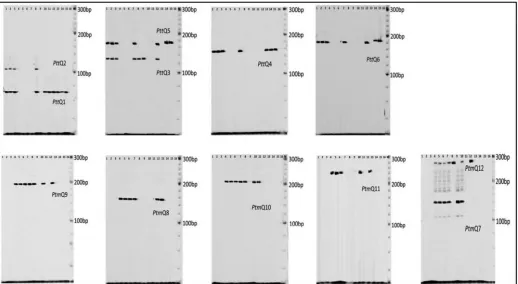
In this study, using whole-genome comparisons unique Ptt and Ptm expressed regions were
identified to develop unambiguous PCR-based markers specific to each form. The form specificity
of the developed markers was validated using characterised field collected isolates from Australia
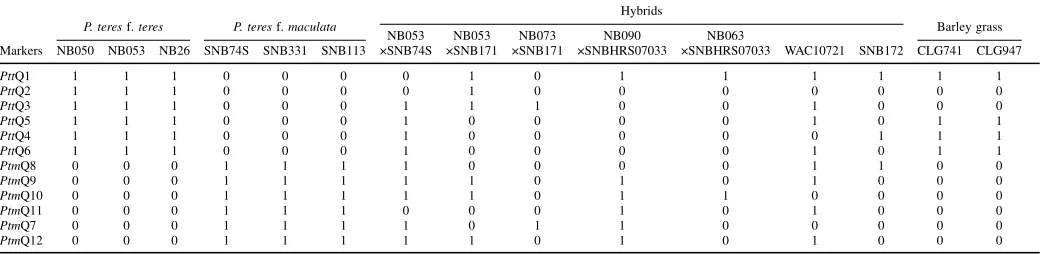
and South Africa. The markers were then screened across putative field hybrids and
laboratory-produced hybrids to demonstrate the use of the markers to categorically identify Ptt x Ptm hybrids.
In additional, P. teres isolates collected from barley grass were characterised using the markers.
Poudel B, Ellwood SR, Testa AC, McLean M, Sutherland MW, and Martin A. Rare Pyrenophora
teres hybridization events revealed by development of sequence-specific PCR markers.
Phytopathology, DOI: 10.1094/PHYTO-11-16-0396-R