Int. J. Electrochem. Sci., 12 (2017) 10763 – 10772, doi: 10.20964/2017.11.63
International Journal of
ELECTROCHEMICAL
SCIENCE
www.electrochemsci.org
Synthesis of MnCo
2O
4.5/graphene Composite as Electrode
Material for Supercapacitors
Yanhua Li, Xiahui Peng*, Jialian Xiang, Jiaxin Yang
Hunan Province Key Laboratory of Applied Environmental Photocatalysis, Changsha University, Changsha 410022, China
*
E-mail: [email protected]
Received: 31 July 2017 / Accepted: 12 September 2017 / Published: 12 October 2017
MnCo2O4.5/graphene composite is obtained by a simple hydrothermal method. The as-synthesized
MnCo2O4.5/graphene composite is characterized by X-ray diffraction, and scanning electron
microscopy. Electrochemical property of MnCo2O4.5/graphene composite is carried out by cyclic
voltammetry, galvanostatic charge-discharge and electrochemical impedance spectroscopy. MnCo2O4.5/graphene composite exhibits good supercapacitive performance. The specific capacitances
of MnCo2O4.5/graphene composite at 5 mV s-1 and at 0.5 A g-1 are 255.8 and 252.3 F g-1, respectively.
88.7% of the specific capacitance is retained for a 16-time current density increase, indicating its superior rate capability. At the 1000th cycle, MnCo2O4.5/graphene composite shows a specific
capacitance of 225.6 F g-1 at 1.0 A g-1, which is 92.6% of initial specific capacitance, demonstrating its excellent cycling stability. These characteristics illustrate that MnCo2O4.5/graphene composite is a
promising electrode material in supercapacitors.
Keywords: Supercapacitors, MnCo2O4.5, Graphene , Hydrothermal method 1. INTRODUCTION
As electrochemical energy-storage devices, supercapacitors possess higher power density, faster charge-discharge rate and longer lifespan compared with batteries. These predominant advantages make supercapacitors suitable for applications in hybrid vehicles, portal electronics, and power back-ups [1, 2]. The properties of supercapacitors mainly depend on the properties of electrode materials. Up to now, a variety of electrode materials, such as carbon materials [3, 4], transition metal oxides [5-8], and conducting polymers [9, 10], are studied to applied in supercapacitors. Among electrode materials, transition metal oxides possess higher energy density than carbon materials and better cycle life than conducting polymers. Recently, mixed transition metal oxides, such as NiCo2O4
[11-13], MnCo2O4 [14], CoFe2O4 [15], NiMn2O4 [16], and ZnCo2O4 [17], have been applied in
oxides. Among mixed transition metal oxides, manganese-cobalt oxides, such as MnCo2O4 and
MnCo2O4.5, have received attention because of their natural abundance, inexpensive cost,
environmental benignity, and large theoretical capacitance [18]. There are a certain number of papers on MnCo2O4 electrode material for supercapacitors. However, MnCo2O4.5 electrode material for
supercapacitors is rarely researched. For example, a specific capacitance of 151.2 F g-1 at 5 mV s-1 was obtained for porous urchin-like MnCo2O4.5 hierarchical architectures studied by Li et al. [19]. Wang et
al. [20] synthesized MnCo2O4.5 nanoparticles, which exhibits a specific capacitance of 158 F g-1 at 5
mV s-1. In their researches, the specific capacitance of MnCo2O4.5 electrode material was relatively low
because of low electronic conductivity of MnCo2O4.5 like other monometal oxides. In order to improve
its specific capacitance, a viable way is to form composite with carbon materials with good electronic conductivity. Among carbon materials, graphene is attractive because of its excellent electronic conductivity, high specific surface area, and chemical stability [21].
Al-Rubaye et al. [18] syethesized MnCo2O4/graphene composite as electrode material for
supercapacitors. However, MnCo2O4/graphene composite was prepared by complicated multistep
processes, which involved the formation of MnCo2O4 via a hydrothermal technique accompanying
subsequently calcination and the preparation of MnCo2O4/graphene composite with an electrophoretic
deposition technique. Moreover, MnCo2O4/graphene composite instead of MnCo2O4.5/graphene
composite was synthesized to employ as electrode material for supercapacitors. In the present work, MnCo2O4.5/graphene composite was prepared by a facile hydrothermal process. As a result,
MnCo2O4.5/graphene composite as supercapacitors electrode material shows high specific capacitance,
good rate capability and excellent cycling stability. Up to now, there are few reports about MnCo2O4.5/graphene composite as electrode material for supercapacitors.
2. EXPERIMENTAL
2.1. Synthesis of MnCo2O4/graphene Composite
MnCo2O4/graphene composite was prepared by a hydrothermal process. In a typical procedure,
80 mg of graphite oxide was dispersed in 25 mL deionized water with sonication. Afterwards, 0.245 g of Mn(AC)2·4H2O, 0.582 g of Co(NO3)2·6H2O, 0.9 g of CO(NH2)2, 0.222 g of NH4F were added into
the above solution and continually stirred to form a mixed solution. The mixed solution was then transferred into a Teflon-lined stainless steel autoclave. Subsequently, the stainless steel autoclave was sealed and hydrothermally treated at 150 ℃ for 16 h. After naturally cooled to room temperature, the obtained precipitate was alternately centrifuged and washed three times with deionized water and ethanol. Finally, precipitate was dried at 60 ℃ for 12 h and then annealed in a muffle furnace at 350 ℃ for 3 h to obtain MnCo2O4/graphene composite.
2.2. Materials Characterization
The structure of MnCo2O4/graphene composite was characterized by X-ray diffraction (XRD,
2.3. Electrochemical Test
The synthesized MnCo2O4/graphene composite (80 wt %), conductive agent (acetylene black,
15 wt) and binder (polytetrafluoroethylene, 5 wt %) were first mixed. Then, the mixture was coated on a nickel foam (1 cm × 1cm), dried naturally and pressed at 10 Mpa. Finally, the working electrode was prepared by drying at 110 °C for 12 h under vacuum. The capacitive behavior of the sample was tested with a CHI 660E electrochemical workstation (Shanghai, China). Cyclic voltammetry (CV), galvanostatic charge-discharge (GCD) and electrochemical impedance spectroscopy (EIS) measurements were carried out using a three-electrode configuration at room temperature. A Pt plate was used as the counter electrode, and all potential are referred to a saturated calomel electrode (SCE) reference electrode. 2 M KOH solution was used to the electrolyte. EIS measurements were conducted between 0.01 and 105 Hz.
3. RESULTS AND DISCUSSION
[image:3.596.151.417.378.602.2]3.1. XRD analyses
Figure 1. XRD pattern of MnCo2O4.5/graphene composite.
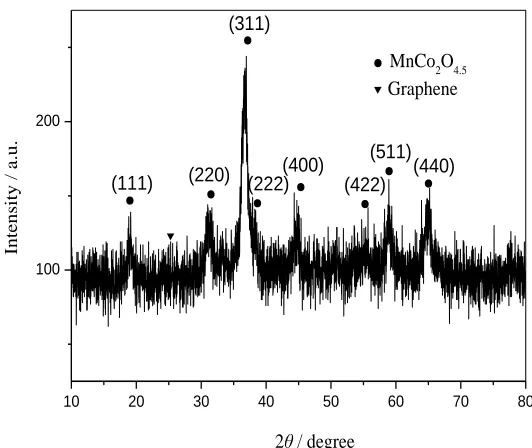
Fig. 1 shows XRD pattern of MnCo2O4.5/graphene composite. The XRD peaks at 2θ locating at
19.0°, 31.2°, 36.8°, 38.5°, 44.8°, 55.8°, 58.9° and 65.2° are assigned to the (111), (220), (311), (222), (400), (422), (511) and (440) crystal planes of MnCo2O4.5 (JCPDS No. 32-0297, a=b=c=8.08 Å),
respectively. The peak at 2θ locating at 26.3° is attributed to the (002) crystal plane of graphene [21-23]. No other peaks are detected in the XRD patterns, indicating that the sample consists of MnCo2O4.5
and graphene.
10 20 30 40 50 60 70 80
100 200
(440) (511) (422) (400) (222) (311)
(220)
● ●
● ●
● ● ●
Intensity / a.u.
2θ / degree
▼ Graphene ●MnCo
2O4.5
●
▼
3.2. Morphology
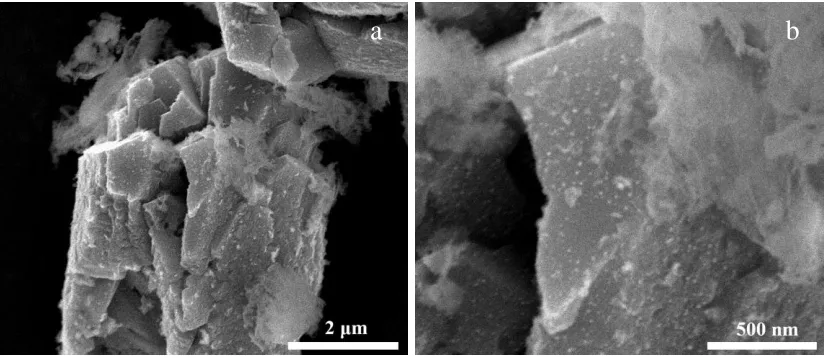
The low magnification and high magnification SEM images of MnCo2O4.5/graphene composite
are displayed in Fig. 2a and 2b, respectively. Crumpled structure is graphene in the composite and cracked ellipsoidal-like microstructure composed of agglomerated nanoparticles is MnCo2O4.5 in the
composite. Besides, under the high magnification (Fig. 2b), the morphology of MnCo2O4.5 in
MnCo2O4.5/graphene composite clearly shows that the surface of cracked ellipsoidal-like
microstructure is coarse and exists interspaces.
Figure 2. SEM images of MnCo2O4.5/graphene composite: (a) low magnification; (b) high
magnification.
Interspaces in cracked ellipsoidal-like microstructure can benefit the penetration of the electrolyte. Coarse surface of cracked ellipsoidal-like microstructure possesses high specific surface area. Therefore, these microstructure of MnCo2O4.5 in MnCo2O4.5/graphene may be in favor of
enhancing capacitive properties of material [24, 25].
3.3. Electrochemical capacitor property
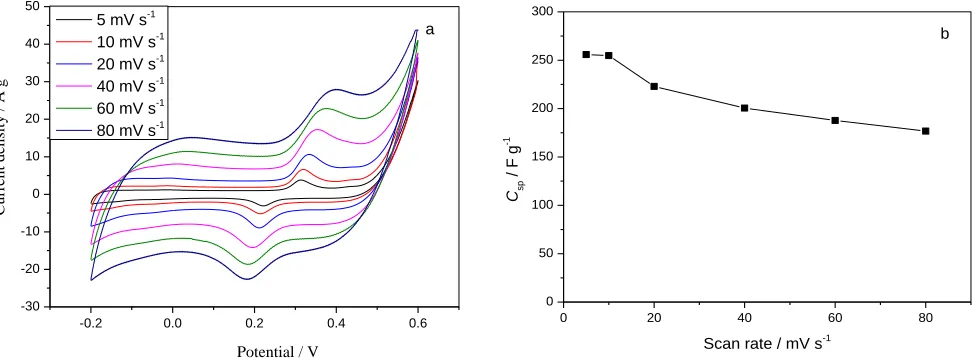
Cyclic voltammograms of MnCo2O4.5/graphene composite electrode within a potential window
-0.2-0.6 V at different scan rates are shown in Fig. 3a.
The shape of the CV curves is not an ideal rectangular shape but exhibits obvious redox couple peaks in the potential windows, which signifies that capacitance largely originates from pseudo-capacitance caused by faradaic redox reactions. The shape of the CV curves also exhibits excellent symmetry, implying the electrochemical reversibility of faradic redox reactions. The peak current density and enclosed area become large when the scan rate increases. Futhermore, the anodic and cathodic peaks are observed to shift to negative and positive potentials as the scan rate increases, respectively. This may be ascribable to the limited diffusion time [26]. Noteworthily, the redox peaks also appeares when the scan rate increses to a high value (80 mV s-1), suggesting that the
[image:4.596.92.504.223.402.2]
MnCo2O4.5/graphene composite is beneficial to fast redox reaction [27, 28]. The average specific
capacitance of MnCo2O4.5/graphene composite can be calculated from the CV curves as follows
[29-31]: sp 1 ( ) ( ) c a V V a c
C I V dV
mv V V
(1)where Csp is the specific capacitance (F g-1), I is the current (A), v is the scan rate (mV s-1), Va is the
lowest potential (V), Vc is the highest potential (V), m represents the mass of MnCo2O4.5/graphene
composite (g). Based on the formula (1), the specific capacitance of MnCo2O4.5/graphene composite
eledtrode at various scan rate is displayed in Fig. 3b. As shown in Fig. 3b, MnCo2O4.5/graphene
composite possesses a Csp of 255.8 F g-1 at 5 mV s-1, which is much better than those of MnCo2O4.5 as
electrode materials for supercapacitors studied by Li et al. (151.2 F g-1 at 5 mV s-1) [19] and Wang et al. (158 F g-1 at 5 mV s-1) [20] (Table 1). As the scan rate increase, the specific capacitance drops. However, the specific capacitance still remains 176.7 F g-1 at 80 mV s-1. A specific capacitance retention of 69.1% for a 16-time scan rate increase is obtained. It implies relatively high specific capacitance and good rate capability of MnCo2O4.5/graphene composite.
Figure 3. Cyclic voltammograms of MnCo2O4.5/graphene composite eledtrode within a potential
window -0.2-0.6 V at scan rates of 5, 10, 20, 40, 60 and 80 mV s-1 (a); The specific capacitance of MnCo2O4.5/graphene composite eledtrode at scan rates of 5, 10, 20, 40, 60 and 80 mV s-1 (b).
Fig. 4 depicts galvanostatic charge–discharge curves of MnCo2O4.5/graphene composite
electrode at the current densities of 0.5, 1, 2, 4 and 8 A g-1. Apparently, nonlinearity in the charge-discharge curves is observed, which further verifies the pseudocapacitive characteristics caused by faradaic reactions. This is in accordance with the results of the CV curves. The specific capacitance of MnCo2O4.5/graphene composite can be calculated as follows [1, 32-34].
sp It
C
mV
= (2)
-0.2 0.0 0.2 0.4 0.6
-30 -20 -10 0 10 20 30 40 50
Current density / A g
-1
Potential / V
5 mV s-1 10 mV s-1 20 mV s-1
40 mV s-1 60 mV s-1
80 mV s-1
a
0 20 40 60 80
0 50 100 150 200 250 300 Csp / F g -1
Scan rate/ mV s-1
[image:5.596.50.537.367.546.2]
where Csp is the specific capacitance (F g-1), I represents the discharge current (A), t indicates
the discharge time (s), V is the discharge potential window, m is the mass of active material, respectively. On basis of the formula (2), the specific capacitance of electrode at different current densities is displayed in Fig. 5. Obviously, the specific capacitance gradually decreases with increasement of the current density.
Figure 4. Galvanostatic charge-discharge curves of MnCo2O4.5/graphene composite eledtrode at the
[image:6.596.135.416.184.407.2]current densities of 0.5, 1, 2, 4 and 8 A g-1.
Figure 5. The specific capacitance of MnCo2O4.5/graphene composite eledtrode at the current densities
of 0.5, 1, 2, 4 and 8 A g-1.
0 100 200 300 400 500
0.0 0.1 0.2 0.3 0.4 0.5 0.6
Poten
tial /
V
Time / s
0.5 A g-1 1 A g-1 2 A g-1 4 A g-1 8 A g-1
0 2 4 6 8
0 50 100 150 200 250 300
Csp
/ F
g
-1
[image:6.596.133.418.472.700.2]
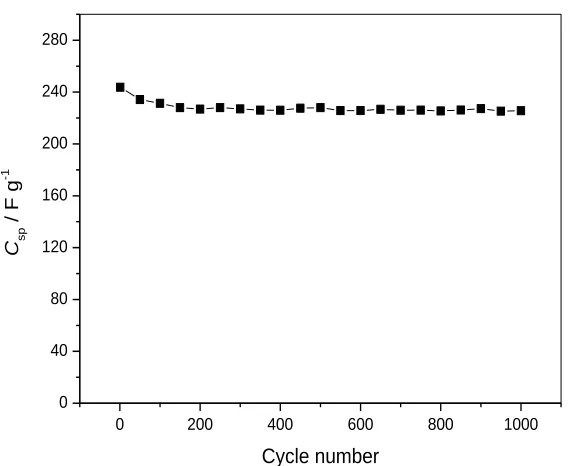
Figure 6. Cycling performance of MnCo2O4.5/graphene composite eledtrode at the current density of 1
A g-1.
The specific capacitance of MnCo2O4.5/graphene composite at 0.5 A g-1 is calculated to be
252.3 F g-1, which is much higher than previous work reported by Li et al. (122.4 F g-1 at 0.5 A g-1) [19] and Wang et al. (144 F g-1 at 0.5 A g-1) [20] (Table 1). The main reason for the above behavior is ascribable to synergistic effect between MnCo2O4.5 and graphene. A specific capacitance of 223.7 F g-1
is obtained at 8.0 A g-1. 88.7% of the specific capacitance is retained for a 16-time increase in the current density, indicating that MnCo2O4.5/graphene composite possess superior rate capability. The
results are in accordance with those calculated from the CV curves.
Table 1. Comparision of the specific capacitance reported in the references with this study for MnCo2O4.5 (or MnCo2O4.5/graphene)
Synthesis method Materials Electrolyte Current density or scan rate
Specific capacitance
Reference
Hydrothermal MnCo2O4.5 1 M KOH 5 mV s-1
0.5 A g-1
151.2 F g-1 122.4 F g-1
[19] Chemical
transformation
MnCo2O4.5 1 M Na2SO4 5 mV s-1
0.5 A g-1
158 F g-1 144 F g-1
[20] Hydrothermal MnCo2O4.5/graphene 2 M KOH 5 mV s-1
0.5 A g-1
255.8 F g-1 252.3 F g-1
This work
Fig. 6 dispalys cycling performance of MnCo2O4.5/graphene composite eledtrode at the current
density of 1 A g-1. The specific capacitance slightly drops to 231.1 F g-1 at the 100th cycle and then nearly keeps stable when increases the cycle number. At the 1000th cycle, the specific capacitance is
0 200 400 600 800 1000
0 40 80 120 160 200 240 280
Csp
/ F
g
-1
[image:7.596.30.568.565.680.2]
calculated to be 225.6 F g-1, which is 92.6% of initial specific capacitance (243.7 F g-1 at 1 A g-1). The results indicate that MnCo2O4.5/graphene composite has excellent cycling stability.
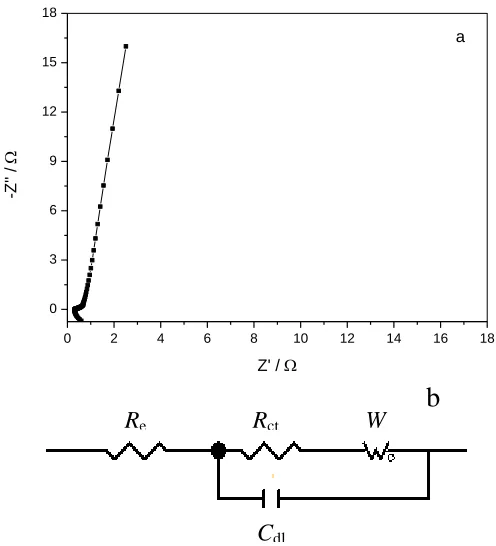
Fig. 7a demonstrates Nyquist impedance plots of MnCo2O4.5/graphene composite electrode
[image:8.596.141.389.172.445.2]measured at 0.1 V. Fig. 7b shows the equivalent circuit for modeling Nyquist plots.
Figure 7. Nyquist impedance plots of MnCo2O4.5/graphene composite electrode measured at 0.1 V (a);
The equivalent circuit for modeling Nyquist plots (b).
Nyquist plots contain a incomplete small semicircle in the high frequency range and a straight line in the low frequency range. The point intersecting at the real axis in the high frequency range represents a combinational resistance (Re), which contains the active material intrinsic resistance, the
electrolyte resistance, and contact resistance at the active material/the current collector interface [35]. Re is around 0.32 Ω, which is very low. This is attributable to excellent electron conductivity provided
by graphene in MnCo2O4.5/graphene composite. A semicircle in the high frequency region corresponds
to the charge-transfer resistance (Rct) and the double-layer capacitance [24, 30, 36]. The
charge-transfer resistance (Rct) is ca. 0.05 Ω. The low Rct value signifies good charge-transfer kinetics and
easy electron transport between the electrolyte and the electrode, resulting in good rate capability of MnCo2O4.5/graphene composite [37]. In the low frequency range, the straight line corresponds to the
diffusive resistance (Warburg impendence, W) of the electrolyte ions in electrode. The slope of the straight line tends to vertical asymptote, indicating that MnCo2O4.5/graphene composite possesses a
good capacitive behavior [24, 30, 38].
0 2 4 6 8 10 12 14 16 18
0 3 6 9 12 15 18
-Z
'' /
Z' /
a
Cdl
Re Rct W
4. CONCLUSIONS
MnCo2O4.5/graphene composite is obtained by hydrothermal process and its capacitive
performance is investigated. MnCo2O4.5/graphene composite possesses a specific capacitance of 255.8
F g-1 at 5 mV s-1 and a specific capacitance of 176.7 F g-1 at 80 mV s-1. Its specific capacitance is 252.3 and 223.7 F g-1 at 0.5 and 8.0 A g-1, respectively. The specific capacitance retention ratio for a 16-time scan rate increase and a 16-time current density increase are 69.1% and 88.7%, respectively, indicating its superior rate capability. The specific capacitance after 1000 cycles is 225.6 F g-1 at 1.0 A g-1 and 92.6% of initial specific capacitance is achieved, demonstrating relative good cycling stability of MnCo2O4.5/graphene composite. All the results indicate MnCo2O4.5/graphene composite as
supercapacitors electrode material with high specific capacitance, good rate capability and excellent cycling stability.
ACKNOWLEDGEMENTS
This work was financially supported by Scientific Research Fund of Hunan Provincial Education Department (No. 14B022), Science and Technology Plan Fund of Changsha (No. k1509008-11) and Aid Program for Science and Technology Innovative Research Team in Higher Educational Institutions of Hunan Province.
References
1. Y.H. Li, K.L. Huang, D.M. Zeng, S.Q. Liu and Z.F. Yao, J. Solid State Electrochem., 14 (2010) 1205.
2. Q. Wang, J. Yan and Z.J. Fan, Energy Environ. Sci., 9 (2016) 729.
3. Y.F. Song, J. Yang, K. Wang, S. Haller, Y.G. Wang, C.X. Wang and Y.Y. Xia, Carbon, 96 (2016) 955.
4. F. Bonaccorso, L. Colombo, G. Yu, M. Stoller, V. Tozzini, A.C. Ferrari, R.S. Ruoff and V. Pellegrini, Science, 347 (2015) 1246501.
5. S. Bag and C.R. Raj, J. Mater. Chem. A, 4 (2016) 587.
6. C.H. Zhao, B.Y. Huang, W.B. Fu, J.Y. Chen, J.Y. Zhou and E.Q. Xie, Electrochim. Acta, 178 (2015) 555.
7. Y.B. Zhang and Z.G. Guo, Chem. Commun., 50 (2014) 3443.
8. Z.S. Iro, C. Subramani and S.S. Dash, Int. J. Electrochem. Sci., 11 (2016) 10628. 9. K. Wang, H.P. Wu, Y.N. Meng and Z.X. Wei, Small, 10 (2014) 14.
10.P. Sekar, B. Anothumakkool, V. Vijayakumar, A. Lohgaonkar and S. Kurungot, Chemelectrochem, 3 (2016) 933.
11.R.J. Deokate, R.S. Kalubarme, C.-J. Park and C.D. Lokhande, Electrochim. Acta, 224 (2017) 378. 12.Y.R. Zhu, J.F. Wang, Z.B. Wu, M.J. Jing, H.S. Hou, X.N. Jia and X.B. Ji, J. Power Sources, 287
(2015) 307.
13.S. Khalid, C.B. Cao, A. Ahmad, L. Wang, M. Tanveer, I. Aslam, M. Tahir, F. Idrees and Y.Q. Zhu, Rsc Advances, 5 (2015) 33146.
14.V. Venkatachalam, A. Alsalme, A. Alghamdi and R. Jayavel, J. Electroanal. Chem., 756 (2015) 94. 15.Z. Wang, W. Jia, M. Jiang, C. Chen and Y. Li, Nano Research, 9 (2016) 2026.
16.K.V. Sankar, S. Surendran, K. Pandi, A.M. Allin, V.D. Nithya, Y.S. Lee and R.K. Selvan, Rsc Advances, 5 (2015) 27649.
18.S. Al-Rubaye, R. Rajagopalan, C.M. Subramaniyam, Z. Yu, S.X. Dou and Z. Cheng, J. Power Sources, 324 (2016) 179.
19.W.Y. Li, K.B. Xu, G.S. Song, X.Y. Zhou, R.J. Zou, J.M. Yang, Z.G. Chen and J.Q. Hu, CrystEngComm, 16 (2014) 2335.
20.K. Wang, J. Xu, A. Lu, Y. Shi and Z. Lin, Solid State Sci., 58 (2016) 70.
21.Y.H. Li, S.Y. Zhang, Q.Y. Chen and J.B. Jiang, Int. J. Electrochem. Sci., 10 (2015) 6199. 22.D.H. Zhang and W.B. Zou, Curr. Appl. Phys., 13 (2013) 1796.
23.Y.H. Li, J.B. Li, S.Y. Zhang, N.F. Wang and Z. Zhou, Int. J. Electrochem. Sci., 10 (2015) 8005. 24.Y.H. Li, K.L. Huang, Z.F. Yao, S.Q. Liu and X.X. Qing, Electrochim. Acta, 56 (2011) 2140. 25.F.Z. Deng, L. Yu, G. Cheng, T. Lin, M. Sun, F. Ye and Y.F. Li, J. Power Sources, 251 (2014) 202. 26.B.R. Duan and Q. Cao, Electrochim. Acta, 64 (2012) 154.
27.L.L. Zhang, X. Zhang, L. Pei, Y.J. Zhang and Y.D. Xu, Mater. Lett., 164 (2016) 333.
28.J. Pu, Z.H. Wang, K.L. Wu, N. Yu and E.H. Sheng, Phys. Chem. Chem. Phys., 16 (2014) 785. 29.H. Li, S. Liu, C. Huang, Z. Zhou, Y. Li and D. Fang, Electrochim. Acta, 58 (2011) 89.
30.H.Y. Quan, B.C. Cheng, Y.H. Xiao and S.J. Lei, Chem. Eng. J., 286 (2016) 165.
31.H.B. Li, M.H. Yu, F.X. Wang, P. Liu, Y. Liang, J. Xiao, C.X. Wang, Y.X. Tong and G.W. Yang, Nature Communications, 4 (2013) 1894.
32.X. Yu, B. Lu and Z. Xu, Adv. Mater., 26 (2014) 1044.
33.Y.H. Li, K.L. Huang, S.Q. Liu, Z.F. Yao and S.X. Zhuang, J. Solid State Electrochem., 15 (2011) 587.
34.Y.H. Li and Q.Y. Chen, Asian J. Chem., 24 (2012) 4736.
35.W.L. Yang, Z. Gao, J. Ma, J. Wang, B. Wang and L.H. Liu, Electrochim. Acta, 112 (2013) 378. 36.Q. Guan, J.L. Cheng, B. Wang, W. Ni, G.F. Gu, X.D. Li, L. Huang, G.C. Yang and F.D. Nie, ACS
Appl. Mater. Interfaces, 6 (2014) 7626.
37.H. Che, A. Liu, J. Mu, Y. Bai, C. Wu, X. Zhang, Z. Zhang and G. Wang, Electrochim. Acta, 225 (2017) 283.