This is a repository copy of
Statistical methods for adjusting estimates of treatment
effectiveness for patient nonadherence in the context of time-to-event outcomes and
health technology assessment: A systematic review of methodological papers
.
White Rose Research Online URL for this paper:
http://eprints.whiterose.ac.uk/153267/
Version: Accepted Version
Article:
Alshreef, A. orcid.org/0000-0003-2737-1365, Latimer, N. orcid.org/0000-0001-5304-5585,
Tappenden, P. et al. (4 more authors) (2019) Statistical methods for adjusting estimates of
treatment effectiveness for patient nonadherence in the context of time-to-event outcomes
and health technology assessment: A systematic review of methodological papers. Medical
Decision Making. ISSN 0272-989X
https://doi.org/10.1177/0272989x19881654
Abualbishr Alshreef , Nicholas Latimer, Paul Tappenden, Ruth Wong, Dyfrig Hughes ,
James Fotheringham, and Simon Dixon, Statistical Methods for Adjusting Estimates of
Treatment Effectiveness for Patient Nonadherence in the Context of Time-to-Event
Outcomes and Health Technology Assessment: A Systematic Review of Methodological
Papers, Medical Decision Making. Copyright © 2019 The Author(s). DOI:
10.1177/0272989X19881654.
[email protected] https://eprints.whiterose.ac.uk/
Reuse
Items deposited in White Rose Research Online are protected by copyright, with all rights reserved unless indicated otherwise. They may be downloaded and/or printed for private study, or other acts as permitted by national copyright laws. The publisher or other rights holders may allow further reproduction and re-use of the full text version. This is indicated by the licence information on the White Rose Research Online record for the item.
Takedown
If you consider content in White Rose Research Online to be in breach of UK law, please notify us by
1 TITLE PAGE
Manuscript title
Statistical Methods for Adjusting Estimates of Treatment Effectiveness for Patient Non-adherence in the Context of Time-to-event Outcomes and Health Technology Assessment: A Systematic Review of Methodological Papers
Running head
Statistical methods for adjusting for non-adherence
Authors and affiliations
Abualbishr Alshreef, MSc1, Nicholas Latimer, PhD1, Paul Tappenden, PhD1, Ruth Wong, PhD1, Dyfrig Hughes, PhD3, James Fotheringham, PhD2, Simon Dixon, PhD1.
1 Health Economics and Decision Science, School of Health and Related Research (ScHARR), University of Sheffield, Sheffield, United Kingdom
2 Sheffield Kidney Institute, Sheffield Teaching Hospitals NHS Trust, Sheffield, United Kingdom
3 Centre for Health Economics & Medicines Evaluation (CHEME), Bangor University, Bangor, United Kingdom
Corresponding Author
Name: Abualbishr Alshreef
Address: Health Economics and Decision Science, School of Health and Related Research, University of Sheffield, Regent Court, 30 Regent Street, Sheffield S1 4DA, UK Tel: +44 (0)114 222 0673
Fax: +44 (0)114 222 0749 Email: [email protected]
Acknowledgements
This work was done in ScHARR, University of Sheffield, UK. An abstract from this work was presented as an oral presentation at the European Society for Patient Adherence, Compliance and Persistence (ESPACOMP) 22nd Conference in Dublin, Ireland (November 30, 2018).
Word count: 4,521
2 ABSTRACT
Introduction
Medication non-adherence can have a significant negative impact on treatment effectiveness. Standard intention-to-treat analyses conducted alongside clinical trials do not make
adjustments for non-adherence. Several methods have been developed that attempt to estimate what treatment effectiveness would have been in the absence of non-adherence. However, health technology assessment (HTA) needs to consider effectiveness under real-world
conditions, where non-adherence levels typically differ from those observed in trials. With this analytical requirement in mind, we conducted a review to identify methods for adjusting
estimates of treatment effectiveness in the presence of patient non-adherence in order to assess their suitability for use in HTA.
Methods
A Comprehensive Pearl Growing technique, with citation searching and reference checking was applied across seven electronic databases to identify methodological papers for adjusting time-to-event outcomes for non-adherence using individual patient data. A narrative synthesis of identified methods was conducted. Methods were assessed in terms of their ability to re-estimate effectiveness based on alternative, sub-optimal, adherence levels.
Results
Twenty relevant methodological papers covering 12 methods and 8 extensions to those methods were identified. Methods are broadly classified into four groups: (1) simple methods, (2) principal stratification methods, (3) generalised methods (g-methods), and (4)
pharmacometrics-based methods using pharmacokinetics and pharmacodynamics (PKPD) analysis. Each method makes specific assumptions and has associated limitations. Five of the 12 methods are capable of adjusting for real-world non-adherence, with only g-methods and PKPD considered appropriate for HTA.
Conclusion
3 INTRODUCTION
Patient non-adherence to medications can have a significant negative impact on treatment effectiveness and health care costs, and has the potential to alter the conclusions of economic evaluations and health technology assessments (HTA).1-3 An economic evaluation typically assesses the cost-effectiveness of a new treatment compared to standard treatment using evidence on clinical effectiveness and costs. Intention-to-treat (ITT) analysis, which compares randomised groups regardless of non-adherence or withdrawal, is a well-established method for estimating treatment effectiveness from randomised controlled trials (RCTs).4 However, ITT estimates may not be relevant if the HTA aims to assess the effectiveness of treatment given real-world adherence patterns.5,6
There is evidence to show that adherence in the real world is likely to differ from RCTs (depending on the type of treatment, disease area, and health care setting) which leads to uncertainty around the actual effectiveness of treatments.7-9 Clinical effectiveness estimates
have a direct impact on cost-effectiveness; consequently, a cost-effectiveness analysis (CEA) which does not incorporate non-adherence may produce misleading conclusions regarding the value of the technology. In the HTA context, we are interested in effectiveness estimates
inferred to the entire study population (as defined by scope and study eligibility criteria) which can be identified at baseline, as opposed to estimates focused on a latent subgroup of the population (e.g. compliers). Moreover, HTA agencies are interested in adjustment methods
which can be used for re-estimating treatment effectiveness for any given level of adherence, in order to reflect potential real-world adherence levels.10,11
The fundamental issue in estimating effectiveness associated with alternative adherence levels is the methodological challenge associated with adjusting for time-dependent confounding. In this context, time-dependent confounders are prognostic factors which predict subsequent non-adherence and outcomes, yet are themselves predicted by previous non-non-adherence.12 When time-dependent confounders are present, more complex methods than simple regression adjustment are needed because simple regression adjustment is unable to deal with variables that predict adherence and are also an intermediate step between adherence and outcome. A range of methods have been proposed for estimating the causal effect of treatments in the presence of non-adherence, however, little guidance exists about their relative advantages,13-15
4
The aims of the review are to systematically identify approaches for adjusting for non-adherence in the context of time-to-event outcomes using individual patient data in RCTs, to describe how each is undertaken and to assess their suitability for re-estimating effectiveness based on alternative, sub-optimal, adherence levels.
METHODS
Review Question and Protocol
The review question was: What methods have been proposed in the methodological literature to account for the impact of non-adherence to treatments on clinical effectiveness and
cost-effectiveness The review approach adheres to published international guidelines for
undertaking and reporting systematic reviews and methods were pre-specified in a protocol. 16-20
Search Strategy
A Comprehensive Pearl Growing (CPG) technique17 and two-stage iterative search approach
was used across seven databases (Medline, Embase, Cochrane Library, EconLit, Scopus, Web of Science, MathSciNet). Databases were searched for potentially relevant papers published in English from inception to 9th February 2018 (first stage search) to 23rd May 2018 (second stage search). The database searches were complemented by citation searches and reference list checking for each pearl key paper to identify additional relevant papers The search approach was designed to identify the initial paper proposing the method (or articles reporting
extensions to a previously developed method), rather than articles reporting the application of methods in studies.
The database search strategy comprises keywords for patient adherence combined with methods terms and focused MeSH headings of known pearls. The second iteration search was informed from the collective analysis of newly identified pearls title, abstract, keywords, MeSH and floating headings using the online Yale MeSH Analyzer Tool.13,21-28 Search terms and strategies are provided in Appendix A.
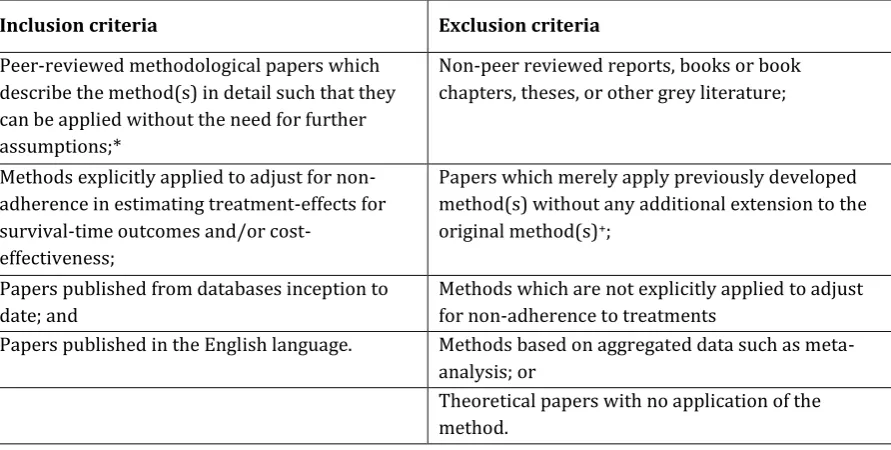
Inclusion and Exclusion Criteria
5
eligibility criteria. Disagreements between the two reviewers were resolved by discussion and a consensus was reached on the final list of included papers. Expert opinion was obtained from two experts (D.H., I.W.) for recommendation of additional papers.
Data Extraction
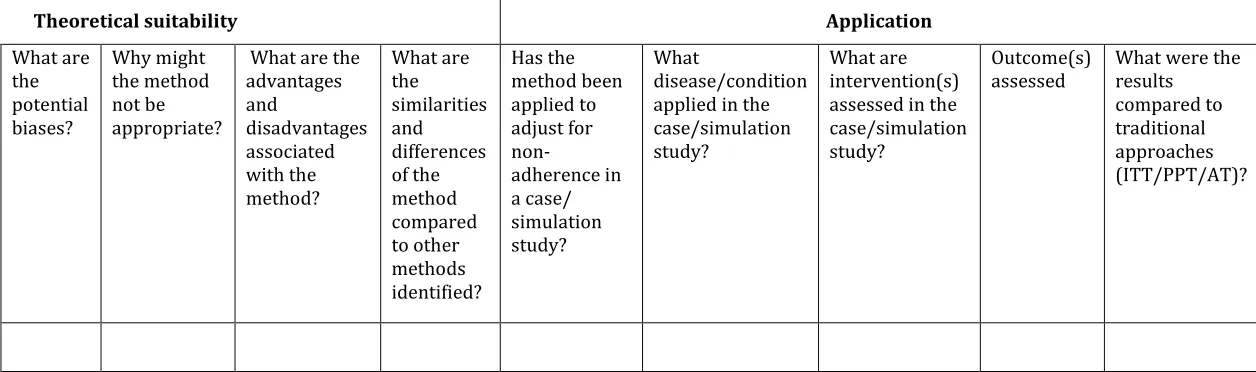
A data extraction form was developed to extract the basic information and key characteristics for each method identified (Table S2).
Data Synthesis
A narrative data synthesis approach was followed for each relevant method identified and their extensions. This included a description of the key characteristics of each method, as specified by the appraisal framework (Table S3).29 As part of this, we assessed which forms of
non-adherence the method is capable of addressing, using the classification developed by Vrijens and colleagues.28This classification differentiates between three stages of medication non-adherence: (1) initiation (when the first dose is taken by the patient); (2) implementation (how closely the actual dosage of a patient corresponds to the prescribed dosing regimen); and (3) persistence (time to discontinuation or end of therapy).28
We provide a brief description of the concept of each adjustment method, together with the causal model, its estimand (defined in the next section), key assumptions and limitations. We assess whether the method is capable of re-estimating effectiveness for other sub-optimal levels of adherence (as opposed to optimal adherence). This assessment was based on the capability of the method to estimate the treatment effect under alternative counterfactual adherence levels (i.e. not observed adherence levels) given the adherence level and treatment effect actually observed in the trial. Finally, we assess the appropriateness of non-adherence adjustment methods for the HTA context based on criteria developed by the authors. The criteria were: (1) the suitability of the estimand (as described in the next section), (2) the types of non-adherence the method is capable of dealing with, and (3) whether it is possible to use the method to account for real-world non-adherence levels.
Possible Estimands and Suitability for HTA
An estimand is the parameter of interest estimated by the statistical method that we can use to make inferences about a population using a sample from that population.5,30 A range of possible
6
for resource allocation decision making. Therefore, estimands focused on latent subgroups of patients (e.g. compliers) may not be appropriate for the HTA context.
RESULTS
Overview of Included Papers
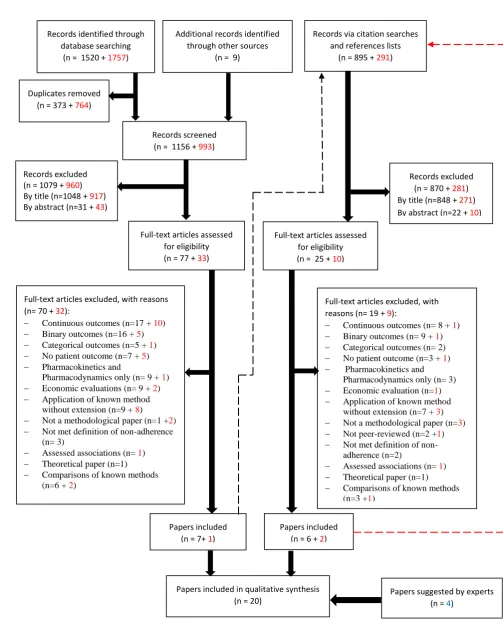
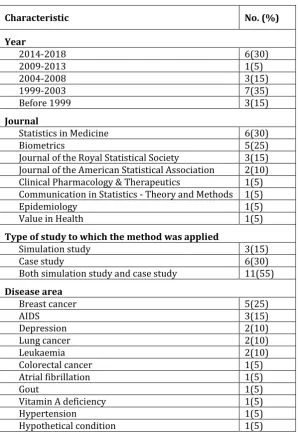
This review includes 20 papers describing 12 methods and 8 extensions to those methods.22,31-49 In total, the searches resulted in 4472 records (Figure 1). The included papers were published between 1992 and 2018 (inclusive), the majority were published in the Statistics in Medicine journal (30%) and Biometrics journal (25%). Other characteristics of included papers are given in Table S4.
Taxonomy of Methods
A taxonomy of methods for adjusting estimates of treatment effectiveness for non-adherence in the context of time-to-event outcomes is proposed (Table 1). The purpose of the taxonomy is to increase understanding of the concept behind each method and its relation to other methods in terms of estimands and estimators.30 The structure of the taxonomy was initially developed by one author (A.A.) and further revised based on consultations with other authors (N.L., P.T., D.H., J.F, S.D.) and an expert in causal inference methods (I.W.).
7 Simple methods
Per-Protocol (PP) Analysis
The standard PP analysis strategy attempts to estimate the treatment effect among adherent patients by excluding protocol non-compliers.45 PP can deal with random (non-selective) types of non-adherence (initiation, implementation, persistence). The main concern is that excluding some patients from the analysis may undermine the prognostic balance generated by the randomisation which may introduce selection bias. This is likely to be the case if non-adherence is not random, i.e. if non-adherence is influenced by other patient characteristics and prognostic factors.55 Even if prognostic factors which are associated with non-adherence are correctly identified, PP analysis will introduce bias in the presence of time-dependent confounding.
As-Treated (AT) Analysis
The AT method attempts to adjust for the random initiation type of non-adherence. AT
estimates the Average Causal Effect (ACE) among patients who actually received the treatment compared to those who did not receive the treatment, assuming they are similar regardless of randomisation.34The main problem with this approach is that the group who actually received the treatment is unlikely to be comparable to the group who did not, making this approach prone to selection bias.56 AT analysis is less commonly used in practice compared with ITT and PP conventional methods.
Principal Stratification Methods
Cox Proportional Hazards Model with Partial-Likelihood Estimator (PLE)
The CPH model with PLE is a method for estimating the treatment effect adjusted for initiation non-adherence at baseline while respecting the randomisation.41 This is a semi-parametric model whereby the treatment effect on the distributions of failure times is the parametric part. In the basic model, an individual with covariates (k, z0, z) will have a hazard function presented in equation [1].
exp
where is the treatment effect in compliers (CACE estimand) expressed in terms of the hazard at time for a cumulative hazard function k(t) (this is only observable for the compliers class),
8
estimator.41 The key limitation of this method is the difficulty of modelling time-varying treatments and other types of non-adherence beyond initiation.
Markov Compliance Class (MCC) Model in a 3-Stage Method
The MCC model can accommodate both initiation and time-varying non-adherence (implementation) in the context of longitudinal studies where patients are randomised at baseline and randomisation is maintained over time.42 The concept of this method is based on specifying two possible adherence classes which are applied at specified time points, e.g. five time points results in a total of 32 (25) adherence patterns. A stratification strategy can then be used to stratify adherence patterns into super-classes (low compliers, decreasing compliers and high compliers). This can be used to estimate the CACE estimand among the compliers
superclass. Model [2] can then be used to account for the relationship between adherence and survival time at time t.
exp
where for one of the adherence superclasses is assumed 0 for identification (reference superclass) and is individual is adherence superclass for a number of superclasses.42 As a limitation, the method cannot deal with time-dependent confounding.
Weighted Per-Protocol (Wtd PP) Analysis with Expectation-Maximisation Estimator
The Wtd PP method estimates the CACE by focusing on the ambivalent (compliers) class. The method attempts to deal with treatment initiation over time with two main features: (1)
proposing a Wtd PP estimator by using time-varying weights which are subject-specific (depend on baseline and time-dependent covariates) in a survival model; and (2) proposing an
expectation-maximisation algorithm to maximise the full-likelihood (FL) and PLEs.47 The method was developed to adjust for time-dependent confounders which are associated with non-adherence. The partial-likelihood estimator used by this model is similar to that used in the CPH with PLE approach (model [1]). Details of the FL estimator are reported in Li and Gray.47
Compliers PROPortional Hazards Effect of Treatment (C-PROPHET)
9
The C-PROPHET model assumes that the hazard of survival time (Ti) is as provided in equation [3]. 39
exp
where Zi is the randomisation variable for individual i ( for the intervention group, for the control group) and represents the principal stratum at the treatment initiation stage. The parameter denotes the causal proportional hazards effect in the subpopulation of compliers. This is the parameter of interest which is called C-PROPHET.39 In terms of limitations, the method cannot be used to adjust for time-dependent non-adherence.
Instrumental Variable Method
The IV method can be used for adjusting for all types of non-adherence using a binary
adherence variable. The method relies on the exclusion restriction assumption; that is, the IV affects the survival outcome only through its effects on the exposure. Three variants of the IV approach were identified: (1) IV with Likelihood Estimator,32 (2) IV with Plug-in
Non-Parametric Empirical Maximum Likelihood Estimator (PNEMLE),43 and (3) Transformation promotion time cure model with MLE.48
The IV with Likelihood estimator works by classifying individuals in the trial population into four groups (similar to the classification used by MCC method). The estimator should be used to calculate the probability of having the case-specific event of interest at time t for each latent adherence class. Treatment effect in terms of HR can then be computed. This method was further applied to estimate adherence-adjusted cost-effectiveness using RCT data.32
The PNEMLE approach assumes the following survival functions for compliers in the
intervention group (equation [4]) denoted as Sc1(V) and control group (equation [5]) denoted as Sc0(V), while never-takers have similar survival function in both groups denoted as Snt(V).
where c is the fraction of compliers in the intervention group.
The IV extension using transformation promotion time cure model is a semi-parametric model for estimating CACE and CESP (Complier Effect on Survival Probability) estimands. Further details of this extension are reported in Gao and Zheng.48 By using an IV approach, the analyst
10
instrumental variable that meets all the criteria of a valid IV;15 an inadequate IV can lead to an imprecise and/or biased estimate.
G-methods
Marginal Structural Models (MSMs) with Inverse Probability of Censoring Weighting
(IPCW) / Inverse Probability of Treatment Weighting (IPTW)
This method can be used to adjust for all types of non-adherence by censoring individuals at the first time they become non-adherent and then use IPCW for estimating the ACE of treatment using MSMs.22 The IPCW can be used to obtain a valid treatment effect by adjusting for baseline and time-dependent confounders. IPCW makes the no unmeasured confounding assumption; that is, the assumption of explainable non-random non-adherence by measured time-dependent confounders.13,22 Stabilised weights are used because unstablised weights can be inefficient. In
practice, the analyst should construct stabilised weights ( for each individual i in time
interval t by multiplying all the probabilities of remaining uncensored (adherent) up to time t using equation [6].
where is the predicted probability of non-adherence in time interval k given the
randomisation group and adjusting for baseline and time-dependent covariates, is the probability of non-adherence given the randomisation group and adjusting for baseline covariates only. A pseudo-population should be created using the IPCW, and then any survival analysis (e.g. a Cox Partial-Likelihood Estimator) can be applied for estimating adherence-adjusted effectiveness.The main limitation of IPCW is the assumption of no unmeasured confounders, which cannot be proven empirically.
As an alternative approach to IPCW, one could allow individuals to become adherent again following a period of non-adherence - this can be modelled using the IPTW approach.35 The key feature of this method is that it allows for modelling longitudinal adherence patterns where patients follow erratic adherence behaviours in implementing the prescribed dosing regimen (i.e. on/off adherence patterns).
Structural Nested Failure Time Models (SNFTMs) with G-estimation
11
does not add to the prediction model for treatment initiation, conditional on other covariates included in the model. To formally explain the G-estimation procedure, let us assume the treatment effect model in equation [7].57 We fit a logistic regression model to obtain the coefficients in equation [8].
where is the observed survival time, means has the same distribution as, is the
counterfactual outcome, is the past treatment, is the history of covariates and is the probability of initiating the treatment at time t.
G-estimation is used to search for value which adds the least to the prediction model (i.e. treatment initiation is independent of counterfactual outcomes). This means we search for a
value of that results in a term having a coefficient zero in model [8]. That value of
provides the best estimates of counterfactual survival times adjusted for non-adherence. The
main limitation of SNFTMs is the potential biases related to the no unmeasured confounding assumption, which cannot be formally tested.
Rank-Preserving Structural Failure Time Models (RPSFTMs) with G-estimation
The RPSFTM is a semi-parametric model for adjusting for initiation non-adherence using the randomisation factor, observed survival time and treatment history.36 The method relies on the
common treatment effect assumption (equal treatment effect regardless of when the
treatment was initiated, but relative to the time for which the treatment was received). It also
relies upon the randomisation of the trial meaning that counterfactual survival times are equal between groups.
A simple RPSFTM (equation 9) can be constructed to estimate the counterfactual survival time
( ).14,38
exp
G-12
estimation), the counterfactual survival between randomised groups will be equal and that value of would be the point estimate of the treatment effect.
RPSFTM allows us to deal with dependent initiation issues and can deal with
time-dependent confounding. The original RPSFTM was extended to incorporate baseline covariates to improve the precision of estimators,37, 38 and uses re-censoring to allow the method to deal with potentially informative censoring in the counterfactual dataset.33,40 As limitations, the RPSFTM can only be used for adjusting for the initiation type of non-adherence and it relies on the common treatment effect assumption, which is difficult to test.
Pharmacometrics-based Methods
Pharmacokinetics and Pharmacodynamics (PKPD) Based Method
The PKPD based methods model all types of non-adherence for estimating treatment
effectiveness. PKPD-based methods require model development and fitting using appropriate data, typically collected during each phase of clinical drug development; and simulation based on different patterns of adherence, dosing schedules, and patient characteristics where covariate effects are relevant. The pharmacodynamic endpoint may be of direct relevance (e.g. anticoagulant international normalised ratio (INR)) or may require extrapolation, to estimate the link between the PKPD parameter and the outcome of interest (e.g. risk of cardiovascular events) using evidence from the literature.44,58 PKPD makes the exclusion restriction assumption, that is, randomisation affects the outcome only through the exposure treatment.
The PKPD method has been extended for modelling varying non-adherence and estimating adherence-adjusted cost-effectiveness of treatments.44,49 The main limitations of this method is its reliance on an accurate model specification and PKPD data which might not be routinely available in RCTs or observational studies across disease areas.
Appropriateness of Non-Adherence Adjustment Methods to the HTA Context
13
three facets of estimating effectiveness for HTA, g-methods and PKPD appear to be more appropriate.
The main differences between the four classes of methods are the estimands, assumptions, and the types of non-adherence that each method is capable of dealing with. Simple methods are only valid in the presence of random (non-selective) non-adherence. Principal stratification methods are capable of adjusting for some types of non-adherence, but their estimands seem inappropriate for HTA context based on the criteria we set out in the methods section. Both g-methods and PKPD can deal with real-world non-adherence and their estimands are
appropriate for HTA. G-methods are similar in terms of their capability for adjusting
effectiveness estimates for counterfactual non-adherence levels. However, PKPD is a unique method that uses a different approach compared to g-methods.
In practice, the analyst could apply g-methods to individual patient-level data from an RCT to re-estimate treatment effectiveness (adjusted for non-adherence) for populating
cost-effectiveness models. Real-world adherence levels could be estimated from registry data or observational studies. All g-methods could be applied using standard software (e.g. SAS, Stata or R).12,59-61 While g-methods could be applied to real RCT datasets, the PKPD approach relies on simulating an RCT dataset based on a specified pattern of non-adherence (e.g. real world adherence), and then uses the simulated data for generating the adjusted estimates. This would require data (including PKPD data) collected at different phases of clinical drug development. PKPD method can be applied using a specialist software (e.g. NONMEM) or standard software (e.g. R) for simulating the dataset.62
DISCUSSION
A total of 12 methods for adjusting for non-adherence in the context of time-to-event outcomes were identified and briefly described in this article. The proposed taxonomy classifies
adjustment methods into four groups: (i) simple methods, (ii) principal stratification methods, (iii) g-methods, and (iv) pharmacometrics-based methods. Each method makes specific
assumptions and has associated limitations, and many of these assumptions are non-testable. Identification and collection of baseline and time-dependent confounders were identified as crucial for adjusting for non-adherence.
The purpose of adjustment was highlighted as a fundamentally important issue as estimands differ between the methods, as do the practicalities of using the method to re-estimate
14
of time-dependent confounding in RCT datasets. Simple methods and principal stratification methods cannot re-estimate effectiveness based on alternative, sub-optimal, adherence levels. Wtd PP method uses weights similar to IPCW, but the estimand is restricted to the compliers subpopulation.
Many potentially relevant papers with a focus on cost-effectiveness aspects were excluded as these did not provide a methodological contribution. This gap in the methodological literature on CEA for modelling the link between non-adherence and treatment effectiveness is consistent with findings from other studies.8,63 A previous review by Hughes et al.27 reported five methods for adjusting cost-effectiveness for non-adherence which was focused on pharmacoeconomic models rather than the impact of non-adherence on effectiveness. In that review, the PKPD approach is the only method relevant to our review with the other methods being health-economic models (Decision tree, Markov, Discrete-event simulation) for incorporating adherence-adjusted treatment effects in economic evaluations.
Many of the methods identified by our review have been described and compared (mostly in pairwise comparisons) in the methodological literature.13,14,34,64,65 Mostazir et. al. published a review of methods for handling non-adherence to intervention protocols in RCTs which identified some of the methods; however, their review missed several relevant methods due to the restricted search strategy used.66 The limitations of simple methods in adjusting for non-adherence is consistently reported in the methodological literature.33,34,39,45,56,64,67 It has been noted previously that principal stratification methods require a binary adherence variable (e.g. compliers/non-compliers) which may be problematic as a threshold is required and this is often
arbitrarily decided (e.g. 80% adherence level).68 This may also be an issue for g-methods and PKPD methods, where, in adjusting for non-adherence, we first need to define what constitutes
adherence This review has identified which non-adherence adjustment methods are likely to be useful in an HTA context. However, the remaining methods all have limitations and their performance in relevant scenarios is unknown.
15
simulation studies) is warranted to provide recommendations for application in the HTA context.
In conclusion, economic evaluations frequently ignore the adjustment of treatment effectiveness for patient non-adherence which carries the risk of producing misleading cost-effectiveness evidence if adherence levels in the real world differ from trials. A range of statistical methods are available for adjusting estimates of treatment effectiveness in the presence of patient non-adherence, although g-methods and PKPD appear to be more promising to account for real-world adherence levels in HTA. Further research is warranted to assess the performance of these methods.
Acknowledgements
This report is independent research funded by a National Institute for Health Research (NIHR) Doctoral Research Fellowship awarded to Mr Abualbishr Alshreef (DRF-2017-10-025). The views expressed in this report are those of the authors and not necessarily those of the NHS, the NIHR or the Department of Health and Social Care. We thank Ian White, PhD, for his advice on the review work and comments on an early version of this paper.
Conflict of Interests
NRL is supported by Yorkshire Cancer Research (Award reference number S406NL)". A.A., P.T., R.W., D.H., J.F., and S.D. declare that they have no conflict of interest.
REFERENCES
1. Hughes DA, Bagust A, Haycox A, Walley T. The impact of non-compliance on the cost-effectiveness of pharmaceuticals: a review of the literature. Health Economics 2001;10(7):601-15.
2. Cleemput I, Kesteloot K, DeGeest S. A review of the literature on the economics of noncompliance. Room for methodological improvement. Health Policy 2002;59:65 94.
3. Barber N. Should we consider non-compliance a medical error? Qual Saf Health Care 2002;11:81 84.
4. Gupta SK. Intention-to-treat concept: A review. Perspect Clin Res 2011;2(3):109 112.
5. Akachaa M, Bretza F, Ohlssen D, Rosenkran G, Schmidli H. Estimands and Their Role in Clinical Trials. Statistics in Biopharmaceutical Research 2017;9(3):268-271.
6. European Medicines Agency. 2017 7 November. ICH E9 (R1) addendum on estimands and sensitivity analysis in clinical trials to the guideline on statistical principles for clinical trials European Medicines Agency
https://www.ema.europa.eu/documents/scientific-guideline/draft-ich-e9-r1-16
addendum-estimands-sensitivity-analysis-clinical-trials-guideline-statistical_en.pdf>. Accessed 2018 7 November.
7. Shroufi A, Powles J. Adherence and chemoprevention in major cardiovascular disease: a simulation study of the benefits of additional use of statins. J Epidemiol Community Health 2010;64(2):109-113.
8. Hughes D, Charles J, Dawoud D, Edwards RT, Holmes E, Jones C, Parham P, Plumpton C, Ridyard C, Lloyd-Williams H and others. Conducting Economic Evaluations Alongside Randomised Trials: Current Methodological Issues and Novel Approaches.
Pharmacoeconomics 2016.
9. Kadambi A, Leipold RJ, Kansal AR, Sorensen S, Getsios D. Inclusion of Compliance and Persistence in Economic Models: Past, Present and Future. Appl Health Econ Health Policy 2012;10(6):365-379.
10. NICE. 2013 19 September. Guide to the methods of technology appraisal: Processes and methods guides. National Institute for Health and Care Excellence
<https://www.nice.org.uk/process/pmg9/chapter/foreword>. Accessed 2018 19 September.
11. NCCPC. 2009 14 July. Medicines Adherence: involving patients in decisions about prescribed medicines and supporting adherence. National Collaborating Centre for Primary Care, Royal College of General Practioners
<https://www.nice.org.uk/guidance/cg76/evidence/full-guideline-242062957>. Accessed 2018 14 July.
12. Sterne JAC, Tilling K. G-estimation of causal effects, allowing for time-varying confounding. The Stata Journal 2002;2(2):164 182.
13. Robins JM. Correction for non-compliance in equivalence trials. Statistics in Medicine 1998;17(3):269-302.
14. Robins JM, Tsiatis AA. Correcting for noncompliance in randomized trials using rank preserving structural failure time models. Communications in Statistics-Theory and Methods 1991;20(8):2609-2631.
15. Angrist JD, Imbens GW, Rubin DB. Identification of causal effects using instrumental variables. Journal of the American Statistical Association 1996;91(434):444-455.
16. Centre for Reviews and Dissemination Systematic Reviews CRD s guidance for undertaking reviews in health care. York: Centre for Reviews and Dissemination, University of York; 2008.
17. Schlosser RW Wendt O Bhavnani S Nail Chiwetalu B Use of information seeking strategies for developing systematic reviews and engaging in evidence based practice the application of traditional and comprehensive Pearl Growing. A review. INT J LANG COMM DIS 2006;41(5):567 582.
17
19. Moher D, Liberati A, Tetzlaff J, Altman D. Preferred reporting items for systematic reviews and meta-analyses: the PRISMA statement. Ann Intern Med 2009;151(4):264-269.
20. Alshreef A, Dixon S, Latimer N, Tappenden P, McKane W. 2018 3 May. Systematic review of methods to account for patient non-adherence on estimating treatment effect and cost-effectiveness of chronic medications: Review protocol. PROSPERO
<http://www.crd.york.ac.uk/PROSPERO/display_record.php?ID=CRD42018095544>. Accessed 2018 3 May.
21. Wang W, Husan F, Chow SC. The impact of patient compliance on drug concentration profile in multiple doses. Statistics in Medicine 1996;15(6):659-69.
22. Robins JM, Finkelstein DM. Correcting for noncompliance and dependent censoring in an AIDS Clinical Trial with inverse probability of censoring weighted (IPCW) log-rank tests. Biometrics 2000;56(3):779-88.
23. Vermeire E, Hearnshaw H, Royen PV, Denekens J. Patient adherence to treatment: three decades of research. A comprehensive review. J Clin Pharm Ther 2001;26(5):331 342.
24. Chue PS, Heeg B, Buskens E, van-Hout BA. Modelling the impact of compliance on the costs and effects of long-acting risperidone in Canada. Pharmacoeconomics 2005;23 Suppl 1:62-74.
25. Vrijens B, Goetghebeur E, de Klerk E, Rode R, Mayer S, Urquhart J. Modelling the association between adherence and viral load in HIV-infected patients. Statistics in Medicine 2005;24(17):2719-31.
26. Labbé L, Verotta D. A Non-linear Mixed Effect Dynamic Model Incorporating Prior Exposure and Adherence to Treatment to Describe Long-term Therapy Outcome in HIV-patients. J Pharmacokinet Pharmacodyn 2006;33(4):519 542.
27. Hughes D, Cowell W, Koncz T, Cramer J. Methods for Integrating Medication Compliance and Persistence in Pharmacoeconomic Evaluations. Value in Health 2007;10(6):498 509.
28. Vrijens B, Geest SD, Hughes DA, Przemyslaw K, Demonceau J, Ruppar T, Dobbels F, Fargher E, Morrison V, Lewek P and others. A new taxonomy for describing and defining adherence to medications. Br J Clin Pharmacol 2012;73(5):691 705.
29. Latimer N. Systematic review of statistical methods for adjusting survival estimates in the presence of treatment crossover. Sheffiled University of Sheffield; 2012. 58-102 p.
30. Hernán MA, Robins JM. Causal Inference. Boston: Harvard T.H. Chan School of Public Health; 2018.
31. Robins JM, Blevins D, Ritter G, Wulfsohn M. G-estimation of the effect of prophylaxis therapy for pneumocystis-carinii pneumonia on the survival of aids patients. Epidemiology 1992;3(4):319-336.
18
33. White IR, Goetghebeur EJT. Clinical trials comparing two treatment policies: Which aspects of the treatment policies make a difference? Statistics in Medicine
1998;17(3):319-339.
34. Korhonen PA, Laird NM, Palmgren J. Correcting for non-compliance in randomized trials: An application to the ATBC Study. Statistics in Medicine 1999;18(21):2879-2897.
35. Hernan MA, Brumback B, Robins JM. Marginal Structural Models to Estimate the Joint Causal Effect of NonrandomizedTreatments. Journal of the American Statistical Association 2001;96(454):440-448.
36. Loeys T, Vansteelandt S, Goetghebeur E. Accounting for correlation and compliance in cluster randomized trials. Statistics in Medicine 2001;20(24):3753-67.
37. Korhonen P, Palmgren J. Effect modification in a randomized trial under non-ignorable non-compliance: an application to the alpha-tocopherol beta-carotene study. Journal of the Royal Statistical Society Series C-Applied Statistics 2002;51:115-133.
38. Loeys T, Goetghebeur E. Baseline information in structural failure time estimators for the effect of observed treatment compliance. Statistics in Medicine 2002;21(9):1173-1188.
39. Loeys T, Goetghebeur E. A causal proportional hazards estimator for the effect of treatment actually received in a randomized trial with all-or-nothing compliance. Biometrics 2003;59(1):100-105.
40. Matsui S. Analysis of times to repeated events in two-arm randomized trials with noncompliance and dependent censoring. Biometrics 2004;60(4):965-76.
41. Cuzick J, Sasieni P, Myles J, Tyrer J. Estimating the effect of treatment in a proportional hazards model in the presence of non-compliance and contamination. Journal of the Royal Statistical Society Series B-Statistical Methodology 2007;69:565-588.
42. Lin JY, Ten Have TR, Bogner HR, Elliott MR. Baseline patient characteristics and mortality associated with longitudinal intervention compliance. Statistics in Medicine 2007;26(28):5100-15.
43. Nie H, Cheng J, Small DS. Inference for the effect of treatment on survival probability in randomized trials with noncompliance and administrative censoring. Biometrics 2011;67(4):1397-405.
44. Pink J, Pirmohamed M, Lane S, Hughes DA. Cost-Effectiveness of Pharmacogenetics-Guided Warfarin Therapy vs. Alternative Anticoagulation in Atrial Fibrillation. Clinical Pharmacology & Therapeutics 2014;95(2):199-207.
45. Wu Y, Zhao L, Hou Y, Li K, Zhou X. Correcting for compliance in randomized non-inferiority trials with active and placebo control using structural models. Statistics in Medicine 2015;34(6):950-965.
46. Yu W, Chen K, Sobel ME, Ying ZL. Semiparametric transformation models for causal inference in time-to-event studies with all-or-nothing compliance. Journal of the Royal Statistical Society Series B-Statistical Methodology 2015;77(2):397-415.
19
48. Gao X, Zheng M. Estimating the causal effects in randomized trials for survival data with a cure fraction and non compliance. Communications in Statistics-Theory and Methods 2017;46(8):4065-4087.
49. Hill-McManus D, Marshall S, Soto E, Lane S, Hughes D. Impact of non-adherence and flare resolution on the cost effectiveness of treatments for gout: Application of a linked pharmacometric/pharmacoeconomic model. Value in Health 2018;21(12):1373-1381.
50. Frangakis CE, Rubin DB. Principal Stratification in Causal Inference. Biometrics 2002;58(1):21-29.
51. Neyman JS. On the application of probability theory to agricultural experiments. Essay on principles. Section 9. Translated and edited by Statist. Sci. 1990;5(4):465-480.
52. Rubin D. Estimating causal effects of treatments in randomized and non-randomized studies. Journal of Educational Psychology 1974;66:688 701.
53. Robins JM, Greenland S, Hu F-C. Estimation of the causal effect of a time-varying exposure on the marginal mean of a repeated binary outcome. Journal of the American Statistical Association 1999;94(447):687-700.
54. Robins J. A new approach to causal inference in mortality studies with sustained exposure periods-application to control of the healthy worker survivor effect. Mathematical Modelling 1986;7(9):1393-1512.
55. Odondi Lo, McNamee R. Performance of statistical methods for analysing survival data in the presence of non-random compliance. Statistics in Medicine 2010;29(29):2994-3003.
56. Little RJ, Long Q, Lin XH. A Comparison of Methods for Estimating the Causal Effect of a Treatment in Randomized Clinical Trials Subject to Noncompliance. Biometrics
2009;65(2):640-649.
57. Lok JJ. Causal Inference: Structural Nested Models. Summer Short Course "An
Introduction to Causal Inference". Cambridge: Harvard TH Chan School of Public Health; 2018.
58. Hughes DA, Walley T. Economic evaluations during early (phase II) drug development: a role for clinical trial simulations? Pharmacoeconomics 2001;19(11):1069-1077.
59. Hernán MA, Brumback B, Robins JM. Marginal Structural Models to Estimate the Causal Effect of Zidovudine on the Survival of HIV-Positive Men. Epidemiology 2000;11(5):561-570.
60. Fewell Z, Hern´an MA, Wolfe F, Tilling K, Choi H, Sterne JAC. Controlling for time-dependent confounding using marginal structural models. The Stata Journal 2004;4(4):402 420.
61. Schwab J, Lendle S, Petersen M, Laan Mvd, Gruber S. 2018 20 June. Longitudinal Targeted Maximum Likelihood Estimation. The R Foundation < https://cran.r-project.org/web/packages/ltmle/ltmle.pdf>. Accessed 2019 20 June.
20
63. Muszbek N, Brixner D, Benedict A, Keskinaslan A, Khan ZM. The economic consequences of noncompliance in cardiovascular disease and related conditions: a literature review. Int J Clin Pract 2008;62(2):338 351.
64. Kubo Y, Sterling LR, Parfrey PS, Gill K, Mahaffey KW, Gioni I, Trotman ML, Dehmel B, Chertow GM. Assessing the treatment effect in a randomized controlled trial with extensive non-adherence: the EVOLVE trial. Pharmaceutical Statistics 2015;14(3):242-251.
65. Zhang M, Tsiatis AA, Davidian M, Pieper KS, Mahaffey KW. Inference on treatment effects from a randomized clinical trial in the presence of premature treatment discontinuation: the SYNERGY trial. Biostatistics 2011;12(2):258-269.
66. Mostazir M, S.Taylo R, Henley W, Watkins E. An overview of statistical methods for handling nonadherence to intervention protocol in randomized control trials: a methodological review. Journal of Clinical Epidemiology 2019;108:121-131.
67. Murray EJ, Hernan MA. Adherence adjustment in the Coronary Drug Project: A call for better per-protocol effect estimates in randomized trials. Clinical Trials 2016;13(4):372-378.
68. Gellad WF, Thorpe CT, Steiner JF, Voils CI. The myths of medication adherence. Pharmacoepidemiol Drug Saf. 2017;26(12):1437-1441.
21
TABLES
Table 1 Taxonomy of Methods for Adjusting Treatment Effectiveness for Non-adherence in the Context of Time-to-event Outcomes
Methods group Method
sub-category
Method/Extension Reference
Simple methods ITT * Intention-To-Treat (ITT) analysis Yu et al., 201546
PP Per-Protocol (PP) analysis Wu et al., 201545
AT As-Treated (AT) analysis Korhonen et al., 199934
Principal stratification methods
CPH with PLE Cox Proportional Hazards (CPH) Model with Partial likelihood Estimator (PLE)
Cuzick et al., 200741
MCC Markov Compliance Class (MCC) Model in a Three-Stage Method (3SM)
Lin et al., 200742
Wtd PP Weighted Per-Protocol (Wtd PP) analysis using a Proportional Hazards Model with an
Expectation-Maximisation (EM) Estimator
Li and Gray, 201647
C-PROPHET Compliers PROPortional Hazards Effect of Treatment (C-PROPHET)
Loeys and
Goetghebeur, 200339
IV Instrumental variable (IV) with Likelihood Estimator
Baker, 199832
IV with Plug-in Non-Parametric Empirical Maximum Likelihood Estimation (PNEMLE)
Nie et al., 201143
Transformation Promotion Time Cure Model with MLE to estimate the Compliers Average Causal Effect (CACE) and the Compliers Effect on Survival Probability (CESP)
Gao and Zheng, 201748
G-methods MSMs Marginal Structural Models (MSMs) with Inverse Probability of Censoring Weighting (IPCW)
Robins and Finkelstein, 200022
MSM Extension: MSMs with Inverse Probability of Treatment Weighting (IPTW)
Hernan et al., 200135
SNFTMs Structural Nested Failure Time Models (SNFTMs) with G-estimation
Robins et al., 199231
RPSFTMs Rank-Preserving Structural Failure Time Models (RPSFTMs) with G-estimation
Loeys et al., 200136
RPSFTM Extension: Incorporating covariates to improve the precision of estimators
22
RPSFTM Extension: Improving the efficiency of the estimators
Loeys and
Goetghebeur, 200238
RPSFTM Extension: Allowing for dependent censoring
Matsui, 200440
RPSFTM Extension: Choice of model and impact of recensoring
White and
Goetghebeur, 199833
Pharmacometrics-based methods
PKPD Pharmacokinetics and
Pharmacodynamics (PKPD) based method
Pink et al., 201444
PKPD Extension: Modelling varying implementation and persistence types of non-adherence
Hill-McManus et al. 201849
23
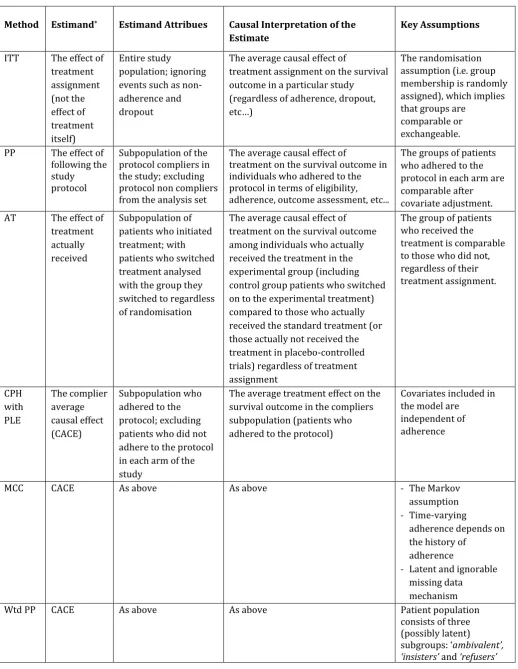
Table 2 Estimands, Causal Interpretation of Estimates and Key Assumptions for Non-Adherence Adjustment Methods
Method Estimand* Estimand Attribues Causal Interpretation of the
Estimate
Key Assumptions
ITT The effect of treatment assignment (not the effect of treatment itself) Entire study population; ignoring events such as non-adherence and dropout
The average causal effect of
treatment assignment on the survival outcome in a particular study
(regardless of adherence, dropout,
etc
The randomisation assumption (i.e. group membership is randomly assigned), which implies that groups are
comparable or exchangeable.
PP The effect of following the study protocol
Subpopulation of the protocol compliers in the study; excluding protocol non compliers from the analysis set
The average causal effect of
treatment on the survival outcome in individuals who adhered to the protocol in terms of eligibility, adherence, outcome assessment, etc...
The groups of patients who adhered to the protocol in each arm are comparable after covariate adjustment. AT The effect of
treatment actually received
Subpopulation of patients who initiated treatment; with patients who switched treatment analysed with the group they switched to regardless of randomisation
The average causal effect of treatment on the survival outcome among individuals who actually received the treatment in the experimental group (including control group patients who switched on to the experimental treatment) compared to those who actually received the standard treatment (or those actually not received the treatment in placebo-controlled trials) regardless of treatment assignment
The group of patients who received the treatment is comparable to those who did not, regardless of their treatment assignment. CPH with PLE The complier average causal effect (CACE) Subpopulation who adhered to the protocol; excluding patients who did not adhere to the protocol in each arm of the study
The average treatment effect on the survival outcome in the compliers subpopulation (patients who adhered to the protocol)
Covariates included in the model are
independent of adherence
MCC CACE As above As above - The Markov
assumption
- Time-varying
adherence depends on the history of
adherence
- Latent and ignorable missing data
mechanism Wtd PP CACE As above As above Patient population
consists of three (possibly latent)
24
C-PROPH ET
CACE As above As above The exclusion restriction assumption
IV CACE As above As above - The exclusion
restriction assumption
- Randomisation has no effect on the
probability of
adherence to treatment
- Monotonicity assumption MSMs with IPCW/I PTW
The effect of treatment had everyone remained adhered to the protocol Entire study population; had everybody adhered to the protocol with perfect adherence to the prescribed dosing regimen (or had everybody adhered to the protocol at an alternative level of adherence to the prescribed dosing regimen than what was observed in the trial(e.g. real-world adherence level)
The average causal effect of treatment that would have been observed if everybody adhered to the protcol. MSMs estimate the average treatment effect in the entire population, but the causal effect in a subset of the population (defined by a combination of variables L) can also be estimated. The IPCW estimand can also be interpreted as a comparison of the potential (counterfactual) outcomes under different levels of adherence in the same group of subjects.
- No unmeasured confounders
- Positivity assumption
SNFTMs with G-estimati on
The effect of treatment had everyone remained adhered to the protocol
As above The average treatment effect that would have been observed if everybody adhered to the protocol (or remained at a particular adherence level such as real-world adherence level). SNFTMs can be used to estimate the average causal effect in a subset of the population defined by a combination of factors (L), e.g. men, patient aged >60 years,
etc
- No unmeasured confounders
- Survival times and treatment-free survival times are proportional by an unknown factor that depends on the exposure RPSFT Ms with G-estimati on
The effect of treatment had everyone remained adhered to the protocol
As above The average treatment effect that would have been observed if everybody adhered to the protocol compared to none treated.
- The randomisation assumption
- The common treatment effect assumption
- Survival times and treatment-free survival times are proportional by an unknown factor that depends on the exposure
PKPD method
The effect of following a particular
Entire study population; given a particular pattern of
The average causal effect of treatment if individuals followed a particular adherence pattern.
- The exclusion
25
adherence pattern in the study population
adherence to the prescribed dosing regimen
- Correctly specified model
CACE=Complier Average Causal Effect; ITT=Intention-to-Treat; PP=Per-Protcol; AT=As Treated; CPH=Cox Proportional Hazards; PLE=Partial Likelihood Estimator; MCC=Markov Compliance Class; Wtd PP= Weighted Per-Protocol; C-PROPHET= Complier PROPortional Hazards Effect of Treatment; IV=Instrumental Variable;
MSMs=Marginal Structural Models; SNFTMs=Structural Nested Failiure Time Models; RPSFTMs= Rank-Preserving Stuctural FAiliure Time Models; PKPD=Pharmacokinetics and Pharmacodynamics.
26
Table 3 Appropriateness of estimand for the HTA context, types of non-adherence, possibility to account for real-world adherence levels and suitability of the effectiveness estimates for HTA using the alternative adjustment methods
Method Appropriateness
of estimand for the HTA context *
Type of non-adherence which can be adjusted for using the method
Possibility to account for real-world non-adherence levels Suitability of the method for use in HTA Notes Initiation, Implementation, Persistence Random, Explainable non-random, No-random
ITT Yes None None No No - The estimand is
marginalised to the entire population. - Cannot estimate counterfactual estimands (i.e. treatment
effectiveness given adherence levels in the real world).
PP No Initiation, implementation, persistence
Random No No - The estimand is not marginalised to the entire population. - Excluding the protocol non-compliers may break the randomisation balance leading to selection bias if protocol non-compliance is related to underlying prognosis.
AT No Initiation Random No No - Does not respect the randomisation balance which may lead to selection bias. - Cannot estimate counterfactual estimands CPH with
PLE
No Initiation Random, Explainable non-random
No No - The CACE estimand used by all five methods is not marginalised to the entire population. - The compliers class is a latent group of patients which is not identifiable at baseline, making it difficult for policymakers to make resource allocation decisions based on CACE estimand. - IV can estimate
effectiveness given real-world adherence level based on the
counterfactual outcome framework
MCC No Initiation, Implementation
Random No No
Wtd PP No Initiation Explainable non-random
No No
C-PROPHET No Initiation Non-random No No IV No Initiation,
Implementation, persistence
Non-random Yes No
MSMs Yes Initiation, implementation, persistence
Explainable non-random
27
SNFTMs Yes Initiation, implementation, persistence
Explainable non-random
Yes Yes - Can be used to account for real-world adherence levels
- RPSFTM only estimates
the all treated vs non
-treated estimand
making it applicable to adjust for initiation type of adherence only. RPSFTMs Yes Initiation Non-random Yes Yes
PKPD Yes Initiation, implementation, persistence
Explainable non-random
Yes Yes - The estimand is marginalised to the entire population. - Can estimate effectiveness given different adherence patterns.
HTA=Health Technology Assessment; CACE=Complier Average Causal Effect; ITT=Intention-to-Treat; PP=Per-Protcol; AT=As Treated; CPH=Cox Proportional Hazards; PLE=Partial Likelihood Estimator; MCC=Markov Compliance Class; Wtd PP= Weighted Per-Protocol; C-PROPHET= Complier PROPortional Hazards Effect of Treatment; IV=Instrumental Variable; MSMs=Marginal Structural Models; SNFTMs=Structural Nested Failiure Time Models; RPSFTMs= Rank-Preserving Stuctural FAiliure Time Models; PKPD=Pharmacokinetics and Pharmacodynamics.
* In the HTA context, the estimand of interest includes the entire study population and this should be identifiable at baseline for resource allocation decision making.
This collumn specifies the type of non-adherence that each adjustment method is capable of dealing with in terms of random (non-selective) non-adherence, explainable non-random (selective) non-adherence (i.e. non-adherence explainable by observed covariates), or no-random (selective) non-adherence.
In the HTA context, methods for adjusting trial data for non-adherence needs to be capable of re-estimating treatment effectiveness for any given level of adherence (e.g. real-world adherence levels).
FIGURE LEGENDS
28
FIGURES
Figure 1
Records identified through database searching
(n = 1520 + 1757)
Duplicates removed (n = 373 + 764)
Records screened (n = 1156 + 993)
Records excluded (n = 1079 + 960) By title (n=1048 + 917) By abstract (n=31 + 43)
Records via citation searches and references lists
(n = 895 + 291)
Records excluded (n = 870 + 281) By title (n=848 + 271) By abstract (n=22 + 10) Additional records identified
through other sources (n = 9)
Full-text articles excluded, with reasons (n= 70 + 32):
Continuous outcomes (n=17 + 10)
Binary outcomes (n=16 + 5)
Categorical outcomes (n=5 + 1)
No patient outcome (n=7 + 5)
Pharmacokinetics and
Pharmacodynamics only (n= 9 + 1)
Economic evaluations (n= 9 + 2)
Application of known method without extension (n=9 + 8)
Not a methodological paper (n=1 +2)
Not met definition of non-adherence (n= 3)
Assessed associations (n= 1)
Theoretical paper (n=1)
Comparisons of known methods (n=6 + 2)
Full-text articles assessed for eligibility (n = 77 + 33)
Papers included in qualitative synthesis (n = 20)
Full-text articles assessed for eligibility (n = 25+ 10)
Full-text articles excluded, with reasons (n= 19 + 9):
Continuous outcomes (n= 8 + 1)
Binary outcomes (n= 9 + 1)
Categorical outcomes (n= 2)
No patient outcome (n=3 + 1)
Pharmacokinetics and Pharmacodynamics only (n= 3)
Economic evaluation (n=1)
Application of known method without extension (n=7 + 3)
Not a methodological paper (n=3)
Not peer-reviewed (n=2 +1)
Not met definition of non-adherence (n=2)
Assessed associations (n= 1)
Theoretical paper (n=1)
Comparisons of known methods (n=3 +1)
Id
e
n
ti
fi
ca
ti
o
n
S
cr
e
e
n
in
g
E
li
g
ib
il
it
y
In
cl
u
d
e
d
Papers included (n = 7+ 1)Papers suggested by experts (n = 4)
29
APPENDICES
Appendix A: Search terms, strategies and results
A1: Search terms
Patient adherence terms include compliance, adherence, pharmacoadherence, persistence, persistency, concordance, initiation, implementation, noncompliance, nonadherence, nonpersistence, discontinuation, pharmionics, therapeutic alliance, patient irregularity or treatment refusal. MeSH headings for methods include models statistical or models
structural or models economic or models econometric or models biological or survival analysis or logistic models or proportional hazards models .
A2: First iteration searches and results
MEDLINE(R) Epub Ahead of Print, In-Process & Other Non-Indexed Citations, MEDLINE(R) Daily, MEDLINE and Versions(R): Ovid 1946 to February 9 2018
# Terms Results
1 (compliance or adherence or pharmacoadherence or persistence or persistency or concordance or initiation or implementation or noncompliance or nonadherence or nonpersistence or discontinuation or pharmionics or therapeutic alliance or patient irregularity or treatment refusal).ti.
120596
2 *Models, Structural/ 2122
3 *models, statistical/ 28208
4 *models, economic/ or *models, econometric/ 4387
5 1 and (2 or 3 or 4) 245
MEDLINE(R) Epub Ahead of Print, In-Process & Other Non-Indexed Citations, MEDLINE(R) Daily,
MEDLINE and Versions(R): Ovid 1946 to March 28 2018 Adding Models Biological MeSH
heading.
3rd April 2018
1 (compliance or adherence or pharmacoadherence or persistence or persistency or concordance or initiation or implementation or noncompliance or nonadherence or nonpersistence or discontinuation or pharmionics or therapeutic alliance or patient irregularity or treatment refusal).ti.
121991
2 *Models, Structural/ 2128
3 *Models, Statistical/ 28482
4 *models, economic/ or *models, econometric/ 4416
5 *Models, Biological/ 97476
6 1 and (2 or 3 or 4) 249
7 1 and 5 625
8 limit 7 to humans 324
9 8 not 6 316
Embase: Ovid 1974 to 2018 March 30 3rd April 2018
1 (compliance or adherence or pharmacoadherence or persistence or persistency or concordance or initiation or implementation or noncompliance or nonadherence or
30
nonpersistence or discontinuation or pharmionics or therapeutic alliance or patient irregularity or treatment refusal).ti.
2 *structural model/ 153
3 *statistical model/ 21073
4 *economic model/ 491
5 *biological model/ 56706
6 1 and (2 or 3 or 4) 143
7 1 and 5 381
8 limit 7 to human 156
9 6 or 8 298
Cochrane Library: Wiley 3rd April 2018
#1 (compliance or adherence or pharmacoadherence or persistence or persistency or concordance or initiation or implementation or noncompliance or nonadherence or nonpersistence or discontinuation or pharmionics or therapeutic alliance or patient irregularity or treatment refusal):ti (Word variations have been searched)
12301
#2 MeSH descriptor: [Models, Structural] this term only 25 #3 MeSH descriptor: [Models, Statistical] this term only 1577 #4 MeSH descriptor: [Models, Economic] this term only 1578 #5 MeSH descriptor: [Models, Econometric] this term only 470 #6 MeSH descriptor: [Models, Biological] this term only 2370
#7 #1 and (#2 or #3 or #4 or #5) 52
#8 #1 and #6 16
#9 #7 or #8 67
Econlit: Ovid 1886 to May 3, 2018 8th May 2018
1 (compliance or adherence or pharmacoadherence or persistence or persistency or concordance or initiation or implementation or noncompliance or nonadherence or nonpersistence or discontinuation or pharmionics or therapeutic alliance or patient irregularity or treatment refusal).ti.
8632
2 model*.ti. 90932
3 (structural or statistical or economic or econometric or biological).ti. 114247
4 1 and 2 and 3 31
Web of Science: Clarivate Analytics 8th May 2018
# 1 TITLE: ((compliance or adherence or pharmacoadherence or persistence or persistency or concordance or initiation or implementation or noncompliance or nonadherence or nonpersistence or discontinuation or pharmionics or therapeutic alliance or patient irregularity or treatment refusal))
256,870
# 2 TITLE: (model*) 1,892,481
# 3 TITLE: ((structural or statistical or economic or econometric or biological)) 706,793
# 4 #3 AND #2 AND #1 240
Scopus: Elsevier 8th May 2018
#1 ( TITLE ( ( compliance OR adherence OR pharmacoadherence OR persistence OR persistency OR concordance OR initiation OR
31
implementation OR noncompliance ) ) OR TITLE ( ( nonadherence OR nonpersistence OR discontinuation OR pharmionics OR therapeutic AND alliance OR patient AND irregularity OR treatment AND refusal ) ) )
#2 TITLE ( model* ) 2,338,498
#3 TITLE ( ( structural OR statistical OR economic OR econometric OR biologi cal ) )
905,167
#4 ( ( TITLE ( ( compliance OR adherence OR pharmacoadherence OR persistence OR persistency OR concordance OR initiation OR implementation OR noncompliance ) ) OR TITLE ( ( nonadherence OR nonpersistence OR discontinuation OR pharmionics OR therapeutic AND alliance OR patient AND irregularity OR treatment AND refusal ) ) ) ) AND ( TITLE ( model* ) ) AND ( TITLE ( ( structural OR statistical OR economic OR econometric OR biological ) ) )
323
A3: Second iteration searches and results
MEDLINE(R) Epub Ahead of Print, In-Process & Other Non-Indexed Citations, MEDLINE(R) Daily, MEDLINE and Versions(R): Ovid 1946 to May 16, 2018
22nd May 2018
# Terms Results
1 (compliance or adherence or pharmacoadherence or persistence or persistency or concordance or initiation or implementation or noncompliance or nonadherence or nonpersistence or discontinuation or pharmionics or therapeutic alliance or patient irregularity or treatment refusal).ti.
123742
2 *Models, Structural/ 2129
3 *Models, Statistical/ 28851
4 *models, economic/ or *models, econometric/ 4476
5 *Models, Biological/ 98419
6 1 and (2 or 3 or 4) 250
7 1 and 5 634
8 limit 7 to humans 329
9 8 not 6 321
10 *Survival Analysis/ 2666
11 *Proportional Hazards Models/ 1811
12 *Linear Models/ 2498
13 *Logistic Models/ 1675
14 Biometry/mt [Methods] 4244
15 Randomized Controlled Trials as Topic/sn [Statistics & Numerical Data] 4789 16 Cost-Benefit Analysis/sn [Statistics & Numerical Data] 981 17 Economics, Pharmaceutical/sn [Statistics & Numerical Data] 144
18 or/10-17 17625
19 pharmacometric*.tw. 388
20 causal inference.tw. 1455
21 proportional hazards.ti. 411
22 structural model*.ti. 1624
23 proportional hazards model*.ab. 20752
24 structural nested model*.ab. 27
25 marginal structural model*.ab. 518
26 structural proportional hazards.ab. 3 27 structural accelerated failure.ab. 7
28 compliance class model*.ab. 2
29 preserving structural failure.ab. 31
30 rank preserving structural.ab. 31
32
32 or/19-31 25187
33 18 or 32 41976
34 1 and 33 616
35 limit 34 to humans 523
36 35 not 9 520
Embase: Ovid 1974 to 2018 May 21
22nd May 2018
1 (compliance or adherence or pharmacoadherence or persistence or persistency or concordance or initiation or implementation or noncompliance or nonadherence or nonpersistence or discontinuation or pharmionics or therapeutic alliance or patient irregularity or treatment refusal).ti.
162336
2 *structural model/ 160
3 *statistical model/ 21307
4 *economic model/ 506
5 *biological model/ 57036
6 1 and (2 or 3 or 4) 146
7 1 and 5 385
8 limit 7 to human 157
9 6 or 8 302
10 *survival analysis/ 645
11 *proportional hazards model/ 1385
12 10 or 11 2017
13 pharmacometric*.tw. 568
14 causal inference.tw. 1544
15 proportional hazards.ti. 418
16 structural model*.ti. 1691
17 proportional hazards model*.ab. 32565
18 structural nested model*.ab. 26
19 marginal structural model*.ab. 681
20 structural proportional hazards.ab. 3 21 structural accelerated failure.ab. 9
22 compliance class model*.ab. 2
23 preserving structural failure.ab. 98
24 rank preserving structural.ab. 98
25 accelerated failure time.ab. 552
26 or/13-25 37594
27 1 and (12 or 26) 702
28 27 not 9 691
Web of Science: Clarivate Analytics
22nd May 2018
# 1 TITLE: ((compliance or adherence or pharmacoadherence or persistence or persistency or concordance or initiation or implementation or noncompliance or nonadherence or nonpersistence or discontinuation or pharmionics or therapeutic alliance or patient irregularity or treatment refusal))
257,485
# 2 TITLE: (model*) 1,896,217
# 3 TITLE: ((structural or statistical or economic or econometric or biological)) 708,343
# 4 #3 AND #2 AND #1 240
# 5 TI=("survival analysis") 3,080 # 6 TI=("proportional hazards model*") 513
# 7 TI=("linear model*") 6,683