EUROPEAN COMMISSION
Brussels, 20.12.2010 SEC(2010) 1604
COMMISSION STAFF WORKING PAPER
COUNTRY SECTIONS & ADDITIONAL INFORMATION
Accompanying document to the
REPORT FROM THE COMMISSION TO THE EUROPEAN PARLIAMENT, THE COUNCIL AND THE ECONOMIC AND SOCIAL COMMITTEE
2009 ANNUAL REPORT ON PHARE, TURKEY PRE-ACCESSION INSTRUMENTS, CARDS AND THE TRANSITION FACILITY
TABLE OF CONTENTS
List of Acronyms………4
PART I COUNTRY SECTION……….……….8
1. Albania ... 8
2. Bosnia and Herzegovina ... 14
3. Bulgaria... 19
4. Croatia... 22
5. Cyprus ... 33
6. Czech Republic ... 35
7. Estonia... 37
8. The former Yugoslav Republic of Macedonia... 39
9. Hungary... 45
10. Kosovo ... 47
11. Latvia... 54
12. Lithuania ... 56
13. Malta ... 58
14. Montenegro ... 60
15. Poland... 63
16. Romania ... 65
17. Serbia... 67
18. Slovakia... 77
19. Slovenia... 79
20. Turkey ... 81
PART II MULTI-BENEFICIARY PROGRAMMES…..………...………...90
21. Twinning and other institution building technical assistance ... 90
22. Multi-country, regional and horizontal programmes ... 91
PART III FINANCIAL DATA……….……….……….101
24. PHARE, Turkey pre-accession and transition facility funds implementation by
LIST OF ACRONYMS
BSP Business Support Programme CBC Cross Border Cooperation
CFCA Central Financing and Contracting Agency CFCD Central Financing and Contracting Department CFCU Central Finance and Contracts Unit
CfP Call for Proposal CI CzechInvest
CP Consumer Protection
CIPS Citizen Identification Protection System
CODEF Central Office for Development Strategy and Coordination of EU Funds CPIE Country Programme Interim Evaluation
CPMA Central Programme Management Agency CRD Center for Regional Development
CBIB Cross-Border Institution Building CSER Country Summary Evaluation Review DABLAS Danube-Black Sea Task Force for
co-operation on water protection in the wider Black Sea Region DEI Directorate of European Integration
DFID United Kingdom's Department for International Development DIS Decentralised Implementation System
EASA European Aviation Safety Agency
ECENA Environmental Compliance and Enforcement Network for Accession EAR European Agency for Reconstruction
ECLO European Commission's Liaison Office ESCB European System of Central Banks
EDIS Extended Decentralised Implementation System
EEFF Energy Efficiency Finance Facility EFSE European Fund for Southeast Europe EIB European Investment Bank
ENPI European Neighbourhood and Partnerships Instrument ESF European Social Fund
EU European Union
FDI Foreign Direct Investment
FIAS Multi-Donor Investment Climate Advisory Service GOEA Government Office for European Affairs
GIS Geographical Information System IA Implementing Agency
IBM Integrated Border Management
ICT Information and Communications Technology
ICTY International Criminal Tribunal for the former Yugoslavia IFC International Finance Corporation
IFI International Financial Institutions IMF International Monetary Fund
IPA Instrument for Pre-accession Assistance IPF Infrastructure Projects Facility
IPR Intellectual Property Rights ISR Implementation Status Report
ISIS Integrated Standby Instrument System IT Information and Telecommunication JMC Joint Monitoring Committee
LSDS Local sustainable development strategies
MAFWE Ministry of Agriculture, Forestry and Water Economy (the former Yugoslav Republic of Macedonia)
MFF Municipal Infrastructure Facility MIS Management Information System
MIPD Multi-Annual Indicative Planning Document
NADSME National Agency for Development of Small and Medium Enterprises NAO National Authorising Officer
NAC National Aid Coordinator NBS National Bank of Serbia
NGO Non-Governmental Organisation NIPAC National IPA Coordinator
NF National Fund NP National Programme NPP Nuclear Power Plant
NROS Civil Society Development Foundation NTF National Training Fund
OECD Organisation for Economic Co-operation and Development OSCE Organisation for Security and Cooperation in Europe PAED Polish Agency for Enterprise Development
PAO Programme Authorising Officer PAR Public Administration Reform
PARCO Public Administration Reform Coordinator's Office PCM Project Cycle Management
PIU Project Implementation Units PPP Public-Private Partnership PSK Probation service of Kosovo
ROM Results-Oriented Monitoring
SAA Stabilisation and Association Agreements
SCTM Standing conference of towns and municipalities SEE South East Europe
SEETO South East Europe Transport Observatory SF Structural Funds
SIGMA Support for Improvement in Governance and Management SME Small and Medium Sized Enterprises
SMSC Sector Monitoring Sub-Committee SEMS South-East European Messaging System SPO Senior Programme Officers
TA Technical Assistance
TAIEX Technical Assistance Information Exchange Unit UKIE Office of the Committee for European Integration UNDP United Nations Development Programme
UNFPA United Nations Population Fund
UNODC United Nations Office on Drugs and Crime UNRC United Nations Resident Coordinator VAT Value Added Tax
PART I: COUNTRY SECTION
1. ALBANIA
1.1. Summary
As in previous years, in 2009 the implementation of CARDS programmes in Albania was managed by the EU Delegation to Albania.
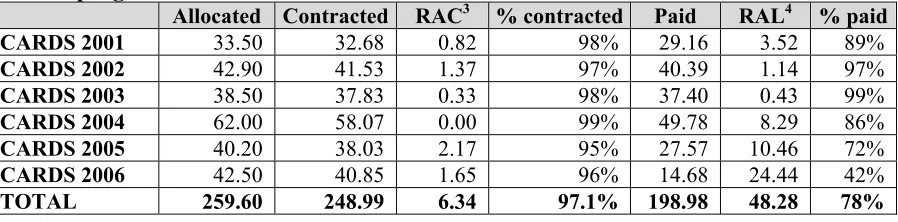
By the end of the reporting period, CARDS 2001-2004 were fully contracted and paid; CARDS 2005 was fully contracted and the contracting period of CARDS 2006 reached its deadline. During 2009, particular emphasis was given to progress in the implementation of the remaining CARDS 2005 and 2006 programmes. This goal was achieved with reaching for all CARDS programmes in Albania an overall contracting rate of 97% and a rate of almost 80% of allocations disbursed to beneficiaries.
Throughout 2009, the implementation of CARDS programmes was of valuable assistance to Albania, as programmes targeted mainly relevant EU accession-related areas such as the judiciary and fundamental rights, police and border management, civil society, agriculture, environment, transport and municipal infrastructure.
1.2. Financial assistance in 2009
i) Programmes launched
As of 2007, the CARDS instrument was replaced by the new Instrument for Pre-Accession Assistance. Therefore, no new CARDS programmes were launched in 2009.
ii) Overview of programmes implemented
In 2009, the sector of justice, freedom and security remained an important area of assistance under CARDS. Projects under the CARDS 2005 programme in the fields of the judiciary and fundamental rights supported the sustainability of the School of Magistrates and provided assistance to the strengthening of the administrative capacity of the General Prosecutor Office. A CARDS 2004 project provided substantial technical assistance to the juvenile justice system and penitentiary reform, offering alternative measures to detention at pre-trial, trial and post-trial stages and promoting prevention of juvenile delinquency and social reintegration of offenders.
Support provided to the justice sector through the Justice Assistance Mission of the EU to Albania (EURALIUS) brought the Albanian Justice System closer to European standards and EU best practices. The project was composed of technical assistance drawn from EU Member States and led to improvements in particular as regards: i) justice organisation; ii) drafting of legislation; iii) budget management; iv) penitentiary reform and development of probation services; v) enforcement of rulings; vi) criminal justice; vii) court administration and case management; viii) property rights.
Border police stations located in Bajze, Perrenjas, Vicisht, Kukes, Spille, Bllate, Divjake, Tropoja, Livadhja, Dhermi, Kakavije, Kapshtice, Liquenas, Pogradec, Shtik, Tri-port and Borsh. The value of construction works was EUR 1.43 million. The scope of works comprised main infrastructure upgrades such as civil construction and sanitary works, installation of new doors and windows, new heating, ventilation, air conditioning, security and fire fighting systems, other utilities and landscaping works.
In 2009, the EU Delegation to Albania launched, under CARDS 2006, three calls for proposals for Civil Society in the areas of support to the media, anti-corruption and the environment. As a result, eighteen contracts in total were awarded, among which four to supporting the media (totalling about EUR 380 500 of CARDS contribution), seven for the promotion of anticorruption activities (totalling about EUR 600 000 of CARDS contribution) and seven for the protection of the environment (about EUR 580 000 of CARDS contribution in total). Support under the first set of contracts was focused on enhancing the role of the media in the country’s integration process, especially in terms of enhancing its independence and monitoring capacity. In the area of anti-corruption, assistance was provided to strengthen the role of Civil Society and promote transparency, accountability and good governance and fight corruption. Projects in the environment sector sought to empower civil society to contribute to solving the country’s environmental problems by promoting cooperation among environmental organisations, government, private institutions, businesses and other stakeholders.
Through such targeted assistance, supporting civil society organisations to strengthen their role in the country’s public affairs, the EU is contributing to promote democratisation and sustainable development in Albania.
In 2009, a CARDS 2006 funded project of EUR 5 million provided support to the Ministry of Environment to adopt environmental legislation in a 4-components project. In addition, in the context of remediation of hazardous waste hot spots, a PVC1 factory in Vlora was supported - the factory had used mercury in the production process thus severely contaminating large areas around the factory site.
In the agricultural sector, in the last years wine consumption in Albania increased at an annual rate of 16 % and such an increased demand encouraged farmers to plant new areas with vineyards. In order for the sector to become competitive and to use better its resources, a project under the CARDS 2006 programme worth EUR 650 000 assisted the Ministry of Agriculture, Food and Consumer Protection to establish the vineyard cadastre, taking into consideration the relevant EU legal acts reflecting the most recent amendments of the legislation on the common market organisation in wine. About 9,000 vineyard units or around 50 % of the total number were registered into an open source GIS2 system. The project terminated in May 2010.
With regard to economic and social development, a CARDS 2005 project establishing a National Food Authority worth EUR 3 million was ongoing in the course of 2009 and is foreseen to terminate in February 2011.
In the field of protection of cultural heritage, in 2009 the CARDS 2006 programme assisted the Ministry of Tourism, Culture, Youth and Sports to improve urban infrastructure around historical sites in Tirana, Kruja and Himara. The project included three works contracts and one supervision, as follows: in Tirana, the reconstruction of the road near Tirana castle was financed with EUR 1.98 million; the rehabilitation of the Old Bazaar road in Kruja and inner roads in the Kruja Castle were financed with EUR 760 000; infrastructure works in the old castle of Himara were supported with EUR 410 000. Finally, EUR 300 000 were contracted for the supervision of these works. The works are expected to be completed in 2011.
iii) Cards management performance
[image:10.595.71.520.325.436.2]In 2009, performance in managing CARDS programmes in Albania was well on track. CARDS 2001-2004 were considered fully contracted and disbursed. CARDS 2005 was almost fully contracted (95%) and disbursement advanced well (72%). CARDS 2006 was also almost fully contracted by the end of the reporting period (96% of allocated funds, corresponding to EUR 40.8 million). However, payments for CARDS 2006 were lagging behind, with only EUR 14.6 million disbursed (42%).
Table 1 -Financial execution as at the end of December 2009 (in million EUR) – CARDS annual programmes
Allocated Contracted RAC3 % contracted Paid RAL4 % paid
CARDS 2001 33.50 32.68 0.82 98% 29.16 3.52 89%
CARDS 2002 42.90 41.53 1.37 97% 40.39 1.14 97%
CARDS 2003 38.50 37.83 0.33 98% 37.40 0.43 99%
CARDS 2004 62.00 58.07 0.00 99% 49.78 8.29 86%
CARDS 2005 40.20 38.03 2.17 95% 27.57 10.46 72%
CARDS 2006 42.50 40.85 1.65 96% 14.68 24.44 42%
TOTAL 259.60 248.99 6.34 97.1% 198.98 48.28 78%
iv) Institution Building highlights
No twinning contracts were signed during 2009 under CARDS . However, some ongoing twinnings projects funded by CARDS continued to be implemented in 2009.
A CARDS 2004 Twinning project aiming at enhancing the Albanian judiciary in commercial matters was implemented in the period 2007-2009 and assisted the Judiciary through increasing court capacities to deal with commercial cases, as well as with training of judges and lawyers. It also supported the approximation and harmonisation of Albanian legislation on commercial issues with EU standards and best practices. In the framework of the project, the publication of the first legal commentary on the new Albanian Company Law was financed.
A CARDS 2005 Twinning project with the Albanian General Prosecutor's office on evaluations and inspections was implemented throughout 2009, starting in 2008 and terminating in 2010. The project supported the office capacity to inspect and evaluate those under its command and enable investigations and prosecutions to be conducted diligently and expeditiously, in order to result in a more efficient and transparent judiciary and decreased corruption within the judicial system.
The CARDS 2004 project: "Training of prison staff: managing prisons in a humane way" was also implemented in the years 2007-2009 and provided support to the Albanian prison administration to improve prison management by adequate training of high management prison staff. It also developed the establishment of a complete human resources system from recruitment to basic training and other further adequate training of prison staff. The project further assisted the trainers' team coming from different penitentiary institutions by means of a better curricula and providing them with further training skills.
In 2009, the EU continued its contribution to the development and modernisation of the civil registry system in Albania (CARDS 2004). The project started in 2006 and ended in 2010. The project also assisted the development of data protection requirements and standards and the setting up of the Data Protection Commissioner's Office.
1.3. Results and impact
i) Monitoring and Evaluation Reports in 2009 - Lessons Learned
No new evaluations of CARDS financial assistance took place in Albania in 2009. However, some of the lessons learnt from the Ad-Hoc Evaluation of all CARDS Programmes in Albania5, for which the Final Report was issued on 17 December 2008, were relevant and were taken into consideration for the implementation of CARDS programmes in 2009.
– Lessons learned in relation to projects’ relevance: i) the relevance of CARDS funded
projects was good, but not consistently based on sector strategies and in-depth needs assessments; ii) CPS had a limited strategic planning value, the MIPs made a good effort in aligning CARDS priorities to the rapid development of Albania in line with SAP, but especially with NSSED; iii) Ownership in the programming process at the line ministry level was found to be weak in the beginning of the period, which had an impact on the needs assessment and thereby on the relevance of the assistance.
– Lessons learned in relation to effectiveness: i) the missing public administration reform
strategy and the poorly-implemented civil service law were seen as impacting the effectiveness of CARDS assistance to the area, despite its limited level; ii) the impact of civil society projects was also assessed as limited, due to the focus and implementation mechanisms of civil society activities.
– Lessons learned in relation to efficiency: i) overall, CARDS support to strengthen
institutional capacity for strategic planning was weak; ii) the sectors supported have suffered from inadequate project design or needs assessment, which has impacted on CARDS performance; iii) overall CARDS has performed better in acquis-related areas
than in support to public administration as such; iv) the inadequate needs assessment reflects that there was a lack of capacity for both programming and project design and development, especially in line ministries; v) project implementation registered delays, due to lack of administrative capacity and shortage of staff allocated to this in line ministries.
5 Evaluation (EU/2008/154-009) covering the following sectors: Justice and Home Affairs,
– Lessons learned in relation to impact: i) weak project design impacted negatively on
relevance and on the overall performance of CARDS; ii) while ownership of the overall programming process seemed satisfactory, thanks to the increasing coordinating role of Ministry of European Integration (MEI) and Department of Strategy and Donor Coordination (DSDC), future assistance should give more attention to increasing beneficiaries’ ownership during the implementation phase;
– Lessons learned in relation to sustainability: i) further development of the administration in
terms of staff numbers and competences as well as at the top level in the ministries engaging in the reform processes will be a prerequisite for sustainability; ii) the missing public administration reform strategy and the poorly-implemented civil service law were seen as impacting also the sustainability of the results of CARDS assistance to the area; iii)staff (at all levels) was no longer in place due to replacements generally in the administration (especially after the 2005 elections); iv) sustaining the results of many of the projects funded by CARDS in the sectors covered by the evaluation will demand a significant investment from both the Albanian state budget and donors.
ii) Sectors with positive results
One of the main sectors profiting from CARDS programmes in 2009 was the area of justice and home affairs. This sector had been identified as an area of special concern in previous progress reports, analyses and monitoring exercises, even if important work was achieved in the framework of the visa liberalisation dialogue. With this regard, progress in the areas of the judiciary, freedom and security was especially valuable. A project of particular importance in this respect was the EURALIUS project (Justice Assistance Mission of the EU to Albania), which successfully brought the Albanian justice system closer to European standards and EU best practices.
iii) Success stories
"Construction of reintegration centre for minors in Kavaja"/"On the Rights Track: Establishment of Preventive and Restorative Juvenile Justice System in Albania" (CARDS 2004)
The situation in pre-detention facilities in Albania was of great concern, as facilities were overcrowded and juveniles were not separated from adults. Albania lacked a proper juvenile reform institution and existing centres were in a state below human dignity. Therefore under CARDS 2004, the EU supported the strengthening of a functioning juvenile justice system in accordance with EU standards and international human/children rights instruments.
"Construction of the Joint Border Crossing Point at Murriqan/Sukobin with conventional building technologies" (CARDS 2004)
The EU helped to renovate the border police and customs facilities at the border crossing point between Albania and Montenegro (EUR 1.1 million of CARDS contribution). It also supplied border control equipment and provided specialised training and technical assistance to border police and customs agents operating at the border. Furthermore, it established operational inter-agency cooperation systems between the border police and the customs authorities at the border. From a wider perspective, this project aims at contributing to the prevention of illegal migration and the eradication of cross border crime. It should also facilitate bona fide cross border movement of people and goods by upgrading Albania’s
2. BOSNIA AND HERZEGOVINA
2.1. Summary
As in previous years, in 2009 the implementation of CARDS programmes in Bosnia and Herzegovina was managed by the EU Delegation to Bosnia and Herzegovina. CARDS continued to support key reform areas such as public administration reform, the rule of law, socio-economic development and the introduction of European Standards in the country. 2.2. Financial assistance in 2009
i) Programmes launched
As of 2007 the CARDS instrument was replaced by the Instrument for Pre-Accession Assistance (IPA). Therefore, no new CARDS programmes were launched in 2009.
ii) Overview of programmes implemented
In 2009, the EU Delegation to Bosnia and Herzegovina awarded contracts with a value EUR 4.3 million under the CARDS instrument and managed 180 ongoing CARDS contracts which had been concluded between 2004 and 2009, with a total value of EUR 60 million.
In the area of good governance and institution building, CARDS supported the reform of the judiciary and the police, and public administration reform including support to the Parliament and to the decentralisation of EU assistance. A considerable share of the assistance in the sector was spent on border management, asylum and migration. Further projects supported civil society, the media, minorities and returnees.
Examples of the assistance for the judicial sector are the rehabilitation of court buildings, the purchase of IT equipment and legal books for judges and prosecutors, support in the fight against corruption, money laundering and drugs as well as the assistance to the international Registry of the State Court. Police reform was supported with technical assistance and equipment.
Examples of the assistance to public administration reform and institution building are the support for the Directorate for Economic Planning, the Public Procurement Agency, the Agency for Healthcare, the Ministry of Security, the rehabilitation of the Parliament building and the delivery of IT equipment to a wide range of institutions.
CARDS provided technical assistance to the implementation of the Integrated Border Management Strategy and to the professional qualification of the State Border Police. Works contracts were used to construct border crossing points, to block illegal border crossings, to construct the reception facility for irregular migrants and the headquarters of the service for foreigner affairs. IT equipment, vehicles and office furniture were delivered to equip the above services.
was supported as well as the cooperation between civil society organisations and authorities in the development of the social policy sector.
Socio-economic development received CARDS assistance for the reform of the education system and the labour market and further support was provided to economic operators, small and medium enterprises and tourism development.
Examples for the assistance to the education sector are the support to the general education reform through the establishment of the State Agency for Education, the support to the reform of the vocational education and training system and the delivery of technical equipment to vocational education and training centres. A labour information system was implemented and equipped with IT systems. Entrepreneurial development centres, including the Women's Entrepreneurship Academy, were supported, a business incubator in Prijedor was established and assistance to increase the competitiveness of small and medium size enterprises was provided. A variety of tourism development projects were implemented, e.g. eco-rural tourism in Sabici, the Bosnian Kingdom Trail, and the touristic development of the Vrbas valley. A considerable share of CARDS assistance in 2009 was spent on approximation to the EU
acquis. CARDS projects in the fields of agriculture and rural development, veterinary,
statistics, transport and energy, trade, intellectual property rights and environment protection were implemented.
Prominent examples of acquis related projects are the promotion of organic farming,
aquaculture, the establishment of an agro-incubator in Zepce, the institution building support to the State Veterinary Office, the supply of equipment to establish a common statistical IT system in the country, the delivery of designs for major railway sections and roads on the corridor Vc, the support to the State Regulatory Agency for Electricity and Gas, support to trade policy development, capacity building for the protection of intellectual property rights, the rehabilitation and construction of landfills, as well as the supervision of the construction of sewage collectors in Zivinice.
Further CARDS projects promoted EU awareness and culture, supported regional cooperation, science and research, cross-border cooperation and the participation of Bosnia and Herzegovina in Community Programmes, in particular in the 7th Research Framework Programme.
[image:15.595.68.520.606.715.2]iii) Cards management performance
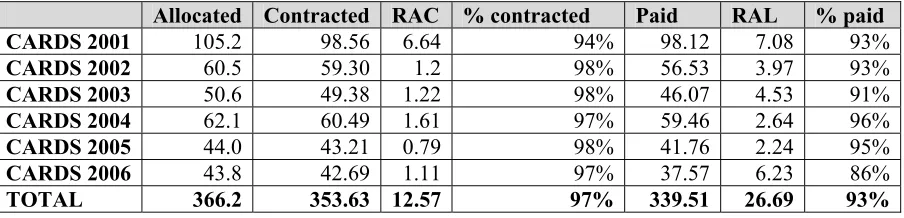
Table 1 -Financial execution as at the end of December 2009 (in million EUR) – CARDS annual national programmes
Allocated Contracted RAC % contracted Paid RAL % paid CARDS 2001 105.2 98.56 6.64 94% 98.12 7.08 93%
CARDS 2002 60.5 59.30 1.2 98% 56.53 3.97 93%
CARDS 2003 50.6 49.38 1.22 98% 46.07 4.53 91%
CARDS 2004 62.1 60.49 1.61 97% 59.46 2.64 96%
CARDS 2005 44.0 43.21 0.79 98% 41.76 2.24 95%
CARDS 2006 43.8 42.69 1.11 97% 37.57 6.23 86%
almost fully contracted (97 %) and payments for the six years period reached the level of 93%.
iv) Institution Building highlights
The EU Delegation continued the coaching and training programme for the preparation of the
decentralised implementation of IPA in Bosnia and Herzegovina. The process financed by
CARDS included coaching and training the Directorate of European Integration on strategic planning, project preparation and assessment and the setting up of a structured network of counterparts for project planning, design and implementation in all line ministries and State agencies.
CARDS assisted Public Administration Reform (PAR), one of the key European Partnership
priorities, through strengthening the systems of public administration and through administrative capacity building of selected key sectors. It supported the PAR Coordinator's Office in the implementation of the PAR strategy and action plan. The well established coordination mechanism for the deployment of the PAR fund continued to work, involving government representatives from all administrative levels and different PAR donors.
The Personal Data ProtectionAgency received assistance through a twinning project with the
objectives to harmonise the national legislation with the acquis and thus ensure full
compliance with European data protection standards, to strengthen the institutional and administrative capacities of the Data Protection Agency to supervise the enforcement of the law on personal data protection, and to strengthen the awareness and capacities of civil servants and police bodies who are controlling or processing personal data.
The Directorate for theCitizen Identification ProtectionSystem received assistance through a
twinning light project with the objective to ensure a more coordinated, systematic and methodological approach in the use of information and communication technology in the public sector and the management of identification documents related databases in Bosnia and Herzegovina.
Further good examples of institution building in 2009 were the support for the Directorate for
Economic Planning, the Public Procurement Agency, the Agency for Healthcare, and the
Ministry of Security, which received institution building support through technical assistance.
Donor coordination was ensured throughout the entire project management cycle from project
design to implementation. In particular, the Commission together with other donors was involved in setting up an Aid Coordination Committee together with the Ministry of Finance and Treasury, the Directorate for European Integration and the Directorate for Economic Planning. Monthly coordination meetings on programming and assistance implementation were held with EU Member States.
2.3. Results and impact
i) Monitoring and Evaluation Reports in 2009 – Lessons Learned
– Lessons learned in relation to project's relevance: European Union assistance supported the
key policy priorities of both donors and the national administration. Project designs were revised in response to changes in local political priorities but this was not always sufficient to ensure the assistance met beneficiary needs.
– Lessons learned in relation to effectiveness: The multi-faceted return programme was
effective with high levels of initial return of refugees. Multi-annual sub-sectoral funding
improved effectiveness of institution building despite an increasingly difficult project environment.
– Lessons learned in relation to efficiency: Good inter institutional collaboration improved
the efficiency of reconstruction programmes. Administrative control within the Delegation led to rapid procurement but reduced beneficiary ownership. The use of different methods of contracting met the needs of different types of beneficiary and improved efficiency. – Lessons learned in relation to impact: The impact of EU assistance on the return process
and democratic stabilisation overall had more mixed success. The creation of durable State-level institutions, a main thrust of EU institution building support, was challenging with success varying considerably between sectors.
– Lessons learned in relation to sustainability: Sustainable institutional structures for the
return process were created and taken over by the State. Many State-level institutions lack local ownership which threatens sustainability.
ii) Sectors with positive results
CARDS supported Bosnia and Herzegovina in achieving key benchmarks of the visa liberalisation process in the area of justice, freedom and security. resulting particular, a
revised strategy and action plan on the prevention of anti-money laundering and financing of terrorist activities, a revised anti-corruption strategy and action plan and the law on the agency for prevention of corruption and on cooperation in the fight against corruption were adopted.
The establishment of the latter will allow Bosnia and Herzegovina to start tackling the issue of corruption in a comprehensive manner.
With the support of CARDS, Bosnia and Herzegovina harmonised its confidential data protection legislation with EU standards and established EU- conform security infrastructure
such as security areas, registries and communication and information systems in eight State-level institutions for safeguarding and secure transmission of confidential data. Furthermore, CARDS supported the Personal Data Protection Agency in the process of harmonising legislation with relevant EU regulations, strengthening the structure and capacity of the agency, developing of a central registry for hardware and software containing personal data throughout the country and training public servants in the security, telecommunication, finance and health sector. With this support Bosnia and Herzegovina started working on achieving the data protection level required for future European and international cooperation Although there was a standstill with the progress of introduction of the decentralised implementation system due to the absence of key nominations, the assistance provided
In the course of 2009, CARDS assistance supported the work of the Public Procurement Agency and the agencies for civil service. Two information management systems were developed - for the electronic publication of public procurement notices that will increase
their visibility and accessibility and provide reliable information on procurement procedures conducted, and the human resource management information system that will provide a tool
for efficient management of data on civil servants at all the levels of the administration.
iii) Success stories
“Rehabilitation of the Municipal and Cantonal Courts Building in Sarajevo” (CARDS 2006)
The rehabilitation works of these courts was successfully completed in November 2009 and a big inauguration event was organised. The total project cost was EUR 3.2 million out of which the EU provided over EUR 2 million for rehabilitation works, works supervision and provision of furniture for the rehabilitated premises. The project was co-funded by the Ministry of Justice and the Sarajevo Canton, Norway and Sweden. The ability of the Sarajevo Municipal Court and Sarajevo Cantonal Court to carry out their administrative and judicial functions more effectively and efficiently through the efficient and coordinated use of space in the existing building by upgrading the physical status of the premises was enhanced through this reconstruction.
“Construction of Reception Centre for Irregular Migrants in Bosnia and Herzegovina” (CARDS 2006)
The construction of the first closed reception centre for irregular migrants in Bosnia and Herzegovina was successfully completed in October 2009 and a big inauguration event was organised. The EU provided EUR 1.2 million for the construction, supervision, supply of furniture, equipment and vehicles for transportation of the migrants to the countries of origin. The centre provides for lawful detention of irregular third country nationals in conformity with international and EU standards and best practices, including but not limited to first aid and assistance, respect for the traditions, culture and religion, guarantee for the safety of the foreign nationals, protection of personal data and preparation for the return to the country of origin or to another country. The centre is located in Lukavica, near Sarajevo, as an extension of the existing facility of a temporary reception centre. The centre allows accommodation for 80 residents and includes also adequate space and facilities for staff working in the building. “Construction of Border Crossing Point in Klobuk” (CARDS 2004)
3. BULGARIA
3.1. Summary
In 2009, Bulgaria implemented both pre-accession and post-accession assistance to address the remaining needs related to Institutional Building for the implementation of the acquis, in
line with the Extended Decentralised Implementation System (EDIS).
Since July 2007 implementation is carried out under the entire responsibility of the Bulgarian authorities applying national procurement rules. Four implementing agencies are fully responsible for daily implementation of projects.
In February 2008 the financing for the PHARE and Transition Facility (TF) programmes managed by two of the accredited Agencies - the Central Finance and Contracting Unit (CFCU) and the Implementing Agency at Ministry of Regional Development and Public Works (MRDPW) - was suspended and in July 2008 the Commission withdrew the right of those agencies to manage PHARE and Transition Facility programmes on a decentralized basis. The Bulgarian National Authorising Officer (NAO) was requested to prepare an assessment of the system weaknesses and an estimate of their impact. Such assessments and proposals for financial corrections were sent to the Commission by Bulgaria at the end of October 2009. This led to the lifting of the payment suspensions by DG Enlargement on 18 November 2009.
The National Aid Coordinator (NAC) continued to exercise the programming function for the Transition Facility programme and monitoring of both Pre-accession and Transition Facility Programmes. The NAO carried out the financial supervision.
DG Enlargement continued to exercise the residual functions related to Commission responsibilities (monitoring, payments, closure of projects) in line with the Financial Regulation.
3.2. Implementation of PHARE and the Transition Facility in 2009
i) PHARE 2005 – finalisation of payments
By the end of 2009, the payments disbursed by the Bulgarian authorities under PHARE 2005 reached 77.10%. There were several contracts whose period of execution continued until November 2009.
ii) PHARE 2006 – finalisation of payments
At the end of the implementation period for the 2006 PHARE programme, on 30 November 2009, 65.10% of the contracted amount had been disbursed. By the end of the reporting period, all the projects were implemented but still some payments remained to be executed, upon verification of the achieved results.
iii) Transition Facility 2007
expired on 15 December 2009. Tendering and contracting of twinning projects were finalized successfully. However, since the accreditation of the CFCU had not been restored and only twinning projects could be contracted, the overall contracting rate reached by the deadline was only 68.8%. The disbursement rate was 50.34%.
iv) Institution Building highlights
In 2009 the National Aid Coordinator was moved from the Ministry of Finance to the Council of Ministers. All the four Implementing Agencies restructured their capacity, focusing it mainly on the monitoring and payments, since contracting was phasing out.
Twinning continued to remain a successful instrument in many areas and helped the Bulgarian administration to further strengthen its capacities to implement and enforce EU legislation. In particular, the twinning contracts under PHARE 2006 supported the capacity building of the National Revenue Agency, the institutional and administrative structures in charge of management, monitoring and control of Structural Funds for effective participation of Bulgaria in EU Cohesion Policy, the Agency for Economic Analysis and Forecasting and others.
As to the 2007 Transition Facility Programme, also in this case twinning remained an important implementation instrument. Altogether the Programme included a total of 22 standard twinning projects and 6 twinning light projects in areas such as agriculture, environment, justice and home affairs (with the majority of projects in the fields of reform of the judiciary, police, organised crime, but also border matters and migration issues), and social policy.
3.3. Results and Impact
i) Joint Monitoring Committee (JMC) / Sector Monitoring Sub-Committees (SMSC)
In 2009 the JMC continued to supervise progress of PHARE and TF assistance and to provide recommendations on the management of the programmes. Two JMC meetings took place, in February and July, discussing issues such as further improvement of project management and, mainly, monitoring and follow-up of the irregularities as well as reporting to the Commission and making proposals for remedial actions.
In 2009 two rounds of SMSC meetings also took place. Due to the phasing out of the PHARE Programme, the projects to be monitored were substantially reduced. During the JMC of July 2009 it was decided to close the Public Administration Reform sector and reallocate the remaining projects to the existing sectors, to merge the Energy and Telecommunications and Economic Development sectors and produce a dual report and to merge the Transport and Regional Development sectors and produce a single report.
ii) Monitoring and Evaluation Reports in 2009 (lessons learned)
Overall responsibility for monitoring the PHARE and Transition Facility programmes in Bulgaria lies with the NAC services within the Ministry of Finance. In 2009 the activities in this area were carried out on the basis of the Annual Interim Evaluation Plan 2009, which was endorsed by the Commission in July of that year.
In 2009, two Country Summary Reports were issued for the JMC meetings of July 2009 and March 2010. The reports provided useful information, based on the findings of the sectoral evaluation reports launched in 2009. Some issues in the sectoral parts gave rise to concerns, as for example the non-contracted commercial components related to twinning in justice and home affairs, which might negatively impact the overall achievement of projects results. Furthermore, the effectiveness of projects in the economic development sector is rated as ‘barely satisfactory’ and the independent evaluators recommended that detailed ex post
4. CROATIA
4.1. Summary
In 2009, Croatia continued to implement, under the Decentralised Implementation System (DIS), pre-accession assistance addressing needs related to preparations for EU membership. The Central Finance and Contracting Agency (CFCA) was responsible for the implementation of projects and is therefore in charge of tendering, contracting and payments, the latter in collaboration with the National Fund. The technical implementation of projects was the responsibility of beneficiary institutions, through a series of Project Implementation Units (PIU) under the authority of Senior Programme Officers (SPO). The National Aid Coordinator (NAC) conducted monitoring of both PHARE and CARDS programmes. The National Authorising Officer (NAO) carried out the overall financial supervision.
Commission services were also extensively involved, with the EU Delegation exerting ex ante
controls as well as monitoring.
PHARE and CARDS programs implemented in 2009 were generally well focused on the accession priorities established in the Enlargement Packageandin some cases have addressed specific negotiations requirements (opening and closing benchmarks). In general, and as stressed in the 2009 Country Programme Interim Evaluation, completed projects have delivered the expected results. EU programs were partly used to draft or update the strategic framework in key areas of the accession process, while at the same time assisting Croatian institutions in their concrete implementation.
A strong alignment with accession requirements - and specific negotiations issues – was for instance evident in the assistance related to chapters like taxation, customs union, statistics, the internal market, agriculture and rural development, fisheries as well as food safety, veterinary and phytosanitary policy. To give examples, PHARE projects related to agriculture and rural development have inter alia supported the setting up of a Paying Agency operating
in line with the EU requirements. PHARE 2005 helped the updating of the Schengen Action Plan (SAP).
With regard to the political criteria, EU assistance typically focused on comparatively longer-term needs, going beyond the dynamics of negotiations. In the field of judicial system reform, pre-accession assistance contributed to significantly reforming the legislative framework and concrete effects are already visible as regards the reduction of the backlog of cases. However, by the end of the reporting period, tangible results in the rationalization of the courts network, the reform of the selection and training system of judges and prosecutors, and full deployment of the integrated case management system had to further materialize. As regards civil society development, assistance successfully contributed to the strengthening of the administrations involved and to bring more attention and focus on civil society development and minority protection.
4.2. Pre-accession assistance in 2009
i) Programmes launched
As of 2007, PHARE was replaced by the new Instrument for Pre-accession Assistance (IPA). Therefore, no new PHARE programmes were launched after 2006. EU assistance has been decisive in the elaboration of strategies and plans for the EU funds that will be made available in perspective under the Structural Funds, including the finalization of the National Strategic Reference Framework, which is the reference document for the programming of EU funds
available to Member States.
ii) Overview of programmes implemented
Throughout 2009, particular emphasis was given to the implementation of PHARE 2005 and 2006. The former ended on 30 November 2009, while the latter progressed well.
The area of democracy and rule of law remained an important focus. Programmes supporting the judicial system contributed to modernizing the judiciary and improve its efficiency. Already under CARDS, projects focused on reducing the backlog of cases and a project for management of misdemeanour cases already delivered important results in this respect. Though still at its initial stages, the rationalization of courts network was supported. Another achievement in this area concerned the enhancement of personnel’s professionalism. A PHARE 2005 project elaborated a training strategy for the Judicial Academy. Building on previous assistance under CARDS and from the World Bank, a PHARE 2006 project contributed to establishing a more efficient court administration and case management system in Croatian courts.
On the whole, EU-funded programmes contributed to the overall reform of the judicial system in line with key Accession Partnership requirements. The process is still underway, but as acknowledged also in the 2009 Progress Report, significant progress has been achieved.
As regards fundamental rights and civil society support, the capacity of the Government
Office for NGOs was strengthened. Furthermore, support was provided to civil society organizations (CSOs) selected under grant schemes. For instance, one of the PHARE 2006 projects enabled participation and active contribution of CSOs in developing, implementing and monitoring public policies in the areas of democratization, environment, human rights and youth. The project provided immediate support to CSOs and reinforced and established key bodies that can become driving forces behind these initiatives. Minority protection projects mainly dealt with improving living conditions of the Roma minority in Medimurje County. They also improved access for the Roma national minority to formal and non-formal education and training.
In the area of economic criteria, one project focused on land administration by improving
harmonisation of data between the land registry and the cadastre and by establishing a Croatian positioning service network. Another project assisted in establishing an effective and sustainable financial management system through the modernisation of budget processes and by increasing the capacity for budget management. Budget preparation and execution were improved.
(market surveillance system in the field of technical products under PHARE 2005) reinforced the capacity of the State Inspectorate to carry out market surveillance activities in accordance with EU good practices and in cooperation with other national market surveillance authorities. This has also been acknowledged by the Commission in the 2009 Progress Report. Another project in the area of competition policy has strengthened the Croatian Competition Agency, the administrative body operating in the fields of anti-trust and state aid. A smaller project supported the upgrading of the accreditation system (PHARE 2006). One project was financed in the area of intellectual property law (PHARE 2006) and contributed to the alignment of Croatian legislation with Directive 2004/48 on the enforcement of Intellectual Property Rights.
In the area of cooperation in justice and home affairs, programs focused on supporting the
adoption and implementation of the Schengen acquis, and especially on strengthening
integrated border management capacities. Moreover, some horizontal projects were financed under PHARE 2005 (e.g. to assist the Police Academy). In general, there was a tight integration between projects in the area of integrated border management and very frequently PHARE projects were a follow up of previous initiatives funded under CARDS. This was for instance the case of projects for blue border surveillance (2006), border management information system (2002, 2003, 2006) and for combating drugs trafficking and abuse (2004). Various national strategies supported the programming of interventions in this area, e.g. the Integrated Border management Action Plan, the Schengen Action Plan, the Border Police Development Strategy of the Ministry of Interior, the National Strategy on suppression of abuse and narcotic drugs (2006-12). Most of the planned results were achieved and immediate impacts were obtained in the field of border management and adoption of the Schengen
acquis. The PHARE 2005 project Preparation for the Implementation of the Schengen Acquis
was successful in updating the Schengen Action Plan (SAP) and elaborating a strategy for the reduction of the crossing border points; a Reform Strategy for human resource management (HRM) elaborated with the contribution of PHARE 2005 (the project ‘Strengthening of HRM’) was adopted by the Ministry of Interior .
With regard to sectoral policies, taxation projects (PHARE 2005 and 2006) contributed to the
adoption of EU standards and practices in line with acquis requirements. Statistics projects
(also PHARE 2005 and 2006) assisted in building capacities at the Central Bureau of Statistics and aligning the Croatian statistical system to the European Statistical System. A PHARE 2005 customs project focused on developing national customs IT systems capable of communicating with EU customs IT systems, therefore enabling the exchange of information. Public procurement projects aligned the Croatian public procurement system to the acquis.
Good progress was made in the area of public procurement, statistics, customs union and taxation, where projects covered a very wide range of issues and focused on a substantial share of the problems identified. As outlined also in the 2009 Country Programme Interim Evaluation, except for the area of public administration, pre-accession programs in those areas had a major impact on the development of the related sub-sectors. Projects related to public administration reform covered specific areas that may contribute to the enhancement of the public administration, but much effort was still needed beyond pre-accession assistance to achieve significant results.
Projects in the area of agriculture and rural development, fisheries as well as food safety,
veterinary and phytosanitary policy benefited the Ministry of Agriculture, Fisheries and Rural Development. To a large extent, projects have delivered the expected results in this area. In terms of alignment with the acquis, along with the World Bank, EU assistance significantly
on the establishment of the Paying Agency, the Act on the National Support to agriculture and rural development, the Act on the Establishment of the Croatian centre for agriculture, food and rural areas or the amendment to the ordinance on the minimum residue levels for pesticides). PHARE 2005/2006 projects related to agriculture and rural development supported capacity building for the implementation of pre-accession rural development instruments (SAPARD and IPARD) as well as post-accession rural development programmes. Furthermore these projects also contributed to the setting up of a Paying Agency operating in line with EU requirements, the latter being also related to one accession negotiations benchmark. A key focus of assistance in the field of food safety, veterinary and phytosanitary policy (FVP) was the improvement of the technical and administrative capacities within the veterinary and phytosanitary inspection system, in particular through the strengthening of the Border Inspection Posts (BIP). There were significant improvements in the alignment to the
acquis, especially in the field of FVP (including CARDS projects); one project under PHARE
2005 dealt comprehensively with various accession priorities in the fisheries sector, e.g. administrative strengthening, developing a sector strategy in line with the EU acquis,
supporting the establishment of a vessels monitoring system. The fishery sector was widely restructured in accordance with the Common Fisheries Policy.
As regards the environment, projects covered nature protection, pollution control and
prevention, waste management and the water framework directive. Projects have strengthened the administrative capacity at the national and local level. A project on air quality control under PHARE 2006 contributed to the preparation of a monitoring system for effective control of air pollution and the definition of roles and functions within the system. Another important area of assistance concerned nature protection, in particular by establishing and implementing NATURA 2000 in Croatia. In the 2009 Progress Report, the Commission recognized good results in the field of air quality and industrial waste management (both addressed by two PHARE 2006 initiatives).
In the area of transport, the administrative capacity in the maritime sector was tackled with
PHARE 2005 and 2006 projects, while some smaller interventions provided assistance in setting the appropriate policy to enhance the capacity in the Maritime administration. Impacts from the assistance on the implementation of the Vessel Traffic Monitoring Information System (VTMIS) were yet to be produced, as outlined by the 2009 Country Programme Interim Evaluation. EU assistance in the area of rail transport (PHARE 2006) delivered positive impact in establishing the legal and institutional framework for the Croatian rail sector in line with EU requirements.
Finally, in the area of economic and social cohesion, progress of PHARE 2005 and 2006 was
particular to environmental protection, were positive: illegally disposed of waste and “wild dumps” were being removed and several rivers and lakes were cleaned.
iii) PHARE/CARDS management performance
Overall, programmes continued to be well focused on the accession priorities established for each area of the acquis, and in some cases have addressed specific negotiations requirements
(opening and closing benchmarks). In general, completed projects delivered the expected results and most of the expected outputs, and the prospects for ongoing projects were fairly positive.
Initiatives addressing the legislative and policy framework (e.g. the Schengen acquis) or
adopting EU common systems and standards (e.g. statistics) were comparatively more successful than those aimed at strengthening the administrative capacity. This is due to the fact that the assistance provided in areas related to the political criteria is comparatively more soft-acquis driven, and in many cases oriented to produce effects that will become apparent in
a longer time perspective.
Some projects were negatively affected by administrative shortcomings (such as issues related to pre-conditions and sequencing; problems in the procurement process due to price issues or the impossibility to re-launch tenders prior to the contracting deadline: lack of contractor's performance), sometimes leading to the cancellation of part of the foreseen activities.
Difficulties in the handling of pre-accession assistance have led to a major overhaul of the institutional framework. The situation subsequently improved, although some problems remained at various stages of the process.
Besides the trainings organised for their own staff, the Central Office for Development Strategy and Coordination of EU Funds (CODEF) and the Central Finance and Contracting Agency (CFCA) organised trainings for members of Project Implementation Units (PIUs) in line ministries. Trainings in the CFCA, so-called ‘Open doors’, have intensified during 2009, so that they were held twice a month, covering topics related to implementation of projects and financial aspects of project management. In addition, CODEF organised regular trainings on Project Cycle Management, Preparation of Operational Programmes for Structural Instruments, Monitoring and Evaluation of EU funded projects, Community Programmes in Croatia and Introduction to EU Cohesion Policy. Strategic meetings continued to take place on a monthly basis in order to discuss current problems and actions to be taken at high-management levels.
[image:26.595.70.520.674.754.2]The CFCA was able to boost staffing levels to about 100 staff. As regards PHARE and CARDS, the CFCA has shown good performance, as payments in 2009 were more than forecasted (EUR 49 225 295 paid, versus EUR 44 701 655 forecasted).
Table 1 - Financial execution as at the end of December 2009 (in million EUR) – CARDS/PHARE annual programmes
Allocated Contracted RAC % contracted Paid RAL % paid CARDS 2001 54.00 52.06 1.94 96.4% 48.69 5.31 90.2%
CARDS 2002 56.00 53.81 2.19 96.1% 51.46 4.54 91.9%
CARDS 2003 59.00 58.08 0.92 98.4% 53.60 5.40 90.8%
CARDS 2004 77.00 74.48 2.52 96.7% 68,92 8,08 89.5%
PHARE 2006* 60.47 51.21 9.26 84.7% 29.17 31.3 48.2%
TOTAL 375.99 350.15 25.84 93.2% 304.99 71 81.2%
* National (excluding Tempus and Community programmes), Cross-Border, and Nuclear Safety programmes.
After a number of years of parallel centralised and decentralised implementation of EU assistance in Croatia, the implementation of the last centralised institution building contract managed by the EU Delegation came to an end in mid-2009.
Contracting for projects under CARDS and PHARE was completed and execution of the majority of the projects financed under these programmes either ended or was nearing completion.
Throughout 2009, further disbursement of PHARE 2005 and PHARE 2006 took place. The PHARE 2005 national programme amounted to EUR 71.5 million and was decentralised, except for the TEMPUS and Community Programmes funds. Out of EUR 62.882 million of decentralised funds, 88.3% were contracted and 77.7% were paid by the end of 2009.
In addition to the national programme, the PHARE 2005 Nuclear Safety programme amounted to EUR 641 000 and was fully decentralised. By the end of 2009, 66.5% of those funds were contracted and 66.5% disbursed.
Also under PHARE 2005, the Cross-border programmes (CBC) Italy and Croatia-Slovenia-Hungary amounted to EUR 3 million each and were implemented under decentralised management. By the end of 2009, 60.4% were contracted and 49.4% were paid for CBC Italy, and 90.7% were contracted and 79.2% were paid for CBC Croatia-Slovenia-Hungary.
Under PHARE 2006, the national programme amounted to EUR 61.062 million, the Nuclear Safety programme amounted to EUR 1.649 million, and the CBCs Italy and Croatia-Slovenia-Hungary amounted to EUR 3 million each. They were implemented under the decentralised implementation modality, except for the TEMPUS and Community Programmes.
By the end of 2009, 84.8% of the national programme had been contracted and 45.6% paid; 74.9% of the Nuclear Safety programme was contracted and 48.4% was paid; 100 % of the CBC Italy was contracted and 75.7% was paid and 72.7% of the CBC Croatia-Slovenia-Hungary was contracted and 67.8 % was paid.
iv) National Development Plans – State of Play
The Croatian Government adopted a national development strategy entitled Strategic Development Framework 2006-2013 in August 2006, which identifies a series of priorities that should promote Croatia’s social and economic development. The Strategic Development Framework remained valid in 2009.
Efforts continued in 2009 to prepare a National Strategic Reference Framework, which is the
reference document for the programming of EU funds available to Member States.
The Commission considers twinning to be the most suitable instrument for the development of administrative capacities and promotion of legislative changes in Croatia. In general, the twinning instrument continues to be the preferred implementation modality for all transposition or legal approximation-related projects where the relevant expertise lies within the Member States. The relevance of twinning is set to further increase with the accession of Croatia to the EU.
According to a thematic interim evaluation on twinning in Croatia finalised at the end of 2008, the performance assessment of running and finalised twinning implementation was "satisfactory to good" in Croatia, notably in the sectors of home affairs, customs and taxation, internal market and competitiveness, free movement of goods and statistics.
Examples can be found in the twinning projects "Human Resource Management in the Ministry of Interior and Police Academy" (PHARE 2005), "Preparation for Schengen acquis" (PHARE 2005), "Strengthening of Croatian Tax Administration in the Field of Audit operations" (PHARE 2005, Twinning Light) or a PHARE 2005 twinning on competition and state aid.
The first twinning project abovementioned paved the way for the development a modern and integrated human resources management system for police staff, in line with the EU standards. The second one significantly contributed to the preparation of the Croatia Ministry of Interior in the implementation of the Schengen acquis, especially through staff recruitment
for border police and a comprehensive training strategy. Continuous support in this field was maintained through further on going assistance. The third project was instrumental in strengthening the capacity of the Croatian Tax Administration regarding simplification of procedures as well as collecting evidence in order to effectively prosecute tax evasion. The project also significantly contributed to improving tax officials’ knowledge in these fields, which in turn shall help decrease tax evasion and tax avoidance.
As regards competition policy, one of the major indicators of success in this area was the adoption by the Croatian Parliament of the new Competition Act, largely drafted with the assistance of a PHARE 2005 twinning project. The overall objective of this twinning was to improve competition and state aid policy in the Republic of Croatia by the effective implementation of the relevant Croatian rules, in line with the EU rules and practice. In the area of state aid, project activities were focused on the establishment of a comprehensive state aid list; the review of the regional aid and the establishment of a regional aid map; consultations on restructuring of enterprises in difficulty in the shipbuilding and steel sector and their privatisation; training of judges and local administration representatives. The project produced the desired results and successfully assisted the Croatian experts in the areas concerned.
In the case of the Government Office for NGOs, their position was significantly reinforced by pre-accession assistance under PHARE 2005 and PHARE 2006. As the future role of this Office as the intermediary body for European Social Fund projects aimed at civil society development appeared to be clearly established, the results of PHARE assistance will be carried on and it will be relatively easy to retain staff to pass the experience on. Hence, sustainability is ensured.
4.3. Results and impact
i) Joint Monitoring Committees / Sector Monitoring Sub-Committees
Decentralised CARDS and PHARE projects were monitored on the basis of two series of six Sectoral Monitoring Sub-Committee meetings, in April and October 2009. The monitoring system was functioning well, as witnessed for instance by the high acceptance rate (above 90%, as indicated also in the 2009 Country Programme Interim Evaluation) of monitoring reports by Sectoral Monitoring Sub-Committees.
This process led to the Joint Monitoring Committee (JMC) which took place on 15 December 2009. The JMC discussed the Synopsis Report that provided updated information on the latest developments with regard to 84 CARDS and PHARE projects in six sectors, the financial status of programmes as of 1 December 2009, supervision and control activities, including a summary of irregularities reported, as well as the preliminary findings of the Country Programme Interim Evaluation.
Conclusions and findings indicated that after difficulties experienced in the past (suspension of the endorsement of contracts by the EU Delegation between December 2007 and July 2008), the decentralised implementation system for PHARE and CARDS was further consolidated.
Overall the intervention logic showed good alignment between national programmes and the planning documents. The vast majority of projects showed a high degree of relevance. Effectiveness and prospects for impact were positive in general, but results were uneven in areas related to administrative capacity and public administration. Inadequate indicators often hampered a precise measurement of projects’ effectiveness. Still, the completed projects delivered the expected results and the prospects for the almost completed ones were positive. Some projects experienced difficulties in implementation at the beginning of 2009 (e.g. harmonisation and publication of case law; strengthening of the Croatian tax administration; integration of the Croatian customs information system with the EU customs information system or establishment of an air quality monitoring and management system) but, following a closer monitoring of these projects, the situation improved significantly for most of them. Further attention needed to be paid by Croatia to address issues related to the lack of appropriately qualified personnel and difficulties in retention of personnel.
ii) Monitoring and Evaluation Reports in 2009 - Lessons Learned
A thematic evaluation on Public Administration Reform was finalised in June 2009. Recommendations focused on the need for the Commission to continue encouraging efforts undertaken by the Croatian authorities in this area.
An ad hoc interim evaluation reviewed PHARE assistance to the preparation for Structural
Funds in Croatia. A key evaluation finding was that PHARE contributed to Structural Funds preparations despite a difficult implementation. Overall, good progress was made towards meeting acquis requirements and effectively preparing for the Instrument for Pre-accession
The main evaluation activity carried out in 2009 was the Country Programme Interim Evaluation. This evaluation included a review of the ongoing programmes as well as capacity building of the CODEF Monitoring and Evaluation Department.
The evaluation report highlighted a number of lessons that could be drawn as regards the deployment of CARDS and PHARE assistance in Croatia. In many cases, assistance focusing on the alignment with specific acquis requirements produced positive results. In particular,
some projects provided an essential contribution to the closing of negotiations in certain chapters. The impact of assistance aiming at strengthening public administration, especially with a view to forthcoming Structural Funds, was instead more difficult to assess.
The sustainability of programmes was potentially jeopardised by serious problems concerning staffing and staff retention in the public administration. There was a need to devise practical solutions for mitigating the impact of human resources-related issues on the performance of EU assistance.
iii) Sectors with positive results
In many cases, the draft legislation and strategy plans elaborated within the framework of EU-funded twinning and technical assistance projects were either fully endorsed by the Commission and national authorities, or significantly contributed to the policy-making process.
Concrete examples in this respect can be drawn from the Home Affairs sector, in particular: the PHARE 2005 project "Preparation for the Implementation of the Schengen Acquis" helped update the Schengen Action Plan and elaborate a strategy for the reduction of border crossing points; the PHARE 2005 project "Strengthening of Human Resource Management" contributed to the drafting of a Reform Strategy adopted by the Ministry of Interior. Similarly, the establishment of the Paying Agency for Agriculture, Fisheries and Rural Development and its action plan, as well as the Strategy to Develop the Fisheries Sector, were largely achieved through EU assistance. Projects in the field of information society implemented under the Technical Assistance Facility contributed to the Strategy for the switchover to digital broadcasting.
Furthermore, EU assistance was decisive for the elaboration of strategies and plans for the use of funds made available under IPA Components III, IV and V, and in perspective for Structural Funds. In particular, the assistance extended to CODEF - as the body responsible for regional policy and coordination of structural instruments - was particularly important with a view to the finalisation of the National Strategic Reference Framework, which is the reference document for the programming of EU funds available to Member States.
Chapters where assistance has been conducive to the fulfilment of accession priorities included the provisionally-closed chapters of information society, Intellectual Property Rights (IPR) policy, customs union, statistics and consumers and health protection (as far as consumers protection was concerned). Chapters where assistance yielded encouraging results included agriculture, food safety and veterinary policy, public procurement and taxation.
iv) Success stories