Int. J. Electrochem. Sci., 12 (2017) 1572 – 1588, doi: 10.20964/2017.02.76
International Journal of
ELECTROCHEMICAL
SCIENCE
www.electrochemsci.org
Review
Recent Progress and Perspective Design of Various Electrode
Catalysts for the Simultaneous Determinations of Dopamine in
the Presence of Ascorbic Acid and Uric Acid: A Review
Rasu Ramachandran1, Tse-Wei Chen2,6, Shen-Ming Chen2,*, George peter Gnana kumar3, Muthiah Chinnasamy4, Natrajan Biruntha Devi5 , Tien-Wen Tseng6
1
Department of Chemistry, The Madura College, Vidya Nagar, Madurai - 625 011, Tamil Nadu, India.
2
Electroanalysis and Bioelectrochemistry Lab, Department of Chemical Engineering and
Biotechnology, National Taipei University of Technology, No.1, Section 3, Chung-Hsiao East Road, Taipei 106.Taiwan (ROC).
3
Department of Physical Chemistry, School of Chemistry, Madurai Kamaraj University, Madurai - 625 021, Tamil Nadu, India.
4
Department of Inorganic Chemistry, School of Chemistry, Madurai Kamaraj University, Madurai - 625 021, Tamil Nadu, India.
5
Department of Chemsitry, S.Vellaichamy Nadar College, Nagamalai pudukkottai, Madurai - 625021, Tamil Nadu, India.
6
Department of Chemical Engineering and Biotechnology, National Taipei University of Technology, No.1, Section 3, Chung-Hsiao East Road, Taipei 106.Taiwan (ROC).
*
E-mail: [email protected]
Received: 24 November 2016 / Accepted: 23 December 2016 / Published: 30 December 2016
The flexible electrochemical based biosensors have been fabricated by various suggested methods and the designed composite offer new possibilities for the evaluation of biosensor applications. The resulting composite brought new kind of capabilities, which were employed electrochemical performance and greatly enhanced electrocatalytic activities of DA, AA and UA. The reviewed electrode catalysts have extensively been used improved the electrocatalytic activity and quantitative estimation of real sample analysis from human urine and blood serum. We have briefly discussed different parameters on the basis of biosensors, such as sensitivity, selectivity, reproducibility, real sample analysis and electrode stability. This article offers useful way, which could expand low-cost electrode (disposable electrode) materials and hold great promise electrochemical biosensing devices for biosensor applications.
1. INTRODUCTION
Electrode materials have contributed significantly to developing electroanalytical solicitations in various fields. It delivers a multipurpose approach for the synthesis and enlargement of nano based electrode materials appropriate for applying in simultaneous determinations of dopamine (DA), ascorbic acid (AA) and uric acid (UA). Highly ordered amorphous carbon nitrite (a-CNx) film
electrode deposited on a stainless steel electrode by DC magnetron sputtering method. The amorphous structure and remarkable advantages of a-CNx for electrochemical bio-sensing applications have been
recognized so for [1]. Thermal deposition method was also used to fabricate graphene decorated with gold nanoparticles and β-cyclodextrine (AuNPs-β-CD-Gra) composite, but the composite showed excellent electro oxidation of biomolecules [2]. Polymerized film of acid chrome blue K (ACBK) can be deposited on GCE through electrodeposition method, they can be directly deposited on GCE, ACBK were still widely used in electrochemical biosensor analysis [3]. Mukdaisai et al [4] explored a novel and simple electrochemical method, which can be effectively and selectively for the determination of AA and UA by a palladium supported porous graphitized carbon monolith modified carbon paste electrode (PdNPs/CM/CPE). Interestingly, a disposable and sensitive screen-printed graphene electrode (SPGNE) influenced wide potential window, low background current and faster electron transfer reaction. The developed electrode revealed that, three well defined sharp anodic peak currents were obtained [5]. Prior to the focus on, poly(tyrosine)/carboxyl functionalized multi-walled carbon nanotube composite was extensively used for the analysis of AA, DA and UA, the observable oxidation potential differences of 160 and 150 mV (AA-DA and DA-UA), respectively [6]. Ye et al [7] during the electrochemical treatment of carboxylated graphene oxide to grow on lanthanum and glassy carbon electrode (GO-COOLa/GCE). Upon the modified electrode, which were affected by several factors, such as the effect of pH, scan rates and concentrations, respectively. Regarding, a chemically modified ZnCrFeO4 into multi-walled carbon nanotube paste (MWCNTs/ZnCrFeO4/CPE)
composite have been keen to the investigations of AA, acetaminophen (AC) and codine (CO) oxidation [8]. On an Evan blue polymer film modified glassy carbon electrode, dopamine oxidation peak occurred at around 182 mV. The simple and easily appreciable separation of the oxidation peak potential for DA-AA and DA-UA were exhibited about 182 and 180 mV [9]. Medeiros et al [10] reported that the fabrications amorphous carbon nitrite (a-CNx) electrode was deposited on
employed dopamine detection limits have been estimated through both amperometry and adsorptive stripping method.
In this article, we represented abundant electrode materials and possible facile modifications of the suggested electrode catalysts to improve the simultaneous determinations of DA, AA and UA. Meanwhile, we highlighted the extensive research work in progress increase the electrode surface area and extensive electroanalytical techniques (Amperometry, DPV and SWV) for the analysis of bio-sensing molecules. So far, different parameters relevant to sensors have been discussed such as sensitivity, selectivity, reproducibility, real sample analysis and long term durability, respectively.
2. ELECTRODE CATALYSTS
2.1. Carbon electrode
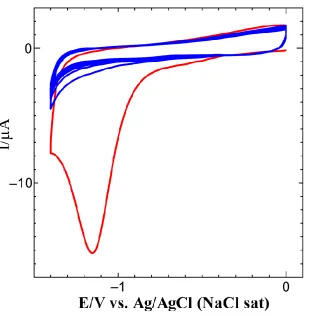
Figure 1. Electrochemical reduction of electrostatically assembled GO on GC/HDA electrode (15 cycles) in 0.2 M PB solution (pH 7.2) at a scan rate of 100 mV s-1. ("Reprinted with permission from (J. Phys. Chem. C 117 (2013) 4326-4335). Copyright (2016) American Chemical Society”)
[image:3.596.148.457.296.612.2]
attention for examining superior electro sensitivity towards the oxidation of AA, DA and UA with their LOD of 0.01 M, 0.001 M and 0.01 M [15]. The use of one dimensional (1D) carbon nanomaterials for the simultaneous determinations of DA, UA and AA. The geometrical structure of MWCNT exhibit high sensitivity and outstanding affinity of biosensors [16]. Atta et al [17] have used nano-perovskite carbon paste (CpE/SrPdO3) composite electrode explored extensively for
electrochemical sensing of dopamine in biological fluids. Thus, the electrode catalysts elucidate the oxygen-surface interaction between the oxygen atom of the hydroxyl groups and the transition of the Perovski element. Kiran et al [18] used a boron doped diamond (BDD) microelectrode; it reveals superior properties like low background current, low adsorption species, anti-fouling capabilities and long term stabilities for the quantification of uric acid in urine sample. Raj and his co-workers [19] investigated the electrochemical sensing of AA, DA and UA by using a novel electrochemical reduced graphene oxide (ERGO) film electrode. The self-assembled ERGO electrode has been prepared by electrochemically, the applied cycle between 0 to -1.4 V vs SCE for 15 cycles (Fig.1). A new type of N-doped functionalized MWCNT modified with Fe3O4 nanoparticle (Fe3O4@CNT-N) also widely
used in the study of electrocatalytic activity, they functionalized Fe3O4@CNT-N composite has been
used as a promising candidate for the simultaneous determinations of biosensors [20].
2.2. Metal oxide
The development of one dimensional (1D) magnesium oxide (MgO) nanostructure (Nanorod and nanobelt) based electrode catalysts were synthesized by plasma jet chemical vapour deposition (CVD) method for their simultaneous determinations of highly sensitive and selective analytical applications of DA, AA and UA [21]. Ghanbari et al [22] suggested electrochemical deposition/fabrication rout of flower like morphological zinc oxide/polyaniline/reduced graphene oxide (ZnO/PANI/RGO) nanocomposite was characterized by field emission scanning electron miscroscopy (FE-SEM), XRD, Raman and FT-IR spectroscopies. The nanofiber ZnO/PANI/RGO composite exhibit their average diameter of about 100 nm, the high surface area and good conductivity of nanocomposite allows efficient oxidations of DA and UA. Dopamine and paracetamol have been studied by using copper and copper (I) oxide (Cu/CuO) modified electrode. In this electrode surface will offer higher electrochemical performance indicating a great material for analytical applications [23]. Among the available rout, Hummers method is one of the versatile one for the synthesis of graphite oxide, which is mainly modified with tin oxide (SnO2). The modified graphene/SnO2
electrochemical method. The composite exhibit relatively a smooth nanofiber surface with the diameter value of 100 nm and it was characterized through Raman spectroscopy (C=C backbone polymer stretching at 1590 cm-1 & ring stretching mode at 1367 cm-1).
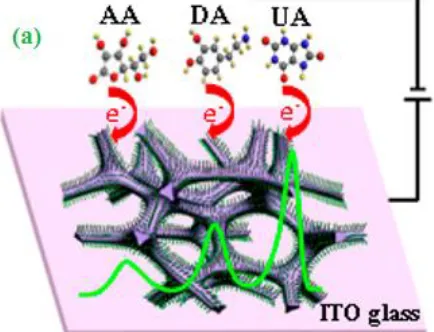
Figure 2. (a) Schematic of the ZnO NWA/GF electrode and detection of UA, DA, and AA. (b) SEM images of the ZnO NWAs on the 3D GF at different magnifications. Inset: EDX of the ZnO NWAs. ("Reprinted with permission from (ACS Nano 8 (2014) 1639-1646). Copyright (2014) American Chemical Society”)
The proposed composite also applied for real sample of human urine analysis [26]. Wu et al [27] constructed a mesoporous structure and magnetic properties of amino functionalized ion oxide based graphene sheet (FeO3-NH2@GS) composite for the determinations of biomolecules (AA, DA and UA) because of their high sensitivity, simple operation and low expenses. Ruthenium oxide (RuO2
xH2O) has also been prepared by electrochemical deposition method under the optimized pH
[image:5.596.171.388.141.307.2]
electrochemical deposited RuO2 was quantified through electrochemical quartz crystal microbalance
(EQCM) and it can apply to simultaneous studies of bio molecules [28].
2.3. Conducting polymers
Conducting polymer exhibits great attention due to their widespread applications, such as high sensitivity, selectivity and lower background current. The advent of gold supported conducting polymer (Polyimidazole) based graphene oxide, which have been used in electrochemical research. Thus, the polymer nanocomposite (GNPs/PImox/GCE) has proven excellent electrocatalytic activities towards AA, DA, UA and tryptophan (Trp) [29]. The electrocatalytic active graphene/conducting polymer (Pol-4-amino-3-hydroxy-1-naphthalene sulfonic acid) nanocomposite has been prepared by electrochemical method. The electrode catalysts were successfully explored for simultaneous determination of dopamine and 5-hydroxytryptamine (5-HT) [30]. Interestingly, Prasad and his co-workers described the fabricated dual template imprinted polymer based MWCNT composite electrode surface considerable attention to a large electrode surface area and imprinted electrochemical properties.
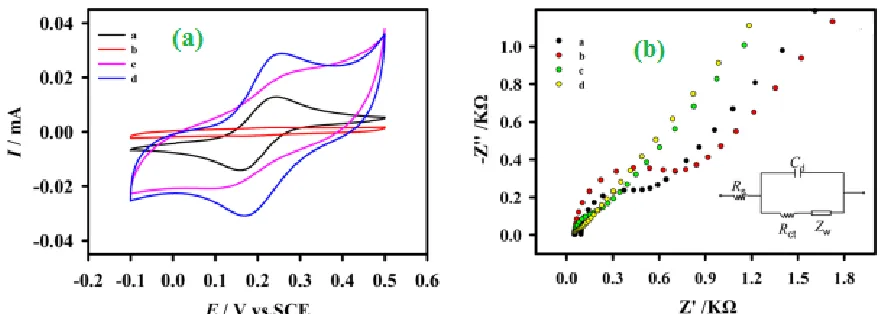
Figure 3. CVs (a) and EIS (b) of bare GCE (a), GO/GCE (b), PDA-rGO/GCE (c), and Fc-NH-PDA-rGO/GCE (d) in 2mM Fe(CN)63-/4- containing 0.1 M Na2SO4. ("Reprinted with permission from
(ACS Appl. Mater. Interfaces 7 (2015) 17935-17946). Copyright (2015) American Chemical Society”)
[image:6.596.77.518.360.517.2]
suggested that PDA-rGO displayed good conductivity and accelerate the speed of the electron-transfer reactions. Poly(tyrosine) based functionalized MWCNT composite could effectively modify the electron showed very much excellent characteristics in electrochemical sensors, better stability, more active site and reproducibility of AA, DA and UA [34]. Yang and co-workers obtained a facile synthesis of AuNPs@polyaniline (AuNPs@PANI) core-shell nanocomposite by used one step chemical oxidative polymerization of aniline. The core-shell of nanocomposites was exhibited excellent electrocatalytic activity in both neutral and alkaline media, the favourable over potential shift of DA and UA and dramatically increased their oxidation peak currents [35].
3. VARIOUS METHODS FOR FABRICATING ELECTRODE MATERIALS
Hummers method becomes popular one for the synthesis of graphene oxide from graphite powder, this reduced graphene further modified with zinc sulphide (ZnS) and cetyl trimethyl ammonium bromide (CTAB). The CTAB/rGO/ZnS composite employed in the biosensors, which were applied to the determinations of AA, DA and UA [36]. A tubular structure of mesoporous nitrogen rich carbon (MNC) materials has been synthesized through a template method. The tubular surface of the MNC working electrode with suitable electrode catalyst could be a solution obtained superior sensitivity towards the oxidation of AA, DA and UA in the lower range of sensing level [37]. Chemical method has been recognized as an efficient and versatile technique for the fabrication of graphitic carbon nitride nanosheet and graphene oxide (CNNS/GO) composite could improve the effect of layer-by-layer structure by π-π interaction. It can also developed distinguished sensitivity, selectivity and low level detection limits of AA, DA and UA [38]. Lan and Zhang [39] have used a simple and novel electrochemical methods for the polymerization of 6-thioguanine (6-TG) modified glassy carbon electrode (P6-TG/GCE). From the SEM investigation, the P6-TG/GCE film displayed homogeneous surface structure and irregular and continuous holes on the electrode surface for the electro oxidations of analysts. A highly oriented tube-like structure of graphene sheet and 3,4,9,10-perylenetetracarboxylic acid (GS-PTCA) electrodes were synthesized under sonication conditions via π-π stacking interaction. The method resulted in the formation of GS-PTCA exhibited like tube, crumpled and wrinkled structure etc., [40]. The other approaches involved in the preparation of silver nanoparticles supported modified carbon paste electrode (AgNPs/MCP) through a biological method under micro-wave assisted conditions. The prepared modified electrode has been characterized various analytical and electro analytical techniques and they were optimized pH for a suggested equal number of protons and electrons involved in the electro oxidation of dopamine [41]. Among them, carbon fibers/ZnO core-shell hybrid electrodes were synthesized by plasma-assisted method. The core-shell hybrids have drawn considerable attention, because they provide a portable and a green route for the construction of biosensor applications [42]. Polycetyltrimethylammonium bromide (Poly(CTAB)) nano rod possessing an average diameter of 100 nm and their average length of about 1.2
alloying method. Subsequently, HNP-AuAg alloy have been applied to construct excellent electrocatalytic activities towards the individual oxidations of dopamine (DA) and uric acid (UA) [44]. A hetero structure of graphene oxide nano ribbons modified core-shell multi-walled carbon nanotube (GONRs/MWCNT) electrode was prepared by microwave-assisted method. Fig. 4(a & b) shows the transmission electron microscopy of two different microwave power (150 and 250W) dependent tube-to-ribbon and nano ribbon morphological hetero structure of GONRs/MWCNT nanomaterials. The optimal microwave core-shell GONRs/MWCNT hetero structure resulted superior current enhancement and great degree of potential for novel bio-sensing platform [45].
Figure 4. (a & b) Transmission electron microscopy images of a single as-received multi-walled carbon nanotube and graphene oxide nanoribbons derived from unzipping by treatment with H2SO4 + H3PO4 with dissolved KMnO4 under microwave powers of 150 and 250 W applied for
4 min. ("Reprinted with permission from (ACS Nano 5 (2011) 7788-7795). Copyright (2011) American Chemical Society”)
4. ELECTROANALYTICAL SENSITIVE TECHNIQUES
4.1. Amperometry
[image:8.596.166.430.224.529.2]
sensitivity, selectivity, simplicity of pre-treatment sample and stability of electrode modifications. Platinum nanosheet based fullerene (C60) decorated on glassy carbon electrode (PtNSs/ C60/GCE)
through a simple potentiostatic deposition method. The as-prepared PtNSs/ C60/GCE nanosheet
composites were received excellent resolved peak potential (ΔEAA-DA = 176 mV, ΔEDA-UA = 132 mV
and ΔEAA-UA = 308 mV) values and stable electrocatalytic performance of AA, DA and UA [46]. On
the other hand, there is a considerable interest in the development of vertically aligned RuO2 based
CNT modified (RuO2/MWCNTs) electrode for the optimized sensor of dopamine. The displayed
sensitivity (83.3 A mM-1
) and detection limits (6.0 x 10⁻⁸ M) have been estimated through both DPV and amperometry [47].
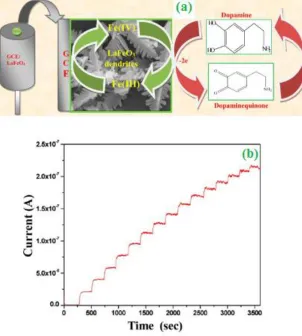
Figure 5. (a). Schematic illustration of electrocatalytic dopamine oxidation at the LaFeO3 dendrite
nanostructure modified GCE. (b) Amperometric i-t curve for the determination of DA at the LaFeO3 dendrite modified electrode in 10 mM PBS 7.2. Each addition increases the
concentration of 100 nM at regular intervals of 180s. ("Reprinted with permission from (Cryst. Growth Des 13 (2013) 291-302). Copyright (2013) American Chemical Society”)
[image:9.596.142.444.241.577.2]
polyaniline-Prussian blue (PANI-PB) composite and it was displayed a satisfactory performance for the detection of uric acid. Moraes et al [50] used glassy carbon modified MWCNTs electrode doped with cobalt phthalocyanine (CoPc) by electrochemical method for the selective determinations of dopamine in the presence of ascorbic acid (LOD = 2.56 x 10⁻⁷ mol L-1). A single crystalline sized and shape controlled novel LaFeO3 dendric nano spheres have been synthesized by surfactant assisted
hydrothermal processes (Fig. 5(a)). The LaFeO3 dendrite modified electrode was performed the
detection of dopamine analyte, the lowest limit of detection value of 62 nM (Fig. 5(b)) [51].
4.2. Differential pulse voltammetry (DPV)
In this technique is sensitive one, the following parameters are discussed such as pulse amplitude, pulse width and sample period. Recently, Ensafi and co-workers introduced a highly sensitive determination method for the simultaneous determinations of AA, DA and UA based on poly(sulfonazo III) modified glassy carbon electrode.
[image:10.596.186.413.331.684.2]
The results were achieved satisfactory one and for the real sample studies of Vitamin C tablets and Human sample [52]. However, the ultra-sized carbon supported Ni nanoparticles (Ni/C) has been prepared by chemical method (drop-coating). The Ni/C electrode reported remarkable increase of electron transfer kinetics of electroactive compound and significantly decrease in the over-potential for the oxidations of AA, DA and UA [53]. The advent a quite smooth three-dimensional morphology of electrochemically reduced graphene oxide modified carbon fiber (ErGO/CFE) electrode is a milestone in modern applied chemistry and they have been widely used as an electrocatalytic activity towards bio-sensing molecules. However, ErGO/CFE had three well defined peak potential values of 116, 167 and 283 mV for AA-DA, DA-UA and AA-UA respectively [54]. Functionalized flexible graphene nanofiber can be modified with NiCoO4 nanowire (GF/ NiCoO4) have proven to be an excellent
transducer in biosensors, due to their unique morphology, enhanced electrochemical properties and more environment stability. The as-prepared GF/ NiCoO4 fiber composite showed excellent promising
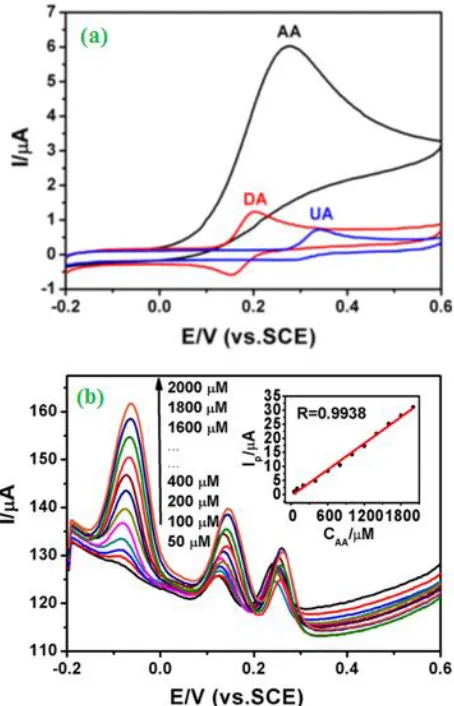
perspective in biosensor applications [55]. Poly(p-xylenosulfonephthalein) film electrode has been deposited into an electrochemical sensor for biomolecules and strategies have included the electrochemical deposition (Applied potential value = -0.30 to +1.20 V vs SCE) method. The polymer based electrochemical sensor commonly used because of their very easy electrode fabrication, low cost and great utility for making a voltammetric sensor for the detection of AA, epinephrine (Ep) and UA [56]. Manjunatha et al [57] interested in the development of electrochemical sensing devices for use in easiness preparation of sodium dodecyl sulphate modified carbon nanotube electrode, excellent reproducibility, low-level detection limit and wide linear dynamic range. Zhang et al [58] focused a novel nano horn based carbon/poly(glycine) (CNHs) sensor, the active CNHs matrix possess excellent electrical conductivity and high electrode surface area. The electrochemical characterization of AA, DA and UA at various (GCE, porous carbon based PC/GCE, nitrogen-doped N-PC/GCE, dual-nitrogen and sulphur doped N-S-PC/GCE and without porous doped carbon (N-S-C/GCE)) electrodes have been investigated by cyclic voltammetry method (Fig. 6(a)). The insight of highly sensitive and their low level detection values were determined by differential pulse voltammetry as shown in Fig. 6(b) [59].
4.3. Square wave voltammetry (SWV)
It is an alternative sensitive technique, the improvement of sensitive cyclic voltammetry as an analytical tool is square wave voltammetry. Carbon paste modified with 1-butyl-4-methyl-pyridinium tetrafluoborate ionic liquid (BMPTB) has been successfully applied for the determinations of biomolecules, such as DA, AA and UA [60]. More recently, a novel strategy in Mn-SnO2
(Mn-SnO2/GCE) synthesis based on microwave irradiation method offers several advantages in
for the linear calibration of biological (dopamine) molecules. The fullerene-C60-coated gold electrode,
which can be used as promoters for the enhancement of electron transfer rate and lowered the oxidation potential of DA [63].
Figure 7. Square wave voltammetry in the potential range 0 to + 0.4 V at carbon-black modified glassy carbon (CB-GCE) in 0.1 M phosphate buffer with continual addition of dopamine (DA) such that [DA] varies between 0 μM to 10 μM. ("Reprinted with permission from (ACS. Appl. Mater. Interfaces 8 (2016) 28338-28348). Copyright (2016) American Chemical Society”).
A simple, convenient and green rout of graphene decorated gold nanoparticle has been synthesized by insitu thermal reduction of graphene oxide and HAuCl2 with β-Cyclodextrin
[image:12.596.112.473.143.436.2][image:13.596.72.524.95.344.2]
5. ELECTRODE STABILITY
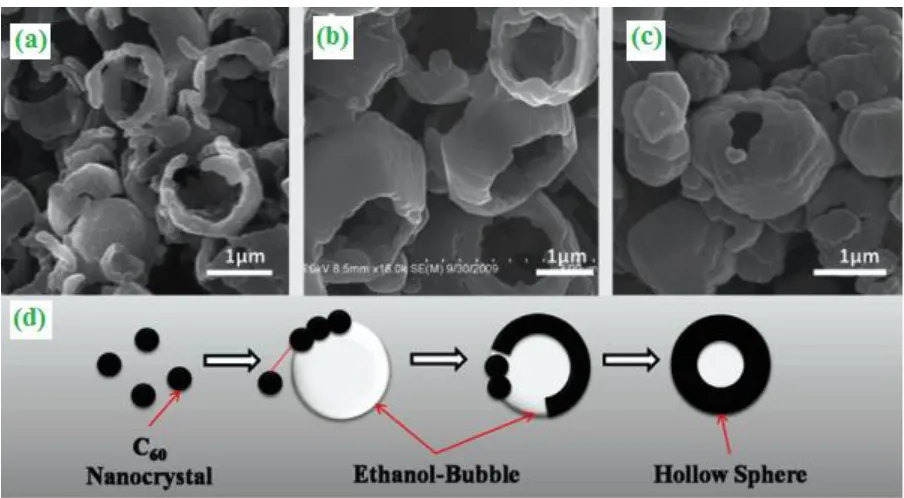
Figure 8. Studies on the plausible mechanism for the formation of C60 hollow microspheres. SEM of
(a) C60 hemi-rings, (b) bows, and (c) almost completely spheres and (d) Plausible mechanism
for the formation of C60 hollow microspheres with bubble-template. ("Reprinted with
permission from (ACS Appl. Mater. Interfaces 4 (2012) 1594-1600). Copyright (2012) American Chemical Society”).
The long-term durability of electrode catalyst is one of the most important parameters in practical studies of electrochemical applications. Mainly, the stability of different electrode catalysts was investigated through chronoamperometry method. Highly porous and hollow microspheres (Fig.8) SEM structures of C60 have been prepared by bubble-Template method. The hollow spheres C60
Azur-A supported gold supported nanocomposites have drawn special research attention, because the composite attributed unique properties and possible electrochemical applications were carried out by both cyclic voltammetry and electrochemical impedance spectroscopic methods [73]. The carbon-ceramic electrode (CCE) was prepared by the sol-gel method. The simple and fast procedure MWCNTs were drop casted on the CCE. The chemically modified MWCNTs/CCE composite was employed biosensor applications and exhibited excellent electrocatalytic activities, reduced the oxidation over potential values and significantly increased oxidation of peak currents, respectively [74]. Moreover, there has been fabricated a new bio-sensors, a significant interest for the immobilization of quercetin in the modified silver nanoparticles and graphene nano sheets (Q-AgNPs-GNs-GCE). The quercetin immobilized AgNPs based composite attracted considerable interest in kinetics (Heterogeneous electron rate transfer processes “k”) studies; voltammogram showed surface confined processes and employed high catalytic activity for L-Cysteine (L-Cys) oxidation [75].
6. REAL SAMPLE ANALYSIS
Zhu et al [76] have used a novel water-soluble multi-nano pore graphene modified glassy carbon (mp-GR) electrode by a hydrothermal method. However, the mp-GR/GCE exhibited abundant functional groups, edges and developed for the determinations of DA and UA in human real sample analysis. Great efforts have been used for the fabrication of graphene oxide nanoribbons (GONRs) modified with core-shell MWCNT taking advantages of the electrochemical analysis of AA, DA and UA. The core-shell hetero structure of MWCNT/GONR composite exhibited great degree of potential applications in biosensors platforms [77]. Also, the combinations of copper nanoparticles and poly(3-amino-5-mercapto-1,2,4-triazole) (P-TAox) film electrode not only could significantly improve the electrocatalytic properties and good bio-compatibility, flexibility and excellent electrode stability of the electrode materials. In order to confirm the applicability of the proposed CuNPs/P-TAox sensors were evaluated by the measurements of AA, DA, UA and Trp in human blood and urine sample [78]. Among them, gold and platinum supported poly(3,4-ethylenediaminethiophene) (Pt/PEDOT-Pt-Ag/AgCl and Au/PEDOT-Pt-(Pt/PEDOT-Pt-Ag/AgCl) electrochemical microcell was one of the widely used conducting polymers for the detection of AA, DA, UA and exhibited high sensitivity, lower oxidation potential and low level detection limit. They addressed for the study of real sample of blood sera and urine of clinical diagnosis [79]. Li et al [80] have used a highly sensitive and selective of poly (Chromotrope 2B) (PCHAGCE) film electrode for the quantitative determinations of DA from human urine real sample. Uzun et al [81] have electrochemically prepared N,N’-bis(indole-3-carboxaldimine)-1,2-diaminocyclohexane (ICDACH) electrode for the determinations of DA by using the standard addition method in real sample.
7. CONCLUSIONS
have focused on advanced electrode materials (Carbon, metal oxide and conducting polymers) as novel catalysts for biosensor applications. The fabricated electrode catalysts have been studied under sensitive electroanalytical techniques (Amperometry, DPV and SWV). Here, the electrode catalysts would play an important role in the improvement of sensitivity, selectivity and lower level detection limits of three analytes (DA, AA and UA). Several important parameters also been discussed on the basis of biosensors, such as sensitivity, selectivity, reproducibility, real sample analysis and long term stability, etc., This article expanded and great promise for the scope of the applications in routine electrochemical sensing and biosensor analysis.
ACKNOWLEDGEMENT
We gratefully acknowledged, The Management and Chemistry Department Staff members, The Madura College, Madurai, Tamil Nadu, India.
References
1. R.A. Medieros, R. Matos, A. Benchikh, B. Saidani, C.D. Chouvy, C. Deslouish, R.C.R. Filho, Analytic Chimica Acta 797 (2013) 30-39.
2. X. Tian, C. Cheng, H. Yuan, J. Du, X. Xiao, S. Xie, M.F. Choi, Talanta 93 (2012) 79-85. 3. C. Yang, M.E. Denno, P. Pyakunel, B.J. Venton, Analytic Chimica Acta 887 (2015) 17-37. 4. S. Mukdasai, U. Crowley, M. Pravda, X. He, e.p. Nesterenko, P.N. Nesterenko, B. Paull, S.
Sijaranai, J.D. Glennon, E. Moore, Sens. Actuators, B 218 (2015) 280-288. 5. J. Ping, J. Wu, Y. Wang, Y. Ying, Biosens. Bioelectron., 34 (2012) 70-76. 6. Y. Wang, C. Bi, J. Mol. Liq., 177 (2013) 26-31.
7. F. Ye, C. Feng, J. Jiang, S. Han, Electrochim. Acta 182 (2015) 935-945.
8. M. Taei, H. Salavati, F. Hasanpaur, S. Habibollahi, H. Baghlani, Mater. Sci. Eng., C 69 (2016) 1-11.
9. L. Ling, J. Chen, H. Yao, Y. Chen, Y. Zheng, X. Lin, Bioelectrochemsitry 73 (2008) 11-17. 10.R. Medeiros, A. Benchick, R.C.R. Filho, O.F. Filho, B. Saidani, C.D. Chouvy, C. Deslouis,
Electrochem. Commun., 24 (2012) 61-64.
11.L.M. Niu, D.Q. Lian, H.M. Shi, Y.B. Yu, W.J. Kang, S.Y. Bi, Sens. Actuators, B 178 (2013) 10-18. 12.Y. Yue, G. Hu, M. Zheng, Y. Guo, S. Shao, Carbon 50 (2012) 107-114.
13.A. Balamurugan, S.M. Chen, Analytical Chimica Acta 596 (2007) 92-98.
14.M.D. Rubianes, A.S. Arribas, E. Bermejo, M. Chicharro, A. Zapardiel, G. Rivas, Sens. Actuators, B 144 (2010) 274-279.
15.A. Joshi, W. Schuhmann, T.C. Nagaiah, Sens. Actuators, B 230 (2016) 544-555. 16.H. Hu, Y. Song, M. Feng, H. Zhan, Electrochim. Acta 190 (2016) 40-48.
17.N.F. Atta, S.M. Ali, E.H. Elads, A. Galal, Electrochim. Acta 128 (2014) 16-24.
18.R. Kiran, E. Scorsone, P. Mailley, P. Bergonzo, Anal. Chem., 84 (2012) 10207-10213. 19.M. Raj, S.A. John, J. Phys. Chem C 117 (2013) 4326-4335.
20.D.M. Fernandes, M. Costa, C. Pereira, B.B. Baeza, I.R. Ramos, A.G. Ruiz, C. Freire, J. Colloid Interface Sci., 432 (2014) 207-213.
21.M. Li, W. Guo, H. Li, W. Dai, B. Yang, Sens. Actuators, B 204 (2014) 629-636. 22.K. Ghanbari, M. Moloudi, Anal. Biochem., 512 (2016) 91-102.
23.M. Devaraj, R. Saravanan, R. Deivasigamani, V.K. Gupta, F. Gracia, S. Jayadevan, J. Mol. Liq., 221 (2016) 930-941.
25.H.Y. Yue, S. Huang, J. Chang, C. Heo, F. Yao, S. Adhikari, F. Guenes, L.C. Liu, T.H. Lee, E.S. Oh, B. Li, J.J. Zhang, T.Q. Huy, N.V. Luan, Y.H. Lee, ACS Nano 8 (2014) 1639-1646.
26.K. Ghanbri, N. Hajheidari, Anal. Biochem., 473 (2015) 53-62.
27.D. Wu, Y. Li, Y. Zhang, P. Wang, Q. Wei, B. Du, Electrochim. Acta 116 (2014) 244-249. 28.S. Sakthivel, S.M. Chen, Biosens. Bioelectron., 22 (2007) 1680-1687.
29.C. Wang, R. Yuan, Y. Chai, S. Chen, F. Hu, M. Zhang, Analytica Chimica Acta 741 (2012) 15-20. 30.M. Raj, P. Gupta, R.N. Goyal, Y.B. Shim, Sens. Actuators, B 239 (2017) 993-1002.
31.B.B. Prasad, D. Jauhari, M.P. Tiwari, Biosens. Bioelectron., 50 (2013) 19-27.
32.C. Wang, J. Li, K. Shi, Q. Wang, X. Zhao, Z. Xiong, X. Zou, Y. Wang, J. Electroanal. Chem., 770 (2016) 56-61.
33.N. Huang, S. Zhang, L. Yang, M. Liu, H. Li, Y. Zhang, S. Yao, ACS Appl. Mater. Interfaces 7 (2015) 17935-17946.
34.Y. Wang, C. Bi, J. Mol. Liq., 177 (2013) 26-31.
35.L. Yang, S. Liu, Q. Zhang, F. Li, Talanta 89 (2012) 136-141. 36.Y.J. Yang, Sens. Actuators, B 221 (2015) 750-759.
37.A. Joshi, W. Schuhmann, T.C. Nagaiah, Sens. Actuators, B 230 (2016) 544-555.
38.H. Zhang, Q. Huang, Y. Huang, F. Li, W. Zhang, C. Wei, J. Chen, P. Dai, L. Huang, Z. Huang, L. Kang, S. Hu, A. Hao, Electrochim. Acta 142 (2014) 125-131.
39.D. Lan, L. Zhang, J. Electroanal. Chem., 757 (2015) 107-115.
40.W. Zhang, Y. Chai, R. Yuan, S. Chen, J. Han, D. Yuan, Analytica Chimica Acta 756 (2012) 7-12. 41.H. Vidya, B.E. Kumaraswamy, S. Schell, J. Mol. Liq., 214 (2016) 298-305.
42.H. Liu, C. Gu, C. Hou, Z. Yin, K. Fan, M. Zhang, Sens. Actuators, B 224 (2016) 857-862. 43.Y.J. Yang, L. Guo, W. Zhang, J. Electroanal. Chem., 768 (2016) 102-109.
44.J. Hou, C. Xu, D. Zhao, J. Zhou, Sens. Actuators, B 225 (2016) 241-248.
45.C.L. Sun, C.T. Chang, H.H. Lee, J. Zhou, J. Wang, T.K. Sham, W.F. Pong, ACS Nano 5 (2011) 7788-7795.
46.X. Zhang, L.X. Ma, Y.C. Zheng, Electrochim. Acta 177 (2015) 118-127. 47.L.C. Jiang, W.D. Zhang, Electroanalysis 21 (2009) 1811-1815.
48.B. Singh, F. Laffir, C. Dickiinson, T. Mccormac, E. Dempsey, Electroanalysis 23 (2011) 79-89. 49.B. Thakur, S.N. Sawant, Chem. Plus. Chem., 78 (2013) 166-174.
50.F.C. Moraes, M.F. Cabral, S.A.S. Machado, L.H. Mascaro, Electroanalysis 20 (2008) 851-857. 51.S. Thirumalairajan, K. Girija, V. Ganesh, D. Mangalraj, C. Viswanathan, N. Ponpandiyan, Cryst.
Growth. Des 13 (2013) 291-302.
52.A.A. Ensafi, M. Taei, T. Khayamian, A. Arabzadeh, Sens. Actuators, B 147 (2010) 213-221. 53.W. He, Y. Ding, W. Zhang, L. Ji, X. Zhang, F. Yang, J. Electroanal. Chem., 775 (2016) 205-211. 54.B. Yang, H. Wang, J. Du, Y. Fu, P. Yang, Y. Du, Colloids and Surfaces A: Physicochem. Eng.
Aspects 456 (2014) 146-152.
55.W. Cai, J. Lai, T. Lai, H. Xie, J. Ye, Sens. Actuators, B 224 (2016) 225-232. 56.A.A. Ensafi, M. Taei, T. Khayamian, Colloids Surf., B 79 (2010) 480-487.
57.J.G. Manjunatha, M. Deraman, N.H. Basri, N.S.M. Nor, I.A. Talib, N. Ataollahi, C.R. Chimie 17 (2014) 465-476.
58.G. Zhang, P. He, W. Feng, S. Ding, J. Chen, L. Li, H. He, S. Zhang, F. Dong, J. Electroanal. Chem., 760 (2016) 24-31.
59.W. Gao, X. Feng, T. Zhang, H. Huang, J. Li, W. Song, ACS Appl. Mater. Interfaces 6 (2014) 19109-19117.
60.M. Pandurangachar, B.E.K. Swamy, B.N. Chandrashekar, O. Gilbert, B.S. Sherigara, J. Mol. Liq., 158 (2011) 13-17.
61.N. Lavanya, E. Fazio, F. Neri, A. Bonavita, S.G. Leonardi, G. Neri, C. Sekar, J. Electroanal. Chem., 770 (2016) 23-32.
63.R.N. Goyal, V.K. Gupta, N. Bachheti, R.A. Sharma, Electroanalysis 20 (2008) 757-764. 64.X. Tian, C. Cheng, H. Yuan, J. Du, D. Xiao, S. Xie, M.M.F. Choi, Talanta 93 (2012) 79-85. 65.M. Choukairi, D. Buchta, L. Bounab, M.B. Atyah, R. Elkhamlichi, F. Chaouket, J. Electroanal.
Chem., 758 (2015) 117-124.
66.A.M. Granero, G.D. Pierini, S.N. Robledo, M.S.D. Nezio, H. Fenandez, M.A. Zon, Microchem. J., 129 (2016) 205-212.
67.H. Beitollahi, M. Hamzavi, M.T. Mahani, M. Shanesaz, H.K. Malesh, Electroanalysis 27 (2015) 524-533.
68.L. Jiang, G.W. Nelson, J. Abda, J.S. Food, ACS. Appl. Mater. Interfaces 8 (2016) 28338-28348. 69.L. Wei, Y. Lei, H. Fu, J. Yao, ACS Appl. Mater. Interfaces 4 (2012) 1594-1600.
70.X. Ouyang, L. Luo, Y. Ding, B. Liu, D. Xu, A. Huang, J. Electroanal. Chem., 748 (2015) 1-7. 71.X.J. Huang, H.S. Im, O. Yarimaga, J.H. Kim, D.H. Lee, H.S. Kim, Y.K. Choi, J. Phys. Chem. B
110 (2006) 21850-21856.
72.N.G. Tsierkezos, S.H. Othman, U. Ritter, L. Hafermann, A. Knauer, J.M. Kohler, C. Downing, K.E. Mccarthy, Sens. Actuators, B 231 (2016) 218-229.
73.H. Filik, A.A. Avan, S. Aydar, Arabian Journal of Chemistry 9 (2016) 471-480. 74.B. Habibi, M.H.P. Azar, Electrochim. Acta 55 (2010) 5492-5498.
75.H.R. Zare, F.J. Dehaghani, Z. Shekari, A. Benvidi, Appl. Surf. Sci., 375 (2016) 169-178. 76.X. Zhu, Y. Liang, X. Zuo, R. Hu, X. Xiao, J. Nan, Electrochim. Acta 143 (2014) 366-373. 77.C.L. Sum, C.T. Chang, H.H. Lee, J. Zhou, J. Wang, T.K. Sham, W.F. Pong, ACS Nano 5 (2011)
7788-7795.
78.C. Wang, X. Zou, X. Zhao, Q. Wang, J. Tan, R. Yuan, J. Electroanal. Chem., 741 (2015) 36-41. 79.F.S. Belaidi, A. Civelas, V. Castagnola, A. Tsopela, L. Mazeng, P. Gros, J. Launay, P.T. Boyer,
Sens. Actuators, B 214 (2015) 1-9.
80.X.B. Li, M.M. Rahman, G.R. Xu, J.J. Lee, Electrochim. Acta 173 (2015) 440-447. 81.D. Uzun, A.B. Gunduzalp, E. Hasdemir, J. Electroanal. Chem., 747 (2015) 68-76.

![Figure 7. Square wave voltammetry in the potential range 0 to + 0.4 V at carbon-black modified glassy carbon (CB-GCE) in 0.1 M phosphate buffer with continual addition of dopamine (DA) such that [DA] varies between 0 μM to 10 μM](https://thumb-us.123doks.com/thumbv2/123dok_us/1804816.135527/12.596.112.473.143.436/square-voltammetry-potential-modified-phosphate-continual-addition-dopamine.webp)