Pentoxifylline for intermittent claudication (Review)
Salhiyyah K, Forster R, Senanayake E, Abdel-Hadi M, Booth A, Michaels JA
This is a reprint of a Cochrane review, prepared and maintained by The Cochrane Collaboration and published inThe Cochrane Library
2015, Issue 9
http://www.thecochranelibrary.com
T A B L E O F C O N T E N T S
1 HEADER . . . .
1
ABSTRACT . . . .
2
PLAIN LANGUAGE SUMMARY . . . .
3
BACKGROUND . . . .
3
OBJECTIVES . . . .
3 METHODS . . . .
[image:2.595.75.522.83.384.2]5 RESULTS . . . .
Figure 1. . . 6
Figure 2. . . 7
Figure 3. . . 8
17
DISCUSSION . . . .
19
AUTHORS’ CONCLUSIONS . . . .
19
ACKNOWLEDGEMENTS . . . .
19 REFERENCES . . . .
24
CHARACTERISTICS OF STUDIES . . . .
58 DATA AND ANALYSES . . . .
58 ADDITIONAL TABLES . . . .
64
APPENDICES . . . .
66 WHAT’S NEW . . . .
67 HISTORY . . . .
67
CONTRIBUTIONS OF AUTHORS . . . .
67 DECLARATIONS OF INTEREST . . . .
68 SOURCES OF SUPPORT . . . .
68
DIFFERENCES BETWEEN PROTOCOL AND REVIEW . . . .
68
INDEX TERMS . . . .
[Intervention Review]
Pentoxifylline for intermittent claudication
Kareem Salhiyyah1, Rachel Forster2, Eshan Senanayake3, Mohammed Abdel-Hadi4, Andrew Booth5, Jonathan A Michaels5
1Wessex Cardiothoracic Centre, University Hospital Southampton, Southampton, UK.2Centre for Population Health Sciences,
Uni-versity of Edinburgh, Edinburgh, UK.3Department of Surgery, Northern General Hospital, Sheffield, UK.4Department of Cardiology
and Vascular Diseases, Herz- u. Kreislaufzentrum Rotenburg, Rotenburg, Germany.5School of Health and Related Research, University of Sheffield, ScHARR, Sheffield, UK
Contact address: Kareem Salhiyyah, Wessex Cardiothoracic Centre, University Hospital Southampton, Tremona Road, Southampton, SO16 6YD, [email protected].
Editorial group:Cochrane Vascular Group.
Publication status and date:New search for studies and content updated (no change to conclusions), published in Issue 9, 2015. Review content assessed as up-to-date: 8 April 2015.
Citation: Salhiyyah K, Forster R, Senanayake E, Abdel-Hadi M, Booth A, Michaels JA. Pentoxifylline for intermittent claudication.
Cochrane Database of Systematic Reviews2015, Issue 9. Art. No.: CD005262. DOI: 10.1002/14651858.CD005262.pub3. Copyright © 2015 The Cochrane Collaboration. Published by John Wiley & Sons, Ltd.
A B S T R A C T
Background
Intermittent claudication (IC) is a symptom of peripheral arterial disease (PAD) and is associated with high morbidity and mortality. Pentoxifylline, one of many drugs used to treat IC, acts by decreasing blood viscosity, improving erythrocyte flexibility and promoting microcirculatory flow and tissue oxygen concentration. Many studies have evaluated the efficacy of pentoxifylline in treating individuals with PAD, but results of these studies are variable. This is an update of a review first published in 2012.
Objectives
To determine the efficacy of pentoxifylline in improving the walking capacity (i.e. pain-free walking distance and total (absolute, maximum) walking distance) of individuals with stable intermittent claudication, Fontaine stage II.
Search methods
For this update, the Cochrane Vascular Group Trials Search Co-ordinator searched the Specialised Register (last searched April 2015) and the Cochrane Register of Studies (2015, Issue 3).
Selection criteria
All double-blind, randomised controlled trials (RCTs) comparing pentoxifylline versus placebo or any other pharmacological interven-tion in patients with IC Fontaine stage II.
Data collection and analysis
Two review authors separately assessed included studies,. matched data and resolved disagreements by discussion. Review authors assessed the methodological quality of studies by using the Cochrane ’Risk of bias’ tool and collected results related to pain-free walking distance (PFWD) and total walking distance (TWD). Comparison of studies was based on duration and dose of pentoxifylline.
Main results
We included in this review 24 studies with 3377 participants. Seventeen studies compared pentoxifylline versus placebo. In the seven remaining studies, pentoxifylline was compared with flunarizine (one study), aspirin (one study), Gingko biloba extract (one study), nylidrin hydrochloride (one study), prostaglandin E1 (two studies) and buflomedil and nifedipine (one study). The quality of the evidence was generally low, with large variability in reported findings.. Most included studies did not report on random sequence generation and allocation concealment, did not provide adequate information to allow selective reporting to be judged and did not report blinding of assessors. Heterogeneity between included studies was considerable with regards to multiple variables, including duration of treatment, dose of pentoxifylline, baseline walking distance and participant characteristics; therefore, pooled analysis was not possible.
Of 17 studies comparing pentoxifylline with placebo, 14 reported TWD and 11 reported PFWD; the difference in percentage improvement in TWD for pentoxifylline over placebo ranged from 1.2% to 155.9%, and in PFWD from -33.8% to 73.9%. Testing the statistical significance of these results generally was not possible because data were insufficient. Most included studies suggested improvement in PFWD and TWD for pentoxifylline over placebo and other treatments, but the statistical and clinical significance of findings from individual trials is unclear. Pentoxifylline generally was well tolerated; the most commonly reported side effects consisted of gastrointestinal symptoms such as nausea.
Authors’ conclusions
Given the generally poor quality of published studies and the large degree of heterogeneity evident in interventions and in results, the overall benefit of pentoxifylline for patients with Fontaine class II intermittent claudication remains uncertain. Pentoxifylline was shown to be generally well tolerated.
Based on total available evidence, high-quality data are currently insufficient to reveal the benefits of pentoxifylline for intermittent claudication.
P L A I N L A N G U A G E S U M M A R Y
Pentoxifylline for intermittent claudication
Background
Atherosclerosis, or hardening of the arteries, results in narrowing and blockage of the arteries and can reduce the blood supply to the legs, causing peripheral arterial disease. Intermittent claudication (IC) is a cramp-like pain felt in the leg muscles that is brought on by walking and is relieved by standing still or resting. Pentoxifylline is a drug that is used to relieve IC while improving people’s walking capacity. It decreases blood viscosity and improves red blood cell flexibility, promoting microcirculatory blood flow and increasing oxygen in the tissues. This review looked at all available evidence from randomised controlled trials on the efficiency of pentoxifylline for treatment of IC.
Study characteristics and key results
This review included 24 studies with 3377 participants (current until April 2015). Seventeen studies compared pentoxifylline with placebo, and the remaining studies compared pentoxifylline with flunarizine (one study), aspirin (one study), Gingko biloba extract (one study), nylidrin hydrochloride (one study), prostaglandin E1 (two studies) and buflomedil and nifedipine (one study). Large differences between included studies in how investigators measured and reported study findings made it impossible to combine results.
Most of the included studies suggested mild to moderate improvement in pain-free walking distance and total walking distance for pentoxifylline over placebo (and other treatments, which included Gingko biloba, buflomedil, iloprost, nylidrin, aspirin and prostaglandin E1). The statistical significance of findings from individual trials was unclear, and researchers observed large variability between studies in the effects of pentoxifylline. The most commonly reported side effects were gastrointestinal symptoms, mainly nausea, and the drug was well tolerated.
Quality of the evidence
The quality of included studies was generally low, and very large variability between studies was noted in reported findings including duration of trials, doses of pentoxifylline and distances participants could walk at the start of trials. Most included studies did not report on randomisation techniques or how treatment allocation was concealed, did not provide adequate information to permit judgement
of selective reporting and did not report blinding of outcome assessors. Given all these factors, the role of pentoxifylline in intermittent claudication remains uncertain, although this medication was generally well tolerated by participants.
B A C K G R O U N D
Description of the condition
Intermittent claudication (IC) is a cramp-like pain felt in the leg muscles that is brought on by walking, is relieved by rest and is a result of reduced circulation (NICE 2012). Intermittent clau-dication is a common presentation of peripheral arterial disease (PAD) caused by atherosclerosis. From 2000 to 2010, the number of people living with PAD increased across all age groups by a mean of 23.51% (Fowkes 2013). These data include high-income countries, as well as low- and middle-income countries. Peripheral arterial disease is a progressive disease associated with significant morbidity and mortality. The main cause of mortality is associated cerebrovascular and coronary artery disease. Patients with IC have reduced quality of life and increased risks of stroke and myocardial infarction (NICE 2011).
Description of the intervention
Primary health care plays an important role in the treatment of individuals with intermittent claudication. First steps in treating IC include conservative risk factor control, exercise therapy and pharmacotherapy (Tendera 2011). Revascularisation intervention, in the form of open or endovascular surgery, is usually reserved for incapacitating disease (Bachoo 2010;Fowkes 1998). In one study, 63% of newly diagnosed claudicants were treated by general prac-titioners with lifestyle advice or drugs, or both; only 37% required referral to hospital specialists (Meijer 2002). Understanding treat-ment options and their effectiveness is vital for controlling the disease at an early stage and preventing its progression.
Different types of medications have been used for treatment of IC. Vasodilators and antiplatelets reduce the chance of blood clots at the blockage site (Wong 2011); other drugs help reduce the symptoms of claudication, improve walking distance and reduce disability associated with the condition (de Backer 2012;de Backer 2013;Robertson 2013).
How the intervention might work
Pentoxifylline is a vasoactive drug that has been authorised for the medical treatment of individuals with IC. Pentoxifylline de-creases blood viscosity, improves erythrocyte flexibility and pro-motes microcirculatory flow, while increasing tissue oxygen con-centration. It is a methylxanthine derivative that works by inhibit-ing the enzyme phosphodiesterase and by potentiatinhibit-ing the effects of endogenous prostacyclin, a prostaglandin that possesses anti-ag-gregatory, fibrinolytic (decreased fibrinogen concentrations) and vasodilatory properties and increases cyclic adenosine monophos-phate (cAMP) levels in red blood cells, platelets and arterial cell walls (Micromedex 2002).
Why it is important to do this review
Intermittent claudication is a marker of increased morbidity and mortality, and treating symptoms is becoming ever more impor-tant with the increased prevalence of PAD. Previous studies and reviews have evaluated the efficacy of pentoxifylline in the treat-ment of IC and peripheral vascular disease, compared with other treatment options including other pharmacological interventions and exercise, yielding variable results (Bedenis 2014;Lane 2014;
Moher 2000;Stevens 2012). Continued evaluation of pentoxi-fylline through evidence-based systematic reviews will result in im-proved understanding of available pharmacological interventions for IC.
Recently, the National Institute for Health and Care Excellence (NICE) recommended naftidrofuryl oxalate as the leading phar-macological treatment for IC on studies of effectiveness and costs (NICE 2011; NICE 2012). In this review, we will not address cost-effectiveness.
O B J E C T I V E S
To determine the efficacy of pentoxifylline in improving the walk-ing capacity (i.e. pain-free walkwalk-ing distance and total (absolute, maximum) walking distance) of individuals with stable intermit-tent claudication, Fontaine stage II (Fontaine 1954).
M E T H O D S
Criteria for considering studies for this review
Types of studies
We included all double-blind, randomised controlled trials of pen-toxifylline versus placebo or versus other pharmacological inter-ventions. We excluded comparisons with diet, exercise or surgery. We excluded single-blind and open studies.
Types of participants
We included patients with symptoms of stable IC (no change in symptoms for six months), Fontaine stage II (Fontaine 1954), due to peripheral vascular disease. We excluded those with symptoms of critical ischaemia (rest pain, skin ulcers or gangrene) or who had undergone previous surgical or percutaneous catheter inter-ventions.
Types of interventions
We included studies that compared pentoxifylline versus placebo or some other pharmacological intervention and lasted at least four weeks. We excluded comparisons with surgery, angioplasty or exercise. We included all doses and routes of administration of pentoxifylline.
Types of outcome measures
Primary outcomes
Walking capacity is one of the most important outcome measures used to assess intermittent claudication.
According toMoher 2000, walking capacity can be assessed by
• pain-free walking distance (PFWD) or initial claudication distance (ICD), which is the distance walked on a treadmill before the onset of pain; and
• total walking distance (TWD) or absolute claudication distance (ACD), which is the maximum or absolute distance walked on a treadmill.
Secondary outcomes
• Ankle-brachial pressure index (ABI). • Quality of life, as measured by questionnaires.
• Side effects.
In this review, we excluded outcome measures such as blood vis-cosity and microcirculation.
Search methods for identification of studies
We applied no language restrictions in our searches, and we sought translation of non-English trials.
Electronic searches
For this update, the Cochrane Vascular Group Trials Search Co-ordinator (TSC) searched the Specialised Register (last searched April 2015) and the Cochrane Register of Studies (CRS) (http:/ /www.metaxis.com/CRSWeb/Index.asp) (2015, Issue 3), which is part of theCochrane Library(www.cochranelibrary.com). See
Appendix 1for details of the search strategy used in searching the CRS. The Specialised Register is maintained by the TSC and is constructed from weekly electronic searches of MEDLINE, EMBASE, CINAHL, AMED, and through handsearching rele-vant journals. The full list of the databases, journals and confer-ence proceedings which have been searched, as well as the search strategies used are described in theSpecialised Registersection of the Cochrane Vascular Group module in theCochrane Library(
www.cochranelibrary.com).
Searching other resources
We reviewed the reference lists of all relevant, identified studies.
Data collection and analysis
Selection of studies
Two review authors (KS and RF) used the eligibility criteria pro-vided above to independently assess all potentially relevant articles identified by the search strategy described. We resolved differences by consensus.
Data extraction and management
KS and RF collected information from each included trial. Infor-mation collected included trial design, participant characteristics, inclusion and exclusion criteria, interventions and controls used, treatment periods, methods of assessment and PFWD and TWD results. We also collected data on the secondary outcomes of an-kle-brachial pressure index (ABI), quality of life and side effects.
Assessment of risk of bias in included studies
For the update of this review, two review authors (RF and KS) assessed the quality of included studies using the ’Risk of bias’ tool described in theCochrane Handbook for Systematic Reviews of Interventions(Higgins 2011); we assessed allocation (selection bias), blinding (performance bias and detection bias), incomplete outcome data (attrition bias), selective reporting (reporting bias)
and other potential sources of bias. We assigned a score of high risk, unclear risk or low risk of bias, according toHiggins 2011.
Measures of treatment effect
We planned to pool the data on pain-free walking distance (PFWD) and absolute (total) walking distance (TWD) from each trial to arrive at an overall estimate of the effectiveness of phar-macological interventions. We planned to calculate the percent-age change in walking distance before and after the interventions. When possible, we planned to calculate the mean difference be-tween pentoxifylline and control groups.
Unit of analysis issues
For all included studies, the unit of randomisation was the indi-vidual participant.
Dealing with missing data
When data were not available or were missing, we contacted study authors to request missing data.
Assessment of heterogeneity
We planned to perform all analyses on an intention-to-treat ba-sis. We planned to evaluate outcome data for appropriateness for the meta-analysis on the basis of heterogeneity by using the Chi2
test and the I2statistic, both of which describe the percentage of
variability in estimates of effect that is due to heterogeneity rather than to chance. If the I2value was greater than 50%, we planned
to evaluate data for heterogeneity. We planned to use a random-effects model for meta-analyses if no reason was found for hetero-geneity. We planned to use a fixed-effect model if the I2value was lower than 50%.
Assessment of reporting biases
We planned to assess reporting bias by using funnel plots if more than 10 studies were included in the meta-analysis.
Data synthesis
We intended to perform a pooled, fixed-effect model meta-analy-sis of included trials with subgroup analyses using variables such as duration of treatment and dose and route of administration. However, in the light of clinical heterogeneity, we judged that a pooled meta-analysis was not appropriate.
Subgroup analysis and investigation of heterogeneity We anticipated that trials would not be homogeneous. Therefore, we planned to perform a subgroup analysis of included trials using variables such as duration of treatment and dose and route of administration.
Sensitivity analysis
We planned to perform sensitivity analyses to evaluate the effects on meta-analysis of studies of low quality due to risk of bias, as well as studies with unclear inclusion criteria or methods.
R E S U L T S
Description of studies
Results of the search
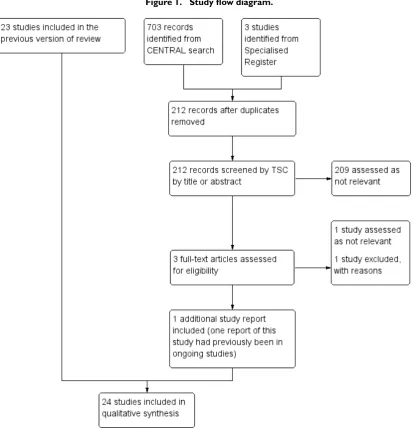
SeeFigure 1for details of the search results. For this update of the review, we identified three additional reports of studies. One study was considered to be not relevant, another was excluded (Singh 2009) and the third consisted of an abstract that correlated with a study previously listed in ’Ongoing Studies’ (Schellong 2012), from which data are now available. This review update identified 24 included studies and 39 excluded studies. It should be noted that several excluded studies from the previous version of the review have been removed, as they are now considered not relevant.
Figure 1. Study flow diagram.
Included studies
For details of included studies, seeCharacteristics of included studies.
We included a total of 24 studies with 3377 participants. Four-teen studies compared pentoxifylline versus placebo alone (Belcaro 2002; Bollinger 1977;Cesarone 2002b;De Sanctis 2002a;De Sanctis 2002b; Di Perri 1983; Donaldson 1984; Ernst 1992;
Gallus 1985;Kiesewetter 1988;Lindgarde 1989;Porter 1982a;
Porter 1982b;Volker 1978), one versus flunarizine (Perhoniemi 1984), one versus aspirin (Ciocon 1997), one versus Gingko biloba
extract (GBE) (Bohmer 1988), one versus nylidrin hydrochloride (Accetto 1982) and two versus prostaglandin E1 (PGE1) (Hepp 1992;Schellong 2012). Two studies compared pentoxifylline ver-sus placebo and cilostazol (Dawson 2000;Lee 2001), one com-pared pentoxifylline versus placebo and iloprost (Creager 2008) and one compared pentoxifylline versus buflomedil and nifedip-ine (Chacon-Quevedo 1994).
The treadmill protocol for assessment of PFWD and TWD var-ied between studies. The treadmill speed most commonly used in included studies was 3 km/h, with gradients ranging from 0% (Accetto 1982) to 5% (Bohmer 1988), 10% (Chacon-Quevedo
[image:8.595.102.518.84.514.2]1994) and 12% (Belcaro 2002; Cesarone 2002b; De Sanctis 2002a;De Sanctis 2002b;Schellong 2012). Other studies used a treadmill speed of 3.2 km/h - three with a gradient of 12.5% (Bollinger 1977;Lee 2001;Lindgarde 1989) and two starting at a 0% gradient and gradually increasing the inclination during test-ing (Creager 2008;Dawson 2000). One study used a treadmill speed of 3.6 km/h at 0% gradient (Perhoniemi 1984), and two used a treadmill speed of 4 km/h - one at a 0% gradient (Donaldson 1984) and the other at a 10% gradient (Gallus 1985). Three stud-ies used different units of speed;Di Perri 1983used a walking test of 120 steps per minute on a horizontal treadmill, andPorter 1982aandPorter 1982bused a speed of 1.5 mph - both at a 7% gradient. Four studies did not provide information on the tread-mill protocol used (Ernst 1992;Hepp 1992;Kiesewetter 1988;
Volker 1978).
Two studies reported use of an exercise programme (Bollinger 1977;Ernst 1992). Remaining studies did not report use of an exercise programme, or reported that no specific instructions were given to participants.
Excluded studies
We excluded 39 studies because they did not meet the inclusion criteria. See theCharacteristics of excluded studiestable for reasons for exclusion. In brief, 18 studies were not double-blinded (Bieron 2005; Dawson 1999; Dettori 1989; Hepp 1996; Milio 2003;
Milio 2006; Panchenko 1997; Pignoli 1985; Regenthal 1991;
Reilly 1987;Rodin 1998;Rodin 1998a;Scheffler 1991;Scheffler 1994; Shustov 1997; Singh 2009; Strano 2002; Triebe 1992), two included participants with critical limb ischaemia (Schubotz 1976;Thomson 1990), four included participants with Fontaine stage III and did not present results separately for the differ-ent Fontaine stages (Kellner 1976;Roekaerts 1984;Strano 1984;
Tonak 1977), four were short-term studies (Farkas 1993;Rudofsky 1987;Rudofsky 1988;Rudofsky 1989), 10 described non-rele-vant outcomes (Ciuffetti 1991;Ehrly 1986;Ehrly 1987;Fossat 1995; Guest 2005; Incandela 2002; Luk’Janov 1995; Poggesi 1985;Tsang 1994;Wang 2003) and one used variable doses of pentoxifylline (Horowitz 1982).
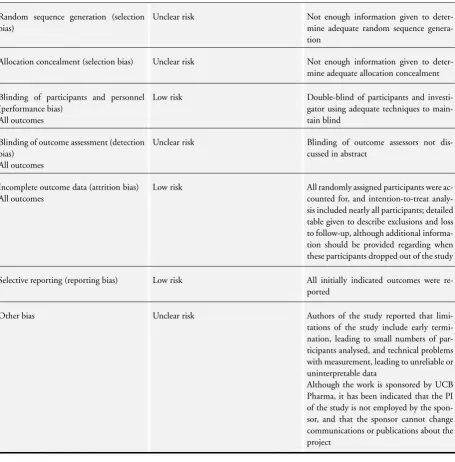
Risk of bias in included studies
Risk of bias in included studies is summarised inFigure 2and
Figure 3.
Figure 2. Risk of bias graph: review authors’ judgements about each risk of bias item presented as percentages across all included studies.
[image:9.595.98.516.384.558.2]Figure 3. Risk of bias summary: review authors’ judgements about each risk of bias item for each included study.
[image:10.595.221.397.107.638.2]Allocation
Selection bias was deemed to involve low risk in only two stud-ies (Dawson 2000;Lee 2001). Another study (Perhoniemi 1984) indicated low risk of bias for random sequence generation. For all other studies, available information was insufficient to permit judgement of low or high risk of bias.
Blinding
Blinding of participants and personnel was achieved in 12 studies (Belcaro 2002;Bollinger 1977;Creager 2008;Dawson 2000;Di Perri 1983;Gallus 1985;Kiesewetter 1988;Lee 2001;Lindgarde 1989;Porter 1982a;Porter 1982b;Schellong 2012), which there-fore were classed as having low risk of bias. Eleven studies were classed as having unclear risk of bias (Accetto 1982;Bohmer 1988;
Cesarone 2002b; Chacon-Quevedo 1994; De Sanctis 2002a;
De Sanctis 2002b;Donaldson 1984; Ernst 1992;Hepp 1992;
Perhoniemi 1984; Volker 1978), mainly because of insufficient reporting, and one study (Ciocon 1997) was deemed to be at high risk of bias because different treatment regimens were provided for the study medication.
For all but one study (Gallus 1985), risk of bias for blinding of outcome assessment (detection bias) was classed as unclear because of insufficient reporting. For the study byGallus 1985, blinding of outcome assessment was deemed to present low risk of bias because study authors reported that results were withheld from investigators during the study.
Incomplete outcome data
For most included studies, no evidence suggested incomplete out-come data (Belcaro 2002;Bohmer 1988;Bollinger 1977; Chacon-Quevedo 1994;Ciocon 1997;Dawson 2000;Donaldson 1984;
Ernst 1992; Gallus 1985; Hepp 1992; Lee 2001; Perhoniemi 1984;Porter 1982a;Porter 1982b;Schellong 2012;Volker 1978), or information was insufficient to indicate whether outcome data were missing (Accetto 1982;Cesarone 2002b;Creager 2008;De Sanctis 2002a; De Sanctis 2002b; Di Perri 1983; Kiesewetter 1988;Lindgarde 1989).
Selective reporting
For all included studies exceptKiesewetter 1988andSchellong 2012, available information, such as a study protocol, was insuffi-cient to permit judgement of selective reporting.Kiesewetter 1988
was judged at high risk of bias because TWD results were reported in the abstract but were not mentioned in the remainder of the paper, either as an outcome variable or as a result.Schellong 2012
was judged to have low risk, as all outcomes described in the Clin-icalTrials.gov protocol were reported.
Other potential sources of bias
Most studies were deemed free of other bias (Accetto 1982;Belcaro 2002;Bohmer 1988;Cesarone 2002b;Ciocon 1997;Donaldson 1984;Ernst 1992;Gallus 1985;Hepp 1992;Kiesewetter 1988;
Lee 2001;Lindgarde 1989;Perhoniemi 1984;Porter 1982a;Porter 1982b;Volker 1978). All other studies (Chacon-Quevedo 1994;
Creager 2008; Dawson 2000; De Sanctis 2002a; De Sanctis 2002b;Di Perri 1983;Schellong 2012) were determined to have unclear risk of bias for a variety of reasons, such as unclear re-porting (Chacon-Quevedo 1994;De Sanctis 2002a;De Sanctis 2002b;Di Perri 1983) or sponsoring of the study by a pharma-ceutical company (Creager 2008;Dawson 2000;Schellong 2012). One study was assigned high risk of bias because of differences in clinical baseline data between study groups (Bollinger 1977).
Effects of interventions
Pentoxifylline versus placebo
A total of 17 studies compared pentoxifylline versus placebo (
Belcaro 2002;Bollinger 1977;Cesarone 2002b;De Sanctis 2002a;
De Sanctis 2002b;Di Perri 1983;Donaldson 1984;Ernst 1992;
Gallus 1985;Kiesewetter 1988;Lindgarde 1989;Porter 1982a;
Porter 1982b;Volker 1978). Two of these studies also compared pentoxifylline versus cilostazol (Dawson 2000;Lee 2001), and one compared pentoxifylline with iloprost (Creager 2008).
Pain-free walking distance (PFWD)
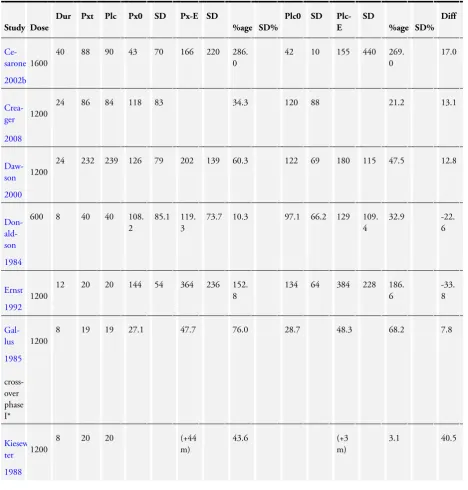
A total of 11 studies (Cesarone 2002b;Creager 2008;Dawson 2000;Donaldson 1984; Ernst 1992; Gallus 1985;Kiesewetter 1988;Lindgarde 1989;Porter 1982a;Porter 1982b;Volker 1978) that compared pentoxifylline with placebo measured PFWD. The duration of these studies varied from four to 40 weeks. Most stud-ies used a pentoxifylline dose of 1200 mg per day. We analysed studies according to duration and dose levels. SeeTable 1for de-tails on PFWD by study. Results for PFWD are reported as per-centage improvement in mean PFWD during treatment for both pentoxifylline and placebo groups. To formally compare ment in PFWD between groups, data on both mean improve-ment and standard deviation of mean improveimprove-ment were required. Of the 11 included studies, only one (Lindgarde 1989) presented data on standard deviation of the percentage change in PFWD; therefore, statistical analysis was performed only for this study. A pooled analysis was not conducted because data were lacking lev-els of heterogeneity between included studies were high with re-gards to multiple variables, including duration of treatment, dose of pentoxifylline, baseline walking distance and participant char-acteristics.
Four weeks
At four weeks,Volker 1978was the study of shortest duration; investigators included 50 participants (25 in each arm) and gave a dose of 1200 mg pentoxifylline. Baseline PFWD was 331 m for the pentoxifylline group compared with 230 m for the placebo group. At the end of the study, mean PFWD for participants who received pentoxifylline improved by 40.3% compared with 26.0% for those given placebo, for a difference of 14.3% in favour of pentoxifylline.
Eight weeks
Three studies had a duration of eight weeks (Donaldson 1984;
Gallus 1985;Kiesewetter 1988). One study (Donaldson 1984) used 600 mg of pentoxifylline, and the other two used 1200 mg.
Gallus 1985was a cross-over study consisting of two periods of eight weeks.
Donaldson 1984 included 40 participants in each group. The increase in mean PFWD in the pentoxifylline group, from 108.2 m to 119.3 m (10.3%), was 22.6% less than in the placebo group, from 97.1 m to 129 m (32.9%).
Gallus 1985performed a cross-over study. Fifty participants were recruited, but only 38 finished the study and were included in the analysis (19 participants in each group). Study authors reported no statistically significant improvement in PFWD for pentoxi-fylline compared with placebo but did not present the results of significance tests. In the first phase of the study (eight weeks), PFWD in the pentoxifylline group improved by 7.7% more than in the placebo group (76.0% vs 68.3%). After the second portion of the study, participants treated with pentoxifylline in phase 1 and placebo in phase 2 showed a decrease of 9.4% in PFWD after cross-over. Those treated with placebo in phase 1 and pentoxi-fylline in phase 2 improved by 10.4% after cross-over.
Kiesewetter 1988 compared 1200 mg of pentoxifylline versus placebo over eight weeks in a study with 40 participants. Results showed that PFWD in the pentoxifylline group improved by 44 m (43.6%) compared with 3 m (3.1%) in the placebo group. Authors of this paper did not present data on baseline walking distance for the two groups.
Twelve weeks
One study, which lasted 12 weeks (Ernst 1992), used 1200 mg pentoxifylline daily and included 40 participants (20 in each arm). Both groups of participants exercised regularly for one hour twice a week. Study authors stated that both groups showed significant improvement in walking distance, although they did not present the results of statistical tests. The pentoxifylline group improved by 152.8% (144 m to 364 m) and the placebo group by 186.6% (134 m to 384 m), for a difference of 33.8% in favour of placebo.
Twenty-four weeks
All studies with a duration of 24 to 26 weeks (six months) used 1200 mg of pentoxifylline (Creager 2008;Dawson 2000;
Lindgarde 1989;Porter 1982a;Porter 1982b).
In a large multi-centre study,Creager 2008compared pentoxi-fylline versus placebo (and vs various doses of iloprost) over six months. In this study, 430 participants were randomly assigned to five groups: iloprost 50 µg (87 participants), iloprost 100 µg (86 participants), iloprost 150 µg (87 participants), pentoxifylline 1200 mg (86 participants) and placebo (84 participants). Only 214 participants ( 50%) completed the entire six months of the study. Three hundred seventy participants were included in what was called an intention-to-treat analysis on the basis that they had received at least one dose of the study drug and had undergone at least one follow-up test, that is, within two to four weeks. Walking distance in the pentoxifylline group improved by 34.3% from a baseline PFWD of 118 m compared with a 21.2% improvement in the placebo group from a baseline PFWD of 120 m. Overall, pentoxifylline improved PFWD by 13.1% more than placebo, but this difference could not be analysed statistically because data were insufficient. Study authors reported that after one month, the dif-ference between groups was statistically significant, but P values for significance results were not provided.
Dawson 2000 included 232 participants in the pentoxifylline group and 239 in the placebo group. The pentoxifylline group im-proved by 12.8% more than the placebo group (60.3% vs 47.5%).
Lindgarde 1989 included 76 participants in the pentoxifylline group and 74 in the placebo group. Results showed a net improve-ment for pentoxifylline of 20% (95% confidence interval (CI) 16.3 to 23.7) over placebo (80% vs 60%). This improvement was statistically significant (P value < 0.0001).
Porter 1982awas a relatively large study with no intention-to-treat analysis.Gillings 1987performed an intention-to-treat analysis on data from thePorter 1982astudy. Initially,Porter 1982a dou-ble-blinded 128 participants (including one who was randomly assigned twice) but included only 82 participants in the analysis (pentoxifylline 42, placebo 40); remaining participants were with-drawn from the study because of side effects and loss to follow-up. In the initial analysis, PFWD distance improved in the pentoxi-fylline group from 111 m to 195 m (75.7%) and in the placebo group from 117 m to 180 m (53.8%), yielding a statistically sig-nificant difference of 21.9% (P value = 0.18) in favour of pentox-ifylline.Gillings 1987included 124 participants who had follow-up data (63 in the pentoxifylline grofollow-up and 61 in the placebo group). In this intention-to-treat analysis, PFWD improved in the pentoxifylline group by 47% and in the placebo group by 26% (difference of 21% in favour of pentoxifylline). The authors of this paper did not present data on end-of-trial PFWD.
Another, smaller study by Porter et al. (Porter 1982b) consisted of 22 participants (11 in each arm). In this study, PFWD in the pentoxifylline group improved by 73.9% more than in the placebo group (108.8% vs 34.9%, respectively).
Forty weeks
Cesarone 2002 used 1600 mg of pentoxifylline daily for 40 weeks. The pentoxifylline group consisted of 88 participants, and the placebo group 90 participants. Total PFWD in the pentoxifylline group improved from 43 m to 166 m (286%), and in the placebo group from 42 m to 155 m (269%), for a small difference of 17% in favour of pentoxifylline.
Total walking distance (TWD)
A total of 14 studies comparing pentoxifylline with placebo (Belcaro 2002;Bollinger 1977;Cesarone 2002b;Creager 2008;
Dawson 2000;De Sanctis 2002a; De Sanctis 2002b; Di Perri 1983;Ernst 1992;Gallus 1985;Lee 2001;Lindgarde 1989;Porter 1982a;Porter 1982b) assessed TWD. The duration of these stud-ies ranged from eight weeks to 52 weeks. SeeTable 2for details on TWD by study. As was done for PFWD, TWD was reported as percentage change in mean TWD from baseline to end of study for pentoxifylline and placebo groups separately, and as the differ-ence in percentage change between groups. Again, data on mean change in TWD and standard deviation of the change were re-quired to compare improvement in TWD between groups. In all 14 included studies, trial authors failed to report the standard de-viation of the percentage change in mean TWD, so a statistical analysis could not be performed. Meta-analysis of TWD results for pentoxifylline compared with placebo was not performed for reasons similar to those described for PFWD results.
Eight weeks
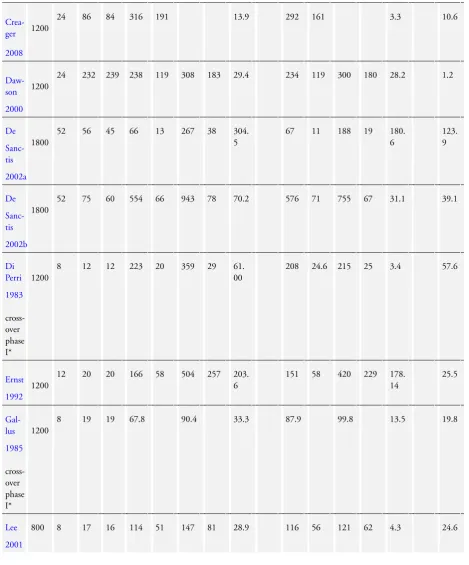
Four studies had a duration of eight weeks. One study used 600 mg (Bollinger 1977), one 800 mg (Lee 2001) and two 1200 mg pentoxifylline (Di Perri 1983;Gallus 1985).
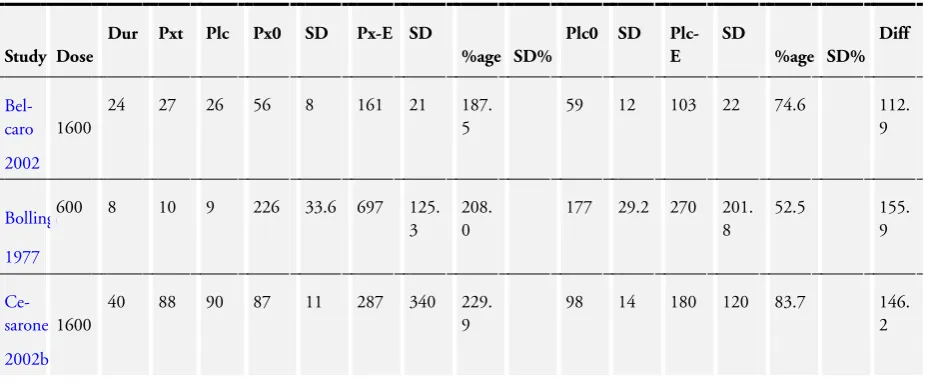
InBollinger 1977, the sample size was 19 participants (10 pentox-ifylline and nine placebo) with a dose of 600 mg of pentoxpentox-ifylline. The quality of the study was poor; initially 26 participants were included, but results for only 19 were included in the analysis. No intention-to-treat analysis was performed. The two groups varied in terms of duration of claudication and extent of disease. Par-ticipants in the pentoxifylline group had more unilateral disease, and more bilateral and extensive disease was noted in the placebo group. All participants in this study were advised to stop smoking and to walk daily for at least one hour. Investigators reported im-provement with pentoxifylline over placebo of 155.9% (208.4% vs 52.5%).
Lee and colleagues published two reports on the same study (Lee 2001;Lee 2001a). Only a very slight difference was apparent be-tween reports in that the sample size was larger by two partici-pants in the later report (17 in the pentoxifylline group, 16 in the placebo group and 17 in the cilostazol group). Results fromLee 2001are included in both reports. TWD improved in the pentox-ifylline group from 114 m to 147 m (28.9%) compared with 116
m to 121 m (4.3%) in the placebo group, for an overall difference of 24.6% in favour of pentoxifylline.
Di Perri 1983examined 1200 mg of pentoxifylline in 24 partic-ipants using a cross-over design (12 particpartic-ipants in each group over two periods of eight weeks). A 61% increase in TWD was described for the pentoxifylline group compared with 3.5% for the placebo group after the first period. This was confirmed after the cross-over, when the pentoxifylline group again increased by 61% compared with an increase of 1.9% in the placebo group. In Gallus 1985, also a cross-over study, TWD showed a pat-tern similar to PFWD. After the first phase of the study, TWD improved by 33.3% in the pentoxifylline group compared with 13.5% in the placebo group (difference of 19.8% in favour of pentoxifylline). After the cross-over phase, participants who were treated with pentoxifylline in phase 1 and placebo in phase 2 im-proved by just 1.88% over those treated with placebo before pen-toxifylline.
Twelve weeks
One study reported findings at 12 weeks (Ernst 1992). Both groups of participants also received regular exercise, for one hour twice a week. TWD in the pentoxifylline group (1200 mg daily) improved from 166 m to 504 m (203.6%) compared with improvement in the placebo group from 151 m to 420 m (178.1%), yielding a difference of 25.5% in favour of pentoxifylline.
Twenty-four to twenty-six weeks
Six studies (Belcaro 2002;Creager 2008;Dawson 2000;Lindgarde 1989;Porter 1982a;Porter 1982b) had a duration of 24 to 26 weeks (six months). Apart fromBelcaro 2002, which used a dose of 1600 mg, andCreager 2008, which used 400 mg, studies used 1200 mg of pentoxifylline.
Belcaro 2002compared 1600 mg daily of pentoxifylline versus placebo. TWD improved in the pentoxifylline group from 56 m to 161 m (187.5%), and TWD in the placebo group improved from 59 m to 103 m (74.6%), showing a difference of 112.9% in favour of pentoxifylline.
Creager 2008presented baseline TWD and percentage improve-ment rather than TWD at the end of the study. The pentoxi-fylline versus placebo result showed significant improvement for pentoxifylline of 13.9% (from baseline TWD of 316 ± 191 m) compared with placebo, which resulted in improvement of only 3.3% (from baseline TWD of 292 ± 161 m), for a difference of 10.6% in favour of pentoxifylline.
Dawson 2000did not show significant improvement in TWD for pentoxifylline over placebo (29.4% vs 28.2%).
InLindgarde 1989, TWD improved by 50% in the pentoxifylline group compared with 29% in the placebo group, for a difference of 21% in favour of pentoxifylline. Data on TWD at the end of the study were not presented, and improvement in TWD between groups could not be analysed statistically.
In the original analysis ofPorter 1982a, TWD improved from 172 m to 268 m (55.8%) in the pentoxifylline group and from 181 m to 250 m (38.1%) in the placebo group, for a net difference of 17.7% in favour of pentoxifylline. InGillings 1987(the intention-to-treat analysis of thePorter 1982astudy) andReich 1984(a publication based on the Porter 1982a study), TWD in the pentoxifylline group improved by 32% compared with 20% in the placebo group (difference of 12% in favour of pentoxifylline). Data on TWD at the end of this study were not presented.
InPorter 1982b, the net improvement in TWD observed in the pentoxifylline group over the placebo group was 66.5% (P value = 0.002). TWD in the pentoxifylline group improved by 69.4% compared with just 2.9% in the placebo group.
Forty weeks
Investigators in one study with a duration of 40 weeks gave 1600 mg of pentoxifylline daily (Cesarone 2002b). This study included 88 participants in the pentoxifylline group and 90 in the placebo group. Very large improvement in TWD of 229.9% was seen in the pentoxifylline group (from 87 ± 11 m to 287 ± 340 m) compared with 83.7% (from 98 ± 14 m to 180 ± 120 m) in the placebo group, for a net difference of 146.2%.
Fifty-two weeks
Two studies were reported by De Sanctis in 2002 (De Sanctis 2002a;De Sanctis 2002b). The former study looked at partici-pants with a baseline TWD between 50 m and 200 m, and the latter study examined participants with a greater baseline TWD (> 500 m). Investigators in both studies administered 1800 mg of pentoxifylline daily.
InDe Sanctis 2002a, each group consisted of 60 participants ini-tially, but only 56 of those in the pentoxifylline group and 45 in the placebo group completed the study. In this study, baseline walking distance was short, and the effect of pentoxifylline was more prominent. The pentoxifylline group improved by 304.5% (66 ± 13 m to 267± 38 m), and the placebo group by 180.6% (67 ± 11 m to 188 ± 19 m), for a net difference of 123.9% in favour of pentoxifylline.
De Sanctis 2002bincluded 98 participants in the pentoxifylline group (75 of whom completed the study) and 96 in the placebo group (60 of whom completed the study). Significant improve-ment in TWD from baseline was reported in both groups, and the pentoxifylline group improved by 39.1% more than the placebo group. In the pentoxifylline group, TWD increased by 70.2% (554 ± 66 m to 943 ± 78 m) versus 31.1% (576 ± 71 m to 755 ± 67 m) in the placebo group.
Ankle-brachial pressure index (ABI)
Five studies comparing pentoxifylline versus placebo (Bollinger 1977;Dawson 2000;Donaldson 1984;Gallus 1985;Lee 2001)
measured ABI. Three of these looked only at pre-exercise or resting ABI (Bollinger 1977;Dawson 2000;Lee 2001), and two looked at both pre-exercise and post-exercise ABI (Donaldson 1984;Gallus 1985). Authors of all five studies presented mean ABI at baseline and at end of treatment for both pentoxifylline and placebo groups. However, as the standard deviation for the change in ABI was not presented in any of the studies, statistical analysis could not be conducted to compare improvement in ABI. Furthermore, none of the five studies reported results of their own statistical tests. ABI results were not amenable to meta-analysis because of lack of data, differences in ABI measurements and differences in pentoxifylline doses and study duration.
InBollinger 1977, pre-exercise ABI improved from 0.57 to 0.64 in the pentoxifylline group, and in the placebo group it dropped from 0.62 to 0.59 on the basis of measurements from the posterior tibial artery. Trialists stated that although a tendency toward better results was evident in the pentoxifylline group, results were not statistically significant.
Dawson 2000reported that ABI increased in the pentoxifylline group from 0.66 ± 0.21 at baseline to 0.71 ± 0.24 at 24 weeks. In the placebo group, ABI did not improve (0.68 ± 0.42 at baseline, 0.67 ± 0.19 at 24 weeks). Study authors reported that improve-ment in ABI in the pentoxifylline group was not significantly dif-ferent from that in the placebo group but did not present the level of significance.
InLee 2001, mean pre-exercise ABI improved in the pentoxifylline group from 0.66 ± 0.13 to 0.7 ± 0.14, and in the placebo group from 0.69 ± 0.12 to 0.71 ± 0.13. Study authors reported no sig-nificant changes in ABI across all groups (including cilostazol). In Donaldson 1984, no difference in ABI was reported in the pentoxifylline group nor in the placebo group before and after exercise. In the pentoxifylline group, pre-exercise ABI remained the same at 0.52 ± 0.26 before and after treatment. Post-exercise ABI dropped from 0.3 ± 0.27 before treatment to 0.27 ± 0.25 after treatment. In the placebo group, pre-exercise ABI improved from 0.52 ± 0.25 to 0.57 ± 0.24, and in the treatment group from 0.32 ± 0.26 to 0.34 ± 0.30. Study authors stated that none of these results were statistically significant (P values not presented).
Gallus 1985reported no differences in the pentoxifylline group nor in the placebo group before and after exercise at the end of a cross-over study. In the pentoxifylline group, pre-exercise ABI improved from 0.59 ± 0.14 before treatment to 0.61 ± 0.16 after treatment; and post-exercise ABI dropped from 0.13 (range 0.03 to 0.60) before treatment to 0.10 (range 0.02 to 0.55) after treat-ment. In the placebo group, pre-exercise ABI remained similar at 0.59 ± 0.14 before and 0.59 ± 0.16 after treatment. Post-exer-cise ABI increased slightly, from 0.13 (range 0.03 to 0.60) before treatment to 0.14 (range 0.03 to 0.63) after treatment. None of these results were reported as statistically significant, and the level of significance used was not reported in the paper.
Quality of life
Three studies comparing pentoxifylline versus placebo reported on quality of life (Creager 2008;Dawson 2000;Volker 1978). BothDawson 2000 andCreager 2008 reported no differences between treatment groups in Short Form 36 (SF36) scores. Scores on the walking impairment questionnaire (WIQ) - a measure of degree of handicap caused by the disease - were similar between pentoxifylline and placebo groups in theDawson 2000study.
Creager 2008reported that stair climbing was the only domain of the WIQ questionnaire that significantly improved when the pentoxifylline group and the placebo group were compared (9% increase in score; P value = 0.04).
Volker 1978reported that in the pentoxifylline group, 18 partici-pants reported improvement and seven reported no improvement. Six participants in the placebo group showed improvement, 18 showed no improvement and one showed a decline. Differences between treatment groups were statistically significant (P value < 0.01).
Side effects
Nine studies comparing pentoxifylline versus placebo reported on side effects (Belcaro 2002; Cesarone 2002b; Creager 2008;
Dawson 2000;De Sanctis 2002b;Lee 2001;Porter 1982a;Porter 1982b;Volker 1978).
Belcaro 2002,Cesarone 2002b,De Sanctis 2002bandLee 2001
reported that no side effects or serious side effects were observed.
Creager 2008reported that the most common adverse events ob-served in the pentoxifylline group were headache at 19%, pain in extremity at 14% and dyspepsia at 13%, compared with 16%, 7% and 5%, respectively, in the placebo group. The frequency of premature discontinuation of pentoxifylline was similar to that of placebo. Serious adverse events were reported in 14% of the pen-toxifylline group compared with 17% of the placebo group.
Dawson 2000reported that the withdrawal rate from placebo was 16% (38/239) compared with 26% (60/232) from pentoxifylline. Most of the commonly reported side effects, such as headache and diarrhoea, were similar between pentoxifylline and placebo groups, except for pharyngitis, which was reported by 14% in the pentoxifylline group and 7% in the placebo group.
Porter 1982areported that 55% (37/67) of participants in the pentoxifylline group and 39% (24/61) of those in the placebo group reported side effects. Side effects reported were mainly gas-trointestinal complaints; the most commonly reported complaint was nausea.
Porter 1982breported that no participants discontinued as a re-sult of drug-related side effects, which were minimal in the two treatment groups. According to trialists, the only statistically sig-nificant (P value not presented) side effect was nausea, which was reported by seven pentoxifylline participants.
Volker 1978reported similar numbers of side effects in the two treatment groups. In the pentoxifylline group (25 participants),
two participants reported headaches, two dizziness, two stomach pains and two itching, and in the placebo group (25 participants), two participants reported headaches, two dizziness and three stom-ach pains.
Pentoxifylline versus flunarizine
Perhoniemi 1984compared 1200 mg of pentoxifylline daily versus 15 mg of flunarizine daily over six months (three-month cross-over design). Seventeen participants started on flunarizine, and 14 started on pentoxifylline.
Pain-free walking distance
InPerhoniemi 1984, PFWD increased for both pentoxifylline and flunarizine groups (P value < 0.01) when compared with baseline, but no statistically significant difference was found between pen-toxifylline and flunarizine groups (Table 3).
Total walking distance
In Perhoniemi 1984, statistically significant improvement in TWD was noted in both groups (43% for pentoxifylline and 18% for flunarizine), but no statistically significant differences were ob-served between groups (Table 4).
Ankle-brachial pressure index
No difference in ABI was found byPerhoniemi 1984between base-line measurements (0.63 ± 0.20) and measurements after treat-ment (pentoxifylline 0.63 ± 0.19; flunarizine 0.62 ± 0.20), nor between treatment groups.
Quality of life
Perhoniemi 1984did not measure quality of life.
Side effects
InPerhoniemi 1984, 32 participants reported side effects (tired-ness, diarrhoea, gastrointestinal symptoms, sweating, itching and allergic reactions), but no statistically significant differences were noted between flunarizine and pentoxifylline groups. One partic-ipant in the pentoxifylline group discontinued the study because of gastrointestinal symptoms.
Pentoxifylline versus aspirin
Ciocon 1997 compared 325 mg of aspirin versus 1200 mg of pentoxifylline over six weeks. Each group included 45 participants.
Pain-free walking distance
Ciocon 1997did not measure PFWD.
Total walking distance
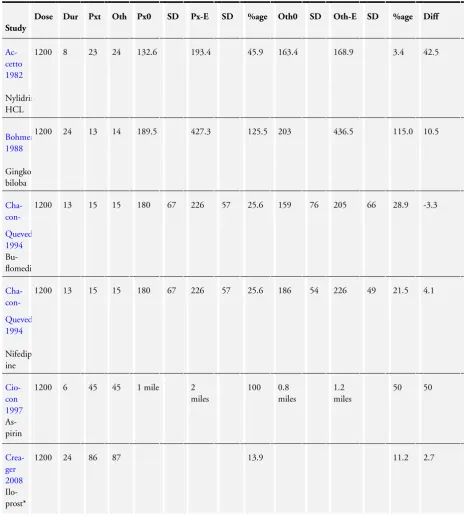
Baseline TWD was one mile for the pentoxifylline group. This increased to two miles after the treatment period, showing im-provement of 100%. The aspirin group showed imim-provement of 50%, from 0.8 miles to 1.2 miles. Study authors reported that 50% improvement in TWD after treatment with pentoxifylline versus placebo was statistically significant (P value < 0.05) (Table 4).
Ankle-brachial pressure index
ABI testing showed very slight improvement in the pentoxifylline group, from 0.6 ± 0.1 to 0.7 ± 0.2, and in the aspirin group, ABI remained similar (0.6 ± 0.3 at baseline, 0.6 ± 0.5 after treatment).
Quality of life
Ciocon 1997did not measure quality of life.
Side effects
Ciocon 1997did not measure side effects.
Pentoxifylline versus Ginkgo biloba extract (GBE)
Bohmer 1988compared pentoxifylline with GBE. A total of 27 participants were included: 13 received 1200 mg of pentoxifylline daily, and 14 received 160 mg of GBE, over 24 weeks.
Pain-free walking distance
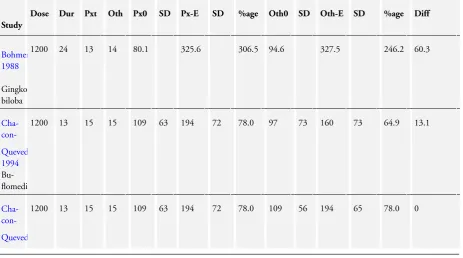
InBohmer 1988, PFWD significantly improved in both groups after treatment, but no statistically significant difference was ob-served between treatment groups. PFWD increased in the pentox-ifylline group from 80.1 m to 325.6 m (P value < 0.05), and in the GBE group from 94.6 m to 327.5 m (P value < 0.01) (Table 3). A statistically significant difference between treatment groups was not detected, according toBohmer 1988.
Total walking distance
TWD significantly improved in both groups after treatment, but no statistically significant difference was observed between treat-ment groups. TWD increased in the pentoxifylline group from 189.5 m to 472.3 m (P value < 0.01), and in the GBE group from 203 m to 436.5 m (P value < 0.01) (Table 4). A statistically significant difference between treatment groups was not detected, according toBohmer 1988.
Ankle-brachial pressure index
Bohmer 1988reported that ABI increased slightly in both treat-ment groups but did not present the data.
Quality of life
Bohmer 1988did not measure quality of life.
Side effects
Bohmer 1988did not measure side effects.
Pentoxifylline versus nylidrin hydrochloride
Accetto 1982compared 400 mg of pentoxifylline daily versus 3 mg of nylidrin hydrochloride daily, over eight weeks.
Pain-free walking distance
Accetto 1982did not measure PFWD.
Total walking distance
Compared with baseline, TWD increased in the pentoxifylline group from 132.6 m to 193.4 m (46.7%), and in the nylidrin group from 163.4 m to 168.9 m (1%) (P value = 0.006). Study authors also expressed TWD in seconds, with the pentoxifylline group improving from 160 seconds at baseline to 240 seconds af-ter treatment. TWD in the nylidrin group at baseline was 197 sec-onds, and after treatment 220 seconds. Improvement in walking distance was observed in 17 of 23 in the pentoxifylline group and in 11 of 24 in the nylidrin hydrochloride (HCl) group (Table 4).
Accetto 1982reported that at the end of treatment, a significant difference favoured pentoxifylline (P value = 0.006).
Ankle-brachial pressure index
Accetto 1982did not measure ABI.
Quality of life
Accetto 1982did not measure quality of life.
Side effects
Accetto 1982reported that 6 of 23 pentoxifylline participants and 3 of 24 nylidrin HCl participants reported side effects. Most of these were gastrointestinal in nature, and all were transient and of mild severity.
Pentoxifylline versus prostaglandin E1 (PGE1)
Two studies compared pentoxifylline versus prostaglandin E1 (
Hepp 1992;Schellong 2012).
Hepp 1992compared intravenous pentoxifylline (400 mg) versus intravenous PGE1 (80 mg) over four weeks.Schellong 2012 com-pared pentoxifylline (600 mg twice daily for a total of 1200 mg) versus intravenous PGE1 (20 µg alprostadil) over a total of eight weeks, which was broken down into two four-week treatment pe-riods; four weeks of PGE1 injections given daily were followed by four weeks of bi-weekly injections. It should be noted that for theSchellong 2012study, all data were retrieved from the ClinicalTrials.gov website, which offered no actual walking distances -only ratios - and no findings of statistical analysis. It is hoped that future publications planned for this study will provide additional information on data and collection methods.
Pain-free walking distance
Median PFWD increased in the pentoxifylline group from 72 m to 133 m (85%) compared with an increase in the PGE1 group from 80 m to 175 m (119%) (Table 3). According toHepp 1992, the difference between treatments was statistically significant (P value < 0.001).
Results fromSchellong 2012were presented as ratios for PFWD at the specified time point compared with baseline PFWD with stan-dard deviations. After the first four-week treatment period (daily PGE1), the ratio of PFWD compared with baseline for pentoxi-fylline-treated participants was 1.58 ± 2.59, and for PGE1-treated participants 1.58 ± 1.92. After the second four-week treatment pe-riod (bi-weekly PGE1), the PFWD ratio was 1.98 ± 3.61 compared with baseline for pentoxifylline-treated participants, and 2.60 ± 12.22 for those treated with PGE1. After six months of post-treat-ment follow-up, the ratio was 2.36 ± 2.69 for pentoxifylline, and 2.27 ± 3.00 for PGE1.
Total walking distance
Median TWD increased in the pentoxifylline group from 115 m to 190 m (65%) and in the PGE1 group from 129 m to 230 m (78%) (Table 4). According toHepp 1992, the difference between treatments was statistically significant (P value < 0.01).
As with PFWD,Schellong 2012reported TWD as a ratio of the time point measurement compared with baseline. Following the first four-week treatment period (daily PGE1), the ratio of TWD compared with baseline for pentoxifylline-treated participants was 1.43 ± 1.34, and for PGE1-treated participants 1.39 ± 0.53. After the second four-week treatment period (bi-weekly PGE1), TWD ratio compared with baseline was 1.76 ± 1.78 for pentoxifylline-treated participants and 1.64 ± 0.86 for those pentoxifylline-treated with PGE1. Six months after treatment, the ratio for pentoxifylline was 1.99 ± 1.61, and for PGE1 1.89 ± 1.40.
Ankle-brachial pressure index
Hepp 1992andSchellong 2012did not measure ABI.
Quality of life
Hepp 1992did not measure quality of life.
Schellong 2012measured mean changes in quality of life using the Peripheral Arterial Occlusive Disease 86 quality of life question-naire (PAVK 86) and reported changes from baseline to the end of the six-month follow-up period for eight domains, along with standard deviations. A change in the pain domain of -0.41 ± 0.58 was noted for the pentoxifylline group, and -0.28 ± 0.57 for the PGE1 group. Functional status showed a change of -0.35 ± 0.57 for the pentoxifylline group, and -0.26 ± 0.58 for the PGE1 group. A change in the anxiety domain of -0.22 ± 0.66 was reported for the pentoxifylline group, and -0.20 ± 0.64 for the PGE1 group. For the pentoxifylline group, a change of -0.12 ± 0.53 in mood and a smaller change of -0.04 ± 0.45 in social life were observed, and the PGE1 group showed changes of -0.06 ± 0.48 and -0.09 ± 0.43, respectively. For expectation of treatment, investigators re-ported an increase of 0.11 ± 0.49 for the pentoxifylline group and 0.07 ± 0.51 for the PGE1 group. State of general health during the last week showed a change of -0.48 ± 1.98 for the pentoxifylline group, with change in quality of life of -0.39 ± 2.20 during the last week, and the PGE1 group recorded mean changes of -0.43 ± 1.83 and -0.36 ± 2.09, respectively.
Side effects
Hepp 1992reported that one PGE1 participant experienced nau-sea, and two others discontinued study medication for reasons un-related to the medication. In total, six participants discontinued pentoxifylline treatment early because of nausea. In both treat-ment groups, no cardiovascular side effects were observed.
Schellong 2012reported 17 total serious adverse events in 28 (5.96%) participants in the pentoxifylline group and 19 among 276 (6.88%) participants in the PGE1 group, which included, but were not limited to, coronary artery disease, angina, carotid artery stenosis and peripheral arterial occlusive disease (although it is noted that many of these are not necessarily events, but rather co-morbidities with events during the trial). Other adverse events were reported in 55 of 285 (19.30%) participants in the pentox-ifylline group and in 60 of 276 (21.74%) in the PGE1 group; these included, but were not limited to, vertigo, gastrointestinal symptoms, peripheral oedema and hyperlipidaemia.
Pentoxifylline versus cilostazol
Two studies compared pentoxifylline versus cilostazol (Dawson 2000;Lee 2001).
Pain-free walking distance
One study (Dawson 2000) examined PFWD. This study com-pared 232 participants who received 1200 mg of pentoxifylline versus 227 who received 200 mg of cilostazol daily over 24 weeks. PFWD in the cilostazol group improved by 75.8% (124 ± 81 m to 218 ± 149 m) compared with 60.3% in the pentoxifylline group (126 ± 79 m to 202 ± 139 m), with a net difference of 15.5%. As standard deviations were not presented in the paper, it was not possible to compare improvement in PFWD between treatment groups (Table 3).
Total walking distance
Both studies examined TWD (Table 4). InDawson 2000, TWD improved in the cilostazol group by 45.2% (241 ± 123 m to 350 ± 209 m) compared with the pentoxifylline group, which improved by 29.4% (238 ± 119 m to 308 ± 183 m), with a net difference of 15.8%. Statistical analysis comparing improvement in TWD between treatment groups could not be performed because data on standard deviations were insufficient.
Lee 2001compared 17 participants who received 800 mg of pen-toxifylline daily versus another 17 who received 200 mg of cilosta-zol. The pentoxifylline group improved by 29% (114 ± 51 m to 147 ± 81 m) versus 30% improvement in the cilostazol group (111 ± 30 m to 145 ± 53 m). Differences in improvement between treatment groups could not be tested statistically because data were insufficient.
Ankle-brachial pressure index
Lee 2001reported that ABI in the cilostazol group dropped from 0.73 ± 0.12 to 0.69 ± 0.11, and the pentoxifylline group improved from 0.66 ± 0.13 to 0.7 ± 0.14. Study authors stated that none of these results were statistically significant, although they did not present test results. Dawson 2000reported that ABI increased in the cilostazol group from 0.66 ± 0.18 at baseline to 0.70 ± 0.18 at 24 weeks, and in the pentoxifylline group, ABI increased from 0.66 ± 0.21 to 0.71 ± 0.24. ABI after 24 weeks was not statistically significantly different between treatment groups (P value not presented).
Quality of life
Lee 2001did not measure quality of life.Dawson 2000reported that no treatment significantly affected SF36 and WIQ scores.
Side effects
Dawson 2000reported that rates of withdrawal due to adverse ef-fects were similar in pentoxifylline (43/232) and cilostazol groups (36/227). Headache, diarrhoea and abnormal stools were signifi-cantly more common among participants receiving cilostazol than
among those receiving pentoxifylline or placebo.Dawson 2000 re-ported that these adverse events were generally mild to moderate, were self-limiting and did not appear to affect the dropout rate.
Pentoxifylline versus iloprost
Creager 2008compared iloprost (50 µg, 100 µg and 150 µg) versus pentoxifylline (1200 mg) and placebo over six months.
Pain-free walking distance
PFWD increased by 24%, 28.9% and 31.2% for the iloprost 50 µg, 100 µg and 150 µg groups, respectively, and the increase for the pentoxifylline group was 34.3% (Table 3).Creager 2008reported no significant differences when comparing treatment groups versus placebo (P value = NS) but did not report on differences between iloprost and pentoxifylline.
Total walking distance
Iloprost comparisons showed that TWD increased in 50 µg, 100 µg and 150 µg groups by 7.7%, 8.8% and 11.2%, respectively. None of these changes were significant. Improvement with pen-toxifylline over placebo was significant, as reported above, but tri-alists did not report on differences between iloprost and pentoxi-fylline (Table 4).
Ankle-brachial pressure index
Creager 2008did not measure ABI.
Quality of life
Quality of life was measured using the WIQ and the SF36. Ac-cording toCreager 2008, the SF36 showed no differences between treatment groups, and the WIQ showed significant differences only in stair climbing between iloprost and placebo, and between pentoxifylline and placebo. Again, trialists did not report on dif-ferences between iloprost and pentoxifylline.
Side effects
Creager 2008reported side effects for the iloprost, pentoxifylline and placebo groups. The most common side effects in the pen-toxifylline group were headache (19%), pain in extremity (14%) and dyspepsia (13%), and side effects in the iloprost groups were mainly headache, vasodilation or flushing, pain in extremity, jaw pain, nausea and diarrhoea. For most adverse events, severity in-creased with increasing dose of iloprost.
Pentoxifylline versus buflomedil and nifedipine
Chacon-Quevedo 1994compared pentoxifylline (1200 mg daily) versus buflomedil (600 mg daily) and nifedipine (60 mg daily) over 90 days (three months). A total of 45 individuals participated in the study (15 in each group).
Pain-free walking distance
PFWD increased in the pentoxifylline group from 109 ± 63 m to 194 ± 72 m, for improvement of 78%, compared with buflomedil (97 ± 73 m to 160 ± 73 m), which showed improvement of 64.9% and nifedipine (109 ± 56 m to 194 ± 65 m), with 78% improve-ment (Table 3).
Total walking distance
TWD increased in the pentoxifylline group from 180 ± 67 m to 226 ± 57 m compared with buflomedil (159 ± 76 m to 205 ± 66 m) and nifedipine (186 ± 54 m to 226 ± 49 m) (Table 4).
Chacon-Quevedo 1994concluded that at 90 days, pentoxifylline was statistically better than buflomedil but not nifedipine in im-proving walking distance, but investigators did not specify the subtype (PFWD or TWD) nor the results of statistical tests.
Ankle-brachial pressure index
Chacon-Quevedo 1994reported that improvement in ABI for the pentoxifylline group (0.64 ± 0.14 to 0.75 ± 0.17) was statistically greater than for the buflomedil or nifedipine group, but study authors did not provide complete data.
Quality of life
Chacon-Quevedo 1994did not measure quality of life.
Side effects
Chacon-Quevedo 1994did not measure side effects.
D I S C U S S I O N
Intermittent claudication (IC) is a symptom of peripheral arte-rial disease (PAD) that is associated with increased morbidity and mortality and poor quality of life. It reflects the presence of an un-derlying disease process that results in narrowing or maybe block-age of lower limb blood vessels. It is associated with the presence of atherosclerosis elsewhere in the vascular tree, especially in the coronary and cerebral circulations.
As this pathology cannot be reversed, the main aims of treatment are (1) to stop or slow progression of the disease to critical is-chaemia, to prevent adverse events, and (2) to alleviate the severity of symptoms to improve quality of life.
It is widely accepted, although at times controversial, that treat-ment of PAD at the stage of IC is medical, and that revascularisa-tion is not the treatment of choice. Large numbers of intervenrevascularisa-tions have been developed. Lifestyle changes and exercise are the basic essential interventions; they have a significant effect on both dis-ease progression and symptoms. Other essential drugs like statins are very important for slowing the disease but have little effect on the symptoms. Pentoxifylline is one of many drugs used to relieve symptoms of IC and to improve quality of life.
Summary of main results
In comparing pentoxifylline with placebo, 11 studies reported pain-free walking distance (PFWD). The duration of studies ranged from four to 40 weeks, and the pentoxifylline dose from 600 mg to 1600 mg. Baseline PFWD ranged from 27.1 m to 460 m, with large variability in results. One study reported less im-provement in PFWD over the duration of the trial in the pentoxi-fylline group than in the placebo group - with a difference as great as 33.8%. On the other hand, maximum improvement in PFWD among participants receiving pentoxifylline was 73.9% more than in those given placebo.
A total of 14 studies reported total walking distance (TWD) as an outcome when comparing pentoxifylline versus placebo. Studies varied in duration from eight weeks to 52 weeks, and pentoxi-fylline dose from 400 mg to 1800 mg, but most studies used 1200 mg. Baseline TWD ranged from 56 m to 678 m, and for PFWD, results were highly variable. The minimum benefit of pentoxi-fylline shown was 1%, and the maximum benefit was 155.9%. In one study, pentoxifylline showed greater improvement in PFWD when compared with Gingko biloba extract (GBE), bu-flomedil and iloprost; cilostazol showed greater improvement when compared with pentoxifylline; and prostaglandin E1 (PGE1) showed greater improvement when compared with pentoxifylline. Data from the second study, which evaluated PGE1 and pen-toxifylline, are too limited to allow meaningful conclusions. For TWD, greater improvement was shown for pentoxifylline than for nylidrin, GBE and aspirin, and for cilostazol and flunarizine than for pentoxifylline. PGE1 showed greater improvement in TWD in one study, and data in the second study are currently too limited to permit meaningful conclusions.
Pentoxifylline appeared to be well tolerated in most studies, with gastrointestinal side effects, mainly nausea, reported most com-monly. These effects appeared mild.
Most included studies suggested improvement in PFWD and TWD for pentoxifylline over placebo (and other treatments), but the statistical significance of findings from individual trials is