R E S E A R C H A R T I C L E
Open Access
What is the overall impact or effectiveness
of visiting primary health care services in
rural and remote communities in
high-income countries? A systematic review
Timothy A. Carey
1*, David Sirett
1, Deborah Russell
2, John S. Humphreys
2and John Wakerman
3Abstract
Background:Visiting services address the problem of workforce deficit and access to effective primary health care services in isolated remote and rural locations. Little is known about their impact or effectiveness and thereby the extent to which they are helping to reduce the disparity in access and health outcomes between people living in remote areas compared with people living in urban regions of Australia. The objective of this study was to answer the question“What is the impact or effectiveness when different types of primary health care services visit, rather than reside in, rural and remote communities?”
Method:We conducted a systematic review of peer-reviewed literature from established databases. We also searched relevant websites for‘grey’literature and contacted several key informants to identify other relevant reference material. All papers were reviewed by at least two assessors according to agreed inclusion and exclusion criteria.
Results:Initially, 345 papers were identified and, from this selection, 17 papers were considered relevant for inclusion. Following full paper review, another ten papers were excluded leaving seven papers that provided some information about the impact or effectiveness of visiting services. The papers varied with regard to study design (ranging from cluster randomised controlled trials to a case study), research quality, and the strength of their conclusions. In relation to effectiveness or impact, results were mixed. There was a lack of consistent data regarding the features or
characteristics of visiting services that enhance their effectiveness or impact. Almost invariably the evaluations assessed the service provided but only two papers mentioned any aspect of the visiting features within which service provision occurred such as who did the visiting and how often they visited.
Conclusions:There is currently an inadequate evidence base from which to make decisions about the effectiveness of visiting services or how visiting services should be structured in order to achieve better health outcomes for people living in remote and rural areas. Given this knowledge gap, we suggest that more rigorous evaluation of visiting services in meeting community health needs is required, and that evaluation should be guided by a number of salient principles.
Keywords:Primary health care, Visiting services, Impact, Effectiveness, Rural and remote
* Correspondence:[email protected]
1Centre for Remote Health, Flinders University, PO Box 4066, Alice Springs,
NT 0871, Australia
Full list of author information is available at the end of the article
Background
People living in remote locations, particularly in less populated countries such as Australia, experience poorer
health compared to people living in cities [1].
Conse-quently, improving timely access to effective primary health care services to address the health disparity is a government priority. Over recent years, providing pri-mary health care through various forms of visiting ser-vices has been a major strategy in Australia to increase access and to improve the health outcomes for remote residents. While visiting services can be configured in a variety of different ways, they generally conform to two
basic models [2]. In the first model, an individual or a
team operates from a central hub and travels to remote locations on a periodic basis. In the second model, the individual or the team travels in a continuous circuit be-tween different remote locations.
Given the considerable investment required to operate these visiting services, it is imperative to determine how effective they are in reducing the health status inequity between metropolitan, regional, and remote residents.
“Effectiveness” in this context is understood broadly to
mean any improvement in health conditions or out-comes following the introduction of a service, program, or treatment. To that end, we conducted a systematic
re-view to answer the question “What is the overall impact
or effectiveness of visiting primary health care services in rural and remote communities in high-income
coun-tries?”. In particular, we were interested in literature that
had some relevance to remote health care in Australia. Visiting, or fly-in/fly out (FIFO), services have been in-troduced as a strategy to both improve access to health care in remote areas and also to improve the retention
of these health care providers [3, 4]. This strategy is
based on the premise that remote communities with small populations are unable to support resident health professionals. There are growing concerns, however, about the impact of visiting services on both patients in the community as well as on any existing resident health
professionals [5,6]. In some cases, it appears that FIFO
services are used in communities that are, in fact, large enough to support resident health professionals and that, in these situations, the visiting service may be having a
“deleterious effect”on the community [7].
The provision of visiting services has not been prob-lem free. For example, there is compelling evidence that, in remote Australian Aboriginal communities, strong re-lationships are essential to the delivery of effective health services. Characteristic of the relationships which pro-mote effective health services are communication and
trust [8–11]. These important relationships, however,
take time to develop, so this critical contextual aspect of effective remote primary health care is highly problem-atic for short-term visiting health professionals.
Social, demographic, and geographic context is a fun-damental consideration in ensuring that primary health care is effective and sustainable in remote settings. Visit-ing health professionals, for example, may not have the knowledge and experience necessary to treat the health
conditions that can arise in remote Australia [6, 12].
Anecdotal evidence suggests that this knowledge gap can result in more medical evacuations. There are also important cultural considerations to account for when delivering services in remote Aboriginal and Torres
Strait Islander communities [11, 13], and these can be
difficult to learn within restricted time-frames.
The coordination of multiple visiting services is also important for the provision of effective health care and
this is often difficult in remote settings [6]. For example,
when services are not well coordinated the demand for appropriate working spaces can exceed the resources
that are available [11]. Furthermore, with multiple
visit-ing health professionals arrivvisit-ing simultaneously, resident staff do not have sufficient time for tasks such as case
conferencing and skill development [11].
Internationally, the literature with regard to improving
access to health workers is very limited [3]. Similarly, in
Australia there is a paucity of comprehensive and reli-able data about the impact that the increase in short-term visiting health professionals is having on the effectiveness of remote primary health care services. In order for health service managers, policy-makers, and other decision makers to be able to produce sound, evidence-based decisions, it is vital that the effectiveness or impact (or both) of visiting services, in general, is well understood.
Method
Search strategy
Initially, scoping searches of established databases such as Medline and EBSCO were conducted. The search strategy was developed with the assistance of a librarian.
Table 1 lists the inclusion and exclusion criteria for the
review. It should be noted that, given the very different contexts in high-income countries (HICs) compared to middle-income and low-income countries (LMICs), par-ticularly with regard to available health resources, a deci-sion was made to focus the review on HICs. (A review protocol was not established in the public domain; how-ever, procedures and forms are available from the corre-sponding author).
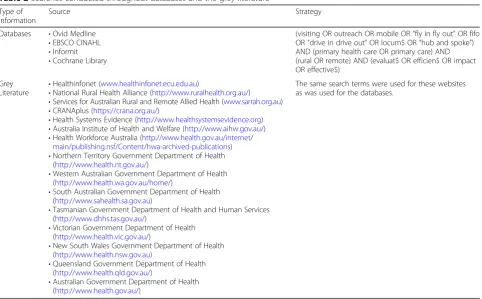
Four established databases and a large number of
web-sites were searched (see Table 2). In general, the same
Methods of screening and selection criteria
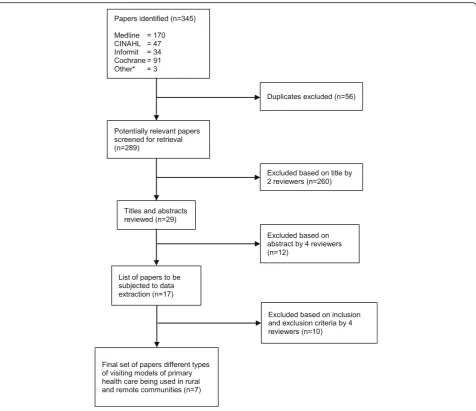
Figure 1 illustrates the screening process by which the
final set of papers were derived. Once duplicate titles were removed from the initial search, two reviewers scanned the titles from the total pool of titles obtained from the search. Next, titles and abstracts were reviewed by the research team to identify the eligible papers ac-cording to the research question and the inclusion and
exclusion criteria (see Table1). From the review of titles
and abstracts a small number of papers were retained. These were reviewed by the same team who examined the titles and abstracts using a standard data extraction
pro-forma. The data extraction form enabled the re-searchers to examine the scientific quality of each paper by analysing components such as the objective of en-quiry, the methods used, and the design of the study. The data extraction process was completed with the team working in two sets of two researchers. Each set extracted data from half the retained papers. This process led to more papers being excluded. If there were discrepancies between the two reviewers, a fifth re-searcher adjudicated.
Data extraction
From the final set of papers, of primary interest were the conclusions that were made regarding service effective-ness or impact. Also of interest were the methods and other research processes from which the conclusions were drawn. The credibility of the conclusions regarding effectiveness or impact was assessed in terms of the methodological rigour of the studies.
Results
Study characteristics
Figure 1 describes the process of screening the initial
345 papers selected from the electronic databases and websites down to seven which were finally included for
data extraction. Table3lists the final set of seven papers,
[image:3.595.57.291.108.248.2]all of which were obtained through database searches.
Table 1Inclusion and exclusion standards according to specified criteria
Criteria Inclusion Exclusion
Time period 1990–2013 Before 1990
Language English Other languages
Geographical delimitation
High income economy (World Bank definition)
Low and Middle income countries
Level of health care
Primary Healthcare (WHO definition)
Secondary, tertiary services
Aim: to identify the impact or effectiveness of types of visiting services
•Paper must evaluate the impact or effectiveness (or both) of one or more visiting models
[image:3.595.58.541.433.732.2]•Paper does not evaluate either impact or effectiveness
Table 2Searches conducted throughout databases and the grey literature
Type of Information
Source Strategy
Databases •Ovid Medline •EBSCO CINAHL •Informit •Cochrane Library
(visiting OR outreach OR mobile OR“fly in fly out”OR fifo OR“drive in drive out”OR locum$ OR“hub and spoke”) AND (primary health care OR primary care) AND (rural OR remote) AND (evaluat$ OR efficien$ OR impact OR effective$)
Grey Literature
•Healthinfonet (www.healthinfonet.ecu.edu.au)
•National Rural Health Alliance (http://www.ruralhealth.org.au/) •Services for Australian Rural and Remote Allied Health (www.sarrah.org.au) •CRANAplus (https://crana.org.au/)
•Health Systems Evidence (http://www.healthsystemsevidence.org) •Australia Institute of Health and Welfare (http://www.aihw.gov.au/) •Health Workforce Australia (http://www.health.gov.au/internet/
main/publishing.nsf/Content/hwa-archived-publications) •Northern Territory Government Department of Health
(http://www.health.nt.gov.au/)
•Western Australian Government Department of Health (http://www.health.wa.gov.au/home/)
•South Australian Government Department of Health (http://www.sahealth.sa.gov.au)
•Tasmanian Government Department of Health and Human Services (http://www.dhhs.tas.gov.au/)
•Victorian Government Department of Health (http://www.health.vic.gov.au/)
•New South Wales Government Department of Health (http://www.health.nsw.gov.au)
•Queensland Government Department of Health (http://www.health.qld.gov.au/)
•Australian Government Department of Health (http://www.health.gov.au/)
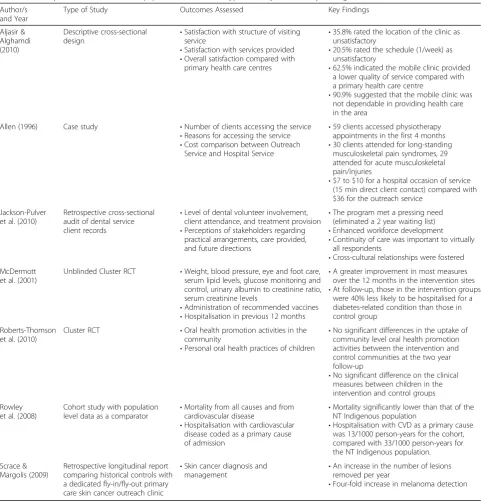
The studies varied markedly in design and
methodo-logical rigour (see Table4). Two studies were cluster
ran-domised controlled trials, one was a case study, two were retrospective analyses (with one being cross-sectional and the other being longitudinal), one was a cohort study
using population level data as a comparator, and one was a descriptive cross-sectional design.
There was variability in context and service models. Four studies had some sort of comparison group. One study was conducted in Saudi Arabia and the rest in Australia. One service was a mobile, remotely based
pri-mary health care service [14]. The remainder were visiting
services from major population hubs. The studies covered medical, dental, and non-medical health services.
Data synthesis
The studies described mixed results – some effective,
some not (see Table4). In the Saudi Arabian study, for
ex-ample, although participants were satisfied with some as-pects of the service, many of them were dissatisfied with
the clinic location and the service schedule [15]. A range
of different outcomes related to service effectiveness were
[image:4.595.61.538.86.497.2]Fig. 1Electronic database selection process. *‘Other’indicates papers obtained through the grey literature or key informants
Table 3Final set of papers including how they were obtained
Author/s and Year How Located
Aljasir & Alghamdi (2010) [15] EEDa
Allen (1996) [12] EED
Jackson-Pulver (2010) [16] EED
McDermott et al. (2001) [17] EED
Roberts-Thomson et al. (2010) [19] EED
Rowley et al. (2008) [14] EED
Scrace & Margolis (2009) [18] EED a
[image:4.595.57.292.612.723.2]evident in the studies. Within the studies reviewed there
were reported reductions in waiting lists [16],
improve-ments in diabetes management [17], lower mortality and
reduced hospitalisations compared with the general
popu-lation [14], and improved melanoma detection [18]. One
of the cluster randomized controlled trials (RCTs) found no significant differences between the intervention and
control groups [19].
It is important to note that while each of these seven studies was evaluating a visiting service, the emphasis was
generally on the service itself rather than the fact that it
wasvisitingorperiodicin the delivery of that service.That
[image:5.595.57.539.96.599.2]is, there were no studies comparing a service delivered by resident health professionals compared with the same ser-vice delivered by visiting health professionals. Given that the services being provided in these evaluations were, in many ways, standard evidence-based practices and in some cases were additional services, it should come as no surprise that they led to beneficial outcomes. While it will always remain important to establish that services are, in
Table 4Descriptions of the final set of papers in terms of the type of study and the key findings
Author/s and Year
Type of Study Outcomes Assessed Key Findings
Aljasir & Alghamdi (2010)
Descriptive cross-sectional design
•Satisfaction with structure of visiting service
•Satisfaction with services provided •Overall satisfaction compared with
primary health care centres
•35.8% rated the location of the clinic as unsatisfactory
•20.5% rated the schedule (1/week) as unsatisfactory
•62.5% indicated the mobile clinic provided a lower quality of service compared with a primary health care centre
•90.9% suggested that the mobile clinic was not dependable in providing health care in the area
Allen (1996) Case study •Number of clients accessing the service •Reasons for accessing the service •Cost comparison between Outreach
Service and Hospital Service
•59 clients accessed physiotherapy appointments in the first 4 months •30 clients attended for long-standing
musculoskeletal pain syndromes, 29 attended for acute musculoskeletal pain/injuries
•$7 to $10 for a hospital occasion of service (15 min direct client contact) compared with $36 for the outreach service
Jackson-Pulver et al. (2010)
Retrospective cross-sectional audit of dental service client records
•Level of dental volunteer involvement, client attendance, and treatment provision •Perceptions of stakeholders regarding
practical arrangements, care provided, and future directions
•The program met a pressing need (eliminated a 2 year waiting list) •Enhanced workforce development •Continuity of care was important to virtually
all respondents
•Cross-cultural relationships were fostered McDermott
et al. (2001)
Unblinded Cluster RCT •Weight, blood pressure, eye and foot care, serum lipid levels, glucose monitoring and control, urinary albumin to creatinine ratio, serum creatinine levels
•Administration of recommended vaccines •Hospitalisation in previous 12 months
•A greater improvement in most measures over the 12 months in the intervention sites •At follow-up, those in the intervention groups
were 40% less likely to be hospitalised for a diabetes-related condition than those in control group
Roberts-Thomson et al. (2010)
Cluster RCT •Oral health promotion activities in the community
•Personal oral health practices of children
•No significant differences in the uptake of community level oral health promotion activities between the intervention and control communities at the two year follow-up
•No significant difference on the clinical measures between children in the intervention and control groups
Rowley et al. (2008)
Cohort study with population level data as a comparator
•Mortality from all causes and from cardiovascular disease
•Hospitalisation with cardiovascular disease coded as a primary cause of admission
•Mortality significantly lower than that of the NT Indigenous population
•Hospitalisation with CVD as a primary cause was 13/1000 person-years for the cohort, compared with 33/1000 person-years for the NT Indigenous population.
Scrace & Margolis (2009)
Retrospective longitudinal report comparing historical controls with a dedicated fly-in/fly-out primary care skin cancer outreach clinic
•Skin cancer diagnosis and
management •
An increase in the number of lesions removed per year
fact, as effective as we expect them to be, and have the de-sired impact, it is crucial to understand how these evidence-based practices can be delivered most effectively and have maximum positive impact in remote settings where populations are insufficient to support resident
ser-vices. For that reason, it is thevisiting component rather
than theservicethat needs to be examined more closely.
A number of studies addressed some aspects of the vis-iting form of delivery of the service. Aljasir and Alghamdi
[15] reported that many people were dissatisfied with the
visiting service. For example, one in five of the people who were interviewed were dissatisfied with the once per week timing of the service, suggesting that this was insufficient availability to meet patient needs for primary health care.
Jackson-Pulver et al. [16], on the other hand, reported that
the service being evaluated in their study had met a press-ing need and that continuity of care was important and had been addressed in the design of the service (see Table
4). Rowley et al. [14] offered a rationale for a community
controlled mobile service that enabled the population to live in a desired decentralised fashion.
Discussion
In order to obtain the best value and most effective impact from visiting services, decision-makers and service fun-ders require rigorous empirical evidence of what works best in which context. Unfortunately, as this systematic re-view shows, such evidence is scant. From the sparse litera-ture available, it is not possible to answer our research question. This systematic review demonstrates that more rigorous evaluation of visiting services, their impact, ef-fectiveness, and cost is required, and in particular, the
spe-cific impact of the‘visiting’modality requires examination.
Given the investment in visiting services and the urgency in reducing the disparity in health outcomes between people in remote versus urban locations, it is surprising that so little attention has been given to assessing the ef-fectiveness or impact of visiting services.
The limitations of systematic review methodology in an-swering some of the questions that are most important to rural and remote health should also be acknowledged. It has been suggested for almost ten years that a more flex-ible approach to systematic reviews should be adopted in
rural and remote health settings [20]. For this reason we
relaxed the inclusion and exclusion criteria that we devel-oped and we searched a large number of websites to
par-ticularly focus on“grey” literature. In fact, our systematic
review has highlighted one of the important issues in rural and remote health which is the lack of available data to in-form policy development in important areas.
In the absence of knowledge about effectiveness or im-pact, health professionals, funders, policy-makers, and evaluators might benefit from considering a number of
important principles [2]. The principles offered here
have been derived from a synthesis of information ob-tained from the available literature, the current
system-atic review, and the authors’ expert knowledge and
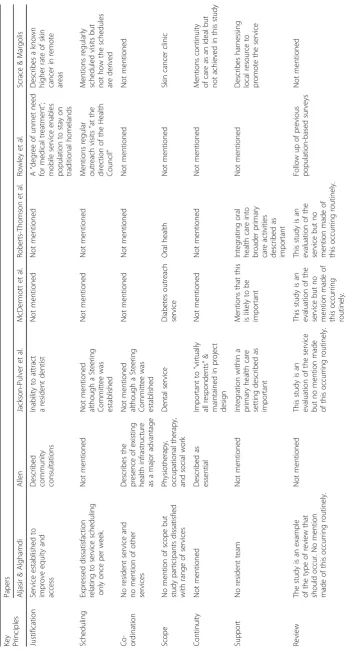
experience (see Table5). The first principle relates to the
justification of the service and addresses the concern mentioned in the introduction that visiting services are being used in some communities which have popula-tions large enough to support a resident team of primary health care professionals. The second principle focuses on the scheduling of the service and the extent to which the timing of the service is commensurate with the needs of the community. For example, Aljasir and
Alghamdi [15] described dissatisfaction relating to
ser-vice scheduling only once per week. The third principle relates to co-ordination, which refers to the extent to which visiting services are integrated with each other but also linked with resident primary health care ser-vices. The fourth principle, scope, addresses whether or not the visiting service is sufficiently comprehensive and targeted to meet the prioritised needs of the community. The importance of the fifth principle (continuity), was
highlighted by Jackson-Pulver et al., [16] who reported
that virtually all respondents in their study emphasised the importance of continuity of care which had been successfully addressed through continuity of non-dentist staffing. The sixth principle, support, highlights the im-portance of reciprocity with the visiting health profes-sionals supporting resident staff and resident staff supporting the visiting professionals. Review, the seventh principle, ensures that the effectiveness of the visiting service is monitored, evaluated, and improved. While our research identified a range of different outcome measures related to service effectiveness reported in the literature, future research in this field would ideally re-port on a suite of measures which assess effectiveness according to each of the identified key principles for providing visiting services. Table five summarises how
papers addressed or didn’t address these principles.
Conclusion
Visiting services are an important component of the deliv-ery of primary health care services to isolated remote and rural communities. In order to ensure residents of remote communities are receiving the best possible primary health care it is important that evaluations of these visiting services are conducted systematically and routinely. More-over, it is essential that, in addition to evaluating the effect-iveness of the service, the appropriateness and efficiency of the visiting modality is also assessed. It is only through careful and comprehensive examination of both the visiting
aspectsandthe service aspect that we will be able to make
Abbreviations
FIFO:fly in/fly out; HIC: high income country; LMIC: low-income and middle-income countries; RCT: randomized controlled trial
Funding
This research has been supported by funding from the Australian Research Council (ARC). Grant number DP150102227.
Availability of data and materials
Data and materials are available on request from the first author.
Authors’contributions
JW provided the initial motivation for the systematic review and participated in the data extraction process. DS conducted the searches and participated in the data extraction process. TAC prepared the first draft of the manuscript, managed the editorial process prior to submission, and participated in the data extraction process. DR participated in the data extraction process. JSH presided over differences between the authors as they arose during the data extraction process. All authors contributed to the development of the final version of the manuscript and are all in agreement regarding the content of the manuscript.
Ethics approval and consent to participate
Not applicable.
Competing interests
The authors have no competing interests in the conduct of this systematic review or the preparation of this manuscript.
Publisher’s Note
Springer Nature remains neutral with regard to jurisdictional claims in published maps and institutional affiliations.
Author details
1Centre for Remote Health, Flinders University, PO Box 4066, Alice Springs,
NT 0871, Australia.2School of Rural Health, Monash University, Clayton, Australia.3Flinders NT, Flinders University, Darwin, Australia.
Received: 27 November 2016 Accepted: 1 June 2018
References
1. Australian Institute of Health and Welfare. Rural, regional and remote health: indicators of health status and determinants of health. Rural Health Series no. 9. Cat. no. PHE 97. Canberra: AIHW; 2008.http://www.aihw.gov.au/ WorkArea/DownloadAsset.aspx?id=6442459831. Accessed 25 Nov 2016. 2. Carey TA, Sirett D, Wakerman J, Russell D, Humphreys JS. What principles should
guide visiting primary health care services in rural and remote communities? Lessons from a systematic review. BMC Hlth Serv Rsch Under review. 3. De Roodenbeke E, Lucas S, Rouzaut A, Bana E. Outreach services as a
strategy to increase access to health workers in remote and rural areas. Geneva: WHO; 2011.https://www.ncbi.nlm.nih.gov/books/NBK310729/. Accessed 25 Nov 2016
4. Australian Government Productivity Commission. Australia’s Health Workforce Commonwealth of Australia: Melbourne; 2005.http://www.pc. gov.au/inquiries/completed/health-workforce/report/healthworkforce.pdf. Accessed 25 Nov 2016.
5. Wakerman J, Curry R, McEldowney R. Fly in/fly out health services: the panacea or the problem? Rural and Remote Health (Internet). 2012; 12: 2268.http://www.rrh.org.au/publishedarticles/article_print_2268.pdf. Accessed 25 Nov 2016.
6. Guerin P, Guerin B. Social effects of fly-in-fly-out and drive-in-drive-out services for remote indigenous communities. Aus Comm Psych. 2009;21:7–22. 7. House of Representatives Standing Committee on Regional Australia.
Cancer of the bush or salvation for our cities? Fly-in, fly-out and drive-in, drive-out workforce practices in Regional Australia. Canberra: Parliament of Australia; 2013. file:///C:/Users/care0089/AppData/Local/Downloads/http— www.aphref.aph.gov.au-house-committee-ra-fifodido-report-fullreport.pdf. Accessed 25 Nov 2016.
8. Battersby MW. Health reform through coordinated care: SA HealthPlus. BMJ. 2005;330:662–5.
9. Wagner EH, Austin BT, Von Korff M. Organizing care for patients with chronic illness. Milbank Q. 1996;74:511–44.
10. Birks M, Mills J, Francis K, et al. Models of health service delivery in remote or isolated areas of Queensland: a multiple case study. Aus J Adv Nurs. 2010;19:36–45.
11. Battye KM, McTaggart K. Development of a model for sustainable delivery of outreach allied health services to remote north-West Queensland, Australia. Rural and Remote Health (Internet) 2003; 3: 194.http://www.rrh. org.au/articles/subviewnew.asp?ArticleID=194. Accessed 25 Nov 2016. 12. Allen O. Anthill and other injuries: a case for mobile allied health teams to
remote Australia. Aus J Rur Hlth. 1996;4:33–42.
13. Wilkinson L, Beattie N. Enhancing Allied Health Services to Rural and Remote Indigenous Communities: Phase 1. Western Australia: Combined Universities Centre for Rural Health; 2006.
14. Rowley KG, O’Dea K, Anderson I, McDermott R, Saraswati K, Tilmouth R, Roberts I, Fitz J, Wang Z, Jenkins A, Best JD, Wang Z, Brown A. Lower than expected morbidity and mortality for an Australian aboriginal population: 10 year follow-up in a decentralised community. MJA. 2010;188:283–7. 15. Aljasir B, Alghamdi MS. Patient satisfaction with mobile clinic services in a
remote rural area of Saudi Arabia. Eastern Med Hlth J. 2010;16:1085–90. 16. Jackson-Pulver L, Fitzpatrick S, Ritchie J, Norrie M. Filling the gap: an
evaluation of a voluntary dental program within an aboriginal and Torres Strait islander community controlled primary health service. Aboriginal & Islander Hlth Work J. 2010;34:3–7.
17. McDermott RA, Schmidt BA, Sinha A, Mills P. Improving diabetes care in the primary healthcare setting: a randomised cluster trial in remote indigenous communities. MJA. 2001;174:497–502.
18. Scrace M, Margolis SA. The Royal Flying Doctor Service primary care skin cancer clinic: A pilot program for remote Australia. Rur Rem Hlth (Internet). 2009; 9: 1048. Available:http://researchonline.jcu.edu.au/5327/. Accessed 27 Nov 2016.
19. Roberts-Thomson KF, Slade GD, Bailie RS, Endean C, Simmons B, Leach AJ, Raye I, Morris PS. A comprehensive approach to health promotion for the reduction of dental caries in remote indigenous Australian children: a clustered randomised controlled trial. Int Dent J. 2010;60:245–9. 20. Humphreys JS, Kuipers P, Wakerman J, Wells R, Jones JA, Kinsman LD. How