Understanding Disposition of
Efavirenz and Application in Solid
Drug Nanoparticle Development
Thesis submitted in accordance with requirements of the University
This thesis is the result of my own work. The material contained within the thesis has not been presented, either wholly or in part, for any other degree or qualification.
Table of Contents
Acknowledgements i
Abbreviations iii
List of Publications viii
Abstract xiv
Chapter 1 General Introduction 1
Chapter 2 Single nucleotide polymorphisms in the GABAa receptor are not predictors of early treatment discontinuation of efavirenz
36
Chapter 3 The in vivo effects of solid drug nanoparticle and conventional efavirenz on anxiogenesis in rodents
63
Chapter 4 Liquid chromatography tandem mass spectrometry method for quantification of efavirenz in plasma, brain and cell culture media
86
Chapter 5 In vitro characterisation of solid drug nanoparticle
compositions of efavirenz in the hCMEC/D3 cell line 108
Chapter 6 Efavirenz is predicted to accumulate in brain tissue: an in silico, in vitro and in vivo Investigation
136
Chapter 7 General Discussion 160
Acknowledgements
Firstly, I would like to thank Professor Andrew Owen for his guidance and supervision. Your inspired and often inventive motivational prompts have proved effective and entertaining. I would also like to thank you for your continued faith, for giving me the opportunity of not only my PhD but also my first post doc. I would also like to thank Professor David Back and Professor Saye Khoo. Your advice and support have been invaluable to the completion of my PhD.
I would like to thank Dr Marco Siccardi for your help and guidance, particularly your help with bio-analytical method development and PBPK modelling. Perhaps most significantly I would like to thank you for hosting games nights and providing a modern equivalent to the 1980s games of Dr Muschio!
My thanks go to Dr Neill (2 Ts in Liptrott) Liptrott. Your continued friendship and support has helped me through not only my scientific life but also my personal life. Having someone to talk to about the pressures of a PhD and fatherhood has been incredibly important to me. You of course give me hope for the future. If you can get to the stage in your career and barely be able to operate a mobile phone or PC, I might just be ok.
Where does one begin with Dr James (Sir Bantzalot) Hobson? Your window side chats setting the world to writes are sorely missed. My thanks for your introduction to such things as juxtaposed learning, evolution of the Hobsonese language and of course Apple based products. Many thanks for your friendship and being an incredibly good sport when I decided to play the occasional practical joke!
My thanks to everyone in H Block and the BAF Lee, Alessandro, Laura D, Henry, Sara, Helen, Justin (the life saver), Laura L, Alieu, Deirdre, Sujan, Niyi, Chris (Neill v2.0), Rajith (Hershey addict!!!), Christina, Louise, Rohan, Megan, Owain, Ana, Sharon, Rana and Josh. Thank you all for your assistance and sharing your scientific life with me.
I would like to thank my Mum, Dad and Sister for their love and support not only over the course of my PhD but throughout my life.
Finally I would like to thank my amazing fiancée, Adele. To say I would not be here without you is an understatement. You have been there when things looked bleakest and helped me find the strength to carry on. Thank you seems insufficient for everything you have done for me over the past 11 years. Having said that, thank you for all your love and support. I only hope one day I can repay you.
Abbreviations
5-HT2A 5-hydroxytryptamine 2A
Å Angstrom
ACN Acetonitrile
ADR Adverse Drug Reactions ATP Adenosine Triphosphate AUC Area Under the Curve BBB Blood Brain Barrier
BCRP Breast Cancer Resistance Protein
BCS Biopharmaceutics Classification System CAR Constitutive Androstane Receptor CAR Cellular Accumulation Ratio CCR5 C-C Chemokine Receptor 5
Cl Clearence
CM Cisterna Magna
Cmax Maximum Plasma Concentration
Cmin Minimum Plasma Concentration
DiD 1,1’-dioctadecyl-3,3,3’,3’-tetramethylindodi- carbocyanine perchlorate DNA Deoxyribonucleic Acid
dNTP Deoxynucleotide triphosphates DPM Disintergrations per Minute env Envelope Glycoprotein EPM Elevated Plus Maze ER Endoplasmic Reticulum Fa Fraction Absorbed FBS Fetal Bovine Serum
FDA Food and Drug Administration fu Fraction Unbound
FRET Fluorescence Resonance Energy Transfer GABA Gamma Aminobutyric Acid
GI Gastrointestinal gp Glycoprotein
GTP Guanosine-5'-triphosphate
HAND HIV-Associated Neurocognitive Disorder HBSS Hanks Balanced Salt Solution
HIV Human Immunodeficiency Virus HSR Hypersensitivity Reactions
IC50 Concentration Producing 50% Inhibition
IN Integrase
kg Kilogram
Ki Inhibition Constant Km Michaelis Constant
LA Long-acting
LC-MS/MS Liquid Chromatography Tandem Mass Spectrometer Log D Oil/water distribution
LogP Octanol/Water Partition Coefficient at pH 7.4 LV Left Ventricle
MeOH Methanol
mg Milligram
ml Millilitre
mRNA Messenger RNA
MRP Multidrug Resistance Proteins NCE New Chemical Entities
ng Nanogram
NNRTI Non-Nucleoside Reverse Transcriptase Inhibitors NRTI Nucleoside Reverse Transcriptase Inhibitors OAT Organic Anion Transporter
PCR Polymerase Chain Reaction PI Protease Inhibitor
popPK Population Pharmacokinetics
PR Protease
QC Quality Control
qPCR Quantitative Polymerase Chain Reaction QSAR Quantitative Structure–Activity Relationship R Blood to Plasma Ratio
RED Rapid Equilibrium Dialysis RFU Relative Fluorescence Units RNA Ribonucleic Acid
RT Reverse Transcriptase SAS Subarachnoid Space SC Subcutaneous
SDN Solid Drug Nanoparticle
SLCO Solute Carrier Organic Anion Transporter SNP Single Nucleotide Polymorphism
SRM Selected Reaction Monitoring t1/2 Plasma Half Life
TAR Transactivation Responsive Element TAT Transactivator of Transcription TFV Third and Fourth Ventricle
Tmax Time to Reach Maximum Plasma Concentration
UNAIDS United Nations Programme on HIV/AIDS vasbase Van der Waals Surface Area of the Basic Atoms Vmax Maximum Velocity
vs Versus
Vss Volume of Distribution W/V Weight per Volume
WHO World Health Organisation µCi Microcurie(s)
µg Microgram(s) µl Microlitre(s)
Publications
Peer Reviewed Publications
Ana Alfirevic, Jill Durocher, Anisa Elati, Wilfrido León, David Dickens, Steffen Rädisch, Helen Box, Marco Siccardi, Paul Curley, George Xinarianos, Arjun Ardeshana, Andrew Owen, J Eunice Zhang, Munir Pirmohamed, Zarko Alfirevic, Andrew Weeks and Beverly Winikoff. Misoprostol-induced fever and genetic polymorphisms in drug transporters SLCO1B1 and ABCC4 in women of Latin American and European ancestry. Pharmacogenomics, June 30th 2015, volume 16, issue 9, pages 919-28.
Moss, D.M, Curley, P, Shone, A, Siccardi, M and Owen, A. A multi-system investigation of raltegravir association with intestinal tissue: implications for PreP and eradication. Journal of Antimicrobial Chemotherapy, August 11th 2014, volume 69, issue 12, pages 3275-81.
Moss, D. M, Liptrott, N. J, Curley, P, Siccardi, M, Back, D. J and Owen, A.
Liptrott, N. J, Curley, P, Moss, D, Back, D. J, Khoo, S. H and Owen, A.
Interactions between Tenofovir and Nevirapine in CD4+ T cells and Monocyte Derived Macrophages restrict their intracellular accumulation. Journal of Antimicrobial Chemotherapy, November 2013. Volume 68, issue 11, pages 2545-9.
McDonald, T. O, Giardiello, M, Martin, P, Siccardi, M, Liptrott, N. J, Smith, D, Roberts, P, Curley, P, Schipani, A, Khoo, S. H, Long, J, Foster, A. J, Rannard, S. P and Owen, A. Antiretroviral Solid Drug Nanoparticles with Enhanced Oral Bioavailability: Production, Characterization, and In Vitro– In Vivo
Correlation. Advanced Healthcare Materials, September 1st 2013, volume 3,
issue 3, pages 400-11.
Siccardi, M Rajoli, R. K. R, Curley, P, Olagunju, A, Moss, D and Owen, A.
Conference Presentations:
Highlights of research at the University of Liverpool and activity of the British Society for Nanomedicine (7th CLINAM conference and exhibition, Basel, Switzerland) Paul Curley, Neill Liptrott, Lee Tatham, Marco Siccardi, and Andrew Owen
The in vivo effects of solid drug nanoparticle and conventional efavirenz on anxiogenesis in rodents (21st Conference on Retroviruses and Opportunistic Infections, Boston, USA) Paul Curley, Marco Giardiello, Neill Liptrott, Phil Martin, Tom McDonald, Marco Siccardi, Juliet McAdams, Steve Rannard, Tim Kirkham and Andrew Owen
Multi-system investigation of the mechanisms for raltegravir association with intestinal tissue after oral administration (21st Conference on Retroviruses and Opportunistic Infections, Boston, USA) Darren Moss, Paul Curley, Alison Shone, Marco Siccardi and Andrew Owen
Utilising In Vitro-In Vivo extrapolation to investigate efavirenz penetration into the central nervous system (14th International Workshop on Clinical Pharmacology of HIV Therapy, Amsterdam, NL) Paul Curley, Philip Martin, Neill Liptrott, David Back, Andrew Owen and Marco Siccardi
Prediction of Etravirine Pharmacogenetics using a Physiologically Based Pharmacokinetic approach (20th Conference on Retroviruses and Opportunistic Infections, Atlanta, USA) Marco Siccardi, Adeniyi Olagunju, Paul Curley, James Hobson, Saye Khoo, David Back, Andrew Owen
Enhanced Pharmacological Properties of Efavirenz Formulated as Solid Drug Nanoparticles (20th Conference on Retroviruses and Opportunistic Infections, Atlanta, USA)Philip Martin, NJ Liptrott, T McDonald, M Giardiello, P Roberts, P Curley, D Smith, M Siccardi, S Rannard, and A Owen
An Investigation of the expression of cytochrome P450 3A7 and cytochrome P450 3A4 during stem cell differentiation for use as markers of emerging hepatic phenotype (British Pharmacology Society Winter meeting, London, UK) Paul Curley, Lorna Kelly, Rowena Shaw, Neil R Kitteringham, Rosalind E Jenkins, Jane E Alder, Cliff Rowe, Laura Randle, Chris E P Goldring and B Kevin Park
Oral Presentations:
Utilising In Vitro-In Vivo extrapolation to investigate efavirenz penetration into the central nervous system (14th International Workshop on Clinical Pharmacology of HIV Therapy, Amsterdam, NL)
Book Chapters
Liptrott, N.J., Curley, P., Tatham, L.T. and Owen, A. “Opportunities and Challenges in Nanotechnology-enabled antiretroviral Drug Delivery”, 2nd Edition, Handbook of Immunological Properties of Engineered Nanomaterials
Abstract
Efavirenz displays many desirable pharmacokinetic properties such as a long half-life allowing once daily dosing and potency against HIV. Despite these favourable properties efavirenz-containing therapy is associated with the development of central nervous system (CNS) toxicities. Current investigations indicate that high plasma concentrations of efavirenz play a putative role in the development of CNS side effects, but there is a current paucity of data relating to the underlying mechanisms of toxicity. Various nanotechnologies have been explored in attempts to mitigate some of the limitations with efavirenz. While there has been progress in increasing the bioavailability of efavirenz there has been no attempt to assess the impact of increased exposure to efavirenz on CNS toxicity. The body of work presented in this thesis aimed firstly to investigate the underlying mechanism of efavirenz CNS toxicity and secondly to assess uptake and CNS toxicity of efavirenz and a novel solid drug nanoformulation (SDN)of efavirenz.
The work presented in this thesis utilised a variety of in vitro, in vivo and in silico methodologies. Chapter 2 utilised allelic discrimination polymerase chain reaction in order to investigate the association of single nucleotide polymorphism (SNPs) in the gamma aminobutyric acid receptor with early treatment discontinuation of efavirenz. In order to assess the effects of SDN efavirenz on the occurrence of CNS toxicities, an in vivo model of anxiety (elevated plus maze) was employed (chapter 3). Chapter 4 detailed the development of a robust and sensitive liquid chromatography tandem mass spectrometer assay for the detection of efavirenz in multiple matrices. The uptake of efavirenz and SDN efavirenz in the CNS was investigated utilising cellular uptake and inhibition studies (chapter 5). Physiologically based pharmacokinetic (PBPK) simulations were used to investigate the distribution of efavirenz in plasma, cerebrospinal fluid (CSF) and brain tissue (chapter 6).
Despite an initial trend with Rs211014 and Rs6556547 (univariate analysis) of the training cohort, these SNPs were not found to be significant in the multivariate analysis or in either analysis of the test cohort. Following multiple doses rats treated with efavirenz, but not SDN efavirenz, exhibited anxiety-like behaviour in the EPM. The profile of changes indicated some clear behavioural effects that are likely to be linked to drug-related CNS effects. In particular, a tendency of efavirenz to increase time spent on the central platform may be indicative of anxiogenesis. Cellular accumulation of efavirenz was reduced significantly by montelukast and amantadine, with the reduction in accumulation by prazosin bordering on significance (indicating efavirenz may be a substrate for OCT1 and an SLCO transporter). Additionally, cellular accumulation of SDN efavirenz particles was reduced by dynasore, indicating dynamin-mediated uptake. PBPK simulations predicted efavirenz accumulation in brain tissue, with a tissue to plasma ratio 15.8.
Chapter 1
Contents
1.1 Human Immunodeficiency Virus 3
1.2 Replication Cycle of HIV 3
1.2.1 Viral Attachment 4
1.2.2 Fusion 6
1.2.3 Reverse Transcription 6
1.2.4 Integration 7
1.2.5 Transcription 7
1.2.6 RNA Export 8
1.2.7 Assembly and Release 8
1.3 Current Antiretroviral Therapy: Mechanisms of Action 9 1.3.1 Nucleoside Reverse Transcriptase Inhibitors 11 1.3.2 Non-Nucleoside Reverse Transcriptase Inhibitors 12
1.3.3 Protease Inhibitors 12
1.3.4 Integrase Inhibitors 13
1.3.5 Entry Inhibitors 14
1.4 The Central Nervous System in HIV 25 1.4.1 Efavirenz Associated Central 20
Nervous System Side Effects
1.5 Limitationsof Current Antiretroviral Therapeutics 23 1.5.1 Utilisation of Nanomedicine to Address The 26
Limitations of Current Antiretroviral Therapeutics
1.5.2 Nanotechnology-enabled oral drug delivery 27 1.5.3 Nanotechnology-enabled parenteral drug delivery 30 1.6 The Application of Physiologically Based 32
Pharmacokinetic Modeling to HIV Therapy
1.1 Human Immunodeficiency Virus
The human immunodeficiency virus (HIV) pandemic has been a global issue for over 30 years; at the end of 2013, 35 million people were estimated (by the World Health Organisation [WHO]) to be HIV positive worldwide with approximately 2.1 million new infections and 1.5 million deaths reported (1). Although organisations such as the United Nations Programme on HIV/AIDS (UNAIDS) show a declining trend in HIV infection (50% decline in the number of HIV infections in 26 countries between 2002 and 2012), HIV still represents a significant global health burden (2).
1.2 Replication Cycle of HIV
transcription, ribonucleic acid (RNA) export, assembly and finally release of mature virions.
1.2.1 Viral Attachment
1.2.2 Fusion
Following attachment, the virus enters the host cell via membrane fusion. Binding of gp120 to CD4 and co-receptor (either CCR5 or CXCR4 are engaged, dependent on viral tropism) induces a series of conformational changes in the env protein leading to the exposure of the core gp41 N-terminal fusion peptide (10). The resulting interaction induces fusion between the viral capsid cell membrane followed by infection of the host cell (7, 11).
Following viral entry to the host cell the process of uncoating occurs to release the contents of the viral capsid into the cellular cytoplasm (12). The core of the HIV virion consists of the viral genome and associated proteins, including gag (proteolytically cleaved to produce matrix, capsid, nucleocapsid and p6 proteins), pol (proteolytically cleaved to produce the reverse transcriptase [RT], integrase [IN] and protease [PR]) and env contained within a conical capsid (12, 13).
1.2.3 Reverse transcription
degraded via RNase activity of RT producing newly synthesised DNA (15). The production of DNA via RT is highly error prone due to the lack of exonucleolytic proofreading, leading to a high error rate of 1/1700 and in certain mutational hotspots 1/70 (16). This lack of fidelity can lead to the emergence of HIV strains capable of drug resistance and immune escape (17).
1.2.4 Integration
The next stage in the viral life cycle is integration of the viral DNA with the host DNA. The newly synthesised viral DNA forms a stable complex with the IN enzyme that is transported to the nucleus. The DNA is then processed for integration. Two nucleotides are first removed from 3′ ends of the viral DNA. The free 3′ ends are now able to "attack" phosphodiester bonds in the host DNA, resulting in covalent linkage between the 3′ end of the viral DNA and the 5′ end of the host DNA. The remaining viral 5′ ends are repaired via host enzymes resulting in complete integration of the viral DNA (18).
1.2.5 Transcription
100-fold increase in the production of viral RNA, primarily via enhancement of transcription elongation (13, 20, 21).
1.2.6 RNA Export
Transcription yields both spliced and unspliced messenger RNA (mRNA), resulting in more than 40 different splice products. Eukaryotic cells typically degrade unspliced and incompletely spliced mRNA in the nucleus (22, 23). Completely spliced mRNA (1.8kb mRNA coding for TAT, REV and Nef) is transported by endogenous transport mechanisms. Unspliced and incompletely spliced mRNA (9kb and 4kb mRNA coding for gag, pol and env) require the viral protein REV for transport to the cytoplasm (22). Bound REV is able to interact with chromosome region maintenance 1 (also known as exportin 1) in the presence of guanosine-5'-triphosphate (GTP), in the form of Ran GTPase (22, 23). The complex is transported to the cytoplasm, via nuclear pore complexes, where hydrolysis of GTP leads to instability of the complex and the release of viral mRNA to the cytoplasm where translation can occur. Rev is then transported back to the nucleus via importin β (22).
1.2.7 Assembly and Release
various processes involved in packaging (including creation of spherical viral particles, concentration of env and packaging of RNA) are mediated by Gag-Pro-Pol. Although Gag-Pro-Pol is able to assemble the virions, release is accomplished via host endosomal sorting complexes required for transport (25). Viral maturation begins simultaneously with release of the virions, beginning with proteolytic cleavage of Gag-Pro-Pol via PR. Maturation continues with the products of Gag-Pro-Pol rearranging to form mature viral particles (25).
1.3 Current Antiretroviral Therapy: Mechanisms of Action
CD4+ T-cell counts, modern antiretroviral therapy has improved patient survival and transformed HIV into a manageable but chronic infection.
NNRTI or boosted PI NRTI Backbone First Line Therapy Efavirenz (NNRTI) Tenofovir
Emtricitabine Alternative
Efavirenz (NNRTI) Zidovudine Emtricitabine Nevirapine (NNRTI) Zidovudine
Emtricitabine Nevirapine (NNRTI) Tenofovir
Emtricitabine Second Line Therapy Atazanavir (PI)
Ritonavir (PI)
Tenofovir Emtricitabine Alternative Lopinavir (PI)
Ritonavir (PI)
[image:29.595.108.513.71.356.2]Tenofovir Emtricitabine
Table 1. The table above shows the World Health Organisations current recommendations for antiretroviral therapy. First line therapy consists of a NNRTI supported by a NRTI backbone. When this option is unsuitable (due to viral rebound or patient toxicity), second line therapy consists of a PI (boosted by ritonavir) supported by a NRTI backbone (27).
1.3.1 Nucleoside Reverse Transcriptase Inhibitors
The incorporation of an NRTI prevents further synthesis of the DNA chain, leading to non-functional DNA that cannot be incorporated into the host DNA.
1.3.2 Non-Nucleoside Reverse Transcriptase Inhibitors
NNRTI’s act on the same viral target as NRTI’s but the mechanism of action is significantly different. NNRTI’s inhibit reverse transcriptase via allosteric modulation, acting via non-competitive inhibition. Binding of NNRTI’s to a hydrophobic pocket (approximately 10Å from the active site) induces the side chains of tyrosine 181 and 188 in the active site of reverse transcriptase to invert orientation. This conformational change leads to a decrease in the binding affinity of endogenous nucleosides, disrupting reverse transcription (14). Due to the different mechanisms of action, NNRTI’s can be used in conjunction with NRTI’s acting synergistically. Currently there are 5 NNRTIs available (efavirenz, nevirapine, delavirdine, rilpivirine and etravirine). The work presented in this thesis focuses on efavirenz and a novel nanoformulation of efavirenz, discussed in section 1.4.1 and 1.5.3, respectively.
1.3.3 Protease Inhibitors
Gag-Pol. As host protease does not usually target these bonds, PIs are able to target the viral PR active site whilst minimising activity against host proteases (34). The prescription of PI's supported by an NRTI backbone may be recommended as an alternative when NNRTIs are unsuitable (e.g. due to viral resistance or patient intolerance).
1.3.4 Integrase Inhibitors
1.3.5 Entry Inhibitors
All the previously discussed classes of antiretroviral drugs act by ceasing the propagation of the virus within cells that are already infected by HIV. Entry inhibitors aim to prevent the virus from penetrating the cell, thus preventing the infection of new cells. There are a number of strategies currently at various stages of development (e.g. ibalizumab, a monoclonal antibody that targets CD4 is currently in phase II). However, there are only 2 drugs currently approved by the FDA, maraviroc and enfuvirtide (also known as T20) (37-39).
In order for cell entry to take place, the virus must bind to CD4 receptor and a coreceptor. A polymorphism in CCR5 (CCR5-Δ32) leads to the production of a non-functional protein and has been shown to confer resistance to HIV infection and disease progression (40), but carriers are otherwise healthy. This was the basis for development of CCR5 inhibitors and the first in class, maraviroc, prevents viral entry via inhibition of the coreceptor CCR5 (41). Limitations of maraviroc include poor and variable pharmacokinetics and the necessity for viral tropism tests prior to initiation of therapy. Only HIV that utilises CCR5 is inhibited by maraviroc, which has no effect on HIV that utilises CXCR4 as a co-receptor (39, 42).
enfuvirtide is a peptide, oral administration is problematic. The presence of peptidases in the GI rapidly degrades enfuvirtide resulting in very poor bioavailability, thus parenteral administration is required to bypass the GI.(43). Given the high dosing frequency (twice daily) and the route of administration (subcutaneous [SC]), prescription of enfuvirtide is usually reserved for when other therapeutics have failed (44). Recent studies have sought to address this issue via a polylactic-co-glycolic acid microparticle formulation to provide sustained release (sustained in vitro release over 18 days) (44).
1.4 The Central Nervous System in HIV
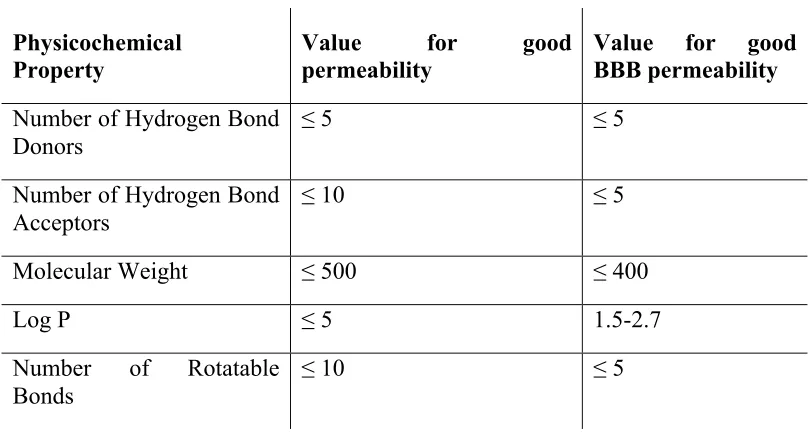
In addition to the presence of tight junctions, limiting paracellular diffusion, endothelial cells highly express metabolising enzymes, efflux transporters and possess a large amount of mitochondria (required for active transport and metabolism), all of which limit access of antiretrovirals to the CNS (49, 50). Understanding the mechanisms the BBB employs to defend the CNS enables identification of physicochemical properties effecting CNS penetration.
Physicochemical
Property Value permeability for good Value for good BBB permeability
Number of Hydrogen Bond
Donors ≤ 5 ≤ 5
Number of Hydrogen Bond Acceptors
≤ 10 ≤ 5
Molecular Weight ≤ 500 ≤ 400
Log P ≤ 5 1.5-2.7
Number of Rotatable Bonds
[image:36.595.107.512.68.284.2]≤ 10 ≤ 5
Table 2. Lipinski’s rule of 5 shows the desired physicochemical properties of orally available to predict good absorption or permeability across a biological membrane and specifically the BBB. These rules only apply to drugs utilising passive permeation. Permeability of transporter proteins substrates is dependant of the type of transporter (influx or efflux), affinity and abundance of the transporter. Data extracted from (51, 52)
5-fold higher in CSF sampled from the lumbar region compared to ventricular CSF in rhesus monkeys (55).
Antiretrovirals display wide variation in CSF penetration (considered by CSF sampling). For example CSF concentrations of efavirenz, nevirapine and lopinavir were determined to be lower than plasma concentrations, 0.5%, 63% and 0.23%, respectively (57-59). Despite lower concentrations in the CSF, antiretroviral concentrations maybe sufficient to display antiretroviral activity, exceeding the concentration producing 50% inhibition (IC50) (57, 59). However,
this is not always the case and tenofovir CSF concentrations were shown to be 5% of plasma concentrations with 77% of patients (cohort of 183 patients) having CSF concentrations below the IC50 (60).
compartments previously showing suppression of viral growth (63). A further concern is the development of resistant strains of HIV.
In addition to the risk of viral rebound, viral replication in the CNS can lead to the development of HIV-associated neurocognitive disorder (HAND). Once released, HIV is able to infect brain parenchyma triggering a signalling cascade resulting in increased concentrations of neurotoxins (61). The increase in neurotoxins eventually leads to neuronal damage and cognitive impairment. HAND can be subdivided into asymptomatic neurocognitive impairment, mild neurocognitive disorder and HIV-associated dementia. Symptoms present in a range of psychological disturbances (including sleep disorders, depression and mania) (61).
1.4.1 Efavirenz Associated Central Nervous System Side Effects
Currently the WHO recommends global treatment of HIV should consist of 1 NNRTI supported by an NRTI backbone (64). The most frequent combination administered is efavirenz combined with tenofovir and emtricitabine. This combination is co-formulated into a single tablet administered once daily (Atripla) (26).
development of CNS disorders shortly after commencing efavirenz with symptoms dissipating during the initial months of therapy. A minority of patients continue to experience symptoms for the duration of receiving efavirenz-containing therapy (66). More recently however, efavirenz CNS toxicities have been shown to have more long-term effects. Leutscher et al demonstrated a 60% discontinuation rate of efavirenz versus 3% receiving non-efavirenz-containing therapy. It was further shown that half of the patients discontinuing efavirenz did so ≥ 12 months (67).
uridine 5'-diphospho-glucuronosyltransferase isoform 2B7 (UGT2B7) (71). Higher plasma concentrations of efavirenz have been shown to be associated with polymorphisms in these enzymes, in particular polymorphisms in CYP2B6, such as 516G>T, CYP2B6*6 (constituted by 516G>T and 785A>G polymorphisms) and CYP2B6*16 (containing 983T>C and the 785A>G polymorphisms) (72, 73).
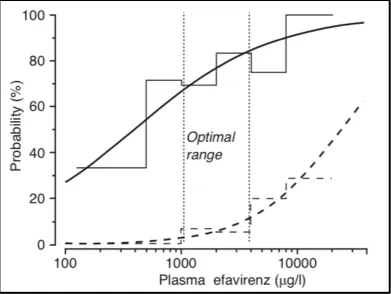
Figure 4. The graph above shows the association with probability of either viral suppression (solid line) or occurrence of CNS toxicity (broken line) with concentration of efavienz. The optimal range highlights efavirenz concentrations of 1000 µg/l and 4000 µg/l where viral suppression is maintained with acceptable occurrence of CNS toxicity. Figure source (74).
1.5 Limitations of Current Antiretroviral Therapeutics
[image:41.595.115.506.73.367.2]metabolism (79). The factors governing absorption have a significant impact on bioavailability and pharmacokinetics, with huge inter-individual variability being a hallmark for most antiretroviral drugs.
The major aim of HIV therapy is to maintain sufficient concentrations of antiretrovirals to enable sustained virological suppression. Sub-therapeutic concentrations of antiretroviral drugs can allow continued viral replication and facilitate development of resistance (80). Particular classes of antiretroviral drug are more susceptible to emergence of resistance than others (81). As discussed above, NNRTIs have a low genetic barrier to resistance, and class-wide resistance can compromises multiple agents in one event (82).
Poor penetration into certain anatomical sites enables continued viral replication, and is a major limitation to antiretroviral therapy. Areas such as the CNS, genital tract and the lymphatic system have been shown to have low concentrations (termed sanctuary sites), which may be involved in viral rebound and resistance (83). Recently, it has been demonstrated that despite viral suppression in the blood (the current marker of successful treatment) there is incomplete suppression and in some cases higher viral replication in lymphoid tissue of patients receiving key antiretroviral drugs (84).
example, neonates (children below 6 months) show increased clearance of lopinavir and children below 6 years old show increased renal excretion of lamivudine (85). Gastric pH is higher during the first 2 years of life, and plasma protein, water content and expression of CYPs vary significantly from adults (85). Therefore, difficulties in treating children in resource-limited settings are exacerbated by the limited availability of paediatric formulations, cost and issues with stability and storage.
The efficacy of combination antiretroviral therapy for HIV patients who take their medications appropriately is approximately 90% with the main factors that distinguish one regimen from another being simplicity (dose, format, size) and toxicity (86). A number of toxicities have been reported clinically across the various classes of antiretrovirals and have been extensively reviewed (86-88). Currently, efavirenz and nevirapine are the two most frequently prescribed NNRTIs. This is because both drugs are highly potent (efavirenz inhibition constant of the reverse transcriptase enzyme [Ki] = 2.9 nM, nevirapine Ki = 7.0
drugs for this approach. Moreover, since the low frequency of HSRs mean they are not usually detected until late in development (or routine use) the application of these types of approach to new chemical entities (NCE) requires careful consideration.
1.5.1 Utilisation of Nanomedicine to Address The Limitations of
Current Antiretroviral Therapeutics
favourable properties of the drug (92). Nanoformulation has been applied to address many of the challenges associated with current antiretroviral therapy, including LA formulations, improving dissolution of poorly water soluble drugs, reduction of inter-individual pharmacokinetic variability, paediatric formulations and targeting to HIV-infected cells. This section will outline how nanomedicine has been applied to address some of the challenges associated with existing HIV therapeutics.
1.5.3 Nanotechnology-enabled oral drug delivery
Figure 5. Antiretrovirals recommended by the WHO and their BCS classification. The following combinations are recommended for first line therapy; zidovudine and lamivudine supported by either efavirenz or nevirapine or tenofovir and emtricitabine supported by either efavirenz. Also shown are the biopharmaceutics classification System (BCS) classifications and log P values (oil/water distribution). Classification is based on the antiretrovirals physiochemical properties and permeability through biological membranes, such as the gut. Data extracted from (77, 94).
(using mannitol as the cryoprotectant) have been studied. Oral administration of lopinavir nanoparticles (12 mg/kg) demonstrated increased plasma exposure when compared to conventional lopinavir (12 mg/kg) co-administered with ritonavir (3 mg/kg), Cmax (2207 vs 1160 ng/ml), AUC (99806 vs 32002 ng.h/ml)
and oral bioavailability was increased 3.1 fold. Additionally, co-administration of ritonavir with the nanoformulated lopinavir yielded a 3.3-fold greater oral bioavailability when compared to the conventional formulation. These data indicate that the nanoformulation provides increased oral bioavailability without reliance on ritonavir (which is not well tolerated due to toxicity), raising the possibility of dose simplification (95).
efavirenz). The in vivo pharmacokinetics were also investigated via oral administration to rats and higher Cmax (478.1 vs 125.9 ng/l), minimum plasma
concentration ([Cmin];378.9vs 80.5 ng/l), AUC (1831.0 vs 457.1 ng.l/h) and time
to reach maximum plasma concentration (Tmax;0.5 vs 0.8h) were observed when
compared to a conventional formulation. These data indicate a potentially higher absorption of efavirenz following oral administration, which in turn may reduce dose and cost of efavirenz-containing therapy (97).
1.5.3 Nanotechnology-enabled parenteral drug delivery
Two LA nanoformulations for the treatment of HIV are currently in late stage development and have already transitioned into human studies. LA formulations are of particular interest in the treatment of chronic conditions such as HIV where patient adherence presents a significant issue (98). Poor adherence to therapy can lead to sub-therapeutic concentrations of antiretrovirals, which in turn can lead to viral rebound, and the emergence of viral resistance (81). LA formulations aim to reduce the impact of poor adherence by increasing the dosing interval while maintaining therapeutic concentrations.
Following a single SC or intramuscular injection of rilpivirine, plasma concentrations remained detectable for up to 3 weeks in mice and 3 months in dogs (99). Following pre-clinical assessment, phase I trials of rilpivirine LA have commenced. A single injection of 300 mg/ml rilpivirine LA administered as gluteal intramuscular or abdominal SC injections was assessed in 51 healthy volunteers. Rilpivirine concentrations remained >10 ng/ml for up to 26 weeks with no grade 3 or 4 adverse events (100).
1.6 The Application of Physiologically Based Pharmacokinetic
Modeling to HIV Therapy
There has been much advancement in HIV therapy however as previously discussed, in section 1.5; there are still many clinical issues with current therapeutics. Development of NCE is frequently difficult and expensive. The application of physiologically based pharmacokinetic modeling (PBPK) offers the opportunity to examine clinical issues in silico, testing the properties of NCE or novel formulations aiding in the identification of desired properties (103).
PBPK modelling is a bottom up approach to simulate clinical scenarios using virtual patients. The approach mathematically describes physiological processes by exploiting the relationship between anthropometric measures (such as height, weight and gender) and physiological parameters (such as organ volumes and blood flow) (104). For example whole organ weight may be predicted by allometric scaling to height, age and body surface area (104). In addition to physiological variables, drug specific physicochemical properties (such as logP, Caco-2 apparent permeability and affinity for transporters and metabolic enzymes) are used as input to predict the pharmacokinetics (105).
could be applied to investigate the effect of dose reduction on the pharmacokinetics of efavirenz when stratified for CYP2B6 genotype. The simulations showed that patients homozygous for CYP2B6 516TT (slow metabolisers of efavirenz) were at an increased risk of developing CNS toxicity following a standard 600mg once daily oral dose of efavirenz (25% vs. 36% in patients with CYP2B6 516GG wild type). Following dose adjustment the simulations predicted a lower risk of CNS toxicity without compromising viral efficacy. A once daily dose of 200mg achieved 20% probability of CNS toxicity with 72% probability of viral suppression (105).
1.7
Thesis aims
Efavirenz has been available for the past 17 years and is still one of the most frequently prescribed antiretroviral therapeutics. This can be attributed to its beneficial pharmacological properties (antiviral efficacy, long plasma half-life [t1/2] and comparatively favourable toxicity profile versus other antiretrovirals)
(66). Despite these favourable attributes efavirenz has several limitations, which may negatively impact therapy, most notably the occurrence of CNS disturbances. Although contributing factors have been identified, the underlying mechanism of efavirenz associated CNS toxicity remains elusive. In addition to CNS toxicity, the poor water solubility of efavirenz potentially reduces bioavailability and limits administration to paediatrics.
The body of work presented in this thesis aimed firstly to investigate the underlying mechanism of efavirenz CNS toxicity and secondly to assess uptake and CNS toxicity of efavirenz and a novel SDN formulation of efavirenz.
• Chapter 2 genotyping of patients with early discontinuation of efavirenz containing therapy. This chapter investigated the association of single nucleotide polymorphisms (SNP’s) in the gamma aminobutyric acid receptor (GABA) with early treatment discontinuation of efavirenz was investigated.
• Chapter 3 examined the effect of efavirenz and the SDN formulation in a rodent model of anxiogenesis. The EPM has been used previously to demonstrate anxiety (a symptom of efavirenz CNS toxicity).
• Chapter 4 details the development of a liquid chromatography mass spectrometry assay for the detection of efavirenz in plasma, brain tissue homogenate, PBS and cell culture media.
• Chapter 5 the uptake of efavirenz and the SDN formulation was investigated in hCMEC/D3 cell line, immortalised endothelial cells from the BBB. This chapter investigated the effects of inhibitors of transport proteins and multiple mechanisms of endocytosis.
Chapter 2
Single nucleotide polymorphisms in the GABAa receptor are not
Contents
2.1 Introduction 38
2.2 Methods and Materials 44
2.21 Materials 44
2.2.2 Patient Information 44
2.2.3 Extraction of Genomic DNA 45 2.2.4 Genotyping of GABA Receptor 46
Polymorphisms by qPCR-based allelic discrimination
2.2.5 Statistical Analysis 47
2.3 Results 48
2.3.1 Cohort Demographics 48
2.3.2 Association of Demographic Factors with Early 49 Treatment Discontinuation, Univariate Analysis
2.3.3 Association of GABA SNPs with Early 52 Treatment Discontinuation, Univariate Analysis
2.3.4 Association of GABA SNPs with Early 57 Treatment Discontinuation, Multivariate Analysis
2.1 Introduction
As discussed in chapter 1, efavirenz is one of the key therapeutics currently used in the treatment of HIV. Efavirenz, supported by an NRTI backbone, is currently recommended as first-line therapy by multiple health organisations (26, 64). There is an abundance of reports from clinical trials detailing CNS disturbances such as depression, anxiety, abnormal dreams, suicidal thoughts and hallucinations. CNS adverse effects have been shown to have a high rate of occurrence. Reports of >50% of patients experiencing CNS toxicities are not uncommon. CNS disturbances have been reported to occur transiently in the majority of patients. Symptoms have been reported to develop shortly after taking efavirenz, subsiding within 2 to 4 weeks. Although CNS adverse effects dissipate in the majority of patients, there is a minority (up to 10%) of patients who continue to experience neuropsychiatric adverse effects while receiving efavirenz. The CNS toxicities associated with efavirenz are well documented but the underlying mechanisms have remained elusive.
serotonin receptors. Cessation of signalling is achieved by reuptake of serotonin. Selective serotonin reuptake inhibitors (such as fluoxetine) act via inhibiting reuptake and increasing the duration of serotonin signaling (107). Monoamine oxidase inhibitors (such as moclobemide) also act to increase the duration of not only serotonin signaling but also dopamine by inhibiting the metabolism of monoamine neurotransmitters (107). Anxiety is frequently treated by the administration of benzodiazepines (such as diazepam). Benzodiazepines act via allosteric modulation, binding to the benzodiazepine binding site leads to potentiation of GABAergic signaling. Additionally, benzodiazepines are indicated in the treatment of insomnia (108). There are numerous neurotransmitters implicated in the etiology of abnormal dreams or nightmares. Clinical trials and case reports have demonstrated drugs effecting acetycholine (e.g. donepezil, an acetycholinesterase inhibitor), norepinephrine (e.g atenolol, a β1 receptor antagonist), serotonin (e.g paroxetine, a selective serotonin reuptake
inhibitors) and GABA (e.g nitrazepam, acts via increasing binding affinity of GABA to GABA receptors) (109).
dysfunctions of GABAergic signalling have been implicated in neurological disorders including anxiety, insomnia and depression (110, 113, 114). The GABAa receptor has a variety of binding sites; one of the most pharmacologically interesting is the benzodiazepine-binding site. The benzodiazepine binding site is situated at the interface between the α1 and γ2
subunits (18). Binding of ligands to this allosteric binding site increases the affinity of the receptor for GABA, thus potentiating GABAergic signalling (115).
Figure 1 shows the configuration of the extracellular domain of the GABAa receptor. Labelled are the subunit type (α1, β2, and γ2), the 2 GABA binding sites and the benzodiazepine-binding site.
(Figure 2). The docking results demonstrated that efavirenz and its metabolites did not share any common docking locations with ligands of the GABA binding site. However, models indicated that efavirenz may dock in a similar location to benzodiazepine ligands, showing the potential of efavirenz to interact with key amino acids involved in binding of ligands at this site (117).
Drug Side Effects
Efavirenz
Abnormal dreams, anxiety, depression, insomnia, aggression, confusional state, euphoric mood, hallucination, mania, suicide ideation, disturbance in attention, dizziness, headache, somnolence, agitation, amnesia, ataxia, abnormal coordination, convulsions and abnormal thinking.
Zolpidem Hallucination, agitation, nightmare, somnolence, headache, dizziness, exacerbated insomnia and anterograde amnesia.
Zalepon
Amnesia, paraesthesia, somnolence, ataxia, confusion, decreased concentration, apathy, depersonalisation, depression, dizziness and hallucinations.
Flurazepam Numbed emotions, reduced alertness, confusion, fatigue, headache, dizziness, muscle weakness, ataxia, and double vision.
Lorazepam Confusion, depression, Sedation, drowsiness, ataxia and dizziness.
Diazepam Sedation, drowsiness, unsteadiness, ataxia, headache, vertigo and visual disturbances.
Table 1 shows the chemical structure and side effects associated with efavirenz and drugs acting on the GABA receptor (in particular acting on α1 GABAareceptor).
When considering the associated side effects and structural similarities to GABAergic drugs, it is reasonable to postulate that the mechanism of efavirenz mediated CNS side effects is via modulation of GABAergic signalling. The aim of this chapter was to investigate the association of single nucleotide polymorphisms (SNP’s) in the subunits of the GABA receptor (α1+2, β2 and γ2)
efavirenz-containing therapy (≥ 3 months). In this study early treatment discontinuation was employed as a surrogate marker for CNS disturbances.
SNP code GABA
Subunit
Alleles Population Frequency Disease
Association
References
Rs279858 α2 A/G (A) E = A (0.527), G (0.473)
SSA = A (0.823), G (0.177)
Alcoholism (118)
Rs279845 α2 A/T (T) E = A (0.492), T (0.508)
SSA = A (0.149), T (0.851)
Alcoholism (119)
Rs279836 α2 A/T (T) E = A (0.492), T (0.508)
SSA = A (0.149), T (0.851)
Alcoholism (120)
Rs2229944 β2 C/T (T) E = C (0.951), T (0.049)
SSA = C (0.810), T (0.190)
Schizophrenia (121)
Rs6556547 β2 A/C (C) E = A (0.059), C (0.941)
SSA = A (0.126), C (0.874)
Schizophrenia (121)
Rs211037 γ2 C/T (T) E = C (0.768), T (0.232)
SSA = C (0.455), T (0.545)
Epilepsy (122)
Rs211014 γ2 A/C (C) E = A (0.195), C (0.805)
SSA = A (0.467), C (0.533)
Heroin Addiction
2.2 Methods
2.2.1 Materials
QIAamp DNA mini kit genomic DNA isolation kit was purchased from Qiagen (Manchester, UK). Pre validated primers and probes were purchased from Life Technologies (Paisley, UK). Quantitative polymerase chain reaction (QPCR) master mix was purchased from ABgene (Loughborough, UK). All other consumables were purchased from Sigma Aldrich (Dorset, UK).
2.2.2 Patient Information
Blood samples were taken from 439 patients receiving an efavirenz-containing regimen. The 439 patient samples were then assigned to either a training cohort (samples analysed by LGC Genomics [formerly KBioscience], 288 patients) or test cohort (samples analysed in house, 151 patients). Each cohort was subdivided based on duration of efavirenz therapy, the control group and the early discontinuation group. In addition to blood samples the details on the following demographic factors were collected from each patient; gender, ethnicity, age, smoking status and duration of efavirenz therapy. Blood samples were collected from patients of the cohort of the German Competence Network
for HIV/AIDS (KompNet). The ethics committee of the Ruhr-Universita ̈t
2.2.3 Extraction of Genomic DNA
2.2.4 Genotyping of GABA Receptor Polymorphisms by
qPCR-based allelic discrimination
Genotyping for Rs279858, Rs279845, Rs279836, Rs2229944, Rs6556547, Rs211037 and Rs211014 in the test cohort was conducted LGC genomics. Genotyping was conducted using LGC Genomics proprietary KASP genotyping technology. Primers and Probes were designed using LGC Genomics proprietary software, Kraken™ (124).
The PCR reaction mixture consisted of 10µl master mix, 1µl primer and probe, 1µl of genomic DNA and 8µl of ultra-pure DNase free water for a total reaction volume of 20µl. Primers and probe assays were purchased from Life Technologies Rs211014 (pre-validated assay, ID C_3169569_1_) and Rs6556547 (custom assay, primer and probe sequences are below). Thermal cycling was conducted using a DNA Engine Opticon 2 system (MJ Research Inc., USA) programmed for standard cycling conditions (95˚C for 15 min, followed by 40 cycles of 95˚C for 15 s and 60˚C for 1 min).
Rs6556547 forward sequence 5′TCTGAAACTAGTAATAAATTGCTCACATAAAGACA3′
Rs6556547 reverse sequence 5′GCAAATATCCCATTTTTCCAAAGTTGAAAC3′
2.2.5 Statistical analysis
2.3 Results
2.3.1 Cohort Demographics
Patients for this study were recruited between the 1st of January 2006 and the 1st of October 2009. The baseline patient demographics for the training cohort and the test cohort are shown in Table 3 and Table 4 respectively. There were 237 and 100 patients receiving efavirenz containing therapy for over 3 months, constituting the control groups, in the training cohort and the test cohort respectively. There were 51 and 48 patients recorded as discontinuing efavirenz-containing therapy early (less than 3 months) in the training cohort and the test cohort, respectively.
Sustained therapy (> 3 months)
Early Treatment
Discontinuation (< 3 months)
Total
Number of Patients 237 (82.3%) 51 (17.7%) 288 (100%)
Gender (male) 152 (64.1%) 38 (74.5%) 190 (66%)
Ethnicity (White) 155 (65.4%) 42 (82.4%) 197 (68%)
Age 45 (40-53) 43 (39-51)
Smoking Status (non smoker)
56 (23.6%) 19 (37.3) 75 (26%)
Sustained therapy (> 3 months)
Early Treatment Discontinuation (< 3 months)
Total
Number of Patients 100 (67.6%) 48 (32.4%) 151 (100%)
Gender (male) 81 (81%) 45 (93.8%) 126 (83%)
Ethnicity (White) 72 (72%) 46 (95.8%) 118 (78%)
Age 46 (41-53) 45.5 (42-50.8)
Smoking Status
(non-smoker)
20 (20%) 12 (25%) 32 (21%)
Table 4 shows the demographics collected for the test cohort including gender, ethnicity, age, smoking status and duration of efairenz containing therapy. Data represents frequency with percentage shown in brackets (gender, ethnicity, smoking status) or median with interquartile range shown in brackets (age).
2.3.2 Association of Demographic Factors with Early Treatment
Discontinuation, Univariate Analysis
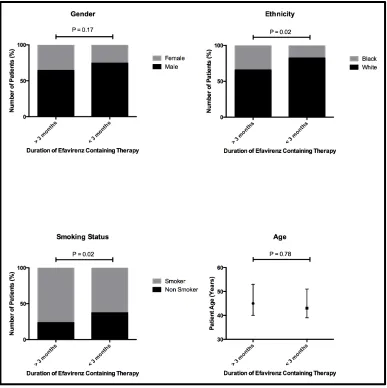
Figure 4 shows the univariate analysis of the test cohort for gender, ethnicity, smoking status and age. Also shown are the P values generated via the χ2 test.
2.3.3 Association of GABA SNPs With Early Treatment
Discontinuation, Univariate Analysis
Hardy-Weinberg equilibrium was assessed for all genotypes in both the training and test cohorts. Rs211037 was found not to be in Hardy-Weinberg equilibrium (P > 0.01), all other genotypes were in Hardy-Weinberg equilibrium (P < 0.05).
P V al ue 0. 56 0. 27 0. 70 0. 39 0. 66 0. 42 0. 76 iv ar ia te a na ly si s of t he t ra in in g co ho rt f or S N P s in t he G A B A r ec ep to r su bu ni ts w he n gr ou pe d by h et er oz yg ot es fo r th e es t w it h ei the r the hom oz ygous c om m on al le le or the hom oz ygous va ri ant a ll el e. He te ro zy go us co m m on al le le + H om oz yg ou s va ri ant a ll el e
42% 58% 66.
7% 33. 3% 76. 5% 23. 5% 78. 4% 21. 6% 11. 8% 88. 2% 39. 2% 60. 8% 42. 0% 58. 0% Ho m oz yg ou s Co m m on a ll el e 37. 6% 62. 4% 58. 2% 41. 8% 78. 9% 21. 1% 83. 5% 16. 5% 9. 7% 90. 3% 33. 3% 66. 7% 39. 7% 60. 3% P V al ue 0. 52 0. 10 0. 95 0. 09 0. 34 0. 30 0. 31 Ho m oz yg ou s va ri ant a ll el e 88. 0% 12. 0%
98% 2.0% 98.
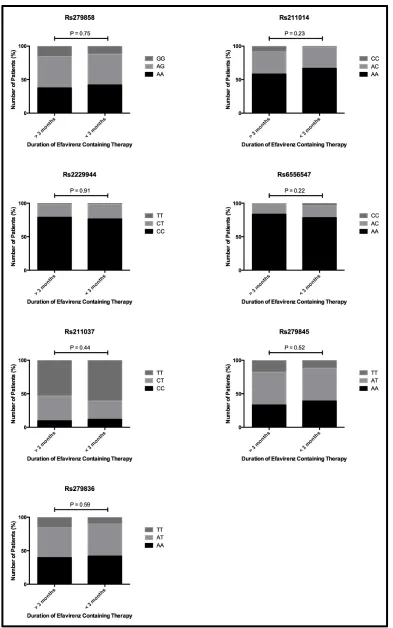
Figure 6 shows the univariate analysis of the test cohort for SNPs in the GABA receptor subunits (Rs211014 and Rs6556547). Black bars indicate homozygous common allele, light grey indicate heterozygous and dark grey indicate homozygous variant alleles. Also shown are the P values generated via the χ2 test.
2.3.4 Association of GABA SNPs With Early Treatment
Discontinuation, Multivariate Analysis
As ethnicity and smoking status were revealed to have a significant association and both Rs211014 and Rs6556547 (when common allele and heterozygotes were compared against homozygous variant alleles) were found to trend towards significance, these 4 variables were considered in the multivariate analysis of the training cohort. The multivariate analysis (Table 6) showed neither Rs211014 and Rs6556547 were associated with early treatment discontinuation. Both Ethnicity and smoking status showed a strong association, P = 0.001 and P < 0.001 respectively.
Covariate Odds Ratio P value
Ethnicity 0.25 (0.11-0.54) 0.001
Smoking Status 0.37 (0.23-0.59) <0.001
Rs211014 NS 0.28
Rs6556547 NS 0.11
In the test cohort Rs211014 and Rs6556547 were not shown to be significant in the univariate analysis. Only ethnicity and gender were shown to be significant and included in the multivariate analysis (Table 7). Only ethnicity was determined to be significantly associated with early treatment discontinuation.
Covariate Odds Ratio P value
Ethnicity 0.13 (0.29-0.62) 0.01
Gender NS 0.38
2.4 Discussion
There have been multiple previous studies examining genetic associations with efavirenz-associated CNS toxicity. Polymorphisms in genes such as CYP2B6, constitutive androstane receptor (CAR), ABCG2 (BCRP) and ABCC1 (MRP1) have shown an association with of efavirenz associated CNS toxicity (65, 72, 126). Many of these associations are linked to efavirenz plasma concentrations. However, factors influencing plasma concentrations do not fully explain the development of CNS toxicity. This is demonstrated by examining ethnicity. Despite black patients being at risk of having higher plasma concentrations of efavirenz, studies have demonstrated (including the data presented here) that black patients show decreased rates of CNS toxicity and treatment discontinuation (75). This indicates that confounding factors may be involved in the aetiology of efavirenz CNS toxicity.
The selected SNPs examined in this study are in the genes coding for the α2, β2
and γ2 subunits. Although the α1+2, β2 and γ2 subunits form the most common
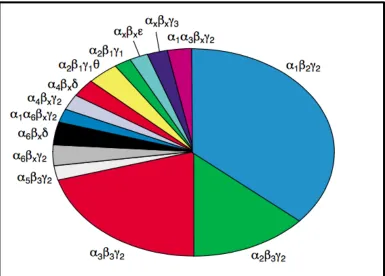
GABA receptor, there are 15 different subunits that can organise in different ways to form multiple GABA receptors (111). Figure 7 shows the receptors formed from the subunits found in rat brain. Given the wide array of possible receptors it is indeed possible that efavirenz may interact with one or more GABA receptor subtypes. Therefore, future studies may identify genetic associations that implicate GABA receptor subtypes in the development of efavirenz-associated CNS side effects.
[image:78.595.115.500.329.605.2]Another reason the SNPs examined here showed no association with early treatment discontinuation is perhaps the GABA receptor does not play a role in CNS toxicity. As previously discussed there are other neurotransmitters implicated in the natural occurrence of symptoms associated with efavirenz CNS toxicity. Indeed, there is data generated from in vitro and genetic association studies supporting the role of neurotransmitters. Recent studies have provided evidence to implicate the serotonin receptor 5 hydroxy tryptamine 2A (5-HT2A).
Efavirenz has been shown to act as a weak partial agonist in cell based assays and induces behavior consistent with activation of the 5-HT2A receptor in rodent
behavioral models (127). The in vitro evidence is supported by data generated in humans. Following 7 days of exposure to efavirenz, it was found patients suffered several sleep disturbances including reduced time to sleep onset, an increase in non-rapid eye movement sleep and reduced performance on an attention switching task. Treatment with a 5-HT2A antagonist induced some of
the effects observed in efavirenz treatment, indicating an interaction with efavirenz and the 5-HT2A receptor (128). Additionally it has been shown that the
SNP 5-HT2A 102C>T has a relationship with reports of sadness in patients
A limitation of this study is treatment discontinuation was used to indicate efavirenz CNS toxicity in place of a detailed patient history of CNS disturbances. In addition to CNS toxicity, patients may discontinue for virological failure, poor adherence. Early treatment discontinuation is assumed to be in response to the development of CNS toxicity. However, this surrogate marker for CNS disturbance may be insufficient to gauge the true frequency of CNS toxicity within the population.
Chapter 3
The in vivo effects of solid drug nanoparticle and conventional
Contents
3.1 Introduction 65
3.2 Methods and Materials 69
3.2.1 Materials 69
3.2.2 Animals and Treatment 69
3.2.3 Emulsion-Templated Freeze-Drying to
Form Efavirenz Nanoparticles 70
3.2.4 Drug Treatment 70
3.2.5 Equipment 71
3.2.6 Elevated Plus Maze Procedure 71
3.2.7 Statistics 73
3.3 Results 74
3.3.1 Spatial Distribution 74
3.3.2 Ethological Measures 78
3.1 Introduction
Over the past 30 years there have been remarkable advancements in the therapy of HIV. The approach to treatment has evolved from simple monotherapy to a complex dosing regimen comprised of multiple drugs from numerous classes (129). Despite the significant advances in using this treatment approach, there are many aspects of modern antiretroviral therapy that may be improved. For example, the development of new pharmaceutical agents can be prohibitively expensive and are often abandoned due to inherent issues in drug exposure, efficacy and/or safety. Nano-formulation technologies offer the opportunity to examine existing pharmaceutical agents and address inherent issues in drug pharmacokinetics (poor absorption, rapid clearance, unfavourable tissue distribution, etc) whilst maintaining the favourable properties of the drug (92).
The NNRTI efavirenz has been used in first-line therapy of HIV for over 15 years (130). Efavirenz displays potent activity against wild type HIV-1, IC50
(against viral replication) 0.51 ng/mL, Ki (inhibition of the RT enzyme) 2.93
nmol/L and a long t1/2 of 40-76 hours, enabling once daily dosing (57, 89).
the issue of poor drug solubility. Utilising an emulsion-templated freeze-drying process, SDNs were produced that achieved 70% drug loading. In vitro studies showed increased cellular accumulation and reduced cytotoxicity of efavirenz in Caco-2 cells while in vivo pharmacokinetic studies performed in rats demonstrated an increase in plasma efavirenz concentrations of approximately 4-fold following a single oral dose (97).
Efavirenz is associated with neurocognitive adverse events, which can negatively impact patient treatment (89). Efavirenz CNS toxicity and the negative impact on patient adherence are discussed in section 1.4.1. Although the clinical efficacy of efavirenz is well characterised, there is a paucity of information regarding the underlying mechanisms of efavirenz-associated CNS toxicity, making testing of novel efavirenz formulations problematic.
Here we investigated neurocognitive disturbances in rats using the EPM after administration of a conventional pre-clinical formulation of efavirenz or SDN formulation of efavirenz. In this model, the degree of anxiety was demonstrated by the relative proportions of time spent in the open arms versus the closed arms and central platform, with greater anxiety linked to less time on the open arms (134). In addition to the traditional measures, there are a number of ethological measures that may increase the sensitivity of the EPM test. These measures can be characterised into two groups, risk-assessing behaviour and behaviour-indicating sedation. Risk-assessing behaviour includes head dips, stretch attend posture, rears and closed arm returns. Sedation is described by periods of grooming and other non-exploratory behaviour (135). Recording behaviour associated with risk assessment and sedation allows analysis of behaviour whilst on the EPM that would otherwise be unaccounted.
3.2 Methods and Materials
3.2.1 Materials
Male Wistar rats were purchased from Charles River (Oxford, UK) Methylcellulose was purchased from Sigma Aldrich (Dorset, UK). Efavirenz powder (>98% pure) was purchased from LGM Pharma inc (Boca Raton, USA). All other consumables were purchased from Sigma Aldrich (Dorset, UK).
3.2.2 Animals and treatment
3.2.3 Emulsion-Templated Freeze-Drying to Form Efavirenz
Nanoparticles
Efavirenz SDNs were prepared as described previously (97). In Brief, a mixture of efavirenz (dissolved in chloroform) and stabilisers (poly[vinyl alcohol] and α -tocopherol polyethylene glycol succinate, dissolved in H2O) was prepared in the
ratio of 70% efavirenz, 20% poly(vinyl alcohol) and 10% α-tocopherol polyethylene glycol succinate. The mixture was emulsified using a Covaris S2x acoustic homogenisation system (Covaris, MA, USA). Samples were immediately freeze-dried leading to the formation of an emulsion template porous monolith. SDNs were dispersed in dH2O for use in in vivo experiments.
3.2.4 Drug Treatment
Wistar rats were assigned to 3 groups (10 rats per group) and dosed with either conventional efavirenz (10 mg/kg, 2ml/kg 0.5% methylcellulose in dH2O), SDN
formulated efavirenz (10mg/kg, 2ml/kg in dH2O) or vehicle control (2ml/kg
0.5% methylcellulose in dH2O). Dosage was based on individual weight taken
3.2.5 Equipment
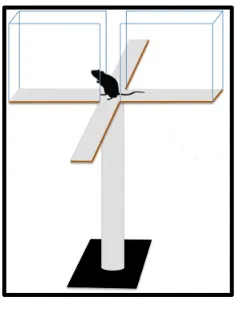
[image:89.595.254.372.297.454.2]The EPM was a wooden plus shaped maze with a black Plexiglas floor. The maze consisted of 2 open arms (10x50 cm), 2 closed arms enclosed with clear Plexiglas (10x50x50 cm) and a central platform (10x10 cm). The maze was fixed to a black metal base (50cm) to elevate the maze above ground level. The edges of the maze were raised (0.5cm) to facilitate retention of the rats.
Figure 1 depicts the EPM
3.2.5 Elevated Plus Maze Procedure
Behavioral Measure Description
Open arm entrance An entrance to open arm is counted as 4 paws placed on the open arm
Closed arm entrances An entrance to open arm is counted as 4 paws placed on the closed arm
Time in open arm The time (expresses as a percentage of total time on the maze) spent on the open arm
Time in closed arm The time (expresses as a percentage of total time on the maze) spent on the closed arm
Time on central platform The time (expresses as a percentage of total time on the maze) spent on the central platform
Central platform latency Time taken to initially move from central square
Risk assessment The number of occurrences of behaviour indicating assessment of the environment for potential risk factors (stretch attend postures, head dips and rearing)
Sedation The total time spent stationary (grooming and non-exploratory behaviour)
Table 1 summary of the spatial and ethological measures recorded during exposure to the EPM