1
Staff burnout in paediatric oncology: new tools to facilitate the development
and evaluation of effective interventions
S. Mukherjee PhD, MSc, BSc (Hons) Research Fellow, B. Beresford PhD, BSc
(Hons) Research Director and A. Tennant PhD, BA
Abstract
Working in paediatric oncology can be stressful, and staff may need support if they are to avoid burnout, but there is currently no evidence base to guide the development of
interventions. As a significant barrier to addressing this gap is a lack of context specific research instruments, a project was undertaken to develop measures of the stressors and rewards experienced by staff. Measure development involved: (1) qualitative interviews with a purposive sample of paediatric oncology staff to develop an ‘item pool’ (n=32); (2)
selection of items for draft measures; (3) cognitive interviews (n=9) to gather feedback on draft measures; (4) a survey of staff (n=203) using the draft and comparator measures; (5) factor and Rasch analysis to determine the scaling properties of the measures; (6) an assessment of construct validity. As a result, the Work Stressors Scale - Paediatric
Oncology (WSS-PO) and the Work Rewards Scale - Paediatric Oncology (WRS-PO) were created. Both measures have considerable content validity, and fulfil classical test theory requirements and Rasch model requirements for an interval level scale. These new
measures can be used in research and clinical practice to investigate factors associated with burnout, and to facilitate and direct the development of staff interventions.
Keywords: work-related stressors, work-related rewards, burnout, paediatric oncology, staff support, Rasch analysis.
This is the accepted version of the following article: Mukherjee, S., Beresford, B. and Tennant, A. (forthcoming) Staff burnout in paediatric oncology: new tools to facilitate the development and evaluation of effective interventions, European Journal of Cancer Care, (Available online from 23 January 2014) which has been published in final form at http://onlinelibrary.wiley.com/doi/10.1111/ecc.12176/abstract
2
INTRODUCTION
The need to tackle work-related stress is a priority within health services due to mounting evidence that, not only does it take its toll on the individuals, but has consequences for patients and colleagues (for example, Department of Health, 2010; Boorman, 2009). Burnout and mental health difficulties have been shown to be associated with adverse clinical events, poor decision-making, poor quality of care and irritability with patients and colleagues
(Franco et al., 2002; Halbesleben and Rathert, 2008; Shanafelt et al., 2010; van Wyk and Pillay-Van Wyk, 2010). There are also economic reasons for intervening, since work-related stress is a major cause of sickness absence and presenteeism, both of which are costly to organisations and put patient care and safety at risk (van Wyk and Pillay-Van Wyk, 2010).
Within the literature on related stress, it is recognised that there are a core set of work-related stressors which are found in most work contexts (for example, monotonous and unpleasant tasks, high workload and pace, lack of control, and poor interpersonal relationships with colleagues etc.) and have an adverse affect on staff (Stavroula et al., 2003). As a result there are many generic measures of work-related stressors. However, it is also acknowledged that many jobs have their own unique stressors and job specific measures are required to capture such experiences (Rick et al., 2001). Within paediatric oncology, while many generic work-related stressors may be experienced by staff, it is argued that there are also specific aspects of work within the specialism which increase the risk for burnout and mental health difficulties (Mukherjee et al., 2009). These include
administering and managing complex treatment regimes which have a significant impact on the child’s health and well-being, the untimeliness of the death of a child, and supporting and managing demands from families. Indeed, it has been acknowledged for some time, that staff working within the specialism may need support if they are to avoid ‘burnout’1 and
mental health difficulties (Spinetta et al., 2000; Roth et al., 2011).
However, a review of the evidence base on burnout and mental health difficulties within paediatric oncology, and the stressors which contribute to these outcomes, is highly limited and of very mixed quality (Mukherjee et al., 2009). Indeed, to-date the vast majority of the research has been concerned with describing the experiences of nurses, and many of these have been small-scale, local studies. As a result, we currently do not know: the prevalence of burnout/mental health difficulties amongst paediatric oncology staff; which elements of the job contribute to poor outcomes; and the factors that moderate or mediate these outcomes, including the way that work-related rewards ‘off-set’ the negative impact of work-related stressors. Since this review was conducted, the few additional studies have been published have been concerned with specific staff groups and/or suffer from poor response rates (eg. Roth et al., 2011). This absence of evidence means that any efforts to develop or deliver staff support interventions to prevent staff burnout/mental health difficulties are not informed by information on the types of work-related stressors within paediatric oncology which increase the risk poor outcomes and/or are particular issues for staff, and which groups of staff should be targeted.
1
3 A lack of appropriate research instruments to measure work-related stressors and rewards is a significant barrier to developing this evidence base. There are some measures of work-related stressors within adult oncology services (Shanafelt, 2005; Rameriz et al., 1995; Le Blanc et al., 2007), but they too do not assess experiences specific to paediatric oncology. Within paediatric oncology, measures have been developed for nurses but these cannot be applied to the rest of the multi-disciplinary team (MDT) (Emery 1993; Hinds et al., 1990). Similarly, paediatric oncology specific measures of the positive aspects of work are only available for nurses (Steen et al., 2003).
The ‘Life in Paediatric Oncology Project’ (LIPOP) sought to begin to address this evidence gap by developing and validating the measures of work-related stressors and rewards experienced by staff working in paediatric oncology. The intention was that these measures would be suitable for completion by both clinical and non-clinical staff, enabling researchers to examine, and compare, experiences across the MDT. This paper reports the development of these measures, presents findings on the psychometric evaluation of these measures, and discusses how they can and are being used in research and clinical practice.
Theoretical frameworks guiding the research
The study was guided by the well-established transactional model of stress and coping (Lazarus 1999; Lazarus and Folkman, 1984). According to this model, nothing can be labelled as stressful unless it is appraised as such by an individual. This appraisal is influenced by the features of the event/situation and the resources (psychological, social, organisational factors) an individual has available to respond to it. In line with this model, the stressor measure would be a measure of staff’s perceptions of how stressful they find their work, not a measure of how frequently they encountered situations assumed to be stressful for staff. In addition, the development of the rewards measure was influenced somewhat by the Effort-Reward Imbalance model of job stress (Siegrist, 1996) which suggests that job strain is the result of an imbalance between effort and reward. However, this model has been criticized for equating rewards to salary, esteem and security/career opportunity, with little consideration given to the possibility that there might be other job rewards (Bakker and Demerouti, 2007). Therefore in this study it was decided from the outset that care would be taken to base the measure on staff’s own perceptions of the rewards of the work, rather than presupposing what the rewards might be.
METHODS
A rigorous approach to measure development was adopted and was in line with recent guidelines on subject-reported measures which require that measures are grounded in the real life words and accounts of respondents(USA Department of Health and Human Services 2009) and including modern psychometric methods. Stages in the process
4 sample of paediatric oncology staff; the analysis of data from this survey in order to
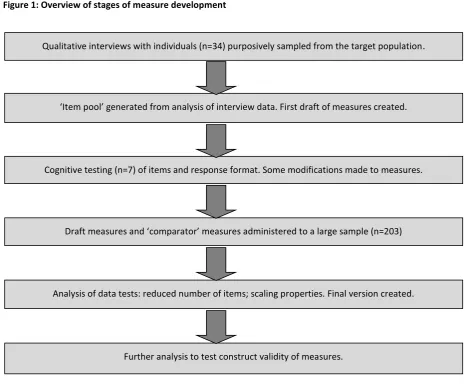
[image:4.595.69.536.151.539.2]determine which items should be carried forward into the final version of the measures; and an assessment of the construct validity of the final measures (see Figure 1 for an overview of these stages).
Figure 1: Overview of stages of measure development
In the UK the overwhelming majority of children are cared for through one of 19 paediatric oncology treatment centres (PTCs), with treatment given at the regional PTC or at a local shared care centre. In this study, across the stages of measure development, research participants were recruited from seven of these PTC’s and via CLIC Sargent (a UK children’s cancer charity which funds play specialists, youth workers and social work posts in PTC’s). The sample included clinical (nurses and doctors) and non-clinical staff (play specialists, youth workers, social workers). Inclusion criteria for the study were that staff had worked in paediatric oncology for at least six months and were part of the multi-disciplinary team (MDT).
Ethical approval was sought and obtained from an NHS Research Ethics Committee. As there was a risk that the process of participating in the study might cause distress or alert an individual to their need for support, all staff invited to take part in the project received a ‘Staff Support Leaflet’. This leaflet provided information about sources of support that were
Qualitative interviews with individuals (n=34) purposively sampled from the target population.
‘Item pool’ generated from analysis of interview data. First draft of measures created.
Cognitive testing (n=7) of items and response format. Some modifications made to measures.
Draft measures and ‘comparator’ measures administered to a large sample (n=203)
Analysis of data tests: reduced number of items; scaling properties. Final version created.
5 available to them from their employer and via professional bodies and other national support organisations.
Stage 1 - qualitative interviews with a purposive sample of paediatric oncology staff to develop an ‘item pool’
One hundred and fourteen staff across two PTCS and CLIC Sargent were invited to take part in Stage 1. Fifty-two (45.6%) staff volunteered to take part. From this pool, 32 were selected for interview using a purposive sampling framework in order that the following factors were represented: size of PTC, professional group, seniority, and gender. The final sample included: 10 doctors (n=6 consultants; n=4 specialist registrars); 11 nurses (n=3 Band 5-6, 6-20 months experience; n=4 Band 5-6, 7-15 years experience; n=4 Band 7-8); and 11 non-clinical staff (n=3 social workers; n=4 play specialists; n=4 youth workers). The topic guide for the interview was informed by a previously conducted review of the literature (Mukherjee et al., 2009) and focus groups with clinical and non-clinical paediatric oncology staff.
Interviewees were asked to describe both one-off or occasional events and regular or everyday experiences which they encountered in the course of their work and which were a source of stress. This was defined in the interview as: ‘events or situations which you find difficult, upsetting, annoying, challenging or a hassle’. Interviewees were also asked to describe events or situations experienced during the course of their work which they found rewarding or a source of satisfaction.
Participants were given the option of being interviewed by telephone or face-to-face, at a time and place convenient to them. All but one chose to be interviewed by telephone. Interviews were, with participants’ permissions, audio-recorded.
Stage 2 - selection of items for the draft measures
The aim of this stage of the measure development was to identify items for inclusion in the draft measures. Many pre-existing-stressor measures have been criticised for having questionable content validity because it is unclear whether the items used capture the full range of stressors encountered within a given context (Rick et al 2001). Therefore an important element of the work was ensuring that the item pools were comprehensive. Transcripts of the interviews were produced and analysed with the aim of identifying and extracting all ‘segments’ of verbatim text which described a work-related stressor or reward. The process of identifying and extracting these ‘segments’ involved a team of six
researchers who were fully briefed on the task.
6
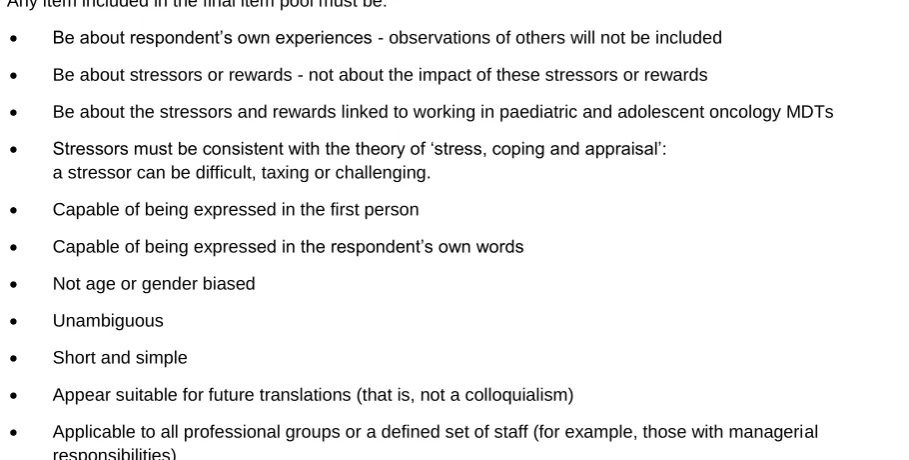
Table 1: Item inclusion framework
Any item included in the final item pool must be:
Be about respondent’s own experiences - observations of others will not be included
Be about stressors or rewards - not about the impact of these stressors or rewards
Be about the stressors and rewards linked to working in paediatric and adolescent oncology MDTs
Stressors must be consistent with the theory of ‘stress, coping and appraisal’: a stressor can be difficult, taxing or challenging.
Capable of being expressed in the first person
Capable of being expressed in the respondent’s own words
Not age or gender biased
Unambiguous
Short and simple
Appear suitable for future translations (that is, not a colloquialism)
Applicable to all professional groups or a defined set of staff (for example, those with managerial responsibilities)
The segments extracted by the two researchers were then compared and duplicates removed resulting in a single list for each transcript. At this stage there were a total of 752 stressor ‘segments’ and 415 reward ‘segments’. Some of these segments were subject to minor editing at this stage to make them suitable for use as a measure item. These two collections of segments formed the initial item pools for the measures.
Two researchers (R1 and R2) then independently examined the lists of stressors and rewards in order to identify thematic categories of sources of work-related stress and
[image:6.595.68.458.577.779.2]rewards. The categories generated by the researchers were extremely similar (the difference lying primarily in how fine-grained the categories were and the particular terms used to label a category). A final set of 19 thematic categories for the stressor scale and 12 thematic categories for the rewards scale was agreed between the two researchers (see Table 2).
Table 2: Thematic categories in stage 1 data
Stressors:
Workload and pace
Feeling that quality of care is poor
Environmental stressors (inadequate ward/office/unit environment) Poor relationships with senior managers
Lack of resources
Dealing with death and dying When treatment fails
The unpredictable nature of the condition Making treatment decisions
Not agreeing with treatment decisions Feeling undervalued
Problems within the MDT (conflict/unsupportive colleagues) Working in an emotionally charged environment
7
Causing/witnessing distress in children Working with ‘difficult’ families
Difficulty maintaing work/home boundaries Talking to children about sensitive subjects
Rewards:
Being able to work directly with children
Developing a close or long term relationship with child or family Observing families/children cope with a difficult situation Seeing a child/family recover/get back to normal Helping families/alleviating distress
Feeling you have done a good job
Being valued by parents/staff/hospital/public Being part of a close/supportive MDT
Working with people that provide good quality care/you respect Being able to develop your own role/having freedom in job The challenging/ interesting nature of the work
Developing and using own expertise
One researcher (R1) then sorted all items in the initial item pool into these categories. A second researcher (R2) checked this process and, where disagreements or queries occurred, these were discussed and resolved. The item inclusion criteria were then re-applied by the researchers (R1 & R2) to the items within each category in order to reduce duplicates and redundancy.
Finally items were then assigned a number and entered into a draft measure, using random allocation. The draft version of the stressor measure included 170 items and the draft rewards measure comprised 57 items.
Stage 3 - cognitive interviews to gather feedback on the draft measures
Cognitive interviews (Willis 2005) were used to evaluate respondents’ understanding or interpretation of the content of draft measures and their experiences of completing it. Two approaches were used. First, the ‘think aloud’ technique, in which an individual verbalises their thoughts as they complete the draft questionnaire, was used to identify ambiguities or difficulties in the wording of items, instructions and/or the response format. Second, post-completion, respondents were asked about their experiences of completing the draft tools and suggestions regarding modifications to the layout and response format.
Seven individuals drawn from different professional backgrounds (research, adult palliative care and paediatric oncology) participated in this stage. Those working in paediatric oncology (n=2) were also asked about item relevance and the comprehensiveness of the draft measure.
The cognitive interviews revealed that respondents found it easier to report on how
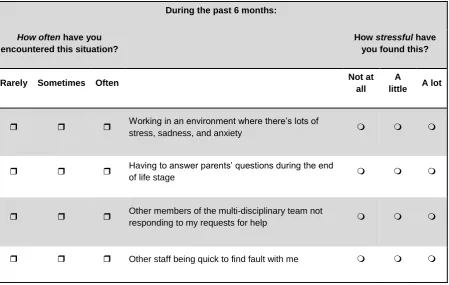
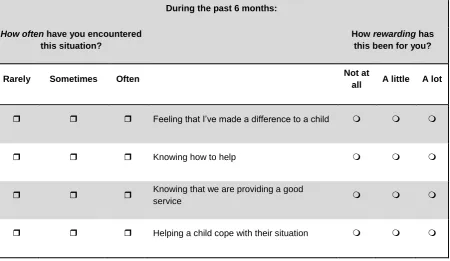
8 sometimes; often. Perceived stressfulness/rewards: not at all; a little; a lot.). However, the scores obtained from these tools would be calculated based on responses to the perceived stressfulness/rewards response option since, in terms of understanding why staff experience burnout or mental health difficulties, it is the perceived stressfulness or rewards of the job that is of interest. For an example of the response format, and a sample of the measure items, see Figures 2 and 3.
Figure 2: Extract from the Work Stressors Scale - Paediatric Oncology (WSS-PO)
This scale looks at situations and events which paediatric oncology staff report encountering at work.
For each statement please tick [] the box (on the left) that best describes how often you have encountered this situation or event during the
past 6 months. Then tell us how stressful this has been for you by ticking [] ‘Not at all’, ‘A little’ or ‘A lot’ (on the right).
During the past 6 months:
How often have you encountered this situation?
How stressful have you found this?
Rarely Sometimes Often Not at
all
A
little A lot
Working in an environment where there’s lots of
stress, sadness, and anxiety
Having to answer parents’ questions during the end
of life stage
Other members of the multi-disciplinary team not
responding to my requests for help
9
Figure 3: Extract from the Work Rewards Scale - Paediatric Oncology (WRS-PO)
This questionnaire describes situations and events which paediatric oncology staff report encountering at work.
For each of the following statements please tick [] the box (on the left) that best describes how often you have encountered this situation or event over the past 6 months. Then tell us how rewarding this has been for you by ticking [] ‘Not at all’, ‘A little’ or ‘A lot’ (on the right).
During the past 6 months:
How often have you encountered this situation?
How rewarding has this been for you?
Rarely Sometimes Often Not at
all A little A lot
Feeling that I’ve made a difference to a child
Knowing how to help
Knowing that we are providing a good
service
Helping a child cope with their situation
Stage 4 - field test survey of the draft and comparator measures
A large-scale postal survey was then used to obtain the data needed to: determine which of the items entered into the draft measures should remain in the final version of measures; test the scaling properties of the final measures: and assess construct validity.
The survey included: the draft stressor and rewards measures; questions collecting demographic and employment information; and, in order to assess construct validity, two comparator measures. In the absence of a ‘gold standard’ comparator, the comparators choosen were the Maslach Burnout Inventory – Human Services Survey (MBI-HSS)
(Maslach and Jackson 1996); and the Health and Safety Executive’s Management Standards Indicator Tool (HSE MS Indicator Tool) (Cousins et al., 2004).
10 measure of burnout and is reported to be reliable, valid and easy to administer (Schaulfeli and Enzmann 1998).
The HSE MS Indicator Tool was developed to provide organisations with a broad indication of how the workforce considers the organisation is performing in managing the risks
associated with work-related stress. The tool consists of 35-items which fall into seven sub-scales (demands, control, managerial support, work colleague support, role, relationships, change). Each item is scored on a scale of 1-5, with lower scores indicating poorer
performance or a potential problem area. The HSE MS Indicator Tool is currently widely used across a range of commercial and public sector organisations throughout the UK.
The survey was administered to 528 paediatric oncology staff drawn from five different PTCS, CLIC Sargent and the staff who had volunteered to participate in Stage 1 interviews. Two hundred and three staff completed the survey (response rate 41.48%). Details of the sample are provided later in this paper (see ‘Results of the Psychomteric Evaluation’). This sample size is sufficient for the requirements of Rasch analysis (Linacre 1994).
Stage 5 - Rasch analysis of the survey data
Rasch analysis was used to determine which items in the draft stressor and rewards measures should be included in the final versions of the measures, and to assess the scaling properties of the measures. Rasch analysis is modern approach to psychometric measure development and evaluation embraced by many because of its rigor and the fact that it overcomes the short-coming of traditional scale development psychometrics (Hagquist et al., 2009; Hobart et al., 2007). In essence, Rasch analysis identifies those items in a draft measure which create a true interval level scale regardless of the characteristics of the respondent. Guidelines on Rasch analysis are now widely available (Pallent and Tennant 2007; Tennant and Conaghan, 2007). The stages of the Rasch analysis were as follows:
i. Exploratory factor analysis to provide an initial idea of likely dimensionality (that is, is the measure a single scale or does it comprise of sub-scales). The factor analysis output was used to identify an item set or, if multidimensional, item sets to take forward to the Rasch analysis.
ii. For each item set: Rasch analysis was used to test the validity and reliability of the item set and, based on outputs of analyses, the item sets which yielded psychometrically acceptable scaling properties were identified.
iii. Testing whether a total score can be obtained (that is, is it a uni-dimensional scale).
The Rasch analysis was undertaken with RUMM 2030 Software (Andrich et al., 2009)
Stage 6 - Assessment of the construct validity of the measures
11
RESULTS OF THE PSYCHOMETRIC EVALUATION
In this section the results of the psychometric evaluation, including the exploratory factor analysis, Rasch analysis, assessment of internal reliability, and construct validity, are described.
Characteristics of survey respondents
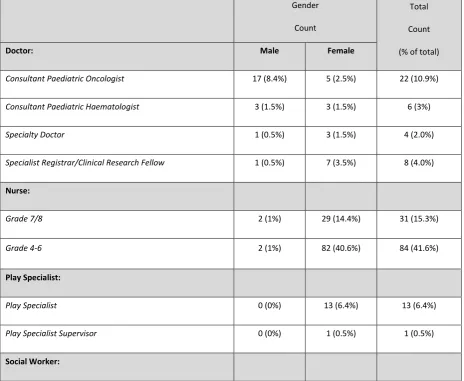
Out of the 203 staff who took part in the survey (see Stage 4 above), 115 (56.9%) were nurses, 47 (23.3%) were non-clinical members of staff (social workers, play specialists and youth workers) and 40 were doctors (19.8%). A breakdown according to grade/level of management responsibility and gender is given in Table 3. Respondents had worked in paediatric oncology between six months and 36 years (median seven years, 10 months) and had been in their current post for between two months and 30 years (median three years, six months). Staff worked across a number of settings, including inpatients (177; 87.2%),
outpatients (120; 59.1%), day units (114; 56.2%), Bone Marrow Transplant Units (99;
[image:11.595.56.521.373.754.2]48.8%), and in the community (40; 19.7%). Staff were contracted to work between 12 and 48 hours a week (median 37.5 hours) but reported that they actually worked between 15 and 76 hours a week (median 38.5 hours).
Table 3: Breakdown of respondents to field test survey by job title and gender
Gender
Count
(% of total)
Total
Count
(% of total)
Doctor: Male Female
Consultant Paediatric Oncologist 17 (8.4%) 5 (2.5%) 22 (10.9%)
Consultant Paediatric Haematologist 3 (1.5%) 3 (1.5%) 6 (3%)
Specialty Doctor 1 (0.5%) 3 (1.5%) 4 (2.0%)
Specialist Registrar/Clinical Research Fellow 1 (0.5%) 7 (3.5%) 8 (4.0%)
Nurse:
Grade 7/8 2 (1%) 29 (14.4%) 31 (15.3%)
Grade 4-6 2 (1%) 82 (40.6%) 84 (41.6%)
Play Specialist:
Play Specialist 0 (0%) 13 (6.4%) 13 (6.4%)
Play Specialist Supervisor 0 (0%) 1 (0.5%) 1 (0.5%)
12
Exploratory factor analysis
An exploratory factor analysis identified three potential dimensions within the stressor draft measure. These dimensions were concerned with stressors originating from/related to: treating/caring for an ill or dying child; organisational issues (including team conflict, workload, and work environment sources of stress); and dealing with parents and families. All items which cross-loaded (i.e. loaded on more than one of these dimensions) were removed from the dataset (n=100/170 items). The remaining 70-items were taken forward into the Rasch analysis. An exploratory factor analysis was also performed on the rewards data. This revealed only one dimension, so all 57-items from the draft rewards measure were retained for Rasch analysis.
Rasch analysis and internal reliability
The initial Rasch analysis was used to identify which of the remaining items would be included in the final versions of the stressor and rewards measures. To be retained as an item, the following criteria had to be met:
The item did not corrupt/distort the uni-dimensional properties of the sub-scale (stressor measure) or scale (rewards measure);
The way the item was responded to was not related to how another item was responded to (that is, local dependency);
The gender, professional group, duration of employment of the respondent did not affect the way the item performed (that is, differential item functioning).
This analysis revealed that items did need to be removed from the draft measures, both due to evidence of local dependency of items and differential item functioning (DIF). After
removal of problematic items, there were 20 items left in each of the three sub-domains of the stressor measure and 35 items in the rewards measure,. These item sets formed the final versions of the measures, termed the Paediatric Oncology: Work-Related Stressors Scale (WSS-PO) and the Paediatric Oncology: Work-Related Rewards Scale (WRS-PO).
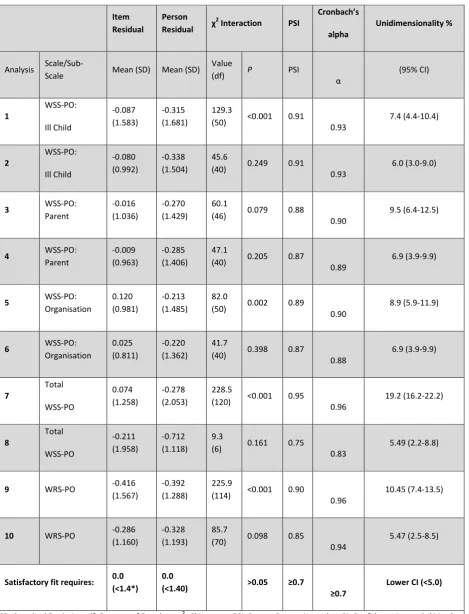
The Rasch analysis was then rerun on the WRS-PO and the sub-scales of the WSS-PO to check for unidimensionality and the ability of the scales/sub-scales to discriminate between at least two groups of people (as assessed by the Person Separation Index). In addition, internal reliability (the extent to which items within a scale tend to be answered in a similar way and therefore can be considered to be measuring the same underlying construct) was
Social Worker 1 (0.5%) 21(10.4%) 22 (10.9%)
Social Worker Supervisor 0 (0%) 7 (3.5%) 7 (3.5%)
Youth Development Worker/Activity Coordinator: 0 (0%) 4 (2%) 4 (2%)
Total 27 (13.4%) 175 (86.6%) 202 (100%)
13 Table 4: Rasch Analysis
Item Residual
Person Residual χ
2
Interaction PSI
Cronbach’s
alpha
Unidimensionality %
Analysis
Scale/Sub-Scale Mean (SD) Mean (SD) Value
(df) P PSI
α (95% CI) 1 WSS-PO: Ill Child -0.087 (1.583) -0.315 (1.681) 129.3
(50) <0.001 0.91 0.93 7.4 (4.4-10.4)
2 WSS-PO: Ill Child -0.080 (0.992) -0.338 (1.504) 45.6
(40) 0.249 0.91 0.93 6.0 (3.0-9.0)
3 WSS-PO:
Parent -0.016 (1.036) -0.270 (1.429) 60.1
(46) 0.079 0.88 0.90 9.5 (6.4-12.5)
4 WSS-PO:
Parent -0.009 (0.963) -0.285 (1.406) 47.1
(40) 0.205 0.87 0.89 6.9 (3.9-9.9)
5 WSS-PO:
Organisation 0.120 (0.981) -0.213 (1.485) 82.0
(50) 0.002 0.89
0.90
8.9 (5.9-11.9)
6 WSS-PO:
Organisation 0.025 (0.811) -0.220 (1.362) 41.7
(40) 0.398 0.87
0.88 6.9 (3.9-9.9) 7 Total WSS-PO 0.074 (1.258) -0.278 (2.053) 228.5
(120) <0.001 0.95 0.96 19.2 (16.2-22.2)
8 Total WSS-PO -0.211 (1.958) -0.712 (1.118) 9.3
(6) 0.161 0.75 0.83 5.49 (2.2-8.8)
9 WRS-PO -0.416 (1.567)
-0.392 (1.288)
225.9
(114) <0.001 0.90 0.96 10.45 (7.4-13.5)
10 WRS-PO -0.286 (1.160)
-0.328 (1.193)
85.7
(70) 0.098 0.85 0.94 5.47 (2.5-8.5)
Satisfactory fit requires: 0.0 (<1.4*)
0.0
(<1.40) >0.05 ≥0.7
≥0.7
Lower CI (<5.0)
14 assessed using Cronbach’s alpha. In the work stressor literature a cut off of 0.70 is
generally considered acceptable for Cronbach’s alpha (Rick et al., 2001). However, in this study we adhered to the more stringent criteria set by Bland and Altman (1997) who argue that , while α values 0.70-0.80 are satisfactory for research tools aimed at comparing groups, if a scale is to be used in clinical situations, when individual scores are of interest, the minimum requirement is α 0.90. These analyses (see Table 4 for results and satisfactory fit requirements) indicated that both WRS-PO and the WSS-PO sub-scales performed very well on these checks and therefore met both classical test theory requirements and Rasch model requirements for being robust, interval scales.
Finally, the WSS-PO items were then analysed to test whether it would be valid to calculate a ‘total’ score, in addition to the three sub-scale scores. Findings from the analysis revealed this was acceptable. At this stage in the psychometric evaluation, therefore, the following had been established:
A 35-item, unidimensional, interval level scale, hypothesised as measuring work-related rewards in paediatric oncology and suitable for use across the MDT, had been created (WRS-PO);
A 60-item scale, comprising three interval level sub-scales, hypothesised as measuring work-related stressors in paediatric oncology and suitable for use across the MDT, had been created (WSS-PO). It was also possible to compute a total score.
Construct validity
The final stage in the psychometric evaluation was to test the construct validity of the newly created WRS-PO and WSS-PO. In other words, are they measuring the constructs which they were designed to measure. This was done using correlational analysis between the WSS-PO and the WRS-PO and the comparator measures.
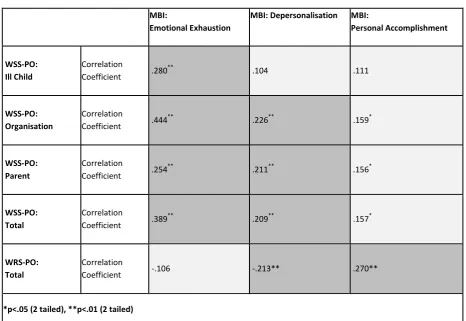
Correlations between the WSS-PO and WRS-PO and MBI-HSS (see Tables 5 and 6) respectively supports the construct validity of these new measures. Scores on the WSS-PO were positively associated with MBI-HSS emotional exhaustion and depersonalisation sub-scales. The WRS-PO was positively associated with the MBI-HHS personal accomplishment sub-scale, and negatively associated with MBI-HSS depersonalisation sub-scale. The correlations are moderate to weak, but given that the new measures and the MBI-HSS are not assessing equivalent constructs, and a range of factors moderate the impact of exposure to stressors on outcomes, such as burnout, this is to be expected. The strongest association between the WSS-PO and the MBI-HSS was between the Organisation sub-domain of the WSS-PO and emotional exhaustion sub-scale of the MBI-HSS (r= .44, p<.01). The strongest association between the WRS-PO and the MBI-HSS was with the Personal Accomplishment sub-scale (r=.027, p<.01).
15 Table 5: Associations between new measures and the MBI-HSS (n=203)
MBI:
Emotional Exhaustion
MBI: Depersonalisation MBI:
Personal Accomplishment
WSS-PO: Ill Child
Correlation
Coefficient .280
**
.104 .111
WSS-PO: Organisation
Correlation
Coefficient .444
**
.226** .159*
WSS-PO: Parent
Correlation
Coefficient .254
**
.211** .156*
WSS-PO: Total
Correlation
Coefficient .389
**
.209** .157*
WRS-PO: Total
Correlation
Coefficient -.106 -.213** .270**
*p<.05 (2 tailed), **p<.01 (2 tailed)
Table 6: Associations between new measures and the HSE-Management Indicator Tool (n=203)
HSE MS: Demands HSE MS: Control HSE MS: Management HSE MS: Support HSE MS: Relationships HSE MS: Role HSE MS: Change WSS-PO: Ill Child Correlation
Coefficient -.116 -.299
**
-.061 .046 -.004 -.049 -.186**
WSS-PO: Organisation
Correlation Coefficient -.386
**
-.240** -.349** -.258** -.386** -.201** -.307**
WSS-PO: Parent
Correlation Coefficient -.200
**
-.209** -.073 .066 -.097 -.047 -.175*
WSS-PO: Total
Correlation Coefficient -.268
**
-.281** -.179* -.049 -.173* -.107 .246**
WRS-PO: Total
Correlation
Coefficient .059 .074 .295** .216** .152* .289** .251**
[image:15.595.73.540.475.759.2]16 found between HSE tool and the ‘Organisation’ sub-domain of WSS-PO. This makes sense given that this sub-domain assesses the more generic sources of stress found within paediatric oncology, such as workload and relationships with team members.
Significant but weak positive correlations were also found between the WRS-PO and some, but not all, domains of the HSE tool. The strongest of these associations was between the work-related rewards and support from management.
DISCUSSION
This paper has reported the creation of two new, robust measures for use with staff working in paediatric oncology. The 60-item WSS-PO provides a measure of the total intensity of the work-related stressors, as well as sub-scale scores for ‘Ill Child’ (caring for an ill or dying child); ‘Parent’ (dealing with parents and families); and ‘Organisation’ (team conflict,
workload and work environment sources of stresses). The 35-item WRS-PO provides a total score of the perceived intensity of the non-financial work-related rewards experienced by paediatric oncology staff.
In the course of conducting this study, evidence on the nature of work-related stressors and rewards experienced by staff working in paediatric oncology has been generated. The research indicates that work-related stressors are multi-dimensional, including some generic ‘team-centred/organisational’ stressors (that is, workload, team conflict, and so on), and some as suggested by the International Society of Paediatric Oncology (Spinetta et al., 2000), which are closely related to the nature of the work in paediatric oncology (working with ill and dying children, dealing with parents). In terms of rewards, the findings indicate that these are clearly not financial, nor are they about the terms and conditions of work. Instead they focus on developing relationships with patients and their families, seeing positive outcomes for families, working with colleagues you respect and who in turn respect you, and developing expertise in an intellectually challenging field. In line with
recommendations by others researching work-related stress (Demerouti and Bakker, 2011; Rick, 2002; Cox 2000), such findings highlight the importance of using context-specific measures to assess work-related stressors and rewards since clearly, within the field of paediatric oncology, reliance on generic measures would provide an incomplete picture of staff experiences and could result in inappropriately targeted interventions.
While the development of the WSS-PO was heavily influenced by Lazarus and Folkman’s Transactional Model of stress and coping, the final measure fits with other theoretical
frameworks which have dominated the work stress literature in recent years, such as the Job Demands-Resources model (Demerouti and Bakker, 2011;Bakker and Demoerouti, 2007), which proposes that every occupation has its own specific risk factors associated with job-related stress. In addition, both the Transactional Model of Stress and Coping and the Job Demands-Resources model argue that working in paediatric oncology per se is not
necessarily stressful for the individual and that there are opportunities for employers to intervene to support staff in their role. These notions also underpinned the development of these new measures.
Both the WSS-PO and WRS-PO have been through a rigorous process of psychometric evaluation and meet the requirements necessary to produce an interval level scale
17 in the real life experiences of paediatric oncology staff so have considerable content validity (USA Department of Health and Human Services 2009).Importantly, both the WSS-PO and WRS-PO can be administered across the MDT to clinical and non-clinical staff. In addition to information on frequency of exposure to stressors and rewards is also generated; however, these responses are not computed to a total score and do not provide interval level data. The WSS-PO and WRS-PO are available free of charge to non-commercial organisations through the project website (http://www.york.ac.uk/LIPOP). Feedback on the measures is welcomed from anyone who registers to use the measures.
Unfortunately, although an attempt was made to measure the test-retest reliability of the WSS-PO, this was unsuccessful due to poor response to the second administration of the measure. This was disappointing, but is not an insurmountable problem as a test-retest element could be included in future studies using the WSS-PO and WRS-PO.
The primary reason for developing the WSS-PO and WRS-PO was to facilitate and enable research into relationship between work-related stressors and rewards and staff outcomes, such as burnout, psychiatric morbidity, sickness absence and intention to leave the
specialism. The absence of robust measures of work-related stressors and rewards suitable for use with all members of the MDT has prevented such work being carried out in the past. Now that the WSS-PO and WRS-PO are available it will be possible to research factors that exacerbate or alleviate difficulties for staff, and identify the likely components of an effective intervention.
Since becoming publicly available however, the research team has been surprised by the level of interest expressed by paediatric oncology teams in the UK and elsewhere who wish to use the scales within clinical practice. Our correspondence with clinicians, nurses and clinical/health psychologists indicate that the WSS-PO and WRS-PO are perceived as having the potential to direct and inform efforts to develop or improve support to staff. Indeed, at the time of writing this paper we are aware that the scales have been used in a number of ways. First, the scales have been administered to staff and responses analysed on an item-by-item basis in order to identify which aspects of work are rated as most stressful by staff and should be given priority when devising an intervention. Second, within the context of delivering a group intervention, the process of completing the WSS-PO and WRS-PO has been found to be useful in facilitating discussions, enabling staff to
acknowledge the stressors they experience and the type of issues they would like to tackle during an intervention. Third, practitioners believe there is a potential for using the scales to evaluate staff support interventions by measuring changes in perceived intensity of, or frequency of exposure to, work-related stress and work-related rewards experienced by staff. However, as reported earlier, difficulties with test-retest data collection mean the stability of the scales still need to be checked. The authors are currently addressing this issue and findings will be reported in the second editions of the scale manuals. Once this is available, it will be possible to use the WSS-PO and WRS-PO as outcome measures.
18 scales for use in these specialisms is unlikely to be a significant task. We know from
preliminary consultations with practitioners that many of the WSP-PO and WRS-PO items are also valid in these settings. The research team are also interested in exploring whether adult oncology versions of the WSS-PO and WRS-PO could be developed. However, before being used in other specialisms (either paediatric or adult) the measures would need to undergo a formal adaptation process, including both an assessment of the content validity of the items in other settings and a full psychometric evaluation. The authors would be
interested to hear from practitioners or researchers who would like to carry out such work,
CONCLUSION
In the current economic climate, with many staff having to deal with a reduction in staff numbers and in resources, it is predicted that work will become increasingly stressful. Evidence is already emerging that the recent 2008-2009 recession has had an impact, with work-related stress increasing across all sectors, but at a greater rate within the public sector (Chandola, 2010). In order to prevent work-related stress leading to burnout, it is important that staff are given appropriate support. Not only will this help the individual staff members concerned, and patients in their care, but it will also be beneficial to the rest of the MDT, who have to deal with the consequences of a colleague experiencing burnout. It is essential, however, that these interventions are evidence-based, both in terms of the content and approach (MRC, 2008). Reviews of stress management and wellbeing interventions indicate that they can be beneficial for staff, but only if they are based on a thorough analysis of the risks or stressors experienced by staff and the intervention focuses on addressing the issues identified (Semmer, 2008; Cox 2000).The WSS-PO and WRS-PO can help with this process. Although they were developed as resources to support theoretical and conceptual
understandings of work-related stress within paediatric oncology, they also appear to have more practical and direct application within MDTs who are seeking to develop staff support.
ACKNOWLEDGEMENTS
19
REFERENCES
Andrich D., Sheridan B.E.D., and Luo G. (2009) RUMM2030: Rasch Unidimensional Models for Measurement. Perth Western Australia: RUMM Laboratory.
Bakker A.B. and Demerouti E. (2007). The Job Demands-Resources model: State of the art. Journal of Managerial Psychology, 22, 309-328.
Boorman S. (2009) NHS Health and Well-Being. Boorman Review: Final Report. Department of Health, London.
Chandola T. (2010) Stress at Work. British Academy Policy Centre, London.
Cousins R., Mackay C.J., Clarke S.D., Kelly C., Kelly P.J. and McCaig R.H. (2004) 'Management standards’ and work-related stress in the UK: practical development. Work and Stress, 18, 2, 113-136.
Craig P., Dieppe P., Macintyre S., Michie S., Nazareth I. and Petticrew M. (2008) Developing and evaluating complex interventions: the new Medical Research Council guidance. British Medical Journal,337: a1655.
Department of Health (2010). Invisible Patients. Report of the Working Group on the Health of Health Professionals. London.
Demerouti, E. and Bakker A.B. (2011) The Job Demands-Resources model: Challenges for future research. Journal of Industrial Pyschology, 37, 2, A. #974, 9
pages.doi:10.4102/sajip.v37i2.974.
Emery J.E. (1993) Perceived sources of stress among pediatric oncology nurses. Journal of Pediatric Oncology Nursing, 10, 3, 87-92.
Firth-Cozens J. (2001) Interventions to improve physicians’ well-being and patient care. Social Science and Medicine, 52, 215-222.
Franco L.M., Bennet S. and Kanfer R. (2002) Health sector reform and public sector health worker motivation: A conceptual framework. Social Science and Medicine, 54(8),1255–66.
Hagquist C., Bruce M. and Gustavsson J.P. Using the Rasch model in nursing research: an introduction and illustrative example. International Journal of Nursing Studies, 46, 380-393.
Halbesleben J. and Rathert C. (2008) Linking physician burnout and patient outcomes: Exploring the dyadic relationship between physicians and patients. Health Care
Management Review 33,29-39
Hays R.D., Morales L.S. and Reise S.P. (2000) Item response theory and health outcomes in the 21st Century. Medical Care, 38, 9, Supplement II: II-28-II-42.
20 Hobart J.C., Stfen J.C., Zajicek J.P. and Thompson A.J. (2007) Rating scales as outcome measures for clinical trials in neurology: problems, solutions, and recommendations. Lancet Neurology, 6, 1094-105.
Lazarus R.S. (1999) Stress and Emotion: A New Synthesis. Free Association Books, London.
Lazarus R.S. and Folkman S. (1984) Stress, Appraisal, and Coping. Springer, New York.
Le BlancP. M., Hox, J. J., Schaufeli W. B., Taris T. W., Peeters M. C. W. (2007) Take care! The evaluation of a team-based burnout intervention program for oncology care providers.
Journal of Applied Psychology, 92, (1) 213-227
Liakopoulou M., Panaretaki I., Papadakis V., Katiska A., Sarafidou J., Laskari H.,
Anastasopoulos G., Vessalas G., Bouhoutsou D., Papaevangelou V., Polychronopoulou S. and Haidas S. (2008) Burnout, staff support and coping in paediatric oncology. Supportive Care in Cancer, 16, 143-150.
Linacre, J.M. (1994) Sample size and item calibration stability. Rasch Measurement Transaction, 7, 328.
Maslach C. and Jackson S.E. (1996) Maslach Burnout Inventory Manual, Second Edition. Consulting Psychologists Press Inc., USA.
Mukherjee S., Beresford B., Glaser A. and Sloper P. (2009) Burnout, psychiatric morbidity, and work-related sources of stress in paediatric oncology staff: a review of the literature. Psycho-Oncology,18, 10, 1019-1028.
Pallant J.F. and Tennant A. (2007) An introduction to the Rasch Measurement Model: an example using the Hospital Anxiety and Depression Scale (HADS). British Journal of Clinical Psychology, 46, 1-18.
Ramirez A.J., Graham J., Richards,M.A., Cull,A., Gregory W.M., Leaning M.S. and Snashall D.C. (1995) Burnout and psychiatric disorder among cancer clinicians. British Journal of Cancer, 71, 1263-1269.
Rasch,G. (1960) Probabilistic Models for Some Intelligence and Attainment Tests. University of Chicago Press, Chicago.
Rick J., Briner R. B., Daniels K. D., Perryman S. and Guppy A. (2001) A critical review of psychosocial hazard measures: Contract Research Report 356/2001. Health and Safety Executive, Norwich.
21 Roth M., Morrone K., Moody K., Kim M., Wang D., Moadel A. and Levy A. (2011) Career burnout among paediatric oncologists. Paediatric Blood and Cancer, 57, 1168-1173.
Schaulfeli W. and Enzmann D. (1998) The Burnout Companion to Study and Practice: A Critical Analysis. Taylor Francis Ltd., London.
Shanafelt T., Balch C., Bechamps G., et al. (2010) Burnout and medical errors among American surgeons. Annals of Surgery, 251(6):995-1000.
Siegrist, J. (1996) Adverse health effects of high effort-low reward conditions. Journal of Occupational Health Psychology, 1, 27-41.
Shanafelt T. D., Novotny P., Johnson M. E., Zhao X., Steensma D.P., Lacy M. Q., Rubin J. and Sloan J. The well-being and personal wellness promotion strategies of medical
oncologists in the North Central Cancer Treatment Group. Oncology, 68, 23-32.
Spinetta J., Jankovic M., Arush M., Eden T., Epelma C., Greenberg M., Martins A., Mulhern R., Oppenheim D. and Masera G. (2000) Guidelines for the recognition, prevention, and remediation of burnout in health care professionals participating in the care of children with cancer: report of the SIOP Working Committee on Psychosocial Issues in Paediatric Oncology. Medical and Pediatric Oncology, 35, 122-125.
Stavroula, L., Griffiths, A., and Cox, T. (2003). Protecting Workers Health Series NO 3. Work Organisation and Stress. World Health Organisation.
Steen B., Burghen E., Hinds P. S., Srivastav D. K., Tong X. (2003). Development and testing of the role-related meaning scale for staff in pediatric oncology. Cancer Nursing, 26
(3), 187-194.
Taylor C., Graham J., Pott, H., Candy J., Richards M. and Ramirez A. (2007) Impact of hospital consultants’ poor mental health on patient care. British Journal of Psychiatry, 190, 268-269.
Tennant A. and Conaghan P.G. (2007) The Rasch Measurement Model in rheumatology: what is it and why use it? When should it be applied, and what should one look for in a Rasch paper? Arthritis and Rheumatism, 57, 1358-1362.
USA Department of Health and Human Services (2009) Guidance for Industry. Patient-Reported Outcome Measures: Use in Medical Product Development to Support Labelling Claims. Center for Drug Evaluation and Research, Silver Spring, MD, USA.
van Wyk BE, Pillay-Van Wyk V. (2010) Preventive staff-support interventions for health workers. Cochrane Database of Systematic Reviews 2010, Issue 3. Art. No.: CD003541.
23
Illustrations
Figure 1: Overview of stages of measure development
Figure 2: Extract from the Work Stressor Scale- Paediatric Oncology (WSS-PO) Figure 3: Extract from the Work Rewards Scale – Paediatric Oncology (WRS-PO)
Tables
Table 1: Item inclusion framework
Table 2: Thematic categories in stage 1 data
Table 3: Breakdown of respondents to field test survey by job title and gender Table 4: Rasch analysis
Table 5: Associations between new measures and the MBI-HSS (n=203)