City, University of London Institutional Repository
Citation:
Dudman, Jennifer A. (2014). Not just a simple dressing: A practitioner inquiry
exploring the complexity within residential care homes and the district nursing response.
(Unpublished Doctoral thesis, City University London)
This is the accepted version of the paper.
This version of the publication may differ from the final published
version.
Permanent repository link:
http://openaccess.city.ac.uk/14915/
Link to published version:
Copyright and reuse: City Research Online aims to make research
outputs of City, University of London available to a wider audience.
Copyright and Moral Rights remain with the author(s) and/or copyright
holders. URLs from City Research Online may be freely distributed and
linked to.
City Research Online: http://openaccess.city.ac.uk/ [email protected]
Not just a simple dressing:
A practitioner inquiry exploring
the complexity within residential
care homes and the district
nursing response
Jennifer Ann Dudman
A thesis submitted to City University in accordance with the requirements for the Degree of
Doctor of Philosophy
Adult Years Division, School of Health Sciences
THE FOLLOWING PARTS OF THIS THESIS HAVE BEEN
REDACTED FOR DATA PROTECTION/CONFIDENTIALITY
REASONS:
pp 276-289:
Appendix 14.
Example of coded transcript.
DEDICATION
3
CONTENTS
DEDICATION ... 2
LIST OF FIGURES ... 10
LIST OF TABLES ... 10
ACKNOWLEDGEMENTS ... 11
DECLARATION ... 12
ABSTRACT ... 13
ABBREVIATIONS ... 14
CHAPTER 1: INTRODUCTION ... 15
O
VERVIEW OF THESIS... 16
CHAPTER 2: SETTING THE SCENE NATIONALLY – CARE HOMES ... 20
I
NTRODUCTION... 20
D
EVELOPMENT OF THE CARE HOME SECTOR... 20
N
EGATIVE PERCEPTIONS OF THE CARE HOME INDUSTRY... 23
D
EVELOPMENT OF THE CARE HOME SECTOR FOR DEMENTIA CARE... 23
H
EALTHCARE PROVISION TO CARE HOMES... 24
C
ARE HOMES IN THEUK
TODAY... 26
Capacity and ownership ...26
Residents in care homes ...27
Age and health status...27
Dependency ...27
Funding issues ...28
Regulation ...29
Staffing/Skill Mix/training ...30
S
UMMARY... 31
CHAPTER 3: SETTING THE SCENE NATIONALLY - DISTRICT NURSING ... 33
I
NTRODUCTION... 33
T
HE ROLE OF A DISTRICT NURSE... 33
Definition of a district nurse ...33
Services provided ...34
More than a ‘generalist’ ...35
Impact of referral criteria ...35
District nursing is under-researched ...36
R
OLE OF THE DISTRICT NURSE IN RESIDENTIAL CARE HOMES... 37
Impact of residential homes on caseloads ...37
Role in residential homes unclear ...37
Limited insight into working relationship ...38
Demand is increasing ...39
Impact of changes in social care provision ...39
Skill mix ...40
Reduction in numbers undertaking district nurse training ...41
An ageing workforce ...42
Increase of specialist nurses ...42
S
UMMARY... 42
CHAPTER 4: SETTING THE SCENE LOCALLY – CARE HOMES, DISTRICT
NURSING AND THE PRACTITIONER RESEARCHER ... 44
P
ROFILE OF THE LOCAL AUTHORITY ANDNHS
T
RUST... 44
P
ROFILE OF THE LOCAL CARE HOME SECTOR... 45
P
ROFILE OF THE LOCAL DISTRICT NURSING SERVICE... 46
P
ROFILE OF THE PRACTITIONER RESEARCHER... 47
S
UMMARY... 49
CHAPTER 5: A SYSTEMATIC REVIEW: THE CHALLENGES OF MEETING THE
HEALTHCARE NEEDS OF RESIDENTS LIVING WITH DEMENTIA ... 51
I
NTRODUCTION... 51
A
IM OF THIS SYSTEMATIC REVIEW... 51
S
EARCHM
ETHODS... 51
I
NCLUSION/
EXCLUSION CRITERIA... 52
N
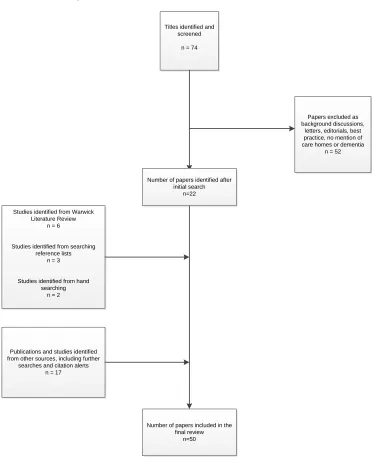
UMBER OF STUDIES... 52
R
EVIEW PROTOCOL... 53
R
EFLECTIONS ON THE LITERATURE OVERALL... 54
A dominance of quantitative studies ...54
Majority of studies carried out in care homes with on-site nursing ...54
Limitations of methods used ...55
Reflecting on the quantitative studies ...55
Samples used ... 55
Data collection methods ... 56
Reflecting on the qualitative studies ...56
E
MERGENT THEMES FROM THE LITERATURE... 56
The presence of high levels of needs, including healthcare needs ...57
Healthcare needs are often poorly managed ...57
An Illustrative example: The under-treatment of pain in residents living with
dementia ...58
An Illustrative example: Inadequacies of end-of-life care for residents with
advanced dementia ...59
Care homes with no on-site nursing presence can struggle to manage healthcare
needs ...60
Unmet needs result in further health problems ...61
Potential barriers preventing the meeting of healthcare needs ...61
Issues accessing training ...62
Inadequate treatment ...63
Lack of healthcare support to care homes ...63
The experience of staff is poorly understood ...64
5
The views of care staff not sought ...64
Qualitative studies enable the ‘why’ to be explored ...65
Challenges of caring for residents with advanced dementia ...66
Little attention paid to context ...67
S
UMMARY... 68
CHAPTER 6: METHODS ... 70
I
NTRODUCTION... 70
P
HILOSOPHICAL UNDERPINNINGS... 70
P
RACTITIONERR
ESEARCH... 71
Defining practitioner research ...71
The use of self as a research instrument ...72
‘Insider’ practitioner research ...73
Bridging the theory-practice gap ...75
U
SE OF A CASE STUDY... 75
R
ESEARCH QUESTION,
AIMS AND OBJECTIVES... 76
T
HE CASE STUDY SITE–
P
HASE1 ... 79
P
ARTICIPANTS... 79
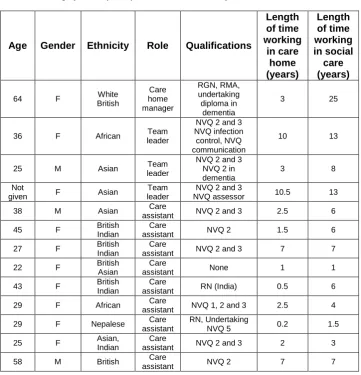
Phase 1 – Demographics of care home participants ...80
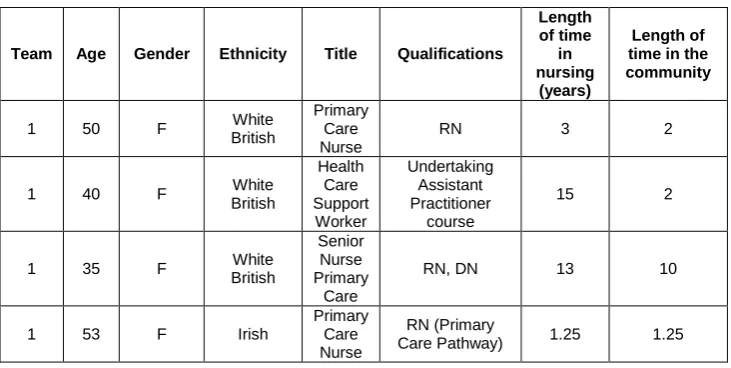
Phase 1 – Demographics of district nursing participants ...81
Phase 2 – Care homes involved in second phase ...81
Phase 2 – Demographics of care home participants ...83
Phase 2 – Demographics of nursing participants ...84
D
ATA COLLECTION... 86
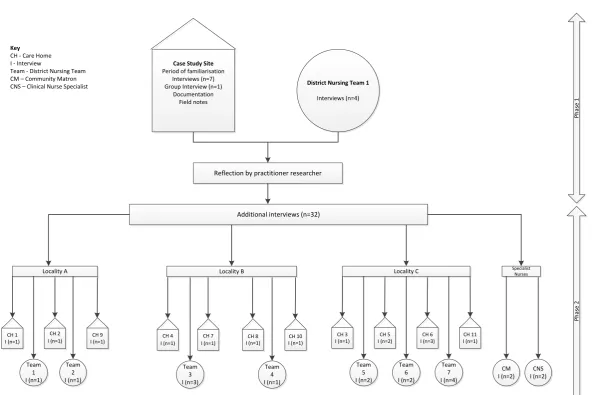
Phase 1 – the case study ...86
Familiarisation ...87
Field notes ...89
Reflection and the research diary ...89
Semi-structured interviews ...90
Documentation ...91
Phase 2 – interviews with other care home staff and community nurses and checking
of findings for resonance and gaps ...91
The reality of conducting research in care homes ...92
D
ATA ANALYSIS... 93
Familiarisation with the data ...94
Generating initial codes...94
Searching for themes ...95
Reviewing themes ...95
Defining and naming themes ...96
E
THICAL ISSUES ARISING FROM PRACTITIONER RESEARCH... 96
Informed consent ...96
Addressing any power imbalance ...98
Anonymity ...99
T
RUSTWORTHINESS:
E
NSURING QUALITY OF THE DATA... 99
Adherence to good methodology ... 100
Member checking ... 100
T
RANSFERABILITY... 103
S
UMMARY... 103
INTRODUCTION TO THE FINDINGS ... 105
CHAPTER 7: FINDINGS FROM THE CASE STUDY: UNDERSTANDING THE
COMPLEXITY IN CARE HOMES ... 108
I
NTRODUCTION... 108
C
ASE STUDY SITE... 108
The building ... 109
The units ... 109
Activity ... 109
Staff ... 110
Qualifications and training ... 110
Staffing levels ... 110
Residents ... 111
Inspections... 111
L
EVEL OF COMPLEXITY AT THE CASE STUDY SITE... 112
Level of need and degree of complexity ... 112
The added complexity that dementia brings ... 114
Importance of ‘knowing’ the person ... 115
Difficulty providing care ... 116
Level of healthcare skills needed by care staff ... 116
Dealing with complex healthcare needs ... 117
Benefit from access to healthcare training ... 118
A hidden workforce ... 118
Level of healthcare support needed to manage residents ... 119
Accessibility of healthcare support is good ... 119
Accessibility of GP support is problematic ... 120
Benefit from specialist support ... 121
Dissatisfaction with the care home/district nursing relationship ... 121
Reluctant to criticise ... 122
Dissatisfaction with the service ... 122
Community nurses ignorant of care staff role ... 122
No time to spend ... 123
Nurses have little understanding of dementia ... 124
Ignorance of the community nurse role ... 125
The service offered needs to change ... 126
Funding pressures ... 127
I
GNORANCE–
R
EFLECTIONS OF A PRACTITIONER RESEARCHER... 128
S
UMMARY... 130
CHAPTER 8: FINDINGS FROM OTHER CARE HOMES: STRUGGLING TO
COPE ... 131
I
NTRODUCTION... 131
C
ONFIRMED FINDINGS-
‘S
ICK,
NOT HEALTHY’... 131
Level of need and degree of complexity present - ‘Bordering on nursing’ ... 132
The added complexity that dementia brings ... 133
High prevalence of dementia ... 133
7
Difficulty providing care – it can be demanding... 134
Level of healthcare skills needed by care staff ... 135
Dealing with complex healthcare needs ... 135
A hidden workforce – not ‘just a carer’ ... 136
Level of healthcare support needed to manage residents ... 137
Accessibility of GP support problematic... 137
Dissatisfied with the care home/district nursing relationship ... 138
Reluctant to criticise ... 138
Dissatisfied with the service received – further evidence of underlying tensions 139
Community nurses ignorant of care staff role - Quick to criticise ... 139No time to spend - ‘In and out’ ... 140
Nurses have little understanding of dementia ... 141
Ignorance of the district nurse role ... 141
The service offered needs to change – ‘work in partnership’ ... 142
Funding pressures – ‘It is getting harder’ ... 143
U
NCONFIRMED FINDINGS-
I
NEQUITY PRESENT... 144
Level of healthcare support needed to manage residents ... 144
Access to specialist support not equitable ... 144
Access to healthcare support variable ... 144
Level of healthcare skills needed by care staff ... 146
Benefit from access to healthcare training ... 146
N
EW FINDINGS-
S
TRUGGLING TO COPE... 146
Difficulty accessing information ... 146
Struggling with respite care ... 147
Accessing training ... 148
Not working in partnership ... 149
Need for a nursing presence ... 149
Financial pressures ... 150
Impact of vacancies ... 150
Unable to fund improvements ... 151
R
EFLECTIONS OF A PRACTITIONER RESEARCHER... 152
S
UMMARY... 153
CHAPTER 9: FINDINGS FROM COMMUNITY NURSES: ‘IGNORANCE OF, OR
IGNORING’ COMPLEXITY... 155
I
NTRODUCTION... 155
C
ONFIRMED FINDINGS-
I
GNORANCE OF COMPLEXITY... 155
Level of need and degree of complexity present ... 156
Residents ‘too complex’ ... 156
Ignorance of needs ... 157
‘Task orientated’... 157
‘Simple dressings’ ... 158
Role lacks clarity ... 158
The added complexity that dementia brings ... 159
‘It is depressing’ ... 160
Providing care can be a challenge... 160
Care practices ignore dementia ... 162
Need dementia training ... 163
Level of healthcare skills needed by care staff ... 164
Assumptions made ... 164
‘They are paranoid’ ... 165
Dissatisfaction with care home/district nursing relationship ... 167
Relationship variable ... 167
‘They are quite helpful’ ... 168
Don’t provide support ... 169
Ways the service could change ... 170
Funding pressures ... 172
U
NCONFIRMED FINDINGS-
A
WARENESS OF THE COMPLEXITY PRESENT... 172
N
EW FINDINGS–
N
OT ONLY IGNORANT... 173
Ignoring the complexity ... 173
‘Time constraints’ ... 173
Residents are ‘safe’ ... 175
Unsure who is responsible ... 175
Limited access to medical information ... 177
R
EFLECTIONS OF A PRACTITIONER RESEARCHER... 177
S
UMMARY... 180
CHAPTER 10: APPLYING COMPLEXITY THINKING TO GENERATE NEW
KNOWLEDGE ... 181
I
NTRODUCTION... 181
S
TRENGTHS AND LIMITATIONS OF THE STUDY... 181
W
HY COMPLEXITY THINKING? ... 183
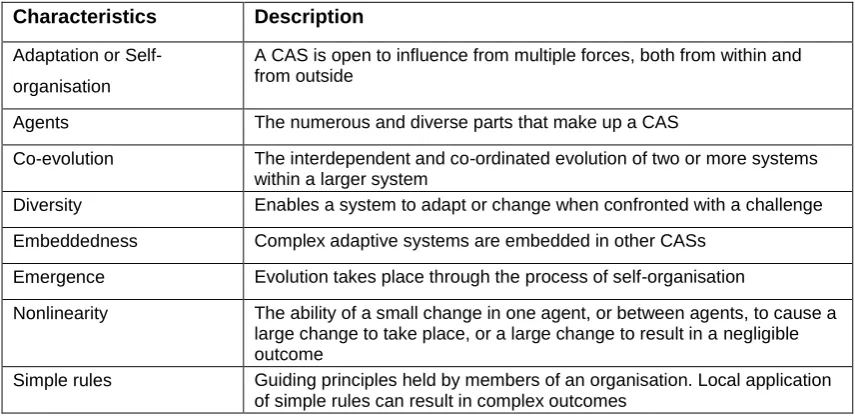
Defining complexity thinking and a complex adaptive system ... 184
Complex vs. complicated ... 186
Strengths and limitations of complexity thinking ... 186
T
HE COMPLEX NATURE OF RESIDENTIAL CARE HOMES... 188
Diversity in and between care homes ... 190
Care homes are embedded structures ... 191
Relationships between agents ... 193
Access to primary care services is variable ... 194
Nature of working relationship with community nurses ... 194
Failure to recognise embedded nature of systems ... 196
Governed by simple rules ... 197
Formal rules ... 197
Informal rules ... 198
Care homes are dynamic and continually adapting ... 199
Evidence of non-linearity ... 200
Care homes are context dependent ... 201
A
COMPLEXITY EXPLANATION... 203
Complexity in care homes overlooked ... 203
Little understanding of the importance of context ... 205
Ignorance of the rules governing behaviour ... 206
Formal rules – focus on tasks ... 207
Informal rules- residents are not at risk ... 208
Care is simple ... 208
They are safe ... 210
U
SING COMPLEXITY THINKING TO OFFER POSSIBILITIES FOR CHANGE... 213
A short term fix is not the answer ... 214
Addressing contextual and behavioural issues ... 190
9
Recognition of the complex nature of systems ... 216
Respecting and valuing others ... 218
Provision of support ... 218
Provision of training and encouraging learning ... 219
Better communication... 219
Understanding of context ... 220
Small changes... 220
Organisational change needed ... 220
Reviewing nursing support to residential care homes ... 221
Supporting others to provide nursing care ... 222
Need for a continual nursing presence ... 222
I
SSUES FOR CONSIDERATION... 224
Issues for practice ... 224
Issues for education ... 225
Issues for policy makers ... 225
Future research ... 226
C
ONCLUSIONS... 227
REFERENCES ... 230
APPENDICES ... 246
A
PPENDIX1:
G
LOSSARY OFT
ERMS... 246
A
PPENDIX2:
L
ITERATURER
EVIEWP
ROTOCOL... 247
A
PPENDIX3:
A
BBREVIATIONS USED IN LITERATURE REVIEW MATRICES... 248
A
PPENDIX4:
L
ITERATURE REVIEW MATRIX-
Q
UANTITATIVE STUDIES(
UK) ... 249
A
PPENDIX5:
L
ITERATURE REVIEW MATRIX-
Q
UANTITATIVE STUDIES(I
NTERNATIONAL)
... 253
A
PPENDIX6:
L
ITERATURE REVIEW MATRIX-
Q
UALITATIVES
TUDIES... 263
A
PPENDIX7:
L
ITERATURE REVIEW MATRIX-
L
ITERATURE REVIEWS... 265
A
PPENDIX8:
L
ETTER OF INVITATION TO CARE HOME STAFF... 266
A
PPENDIX9:
C
ARE HOMES
TAFFI
NFORMATIONS
HEET... 267
A
PPENDIX10:
C
ONSENT FORM... 269
A
PPENDIX11:
C
OMMUNITYN
URSESI
NFORMATIONS
HEET... 270
A
PPENDIX12:
I
NTERVIEW SCHEDULE(C
ARE HOME STAFF) ... 272
A
PPENDIX13:
I
NTERVIEW SCHEDULE(C
OMMUNITYN
URSES) ... 274
A
PPENDIX14:
E
XAMPLE OF A CODED TRANSCRIPT... 276
A
PPENDIX15:
NV
IVO CODING USED... 290
LIST OF FIGURES
Figure 1: Literature review process ... 53
Figure 2: Phases of data collection ... 78
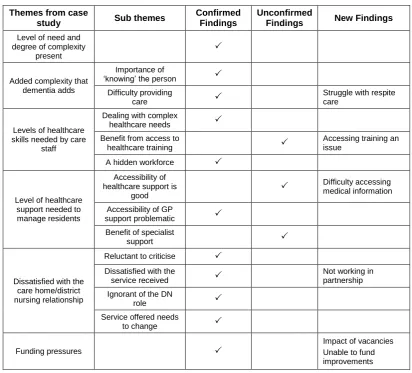
Figure 3: Reflections from the case study site ... 113
Figure 4: Complexity facing residential care homes ... 189
LIST OF TABLES
Table 1: Phase 1 – Demographics of participants from the case study care home ... 80Table 2: Phase 1 – Demographics of nursing staff working with the case study care home ... 81
Table 3: Phase 2 – Details of other care homes that took part... 82
Table 4: Phase 2 – Details of care homes that closed during course of the study ... 83
Table 5: Phase 2 – Demographics of staff from other care homes ... 83
Table 6: Phase 2 – Demographics of community nurses who took part in Phase 2 ... 85
Table 7: Reflections from other care homes ... 132
Table 8: District nurses response to the complexity ... 156
11
ACKNOWLEDGEMENTS
I would like to thank a number of people without who this thesis would not have been possible.
Firstly I would like to thank Professor Julienne Meyer, as without her advice, support and
encouragement I never would have got here. Thanks also go to my other supervisors Dr Cheryl
Holman and Professor Wendy Moyle for their comments, feedback and support.
Special mention goes to the care home staff and community nurses who participated in this
study, as without them there would have been no thesis. In terms of my work colleagues thanks
goes to Kathy, Linda, Jerry, Debbie, Mary and Tracey who enabled me to undertake this study
and ensured that my district nursing team continued to run smoothly. I need to give special
thanks to Theo, who has encouraged me throughout this process and has patiently listened to
me discussing my thoughts and ideas.
I am also indebted to my family and friends who have kept me going. In particular my mum
Betty, who has always encouraged me through this journey, which at times was not always
easy and my sister Margaret, whose support, as well as her formatting skills, proved invaluable.
Finally I would like to say a special thank-you to my husband Stuart who has always
encouraged me to follow my dreams, who has believed in me and who didn’t get too frustrated
DECLARATION
I grant powers of discretion to the University Librarian to allow this thesis to be copied in whole
or in part without further reference to me. This permission covers only single copies made for
13
ABSTRACT
People living in residential care homes are older, frailer and sicker than ever before. Levels of dependency and co-morbidity are increasing, with neurodegenerative diseases, and dementia in particular, having a significant impact. Previous research has reported high levels of unmet needs, including healthcare needs, amongst the resident population, yet has given a limited understanding of why staff may struggle to meet these healthcare needs.
This qualitative study used a practitioner research approach to answer the following questions. Firstly, what challenges do care staff face in meeting the healthcare needs of residents, in particular those living with dementia, and secondly, what are the challenges faced by the district nursing service in supporting care staff to meet the healthcare needs of residents. Data were initially generated from an in-depth case study involving one residential care home, specialising in the provision of dementia care. Data were collected from individual (n= 7) and group
interviews (n=1) with care staff and interviews with members of the district nursing team supporting this care home (n=4), together with documentation and contextual data. The practitioner researcher used herself as a research instrument to reflect on the findings from the case study, in relation to her own knowledge and experience of working as a district nurse with care homes, focusing in particular on those aspects of the work that were familiar and those that surprised. Data were analysed using thematic data analysis (Braun and Clarke 2006). To add strength to these findings, the experiences and challenges faced by staff (n=14) from other residential care homes were also sought, as well as from community nurses (n=12), community matrons (n=4) and specialist nurses (n=2) attached to these care homes. These data were compared to the findings from the original case study and reflections of the practitioner researcher, to identify findings that resonated, as well as identifying any perceived gaps.
ABBREVIATIONS
ALF Assisted Living Facility
BGS British Geriatric Society
BME Black and Minority Ethnic Group
CANE Camberwell Assessment of Needs in Elderly
CAS Complex Adaptive System
CCG Clinical Commissioning Group
CHM Care Home Manager
CM Community Matron
CNS Clinical Nurse Specialist
CPN Community Psychiatric Nurse
CQC Care Quality Commission
CS Care Staff
DCHM Deputy Care Home Manager
DN District Nurse
DNTL District Nurse Team Leader
DOH Department of Health
EMI Elderly Medically Infirm
FN Field Notes
GP General Practitioner
HCSW Health Care Support Worker
IV Intravenous therapy
MDS Minimum Data Set
NAO National Audit Office
NHS National Health Service
NMC Nursing and Midwifery Council
NMS National Minimum Standards
NVQ National Vocational Qualification
OT Occupational Therapist
PCN Primary Care Nurse
PCT Primary Care Trust
PR Practitioner Research
PRN As required medication
QNI Queens Nursing Institute
RCF Residential Care Facility
RD Research Diary
RCN Royal College of Nursing
REC Research Ethics Committee
RMA Registered Managers Award
RMN Registered Mental Nurse
RN Registered Nurse
SALT Speech and Language Therapy Team
TL Team Leader
UK United Kingdom
15
CHAPTER 1: INTRODUCTION
This thesis is concerned with exploring the experiences and challenges for care staff in
managing the healthcare needs of residents in residential care homes, in particular those living
with dementia, as well as exploring whether the district nursing service is adequately supporting
them to do this. The study was driven by a professional interest in district nursing and
residential care homes, as the researcher is herself a practising district nurse, who has worked
for over 16 years in the community. As well as by key policy areas which include, the need for
better partnership working between health and social care services, a feature of government
policy for many years (Cameron et al 2012) and the need to improve healthcare support for both
care homes and people living with dementia (Heath 2007, DOH 2009, 2012).
District nurses (See Appendix 1) are the largest group of nurses working in the community, with
around 13,000 qualified district nurses working across the UK today (QNI 2009). The term
district nurse (DN) refers to a senior nurse who usually holds a specialist qualification and leads
a team of primary care nurses and healthcare support workers, referred to collectively as
community nurses (See Appendix 1). Their role is to provide skilled nursing care to any patient
in the community who is temporarily or permanently housebound (Toofany 2007), including
those living in residential care homes, as in the UK this type of care home is registered to provide accommodation and ‘personal care’ only, and there is no requirement for a registered
nursing presence. They are either attached to, or work in close association with, GP practices,
who provide the majority of medical support to care homes. Unfortunately due to a lack of
clarity, or systematic approach in the provision of primary healthcare services, the support care
homes receive is often sub-optimal (Davies and Goodman 2008, Szczepura et al 2008).
Care homes are the major provider of long-term healthcare for older people in the UK (Handley
et al 2014). They are caring for those who would have previously been the responsibility of the
NHS and are providing increasingly complex care (Bowman 2009, BGS 2011). In terms of
residential care homes, they have become the main provider of care for people living with
dementia and dementia is the strongest determinant for admission into residential care (Alzheimer’s Society 2007a). Dementia is presenting a major challenge, both nationally and
globally, in terms of its scale and impact. Estimates suggest that in 2013 there were 815,827
people with dementia in the UK, with numbers forecast to rise dramatically, the result of an ageing population, and predicted to reach 2 million by 2051 (Alzheimer’s Society 2014a). The National Council for Palliative Care (2007) has estimated that nearly a million care home beds
will be needed for this group by 2039. Yet it has only been relatively recently that dementia has
started to receive attention, both nationally and globally. In 2009 the Department of Health
(DOH) published the first ever National Dementia Strategy for England (DOH 2009) setting out
17 recommendations for improving dementia care services, followed in 2012 by the Prime Minister’s Dementia Challenge (DOH 2012), a national programme aimed at delivering
A person living with dementia usually moves into a care home when their needs become either
too complex, or are too expensive, to be managed in their own homes (Heath 2007). One third of people living with dementia reside in residential care (Alzheimer’s Society 2007b) and up to
70% of care home residents are living with dementia, or have significant memory problems (Alzheimer’s Society 2014a). The majority live in residential care homes, as historically most of their care was classified as social care (Alzheimer’s Society 2004) and it has been suggested that the greater part of dementia care can be carried out effectively in such care homes
(Kitwood 1997). However, given that those entering the care system today tend to have more
severe forms of the disease (NAO 2007), it has resulted in large numbers of severely impaired
people, often with complex health and social care needs, which can be difficult to manage, being cared for in residential care homes (Rabins et al 2006, Alzheimer’s Society 2014a). Little
attention has been paid in the literature to the experiences of care staff and community nurses
in managing the healthcare needs of older people in residential care homes, especially those
living with dementia, and is why this thesis has sought to:
Explore the experiences and challenges faced by care staff when managing the
healthcare needs of residents, in particular those living with dementia
Explore the experiences and challenges faced by the district nursing service in
supporting residential care homes to manage the healthcare needs they are faced with.
Overview of thesis
As the researcher is a practising district nurse the study used a practitioner research approach
(PR) to explore the experiences of care staff and community nurses in meeting the healthcare
needs of residents, especially those living with dementia, in residential care homes. As a district
nurse, the researcher was particularly interested in exploring the experiences and challenges of
care staff and members of the district nursing team. However, care homes are supported by a
range of community nursing services, a number of which work alongside the district nursing
service, e.g. community matrons. For this reason, the experiences of other such community
nurses were also sought.
In PR it is important that the researcher write themselves into the account, which is why when
drawing or reflecting on her own experiences, such as in Chapters 4, 6 and 7, the first person is
used, whilst other chapters are written more traditionally, using the third person and referring to
the practitioner researcher. An emergent study design was used. This study originally set out to
explore whether the healthcare needs of residents living with dementia were being met. But on
completion of the literature review the focus of the study changed, with data collected to better
understand the experiences and challenges of care staff and community nurses, in meeting the
healthcare needs of residents. However, given that at least 70% of residents can have some
degree of cognitive impairment (CI) or dementia, their experiences of working with those living
with dementia in particular were still sought.
17
Chapter 2 provides a contextual overview of the UK care home market. Demonstrating how this
sector has changed over the years, especially in terms of residential care homes, which are
now caring for residents who have high levels of health and social care needs that can be
complex. It also provides a snapshot of the care home industry today, in terms of ownership,
levels of dependency, co-morbidity, funding pressures, regulation and staffing issues.
Chapter 3 provides an overview of district nursing. It discusses how the role of the district nurse
lacks clarity as it is constantly evolving, how the service is under researched, especially in
regard to the support provided to residential care homes and describes certain challenges
facing the service.
Chapter 4 provides contextual details of the local authority and NHS trust in which the study
took place, together with details of the local care home sector and district nursing service, in
order that the reader can judge if the findings of this study are of relevance to their own practice.
The chapter also provides details of the background and previous experience of the practitioner
researcher and her reasons for conducting this particular study.
Chapter 5 provides a review of the literature, which set out to gather a better understanding of
the healthcare needs of residents living with dementia and to explore if these healthcare needs
are being adequately met. This chapter reveals that high levels of comorbidity, dependency and
healthcare needs are now common amongst residents, with many under-recognised and/or
under-treated. Gaps in the literature are highlighted including a lack of research conducted
either in the UK, or in residential care homes and little understanding of why healthcare needs
are not being met, due to the use, by the majority of studies, of quantitative designs that are
unable to explain causality, which ignore the context in which care homes operate and pay little
attention to the experiences of staff.
Chapter 6 describes the methodology for the study. It explains why a practitioner research
approach was used, and describes the emergent study design. The methods and techniques of
data collection and analysis are described, as well as the challenges of conducting research
with the care home sector and as a practitioner researcher.
Chapter 7 presents findings from a case study, involving one residential care home providing
specialist dementia care. It begins by presenting contextual detail of this care home. It then
goes on to describe how the researcher, using herself as a research instrument, reflected on
the findings from the case study, in relation to her own knowledge and experience of working
with care homes, focusing on those aspects of the work that were familiar, as well as those
aspects that surprised, i.e. something that challenged either previously held assumptions, or
what she would have expected to see (Tracy 2010). It reveals the complex nature of care that
staff in this care homes were expected to manage on a daily basis and how as a district nurse
aware of how complex the care being provided was, which led her to the literature on
complexity thinking and complex adaptive systems.
Chapter 8 presents findings from other care homes in the same local authority, to explore
whether the findings from the first phase were unique to that one care home. Interviews were
conducted with senior staff from other care homes, with data compared to that from the original
care home and reflections of the researcher, identifying findings that resonated, i.e. the findings
were similar to, or differed from, the participants, or practitioners own experiences or situation
(Tracy 2010), as well as identifying any perceived gaps in the findings from the case study.
Findings are presented that first confirmed the complexity found in the case study, secondly that
did not confirm what was found and finally new issues that were raised. A key finding in this
chapter is that the complexity identified in the case study was not unique to that one care home,
but was actually greater than had been first realised.
Chapter 9 presents findings exploring whether other community nurses were aware of this
complexity, as well as the level of support they were providing to these care homes to manage
the healthcare needs they were faced with. This chapter presents findings confirming that other
nurses were also ignorant of this complexity, together with findings that did not confirm this, with
evidence of community nurses ignoring this complexity, due to pressures on their service. The
chapter suggests that the service they provide is not able to ensure that the healthcare needs of
all residents are met, with those living with dementia at particular risk, as the service focuses on
tasks and physical needs only, spends limited time in the care homes and nurses lack
knowledge and skills in this field. The findings chapters are purposively descriptive (Paley and
Eva 2011), to give an idea of the mechanisms and interactions occurring within the system,
from which the complexity was arising. Deeper analysis and interpretation of the findings takes
place in Chapter 10, when the findings are discussed in relation to complexity thinking, and in
particular complex adaptive systems.
Chapter 10 discusses the key findings in relation to relevant the literature concerning residential
care homes and district nursing. The level of complexity that residential care homes are dealing
with and the district nursing response to this complexity, are also discussed in relation to
theoretical perspectives. Drawing on complexity thinking, it argues that residential care homes
are diverse, embedded systems, which are constantly adapting, governed by simple rules,
which are interpreted and applied differently by agents, according to context and individual
interpretation. Characteristics, which others, including community nurses, can be unaware of, or
fail to respond to. It gives a possible explanation for the response of community nurses to this
complexity and uses complexity thinking to offer possibilities for change. The chapter concludes
by giving certain issues for consideration in regard to practice, education, policy and research
and outlining the contributions that this study has made to the body of knowledge, in terms of
19
This thesis suggests that district nursing support of residential care homes may need to be
addressed. By raising this issue it is hoped that all those responsible for supporting care homes
will take note and consider whether the type and level of service that they are providing
safeguards the quality of life and care of some of the frailest, sickest and most vulnerable
CHAPTER 2: SETTING THE SCENE NATIONALLY – CARE
HOMES
Introduction
This chapter provides a contextual overview of the care home sector in the UK. It shows how
the development of the care home sector, with the continuing divide between health and social
care provision and changes in NHS priorities has shaped the development of nursing and
residential care homes into a major provider of care and support for older people. It gives a
snapshot of the UK care home industry today, especially in regard to capacity, its growing
status as a major provider of care for people with dementia, the health status of residents, levels
of dependency, funding issues and training. Appendix 1 provides a glossary of terms used in
this thesis
Development of the care home sector
Fundamental to the development of services for older people in England has been the
administrative divide made between health care (originally defined within the National Health
Service Act 1946) and social care (the National Assistance Act 1948). Based on the assumption that it is possible to distinguish between those who are ‘sick or infirm' (people with health needs
who should receive care from the NHS) and those who are 'frail and old' (people with social
needs). This rather arbitrary distinction has been crucial, as those perceived to have health
needs receive care that is free of charge, whilst those deemed to have social care needs are
the responsibility of local authorities and are means tested and may have to pay for personal
care (Glendinning and Means 2004, Dudman 2007).
The National Assistance Act gave local authorities responsibility for providing residential accommodation for those ‘who by reason of age or infirmity needed care or attention’ (Peace et
al 1997, Means et al 2008). Those who required continuous nursing care were cared for in
long-stay geriatric wards within the NHS, or in nursing homes (Godlove and Mann 1980, Davies and
Seymour 2002). However, since this time there have been continual attempts to narrow the
definitions and shift responsibility for the provision of care between the NHS and local
authorities. In the early 1950s it was decided that residential homes could care for those who were considered to be ‘infirm’ but not ‘sick’ (Means et al, 2008). By the late 1950s the boundary was again redrawn, with those in need of ‘constant care and attention’ the responsibility of local authorities, whilst those needing ‘constant medical and nursing attention,’ were the
responsibility of health authorities (Lewis 2001). In the 1960s, the definition changed yet again, with residential homes now providing care for ‘people who were so incapacitated that they needed help with washing, dressing, toileting, meals and mobility’. It also covered those who had ‘either temporary or continuing confusion of the mind, but who didn’t need medical care’
21
The 1980s saw a big expansion in the care home sector, with the number of independent care
homes rising by 242% between 1983 and 1986 (Netten et al, 2001), largely the result of
changes to funding, with older people able to refer themselves to care homes, and costs met by
social security payments (Andrews and Phillips 2000, Davies and Seymour 2002). However, it
was quickly realised that this level of funding was unsustainable and the implementation in 1990
of the NHS and Community Care Act saw the introduction of a contract culture into community
care provision. A primary objective of this Act was for older people to remain at home for as
long as possible, supported by community services, with local authorities given responsibility to
act as gatekeepers to services, including residential and nursing home places (Andrews and
Phillips 2000, Jacobs and Rummery 2002). The majority of local authorities stopped investing in
publicly operated care homes, with most of the provision passing to the independent and
voluntary sectors (BGS 2011).
Local authorities were required to keep a tight control over their budgets which had a knock on
effect on the residential care market. When local authorities took over control of purchasing care
there was a corresponding fall in occupancy rates in care homes. Neither was the care home
industry helped by pressure placed on local authorities to restrict fees for care home beds and
to use block contracts with fixed fees attached (Means et al 2008). Whilst this placed economic
constraints on both large and small providers, it was the smaller providers who suffered most
and found it more difficult to survive (Holden 2002). The result has been a gradual change in the
profile of the industry, with a large increase in the number of homes owned by large for-profit
providers (Means et al 2008).
NHS provision has also changed significantly over the years. The introduction of the National
Health Service Act saw long-term health care for the chronic sick provided by the NHS, usually
in hospital settings (Glendinning and Means 2004). However, by the late 1950s the government
backed the view of the Ministry of Health and many hospital doctors that the number of geriatric
beds should be limited, with an emphasis on the provision of short-term acute medical care
(Lewis 2001). This policy, together with the closure of large numbers of long-term care NHS
beds in the 1970s, saw the role of the NHS in providing care for older people decline markedly.
By 2001 the NHS was funding fewer than 10% of all nursing home places and providing just 7%
of all nursing and residential places for older, chronically ill and physically disabled people
(National Primary Care Research and Development Centre 2001). However, the situation
appears to be changing as in 2014 23% of nursing home beds for older and physically disabled
people were funded by the NHS (Laing and Buisson 2016). It should be noted that the transfer
by the NHS of their responsibilities was never actually accompanied by any significant transfer
of additional resources into community services (Glendinning and Means 2004). The result is
that the sector is now caring for those who would have previously been the responsibility of the
NHS, providing increasingly complex care, including intermediate, respite, and continuing care;
and at the same time becoming one of the main providers of dementia and end-of-life care for
Subsequent government policy has committed to the continued provision of more effective
services outside the hospital setting and for greater integration between health and social care (Laing and Buisson 2009b). The White Paper ‘Our health, Our Care, Our Say’ (DOH 2006) highlighted the need for better co-ordination of community based services for people living with
long term conditions, especially frail older people (Smith et al 2009). This resulted in a
continuing decline in the numbers admitted to residential care (Means et al 2008), with older
people being cared for in their own homes and care home places only really provided for those
with the greatest dependency, usually the oldest in society (Andrews and Phillips 2000).
More recently it was recognised, firstly by Labour and then by the Coalition Government, that
the present system for providing and funding social care was not fit for purpose. People who
require care, especially those who are older or disabled, are living longer and often require
higher levels of care and support for longer periods of time. For these reasons care costs will
continue to increase, with the current system unable to continue to sustain these costs in their current form. The White Paper ‘Caring for our future’ (HM Government 2012) called for those using health and social care services to have care that was integrated, with services working together to provide care based on a person’s circumstances and needs, especially those with
complex needs, as in the case of older people.
The resultant ‘Care Act 2014’ saw the first overhaul of social care for more than 60 years. In
terms of funding reforms included a lifetime cap on care costs, increasing the upper level of the
means test for those entering residential care, capping hotel costs in care homes and national
eligibility criteria for social care. It also recognised the importance of greater integration, for
example the need to integrate housing with health and social care, with providers of social
housing to be listed as one of the partners that a local authority must co-operate with when considering and planning a person’s care. However, although many of the reforms are widely
welcomed there is general concern that the lifetime cap will only help a small number of people.
It is also suggested that the act fails to address a central issue, which is that people are given
access to the correct level of support that they need (The Kings Fund 2013).
As a result of the continual changes to health and social care provision ‘care homes have become the community hospitals of the future’ (Bowman 2009). Local authorities have been given responsibility for commissioning care for those with complex health and social care needs
and the independent care home sector has become the major provider of long-term care for
frail, older people, many of whom are extremely vulnerable and clinically unstable (BGS 2011). Residential care homes were to be ‘homes', rather than nursing homes, or hospitals and it was never envisaged that they would provide ‘nursing care’. However, they are now caring for
people with complex health and social care needs, are relying on staff who on the whole have a
23
Negative perceptions of the care home industry
To this day the history of residential care continues to influence service provision, with policy
leaving residential care marginalised and often mistrusted by those it seeks to support (Stanley
and Reed 1999, Froggatt et al 2009). The origins of residential care can be traced back to the
poor law and associated workhouses of the nineteenth century, where more attention was paid
to the able-bodied poor, than older people, the sick or handicapped (Townsend 1962), and
conditions were harsh. It was not until the early 1900s, when attitudes began to change, that the
'old and infirm' began to receive institutional care designed to meet their needs (Peace et al
1997, Davies and Seymour 2002). The 1948 National Assistance Act gave local authorities
responsibility for providing residential accommodation for persons, who through age, illness or
other reasons, needed care or attention. Unfortunately due to a lack of housing stock much of
this care continued to be provided in the old workhouses, where conditions remained poor
(Peace et al 1997, Means et al 2008).
During the latter part of the twentieth century the role and value of institutional care began to be
questioned by researchers and philosophers, e.g. Goffman (1961) and Townsend (1962), with
many authors painting a picture of institutions as places focused on repression and social
control, rather than caring (Peace et al 1997, Stanley and Reed 1999, Means et al 2008). For example, Townsend (1962) in ‘The Last Refuge’ uncovered inequalities in care provision for people with the same needs, and many admitted for social rather than physical reasons. He
concluded that residential care homes were not meeting the physical, psychological and social
needs of older residents, suggesting that alternative living arrangements needed to be
developed. Negative perceptions of institutional care still persist to this day. Johnson et al (2012) revisited the care homes that featured in Townsend’s original study. Whilst their findings
presented a more positive view of residential care, they also found that the negative image of
residential care still persisted. Coverage in the media is rarely positive, fostering a perception
amongst the public that care is of a poor quality and that care homes can be places of abuse
and neglect (Demos 2014). Many healthcare professionals hold the misguided belief that care
homes are making large profits at the expense of the residents, whilst avoiding providing care
and equipment they have been paid to provide (BGS 2011). As a result admittance to a care home is considered to be a negative, rather than positive option, and is often seen as the ‘last resort’ (Demos 2014).
Development of the care home sector for dementia care
Residential care homes have evolved into the main provider of residential care for those living
with dementia (Skills for Care 2009). The closure of the large psychiatric hospitals during the
1970s and 1980s resulted in a group of older people with behavioural and/or mental health
problems, including large numbers with dementia, requiring alternative accommodation. Large
numbers were housed within the care home sector, often in care homes designated as homes for the ‘Elderly Medically Infirm’ (EMI) (Godlove and Mann 1980, Peace et al 1997). Over the
dementia, attributed to the increasing market, but also it has been suggested, because of the
possibility of the increased fees these residents offer, with care homes able to charge higher
fees for this specialist category of resident (Andrews and Phillips 2000). The higher fees should
be used to provide more intensive forms of care that these residents may require, such as extra
staff, training, or specialised facilities. However, although these care homes may offer better
trained and higher levels of staff, this is not guaranteed (All-Party Parliamentary Group in
Dementia 2009, CQC 2014). Figures over the past decade show that around 37% of people
living with dementia are now cared for in care homes (Laing and Buisson 2009a) and at least 80% of residents have dementia or significant memory problems (Alzheimer’s Society 2013).
However, as many as 40% of those living with dementia in care homes are not cared for in a
dementia registered bed (NAO 2007).
Innes (2002) suggests that it is difficult to know if governments see dementia as a health or a
social need and is concerned that pressures on social services may have an adverse impact on
those living with dementia. The closure of the long-stay hospitals and the increase in residential
care placements suggests that a condition, traditionally seen within a medical model, is now
being financed through social services (Innes 2002). Service provision is focused on promoting
independence and encouraging people with dementia to be cared for within the community
(NICE-SCIE 2006, DOH 2009). However, community services are struggling, as evidenced by the Alzheimer’s Society (2014a), who reported that cuts to services, together with
uncoordinated care reforms, are leaving people without access to the support they need to live
well. At some point a person living with dementia may need to move into long-term care
because their needs have become too great to be managed at home, either as a result of
behavioural problems, or because their carers are unable to look after them anymore (Banerjee
et al 2003). With the number of people living with dementia forecast to increase dramatically
over the next few decades it is unrealistic to expect that all these people will be able to be cared
for in the community, suggesting that care homes are likely to remain a major care provider for
this resident group for many years to come (Innes 2009, Bowman 2009).
Healthcare provision to care homes
Primary care support of the care home sector varies greatly; as there is no explicit policy setting
out NHS obligations on a national or local level, in regard to care home residents (BGS 2011,
Iliffe et al 2015). The transfer of long-term care from the NHS to the care home sector was not
accompanied by any significant transfer of resources (Royal College of Physicians et al 2000,
Steves 2009). As a consequence specialist support from multidisciplinary teams within NHS
units, including access to consultants in old age medicine and psychiatry, occupational therapy,
physiotherapy, speech and language therapy and others, was lost to the majority of older
people living in care homes, because it was not costed into the care provided (Dudman 2007).
Care homes are reliant on local arrangements for the allocation of clinical input, yet these have
been found to be highly variable (Royal College of Physicians et al 2000, BGS 2011). Neither
25
even though residents are experiencing increasing levels of disability and dependency. A
survey of Geriatric Medicine departments and primary care trusts (PCTs) across the country
(Steves et al 2009) found that whilst over a half of PCTs said that they expected geriatrician
involvement in admissions and on-going care assessments, only one third funded such
sessions from local services and there were very few dedicated sessions for this type of work in
geriatric medicine departments.
Changes in the NHS over the past fifty years have seen provision of long term care for frail
older people taken away from hospitals, where a person would have been under the care of a
geriatrician, and given to nursing and residential care homes, where their healthcare is the
responsibility of GPs and community nurses (Bowman et al 1999). Primary responsibility for
medical care of care home residents was given to GPs; however, less than 40% have had any
specialist training in the health and social care needs of older people (Royal College of
Physicians et al 2000). The service provided by GPs to care homes varies greatly. There
appears to be no standard level of service (Jacobs et al 2001, BGS 2011) and the incentive
framework for GPs fails to adequately address the needs of residents (Gordon et al 2014b).
Care homes, especially nursing homes, often have to pay for GP services, in the form of
retainers, with these costs often passed to the residents in their fees (Glendinning et al 2002, Balbes 2014). Care home residents reportedly have a major impact on a GP’s caseload (Pell
and Williams 1999, Groom et al 2000, Corroon-Sweeney et al 2009). In 1996 the British Medical
Association reported that consultations in nursing and residential homes were ten times higher
than the national average (Fraser 1999). However, rather than tackle this issue the response of
GPs was to call for medical care of older people in care homes to be removed from their
contractual care responsibilities (Turrell et al 1998, Bowman et al 1999). A call that has recently
been repeated, with GP leaders voting to remove GP responsibility for care home residents and
calling on the Government to introduce new contracts, to ensure that residents receive the level
of healthcare support that they require, rather than the piecemeal service that is provided at
present (BMA 2016). A problem compounded by the fact that many care homes are developing
services, such as intermediate care, palliative care, or rehabilitation, which are beyond what
was previously seen in long-term care. Such services may require even more input, as well as
specialist knowledge and training, which may well not exist in the community setting (Royal
College of Physicians et al 2000).
There are also ‘wide variations and inequalities in accessibility to and payment for nursing, rehabilitation and other health services and equipment, both between and within care homes’
(National Primary Care Research and Development Centre 2001). Nursing support has been
shown to be variable. Support by district nurses tends to be predominantly reactive, largely
episodic and task orientated (Goodman et al 2003b, Evans 2007), an issue that will be
discussed further in Chapter 3. Care homes can have limited access to specialist nursing
support, with access varying depending on the type of nurse specialist and also the type of care home, with residential care homes having less access (O’Dea et al 2000, Goodman and
language therapists and occupational therapists is also variable (O’Dea et al 2000, Sackley et al
2009, Gordon et al 2014b), with residents often charged for these services (National Primary
Care Research and Development Centre 2001).
The need for greater collaborative working between primary care and the care home sector has
at last been recognised. In England, at the end of 2009, 45% of PCTs had at least one service
with a guaranteed minimum level of support for care homes (Hays et al 2012). In some areas
extra services are provided such as Local Enhanced Service (LES) agreements for GPs, shared
management of care between GPs and hospital geriatricians and specialist nursing support of
care homes (BGS 2011). In one London borough for example, a LES for GPs enabled them to
offer a more comprehensive and better organised service to care homes in their area, resulting
in a noticeable improvement in service provision (Briggs and Bright 2011). However, it is up to
health commissioners if they offer such services and GPs as to whether they participate
(Gordon et al 2014b). The BGS report (2011) concluded that sustainably of such initiatives was
also an issue, as many were temporary, receiving only short-term funding, and due to a lack of
evidence, it was not possible to definitely say if one model of healthcare support was better than another. Work is beginning to address this issue. One of the work streams from the report ‘Five Year Forward View’ (NHS England 2014) is the setting up a number of vanguard sites,
developing new models of enhanced healthcare for care homes, such as ‘ward rounds’, rapid
access to healthcare support and the provision of education and training to care staff, which it is hoped can inform future services; whilst the ‘Optimal’ study (Gordon et al 2014a) aims to develop a theoretical understanding of the ‘context, mechanisms and outcomes’ that shape
healthcare delivery models to care homes.
Care homes in the UK today
Capacity and ownership
It was estimated, as of September 2013, that there were, in the UK, 426,000 places in care
homes catering for older and physically disabled people (Laing and Buisson 2014a). Over the
past 30 years the balance between providers has shifted from the public to the private sector.
Private for-profit providers operate 79% of the care home sector; the voluntary sector (i.e.
not-for-profit) provides 13.7% of capacity and 7.4% is provided by the statutory sector, i.e. local
authorities, or the NHS (Laing and Buisson 2014b). Within the for-profit sector major providers
(i.e. those with 3 or more care homes) have 60% of capacity and small businesses (i.e. those
with a single or pair of care homes) 40%. In terms of the not-for-profit sector the major providers
control 75% of capacity (Laing and Buisson 2010). Concentration of ownership is controlled by
the four largest operators: Four Seasons Healthcare, the largest provider, followed by BUPA
Care Services, HC-One, formed following the collapse of Southern Cross, and Barchester
Healthcare, who between them provide 15.9% of capacity (Laing and Buisson 2014a).
Not-for-profit providers traditionally focus on residential care, whilst most for-Not-for-profit providers concentrate
on nursing homes (Laing and Buisson 2010). The independent sector dominates the provision
27
provides 81% and the voluntary sector 11%, with local authorities and the NHS only accounting
for 8% (Laing and Buisson 2009b).
The last decade saw a significant shift from nursing to residential care home provision within the
independent sector, possibly as a result of local authorities trying to reduce costs, as care
homes are their largest single cost item. In recent years this trend has halted, possibly because
dependency levels are becoming so high as to preclude admission into residential care (Laing
and Buisson 2014a). In 2013 average occupancy rates for care homes were 88.9%, although
these have increased slightly since then, with average occupancy rates as of March 2014
running at 90.4% (Laing and Buisson 2014b).
Residents in care homes
Age and health status
The proportion of older people who live in long-term care is small (4%) and age-related (Bajekal
2002). Only 3.85% of those aged between 75-84 years live in long-term care, compared to
15.92% of those aged over 85 years (Laing and Buisson 2014a). Women residents tend to be
older, with an average age of 85.6 years, compared to 83.2 for men (Office of Fair Trading
2005, Laing and Buisson 2014a). People who enter residential care are likely to be female, over
80 years, suffer with one or more significant clinical conditions, have no partner, and entry is
likely to have been arranged by someone else (Laing and Buisson 2014a).
Many of those who live in care homes have high levels of healthcare needs. Neurodegenerative
diseases in particular have had a major impact on care homes, with over 70% of admissions due to dementia, stroke or Parkinson’s disease (Bowman et al 2004). Other healthcare needs
include: arthritis, cardiovascular disease, respiratory disease, deafness, depression, fractures
and blindness. High levels of depression, visual and hearing loss and physical impairment have
also been reported (Royal College of Physicians et al 2000).
Some degree of CI is widespread amongst residents, with estimated prevalence rates for
dementia put at 55.1% in those aged 65-69 years, 61.6% in those 80-84 years and 63.9% in
those aged 90-94 years (Laing and Buisson 2009a). The number of people living with dementia
in long-term care is predicted to increase significantly over the next 30 years, from 224,000 in
1998 to 365,000 by 2031, an increase of 63% (Comas-Herrera et al 2003). The level of CI is
higher in residents in nursing homes, although large numbers of severely impaired people are
cared for in residential homes (Bebbington et al. 2001). Only about 57% of residents for whom
dementia is a known cause of admission, are cared for in settings which are dedicated to
dementia care provision. The remaining 43% receive care in non-specialised care homes (Laing
and Buisson 2009a).
Dependency
More than 75% of care home residents are classified as severely disabled (BGS 2011). Levels
homes (91%), than residential homes (70%) (Bajekal 2002). Across all care homes 57% of women and 48% of men need help with one or more ‘self-care’ tasks (Office of Fair Trading
2005). Dependency levels of residents in care homes have risen sharply over the past decades
(Darton, 1998; RCN 2010) and there is now considerable overlap in the levels of dependency
and health care needs of nursing and residential care home residents (Bowman et al 2004,
BGS 2011). Interestingly in residential care homes staff input for people living with dementia is
on average 3.5 hours/per resident/per week higher than for frail older residents, whilst in nursing
homes there is no difference between the two groups (Laing and Buisson 2009a).
Funding issues
Under-funding of social care continues to be a major problem. It is claimed that government
funding has been inadequate from the time of the Community Care Act, when insufficient
money was transferred from the DHSS to local authorities, due to an underlying assumption that
all that older people in care homes required was accommodation and physical care to cover
their basic needs (SPAIN 2005). Although local authorities have received increased allocations,
it remains open to debate whether these increases have been sufficient to cover the additional
pressures of demand, wage costs and inflation (Dudman 2007). During the period 2010-2013
baseline fees fell by roughly 5%, as local authorities implemented zero or sub-inflation baseline
fee levels (Laing and Buisson 2014a). The average increase in local authority baseline fees for
2010/11 was just 0.8%, with 63% deciding not to increase fees at all (BUPA 2011). A recent
review by Laing and Buisson (2014) reports an uplift of 1.8% in fees paid by local authorities,
although it is estimated that an increase of 2.0% is required for a standstill in care home
margins. But as none of the ground lost in the preceding three years has been regained, care
homes still face a difficult future.
The care home sector has not been helped by pressure placed on local authorities to restrict the
prices they pay for care home beds, or to use block contracts with fixed fees attached
regardless of the degree of care needed (Dudman 2007). Each local authority is able to set its
own baseline fees and so providers face widely varying fee levels, even between nearby
authorities. For example in 2010/11 the difference in maximum fees offered by two central
London boroughs for the same dementia nursing care varied by around £400/week (BUPA
2011). Age UK (2011) has estimated that the average shortfall per resident is £60/week, rising
to £120/week in South East England. It has also been suggested that the NHS used to pay ‘premium rates’ for those they funded. However, more recently it is reported that they are using
the fees paid by local authorities as a benchmark, often arguing that the dependency profile of
NHS continuing care patients is no different to that of local authority residents (Laing and
Buisson 2016).
The fees paid by local authorities lag behind private fee rates and as a result those who pay
privately continue to cross subsidise local authorities (Laing and Buisson 2014a). Those who
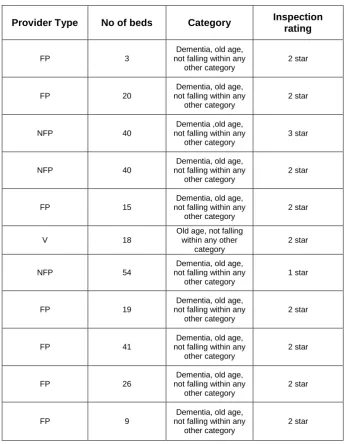
are self-payers typically pay, on average, £50-£100 or more than the local authority, for similar