International Journal of Innovative Technology and Exploring Engineering (IJITEE) ISSN: 2278-3075, Volume-8 Issue-7 May, 2019
Implementation of Malicious Things Detection at
Public Places Using Deep Learning
P. Aleemulla Khan, N. Thirupathi Rao, Debnath Bhattacharyya
Abstract: To provide effective security in crowded or public areas in today’s world is a big challenge for us. One of the major challenges is to detect or monitor potential threats such as explosive items or bombs (Abandoned luggage items).In this paper we propose an approach for automatic detection of abandoned luggage and alerting the security alliances ,We use deep learning to train the system with a set of images, these images were given to the trained system which is going to visualize the objects in the image and calculate the distance between objects if the object is person and baggage or only baggage. If the distance is greater than a threshold distance limit then the system is going to raise an alarm for the security alliances.
Key Words: Explosive items, Deep Learning, Security alliances
I.
INTRODUCTION
Now a day’s providing security in the crowded or public areas and usage of video cameras to capture the objects continuously is a huge task, video cameras are not having the intelligence to classify the objects as well as humans. To enable security to be very effective the security people should be increased and continuous monitoring is required which is very impossible. To make people more secured with more powerful security alliances and reducing the human efforts, in this paper we propose a machine which adds intelligence to the video data captured from the security cameras. We train the system with a set of images and then the input data which is video into the one image per one second. These images were given to the trained system which is going to visualize the objects in the image and calculate the distance between objects in case if the object is person and baggage in the specified time frame. If the object is baggage alone or distance between person and baggage keeps on increasing than the specified threshold distance and for a specified time gap the system will raise an alarm for the security alliances.
A. Deep Learning
Deep Learning is a subfield of machine learning worried about calculations Inspired by the structure and function of the mind called simulated neural systems. Deep learning is utilized to recognize objects from
satellites and distinguish sheltered or risky zones for troops.
Revised Manuscript Received on May 06, 2019
P. Aleemulla Khan, 1Department of Computer Science and Engineering,
Automotive scientists are utilizing profound figuring out how to naturally recognize protests, for example, stop signs and activity lights.
Deep learning is being utilized as a part of computerized hearing and discourse interpretation.
B. NEURAL NETWORKS
An Artificial Neural Network (ANN) is a prominent method and technology used to process many applications. Utilizing video observation cameras, lawbreakers have been captured and fear monger assaults have been stayed away from. Video observation cameras must be enhanced keeping in mind the end goal to counteract wrongdoing and fear based oppression effectively. A perfect video observation framework for surrendered gear discovery must have the capacity to identify uncommon occasions, to recognize a man and a baggage. In a large number of the confined spots security ought to be extremely alarm and continue checking the regions for unattended stuff. The procedure isn't mechanized and required part of human exertion.
A deficiency of the manual video reconnaissance framework in the general population transportation territory is that the security staff can't watch all suspicious conduct caught by the camcorders and checked on the PC screen. Manual framework should be supplanted by a robotized framework which will alert the security staff when relinquished baggage is identified or caution the explorer when he or she leaves the gear unattended. This proposed framework goes for identifying relinquished gear at the prepare station and its encompassing. It will be built in three distinctive User Interface variants for three various types of clients.
C. Image Annotation
There are three types of learning methodologies in machine learning. They are:
i. Supervised learning: In supervised learning we will give the labels for the image and make the system learn different images of same feature.
ii. Unsupervised learning: In unsupervised learning we will give the features for a system to understand and name the system according to that features is done by the system.
iii. Semi-supervised learning: In semi-supervised learning we have the images both with labels and without labels.
II. LITERATURE REVIEW
A review paper by Kevin Smith [1] gives a component to follow protests in the scene utilizing a trans-dimensional Markov Chain Monte Carlo following model appropriate for use in nonexclusive mass following undertakings. A paper by Uijlings [2] present particular hunt which joins the quality of both a thorough inquiry and division specific pursuit empowers the utilization of the ground-breaking Bag-of-Words model for acknowledgment. A paper by Ren [4] centers on a Region Proposal Network (RPN) that shares full-picture convolutional highlights with the location arrange.
A paper by Calvin Choy [7] executes a framework which will almost certainly distinguish deserted gear utilizing the caught pictures or recordings from the camera as the contribution of the framework. A paper by Redmon [5] outline object location as a regression issue to spatially isolated bouncing boxes and related class probabilities. However it battles to sum up to items in new or abnormal viewpoint proportions or arrangements.
III. PROPOSED WORK
Making a system to detect the objects in the images that were been collected from the video with in a time frame and measure the distance if the objects are person and the baggage continuously for threshold time period and if the distance keeps on increasing or image has only bag as object then raise an alarm.
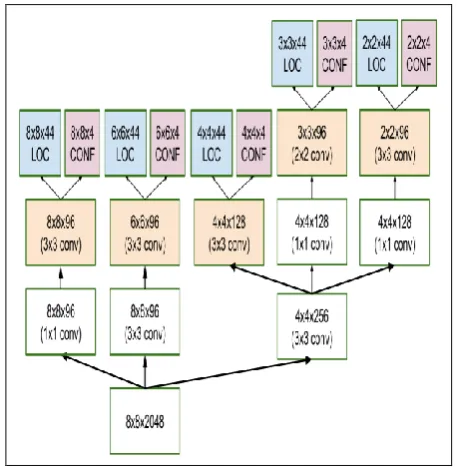
The Purpose of the Project is to create a application which performs object detection based upon the Single shot multibox detector algorithm (SSD). The main purpose of the project is to provide a platform for the security alliances which alert them with an alarm on recording suspicious scene.
[image:2.595.310.544.48.296.2]A.SSDALGORITHM
Fig 1. SSD Structure
B. MULTIBOX
The bounding box relapse system of SSD is propelled by Szegedy's work on MultiBox, a technique for quick class-freethinker bouncing box facilitate proposals. MultiBox's misfortune work additionally joined two basic segments. Confidence Loss: These measures how certain the
system is of the objectless of the figured bounding box. Location Loss: This measures how far away the system's
anticipated jumping boxes are starting from the earliest stage ones from the preparation set.
[image:2.595.312.541.445.679.2]International Journal of Innovative Technology and Exploring Engineering (IJITEE) ISSN: 2278-3075, Volume-8 Issue-7 May, 2019
C.WORKING MECHANISM
1. The below procedure to Detect and calculation of distance between objects using trained model known as Spyder. The mechanism is as follows,
Step-1: Import all necessary libraries.
Step-2: A video is divided into frames and stored in test directory.
Step-3: Load the graph of training model. Step-4: Load the labels of the training model. Step-5: Give the locations of the test directory images.
Step-6: Calculate distance between objects and if distance exceeds then blow an alarm for security.
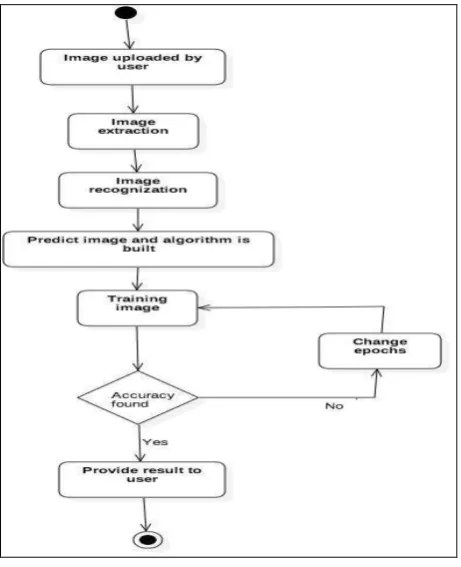
[image:3.595.54.285.260.544.2] The below diagram shows that workflow of the proposed system for Detect and calculation of distance between objects.
Fig 3. Working Mechanism
D. BAGGAGE DETECTION
On March 11, 2004, ten bombs in backpacks and other little sacks, for instance, duffel packs, exploded on four traveller trains. Agents found a set up bomb in a duffel sack they accepted that was ready one of the trains. The sack, with the bomb in it, was found at a police base camp, after it had been taken to the broad fleeting burial service home. Inside they found a Spanish-made shaky, a detonator with a cell phone and a clock. The flimsy found secured was not of the sort commonly used by ETA, yet rather was somewhat increasingly "current" version of ETA's standard unstable. The touchy found clinched was not of the sort generally
ii. To enable security to be very fast the security people should be increased and continuously stay with the person from entrance to exit i.e; one passenger-one security which is impossible.
iii. To make people more secured with powerful security alliances by reducing the human efforts we propose a machine which adds intelligence to the video data captured from the security cameras. We train the system with a set of images and then the input data which is video into the one image per one second.
iv. These images were given to the trained system which is going to visualize the objects in the image and calculate the distance between objects in case if the object is person and baggage for all the images in the specified time frame.
v. If the object is baggage alone or distance between person and baggage keeps on increasing than the specified threshold distance and for a specified time gap the system will raise an alarm for the security alliances.
Fig 4. Baggage Detection Model
IV. RESULTS &ANALYSIS
To work with huge amount of graphical and video information normal server not support or it takes much time to perform the operations. We need the graphical processing units to process the Tera bytes of video or graphical data quick and good performance. Hence here we used to process the video data with help of Nvidia GPU graphic server. A Graphical Processing unit (GPU) is a specific electronic circuit proposed to rapidly control and alters memory to animate the arrangement of pictures in a packaging support got ready for respect a show device. Present day GPUs are incredibly capable at controlling PC delineations and picture getting ready, and their exceedingly parallel structure makes them more profitable than all around valuable CPUs for counts where the treatment of tremendous squares of data is done in parallel.
The Execution and Results including the following procedure and steps, they are as follows:
Step-1: Installing the Anaconda.
[image:3.595.311.543.281.440.2]Step-6:Running anaconda cmd prompt. Step-7: Execution of training Data.
Step-8: Execution of validation. Step-9: Final Results.
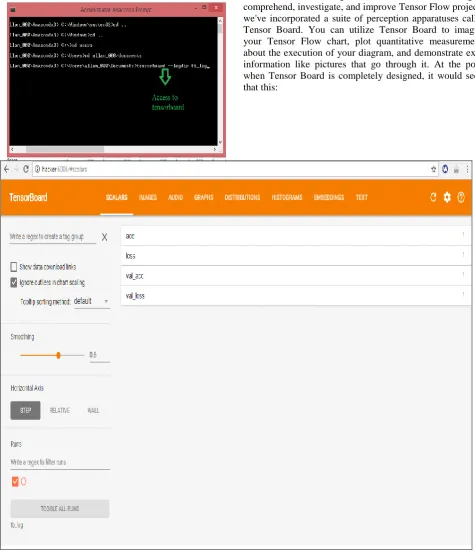
The figure below shows the process of installation o required softwares to handle the data coming from various sources,
Fig 5. Accessing Tensor board of Unattended Baggage Detection
[image:4.595.61.537.130.686.2]The calculations you'll utilize Tensor Flow for - like preparing an enormous profound neural system - can be intricate and befuddling. To make it less demanding to comprehend, investigate, and improve Tensor Flow projects, we've incorporated a suite of perception apparatuses called Tensor Board. You can utilize Tensor Board to imagine your Tensor Flow chart, plot quantitative measurements about the execution of your diagram, and demonstrate extra information like pictures that go through it. At the point when Tensor Board is completely designed, it would seem that this:
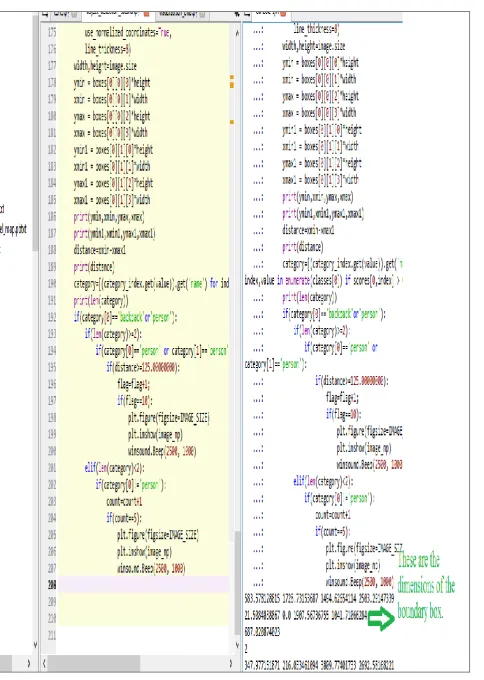
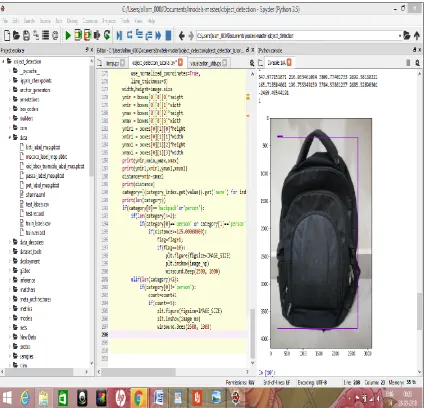
Fig 8. Showing output in Ipython Console
To make it less demanding to comprehend, investigate, and improve Tensor Flow projects, we've incorporated a suite of perception apparatuses called Tensor Board. You can utilize Tensor Board to imagine your Tensor Flow chart, plot quantitative measurements about the execution of your diagram, and demonstrate extra information like pictures that go through it. At the point when Tensor Board is completely designed. To enable security to be very fast the security people should be increased and continuously stay with the person from entrance to exit i.e; one passenger-one security which is impossible. To make people more secured with powerful security alliances by reducing the human efforts we propose a machine which adds intelligence to the video data captured from the security cameras. We train the system with a set of images and then the input data which is video into the one image per one second. These images were given to the trained system which is going to visualize the objects in the image and calculate the distance between objects in case if the object is person and baggage for all the images in the specified time frame.
V. CONCLUSION
International Journal of Innovative Technology and Exploring Engineering (IJITEE) ISSN: 2278-3075, Volume-8 Issue-7 May, 2019
REFERENCES
1. G. O. Young, “Synthetic structure of industrial plastics (Book style with paper title and editor),” in Plastics, 2nd ed. vol. 3, J. Peters, Ed. New York: McGraw-Hill, 1964, pp. 15–64.
2. Kevin Smith, Pedro Quelhas, Daniel Gatica-Perez, "Detecting
Abandoned Luggage Items in a Public Space", IEEE Performance Evaluation of Tracking and Surveillance Workshop (PETS), New York, June 18, 2006, pp. 75-82.
3. Wei Liu, Dragomir Anguelov, Dumitru Erhan, Christian Szegedy,
Scott Reed, Cheng-Yang Fu, Alexander C. Berg, "SSD: Single Shot MultiBox Detector", European Conference on Computer Vision – ECCV 2016, Amsterdam, The Netherlands, October 11–14, 2016, pp. 21-37.
4. J.R.R. Uijlings, K.E.A. van de Sande, T. Gevers, A.W.M. Smeulders,
"Selective Search for Object Recognition", International Journal of Computer Vision, September 2013, Volume 104, No.2, pp. 154–171. 5. Ren, S., He, K., Girshick, R., Sun, J, “Faster R-CNN: Towards
real-time object detection with region proposal networks”, International Conference on Advances in Neural Information Processing Systems 28 (NIPS 2015).
6. Redmon, J., Divvala, S., Girshick, R., Farhadi, A,” You only look once:
Unified, real-time object detection”, IEEE Conference on Computer
Vision and Pattern Recognition (CVPR), 2016.
7. Ceshine Lee, A Tutorial on
“Towardsdatascience.com/learning-note-single-shot-multibox-detector-with-pytorch-part-3-f0711caa65ad”, July, 2017. [Last accessed on 10-4-2019]
8. Calvin Choy, May Chung, Gherry Harahap, Meriane Natadarma, Sin
Lin Wu,” Surveillance System Using Abandoned Luggage Detection”, An UG Thesis submitted to Man-Machine Interaction Group, Faculty of EEMCS, Delft University of Technology, July, 2007.
9. Clark, Don, J.P. Morgan,”Benefits from Chip Change", WSJ Digits
Blog Retrieved September 14, 2011. [Last accessed on 10-4-2019]
10. O. M. Parkhi, A. Vedaldi, A. Zisserman, “Deep Face Recognition”,
British Machine Vision Conference, 2015.
11. Face Recognition Database found at
https://www.kairos.com/blog/60-facial-recognition-databases May 7, 2015. {Last accessed on 10-03-2019].
AUTHORS PROFILE
Mr. P. Aleemullah Khan received B.Tech and M.Tech from Jawaharlal Nehru Technological University, Kakinada, AP. He is currently associated with Vignan’s Institute of Information Technology, Visakhapatnam-530049, India as Assistant Professor and Asst. HoD of Computer Science and Engineering of the Institute since the year 2014. His research areas include Communication Networks, Queuing Models, Stochastic Modeling, Image Processing, Pattern Recognition, Bio-Informatics, Evolutionary Computing and Security. He published 4+ research papers in various reputed International Journals and Conferences. He is the member of IE and CSI.
Dr. N. Thirupathi Rao received PhD (Tech., CSE)
from Andhra University, Visakhapatnam, India.
Currently, Dr N.Thirupathi Rao associated with Vignan’s Institute of Information Technology, Visakhapatnam-530049, India as Associate Professor and Asst. HoD of Computer Science and Engineering of the Institute since the year 2016. His research areas include Communication Networks, Queuing Models, Stochastic Modeling, Image Processing, Pattern Recognition, Bio-Informatics, Evolutionary Computing and Security. He published 45+ research papers in various reputed International Journals and Conferences. He is the member of ACM, IE, CSI, and ISPS.