The Jeely Nursery
Letting the children lead
Heather Baldry
Lio Moscardini
Centre for Educational Support Faculty of Education University of Strathclyde
A second interim report for the Robertson Trust
Contents
EXECUTIVE SUMMARY ...2
CONTEXT AND CURRENT POSITION ...4
1.0 Context...4
2.0 The Jeely Piece Club...4
3.0 Jeely/Robertson Project ...4
3.1Rationale and Background...4
3.2 Project Aim...5
3.3 Current position...5
EVALUATION METHOD ...5
4.0 Aims and process of the evaluation ...5
4.1 Focus for the evaluation...5
ANALYSIS AND DISCUSSION 2008-2009 ...7
5.0 Continued monitoring of initial success ...7
5.01 Management overview...7
5.02 Staff perspective...8
6.0 The development in pre-five worker/parent relationships ...12
6.01 Residential Support Week...14
6.02 Family /Home support...15
6.03 Parent personal development planning and Parents Groups...16
6.04 Parenting courses...17
6.05 Involvement in child led activities...18
7.0 Parent/Child Relationship ...18
8.0 Summary ...19
8.1 Change management...19
8.2 Pre-five worker/child...19
8.3 Pre five/ worker parent...20
8.4 Parent/child...20
9.0 Conclusion ...20
JEELY NURSERY / ROBERTSON TRUST PROJECT 2007 – 2010
EXECUTIVE SUMMARY
This is the second interim report undertaken for the Robertson Trust of an ongoing project developed by the Jeely Nursery (JN) in Castlemilk, Glasgow, from 2007-10. Robertson Trust funding has enabled the Jeely Nursery to continue its successful multi faceted programme in support of deeply vulnerable young children and families on the Castlemilk estate in Glasgow. There is equally strong evidence for the success of the child led approach in relation to positive gains for the young children involved and also for, pre-five workers and parents. The high degree of consistency and commitment to both professional and personal growth on behalf of all the staff of the JN has been sustained and remains a dominant aspect of the ethos of the nursery. The complex nature of the overall task of equipping parents to better support their children towards a satisfactory and life affirming emotional development is understood and accepted and it is clear that however challenging the nature of the circumstances of the individual, staff remain non judgemental, empathetic consistent, and generous of their time and expertise in their approach to support.
This second interim report on the project has provided evidence of continuing success for the now established initial activities. In addition, it reports on further successful developments in the subsequent period. The summary below identifies main points for consideration.
Change management
Child led pedagogy has been firmly established and embedded within JN practice at all levels. Necessary structures and procedures have been set in place which have supported and sustained the project over time and should secure future success. Progression management for the assurance of quality in therapeutic practice could now be addressed to ensure the present high standards maintained by staff.
Pre-five worker/child
benefits to their professional lives of the change in focus to child led practice particularly in relation to providing richer experiences in which to engage children.
Pre five/ worker parent
Considerably developed since the writing of the last report, the section on parents provides compelling evidence of the positive contribution made by the project to the lives of the parents of children attending the JN. A number of carefully planned activities are organised by staff having differing purposes and differing aims. Whether focussed on the parents as individuals in their own right, helping them to build their own self confidence and self directedness the better to help them provide a beneficial environment for their children, or whether the activities focus on the relationship between the child and the parent mirroring the child led strategies of the nursery pedagogy, the evidence points to significant success. The setting up of a method of collecting spontaneous comments from parents over the year relating to the activities above has produced some remarkable evidence in support of the value of the JN efforts on their behalf.
Parent/child
This section will be investigated fully in the final report from the project. The establishment of the trust necessary to bear the weight of evaluation in such a sensitive area has taken time and consistent engagement in positive experiences in preparation. Work on information gathering from a variety of perspectives has however begun and the indications so far are positive and encouraging.
Conclusion
JEELY NURSERY / ROBERTSON TRUST PROJECT 2007 – 2010
CONTEXT AND CURRENT POSITION
1.0 Context
This is the second interim report undertaken for the Robertson Trust (RT) of an ongoing project developed by the Jeely Nursery (JN) in Castlemilk Glasgow. The project originated in the concerns held within the nursery for the long term negative effects of highly adverse socio-economic circumstances on the likelihood of children achieving their potential to establish emotionally stable relationships in later life, and to achieve success through their time at school. There was particular recognition of the negative implications for children living with parents who were abusing alcohol and other drugs in the home.
2.0 The Jeely Piece Club
Focus by staff on the essential requirement to situate the child within his or her family setting is integral to the ethos and tradition of the JN. It was established in Castlemilk in 1975 by local parents with the aim of improving opportunities for their children. It has grown significantly during the succeeding thirty three years and has continued throughout this time to enjoy the strongly committed support of the community. Nursery staff work closely with a wide range of related professional agencies and, as a recognised training centre, offer training opportunities to other professionals and placements to local students. JN is a registered charity, a limited company and is managed by a board of directors inclusive of the parents of children attending the nursery.
The Jeely Nursery is currently regarded as one of the most successful community organisations in Scotland recognised for its development of a range of innovative and quality services for children and their families. A good example of this is the recent successful involvement in a project which focussed on addressing the devastating consequences of negative attachment, to their parents or main carers, for pre-five children. The evident success of this experience, developed and delivered by a team of play therapists from the Notre Dame Centre (NDC) in Glasgow, provided the stimulus from which the current Robertson Trust funded project developed.
3.0 Jeely / Robertson Project
3.1Rationale and Background
3.2 Project Aim
The overarching project aim is that the JN will establish an appropriate and effective response to meet the needs of children vulnerable to highly adverse socio/economic circumstances, particularly those living with parental addiction, and that this will be carried out in the full expectation that appropriate skills and experiences will be shared and developed in collaboration with parents within the context of their families and within the context of the nursery. The quality of the response which is developed will provide enduring benefit for both emotional resilience and long term educational success for the children identified.
3.3 Current position
Outcomes and targets for each year of the project have been identified. Those for years one and two, 2007/2009, have been successfully achieved. The relevant progress and summary documents have been submitted to the Robertson Trust. The outcomes and targets for year three, 2009/ 2010, have been identified and submitted.
EVALUATION METHOD
4.0 Aims and process of the evaluation
The agreed brief for the evaluation process is to look at the impact over time of the project in action, to gain evidence for the Robertson Trust Fund with regard to the progress of the project and to support the project team in planning effectively for a beneficial outcome. To this end the process is most usefully described as summative rather than formative. Regular meetings have been held between the two teams in order to identify and address issues arising from work in action and, where appropriate, to offer advice and to provide a sounding board for new ideas and future action.
4.1 Focus for the evaluation
The quality of the relationship between those who work with the children themselves, and the quality of collaboration between those who work together for the ultimate benefit of the children, separate into four discrete but interlocking categories for the purpose of the evaluation.
Change management
Pre-five worker/child
Pre-five worker/parent
The developments planned by the project team lie within each of the categories above. Each category has an identified set of purposeful activities focussed on addressing the broad aim for the project. Each will be investigated and analysed separately but concurrently as each phase begins, while the final report will consider the interconnectedness of each category in relation to the aims of the project as a whole. The aspects of Change Management and Pre five worker/Child were addressed in the FIR with early reference to Pre-five worker/Parent developments. This second report will monitor the continuing developments from the first evaluation, focus specifically and expand upon the Pre-five worker/ Parent aspect with some early reference to
[image:7.595.92.487.306.554.2]Child/Parent developments.
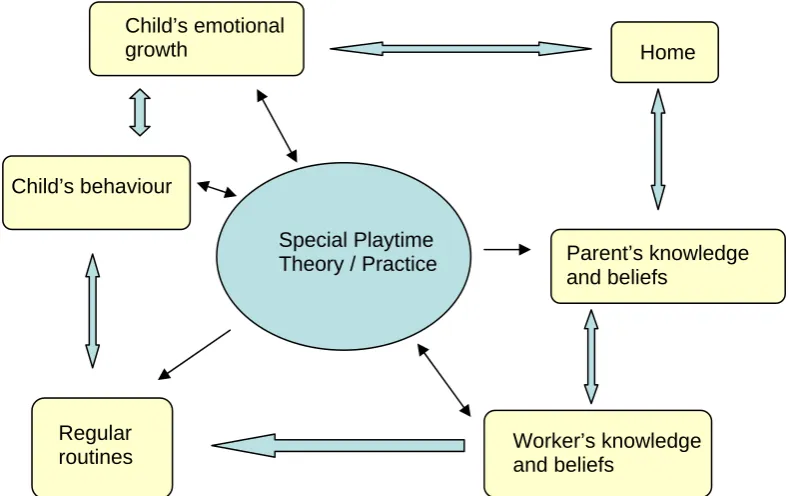
Figure 1 below, outlines these relationships diagrammatically. This diagram represents the conceptual framework that was used to frame the investigation.
Special Playtime Theory / Practice
Regular
routines Worker’s knowledge and beliefs Parent’s knowledge and beliefs
Home
Child’s behaviour
Child’s emotional growth
Figure 1. Conceptual Framework
ANALYSIS AND DISCUSSION 2008-2009
Critical discussion will focus on activities undertaken, identification of issues raised, and the identification of future targets. Where appropriate, representative extracts from interviews with pre-five workers will be used to illustrate the points made. Similarly, reference will be made to policy documents and guidelines produced in response to the requirements of the project and to interviews with senior workers and the Pre-five Nursery Director.
The following discussion has two sections, the first focuses on a continued monitoring of the initial success as recorded in the FIR 2007/8, the second addresses the development in parental relationships and builds and expands on the initial section in the first report. The second section will also introduce early references to the Parent /Child aspect which will be a focus in the final report.
5.0 Continued monitoring of initial success
The findings of the FIR were extremely positive. They concluded that the project held promise of significant benefit for the children and families for which it was intended and that it had achieved considerable initial progress. There was strong leadership from the Nursery Head, committed support from the senior management team and the pre-five workers and growing evidence of support from parents. The shift in culture from child centred to child led pedagogy had been established and sustained to the noticeable benefit of the children involved and the enthusiasm of the nursery staff.
5.01 Management overview
Issues raised at the conclusion of the first report were as follows: A need for -
Identification procedures to support the selection of children and the assessment of need.
A formal individual framework for planning and recording the progress of individuals through the Special Playtimes programme.
Guidelines on the selection of staff and the provision of time for therapy and the communication of information to staff.
Guidelines for ensuring that the quality of therapeutic work in maintained and that staff understand how their progress is managed.
5.02 Staff perspective
A follow up questionnaire used with nursery workers at the end of the second year revisited the original areas, i.e.
Change management
Pre-five worker/child
Pre-five worker/parent
The questions related to the above areas were designed to investigate how nursery workers perceived the recently established child led pedagogy to be progressing and whether children and parents were benefiting from the work and activities of the nursery after the passage of another year
5.02(i) Change Management
In the FIR 2007/8 the Pre-Five Director and the nursery team had successfully managed and maintained a substantial transition from a traditional concept related to child centred play to a constructivist framework of child led play. Special Playtimes (SPT) had been established, (See FIR: 3.2, 3.3.) and there was evidence that some children were spontaneously using SPT language and behaviours in the general playroom. Staff had responded immediately by building on the children’s learning and establishing appropriate child led practice techniques for all the children, including those who were not involved in the SPT programme. Helpful reminders of the new language were placed in the practice rooms for consistent, daily support.
The 2008/9 evidence indicates that the SPT programme has been maintained and developed in spite of inevitable difficulties related chiefly to child or staff illness. A senior member of staff attributed this to a disciplined approach in allocating slots on the timetable and to the extra staff supplied through the Robertson Trust funding.
Even in spite of sickness we are able to go ahead with SPTs. Supernumery staff facilitated this, without that allocation it would have been problematic.
Other nursery staff offered positive responses.
….having a high priority (for SPTs). Timetables are discussed and SPT has to be carefully timetabled.
It has to be organised, it has to be routine, it has to be second nature.
Flexibility for staff. If you have missed a slot you can take an opportunity that arises and get up to date.
The SPT experience continues to be highly rated by staff with comments such as ‘the benefits are huge’, ‘it’s had a massive impact’ and ‘what a difference’ indicating the dominant view.
The child was helped to focus. Her language became clearer and she communicated on a higher level. Her self esteem improved and her play was of a higher quality.
During SPT (the child) learned to be a big girl. She was able to focus on her family dynamic and express herself and what she was feeling which she could never do before. She has been given time to reflect on her feelings and can express herself now. She knows what people are feeling. She knows (for instance) when you are happy.
…it’s especially beneficial for many of the children we work with, for example, child protection.
One child under pressure approached staff and specifically asked for an SPT session; a remarkable comment on the value of the activity.
SPT has clearly become established practice in the nursery to a particularly deep level, a typical comment being
(Maintaining the change to child led practice) That part has been easy. I feel like I have always done it. I go home and do it there as well now.
Not difficult at all (to sustain the change)….its totally in line with the way I like to work.
Reference was made by two respondents to the depth of the achievement gained by individuals during the change over. (Similar reference was made in the first report).
I believe in the child led approach and it hasn’t been difficult for me. Some staff found it harder but they are all on board now. Child led has become second nature now, no one wants to go back and we are constantly reviewing practice.
Two members of the nursery staff are not yet trained to practice SPT. One nursery worker has found the change in practice challenging and is working with the Pre-five Director through the procedures set in place to assure quality in the training, monitoring and support of staff. The other is a recent addition to the team and is eagerly awaiting her opportunity to train.
I use the information and guidance supplied by staff and follow the instructions on the wall of the general nursery. It’s very easy to follow the way the others do it. It’s great, I love it. You can really see the difference. It’s really good. I’m looking forward to my training.
This positive reference to the general playroom and the development of the child led approach to include all children and all staff whether they were involved in the SPT programme or not, is a common theme in the comments made by the nursery team.
Children are (also) sharing their experiences in the playroom and not just in SPT
Prompts on the wall (are helpful). We are all doing it, we are all working together.
The shared values and beliefs of the nursery team are referred to in a positive manner by a number of respondents:
The ethos in the nursery is very helpful. It’s something everyone does, second nature it’s a good way of working. Children are relaxed in the nursery and it helps them. Staff are relaxed too.
While there is clear evidence of the value nursery staff place on the shared understanding they have and the help and support they receive from their colleagues as a team on a day to day basis, the underlying success of the child led development is unanimously attributed to the support of the management team. This is identified by respondents as operating at a number of levels; an established structure for the implementation, monitoring, recording, assessment and planning of SPTs; senior staff support for ongoing difficulties and quick and fair response to the need for advice and guidance on a day to day basis; senior staff providing expertise in the practical work of the playroom.
I find the visual aids, the self evaluation tool, (and) having ** evaluate your work very helpful. You worry that you aren’t doing it well and it’s good to get positive feedback. Staff support (you). You pick things up from senior staff, they show or model and lead us forward. Children keep us on track with their responses.
I can go to senior staff if there are any difficulties or disagreements. ** handles situations excellently and discreetly in group meetings.
Though clear about the well established nature of the child led pedagogy, the majority of respondents identified the support of the management team as being crucial to the continuance of the success of the development. SPT was seen to require have a high priority at management level in order to be sustained.
5.02(ii) Pre-five worker /Child
For the 2008/9 report nursery workers were asked to look back over the two year span of the project and comment on the value of the SPT child led approach in relation to attachment issues. The response was overwhelmingly and universally positive and most often very enthusiastic in tone. The following comment represents all respondents and refers particularly to SPT:
Yes, definitely (of great value). Children calm down. I see children making choices of activities, they show they have their own ideas and have gained in self confidence and independence. A child (I have worked with) who (would) hit out, finds security in this way of working. He is affectionate with his worker, his personality is changing because he is learning to understand what has happened to him. Consistency is very important. He now knows how to ask (for things, for help) He actually asks for his key worker when he is distressed. [Respondent’s emphasis].
Arguably of equal interest to the discussion on the value of the SPTs and the related transfer of child led pedagogy to the general playroom, is that the dominant response. of the respondents was to comment not only on the SPT activity itself, but on the observed effects in the behaviour of individuals as a result of having engaged in a series of SPT activities. Respondents were eager to report on changed behaviours when children came back into the general playroom. They comment that children show more confidence with staff who are not their key worker and indicate improved levels of comfort with other workers:
I cover for members of staff in the general nursery. Children accept me readily now because we all work the same way.
There are examples of improved confidence and self awareness and self direction,
I can give you an example of two children negotiating and compromising in a play situation, able to resolve a potential conflict.
Of children learning to lead, to make decisions, to make choices,
There are benefits for children in the general playroom. Children use choice amongst themselves, for example, ‘What are you choosing?’ and ‘Is this your choice?’
Of children learning to focus and settle,
The children’s choice is very important, it’s not about experiencing everything available, it’s about doing what you needto do and (about) learning by being absorbed and guided. [Respondent’s emphasis].
Respondents reported also on how improved language use allowed staff to see that children knew more than nursery workers had previously realised:
Benefits from the changing work practice had noticeable benefits for staff also. Most of the responses included references to a ‘calmer’ working environment where the lack of necessity to impose a ‘rigid ‘ or ‘heavily structured’ programme relieved former stress and tension created because staff directed children to activities. ‘Following children’s play cues’ provided opportunities for staff to create richer and deeper quality experiences for the child:
…because children are (making choices and) playing cooperatively I can observe, step back and watch what is going on. I have time and space to observe and analyse.
Children are being heard, staff are listening to their voice. Staff listen and respond to a child. Staff are directing less and listening more.
One pre-five worker who was not a regular member of the playroom team commented that for her the consistency of approach of the regular team helped to provide consistency in her approach to the children because she did not have to learn how each individual member of staff operated.
References were also made to the need for constant self evaluation which is in any case included in the staff development aspect of the SPT programme but one respondent represented the majority feeling when she explained where the focus of her attention lay:
It’s not about getting everything right, it’s about giving to the child.
6.0 The development in pre-five worker/parent relationships
The essential requirement to situate a child within his or her family is central to the ethos and tradition of the JN and parental involvement is central to its work. The recognition of the importance of the parental role in providing an environment with supporting relationships within which a child can grow and develop in a beneficial way underpins a strong parental policy in the JN which is firmly grounded in the established literature of this field.
The situation for the Castlemilk community from which the nursery attendees are drawn is particularly challenging. The number of Social Work clients aged 0-15 years for example is 78% above the national Scottish average (Whyte, 2008). The JN receives many referrals from Social Work and Health officials related to parenting issues involving varying degrees of abuse and neglect. Along with a deep awareness of the implications for the child in such a situation however, nursery staff have an empathetic understanding of the problems many families face. The JN stance is non judgemental. There is recognition that many of the parents may not have had positive experiences of parenting themselves and that their behaviour stems less from malice or disinterest and more from lack of knowledge and understanding.
personal needs as well as engaging with the challenging work of providing positive parenting. The funding from the Robertson Trust has been an essential component of these developments.
The child led pedagogy developed by the project team, was first introduced and established with the pre-five workers in the JN with the aim of including parents in a second stage once a grounding of expertise had been established. The successful establishment of expertise within the nursery was agreed as being an essential prerequisite to ensure that the eventual inclusion of parent/s could be undertaken with confidence and competence. At this point child led approaches would be included in all aspects of nursery work with parents, as the overarching pedagogy.
The FIR 2007/08 concluded that positive action on behalf of the JN had resulted in an improvement in the quality of relationship between pre-five workers and parents. (FIR: 5.3) Child led pedagogy had been established and, with reference to parental involvement, three key programmes were identified as having driven the objective forward. Parent Group courses focussed on child development, where a growing understanding of attachment issues was identified by staff and parents as being instrumental in improving the quality of relationship between parent and child and parent and pre-five worker (FIR: 5.3(ii)); Parent Personal Development Planning sessions focussing on the parent as an individual were established and were proving to be successful though at the early stages of implementation.(FIR: 5.3(iii)). Family /Home Support, where the JN was pioneering a shift from the traditional model of home support to one centred on a coordinated, holistic approach with information managed across the range of contexts for individual children by one key worker. The Robertson Trust provided the funding which facilitated the extension of the home visiting team and the initial feedback was positive at the time of the 2007/8 report. (FIR: 5.3(i))
Issues related to pre-five worker/ parent relationships with regard to improving the quality of parenting to the benefit of the child were the focus for evidence gathering for the following year. This was successfully managed and achieved and the results inform the current interim report.
Evidence for 2008/9, evaluating the development of relationships between the nursery staff and parents as an aspect of raising the awareness levels of parents regarding attachment issues with their own children, is taken from staff interview material, parents’ recorded comments and from parent course/activity evaluation materials. Monitoring activities have continued for the three opportunities described above and for two additional areas:
Residential support week
Family /Home support
Parent personal development planning
Parenting courses
6.01 Residential Support Week
One of a series of yearly residential support weeks was provided in cooperation with other agencies that form a support structure for vulnerable families in Castlemilk, for example the Castlemilk Domestic Violence Project. It is organised, planned and staffed chiefly by the JN with an input of personnel and/or activities from the other agencies. Its purpose is to further promote the aims of positive parenting in an intensive setting which offers parent/s support and advice over serial days and nights during which time all aspects of family life are addressed. A rigorous evaluation procedure was carried out by the organisers subsequently in order to provide quality feedback to inform future planning and identify issues to structure further support and guidance for individual families.
The very detailed evaluation material indicated that the majority of the seven families involved felt the experience had been valuable for themselves and for their children. Key worker reports on individual families indicated continuous and commendable improvements in parental awareness of and involvement in more appropriate behaviours. These examples are selected from a long list of achievements:
Discovery of how much fun they could have together and how calm the children are when mum participates in their play.
Recognition that their children are ‘normal’ in their behaviour and not ‘naughty’, having realistic expectations for their children
Progression from no social interaction between mum and baby to mum following the lead of the Key worker in basic communication.
Awareness that baby needs more than just being cleaned and fed.
Parents asked to assess and describe the changes in their own understanding and knowledge, over a series of different aspects of parenting, reported very favourably overall on the outcome for themselves and their children in terms of an increase in ‘routine’ skills and overall confidence.
Problems such as those experienced by vulnerable families however can not be overcome in single episodes such as this and, though it is clear that impressive forward moves have been made through hard work by all participants whether parents children or key workers, negative comments were recorded. One participant was clearly unhappy with regard to the outcome of the programme for herself and stated:
I’m fed up with being told I’m the parent and I have to do it.
For most, stress was lessened and time to enjoy their children and observe them purposefully engaged was appreciated and rare. Participants made a ‘memory book’ of the week and the comments made were positive.
I think this is a great way to show how good a time we had here.
Numerous comments from parents and staff indicated a strengthened or strengthening bond of trust between key worker and parent, the words ‘helped’ and ‘helpful’ being often repeated. A member of the JN staff commented,
The residential visit was very helpful, for one parent particularly. She felt she made progress because she could see what she was doing and what we were doing with the children. They feel they are bad parents and they need to know they aren’t. Some just need to be told to change and it really helps.
The developing closeness and the benefits derived on the residential stay between one key worker and parent was evidenced by this participant from the JN who commented
I was able talk to mum and share an understanding of the SPTs;, mum’s own childhood was reflected in her parenting. She started to use SPT techniques and now she approaches staff for further advice and support.
6.02 Family /Home support
As reported in the FIR for 2007/8, the change in the model of practice, though recent, (see 6.0 above) had been perceived as beginning to achieve the positive outcomes desired. In a move away from the arguably fragmented traditional approach to home visiting which used personnel external to the child’s daily life in the nursery, the JN uses its own dedicated staff. The purpose was to allow a more useful collection, coordination and dissemination of crucial information between the separate contexts in which children live and a more focussed sharing of practice, the overall aim being to strengthen and improve the quality of parenting for the benefit of vulnerable children and their families.
Evidence for the period 2008/9 builds on the original perceptions of success outlined in the FIR. The achievement of a holistic approach to individual need based on the close collaboration of those involved with the child is supported by the evidence collected from the interview schedules. This comment from a home visiting worker explains the quality of input achieved by the process
I bring information (from the home) back into the nursery through a report after each visit to the home. Any concerns I have go to the team meeting. I discuss any urgent issues with the key worker or the (nursery head). The reports are kept on the children’s files.
improved, and most also noticed and commented on improvement in that between the child and the parent.
It has developed a bond between child and parent and also staff and parent. Parents need to know they can trust us and this helps.
Nursery staff get to know how a child is at home and if he is the same in the playroom. The home is more relaxed because the parents know and trust you.
For a child and a parent it builds a bond and we support what is happening. I feel the parent feels she can come and talk to me whenever (she) wants.
It definitely helps … one parent gradually disclosed the need for help at home. When support was put in place there was evidence (in the nursery) of the child benefiting and attachment between the mother and child improved.
One respondent, newly involved in the team, felt she did not have the experience to comment on this aspect of the project and another wanted us to record that, although she did not have a remit for home visiting, she could visit if she needed to because of the ‘Robertson staffing’ adding that ‘crisis visits .. so vital.. were now possible.’
6.03 Parent personal development planning and Parents Groups
In line with the philosophy underpinning JN beliefs in supporting parents in their own right in order to better help them to build the confidence necessary to provide a secure environment for their children, the personal planning activity continues to build on early success. (FIR 5.3 (iii)) The evidence from the self assessment exercises carried out before and after input from self selected courses is generally positive often astonishingly so. Informal courses arising from needs identified by parents are offered to the parents group meetings where the more formal input described in 6.0(iv) is not appropriate.
Parents’ group meetings run on a fortnightly basis, staffed by nursery workers who offer classes/activities which cover aspects of regular living which have often proved to be elusive for many of those who take advantage of the opportunities provided. The parent groups have proved to be very successful in facilitating an unthreatening meeting place for people who are often isolated and trapped in difficult complex life circumstances. Improvements in social confidence, self directed living skills and independent life skills are clearly evident from the self assessment materials but beyond this parents and staff report equally valuable development in growing relationships not only between staff and parents but also between the parents’ themselves. One parent’s comment indicates the general ethos of the meetings
I really enjoy parents groups and the activities we do although what I really enjoyed was the conversation.
Others indicate courage to expand their normal activities with the support of JN staff.
I wasn’t sure about the swimming but I’m so glad I did. I feel amazing.
A member of the JB staff reported that:
Parents turned up for a parent group for which a cookery session had been planned. The parents had developed such positive relationships with staff that they asked the key workers if they would go to the gym with them instead of the cooking. Their request was quickly granted
Others parents have supported each other where no nursery staff were present at all, for example getting together to take their children swimming. Such successes indicate real advances for the people involved and the beginnings of valuable friendships in a difficult life.
Nursery staff equally value the opportunities offered by the parents groups to develop closer relationships with the parents and the interviews provided a rich source of positive material to support the success of the venture.
Parenting classes help to open up relationships with workers and parents disclose more information with staff and with each other …. If we can help the parents we are often helping the children because their anxieties are often a reflection of what is going on at home. Staff are also learning alongside parents ( in the classes) and so barriers are broken down and relationships are built
We find ‘common ground’ with parents. Being involved in the same activities (helps us) build relationships, its not just their children’s nursery its their nursery too. Parents will open up to us where they wouldn’t maybe at other times.
We have a lot of programmes running and parents are willing and want to come along because of the activities. These sessions have allowed relationships to flourish with all staff not just senior staff.
6.04 Parenting courses
6.05 Involvement in child led activities
Of particular success have been the outcomes for those parents who have been involved in SPT activities with staff guidance. Parents who are not involved in SPT are included in the discussion on child led play and are actively engaged by nursery staff. All parents are encouraged to be involved with their children in play activities, with those who struggle being invited to play alongside their child and key worker; the parent gradually taking over from the key worker when confidence and skills improve. For the most reluctant parents, for whom the playroom also presents problems, individual support will be given away from the usual playroom environment, usually in a separate room, until confidence is built.
The closeness achieved through this and other JN activities, and through the general ethos of the nursery, is of great value in such sensitive situations. It demonstrates the strength of the holistic approach taken by the JN in its endeavour to reach vulnerable children through positive inclusion, support and evident respect for their parents. The level of trust parents have for nursery staff and the growth in relationships between pre-five worker and parent, following the shift to child led pedagogy, is clearly shown in the evidence from the JN staff collected and discussed above. Confirmatory accounts taken from the parents’ log add richness to the discussion and further reveal the positive aspects of the totality of the JN activities:
The nursery is great as I only need to speak to one person and then everyone else knows, so I don’t have to repeat myself.
I feel really happy leaving my little boy in the nursery because I can tell the staff really know him.
The Jeely does stuff for parents, I really love coming here.
Everything is good and *** is happy. She is confident with all the staff in the playroom. Her key worker is good at telling me all about her day. I don’t even need to ask.
If I won the lottery I would give the Jeely enough money so it never closes.
7.0 Parent/Child Relationship
This section will be investigated in the third and final report to the Robertson Trust. This stage of the overall programme is the last to be implemented because of its sensitive nature and the necessity to establish prior trust relationships with parents. However, the work on information gathering from a number of perspectives has begun and runs concurrently with the programmes discussed in this report. The indications from the evidence so far are positive, with staff reporting on incidents which give strong indication that the child led approach is reaching the home life of some of the children they work with:
8.0 Summary
Robertson Trust funding has enabled the Jeely Nursery to continue its successful multi faceted programme in support of deeply vulnerable young children and families on the Castlemilk estate in Glasgow. There is equally strong evidence for the success of the child led approach in relation to positive gains for the young children involved and also for, pre-five workers and parents. The high degree of consistency and commitment to both professional and personal growth on behalf of all the staff of the JN has been sustained and remains a dominant aspect of the ethos of the nursery. The complex nature of the overall task of equipping parents to better support their children towards a satisfactory and life affirming emotional development is understood and accepted and it is clear that however challenging the nature of the circumstances of the individual, staff remain non judgemental, empathetic consistent, and generous of their time and expertise in their approach to support.
This second interim report on the project has provided evidence of continuing success for the now established initial activities. In addition, it reports on further successful developments in the subsequent period. The summary below identifies main points for consideration.
8.1 Change management
Child led pedagogy has been firmly established and embedded within JN practice at all levels. Necessary structures and procedures have been set in place which have supported and sustained the project over time and should secure future success. Progression management for the assurance of quality in therapeutic practice could now be addressed to ensure the present high standards maintained by staff.
8.2 Pre-five worker/child
8.3 Pre five/ worker parent
Considerably developed since the writing of the last report, the section on parents provides compelling evidence of the positive contribution made by the project to the lives of the parents of children attending the JN. A number of carefully planned activities are organised by staff having differing purposes and differing aims. Whether focussed on the parents as individuals in their own right, helping them to build their own self confidence and self directedness the better to help them provide a beneficial environment for their children, or whether the activities focus on the relationship between the child and the parent mirroring the child led strategies of the nursery pedagogy, the evidence points to significant success. The setting up of a method of collecting spontaneous comments from parents over the year relating to the activities above has produced some remarkable evidence in support of the value of the JN efforts on their behalf.
8.4 Parent/child
This section will be investigated fully in the final report from the project. The establishment of the trust necessary to bear the weight of evaluation in such a sensitive area has taken time and consistent engagement in positive experiences in preparation. Work on information gathering from a variety of perspectives has however begun and the indications so far are positive and encouraging.
9.0 Conclusion
There is no doubt that this project continues to grow from strength to strength and is already generating benefits for the participating children and parents. The use of funding provided by the Robertson Trust is therefore found by the evaluation team to be well and effectively used and clearly essential for the continuance of this valuable initiative.
References
Baldry H. and Moscardini L. (2008). Letting the Children Lead: a First Interim Report to the Robertson Trust, Glasgow: University of Strathclyde Faculty of Education, Centre fore Educational Support.
Jeely Piece Club (2009). Letting the Children Lead: a Policy Statement on the Pedagogy of the Jeely Nursery, Glasgow: Jeely Piece Club.
Patton, M. Q. (2002). Qualitative Research and Evaluation Methods, Thousand Oaks Ca.: Sage.