Early Years Assessment
Team (Scottish Borders)
Evaluation Report
Andressa Gadda, Vicki Welch, Malcolm Hill, Emma Young
2
Acknowledgments
We are very grateful to all those who helped in the processes of planning, preparation and production of this evaluation report. In particular, we would like to thank all those who took part in interviews, group discussion and surveys, and those Team members who facilitated the
presence of a researcher to observe and gather data within a range of activities and services.
This report can never reflect the entirety of what was learned about the work of the Team; instead we hope to select and present the information that will be of most use to those hoping to assess the value and impact of the Team. This information will be important for the future, both to assist agencies seeking to develop similar services, and to allow Scottish Borders Council and their partners to make informed decisions about the future direction of the work of the Team.
… she used to come and just like ask me how I was feeling, check that everything was fine – she worked closely with [] the midwife and if I couldn’t see [the midwife], and there was any problems, I could be on the phone straight away checking that everything was fine. And then she would just like even just, she would just come for a coffee and just make sure that I was
like okay. She would ask how I was, whereas everybody else was like ‘Oh you’re pregnant, you’re having a baby’, she actually came and saw me and checked that I was okay.
(Mother, interview).
I moved here when I was four month pregnant, and I got a midwife from a doctor’s surgery and she put me in touch wi’ the Early Years Team. Because I’d had Social Work involvement before they thought I needed support. So I got a midwife from the Early Years Team who was
really nice. Didnae see any Social Work at that point, though, until I was about eight month pregnant and they had a meeting to see was I a risk tae [child] or not, when she would be born. They said I wasn’t, that I was in a good place, and I wasnae using drugs and they knew that, there was evidence that I wasnae, and then I got a social worker just, just before [child]
was born.
3
Contents
1) Introduction and background ... 4
1.a) About the project ... 4
1.b) About the evaluation ... 6
1.b.i) Purpose ... 6
1.b.ii) Methods ... 6
1.b.iii) This document ... 7
2) Integrated findings ... 9
2.a) Who receives the service? ... 9
2.b) What needs is the service addressing? ... 10
2.c) What does the service achieve? ... 17
2.c.i) Key outcome 1: Working positively with professionals ... 18
2.c.ii) Key outcome 2: Improved parenting ... 18
2.c.iii) Key outcome 3: Reduced risk of harm ... 19
2.c.iv) Key outcome 4: Child wellbeing ... 20
2.c.v) Key outcome 5: Parent wellbeing ... 21
2.d) What does the service find challenging? ... 22
2.e) What are the critical features of the service? ... 24
2.e.i) Explicitly evidence-informed, value-based practice ... 24
2.e.ii) Colocation and partnership working ... 25
2.e.iii) Provision of longer-term support ... 26
2.e.iv) Clear and inspiring leadership ... 27
3) Conclusions ... 28
3.a) Summary of key findings ... 28
3.b) Final word ... 28
4) Appendix ... 30
4.a) File audits and analysis of family characteristics and circumstances ... 30
4.b) Thematic analysis of qualitative data (interviews and field notes) ... 33
4.c) Parents’ survey ... 34
4
1) Introduction and background
Scottish Borders Council’s Early Years Assessment Team (the Team) is a multi-agency Team comprising family support workers, infant mental health workers, midwives and social workers. The Team has developed a model of early intervention to improve the care and support that vulnerable families receive during pregnancy and once the baby has been born. In an effort to capture and analyse this model, the Team requested that the CELCIS Permanence and Care Team (PaCT) carry out an evaluation of its work and its impact on families. The Team and PaCT agreed to work together towards this end.
1.a)
About the project
The work of the team began in 2004 when the first midwife was appointed to work in the then family support service, after recognition of the fact that pregnant mothers in need of extra support were not being identified by (or referred to) social work services early enough. In
response, the Team which co-located in 2009 have developed a Borders-wide early identification, prevention, assessment and support service. This was aimed at conception to three years for those families and children identified as having additional needs.
The Team works in partnership with other services to identify families and develop and provide personalised support according to their needs. Most referrals to the Team occur during pregnancy, often at the time of the first appointment with a midwife (approximately 10 – 12 weeks gestation), and initial contact with families is made by the midwives in the Team.
Since 2009 the team have received, on average, 170 referrals per year, which is 12% of the Borders births per year; all received support from the midwives and most (70%) some form of additional support from family support workers. Around a third of these cases led to a pre-birth planning meeting in order to ensure the appropriate package of support was in place prior to the birth of the child. The early intervention approach with families aims both to ensure that the family is adequately supported during pregnancy and that children get the best start in life. Around 20% of cases are ‘held’ by social workers in the Team; this includes those where there is concern about the parents’ ability to care for the child. In these cases, parenting ‘assessments’1 will be undertaken during the perinatal period (both ante- and post-natally). This process is
5
assisted by the earlier intervention and relationship-building that occurs. Where these
assessments indicate that the safest option for the child is adoption, the Team is able to support families and hold the child through this process to move them through the adoption process in a timely manner, without having to refer to another team or agency.
An internal review carried out by the Team indicates that this model of early intervention has been successful in, amongst other things, reducing missed hospital appointments, the number of inappropriate admissions to hospital and moving children through the adoption process at a much earlier stage than previously (Wade, Internal Evaluation).
Work with families included group work as well as work done with individual families. A number of different groups are provided covering different stages and different needs, for example, groups during pregnancy, early parenthood and for particular issues such as postnatal depression.
Members of the Team are co-located in their own office base. This brings a number of advantages in relation to sharing information, skills and general communication. Each professional also
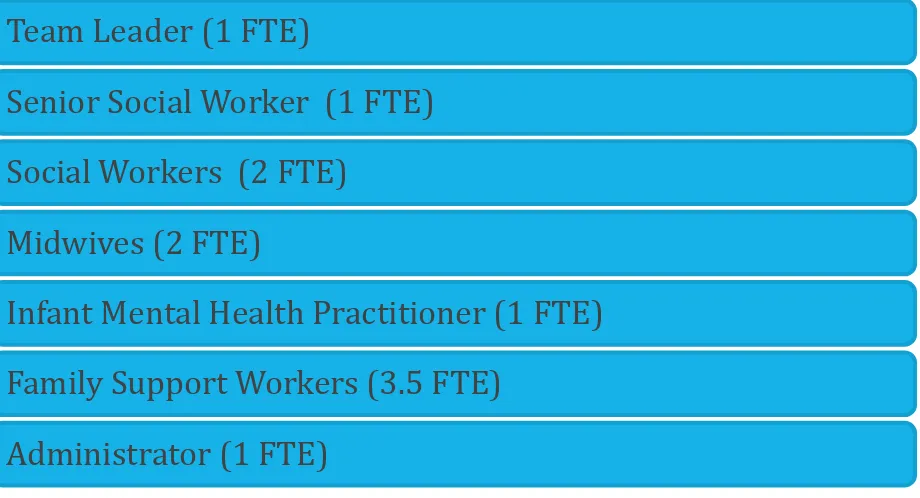
[image:5.595.71.531.455.704.2]maintains clear links with their professional grouping beyond the Team, making sure they are able to link the Team into the wider professional networks in the area. Figure 1 below portrays an outline of the Team as it was constituted at the end of 2014. During the period of fieldwork for this evaluation study, there have been occasional changes to roles and weightings. These have been rare, and the relative stability of the Team has been high.
Figure 1: Outline of the team as of the end of 2014 (FTE = Full Time Equivalent – some posts are job-shares or combinations of part-time roles)
Team Leader (1 FTE)
Senior Social Worker (1 FTE)
Social Workers (2 FTE)
Midwives (2 FTE)
Infant Mental Health Practitioner (1 FTE)
Family Support Workers (3.5 FTE)
6
1.b) About the evaluation
1.b.i)
Purpose
A proposal for the evaluation was devised, establishing a number of aims and objectives. The aims were to assess:
the outcomes of the model (what has changed for families); the impact on families of the Team’s work; and
the impact of the early intervention model on achieving permanence for children who are adopted or placed in kinship care.
The objectives were to:
1) describe the development of the early intervention model adopted by the Team, its philosophy and theoretical underpinnings, and its procedures;
2) describe the early intervention process from identification to ‘discharge’;
3) consider how the model is implemented, identifying key stages and learning points, and its transferability into other settings;
4) identify the characteristics and circumstances of the families that are referred to and supported by the Team, and assess the relationship between these, the support offered and outcomes;
5) identify the characteristics and circumstances of families where children are considered for adoption and the support offered, and assess the relationship between these and the outcomes for children; and
6) explore families’ and professionals’ views and opinions about the model and services in place and the impact these have.
1.b.ii)
Methods
The evaluation was conducted in a number of overlapping phases, in order to allow early access to learning from initial findings. Most of the fieldwork took place during 2014. Data collection was achieved using several different approaches. These are listed briefly below:
Initial review of relevant records, reviews and reports Participant observation of Team meetings and discussions
7
Family interviews
Team member interviews Family survey
Professionals’ survey
Throughout the data collection, appropriate ethical processes and protocols were observed in line with approvals from the University of Strathclyde Ethics Committee and from Scottish Borders Council. Team members facilitated data collection in a number of ways, by enabling the researcher to access information, providing relevant introductions and by clarifying points of confusion.
1.b.iii)
This document
The current document aims to synthesise findings from the different phases of the evaluation in an accessible and useful way. In particular, in this report we try to focus on outcomes and the impact of the Team’s work (as detailed in the three aims of the evaluation) whilst providing sufficient description of the key features of the approach that produced these effects. To achieve this, we integrate data from different strands of the evaluation to respond to the following questions:
Who receives the service?
What needs is the service addressing? What does the service achieve?
What does the service find challenging? What are the critical features of the service?
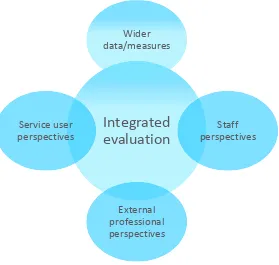
8 Figure 2: Integrating evaluation
In addition, taking an integrated approach allows us to present our findings in a relatively condensed form which we hope will be attractive to readers. More lengthy summary analyses from some of the different strands of the evaluation are gathered together in Appendix 1 for readers who are interested in seeking more detail of the various perspectives.
We include extracts from data and quotes from participants where these help the reader to understand or contextualise points being made. Sometimes these extracts are relatively long; we have minimised them where we can and use longer quotes only where we think they are needed. The use of quotes also has the advantage of giving ‘voice’ to service users and others who are closest to the work of the Team and who understand its work. To reflect this, we have tried to present this information verbatim, without editing features of speech such as repetition,
hesitation, truncation, etc. We have removed names and other identifiers to protect identities and attribute quotes only at the group level (eg mother/father/carer, worker/staff, or external
professional).
Integrated
evaluation
Wider data/measures
Staff perspectives
External professional perspectives Service user
9
2) Integrated findings
2.a)
Who receives the service?
The service covers the whole of the Scottish Borders region. In the 12 months between April 2013 and April 2014, some level of service was provided to more than 170 different families. The families using the service are diverse in many ways and face a range of difficulties and challenges. Notably the families include:
Parents with antenatal and postnatal depression or other mental health problems
Young parents, including mothers aged 15 and 16
Parents currently or previously misusing drugs and/or alcohol
Families in inappropriate accommodation (eg over-crowed, unsafe and/or insecure tenure) Parents with learning disabilities
Parents who had a previous child removed from their care Parents who themselves grew up in care
Families experiencing domestic violence and financial abuse Parental involvement in crime or custody
Parents whose child has recently been removed from their care
Perhaps what is most notable, and reflected throughout all strands of the evaluation, was that many of the families involved with the Team experienced complex combinations of the factors above and other issues with the challenges tending to be long-term features of their lives rather than recent or transitory experiences.
Nearly all families are referred to the Team during pregnancy, and the Team’s midwives are usually the critical first point of contact with the family. The evaluation reviewed the files of 24 families, around half of whom received intensive input from the Team. In this sample of families, initial Team involvement occurred during pregnancy in around half of the cases reviewed; in other cases the Team became involved after the birth of the child. The youngest parent in a sample of case files was a pregnant woman aged 15 at initial contact with the Team; the oldest parent in this sample was a 40-year-old mother. This age range is typical of all families seen2. Single parents
2
10
were found to be more common than couples and most single parents were mothers. Some families also lived in households with extended family or friends, sometimes for support but more often because they were unable to secure more suitable accommodation.
2.b) What needs is the service addressing?
The object of intervention was to enable families to parent their child successfully and effectively, and when this was not possible, to ensure the child was protected from harm and, if necessary, received timely care and support away from the parents. In connection with this and the issues outlined above, family needs were multiple and broad ranging.
The need for practical parenting advice and support. Families served by the Team are often first-time parents or are those who have previously had a child removed from their care. As with other new parents, they are often unsure of various practical and developmental aspects of baby and child-care. Often, these parents do not have networks of friends and family who can support and advise them; in addition many parents have had very poor early childhood experiences themselves and have poor parenting role models to draw on. The demands of parenting a new baby are somewhat different from those of parenting a growing child, and so the need for this type of advice and support may vary depending on the age of the child. The following extract is typical of what we were told about the types of advice received:
They really taught me aboot babies again and bathing them, feeding them, and all the, like, the development that children need to make them secure in relationships, to secure, to secure their futures, really, and their, and their personalities. But what children get at a young age, it does benefit them when they’re older, and I never realised that, where now I do… they’ve taught me, so if I have another child now, I wouldnae need that, because I know what to give them fae the day they’re born, where I didnae know that. I didnae know what tae give my child when he was born, I thought you just dressed it, put it in a chair and it was lovely, you fed it a bottle. (Mother, interview)
In many cases, alongside parenting advice, practical help was given by support workers:
Home visits to do maybe some parenting, helping the first time Mums or young Mums wi’ babies, reading their [cues] or helping them prepare bottles, nappy changing, bathing, things like that… Can go and do a bit of cooking or budgeting, tidying up if people are needing some help to organise the house and getting ready for the baby coming along. (Worker, interview).
11
– she was more like a friend I could just phone her and say, you know, ‘This is happening today’ or whatever. But I didn’t, I didn’t go to any of the classes and stuff. I just did – I just went to my appointments that I had to go to and then I saw [worker]. But she helped like a lot. (Mother, interview)
One aspect of this practical support which was particularly appreciated by parents was the flexibility with which it was offered:
You know, like (worker) would say, ‘I’ll come on Tuesday next week’, but if I was having a rubbish day on the Saturday, I’d text her on the Saturday and say, ‘I’m having a really rubbish day, you know, I’m struggling. [child] is doing this,’ or you know, ‘she’s doing that,’ and she would text me or phone me and say, ‘have you tried doing this?’ Or you know, ‘take some, a few minutes for yourself and let your husband deal with it for ten minutes,’ or you know, just talking you through things where you think… […] But just knowing that, you know, you can just phone or text and say, ‘this is what’s happening. I’m not coping. I’m really struggling. I’m getting upset and it’s not making the situation better.’ And then [worker] saying, ‘well, you know, why don’t you try doing this or doing that, and if it doesn’t work, just phone me back?’ and just having that there was, you know, makes a difference. (Mother, interview)
The need for trusting and enduring relationships. Parents in the families served by the Team may experience difficulties in their relationships with professionals and service providers. Some will have experienced having a child on supervision or a child removed, others will have been in care themselves, others will have been in contact with criminal justice systems. For many parents the challenges they currently faced were things that persisted and had not been resolved through previous contacts with services. Many were highly suspicious or even resentful of professional involvement in their lives or felt that it was unlikely to be beneficial for them. However, by being consistent and supportive, members of the Team had managed to form trusting and enduring relationships with the parents they worked with:
But the Early Years Team did, they came on the phone on the Monday, and that was just after the weekend o’ her going away, and then they were on the phone the Tuesday and
Wednesday, so they were always there. Totally different. (Mother, interview)
And if you don’t trust them [services], then that makes it worse, because there’s nae trust. I think if they, if they were a bit like with the Early Years Team, you would fight tae get your children… (Mother, interview)
12
I think it’s about being consistent, you turn up regularly, on time, and I think it’s about being honest with them. So not telling them things are going to be alright when you know they’re not… And not judging them and not making assumptions about their lives… It takes some families [several months] really to develop a trusting relationship... (Worker, interview)
Some parents reflected on the precise nature of the relationship they had formed with the workers:
I think it would sort of nice to keep in touch, but I don’t know if the practicalities of that is there, because, obviously, you build up a relationship and you trust someone and you get to know a bit about them from what they divulge, and they know lots about you, and it becomes another comfort zone – but, realistically, life has to go on and they have lots of other – it’s their job. It’s not a friendship, although it is, but it’s not in the respect of going out for coffee and you start to take, it’s a purposeful relationship but not one that I think sustains in the real world, for want of a better word. (Mother, interview)
Various other studies indicate that professionals may be wary of transgressing professional boundaries and developing close relationships with their clients, fearing it may cloud judgement and prevent objectivity; this is a particular concern in social work, where there is a fear that workers will be unable to perform objective assessments or may be unduly influenced by parents (Doel et al., 2010; Mason, 2012; O'Leary, Tsui, & Ruch, 2013). No evidence in this study supports this position; indeed, despite close and caring relationships, we saw there is evidence to suggest that assessments are made which find that parents are unable to parent effectively. What is clear from these findings is that the close relationships enable different types of outcomes to be achieved and may even help parents to accept and work positively even when the most difficult decisions are made.
Team members feel it as essential to form strong relationships with families, to be creative and tailor various processes to families’ needs. Some team members felt that the benefits of this approach were not always fully understood by those outside of the service.
The need for help to improve living conditions. Team members assisted families in a number of ways to improve their living conditions. Housing is a basic need for families and was frequently a problem area:
13
But before it was like a homeless one so I wasn’t really safe if you know what I mean? And we had a horrible house there. It’s just, you know, it was like a halfway house you know, like people who are waiting to get housed and all that. And it’s like, so maybe there’s been like three people in the last year that’s lived there, or something like that, and it’s. It’s just a horrible home, you know? The carpet would pull up, certain bits with the, the bottom of the cupboard was sellotaped, and that you know, and it was a horrible place. (Mother, interview)
Where housing was an issue, Team members would liaise with the appropriate agencies in order to ensure that families received the support they needed. Preparing for the arrival of a baby or bringing the house or furnishings up to a standard suitable for a child was of fundamental importance to these families, as their ability to do so informed assessments of their capacity to parent their child. The Team worked intensively with a number of the families in order to improve their living conditions. This often included practical support in the home with cleaning, cooking and furnishing:
… actually going into a family home and saying, ‘we’ll teach you to cook’, I went into a home where they had nothing. They had no spoons, nothing to cook with. And no cupboards full of food; you open our cupboard and we have all basic things and tins of food. They have nothing. And it’s that, so we’re providing so, you know benefits don’t cover the cost of setting up a home and things like that. (Worker, interview)
Where families often had financial difficulties which made setting up a suitable home for their child difficult, the Team ensured that they received benefits that they were entitled to, including those related to pregnancy and the birth of a child. They also assisted families to find second-hand goods or to apply to charities and other funders for assistance with specific items needed for the child or the household:
But sometimes if they’re on low income cots is quite a big one, we are in demand of cots or baby bath, changing mat, things like that. But if they’re needing bigger things we tend to apply to the charities. (Worker, interview)
14
you know what I mean? I didn’t want to feel like I need things you know what I mean? But it... you’ve got to take it though haven’t you? (Mother, interview)
The Team further demonstrated their commitment to the families that they worked with by seeking to ensure that these families had ‘little extras’ that others take for granted:
They also were considering what support would be available to families this Christmas and what they will be able to provide families. They seem quite well organised with books for the groups, vouchers and some extra funding from the ‘children’s fund’. There was some
disappointment that the church will not give away hampers to families this year as they will be focusing on the elderly. However, they noted that with the children’s fund they should be covered. (Extract from observation notes)
The need for support with mental health problems. Forty five percent of all referrals to the team involve parents with a range of mental ill-health problems. Postnatal depression was common along with other forms of depression and anxiety. Mental health challenges ranged from relatively minor to very severe issues requiring hospitalisation:
And that can be diagnosed mental health problems, you know for instance schizophrenia, bi-polar, long standing depression etcetera, or it can be quite simply be that midwives have picked this up at the booking visits, that mums have got extreme anxiety, they’re a bit depressed, they’re a bit low in mood or whatever. (Worker, interview)
… I’ve sort of got this habit of looking down the stairs like to see if the door’s locked…Or to see if there’s any post or anything. But then this thought came into my mind and it said… it said ‘Throw yourself down the stairs, you mad cow.’ And then I thought ‘I don’t think I will, I’d rather go to bed.’ But I was like, it was really horrible. And I’d hear people, I’d hear other voices in my head of people I knew saying really horrible things. It was really weird. I do sound like a bit of a nutter but that’s why, that’s why I was on medication. (Mother, interview)
The impact of mental health difficulties was severe for parents and in some cases presented potential immediate risks for the child:
… we had three if not four mums all wondering what would happen if the baby got harmed. What would happen if she drowned in the bath? We had a mum standing at a cliff wanting to jump off. We had another mum who wanted to harm her baby, had already had two older children removed from her care. (Worker, interview)
15
her that I like turned it over, turned it round in my head and oh, we’re going back to a bad place. (Mother, interview)
The types of help and support that parents needed with mental health problems varied. Many were involved with specialist hospital-based services and received support in the community from the Team, either on a one-to-one basis or through group-based activities:
It’s like a sort of separate, like I had the psychologist for my stuff, for like other things to cope with, like, other issues; and I had the Early Years’ to help with (child) and I to, like, bond and to have that emotional attachment again. (Mother, interview)
The need for specialist help with substance misuse problems. Some of the parents considered in this study had previous or current problems with drugs and/or alcohol:
(Child) is doing well and developing normally. Both parents interact with her well and she is smiling and babbling in response. However, concerns remain about (mother’s) ability to cope with stress, both parents’ previous drug misuse, (mother’s) parenting history and their tendency to miss appointments. All professionals involved have agreed to meet every two weeks at Addaction. (Researcher, case files notes)
These issues could be difficult to work with, but strong working relationships with parents and specialist services, and the early and consistent approach of workers, ensured the Team could more effectively address these concerns:
Phone call from LD to parents. They apologised for behaviour on Friday. (Mother) said she wanted to come clean and work with services to have (child) returned to her care. She admitted using up to 18 dihydrocodeine a day and in the background (father) admitted to smoking heroin. (Researcher, case files notes)
One advantage of having a midwife in the Team was that this provided a health rationale for addressing drug and alcohol use:
The drug and alcohol services, really good relationships, and I think that's down to [midwife] knocking on the door and particularly you can start from the perspective of somebody's health and wellbeing in pregnancy, where there's drug and alcohol, and the wellbeing of the unborn child and so they tend to, alongside the obstetricians, get very involved in both notifying us sometimes that somebody's pregnant but also making sure that that's monitored throughout pregnancy. (Worker, interview)
In some cases children were exposed to a range of people who misused drugs:
16
tae that, I dinnae disagree tae that, I know that’s what, you cannae have drugs and children. (Mother, interview)
In all respects, a particular concern was the safety of the child:
… we've had a parent who's agreed with our plan, agreed that her child... it was right that her child was in care, that her drug use was out of control, and that it was right that we removed her baby and that it's right that we're doing this work with her and that she has to be clean in order to have a baby home. (Worker, interview)
The need for child protection and permanence. Children were not interviewed in this study, but their wellbeing was at the forefront of all accounts. Parents clearly wanted what they felt was best for their children, as did members of the Team and the other professionals to whom we spoke about the work of the Team. In some cases this meant the removal of children, either on a temporary or permanent basis.
In common with other research, families in this study resisted the removal of children and spoke of ‘fighting’ to keep their children. It is promising, however, that several parents who were
engaged with the Team had developed a more nuanced and less adversarial approach that did not see all professionals as potential enemies. Instead, professionals in the Team were often
portrayed as allies in a battle to provide a safe home for the child or to provide the best solution for the child:
[if a family worked with the team] you would know a little bit more about children, that would gie you general knowledge tae deal wi’ children better in the future. But no’ all Social Work services are like that. (Mother, interview)
Social work can’t just come in and say, ‘I’m taking your kid away’. They have to, it has to be your fault, and that’s what I’ve realised now. But all my life and most of my mates would probably think that and all is, ‘social work are bad’ you know what I mean? ‘They take your kids away from you.’ But it’s not like, it’s like everything else, you know what I mean?... it takes a lot for social workers to remove your child. (Father, interview)
So, even if you’re coming to the point of, you know, giving them up for adoption, you know, they’re working with them and so, those families think ‘actually, yeah, do you know what, you’re right, baby would be better [off]. (Worker, interview)
17
I’m not talking about the extremes of neglect and abuse, I’m talking about the subtle stuff that we’re actually very unaware of as a society still. (Worker, interview)
Similarly, the work of the Team included activity aimed at ensuring the wellbeing of those children subsequent to their removal, as in this example of the impact of contact on a child:
[Team members] here have been chatting about various cases. One of which is going to court soon and [Team members] were discussing how they can show that contact for this little girl has not been beneficial. They have talked about various elements of this girl’s care, child development issues and so on. [Worker 1] feels that she does not have enough evidence, that the court will not accept the evidence they have. [Worker 2] has suggested that they will need to bring in an ‘expert witness’. (Notes, observations)
Team members also bear in mind children’s need for stability and permanence:
Again, is it a Section 25 or do you go through the system? We would like to see directed options so that that child is not having maybe one or two moves. They're getting the best possible outcome from the beginning for their own relationships, attachment, development throughout childhood and adulthood. And, it's about maybe the carers, prospective adopters taking the risk rather than the child. (Worker, interview)
Protecting children involves networks and systems as well as individual actions, for example, having appropriate documentation to support communication and ensure that other professionals are clear about the role of the Team in the child protection process.
2.c)
What does the service achieve?
There are various general indicators of success, including extremely high rates of approval from parents and from wider service providers. Whilst these are not direct measures of outcomes, we suggest that this approval is important; these groups are both well-placed to judge the quality and utility of the service and are both critical to the success of the work. More detailed findings from a survey of professionals and a survey of parents are available in Appendix 1.
Of 27 parents responding to a survey, all but two (7%) described Team members they had worked with as excellent (70%) or good (22%), with similarly high ratings being achieved for the services provided. Of the two that rated a worker as poor, one referred to a social worker and one to a family support worker.
18
about whether the Team was able to improve outcomes for fathers; even so, more than half of those who responded to this question agreed that they did.
Below we summarise five key outcomes which we feel are of particular relevance and are likely to be important and substantial outcomes of the programme. The evidence for some is already strong; others may need to be inferred from wider evidence according to relevant theories of change.
2.c.i)
Key outcome 1: Working positively with professionals
In the survey, parents reported feeling respected, included and well-supported. Similarly, in interviews parents commented on the quality of the relationships they were able to form with Team members and the support that could result from this:
Early Years Team are a bit different, I think, they’re a bit of a unique service ae Social Work, they seem tae be really nice and they’re very supportive, and they’re great wi’ your children as well, it’s no’ that they just forget aboot the child being there, they’re pretty good wi’
interacting wi’ the children.
This is an important outcome for several reasons, not just because parents feel valued and
supported, but also because we would hope that this positive experience of working with services would begin to enable these parents to have more effective interactions with other professionals now and in the future. However, we recognise that the mistrust parents express for certain services, notably social work, is likely to take time to resolve:
2.c.ii)
Key outcome 2: Improved parenting
In the survey, parents saw the support and advice provided by workers as being informative and helpful. Various parents felt the inputs from the Team helped them to be more confident and less anxious or stressed. These themes were again common in parental interviews. In the emotive extract below a mother explains how a worker had helped her to think clearly about her parenting, become more confident and focus on positives:
19
well, which I found really interesting and helpful. And we started a list of things she started to write down, ‘so what do you do for [child]?’ I was like, ‘well, I feed her, I change her, I bath her,’ and she was like, ‘right, and what do other people say about her?’ I was like, ‘well, they say that she’s pretty and that she’s got big blue eyes.’ And then she changed that to saying that I’m a good mother because I bath and feed her and change her, and then she’s my daughter and she has big, beautiful eyes and different things, to turn it back onto me that, to connect it back to me, which was very difficult but helpful to hear all the positive things that I’ve done without actually thinking that I’ve done anything positive. (Mother, interview)
Improvements in parenting and parents’ confidence and general well-being are an important outcome for both the parents and the children. Changes to parenting practice enacted in the early years are likely to have profound and long-lasting benefits. The example above shows how
sensitive advice and support can impact on the relationship between parent and child. Better attachments should enable children to develop and flourish.
2.c.iii)
Key outcome 3: Reduced risk of harm
We would suggest that children in families that are regularly and more fully engaging with services and those that experience better parenting will be at reduced risk of harm. The Team has frequent contact with families in the most complex need, and this additional presence helps to ensure children are safe. Similarly, by helping families to learn to engage more positively with services, greater contact with other professionals is possible.
In addition, as already discussed in this report, the work of the Team in addressing parenting issues and helping parents to understand how they themselves can keep children safe should reduce the risk of children coming to harm.
It is very difficult to measure the risk of harm; various indicators which at face value may seem to suggest reduced risk (eg fewer children being removed from families) may in fact be poor
20
2.c.iv)
Key outcome 4: Child wellbeing
There is some evidence to suggest that children’s wellbeing is very likely to have been improved by the work of the Team. However, without speaking directly to the children (as we did with the parents) or taking objective measurements, we need to infer gains in their wellbeing from changes in parental behaviour or from the observations of parents and workers. For example, we would feel confident that advice given to parents about how to bathe, feed, wean, etc will benefit children’s wellbeing. We can be confident that the Team’s contribution to this was important, since parents value this help highly, and suggest that getting information or support from other sources can be difficult: for example, feeding was one practical area where children’s wellbeing has been promoted:
… it’s all fine and well them saying ‘Right this is the stage that they should be having finger foods’ but then what is a finger food? To a baby like, you can’t give them a whole carrot that’s like not been cooked or like you know, you don’t actually know what is classed as a good finger food to, whether it be like first to start on and, whereas like [workers] maybe helped us a lot with that.(Mother, interview)
We done a lot a’ weaning and stuff wae them, at the groups, which was like, we sat down at the table and we just, like, gave them things to eat and, like, feel the textures, you know? And that helped her, obviously, like her eating and stuff because, probably, like, because I’m a worrier, I’d probably have her on, like, soft stuff all the time but, like, it helps, as well, going to groups ‘cause, like, [worker], like wae being a midwife and stuff, and she knows what she’s talking about and she could just hand, like, the kids something to eat and she wouldn’t have the worries that we had, d’you know? (Mother, interview)
In addition, we note evidence such as the team’s breastfeeding statistics are above the national average; during 2013/2014 more than half (54%) of the families involved with the team breastfed their child for six weeks or longer; this compares to the national target of 33%.
We would also suggest that the children’s emotional wellbeing has been enhanced by the work of the Team and that this is likely to be very important to these children now and in the future. For example, parents frequently related greater understanding of issues such as communicating and bonding with their children. Some parents also described improved relationships with their child:
21
But yeah, she was really good, and I do have a lot more confidence in, like, wi’ [child], now, and we really have, like, we’ve got a really good relationship with each other, now. (Mother, interview)
It seems likely that children in these families will have more secure attachments and that this will bring lasting benefits. Again, without direct accounts from the children and/or objective measures, we need to rely on the accounts of workers and parents.
Equally, the work of the Team to ensure that the processes applied when children are removed from their birth family are as effective as they can be, along with reduced placement moves and faster permanence, will enable children to form better attachment and experience more stability. Parents were also helped to understand that a young child can communicate through behaviour. In the following extract, a worker describes working with a child who was communicating her anxiety at home through behaviour which changed when she was in another setting. The first step towards helping the child was for the worker to discuss her observation with the mother:
So I was explaining it to her and she said ‘oh yes, yes I did [notice], yeah she did behave like that’ you know, when I explained to them what was happening, and why that was happening, why the little girl was probably behaving that way, and why she was now feeling much safer, that there wasn’t the anxiety and the angst and the fear around, was behaving differently. (Worker, interview)
Local professionals outwith the Team also noted that the Team did improve outcomes for children; agreement was high, with 22 out of 23 responding to this question confirming this and one neither agreeing nor disagreeing.
2.c.v)
Key outcome 5: Parent wellbeing
There is considerable evidence to show that parental wellbeing is enhanced by the work of the Team. This is especially apparent in terms of parental mental health with numerous examples of parents who were successfully recovering from severe depression and anxieties or who were feeling generally more confident and less worried:
Like, although, obviously, like, I’m a hundred times better than what I was, like, when I was really, really ill and stuff, and yeah, I do see it… they’ll tell you, if you spoke to them, how much I’ve improved, how much my confidence has built, how much o’ a different person I am, d’you know? (Mother, interview)
22
… it’s the only group I go tae, but as I say, it’s one of the best groups I’ve been tae for my confidence building, d’you know? And it’s all young mums with, like, young children as well. Like, it’s from birth to a year, so we do a lot of things, you know, we do like fun things as well, like baking and stuff, and, like, making Mother’s Day cards and things, you know? Just having a chat, having a snack and stuff, so we do a lot a’ things like that, but we also do, like, speak to other mums to see, like, the problems that they’ve been having, you know, like, to see if it’s the same sorta things that we go through. (Mother, interview)
But it’s nice just to have, to be able to meet with other mums, and just other mums that are in the same position as you and you can just and have a chat. And it’s just everybody gives everyone a bit of a hand. It’s just nice to have, and it’s a really open group as well like you can feel like you can talk about anything like. And if you don’t want to you can always speak to [workers] on your own, if you didn’t want to speak in front of everybody else. But the group that we’ve got and the girls that go, we’re all quite friendly (yeah) together. And it’s quite open and it’s just, it’s nice just to go for the morning and have a good blether and a nice hot cuppa. (Mother, interview)
As well as mental wellbeing there is evidence that other health behaviours and aspects of wellbeing have improved, for example, reduction in drug, tobacco and alcohol use and improvements to diet:
… I wouldn’t look after myself that much, you know what I mean? It was like, I’d still eat but I’m not, when I’m here you know, I’ve got like a slow cooker and that so I’m, I’m meals every night you know for myself and she’s getting proper meals and that. But as I say, it’s just, I would always have stuff for her but just forget about myself kind of you know what I mean? But it in this house it’s like, you know, it’s pure routine, so it’s like have tea every night you know, and it’s, it’s just excellent, yeah. I like it. It’s more better for her you know, there’s more of a routine for her. (Mother, interview)
2.d) What does the service find challenging?
Limits and constraints. All workers operate within a set of constraints; indeed much professional work involves helping people to address or overcome constraints. The Team faced a number of problems linked to external factors such as the economic circumstances that families
encountered, the difficulty in accessing resources such as sufficient, suitable housing, and the frequent lack of social networks on which families could call for support. The extract below
23
And I’ve had quite a few problems, ‘cause I’ve got obviously with the super carpets, I’ve got a coal fire, and a lotta people, through the winter there was loads of people trying to steal coal and… and trying to get into the flat at some points. So it was just one of them things with her coming round and I was able to tell her, I felt a bit, not safer, but a bit better knowing that somebody was trying to help, ‘cause the police just kept getting called out and they never did anything. (Mother, interview)
The Team also faced internal constraints, most notably the limits of their own time and capacity. Demand for support is undoubtedly high and the workloads of Team members reflect this. For example, we note that there was an increase of 62% in the number of pre-birth planning meetings in 2014/15 compared to 2013/14.The Team is not large and some members are part-time. This is problematic given the vast geographical area covered. Whilst the office is centrally placed in the region, drive times across the area could exceed two hours. This is important as the benefits of colocation may be lost if Team members find it difficult to spend time together:
Then that’s the pressure because actually it’s getting into the office to do -- everything’s on the computer now, everything, you know, mileage, everything that you do is on the computer and it’s finding time to come into the office to actually do your case notes, and all the other things that you have to do, which is a tension. But actually the work, the front, the face-to-face work, for me, is the most important. (Worker, interview)
Team work is an area of strength for the Team; each member clearly understands their role and the roles of others. For the most part, peer relationships are highly supportive and very warm; leadership, formal and informal processes and systems such as Team meetings, etc. seem to enhance and assist this process:
The group dynamic is a really key aspect of the workings of this Team. To reproduce this elsewhere requires time, leadership but also something else… it is that chemistry that exists between individuals which cannot simply be artificially created. (Researcher, notes).
We’ll have different opinions, and I think, quite often, those opinions can be respected and they’re definitely healthy. I think, for me, you have to have those other opinions ‘cause I need somebody to play devil’s advocate with me, or I need to play devil’s advocate for somebody else. So I think it’s healthy to have that. (Worker, interview)
24
However, the Team is very busy, highly-motivated and frequently exposed to highly stressful or demanding situations. In addition, as a multi-agency Team, members have disparate pay and conditions despite facing similar workloads and demands.
Under these circumstances occasional tensions were observed, but were for the most part quickly and easily resolved. It is perhaps a further sign of the strength of the Team that they were willing and able to air these frustrations. We attribute the Team’s ability to deal with such tensions to the personal traits of the people involved, the Team-working systems that are in place, and to the strong and sensitive leadership of the Team.
Partnership working is an area frequently noted as being very successful for the Team, with most external professionals suggesting that communication was very good and that the presence of the Team was useful to them in a number of ways. Partnership work also involves challenges related to differences of opinion:
A brief discussion about a few cases followed. There is one particular family which has been the focus of many discussions in the two staff meetings I’ve attended so far. The parents both have a learning disability […] The Team’s assessment is clear that the parents are unable to look after the child and keep her safe, however, other professionals seem to be arguing that the parents have not been appropriately supported and kept informed of what is going on. (Notes, observation)
Differences, such as those in this example, appear to have been managed constructively and openly through a combination of seeking to understand these different perspectives, sharing relevant evidence or information, clarifying the Team’s stance and by being flexible and willing to try different approaches where this was helpful. It is notable that the high level of sharing and discussion within the Team allowed members to be confident and to be clear about the reasons for their position when they were dealing with others from outside the Team.
2.e)
What are the critical features of the service?
2.e.i)
Explicitly evidence-informed, value-based practice
25
The Team make frequent lively reference to these positions in their discussions and meetings; ideas are explored and relevant materials are shared among the Team. They were willing to continue learning and development, for example, asking the researcher to recommend research papers, lectures and events. In discussion with the researcher, some staff represented particular ‘theories’ whilst others couched similar ideas in everyday terms. This is not to suggest that the Team rigidly apply a narrow set of theories; some staff spoke of discovering evidence which underpinned current ways of working, whilst others referred to selecting those theories which were most pertinent to a particular situation:
But I think really it’s, we have theories to intervene, and theories to inform, and I think it depends what circumstance we’re working with, because I mean we have parents with mental health problems, drug and alcohol problems, you know, relationship difficulties. So it’s a really broad area that we cover. (Worker, interview)
Several concepts came through particularly strongly. These form a coherent set of broadly holistic approaches which position the professional as a knowledgeable partner in helping each child and parent to flourish. Ideas and approaches which were cited include, but were not limited to: Relationship-based / person-centred approaches,
Mind-mindedness / mindfulness / genuine care and concern, Ecological perspectives / GIRFEC,
Early intervention / prevention,
Attachment-informed practice / promoting relational stability and permanence, Neurodevelopmental approaches / brain science,
‘Values’ such as equality, empowerment, honesty, flexibility, creativity, bravery and a non-judgemental stance,
Various training packages including Mellow Bumps, Solihull, etc,
The work of various writers including; David Howe, James Heckman, Allan Schore, Harriet Ward and Bruce Perry among others.
2.e.ii)
Colocation and partnership working
26
And we just, because we work so closely, I sometimes forget that I’m still health. I don’t want to be a social worker, but I think you pick up social work information that you’re able to share and the [workers] who are social workers also pick up health and what [health worker] and I do. (Worker, interview)
This approach allows a flexible package of care and support to be delivered to the family whilst also allowing practitioners to form a close relationship with parents. Colocation of the Team facilitates this process and it seems that this is all the more important given the large geographical area covered.
Another advantage of the Team’s structure is that each separate member also retains and
maintains their wider professional network, and is able to seek advice or refer families easily. This is in part enabled by the fact that most workers in the Team were already well-established
professionals with local connections before joining the Team. The combination of these internal and external networks allows any family member that is in contact with any worker in the Team to benefit quickly from a very wide range of expertise:
I think we’re perhaps drawing expertise from people who you know have that knowledge and get you know, do referrals, ask you know for guidance I think really. Particularly with mental health problems and things like that. We have infant mental health workers in the Team, so I think we share that. I wouldn’t say, I wouldn’t profess to be an expert! (Worker, Interview)
2.e.iii)
Provision of longer-term support
As previously discussed, the issues that families faced were usually complex, interconnected and deeply ingrained. These conditions had often been part of their lives for many years, often since the parents’ own childhoods, eg poverty, material deprivation, drug use, poor mental or physical health, and social isolation. As such, most issues are unlikely to be amenable to one-off short-term interventions. The findings above show that the Team is typically in touch with families for a period of several months and, if need be, for years. This fits with the Team’s approach to building strong relationships with families to show them they ‘matter’. Even when contact has ended or reduced, families report still feeling like they matter, that Team members remain concerned about their wellbeing, and that they can be easily accessed if required:
27
This level of resource appears to be critical for a number of reasons: firstly, because the involvement of the Team markedly reduces the input required from other local professionals, secondly, because the nature of the Team’s input is likely to have a lasting effect on families, preventing the same issues from arising and being dealt with several times, thirdly, because the Team seeks to work as efficiently as possible, eg by using group work when suitable, and fourthly, because the long-term impact on children is likely to contribute to the breaking of
intergenerational cycles which may impact on their own ability as parents.
2.e.iv)
Clear and inspiring leadership
Team members and others frequently made positive comments about the leadership of the Team. For example, they felt that leadership inspired and enabled them to be creative:
I think, having a good Team leader is what makes a huge, huge difference and [leader] is very supportive in anything we want to do, like the antenatal support group. I think, in the Borders, we don’t have a perinatal mental health Team, and I think that’s probably somewhere that health, they probably will go, but we really need to go sooner rather than later. But [leader] was absolutely brilliant, you know, when we suggested doing anything like that. And I think that is, it’s that that makes the job easier, and it’s just, I think it’s always learning. (Worker, interview)
Team members also felt they shared a value base with leaders:
This is the job I want to do. I think it's about relationships, building that rapport with families. I know how [leader] works so I like that as well. And I just love my job. (Worker, interview)
Leaders showed an awareness of the need of Team members for support and the need to provide the same mindful care for them as they provided for families. Leaders have been seen to be closely involved in supervising workers and contributing to individual decisions about family work. We also note, however, that the drawback of having a leader who is such an important and
28
3) Conclusions
3.a)
Summary of key findings
The findings of this study highlight that the Team is providing an important and impactful service to families in the Scottish Borders. The services are highly valued and welcomed by the families, many of whom have previously been underserved by or resistant to engaging with professional services. We have identified a wide range of needs that are being addressed by the Team, and have noted various outcomes, including:
Improved family engagement with professionals Improved parenting
Reduced risk of harm Improved child wellbeing Improved parental wellbeing
We have explored the ways in which the Team works to achieve these outcomes, identifying areas which present particular challenges. Challenges can sometimes be associated with areas of
strength and we have discussed how these are dealt with by the Team. We have also identified four particular aspects of the work which we feel are critical to the Team’s success; these areas will be of particular relevance to other services seeking to replicate similar effects. They comprise: Explicitly evidence-informed, value-based practice
Colocation and partnership working Provision of longer-term working Clear and inspiring leadership
The appendix to this document presents some findings from individual strands of the study in more detail, and we urge readers to refer to these.
3.b) Final word
29
whole. The Team has recently been awarded various prestigious accolades, both within Scotland and in the UK, but they continue to look forward, reflecting on developing their practice,
protecting aspects of services that are most important, and responding to challenges that emerge:
I hadn't quite ever voiced it to myself but that award came at the end of ten years of really hard work and change. The Early Years Team didn't just spring into being overnight. It was ten years of hard work and vision and change. So it's kind of, you know, you think 'Right, well, gosh, the next ten years, what are we going to do?' So that's kind of where we are at the moment and there's a lot of thinking and planning and soul-searching to be done… And then you think 'Right, okay.', and you know, I'm absolutely clear that our role within the Team has to be person-centred, has to be, you know, that there's no point faffing around managing if you're not doing the visits, you know? It has to be, most of the work has to be the one-to-one family work.(Worker, interview)
The problems faced by the children and families served by the Team are significant, serious and difficult to address effectively. However, failing to address these issues will perpetuate
30
4) Appendix
4.a)
File audits and analysis of family characteristics and circumstances
With relevant consents, the files for 24 families were analysed. The researcher took anonymised notes of the situations that had emerged and the Team’s response to them. This provided valuable information about the functioning of the Team but also about the types of issues faced by families and the characteristics of the family members. Here we present a brief analysis of some of the key points:
Files and cases
The files were very variable; some had many entries (max of 136 was noted) and others had only one or two. This reflects both the complexity of some families’ situations and the fact that some cases were relatively new to the service.
This variation is also reflected in the fact that whilst many families have contact with only one or two members of the Team, a small number have contact with multiple Team members. For example, four of these families had contact with five or more different members of the Team. Eight of these families had involvement with one or more group-based activity, with the most commonly cited group being ‘Bumps to Babes’ and the second most common being ‘Mellow Bumps’.
Most files contain clear evidence of work in partnership with other agencies, with several agencies being involved in some cases. Only seven files were read in which partnership work did not feature highly.
Ten of the 24 files referred to cases that were ‘closed’, ie where there was no further intended contact with the family.
In 17 of the files read, a date for the first and for the most recent entry was recorded. The difference between these two dates gives an impression of how long the Team may work with families. The mean value was a little over a year and the median value was a little under a year, suggesting the gap between the first and most recent dates was ‘typically’ around a year. Of eight closed files where first and last dates were available, the mean time difference was
562 days and the median time difference was 370 days. Despite this, half of cases were closed in less than one year. The Team had worked for more than two years in only two of these eight ‘closed’ cases. The data seem to suggest that these two cases had engaged over an extended period (both around four years). It is possible that this reflects families where a second
31
Contextual information
For those cases where information on the referral route was available, referrals tended to come from a social worker or midwives. Less often, referrals came from GPs and others. In all except one case, the child was resident in the same household as the mother.
Fathers were clearly resident with the child in nine cases, this was unclear for seven families, and for eight the father was clearly not resident with the child.
In at least five households there was one or more other adults (not mother or child) resident with the child. In 15 households this was not the case, whilst in four households this was not clear.
Most families (n=15) contained only one resident child.
Only one case was observed where the child spent time in more than one household (shared residency).
The Team began their involvement in most cases before the birth of the child.
Examples of challenges, issues and problems faced by families:
Issues related to parental mental health were very common: Experiencing postnatal depression
Mother and father both have postnatal depression.
Mother has low mood, and possible postnatal depression. Concerns relating to her ability to bond with the baby. There is a breakdown in the relationship between the parents.
Mother has mental illness and now receiving support from community practice nurse weekly. Mother struggling with postnatal depression and hospitalised as a result. Paternal
grandparents took up care of the children.
Mother has past experience of postnatal depression and consequently there was a concern that she would experience this with second baby. Support put in place to manage this concern. Potential postnatal depression leading to challenges related to bonding between mum and
baby. Had received support from midwife but this had ended and was not replaced, hence involvement of Team. Had developed a strong 'friend'-like relationship with support worker. Reassurance provided that experience was not unusual.
Concerns relating to health; mother diagnosed with anorexia nervosa.
Issues related to housing problems were common:
32
Living with child’s father’s parents. Father was living with new partner but then returned to parents’ home. Mother and father remain separated. Mother then moved into independent accommodation with baby.
Mother living with parents, but this is coming to an end so needs to find housing.
Initially lived with mother and stepfather but then moved in with baby's father’s parents. Living in bedsit.
Issues related to income and financial stress were common: Enquired about benefits entitlement (several entries) Mother referred for advice about benefits
Seeking advice about income support.
Issues related to substance misuse were common:
Father has history of alcohol-related offences. Parental responsibility for child given to father, who then moves out with child to his mother’s after partner assaults him. Then needs support to gain his own tenancy; placed in homeless accommodation in the interim.
Father in prison at one point, appeared to be homeless, previous child removed and put into foster care under child protection order as a result of parental drug use.
Mother’s drug use during pregnancy, child placed in foster care after birth then returned to mother’s care to be later placed back in foster care. Father in prison, concerns regarding his drug use. Baby required detox post-birth.
Issues related to domestic and financial abuse were evident:
Domestic abuse. Concern that the child is given priority, whilst the mother, who is still young, is not considered
Mother victim of domestic violence by child’s father
Father’s parents then take control of mothers’ money and bank card - concerns about family’s control over the mother
Issues with problematic contact were evident: Support needed to facilitate contact with father
Father had allowed mother contact outside terms of stated contact. Mother had previously had two children removed. Concerns about another child in the care of the mother
Other issues:
33
Signs of child neglect
Mother not present at appointments so case closed
4.b)
Thematic analysis of qualitative data (interviews and field notes)
Twelve interviews were conducted with parents who had used the services of the Team. This included two adoptive parents. Eleven interviews were held with members of the Team.
Field notes and observation notes were kept by the researcher who spent in excess of 11 days or part-days in the Team office.
Transcripts from interviews along with field notes were entered into assistive software for analysis (NVivo). Analyses were conducted inductively (driven by the data) and deductively (explored for expected themes. The following themes were identified and extracts of data were coded to them in support of the concepts. Selected extracts have been include in the report where these help to clarify and expand on information (not replicated here).
34
4.c) Parents’ survey
Sample characteristics
Twenty-seven people completed a questionnaire which asked for feedback on experiences of the EYAT services.
The ages of those who took part in the survey ranged from 18 to 37. Most commonly, though, respondents were in their 20s, with over one-third being aged 20-24. A small number, four, were aged under 20. Five were aged over 30.
No question was asked about gender. Nature of contact with the Team
More than a third of respondents had been involved with the Team for under six months, while most of the rest had been involved for nine months and over. Those who had been involved for more than a year (six individuals) were asked to explain why. The main reasons they gave related to finding the experience enjoyable or beneficial.
In over four-fifths of cases, a family support worker had worked directly with the family. The majority had also engaged with the Midwife (67%). About a third each had worked with an Infant Mental Health Worker (37%) and with a Social Worker (33%).
The most common service accessed was ‘Bumps to Babes’, which applied to half the sample. Smaller proportions had been involved with pre-birth planning meetings (32%), Mellow Bumps (24%) and Parenting Assessment (20%). Two had been part of an antenatal mental health support group.
Views on the professionals and services
All but a few respondents selected ‘excellent’ to describe the professionals, though six were depicted as ‘good’. Specific comments included:
(She) has been so helpful to me and my family
(She) was brilliant throughout
My family support worker was such a life line