How the seventh grade students visualize
atomic structure and models
Rüveyda Yavuz1,*, and FundaSavaşcı-Açıkalın2
1Graduate Student, Istanbul University-Cerrahpaşa Graduate School Istanbul Turkey
2Associate Professor, Istanbul University-Cerrahpaşa Hasan Ali Yucel Faculty of Education, Istanbul
Turkey
Abstract.The purpose of this study is to examine how the seventh-grade students visualize the atomic structure and models in their minds. The problem of the study is “How do the seventh grade students visualize the atomic structure and models?” This study is conducted with 25 seventh-grade students in a state school, Bursa. Qualitative research methodology was adopted in the study. As data collection tools, worksheets were collected via four different activities by the researcher. Data collection process took two weeks (eight lessons). Worksheets consist of different questions about atom and structure and also atom models. For the validity and objective evaluation of the worksheets, an analysis schema was prepared for four different activities by a subject instructor and two science teachers with two or four years teaching experiences. Analysis schema and worksheets were re-evaluated by the science teacher with three years of teaching experiences. Consequently, students’ visualization of the atom structures do not match with the scientific models. And also, students confuse the basic concepts about atomic structure.
1 Introduction
1.1 Multiple Representations
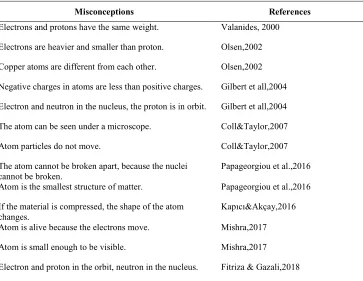
[image:2.482.63.426.248.529.2]Students should associate three levels of representation, macroscopic, submicroscopic and symbolic, with each other properly in order to develop a scientific understanding of this subject [8]. Macroscopic levels refer to the visible aspects of the material; submicroscopic levels provide information about the atomic, molecular, and kinetic aspects of matter, and also symbolic levels include the use of symbols such as formulas [7]. Students use macroscopic features to explain submicroscopic levels, so they cannot differentiate between macroscopic and submicroscopic ones each other [9]. Thus, students have difficulty to visualize atomic structure and models due to the relationship between multiple representations [10]. Furthermore, they have many misconceptions about these abstract concepts such as atom models, protons, neutrons, electrons, ions and models have been identified in the literature [11-17]. Some of misconceptions are listed in Table 1 and Table 2.
Table 1.Misconceptions about atomic structure
Misconceptions References
Electrons and protons have the same weight. Valanides, 2000
Electrons are heavier and smaller than proton. Olsen,2002
Copper atoms are different from each other. Olsen,2002
Negative charges in atoms are less than positive charges. Gilbert et all,2004
Electron and neutron in the nucleus, the proton is in orbit. Gilbert et all,2004
The atom can be seen under a microscope. Coll&Taylor,2007
Atom particles do not move. Coll&Taylor,2007
The atom cannot be broken apart, because the nuclei
cannot be broken. Papageorgiou et al.,2016
Atom is the smallest structure of matter. Papageorgiou et al.,2016
If the material is compressed, the shape of the atom
changes. Kapıcı&Akçay,2016
Atom is alive because the electrons move. Mishra,2017
Atom is small enough to be visible. Mishra,2017
Electron and proton in the orbit, neutron in the nucleus. Fitriza & Gazali,2018
1.1 Multiple Representations
Students should associate three levels of representation, macroscopic, submicroscopic and symbolic, with each other properly in order to develop a scientific understanding of this subject [8]. Macroscopic levels refer to the visible aspects of the material; submicroscopic levels provide information about the atomic, molecular, and kinetic aspects of matter, and also symbolic levels include the use of symbols such as formulas [7]. Students use macroscopic features to explain submicroscopic levels, so they cannot differentiate between macroscopic and submicroscopic ones each other [9]. Thus, students have difficulty to visualize atomic structure and models due to the relationship between multiple representations [10]. Furthermore, they have many misconceptions about these abstract concepts such as atom models, protons, neutrons, electrons, ions and models have been identified in the literature [11-17]. Some of misconceptions are listed in Table 1 and Table 2.
Table 1.Misconceptions about atomic structure
Misconceptions References
Electrons and protons have the same weight. Valanides, 2000
Electrons are heavier and smaller than proton. Olsen,2002
Copper atoms are different from each other. Olsen,2002
Negative charges in atoms are less than positive charges. Gilbert et all,2004
Electron and neutron in the nucleus, the proton is in orbit. Gilbert et all,2004
The atom can be seen under a microscope. Coll&Taylor,2007
Atom particles do not move. Coll&Taylor,2007
The atom cannot be broken apart, because the nuclei
cannot be broken. Papageorgiou et al.,2016
Atom is the smallest structure of matter. Papageorgiou et al.,2016
If the material is compressed, the shape of the atom
changes. Kapıcı&Akçay,2016
Atom is alive because the electrons move. Mishra,2017
Atom is small enough to be visible. Mishra,2017
Electron and proton in the orbit, neutron in the nucleus. Fitriza & Gazali,2018
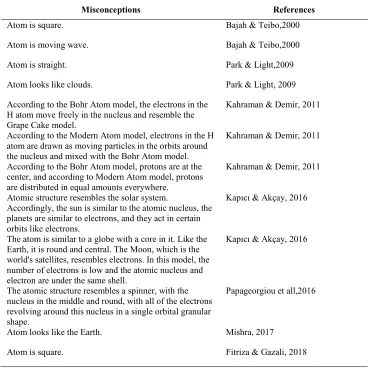
[image:3.482.57.432.86.456.2]According to other studies in the literature [9-10], [18-28].on the teaching of atom and structure, limited number of studies are about not only atom and structure but also atom models. And also, they do not include all learning outcomes. For these reasons, it is found to have no effect on the students' learning at the expected level. Thus, this study is important that it includes both the atomic structure and models with considering both the basic knowledge and learning outcomes, as well as multiple representations. Overall, the aim of this study is to examine how the seventh-grade students visualize the atomic structure and models in their minds. And the research question is ‘How do the seventh grade students visualize the atomic structure and models?’
Table 2.Misconceptions about atom models
Misconceptions References
Atom is square. Bajah & Teibo,2000
Atom is moving wave. Bajah & Teibo,2000
Atom is straight. Park & Light,2009
Atom looks like clouds. Park & Light, 2009
According to the Bohr Atom model, the electrons in the H atom move freely in the nucleus and resemble the Grape Cake model.
Kahraman & Demir, 2011
According to the Modern Atom model, electrons in the H atom are drawn as moving particles in the orbits around the nucleus and mixed with the Bohr Atom model.
Kahraman & Demir, 2011
According to the Bohr Atom model, protons are at the center, and according to Modern Atom model, protons are distributed in equal amounts everywhere.
Kahraman & Demir, 2011
Atomic structure resembles the solar system.
Accordingly, the sun is similar to the atomic nucleus, the planets are similar to electrons, and they act in certain orbits like electrons.
Kapıcı & Akçay, 2016
The atom is similar to a globe with a core in it. Like the Earth, it is round and central. The Moon, which is the world's satellites, resembles electrons. In this model, the number of electrons is low and the atomic nucleus and electron are under the same shell.
Kapıcı & Akçay, 2016
The atomic structure resembles a spinner, with the nucleus in the middle and round, with all of the electrons revolving around this nucleus in a single orbital granular shape.
Papageorgiou et all,2016
Atom looks like the Earth. Mishra, 2017
Atom is square. Fitriza & Gazali, 2018
2 Methodology
Qualitative research methodology was adopted in the study [29]. This study is conducted with the 25 seventh-grade students as 10 girls and 15 boys in state school, Bursa. As data collection tools, worksheets were collected via four different activities organized by the researcher. Worksheets consist different questions about atom and structure and also atom models. Data collection process took two weeks (eight lessons).
2.1 Analysis
3 Findings
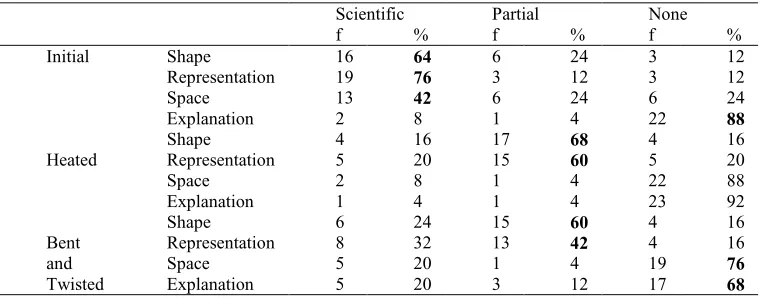
Table 3.Findings about students’ models of particles in atom
Scientific Partial None
f % f % f %
Initial Shape 16 64 6 24 3 12
Representation 19 76 3 12 3 12
Space 13 42 6 24 6 24
Explanation 2 8 1 4 22 88
Heated
Shape 4 16 17 68 4 16
Representation 5 20 15 60 5 20
Space 2 8 1 4 22 88
Explanation 1 4 1 4 23 92
Bent and Twisted
Shape 6 24 15 60 4 16
Representation 8 32 13 42 4 16
Space 5 20 1 4 19 76
Explanation 5 20 3 12 17 68
[image:4.482.58.425.453.507.2]As seen in Table 3, students have difficulty in explaining the shape and size of the change in their particles by heating or bending the material. For example, the percent of students who scientifically explain the particles of copper plate before heating is 64% while the percentage of students who scientifically explain the shape of the particles is 16% when the copper plate is heated and the percentage of the students who scientifically explain the shape of the particles scientifically when the plate is bent is 24%. And also, percentage of students who scientifically explain the particle size of the copper plate before heating is 76% while the percentage of the student who scientifically explains the size of the particles is 20% when the copper plate is heated and 32% of the students explain the shape of the particles when the plate is bent scientifically. On the other hand, students also often have difficulty explaining the space between particles initial and after the material is heated and bent. Moreover, 42% of students explain the gap between pre-heated particles of copper plate and the 8% of students explain the gap between particles when the copper plate is heated and 20% of students explain the gap between particles when the plate is bent scientifically.
Table 4.Findings about students’ design of atom models
Scientific Partial None
f % f % f %
Shape 14 64 2 8 9 36
Use of Imagination 14 64 11 44 0 0
Explanation 3 12 3 12 19 76
[image:4.482.55.427.581.657.2]Table 4 shows that, when asked to design atom models, 64% of students design scientific models in terms of shapes, while 36% design non-scientific models. In terms of use of creativity, 64% of the students used their creativity while designing the model, partially using 44%. And also, 76% of the students did not adequately explain these atom models.
Table 5.Findings about students’ drawings of atomic structure
Scientific Partial None
f % f % f %
Shape 7 28 8 32 10 40
Name of particle 7 28 2 8 16 64
Color 3 12 0 0 22 88
3 Findings
Table 3.Findings about students’ models of particles in atom
Scientific Partial None
f % f % f %
Initial Shape 16 64 6 24 3 12
Representation 19 76 3 12 3 12
Space 13 42 6 24 6 24
Explanation 2 8 1 4 22 88
Heated
Shape 4 16 17 68 4 16
Representation 5 20 15 60 5 20
Space 2 8 1 4 22 88
Explanation 1 4 1 4 23 92
Bent and Twisted
Shape 6 24 15 60 4 16
Representation 8 32 13 42 4 16
Space 5 20 1 4 19 76
Explanation 5 20 3 12 17 68
As seen in Table 3, students have difficulty in explaining the shape and size of the change in their particles by heating or bending the material. For example, the percent of students who scientifically explain the particles of copper plate before heating is 64% while the percentage of students who scientifically explain the shape of the particles is 16% when the copper plate is heated and the percentage of the students who scientifically explain the shape of the particles scientifically when the plate is bent is 24%. And also, percentage of students who scientifically explain the particle size of the copper plate before heating is 76% while the percentage of the student who scientifically explains the size of the particles is 20% when the copper plate is heated and 32% of the students explain the shape of the particles when the plate is bent scientifically. On the other hand, students also often have difficulty explaining the space between particles initial and after the material is heated and bent. Moreover, 42% of students explain the gap between pre-heated particles of copper plate and the 8% of students explain the gap between particles when the copper plate is heated and 20% of students explain the gap between particles when the plate is bent scientifically.
Table 4.Findings about students’ design of atom models
Scientific Partial None
f % f % f %
Shape 14 64 2 8 9 36
Use of Imagination 14 64 11 44 0 0
Explanation 3 12 3 12 19 76
Table 4 shows that, when asked to design atom models, 64% of students design scientific models in terms of shapes, while 36% design non-scientific models. In terms of use of creativity, 64% of the students used their creativity while designing the model, partially using 44%. And also, 76% of the students did not adequately explain these atom models.
Table 5.Findings about students’ drawings of atomic structure
Scientific Partial None
f % f % f %
Shape 7 28 8 32 10 40
Name of particle 7 28 2 8 16 64
Color 3 12 0 0 22 88
Mobility 0 0 0 0 0 0
[image:5.482.52.427.159.245.2]Table 5 revealed that the student who explains shape and particle name scientifically is 28% while the ratio of students who do not base on scientific explanation is 40% in shape and 64% in name of particle. While 88% of the students are not scientific in their atomic and structure models, only 12% can be considered scientific. It has been determined that students are not sufficient in general explanations of mobility and so, models about atomic structure seem to be not scientific.
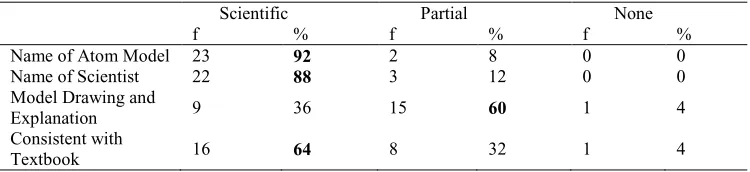
Table 6.Findings about students’ atom models
Scientific Partial None
f % f % f %
Name of Atom Model 23 92 2 8 0 0
Name of Scientist 22 88 3 12 0 0
Model Drawing and
Explanation 9 36 15 60 1 4
Consistent with
Textbook 16 64 8 32 1 4
As seen in Table 6, the atomic models that 92% of the students made are scientific, not the non-scientific model. Moreover, 88% of the students state the name of the scientist scientifically. Although 60% of the students draw the model correctly, they do not base on any scientific explanation. In addition, it is realized that 64% of the students draw the same models as the models in the textbook.
4 Discussions
Based on these findings, students have some misconceptions about atomic structure because the phenomenon of atom is carried out in the submicroscopic level, it is difficult for students to comprehend and to create a mental model [30].Similarly, students cannot explain the atom models properly and they have some misconceptions about the model. Since they use macroscopic features to explain submicroscopic events, so they can not differentiate between macroscopic and submicroscopic ones each other [9].When the explanations about atomic structure of students are investigated, it is stated that students try to explain the concepts related to this subject through their own experiences and prior knowledge in their minds [31]. Also, in the study of Baybars & Küçüközer [11] listed that a lot of misconceptions about the topic of atom such as atom models, proton, neutron, and electron.
5 Conclusion
1.Since there is no difference in conceptual learning of students and it is difficult to change this with a short term, long-term studies should be designed to make difference in conceptual learning of students.
2.Students should make the atom models thanks to student-centered activities.
3.Students should design the atomic structure and models by animating or simulating to learn through experience.
References
1. A. Ayas, B. Coştu, Yeni Bin Yılın Basında Fen Bilimleri Eğitimi Sempozyumu
(İstanbul, 2001)
2. Z. Yaseen, S. Akaygün, Mehmet Akif Ersoy Üni. Eğt. Fak. Der.40, 469 (2016)
3. G. Demircioğlu, M. A. Aydın, H. Demircioğlu, Bayburt Üni. Eğt. Fak. Der. 6, 70 (2012)
4. G. Tsaparlis, G. Papaphotis, Int. Jour. of Sci. Edu. 31, 895 (2009)
5. M. Duran, B. Ballıel, S. Bilgili, 2nd International Conference on New Trends in
Education and Their Implications. (Ankara, 2011) 6. D. L. Gabel, Jour. of Che. Edu., 70, 193 (1993).
7. D. L. Gabel,International Handbook of Science Education(London,1998)
8. J. Gobert, L. O'Dwyer, P. Hortwiz, B. Buckley, S. T. Levy, U. Wilensky, Int. Jour. of Sci. Edu. 33, 653 (2011)
9. D. Yeğnidemir, Yüksek lisans tezi. Gazi Üniversitesi. (Ankara, 2000)
10. S. T. Bajah, B. O. Teibo, Senior Secondary Chemistry Book (Longman, 2000) 11. M. G. Baybars, H. Küçüközer,Eği. ve Öğr. Araş. Der., 3, 405 (2014)
12. Z. Fitriza, F. Gazali, F. (2018). Jour. of Phys. Con. Seri, 1013, 87 (2018). 13. R. E. Mayer, R. Moreno, (2002). Edu. Psyc. Rev., 1, 87 (2002)
14. B. Mishra, Int. Jour. of Adv. Res., 5, 1957 (2017)
15. S. Özgür, A. Bostan, E-Jour. of New Wor. Sci. Aca, 3, 214 (2007) 16. G. Papageorgiou, A. Markos, N. Zarkadis, Sci. Edu. Int., 27, 464 (2016) 17. N. Valanides, Che. Edu.: Res. and Pra., 1, 249 (2000)
18. A. K. Griffiths,K. R. Preston, Jour. of Res. in Sci. Teac., 29, 611 (1992) 19. A. G. Harrison, D. F. Treagust, Sci. Edu., 80, 509 (1996)
20. C. Tsai, Int. Jour. of Sci. Edu.,22, 285 (2000)
21. C. Nakiboğlu, Gazi Üni. Eğt. Fak. Der., 21, 131 (2001) 22. R. V. Olsen, Int. Jour. of Sci. Edu., 24, 565 (2002)
23. H. Tezcan, H., Ç. Salmaz, Gazi Üni. Eğt. Fak. Der., 25, 41 (2005) 24. N. Kavak, Gazi Üni. Eğt. Fak. Der., 27, 327 (2007)
25. R. K. Coll, N. Taylor, Res. in Sci. and Tech. Edu., 19, 171 (2001) 26. H. Tezcan, T. Çelik, Türk Eğt. Bil. Der., 7, 49 (2009)
27. E. J. Park, G. Light, Int. Jour. of Sci. Edu., 31, 233 (2009)
28. S. Kahraman, Y. Demir, Erzincan Üni. Eğt. Fak. Der., 13, 173 (2011) 29. J. W. Creswell,Eğiten Kitap(Ankara, 2013)
30. F. Kaya, F. (2010). Yayımlanmamış Yüksek Lisans Tezi Pamukkale Üniversitesi
(Denizli,2010)