1
Exploring Value in Digital
Archives and the Comainn
Eachdraidh
Exploring Value in Digital Archives
and the Comainn Eachdraidh
Dr. David Beel and Prof. Claire Wallace
Executive Summary
This report engages the multifaceted ways in which Cultural Value is produced by the Comainn Eachdraidh (Historical Societies) movement in the Outer Hebrides of Scotland. It shows how grass-roots community activity surrounding history, heritage and culture can have a resounding impact upon the communities involved, energising them into a variety of different actions. It also highlights how these activities have been finding new expressions through digital technologies, including digital archives and social media, from which different notions of cultural value are being shaped. The following report should be read as a series of vignettes that speaks to the concept of cultural value in different ways. A central proposal from the project is to comprehend cultural value as a flexible and differentiated concept that can mean a number of different things in
different spaces and places. This reflects the ethnographic methodology which has been employed to understand the complex ways in which communities in the Outer Hebrides derive benefit from cultural activity and participation. At its core, the report highlights how the production of community heritage in the Outer Hebrides creates cultural value for communities in a variety of different ways: from helping develop connections between land, people and place that are central to the on-going development, the ‘liveliness’ of Gaelic culture, and the benefits sought in building connections and
dialogues between people both out with the immediate community and in the extended diaspora.
Researchers and Project Partners
Dr. David Beel (University of Aberdeen) Prof. Claire Wallace (University of Aberdeen) Dr. Tristan ap Rheinallt (Hebridean Connections) Donna Dorris (Hebridean Connections)
Key words
1. Introduction
A large proportion of the work on cultural value centres upon primarily institutional accounts as to how ‘culture’ brings value to both individuals and communities. Research from institutions such as museums, libraries, galleries, theatres and arts organisations dominate the literature in this area however very little is written or researched with regards to more everyday and voluntary cultural work conducted by communities. Even more so this is especially true for rural, remote and peripheral locations where such activities often play a central role in maintaining community ties. This is especially true of the Comainn Eachdraidh (CE) in the Outer Hebrides whose supposed cultural value extends well beyond their initial remit as a historical society. With almost full
membership from Island populations the CE represents a medium for the cultural transmission of meaning (McGuigan, 2004) in order to present and preserve a ‘way of life’ (Williams, 2010) that for Islanders is seen as fragile and under threat due to a variety of long-term internal and external influences.
Archives such as those collected by CE are generated as an articulation of ‘heritage from below’ (Robertson, 2012). They represent spaces of ‘marginalised memory’ (Creswell, 2011:3) by attempting to give a counterpoint to more top-down and mainstream articulations of history (Mason and Baveystock, 2009). As Stevenson et al. (2008:68) suggest, their relevance and value extends well beyond the physical site of the archive itself, it is ‘the active and on-going involvement in the source community in documenting and making accessible their history on their own terms’. This makes understanding the practice of archive production amongst volunteers central to comprehending their broader value. Added to this, through the process of digitisation, something is both gained and lost in the ‘click of a mouse’ (Latour and Hermant, 2004), and understanding both the production and outcome of such ‘clicks’ is key in understanding the different ways in which value is potentially generated.
The following report will therefore unpack the ways in which these activities take place and then consider the ways in which they construct different senses of cultural value at different scales. To do this the report will be split into a number of sections: firstly, it will outline the research questions and objectives being addressed by this project. Secondly, it will give background to the research setting by briefly outlining the context within which the CE and Hebridean Connections exist. Thirdly, it will specify the ways in which the concept of cultural value is being deployed. Fourthly, it will move to the empirical sections of the report which will open into two sections: one, looking at ‘Everyday Activities and the Value of Archives’ highlighting the ways in which the
1.1 Research questions
The primary focus of this study is the work and practices of the CE based in the geographically remote Outer Hebrides of Scotland (see Appendix A). In attempting to progress their local articulations of historical narratives and cultural expression, they have chosen to engage digital technologies. This has shifted the positioning of their work, which has consequently become far more accessible to more geographically dispersed and diasporic populations. Through this shift they have attempted to increase the cultural value and reach of their collections but to date, little research has been conducted into how these processes of digitisation aid and support cultural value,
especially in terms of how that value can be researched, understood and, in a qualitative sense, measured. Hence, this project has four central research questions, which have guided the research in terms of unpicking the value that digital cultural heritage has for volunteer historical societies in the Outer Hebrides:
1. How do voluntary historical societies such as the Comainn Eachdraidh create cultural value for themselves through the production of history and heritage?
2. From this, how is cultural value created and dissipated through the wider Islander communities?
3. How do the Comainn Eachdraidh archives change through digitisation – what does the resultant increased access have in terms of their cultural value?
4. What is the relationship between ‘lived world’ and ‘digital world’ articulations of heritage?
2 Research Context
Rural areas have strong place identities, formed through the reproduction of traditional cultural practices alongside contemporary influences. These identities are performed and constructed through a repertoire of knowledges, histories, and customs, and include modes of expression such as story-telling, music and song, poetry and literature, dance and drama. Together with material objects, artifacts, sites and cultural spaces, these form dynamic cultural heritages. Both tangible and intangible heritage activity takes place in remote rural areas. Community based initiatives play an important role in such areas in the collation, production and communication of local cultural heritage. This case study, based upon the CE, represents a unique example within the UK, in terms of how value is generated through cultural activity and dissipated into the community in order to maintain a historical sense of place. As a rural peripheral location it gives a very different understanding as to how cultural activity can bring value socially, and at times
in the Islands and more broadly situate the study within a wider set of island geographies.
2.1 Hebridean Connections
The project partner, Hebridean Connections (HC), are an online archive of CE collections. They are collaborating with the RCUK’s digital economy project CURIOS, based at the University of Aberdeen, to produce a more sustainable form of digital heritage production through creating open linked data collections. HC aims to bring people and
organisations together through shared interests in the preservation and promotion of the islands’ outstanding cultural heritage. This work has sought to create collaborations between CE groups and to also expand the social and economic value of such work.
HC have an interesting history in relation to digital archives and their sustainability. Initially beginning in 2003 through a Heritage Lottery Fund grant, which allowed four CE (Pairc, Uig, Kinloch and Bernera) to digitise their collections, the project unfortunately fell moribund when the funding finished. It was, however, resurrected in 2013 with a grant from the Scottish Government (Peoples Community Fund), which enabled it to be pushed into a second phase, including an expansion to include ten CE (to date). HC therefore has material collected from the original four CE, representing some 28,000 records, and further material from the additional second-phase CE. Currently the figure of records sits at around 45,000 digitised entities. It is this process of expansion, and the difficulties this poses, which raises a series of fascinating research questions for this project in terms of how cultural value is understood in relation to digital archives. HC consists of two permanent members of staff and is overseen by the Islands Book Trust on behalf of the CE movement. HC has released its new website version, developed with the University of Aberdeen for the public to use (www.hebrideanconnections.com).
2.2 The Comainn Eachdraidh Movement
The CE Movement began in the 1970s with a very specific political and cultural purpose: the collection and preservation of highland and island cultures, with particular reference to Gaelic. The first phase of the project took place from 1976 to 1982, beginning in Ness where the first CE was started. It began with the key aim to create “an awareness of the cultural identity and community history as a means to boosting morale and promoting a discriminating understanding of the past and of its influence on the present” (Bernard van Leer Foundation, 1996). It is from this position that over the subsequent years that, due to the popularity of the project, new CE groups began in different areas of the Hebrides, the latest being the recent creation of Eriskay CE.
into a more physical form. Table 1 highlights the wide range of materials that are constantly being gathered:
Tangible heritage Intangible heritage
School log-‐books Oral history, stories Individual collections Genealogical knowledge
Photographs Shielings
Personal objects Local place names Industrial objects Patronymics
Archaeological artefacts Bárdachd (poetry) Newspaper cuttings Local dialects Paintings Gaelic dialects
Crofts Gaelic terms Buildings Recipes Boats
[image:6.595.77.284.186.420.2]Gravestones
Table 1 – The different types of heritage materials collected
The main work of the CE groups is still around the production and maintenance of their individual physical archives and the collecting of history and heritage related to their own areas. Although, when suited, over the years the groups have consistently collaborated with each other, and alongside other cultural groups and the local council (Tasglann, Museum nan Eilean) but this has very much been on an ad hoc basis. It is very
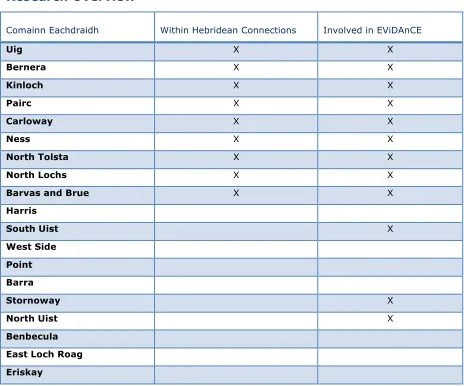
important to stress that despite having similarities in their practices and values, they are all very much autonomous groups (see Appendix A), fixed within their local setting. They only exist in a collaborative form with each other through HC, and this includes ten of the twenty CE. There had been a previous umbrella organisation called ‘An Caidreachas Eachdraidh’ which played a former role in the distribution of block grants from the local authority. It still exists but is currently inactive.
2.3 Positioning Community Heritage
The relevance of community heritage archives to understanding cultural value is due to the way in which volunteers in historical societies mobilise and build connections through historical narratives. For Flinn (2007:153) the important focus is upon the nature of how these types of activities are driven by the communities themselves, as he states:
Community histories or community archives are the grassroots activities of documenting, recording and exploring community heritage in which community participation, control and ownership of the project is essential. This activity might or might not happen in association with formal heritage organisations but the impetus and direction should come from within the community itself.
Here, agency lies with the community to present and articulate their historical sense of place for their own purposes, only engaging with institutions and the (local) state as necessary. This chimes with the previously mentioned work by Stevenson et al. (2010) who argue that archival work moves well beyond the archive. This is revealed in the ways in which members of different historical societies reflect upon their desire to
represent their histories and to tell the everyday stories about their communities. Hence, it is the political motivation to express an historical narrative collectively that reflects the interests of a particular place. This often sits against the more sweeping local state or nationalistic heritage claims that miss out the finer grained and every day social histories of place (Mason & Baveystock, 2009). For Creswell (2012:165), such community
archives represent spaces of ‘marginalised memory’ that draw ‘attention to the things people push to one side and ignore, the things that do not make it into official places of memory’. Furthering this point, MacKenzie (2010:163-164) argues that cultural heritage projects (in North West Sutherland that have strong resonances with the EViDAnCE project) are a method of rehabilitation in collective psyches for dealing with past grievances:
Part of that bold, collective, effort to turn around centuries of dispossessions, defined not just through the Clearances, but also through more contemporary loss - of people, of jobs, for example, in the fishing and forestry sectors and of the houses which have been turned into holiday homes. These collective projects are about re-mapping the land in ways that suggest an alternative imaginary to that aligned with processes of dispossession and the practices of privatisation and enclosure that have underpinned them.
This chimes with Said (1994:209-226), who has stated that cultural initiatives are part and parcel of ‘a culture of resistance’, in that they chart cultural territory - the
play, which drives their activity to collect, research, preserve and present own place histories and heritages:
Not people looking in and telling you what you should be doing or exploring your differences and making out that you are freaks because of what you believe in, what you do, way of life and so on. So I think that’s the strength of a Comann Eachdraidh – showcasing ourselves. (1)
Robertson (2012) discusses this in the context of a ‘heritage from below’ whereby it ‘is both a means to and manifestation of counter hegemonic practises’ (ibid:??). The very purpose is hence to articulate a position that does not conform to a top down narrative but aims to represent those more ‘ordinary’ lives and incumbent practices that go along with their history. Central to these arguments is place, identity and a notion of dwelling (Ingold, 2000) that builds over time and reinforces each in relation to the heritage the communities wish to create. This reflects on the types of materials that are collected in these communities (see Box 1), as both forms of tangible and intangible heritage are gathered for their archives. In the context of the Western Isles this further builds upon a relationship in the Gaelic communities between sense of place, identity and possession whereby ‘attachments to place are intrinsic to identity, rather than to buildings or monuments’ (Robertson, 2009:154). It is the history of dispossession and the ‘colonial’ legacy this has created that greatly shapes the rationale and need for such community level collecting practices.Reflected in this has been and the continued acute awareness with regards to the decline of the Gaelic language. This again has a historical/colonial legacy due to attempts either purposefully remove Gaelic or in historic failure to at least give the language the recognition it required to survived. Although, approaches at a governmental level have improved the language still has a minority status with regards to use (Bechhofer and McCrone, 2014) and its preservation represents an articulation of heritage from below through attempts to preserve it at the community level in CE.
2.4 Deploying Cultural Value
Cultural Value as a term and concept is both intuitively understandable but at the same time empirically difficult to tie down (O’Brien, 2010). As commentators such as Belfiore and Bennett (2008) have shown, the use of the term and its current parlance in political debate can mean a variety of different things to different people. The following will now divulge how this project has sought to deploy and conceptualise the term for
comprehending more everyday, locally embedded, cultural practices.
constitutive to individuals and communities, as Hooper-Greenhill (2000:13) suggests in relation to museum participation:
Cultural symbols have the power to shape cultural identities at both individual and societal levels; to mobilise emotions, perceptions and values; to influence the way we feel and think. In this sense, culture is generative, constructivist. It is within this constructivist context that EViDAnCE wishes to frame its perception of cultural value, as the variety of ways in which individuals and communities undertake activities to express their own identity. This operates from both the inside and the outside whereby it can refer to either the internal cultural values of a group or to the external ways in which the activities of that group have an influence upon the world around them. They are both intrinsically linked to each other and thus, in order to
articulate this, a reflective and qualitative methodology (see methodology section) has to be employed to place cultural value into its specific context, focussed upon addressing the ways in which individuals and communities formulate their own senses of cultural value, while suggesting that such values are open to change through a variety of
different influences. The report also wishes to consider a potential ‘multiplier’ effect with regards to cultural participation; this is in relation as to how such activities lead to notions of cultural value extending beyond their initial purposes, filtering out into their broader communities of place and how this again potentially extends beyond the local too.
Finally, a research issue with which this project has constantly wrestled has been the multi-faceted ways in which cultural value can be understood and deployed, with splits between notions of cultural values (how they change or remain the same) and the value1 of culture (what worth people comprehend in culture). It throws up a subtle but
important difference when conducting research in this area, as although the two are inter-twined, they are intrinsically different. Who defines and sets cultural value also, to a certain extent, defines what that ‘value’ is, hence both are often underpinned by political, economic and social factors for the communities themselves as well as the researcher. In the context of this project it is a crucial point to comprehend, as it is this relationship and the shifting sense of meaning around cultural value that this project wishes to unpick.
3. Everyday Activities and the Value of
Archives
In observing the everyday work of CE volunteers, it quickly became apparent that for the most part, this was very separate from the work conducted with regards to the creation of digital collections. This is in the sense that the production, maintenance and
researching of the physical or analogue archive was, for a large proportion of volunteers, what they were most interested in doing. The following section will therefore focus on
the nature of the production of these archives and the ways in which these processes contribute to the notion of cultural value both in themselves, as a set of activities from which the volunteers gain a broad sense of wellbeing, but further to this, how these activities expand out into the broader community through the activities that move beyond the archive and its production.
3.1 Collecting, organising, preserving and narrating
The above title aims to divulge the primary activities of CE in terms of their core
function. As local history groups, the CE aim to present a historical sense of place which is tied to the land (crofts) and the people who lived on those crofts, which is often connected genealogically to the current members. Field Note 1, neatly describes this relationship and the ways in which those producing the history are directly connected to the archives through land and blood ties. This relationship between land, people and place is what makes the CE so interesting and often so different to other historical societies throughout the UK; very few other places are able to represent such a lineage. It also makes a strong political statement with regards to land tenure, an exceptionally contentious issue in the Islands both in the past as now (see Hunter, 1976). In this setting, the archive stands as a statement of endurance, ingenuity and perseverance for the families that have maintained their connection to the land, and which has continued through previous generations (see Robertson, 2012 for further detail). The archive is therefore partly testament to these continuing connections, showing that as different land owners have been and gone, many of the tenants have remained. This longevity of knowledge for CE is particularly valuable to these communities as it shows their
[image:10.595.75.349.475.660.2]continued embeddedness in the landscape.
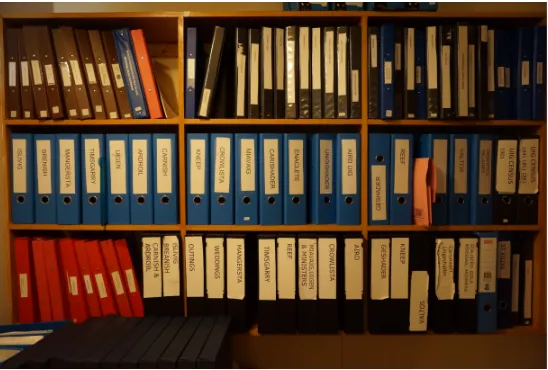
Fig 1 – The croft archives at CE Kinloch
Fig 2 – The relationship between crofts and place identities.
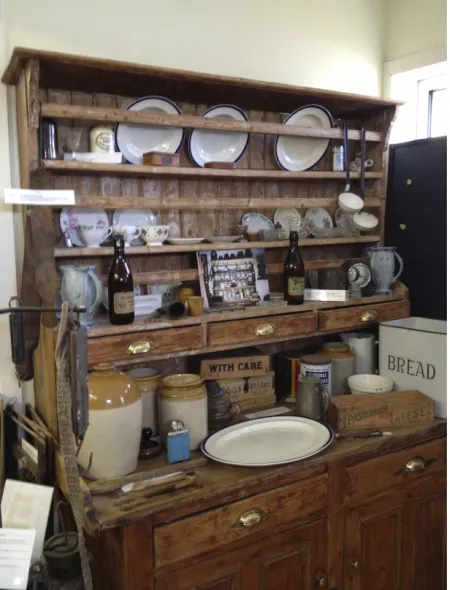
It is this position that informs what is collected by the CE groups and, as Creswell (2011:2) argues, ‘Things are at the heart of the process of constructing an archive of a place’ and that his study of the process of archiving is ‘informed by those who urge us to give due care and attention to the things people push to one side and ignore, the things that do not make it into official places of memory’. Cresswell draws on Pearson and Shanks’ notion of ‘rescue archaeology’2 to focus on the high cultural stakes at play in ‘linking seemingly worthless things to the endless narratives, the political aspirations and disappointments, which have accumulated around them’ (Pearson and Shanks,
2001:156) (see Figure 3).
Fig 3 – a collection of assembled museum objects on display at CE Pairc
For CE members it is the importance of valuing ‘things’: objects, stories and genealogical knowledge that others might have missed, chosen not to keep or which have simply never been recorded:
Well if it’s not recorded it will go, it will just be oral history and there has always been a tradition of oral history which is why there’s a lot of things you
[image:11.595.72.297.343.638.2]
know but you have no record of…it’s just something you’ve always heard but it’s never been written down anywhere and I think these things should be recorded. And I think they have as much value as written history, while they are still oral. I think some people denigrate oral history as something that doesn’t have the same value because it’s hearsay, in a way, and it doesn’t – there’s nothing to verify it but it’s still extremely valuable I think, in local history. (6)
The process of collecting is therefore a form of social memory (Norra, 1989) that creates a repository of community knowledge which can then be used by others to learn about their history and heritage. The process therefore reflects a central ontological angst that the CE groups share and partly drives their activities. If they were not to collect this information, it would be lost:
I’m in my mid-seventies now so growing up, there was no television or even radio, a couple of people had radio so it was either playing outside or else in the taighean [ceilidh] and listening to the stories … It was really to give it a proper status and start recording stuff because we were realising that the stories were being lost and it’s only people like myself now, who is [recognised] as the older generation – I still feel, going looking for older people to record and then I realise, ‘Well that’s me!’ But that’s really how it started; trying to record as much as possible before any more is lost. (2) And we were given a sense that the oral tradition was beginning to break up. And I suppose a key driver was to get … we had, for instance, we had people who had spent a lot of time in Patagonia, we had people who had come back from Australia and it wasn’t one or two people going out, it was maybe fifteen, twenty men from the community going away to Patagonia, there was a real sense we had to get some information on that before these people passed over. And I think that was one of the key drivers. (5)
The respondents above highlight how such community knowledge was previously passed on and how this has had to change due to ways in which people no longer gather or retain information as they had in the past. The archive therefore becomes the cultural repository for this knowledge and memory, acting as a point of reference for
communities to trace back and gather their histories.
The group were busy sorting through the existing physical archives to make sure they were in the correct order and the right images were associated with the correct croft. It was really interesting to see how one volunteer was sorting these images, which was done largely by croft. The croft and its location very much anchored the way the collection was sorted and the way all the people who had lived in the Ness area were organised. Therefore, if the images had been collected, in certain crofts an entire family collection of photographs (and genealogy), going back through the
generations, could be viewed. In going through these pages the volunteer quickly noticed mistakes or images located in the wrong place. This was done by two means; her memory – from
where the person in the photo had lived in Ness. If the crofts represented a family lineage, the records in relation to the school seemed much more about a shared community experience. The volunteers worked with a desire to bring a form of (re)order to the archive, going from messy piles of photos to neatly folded away files on a shelf. Along the way, this required the help of quite a lot of double-sided photo stickers as the ‘mess’ began to decrease with the placing of each photo. In chatting with them both it became clear that the process was about giving a sense of order to the past so that it could then be followed by others. This was tricky, as they recognised the past was messy and despite the anchor of the crofts, people came and went as they do now meaning anomalies always snuck in.
Field note 1 – Sorting and maintaining the archive at Ness
Field note 1 also highlights something else about the process of maintaining and
producing archives: the sense of self-worth that members gain from their participation in the process of producing the archives. Despite it being slow and highly time consuming, many still took great pleasure from these processes. For the volunteers, the mixing of their own knowledge and remembering people, places, events and so forth in order to better organise the archive, gave great satisfaction. Evidently, the desire to comprehend personal and community histories and genealogies often acts as the ‘spark’ that draws people into being involved with CE:
I just, again, came to Comann Eachdraidh, I don’t know how, it’s so long ago I can’t remember! I suppose I was always interested in my roots and I had an uncle who was very interested in genealogy and I suppose I just got into it that way and here I am, decades later and that’s it: once you are in, you are in, you are hooked! Decades later and that’s it. (16)
The process of developing these community archives is very much centred around the social, and this is what gives such ‘value’ to the community members that are involved. As field note 2 highlights, in terms of cultural value it is the way in which the group enjoyed this process of reminiscing through these collections, such as remembering their past school days and those of others. It was also the way in which the conversation moved to draw out the intangible memories of older volunteers so that they could then be used; written up for others to gain a stronger sense of the history of the area. More than this however, it was the way in which this process clearly contributed to something bigger, something more fundamental yet finite, that continues to lead to an on-going production of the history of place for North Lochs: if this did not happen, such memories and knowledge would be lost.
Due to the group having the opportunity to meet, further discussions were sparked that went beyond the photographs that had amassed on the table. In this case the conversation moved to the Poorhouse at Maryhill (Crossbost) and its history. This drew upon the almost encyclopaedic memories of one volunteer, an older member of the group, who related names and histories of a number of past occupants of the 'Taigh nam Bochd'. Here, the questioning of these memories mixed with the more archival research of another volunteer who was attempting to further flesh out her understanding of what this small place of ‘refuge’ had been and what it had meant for the people who had been living there. Hence, the oral history of one member then becomes an insightful glimpse into the past for the other.
Field note 2 – School memories at North Lochs
The process itself, the shared experience of participating, collecting and listening with others; the sense of producing something of worth for the community and its ability to bring people together, contributed to a sense of wellbeing and cohesiveness:
I think the word in itself says that: ‘community’; because it is bringing something together which is common to us all. We don’t get together that much, as a community, as people here – as they used to in the past. And if you’ve got something like this and it will drag people together, then it’s a good thing. We need something in our communities actually to keep the people coming together as a community and if we didn’t do it, it would be just another bit that was lost. (14)
Hence, key to the process of understanding how cultural value is constructed by different CE, is understanding how, in a very ‘on-the-ground’ way, it is embedded into the
everyday lives of many Islanders. Ingold (2000) would label this the taskscape, and it is useful to think of community heritage in relation to this term, especially when thinking through how cultural value in this setting relates to notions of dwelling and place identity:
I think it’s very much an island thing as well, I’m not sure they have the same commitment on the mainland to recording the local history, I don’t know if it’s the same anywhere else but certainly in the Islands it’s always been the case; they’ve always held on to their oral history. (12)
Perhaps because people didn’t move much in the old days so…we’re all related to each other just about in here so there’s not the same turnover of people, well until fairly recently, people coming in and out didn’t happen so there’s more of a sense of identity. (13)
3.2 Beyond the archive
It is the social formation of groups and societies, their organisation and their on-going desire to present heritage that pushes community heritage beyond its production of archives and narratives into other areas of the community. It is at this point that this report will shift to consider how this ‘pushing off’ point for community heritage represents the ways in which culture can be significant in the development of communities. The taskscape of activity that heritage and culture presents expands through developing human agency and thus, so does the scope of what such groups consider to be appropriate activities for volunteer heritage groups.
The CE showcases the successful ways in which community heritage activities have led to a variety of different outcomes and benefits for the local communities, acting as catalysts for human agency which in turn build further cultural value. These activities have physical impacts upon their communities, as they begin to populate formally unused buildings for community needs. The following sections will give some brief context to show how different CE have developed and purposefully adopted a series of identifiable actions and pathways as they seek to cultivate their community heritage resources.
The nature of the developments reflects the landscape of living in the Outer Hebrides, whereby outside the main town of Stornoway, the population is sparse and amenities are limited. Hence a number of CE have sought to fill many of the gaps in provision that this brings, consequently extending the role the CE have in different communities. This comes from both a desire to improve the amenities in an area but also represents the need for CE to find other forms of income to support their activities. As the CE member below states, the need to generate income to sustain the CE’s activities causes them to move beyond the activities of collecting histories and into other areas:
My lead role at the moment in the Comunn Eachdraidh is looking at ways to widen it to make it sustainable. So that the museum, which I see as very important and the archive, may not generate money in themselves, they will generate massive interest and bring people in and it’s looking at things like having a café on the site or something so we can get some money. We’ll get some money from the heritage, historical side, in terms of book sales and things like that but only probably enough to justify having done it; we’ll break even on them. We’re not going to make massive profits on anything in that. (5)
Figure 4 – CE Ness building, was previously a primary school, contains a café, museum and archive.
Figures 4 and 5 show two centres, one in Ness and one at Ravenspoint. Both are
buildings that were previously schools but have now been developed by their respective CE’s as community history spaces. They contain the archives themselves, community museums, community spaces, cafés, and learning spaces, with both CE running Gaelic language courses. At Ravenspoint, the building also contains a publishing trust (The Islands Book Trust), a hostel and a community shop. This multi-faceted use of space is mirrored at a number of other CE locations too (for example: Kinloch, North Uist, South Uist and Uig), where similar activities and functions have expanded the role the CE has within the community.
Figure 5 – Ravenspoint (CE Pairc), building containing a shop, café, museum, petrol station and archives.
some fairly obvious clues: talking in Gaelic or familiarity with the servers gave a rough estimation that they might be a local. It quickly became apparent, that many locals would drop in for tea, cake etc. or just a chat, this was a very popular space offering the community an amenity that they chose to use and socialise in.
Field note 3 – observing café cultures…
This section therefore highlights how, although the focus might be primarily on collecting community history due the human and social capital that this produces, it becomes so much more than that within the locations, offering amenities, employment (both paid and voluntary) and educational opportunities. This is a key component to the way in which all CE groups develop and consequently brings a form of cultural value to their communities that builds on their core activities. This in turn creates/nurtures community ties and guarantees that such archive spaces are active the majority of the time.
3.3 Valuing local knowledge
One of the central features of the work of CE groups, and key to its functioning, is the importance of locally produced knowledge. It is also the way in which the groups define and decide what knowledge is valuable to them and what is not. This process, like in any cultural institution, reflects their practices, or what Hetherington (2006) refers to as the ‘regime of curiosity’3, which is attuned to ‘pick out’ the things, objects and narratives that other collections or historians have missed, chosen to ignore or seen as irrelevant. A large proportion of this reflects how, as has been mentioned, the CE groups want to develop their own sense of history and identity, which they collect and narrate on their terms. This has, to date, been created collectively (although all stored individually), and resulted in vast repositories of materials for the different communities. What this
sections will now consider is the way in which this material has been collected and
utilised and the forms in which it creates a sense of cultural value for the communities as well as potentially others.
In an interview on a recent research trip, I’d asked about a ruined building between the coast and the lochan at Bru. I’d spotted it on the drive to the interview and its prominent location as a feature on a clear sunny day interested me. The respondent, a member of the Barvas and Bru CE, told me that it had belonged to the local salmon fisherman who had lived there. He also explained that if you enter the building and look through the now empty window, you can see a ‘notch’ in the stone frame. The notch had been shaped to allow the fisherman to sit in his chair, in the warmth next to his fire, and simply turn his head to look down to where his nets were situated at the river mouth, without having to move out of his chair. This way he could keep an eye on his nets with minimal effort and maximum comfort.
Having heard the story, a few days later I was able to pop down to the ruin and take a look (see Figure 6). There it was, the removed notch carved into the window frame. Interestingly, without this very specific piece of knowledge, I would have completely missed this subtle feature in the building and I may have puzzled over why the ruin was situated there, so close to the beach and removed from the village of Bru. I would have had no knowledge of this interesting story that helped embellish the experience of looking round a small ruin. I may have just walked past it, or
3 This is what Hetherington terms as the ‘shaping discourse’ which influences the collecting and
speculated from a distance. I certainly wouldn’t have noticed or been able to investigate, through both touch and sight, this little quirk in the building. If you look through the notch now, there are no nets left, but an interesting story does remain, adding to the richness of learning about the local history.
Field note 4 – Local knowledge
In collecting materials that reflect the interests of CE there is a clear sense by which they define how they value their culture, evident by what they choose to collect. The process of doing this in itself represents how they define what has value, as underlined in Table 1. Like in any collecting practice, the process is selective and there are many things the CE purposefully ignore, especially more difficult aspects of social life.4
[image:18.595.73.235.343.560.2]However, there is richness in what they do value and attempt to preserve, with this local knowledge gathered and retained by local communities really helping to develop a sense of pride in both the process and the collection.
Figure 6 – The salmon fisherman’s notch
Added to this, Field note 4 and Figure 6 underline how such local knowledge enriches the experience of place and in part highlights why some of the CE activities of collection take place. This is in terms of wanting to ‘know’, in detail, about the place they are from and how that has produced the landscape in which they live. What may seem a simple observation to ‘look out for’ shows an attention to detail to observe and be in a
landscape. This is a key part of how CE value local knowledge about place and expands into a series of other activities that attempt to codify space as ‘known’ as well as it being culturally significant. This can be seen in the mapping of Gaelic names in the landscape. A number of CE have chosen to map out all the distinctive Gaelic place names which relate to agricultural land where sheep would have been previously kept by crofters. To a certain extent these names went out of use due changes in agricultural practices, but to
re-map and re-claim them is to again symbolise the landscape in terms of the past practices of crofters and helps maintain their Gaelic names. These processes are bound within notions of dwelling (see Rose, 2011) in terms of a set of processes that attempt to mark and claim the landscape.
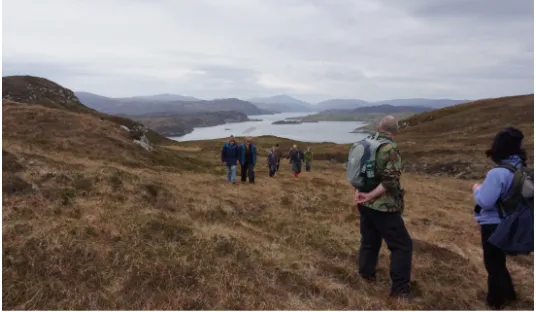
Figure 7 – an organised walk to a formerly occupied township
As has been mentioned, Island and particularly Gaelic communities have been
recovering from different processes of ‘colonialism’ which have, historically, contributed to successive waves of out migration (see Cameron, 2013). Whether forced during the clearances or not, this means that an apparent absence can be felt in the landscape which has been artificially created. The ability therefore to develop local knowledge to reclaim that landscape is a key reason as to why it is so valuable to the CE movement.
4. Extending value through digitisation?
Digitisation is a difficult process. Whether this is for a well-funded museum or acommunity archive, it comes with a variety of challenging decisions and (potentially) expensive choices. This has been reflected in the attempts by CE to collaborate on the production of their archives in digital form. Despite this, there is a strong sense within the CE that the production of digital versions of their analogue collections is an important and necessary task due to a number of reasons. The following sections will now discuss the ways in which the work of Hebridean Connections is seen to create cultural value for the groups before moving to consider the ways in which digital collection also changes the values of ownership towards such collections.
4.1 The Rationale for digital archives and social media
As mentioned above, the CE movement, through HC, has now moved into a second funding phase in its attempt to develop a suitable sustainable digital archive for the Islands collections. This is viewed as important due to a number of reasons but it breaks down into two key discourses. Firstly, a key aim of each CE is to preserve and
disseminate collections to the local community and, as has been discussed, the method through which this transference takes place happens in a variety of different ways. Digital archives represent the next step in this process of sharing those collections, and are an attempt to deal with the notion of ontological angst that the ‘old ways’ of sharing such knowledge have been lost. This signifies an internal reasoning as to why some of the CE have chosen to take part in this process, especially when members are thinking through how they can connect such knowledge with younger generations. The use of technology to present this information to children represents a strong discourse within CE groups involved in HC, especially in terms of bridging a generation gap:
Certainly the schools anyway, they access it and from the primary school to my own daughter who is using some for her school project just last week. (14)
It’s a medium we never had when we were growing up and it will hopefully bring, it will get younger people, it will develop their interest within the family trees and the genealogy which we didn’t have at that age. I wasn’t really interested in it, I was in my thirties before I developed any real interest and it was only then because I saw it disappearing. (15)
There is also a sense that, alongside the place-based archives, it is a further method of insuring that collections are ‘backed-up’ in multiple forms just in case anything should happen to the original records:
It’s quite labour intensive to make the move from a physical archive to a digital archive but there have been too many incidences of archives being destroyed through some form of natural disaster or fire or something like that. And I suppose creating digital archives means that in some respects it might be easier to retain the information for the future, at least you have it in two places, if not more. Yes, so I think that’s really important. (1)
Further to this, there is also a growing reason for digitising so much genealogical material and that is the ability to share it with people all over the world. As mentioned above, the Outer Hebrides has a long history of out-migration, and many of the groups are keen to connect with the diaspora:
…because that makes it much more accessible to a worldwide audience. Anyone can access it then. And that’s it…in one way it doesn’t change its actual value at all, what it does do is make it much more accessible and perhaps by making it much more accessible you could argue that it has a greater value. Or value to a greater number of people. (6)
They have ties with the likes of Canada, where people emigrated to, Canada, Australia, New Zealand, to other places – Argentina, South America, people are all over the place. I suppose it means that it makes it easier for people to access their resources. (1)
There has been a strong drive across Scotland to develop the potential of ‘Ancestral Tourism’5 and the CE see having digital archives as a way of showcasing their physical collections, with the hope that it might increase the potential of people visiting in person:
What it does is it develops connections between people that we didn’t know existed and likewise, they didn’t know we existed. It does that – it brings – the internet is a wonderful thing for making the world smaller but Hebridean Connections has actually pulled people together. (13)
The ability to better preserve and share collections in the community and also with those externally is seen as a key benefit to undertaking digitisation. This process extends the work of the CE and therefore builds on the sense of cultural value it has, and can have, to others.
Digital archives therefore represent a concerted effort to place the histories developed by the CE into a more public arena and to make them visible to broader audience. In doing this, the articulations that have been published to the web represent a further
deployment of the CE discourse which seeks to represent the connections between people, place and land in the Outer Hebrides. This, as a process, has also extended into social media activity, especially through Facebook. Partly driven by the training given by HC in social media usage, it is seen as a purposeful way to engage audiences who are younger or who have some form of connection to the Islands:
What we’ve found in our own project just now, interestingly, is we set up a Facebook page. The average user on that Facebook page is about thirty-five. Which we never thought would catch on, on Facebook. Obviously they are. But they are very interested in what is going on, what their parents or grandparents were doing. And it’s opening up the generation thing to us much more. But in the beginning there was people of mixed ages and that was really important in the development. (5)
For the most part though, it is seen as a further method for showcasing the types of materials that the CE have stored. Figure 8 shows the form of a typical CE Facebook page and in following this and others, what becomes apparent is the desire to display a narrative that engages people, but also reflects and develops these ideas for outside audiences. A selection of CE have been able to articulate this through the use of images from their photo archives:
For example, on Facebook just now, we’re sending out all the photographs – all the photographs are in paper form, they appeared in these magazines and that’s all we produce. And folk are saying, ‘we never saw them before,’ but they did and they don’t realise this is so wonderful now and it’s great, it’s coming through there. So there are a lot of reasons really for doing it. (2)
For the most part, the discussions around the photos are mainly nostalgic in nature and they usually reflect the ways in which followers are connected to the people or places photographed.
Figure 8– The North Tolsta facebook page
This seems to have two purposes for the CE, both relating to a broadening sense of cultural value through using digital technologies: one, it gives members very direct feedback in that from a broad community interest people do gain enjoyment from their collections. The above quote’s passion for dialogue with those outside the direct CE membership is clear and this acts as reinforcing motivation to the volunteer. Secondly, it reduces the distance and remoteness of the communities in the Western Isles from their diaspora:
On Facebook we have people from nine different countries who have never been in Kinloch but probably through their forefathers know what their links are and they are working, we are working with one couple in Millburn, researching their grandfather’s history and they are actually coming to stay for a month this year. Now that will have tangible benefits, yes to them – they will find out a lot, but to other business in the community; they are going to stay for a month here. (5)
narratives of place, whereby they can articulate to an audience how they wish to presented.
4.2 Changing values of ownership
In the translation of physical archives into digital form the process of digitising changes the positionality of the archive, especially within the context of how HC has operated as a collaboration of CE. This has meant that the archives have changed from being place-based physical silos of information to a more regional and linked archive. This is not just a question of changing scale. In the digital form, the archives change both the way in which members of CE relate to place and the way in which they maintain records. Field note 5 highlights this shifting relationship towards the archive and what digitisation brings to the collection.
Figure 9 – From the digital archive, how ownership is denoted in digital form
I sat in on a training session that Hebridean Connections (HC) were running to train volunteers to input records into their new and re-designed linked data digital archive, which has been developed with University of Aberdeen (dot.rural, CURIOS). In the process of doing this, a really interesting discussion opened up around the ownership of digital records. This has been something that has been of constant discussion in the delivery of the new system between CURIOS and HC due to the structure of HC and the autonomy of Comainn Eachdraidh (CE) groups. As independent groups, each have the desire to digitise and publish records from their collections, which has led to a need to collaborate. The discussions yesterday therefore centred around the publication of records; who owns them and who has the ‘right’ to edit such records, especially when an individual may appear in multiple CE archives (a talk that I attended at An Lanntair by Bill Lawson pointed out, especially in Lewis, that migration around the island was very common). Previously the default choice had been to give the ownership of each record to the CE that first inputs it and therefore they have the right to edit it and the decision of whether or not to open it up to others. However, the potential ‘clunkiness’ of this system for others, who may have more and equally valid information for that record to input becomes very difficult. If they don’t have editorial rights, they have to seek permission from the owning CE to add their relevant data and as one pointed question asked ‘how do you own a dead person?’ especially one that lived in multiple CE areas.
digital form and to do it in a manner that is accurate or ‘truthful’ to the record you are
representing? Difficult questions indeed and the consensus that began to develop yesterday was that, for practicality reasons, a more open system would be better but this has by no means been the views of CE volunteers in the past, so it will be interesting to see how this develops further in the near future.
Field note 5 – changing sense of cultural value
Field note 5 and Figure 9 neatly highlights the on-going discussions as to how best to structure the digital archives. There is real benefit from different CE collaborating to produce a more complete record of people and places in the islands, but there is also a need for them to give up some of their autonomy for this to be successful:
Well it’s interesting seeing the different styles of writing from different Comunn Eachdraidh but when I was putting in to the old system it was clear we were going to have different styles, that’s ok – just conform on certain things and that’s all right….It happens quite a lot where people have moved from one location to another, now, I think if a child is born on Berneray and then they move away to get married elsewhere, it’s often when the married life happens there’s more information and my feeling would be that the place where the people were married and had their married life should own the record, although they’d have to be fed in other information. But then you’ve got ministers and people who move around to various parishes… (7)
The process of digitisation therefore greatly changes the notion of cultural value ascribed to the materials collected, as the sense in which a CE ‘owns’ a record changes. This has been reflected in an interesting shift in the language around cultural materials caused by digitisation. For a lot of members, and reflected in the quote above, the feeling that they in some way ‘own’ a record because they have collected it has changed. It is being realised that this becomes difficult where people have led mobile lives. Therefore, this has required a certain degree of ‘letting-go’ and accepting that the place-based definition that surrounds the collecting culture of the physical archive has to change when dealing with the digital, due to the need to collaborate:
I think it’s important to have both digital and hard copy, archives, just in case the digital copies break down for any reason…By putting the information in a neat version onto Hebridean Connections, that means it’s out there and other people can feed back and we can make connections between family members, whatever, it’s amazing what grows from it. (7)
As can be seen from the map in Appendix A, only ten of the twenty CE have chosen to join HC. This reflects basic island geographies (a rough North-South split) but also infers more intricate micro-politics, and indicates a different sense of cultural value towards the collecting of materials. In discussion with non-member groups, many have chosen not to join due to a variety of reasons such as: not enough volunteers, expense in joining, uninterested in digital collections, a different set of collecting practices, other priorities, considered to be ‘too old’ to benefit from the new system and finally, a real desire to maintain their autonomy:
things in Stornoway: one was the museum, who claimed to have consulted us but hadn’t and consulted us post-hoc. But also the St. Kilda Centre and this is a perception – that we are a grass-roots organisation, we’ve got our own skills, we can use our own skills and we didn’t want to be patronised or paid to be trained or I don’t think the brief connected with us and we were more interested in trying to develop our own grass roots resources. (22)
Above gives a flavour of some of those positions and represents, and how the context of what each CE wishes to do greatly influence the value they see in a digitisation project. Further, the quote also begins to tease out how the before mentioned sense of (micro) politics that surround cultural activity has a grounded influence upon how notions of the cultural value are ascribed to a project like HC and therefore influence decisions round participation.
4.3 Building stronger communities?
To a large extent, and this should be apparent, the CE movement itself has already built a number of self-sustaining and strong communities. These, like any community, are fraught with the usual difficulties that such activities create but, in following the discourses surrounding digitisation, it became apparent that despite the difficulties CE and HC (see section 4.3) face in this process, it was also creating new relationships of connectedness. This is highlighted by the different types of social capital (bridging and bonding, see Putnam, 2000) being produced through the work of HC. Two examples represent this well: firstly, the project has helped ‘bridge’ gaps between different CE, whereby the need to collaborate has meant stronger relationships between groups have developed:
I definitely hope to have a greater understanding of the local community. And I suppose through Comunn Eachdraidh, definitely, I will meet more people. Even that day sitting in that room, because I didn’t know who half the people were…I suppose I’ll get to know who more people are, locally, so that’s definitely something that I’ll gain from it. (1)
The above quote highlights how mixing and meeting with other CE through the training provided by HC has created a space through which stronger connections between communities and individuals can be built. The system itself, and the need to collaborate in the production of digital records, has also meant that much more dialogue between the groups has been produced. This is interesting in itself as Putnam, in his articulation of social capital, suggested that digital technologies were partly at fault for the loss of such relationships. Here, collaboration and participation in the project show something different is taking place, suggesting that digital activities such as these need not be so isolating. Secondly, for newcomers to island communities, the ability to help on the project has been a significant ‘bridge’ into Comainn Eachdraidh groups, allowing ‘outsiders’ to bond and integrate into pre-existing communities more easily:
I don’t know, I think if you live in a community you have to give something back to the community. So to me, it’s a two-way street; I get lots of knowledge and information about the actual community that I live in and in return I can give something back: data entry is not a complicated job to do. Having done research in my own family history, it’s a complicated thing to understand, a lot of the records and things don’t make sense or add up but for me, I think it’s nice to be part of the local community. (1)
The ability to take part in an activity in which you could be helpful to a pre-existing group, by bringing externally acquired skills but not be viewed as in some way
‘overbearing’, was an opportunity that a variety of participants really benefitted from. Therefore the nature of the voluntary ‘digital work’ that creating archives like these produces has allowed people to integrate into a community more easily. Here, cultural activity and the ability to participate creates different forms of cultural value for those involved. The community acquires more members who can make a meaningful
contribution despite them not having an in-depth knowledge of the locale and those coming in can further develop their sense of connectedness within the community. It also represents how the CE movement is not just a series of ‘fossilised’ communities of indigenous Islanders remembering their past but a vibrant series of communities attracting incomers who bring skills as well as bridging social capital to institutions outside the island.
4.3 Difficulties of digitisation
The view of digital archives can sometimes seem a highly ‘seductive’ solution to a number of on-going issues relating to the transference of historical knowledge through generations and although it offers a number of opportunities, it also poses a number of difficulties too. This suggests that with such processes, discourses surrounding the construction of cultural value can be questionable. The following sections will now discuss some the issues faced by HC and CE in developing and engaging with digital technologies. In particular, these relate to data protection, training and sustainability.
Issues surrounding data protection can perhaps be seen as diminishing the value of digital archives for CE. This is due both to the Data Protection Act (1998) and to the ways in which CE archives have been collected. In the production of croft histories, CE members have been keen to have them written up to the present day, highlighting the history of the croft and people that have lived there and who live there now. This is seen as a real benefit for CE, as it allows individuals to much more easily contact ‘lost’
relatives who may still be living on the family croft. However, the Data Protection Act prohibits this being converted into digital form without the written consent of the individual. In many cases this would be fine but a grey area opens up when people are not members of the CE or are non-contactable.
During a training session in Stornoway, for part of the session the head archivist at the council dropped in to give the group a briefing on the Data Protection Act and what it meant to a project like Hebridean Connections. The news from the perspective of the CE wasn’t great. They were told, that they needed to remove all living people from the digital archive or risk being held responsible if someone complains. This created quite a lot of disappointment in the room, with one person
understood why this had to be the case but in some way it seemed to contradict the spirit of what they had wanted to achieve through Hebridean Connections.
Field note 6 – Losing some of the appeal…
In the physical archives, keeping such ‘living data’ is not a problem, but once this is published in digital form, it transgresses the Act. The decision was therefore taken to remove all living people from the digital archive; a slow, time-consuming and slightly depressing task.
HC continues to train the different CE in how to use the digital archive as well as in other areas relating to the use of computers and digital technology. This has been working very well and has received very positive feedback from participants. Despite this, there is an on-going worry for any project that enough people will have the skills to maintain the system after funding for HC has finished. This was a failing of the first phase of funding for HC, whereby too few people held knowledge of the system. This is directly related to the sustainability of the project in that if the system is not appropriately embedded within the work of different CE, it will potentially fall into abeyance again.
Again returning to sustainability, and moving beyond this project to more broad questions for digital archives and digital humanities projects, is understanding in what ways a ‘business case’ for community archives can be made whereby they can be self-sustaining into the future. It also raises wider questions around the use of technology for digital preservation and archiving, such as when technology advances: how do you stop systems becoming obsolete? The need to keep improving a system, to keep it working, means there will always be future costs.
5. Summary and Conclusions
To conclude this report, I would like to return the reader to consider again the ‘Research Questions’ (Section 1.1) that have shaped the direction of this project. In answering these questions, EViDAnCE has shown the different ways in which the collection and production of a local sense of history build cultural value for the communities that undertake these processes. This is specifically connected to the ways in which members of CE position themselves in relation to their history and the associations they make to the landscape in which they are embedded. The research has shown the processes through which this takes place in an everyday sense of collecting practices that are built upon a notion of dwelling, and also extends this sense of dwelling to the ancestral
archive changes when it is placed in the digital form. By highlighting the impact of digitisation, the project has represented the ways in which the processes of producing ‘lived world’ heritage differs from that of building and disseminating such materials in digital form.
The progression of turning heritage materials into digital form is still relatively nascent, especially at the community level. This report therefore offers a snapshot, at this
moment in time, into a series of entangled processes which are continuing to progress in different ways. As the report has shown, a number of initial benefits have developed from engaging in digital archives and social media. This has been shown in the way in which the process has brought employment to the islands, expanded social capital and increased the digital skills of participants. But, it has also shown that this is an unfolding process that still has a long way to develop, and that as HC and CE make more materials digitally available, and as the technology for doing this changes over time, so too will the discourses that surround the production of such materials. This will continue to change the nature and sense in which cultural value is produced and constructed. At the present time, for the most part, cultural value is still constructed as an expectant benefit from undertaking these processes, but the labour in producing such digital infrastructure is seen as having future benefits than is currently being produced. As a jumping off point from which this research can then build, the following up of these processes to a more mature stage, particularly the interactions between CE and a broader public and after the new HC web archive goes ‘live’, will be an exceedingly fertile research are to follow.
Researching community heritage: an
ethnographic methodology
The project has researched how communities have engaged with the process of digitising cultural heritage. This project required a flexible methodology with recognition that questions emerged through the on-going research. Hence, a reactive and reflective approach was necessary to capture the socio-technical formations taking place as well as to comprehend the differing components of cultural value that are being produced
simultaneously.
The project took what could be termed an ethnographic approach encompassing three periods of fieldwork in the Western Isles over a seven-month period, each lasting around two weeks. This involved a variety of participant observation sessions with CE groups and HC along with a number of semi-structured interviews with participants and key stakeholders. The participant observation involved a variety of sessions including project meetings, CE meetings, archive sorting sessions, digital archive training, digital archive data entry and planned history walks. The project is also conducting a ‘netnography’, primarily following the interactions of different CE on Facebook and other social media outlets (Twitter, blogs etc.) throughout the course of the project. ‘Netnography’ in this sense is being deployed as a term for comprehending the ways in which different groups represent themselves online, and the interactions they create with other followers.
Research Methods
As a variety of critiques have shown (Missel, 1983; Hewison, 2002; Belfiore, 2002; Merli, 2002 and Selwood, 2002), attempts to measure cultural value are somewhat
problematic, especially where quantitatively defined metrics are used to give some indication of measure. Thus for this project, a reflective and qualitative methodology was employed in order to place cultural value into its specific context. Essential to this is understanding how culture and historical activity is embedded within the communities where it is being created and deployed as a specific set of activities. To do this, the project took an ethnographic approach to following the work of CE groups and HC in order map out the networks and assemblages of cultural activity. This included
interviews with active CE members, participant observations surrounding key events and netnography in order to follow and analyse the ways in which different CE groups,
present themselves in digital form.