
A randomised controlled trial of the effects of the energy-based complementary therapy of healing touch on the functional health status of community-dwelling single older women
339
0
0
Full text
(2) A randomised controlled trial of the effects of the energy-based complementary therapy of Healing Touch on the functional health status of community-dwelling single older women. Submitted November, 2012 to the School of Nursing, Midwifery and Nutrition. For the Degree of. Doctor of Philosophy. at James Cook University by KRISTIN EDITH GRANTHAM WICKING. Student Identification Number: 11706210 RN, BSN, MSN, Grad Cert Ed (Tert Tchg) Bachelor’s of Science in Nursing, San Jose State University, California Master’s of Science in Nursing, San Diego State University, California Graduate Certificate in Education (Tertiary Teaching), JCU, Townsville. Principal Supervisor:. Professor Anne Gardner. Co-Supervisor:. Associate Professor Petra Buettner. Associate Supervisor:. Associate Professor David Lindsay. Research Student Monitor:. Dr. Alan Hauquitz. 1.
(3) Signed Statement of Access I, the undersigned author of this work, understand that James Cook University will make this thesis available for use within the University Library and, via the Australian Digital Theses network. I understand that as an unpublished work, a thesis has significant protection under the Copyright Act and I wish this work to be embargoed until 28 February 2014.. 1'3~//-/.2_ Signature. Date. 2.
(4) Signed Statement of sources DECLARATION. I declare that this thesis is my own work and has not been submitted in any form for another degree or diploma at any university or other institution of tertiary education. Information derived from the published or unpublished work of others has been acknowledged in the text and a list of references is provided. Every reasonable effort has been made to gain permission and acknowledge the owners of copyright material. I would be pleased to hear from any copyright owner who has been omitted or incorrectly acknowledged.. 1 '3 Signature. ~11-1 .2_. Date. Declaration On Ethics. Human Ethics This research presented and reported in this thesis was conducted in accordance with the National Health and Medical Research Council (NHMRC) National Statement on Ethical Conduct in Huma'n Research, 2007. The proposed research study received human research ethics approval from the JCU Human Research Ethics Committee Approval Number H 3077, from the Townsville Health Service District Approval Number 35/08; and from Spiritus/Anglicare Approval Number EC00341:2009:02.. 1'3~//-/.2_ Signature. Date. 3.
(5) Statement on the contribution of others Data collection support: Ms. Leah Hart and Ms. Ylona Chun Tie Data entry support: Ms. Helen Wright Statistical support: Associate Professor Reinhold Mueller, a biostatistician at JCU, assisted with statistical consulting to determine sample size during the proposal stage of the project. Later statistical support during the design of the data entry template and during data analysis was provided by his colleague, a fellow biostatistician also at JCU, and co-supervisor for the dissertation, Associate Professor Petra Buettner. Financial support: James Cook University Women in Research Award: 2007--$2,000. James Cook University Graduate Research Scheme: 2009--$2930. 2010--$3,000. 2011--$500. James Cook Industries Proprietary Ltd: 2009--$6,000. 2010--$14,000. 2011--$10,000. Australian Foundation for Healing Touch, Inc Mentgen-Brandreth Scholarship: 2010--$1,000. 2012--$1,000. Editorial support: Paid editorial assistance was provided by the desktop publishing services of Miss Organisation http://www.missorganisation.com.au/ in accordance with the Institute of Professional Editors’ Guidelines for editing research theses posted on the James Cook University Graduate Research School website at: http://www.jcu.edu.au/grs/public/groups/everyone/documents/guide/jcuprd1_073667.pdf Services rendered included the following: Document styles and formatting only.. 4.
(6) Dedication I dedicate my doctoral dissertation to Muriel F. Wicking, my mother-in-law, who provided us with a stellar example of healthy ageing in action. She inspired me to explore how to help other older Australian women to remain as functionally independent as she did, so they too can enjoy being ‘90-something’ as thoroughly as she enjoyed it. She was an icon, at home and abroad: at the Caulfield race course in Melbourne and cruising all over the high seas on the Queen Elizabeth II. Thank you Muriel, for showing the rest of us just how much fun healthy ageing really can be.... 5.
(7) Acknowledgements There are so many people to thank, but all of the rest of them combined cannot hold a candle to my amazing husband, John Roderic Wicking. Without his support, forbearance, wisdom and humour, I would have faltered and fallen long before completing this project. From the mundane practicalities like buying milk and cooking dinner, to the more esoteric support of patiently listening and offering sage advice during endless discussions about my only topic of conversation for six years, he was my rock. I can never repay him for all the times he had to launch the boat without me, or for all the opportunities for travel and fun that we missed while I was busy seeing clients, crunching numbers and typing tomes......but that won’t stop me from trying. To my parents, Ken and Barbara Grantham, for teaching me at a young age that reading opens up the world to you, and that scholarly achievements are just as cool as sports trophies. To my mentor in Healing Touch, Dr. Rosalie Van Aken, for wisely and patiently answering my questions about the more subtle nuances of providing Healing Touch treatments for clients, and for supporting my conviction in the holism that is possible when all research paradigms are honoured, both qualitative and quantitative. To my supervisory team, who guided me through a long and twisting pathway, all the way to the end, nudging me back on track when necessary and pointing the way when I was lost. To Professor Mary FitzGerald, my first principle supervisor, for fanning the spark in the beginning stages and getting me through the proposal stage and past a successful confirmation seminar before she relocated to Tasmania. To Professor Anne Gardner, my original co-supervisor and second principal supervisor, for stepping in to the lead role and seeing it through to the end. Thank you for being on the other end of the phone with the straight answers to curly questions during the long intervention stage, thus keeping field work from becoming the lonely struggle that can defeat researchers. And thank you for all the hours of talking, reading, commenting and questioning that have helped to shape the dissertation in to only a single volume.... To Associate Professor Petra Buettner, for making statistics not only make sense to me, but also be enjoyable; for guiding me through the maze of SPSS and for checking my work so thoroughly that I was able to sleep at night after all. Thank you for the wise and even witty remarks on all those SPSS files flying through the ether. To Associate Professor David Lindsay, for graciously joining my supervisory team when there was yet another vacancy on it, for being a role model of a persistent, tenacious doctoral researcher in my early years at the School, and for the understanding and wise counsel that can only be provided by someone who has been down the road ahead of me. To my research team, who made it all possible, and sometimes even fun! Their dedication, conscientiousness and work ethic made this project happen, and made it keep happening until it was finally done.. 6.
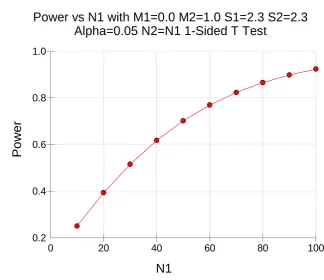
(8) To Leah Hart, who was there from the first baseline data collection home visit for the first pilot study patient in September of 2008, and was still there a mammoth 350 home visits and nearly three years later for the last data collection on the 166th patient. Thank you Leah, for caring about the project so passionately, and for hanging in there during all the cyclones that blew through both our lives during this study. To Ylona Chun Tie, who stepped in to the breach and kept the momentum going with her huge log of 150 data collection home visits, persevering in this project despite embarking on big and brave new adventures of her own. Thank you Ylona, for that unflagging support and your profound confidence in my ability to finish, even when I wasn’t sure it was particularly well founded. To Helen Wright, who entered voluminous amounts of data in to SPSS, with a commitment to precision and accuracy that earned her my undying admiration. Thank you Helen, for sharing my love of numbers and for that shared sense of curiosity about what research can help us discover, as it is that curiosity that transforms nurse clinicians into nurse researchers. To my three Heads of school.....I guess I should accept that my project has gone on for too long when it has spanned three different Heads of School! To Professor Kim Usher, for letting me pursue my passions, both in topic and in methodology, and for encouraging me to focus on testing a nursing intervention to build our discipline-specific body of knowledge. To Associate Professor David Lindsay, for the kind and encouraging words spoken after my confirmation seminar, and for the myriad other more practical ways he encouraged and supported me during the lengthy intervention phase, while I relentlessly pursued the holy grail of an adequate sample size for an RCT. To Associate Professor Lee Stewart, for letting me practice Healing Touch on her in the early days, for validating the value of complementary therapies for our clients, and for understanding the nature of the doctoral journey. She knew when to push, when to stop, and when to dust me off, and for that wisdom and compassion, I will always be grateful. And to my many other colleagues at the School of Nursing, Midwifery and Nutrition, who also let me practice Healing Touch on them in the early days; who respected the Do Not Disturb sign on my office door when I was writing, even though it was really inconvenient for them to do so; and who didn’t leave the tea room when I started talking about my research, yet again. And to Associate Professor Rheinhold Mueller, Associate Professor Petra Buettner, and Monika Buhrer- Skinner for doing the impossible: making my first act as a PhD student, a twoweek intensive biostatistics course, be not only informative but actually rather enjoyable! And particular gratitude must go to Rheinhold for then assisting me with sample size calculations for the study in the early days, even when the unpopular answer of a minimum requirement of 140 complete data sets to analyse was the first and largest of many hurdles I would need to surmount in this project.. 7.
(9) And lastly, but most importantly, to the 166 women who said ‘yes’ to my research project, who welcomed me into their homes, who answered copious questions on numerous occasions, and who graciously agreed to a project where they had a 50/50 chance of only receiving a placebo. They knew the odds but were good sports and true ladies about it all, and they altruistically participated in the name of knowledge and for the benefit of future older women. I extend my profuse gratitude to them, for the honour and privilege of knowing them and working with them during this study.. 8.
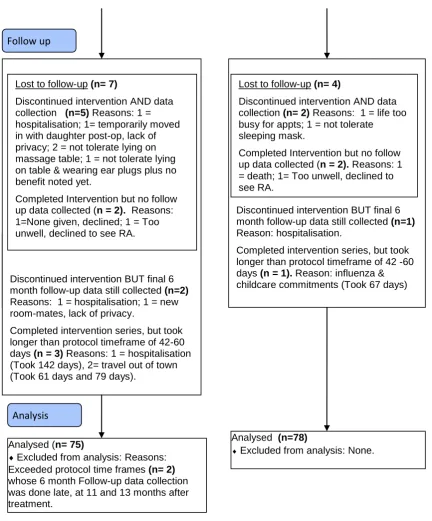
(10) ABSTRACT A Randomised Controlled Trial (RCT) of the effect of Healing Touch versus placebo on the functional health of community dwelling older women. BACKGROUND: Both government and the health care industry are keenly aware of the burgeoning older adult population in Australia and globally. The risk for functional decline leading to placement in residential aged care is accentuated for older women who live alone, who may experience lower social support and/or touch deprivation. Frail older adults in one prior small qualitative study reported gains in functional ability after receiving Healing Touch treatments, while findings from two prior experimental studies with methodological limitations contributed suggestive but conflicting evidence for the benefit of Healing Touch on functional ability for hospice patients and women with cancer. The aim of this research was to clarify the existing evidence base with a methodologically rigorous placebo-controlled trial of adequate power to detect an effect on functional health. A series of weekly sessions of the complementary therapy of Healing Touch was provided in the homes of community-dwelling women to ascertain if this nursing intervention, which uses gentle direct and indirect touch on specific locations of the body in a prescribed sequence for each technique, could assist them in managing and optimising their current functional and global health status, as well as providing them with a source of healthy touch and social connection. TRIAL DESIGN: A parallel, two-arm randomised placebo-controlled trial was conducted to assess the effects of the energy-based complementary therapy of Healing Touch on the functional, social, psychological and spiritual health status and overall quality of life of community dwelling older women. METHODS: Participants/Setting: Inclusion criteria: women over 65 living alone in the community in a regional city in northern Australia in houses, units or retirement villas, who were receiving some assistance in their homes from any source including family, friends, neighbours or volunteers. Exclusion criteria were existing cognitive impairment, the presence of a room-mate or live-in caregiver, or recent experiences with Healing Touch or other similar energy-based touch therapies. Participants received a series of weekly treatments of Healing Touch or mimic healing touch (placebo) in their residences between January 2009 and December 2010. A Research Assistant blinded to group allocation collected the data in the participants’ residences at baseline (Week 0), at completion of the seven week treatment series (Week 8), and six months after completion of the treatment series (Week 33).. 9.
(11) Interventions: Participants in the Healing Touch group received a series of seven weekly treatments, each lasting an average of 30 minutes, consisting of one of 35 possible Healing Touch techniques, from the established curriculum taught by the Colorado Center for Healing Touch and approved by the American Holistic Nurses Association. Timing and duration of sessions were similar for the participants in the placebo group, who received one mimic healing touch technique as per the placebo protocol developed by the Principal Investigator(PI). The PI delivered all interventions to preserve blinding and ensure protocol adherence. Hypothesis: The Healing Touch group will experience statistically significantly smaller declines in functional health than the placebo group. Outcome Measures: The primary outcome was functional health as measured by the Older American Resources Survey’s Functional Multidimensional Assessment Questionnaire (OARS-FMAQ), consisting of two sub-scales: Basic Activities of Daily Living (ADLs) and Instrumental ADLs, which are summed for a Total ADL score. Secondary outcome measures included the Medical Outcomes Study Social Support Survey (MOS-SSS), the Paloutzian and Ellis Spiritual Well-Being Scale, the Ryff Psychological Well-Being Scale-short form, and the Duke Health Profile. Randomisation: Computer generated random numbers were used to create a sequence of blocked and balanced random allocations, in groups of ten, concealed in opaque envelopes. Participants were advised of the placebo design prior to consent. Envelopes were opened by the PI immediately prior to administering the selected protocol at the first treatment session. Blinding: Participants, family members, referral sources, co-providers, data collectors and data analysis verifiers were blinded to group allocation. RESULTS: Number of participants: 191 women were screened and enrolled, but 18 did not keep their appointments and 5 failed their screening MMSE, leaving 168 who progressed to randomisation: 84 participants in each treatment group. Attrition causes included: onset of illness (5); death (1); relocation (4); too busy for appointments (1) or participants being unable to tolerate lying on the massage table and/or wearing the sleeping mask (4). A modified intention-to-treat analysis was conducted for the 153 participants with data from all three time points, regardless of protocol adherence: 75 participants in the placebo group and 78 in the Healing Touch group. Outcome Measures: Despite randomisation, treatment groups were not comparable on the key demographic variable of living arrangement, with a greater number of retirement village residents in the Healing Touch group, thus requiring a stratified analysis.. 10.
(12) For the stratum of participants already living in retirement villages, there was a statistically significant difference (p = 0.025) between the change in the Healing Touch group’s scores from Week 0 to Week 33 as compared to the change in the placebo group’s scores, on the Basic Activities of Daily Living (BADL) sub-scale. The Healing Touch group showed a small but clinically relevant improvement in the BADL sub-scale (median 0.0, inter-quartile range 0.0, +1.0), while the placebo group showed a small but clinically relevant decline (median 0.0, inter-quartile range -1.0, 0.0). The change over time in the two other measures of functional health, the Instrumental Activities of Daily Living (IADL) sub-scale and the Total ADL scale, were comparable between the Healing Touch group and the placebo group for the retirement village stratum; and all functional health measures (BADL, IADL, and Total ADL) were comparable between the two treatment groups for the stratum of participants living in their own homes or units in ordinary residential neighbourhoods. The Social Support measure also showed a statistically significant difference (p = 0.012) between treatment groups, but only in the stratum of participants still living in their own homes or units in ordinary residential neighbourhoods. Again the Healing Touch group showed a modest improvement from Week 0 to Week 33, while the placebo group showed a decline. Harms: No harms related to the treatment were reported, although alternative positions in a reclining chair or shorter treatments were required for 4 participants who could not tolerate lying supine on the massage table for a full treatment session. CONCLUSION: Healing Touch may have a beneficial effect for selected older adult populations on selected health dimensions, depending on their area of deficit: 1.. Retirement village residents may respond with improvements in their functional health. These findings are congruent with some of the earlier qualitative and experimental research on functional health, but conflict with more recent RCTs with younger but acutely ill participants.. 2.. Socially isolated residents in ordinary residential neighbourhoods may respond with improvements in their social health. These findings conflict with earlier studies of younger but acutely ill participants, where no benefits for social health were observed.. TRIAL REGISTRATION: Australian New Zealand Clinical Trial Registry Number ACTRN12612000788875. World Health Organisation Universal Trial Number is 1111-1132-2783.. 11.
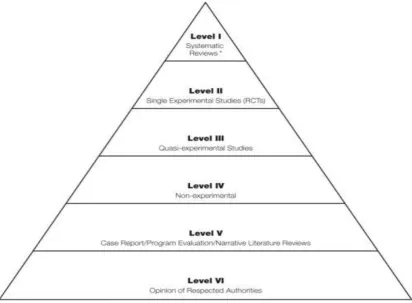
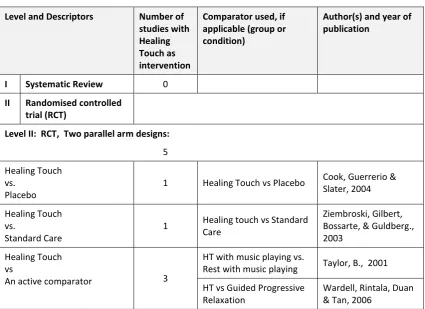
(13) Table of Contents CHAPTER ONE: Introduction and Background ................................................................ 20 Introduction to Thesis ................................................................................................ 21 Background and Significance ..................................................................................... 21 Older Adults and Functional Ability versus Functional Decline ............................ 21 Healing Touch and Functional Ability ........................................................................ 24 The complementary therapy of Healing Touch ......................................................... 25 Historical Development of Healing Touch ............................................................. 25 Description of Healing Touch ................................................................................ 26 Underpinning Theory of Healing Touch: Energy Medicine .................................. 27 Complementary and Alternative Medicines (CAMs) and Older Adults ..................... 28 The Value of the Evidence Based Practice (EBP) Paradigm for Complementary Therapies .................................................................................................................... 29 Aim of the research .................................................................................................... 32 Research Question ..................................................................................................... 32 Null Hypothesis .......................................................................................................... 32 Alternative Hypothesis ............................................................................................... 32 Chapter Summary ...................................................................................................... 33 CHAPTER TWO: A Review of the Literature regarding Healing Touch ........................... 34 Introduction ............................................................................................................... 35 Methods ..................................................................................................................... 35 Structure of literature review................................................................................ 36 Level VI: Expert Opinion ............................................................................................. 44 Level V Evidence: Case Reports, Program Evaluation reports, Qualitative Research and Narrative Literature Review ................................................................ 44 Level V-4: Case Reports ......................................................................................... 44 Level V-3: Qualitative research............................................................................. 46 Level V-2: Program Evaluation Reports ................................................................. 48 Level V-1: Narrative Literature Review ................................................................. 48 Level IV Evidence: Case Series.................................................................................... 49 Level IV-2: Case Series, Post Test Only ................................................................. 49 Level IV-1: Case Series, Pre-test/Post-test, Single and Multiple Conditions ........ 50 Case Series, Pre-test/Post-test: ............................................................................ 50 Case Series, Pre-test/Post-test, Multiple conditions ............................................ 51 Level III Evidence: Non-randomised experimental trials ........................................... 53 Level II Evidence: Randomised Controlled Trials (RCTs) ............................................ 54 Crossover RCTs (3 studies) .................................................................................... 54 Three parallel arms RCTs (6 studies) ..................................................................... 57 Two parallel arm RCTs (5 studies) ......................................................................... 60 Summary of the evidence to date.............................................................................. 65 Anecdotal evidence ............................................................................................... 66 Qualitative evidence.............................................................................................. 66 Quantitative evidence ........................................................................................... 67 Methodological Issues: .............................................................................................. 68 Sample size ............................................................................................................ 68 Treatment protocols.............................................................................................. 68 12.
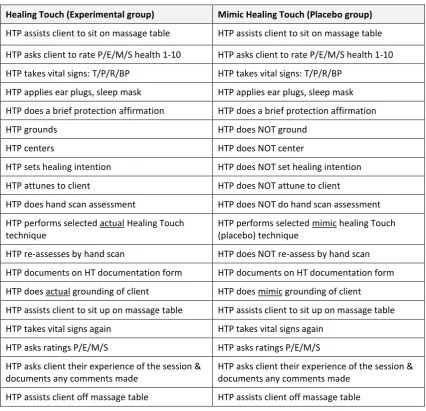
(14) Providers of Healing Touch treatments and comparator treatments .................. 69 Outcome measures ............................................................................................... 70 Data collectors ....................................................................................................... 70 Methodological issues summarised ...................................................................... 71 Chapter Summary ...................................................................................................... 71 Aim of the research ............................................................................................... 73 Research Question ................................................................................................ 73 Null Hypothesis...................................................................................................... 73 Alternative Hypothesis .......................................................................................... 73 CHAPTER THREE: Methods ............................................................................................. 74 Introduction ............................................................................................................... 75 Study Design ............................................................................................................... 75 Pilot study .............................................................................................................. 75 Participants ............................................................................................................ 76 Recruitment ............................................................................................................... 77 Losses and exclusions................................................................................................. 78 Randomisation Process .............................................................................................. 80 Study settings ............................................................................................................. 81 Challenges in the home setting ............................................................................. 83 Instruments /Outcome Measures .............................................................................. 85 Primary Outcome Measure ................................................................................... 85 Secondary Outcome Measures ............................................................................. 86 Ancillary Analyses .................................................................................................. 90 Procedure and Timing of Contacts with Participants ................................................ 92 Blinding .................................................................................................................. 94 Intervention and Placebo ........................................................................................... 94 Similarity of intervention to placebo..................................................................... 96 Similarity of the intervention as delivered in the study protocol to Healing Touch sessions delivered in non-research contexts. ............................................ 96 Ethics .......................................................................................................................... 99 Approvals ............................................................................................................... 99 Statistical methods ................................................................................................... 101 Sample Size Calculations: .................................................................................... 101 Chapter Summary .................................................................................................... 112 CHAPTER FOUR: Results................................................................................................ 113 Introduction ............................................................................................................. 114 Decisions about who to include in the Modified Intention to Treat analysis.......... 115 Recruitment, Losses and Exclusions .................................................................... 115 Numbers analysed ............................................................................................... 115 Participant Flow Diagram ......................................................................................... 116 Description of Sample at Baseline (Week 0) ............................................................ 117 Demographics ...................................................................................................... 117 Outcome Measures at Baseline (Week 0) ........................................................... 122 Outcomes ................................................................................................................. 126 Primary Outcome Measure: Functional Health as measured by the OARS instrument. .......................................................................................................... 126 Social Support ...................................................................................................... 129 13.
(15) Psychological Well Being ..................................................................................... 129 Spiritual Well Being ............................................................................................. 130 Quality of life ....................................................................................................... 131 Stratified Analysis ................................................................................................ 132 Ancillary analyses ..................................................................................................... 145 Introduction ......................................................................................................... 145 Within Group comparisons over time ................................................................. 145 Comparison of treatment groups on hospitalisation history .............................. 152 Comparison of treatment groups on living arrangements at Week 33 .............. 154 Comparison of treatment groups on uptake of other Complementary and Alternative Therapies (CATs) during period of research study ........................... 155 Comparison of treatment groups on data collected at each treatment session ................................................................................................................. 156 Comparison of treatment groups on the participants’ evaluation of the treatment ............................................................................................................ 160 Comparison of treatment groups on protocol adherence: treatment protocol and data collection protocol ...................................................................................... 164 Chapter Summary of Main Findings......................................................................... 167 Functional Health: ............................................................................................... 167 Social Support: ..................................................................................................... 168 Other Health Dimensions: ................................................................................... 168 CHAPTER FIVE: Discussion and Conclusion ................................................................... 170 Introduction ............................................................................................................. 171 An update of the literature published regarding Healing Touch during the conduct of this present study .................................................................................. 171 The Contribution of the present study to the evidence base for Healing Touch .... 174 Primary Outcome Measure of Functional Health Status: ................................... 174 Secondary Outcome measures: Other health dimensions ................................. 176 Summary of this present study’s findings as compared to the prior body of evidence .......................................................................................................... 185 The Contribution of the present study to increased methodological rigor in Healing Touch research ............................................................................................ 186 Use of the Randomised Controlled Trial as a study design ................................. 186 Choice of comparison group ............................................................................... 187 The use of a placebo comparator........................................................................ 188 Credibility of the Placebo treatment ................................................................... 189 Ability to provide authentic Healing Touch treatments while remaining within the parameters required for an RCT treatment protocol ........................ 192 Use of CONSORT guidelines in study design and reporting ................................ 193 Control of potential confounding variables: ....................................................... 193 Adequate sample size and power for the primary outcome measure ............... 194 Statistical analysis ................................................................................................ 194 Other Successful Methodological Design Decisions ........................................... 194 Limitations of the present study .............................................................................. 197 The use of a convenience sample and a self-selection bias................................ 197 Sample Size Concerns .......................................................................................... 198 Multiplicity of testing .......................................................................................... 199 14.
(16) Information bias .................................................................................................. 199 Protocol adherence for timing of data collection ............................................... 200 Short time frame for observation of functional decline in a stable sample ....... 200 Alignment between outcome measures and characteristics of the chosen sample ................................................................................................................. 201 Uptake of other related Complementary and Alternative Therapies ................. 201 Protocol constraints on the Healing Touch intervention .................................... 202 Generalisability ........................................................................................................ 204 Recommendations ................................................................................................... 205 Recommendations for policy .............................................................................. 205 Recommendations for practice ........................................................................... 205 Recommendations for future research ............................................................... 206 Chapter Summary .................................................................................................... 210 Overview of Thesis ................................................................................................... 211 Appendices.................................................................................................................... 229 A: 2012 Updated Literature Review ........................................................................ 230 B: List of Healing touch techniques ......................................................................... 247 C: Pre-Treatment Centering Meditation ................................................................. 250 D: Pre-Treatment Session Briefings ........................................................................ 253 E: Springer publishing company copyright permission ........................................... 260 F: Letter of Invitation (LOI) ...................................................................................... 263 G: Sign for brochure holder ..................................................................................... 267 H: Advertisement placed in newspapers, community newsletters, etc. ................ 269 I: Media Release ...................................................................................................... 271 J: Article in the Townsville Sun ................................................................................ 273 K: Article in the Townsville Bulletin ........................................................................ 275 L: Phone Screening Script ........................................................................................ 277 M: Phone Screening Form ....................................................................................... 282 N: Patient Information/Consent (PIC) form ............................................................ 285 O: Placebo Protocols ............................................................................................... 292 P: Data collection questionnaire sections ............................................................... 296 Q: Final Session Briefing Script ................................................................................ 301 R: Summary of results for participants ................................................................... 304 S: Notification of random treatment group allocation ........................................... 307 T: Options sheet ...................................................................................................... 309 U: Cover letter for participant mail-out at end of study ......................................... 311 V: Sequence of steps during home visit .................................................................. 313 W: Session Documentation Form ........................................................................... 316 X: Pre-Treatment Protection Affirmation ................................................................ 318 Y: Picture of filled gloves used in placebo direct contact techniques .................... 320 Z: Picture of laminated A5 booklets used in placebo indirect contact techniques 323 AA: Letter to GP for participants who scored low on their MMSE ......................... 326 BB: Health history/Intake form for Session One ..................................................... 328 CC: Change in five vital signs before/after treatment at each of seven sessions in treatment series............................................................................................ 331 DD: Change in perceived health status on four dimensions of health before/ after treatment at each of seven sessions in treatment series. ...................... 335 15.
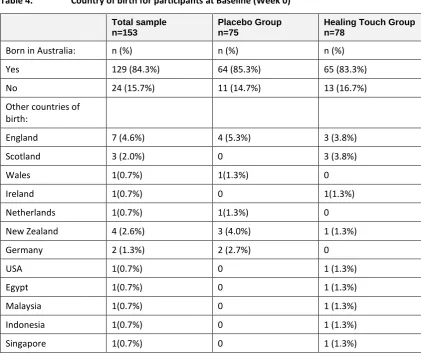
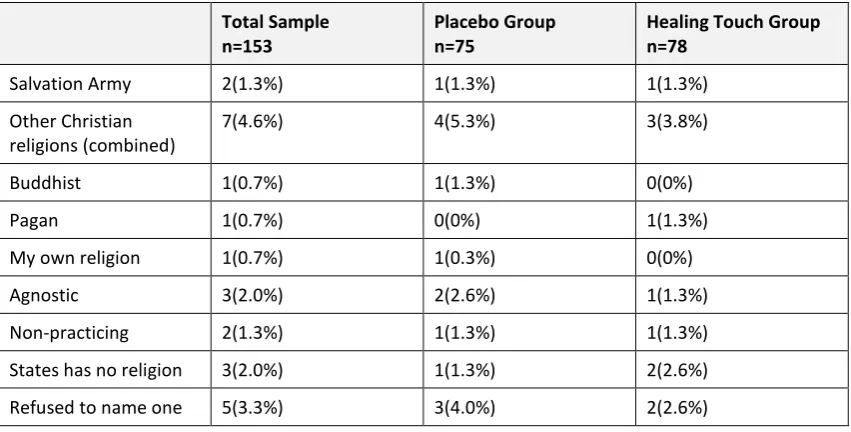
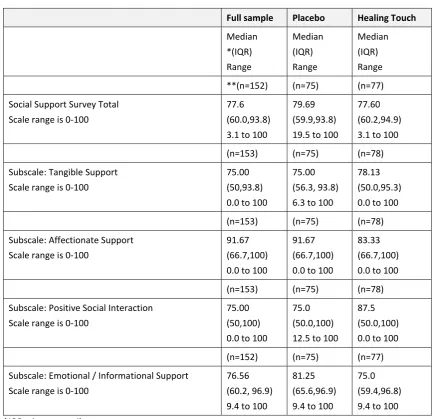
(17) List of Tables Table 1. Table 2. Table 3. Table 4. Table 5. Table 6. Table 7. Table 8. Table 9. Table 10. Table 11. Table 12. Table 13. Table 14. Table 15. Table 16. Table 17. Table 18. Table 19. Table 20. Table 21. Table 22. Table 23. Table 24.. Table 25.. Table 26.. Table 27. Table 28. Table 29. Table 30. Table 31. Table 32.. Table 33.. Levels of Evidence mapped against studies of Healing Touch as of mid 2008....... 39 Comparison of sequence of steps for Healing Touch versus Placebo .................... 96 Overview of Instruments used ............................................................................. 105 Country of birth for participants at Baseline (Week 0) ........................................ 118 Religion at Baseline (Week 0) ............................................................................... 118 Education at Baseline (Week 0) ............................................................................ 119 Income at Baseline (Week 0) ................................................................................ 120 Living Arrangements at Baseline (Week 0) ........................................................... 120 Comparison between groups of CAT usage at Baseline (Week 0) ....................... 121 Health status at Baseline (Week 0)....................................................................... 121 Functional Health at Baseline (Week 0) ............................................................... 122 Social Support at Baseline (Week 0) ..................................................................... 123 Psychological Well Being at Baseline (Week 0) .................................................... 124 Spiritual Well-Being at Baseline (Week 0) ............................................................ 125 Duke Health Profile (Quality of Life) at Baseline (Week 0)................................... 126 Functional Health, Total Activities of Daily Living (ADLs), Comparison of Treatment groups ................................................................................................. 127 Functional Health, Basic Activities of Daily Living (Basic ADLs) Sub-scale, Comparison of Treatment groups ........................................................................ 127 Functional Health, Instrumental Activities of Daily Living (Instrumental ADLs) Sub-scale, Comparison of Treatment groups ....................................................... 128 Social Support: Comparison of Treatment Groups .............................................. 129 Psychological Well Being: Comparison of Treatment Groups .............................. 130 Spiritual Well Being (SWB): Comparison of treatment groups. ........................... 131 Quality of Life: Comparison of treatment groups ................................................ 132 Living Arrangements at Baseline (Week 0): Comparison of treatment groups.... 133 Stratification by Living Arrangement at Baseline (Week 0): Comparison of Two Treatment Groups on the Primary Outcome Measure of Functional Health:Basic Activities of Daily Living (Basic ADLs).................................................................... 133 Stratification by Living Arrangement at Baseline (Week 0): Comparison ofTwo Treatment Groups on the Primary Outcome Measure of FunctionalHealth: Instrumental Activities of Daily Living (Instrumental ADLs) ................................. 135 Stratification by Living Arrangement at Baseline (Week 0): Comparison of Two Treatment Groups on the Primary Outcome Measure of FunctionalHealth:Total Activities of Daily Living (Basic ADLs and Instrumental ADLssummed) ................ 136 Stratification by Living Arrangement: Comparison of the two treatment groups on the secondary outcome measure of Social Support ........................... 137 Stratification by Living Arrangement: Comparison of the two treatment groups on secondary Outcome Measure of Duke overall Quality of life. ............ 138 Stratification by Living Arrangement: Comparison of the two treatment groups on secondary Outcome Measure of Spiritual Well Being ........................ 139 Stratification by Living Arrangement: Comparison of the two treatment groups on secondary Outcome Measure of Psychological Well being. ............... 140 Income at Baseline (Week 0): Comparison of treatment groups ......................... 141 Stratification by Income: Comparison of Two Treatment Groups on Change from Week 0 to Week 33 on the Primary Outcome Measure of Functional Health: Total Activities of Daily Living (ADLs), Basic ADLS and Instrumental ADLs. .............................................................................................................................. 142 Stratification by Income: Comparison of the two treatment groups on Change from Week 0 to Week 33 on secondary Outcome Measure of Social Support ... 143 16.
(18) Table 34.. Table 35. Table 36. Table 37. Table 38. Table 39. Table 40. Table 41. Table 42. Table 43. Table 44. Table 45. Table 46. Table 47. Table 48. Table 49. Table 50. Table 51. Table 52. Table 53. Table 54. Table 55. Table 56. Table 57. Table 58. Table 59. Table 60. Table 61. Table 62. Table 63.. Stratification by Income: Comparison of the two treatment groups on Change from Week 0 to Week 33 on secondary outcome measures of overall Quality of life, Spiritual Well-Being and Psychological Well Being. .................................. 144 Within group comparisons over time for MMSE.................................................. 146 Within group comparisons over time for Charlson Co-morbidity Index .............. 146 Friedman testing for changes in Total ADL scores at Week 0 , Week 8 and Week 33 ................................................................................................................ 147 Friedman testing for changes in Basic ADL scores at Week 0 , Week 8 and Week 33 ................................................................................................................ 148 Friedman testing for changes in Instrumental ADL scores at Week 0 , Week 8 and Week 33 ......................................................................................................... 150 Within Group Comparisons over time on total sample for Secondary Outcome Measures .............................................................................................. 151 Time in days since last hospitalization as reported at Week 33 .......................... 152 Incidence of hospitalization during the time span of the study: comparison of the two treatment groups ................................................................................ 153 Setting of last hospitalisation at Baseline (Week 0) ............................................. 153 Setting of last hospitalisation at Week 33 ........................................................... 153 Comparison between treatment groups: living arrangements at Week 33 ........ 154 Comparison between treatment groups: Change in living arrangements during time span of study ..................................................................................... 154 Comparison between treatment groups for tactile CAT usage ............................ 155 Comparison between treatment groups for energy-based CAT usage ................ 155 Comparison of the two treatment groups on changes in average temperature from Pre-treatment session to Post-treatment session ....................................... 156 Comparison of the two treatment groups on changes in pulse rate from Pretreatment session to Post-treatment session ...................................................... 157 Comparison of the two treatment groups on changes in respirations per minute from Pre-treatment session to Post-treatment session .......................... 158 Comparison of the two treatment groups on changes in systolic blood pressure from Pre-treatment session to Post-treatment session ........................ 158 Comparison of the two treatment groups on changes in diastolic blood pressure from Pre-treatment session to Post-treatment session ........................ 159 Comparison of two treatment groups: Belief regarding group allocation status and interest in future treatment ............................................................... 160 Comparison of two treatment groups: Satisfaction with treatment ................... 161 Comparison of two treatment groups: Amount willing to pay per session out- of-pocket for a future session ....................................................................... 163 Comparison of two treatment groups: Amount willing to pay </= $20 versus > $20 per session out- of-pocket for a future session ............................................. 163 Duration of Treatment (Number of Days between Treatment Session One and Treatment Session Seven) ............................................................................. 164 Total treatment time in minutes for full series of treatments (“Dose” of treatment) ............................................................................................................ 165 Number of treatments completed: Comparison between treatment groups ..... 165 Protocol Adherence: Data collection within protocol time frames ..................... 166 Fourteen newer studies found in the 2012 Update of the Literature Review ..... 172 Appendix A: Levels of Evidence mapped against all studies of Healing. Touch, including those from the 2012 update .......................................... 233. 17.
(19) List of Figures Figure 1. Figure 2. Figure 3. Figure 4.. Levels of quantitative evidence .............................................................................. 38 Power and Sample Size Requirements (with acknowledgements to Associate Professor Rheinhold Mueller)............................................................................... 102 Participant Flow Diagram ..................................................................................... 117 Change in Basic Activities of Daily Living from Week 0 to Week 33 for stratum of retirement village participants ......................................................................... 134. 18.
(20) Glossary of Terms and Abbreviations Week 0 (zero): pre-intervention or the baseline measurement. Data collected by RA 1-14 days prior to first intervention home visit by PI. Week 8: post-intervention series measurement. Data collected by RA later the same day or within a maximum of 14 days of the final intervention home visit by PI. Week 33: Follow up measurement. Data collected by RA 6 months (usually 180 days) +/- 18 days from the date of the last intervention home visit by PI. CCI: The Charlson Co-Morbidity index ADL: Activities of Daily Living BADL: Basic Activities of Daily Living IADL: Instrumental Activities of Daily Living Total ADL: the sum of the BADL and IADL sub-scales OARS-FMAQ: Older American Resources Survey Functional Multidimensional Assessment Questionnaire PWB: Psychological Well-Being SWB: Spiritual Well-Being MOS-SSS: Medial Outcomes Study-Social Support Survey MMSE: Mini-Mental Status Examination The Duke: Duke Health Profile. 19.
(21) CHAPTER ONE: Introduction and Background. 20.
(22) Introduction to Thesis This dissertation will detail the conduct of a research project undertaken in fulfilment of a doctor of philosophy degree. Chapter One will discuss the background of the project, including the problem of functional decline in older adults, its significance to both the Australian and the global health industry and the theoretical premise that the complementary therapy of Healing Touch may be an effective intervention to minimise or delay functional decline in certain groups of older adults. This premise will be tested through the design and conduct of a randomised controlled trial (RCT). Chapter Two will focus on presentation of the research up to 2008 at the time of designing this present research study, including an overview of both qualitative and quantitative research, with a focus on both the beneficial effects noted in recipients of Healing Touch, and also on the methodological challenges and strategies encountered, all of which informed the design of this present study. Chapter Three will then outline the Methods used to conduct the study, covering all phases of the study from designing the proposal, acquiring ethical approval, recruiting the participants, delivering the Healing Touch intervention and the placebo control intervention, collecting and analysing the data and disseminating the findings. Chapter Four, Results, will begin with a description of the sample at baseline, both as a whole and by comparing the baseline characteristics of the two randomly allocated treatment groups. Chapter Four will then proceed with a comparison of the two treatment groups on primary outcome measures, secondary outcome measures and ancillary analyses. Chapter Five, Discussion, will contextualise the findings of this present study against the backdrop of the current body of evidence, including a comprehensive update of the literature published after commencement of this present study. These 14 later studies will also be more fully described in Appendix A for the reader’s convenience. The Discussion will also identify the contribution of this present study to building the evidence base and upholding and advancing standards of methodological rigour as defined by the evidence based practice (EBP) paradigm. Limitations will also be identified, followed by recommendations arising from this present study, for future practice, policy and research. A summary of the dissertation will complete the body of the text, followed by a comprehensive reference list and a thorough collection of appendices of supporting documents used in successive phases of the study, including ethics approval, recruitment and intervention.. Background and Significance Older Adults and Functional Ability versus Functional Decline Australia’s population growth is projected to result in a quarter of the population being above the age of 65 years old by 2050 (Prime Minister’s Science, Engineering and Innovation Council (PMSEIC), n.d.). The population segment of those Australians aged 65 to 84 years is doubling, while the segment over 85 years of age will be quadrupling (Australian government: The Treasury, 2010). Meeting the health care needs of this rapidly expanding sector is a primary concern of the Australian Government (PMSEIC, n.d.), of the health care industry sector and perhaps most importantly, of older adults themselves. Projected workforce shortages of health care professionals (HCPs) to meet this approaching population profile are one concern (Swerissen, 2009). Even with sufficient HCPs available, the cost of meeting the health care needs of older adults is a related concern, given the known dramatic rise in expenditure that 21.
(23) correlates with advancing age. “Costs are about four times higher for those aged over 65 and significantly higher again for those aged over 80” (Swerissen, 2009), and this financial burden is shared by State, Territory and Federal Governments, as well as by older adults themselves and/or their families. Adequate physical and human resource infrastructure of acute care hospital beds, aged care community support packages and long term residential placements are all predicted to be strained beyond capacity if projected trends are realised (Australian government: The Treasury, 2010; Swerissen, 2009). Healthy Ageing is a national health priority and a government strategy intended to offset some of the dire predictions noted above, and the vision of healthy ageing is described as “an active and productive Australia in which people not only live longer but live longer in good health, staying mentally and physically active and able to participate and enjoy life until they die at an advanced old age” (PMSEIC, n.d., p. 13). A key component of the philosophy of healthy ageing includes research into supportive interventions that enable older adults to improve or sustain their optimal health status, including their functional independence, and thus decrease their utilisation of expensive and scarce health care services, particularly residential aged care placements (Australian government: The Treasury, 2010). In contrast to the ideal of healthy ageing, functional decline is an unpleasant reality experienced by many older Australians, and one that often results in relocation to a more supported living arrangement, including residential aged care facilities (RACFs). A definition of functional decline provided by the clinical Epidemiology and Health Services Evaluation Unit—Melbourne Health, 2004 (as cited in Hill, Schwarz & Winbolt, 2009, p. 189) describes it as “the reduced ability to perform tasks of everyday living, for example, walking or dressing, due to a decrement in physical and/or cognitive functioning.” Although most older Australians self-report their health as excellent, very good or good, by contrast, “almost a quarter of older people (23%) had a severe or profound disability in 2003, meaning that they sometimes or always needed help with self-care, mobility or communication” (ABS, 2004, as cited in Australian Institute of Health and Welfare (AIHW), 2010, p. 321). Placement into residential aged care facilities (RACFs) can be triggered by factors such as functional decline, specifically the declining ability to perform activities of daily living at an independent level (Bharucha, Pandav, Shen, Dodge & Ganguli, 2004). Depleted social support can also be a triggering factor, when caregivers are no longer able or available to fill the gap between the older adult’s abilities to complete their own ADLs and the level of functional independence required to remain in a community dwelling (Bharucha,et al, 2004). Personal social support may be replaced or supplemented by government-subsidised assistance in the home (AIHW, 2007), but the options available will be constrained by the shrinking resources noted above. Cognitive impairment can also directly trigger residential care placement (Brown, 2007) or indirectly contribute to placement through its detrimental effect on the older adult’s ability to perform ADLs safely and independently. Overall physical health status can also impair the ability to undertake ADLS, as can a decline in emotional health status, with issues such as anxiety and depression potentially further limiting an older adult’s ability to maintain their independence in the community. Miller’s Functional Consequences Theory (2012) looks at the issues of functional ability from a broad and positive perspective. She discusses the cumulative and interactive effect of a variety of age-related physiological changes and numerous risk factors on the older adult’s ability to function safely in their current environment, and the subsequent effect of their level 22.
(24) of functionality on their overall quality of life (2012). She directs the recommended nursing interventions towards teaching about health promotion, addressing risk factors and referring for additional care or support. The desired effect of these nursing interventions is to promote and optimise each individual older adult’s current functional capacity, thus resulting in an improvement in quality of life (Miller, 2012), a similar goal to that of healthy ageing described above. Similar to Miller’s Functional Consequences Theory, the hallmark nursing theorist Dorothea Orem also provided a relevant perspective to the discussion of functional independence versus functional decline. Orem’s central question was “When and why do people require the health service [of] nursing?” (Hartwig, 1991, p. 11). From this central question she postulated her Theory of Self-Care Deficit (or Dependent Care Deficit), one of her three interrelated theories. She conceptualised nursing services as being required when certain self-care limitations occur, and listed age as once such internal limitation that might place the client in need of nursing services (Hartwig, 1991). Her conceptualisation of a self-care deficit occurring when the self-care demand exceeded the self-care agency (or ability) echoes the concerns of functional independence raised in Miller’s Functional Consequence Theory. In both theories, the ideal is to support the individual to remain as functionally independent as possible, or in Orem’s terminology, to have a sufficient self-care agency to meet their current self-care demand (Hartwig, 1991), in order to avoid functional decline and the resulting dependence on others that it may precipitate. The cost of functional decline extends beyond the financial burden to government and individuals. The deterioration in quality of life experienced by older adults undergoing functional decline presents in many ways, long before it results in residential care placement. Quality of life consequences stemming from functional decline include lost opportunities for social interaction with family and friends, with the benefits these provide not just to the older adult, but to their family members, such as unpaid child care or support with household duties such as cleaning and ironing (AIHW, 2007). With the increasing participation of younger adult women in the workforce, the tasks performed by helpful older adult mothers or mothers-inlaw often enable their adult daughters to successfully balance their paid employment and household tasks concurrently. Another consequence of functional decline in the older adult can be the loss of volunteer or employment opportunities with their flow-on effect of lost services and expertise to those employing organisations or individuals. Older adults are vital members of their communities, often providing the bulk of volunteer services for organisations that are pivotal to the social fabric of a community (AIHW, 2007). Functional decline is not just a negative outcome for the individual older adult, but also for their family, neighbourhood, community, the health care industry and for society at large. Older adult women living alone in the community are seen to be at particular risk for the cascade of functional decline described above, as they have often already experienced substantial shrinking of their social networks through widowhood or the death of their sameage peers. Statistics for residential aged care facilities indicate that female residents comprise 70% of the population in RACFs in Queensland (AIHW), 2012, p.22). They are the highest users of in-home assistive support packages such as Home and Community Care (HACC), Community Aged Care Packages (CACP), Extended Acute Care at Home (EACH), and EACH-Dementia (EACH-D) (AIHW, 2007). While wives providing caregiver support for husbands is the most common pattern, in many couples, the caregiving support is mutual, with each member providing some function(s) that the other spouse is unable to perform. When women are left 23.
(25) residing alone in the home, either through widowhood, divorce, or the entry of the husband in to residential care, they lose the practical support and/or emotional support provided by the departing spouse. If the departing spouse had been ill for some time, the older woman may be relieved of a large burden of care-giving, but their personal vulnerability as a single resident emerges and may, over time, impact negatively upon their ability to maintain functional independence in the community. The Australian Bureau of Statistics (ABS) predicts that almost two-thirds of the growth in lone person households will be comprised of women over the age of 60 (ABS, 2011 Census of population and housing), with total growth in lone person households projected “at 2.2 per cent per year from 1.9 million in 2006 to 3.2 million in 2031” (ABS, 2011). For the reasons outlined above, older women living alone in the community were chosen as the focus for this present study. It was postulated that a supportive and relaxing health promotion nursing intervention like Healing Touch might be able to mitigate or buffer some of the risk for functional decline and eventual residential care placement in this susceptible population.. Healing Touch and Functional Ability Three prior studies about Healing Touch indicated a potential beneficial effect on functional ability for participants receiving this complementary therapy. In her qualitative study, Peck (2007) noted that interviewed participants reported an improvement in their functional ability (BADLS and IADLs) after 3-4 months of Healing Touch treatments. Her study followed 12 frail elders whose functional limitations qualified them for assisted living or skilled nursing home placement, but instead they were being managed in their own homes with agency support. They received between 6 and 14 Healing Touch treatments in their own homes, so the population of frail elders, the setting of the participants’ homes for the delivery of the treatments, and the range of the number of treatments provided, were all similar features to the present study. For their randomised study of hospice patients, Ziembroski, Gilbert, Bossarte and Guldberg (2003) reported that both groups had worsening scores over time on the physical functioning sub-scale of the Missoula Quality of Life instrument, as would be expected for a palliative care population receiving treatment in a hospice setting. In this respect they were likely to be experiencing greater frailty and functional decline than the participants in this present study, and also more frailty than the ones described above in Peck’s (2007) study. Ziembroski et al. (2003) reported that the standard care control group (26 participants) had a (presumably nonsignificantly) larger incremental decline in their physical functioning than the Healing Touch group (29 participants). Inferential statistics were not conducted. Cook, Guerrerio and Slater (2004) conducted the only parallel RCT comparing Healing Touch to a placebo or mock version of Healing Touch located prior to the commencement of this present study. Their sample of 62 female patients receiving radiation treatment for breast or gynaecological cancer, received six Healing Touch or placebo treatments. A well-established instrument was used, the Medical Outcomes Study SF-36, which is comprised of nine subscales covering domains of health, including physical functioning and physical role functioning. Within group comparisons showed statistically significant improvements occurring in both treatment groups. For the genuine Healing Touch group, the improvements were on the three 24.
(26) sub-scales of emotional role functioning, mental health and health transition. For the mock Healing Touch group, the improvements were on the two sub-scales of physical role functioning and health transition. More stringent statistical analyses for between-group comparisons were also conducted, based on the change over time in the Healing Touch group versus the change over time in the placebo group. The Healing Touch group outperformed the placebo group at a statistically significant level on three sub-scales: pain, vitality and physical functioning. The intriguing results from these three studies prompted the theoretical premise that Healing Touch may be a beneficial supportive therapy to assist older adults to retain their functional ability to perform ADLs, with the many consequential advantages that such independence can confer.. The complementary therapy of Healing Touch Historical Development of Healing Touch The collection of techniques and the underlying philosophy for providing this energy-based complementary therapy were first organised into a structured curriculum program for nurses and taught by Janet Mentgen, a Registered Nurse and Nurse Educator, as a continuing nursing education program in 1989 at the University of Tennessee (Wardell & Mentgen, 1999). Mentgen had been using these techniques in her work as a community nurse and teaching the techniques at Red Rock Community College in a complementary therapy course (Bulbrook, 2011). Mentgen “was foremost a nurse and secondly a holistic nurse” (Bulbrook, 2011, p. 13). The techniques were collected by Mentgen from energy healers and teachers with established healing practices, including Alice Bailey, Barbara Brennan, Rev. Roslyn Bruyere, Dr. Brugh Joy, Rev. Rudy Noel, Rev. John Scudder, Australian Rod Campbell and the technique for Therapeutic Touch as taught by Dr. Dolores Kregier and Dora Kunz (Hover-Kramer, 2002; Mentgen, 2001; Wardell, 2000). Mentgen founded the Colorado Center for Healing Touch (CCHT), which offered training for instructors to adhere to the structured curriculum, which was endorsed by the American Holistic Nurses Association (AHNA) as a continuing education certification program in 1989 (Bulbrook, 2011; Hover-Kramer, 2002;) and taught to increasingly large volumes of students across the USA and around the globe, including in Australia as early as 1990 (Bulbrook, 2011; Wardell, 2000). As early as 2002, the Colorado Center for Healing Touch recorded that over the previous ten years, 54, 867 students had participated in 3, 801 Healing Touch classes (Hover-Kramer, 2002). The structured curriculum spans six levels of training, the first three comprised of approximately 15 hours of continuing education delivered in a weekend experiential workshop format (Wardell & Mentgen, 1999), while the fourth and fifth levels are structured as four day intensives in a residential retreat setting with a minimum of a one year mentored apprenticeship in between the two levels and submission of an extensive portfolio, including written case studies and a minimum of 100 documented Healing Touch sessions (Mentgen, 2001). Certification is available after completion of Level Five training, through either Healing Touch International or through the Healing Touch Program, both of which are endorsed by the AHNA. Hover-Kramer (2002) reported that there were 1, 020 Certified Healing Touch Practitioners, most of whom were nurses; and 1,020 certified Healing Touch instructors, again most of whom were nurses. The sixth level of training is for instructor preparation, and 25.
(27) requires multiple workshop attendances over a period of months or years and a supervised mentorship/apprentice model. The researcher for this present study achieved Level Four training prior to commencement of the research, and functioned as the Principal Investigator (PI) for the project team, and delivered all Healing Touch treatments herself, in the absence of any other nurses trained in Healing Touch in her local regional city, with a population of approximately 190,000 people. The first textbook regarding Healing Touch was published in 1996 (Hover-Kramer, 1996), with a second edition in 2002 (Hover-Kramer, 2002), and a third edition in 2010 (Hover-Kramer, 2010). Responsibility for the administration of the process of certification of practitioners was transferred from the American Holistic Nurses Association to the peak professional body, Healing Touch International, in 1996, due to the AHNA’s requirement to restrict their direct certification process to registered nurses only. While most students of Healing Touch are nurses, other health care professionals and even lay persons are allowed to study Healing Touch and achieve certification if they meet the standardised requirements. Annual conferences have occurred since 1990, with the conference in 2000 attracting over 500 attendees (Hover-Kramer, 2002). The Australian Foundation of Healing Touch, Incorporated (AFHTI), is an affiliated country association of Healing Touch International (HTI), and administers the curriculum, with endorsement for nursing continuing professional development credit available through the Royal College of Nursing Australia (RCNA). While only one to two dozen classes per year are conducted in Australia, the annual schedule for more densely populated countries like the USA routinely includes over 200 classes per year.. Description of Healing Touch Healing Touch is a collection of 35 energy-based techniques that use gentle touch directly on the body or above it at specific locations in prescribed sequences, with the purpose of balancing the physical, emotional, mental and spiritual energy systems to promote overall health and well-being (Hover-Kramer, 2002; Mentgen, 2001; Wardell & Mentgen, 1999). The central premise in this and other energy modalities is that they are used to facilitate and activate the innate self-healing that every human being possesses and can access in order to foster their own ability to achieve health, which is defined as wholeness rather than the mere absence of disease (Hover-Kramer, 2002; Mentgen, 2001). Healing Touch techniques can vary in their use of either direct gentle touch on the patient’s body through clothing, or indirect touch where the practitioner holds or moves their hands above specific locations on the client’s body (Mentgen & Bulbrook, 1994). Within the collection of 35 techniques (see Appendix B), some are considered full body techniques, with hand positions that span from head to toe, while others are localized techniques that focus on a particular part of the body, such as the head (Mentgen, 2001). Often hand locations include the joints, which are considered to be minor chakras, and/or the major chakras located midline from the base of the spine to the crown of the head. The word chakra is a Sanskrit word meaning ‘wheel’ and is used to indicate the energy centers in specific locations on the body (Brennan, 1987; Hover-Kramer, 2002; Mentgen & Bulbrook, 1994). Chakras are postulated within the theory of energy medicine to be an access point where universal energy flows in to and sustains each human being’s energy system and physical body (Brennan, 1987; Hover-Kramer, 2002; Mentgen & Bulbrook, 1994), and both minor and major chakras are. 26.
Figure
+7


Related documents
It was decided that with the presence of such significant red flag signs that she should undergo advanced imaging, in this case an MRI, that revealed an underlying malignancy, which
The summary resource report prepared by North Atlantic is based on a 43-101 Compliant Resource Report prepared by M. Holter, Consulting Professional Engineer,
Mon Integrated Care (Center City) Tues Traditional MH (N Knox) Wed* (July-Mar) Traditional MH (N Knox) Wed* (Apr-July) Psychosoc Rehab (5 th St) Thurs Integrated Care
National Conference on Technical Vocational Education, Training and Skills Development: A Roadmap for Empowerment (Dec. 2008): Ministry of Human Resource Development, Department
The paper assessed the challenges facing the successful operations of Public Procurement Act 2007 and the result showed that the size and complexity of public procurement,
To further explore the role of the PAH domains in meiotic repression, the mRNA levels of IME1 , SPS4 , and SPO13 were monitored in the wild-type, sin3 ⌬ , pah ⌬ 3 , and pah ⌬
19% serve a county. Fourteen per cent of the centers provide service for adjoining states in addition to the states in which they are located; usually these adjoining states have
