Review
Mining the physical infrastructure: Opportunities, barriers and
interventions in promoting structural components reuse
Eleni Iacovidou
⁎
, Phil Purnell
School of Civil Engineering, University of Leeds, LS2 9JT, UK
H I G H L I G H T S
•Design interventions can stimulate circularity in the construction sector. •Interventions are not being
main-streamed due to technical/organisational constraints.
•Reuse is a win-win strategy for the con-struction sector.
•Typology of infrastructure components might enable the roll-out of reuse. •Smart technologies might unlock the
re-use potential of structural components.
G R A P H I C A L A B S T R A C T
a b s t r a c t
a r t i c l e i n f o
Article history:
Received 17 February 2016
Received in revised form 14 March 2016 Accepted 14 March 2016
Available online 17 April 2016 Editor: D. Barcelo
Construction is the most resource intensive sector in the world. It consumes more than half of the total global resources; it is responsible for more than a third of the total global energy use and associated emissions; and generates the greatest and most voluminous waste stream globally. Reuse is considered to be a material and carbon saving practice highly rec-ommended in the construction sector as it can address both waste and carbon emission regulatory targets. This practice offers the possibility to conserve resources through the reclamation of structural components and the carbon embedded in them, as well as opportunities for the development of new business models and the creation of environmental, eco-nomic, technical and social value. This paper focuses on the identification and analysis of existing interventions that can promote the reuse of construction components, and outlines the barriers and opportunities arising from this practice as depicted from the global literature. The main conclusions that derive from this study are that the combination of in-centives that promote reuse of construction components and recycling of the rest of the construction materials with the provision of specialised education, skills and training would transform the way construction sector currently operates and create opportunities for new business development. Moreover, a typology system developed based on the properties and lifetime of construction components is required in order to provide transparency and guidance in the way construc-tion components are used and reused, in order to make them readily available to designers and contractors. Smart tech-nologies carry the potential to aid the development and uptake of this system by enabling efficient tracking, storage and archiving, while providing information relevant to the environmental and economic savings that can be regained, en-abling also better decision-making during construction and deconstruction works. However, further research is required in order to investigate the opportunities and constraints of the use of these technologies.
© 2016 The Authors. Published by Elsevier B.V. This is an open access article under the CC BY license
(http://creativecommons.org/licenses/by/4.0/).
Keywords:
Infrastructure
Construction components
Construction and demolition waste (CDW) Reuse
Interventions
⁎ Corresponding author.
E-mail address:[email protected](E. Iacovidou).
http://dx.doi.org/10.1016/j.scitotenv.2016.03.098
0048-9697/© 2016 The Authors. Published by Elsevier B.V. This is an open access article under the CC BY license (http://creativecommons.org/licenses/by/4.0/).
Contents lists available atScienceDirect
Science of the Total Environment
Contents
1. Introduction . . . 792
2. Construction materials wastage and management . . . 793
2.1. Waste arisings in the construction sector . . . 793
2.2. CDW management in Europe . . . 793
3. Mining the physical infrastructure . . . 794
3.1. Recycling versus reuse . . . 794
3.2. Reuse potential and recyclability . . . 794
3.2.1. Reuse potential . . . 794
3.2.2. EC reuse efficiency . . . 796
4. Interventions for promoting reuse and environmental efficiency . . . 796
4.1. Adaptive reuse . . . 797
4.2. Deconstruction . . . 798
4.3. Design for Deconstruction (DfD) . . . 798
4.4. Design for Reuse (DfR) . . . 800
4.5. Design for Manufacture and Assembly (DfMA) . . . 801
5. Discussion . . . 801
6. Conclusions . . . 803
Acknowledgements . . . 803
References . . . 804
1. Introduction
Our modern lifestyles are critically dependent on physical infrastruc-ture (e.g. transport, energy, water and waste management, communica-tions, buildings), construction and maintenance of which accounts for more than half of the total global raw resources consumed annually, and for more than one third of the total global energy use and associated emissions (Alcorn, 2003; Allwood et al., 2010, 2013; Ellis, 2011; Giesekam et al., 2014; Ness et al., 2015; Purnell, 2012). The increasing demand for housing and other services as a result of growing population requires the plan and delivery of infrastructure, at a time where resources are in decline, creating a matter of urgency in the long-term sustainability of the sector that cannot be ignored.
The production of construction materials accounts for the greatest share of carbon emitted from the construction sector, with the majority attributed to the production of steel, cement and timber. Global cement production, the main ingredient of concrete, is around 4 Gt and contrib-utes to about 9.5% of total global carbon emissions (Olivier et al., 2014; Statista, 2015; USGS, 2015). The manufacturing of steel used for con-struction, contributes to about 3.3% of total global carbon emissions (Allwood et al., 2010; Cooper and Allwood, 2012; Ness et al., 2015). The global warming impact attributable to timber production is contested, but could be as high as 18% of total global carbon emissions (Purnell, 2013). In general, at least 70% of the environmental impact of an average construction material is attributed to the energy required for its production (Kay and Essex, 2009) (a notable exception being con-crete, where 60% of emissions are associated with decarbonation of limestone). Concrete is the second most consumed material in the world after water (Giesekam et al., 2014) with a usage of approximately 20 Gt per annum (Behera et al., 2014). It is a composite material consisting of cement, aggregates (i.e. sand, gravel and crushed stone) and water, with aggregates occupying 65–85% of concrete's volume (Behera et al., 2014; BIO Intelligence Service, 2011, 2013; Ecorys, 2014). Aggregates and minerals such as bitumen (i.e. asphalt), clay (for bricks and tiles), limestone (for cement making), slate and gypsum, account for the largest component of construction materials used glob-ally by mass, followed by metals (particularly steel) and wood (timber) (Ecorys, 2014; Heard et al., 2012; Horvath, 2004). In Europe, the con-struction sector uses by far the greatest amount of resources in the economy on a mass basis, and consumes between 5% and 10% of total energy use only for the production of construction materials (BIO Intelligence Service, 2013; EISC, 2012; European Commission, 2014; Wahlström et al., 2014).
With pressures from the Inter-governmental Panel on Climate Change (IPCC) for a 50%–85% reduction of global carbon emissions by 2050 based on the 2000 emission levels, the construction industry has become more energy efficient with regard to the processes used for the production of construction materials (Allwood et al., 2010). Yet, ac-celerating infrastructure development due to investment in large infra-structure in less economically developed countries, maintenance of existing stock, as well as building and retrofitting of new and existing houses results in a net increase in yearly materials and energy use and thus associated carbon emissions (Allwood et al., 2010; Couto and Couto, 2010; Durmisevic and Brouwer, 2002; Heard et al., 2012; Sassi, 2004).
A large volume of construction and demolition waste (CDW) is gen-erated by the construction industry each year, which in industrialised countries can be up to 60% of the total amount of solid waste generated by mass (Crowther, 2014; EEA, 2012; Heard et al., 2012; Oikonomou, 2005; Sabai et al., 2013). In Europe, CDW accounts for 31% of Europe's total solid waste generated, excluding wastes from the min-ing and quarrymin-ing activities (BIO Intelligence Service, 2011; EEA, 2012; European Commission, 2014; Villoria Saez et al., 2013). The low cost of virgin materials, in combination with the low cost of con-ventional demolition and the possibility of disposing wastes to
The need to comply with the carbon emission binding targets is also driving changes in the way construction materials and components are recovered and used at the end of their life. In terms of total energy, build-ings are responsible for the largest amount of energy use (Dixit et al., 2010; Giesekam et al., 2014; Sturgis and Roberts, 2010; Weisz and Steinberger, 2010), which can be as much as 42% of total EU energy con-sumption, contributing to about 40% of total carbon emissions (EISC, 2012). This can be split into: the operational carbon (OC) i.e. carbon emit-ted by the use of energy in the form of lighting, heating/air conditioning, etc. associated with the use of the building that contributes about 80% to total carbon emissions (Ecorys, 2014); with the rest (20%) attributed to the embodied carbon (EC) i.e. carbon emitted by manufacture of con-struction components, including extraction, processing, transportation, site operations, etc. (Cabeza et al., 2013; Ecorys, 2014; Purnell, 2012; Sturgis and Roberts, 2010). As the OC of buildings is reduced owing to regulatory pressure, the share of total carbon attributed to EC could rise up to 50% or more (Ecorys, 2014; Grinnell et al., 2011; Ibn-Mohammed et al., 2013; Moncaster and Symons, 2013; Purnell, 2012; Sturgis and Roberts, 2010; WRAP, 2012). Therefore, substantial re-ductions to the EC of buildings and infrastructure will shortly be required. As a result, incremental initiatives to implement changes that promote sustainable management of construction materials and CDW have been proposed. These include:
• promoting new ways to design buildings composed of materials with low embodied energy, or design buildings with low service frequency (i.e. high level of durability, easy maintenance, and adaptability to change of use) (Ecorys, 2011; Peris Mora, 2007);
• reducing the use of carbon-intensive materials and increasing re-source efficiency in manufacturing practices (Giesekam et al., 2014; Moncaster and Symons, 2013);
• encouraging the reuse of construction components (Allwood et al., 2010; Gorgolewski, 2008) and of the waste products from other in-dustrial processes (i.e. the use offly ash and slag for replacing cement in concrete production reduces EC and increases durability) (Peris Mora, 2007; Purnell and Black, 2012).
The full implementation of such measures is yet to unfold. More radical analyses of the capacity to minimise the waste within infrastruc-ture systems are possible. For example, we might recognise that recov-ery of the function of components–e.g. their bending moment, axial load orflow capacity–rather than simply recovering the materials from which they are made might offer a more sustainable approach, minimising the use of virgin materials, post-demolition reprocessing and downcycling. This paper examines how using waste-derived prod-ucts in construction can constitute a response to improving the sustain-ability of the construction industry; how interventions in the design and deconstruction stages of buildings and/or civil infrastructure can make the reuse of construction components possible; and how policies and outdated standard specifications should be revised, by reviewing the global literature. This paper looks beyond the barriers and opportunities of reuse, and identifies the key changes required for the construction sector to become more sustainable, smarter and resourceful, by viewing secondary construction components as an investment opportunity rath-er than a waste problem.
2. Construction materials wastage and management
2.1. Waste arisings in the construction sector
Generally, the largest fraction of CDW is concrete, masonry, asphalt and other mineral waste (e.g. stones, sand, or gravel) which accounts for about 85% of total CDW (except for countries where wood is a major building material), whereas wood and steel, and other materials
and products are present in smaller quantities (BIO Intelligence Service, 2011; Ecorys, 2014; Kourmpanis et al., 2008).
Data on the generation of CDW in Europe vary widely, with countries such as Denmark, Finland, France, Germany, Ireland and Luxembourg reporting a generation rate of more than 2 tonnes per capita per year, and countries such as Bulgaria, Greece, Hungary, Latvia, Lithuania, Poland and Slovakia reporting values below 0.5 tonnes per capita per year (BIO Intelligence Service, 2011; Ecorys, 2014). These discrepancies can be largely attributed to the way CDW is recorded across the European member states due to varying levels of control and reporting mechanisms, but can also be explained by the economic stagnation, historical/cultural practices, and architectural habits (Al-Sari et al., 2012; BIO Intelligence Service, 2011; Bossink and Brouwers, 1996; Fatta et al., 2003; Kourmpanis et al., 2008; Srour et al., 2012). For instance in some regions brick or concrete is the main construction material, whereas in northern countries like Finland or Sweden, etc. wood is a major construction material. Furthermore, demolition in countries such as France is seen as a failure whereas in other countries it is regarded in a more positive way (BIO Intelligence Service, 2011; Kourmpanis et al., 2008).
In developed countries, CDW from the building sector accounts for about 40% of total solid waste arisings with waste generated from demolition accounting for the biggest fraction (Behera et al., 2014; Chini and Bruening, 2003; Kourmpanis et al., 2008; Srour et al., 2012), indicating quite strongly the source of the problem. In the United States, hundreds of millions of tonnes of CDW are generated, most of which originates from the building sector (Behera et al., 2014; Srour et al., 2012). This waste consists of 90% of wastes from the demolition and renovation of buildings, with the rest (10%) attributed to waste from new constructions. In Europe, the building sector accounts for a considerable fraction of the CDW generated each year, but exactfigures are not available (Ecorys, 2014). Nonetheless, knowledge of the generated quantities of CDW and its composition can provide the means to its better management.
2.2. CDW management in Europe
According to the EU Waste Strategy, CDW is considered one of the ‘priority’waste streams for recycling, due to the inert nature of its compo-nents including, concrete, bricks and tiles (Fatta et al., 2003; Rodríguez et al., 2007; Wahlström et al., 2014). Hazardous materials such as asbes-tos, insulation materials, treated wood, glass and plastic (alone or in mix-tures) that may also be present in the CDW stream require extensive safety control measures in order to properly manage the risks imposed on human health and the environment (BIO Intelligence Service, 2011; Fatta et al., 2003; Rodríguez et al., 2007; Wu et al., 2014). When hazard-ous materials are mixed with inert waste then the mixture should be treated as hazardous waste (Rodríguez et al., 2007).
In Europe, data on CDW management available from 18 EU member states shows that around 50% of CDW is recycled (del Rio Merino et al., 2010; EEA, 2012; ETC/SCP, 2011; Villoria Saez et al., 2013). However, recycling is not homogeneously practiced between member states (BIO Intelligence Service, 2011), and as such there are numerous incon-sistencies related to the methodology and definitions used in each coun-try. For instance, CDW composition differs from one country to another (e.g. some countries include excavation material while others do not), and clarity in the way the recycling term is used is currently lacking (Tojo and Fischer, 2011; Villoria Saez et al., 2013). More specifically, recycling in the EU can be used to mean both recycling and other mate-rial recovery1when the rWFD explicitly separates the two, while it is
also used to refer to the collection and preparation of waste for reuse, recycling and other form of material recovery (BIO Intelligence
1
Service, 2011). Intrinsically, this makes the data available on the recov-ery and recycling of CDW highly unreliable. An attempt to estimate the amount of CDW collected and recycled in EU27 using a number of var-iables has been made, further details of which can be found at theBio Intelligence Service report (2011).
In general, in countries such as Denmark, Germany and the UK recycling of CDW has been an established practice for numerous years (some have even introduced a ban on landfilling), whereas in countries such as Bulgaria, Greece, Italy and Spain landfill has been the main dis-posal route and only recently have measures been put in place for the treatment of that waste stream. Meanwhile, increases in the cost of commodities makes the establishment of environmentally sound and economically feasible measures for the reuse and recycling of CDW particularly important in the construction sector, and improvements are expected to be seen in the coming years (European Commission, 2014; Wu et al., 2014).
3. Mining the physical infrastructure
3.1. Recycling versus reuse
Recycling and reuse of construction materials and components at the end of their life are seen as good environmental practice because they can offer a great potential for improving and enhancing resource efficiency in the construction sector, leading to reductions in energy use and associat-ed carbon emissions, rassociat-educing the amount of waste and of land put out of use, and can create value (European Commission, 2014; Stahel, 2013; Wahlström et al., 2014). Reuse is the process during which discarded components are recirculated (and sometimes upgraded according to the material structure) and used for the same function without destruc-tion (Cooper and Allwood, 2012; Thormark, 2000), whereas recycling is the process during which discarded materials are reprocessed into raw materials for new products (Thormark, 2000; WRAP, 2008b).
With regard to recycling of materials, this can be separated into open-loop, also known as downcycling (e.g. steel beam turned into reinforcing bar), and closed-loop (e.g. steel beam turned into a new steel beam) recycling (Gorgolewski et al., 2006; Thormark, 2000; Webster, 2007). The environmental benefits of recycling cannot be gen-eralised as these can vary widely from one material to another. This is largely due to the amount of energy required for the transportation and mechanical and/or thermochemical reprocessing of materials and components (Ness et al., 2015; Webster, 2007). The transport distance and mode to recycling plant, weight and type of component, reprocessing methods, and distance to raw material resource site, can affect the difference between the environmental properties of recycled vs. virgin materials (Thormark, 2000; WRAP, 2008b). Using energy con-sumption as an example, for some materials this can be relatively high (e.g. remelting steel) (Hradil et al., 2014), while for others it can be con-siderably lower (e.g. recycling of concrete on site for use as aggregates in roads construction replacing gravel) (Thormark, 2000; WRAP, 2008b).
In the case of reuse, while components may require some minimal reprocessing/fabrication the energy requirements for this are still much lower than that for recycling (Hosseini et al., 2015; Mulder et al., 2007; Sassi, 2004; Webster, 2007). For instance, the fabrication of steel sections for reuse requires a total energy consumption of 4.8 GJ per tonne, whereas recycling of the same sections requires twice the amount of energy per tonne (Geyer and Jackson, 2004). In terms of car-bon emissions, the reuse of steel and glass components can save more than 60% of the carbon required for their recycling (Gorgolewski, 2008). In addition to environmental savings, reuse offers the possibility of eco-nomic and social benefits due to reductions in costs (i.e. virgin materials extraction, processing, transportation, site operations and storage), and the creation of new business models that can promote job creation and profit centres (Allwood et al., 2011; Horvath, 2004; Hosseini et al., 2015; Ness et al., 2015; Webster and Costello, 2005). Nevertheless, the transport of reclaimed components from one site to another, and the
need for a materials storage site and/or a refurbishment plant for the cleaning and repairing of secondary components, are important features that have to be taken into account when assessing the environmental performance of reuse (Allwood et al., 2011; Anderson et al., 2002; Cooper and Allwood, 2012; Ness et al., 2015; Webster, 2007). According to a report by theWaste and Resources Action Programme (2008a, 2008b), the maximum transport distance by road that reclaimed tiles, bricks, slate, timber and steel can be transported before having a greater impact than their virgin counterparts made locally is 100, 250, 300, 1000 and 2500 miles, respectively (WRAP, 2008a).
On the downside, reuse can be limited by building codes and standards, the lack of confidence in the structural properties and perfor-mance of reused components, technical considerations, lack of end mar-kets for secondary materials, but also prejudice and lack of awareness on the potential of this practice (Allwood et al., 2011; Gorgolewski et al., 2006; Horvath, 2004; Hradil et al., 2014; Ness et al., 2015; Webster, 2007). To unlock its potential, a clear demonstration of its technical feasibility and potential for recovering value is needed taking into account all the multiple aspects (i.e. environmental, economic, social and technical) of the system in which it is practiced.
3.2. Reuse potential and recyclability
A range of factors including thefinancial aspects, type and quality of material/component, its durability, function, fatigue loading, and projected lifetime, as well as the construction and demolition methods used govern to some extent the potential of construction components to be reused (Dorsthorst and Kowalczyk, 2005; Gorgolewski, 2008; Sassi, 2002; Thormark, 2000; Webster and Costello, 2005). However, the technical feasibility of a construction component to be reused and the EC associated with it, are the most fundamental factors in determin-ing a component's end-of-life potential (Thormark, 2000).
To establish this potential two indicators are used; thereuse potential and therecyclability efficiency metric. Although the latter gives the impression it refers to recycling, this metric developed by the Waste and Recourses Action Programme, is used to measure the efficiency with which the EC of construction components is conserved in each of the recovery processes used that can be either reuse, recycling or energy recovery (WRAP, 2008b). To avoid confusion the termEC reuse efficiency is going to be used in the rest of the text to describe the benefits of con-struction components reuse.
3.2.1. Reuse potential
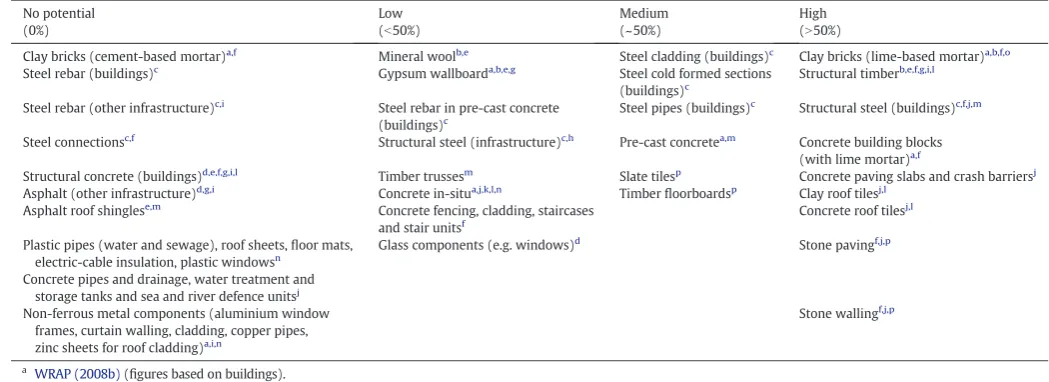
Reuse potentialis a measure of the ability of a construction compo-nent to retain its functionality after the end of its primary life. This metric is difficult to define as it depends on many factors which in turn depend on cultural, historical and organisational aspects. To explain this further, the reuse potential for bricks can be somewhere between 50% and 95% contingent on the time allowed for dismantling, the care taken and the materials used for binding (e.g. cement based mortar vs. lime based mortar) (Leal et al., 2006; WRAP, 2008b). Even though the reuse potential of construction components can vary from one study to another,Table 1aims to depict the ability of a range of com-ponents to retain their functionality over the end of their primary life, as reported in a number of studies found in the literature.
by painting; which in bridges is the most common maintenance practice (Horvath and Hendrickson, 1998), whereas plasticization can be han-dled by adopting damage-controlled-design. In such designs, structural members are maintained within an elastic region by specifying seismic energy-absorbing members (Fujita and Iwata, 2008). Standardised methods for assessing the properties of steel components are not avail-able and costly tests must often be performed in order to assess their po-tential for reuse, especially when drawings are not available (Hradil et al., 2014). Steel components that are difficult to be recovered for reuse are those used as reinforcement in concrete buildings. The only way by which these steel components can be reused is through the reuse of pre-cast concrete modules in which they are contained. How-ever, in most of the cases the inability to separate such steel from other materials make its reuse potential negligible (Cooper and Allwood, 2012).
Structural and non-structural timber components have high poten-tial for reuse when properly deconstructed (Baiden et al., 2005). The high quality and value of large timber beams and planks, railway sleepers andfloorboards offers the possibility for creating a profit at low volumes of re-sale (Hurley and Hobbs, 2005; Webster, 2007). Nevertheless, timber components can be susceptible to decay, can be difficult and dangerous to deconstruct and may require special equip-ment and extra care during cleaning, de-nailing and sizing to avoid damaging the members at the cost of time (Baiden et al., 2005; Nakajima and Russell, 2014; Tam and Tam, 2006b; Webster and Costello, 2005). Inevitably, this makes it attractive to burn timber for en-ergy recovery rather than to recover its structural function, and a signif-icant proportion of it is still being sent to landfill. Design interventions that incorporate characteristics such as holes for wiring and other ser-vices to pass through, has made timber components less sensitive to
damages during construction allowing also for an efficient deconstruc-tion. Advancements in technology such as development of the automat-ed removal of nails and screws, metal detectors for identifying metal webbed beams, and 3D laser scanning for sorting timber components into different section sizes will further improve their reclamation and reuse (Hurley and Hobbs, 2005).
[image:5.595.37.562.77.268.2]Concrete's potential for reuse is difficult to generalise due to its nu-merous uses, its highly variable composition (mix design) and strength, purity (based on the presence of pollutants found in e.g. paint and plas-ter), and form (e.g. cast-in-situ, pre-cast, or in unit materials such as blocks, tiles, stair units, etc.) (Leal et al., 2006; Nakajima and Russell, 2014). Cast-in-situ concrete is usually project specific, heavy and diffi -cult to handle and analyse (unless information about the reinforcement is available), and has no joints between members, making it much harder to dismantle from the rest of the structure without being dam-aged (Dorsthorst and Kowalczyk, 2005; Hurley and Hobbs, 2005; Sassi, 2002; Webster, 2007; Webster and Costello, 2005). Sawing the construction to enable the reuse of reinforced concrete walls is possible but at the cost of time. Pre-cast concrete elements, such as girders, col-umns, hollow-core planks and double-tees, staircases and stair units can be recovered and reused as such in new construction, but sometimes they are likely to require small alterations in their design to enable their intact deconstruction as their connections tend to be grouted or covered with cast-in-place concrete (Hradil et al., 2014; Hurley and Hobbs, 2005; Webster, 2007; Webster and Costello, 2005). Concrete unit materials such as masonry blocks, building blocks, concrete roof tiles, and paving slabs that have nofixtures,fittings or joints are easier to dismantle and reuse (Hurley and Hobbs, 2005). Concrete fencing, cladding, concrete pipes and drainage, water treatment and storage tanks and sea and river defence units, have little potential for reuse Table 1
Reuse potential rates of a range of construction components. No potential
(0%)
Low (b50%)
Medium (~50%)
High (N50%) Clay bricks (cement-based mortar)a,f
Mineral woolb,e
Steel cladding (buildings)c
Clay bricks (lime-based mortar)a,b,f,o
Steel rebar (buildings)c
Gypsum wallboarda,b,e,g
Steel cold formed sections (buildings)c
Structural timberb,e,f,g,i,l
Steel rebar (other infrastructure)c,i Steel rebar in pre-cast concrete
(buildings)c
Steel pipes (buildings)c Structural steel (buildings)c,f,j,m
Steel connectionsc,f
Structural steel (infrastructure)c,h
Pre-cast concretea,m
Concrete building blocks (with lime mortar)a,f
Structural concrete (buildings)d,e,f,g,i,l
Timber trussesm
Slate tilesp
Concrete paving slabs and crash barriersj
Asphalt (other infrastructure)d,g,i
Concrete in-situa,j,k,l,n
Timberfloorboardsp
Clay roof tilesj,l
Asphalt roof shinglese,m Concrete fencing, cladding, staircases
and stair unitsf
Concrete roof tilesj,l
Plastic pipes (water and sewage), roof sheets,floor mats, electric-cable insulation, plastic windowsn
Glass components (e.g. windows)d
Stone pavingf,j,p
Concrete pipes and drainage, water treatment and storage tanks and sea and river defence unitsj
Non-ferrous metal components (aluminium window frames, curtain walling, cladding, copper pipes, zinc sheets for roof cladding)a,i,n
Stone wallingf,j,p
a
WRAP (2008b)(figures based on buildings).
b
Thormark (2000)(figures based on a residential building).
c Cooper and Allwood (2012)(figures based on global steel production).
d BIO Intelligence Service (2011)(figures based on European data on potential use of construction materials/components). e
Gorgolewski and Ergun (2013)(figures based on an archetype wartime house).
f
Webster and Costello (2005)(based on literature).
g
Horvath (2004)(based on literature).
h
Pongiglione and Calderini (2014)(figure based on a railway station).
i
Tam and Tam 2006 (based on literature).
j Hurley and Hobbs (2005)(based on literature). k Sassi (2004)(based on literature).
l
Sassi (2002)(based on literature).
m
Earl et al. (2014) in Nakajima and Russel (based on literature).
n
Leal et al. (2006)(based on management of CDW in Germany).
o
Bohne and Waerner (2014)(based onfigures from Norway).
p
due to difficulties infinding a comparable functional installation within a reasonable timescale (Hurley and Hobbs, 2005).
Masonry has a long history of reuse because it is durable and easy (if labour intensive) to deconstruct when sourced from buildings using traditional mortars with no Portland cement. Stones used in ancient buildings are often of great value and are reclaimed for reuse in new construction projects (Webster and Costello, 2005). Similarly, the reuse potentialof bricks can also be high especially when not bound with Portland cement mortars and plaster that makes their separation and cleaning labour-intensive and costly (Mulder et al., 2007; Rahman et al., 2014; Tam and Tam, 2006a, 2006b). Using lime and soft mortars for binding bricks, or eliminating mortar completely by using interlocking bricks (Ali et al., 2012; Anand and Ramamurthy, 1999; Dorsthorst and Kowalczyk, 2005) can be an environmentally friendly and cost-effective way with a high reuse potential (Ali et al., 2012; Nakajima and Russell, 2014; Thormark, 2000; Webster and Costello, 2005; WRAP, 2008b).
3.2.2. EC reuse efficiency
TheEC reuse efficiencymetric is an important indicator for retaining the functionality of a construction component. Knowledge of how much carbon can be saved through the reuse of the assortment of construction components used in infrastructure can be vital in stimulating the imple-mentation of this practice. Detailed data on the EC of construction mate-rials can be found in a number of databases. In the UK, the most detailed open-source database is the Inventory of Carbon and Energy (version 1.6a) compiled byHammond and Jones (2008), which can provide
figures in kilograms per material use (Hammond and Jones, 2008). Al-though, this information is useful when accounting for the materials used in construction on a mass basis, it provides no information on the EC of components according their size and functionality. For exam-ple, while common bricks and clay tiles have the same reuse potential (N50%) (Table 1), bricks have an EC of 0.22 kgCO2/kg and tiles have an EC 0.59 kgCO2/kg, respectively. Assuming that both components can have ~100% efficiency in EC savings over their reuse, the reuse of 1 kg of bricks would“save”less EC, than the reuse of 1 kg of tiles. Yet bricks are one of the dominant building materials used in traditional low-rise buildings, and hence would account for much greater proportion of the total mass of material compared to tiles. Thus, promoting reuse of bricks over tiles would most likely lead to greater EC savings consider-ing the buildconsider-ing as the pseudo-functional unit (Monahan and Powell, 2011). Therefore, for assessing theEC reuse efficiencyof a construction component in addition to its mass it is also important to know its function and characteristics (dimensions, section choice, and load capacity), as well as the carbon“costs”of the treatment required for reuse (e.g. cleaning, painting, testing), transportation and construction (Dixit et al., 2010; Ibn-Mohammed et al., 2013; Petersen and Solberg, 2002; Pongiglione and Calderini, 2014; Purnell, 2012; Purnell, 2013; Thormark, 2006).
4. Interventions for promoting reuse and environmental efficiency
To unlock the reuse potential of construction components and to improve the OC and EC of existing and new structures, a number of in-terventions have been developed. These include the use of alternative construction materials, substitution of energy and carbon intensive ma-terials with less-intensive ones in the production of common mama-terials, reduction in the excess use of materials during manufacturing process-es, improvements in technological design and practices (e.g. modern earth structures) andfinally changes at the construction and demolition stage of a building and/or other inrastructure (Ayres, 1997; Dorsthorst and Kowalczyk, 2005; Giesekam et al., 2014; Sassi, 2002; Vaníček and Vaníček, 2013; Webster and Costello, 2005).
Research on alternative, low EC materials is on-going, with the use of natural materials such as straw, hemp and earth as alternatives to steel, concrete and masonry being gaining attention in the last decade
(Giesekam et al., 2014). The production of rammed earth and unfired clay bricks, prefabricated timber and straw bale panels, and the use of sheep's wool as an insulator material are examples of alternative mate-rials used in the construction of buildings of which structural or func-tional performance has been shown to be competitive with that of conventional ones (MacDougall, 2008; Giesekam et al., 2014; Sutton et al., 2011). In addition, the development of more innovative materials such as geopolymer foam concrete (Zhang et al., 2014), and hemp-based composite materials (Bevan and Woolley, 2008), which have been demonstrated to have an extended service lifetime, reduced weight, low maintenance requirements and/or low EC, is also enduring. In the coming years, it is expected that these materials will offer oppor-tunities for replacing conventional construction components in the building sector and other infrastructure projects where appropriate.
Direct replacement of structural and non-structural components with lower carbon alternatives is not always feasible due to particular functional requirements (e.g. concrete used in foundations, steel used as reinforcement, etc.) (Giesekam et al., 2014). However, the use of waste-derived supplementary cementitious materials (SCM) (e.g. silica fume,fly ash and ground granulated blast-furnace slag) in replacing ce-ment in concrete production (Elahi et al., 2010; Purnell, 2013; Purnell and Black, 2012) has gained pace over the last decades. Likewise, the use of recycled concrete and post-consumer plastic, glass and ceramic in the form of granules,fibres or powders in replacing virgin aggregates in concrete production (Siddique et al., 2008) has been shown to have a great potential. Furthermore, the replacement of fossil fuels with a high calorific value solid waste (e.g. meat and bone animal meal (MBM) and sewage sludge) in cement kilns (Aranda Usón et al., 2013; Rahman et al., 2015)); or the direct replacement of a component with a waste material such as the use of end-of-life tire pads as under sleeper pads in railway (Sol-Sánchez et al., 2014), are also under investigation.
Reducing excess use of material in the production of construction components is yet another resource-efficiency strategy with myriad benefits in the supply chain and the construction sector in particular. Currently, up to a third of the material used in the manufacturing of construction components can be excess to functional requirements (Giesekam et al., 2014). This is largely because a regular size is usually used to manufacture standard components such as I-beams. The use of a smaller set of component sizes to simplify site work, or the use of over-specified components copied across different projects as a way to deal with costly design time and regulatory requirements, all lead to excess material use (Allwood et al., 2012; Giesekam et al., 2014; Scott et al., 2009). Optimising construction components design could result in considerable material savings (e.g. for steel beam designs weight savings of at least 30% could be achieved) with ensuing savings in the energy use and associated emissions (Allwood and Cullen, 2011). Re-cently, lightweight design has gained prominence in the construction sector as a way to improve material efficiency in design and production processes. Notwithstanding its importance for the construction sector, this is not by any means a new practice as lightweight design has suc-cessful applications that date from many years back in sectors such as, the aerospace industry and automotive sector (Allwood and Cullen, 2011). A lightweight component is the one that can meet its functional requirements, retain its durability, load capacity and rigidity, while at an optimum weight. To realise the production of a lightweight component a number of challenges related to design, costs and institutional/ organisational barriers have to be overcome. The advancement of com-putational optimisation in the design process has helped to reduce the weight, cost and emissions associated with many construction compo-nents and structures, and provides scope for further improvements (Giesekam et al., 2014).
whole-life evaluation is required in order to ensure that a solution to one problem does not create yet another. As further improvements in the materials production processes become incremental owing to tech-nical and thermodynamic limits (Allwood et al., 2011, 2013; Allwood and Cullen, 2011; Allwood et al., 2012), improving components reuse and adopting design practices that minimise material use seem a more realistic and tangible solution to achieving material efficiency and improving the environmental performance of the construction sec-tor (Schultmann, 2008).
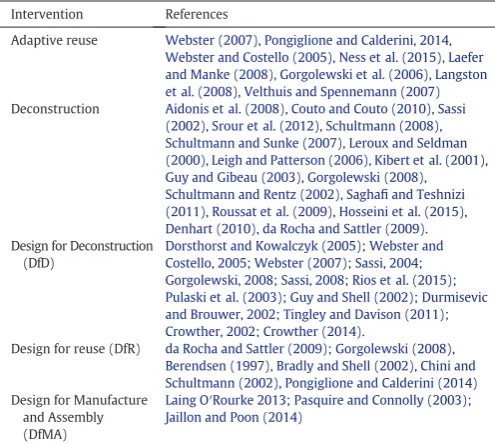
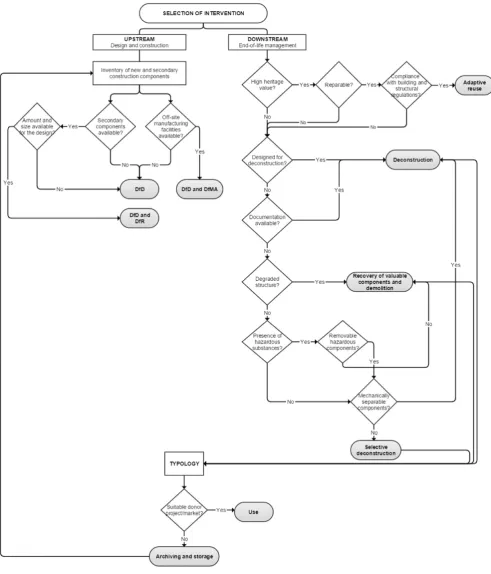
Reverse logistics, a rapidly evolving concept in the construction sector, is aiming at controlling theflow of construction components that would otherwise end up in the CDW stream, and effectively recirculating them back to the construction stage of a new project (Aidonis et al., 2008; Hosseini et al., 2014; Hosseini et al., 2015; Nunes et al., 2009; Rogers and Tibben-Lembke, 2001). This concept has been widely practiced by the automotive sector, from where successful cases can help identify potential good practice (Schultmann and Sunke, 2007). Interventions that can promote reverse logistics (i.e. ex-tending the life of construction components) in the construction sector, are those related to the construction and demolition stage of a structure. These are many and are presented inTable 2. The goal of these interven-tions is to provide the means by which an adaptable design, optimised recovery of components for reuse, and incorporation of new design methods can be ensured.
4.1. Adaptive reuse
Adaptive reuse is a method that reuses whole or part of a structure and/or building that has either been made redundant or is in a good condition, but the services and technologies within it are outdated and need to be upgraded (Bullen, 2007; Langston et al., 2008). Known also as building adaptability, this intervention constitutes a sustainable solu-tion with direct environmental, economic and social advantages that emerge from extending the useful life of a building (Bullen, 2007; Gorgolewski et al., 2006; Laefer and Manke, 2008; Langston et al., 2008; Schultmann, 2008; Webster, 2007). Key environmental benefits include the reuse of structural components without any need for reprocessing and the reduction of CDW, which can be translated into di-rect and indidi-rect resources, energy and carbon savings. In the case of old
structures, a range of architectural value materials such as precious wood, marblefloors and solid stone walls can display a greater useful life compared to their modern counterparts, while also adding value to the building as a whole (Laefer and Manke, 2008; Langston et al., 2008; Velthuis and Spennemann, 2007; Webster, 2007; Yung and Chan, 2012). Despite the time effectiveness of adaptive reuse, the costs of converting a building for the same or a new use can be either less or more than the costs of constructing a building from anew. Nonetheless, breathing new life into existing structures can help to retain their intrinsic heritage values, add character, and provide sta-tus to the surrounding area. Moreover, reuse of buildings that have been made redundant and revitalisation of derelict buildings, re-duces crime and other unsocial behaviour, and raises living stan-dards through added investment and added value (Bullen, 2007; Bullen and Love, 2010; Langston et al., 2008; Loures, 2015; Yung and Chan, 2012).
An exception to this generalization is old or damaged structures that cannot be upgraded due to reduced physical and structural performance (Gencturk et al., 2016; Langston et al., 2008). All old structures experi-ence natural decay and fatigue degradation over time (e.g. roads and bridges), but in some structures this can be extended at such a degree that it may not comply with existing regulations and standards and compliance measures for reducing OC. Additionally, damaged structures may present unsatisfactory structural performance with inadequate re-silience (Gencturk et al., 2016). In such cases, substantial structural changes are required, or additional protective measures have to be taken, which may be costly and material- and energy-intensive (Gencturk et al., 2016). Therefore, it is essential that prior to any build-ing or structure bebuild-ing considered for major refurbishment, a thorough assessment of its structural and constructional quality and compliance with building and structural regulations should be undertaken, in order to avert risks and decide on the best sustainability practice. The location of the structure is another factor that must be taken into account. Older structures are often in advantageous locations in city centres and key transport nodes making reuse (where appropriate) more viable, whereas others can be located in less populated areas where any added investment may not return the desired benefits and value (Bullen, 2007; Langston et al., 2008; Loures, 2015; Yung and Chan, 2012).
[image:7.595.43.291.519.741.2]Examples of successful implementation of adaptive reuse include the reuse of power and water plants (Loures, 2015), commercial and industrial buildings (Bullen, 2007; Gorgolewski et al., 2006; Langston et al., 2008; Yung et al., 2014), high-rise buildings, warehouses and car parks (Corus UK, 2001; Gorgolewski et al., 2006), and residential buildings (Haidar and Talib, 2015; Langston et al., 2008). More specifi -cally, in London the redevelopment of Farrington Station has retained some of the existing façade and part of the frame, contributing to over 3000 tonnes of EC savings (RICS, 2012). In the study of Gorgolewski et al. (2006)it was reported that in Ontario, demolition contractors strip the building of its interior and/or exterior layers pre-serving the structural steel layer for reuse in a new building (Gorgolewski et al., 2006). In the same study it was estimated that structural steel reuse through adaptive reuse is around 2500 tonnes per year. In another study, the adoption of an old office complex into a new residential development in Oswava resulted in 90% reuse of the steel frame which generated a cost saving of 12.5% compared to con-structing it from anew (Segio and Gorgolewski, 2006). These projects have highlighted a number of challenges related to the implementation of this reuse method, including the lack of information on the perfor-mance of reclaimed structure and components, and issues of legislative compliance,fire safety, disabled access and heritage constraints (such as a requirement for façade retention) (Gorgolewski et al., 2006; Langston et al., 2008). A positive and collaborative attitude between designers, developers, asset owners, and the general public, can help to overcome these challenges and help adaptive reuse to be realised. In addition, proper documentation of each structure including as-built drawings Table 2
Interventions in the construction and demolition sector. Intervention References
Adaptive reuse Webster (2007),Pongiglione and Calderini, 2014,
Webster and Costello (2005), Ness et al. (2015),Laefer and Manke (2008),Gorgolewski et al. (2006),Langston et al. (2008),Velthuis and Spennemann (2007)
Deconstruction Aidonis et al. (2008),Couto and Couto (2010),Sassi (2002),Srour et al. (2012),Schultmann (2008),
Schultmann and Sunke (2007), Leroux and Seldman (2000),Leigh and Patterson (2006),Kibert et al. (2001), Guy and Gibeau (2003), Gorgolewski (2008), Schultmann and Rentz (2002),Saghafiand Teshnizi (2011), Roussat et al. (2009),Hosseini et al. (2015), Denhart (2010),da Rocha and Sattler (2009). Design for Deconstruction
(DfD)
Dorsthorst and Kowalczyk (2005); Webster and Costello, 2005; Webster (2007);Sassi, 2004; Gorgolewski, 2008; Sassi, 2008;Rios et al. (2015); Pulaski et al. (2003); Guy and Shell (2002); Durmisevic and Brouwer, 2002; Tingley and Davison (2011);
Crowther, 2002;Crowther (2014).
Design for reuse (DfR) da Rocha and Sattler (2009); Gorgolewski (2008),
Berendsen (1997),Bradly and Shell (2002),Chini and Schultmann (2002),Pongiglione and Calderini (2014)
Design for Manufacture and Assembly (DfMA)
and specifications, list of codes and standards, and inventory of the quality, size and performance of components can help to ensure that adaptive reuse can be successfully performed (Gorgolewski et al., 2006).
4.2. Deconstruction
Deconstruction is the careful dismantling of a building or structure to maximise the recovery of its components for reuse (Chini and Bruening, 2003; Geyer and Jackson, 2004; Guy and Gibeau, 2003; Guy and McLendon, 2002; Nakajima and Russell, 2014; Schultmann, 2008; Webster and Costello, 2005). It is a labour intensive and environmental-ly sound process (Chini and Bruening, 2003; Leroux and Seldman, 1999; Schultmann, 2008; Webster, 2007), with several advantages over con-ventional demolition. These include reduction of CDW and associated costs for its management, enhanced environmental protection, recla-mation of construction components for reuse, recovery of materials for recycling, and preservation of the embodied energy and carbon of com-ponents and materials contingent to the reprocessing process followed (Aidonis et al., 2008; Chini and Bruening, 2003; Dorsthorst and Kowalczyk, 2005; Nakajima and Russell, 2014; Sassi 2002, 2008; Schultmann and Rentz, 2002; Schultmann and Sunke, 2007; Webster, 2007).
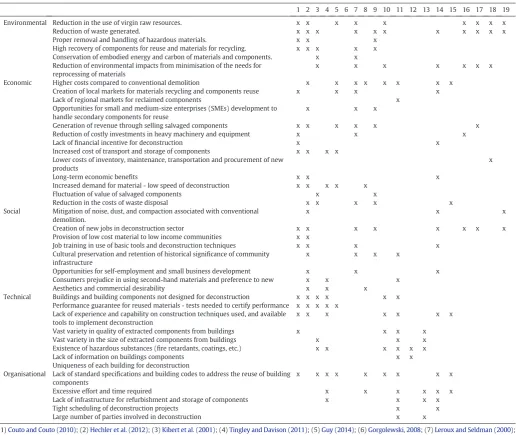
Deconstruction, however, does take longer than demolition and if this is part of constructing a new structure then it becomes a real chal-lenge from an economic and time point of view. This is because the ease and speed of deconstruction are hindered by the design and techniques used at the construction stage, whereas the long lifespan of many struc-tures makes it difficult to predict which materials will have a salvage value. For instance, the use of chemical or thermal bonding of compo-nents (e.g. in-situ cast concrete joints, adhesive bonding, welding) rath-er than dry mechanical ones (such as screws, bolts, or dowels) increases the cost and limits the feasibility of disassembly (Sassi, 2004; Webster and Costello, 2005). The high cost of labour and machinery required for dismantling as well as the time constraint often makes deconstruction's practicability questionable in current valuation con-texts (Coelho and de Brito, 2011; Couto and Couto, 2010; Crowther, 2014; Dantata et al., 2005; Dorsthorst and Kowalczyk, 2005; Durmisevic and Binnemars, 2014; Earle et al., 2014; Gorgolewski, 2008; Horvath, 2004; Kibert, 2007; Nakajima and Russell, 2014; Webster and Costello, 2005). The presence of hazardous materials puts an additional cost on deconstruction as it requires a trained work-force for their proper removal (Geyer and Jackson, 2004; Leigh and Patterson, 2006). Likewise, the lack of secondary markets for recovered components means that the unit cost of reclaimed componentsfl uctu-ates unpredictably (Geyer and Jackson, 2004). These advantages and barriers to deconstruction have been reported in many studies, and are presented in the following table (Table 3).
Examples of deconstruction can be found in many countries around the world. In the Netherlands, deconstruction has been practiced in a number of projects, and a distinct one is the disassembly of a housing block for reuse in Middelburg (Dorsthorst and Kowalczyk, 2005). In Norway, the EcoBuild group is devoted to the reduction of CDW through the promotion of deconstruction over conventional demolition, and the establishment of secondary resource markets for stimulating reuse (Nakajima and Russell, 2014). In the US, deconstruction has been suc-cessfully applied in many types of structures including closed military bases, commercial and residential buildings and churches (Horvath, 2004; Kibert, 2007). However, most of the studies are qualitative rather than quantitative, not providingfigures on the economic, environmen-tal and social values of deconstruction. Even in studies wherefigures are provided these are usually combined with those for recycled materials, or are based on national aggregatedfigures (Dorsthorst and Kowalczyk, 2005; Geyer and Jackson, 2004; Guy, 2014; Guy and Shell, 2002). None-theless, in the study ofGeyer and Jackson (2004)a comparison between deconstruction and demolition for the recovery of steel sections showed that the cost of deconstruction per tonne of steel reclaimed was £50
higher than that of demolition. However, a whole life evaluation of the two processes showed that reuse is in fact £350 cheaper than recycling (£950), and has anEC reuse efficiencyof approximately 80% compared to 49% for recycling. Likewise, in the study ofGorgolewski (2008)it was reported that the deconstruction of six one- and two-storey buildings was by 21% more expensive than demolition, but the net cost of decon-struction, taking into account reuse and revenue from sales, was 37% lower than that of demolition (Gorgolewski, 2008). This indicates that deconstruction and reuse offer higher environmental and economic benefits than demolition and recycling (Geyer and Jackson, 2004) when evaluated over the whole life of the structure. Aside from these
findings, manifestation of the environmental, economic and social and technical values of deconstruction can diverge significantly from one study to another due to factors such as economic status, existence of secondary resource markets, technical expertise on deconstruction techniques and trained workforce.
To realise the long-term benefits of deconstruction, guidance and training on deconstruction techniques is required. In addition, political strategies that foresee the provision of incentives to boost deconstruc-tion and reuse of construcdeconstruc-tion components, and the promodeconstruc-tion of legis-lation for reducing CDW, will help to realise the real potential of this method as an alternative to demolition and landfilling. Furthermore, changes in the perceived value of secondary construction components will likely put a higher demand for these in the near future. Research is critical to this end in order to provide a better understanding on the merits of deconstruction, and to explore new techniques that can en-large its potential (Leigh and Patterson, 2006; Saghafiand Teshnizi, 2011; Schultmann, 2008; Srour et al., 2012).
4.3. Design for Deconstruction (DfD)
Design for Deconstruction (DfD) is about designing to close the con-struction components loops. The main principle of this intervention is to design new structures in such a way as to allow the economic recovery of structural components and their associated value (Crowther, 2002, 2009, 2014; Durmisevic and Yeang, 2009; Gorgolewski, 2008; Guy and McLendon, 2002; Guy and Shell, 2002). Through this intervention the life-cycle stages of a structure (i.e. planning, design, construction, operation, maintenance and disposal) are optimised to maximise the recovery of valuable components for reuse, and make new structures adaptable, which is why it is also referred to as Design for Adaptability and Deconstruction (DfAD) (Dorsthorst and Kowalczyk, 2005; Gorgolewski, 2008; Guy and Shell, 2002; Webster, 2007). Making struc-tures that are easier to adapt allows a better function and configuration over time and extends the lifetime of the structure, providing economic and environmental benefits. Additionally, in such structures it is easier to locate, change and/or maintain utilities (e.g. telecom, electrical, and mechanical systems) reducing significantly the speed and cost of changes.
potential of this intervention due to its high costs compared to conven-tional practices (Crowther, 2001; Gorgolewski, 2008; Sassi, 2008).
DfD cannot be standardised as the climatic, functional, cultural, geographic and ecological aspects of each region, dictate a different ap-proach to the selection of materials and components, as well as the form and design of the building. For instance in countries where wood is the basic construction material, DfD is going to be different than the DfD practiced in the UK where steel frames are normally used. Another ex-ample is offshore structures that can differ from one geographical re-gion to another, due to the variety of functions (e.g. oil/gas) water depths, marine environments and climatic conditions (e.g. wind, hurri-canes, etc.). Yet all DfDs share some fundamental principles and strate-gies that would enable the extraction and reuse of construction components at the building's end-of-life at a cost effective and time
ef-ficient manner. These are presented inTable 4.
As DfD implementation is still in its infancy, there are not many examples in the literature, and those that exist are limited to the
[image:9.595.45.562.74.509.2]building sector. More specifically, in the Netherlands, the Delft Uni-versity of Technology has developed and constructed numerous housing projects using the DfD approach including, the MXB-5 Sys-tem, Bestcon-30 SysSys-tem, CD-20 SysSys-tem, Moducon 2000 SysSys-tem, the SMT System and the XX Office building (Dorsthorst and Kowalczyk, 2005; Gorgolewski, 2008). Building systems such as the‘open build-ing’approach described inNess et al. (2015), or the‘building materi-al level’described inDurmisevic and Brouwer (2002)are further examples of DfD, which are based on the conceptualisation of build-ings as having different‘levels’, namely urban tissue and infill. The urban tissue is the foundation of the building and has the longest lifetime (N200 years), whereas the infills are subject to changes every 10–20 years (Ness et al., 2015). This approach evolved from the work of Brand (1994) who established the concept of shearing layers of a building based on the frequency with which different components making up the various layers of the building are used and changed based on occupants' needs. Components with shorter Table 3
Benefits and constraints of deconstruction.
1 2 3 4 5 6 7 8 9 10 11 12 13 14 15 16 17 18 19 Environmental Reduction in the use of virgin raw resources. x x x x x x x x x
Reduction of waste generated. x x x x x x x x x x x Proper removal and handling of hazardous materials. x x x
High recovery of components for reuse and materials for recycling. x x x x x Conservation of embodied energy and carbon of materials and components. x x Reduction of environmental impacts from minimisation of the needs for
reprocessing of materials
x x x x x x x
Economic Higher costs compared to conventional demolition x x x x x x x x Creation of local markets for materials recycling and components reuse x x x x Lack of regional markets for reclaimed components x
Opportunities for small and medium-size enterprises (SMEs) development to handle secondary components for reuse
x x x
Generation of revenue through selling salvaged components x x x x x x Reduction of costly investments in heavy machinery and equipment x x x Lack offinancial incentive for deconstruction x x Increased cost of transport and storage of components x x x x
Lower costs of inventory, maintenance, transportation and procurement of new products
x
Long-term economic benefits x x x
Increased demand for material - low speed of deconstruction x x x x x Fluctuation of value of salvaged components x x
Reduction in the costs of waste disposal x x x x x Social Mitigation of noise, dust, and compaction associated with conventional
demolition.
x x x
Creation of new jobs in deconstruction sector x x x x x x x x Provision of low cost material to low income communities x x
Job training in use of basic tools and deconstruction techniques x x x x Cultural preservation and retention of historical significance of community
infrastructure
x x x x
Opportunities for self-employment and small business development x x x Consumers prejudice in using second-hand materials and preference to new x x x
Aesthetics and commercial desirability x x x Technical Buildings and building components not designed for deconstruction x x x x x x
Performance guarantee for reused materials - tests needed to certify performance x x x x x Lack of experience and capability on construction techniques used, and available
tools to implement deconstruction
x x x x x x x
Vast variety in quality of extracted components from buildings x x x x Vast variety in the size of extracted components from buildings x x x Existence of hazardous substances (fire retardants, coatings, etc.) x x x x x x Lack of information on buildings components x x Uniqueness of each building for deconstruction
Organisational Lack of standard specifications and building codes to address the reuse of building components
x x x x x x x x x Excessive effort and time required x x x x x x Lack of infrastructure for refurbishment and storage of components x x x x Tight scheduling of deconstruction projects x x Large number of parties involved in deconstruction x x
life expectancy should be easy to reach and modify without interfer-ing with components that are expected to last longer (Fig. 1).
4.4. Design for Reuse (DfR)
Design for Reuse (DfR) incorporates the use of reclaimed compo-nents in the design of a new structure, and may include the dismantling, cleaning, testing, storage and re-fabrication of infrastructure compo-nents required for their reuse (Berendsen, 1997; Bradly and Shell, 2002; Chini and Schultmann, 2002; Gorgolewski, 2008; Pongiglione and Calderini, 2014). Despite the benefits of reusing reclaimed compo-nents accruing from retaining their value and gaining highEC reuse effi -ciency, there is an added level of complexity associated with it that needs to be tackled. This is largely due to the size, properties and avail-ability of recovered components that strongly influence the design of a new structure. In projects where reclaimed materials and components are to be used in a similar layout to their original purpose, DfR can be successfully achieved. Even in those cases, the quality of structural com-ponents, their structural characteristics and conformity with the code standards, are critical to their successful uptake, as well as the quantity and availability of reclaimed materials available (da Rocha and Sattler,
2009; Gorgolewski, 2008; Pongiglione and Calderini, 2014). However, the latter is more easily dealt with by sourcing components from other locations and structures, or using new ones and fabricated accord-ingly to specific needs (Allwood and Cullen, 2011; Gorgolewski, 2008). The Mountain Equipment Co-Op in Ottawa, presents an excellent exam-ple of where structural components from the old building in place were used in the construction of the new retail facility. More specifically, existing foundations were reused in the same structural grid, and about 90% of the steel reclaimed from the original building was reused in the new structure, of which about 50% was open-web steel reused in the new roof structure. Rock and terrazzofloor salvaged from the original building were also reused in the new one. Another example in Canada, is the 740 Rue Bel-Air government building of which construc-tion was carried out using many of the components (e.g. steel cladding, old brick, the façade and some of the timber) reclaimed from the origi-nal structure. In particular, 20% of the reclaimed open-web steel joists were reused in the new structure, whereas the rest was sold for local reuse or recycling (Gorgolewski, 2008).
[image:10.595.38.564.80.283.2]Contrariwise, if the new layouts differ from the original ones, design alterations will be required to match the sizes and structure of the avail-able recovered components. In such cases the design and construction Table 4
Strategies for implementing Design for Deconstruction and reuse of materials.
1 2 3 4 5 6 7 8 9 10 11 12 13 14 15 1 Accessible information on: construction drawings; structural properties; inventory of construction components
and materials, including their design life and potential for reuse.
x x x x x x x x x 3 Bar coding/labelling of materials (date of production, material grade/composition, strength and handling
instructions) for ease separation, handling and storage to simplify reuse.
x x x x
4 Maximise clarity and simplicity for deconstruction at the building's end-of-life. x x x x x x 5 Adaptable layering for handling utilities and envelope components without damaging structural
components/allowing for parallel disassembly.
x x x x x x x x x 6 Use of a simple, regular layout to provide access to components/assemblies. x x x x x x x 7 Make connections visible and accessible. x x x x x x x 8 Use of mechanical connections (e.g. removable fasteners, bolts, screws) in lieu of welded joints and grouted
connections, nails and chemical connections.
x x x x x x x x x x x x x 9 Minimise number of fasteners (stronger fasteners and fewer) to make disassembly faster and easier with the use
of fewer types of tools and equipment.
x x x x x x x
10 Minimise number of components (larger components and fewer) to maximise reuse. x x x x x x x x x x x Minimise different types of materials to maximise recycling. x x x x x x x x x x x 11 Use of durable, high quality components and joints worth recovering. x x x x x x 12 Minimise the use of toxic materials (e.g. coatings, resins and adhesives) that can compromise the reuse potential
of construction components
x x x x x x x x x 13 Use of modular structural components and assemblies x x x x 14 Use of locally sourced and/or salvaged material. x x x x x
17 Design using salvaged materials, if available x x 18 Lifetime of construction components to be longer than that of structure to enable their reuse x
(1)Guy and Shell (2002); (2)Hechler et al. (2012)); (3)Sassi (2004); (4) Crowther (2000); (5)Webster and Costello, 2005; (6)Addis and Schouten (2004)(as cited inTingley and Davison (2011); (7)Webster (2007); (8)Dorsthorst and Kowalczyk (2005); (9)Schultmann (2008); (10)Crowther (2001); (11)Sassi 2008; (12)Morgan and Stevenson (2005); (13)
[image:10.595.140.446.577.728.2]Rios et al. (2015); (14)Pulaski et al. (2003); (15)Crowther (2002).
processes must remainflexible in order to maximise reuse of construc-tion components that are available, which can be a real challenge (Berendsen, 1997; Gorgolewski, 2008). A successful case study were reclaimed components were incorporated in the new design, is the Beddington zero energy development (BedZED) in Surrey, which com-prises 82 homes and 3000 m2of commercial live/work space (Lazarus, 2003). For this construction, 95% (98 tonnes) of the structural steel used in the building came from reclaimed sources, 1862 tonnes of sub-gradefill was reclaimed on-site, whereas large amounts of timber (number not available) used for the interior partitions and somefl oor-ing, were sourced from a large reclamation yard with extensive timber stock (Addis, 2006). In Italy, the construction of a new railway sta-tion using reclaimed steel from an old industrial complex presented in the study ofPongiglione and Calderini, 2014, explained the impor-tance of beingflexible during the design process. In particular, they reported that roof trusses that were under tension in the original building would be under compression in the new configuration, and this would have been critical for wind lateral loads. Therefore, a change in the structural scheme allowed for the trusses to be rested on three new central struts, leaving the trusses that were under ten-sion in the old structure to remain under tenten-sion in the new one (Pongiglione and Calderini, 2014). In the same study, it was conclud-ed that the reuse of steel sections resultconclud-ed in 30% savings in the ener-gy and carbon emissions compared to a construction using only new components.
From both reuse conditions it can be generalised that the close collaboration between designers, structural engineers, traders and constructors is critical for the successful realisation of efforts to promote reuse of construction components and the recovery of value from infrastructure (Gorgolewski, 2008; Ness et al., 2015; Pongiglione and Calderini, 2014). Coordinated actions for the sourcing, testing and incorporation of reclaimed components in new structures are necessary for successful implementation of this intervention.
4.5. Design for Manufacture and Assembly (DfMA)
An emerging novel approach to material efficiency and ability to de-construct a building at the end of its useful life is the Design for Manu-facture and Assembly (DfMA). This intervention, inspired by its use in the automotive and consumer-products sector, focuses on the off-site design and manufacture of high-quality construction components with the technical capabilities, surfacefinish, overall shape and toler-ances required for the structure in which they are intended to be used (e.g. concretefloor-slab elements, structural columns or modular plant rooms), which are then assembled into the completed building or infra-structure asset on-site (Kalyun and Wodajo, 2012; Laing O′Rourke, 2013; Boothroyd, 1994). Assembly is a crucial aspect of DfMA that has to be taken into account during manufacturing, in order to design the connections and joints of the construction products up to the required standards necessary for the structure. In the UK, Laing O′Rourke is prac-ticing DfMA for projects including offices, schools, hospitals and hotels (e.g. Tootley building in London, Dagenham Park Church of England School and The Leadenhall Building project in the City of London) (Laing O′Rourke, 2013).
A major benefit of DfMA is that it enables an easy assembly and disassembly in a time-effective and cost-wise manner, promoting deconstruction and recovery of components at the end of a structure's lifetime, hence improving the overall sustainability of products and structures (Laing O′Rourke, 2013; Pasquire and Connoly, 2003). This technique ensures that components recovered have a greater potential to be in a good physical and technical condi-tion for reuse than those recovered from tradicondi-tional sites. However, an implication of this intervention is that components will have spe-cific dimensions and moulding, creating barriers in their reuse, un-less they are used under a similar context and function as before.
Additionally, the variety of principles and guidelines that govern the manufacture and assembly of these components constitute a real barrier to the full implementation of this intervention. Once these are established and used, they can bring substantial benefits in achieving long term sustainable development in the construction sector (Lahtinen, 2011; Kalyun and Wodajo, 2012; Pasquire and Connoly, 2003).
5. Discussion
The construction sector demands more resources and produces more waste than any other sector in the world. The need to move to-wards a low carbon economy requires major transformations in the way production and consumption systems are perceived and realised. This places the construction sector in the spotlight as changes in the production, use and end-of-life management of con-struction components and structures can result in significant im-provements in the overall sustainability impact of the sector. To that end, it has been increasingly advocated that CDW contains a va-riety of valuable resources that should be returned back to the econ-omy instead of being wasted or downgraded. This concept of circularity dictates that a system should strive to retain products' value at the longest possible, preventing its wastage and promoting the creation of further value (Stahel, 2013; Hislop and Hill, 2011; European Commission, 2014). Henceforth, rethinking construction to make it more resource efficient and reduce its carbon footprint, by introducing new ways of designing, planning, constructing and deconstructing infrastructure, has a key strategic role in achieving sustainability in the long-term.
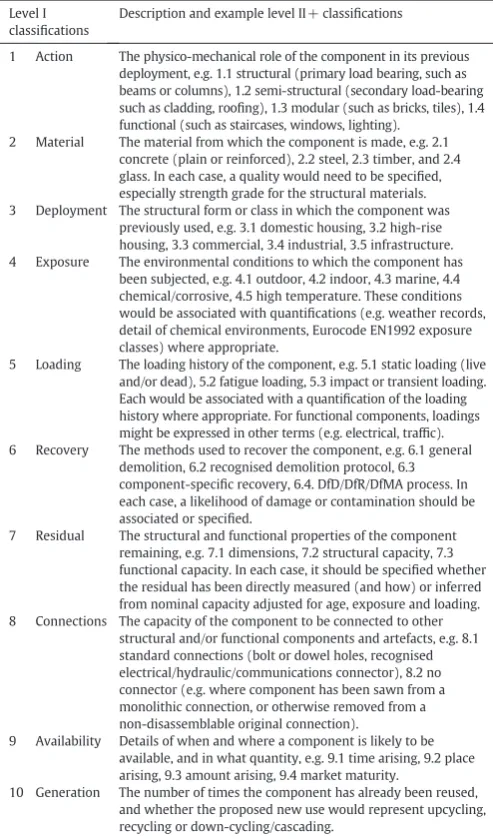
Mining existing infrastructure to reclaim the function of construc-tion components is a promising route towards achieving these objec-tives, as it can address both resource efficiency and carbon emissions reduction targets. Nevertheless, the real potential of this practice has not yet been fully realised because of the lack of proper mecha-nisms; to achieve reuse, construction components have to be reus-able. Although there is guidance on the theoretical reuse potential of construction components, on-site assessment of the reusability of construction components is currently the only way to evaluate their physical performance and ability for reuse. This time-consum-ing on-site assessment could be avoided if the reuse potential and lifetime of construction components was assessed and documented during the production and construction stage of projects that would enable their recovery and reuse at the end of a structure's life. Efforts must be made to introduce new measures that associate reuse potential indicators with construction components during manufacturing and construction, to enable their ease identification and recovery for reuse, preserving their value in the system for lon-ger. This will require a better understanding of how reuse potential values should be accounted for, which necessitates a better under-standing of the materials used in the manufacturing of construction components, their mixtures, material grade, material strength, prop-erties, etc., as well as the construction techniques used and the way components are connected with other components. To include this information, labelling of components would be a useful innovation for both adaptation (e.g. evaluation of member capacity for change of use) and resale (Webster, 2007). This can be a time-consuming and challenging task to achieve for the many of the component types used in the construction sector, but the potential value recov-ered from such practice could be so substantial that it would offset any of the time and effort‘costs’involved. Research in this area should be undertaken as current work is not coherent enough to support any suggestions on the reuse potential of construction components.