THE USAGE OF QUICK RESPONSE (QR) CODE AMONG THE SMARTPHONE’S USER
MOHAMAD AZWAN BIN OMAR ALI SAIFUDDIN
i
“I hereby acknowledge that I have read this
and in my opinion this work sufficient in terms of scope and quality for award of a Bachelor Degree in Technology Management (Hons) in High-Tech Marketing”
Signature :
Supervisor Name :
ii
USAGE OF QUICK RESPONSE CODE AMONG THE SMARTPHONE USERS
MOHAMAD AZWAN BIN OMAR ALI SAIFUDDIN
This report submitted in partial fulfillment of the requirement for the award Bachelor of Technology Management in High Technology Marketing with Honors.
Faculty of Technology Management and Technopreneurship Universiti Teknikal Malaysia Melaka
iii
“I hereby declare that the work of this research project is produced by me for quotations summaries that have been duty acknowledged”
Signature :……….
Name :……….
iv
DEDICATION
v
ACKNOWLEDGEMENT
vi ABSTRACT
vii ABSTRAK
viii
TABLE OF CONTENT
CHAPTER TOPIC PAGE
DEDICATION iv
ACKNOWLEDGEMENT v
ABSTRACT vi
ABSTRAK vii
CONTENT viii
LIST OF TABLE xi
LIST OF FIGURE xiv
LIST OF ABBREVIATION xvi
CHAPTER 1 INTRODUCTION
1.1. Introduction 1
1.2. Background of Study 2
1.3. Problem Statement 3
1.4. Research Objective 3
1.5. Research Hypothesis 4
1.6. Scope, Limitation and Key Assumption 5
1.7. Importance of Project 6
ix
CHAPTER II LITERATURE REVIEW
2.1. Introduction 8
2.2. Background 9
2.3. Summary 13
CHAPTER III RESEARCH METHOD
3.1. Introduction 14
3.2. Research Design 15
3.3. Theoretical Framework 16 3.4. Quantitative Method 17
3.5. Primary and Secondary Data Resource 17 3.6. Method of Primary Data Collection 18
3.7. Time Horizon 21
3.8. Method of Data Analysis 22
3.9 Validity, Reliability and Generalability 22
3.11. Summary 24
CHAPTER IV RESULT AND ANALYSIS
4.1. Introduction 25
4.1. Demographic Profile 26
4.1.1. Gender 27
4.1.2. Races 28
4.1.3. Age 29
4.1.4. Level of Education 30
4.1.5. Occupation 31
4.2. Usage of Quick Response Code 32
4.3. Level of Knowledge 33
x
4.3.2. QR Code familiarity 34
4.3.3. QR Code Installation 30
4.4. Awareness of QR Code 31
4.4.1. QR Code Awareness 31
4.4.2. Scanned QR Code 32
4.4.3. Interested toward QR Code 32
4.5. Purpose of Using 33
4.5.1. Purpose of use 33
4.5.2. Perceive Benefits 34
4.6. Validity and Reliability Test 34
4.6.1. Validity Test 34
4.6.1.1. Usage of QR Code 35
4.6.1.2. Level of Knowledge 35
4.6.1.3. Awareness of QR Code 36
4.6.1.4. Purpose of Use of QR Code 38
4.6.2. Reliability Test 40
4.7. Multiple Regression Analysis (MRA) 45 4.8. Test Hypothesis with Simple linear regression 47
4.8.1. Hypothesis 1 48
4.8.2. Hypothesis 2 49
4.8.3. Hypothesis 3 51
4.9. Cross Tabulation of Demographic with
independent variable 53
CHAPTER V DISCUSSION
5.0. Introduction 57
5.1. Main Finding 58
5.2. Research Objective 58
5.2.1. Research Objective 1 59
xi
5.2.3. Research Objective 3 64
CHAPTER V1 CONCLUSION & RECOMMENDATION
6.1. Conclusion 65
6.2. Recommendation 66
REFERENCE 67
xii
LIST OF TABLE
TABLE TITLE PAGE
Table 1 Demographic Profile of Sample 20
Table 2 Usage of QR Code 32
Table 3 Familiarity Level of QR Code 33
Table 4 QR Code Installation 35
Table 5 QR Code awareness statistic 36
Table 6 QR Code Scanned Cross Tabulation Data 37
Table 7 Interest toward QR Code 37
Table 8 QR Code Usage 38
Table 9 Benefits of QR Code 39
Table 10 Correlation of Dependent Variable Z 41
xiii
Table 12 Correlation of Independent Variable Y2 42
Table 13 Correlation of Independent Variable Y3 43
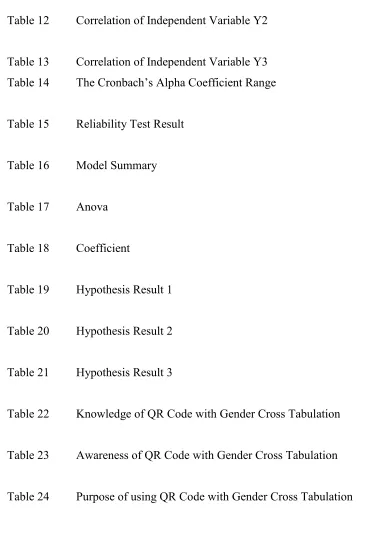
Table 14 The Cronbach’s Alpha Coefficient Range 44
Table 15 Reliability Test Result 44
Table 16 Model Summary 45
Table 17 Anova 45
Table 18 Coefficient 46
Table 19 Hypothesis Result 1 48
Table 20 Hypothesis Result 2 49
Table 21 Hypothesis Result 3 51
Table 22 Knowledge of QR Code with Gender Cross Tabulation 53
Table 23 Awareness of QR Code with Gender Cross Tabulation 54
xiv
LIST OF FIGURE
FIGURE TITLE PAGE
Figure 1 Theoretical Framework 16
Figure 2 Respondents by Gender 27
Figure 3 Respondents by Race 28
Figure 4 Respondents Age Range 29
Figure 5 Respondents Level of Education 30
Figure 6 Respondents Occupation 31
xv
LIST OF ABBREVIATION
ABBREVIATION MEANING
QR CODE Quick Response Code
URL Uniform Resource Locater
DOK Depth of Knowledge
U.S United State
RIM Research In Motion
HTML Hypertext Markup Language
UTeM Universiti Teknikal Malaysia Melaka
SPSS 21 Statistical Package for Social Science version 21.0
1 CHAPTER I
INTRODUCTION
This chapter will explain about the introduction and background of study, problem statement, and list of objectives. This chapter is also brief about scope, limitation and key assumptions of the study. Last but not least, the importance of this study and summary also cover in this chapter.
1.1. Introduction.
2
information. In this millennium era, Facebook and Twitter came to rule the online world with hundreds of millions of subscribers logged into their accounts almost every day. However, in Malaysia the used of Quick Response codes are increasing but with slow pace. This is due to the low expose about the Quick Response code as a marketing medium.
1.2. Background of Study
A QR Code is a two-dimensional bar code which presents as a series of squares within squares. Capturing information horizontally and vertically, which allows more information to be captured and conveyed. Furthermore, QR codes can be scanned by the cameras built into every Smartphone that has been used today and also QR scanner. QR Codes are invented to assist manufacturer in logistic, warehouse and tracking system. By using QR codes, consumer can scan the QR Code on a product and the image will redirect a smart phone’s Web browser to the destination of the code producer’s choice— a Web page with a discount coupon, a video or access to in-depth information where Smartphone’s user can connect with the marketing campaign or event.
3
1.3. Statement of the Problem
This study still focuses on the usage of QR Code among the Smartphone’s users. Since the usage of QR Codes is new, the study conducted to find the lack of
understanding or familiarity of QR codes among the Smartphone’s users. There are few research questions:
i. What is the relationship between knowledge, awareness and purpose of QR Code with the usage of QR Code among the Smartphone’s users?
i. Does the demographic profile have influence the usage of QR Code?
ii. What is the factor that contributes more to the usage of QR Code among the Smartphone’s users?
1.4. Research Objectives
The main objectives of the project are as follows:
ii. To identify the relationship between knowledge of QR Code with the usage of QR Code among the Smartphone’s users.
iii. To determine the influence of demographic profile toward the usage of QR Code among the Smartphone’s users.
4
1.5. Research Hypothesis
According to Sekaran (2003), hypotheses can be defined as a logically conjectured relationship between two or more variables expressed in the form of a testable statement. The research hypothesis for the study is:
a) Hypothesis 1
H0: There is no significant relationship between levels of QR code
knowledge with the usage of QR Code among the Smartphone’s users.
H1: There is significant relationship between levels of QR code
knowledge with the usage of QR Code among the Smartphone’s users.
b) Hypothesis 2
H0: There is no significant relationship between the awareness of
QR code with the usage of QR Code among the Smartphone’s users.
H1: There is significant relationship between the awareness of QR
code with the usage of QR Code among the Smartphone’s users.
c) Hypothesis 3
H0: There is no significant relationship between purposes of using
5
H1: There is significant relationship between purposes of using
QR code with the usage of QR Code among the Smartphone’s users
1.6. Scope, Limitation and Key Assumptions of the study
1.6.1. Scope
The research and report cover the usage of QR code of Smartphone’s user for interactive communication medium. This research will focus on:
i. What usage and benefits of QR code for marketing medium among the Smartphone’s users.
ii. The scope also includes the awareness of Smartphone’s user about QR code and its relationship crucially.
iii. The study determine what is relationship of the purpose of the Smartphone’s user use the QR codes.
1.6.2. Limitation
6
due to large number of Smartphone’s user, there will be selected respondent regarding the usage of QR code. The selected respondent will be determining by the rate of using quick-response code in their purchasing behavior. Since the Quick-response code application is new in marketing especially in Malaysia, it is hard to find Smartphone’s user that frequently used QR code. Lastly, the limitation is to acquire accurate usage knowledge of result is hard due to the application of QR code is not very common among Smartphone’s users in Malaysia.
1.6.3. Key Assumption of the study
There is significant positive relationship between the entire independents variable with the dependent variable. Furthermore, the entire hypothesis also accepted.
1.7. Importance of the study
7
1.8. Summary
8 CHAPTER II