NURSES’ PERCEPTIONS OF THEIR PREPARATION
FOR BEGINNING PROFESSIONAL PRACTICE: AN
EVALUATIVE STUDY
A Dissertation submitted by
Roslyn C Reilly, RN, RM, MN, B Ed St, Dip NEd, FRCNA
In partial fulfilment of the award of Doctor of Education
Faculty of Education, University of Southern Queensland
Abstract
It is now twenty years since the Federal Government mandated the transfer of nurse education to the tertiary sector. The conflict surrounding the issue of educational preparation for entry to professional nursing practice remains, supported by the oft-repeated comment that “graduates should hit the ground running”. Student nurses/graduates are key stakeholders in nursing education and their perceptions are a valuable source of information as they experience the Bachelor of Nursing Program. To contribute to the body of knowledge, this evaluative study focused on the perceptions of students/graduates in relation to their preparation for beginning professional practice.
Illuminative evaluation, supported by a qualitative interpretive approach, constructivist learning theory and a quantitative approach, was used to help understand and describe how students/graduates constructed ideas about their preparation for beginning professional practice. Data were collected from the participants in two stages, before and after the completion of the Bachelor of Nursing program, using questionnaires, open-ended questions, documentary information, reflective writings and semi-structured interviews. The participants for both Stages were drawn from the same student cohort.
CERTIFICATION OF DISSERTATION
I certiff that the ideas, experimental work, results, analyses, and eonclusions reported in this dissertation are entirely my own effort, except where otherwise acknowledged. I also certiff that the work is original and has not been previously submitted for any other award, except where otherwise acknowledged.
lb'a'oa
Date
t b - o E - * o b
ENDORSEMENT
Date
t ,l'
/b" z
-oo
Signature of CandidateACKNOWLEDGEMENTS
The professional and personal support which I received during the journey of writing my dissertation was immeasurable. I am extremely grateful for that support and thank all involved very much.
To Doctor Dorothy Andrews, my supervisor, and Associate Professor Trudy Yuginovich, my associate supervisor, my heartfelt thanks for your patience, guidance and encouragement and just being there when I needed you. My sincere thanks are also extended to my colleagues in the Department of Nursing.
To the students who willingly participated in this study and unhesitatingly shared their perceptions of their preparation for beginning practice with me. Their time, contribution and honesty are appreciated.
To Bernie, Marlene, Phil and Fiona whose administrative and IT skills saved me on several occasions.
To my loving husband, Frank who walked this journey with me. In many ways he has been the wind beneath my wings. His support and encouragement will always be treasured. He endured many weekends and evenings entertaining himself and preparing meals while I was closeted in my study, writing.
To my wonderful Mother, Millicent Ballin, who has inspired me over the years to pursue further studies, to believe anything is possible and for being a good listener.
To my family and friends who were there when I needed them and willingly gave me support and encouragement.
TABLE OF CONTENTS
Abstract ……….……….. i
Certification of Dissertation ….……… iii
Acknowledgements …….……… iv
Table of Contents ……….……….. v
Chapter 1: Introduction ……… 1
1.1 Introduction
1.2 Problem Statement
1.3 Background
1.3.1 Key Stakeholders 1.3.2 Entry Level
1.3 3 Bachelor of Nursing Program
1.3.4 Changes to the Bachelor of Nursing Program 1.3.5 Definition of Terms
1.3.6 Target Population
1.4 Aims of Research
1.5 Research Question
1.6 Research Method
1.7 Justification for the Research
1.8 Outline of the Chapters
1.9 Summary
1
2
2 3 3 5 7 7 8
9
9
9
10
11
Chapter 2: Literature review 14
2.1 Introduction
2.1.1 Outline of literature review
2.2 Reviews and Reports
2.2.1 Historical Background 2.2.2 Twenty-First Century Nurse 2.2.3 Educating Nurse Professionals 2.2.4 Relevancy of Content
2.2.5 Summary
2.3 Illuminative Evaluation
2.3.1 The Instructional System/curriculum 2.3.2 The Learning Milieu/context
2.4 Philosophy of Constructivism 2.4.1 Summary
2.5 Pedagogy for Adults
2.6 Novice to Expert
2.7 Student and Beginning Practitioner 2.7 1 Perceptions
2.7.2 Situatedness of the Student 2.7.3 Reality Shock
2.7.4 Self-efficacy
2.8 Theory-practice Dilemma
2.9 Reflection
2.10 Summary
Chapter 3: Method
3.1 Introduction
3.2 Conceptual Framework
3.2.1 Qualitative Interpretive Approach 3.2.2 Illuminative Evaluation
3.2.3 Constructivist Learning Theory
3.3 Research Question
3.4 Study Participants 3.4.1 Sample Size
3.5 Ethics Considerations
3.6 Data Collection 3.6.1 Stage One
3.6.1.1 The Questionnaire
3.6.1.2 Students’ Comments and Reflections 3.6.2 Stage Two
3.6.2.1 Graduate Survey
3.6.2.2 Semi-structured Interviews
3.7 Data Analysis
3.7.1 Methodological Triangulation 3.7.2 Trustworthiness
3.7.2.1 Credibility 3.7.2.2 Dependability 3.7.2.3 Confirmability
3.8 Analytic Framework 3.8.1 Quantitative Data 3.8.2 Qualitative Data
3.9 Summary
Chapter 4: Perceptions of the Student
4.1 Introduction
4.2 Profile of Participants
4.3 Conceptual Framework
4.4 Context
4.5 Presentation of Data 4.5.1 Questionnaire
4.6 Thematic Framework
4.6.1 Acquiring a strong knowledge base 4.6.1.1 Program objectives
4.6.1.2 Relevancy of Content
4.6.1.3 Theory/practice Connection
4.6.1 4 Clinical Laboratories 4.6.1.5 Clinical Experience
4.6.2 Constructing a Professional Identity 4.6.2.1 Mixed Feelings
4.6.2.2 Confidence 4.6.2.3 Communication 4.6.2.4 Life Experience 4.6.3 Image of a Professional
4.6.3.1 Preceptor
4.6.3.2 Registered Nurse 4.6.3.3 Reflective Practice 4.6.3.4 Time Management 4.6.4 Reflective Thoughts
4.6.4 1 Reflections
4.6.4.2 Readiness for Practice 4.6.4.3 Personal Objectives 4.6.4.4 Critical Incidents 4.6.4.5 Image of the Program 4.6.4.6 Suggested Improvements
4.7 Concluding Thoughts
Chapter 5: Perceptions of the Beginning Practitioner
5.1 Introduction
5.2 Thematic Framework
5.2.1 Acquiring a Strong Knowledge Base 5.2.1.1 Program Objectives
5.2.1.2 Relevancy of Content 5.2.1.3 Learning
5.2.1.4 Theory/practice 5.2.1.5 Laboratory Sessions 5.2.1.6 Clinical Experience 5.2.1.7 Teaching Strategies 5.2.1.8 Summary
5 2.2 Constructing a Professional Identity
5.2.2.1 Expressions of Mixed Feelings
5.2.2.2 Accountability
5.2.2.3 Expectations
5.2.2.4 Validation of Feelings of Other Graduates
5.2.2.5 Reality Shock
5.2.2.6 Image of Self
5.2.3 Developing a Professional Image
5.2 3.1 Registered Nurse
5.2.3.2 Preceptor
5.2.3.3 Enrolled Nurse
5.2.3.4 Nurse Academics
5.2.3.5 Nursing
5.2.3.6 Time Management
5.2.3.7 Ward Management 5.2.3.8 Task Completion 5.2.4 Reflective Thoughts
5.2.4.1 Readiness for Practice
5.2.4.2 Suggestions for Improvement
5.3 Concluding Thoughts
Chapter 6: Preparation for Practice
6.1 Introduction
6.2 Image of the Nurse for the Twenty-first Century
6.3 Framework
6.4 Context
6.4.1 Complexity and Diversity of the Workplace
6.5 Acquiring a Strong Knowledge Base 6.5.1 Program Objectives
6.5.2 Relevancy of Content 6.5.3 Theory-practice Connection
6.5.3.1 Pedagogy 6.5.4 Summary
6.6 Image of a Professional 6.6.1 Registered Nurses 6.6.2 Preceptors
6.6.3 Nurse Academics 6.6.4 Summary
6.7 Constructing a Professional Identity 6.7.1 Mixed Feelings
6.7.2 Reality Shock 6.7.3 Image of Self 6.7.4 Summary
6.8 Reflective Thoughts
6.9 Preparation for Beginning Professional Practice
6.10 Concluding Thoughts
Chapter 7: Moving Forward
7.1 Introduction
7.2 Executive Summary
7.3 Discussion of Recommendations
7.3.1 Build Strong Strategic Partnerships Between
Universities and Health Care Facilities 7.3.2 Build Strong Strategic Partnerships 7.3.3 Guided Practice
7.3.4 Pedagogy for Adults 7.3.5 Curriculum Development 7.3.6 Reflective Practice
7.3.7 Summary
7.4 Limitations
7.5 Further Research
7.6 A Personal Reflection
160
160
160
163
163 164 165 168 169 171 172
172
173
174
References 176
List of Figures
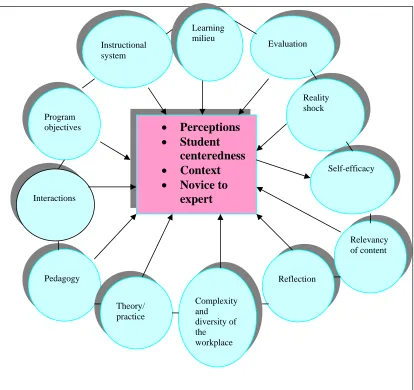
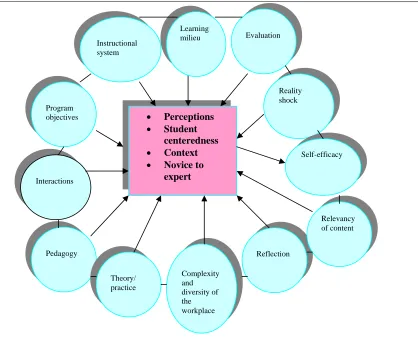
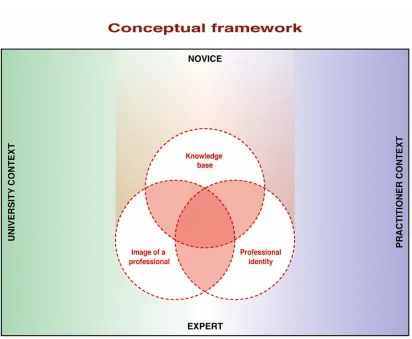
Figure 3.1 Conceptual Framework
Figure 4.1 Conceptual Framework
Figure 6.1 Framework for Conceptual Understanding
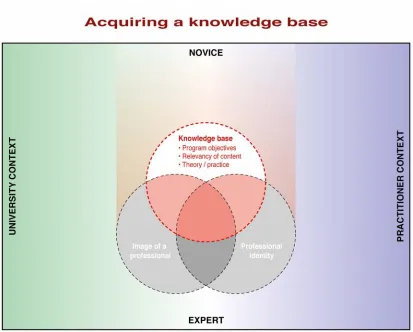
Figure 6.1.1 Knowledge Base
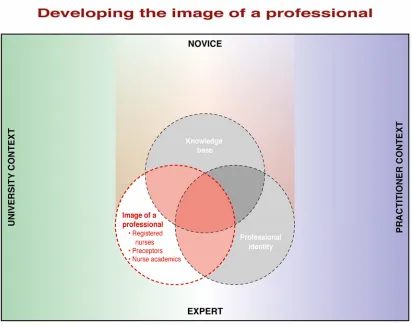
Figure 6.1.2 Image of a Professional
Figure 6.1.3 Professional Identify
Figure 6.2 Professional Practice
49
70
124
129
139
146
List of Tables
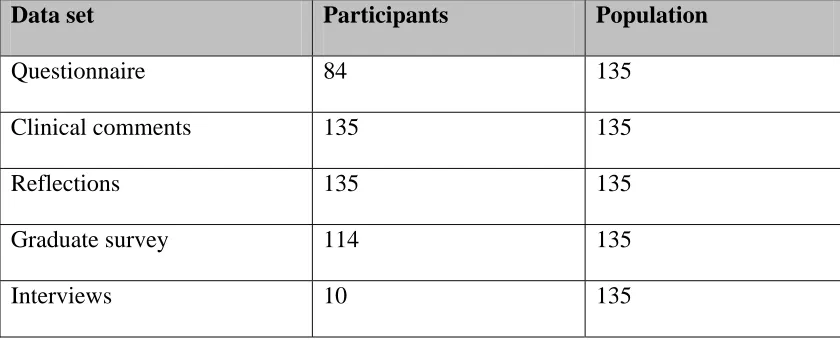
Table 3.4 Data Sets Sample Size
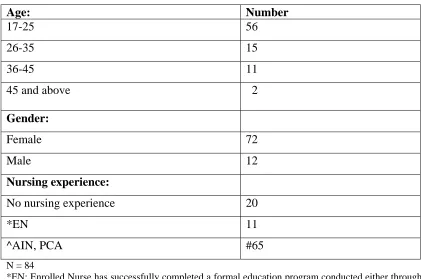
Table 4.1 Profile of Participants
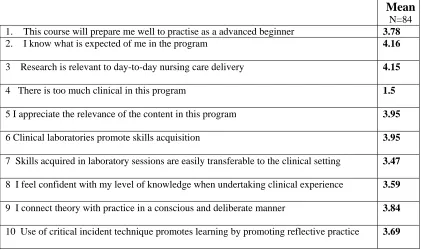
Table 4.2 Questions and Means
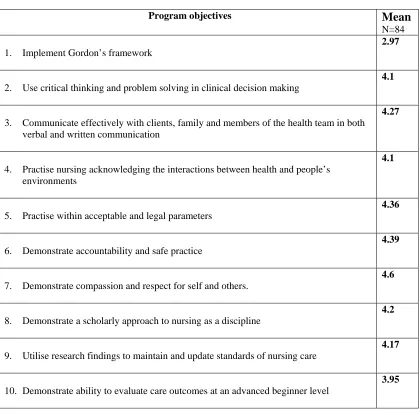
Table 4.3 Students Levels of Agreement about their Capacity to meet Course Objectives by the Completion of their Course
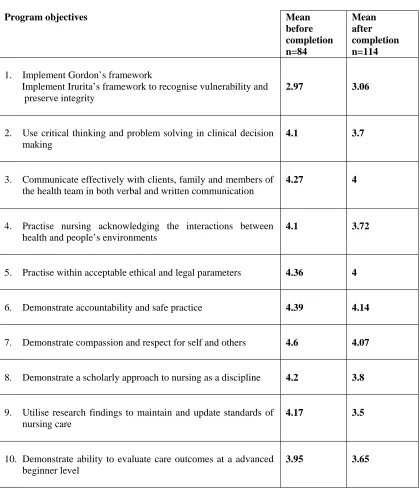
Table 5.1 Comparison of Program Objectives from State 1 and Stage 2
54
69
71
73
Nurses’ perceptions of their preparation for
beginning professional practice: an evaluative study
Chapter 1: Introduction
Thinking about the day just past is part of being human. Thinking about the day that is about to dawn is also part of our destiny (Lumby, 1991, p. 466).
1.1 Introduction
This study focuses on the students’/graduates’ preparation for beginning professional practice. Anecdotal evidence suggests that new graduates “are not
work-ready”, and “should hit the ground running”. In response to these comments I embarked on this evaluative study to explore how the students and new graduates perceived their preparation. The notion of evaluating learning from the perspective of the nursing student/graduate as the consumer and eventually the product of the educational system is entirely consistent with the trend of accountability in publicly funded systems (Cowman, 1996).
1.2 Problem statement
There is generally insufficient research on educational preparation for professional practice by which to guide the development and conduct of nursing programs (The Joanna Briggs Institute, 2001, p. 17). One of the recommendations from the Integrated Systematic Review commissioned by the Queensland Nursing Council in 2001 was that a national strategy for research that investigates all aspects of educational preparation for nursing practice should be developed (The Joanna Briggs Institute, 2001, p. 19). Professional educational programs recognise that the goal is preparing competent graduates who will successfully make the transition to the world of professional practice (Williams & Walker, 2003).
1.3 Background
with the recognition that “things” could possibly be done better in relation to the preparation for beginning professional nursing practice.
1.3.1 Key Stakeholders
The key stakeholders in relation to nurses’ preparation for beginning professional practice are identified as the nursing profession, the community, the university, and students. As key stakeholders, it is appropriate to include students/new graduates in program evaluations with the logical extension of including student evaluation as a performance indicator of quality education (Cowman, 1996). It is the students who experience the program as designed by the academic staff and enacted in both the classroom and in the practice setting. Therefore, the researcher believes that the students are in the best position to describe how they interpret and experience the program, both from the viewpoint as a student and as a new graduate entering the profession.
The researcher believes that nurse academics in collaboration with key stakeholders should strive for an education system that will influence and lead the profession into the twenty-first century.
1.3.2 Entry Level
the statutory body concerned with standards in relation to nurse education in this state.
Universities are charged with the responsibility to ensure that students have satisfied the requirements to meet the professional standards demanded through a process of rigorous academic assessment and are “fit for award” (Platt, 2002). The Bachelor of Nursing program at this university is subjected to rigorous accreditation processes both through university program review committees and the Queensland Nursing Council’s course accreditation process.
Under existing legislation in Australia, all nurses who wish to gain a licence to practise require pre-registration education based on a curriculum accredited by the appropriate regulatory authority. Standards and criteria to be met for registration have been established by each state and territory registering authority. Although a national registering authority has not been established there is mutual recognition between states and territories. Australian Nursing Council has developed the ANC National Competency Standards for the Registered Nurse and the Enrolled Nurse, with the expectation that the core standards will be demonstrated by all nurses for registration and enrolment (Australian Nursing Council, 2002). Validation of the achievement of the ANC competencies by the education provider is required prior to the initial registration.
Under the Nursing Act 1992 (Queensland Government, 1997) a registered nurse is defined as a person with the appropriate educational preparation, who is registered and licensed to practise nursing. The Nursing Act 1992, 54(2) states that for a person to be eligible for registration they must satisfy the criteria:
undertaking any additional practice, required by council) within such period before the making of the application for registration as the council determines (p. 32).
Cowman (1996), Perry (2001) and Ansari (2002) propose that one way to measure the outcomes of the educational program is through the implementation of an evaluation process. While standards, as determined by the regulatory body, must be met by the graduate before gaining registration, there have not been many studies focusing on the perceptions of the student/graduate on their preparation for beginning practice (The Joanna Briggs Institute, 2001, p. 17). The implication here is that even though students meet the regulatory requirements, comments from the field would indicate that these requirements are inadequate in defining preparation.
1.3 3 Bachelor of Nursing Program
The Bachelor of Nursing program on which this study is based comprises both a theoretical and practical component undertaken both in the university and practice setting. One of the aims of the curriculum of this Bachelor of Nursing Program is to prepare graduates to be independent thinkers and lifelong learners. A conceptual framework provides the basis of the curriculum with the objectives of the program (Appendix 1) guiding the outcomes. The underlying concepts of the curriculum include critical thinking and problem-solving, communication and interpersonal relationships, the practice of nursing incorporating accountability and safe practice, law and ethics and research. These will contribute to skill acquisition and competence.
Scholarship and Australia, Asia and Pacific, was to provide a balanced and broader education for the student to contribute to achieving the aim of preparing independent thinkers and lifelong learners. These courses were taught by Faculty in different departments resulting in difficulties for the students because the content “rarely builds on or connects to one another” (Feiman-Nemser, 2001).
The courses covered by nurse academics included psychosocial nursing, law, ethics, research, medical-surgical nursing, mental health, public health, indigenous health, gerontics, child, youth and family, and cultural issues. The curriculum has a strong science base, including courses such as anatomy and physiology, microbiology, biophysical science foundations, and pharmacology.
1.3.4 Changes to the Bachelor of Nursing Program
The Bachelor of Nursing Program at this regional university underwent a curriculum review during the three years in which the participants for this study were undertaking the Program. One significant change to the program was the conceptual model on which the curriculum is based, changing from Gordon’s (1987) model of Functional Patterns of Behaviour to Irurita’s (1999) model of Vulnerability and Integrity.
In addition to the change of the conceptual model the university adopted a different software management system with a resultant change to terminology, two of which are relevant to this study:
1. course to program, Bachelor of Nursing Program from Bachelor of Nursing course
2. unit to course. The structure remained the same, with a course being defined as a program of study, defined by a course specification, for which students may be awarded a grade.
1.3.5 Definition of Terms
For the purposes of this study the following definitions are used:
• Theory - the content of the curriculum which underpins clinical decision making and skills predominately delivered by lectures, tutorial and laboratory sessions in the classroom.
• Clinical experience - the component of the curriculum undertaken by the
students in a practice setting.
• Practice setting - any health care setting in which nursing care is performed
• Preceptors - Registered nurses who accept the responsibility to supervise, guide nursing students and evaluate their clinical performances while undertaking clinical experience.
• Registered nurses - nurses who are in the practice setting, but are not as
closely involved in the same role as the preceptor.
• Advanced beginners/beginning practitioners/new graduates – These three
terms are used synonymously in this study. They are defined as graduates who have completed a Bachelor of Nursing three-year program and have not completed more than 12 months as a registered nurse. The term advanced beginner is used in this study to indicate that the graduate is not a novice but is at a more advanced level but not yet reached the competent stage as defined by Benner (1984).
1.3.6 Target Population
One hundred and thirty-five students/graduates were eligible for inclusion in this study. Except for the interviews, each student from the 2002 cohort had the opportunity to participate in all the data sets. The interviews were conducted 11 months after the completion of the program. Invitations to participate in the interviews were issued to a small number of eligible new graduates to collect data as a reflection of the situated experience in diversified settings. Though desirable, it is rarely possible to interview every participant (Parlett & Hamilton, 1977).
1.4 Aims of research
The aim of this research is to determine students’/graduates’ perceptions in relation to their preparation for beginning professional practice. It is anticipated that the analysis of the findings from this evaluative study will illuminate issues that may suggest a way forward to ensure that new graduates are adequately prepared to meet the demands and complexities of nursing practice in the twenty-first century.
It is anticipated that key stakeholders such as the registering authority, the nursing profession, employers of nurses and the community at large, who are equally concerned with the delivery of safe and effective nursing care will become aware of the findings of this study. Understanding the perceptions that these beginning practitioners describe in relation to their preparation for practice will contribute to understanding of the expectations of the beginning practitioner.
1.5 Research Question
What are the perceptions of nursing students/graduates from a regional university of their preparation for beginning professional practice?
1.6 Research Method
Constructivist learning theory sees knowledge as constructed by the learner (Brooks & Brooks, 1993; Hein, 1991; Pereira, 1996). Methodological triangulation allowed for analysis of data from multiple sources and was used to aid rigour, depth and richness, enabling the researcher to look for patterns of similarities and differences.
Data collected were predominately qualitative, with the data sets being open-ended questions, reflective writings, documentary information and semi-structured interviews. The qualitative data were supported by quantitative data obtained from responses to closed questions, which included the evaluation of the program objectives.
Data analysis was based on the analytic tool “Framework” (Ritchie & Spencer, 1994 as cited in Bryman & Burgess, 1994), which consists of five stages: familarisation, indexing, charting, mapping and interpretation. This process included the identification of themes by becoming familiar with the data, synthesising, comparing and contrasting participants’ comments, and searching for connections and explanations for the data sets as a whole.
1.7 Justification for the Research
This evaluative study recognises the value of student evaluations and the findings provide a rich source of data which has the potential to provide strategic program direction to better prepare students for professional practice. Student evaluations are important but have not been utilised to their full advantage.
The data from this study will inform and create an awareness of students’/graduates’ perceptions in relation to their overall preparation for beginning professional practice. Given the rapid changes, such as changing roles, skills and knowledge base, which are occurring within the health care system, the nursing profession must respond to the challenge ensuring that the preparation for practice is supported by an appropriate education.
1.8 Outline of the Chapters
Chapter 2 examines the literature in relation to the environment of nursing in the latter part of the twentieth century and into the twenty-first century. The student/beginning practitioner entering the field of nursing is linked to Benner’s (1984) model of proficiency from novice to expert. The relationship of the instructional system and learning milieu to illuminative evaluation, constructivist learning theory, adult learning, theory/practice debate and reflective practice are included.
Chapter 3 presents a conceptual framework, and outlines the research method of illuminative evaluation. Exploration of the concepts uses a qualitative interpretive approach to support illuminative evaluation. The process of data collection, identifying the profile of the participants, sample size and the two stages of data collection is outlined. Data were analysed using the qualitative interpretivist research paradigm, supported by methodological triangulation and the analytical Framework. Characteristics of methodological triangulation such as trustworthiness, credibility, dependability, conformability are included.
Chapter 4 presents the findings from Stage One: the experience of entering
questions and document analysis collected before the students completed the Bachelor of Nursing program. Emergent themes and sub themes are identified.
Chapter 5 follows the same pattern as Chapter 4 by presenting the findings from Stage Two: experience of entering the field as a beginning practitioner. This chapter focuses on data from the graduate survey and semi-structured interviews conducted after completion of the Bachelor of Nursing program. These findings focus on the same themes as identified in Chapter 4 with the identification of sub themes based on the data collected in Stage two.
Chapter 6 brings together Chapters 4 and 5 with the data as a whole in relation to the experiences of entering the field as a student and entering the field as a beginning practitioner. A conceptual understanding of the preparation for practice is presented. The context for learning, and complexity and diversity of the workplace provide the backdrop.
Chapter 7 presents an executive summary identifying recommendations. A discussion of the recommendations, limitations of the study, and proposal for further research are presented. As this study has been a personal journey for me as a nurse academic I have included a personal reflection.
1.9 Summary
beginning practice meets the rigorous criteria as determined by each of the accrediting bodies, and that the graduates are both fit for award and fit for practice.
The relevancy and legitimacy of students’ views in relation to the evaluation of programs has been acknowledged, but these views have not been used on a wide scale in nurse education. Students’ perceptions are a valuable resource on which to base an evaluation. It will also determine if the graduates perceive that the program not only meets its identified aim of preparing them for beginning professional practice in the health system, but that they have been prepared for beginning professional practice.
Chapter 2: Literature review
2.1 Introduction
Despite the period of time nurse education has been in the tertiary sector, criticism is still heard from within the nursing profession that graduates from tertiary education programs do not meet the expectations of the workforce and are not “work-ready”. Nursing students spend half their time in relation to the program working clinically, but despite this, some sections of the nursing profession question whether the student is “fit for practice” after they have completed a three-year program in a higher education institution (Platt, 2002, p. 35). Hall (1980, as cited in Macleod Clark, Maben & Jones, 1997) suggests that nursing is a profession which expects its graduates to be a completely finished product upon completion of the basic education. However, Chang and Daly (2001, p. 3) contend pre-registration courses do not aim to produce expert practitioners on graduation.
Pre-registration nursing programs need to prepare graduates for a work environment that has undergone massive changes in the last decade (Chang & Daly, 2001, p. 3). During the 1970s, due to the increasing technological and scientific changes in health care, nurses demanded a tertiary education that was more in line with the professional preparation of other health-related groups (Sax, 1978; Marles, 1988). As Cowman (1996) claims “in a context of change, nurse education has a major role in ensuring that nursing practice is sensitive, relevant and capable of responding to the wide range of health and social needs of society” (p. 628).
workplace conditions discourage potential nurses from entering the health care system and, more importantly, force the resignation of an increasing number of nurses. An implication of this shortage is that it creates a heavier workload for the registered nurse which is compounded by resources being squeezed to reduce expenditure (Iliffe 2001).
2.1.1 Outline of literature review
The review of the literature was approached from several perspectives to incorporate the environment of nursing in which to situate nurse education, the philosophy of constructivism as a student-centred learning approach, and illuminative evaluation as an information gathering process on which to base the research. Pedagogy and Andragogy were explored, taking into consideration the concept of novice-to-expert, student perceptions, the theory/practice debate and reflective practice.
To situate nurse education in context for this study, recent reports on nursing and nurse education were considered in conjunction with the historical background, the twenty-first century nurse, educating nurse professionals, relevancy of content, and skills acquisition versus theory.
2.2 Reviews and Reports
would be one of the most significant events in the entire history of the nursing profession. She stated that:
It will alter the lives and career expectations of many thousands of nurses in this country in a way that has not been seen since Florence Nightingale first introduced training and organisation into nurses’ lives (p. 28).
Examples of the most recent reports are The Senate Community Affairs References Committee (2002) report: The patient profession: time for action, tabled in the Senate on 26 June 2002, and the National Review of Nursing Education (2002) Our Duty of Care, presented to the Federal Ministers of Health and Housing and Education, Science and Training in August 2002. These committees responsible for these reports engaged in wide consultation with members of the nursing profession.
The National Review of Nursing Education (2002) asked the question “What
is a nurse?” (p. 45). A definition of a nurse was not provided, instead this question was dealt with by discussing roles and claims that “nursing is defined by its practice which, in turn, is characterised by distinctive traditions, skills, knowledge, values and qualities, that is, it forms a discipline” (p. 45).
The Review outlined thirty-six recommendations with Recommendation 22 indicating support for tertiary education for the preparation of nurses:
This Review (p. 161) further states that the undergraduate nurse education program enables nurses to work in different contexts of nursing care.
2.2.1 Historical background
When nurses were trained in hospital schools of nursing, the service needs of the workplace were a priority and nurse education was based on an apprenticeship model. These hospital-trained nurses accepted the values and conditions of the workplace or withdrew from nursing, frustrated by organisations whose structures were relatively resistant to change. The hospital is a powerful institution in itself, where staff are subject to (and must learn) various formal and informal rules and regulations; thus staff behaviour is shaped by the institution (Philpin, 1999).
In contrast to the apprenticeship model nursing students from the tertiary sector are supernumerary while in the clinical setting, and are able to devote their time to meeting educational needs rather than service needs. Speedy (1987) stated that “the tertiary nursing system requires not only a different mode of operation from that in hospital training schools but the development of different role relationships and emphases” (p. 42).
potential to impede the appropriate preparation to meet the complexities and diversities which the twenty-first century nurse will face.
2.2.2 Twenty-First Century Nurse
The Australian Council of Deans of Nursing (ACDON) (Senate Community References Committee, 2002) stated that the nurse of the future will become a “knowledge worker’ rather than “knowledge holder”, acting in partnership with the healthcare system, clients and community (p. 41). They further stated that “the skill development and experience for this lifelong work are . . . very different from those of the hospital-type curriculum” (p.41). To address this change new relationships between theory and practice are required. It needs to be recognised:
that the knowledge nurses use while engaging in practice comes from many sources and is learned initially in the programs undertaken during undergraduate education (Blegen & Tripp-Reimer, 1997, p. 68).
Flinders University Partnership quoted by the Senate Community Affairs References Committee (2002) states that the “nurse of the 21st century is required to provide high quality care to a discerning consumer whilst dealing with increasingly complex work issues that demand that s/he make astute clinical judgments premised on higher-order thinking” (p.121). RMIT in the same report states that “the demand for intelligent, imaginative nurses capable of navigating a complex course of care cannot be overstated (p. 41). The registered nurse is required to function within a multidisciplinary health care team and within their scope of practice.
the policy requirements of the service provider” (Queensland Nursing Council, 1998, p.1). The registered nurse is individually accountable and responsible for the provision of nursing and for delegation decisions.” This is supported by The Scope of Practice (1998) guidelines (Queensland Nursing Council, 1998).
The expectation held by some nurse administrators and nurse practitioners that “graduates should hit the ground running” should be challenged. In their submission to the Senate Inquiry, The Australian Deans of Nursing stated that in no other profession is the newly qualified graduate expected to perform to the standard of the experienced professional (Senate Community Affairs References Committee 2002, p. 53). It would be ideal if newly registered nurses could meet all the expectations required by the health care settings immediately following entry to the workforce (Chang & Daly, 2001, p. 4) but as Cowman (1996) indicates, the stakeholder’s interests and concerns may be disparate and incompatible. Cowin and Jacobson (2003) claim that the realities of the workplace can be challenging even for the strongest and most experienced nurse; let alone the new graduate.
2.2.3 Educating Nurse Professionals
Castledine (2001) contends that nurse educators should be held accountable for the preparation of their students in the academic setting and have a responsibility to help prepare the students for beginning practice. While new graduates cannot be expected to function at the level of experienced nurses, the preparation for professional practice must be relevant to meet the demands of practice. The Bachelor of Nursing, which is the minimum educational preparation to become a registered nurse, aims to prepare graduates who are safe and competent (Department of Nursing, 2001).
Butler (1992) outlined the importance of the context for learning with a focus on the concept of social context incorporating public knowledge and self context. Boud and Walker (1998) support Butler by claiming that it is the learner’s interaction with the learning milieu that creates the learning experience. This concept links closely with principles of illuminative evaluation (Parlett & Hamilton, 1972), which has a strong focus on the learning milieu.
2.2.4 Relevancy of Content
prepared adequately for the clinical role, it is not the level of education that should be questioned, but the manner in which clinical skill is acquired and the quality of clinical placements.
Curriculum redesign must address trends toward interdisciplinary teamwork, collaboration across disciplines, and community partnerships (Farley, 1993; Kretzmann & McKnight, 1993). To respond to the many changes in health care delivery, nursing curricula should be developed to meet the challenge of preparing nurses for professional practice. The content of the curriculum must be current to ensure relevancy for the student. The pressures of social structures and processes are deemed responsible for the need to generate new curricula and so ensure that nurses have the requisite knowledge (Bruni, 1991, p. 184).
Jarvis (1986, as cited in Platt, 2002) claims that if nursing requires independent, self-directing practitioners, then it demands a form of education that encourages the development of such persons. Curricula need to be developed which prepare the new graduate to be a competent beginning practitioner with the ability to link theory with practice to overcome this perceived dilemma of disconnection (Platt, 2002). These concepts support the need for theory and practice to aim for the same outcomes, with the educational program providing the new graduate with sufficient knowledge and skills to enter the field of professional practice. Duckett (2004) contends that the educational preparation of all nurses is improving, associated with the move to university-based education and the continuing refinement of university curricula.
2.2.5 Summary
the shift. In conjunction with this, the disparity in expectations between the values of the Bachelor of Nursing programs and the bureaucratic values of the health care institutions have the potential to impede the appropriate preparation for beginning professional practice.
To ensure adequate preparation a relevant curriculum is essential to ensure that the new graduate is prepared for beginning professional practice. The relevancy of education is an important aspect in the delivery of a program within the designated curriculum (instructional system) and the context (learning milieu). It is recognised that students need to acquire skills such as clinical decision-making, problem-solving and the ability to communicate with patients, but the focus on skill acquisition leads to tension between nurse academics and clinicians.
Nurse academics are accountable for the preparation of students for beginning professional practice. Illuminative evaluation allowed the investigation of the participants’ perceptions of their preparation for beginning professional practice taking into consideration the curriculum and the context.
2.3 Illuminative Evaluation
description” (p. 666). The two important components of the illuminative evaluation model are the instructional system and the learning milieu.
2.3.1 The Instructional System/curriculum
The instructional system which, for this study is the Bachelor of Nursing program relates to the formal and idealised specification of the program (Parlett & Hamilton, 1972, p. 14) and contains the program objectives. The Bachelor of Nursing curriculum at this regional university is guided by the philosophy of the Department of Nursing, including aims and objectives. The following statement is an extract from this philosophy:
. . . teaching and learning is a shared process. Through student-centred approaches and learning environments which maximise potential, we endeavour to facilitate the development of skills necessary for inquiry, sound clinical judgement, self-directed learning, reflective practice and academic pursuits and lifelong learning (Department of Nursing, 2001).
2.3.2 The Learning Milieu/context
For the purposes of this study, learning milieu and context are used interchangeably. The learning milieu is dynamic and comprises a complex network of cultural, social, institutional, and psychological variables. Boud and Walker’s (1998) definition captures the complexity of the learning milieu.
The milieu is much more than the physical environment; it embraces the formal requirements, the culture, the procedures, practices, and standards of particular institutions and societies, the immediate goals and expectations of any facilitator, as well as the personal characteristics of individuals who are part of it (p.66).
Boud and Walker (1998) point out that learner’s plans can be thwarted by an uncongenial milieu, and a particular milieu can promote particular kinds of learning.
Unlike traditional evaluation, an illuminative model attempts to take account of these variables (Ellis, 2003). Parlett and Hamilton (1972) state that acknowledging the diversity and complexity of the practice area is an essential pre-requisite for a serious study of educational programs. Thus, the learning milieu/context and the instructional system/curriculum cannot sensibly be separated. Boud and Walker (1998) claim that one way to look at experience is to consider it as an interaction between a learner and a social, psychological and material environment or milieu.
2.4 Philosophy of Constructivism
the context has an impact on what is learned. Vygotsky’s sociocultural theory of learning (Jaramillo, 1996) has impacted the teaching strategies and curricula of the constructivist movement emphasising the critical importance of interaction with people, including other learners and teachers. From a sociological perspective, learning and development take place in socially and culturally contexts, which themselves are constantly changing (Palinscar, 1998).
Les Pereira (1996) describes constructivism as a theory about knowledge and learning which can be used to explain how we know what we know. Thus, it may be seen as a theory of knowledge but not a teaching approach. Hein (1991) and Jaramillo (1996) propose that knowledge is what we construct for ourselves as we learn. Constructivist models of instruction strive to create environments where learners actively participate in the environment in ways that are intended to help them construct their own knowledge (Hein, 1991; Jaramillo, 1996; Schwandt, 2000). Reid (1994) explains that constructivist teaching is aimed at the enhancement of individual student’s personally meaningful knowledge. This aim is not unremarkable as we have a propensity to build and construct the world we live in. Pereira (1996) emphasises the need for knowledge to be contextual with Hand (1993, as cited in Pereira, 1996) claiming that “… when content knowledge is separated from contextual knowledge, students will not be fully competent in subject matter knowledge” (p. 27). Intrinsic in this statement is the recognition of the importance of the application of theory to practice. Schwandt (2000) postulates that “we invent concepts, models, and schemes to make sense of experience. . . (and) continually test and modify these constructions in the light of new experiences” (p. 125)
insufficient. Constructing meaning is mental, demonstrating that skill acquisition is insufficient. Although there is an emphasis on experiential learning, the importance of higher mental functions must be recognised (Bredo, 1997; Hein, 1991). Hein claims that learning is contextual, learning in relationship to what else we know, what we believe, our prejudices and our fears. He contends that context is the most important aspect for determining whether or not learning will occur.
In support of this perspective an important concept in Vygotsky’s theory is the construct of the zone of proximal development [ZPD] - “the distance between the actual development levels as determined by independent problem-solving and level of potential development through problem-solving under adult guidance or in collaboration with more capable peers” (Bredo, 1997, p. 35). The zone of proximal development represents the amount of learning possible by a student given the proper instructional conditions and is the “dynamic zone of sensitivity in which learning and cognitive development occur” (Berk & Winsler, 1995, p. 26). Howe and Berv (2000) claim that instruction should be anchored in real life problems and events and that learning should be matched in some way with the learner’s level of development; further claiming that the only good learning is that which is in advance of development.
Howe and Berv (2000) claim that a premise of constructivist pedagogy is that, as well as matching the development of the student, “instruction must be designed so as to provide experiences that effectively interact with these characteristics of students so that they may construct their own understanding” (p.31). They further claim that activities must be authentic. The curriculum must be structured so that it provides the basis to integrate theory with practice, backed by constant monitoring and evaluation. From Palincsar’s (1998) perspective, development occurs when learned concepts and principles can be applied to new tasks and problems, thus reinforcing the necessity for the application of theory to practice. The implication of this is that while it is recognised that activities and hands-on experience may be necessary for learning, it is not sufficient; theory is also a crucial component. This concept has implications for the perceived theory-practice dilemma, particularly if clinicians claim that the acquisition of key skills is paramount without due regard to the theory underlying these skills (Benner, 1984; MacLeod Clark et al., 1997).
and practice they have learned and experienced. This reflection will assist with making sound decisions and making sense of what they learn.
2.4.1 Summary
Vygotsky and others propose that learners learn actively and construct new knowledge based on their prior knowledge. Constructivist learning theory contends that real learning can only occur when the students engage their minds in a process of actively constructing meaning for themselves. Promoting meaningful and authentic learning is a challenge for constructivism and therefore for nurse academics and clinicians. Theorists believe that learning and cognitive development occur in the zone of proximal development. The importance of this zone in learning is supported by scaffolding which provides the tools for this to happen. An important element of scaffolding is reflection which assists with decision making. Real meaning cannot be transferred passively from teachers and/or textbooks to the minds of students. They need to be able to apply theoretical knowledge to practice. As the constructivist learning theory focuses on learning being student-centred and not teacher-centred, the pedagogical stance of nurse academics needs to be considered in relation to student learning as the role of the learner’s experience is more meaningful than the role of the teacher’s experience.
2.5 Pedagogy for Adults
role of experience, the readiness to learn, orientation to learning and motivation, but the focus of each is different (Knowles et al., 1998).
The andragogical model as described by Knowles et al., (1998) is student-centred with the learners accepting responsibility for their own learning by drawing on their own experiences. In developing their concept of adult learning principles, Knowles et al., (1998, p. 49) drew on Carl Rogers’ concept of a student-centred approach which was based on five basic hypotheses. These hypotheses claim that learning can only be facilitated, and students will only learn what they perceive to be significant and when they feel free from threat. The educational situation that most effectively promotes significant learning is one in which (a) threat to the self and learner is reduced to a minimum, and (b) differentiated perception of the field is facilitated (Rogers & Freiberg, 1994).
The implications of these hypotheses are several: the focus shifts from the teacher to the student; the learning must be relevant to the student; significant learning may be threatening; a supportive and accepting environment is important; and the student must be free to test different levels of abstractions. This humanistic approach to learning is also conducive to personal change and growth, and can facilitate learning (Rogers & Freiberg, 1994, p. 35-36).
The experience of learning was a focus for Rogers (Rogers & Freiberg, 1994). He believed the following qualities of experiential learning were significant:
• Personal involvement - the whole person in both feeling and cognitive aspects being in the learning event.
• Pervasive effects on the student - makes a difference in the behaviour, attitudes and perhaps even the personality of the student.
• Evaluation by the student - the student knows whether the learning is meeting their needs, whether it leads toward what the student wants to know.
• Essence of meaning - when such learning takes place, the element of meaning to the student is built into the whole experience (Rogers & Freiberg, 1994, pp. 35-36).
Among the concepts which arise from Carl Rogers’ (Rogers & Freiberg, 1994) hypothesis of the student-centred approach to learning is that learning is an active and social process with an emphasis on experiential learning. These concepts are congruent with constructivism. Pereira (1996) asserts that “constructivism is a theory about knowledge and learning which can be used to explain how we know what we know” (p. 1) and that knowledge is founded on experience. Benner (1984) and Hein’s (1991) emphases on the importance of knowledge is embedded in practice.
Constructivist theory emphasises that learning should be authentic and that learning needs to meet real life experience. Thus, the learning environment should provide real-world environments for meaningful and authentic knowledge (Huang, 2002). Benner (1984) believes that the higher levels of performance are acquired through experience, and proposes that nurses progress from novice to expert through five stages of proficiency, placing the new graduate at the level of advanced beginner.
active engagement in the learning process by using adult learning principles. Registered nurses need to be cognisant of the fact that the learning must be relevant to the beginning practitioner, a supportive and accepting environment is important as significant learning may be threatening and the new graduate must be free to test different levels of abstractions. An implication for this study is that Registered Nurses will require education in relation to adult learning principles.
Summary
The constructivist understanding of the learning process, Andragogy and the student-centred approach each advocate the student accepting responsibility for his/her own learning and helping students to build on prior knowledge and understand how to construct new knowledge from authentic experience. Adult learners want to learn skills related to their real work environments. While meaning is gleaned from experience it is acknowledged that not all experiences foster learning that is appropriate to the role of the registered nurse. In assisting to facilitate learning a safe environment must be created with the learner feeling free from threat and learning must be authentic.
Constructivism and Andragogy are similar in that they both view knowledge as constructed by learners through social interaction with the learning milieu in which learning occurs in collaboration with expert practitioners.
2.6 Novice to Expert
results of Benner’s study indicated that her model of skill acquisition fitted their model very well.
In line with Dreyfus and Dreyfus’ model Benner (1984) believes that the higher levels of performance are acquired through experience proposing that nurses progress from novice to expert through five stages of proficiency. These five stages are novice, advanced beginner, competent, proficient and expert. For the purposes of this study the first 3 stages are discussed. Benner (1984) and Zerwehk and Claborn (1994) argue that the beginning practitioner performs at the novice or advanced beginning level and does not have an established background of nursing knowledge. Benner, Tanner and Chesla (1996) state that the advanced beginner/beginning practitioner is guided more by rules than the expert clinician. They claim that new graduates have a level of trust in the environment and in the legitimacy of experienced nurses’ knowledge which allows them to absorb information as fact.
Benner (1984) presents two explanations for the difference in new graduate performance appraisals and expectations by nursing practice and nurse educators:
1 negative stereotyping of the new graduate by nurse practitioners.
2 a basic difference between nursing service and nursing education in the perceptions and understanding of skilled performance (p. 189).
nor for the variance in the range of clinical experiences available on different wards” (English, 1993, p 388).
Benner et al., (1996) claim that the quality of learning is quite different for new nurses, as compared with the learning for more experienced nurses. Benner (1984, p. 1) believes that clinical knowledge is embedded in the practice of nursing and that nurses are often highly skilled in their care but unaware of the basis of this competence. Masters and McCurry (1990) support Benner’s tenet that there is increasing evidence that what distinguishes competent professionals from novices is the access that competent professionals have to a rich and organised knowledge base. The acquisition of a strong knowledge base has significance for this study.
In the novice stage the student acquires rules through instruction to determine actions without the benefit of experience. The knowledge imparted to the novice is theoretical knowledge - the initial stages of combining theory and experience taught capabilities (Benner et al., 1996). Nursing students have little understanding of the contextual meaning of nursing practice and for this reason the new graduate is required to employ rational calculation where experience is absent and the new graduate has to consciously use the rules (Benner, 1984). The significance for this study is that a great deal of the practice of nursing involves clinical decision-making, and students/new graduates must develop this skill by drawing on their knowledge.
on remembering the rules they have been taught (Benner, 1984, p. 24). The rules serve as powerful tools for the advanced beginner to get into the situation so that learning can be achieved efficiently. The advanced beginner often experiences feelings of being overwhelmed and exhausted by the complexity of skills. Benner et al. (1996) state that because of the perplexity of the clinical situation the advanced beginner has minimal capacity to attend to the patient as a person. Implications of this situation are that the beginning practitioner is focused on skill acquisition without due regard to the needs of the patient and patient safety may be compromised.
2.7 Student and Beginning Practitioner
As the focus of this study is the perceptions of the student/beginning practitioner in relation to their preparation for professional practice, perceptions, situatedness of the student, self-efficacy and reality shock are explored.
2.7 1 Perceptions
Social reality can only be understood by understanding the subjective meanings of individuals (Carr & Kemmis, 1986, p. 86). The way of viewing and interpreting experiences will determine the students’/new graduates’ perceptions of their preparation for professional practice. Andersson (1993, p. 809) states that perceptions seem to function as “filters of experience” in relation to the student nurses’ developing conceptions of nursing practice and also in relation to their understanding of what knowledge is most valuable in relation to this practice. The relevancy of content will be determined by the students’/graduates’ perceptions of what they need to function in the practice setting.
2.7.2 Situatedness of the Student
During their preparation, students undertake clinical experience in various nurse practice settings determined by clinical objectives and course studied. Tennant (2000) claims that the students are in a rather contradictory and ambiguous position as they grapple with the intersecting versions and expectations of what it means to be effective in the workplace. It is in situations such as this that students may feel that what is taught in the classroom and what happens in the clinical area is incongruent. Seed (1994) postulates that the students’ difficulties in dealing with their physical environment perhaps arises from the fact that they are exposed to two “zones”, one in the university and one in the clinical setting, and that the students expected the two zones would have more elements in common than proved to be the case.
2.7.3 Reality Shock
Kramer’s (1974, p. vii) seminal work describes “reality shock” for the new graduate making the transition to practice. Kramer describes reality shock as the specific shocklike reactions of new graduates who find themselves in a work situation for which they have spent several years preparing and for which they thought they were going to be prepared and then suddenly find they are not. Seed (1994) supports this contention believing that reality shock is increased because of the difference between the university and the practice setting.
increasingly irrelevant. This contention must be challenged as the data from the participants suggest that this is not the reality of the situation. Ethell and McMeniman (2000) contend a helpful strategy would be for expert clinicians to include new graduates into their world, guiding and supporting by linking new knowledge meaningfully to existing knowledge. De Bellis Longson, Glover and Hutton (2001) claim that:
new graduates feel that there is no time for thought because of heavy workloads, an unpredictable environment, and an expectation that the work got done, regardless (p. 90).
The difficulties encountered in the transition phase by these factors may affect the graduates’ self-efficacy and, in turn, affect their level of performance as they deal with this reality shock.
2.7.4 Self-efficacy
Another aspect which affects self-efficacy is the propensity for individuals to judge their own abilities on others’ attainments (Bandura, 1997). This judgement has implications for new graduates when they judge themselves against the capabilities of experienced registered nurses. As well as their own judgement of their abilities in the clinical setting, students are exposed to comparative information about their capabilities from grades, and teacher (academic and clinical) evaluations about their work (Bandura, 1997). New graduates’ confidence was undermined when clinical appraisals were not a true reflection of their performance (De Bellis et al. (2001). Dealing with the theory/practice dilemma may create a situation for beginning practitioners - they may feel confident with their knowledge level but experience difficulty in applying this knowledge to practice.
2.8 Theory-practice Dilemma
on technical expertise. A resultant effect of this notion is the reinforcement of a long-standing anti theoretical strain (Whitson, 1998, p. 13).
Broome and Tillema (1995); Kanitaski and Johnstone (2002); Lindsay (1990) and Rolfe (1993) have highlighted the apparent existence of what a theory-practice gap is, that is, the gap between the promise offered by the theoretical development and the realities of practice - or the gap between what is taught and what is done. Nursing theory and nursing practice are viewed as two separate activities, that is, writing and teaching about the ideal. They contend that these are seen as separate from the practitioners who implement care in the ‘real world.’ Ferguson and Jinks (1994) and Lowe and Kerr (1998) contend that within nursing programs a dual curriculum is taught. They propose that an outcome of this dual curriculum is the basis of the theory-practice gap because of the different orientations of teachers and students and the powerful influence of the practice setting in transmitting values to students.
Smith (1997) found that the undergraduate student nurses have some difficulty, particularly in the early part of their program, of connecting theory with the realities of practice. MacLeod Clark et al., (1997) argue that students would encounter less stress if they could feel a little more confident in some very basic aspects of nursing care at an earlier stage in the program. Eraut (1994) contends that, although knowledge may be included in the curriculum because somebody has deemed it relevant to professional practice, it does not become part of professional knowledge unless and until it has been used for a professional purpose.
findings in their study, which asked participants to talk about how they felt nursing education could be responsive to the work that nurses do. The key theme to emerge related to perceptions of the need for a greater clinical component in nursing education. Clinical placements of student nurses are regarded as the environment in which they can learn to apply theoretical knowledge to practice (Reed & Proctor, 1996). Philpin (1999) made the distinction that a neophyte is likely to experience theory-practice dissonance, in that hospitals have different rules and objectives from the educational establishment thus leading to uncertainty for the student/beginning practitioner.
Benner (1984) asserts that an inordinate amount of attention is given to learning the latest technology and procedures rather than skill acquisition in clinical judgement In support of Benner, Seed (1994) raises a concern that students are so engrossed in developing the skills required by the various tasks that they find it difficult to view and relate patients as individuals. While recognising that nurses need to be aware of the impact of technology on patients, Donahue (2004) highlights the continuing relevancy of the traditional nursing values of caring, compassion and quality of care.
Williams (1998) asserts that the primacy which practitioners place upon the importance of their practical experience is in marked contrast with the views of those nurse academics involved in higher education. Macleod Clark et al., (1997) claim that the acquisition of key skills is considered paramount by some clinicians without due regard to the theory underlying these skills. This situation has the potential to influence the new graduate to disregard the application of theory to practice.
the continuing tension between theory and practice. Rolfe (1993) suggests that the gap between theory and practice in nursing is largely due to the inability of nursing theory to adequately account for what happens in real-life clinical situations. He claims that if the theory-practice gap is to be closed, then theory must relinquish its hierarchal position and develop from practice, sensitive to the needs of individual practitioners in unique situations. Kanitsaki and Johnstone (2002) state that the theory-practice nexus must be strongly established by clinical nurses and academic nurses coming together in mind and spirit to construct an education program to prepare the student for beginning practice.
Maeve (1994, p. 172) contends that nursing has been effectively divided into two worlds. Schon (1983, 1987) described these worlds as that of academia, or the ‘high hard ground’, and the world of practice, which he referred to as the ‘swampy lowlands’.
In the varied topography of professional practice, there is a high hard ground overlooking a swamp. On the high ground, manageable problems lend themselves to solution through the application of research-based theory and technique. In the swampy lowland, messy confusing problems defy technical solution. The practitioner must choose. Shall he remain on the high hard ground where he can . . . solve problems according to prevailing standards of rigour, or shall he descend to the swamp of important problems and nonrigorous inquiry? (Schon, 1987, p. 3).
and the individual’s experience as being important in clinical judgement. It has been established that these concepts are important for learning.
Schon (1983, 1987) agreed and afforded a great deal of attention to the inappropriate dominance of technical rationality in professional education. He claims that technical rationality:
... holds that practitioners are instrumental problem solvers who select technical means best suited to particular purposes. Rigorous professional practitioners solve well-informed instrumental problems by applying theory and technique derived from systematic, preferably scientific knowledge (Schon, 1987, pp. 3-4).
Schon (1987) believed that the intrusion of technical rationality as a model for professional training and practice threatened to squeeze out the essence of professional practice, that is, the exercise of wisdom and artistry. A disadvantage of focussing on technical rationality is that it reduces the academic’s disposition to educate students for artistry in practice and increases the disposition to train them as technicians.
Schon (1987) describes and promotes reflection as a legitimate professional concern by comparing the kinds of knowledge valued in academic settings with the professional competence necessary for practice. Reflection and the knowledge gained through the reflective process, he argues, are fundamental to the development of skills and professional judgements. Reflection may be seen as a key process in bringing together practice and knowledge.
2.9 Reflection
While the concept of reflection is not new, there has been considerable interest in the notions of reflection and reflective practice in recent years (Gray & Pratt, 1991). The relationship between the way nurses think and the actions they perform is one of the important debates in the nursing profession. The aim of reflective practice, according to Schon (1983) and Powell (1989) is to advance thinking at a conceptual level and thus better enable change. Two functions of reflective practice are that it helps the practitioner to make sense of the experience (Taylor, 1998), and contributes to the acquisition of knowledge and understanding. Boud, Keogh and Walker (1985, p.19) succinctly describe the activity of reflection as people recapturing their experience, thinking about it, mulling over it and evaluating it. It is suggested that this activity will lead to learning and new understanding.
Lont (as cited in Gray & Pratt, 1991, p. 43) believes that reflective processes are seen as a way of uncovering nursing knowledge because of the need to describe what nursing is. Florence Nightingale recognised the importance of reflection when she stated:
Observation tells us how the patient is, reflection tells us what is to be done ... The trained power of attending to one’s senses, so that these should tell the nurses how the patient is, is the sine qua non of being a nurse at all (as cited in Bennett 1986, p. 43).
Kemmis (1985) makes the point that reflection is commonly thought of as something quiet and personal. Kemmis further explores the nature of reflection and concludes that it has a number of characteristics that are general and theoretical:
• Reflection is not a purely ‘internal’ psychological process; it is action-oriented and historically embedded (p. 141). This means that reflection cannot be understood without reference to the context in which it occurs. Actions subsequently taken will be influenced by reflection. • Reflection is not a purely individual process: like language, it is a social
process (p. 143). This implies that there is a dialectical relationship between the individual and the society, because the individual is shaped by a social and cultural context, which in turn is shaped by the thoughts and actions of the individual.
• Reflection serves human interests: it is political (p. 144). Kemmis claims that reflection is political because it occurs in a context in which self-interests of different people will be differently served (pp. 146-147). • Reflection is shaped by ideology: in turn it shapes ideology (p. 147). It does this by sustaining or challenging the structure of ideas we normally take for granted.
our social world through our thoughts and actions. Such reflection gives us the power to analyse and transform situations in which we find ourselves.
Schon (1987) proposes that a reflective practicum provides the link to bridge the widening gap between theory and practice of professional preparation. Nurses should no longer accept the notion that the gap between what we know and what we do cannot be bridged. Reed and Proctor (1996) indicate that reflective practice would appear to be a productive approach to take in nurse education and practice, as it offers a way to bridge the theory/practice gap. Nurses need to uncover and explicate the knowledge which is embedded in practice.
Polanyi (1983) and Schon (1987) acknowledge that much expert practitioners’ knowledge is tacit in nature and cannot always be revealed. Tacit knowing refers to that knowledge we possess but do not openly express; it involves that part of knowing that is difficult to put into words or the knowledge that is so deeply embedded we do not know that we have it. Action or doing involves a tacit or unspecifiable component. Lumby (1991, p. 468) claims that tacit knowledge arises from awareness over time, and is therefore more likely to be interwoven within the practice of experts.
entails the notion that the use of knowledge must be context specific, and learning is contextual.
By observing and reflecting on our actions we can learn to describe our tacit knowing, and reflection will lead to better practice. Not only will reflection assist the practitioner in improving their practice, it will also engender effective teaching. These views expressed link closely with constructivism which highlights that students try to make sense of what is taught by trying to fit in with their understandings (Pereira, 1996).
An understanding of the processes for reflection is important for both the beginning practitioner and the nurse academic. Nurse academics need to give sufficient attention to assist the students to develop the skills required to engage in reflective practice to help them understand and make sense of his/her experiences. Reflective practice will assist the beginning practitioner to begin to construct his/her own professional prac