Faculty of Engineering and Surveying
Ventilation of Highwall Mining to Control Methane Concentration
at the Moura Mine
A dissertation submitted by
Mr Anthony Vella
In fulfilment of the requirements of
Bachelor of Mechanical Engineering
ENG4111/4112 Research Project
Abstract
Methane is a highly explosive gas released during coal mining that presents an imminent problem when mixed with oxygen in regard to maintaining safe working conditions in underground and highwall mines.
The Moura Mine’s current Addcar highwall coal mining operation in Central Queensland has identified that high methane concentrations on the northern side of the mine have restricted production rates and penetration depths of mining equipment in comparison to the southern side, with lower methane concentrations (Conway, B 2006, pers. comm., 11 April). Research has identified that gaining an understanding of the migration of methane in underground mining applications using computational fluid dynamics (CFD) software is the key to improving methane control (Ren, Edwards & Jozefowicz 1997). Further research has suggested that injection of inert gases can provide an effective means to control methane concentrations in highwall mining applications (Volkwein 1993 & 1997). Trials at the Moura Mine of the injection of various inert gases (nitrogen, boiler gas and carbon dioxide) at different injection configurations on the current highwall mining operation have been inconclusive (Kunst, G 2006, pers. comm., 16 July).
VENTILATION OF HIGHWALL MINING TO CONTROL METHANE CONCENTRATION AT THE MOURA MINE
University of Southern Queensland
Faculty of Engineering and Surveying
ENG4111 & ENG4112 Research Project
Limitations of Use
The Council of the University of Southern Queensland, its Faculty of Engineering and Surveying, and the staff of the University of Southern Queensland, do not accept any responsibility for the truth, accuracy or completeness of the material contained within or associated with this dissertation.
Persons using all or any part of this material do so at their own risk, and not at the risk of the Council of the University of Southern Queensland, Faculty of Engineering and Surveying or the staff of the University of Southern Queensland.
This dissertation reports an educational exercise and has no purpose or validity beyond this exercise. The sole purpose of the course pair entitled “Research Project” is to contribute to the overall education within the student’s chosen degree program. This document, the associated hardware, software, drawings, and other material set out in the associated appendices should not be used for any other purpose: is they are so used, it is entirely at the risk of the user.
Prof R Smith
Dean
ENG4111/4112 Research Project
Certification
I certify that the ideas, designs and experimental work, results, analyses and conclusions set out in this dissertation are entirely my own effort, except where otherwise indicated and acknowledged.
I further certify that the work is original and has not been previously submitted for assessment in any other course or institution, except where specifically stated.
Anthony Vella
Student Number: 0050009053
_________________________________________________
Signature 2 November 2006
__________________________________________________
VENTILATION OF HIGHWALL MINING TO CONTROL METHANE CONCENTRATION AT THE MOURA MINE
Acknowledgements
The author wishes to acknowledge the assistance of the following people/organisations:
Dr Ruth Mossad, University of Southern Queensland, Toowoomba
For guidance, encouragement and patience throughout the duration of this research project and dissertation.
Dr Rao Balusu, Commonwealth Scientific and Industrial Research Organisation
(CSIRO), Brisbane
For the opportunity to work with the CSIRO in regard to this project and for the insight and advice given throughout the project.
Dr Ting Ren, Commonwealth Scientific and Industrial Research Organisation
(CSIRO), Brisbane
For technical support and advice in regard to modelling ventilation systems with CFD software during the project.
Dr Michael Roomina, Leading Engineering Application Providers (LEAP) Australia,
Sydney
For technical support and advice in regard to the set-up and operation of CFD software for modelling diffusion processes during the project.
Moura Mine Highwall Operation Staff, Moura Mine, Moura
For their valuable knowledge and experience in regard to the highwall mining operation at the Moura Mine.
Special thanks, to my wife, son, family and friends for their constant encouragement
ENG4111/4112 Research Project
Table of Contents
Section Page
Abstract ...i
Certification...iii
Acknowledgements ...iv
Table of Contents ... v
List of Figures ...ix
List of Tables...xi
1. Introduction ... 1
1.1. Rationale ... 1
1.2. Background ... 1
1.3. The Problem ... 4
1.4. Research Objectives and Overview of Methodology ... 4
1.5. Dissertation Overview... 5
1.6. Conclusion ... 5
2. Background ... 6
2.1 Highwall Mining ... 6
2.1.1 Highwall Mining Systems... 8
2.1.1.1 Addcar Highwall Mining System ... 8
2.1.1.2 Archveyor Highwall Mining System ... 10
2.1.1.3 Auger Highwall System ... 12
2.1.1.4 Metec Highwall Mining System ... 14
2.1.1.5 Superior Highwall Mining System ... 14
2.1.2 Highwall Coal Mining in Australia... 14
2.2 Methane... 16
2.2.1 Coal Bed Methane... 17
2.2.2 Spontaneous Combustion of Coal... 18
2.2.3 Methane in Coal Mines ... 19
2.2.4 Inert Ventilation Gases Used to Control Methane Concentration in Coal Mines………...20
VENTILATION OF HIGHWALL MINING TO CONTROL METHANE CONCENTRATION AT THE MOURA MINE
2.3 Moura Mine... 23
2.3.1 Coal Mining Operations at the Moura Mine ... 24
2.3.2 Highwall Mining at the Moura Mine ... 24
2.3.3 Methane at the Moura Mine... 26
2.4 Commonwealth Scientific and Industrial Research Organisation (CSIRO): Exploration and Mining ... 28
2.5 Conclusion ... 29
3. Literature Review... 30
3.1 Use of Inert Gas in Auger Highwall Mining... 30
3.2 CFD Modelling of Methane Flow... 32
3.3 CFD Analysis of Methane Safety of a Continuous Miner ... 33
3.4 Control of Methane at the Moura Mine ... 34
3.5 Conclusion ... 35
4. Numerical Analysis and Methodology... 37
4.1 Governing Equations... 37
4.1.1 First Law of Thermodynamics ... 37
4.1.2 Second Law of Thermodynamics... 37
4.1.3 Conservation of Mass (Continuity)... 38
4.1.4 Principle of Angular Momentum ... 38
4.1.5 Newton’s Second Law of Motion ... 39
4.1.6 Diffusion ... 40
4.1.7 Steady and Unsteady Flow... 41
4.1.8 Laminar and Turbulent Flow ... 41
4.2 Numerical Analysis Methods... 41
4.3 Computational Fluid Dynamics (CFD)... 43
4.4 CFD Software Selection and Access ... 43
4.5 Fluent ... 44
4.5.1 Fluent Software Structure ... 44
4.5.2 Basic Steps in CFD Analysis ... 46
4.6 Model Goals ... 46
4.7 Modelling Assumptions ... 47
4.8 Gambit CFD Model ... 48
4.8.1 Two-Dimensional Gambit Model ... 48
ENG4111/4112 Research Project
4.8.1.2 Gambit CFD Model Mesh... 49
4.8.2 Three-Dimensional Gambit Model ... 51
4.8.2.1 Gambit CFD Model Geometry... 51
4.8.2.2 Gambit CFD Model Mesh... 52
4.9 Fluent CFD Solver ... 53
4.9.1 Fluent CFD Solver Set-up... 53
4.9.1.1 Material Properties ... 53
4.9.1.2 Governing Equations... 54
4.9.1.3 Boundary and Operating Conditions... 54
4.9.2 Fluent CFD Solver Solution and Validation ... 56
4.10 Conclusion ... 57
5. Results ... 58
5.1 Injection of Various Inert Gases ... 58
5.1.1 Boiler Gas ... 58
5.1.2 Carbon Dioxide ... 59
5.1.3 Nitrogen... 60
5.2 The Angle of Injection for Various Inert Gases... 61
5.2.1 Inert Gases Injected at 0 Degrees... 61
5.2.2 Inert Gases Injected at 30 Degrees... 63
5.2.3 Inert Gases Injected at 60 Degrees... 64
5.3 Effect of Penetration Depth for Various Inert Gases ... 66
5.3.1 Penetration Depth of 150 Metres ... 66
5.3.2 Penetration Depth of 200 Metres ... 67
5.3.3 Penetration Depth of 250 Metres ... 68
5.3.4 Penetration Depth of 300 Metres ... 69
5.4 Conclusion ... 71
6. Discussion ... 72
6.1 Comparison of Inert Gases... 72
6.2 Comparison of Inert Gas Injection Angles ... 75
6.3 Comparison of Inert Gas Penetration Depths ... 77
6.4 Conclusion ... 79
7. Conclusions ... 80
7.1 Implications of the Findings ... 82
VENTILATION OF HIGHWALL MINING TO CONTROL METHANE CONCENTRATION AT THE MOURA MINE
ENG4111/4112 Research Project
List of Figures
Page
Figure 1-1 Coal Mining Methods ... 2
Figure 1-2 Underground Longwall Mining ... 3
Figure 1-3 Trench Mining... 3
Figure 2-1 Addcar Highwall Mining Operation ... 7
Figure 2-2 Continuous Miner... 9
Figure 2-3 Addcar Highwall Mining System... 10
Figure 2-4 Archveyor Highwall Mining System ... 12
Figure 2-5 Auger Highwall System ... 13
Figure 2-6 Coward Diagram ... 17
Figure 2-7 Tomlinson Boiler ... 21
Figure 2-8 Addcar Steep Dip Highwall Mining Machine at Moura Mine ... 27
Figure 4-1 Diffusion of Two Fluids ... 40
Figure 4-2 Fluent Program Structure ... 45
Figure 4-3 Fluent Segregated Solver Flowchart ... 46
Figure 4-4 Two-Dimensional View of Moura Mine Highwall Operation ... 48
Figure 4-5 Two-Dimensional View of Gambit Model and Boundary Conditions ... 49
Figure 4-6 Sectioned View of Two-Dimensional Mesh of Highwall Mining Operation50 Figure 4-7 Gambit Two-Dimensional Elements ... 51
Figure 4-8 Continuous Miner and Addcars Generated in SolidWorks ... 52
Figure 4-9 Sectioned View of Three-Dimensional Mesh of Highwall Mining Operation ... 53
Figure 4-10 Inert Gas Angles of Injection at Injection Point... 55
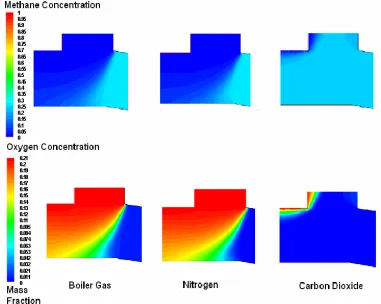
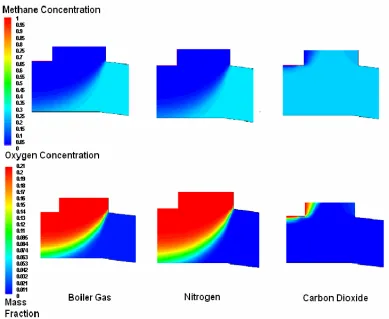
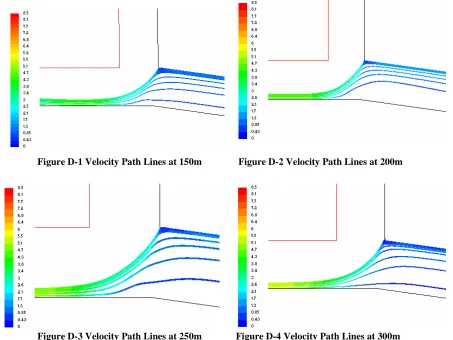
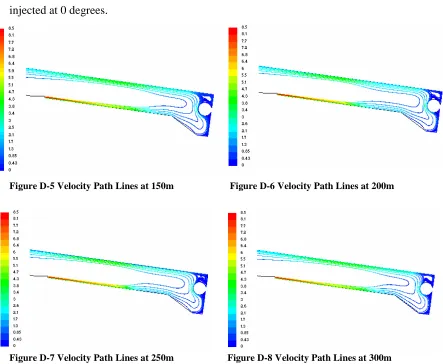
Figure 5-1 Boiler Gas Velocity Pathlines for Various Penetration Depths in Coal Face Region ... 58
Figure 5-2 Boiler Gas Velocity Pathlines for Various Penetration Depths at End of the Highwall Drive... 59
Figure 5-3 Carbon Dioxide Velocity Pathlines for Various Penetration Depths in Coal Face Region... 59
VENTILATION OF HIGHWALL MINING TO CONTROL METHANE CONCENTRATION AT THE MOURA MINE
ENG4111/4112 Research Project
List of Tables
Page
1. Introduction
The background to the investigation and its objectives are outlined in this chapter. An introduction to the highwall coal mining operation at the Moura Mine details the need for effective control of methane during mining and provides an understanding and appreciation for the necessity of this project.
1.1. Rationale
This dissertation is an industry-generated project in cooperation with the Commonwealth Scientific and Industrial Research Organisation (CSIRO) and the Moura Mine highwall coal mining operation in Central Queensland. In some regions of the Moura Mine, high methane concentrations result in limited highwall coal mining production. Specifically, when methane is combined with oxygen this gas mixture has the potential to be highly explosive, limiting production due to the safety risk to both personnel and equipment. Currently, the Moura Mine uses a ventilation system to attempt to control methane/oxygen concentrations to within safe working limits. Thus far, however, this system has proven to be ineffective at certain penetration depths where methane/oxygen concentrations are dangerously high. This study aims to develop new, more effective ventilation system configurations for the Moura Mine highwall mining operation so that coal mining production can be maximised whilst maintaining safe working conditions. The purpose and scope of the study are detailed in Section 1.4 Research Objectives.
1.2. Background
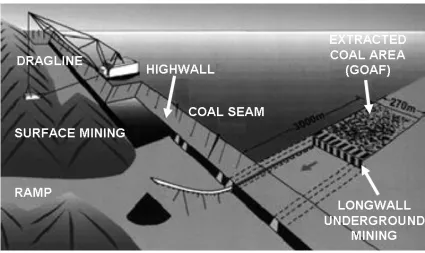
The mining industry is a major contributor to the Australian economy as Australia is one of the major coal producers of the world. The two main mining methods currently used in Australia for extracting coal are surface mining (opencut) and underground mining, as shown in Figure 1-1.
ENG4111/4112 Research Project Chapter 1 –Introduction
Figure 1-1 Coal Mining Methods (Trevor 2004)
effective mining method when the coal seam is a fixed distance from the surface. This distance is based on an economic depth limit called the strip ratio, which is the ratio between the overburden and the coal seam thickness. When the coal seam drops below the economic limit for opencut mining it becomes more economical to mine the coal using underground mining methods. There are two main underground mining methods, including the board and pillar method and the longwall method. Longwall mining is the most common underground mining method used in Australia (Trevor 2004) and involves the development of large rectangular blocks of coal, called panels. These panels are extracted through a single continuous process using a longwall mining machine called a ‘shearer’ which traverses the coal face, as shown in Figure 1-2. Self-advancing hydraulic roof supports hold up the roof above the shearer as it advances and then move forward, allowing the roof behind to collapse.
Figure 1-2 Underground Longwall Mining (Trevor 2004)
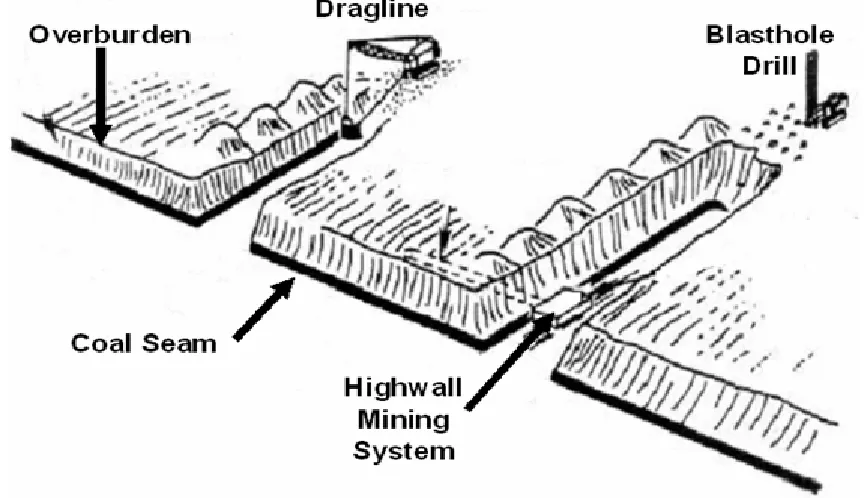
drives into the opencut highwalls, as shown in Figure 1-3 (Hargraves & Martin 1993). As such, this is a rapid method of extracting coal before roof strata within the drive begin to fail. Trench mining uses a combination of conventional surface mining and highwall mining. Specifically, draglines are used to uncover coal which is then removed, forming trenches that outline large blocks. The coal beneath these blocks is then extracted using the highwall mining method, as shown in Figure 1-3 (Hargraves & Martin 1993). Advances in modern highwall mining equipment have not been fully utilised in some mines because of an inability to maintain safe methane/oxygen
ENG4111/4112 Research Project Chapter 1 –Introduction
concentrations. Highwall mining ventilation systems are used to dilute methane concentrations through the injection of inert gases, providing safer working conditions to the highwall mining environment for both personnel and equipment. Improving the effectiveness of the ventilation system has the potential to maximise both the production and safety of the mine.
1.3. The Problem
The Moura Mine was the first coal mine in Australia to introduce the highwall mining method. This mine has long been considered a ‘gassy’ mine, meaning there are large quantities of methane found within the coal seam. It has been identified that the penetration depth of highwall mining equipment has been limited in some parts of the mine by the ventilation system’s inability to minimise methane/oxygen concentration levels to within safe working limits (Kunst, G 2006, pers. comm., 16 July). As noted above, the ventilation system uses inert gases injected into the highwall drive during mining in order to maintain safe methane levels. It has been found to be effective at predetermined penetration depths for the various regions of the mine (Balusu, R 2005, pers. comm., 3 October) Full details of these conditions are provided in Chapter 2.
1.4. Research Objectives and Overview of Methodology
The primary objective of this project is to identify ways to reduce methane/oxygen concentrations as much as possible so that highwall coal mining can be extended to deeper penetration depths, extracting as much coal as is possible without increasing safety risks. Using computational fluid dynamics (CFD) software (specifically, Fluent), a number of models will be generated incorporating three specific factors: penetration depth, injection of inert gas (in this case, carbon dioxide, nitrogen and boiler gas) and angle/direction of injection of the inert gas. In this way, the study aims to identify the effectiveness of the use of each of the different inert gases, at different angles of injection into the drive and at varying penetration depths.
behaviour of gases with regard to mixing and diffusion within the highwall drive for each model generated, incorporating the three factors, as noted. Specifically, these analyses will aim to identify the benefits and limitations of each of the models generated and, ultimately, to determine the optimum configuration with regard to the control of methane/oxygen concentrations during highwall coal mining.
1.5. Dissertation Overview
This dissertation begins with an introduction outlining the objectives of the investigation and the methodology undertaken in order to meet those objectives. Chapter 2 provides a background into coal mining and the various methods of mining, as well as the significance of methane in coal mines and at the Moura Mine, specifically. Chapter 3 provides further background with a detailed review of recent and relevant research into the control of methane in highwall mining applications. Chapter 4 discusses the computational fluid dynamics (CFD) approach and outlines the methodology used to investigate the highwall mining operation at the Moura Mine. The results of the CFD analyses are then presented and discussed in Chapters 5 and 6, respectively. Finally, a conclusion to the investigation is presented in Chapter 7.
1.6. Conclusion
By identifying ways to reduce explosive methane/oxygen concentrations at the Moura Mine’s highwall coal mining operation, this investigation is expected to provide a greater understanding of the behaviour of gases within the highwall drive. It is also expected to elucidate various possible ventilation configuration systems that might be utilised during mining, based on varying the type of inert gas used and the angle of injection of the inert gas at various penetration depths. The outcome of the study should provide a more effective means to control methane at the Moura Mine which should subsequently lead to improved productivity and safety.
ENG4111/4112 Research Project Chapter 2 – Background
2. Background
Background information on highwall mining and methane, in general, and at the Moura Mine, specifically, is detailed in this chapter, before reviewing findings from previous research studies in Chapter 3. A variety of information resources were accessed, including online sources (databases, websites and on-line texts), books and journals as well as material provided by both the CSIRO and the Moura Mine in regards to methods and equipment specifications.
2.1 Highwall Mining
The highwall mining method was specifically developed to recover additional coal from surface mines once the economic limit for overburden removal (strip ratio) had been reached and underground mining methods were not justified (Schafer 2002). In the past, when the economic limit for overburden removal of coal was reached, the final highwall marked the shift from surface mining to underground mining (Schafer 2002). However, the capital investment necessary for underground mining could not always be justified (Schafer 2002). For these situations, an economical recovery method for the coal was required, hence the development of the highwall mining method (Schafer 2002). Highwall mining is a hybrid mining system with high recovery returns capable of accessing reserves at substantially less capital cost and lead time compared with underground mining methods. Highwall mining is also less labour-intensive than underground mining (Shen & Duncan Fama 2000).
The original highwall mining system was developed 60 years ago in the United States in order to mine thin coal seams in the Appalachian Mountains (Hargaves & Martin 1993). That method evolved when contractors realised that auger drills used for drilling blast holes in opencut mines could be turned horizontally to extract coal from the otherwise inaccessible final highwalls. However, this augering was found to be very hazardous and was thus limited to penetration depths of 50-60 metres, making coal recovery poor (Hargaves & Martin 1993).
Figure 2-1 Addcar Highwall Mining Operation (Hainsworth, Reid & McPhee 2006) or boring a series of parallel entries into the final highwall coal seam. This is a rapid method of extraction of coal before roof strata within the drive begin to fail. Unmanned equipment is used to cut unsupported drives into the final surface mine highwalls (Hargaves & Martin 1993). One of these methods is the Addcar Highwall Mining system, shown in Figure 2-1. A coal rib or pillar is left on either side of the highwall drive (hole) to support the highwall above. The thickness of the rib, generally one to two metres, is important in that it must provide adequate support (Hargaves & Martin 1993). If the rib is too thin the risk of ground fall increases with the potential to bury expensive equipment. Conversely, if the rib is too thick the excess coal within the rib becomes unrecoverable (Hargaves & Martin 1993). The depth of each highwall drive is determined by a variety of operational factors. These factors include the capability of the equipment and the method used, the concentration of methane/oxygen within the drive, geological factors influencing roof falls and, finally, the equipment position in relation to pillars and the coal seam. Mined out regions are then sealed off after mining to prevent spontaneous combustion of coal resulting in methane/oxygen explosions (Hopkins 1999).
The areas best suited for highwall mining are thick seams where at least one of the following conditions applies:
ENG4111/4112 Research Project Chapter 2 – Background
• steep grades and/or lenticular interburden (expansion of overburden between seams)
• service corridors, which are areas unavailable to conventional surface mining methods due to public roads, railways, water courses or other service access
• regions where there is underground activity in lower seams below the highwall which can cause strata subsidence; highwall mining can recover the highwall coal prior to strata movement (Hargaves & Martin 1993)
2.1.1 Highwall Mining Systems
Highwall mining equipment continues to improve, governing the way in which coal is recovered from the highwall. A variety of highwall mining systems are available, including the Addcar, Archveyor, Auger, Metec and Superior methods. Each of these is discussed in detail below.
2.1.1.1
Addcar Highwall Mining System
The Addcar or Continuous Highwall Mining system (CHM) was developed in the 1980s and 1990s and is significantly different from the earlier designs described above (Schafer 2002). This system involves an adaptation of an underground continuous miner which is fully remote-controlled and uses a series of 12-metre-long cars (Addcars). Each Addcar has its own separately driven conveyer belt to transport the coal from the cutting face to the platform and stacking conveyer, as shown in Figure 2-2. The conveyer belts reduce the degradation of the coal during transportation, have a higher transport capacity and are less likely to jam and clog as with auger-type systems (Schafer 2002).
ENG4111/4112 Research Project Chapter 2 – Background
Figure 2-3 Addcar Highwall Mining System (Holman, McPherson & Loomis, 1999) In 1995, a conglomeration consisting of the Moura Mine (under the ownership of BHP), Mining Technologies Australia (MTA, distributors of the Addcar Highwall Mining system in Australia), the CSIRO, Joy Mining and Honeywell developed its own Addcar highwall mining technology to suit Australian conditions, as technology at the time was focused on American thin-seamed highwall coal mining conditions (Syddell 1995a). Completed in 1997, the Addcar Steep Dip Highwall Mining system is capable of steep dip mining, working on steeper inclines from 7 to 12º. A navigational guidance system enables a penetration depth of up to 500 metres. The system uses an inert gas generation system based on the Tomlinson boiler system to neutralise methane emissions during mining (Syddell 1995a).
In comparison with its competitors, the Addcar Highwall Mining system claims to have 150% more penetration depth, 90% more annual production, 82% more installed horsepower and the production of the same amount of tonnage for a reduced highwall length (Holman, McPherson & Loomis 1999).
2.1.1.2
Archveyor Highwall Mining System
It uses a computer-controlled continuous miner attached to an integrated, bendable, continuous haulage chain conveyor with a load-out vehicle and control centre, as shown in Figure 2-4. It has a penetration depth of 305 metres and requires only two operators per machine (Syddell 1995e).
The Archveyor system is both horizontally and vertically flexible, with drive units every 7.5 metres to drive small sections of the conveyor. This is advantageous in mining and traversing through undulating coal seams, as the system is capable of turning at ninety degrees (Holman, McPherson & Loomis 1999). During mining, hydraulic jacks lift the Archveyor clear of the ground, allowing the conveyor to transport the coal. A main drive unit at the end of the conveyor supplies power to the unit. The Archveyor system can operate at seams that dip at 30º while operating well below maximum power (Holman, McPherson & Loomis 1999). A flexible ventilation duct is mounted above the conveyor. The miner is capable of cutting a 3.8 metre wide opening that is from 1.8 to 4.9 metres high. The continuous miner cuts and loads the coal onto the Archveyor. At this point, the Archveyor is in its conveyor mode with the unit raised on the hydraulic jacks. The miner then advances forward and begins to cut the coal which begins to build up in front of the miner. Meanwhile, the Archveyor is advanced forward. The Archveyor jacks are retracted and the conveyor is powered in reverse in order to advance the unit. Difficulties can arise in thin seams where there is no room to store coal in front of the miner while the Archveyor advances. In this case, an auger- headed continuous miner is used (Holman, McPherson & Loomis 1999).
ENG4111/4112 Research Project Chapter 2 – Background
Figure 2-4 Archveyor Highwall Mining System (Holman, McPherson & Loomis 1999)
2.1.1.3
Auger Highwall System
Figure 2-5 Auger Highwall System (Holman, McPherson & Loomis 1999)
depth of 200 metres with a maximum production rate of 60,000 tonnes per month (Shen & Duncan Fama 2000). A variety of different sized augers can be used in succession during the process. Small augers create unsaleable fines resulting from the coal grinding upon itself due to the lack of space within the auger flights as it is moved to the surface. Large diameter augers have a reduced production of fines due to the greater space between flights, minimising the grinding of the coal upon itself (Schafer 2002).
ENG4111/4112 Research Project Chapter 2 – Background
make the system more favourable for poor roof and floor conditions (Shen & Duncan Fama 2000).
2.1.1.4
Metec Highwall Mining System
The Metec highwall miner uses a cutting head and gathering pan from a conventional underground continuous miner to feed a string of enclosed augers which are added as the miner advances forward. A push beam is used to force the cutting head forward from an outside platform. Conveyers transfer the coal from the auger to the platform and onto a stacking conveyer. When originally introduced, this system had improved productivity rates compared to the Auger system. However, this is no longer the case due to improvements to the Auger system. Applying the force through the push beam over long distances is a major disadvantage to this system, limiting the penetration depth. The augers used to transport the coal to the surface grind the coal producing unsaleable fines, as indicated with the Auger Highwall Mining system (Schafer 2002).
2.1.1.5
Superior Highwall Mining System
The Superior Highwall Mining system is an extension of the Metec system with programmable controllers and cutter-head options to accommodate various seam heights. The Superior system has a rear discharge option, however, it is still reliant on proper alignment and lateral stiffness for directional control and push in order to advance the cutter head. Penetration depths are limited by the platform’s inability to provide sufficient pressure for the cutter-head to advance (Schafer 2002).
2.1.2 Highwall Coal Mining in Australia
Highwall mining methods that originated in the United States have had to be adapted in some cases for use in Australia due to the variation in mining conditions. The differences between Australian
Table 2-1 Highwall Mining Conditions Comparison (Seib & Boyd 1995)
United States
Australia
Highwalls: 10-30m Highwalls: 40-160m
Seams: 0.5-2.5m Seams: up to 4m
Single pass highwall mining generally Multiple pass mining generally Machinery exposed to minimal risk Collapse would have major costs Final highwalls readily available (contour
mining)
Different regions of interest
Recoveries of approximately 60% from thin seams
Recoveries of approximately 30% from thick seams
Operator Judgement Geotechnical studies
Relatively simple scheduling Complex interactions due to multiple passes
and American highwall mining conditions are outlined in Table 2-1. Highwall mining methods have a substantially lower capital cost, only ¼ to ⅓ the cost of conventional dragline surface mining operations. The annual output per employee of 30-40,000 tonnes is 3 to 4 times that of the surface mining average (Pinnock 1997). The major disadvantage of highwall mining is the risk that the mining machine will be buried and potentially unrecoverable. Improved engineering and geological knowledge, however, have led to a reduction in this risk. With a large number of surface mines nearing the end of their economic lives, highwall mining offers operators a means to extend the life of a mine and this is likely to become a more prominent mining method in the future (Pinnock 1997). The Moura Mine is an example of a coal mine where highwall mining techniques have been introduced with good results.
ENG4111/4112 Research Project Chapter 2 – Background
released from coal during mining poses an imminent risk in regard to explosions, and this risk has been associated with coal mining operations from their beginning. Controlling methane with regard to reducing potentially fatal explosions is an important factor in providing miners a safe place to work, as well as improving productivity. It is important for Australia to continue to support research and development, embrace new technology and invest in new equipment in order to maintain itself as a market leader in coal mining throughout the world.
2.2 Methane
Methane is an odourless, colourless and tasteless gas, also referred to as natural gas. It consists of one atom of carbon and 4 atoms of hydrogen (CH4). High methane
concentrations can cause oxygen deficient atmospheres, flammable situations or explosive environments. Combustion requires fuel (methane), oxygen and a source of ignition. Methane burns with a pale blue flame (Eltschlager et al. 2001).
Concentrations of methane at a point source into the atmosphere with an excess of 5% are readily ignitable. Atmospheric methane concentrations between 5 and 15% can ignite and explode at standard pressure and temperature. The most powerful explosive methane/air mixture is where there is 9.5% methane, as the combustion process consumes all methane (CH4) and oxygen (O2), producing carbon dioxide (CO2) and
water (H2O), as a result (Eltschlager et al. 2001). The reaction between the methane and
oxygen can be depicted as:
CH4 + 2O2→ CO2 + 2H2O
High levels of methane can quickly dilute from an ignitable to a flammable level. In either case, an explosive environment can be created if methane is allowed to accumulate in an enclosed space. An explosive environment exists when methane and oxygen combustion can self-propagate throughout a mixture, independent of the ignition source. Ignition sources can be generated through electrical connections, sparks from tools or machinery and/or open flames (Eltschlager et al. 2001).
Figure 2-6 Coward Diagram (Gillies & Jackson 1998) parts per million (Eltschlager et al. 2001). Explosive gases are most commonly reported as a percentage of their explosive limit. The Lower Explosive Limit (LEL) and Upper Explosive Limit (UEL) are limits used to define the range at which flammable gases or vapours become explosive when mixed with air. Methane concentrations of between 5% (its LEL) and 15% (its UEL) at standard temperature (20ºC) and pressure (1atm) will explode given an ignition source (Eltschlager et al. 2001). In 1929, Coward determined a methane/oxygen relationship from empirical data which indicates whether mixtures of methane and oxygen in mine air are in an explosive range (Gillies & Jackson 1998). The Coward Diagram is shown in Figure 2-6.
2.2.1 Coal Bed Methane
As noted earlier, methane is a natural gas that is produced during the coalification process. Coalification is the biochemical and geochemical process whereby, through time, heat and pressure, dead and buried plant (organic) material is transformed into the combustible carbonaceous material known as coal (Eltschlager et al. 2001). As much as 98% of the gas stored in coal beds can be methane with the remaining gas made up of carbon dioxide (CO2), nitrogen (N2) and trace amounts of hydrogen sulphide and higher
ENG4111/4112 Research Project Chapter 2 – Background
The first stage of coalification begins with exposure of the dead plant to aerobic (oxygen-utilising) bacterial decay that metabolises most of the oxygen present and produces carbon dioxide. The second stage of decay requires anaerobic (non-oxygen-utilising) bacteria, where the first phase of methane is produced through the respiration of the bacteria. The remaining oxygen found in hydrocarbons is released as waste in the form of methane and carbon dioxide in a process is known as biogenic methane formation (Lyman 2001). If the coalification process is deep enough to be thermally altered (thermogenic process), a second phase of methane production can occur. When the temperature rises above 50ºC through increased depth or geothermal gradient, a thermogenic process begins producing additional water, carbon dioxide and nitrogen, as well as a small amount of methane. However, if the coal temperature is greater than 120ºC, the production of methane exceeds carbon dioxide with maximum methane production at temperatures of 150ºC (Lyman 2001).
The most common gases, by-products of the coalification process, found in coal are carbon dioxide and low molecular weight hydrocarbons such as methane and ethane (Eltschlager et al. 2001). Coal is a porous material with macro-pores and micro-pores. The macro-pores are mainly formed by the joint systems, cracks and fractures in the coal. The majority of the gas is absorbed by the micro-pores providing a large surface area of 200-300 square metres per gram of coal. This gas within the coal can be liberated when environmental conditions change. Due to the large surface area within the micro-pores, coal has the capacity to store large volumes of gas (methane) within its pores. Saturated coal can hold up to 21 cubic centimetres of methane per gram of coal (Eltschlager et al. 2001). As coal is mined, the methane flows in two ways: from the solid coal to fractures and wells, and through these fractures and wells into the mine. Deeper underground mines are usually gassier than shallower mines and produce the highest daily methane emission during mining. The overburden thickness and type of rock generally affect the amount of methane trapped within the coal seam. The actual methane emission rate is relative to the production rate, type of mine and amount of methane in the coal (Eltschlager et al. 2001).
2.2.2 Spontaneous Combustion of Coal
combustion of coal. The oxidisation process is complex, however, a simplified basic reaction of carbon (C) and oxygen (O2) producing carbon dioxide (CO2) and heat can
be depicted as:
C + O2→ CO2 + Heat
This chemical reaction is exothermic (releases heat) and the rate of the reaction will double for every increase in 10ºC (Lyman 2001). If the heat produced cannot escape, the coal temperature will pass its ignition point and a coal fire will occur. Other key factors that influence the combustibility of the coal are air flow, particle size, rank (description of the type of coal), temperature, pyrite content (presence of sulphur materials that may accelerate spontaneous heating), geological factors and mining methods (Lyman 2001). Accumulation of fine coal particles within underground and highwall mining regions also increases the potential risk of spontaneous coal fires. Some mines control these vulnerable coal regions by spreading out the coal to dissipate the heat or re-compacting the coal in order to cut off the oxygen and release heat produced by the coal through radiation (Lyman 2001).
2.2.3 Methane in Coal Mines
ENG4111/4112 Research Project Chapter 2 – Background
et al. 2001). Methane hazards during surface mining are rare, as gas is freely vented to the open atmosphere. Furthermore, coal seams near the surface have, over time, bled a large percentage of their methane to the surface (Eltschlager et al. 2001).
Methane in underground mines is a substantial problem that must be constantly monitored and controlled as the mining process exposes large surface areas of coal in confined spaces. Under these conditions, methane can quickly accumulate to explosive levels if not properly controlled (Eltschlager et al. 2001). The principal method of controlling methane in underground mines is ventilation. Close monitoring by personnel and machinery of methane levels at the working face and all other parts of the mine is essential to maintaining a safe working environment. High methane or gassy coal seams require additional degassing of the seam before mining. This is accomplished through the use of drilling degasification wells to remove methane; however, this process is time consuming. In some cases the methane is collected and marketed to the natural gas industry and this is an increasingly common contributor to the production of natural gas (Anglo Coal: Moura Coal Mine, Queensland, Australia 2005).
2.2.4 Inert Ventilation Gases Used to Control Methane
Concentration in Coal Mines
Ventilation systems using inert gases provide an effective means of controlling methane concentrations to predetermined depths under a variety of highwall mining conditions. Currently, three commercial inert gases are available to coal mines for use in the ventilation and control of methane concentrations for highwall mining operations. These three gases are nitrogen, carbon dioxide and boiler gas (Balusu, R 2005, pers. comm., 3 October).
Boiler gas is the product of a combustion process used to consume and convert oxygen, producing a mixture of nitrogen (85%), carbon dioxide (14%) and oxygen (1%) (Inert
Gas Generators 2004). The composition of this mixture is influenced by its
Figure 2-7 Tomlinson Boiler (Inert Gas Generators 2004) dioxide and nitrogen gases cannot be produced on site and must be purchased and transported onto the mine site. The densities of the carbon dioxide and nitrogen are 1.80 kilograms per cubic metre (1.80kg/m3) and 1.14 kilograms per cubic metre (1.14kg/m3), respectively, at 27 degrees Celsius (300K) ( Kreith & Bohn 2001). The injection temperatures of gases vary greatly with the boiler gas provided at cooled post-combustion temperatures of 40-60 degrees Celsius, while the liquid nitrogen is well below 0 degrees Celsius (Balusu, R 2005, pers. comm., 3 October).
2.2.5 Regulation of Methane in Queensland Coal Mines
Regulation of coal mines in Australia is the responsibility of the State governments. In the past, States were totally responsible for coal mine regulations. These regulations were highly prescriptive, describing in detail how safety could best be achieved with the presumption that the government was in the best position to determine the health and safety of miners using inspectors to ensure compliance (Queensland Coal Mining Safety
and Health Act 1999 2006). In the 1970s, a trend toward the self-regulation of
occupational health and safety in coal mines began which provided workers with various rights to be involved in decision-making about safety, as well as the right to information and training. Self-regulation is not de-regulation, as companies are still accountable to the government. Self-regulation frees employers from abiding by State-set rules, allowing them, instead, to opt to meet government performance or goal-State-setting standards in regard to particular issues (Queensland Coal Mining Safety and Health Act
1999 2006). Governments write codes of practice as guides to achieving determined
ENG4111/4112 Research Project Chapter 2 – Background
effective system is otherwise in place. The failure of an employer to exercise their duty of care can lead to substantial penalties. The 1999 Queensland Coal Mining Safety and Health Act states that coal mines are required to protect the safety and health of persons involved in, or who may otherwise be affected by, the operation of coal mines.
Under the 1999 Queensland Coal Mining Act, coal mines are responsible for the identification and assessment of risks and analysis and management of hazards, along with relevant reporting and recording of safety and health information. Under these regulations, an individual may not enter a highwall mining excavation area unless:
• abnormal circumstances are declared
• a competent person is present to supervise ERZ operations (explosive risk zones; refer to following paragraphs)
• risk assessment has been carried out
• adequate controls are in place to measure safety at all times
• the individual is competent to work safely underground and carries a self- contained self-rescuer
If highwall mining is carried out in conjunction with opencut mining, the mine is also responsible for providing the safety and health management system for the highwall mining activity. This system must adequately address:
• entry and evacuation of the individual from the highwall
• fire prevention and fire fighting equipment
• identification and marking of explosive areas along with safe areas for cutting and welding
• continual monitoring of oxygen and methane at the cutting face of the highwall
• measurement of control flooding
• communication on the surface when an individual is working within the excavation (Queensland Coal Mining Act 1999)
near the cutters. They must be able to automatically activate a visible alarm if methane concentration exceeds 1% and trip electricity supply to the machine if concentration exceeds 2% (Queensland Coal Mining Act 1999).
The Queensland State Government has identified three major risk zones in regard to methane concentrations within a mine. These zones are generally referred to by their acronyms ERZ0, ERZ1 and NERZ. Firstly, the ERZ0 is an explosive risk zone category zero, whereby the general body of the concentration of methane exceeds 2%. An ERZ1 is an explosive risk zone category one, whereby the general body of the concentration of methane is between 0.5% and 2%. Also included in this category are situations where coal or other material is being mined, regions of poor ventilation, goaf areas (collapsed and post-mined underground regions) and a number of other specialised cases. Finally, the third risk zone is an NERZ, negligible explosive risk zone, whereby the general body of methane concentration is below 0.5% (Queensland
Coal Mining Safety and Health Act 1999 2006).
2.3 Moura Mine
The Moura Mine is located 450 kilometres northwest of Brisbane in the southeast corner of the Bowen Basin coal reserve, as shown in Appendix B. The Moura Mine is part of the recently formed Dawson Complex, made up of a number of surrounding mines. The mine first commenced mining in 1961 and is one of the longest established coal mining operations in Central Queensland. The mine has changed ownership several times over the past 20 years and is currently owned by Anglo Coal Australia Pty Ltd (51%) and Mitsui Coal Holdings Pty Ltd (49%) (Anglo Coal: Moura Coal Mine,
Queensland, Australia 2005)
Both surface and underground mining have been used for the extraction of coal since the mine began operations. A highwall mining operation was first trialled in 1989 and, recently, the first coal bed methane recovery operation was established (Anglo Coal:
Moura Coal Mine, Queensland, Australia 2005). The coal at the Moura Mine is
ENG4111/4112 Research Project Chapter 2 – Background
surface (Anglo Coal: Moura Coal Mine, Queensland, Australia 2005).
The Moura Mine currently has the capacity to produce 2.5Mt/y of thermal coal and 4.5Mt/y of soft coking coal. Coking coal reserves are estimated at 771Mt and are accessible only by underground mining methods. Non-coking coal reserves are estimated at 234Mt, of which three quarters is accessible only through underground mining methods. The coal is exported to Australia’s major export markets of Asia, particularly Japan, and Europe. The Moura Mine is currently expanding its operations, combining with the adjacent Dawson and Theodore deposits into the Dawson Complex mine, which has a capacity of 5.6Mt/y of thermal coal for power generation and 7.1Mt/y of coking coal (Anglo Coal: Moura Coal Mine, Queensland, Australia 2005).
2.3.1 Coal Mining Operations at the Moura Mine
Surface mining has accounted for all coal produced at the Moura Mine since 1994. The underground mining operation ceased in August 1994 due to a fatal methane-related accident in the No 2 underground mine. Since then, the mine has focused on using alternative methods such as trench and highwall mining to recover some of the coal from its substantial underground reserves (Anglo Coal: Moura Coal Mine, Queensland,
Australia 2005).
Blasting and draglines are used to carry out the primary waste stripping in the surface mining operation. Wheel loaders and bottom dump haulers (large trucks) are then used to extract the coal. A highwall mining system is also used to extract additional coal from final highwalls that would otherwise be inaccessible through the current surface mining operation. The coal is transported 16 kilometres to a preparation plant via an overland conveyor belt. The coal is then crushed, washed and sized before transport to the port of Gladstone, where it is shipped to the international markets (Anglo Coal:
Moura Coal Mine, Queensland, Australia 2005).
2.3.2 Highwall Mining at the Moura Mine
seams in that slope down between 6 and 12º and are, thus, unable to be mined using conventional highwall mining equipment (Anglo Coal: Moura Coal Mine, Queensland,
Australia 2005).
Under the ownership of BHP, an Addcar Steep Dip Highwall Mining system was developed specifically for the mining conditions at the Moura Mine, as shown in Figure 2-8. The system uses a modified Mining Technologies Addcar Highwall Mining system, with the remote controlled Joy 12CM12B continuous miner used to cut the coal (Anglo Coal: Moura Coal Mine, Queensland, Australia 2005). A maximum penetration depth of 360 metres is possible, with the use of 29 Addcars and a cut profile 3.6 metres wide by 3.8 metres high. The miner is capable of producing 720t/hr, equivalent to approximately 1.6Mt/y, of coal. Initially, methane monitoring was used only for the first 50 metres of the drive before a Tomlinson boiler (producing inert ventilation gas) was activated, at which point only oxygen monitoring of the inert gas continued in the drive (Anglo Coal: Moura Coal Mine, Queensland, Australia 2005). Currently, methane and oxygen monitors are strategically placed around the continuous miner and at 36 metre intervals along the Addcars (Kunst, G 2006, pers. comm., 16 July).
Two Archveyor Mining systems were introduced after 1999 with the change in ownership of the mine (Anglo Coal: Moura Coal Mine, Queensland, Australia 2005). However, these are no longer in use today as this system required high maintenance and had lower production and cut rates compared to the previous Addcar system. The Addcar Steep Dip Highwall Mining system was, therefore, reintroduced due to its greater reliability, production and cut rates, and it is the only highwall mining system currently in use at the mine (Kunst, G 2006, pers. comm., 16 July).
ENG4111/4112 Research Project Chapter 2 – Background
been recorded over the duration of the highwall operation at the Moura Mine, resulting in the trapping of the continuous miner on two occasions prior to the change in ownership to the current proprietors (Shen & Duncan Fama 2001).
2.3.3 Methane at the Moura Mine
In the past 30 years, three major mining disasters at the Moura Mine have killed 36 miners, in total. Two of the explosions were attributed to the spontaneous combustion of coal, while the third is thought to have been ignited by either a frictional ignition or a flame (Report on an Accident at Moura No. 2.Underground Mine Sunday, 7th of August, 1994 1994). As noted above, the underground mining operation ceased in August 1994
due to the third methane-related accident. These explosions illustrate the risk and danger that require constant monitoring and management of methane concentrations in order to provide a safe working environment for personnel and equipment.
Moura Mine is considered to be a gassy mine with large deposits of methane (CH4)
released by the coal (Major GHG Emissions Savings at Moura Coal Mine Seamgas
Operation 2003). Traditional mining practices involved releasing some methane into
the atmosphere by drilling holes from the surface into the coal seam as a safety measure due to methane’s toxic nature to humans and the gas’s high flammability (Major GHG
Emissions Savings at Moura Coal Mine Seamgas Operation 2003). The Moura Mine
has recognised methane as a potential energy source. By harnessing it for energy, the mine is able to reduce its greenhouse gas emissions, as methane is a greenhouse gas. Specifically, the mine has initiated a drainage operation for the collection of methane for commercial use (Major GHG Emissions Savings at Moura Coal Mine Seamgas
Operation 2003).
Figure 2-8 Addcar Steep Dip Highwall Mining Machine at Moura Mine (Shen & Duncan Fama 2001)
Boiler for penetration depths greater than 160 metres (Kunst, G 2006, pers. comm., 16 July). Methane monitor results indicate the high methane concentrations experienced on the third Addcar behind the continuous miner as shown in Appendix C (Kunst, G 2006, pers. comm., 16 July).
Maintaining safety has been an important aspect of the highwall mining operation. Blast shields move down across the highwall drive opening to protect operators once a 10 metre entry has been made. Both methane and oxygen monitors are currently used, mounted on the miner, lead car (conveyor car following the miner) and every third conveyor car onward (i.e., every 36 metres). These monitors are required to be operational at all times. Additionally, inert boiler gas is injected through a 150mm flexible hose mounted on the lead car 15 metres from the coal face (Kunst, G 2006, pers. comm., 16 July).
ENG4111/4112 Research Project Chapter 2 – Background
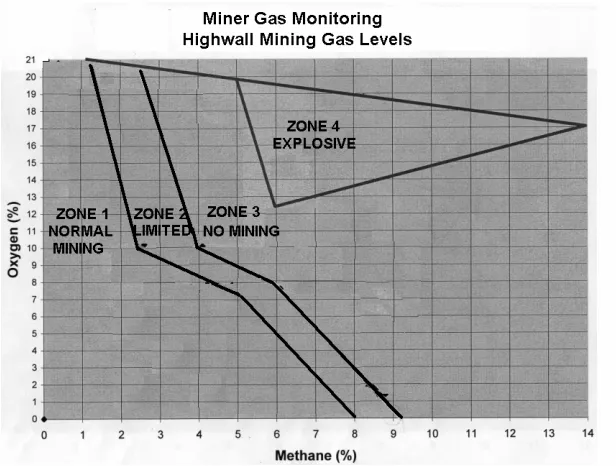
system based on the Coward Triangle, and can be seen in Appendix C. Zone 1 constitutes normal mining where methane and oxygen mixture concentrations pose no risk. Zone 2 refers to restricted mining requiring additional monitoring. Under Zone 3, mining ceases, with monitors tripping electrical power to shut down machines. Finally, Zone 4 encompasses the explosive zone where the highwall is evacuated and all power to the site is tripped. The boiler gas generator and gas monitoring devices are left running. In time, the boiler gas flushes the methane and oxygen from the drive, allowing the safe return of personnel, and mining can then continue. In some cases, a Zone 4 situation can occur and, after the drive has been flushed, reoccur. When mining under these circumstances, it is uneconomical to continue and the miner during flushing is considered to be ‘gas bound’ (Kunst, G 2006, pers. comm., 16 July).
It should be noted that it is safe to have high concentrations of methane as long as the accompanying oxygen concentrations remain low, below a 12% concentration. This is the case, for example, for the region around the miner which, at the Moura Mine, has been observed to sit in around 3% oxygen due to the injection of boiler gas, creating an inert zone during mining. The majority of the methane is produced from the breaking coal at the face, releasing the greatest amount of methane during mining. The walls or ribs also produce a substantial quantity of methane, although far less than that of the face (Kunst, G 2006, pers. comm., 16 July).
2.4 Commonwealth Scientific and Industrial Research
Organisation (CSIRO): Exploration and Mining
The CSIRO Exploration and Mining division is the largest strategic research and development supplier to the exploration mining industry in Australia. The organisation conducts research at every stage of the mining process. The Australian mining industry is highly productive and technologically intensive, with a focus on global markets, international opportunities and capital competitiveness. This division of the CSIRO has undertaken numerous research projects, including gas characterisation and control. This has been identified as a major issue in gassy Australian coal mines where sole ventilation dilution is unfeasible and thick seams are prone to spontaneous combustion.
areas, including resource assessment, operations improvement, gas control and utilisation, automation, safety and material characterisation for fines control. The plan is still in progress and this research project is encompassed under its initiatives. The plan aims to investigate ways to extend and optimise established surface and highwall mines and to improve the viability of underground mines in order to provide new techniques for current and future mines. The plan also aims to investigate the extraction and control of hazardous gases to improve overall safety (Kelly 1998).
As noted earlier, this research project, in collaboration with the CSIRO, specifically aims to investigate the control of hazardous gases (methane) in highwall mining operations. Its objective is to improve the safety and, potentially, the productivity of highwall mining operations at the Moura Mine through the study of current and new ventilation configurations.
2.5 Conclusion
ENG4111/4112 Research Project Chapter 3 – Literature Review
3. Literature Review
A detailed literature review was carried out in order to fully appreciate the importance of effective ventilation systems to control methane/oxygen concentrations within highwall coal mining operations. Previous research into the areas of highwall mining and, specifically, ventilation systems was explored and is summarised here. As with the background section, a variety of information resources were accessed including online sources (databases, websites and on-line texts), books and journals as well as material provided by both the CSIRO and the Moura Mine in regards to methods, equipment specifications and results from previous research studies.
3.1 Use of Inert Gas in Auger Highwall Mining
The United States Mine Safety and Health Administration and the Department of Interior, Bureau of Mines, in response to methane explosions resulting in injury, discussed the development of technology to enable the safe resumption of Auger highwall mining. It was identified that difficulties in ventilating shafts filled by augers and the potential ignition source from cutting bits were the most likely causes of explosions due to a lack of adequate ventilation and water for cooling (Volkwein 1993).
positioned at the end of the drive. Remote sampling and handheld monitors were used to measure methane and oxygen concentrations at the collar of the hole, both during and after mining. It was determined that inert gas flow should be maintained until the auger is removed from the hole. Results indicated that methane rapidly diffuses when the auger is removed (Volkwein 1993). Long term ventilation was considered by leaving one hole open overnight and another partially covered. In this case, results revealed that methane concentrations had diminished and that leaving holes open to self-ventilate resulted in a greater reduction in methane concentrations than with the partially closed hole. The use of a shroud to cover the collar of the hole in order to inject the inert gas was found to be a simple and effective means of eliminating possible methane explosions with adequate methane monitoring (Volkwein 1993).
In another study, building upon his 1993 findings, Volkwein (1997) described various methods to monitor and control methane risks in Auger type highwall mining. Methane liberated during mining can result in unsafe concentrations as it migrates to the surface. There are three major options available to mine operators to help prevent ignitions, including the use of blast shields, ventilation (creating low pressure systems in order to move gases throughout the shaft) and pumping inert gas through the shaft. Blast shields are unacceptable, as any unplanned explosion is potentially unsafe, and ventilation is unpredictable, as it is difficult to implement effectively, cannot be monitored and increases the risk of a coal dust explosion (Volkwein 1997). Pumping inert gas through the shaft appears to be the only effective means of preventing methane ignitions and has led to a greater understanding of how methane accumulates in Auger type highwall mining (Volkwein 1997).
ENG4111/4112 Research Project Chapter 3 – Literature Review
Volkwein 1997; Poundstone, cited in Volkwein 1997). However, the system was never implemented primarily due to an inability to deliver inert gas to the coal face because the auger filled the entire cross-sectional area of the hole. Volkwein’s (1997) technique involves filling the collar of the auger hole with inert gas and using the displaced coal to provide a motive force to transport that inert gas to the coal face, thus preventing ignition of methane and coal dust by reducing oxygen levels to below explosive limits. The inert gas is generated from a diesel and gasoline combustion process similar to that of boiler gas. Results of samples tested during mining gassy coal indicate that all conditions remained non-explosive. High methane concentrations were recorded, however, the oxygen concentrations remained below the 10% required for explosion. Volkwein (1997) notes that one million tonnes of gassy coal have been mined in the United States using this system and that the improved knowledge of gas movement in the auger hole has led to this simple and effective gas system to protect mine workers.
3.2 CFD Modelling of Methane Flow
Ren, Edwards and Jozefowicz (1997) identified that the accurate prediction of methane emissions into mine workings is important in the design of adequate ventilation systems and methane control, specifically for longwall mining. This study developed a numerical method to simulate methane flow through strata or unmined coal involving CFD analysis and laboratory tests. Results from the laboratory tests were incorporated into the CFD model.
variety of phenomena in order to fully understand methane flow migration, as can be done with CFD software. Fluent CFD software was used to perform both two- and three-dimensional analyses using a porous medium model and general momentum sink which was able to simulate flow media through rock beds (Ren, Edwards & Jozefowicz 1997). The geometry of the mine was an important consideration in creating the model. Permeability characteristics of the rock were taken from laboratory results of rock samples. Atmospheric pressure was considered for the roadways used to develop or access a longwall panel. Results indicated that the roadways acted as pressure sinks through which the methane migrated. More methane migrated from the ends of the panel where the mining induced fractures were less compacted than those at the centre of the panel. These results were validated with field data (Ren, Edwards & Jozefowicz 1997).
Given specific mining and geological conditions, these models can predict methane emissions and the pattern of migration within longwall mining operations. This information provides both a means of effective ventilation systems and optimisation of methane drainage schemes. Ren, Edwards and Jozefowicz (1997) suggested further research into the development of new methods to predict methane emissions from mine openings, gas migration in adjacent areas and the optimisation of methane drainage schemes, which may benefit further methane control.
3.3 CFD Analysis of Methane Safety of a Continuous
Miner
Methane ignitions from the cutting picks of continuous miners are a hazard in all underground coal mining operations. A study conducted by Cook (1995) aimed to quantify methane flow and behaviour around continuous miners during mining operations. Six methane monitors mounted at different locations on a continuous miner logged the methane concentrations during mining over a ten-hour period, with readings recorded every ten seconds.
ENG4111/4112 Research Project Chapter 3 – Literature Review
case, ranging from 0.6 to 3% methane (Cook 1995). The left-hand side of the continuous miner experienced the highest methane concentrations, influenced by the face scraping action of the cutting drum and directional water sprays used to prevent ignitions from the cutting picks (Cook 1995).
A CFD analysis was carried out using STAR-CD software in order to evaluate different ventilation practices for the continuous miner. The results of the two- and three-dimensional CFD analyses showed methane concentrations that were three times larger than those recorded earlier in an actual mining situation. This difference was determined to be due to an exaggeration of methane emissions in the computer analyses in order to ensure sufficient variation for the methane concentration contours graphically shown in the CFD results (Cook 1995).
Methane levels were found to drop rapidly within the first few metres of the coal face and there was no evidence of layering around the continuous miner, as long as sufficient ventilation was provided. The methane was also found to mix rapidly, and to remain mixed, with no tendency to layer, all due to the turbulence (Cook 1995). This study also found that, for blind headings or holes, the methane required a greater distance to dilute via mixing with ventilation air, as less air reached the coal face. Additionally, the lack of sufficient ventilation in these blind headings or holes resulted in the diminished effectiveness of the directional sprays clearing methane from the face, causing methane concentrations of greater than 2% in the cutting drum and its supporting boom. Methane monitors located at the rear of the continuous miner (a cleaner environment than the front of the machine where monitors can become blocked with dirt and mud) generally produced similar results to the data generated from the CFD analysis. However, the highest methane concentrations were recorded by the sensors located toward the front of the machine, as indicated earlier (Cook 1995).
3.4 Control of Methane at the Moura Mine
methane concentrations are low, compared with 18 hours to achieve a penetration depth of 200 metres on the northern side (Kunst, G 2006, pers. comm., 16 July). Recent trials carried out at the Moura Mine, in conjunction with the CSIRO Exploration and Mining division, sought to improve the control of methane by trialling new inert gases and injection configurations (Balusu, R 2006, pers. comm., 24 June). These trials included the injection of three inert gases, including nitrogen, carbon dioxide and boiler gas provided by two Tomlinson Boilers with a combined capacity of 0.8 metres cubed per second (0.8m3/s). The inert gases were trialled at a variety of injection angles and locations (Kunst, G 2006, pers. comm., 16 July). Methane/oxygen concentrations were monitored at the continuous miner, the lead car (the first Addcar) and at 36-metre intervals, thereafter (Conway, B 2006, pers. comm., 11 April). The trials found that the inert gas injected 15 metres from the coal face resulted in the greatest control of methane/oxygen concentrations (Kunst, G 2006, pers. comm., 16 July). However, the findings were inconclusive with regard to the type of inert gas and the injection angle required to provide the optimum control of methane/oxygen concentrations within the highwall drive (Balusu, R 2006, pers. comm., 24 June). Currently, inert boiler gas from a Tomlinson Boiler is provided through a 150 millimetre pipe located 15 metres from the coal face, with the last five metres of the pipe slotted to act as a diffuser (Kunst, G 2006, pers. comm., 16 July). A greater understanding of methane migration and the type of inert gas and injection angle needed would further improve the safety and production of the current highwall mining operation at the Moura Mine (Balusu, R 2005, pers. comm., 3 October).
A confidential study of the safe operation of BHP’s Moura Mine highwall mining operation was also carried out by Safety in Mines, Testing and Research Station (SIMTARS) in Brisbane in the late 1990s (Brady, D 2006, pers. comm., 10 July). Unfortunately, however, these findings are currently unavailable to the general public.
3.5 Conclusion
ENG4111/4112 Research Project Chapter 3 – Literature Review