i
COMPARATIVE STUDY TO ASSESS THE LEVEL OF KNOWLEDGE
AND PRACTICE ON INFANT FEEDING AMONG WORKING
AND NON-WORKING MOTHERS IN SELECTED
COMMUNITY AREAS AT COIMBATORE
M.Sc (NURSING) DEGREE EXAMINATION BRANCH II -CHILD HEALTH NURSING
R.V.S COLLEGE OF NURSING SULUR, COIMBATORE
THE TAMILNADU DR. M.G.R. MEDICAL UNIVERSITY CHENNAI±32
ii
COMPARATIVE STUDY TO ASSESS THE LEVEL OF KNOWLEDGE
AND PRACTICE ON INFANT FEEDING AMONG WORKING
AND NON-WORKING MOTHERS IN SELECTED
COMMUNITY AREAS AT COIMBATORE
Examination : M.Sc (Nursing) Degree Examination
Examination Month & Year : __________________________
Branch & Course : II -Child Health Nursing
Register No :
Institution : RVS College of Nursing, Sulur,
Coimbatore
Sd _______________________ Sd _____________________
Internal Examiner External Examiner
Date: _______________ Date: _______________
The Tamil Nadu Dr. M.G.R. Medical University
iii
CERTIFICATE
This is to certify that the dissertation, ³Comparative study to assess the level of Knowledge and Practice on Infant Feeding among working and non-working
PRWKHUVLQVHOHFWHGFRPPXQLW\DUHDVDW&RLPEDWRUH´, is the bonafide work done
by Mrs.T.Vajramala, R.V.S College of Nursing, R.V.S Educational Trust, Sulur, Coimbatore, submitted to The Tamil Nadu Dr. M.G.R Medical University, Chennai-32,
in partial fulfillment of the requirement for the award of the degree of M.Sc (Nursing)
(Branch II ± Child Health Nursing) under our guidance and supervision during the
academic period from 2013-2015.
Prof. Saramma Samuel M.Sc (N)
Principal,
R.V.S College of Nursing,
Sulur, Coimbatore,
iv
Comparative study to assess the level of Knowledge and Practice on Infant Feeding among working and non-working mothers in selected community areas
at Coimbatore
Approved by the Dissertation Committee on : _________________
1. Professor in Nursing Research : _________________
Prof. Saramma Samuel M.Sc (N)
Principal,
R.V.S College of Nursing,
Sulur, Coimbatore,
2. Professor in Clinical Speciality : _________________
Prof.X.Emerensia Msc (N)
Vice Principal
R.V.S College of Nursing,
Sulur, Coimbatore
A Dissertation submitted to
The Tamil Nadu Dr.M.G.R Medical University, Chennai-32.
In partial fulfillment of the requirement for the
Degree of Master of Science in Nursing.
v
ABSTRACT
Comparative study to assess the level of Knowledge and Practice on Infant Feeding among working and non-working mothers in selected community areas at Coimbatore.
The aim of the study was to assess and compare the level of knowledge and
practice on infant feeding among working and non-working mothers by Structured
Interview Schedule in selected community areas.
Conceptual frame work for this study is based on Health Belief Model (Rosenstoch 1999). Survey approach with descriptive design was used. The sample size consisted of 100 mothers (50 working and 50 non-working mothers) selected
from the areas of Kodangipalayam and Somanur by using purposive sampling
technique.
The data were collected using a Sructured Interview Schedule and the Tool
was organized in three parts. (Demographic characteristics, Knowledge and Practice
questions on infant feeding). Investigator asked the questions and provided adequate
time to receive their responses and to recall their practice during an Interview. Using
the same approach, the investigator interviewed all the working and non-working
mothers. The average time taken for completion of the Interview was 45 minutes in
each mother.
The results of the study showed that there was a significant difference in
overall mean knowledge score between working and non-working mothers on infant
IHHGLQJ ³W´= 11.11, (P<0.05, df = 98) and there was no significant difference in
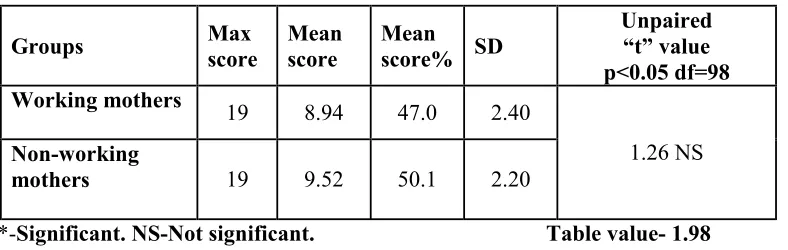
overall mean practice score between working and non-ZRUNLQJ PRWKHUV ³ W´ 1.26
P<0.05, df = 98).
There was a significant association between the occupation of mothers and the
level of knoZOHGJHRQLQIDQWIHHGLQJȤ2=42.87, p< 0.05, df =2, ³W´YDOXH 9).
There was no association found between the level of practice and selected
vi Conclusion:
The findings of the study concluded that non-working mothers had more
knowledge than working mothers on infant feeding. Whereas both working and
vii
ACKNOWLEDGEMENT
I thank the Lord Almighty with whole heart and soul for His abundant grace and care which strengthened me each and every moment throughout this endeavor.
I express my deep sense of gratitude to all who have contributed for the
successful completion of this study.
I would like to appreciate and thank all the following Members for their active
contribution and co-operation to conduct this study successfully.
I express my profound gratitude to Prof. Dr. Annamma Prabhakar, M.Sc (N), Ph.D, Visiting Professor, R.V.S College of Nursing, Sulur. Her esteemed suggestions, highly scholarly input and ongoing insight enabled to give a shape to the study.
My heartfelt thanks to Prof. Mrs. Saramma Samuel, M.Sc (N), Principal,
R.V.S College of Nursing, Sulur for her excellent guidance and motivation in all
matters large and small, from the start to the completion of the study.
My sincere thanks to Mrs.Mabel Kuruvilla Governing Body member RVS College of Nursing, Sulur.For her constant support and guidance during the study and
also to edit the manuscript.
I extend my sincere thanks to Prof. Mrs. X. Emerensia M.Sc (N), Vice Principal and HOD Child Health Nursing, RVS College of Nursing for her constant supervision and guidance in the completion of my study.
I am greatly obliged and extend my heartfelt thanks to my Guide, Mrs. Rajeswari M.Sc (N), Associate Professor,Child Health Department, RVS College of Nursing, for her guidance and support and valuable suggestions throughout the study.
viii
My sincere thanks to Mrs. Suja Santhosh, M.Sc (BioStatistics),
Asst.Professor, R.V.S, College of Nursing, Sulur for her expert guidance in statistical
analysis of the data.
I am extremely thankful to all the Nursing experts who have given their
valuable suggestions to shape the study in its early stages.
I extent my thanks to Dr.Prem Kumar, Medical Officer, Somanur PHC for the
permission to conduct the study.
My humble gratitude to the Panchayat Presidents of Kodangipalayam and
Somanur for granting permission for the conduct of the study in their areas.
I also thank the mothers for their active involvement, trust, cooperation and
support which they extended in completing this endeavor. Without their support and
cooperation this study would not have been possible.
I thank Mr.J.James for editing the tool for the study.
I am thankful to Mr. Kannan, Librarian, R.V.S College of Nursing, Sulur, Coimbatore for helping in providing reference materials.
A special of thanks to all my friendsfor their supportive and positive interaction
during the study.
I wish to express my deep and sincere gratitude to my husband Mr.John Ravi
for his patience, support and pains taking effort in helping me in all the areas of the
study.
This study would not have been possible without the support and love of my
parents and my little daughter. My heartfelt gratitude to them.
I extend my grateful thanks to those who helped me directly and indirectly
ix
TABLE OF CONTENTS
CHAPTER CONTENT PAGE NO
I INTRODUCTION
1.1 Background of the study
1.2 Need for the study
1.3 Statement of the problem
1.4 Aim of the study
1.5 Objectives of the study
1.6 Hypothesis
1.7 Operational definition
1.8 Assumption
1.9 Limitation
1.10 Delimitation
1.11 Scope of the study
1.12 Conceptual framework
1
6
8
8
8
9
9
10
10
10
10
x
II
III
REVIEW OF LITERATURE
2.1 Literature related to Knowledge of mothers on infant
feeding.
2.2 Literature related to Practice of mothers on infant
feeding.
RESEARCH METHODOLOGY
3.1 Research approach
3.2 Research design
3.3 Variables of the study
3.4 Setting of the study
3.5 Target Population
3.6 Sample size
3.7 Sampling technique
3.8 Sampling criteria
3.9 Description of the research tool
3.10 Scoring and interpretation
3.11 Development of the tool
3.12 Content validity of the research tool
3.13 Reliability of research
3.14. Pilot study
3.15. Data collection method
3.16. Plan for data analysis
3.17.Ethical consideration 13 17 23 23 23 24 24 24 24 25 25 26 26 27 27 27 28 28 29
IV ANALYSIS AND INTERPRETATION
4.1 Demographic characteristics of the samples
4.2 Assessment of level of knowledge of working and
non-working mothers.
4.3 Assessment of level of practice of working and
non-working mothers.
30
30
xi
4.4 Association of selected demographic characteristics
with the level of knowledge on infant feeding.
4.5 Association of selected demographic characteristics
with the level of practice on infant feeding.
31
31
V DISCUSSION 47-50
VI SUMMARY,CONCLUSION, IMPLICATION AND RECOMMENDATION
6.1 Summary of the study
6.2 Summary of the findings
6.3 Conclusion
6.4 Implications
6.5 Recommendations
51
51
53
54
xii
VII BIBLIOGRAPHY 55-57
VIII APPENDICES
1. Letter seeking permission to conduct the study
2 .Letter of permission granted to conduct the study
3 Letter seeking permission to conduct the study
4.Letter of permission granted to conduct the study
5.Letter seeking permission for content validity of the tool
6 .Certificate of content validity
5 .Research Tool in English
7 .Research Tool in Tamil
8 .Certificate for English editing
9. Report of self analysis done to rule out Plagiarism using
WKHVRIWZDUH³Plagiarism Detector´
58
59
60
61
62
63
65
74
84
xiii
LIST OF TABLES
S.NO LIST OF TABLES PAGE NO
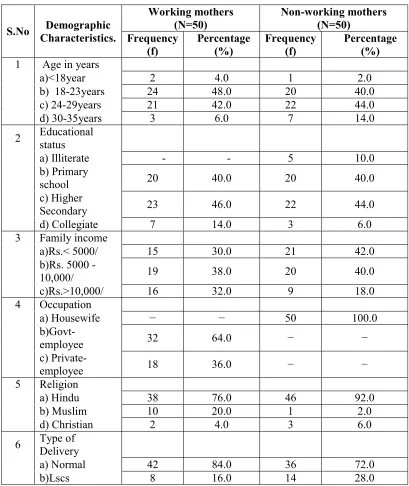
4.1.1 Frequency and percentage distribution of working and
non-working mothers related to demographic
characteristics.
32
4.1.2 Frequency and percentage distribution of demographic
characteristics of child. 34
4.2.1 Frequency and percentage distribution of level of
Knowledge of working and non-working mothers on
infant feeding.
35
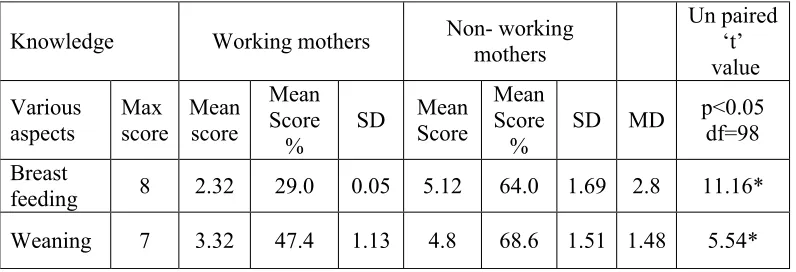
4.2.2 Mean knowledge score and standard deviation of
working and non working mothers in various aspects of
infant feeding and level of significance .
37
4.2.3 Comparison of overall mean Knowledge score and
standard deviation of working and non-working
mothers on infant feeding and level of significance.
38
4.3.1 Frequency and percentage distribution of level of
Practice of working and non-working mothers on infant
feeding.
39
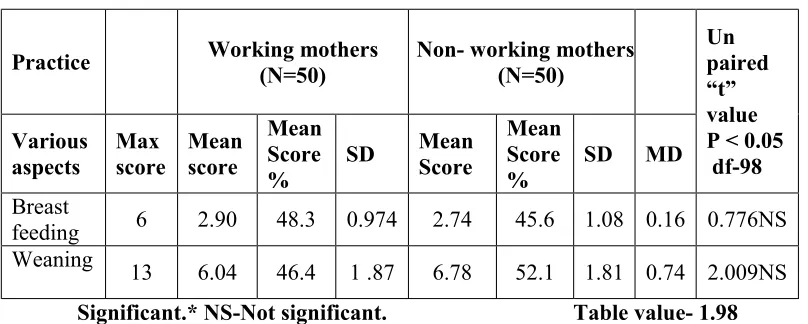
4.3.2 Mean practice score and standard deviation of working
and non working mothers in various aspects of infant
feeding and level of significance.
41
4.3.3 Comparison of overall mean practice score and standard
deviation of working and non-working mothers on
infant feeding and level of significance.
xiv
4.4 Association of selected demographic characteristics
with level of Knowledge on infant feeding. 43
4.5 Association of selected demographic characteristics
with level of Practice on infant feeding.
xv
LIST OF FIGURES
FIGURE NO
TITLE PAGE NO
1.1 Conceptual framework 12
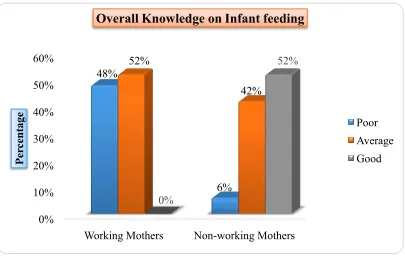
4.1 Overall Knowledge of working and non-working
mothers on infant feeding
36
4.2 Overall Practice of working and non-working mothers
on infant feeding
1
CHAPTER-I
INTRODUCTION
³&KLOGUHQDUHWKHZHDOWKRIWRPRUURZ«««WDNHFDUHRIWKHPLI\RXZLVKWRKDYHD
VWURQJ,QGLD«´
-Karl Meninger
1.1 BACKGROUND OF THE STUDY
Children are our future and most precious resources. After birth the health of the baby depends on the nurturing practices adopted by the families. Children always
need special care to survive and thrive. Good health of these precious members of the society should be ensured as prime importance in all countries. TRGD\¶VFKLOGUHQDUH tomorrow citizens. Health children make a healthy nation hence the importance of feeding them right from the birth especially first year of life.
Infant feeding from birth to the first year of life influences WKHFKLOG¶VRSWLPDO growth and development. Infant feeding practices includes exclusive breastfeeding for six months, the timely and appropriate of complementary feeding after six months with continue breastfeeding.
Breast feeding is the first fundamental right of every child. Breast milk is the
sources of nutrition freely available to the new born babies from the mother. It is an DGHTXDWH QXWULWLRQDO IRRG XS WR WKH EDE\¶V DJH RI VL[ PRQWKV DQG SURWHFWV WKH EDE\
from various diseases. Breastfeeding is important for the health and development of children and also IRUWKHPRWKHUV-XVWDVWKHUHLVQRVXEVWLWXWHIRUPRWKHU¶VORYHWKHUH LV QR VXEVWLWXWH IRU PRWKHU¶V PLON %UHDVW Pilk is only the best, it is a must for the
infants. Breast milk is safest and most secure nourishment for babies and protect them
against illness. The nutrients in the breast milk include all the proteins, fat, sugars, vitamins, minerals and anti-infective factors.
Breast milk is uncontaminated food that protects infants from infection and has an effect on the long term consequences, especially during adulthood, to prevent
2
to six months were less affected by diarrhea and did not have growth deficits. Under nutrition is associated with over 50% of deaths in children under 5, but optimal breast feeding could save around 8, 00,000 lives in this vulnerable age group every year.
Breastfeeding is the best way to feed a newborn, providing all the nutrients needed for healthy growth and development. It delivers antibodies, which boost a QHRQDWH¶V LPPXQLW\system, protects from child hood illnesses, such as diarrhea,
pneumonia, and other causes of under-five mortality.
World Health Organization (WHO) recommends exclusive breast feeding for the first 6 months of life. UNICEF & WHO launched Baby Friendly Hospital
Initiative in 1992 as a part of global effort to protect, promote and support Breast feeding. Appropriate feeding is crucial for the healthy growth and development of an infant. Children are the wealth of tomorrow. Children always need special care to survive and thrive. Good health of these precious members of the society should be ensured as prime importance in all countries. The department of health and child welfare has recommended exclusive breast feeding for the first 6 months of life with
the gradual introduction of solid foods with breastfeeding until 2 years of age and beyond. Solids should be introduced for the babies at around 6 months after birth. (FSSAI 2012)
Numerous studies have underlined the advantages of exclusive breastfeeding for growth, immunity and prevention of illness in young infants. Conversely, several
studies associate lack of exclusive breastfeeding with high infant mortality and morbidity from malnutrition and infections. Despite the well-recognized importance of exclusive breastfeeding, this practice is not widespread in the developing world and the increase at the global level is very modest with much room for improvement.
Infant nutrition programs worldwide continue to require investment and commitment to improve feeding practices in order to have maximum impact on reducing infant morbidity and mortality.
If exclusive breastfed infants do not develop properly, before considering the introduction of complementary foods, a careful assessment should be made to verify whether they are not ingesting too little breast milk due to a poor breastfeeding
3
receive instructions and support, so that the baby can increase the intake of breast milk and complementary feeding is not introduced unnecessarily.
More recently, the early introduction of complementary foods has been associated with the development of atopic diseases. Exclusive breastfeeding minimizes the risk of asthma and this protective effect seems to persist for at least
during the first decade of life, which is particularly evident in children with a family history of atopic diseases. Exclusive breastfeeding also seems to protect against the development of type 1 diabetes mellitus. It has been described that early exposure to cow's milk (before the fourth month) can be an important determinant factor for this disease and it can increase the risk for diabetes by 50%. It is estimated that 30% of the
cases of type 1 diabetes mellitus could be avoided if 90% of the infants aged up to three months were not fed cow's milk.(M.M.A.Faridi 1993)
After the sixth month of life the nutritional requirements of infants cannot be provided only by breast milk. Most infants reach a general and neurological stage of development (chewing, swallowing, digestion and excretion) that enables them to be
fed with other foods rather than breast milk alone.
According to WHO 2012, the gradual replacement of breast milk by solid food as the main source of nutrition for infant is known as weaning. Complementary feeding means giving the child other nutritious foods in addition to breast milk. Breast feeding alone is sufficient food for first six months. Thereafter, concentrated energy
giving complementary foods are essential in order to maintain an adequate range of growth for infant. (O.PGHAI, 2005)
A proper complementary feeding consists of foods that are rich in energy and in micronutrients (especially iron, zinc, calcium, vitamin A, vitamin C and folates),
free of contamination (pathogens, toxins or harmful chemicals), without much salt or spices, easy to eat and easily accepted and digested by the infant, in an appropriate amount, easy to prepare from family foods, and at a cost that is acceptable by most families. The infant can be fed family foods, provided that consistency and energy content are appropriate. From the Sixth month onwards, foods should vary and balanced mixtures containing cereals, pulses, foods of animal and vegetable origin,
4
the foods of animal origin (rich in iron and proteins), fruit and vegetables, especially those rich in vitamins. Avoid sugary beverages (soft drinks and others), as they reduce the infant's appetite for more nutritious foods and may soften the stools. Tea and coffee are also unadvisable because they may interfere with iron uptake.
To meet the mineral requirements of infants, a variety of mineral-rich
complementary foods should be offered, since the consumption of these foods is relatively small among infants/children aged between six and 24 months. From 9 to 11 months of life, the amount of minerals that should be provided through complementary foods (97%-iron,-86% zinc,81%- phosphorus, 76%-magnesium, 73%-sodium and 72%-calcium).At 10 months, the infant can eat grain foods. At 12 months,
most of the infants must eat the same foods as their family eats. These foods must have appropriate energy content. Semi-solid foods should be restricted, as much as possible.
Currently, WHO recommends that mothers/caregivers of infants younger than two years should follow the responsive feeding practice, which employs the principles
of psychosocial care? This practice includes respect for the physiological mechanism that self-regulates the appetite in infants, helping them to feed until they feel satiated, and requires that mothers/caregivers be aware of the signs of hunger and satiety expressed by the infants. Infants should be fed slowly and patiently until they feel satiated; they should never be force-fed. Meals should be pleasant, with emotional
exchange between the person who feeds and the infant, using eye contact, touching, smiling and talking. If infants refuse to eat several foods, different combinations, flavors should be given. Encourage them to eat without diverting their attention during the meal. There is some evidence that active feeding improves food ingestion and the infant's nutritional status, and development.
In some countries, there is a recommendation to only introduce some specific foods, considered highly allergic, after the second year of life. Cow's milk (responsible for 20% of food allergies) ranks on the top of the list, being not recommended before 9-12 months. In case of important family history of food allergy, it is recommended that foods such as eggs, peanuts, nuts and fish not be given in the
5
Over 10% of 5.8 billion people are children less than 5 years of age, and over 10.5 million deaths occur each year among children less than five years of age in the world wide and 22% of deaths occur in India. Two thirds of these deaths occur during the first year of life and are closely associated with poor breast feeding and poor Infant feeding practices. Underweight was estimated to cause 3.7 million deaths. This accounted for about 1 in 15 deaths globally. W.H.O has estimated that approximately
27% (168 million) of children fewer than one year old are underweight especially in the pre weaning 0-6 months of age, and post weaning period of 6-24 months.
Adriano Cattaneo (2006)
The 'germ' of malnutrition 'infects' a fetus in the intra-uterine life due to lack
of sufficient antenatal care on part of the mother. The condition deteriorates further when after birth the infant is deprived of exclusive breast feeding or initiation of weaning is delayed. Weaning should be started after the age of 6 months and should contain energy rich semi-solid food. Malnutrition makes a child susceptible to infections and delays recovery, thus increasing mortality and morbidity. Every time
an innocent child suffers the curse of malnutrition; the responsibility goes to the mother, the family and to the community due to their faulty or no knowledge regarding the harmful effects of pre-lacteal feeding, benefits of exclusive breast feeding and initiation of proper weaning at correct time. It is to be realized that a million children die worldwide each year because they are not breast fed. Several millions who survive suffer from acute or chronic illness related to harmful effects of
artificial feeding. These sufferings are unnecessary and can be prevented by discouraging bottle feeding and initiating efforts to bring back the exclusive breast feeding and proper weaning practices.
Malnutrition in children is widely prevalent in India. It is estimated that 5.7
million children are underweight (moderate and severe) and more than 50% of deaths in 0-4 years are associated with malnutrition. The most vulnerable period for malnutrition is first 2 years of life. (Usually 6 months ± 12 months).Sushma Sriram(2011)
Proactive interventions and education of mothers, caregivers and staff is
6
deficiencies through exclusive breastfeeding during the first six months of life followed by the introduction of micronutrient rich foods.
1.2 NEED FOR THE STUDY
Children are our future and most precious resources. After birth, the health of
the baby depends on the nurturing practices adopted by the families. Breast milk is the basic food for the infant. Breast feeding is the most natural method for feeding an infant. It provides all the energy nutrients that are needed for the first few months of life, and it continues to provide up to 2 \HDUV RI FKLOG¶V OLIHWHO (1991) define breast feeding as the feed that provides milk to the child either directly from the breast
or expressed. Breast feeding should be initiated with in the first half an hour after birth. The first milk is most suitable for the new born. It is thick and yellow colored. 7KH 6KDVWUD¶V FDOO LW ³peeyusha´ and western sciences use the word ³FRORVWUXPV´.
Breast milk is always fresh, pure, readymade, requiring no preparation. It is also at the right temperature, uncontaminated and aseptic. Human milk is the most appropriate milk for the human infants because it is uniquely adapted to its needs. A
healthy mother can produce enough (400 -800ml/day) milk to meet the caloric requirements of child till the age of 6 months. Hence, WHO recommends exclusive breast feeding till this age.
Breastfeeding has an extraordinary range of benefits and it has profound impact on child survival, health, nutrition and development. It provides the infant with
nutrients; vitamins and minerals needed for the growth and development for the first six months. No other liquids or food are needed during this period. In addition, it carries antibodies from the mother to the child. The act of breastfeeding itself stimulates proper growth of the mouth, jaw and secretion of enzyme for digestion
(ICN, 2103)
Breastfeeding creates a special bond between mother and baby which leads to positive repercussion for life, in terms of stimulation behavior, speech sense of wellbeing and security. It also lowers the risk of chronic diseases, such as obesity, high cholesterol, high blood pressure, diabetes, childhood asthma, and childhood leukemia. Studies are shown that breastfed infants do better on intelligence and
7
the risk of post-partum hemorrhage. In the short term, breastfeeding delays the return to fertility and in long term reduce the breast, uterine and ovarian cancer.
When infant reaches 4-6 months, milk alone will not be sufficient to meet the increased nutrients needs for the infant. Breast milk combined with a healthy balanced diet, rich in fruits and vegetables will provide all the nutrients needed for the infant.
At this stage infant natural iron stores which they received in the womb will have depleted. So it is important to include iron rich foods in the infant diet.
Weaning is time of nutritional vulnerability; it represents a period of dietary transition just when nutritional requirements for growth and brain developments are
high. A nutritionally adequate weaning diet is essential for achieving optimum growth in the first year. Growth in the first year influences both the well-being of the child and long term health of the adult. 7KH WHUP ³ZHDQLQJ´ KDV EHHQ WUDGLWLRQDOO\ described as withdrawal from breast feeding, i.e. when breast feeding is gradually replDFHG E\ IUHVK RU PRGLILHG FRZ¶V PLON RU E\ VHPLVROLG IRRG 7KLV VKRXOG EH D transitional change from liquid to solid diet. The infants feeding behavior changes
from suckling to chewing and biting later on this will changes to independent feeding.
Advice on good weaning practice is needed for many mothers. It can otherwise be a time of considerable confusion when detrimental dietary habits may be established.
Fulfilling the nutritional requirement of the infant helps to achieve the basic goal of satisfactory growth and prevention of acute and chronic illness. Complementary feeding as described by WHO refers to the addition of energy and non-energy containing fluids, non-human milk, and semi-VROLGVRUVROLGVWRFKLOGUHQ¶V diet. Weaning is easier if a child has taken milk from some other source besides PRWKHU¶Vbreast before that time. Natural weaning occurs as the infant begins to accept
increasing amounts and types of complementary feedings while still breastfeeding on demand. When natural weaning is practiced, complete weaning usually takes place between two and four years of age. Planned weaning occurs when the mother decides to wean without receiving signals from the infant that he is ready to stop breastfeeding. Some reasons commonly given for planned weaning include the
8
The late introduction of complementary foods also is disadvantageous, because infant growth stops or slows down and the risk of malnutrition and micronutrient deficiency increases. Several problems are related to infant feeding such as inadequate nutrients and unsafe practices leading to serious health problems among the infants. Most common problems are under feeding, inadequate nutrients, growth delay, malnutrition etc. Improper practice and knowledge among the mothers
make the innocent child suffers the curse of malnutrition. Delayed weaning, unhygienic techniques made child ill therefore this remains a challenge to ensure optimal breastfeeding and weaning and adequate infant nutrition.
During the field visit to the community area, the investigator found that many
infants are malnourished. Therefore the investigators wish to identify the Knowledge and Practice of the working and non-working mothers on infant feeding.
1.3 STATEMENT OF THE PROBLEM
³&RPSDUDWLYH VWXG\ WR DVVHVV WKHlevel of Knowledge and Practice on Infant
Feeding among working and non-working mothers in selected community areas at &RLPEDWRUH´
1.4 AIM OF THE STUDY
The aim of the study was to assess and compare the level of knowledge and practice on infant feeding among working and non-working mothers by structured
interview schedule in selected community areas.
1.5 OBJECTIVES
The specific objectives of the study were:
1.5.1 To assess and compare the level of knowledge of working and non-working mothers regarding infant feeding.
1.5.2 To assess and compare the level of practice of working and non-working mothers regarding infant feeding.
1.5.3 To associate the level of knowledge of working and non-working mothers with the selected demographic variables.
9
1.6 HYPOTHESIS
Ho1: There is no significant difference between the mean knowledge score of working mothers and non-working mothers on infant feeding.
Ho2: There is no significant difference between the mean practice score of working mothers and non-working mothers on infant feeding.
1.7 OPERATIONAL DEFINITION
1.7.1 Knowledge: In this study it refers to correct verbal response of mothers regarding Infant feeding and it would be assessed by using structured Interview Questionnaires. Knowledge level is grouped as below average, average and above
average.
1.7.2 Feeding practice: Feeding practice include exclusive breastfeeding, till six months of age. It also includes timely and appropriate introduction of complementary feeding after six months of age, with continued breastfeeding. Practice will be
assessed by using Structured Interview Questionnaires.
1.7.3 Infant: a child during the earliest period of its life, especially before he or she can walk. In this study infant refers to children between the ages of one month to one year.
1.7.4 Working mothers: In this study working mothers refer to employed women between 18-35 years of age, working in the government or private agency residing in the selected community areas at Coimbatore.
1.7.5 Non-working mothers: In this study non-working mothers refer to housewives between 18 to 35 years of age residing in the selected community areas at
Coimbatore.
1.8ASSUMPTIONS
¾ Nutritional problems and infections are prevalent in infants.
¾ Mortality and morbidity rates are high in infants due to poor feeding practices.
1.9LIMITATIONS
¾ Study cannot be done in mothers of Twin babies.
10
1.10 DELIMITATION
The study was delimited to a specific community area and only to the mothers (working and non-working) having children with the age group of one month to one year.
1.11 SCOPE OF THE STUDY
The findings of the study will reveal the existing knowledge of the working and non-working mothers regarding infant feeding.
Child Health Nurse, Community Health Nurse and Maternal Health Nurse can use this survey information in providing better knowledge on infant feeding
practice for mothers by health education, demonstration of proper feeding techniques and conducting health camp.
1.12 CONCEPTUAL FRAMEWORK
The conceptual framework refers to the interrelated concepts that are
assembled together in rational scheme by virtue of their relevance to the common theme. (Polit and Hungler 1999)
Conceptual frame work for this study is modified based on Health Belief Model. This model attempts to explain and identify the level of knowledge and practice of mothers on infant feeding.
Individual Perception
Individual perception is the first component of this model which includes perceived susceptibility/seriousness of illness related to inadequate Knowledge and Practice on infant feeding among working and non-working mothers.
Modifying factors
The second component of the model consists of modifying factors such as, demographic characteristics, perceived threat of illnesses and cue to action.
1. Demographic variables: Personal characteristics of the mothers are age,
education, family income, occupation, religion, type of delivery.
11
2. Perceived threat: In this study perceived threats are malnutrition, infection, delayed weaning, unsafe practice and growth delay.
3. Cue to action: Source of information
Likelihood of action
The third component of this present model is the Likelihood of action. A person will take preventive action which involves the perception of benefits of taking action. However action may not take place, even though an individual may believe that the benefits of taking action are effective. This may be due to barriers relating to the characteristics of a treatment for preventive measures may be inconvenient,
expensive, unpleasant, painful or upsetting. Individuals are more likely to engage in preventive health behavior when barriers are low and they perceive that they are susceptible to an illness or injury.
In this study the perceived benefits maybe good knowledge, favorable feeding
Practice. The Perceived barriers are poor knowledge, unfavorable feeding practice. When the ill effects and the barriers are low, the mothers are more likely to take certain health action like gaining additional knowledge and practice on infant feeding.
,IWKHPRWKHU¶VNQowledge and practice were found poor the nurse can plan for
12 p Feed b ack Feedb ack INDIVIDUAL F A CTO R S MODIF YING FA CTORS LIK ELIHOOD OF ACTION Dem ographic var iables P e rsonal charac teristics x Age x Education x F amil y in come x Oc cupation x Relig ion x T y pe o f de liver y Re
lated to child x
No. of children
x
Se
x
x
Age
of the last child
x Maturit y of the child P e rceived susceptibility/serious n es s of disease P e rceived Threats Malnutrition, In fecti on, De la y ed we anin g , unsaf e pr actice, Growth Re co mmendation f o r action -He alth education on In fant fe edin g .
-Periodic health appr
aisal F ee db ac k
Cues to action incl
ude
Sourc
e of inform
ation
Not included in the stud
y
In
cluded in the stud
y In adequat e Knowled g e and Pra
ctice on inf
ant fe edin g amon g working and non-working mothers. P e rceived benef its Good Knowled g e F avour able feedin g Pra ct ice .
Minus Pe
rceived barrier s Poor Knowled g e Unfavour
able feedin
g P racti ce. Conce ptual F r a m e Wo
rk based on Healt
h
Belief
Model (Rosenstock, 1999
13
CHAPTER-II
REVIEW OF LITERATURE
A literature review early in the report provides with a background for
understanding current knowledge on a topic and illuminates the significance for the new study. (Denise F.Polit 2010)
A literature review is defined as a broad comprehensive, in depth, systematic
and critical review of scholarly publication, unpublished printed or audio visual materials and personal communications. (S. K. Sharma 2005)
A literature is a description and analysis of the literature relevant to a particular field or topic.
A literature review is a body of text that aims to review the critical field or topic. A literature and analysis is a body of text that aims to review the critical points of knowledge on a particular topic of research. (ANA 2000)
The researcher came across several theoretical and empirical literature related to the topic under study.
Literature related to the topic presented in this chapter are as follows
2.1Literature related to knowledge of mother on infant feeding. 2.2 Literature related to practice of mother on infant feeding.
2.1 Literature related to knowledge of mother on infant feeding
K. Kala (2013) conducted a study to assess the knowledge regarding weaning foods among mothers of infants in a selected Hospital at Salem. Quantitative descriptive research design. The setting was Sri Gokulam Hospital at Salem and the
Sample size was 30. The samples were selected by non-probability convenience sampling. Data was collected by using structured interview Schedule. The results found that 1(3.3%) mother had below average knowledge, 25(83.3%) had average knowledge and 4 (13.3%) had above average knowledge. Study concluded that mothers of infants need to be educated regarding weaning foods to reduce the
14
Younes L, Houweling TA, et al (2010) conducted a study on effect of participatory women's groups on infant feeding and knowledge on child health, behavior and outcomes in rural area at Bangladesh. The aim of the study was to improve maternal and newborn health in rural settings. Cluster-randomized controlled trial sampling technique was used. Sample size was 162 women's groups which met regularly between April 2010 and December 2011 to identify prioritize and address
issues that affect the health of under five children. A controlled before-and-after study design and difference-in-difference analysis was used to assess the morbidity outcomes and changes in knowledge and practices related to child feeding, hygiene and care-seeking behavior. Significant improvements were measured in terms of
mothers' knowledge on disease prevention and management, danger signs of ill health, and hand washing at critical times. Significant increases were seen in exclusive breastfeeding for at least 6months (15.3% (4.2% to 26.5%)), and mean duration of breastfeeding (37.9days (17.4 to 58.3)). Maternal reports of under-5 morbidities reduced after intervention compared with control areas, including reports of fever (-10.5% (-15.1% to -6.0%)) and acute respiratory infections (-12.2% (-15.6%
to -8.8%)). No differences were observed in dietary diversity scores or immunization uptake. Community mobilization through participatory women's groups can be successfully adapted to address health knowledge and practice in relation to child's health, leading to improvements in a number of child health indicators and behaviors.
Khushnuma Chothia (2009) conducted a study to assess the knowledge of mothers of the high income group in urban Baroda, related to breastfeeding and weaning. 50 mothers with children aged 4month to 12 months were studied. Maternal knowledge regarding breastfeeding and weaning were assessed using pretested questionnaires. Sampling technique was purposive sampling. Results indicated that only half of the group of mothers breast fed to their babies on the first day.
Breastfeeding was stopped when the child was 3-6 months; top feeding and solid supplements were initiated at 4-6 months. Mainly commercial baby foods were used IRUZHDQLQJPRWKHUVDYRLGHGµGDOV¶IRUWKHFKLOGEHFDXVHWKHVHZHUHEHOLHYHGWR
EH GLIILFXOW WR GLJHVW DQG SURGXFHG JDV LQ WKH FKLOG¶V VWRPDFK RI WKH PRWKers
were not in favor of feeding the sick child with small frequent meals. The study
15
Sawsan et al (2009) conducted a study to assess the knowledge and attitude of mothers concerning infant and young child feeding in PHC centers at Erbil city. The main aim of the study was to improve the infant and young child feeding practices in children from birth-23 months. Nutrition, health, development of children will ultimately impact child survival. A survey was carried out in PHC centers to assess the knowledge and attitude of mothers concerning infant and young child feeding. By
using purposive (non-probability) sampling technique a sample of 100 mothers were selected. The results of present study showed that the mothers had efficient attitudes toward formula and complementary feeding, but infant and young child feeding indicators concerning early initiation and exclusive breastfeeding were poor among
mothers attending PHC centers in Erbil. The study concluded that majority of the mothers had poor knowledge on breastfeeding in Erbil city. The investigators decided to construct an educational health program to be implemented by nurses in Primary Health Care centers in Erbil city for impURYLQJ PRWKHU¶VNQRZOHGJHDQGDWWLWXGHRQ infant and young child feeding. The study recommended to revitalizing and expanding the Baby-Friendly Hospital Initiative and establishing breastfeeding intervention
programs for protection, promotion, and support of breastfeeding.
Dakashayini K. P (2007) conducted a study to assess the knowledge, attitude and practice of primi para mothers regarding breastfeeding. It is a descriptive survey approach, non-experimental descriptive design. Population was primi para mothers
who were admitted to Chaluvamba hospital and who were breastfeeding. Sample size was 100 primi para mothers. Sampling technique was non-probability convenient sampling technique. The tool was Structured Interview Schedule to assess the knowledge. Self-reporting checklist was used to assess the practice and Self-reporting scale used to assess attitude of mothers regarding breastfeeding. Results showed that
44% of primi mothers were inadequate in knowledge, 32% of mothers were having adequate knowledge and 24% were having moderate knowledge and 46% of mothers had inadequate practice, 27%were having adequate practice and 27% were having moderately adequate practice. 40% of mothers were having unfavorable attitude, 25%were having favorable and 35% of mother were having moderately favorable
16
Chinnaswamy Azhagesan (2004) conducted a study to assess the effectiveness of a structured teaching programme on knowledge and attitude regarding weaning foods among the mothers of hospitalized infants (0-12months) in RMMCH. Design was one group pretest and posttest design (quasi experimental design) and the sample size was 60 mothers. Sample technique used was simple random sampling. Data were collected by using questionnaire and result showed that
the mothers had inadequate knowledge regarding weaning foods and none of the mothers had positive attitude before intervention. The study concluded that the structured teaching programme was effective in improving the knowledge and attitude of the mothers towards weaning foods.
Qianling Zhou, Katherine M Younger El Al., (2004) conducted a study about knowledge and attitude towards breastfeeding among Chinese mothers in Ireland. A cross-sectional self-administrated survey written in Chinese was distributed to a convenience sample of 322 immiJUDQW &KLQHVH PRWKHUV¶ Chinese supermarkets and Chinese language schools in Dublin, using the snowball method to increase
sample size. Maternal breastfeeding knowledge and attitude were described, their associations with socio-demographic variables were explored by Chi-square analysis, and their independent associations with breastfeeding behaviors were estimated by binary logistic regression analyses. Findings highlighted the need to focus on resources, and education on correcting the misconceptions identified and reversing the
negative attitudes towards breastfeeding among Chinese mothers in Ireland, in SDUWLFXODUWKRVHZLWKSULPDU\VHFRQGDU\OHYHORIHGXFDWLRQ0RWKHU¶VFXOWXUDOEHOLHIV
should also be acknowledged and understood by healthcare providers.
Mabel Yap, Foo Ling Li, (2001) conducted a study to assess the duration of breastfeeding among working and non-working mothers in Singapore. A National
Breastfeeding Survey was done to examine factors, including working status, associated with breastfeeding duration. All women who delivered in the eight hospitals with obstetric services in Singapore from 1 April to 31 May 2001 were invited to participate in a survey on infant feeding and nutrition from 2 to 6 months postpartum. Samples were selected by purposive sampling technique. A total of 214
17
duration. Results showed that working status had no effect on initiation of breastfeeding, but had an effect on breastfeeding duration. The median breastfeeding duration for non-working and working mothers were 9 weeks and 8 weeks, respectively. This difference was significant by log rank test [hazard ratio (HR) = 1.27, 95% confidence interval (CI) P value <0.001]. About 31% of non-working mothers breastfed up to 6 months as compared to 20% of working mothers. Working
mothers were more likely to stop breastfeeding than non-working mothers (HR = 1.61, 95% CI 1.43±1.85, P value = 0.001). The most important reason for working mothers stopping breastfeeding between 2 and 6 months was attributable to work. The study concluded that breastfeeding-friendly initiatives need to be put in place at
workplaces to encourage working mothers to continue breastfeeding upon returning to work.
Ampere Isaac Petit (2003) conducted a descriptive cross sectional study on perception and knowledge on exclusive breastfeeding among women attending well baby clinic, in Mbarara Hospital, Uganda. An interview schedule was adopted to
collect the data. Questions were given to collect the information and time spent for 20 minutes for each sample. From a total of 200 respondents, 69.8% exclusively breast fed their infant for six months, 12.3% for more than 6 months. The majority of the respondents, 73.8% knew that child must be supported with exclusive breastfeeding
for 6months. The study revealed that the advantage of exclusive breastfeeding was perceived by 55.2% of the women. The most of the women (66%) perceived that exclusive breastfeeding has disadvantages if the duration of breastfeeding exceeds 18 months.
2. 2 Literature related to practice of mothers on infant feeding
Teka et al., (2015) conducted a study to assess the prevalence and determinants of exclusive breastfeeding practice among mothers in Enderta Woreda (district), Ethiopia. In Ethiopia, national breastfeeding practice is poor because of
18
530 mothers with a response rate of 98%. The mean (± SD) age of the mothers was 26.9 (± 5.98) years. Majority of the mothers (70.2%) were practicing exclusive breastfeeding. Age of the mother (0.12: 95%), age of the child (0.52 95%) and postnatal care (2.68; 95%) were found statistically significant with exclusive breastfeeding. The study concluded that prevalence rate of exclusive breastfeeding was high in Enderta Woreda. The age of the mother, age of the child and receiving
postnatal care were the determinant factors for exclusive breastfeeding in the study area.
Roshita A, Schubert E (2012) conducted a study to assess the child care and feeding practices of middle class working and non working Indonesian mothers in urban area. A qualitative approach to explore the socio-economic and cultural environments that may influence child-care practices in families of working and non-working mothers with children of different nutritional status and types of domestic caregiver was undertaken. The setting was Depok, a satellite city of Jakarta, Indonesia. Sample size was 26 middle class families. The children were categorized
as underweight, normal weight and obese, and caregivers were grouped as family and domestic paid caregivers. Twenty-six mothers were interviewed. Data were analyzed by the constant comparative approach. The study identified five emerging themes, consisting of reason for working and non working, support for mother and caregivers
was undertaken, decision maker on child food, maternal self-confidence and access to resources. It was confirmed that mothers and caregivers need support and adequate resources to perform child-care practices regardless of the child¶V nutritional and maternal working status.
Bagul AS, Supare MS et al., (2011) study was conducted to assess the infant feeding practices in an urban slum and to determine influencing factors, in Nagpur, Maharashtra. The feeding practices during infancy are of critical importance for the growth and development of children. The sampling technique was cross-sectional and it was conducted in an urban slum of Nagpur, Maharashtra, during June
19
enrolled mothers, 125(32.56%) mothers had started breastfeeding within 1 hour after their deliveries. Colostrum was given by 82 (21.38%) mothers. Exclusive breastfeeding for 6 months was given by 142 (36.84%) mothers. The practice of exclusive breastfeeding was more in the literate mothers and in mothers who were informed by the health personnel and this was statistically significant. The study concluded that inappropriate feeding practices are common in
the urban slum of Nagpur, Maharashtra.
Kankasa C, et al. (2010) conducted a study on Infants and young children feeding practices and nutritional status in two districts of Zambia.
Appropriate feeding is important in improving nutrition and child survival. The aim of this study was to describe feeding practices and nutritional status among infants and young children (IYC) in two districts in Zambia: Kafue and Mazabuka. A cross-sectional study was conducted between January and March 2010 using both quantitative and qualitative methods. A questionnaire was administered to caregiver of children aged under 24 months. A total 634 caregivers participated in the study.
Length and weight of all the children were measured. Focused group discussions were conducted regarding knowledge, attitude and practice related to infant feeding. About 54.0% of the caregiver knew the definition and recommended duration of exclusive breastfeeding and when to introduce complementary feeds. 81.2% respondents had
acquired this knowledge from the health workers. Only 30.1% of the respondents practiced exclusive breastfeeding up to six months. 94.8% of the respondents reported that the child does not need anything other than breast milk in the first 3days of life, only 50.5% of them considered colostrum to be good. Complementary feeds were introduced early before 6months of age and were usually not of adequate quality and quantity. 64% caregivers knew that there would be no harm to the child if exclusively
breastfed up to 6 months. Most of the children's nutritional status was normal though, 4.2% were severely stunted, 1.7% severely underweight and 0.5% severely wasted. The caregiver in the communities knew about the recommended feeding practices, but this knowledge did not translate into good practice.
20
and the data was collected using a pre-tested, structured questionnaire. Sampling technique was a cross- sectional study. Sample size was 80 mothers. Results were analyzed using Percentages, Chi Square test. 28% of the mothers initiated breastfeeding within 60 minutes of birth. Pre-ODFWHDO IHHGV XVHG ZHUH FRZ¶V PLON jaggery water and honey. Only 35% mothers breast fed their infants exclusively for the optimal duration of 6 months and 36% mothers weaned their infants prematurely. 7KH PRVW FRPPRQ ZHDQLQJ IRRG ZDV FRZ¶V milk. Study concluded that early
breastfeeding pattern was found to be low and prevalence of exclusive breastfeeding and timely weaning was low.
Senthilvel V. et al., (2007) conducted a study on Breastfeeding practices and factors influencing breastfeeding among the non-working postnatal mothers residing in rural community of Puducherry (Bahoor, rural area). Study design was cross-sectional study. Sample in the study was 100 non-working mothers. Descriptive Statistics, for association Chi-square test & Proportion were used and p<0.05 was taken to be statistically significant. 48% belonged to the age group of 25 ± 29 years.
83 (83%) mothers practiced exclusive breast-feeding. 19% mothers fed prelacteal food to their Children. Only 28% mothers initiated complimentary food from 4-6 months. The association between introduction of pre-lacteals feeds and place of delivery was found to be statistically significant (p<0.05). The association between
pre-lacteal feeds and educational status of mother was found to be statistically significant (p<0.05). 90% mothers received advice from the health workers. The study concluded that majority of women practiced exclusive breastfeeding. Complementary feeding from 4 ± 6 months onwards which needs to be improved by organizing Information, through all available means by Government and Non-governmental agencies.
Razia Chaudhay (2006) conducted a study to assess the feeding pattern and weaning practices of mothers among infants in AIMC (Allama Iqbal medical college) residential colony, from May 2006 to September 2006. A total 50 mothers of infants
21
(84%), while delayed weaning was seen in 8 (16%). Timely weaning was noticed in 34 (68%) breastfed infants. Even if weaning was started at the correct age, several problems were observed. This included infrequent feeding, use of expensive commercial cereals given in diluted form instead of home prepared foods and improper food preparation practices. The quality, type and choice of food was not ideal for an adequate growth. Recommended weaning time (4-6 m) and delayed
weaning, was analyzed in relation to socio-economic and demographic characteristics RIWKHLQIDQW¶VPRWKHUVDQGWKHLUIDPLOLHV'HOD\HGFRPPHQFHPHQWRIZHDQLQJKDGD
statistical significant relationship with age, education, family income, occupation of father and mother, parity of mother and also large family size (p<0.05). Bottle-fed
babies had significantly delayed weaning that is more than 9 months. Sex of the child was not significantly related to early or delayed weaning (p>0.05). Incorrect weaning practices are an issue of public health in developing countries. The study concluded that the identification and analysis of weaning practices prevalent in low socioeconomic households can lead to remedial strategies for improving the nutritional status of infants and, thereby, help to reduce infant mortality and morbidity
rate.
Tarrant M, Fong DY, (2003) conducted a study on breastfeeding and weaning practices among mothers in Hong Kong. The aim of this study was to
describe the breastfeeding and weaning practices of mothers of infant (1year) in Hong Kong and to determine the factors associated with early cessation of breastfeeding. The population was mothers of infant selected from the obstetric units of four public hospitals in Hong Kong in the immediate post-partum period and followed prospectively for 12 months or until weaned. Sample size was 1417.Data analysis done by using descriptive statistics to describe breastfeeding and weaning practices
and multiple logistic regression to investigate the relationship between maternal characteristics and breastfeeding cessation. Results revealed that 1 month, 3 months, 6 months and 12 months infant (63%, 37.3%, 26.9%, and 12.5%) respectively were receiving breast milk; approximately one-half of breastfeeding mothers were exclusively breastfeeding. Younger mothers, those with a longer duration of residence
22
whose husbands preferred breastfeeding were more likely to continue breastfeeding beyond 1 month. Breastfeeding promotion programs have been successful in achieving high rates of breastfeeding initiation but the focus must now shift to helping new mothers for giving exclusive breastfeeding and to sustain breastfeeding for longer.
Conclusion
The review of literature provided a valuable help in the development of the research study. Review of literature made a significant contribution to the
23
CHAPTER III
RESEARCH METHODOLOGY
Methodology of research organizes all the components of the study in a way that is most likely to lead to valid answers to the sub problems that have been posed.
(Burns and Groove, 2002)
This chapter explains the methodology adopted by the researcher for comparative study to assess the level of Knowledge and Practice on infant feeding among working and non-working mothers with the description of the research design, variables under study, setting of the study, population, sample size, sampling
technique, development and description of the tool, pilot study, data collection, and the statistical analysis.
3.1 RESEARCH APPROACH
Research approach is a systematic, controlled, empirical, and critical
investigation of natural phenomena guided by theory and hypotheses about the presumed relations among such phenomena. (Dane 2003)
A descriptive survey approach was used in this study as the study was aimed to assess the level of Knowledge and Practice on infant feeding among working and non-working mothers.
3.2 RESEARCH DESIGN
Research design is the master plan specifying the methods and procedures for collecting and analyzing the needed information in a research study. (S.K Sharma 2005).
Survey approach with Descriptive design was used to assess the level of Knowledge and Practice on infant feeding among working and non-working mothers.
3.3 VARIABLES IN THE STUDY
The variables in this study are mentioned below.
24
3.4 SETTING OF THE STUDY
Setting is the physical location in which data collection takes place; can be natural, partially controlled, or highly controlled. The present study was conducted in two selected rural community areas namely Kodangipalayam and Somanur inTirupur district, Coimbatore Region, Tamil Nadu. The two communities were located within 8
km from each other. The common health problems such as inadequate feeding, fever, cough and cold, diarrhea, growth delay, unhygienic and malnutrition etc, was noticed among the infants in both the community areas. Kodangipalayam had a population of 2543. It has all basic facilities like school, sub center. The village health nurse resides in the community. For medical help the people approach the government hospital and
primary health center in Somanur. Somanur had a population of 2,02,450. The people have basic facilities like school and a primary health center, electric and water facility, underground drainage system. Most of the mothers were working in the power loom.
3.5 TARGET POPULATION
The population of the study comprises of all working and non-working mothers within the age group of 18-35years having an infant in a selected community.
3.6 SAMPLE SIZE
Sample size refers to the number of subjects, events, behaviors, or situation
that are examined in the study. (S.K Sharma 2005)
The sample of the present study consisted of 100 mothers who fulfilled the criteria (50 working mothers and 50 non-working mothers in a group).35 non-working mothers and 15 working mothers were selected from Area 1(Kodangipalayam) and 15
non-working and 35 working mothers were selected from Area 2 (Somanur).
3.7 SAMPLING TECHNIQUE
25
3.8 SAMPLING CRITERIA
Inclusion criteria
x Mothers who were in the age group of18 to 35 years.
x Working mothers and non - working mothers.
x Mothers are having infant with below one year of age.
x Who were willing to participate in the study.
Exclusion criteria
x Those who are not willing to participate in the study.
x Infants with any chronic diseases. x Mothers those are having twin babies.
3.9 DESCRIPTION OF THE RESEARCH TOOL
The tool used in this study was a Structured Interview Schedule and the tool was organized in to 3 parts.
PART: I Demographic characteristics
The tool was used to gather personal information of mothers such as age, education, family income per month, occupation, religion and obstetrical history.
PART: II knowledge questions on infant feeding
1. Knowledge on breastfeeding 2. Knowledge on weaning
The purpose of the questions is to gather data on knowledge on infant feeding among the working and non-working mothers. There are 8 questions on knowledge
about breast feeding and 7 questions on knowledge regarding weaning.
PART: III Practice questions on infant feeding
1. Practice on breastfeeding
26
The purpose of the questions is to gather data on practice on infant feeding among the working and non-working mothers. There are 6 questions on practice about breast feeding and 13 questions on practice regarding weaning.
3.10 SCORING AND INTERPRETATION
The knowledge questions consisted of 15 questions to assess the overall knowledge on breastfeeding and weaning. A score of 1 was given for YES and 0 for
NO. The minimal sore was 0 and maximum score was 15. The scores were interpreted as follows
S. No
Knowledge ( overall) Score
1. Poor 0-5
2. Average 6-10
3. Good 11-15
The practice questions consisted of 19 questions to assess the overall practice on breastfeeding and weaning. A score of 1 was given for YES and 0 for NO. The minimal sore was 0 and maximum score was 19. The scores were interpreted as
follows
S. No
Practice (overall) Score
1. Poor 0-6
2. Average 7-12
3. Good 13-19
3.11 DEVELOPMENT OF THE TOOL
27
questionnaire regarding (Knowledge and Practice questions on infant feeding) were revised several times by consultation with experts until it reached the final stage. The tool was then drafted in English and translated into Tamil.
3.12 CONTENT VALIDITY OF THE RESEARCH TOOL
Content validity refers to the degree to which an instrument measures what it is intended to measure. (Polit and Hungler, 1999)
The research tools like Structured Interview Schedule, the objectives of the study were submitted to three experts in the field of Child Health Nursing. The three QXUVLQJ H[SHUWV ZHUH 3URIHVVRUV ZLWK 0DVWHU¶V 'HJUHH LQ &KLOG +HDOWK 1XUVLQJ DQG
working in different Colleges of Nursing in Coimbatore with more than 5 years of experience. The validity of the tool was confirmed. On the basis of the suggestions given by the experts, rearrangement of the items in the selected area was done. (Food items according to month wise).The tool was translated and edited by a Tamil Professor in a private college in Coimbatore.
3.13 RELIABILITY OF THE RESEARCH
Reliability is the degree of consistency and accuracy with which an instrument measures the attribute for which it is design to measure. (Suresh Sharma 2011)
The reliability of the Structured Interview Schedule regarding Knowledge and
Practice on infant feeding was done by test-retest method. The tool was administered to 8 mothers. The researcher administered the tool for the same sample after 20 days LQWHUYDO 7KH UHOLDELOLW\ ZDV FKHFNHG E\ .DUO 3HDUVRQ¶V FRUUHODWLRQ IRUPXOD 7KH
REWDLQHG µU¶value for Knowledge and Practice score was 0.715, 0.914 respectively
which showed that tool was highly reliable and stable.
3.14 PILOT STUDY
The pilot study was conducted in one of the selected community area in Sulur, (Mathiazhagan Nagar) Coimbatore. 10 samples were taken for the pilot study (5 working and 5 non-working mothers).
28
obtained willingness and time availability. The data was collected with the structured interview schedule. Investigator asked the questions and provided adequate time to receive their responses and to recall their practice during the interview. The investigator thanked the mother at the end of the interview.
Using the same approach the investigator interviewed all the working and
non-working mothers. The average time taken for completion of the interview was 45 minutes for each mother. The duration of the pilot study was 1 week. There was no difficulty in collecting the data during pilot study.
3.15 DATA COLLECTION METHOD
The main study was done in the selected rural community areas at Coimbatore Region. Prior permission was obtained from the Panchayat office in the respective community areas. The investigator visited the mothers in Kodangipalayam and Somanur and explained to them the purpose of the study. The respondents were assured the anonymity and confidentiality of the information collected from them.
After obtaining their willingness, samples who fulfilled the criteria were selected by purposive sampling method. Investigator explained the nature of the study, established rapport, obtained willingness and time availability. The data was collected with the Structured Interview Schedule. Investigator asked the questions and provided adequate time to receive their responses and to recall their practice during the interview. Using the same approach the investigator interviewed all the working and
non-working mothers. The average time taken for completion of the interview was 45 minutes in each mother. The duration of the data collection was one month (16.03.15 to 18.04.15). Investigator thanked the mother at the end of the interview.
100 samples were taken for the main data collection, 50 for working and 50
for non-working mothers (regarding Knowledge and Practice on infant feeding) from Kodangipalayam and Somanur.
3.16 PLAN FOR DATA ANALYSIS
29
Descriptive Statistics
Frequency and percentage distribution were used to analyze the demographic variables and to assess the level of Knowledge and Practice on infant feeding among working and non-working mothers.
Mean and mean score percentage was used to determine the difference in the level of Knowledge and Practice on infant feeding among working and non-working mothers.
Inferential Statistics
8QSDLUHG³W´WHVWZDVXVHGWRGHWHUPLQHWKHVLJQLILFDQWGLIIHUHQFHEHWZHHQWKH
level of Knowledge and Practice on infant feeding.
Correlation between the level of Knowledge and Practice among working and non-ZRUNLQJPRWKHUVRILQIDQWIHHGLQJ ZDVGHWHUPLQHGE\XVLQJ.DUO3HDUVRQ¶V FR -efficient of correlation.
Chi square test was done to find the association between demographic characteristics and the level of Knowledge and Practice on infant feeding.
3.17 ETHICAL CONSIDERATION
Formal permission was obtained from concerned authority, Panchayat
president of the community areas. The nature, purpose of study was explained and obtained the verbal consent from the samples. Privacy and comfort of the samples was maintained throughout the study. The mothers were given their own preference in choosing the time, without forcing or compelling them and without interfering with their regular activities. Adequate explanation was given whenever they asked
30
CHAPTER IV
ANALYSIS AND INTERPRETATION
'DWDDQDO\VLVGHILQHGDV³Whe systematic organization and synthesis of research
data, and the testing of research hypothesis using those data and its interpretation as a
process of making sense of the result of a study and examining their LPSOLFDWLRQV´.(James.A.Fain 2003)
³$QDO\VLV LV WKH SURFHVV RI RUJDQL]LQJ DQG V\QWKHVL]LQJ WKH GDWD VR DV WR
answer research questions and test hypothesis. Data analysis is defined as the
categorizing, ordering, manipulating and summarizing of data to reduce into LQWHOOLJLEOHDQGLQWHUSUHWDEOHIRUP´.(Kerlinger 1976)
This chapter deals with the analysis and interpretation of the data collected from 50 working and 50 non-working mothers about knowledge & practice on infant feeding in selected community areas at Coimbatore.
The data have been analyzed and presented under the following headings 4.1 Demographic characteristics of the samples
The demographic data of the samples are presented in relation to demographics characteristics of mother and child such as age, educational status, family income, occupation, religion, type of delivery, No of children, Sex of the child,
Age of the last child, maturity of the child in frequency and percentage.
4.2 Assessmentof the level of knowledge of working and non-working mothers.
Knowledge in two aspects (Breast feeding and Weaning) and also overall knowledge in three levels (Poor, Average, Good) of working and non-working mothers have been analyzed comparatively in frequency and percentage. The mean knowledge score and the significant difference between working and non-working motherswere analyzed by inferential statistics.
4.3Assessment ofthe level of practice of working and non-working mothers
Practice in two aspects (Breast feeding and Weaning) and also overall practice
31
significant difference between working and non-working mothers were analyzed by inferential statistics.
4.4 Association of selected demographic characteristics with level of knowledge on infant feeding
This section presents the association of selected demographic characteristics with level of knowledge on infant feeding(Age, educational status, family income, occupation, religion, type of delivery, No of children, Sex of the child, Age of the last child, maturity of the child in frequency and percentage).
4.5Association of selected demographic characteristics with level of practice on infant feeding
32
4.1 Demographic chara