Effective curriculum
practice at below
Level 2 for 16/17 year
olds
July 2017
Joy Williams, Kari Hadjivassiliou, Rosa
2 Acknowledgements
The authors are sincerely grateful to all of the post-16 providers that took the time to help with this research. We regret that we were unable to publish individual case studies for each of these providers, many more examples of effective practice were available than are published, but we hope that all the institutions see examples of their best practice reflected in this report.
We are also sincerely grateful for the support and guidance offered by the team at the Department for Education, specifically: Rachel Barker, Vikki McAuley, Gill Cowan and Sue Clarke.
We are indebted to the research team members who helped us to recruit and complete a large number of case studies in a relatively short period – Annie Irvine, Clare Everett, Emma Pollard, Elaine Taylor, Kate Spiegelhalter, Matthew Bursnall, and Rosie Gloster. We are also grateful for the administrative support offered by Karen Patient.
The Institute for Employment Studies
The Institute for Employment Studies (IES) is an independent, apolitical, international centre of research and consultancy in public employment policy and organisational human resource issues. It works closely with employers in the manufacturing, service and public sectors, government departments, agencies, and professional and employee bodies. For over 40 years the Institute has been a focus of knowledge and practical experience in employment and training policy, the operation of labour markets, and human resource planning and development. IES is a not-for-profit organisation which has over 30 multidisciplinary staff and a network of international associates. IES expertise is available to all organisations through research, consultancy, publications and the
3
Contents
Contents 3
Executive Summary 5
Introduction 5
Curriculum characteristics 5
Planning and Engagement 5
Content and Delivery 5
Progression and Impact 6
Lessons for policy and practice 7
1 Introduction 8
1.1 About the research 8
1.2 Report structure 8
1.3 Policy Background 9
1.4 Research Approach 11
2 About the institutions and their provision 13
2.1 Institutional context 13
2.2 Course descriptions 13
3 Elements of effective practice 16
3.1 Curriculum planning 16
3.2 Engagement 17
3.2.1 Engaging potential students 17
3.2.2 Attracting students to the provider 18
3.2.3 Getting on the right course 18
3.2.4 Engaging with the content 19
3.3 The below Level 2 curriculum 20
3.3.1 Vocational element 21
3.3.2 Maths and English 21
3.3.3 Tutorials 21
3.3.4 Employment-related activities 22
4
3.4 Personalisation/Tailoring 22
3.4.1 Identifying support needs 23
3.4.2 Programme planning 24
3.4.3 Progression planning 25
3.5 Impact 27
3.5.1 Building confidence 27
3.5.2 Developing knowledge and study skills 27
3.5.3 Developing soft skills 27
3.5.4 Developing employability skills 28
3.5.5 Subsequent destinations 28
3.6 Challenges 29
3.6.1 English and maths 29
3.6.2 Hours for delivery 30
3.6.3 A diverse cohort 31
4 Lessons for policy and practice 34
4.1 Lessons for institutions 34
4.1.1 Curriculum 34
4.1.2 Supporting the curriculum 35
4.2 Lessons for policy 36
4.3 Models for delivery 38
5 Appendix A Bibliography 39
5
Executive Summary
Introduction
This report provides an analysis of the course planning, content and curriculum that most effectively support the progression of students participating in below Level 2 programmes at the age of 16. The study used a qualitative case study approach which provided rich, contextualised data from the selected institutions. While the focus of the research was curriculum content, institutions were keen to emphasise a number of other factors as important, particularly centring on pastoral support. This emphasis is reflected to some extent in the report, particularly where there is overlap between pastoral and curriculum issues, but many of the topics relating specifically to pastoral care are detailed more fully in Allan et al (2016) which was commissioned by the Department to explore such issues.
Curriculum characteristics
Curriculum flexibility and relevance in terms of addressing students’ individual needs and developing and exploring students’ career interests are vital to secure effective
engagement, retention and progression. Flexibility was required both in terms of qualifications to allow students to join throughout the year, and to work at the most suitable level, and in regard to progression to allow students to advance their studies over different time periods. Relevance was important for students in terms of
individualised and tailored programmes to meet their needs – e.g. for a more personalised and intensive level of support – and vocationally.
To meet these aims, institutions adopted a number of approaches.
Planning and Engagement
• Provision was regularly reviewed to ensure that it continued to meet the needs of students, employers and the local labour market. Institutions had also broadened their offer, so that students could progress in their studies from Level 1 through to Level 3 and above in a particular sector.
• Whilst most providers actively marketed their below level 2 provision, others relied on word of mouth. The latter approach risked students and their advisers being unaware of the provision available to them.
Content and Delivery
6
practical as possible with theory embedded in practical tasks. Lessons were kept engaging through combining group and individual activities, interactive tasks and a rotation of tasks set up around the classroom.
• English and maths teaching was embedded throughout the curriculum, and particularly linked to the vocational elements of the programme, as well as taught in separate classes (either as functional skills or GCSE). Often, particular attention was given to the staffing and timetabling for these subjects.
• Tasks were differentiated within classes to adapt to different levels of capability amongst the students.
• Institutions provided work experience opportunities and employer activities: to appeal to students, who were often attracted by the vocational focus of potential study programmes; and, to teach employability and social skills in a ‘real-world’ setting. Effective programmes integrated knowledge-based learning as a way to develop transferable/employability skills.
• To accommodate the needs of a diverse population, with varied needs and differing degrees of vulnerability, institutions used sensitivity in timetabling and delivery: providing routine as well as full, rather than part, days ‘on site’ were reported to be important to maintaining engagement. In some cases smaller classes, or individual support, would be used where students had particular difficulties.
• The preferred delivery model across institutions focussed first on personal
development and then moved on to deliver qualifications and certificates, so that the emphasis changed through the duration of the programme.
Progression and Impact
• Within courses, providers often embedded stepping stone accreditation towards qualifications to maintain student engagement – particularly in those areas such as maths and English where students might be more resistant.
• Flexibility could be provided through ‘pick and mix’ programmes. Some institutions combined taster sessions and rolling enrolment to support (re)engagement in learning, build up the learning skills and encourage a gradual and supported journey to higher level and/or accredited provision. Students could choose different modules based on their interests and move across disciplines as they trialled new potential career avenues.
7
progression routes by having multiple starting points for Level 2 courses, and teaching staff being available to deliver taster sessions and ad-hoc skill sessions. • Institutions considered it important to maintain a goal-focused offer where students
would consider what they want to do in the future and how to get there, possibly trying out a number of routes before they made a final decision. Institutions recognised that progression would not always be to a higher level course, but could be to employment, an Apprenticeship or Traineeship.
Lessons for policy and practice
Thinking ahead to ‘transition year’ planning, institutions were keen that the transition period should be time-flexible, with duration aligned to student’s needs. They were also concerned that it should be an opportunity for the student to ‘re-set’, to learn study skills, social and employability skills as well as broad transferable vocational knowledge. By the end of the transition period, students should be ready to make a decision about the occupational area or sector they wished to focus on.
‘It is not necessarily the qualification itself that assists the learners’ progression, but the experience of being on a programme in the college, that has supportive and encouraging staff where some ‘mishaps and mistakes’ with behaviour are not immediately negatively challenged but used as learning opportunities.’
Further Education College Institutions also saw it as important that progression should be measured based on distance travelled and not simply qualifications achieved. Ideally, successful progression routes should include employment and it should be possible to record this as well as qualifications gained.
8
1 Introduction
1.1 About the research
In order to understand current, effective provision and delivery for students not yet ready for Level 2 courses in post-16 institutions the Department for Education (DfE) has
commissioned a pair of research projects, with aims to inform policy developments around the forthcoming transition year. The first piece of research (Allan et al, published in November 2016) focussed on effective practice in supporting Entry/Level 1 students. The research reported here complements this and aims to provide a qualitative analysis on the course content and curriculum that most effectively supports the progression of students participating in below Level 2 programmes at the age of 16 (defined as those without 5 A*-C grade GCSEs and who are not yet in a position to succeed at Level 2). The research was undertaken between December 2016 and March 2017 with fieldwork completed in the February-March 2017 period.
The key research aims were to:
1. Understand how course choice and curriculum content interact with young people’s progression from Level 1 at age 16 to successful outcomes (Level 2, Apprenticeship, Traineeship, employment) at age 17, with a view to providing exemplars of good practice.
2. Develop hypotheses or models of what works to inform future research.
In addition to this report, the research provides some exemplars that other institutions may use to inform practice and curriculum strategies, and in this way drive up the quality of provision for this group of students. Models of provision identified in the research may be trialled with providers to inform the policy, guidance and practical content of the transition year under the post-16 reforms.
1.2 Report structure
This report contains synthesised findings from fieldwork visits to 20 post-16 providers. It begins with an overview of the research method, the policy and research background (Chapter 1) and then provides contextual information about the providers participating in the research and considers their ‘below Level 2’ offer (Chapter 2).
The key focus is to supply insights into effective practice from the case study institutions from: curriculum planning; engagement; personalisation and tailoring; impact and
9
Alongside this policy-focussed research report, 12 individual programme-level case studies are published. These provide more in-depth information on how individual institutions have approached a particular below Level 2 programme. It is intended that these will be of use to post-16 providers considering or reviewing their offer in this regard.
1.3 Policy Background
The concept of a ‘transition year’ was proposed by the Sainsbury review (DfE, 2016) and taken up in the Post-16 Skills Plan (BIS/DfE, 2016). The Plan built on the Sainsbury review recommendations to create 15 technical and professional education routes in the post-16 phase. At age 16, young people will make a choice between academic or
technical options. The Plan referenced a ‘transition year’ targeted at individuals who would need preparatory provision at the age of 16 prior to entering further education, and Apprenticeship or other employment. The Plan anticipated that the transition year would deliver tailored support similar to the current study programme (BIS/DfE, 2016), but with a stronger focus on basic skills and progression.
Some studies have already been undertaken on this form of provision. For example, research published in 2013 found that below Level 2 programmes have a positive impact on employability, wages, and time on welfare benefits, but these effects are small overall, mainly stem from Level 1 rather than Entry Level provision and accrue mainly to those aged 19-24 years (BIS, 2013). There are some policy drivers informing the nature of below Level 2 provision. For example, since 2013, all 16-19 provision has been delivered in the form of a study programme which brings together qualifications, work experience and other non-qualification activity to better prepare students for progression to further education or employment. In addition, students who have not achieved GCSE grade A*-C in English and/or maths are required to continue these subjects.
Institutions are expected to tailor study programmes to the needs of individual students. A full time study programme is expected to be on average, 600 planned hours per academic year. For funding purposes the minimum threshold for a full time programme for 16 and 17 year olds is set at 540 planned hours (Education Funding Agency, 2016b). Whilst programmes at Level 2 and above centre on a substantial qualification, students who are not ready to study at Level 2 may follow a study programme focussed on employability skills and a significant work placement. However, DfE data show that a significant proportion of students, who are below Level 2, continue on to study Entry Level/Level 1 technical qualifications, or life and social skills.
10
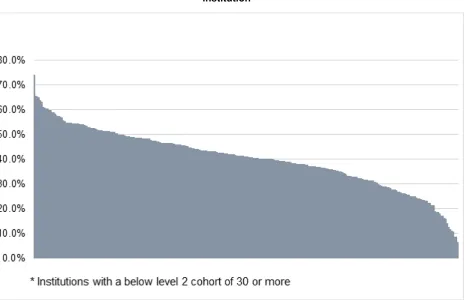
apprenticeship or level 2 the following year. But at institution level, this percentage
[image:10.595.65.531.140.440.2]ranged from 75% to 7% shown in the chart below. Whilst this can be explained in part by prior attainment, it is clear that there are other factors in play.
Figure 1.1: Percentage of below Level 2 students progressing to Apprenticeship or Level 2, by institution*
Source: DfE: Young Person’s Matched Administrative Dataset
A study commissioned by DfE to understand more about how who are not yet in a position to succeed at Level 2 are supported to progress within post-16 provision (Allan et al, 2016), established that no single intervention was most effective in supporting the progression of this student group from Level 1 study at the age of 16 to successful outcomes later on. However, this research identified that support structures that are tailored to the needs of the individuals, particularly those with special educational needs and disabilities (SEND), are effective; as is good use of monitoring and information
systems to review teaching and learning approaches. Primarily though it was found that it is crucial to have the right people steering the below Level 2 offer. Such staff seek to raise aspirations, build resilience and help students address barriers to participation. Most recently, De Coulon et al (2017) at The Centre for Vocational Education Research utilised newly available linked administrative data to provide descriptive evidence on the characteristics of students participating in below Level 2 vocational qualifications, their progression in learning, and labour market outcomes. Following a cohort of
11
96% of these students had not achieved 5 A*-C GCSEs and 69% of them had not
achieved any GCSEs A*-C. They found that most of the programmes below Level 2 were similar with between 300 and 400 Guided Learning Hours and around a third of students participating in programmes that focus on personal and social skills. The data analysis showed significant progression in education by this cohort of students. Nearly 80% of the students had a positive transition to higher level vocational education, Apprenticeship, or employment within 3 years of leaving school. However, 21% were persistently not in education, employment or training (NEET). The labour market analysis showed that achieving the below Level 2 qualification that was started at the age of 16 ‘leads to better employment prospects and to higher earnings 4 years later’ (p2, De Coulon et al, 2017).
1.4 Research Approach
The DfE specification for this study set out a requirement for 20 institutional case studies to be completed. These would focus on a variety of institution types, as well as a variety of below Level 2 programmes. The sample frame for case study selection, included institution title, organisation type, progression rates based on 2013 data, and some cohort information.
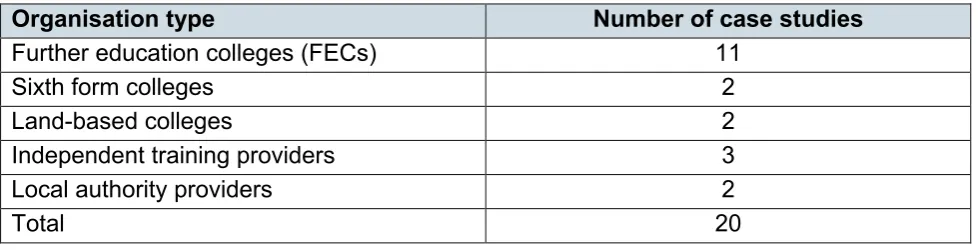
[image:11.595.51.541.534.659.2]When designing and selecting the sample for case studies, the research team took a number of factors into account to achieve a diverse sample. It was important for DfE to collect the perspectives of a range of organisation types; consequently Commercial and Charitable Providers (CCP) were oversampled with further education colleges (FECs) under-sampled. Spatial factors in respect of location and urban/rural/coastal settings were also taken into account as well as factors such as the proportion of Special Educational Needs and Disabilities (SEND) students, and full- or part-time programme offer. The final, achieved sample is set out in Table 1.1.
Table 1.1: Achieved case study sample by organisation type
Organisation type Number of case studies
Further education colleges (FECs) 11
Sixth form colleges 2
Land-based colleges 2
Independent training providers 3
Local authority providers 2
Total 20
Source: IES 2017
12
included observation of lessons where possible and a review of documentary evidence – such as independent learning plans, timetables and other materials.
The research questions that the case studies sought to address and understand the rationale for, included: the nature of the below Level 2 offer and how this was decided upon; programme content including the balance between technical skills, English and maths, life and social skills, and work experience and rationale for this; success and progression rates achieved; balance in the use of qualifications in comparison to
13
2 About the institutions and their provision
This chapter provides some brief contextual information about the case study institutions and their provision (more information is provided in Appendix B).
2.1 Institutional context
Around half the case study providers were located in areas of significant socioeconomic deprivation (typified by a high number of wards being in the 10% or 20% most
disadvantaged nationally according to the Indices of Multiple Deprivation). A further 4 were based in catchment areas that had clear pockets of deprivation alongside relatively more advantaged areas. Of the remainder, 3 covered such a large area that
generalisations are inappropriate, and 2 were in fairly affluent areas. Most of the institutions were large or medium-sized, although some small education and training providers were included.
The institutions’ education and training offers were generally broad and vocationally-oriented, offering a wide range of qualifications and study programmes between Entry Level, and Level 1 to 3 across various subject specialisms. To a lesser degree,
institutions also offered A-levels, Higher Education (HE) courses as well as lower-level personal or employability development programmes. Part-time courses were offered in a sub-group of the providers, but were far from universal. A couple of institutions were wholly or partially specialised or, where they were multi-site, had a campus for a
particular discipline (e.g. a dedicated maritime training centre) or Foundation Learning. Over half were located over 2+ sites and thus had opportunity to tailor their provision according to differing local labour market needs and student preferences.
Almost all discussed how their below Level 2 student body and prospective intake faced many significant barriers to learning, although the nature of these varied by provider and locality. Common amongst these was low attainment combined with low confidence, due to poor prior educational experiences. Interviewees also noted that individuals had needs that were often multiple and complex, such as significant proportions of students with special educational needs or disabilities (SEND), English as a second language (EAL), high NEET rates, low familial income and cultural capital, safeguarding concerns and ‘vocational confusion’ (not having identified their skills and not knowing what is involved in specific careers).
2.2 Course descriptions
14
Construction and the Built Environment, Health and Social Care (including Childcare), and Hospitality. Other less prevalent options included Public Service, Renewable Energies, Engineering, Creative Arts and Sport. Entry Level courses, where available, were more restricted to the most popular and options that delivered transferrable skills. There were a number of other education and training options that were less common which included generic vocational programmes aimed at developing work-related and personal skills, and specific courses such as Prince’s Trust, Traineeships or Skills Towards Enabling Progression (Step-Up).
However, despite these different offers, it was apparent that all programmes were designed to be practical and hands-on and, where possible, to minimise assessment by external examination. Institutions believed that this learning and teaching style combined with modular or portfolio-based assessment could better help this cohort of students thrive. In addition, alongside vocational learning aims, all programmes included: English and maths (aside from 1 unaccredited course); personal, social and life skills
development; and work-related or work-based learning, although the precise form differed greatly between institutions.
Most of the case study institutions chose to integrate below Level 2 provision within subject departments, because their offer was aligned to particular vocations and progression routes. Institutions that chose this structure believed it helped students to gain a sense of ‘belonging’ that facilitated a smoother transition to related higher-level studies. Others had dedicated Foundation learning units or sites, judging that this could provide the cohort with much-needed dedicated support.
For students not yet ready for Level 2, personalisation was typically achieved through different models of delivering classroom activities, assessments, maths and English, work-based or work-related learning and timetabling since most provision followed a set programme of units, set by external examination boards.
Most institutions offered GCSE retakes in English and maths for students who received a D grade at GCSE and Functional Skills to those who received a lower grade. However, several institutions also used ‘stepping stone’ qualifications to bridge the gap between Level 1 and 2 in these subjects, or delivered courses over 2 years rather than a single year to provide students with a better chance of achieving their Level 2/GCSEs.
Institutions overwhelmingly reported that their students tended to progress onto the next level of learning. It was typical for students to continue with the case study provider though some transferred to another FEC or CCP. Far fewer were said to progress into Traineeships or Apprenticeships, which were seen as less accessible for this cohort, mainly due to competition for places. This is reflected in some of the data. For example, of the 30 students enrolled on Level 1 engineering at a case study provider, 23
15
16
3 Elements of effective practice
The report now considers in more detail, the component parts of curriculum and delivery in the case study institutions in order to provide insights in effective practice.
3.1 Curriculum planning
Staff in the case study institutions reported that they plan and regularly review their curriculum, taking into account feedback, to ensure that it continues to meet the needs of students, employers and the local labour market.
Student demand was a factor that contributed to curriculum planning, as did consideration of the skills and abilities of a particular cohort as identified at initial assessments. When reviewing pathways to further study, institutions had acted to broaden their Level 2+ offer to cover more vocational routes, so that students could progress in their study from Level 1 through to Level 3 and above in a particular sector. A land-based college had reviewed their students’ progression route from their courses into employment and on this basis, changed their programme to offer a more realistic insight into the types of employment that were typically accessed. Where previously they had offered Level 1 uniformed services programme they now offer a Level 1 outdoor education programme that has much of the same content but the contextual vocational tasks and career planning now related to sports and active leisure.
The institutions also looked to Traineeships, Apprenticeships and employment as a progression route. Therefore the needs of the local labour market were considered by talking to the Local Enterprise Partnerships and Chambers of Commerce. Institutions also considered industry-recognised or specified qualifications at Level 2+ and ensured the Level 1 students followed the same awarding body to prepare them for Level 2 and onwards.
The institutions often hosted employer events that the below Level 2 curriculum leaders could become involved with. FECs also reported having linked to their local Skills
Strategy documents. These conversations aimed to identify growth industries and skill demands. In addition, employers were supporting the curriculum of another case study FEC by advising on the most up-to-date working practices and creating a realistic simulated working environment. Other organisations such as charities and voluntary groups also played a part in delivering elements of the curriculum through students participating in volunteering activities, work experience and mentoring,
In addition to the content, how and when different elements of the curriculum were delivered were also important factors for the institutions to plan and review (this is
17
of teaching so that students do not have free periods as they found that students would leave the premises and not return. How English and maths teaching were organised and delivered was something that all the institutions had focussed on. This is covered in later sections of this report but included examples of creating shorter lessons, mixing groups depending on vocational area or assessed level and when in the day the lessons were delivered.
3.2 Engagement
3.2.1 Engaging potential students
Almost all institutions reported activities that they were undertaking with and in local schools in order to publicise their provision. This included:
• Outreach sessions: local primary and secondary schools were visited to help potential future students understand the alternative to an academic route. In some case these sessions were delivered by current students.
• Link courses: students still at secondary school could start attending the post-16 institution up to 1 day a week to aid the transition to the new environment. • Taster and shadow days: institutions that ran these described how they were
becoming increasingly popular as potential students got to experience the post-16 environment and understand how programmes were delivered.
Where these activities were reported to work well, the post-16 providers had a dedicated team that liaised with schools and were able to ‘sell’ their provision as an alternative to the academic route that a school sixth form would offer.
Other local links, such as with other post-16 providers and local authority and other guidance services, were similarly important in attracting this group of students although some institutions reported difficulties. These had seen the demise of local training providers and careers advice services which made it more difficult for young people to find out about alternative provision i.e. beyond school sixth forms.
While most of the providers included their below Level 2 offer in their marketing materials (websites, prospectus and social media campaigns) some institutions did not, and
18
Another approach was to offset the start of below Level 2 provision from the start of the academic year. This enabled colleges to take in students who dropped out of the courses they had selected initially. In an example of this, around two-thirds of the starters on the relevant course had initially started on other provision elsewhere in the college.
3.2.2 Attracting students to the provider
Staff thought that their institutions were attractive to young people, in particular those studying at below Level 2, as the environment they offered was very different from
school. Many students who had not achieved a Level 2 at 16 had struggled at school and the post-16 providers could position themselves as different from this. Students spoke about the environment being more relaxed than school, and of being ‘treated like adults’. Topics such as English and maths were also presented by providers as being taught very differently than at school. This institution sample included sixth form colleges, FECs, CCPs and local authorities, with each being incrementally more different from school, with increasing levels of pastoral support and independence for students. However, there were exceptions and in an example, a CCP required young people to dress in business attire and attend punctually. This was in order to help them make the transition from the school to the work environment. Students spoke of being sent home if they were dressed inappropriately or having to wait for a session to finish is they arrived late. This frustrated them initially, but they understood that the reason behind the requirement was to help prepare them for work.
Many staff presented the provision as a second chance and reported that being able to ‘have another go’ at studying in a different context was appreciated by young people. It was common for providers to promote a message that students would not be dismissed because they did not possess qualifications to commence Level 2 or 3 courses; instead interests, passions and goals would be explored, then suggestions made about the qualification(s) that would help students achieve these.
3.2.3 Getting on the right course
Initial engagement with the post-16 institution and their programmes was viewed as crucial. Most of the institutions offered some form of roll-on, roll-off provision, with
multiple start and finish points throughout the academic year in order to capture students who dropped out from other programmes and enable movement to employment or to other programmes. The FECs particularly reported that the first 6 weeks of the new academic year acts as an induction period with students able to switch between
19
issues on their course; in order to prevent them becoming NEET, the institution re-directed them to another, more suitable course.
Interviews with college staff prior to the start of the course aimed to ensure that the
young people are well matched to the vocational area they opt for. Again, the provision of taster opportunities acted as a valuable check to choices.
In addition to enrolment interviews, more than half of the case study institutions
conducted individual initial assessments of students, including in psychometric tests, to better understand their academic level and where strengths and interests lie. In most instances, the curriculum could then be adapted to suit individual needs such as by assigning different tasks to students according to their resilience scores.
3.2.4 Engaging with the content
Where institutions recruited young people direct into below Level 2 provision they reported that the vocational elements and linked facilities and activities were the most appealing elements. This included realistic hairdressing salon settings, work experience with employers within and outside of the college and other links with employers. A practical focus was also said to be attractive to this student group. Some of the study programmes examined incorporated ‘tasters’ of the different vocational provision available prior to enrolment. Staff and students reported that these were popular. Institutions that offered unitised qualifications were also reported as popular with students.
Most below Level 2 students were said by staff to prefer practical activities over theoretical/academic lessons. As such, staff indicated that syllabus delivery was as practical as possible with theory embedded in practical tasks. Lessons were kept engaging through combining group and individual activities, interactive tasks and a rotation of tasks set up around the classroom. Project work was also used by tutors as a way of allowing differentiation for different ability students.
Current affairs and incidents in the classroom were also used as a ‘hook’ to engage students; this also meant that lessons were adapted at short notice to respond to the needs of the group. New technologies were also an effective means of engagement in the curriculum.
‘We’ve got the resources to make sure that it is very practically oriented. So if you’ve got a student who is averse to the academic side of it, we’ve got great practical activities that we enable them to do, but also linking that, to ensure that they’re gaining the knowledge and understanding.’
20
An important aspect of supporting students to engage with the content was the ability of tutors and the institution to be able to change and adapt delivery. For example, a sixth form college reported a situation where some students had stopped attending because of difficulties they had with English lessons. In order to keep them engaged and on track for progression the institution made individualised sessions available to help them regain their confidence.
Students were also kept engaged with the programmes by having opportunities to be inspired by others. This could be students working on higher level courses helping those on the below Level 2 provision. It could also be inspirational people: tutors with real-work experience; students who have progressed into employment to share their experiences of work; or employers. Employers who set real-world assignments or helped deliver master-classes were particularly engaging. In an example of this, an employer delivered a session on presentation skills at their corporate offices, enabling students to learn from the content but also from the setting.
The most challenging aspect of the curriculum to ‘sell’ to potential students was the requirement to continue with maths and English. While often embedded throughout the curriculum, students still had to work towards stepping stone qualifications or GCSEs. It was easier for staff to describe the benefits and differences in approach of the stepping stone qualification (most likely Functional Skills) than the GCSE, because students believed they had already ‘failed’ at the latter.
3.3 The below Level 2 curriculum
The case study institutions were chosen to achieve a diverse sample with representation of different institution types and locations. The institutions’ education and training offers were generally broad and vocationally-oriented, offering a wide range of qualifications and study programmes between Entry Level, and Level 1 to 3 across various subject specialisms (this is discussed in Chapter 2).
Despite choosing diverse institutions and programmes the below Level 2 curriculum could be characterised as having common elements: vocational content; maths and English; tutorials; employment-related activities and enrichment activities.
21
3.3.1 Vocational element
The main part of the (study) programmes, the vocational element, as discussed
elsewhere in this report could focus on a particular sector (e.g. retail) or multiple sectors via rotations or taster sessions. These were offered by other departments in the
institutions.
Units of study and awarding bodies were decided by curriculum coordinators in response to students’ interests, skill levels and aims (this is discussed more in section 3.4). Almost all programmes explored as part of this research offered regulated qualifications for this vocational element, and if not then a certificate of course completion. In the case study institutions there were examples of some below Level 2 programmes that did not offer awards. These were focussed on preventing students becoming NEET as well as increasing job searching skills.
Although listed as a separate element here, maths and English content was also
embedded within all vocational teaching with the vocational focus offering context to the maths and English being taught in dedicated classes,
3.3.2 Maths and English
Maths and English were delivered for relevant students for between 1.5 hours and 3 hours per week for each subject, (the approaches taken by the institutions to organising, delivering and grouping students for these classes is discussed in sections 3.4 and 3.6). These classes were working towards either GCSEs or Functional Skills. Some students also took Functional Skills in information technology (IT).
3.3.3 Tutorials
Tutorials were a chance for small groups or individual students to take a different approach to their work in vocational lessons – for instance having support to create a poster about a topic. Tutorials also offered pastoral support as well as academic or study skills support and were a chance to focus on progression. For example, an FEC had dedicated tutorials and coaches to focus discussions with students towards their next steps and how they would get there.
Elements that were required by Ofsted such as equality and diversity, British values, and the Prevent duty for schools and providers1, were integrated into the vocational element and also covered in tutorials. A land-based college that had a high number of students
1 The government strategy requiring schools and providers to assist in preventing children and young
22
with SEND reported that delivering their Prevent duty to their vulnerable students was a challenge as it often involved complex concepts that scared their students. Therefore staff were careful to handle the issues very sensitively, providing lots of reassurance.
3.3.4 Employment-related activities
For students on Supported Internships or Traineeships, employment-related activities involved a number of days per week with an employer in addition to time at the institution, More broadly, these activities could be part of the vocational focus of programmes, for example practising skills needed in the workplace or learning from workplace scenarios in the classroom. In an example of this, hairdressing students at a case study institution spent much of their time with their provider in a salon setting, practising their skills, and less time in the classroom learning theoretical knowledge.
Employment-related activities often involved employers. This included work experience and work placements or project work set by employers. Employers were reported to give presentations to students at the institution or at their own premises on various topics. Another approach to employment-related activity was engaging students in work
preparation for example, by learning job searching techniques, creating CVs or practising completing application forms. Again, employers could be directly involved in these
activities by conducting mock interviews.
3.3.5 Enrichment
Enrichment activities often took place on Fridays for a whole or half day. They were most often reported to be decided on and planned by the students themselves. They often helped to develop ‘soft’ or personal and social development skills in a different way to the other activities undertaken at the institution. This could include: team-working and
negotiating skills, planning, getting physically active, meeting challenges and
experiencing new things or places. Volunteering (as a group, helping at a food bank or community garden) and mentoring would also be included in this area of the curriculum.
3.4 Personalisation/Tailoring
Personalisation and tailoring of provision, albeit to varying degrees, was evident across the case studies. The personalised approach to meeting students’ specific needs
included curriculum/course flexibility, timetabling flexibility, differentiation in teaching, use of individualised learning plans (ILPs), individualised support through tutorials and
23
3.4.1 Identifying support needs
Most institutions used diagnostic tools, including interviews and assessments, and conducted initial needs assessments during the recruitment and induction process in order to identify: students’ specific needs, study/career interests and aptitudes or level of English and maths. The aim of these was to ensure that students were placed on the correct course and level, and offered appropriate additional help in respect of personal development, employability and pastoral care.
‘The course is a personalised programme of study that builds on learners’ earlier learning and is aimed at helping learners to understand themselves, their strengths, weaknesses and particular interests. The programme aims to prepare them for progression to further learning and a preferred career path.’
Course Leader, FE College Tutorials, both individual and group, also played an important role in providing students with personalised support with a view to progression. As well as covering personal and social development, institutions often incorporated additional support for the vocational element of the study programme.
‘Students also have regular tutorials delivered by their vocational leads. This means tutors know how students are faring on their programme, the safeguarding needs and can be a friendly, trustworthy support. Students are positive about the
relationship and safe space.’
Senior manager, 6th Form College Differentiation of tasks within classes to adapt to different levels was the most prevalent example of tailoring within the case studies. Teaching approaches and styles in the classroom ranged from direct instruction and directed learning, to group work and independent learning, to project-based work, and peer learning and support, to classroom-based and off-site learning activities. Classroom activities would be
differentiated where teachers directed more challenging and complex questions or tasks to higher-performing students. Similarly, assessment formats were also varied according to ability, where students who suited more of a challenge were asked, for example, to submit an essay whilst those who required more support were asked to submit a
presentation. Students who received these different tasks enjoyed being kept engaged in activities; other than this there was little awareness of differentiation reported by the students.
24
An integral part of the greater personalisation and tailoring of provision observed across the board was the use of individualised learning plans (ILPs). These set not only
students’ learning and/or progression goals but also outlined specific programmes and other activities based on initial assessments. At the same time, they were regularly reviewed to measure and monitor progress.
3.4.2 Programme planning
Programme flexibility was reported to be critical in the quest for greater personalisation and tailoring of provision to meet the specific needs of students studying at below Level 2. Significantly, it was stated that this student group appreciates flexible approaches to curriculum design and content as well as the freedom to try out different courses and/or choose those that best meet their needs and interests. In many cases, such flexibility resulted in higher levels of student retention and engagement as well as greater likelihood of successful completion and progression.
As noted, in most of the institutions, students in the below Level 2 cohort were enabled to switch courses within the first 6 weeks and could access taster sessions in order to help them identify an area or skill that they would like to develop further together with the provision that best suited their specific needs and interests. An institution described this switching as ‘quite common’.
In most cases, there was flexibility in the way a programme was put together with a number of courses comprising both core (mandatory) and optional elements, so that students had the flexibility to ‘pick and mix’ elements/modules in line with their specific needs and interests. Staff believed that this increased the likelihood of a positive learning outcome, since courses thus addressed the specific student’s needs and interests. A sixth form college also created different streams within a single programme, where cohort size allowed, so that each followed different sets of modules according to students’
interests.
‘The course programme is flexible, and staff tailor the course content to the interests and needs to the students. For example, with a cohort of students staff tailored the course to their interest in sport.’
25
an institution that offered compressed hours for students working with a tradesperson outside of college to allow them to develop their industry experience. Likewise, in some institutions there was flexibility in terms of the length of time that students stay on courses and the speed with which students’ progress.
In general, programmes were not delivered 5 days a week. Although a CCP did build up to 5 day a week attendance by the end of their programme. The Traineeship that they delivered was to prepare their students for employment so they found that building up to 5 days a week helped with that preparation for work.
At most FECs, tutors described the importance of being able to adapt lessons and activities to better meet the needs of students. Staff and students knew in broad terms the topics that would be covered in coming weeks but the method of delivery could change in response to student need. Even within lessons activities were kept short and the teacher was able to switch between tasks to keep students engaged. Staff have a bank of resources built up over time to draw on.
While programmes that started at the beginning of term were the most common pattern of provision within the case studies, a few colleges and providers opted for very flexible
provision on a roll-on, roll-off basis throughout the year, with more frequent starting points.
‘They work on a roll-on, roll-off basis. They have inductions every week, which is fine because they’re not courses, they’re individualised programmes which work on a wheel. They teach in topics, and tend to try and get people to start at the
beginning of a topic. There isn’t a start or end to the wheel, it goes round and round – they’re discrete topics that can be done in any order.
Course Leader, Provider It was mainly the CCPs within the case studies that offered roll-on, roll-off provision with a minority of the FECs and sixth form colleges doing so. An FEC that organised different start dates for ‘next step’ courses was an exception. For colleges the ‘roll-off’ element was not well defined and mainly relied on external provision as a progression route for students that ‘rolled-off’.
Moving students forward by developing skills and personal and employment attributes, to support them to progress to study at a higher level or towards employment was a central part of the curriculum offered by the case study institutions.
3.4.3 Progression planning
Planning for progression was reported to start even before recruitment. Some institutions worked to ensure that they have progression routes set out within their offer. This could be achieved through a series of short programmes that students could enrol on
26
course, Apprenticeship or other progression route. Progression to the next step could happen at different times and in-year progression was possible in these programmes; moving from Entry Level 3 to Level 1, due to multiple starting points in the year. In one provider, A Foundation Learning Department also worked with other departments to ensure that there were Level 2 starts in January for students that achieved their Level 1 between September and December. A couple of FECs set out 3-year programmes so that students entering the college at Level 1 understood the next steps (to Level 2, Supported Internships or other progression routes), from the moment of enrolment:
‘We don’t discuss them doing Level 1 as standalone, it’s progression through the levels as part of a student journey.’
Deputy Principal, FE college
‘Because we’ve got a good offer of Entry and Level 1 programmes, it means that we can provide succession routes, so we can provide progression. So when we come in and we talk to a student, although they might be starting on Level 1, what we’re always engaging with them is that we know that that’s your end result, and to get there, this is the stepping stones that you’re going to take.’
Assistant Principal, FE college Colleges in particular also reported considering the qualification assessment method and assessment board in their progression planning. Students have to be prepared for exam-based assessments when they progress up to the next level. To help prepare students they would be given extra work at Level 2 or have exam practice while on their Level 1 course.
The post-16 institutions reported that the progression planning should be aspirational but realistic. Several cited the importance of not setting students up to fail by setting sights too high. A series of milestones playing to the strengths of students helped to build confidence and a sense of achievement. These milestones were thought to be of
particular use when qualifications simply offered a pass or fail at the end. In some cases these were college-created certificates. However some institutions had recently
introduced unit credits for the vocational tasters students undertake.
Progression planning was clearly focussed around students’ own aspirations, and communication was a vital part of the process. An FEC reported that an effective approach with Level 1 students was to continue to talk to them about their goals and show how what they were doing as part of their studies was a building block towards their next step.
It was clear from the research that progression was an underlying theme in all
27
progression and next steps; tasters of Level 2 classes and assignments; and careers information advice and guidance sessions.
A further example was offered by a college that ran a ‘progression week’ in March each year, where students have an individual meeting to set targets and engage in a range of activities looking towards their next step within the college. During progression week, students are encouraged to select (via an online system) their course choice for the following year. The college make the student a ‘pledge’ that if they met their targets, they would be guaranteed a place next year on their course of choice.
3.5 Impact
Students benefited from their participation in programmes by developing skills and attributes needed for further study and for work.
3.5.1 Building confidence
A key first step reported by many providers was to build confidence in education. Some colleges described how for the few weeks of their programmes (13 weeks for a year-long programme and less for shorter programmes) this was the main focus, rather than
educational attainment targets. Others described how the first weeks were about understanding appropriate standards of behaviour and punctuality. Many described ‘repair work’ in building self-esteem and confidence. Over time, ‘mishaps and mistakes’ with behaviour were used as learning opportunities and attendance hours were built up to get students ready for full time employment.
3.5.2 Developing knowledge and study skills
Many of the below Level 2 courses offered either a single vocational specialism or longer duration tasters in a few different areas. However, staff reported that these below Level 2 programmes were not necessarily about getting a job in the vocational area; rather the programmes helped to develop a base of knowledge as well as study skills, such as completing work and meeting deadlines, building up literacy and numeracy, and becoming rooted in college life. For example, an IT programme included media and business as well as IT and students could go on to select a specialism.
3.5.3 Developing soft skills
28
activities were often specifically planned to develop skills such as team working, critical thinking and planning. In a couple of examples, trips taken as part of study programmes or enrichment helped to focus students ideas about what work they might like to do in future and also broadened their horizons. They would be taken to places (for example a restaurant or theatre) they would not normally go to, to understand different work
environments and how to behave within these.
3.5.4 Developing employability skills
Work-experience to develop employability skills for students studying at below Level 2 was often undertaken as a group initially. Some students then progressed to individual placements but within the provider or at a commercial outlet within the college. Students closer to Level 2 would be offered individual external work placements. This staged offer helped to build confidence in students over time. It enabled those that were not so ‘work ready’ to gain valuable experience that employers might not be able to give them
individually. In an example, an FEC reported that Level 1 students who undertook work-placements did over and above what was required by their qualification syllabus. Work-placements were also useful for students to interact with other students at different levels who were also on placement. They were described by a local authority provider as ‘the most effective tool we have’.
Students were given opportunities to achieve and gain experiences they could use for job or education applications, often within the institution. An FEC gave the example of the Level 1 cohort successfully organising a football tournament for the whole college, Level 1 construction students designing and selling wooden ornaments at Christmas and Level 1 catering students selling food at parents’ evening.
3.5.5 Subsequent destinations
Multiple institutions described how they supported students to progress to whatever route was right for them. For example, an FEC supported its students to leave if that is the right option, but made sure they were leaving to another course, or employment.
Progression into employment was seen as a valuable route for students and a Local Authority provider was keen that employment into a family business was recognised as a good outcome, particularly for Gypsy and Roma students. Apprenticeships were a
29
Volunteering and supported employment, including care farms2, were also viewed as useful progression routes and were noted to help prevent young people entering the NEET status.
Others described the circumstances under which progression would be sideways. This was where a student completed a general Level 1 programme in a foundation learning department that would provide tasters in different subject areas and would then go on to a Level 1 programme in a specialist vocational area. In these cases the first Level 1 course had been successful in addressing low attainment from school and the second Level 1 was compulsory for entry into a particular vocational area. An FEC provided progression within the academic year; with the final term after Easter giving students a chance to focus on their next stage. The final term still comprised a large focus on maths and English, but also included working on higher level study skills (using references in essays for example) and joining Level 2 or Level 3 classes to gain experience and get a taster of a programme at that level.
3.6 Challenges
The case studies highlighted a number of challenges faced by institutions however; they were also adopting a range of strategies to overcome them.
3.6.1 English and maths
Institutional staff emphasised that maths and English were often the most challenging programme components for students not yet ready for Level 2, who were described as having very negative views of and not wanting to engage with these subjects. Staff
believed the situation was particularly challenging for students who had previously gained a D at GCSE, and for whom they could not offer any other option apart from to retake the GCSE, regardless of level at enrolment assessment.
Staff said that continuing with GCSE English and maths risked disengaging students resulting in them dropping out of the study programme altogether before they have had a chance to complete other elements such as their vocational qualification.
Colleges were trying out different models of teaching English and maths in an effort to ensure that below Level 2 students stayed engaged and achieved. A common approach was to embed/integrate English and maths into the vocational area, delivered by the same tutors so that these subjects were seen as an integral part of courses. An FEC that
2 Care farms provide health, social or educational care services for individuals from one or a range of
30
had this ‘seamless curriculum’ (the same tutors delivering vocational lessons as well as English and maths) had seen attendance and retention improve and the students build a strong relationship with the tutor. This built up students’ confidence to ask questions when they did not understand some aspect of their course.
Other providers grouped students by both subject area and skills level, although some found this took up too much teaching resource (requiring many more classes) and was not sustainable. This approach had the benefit that groups of students already familiar with each other from their other classes settled quickly into the English and maths lessons. Alternatively, formal English and maths lessons were delivered by specialist teachers and complemented by contextualised English and maths in vocational classes. For example, students on a construction course were asked to estimate how much paint they would need to paint a room while those on a hospitality and catering course were asked to measure ingredients and those on a carpentry and joinery course to measure angles and joints.
‘Trying to make them [English and Maths] relevant to the particular vocational area is critical in motivating below Level 2 students to also get engaged with these “more academic” subjects.’
Tutor, FE College As with the earlier research findings (Allen at el, 2016), other examples included
timetabling in order to maximise attendance – e.g. ensuring it was not timetabled immediately after a free period and scheduling lessons were before it so that students had a chance to burn off energy (having a sports lesson prior) or, at least had not had prolonged periods of theoretical or passive learning. In all cases, interviewees stressed the need to reinforce the importance of English and maths to securing employment and how these skills are viewed as critical by employers.
3.6.2 Hours for delivery
Most of the case study institutions delivered less than the expected average of 600 hours for their full-time programmes with around a quarter of case studies programmes
31
college and an FEC, students that completed programmes part way through the year did not have progression routes available to them internally, instead they had to look for external transitions.
One model, used in a number of case study institutions, delivered to students for full days, 5 days a week, for 12 weeks (at Level 1). Students and staff believed this intense model provided the level of support required to support and maintain engagement with this student cohort that were likely to have multiple and complex needs.
Most institutions reported that they started their classes at 9am or 9.30am to keep in a similar routine as school and prepare students for working life. Lessons tended to be of 1.5 hours’ duration, although occasionally there were 3-hour lessons, with a break at the halfway point. Full day timetables with back-to-back lessons ensured that students remained engaged and on the premises.
3.6.3 A diverse cohort
The below Level 2 cohort comprises a highly diverse population with varied needs and degrees of vulnerability. Apart from low attainment, many have multiple and complex needs and face a multitude of personal/family, emotional and social barriers to learning. A major challenge for institutions was to adequately cater for the individual needs of such a diverse group and to ensure that their achievements, against this context, were fully recognised and accredited.
As noted in earlier sections, institutions adopted a wide range of strategies for addressing the needs of the highly diverse below Level 2 cohort including diagnostic assessment, personalised approaches and ILP together with a flexible approach to curriculum delivery and content. At the same time, interviewees emphasised the importance of tutorials, pastoral care and support. However, they underlined that the provision of such
personalised and pastoral support was time consuming and could put a strain on college resources and capacity.
‘One cannot underestimate the time required to effectively support below Level 2 students. As a result, the curriculum structure and content should acknowledge their greater need for support.’
Deputy Principal, FE College Appropriate behaviour
32
‘For a large proportion of these students, the biggest barrier to employment and education is not accreditation but attitudes and soft skills, for example getting up or turning up regularly for classes or work, being on time, having a well-developed work ethic, knowing professional norms, being confident and articulate…’
Tutor, Local Authority provider In view of the diverse additional needs and barriers to learning of the below Level 2 cohort which may be reflected in disruptive or erratic classroom behaviour, non-attendance and/or lateness, tutors and teaching staff in many institutions adopted a variety of different classroom behavioural management styles. Differentiation was deemed essential for effective classroom management. Likewise, providing sufficient learning support in the classroom in the form, for example, of support workers/learning support assistants was also helpful especially for students with lifelong learning
difficulties (LLD) or those with higher levels of additional needs. Work experience placements
Securing sufficient work experience students on below Level 2 programmes in certain vocational areas such as construction, engineering or ICTs as well as for certain groups, notably students with LLD, proved challenging. Interviewees found it difficult to find placements for the cohort, because of their additional need for support, which employers were either reluctant to or could not provide in the workplace.
‘Nobody wants to take a Level 1 or below. They think they’re not up to it, there’s that stigma about bad behaviour, it’s really hard… And the boss can’t take time out to show somebody and then because they’re a Level 1 or an Entry Student, they probably need twice as much time as a Level 3 student would, and so I understand that. I’m not begrudging. But you just think, maybe if there was some incentive for them to do it, to open up to it.’
Head of Department, FE College Institutions were using a range of approaches to source and secure work experience placements, Traineeships and Supported Internships. A number successfully adopted a cross-college centralised approach by setting up a unit/dedicated team explicitly tasked securing such placements or employer engagement. Some worked with external
agencies, or in the case of students with LDD, specialist providers with experience in finding placements and/or supporting young people in situ for work shadowing
opportunities. Interviewees described workplace visits combined with realistic job
33
34
4 Lessons for policy and practice
This final chapter draws out some lessons and implications arising from the research in respect of policy as well as for delivery.
4.1 Lessons for institutions
The case studies highlighted a number of lessons for delivery that could be used by other 16-19 providers. For example, a holistic and individualised approach to students in this cohort was felt to work, instead of focusing mainly on qualifications/accredited learning. For young people with complex needs, first addressing specific individual/family, social and emotional needs provided the platform to achievement and progression. To this end, activities aimed at personal development, enrichment, employability skills together with pastoral care were deemed critical. The case studies show that the preferred delivery model focusses first on personal development and moves on to deliver qualifications and certificates, so the emphasis changes through the duration of the programme.
‘By focusing on addressing the basic needs first, the likelihood of the young person (re) engaging with learning increases, since they are unlikely to be distracted by these, so they can focus more on their learning. Developing resilience, confidence, self-belief and emotional intelligence in young people is very important in that regard as is the need for them to feel that they are treated fairly and as responsible adults (but within clear and consistently applied boundaries).’
Curriculum Manager, Local Authority
4.1.1 Curriculum
The institutions recommended thorough needs assessment at the outset. While this might take in references and qualifications from school it needed to allow goals and aspirations, along with the range of skills levels at the outset to be identified. This would identify the correct course and mix of provision that will effectively meet young people’s needs, interests and level of competence.
35
Flexibility to allow students to progress over different time periods was also important; students take shorter or longer to progress, developing different skills and attributes as part of this. It was consequently also important to ensure that there were progression routes available at the different points in the year when students were ready to progress. Regularly reviewing provision, to ensure it continues to meet the needs of students, employers and the local labour market was identified as important in securing good progression. Strategic discussions involved evaluating the programme at the end of each year, taking into account any feedback from Ofsted, staff and students. There was also evidence pointing to the importance of reviewing at the beginning of the year to ensure the programme met the needs of the incoming cohort of students. Building links between vocational subjects and English and maths could help build engagement with these subjects, particularly as the below Level 2 may feel they have previously failed to achieve these. More generally, for students who have had negative schooling experiences and/or gained a feeling of ‘failure’ in education, it was seen as important to build their ability to achieve incrementally by allowing them to succeed in ‘small things’ and publicly
acknowledge success. Embedding stepping stone accreditation towards qualifications can be an effective means of engagement.
Close and regular links and active engagement with employers and linking provision to labour market requirements, was reported to be instrumental in helping to develop careers insights, increasing the employment chances of students and helping to raise aspirations and ambitions. Linked to this was the importance of securing work experience in different formats, suitable to the needs and capabilities of this student group, as an effective means to expose students to the world or work and genuine work settings.
‘Many opportunities for work exposure with real local businesses helps students see what the world of work can be like, have more confidence about being in a
workplace and gain a better understanding of the behaviours expected.’
Head, 6th Form College
4.1.2 Supporting the curriculum
The curriculum must be accompanied by effective pastoral support, communication between departments and monitoring systems to assess progress and take early remedial action, where appropriate. Indeed, pastoral care and support for students not yet ready for Level 2, many of whom face many different personal, social and emotional barriers to learning, was deemed critical. Likewise, tutorials provided core wraparound support for students who often had many barriers to learning.
36
could help to stress that the learning context is different from, school. The use of support workers in classes to provide additional help and alternative learning strategies allowed students to engage more with the material.
The expertise, commitment and motivation of staff were critical factors in ensuring the engagement, progression and achievement of the cohort. Institutions’ recruitment and retention policies played an important role in ensuring the attraction and retention of the right calibre of staff. This, in turn, was reflected in improved levels of student motivation and engagement - critical elements in supporting progression and achievement.
4.2 Lessons for policy
The case studies also highlighted a number of broader implications for policy which could, in turn, inform the design and content of the Transition Year. For example, the requirement for students who have not achieved a grade C in English and/or maths GCSE to continue to study these subjects was seen by a large number of interviewees as challenging, with the academic focus of these qualifications seen at odds with the more technically inclined and practically-oriented below Level 2 cohort. There appears rationale for the DfE to consider designing an English and maths programme that builds on Functional Skills provision as employers often seek applied ability in these subjects. Likewise, below Level 2, it may support progression if students are allowed to achieve Functional Skills Level 2, a part-GCSE or pre-GCSE qualification, as an interim
qualification.
Interviewees thought that their most effective below Level 2 programmes reflected the need for ‘whole person’ development and the development of a broader skills set. To this end, the Transition Year (and employability) should n