0022-538X/94/$04.00+0
Copyright © 1994, American Society for Microbiology
High Incidence
of HAM/TSP-Like
Symptoms in
WKA Rats
after
Administration
of Human T-Cell
Leukemia
Virus Type 1-Producing Cells
SHIGEKI KUSHIDA,1 HIDEHIRO MIZUSAWA,2MASAYUKI MATSUMURA,1 HIROKO TANAKA,1
YOSHIHIROAMI,1 MITSUO HORI,' KEN-ICHI YAGAMI,'TSUNEOKAMEYAMA,3 YUETSUTANAKA,4 ATSUSHI YOSHIDA,4HIROSHI NYUNOYA,5 KUNITADASHIMOTOHNO,5YUZO IWASAKI,6
KAZUHIKO UCHIDA,' ANDMASANAOMIWAl*
Institute of Basic Medical
Sciences'
andInstituteofClinicalMedicine,2 University of Tsukuba, Tsukuba, Ibaraki 305, DepartmentofBiochemistry, School of Medicine, Juntendo University, Hongo, Bunkyo-ku, Tokyo 113,3Department ofImmunology, Schoolof Hygienic Sciences, Kitasato University, Sagamihara, Kanagawa228, VirologyDivision, National
CancerCenter Research Institute,
Tsukiji,
Chuo-ku, Tokyo 104,5and Department of NeurologicalSciences, Tohoku University, Aoba-ku, Sendai, Miyagi 980,6 Japan
Received28March 1994/Accepted 10 August 1994
Wedemonstrate asignificantly high incidence of humanT-cell leukemia virustype1 (HTLV-1)-associated myelopathy (HAM)- or tropical spastic paraparesis (TSP)-like symptoms in WKA rats after injection with HTLV-1-producing MT-2 cells, while nosymptomswereobserved in F344ratsinjected with MT-2 cellsorin
control WKA rats. Five of the eight (63%) WKA rats injected with MT-2 cells showed HAM/TSP-like paraparesisat105 weeks ofage,butnoneofsevenMT-2-injectedF344ratsoreight control WKAratsshowed symptoms. This high incidence ofHAM/TSP-like symptoms in WKA rats was statistically significant (P < 0.05). Six of the eight (75%) WKA rats injected with MT-2 cells showed HAM/TSP-like paraparesis at 108 weeks of age. HAM/TSP-like symptoms were also observed in one of the two WKA rats injected with HTLV-1-producing Ra-1 cells at 128 weeks of age. HTLV-1 provirus was detected in peripheral blood mononuclear cells in both WKA and F344 rats. The provirus was detected in the spinal cords of the HAM/TSP-like WKA rats that had severe neuropathological changes. WKA and F344 rats showed no
significant difference in antibody response against HTLV-1 Gag antigen. However, the antibody response
against the C-terminal half of gp46 HTLV-1 envelope protein was lower in WKA rats than in F344 rats. Pathological analysis of the HAM/TSP-likeratsshoweddegeneration of the whitematterof thespinal cord and peripheralnerves.Thesefindings suggest that both the genetic background ofthe hostand HTLV-1 infection areimportant in neuropathogenesis of HAM/TSP-like paraparesis in rats.
In1985,Gessainetal.reportedthatasignificant proportion
of tropical spastic paraparesis (TSP) was pathogenetically related to human T-cell leukemia virus type 1 (HTLV-1)
infection (13). In 1986, Osame etal. proposed anewclinical
entity, HTLV-1-associated myelopathy (HAM), that showed
spastic paraparesis (34). Presently TSP and HAM belong to the same clinical entity, called HAM/TSP (4, 38, 48). HAM/ TSPisaslowly progressivedisease that is shownby prominent pyramidal tract signs and mild sensory and sphincter distur-bances (33). Less than 0.1% of HTLV-1 carriers develop HAM/TSP throughouttheir lifetimes(20).The involvement of
geneticbackgroundinhumanHAM/TSPissuggested,but this has notbeen conclusive (47).
Theamountof HTLV-1provirusinperipheralblood
mono-nuclear cells (PBMC)ofHAM/TSP patientsisreportedtobe greaterthan inHTLV-1 carriers(12, 25, 42).HTLV-1provirus has been detected from thespinalcords ofHAM/TSP patients by PCR (6, 24). However, it is not clearwhether there are
patients withHAM/TSPsymptomswithout HTLV-1infection,
since it has been reported that there are patients with TSP without HTLV-1antibody(13, 48). Kiraet al. could showno
correlation betweentheamountof HTLV-1provirusinPBMC ofHAM/TSP patientsand theseverityof the disease (25).
Titers ofantibody against HTLV-1 antigens in plasma and
*Corresponding author. Phone: 3271. Fax:
81-298-53-3039.
cerebrospinal fluid (CSF) in HAM/TSP patientswere higher
than those in HTLV-1 carriers (31, 33, 42). Levels of
poly-clonal immunoglobulins (Igs) (IgG and IgA) in serum were
also elevated in HAM/TSP patients (19). The percentage of
helper inducer T cells correlated with levels ofspontaneous
proliferation of peripheralbloodlymphocytesandserumIgG
in HAM/TSP patients (18). Cytotoxic T lymphocytes might
induce demyelination of the spinal cord (22, 30). These
findings suggest that host immune responses are involved in
the neuropathogenesis of HAM/TSP. However, the mecha-nism of immuneresponse intheneuropathogenesis ofHAM/
TSP is unclear.
Animal models ofHAM/TSPwould be usefulforanalysisof the pathogenesis and development of the measures for pre-vention and effective therapy of the disease. We have estab-lishedanHTLV-1carrierratmodelby injectionofan
HTLV-1-producing human T-cell line (3, 43). In this study, to understand the roles of HTLV-1 in HAM/TSP, we have
injected HTLV-1-producingTcells into WKA andF344 rats and studied the appearance ofHTLV-1-associated symptoms intheserats.The involvementof both thegeneticbackground
andHTLV-1 in the pathogenesisofHAM/TSPisdiscussed.
MATERIALS AND METHODS
Animals and cell lines. WKA rats were purchased from Japan SLC, Inc., Shizuoka, Japan, and F344 ratswere from 7221
on November 9, 2019 by guest
http://jvi.asm.org/
Charles River, Kanagawa, Japan.
HTLV-1-producing
MT-2 cells, a human cell line (28),and Ra-1 cells, arabbit cell line (29), were used. These cell lineswere cultured in RPMI 1640 mediumsupplemented with10%fetal calfserum.Weinjected 2.4 x 10⁶ MT-2cells twiceintravenously at 3 and4weeks of age into both eight female WKArats and eight female F344 rats. Wealsoinjected4x 107Ra-1cellsintravenouslyintotwo4-week-oldfemaleWKA rats.
PCR.The lysates of PBMCwereprepared from theratsat
various times afterinjectionof
HTLV-1-producing
cells. DNA from the ratbrain, spinalcord,lymphnode,lung, liver, spleen,and kidney was prepared by sodium dodecyl sulfate
(SDS)-proteinase K digestion, followed by
phenol-chloroform-isoamyl alcohol extraction and ethanolprecipitation. PCRwas
performedasdescribedpreviously(43).Southern blotanalysis
of PCR productswas performed accordingto the method of Albretsenetal.(2).Weconsidered the HTLV-1provirustobe present in thesample when at leastoneregion(gag,pX,orlong terminal repeat [LTR]) of HTLV-1 provirus was detected at
least twice or when two regions of HTLV-1 provirus were
detected in thesamesample.
Antibody detection. The antibodies against HTLV-1 Gag
proteins in the plasma and CSFwereassayed with a
commer-cially available particle agglutination kit (Serodia HTLV-1; Fujirebio, Tokyo, Japan)(16).The antibodiesagainst HTLV-1 envelope proteins in the plasma were assayed by enzyme-linked immunosorbent assay (ELISA). N147 and C182 enve-lope proteins used as antigens wereproduced by a baculovirus expression system and were partially purified (32). N147 contains the C-terminal half of the externalglycoprotein, gp46, andC182 contains almost the entireregion of the transmem-braneglycoprotein,p2OE (32, 44).Westernblot(immunoblot)
analysis was performed bya standard method to detect anti-bodiesagainstHTLV-1 Gag proteins(8, 46).MT-2celllysates
wereseparatedbySDS-polyacrylamide gel electrophoresis and transferredto anylon membrane(Immobilon; Millipore).The plasma of rats, or that ofanadult T-cell leukemiapatient, was usedastheprimaryantibody. Biotinylated anti-rat IgG(H+L)
(Bio-Rad) orbiotinylated anti-human IgG(H+L) (Bio-Rad)
wasusedasthesecondary antibody.
Histopathological analysis. The rats wereanesthetized with ethyl ether and perfused with 2% paraformaldehyde (pH 7.2)
at autopsy. The brain and spinal cord were fixed in 4% cacodylate-buffered paraformaldehyde (pH7.2)or periodate-lysine-4% paraformaldehyde (pH 7.4). Other organs were fixed in 4% cacodylate-buffered paraformaldehyde (pH 7.2).
Three-micrometer-thick paraffin sections were stained with
hematoxylin and eosin. Sections from nervous tissues were further stained by the Kluver-Barrera method or LFB-PAS andby the modified Bielschowsky or Bodian method (27). The paraffin sections were also immunostained by using the anti-pan-T staining method (R1-3B3; Seikagaku Co.), antimac-rophage antibodies (ED-1; Selotec), and anti-glial fibrillary
acidic protein antibodies (Z344; DAKO). The spinal roots
andsciatic nerves of some rats were fixed in 2.5% glutaralde-hyde, postfixed with 1% osmium tetroxide, and embedded in epoxy resin. One-micrometer-thick sections were stained with toluidine blue. After fixation with osmium, other parts of the peripheral nerves were examined by a teasing meth-od.
Statistics. We analyzed the frequency of HAM/TSP-like paraparesis and that of HTLV-1 provirus in PBMC by Fisher's
[image:2.612.317.559.96.422.2]exacttest (39).
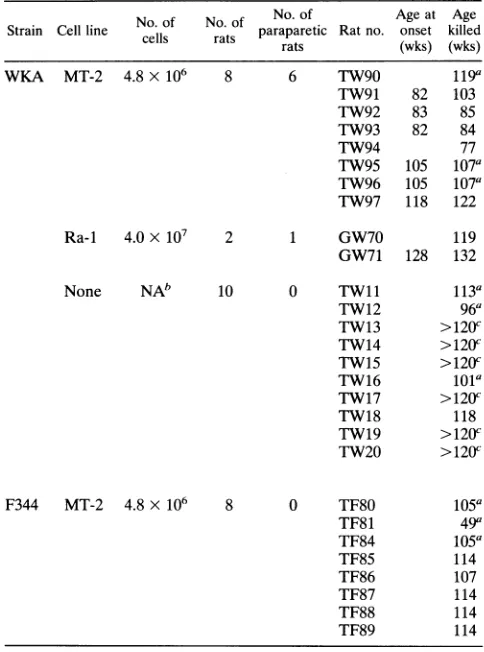
TABLE 1. Ratswithspastic paraparesis afterinjection
withHTLV-1-producingT-cell lines
StraiCellline No.of No.of No.of Ageat Age
Strain Cell line
Ncells
rats paraparetic Ratno. onset killedrats (wks) (wks)
WKA MT-2 4.8X10⁶ 8 6 TW90 119a
TW91 82 103
TW92 83 85
TW93 82 84
TW94 77
TW95 105 107a TW96 105 107"
TW97 118 122
Ra-1 4.0X 10⁷ 2 1 GW70 119
GW71 128 132
None NA6 10 0 TWi1 113a
TW12 96a
TW13 >120c TW14 >120c TW15 >120c
TW16 ioia
TW17 >120c
TW18 118
TW19 >120c TW20 >120c
F344 MT-2 4.8 X10⁶ 8 0 TF80 105a
TF81 49a
TF84 105a
TF85 114
TF86 107
TF87 114
TF88 114
TF89 114
aRatdiedaccidentally.
bNA,notapplicable.
cRat is surviving.
RESULTS
High incidence of HAM/TSP-like symptoms in WKA rats.
WKA and F344 rats, except TF81, injected with HTLV-1-producing cellswere monitored for 2 years (Table 1). At 105 weeks ofage, five HTLV-1 carrier WKArats (63%) injected with MT-2 cells showed HAM/TSP-like paraparesis, while
noneof theeight F344ratsinjected with MT-2cells andnone
of the eight control femaleWKA ratsnotinjected with MT-2 cells showed theparaparesis. The incidence of the HAM/TSP-like paraparesis was significantly higher in HTLV-1 carrier
WKA ratsthan inHTLV-1carrier F344rats(P<0.05; Fisher's
exacttest) and control WKArats (P< 0.05) at 105 weeks of age (Table 1). From 82 to 118weeks of age, six (TW91, -92,
-93, -95,-96, and-97)oftheeight femaleWKA rats(TW90to
TW97)showedspastic paraparesisand muscle atrophyintheir
posterior limbs and hips, with fine and coarse tremulous movement. Their anterior limbs appeared slightly paretic. Paraparesis and gait disturbance wereslowly progressive. Five
oftheeightWKA ratsinjected withMT-2cells wereautopsied;
the other three rats, TW90, -95, and -96, died accidentally
(Table 1). TW94 did not show spastic paraparesis but was
sacrificedbecause ofasubcutaneoustumor (40 by 35mm) at 77weeksofage. One of thetwofemaleWKA ratsinjected with
Ra-1 cells, GW71, showed paraparesis and gait disturbanceat 120weeksof age and was sacrificed at 132 weeks of age (26).
Afemale F344ratinjected withMT-2cells diedaccidentally at
on November 9, 2019 by guest
http://jvi.asm.org/
a c
1 2 3 4 1 2 3 4
WKA
rats
345bp
120bp
d
4-- 159bp
(n a) 1;._
*0
0-C0 a
1 2 3 4
Sm-4 269bp FIG. 1. Detection of HTLV-1 provirus sequences in PBMC from theHAM/TSP-like rat, TW92, at the 81st week after injection with MT-2cells. (a) Ethidium bromide staining of agarose gel. Rat c-myc sequences areshown. Panels b, c, and d are autoradiographs indicating amplificationofpX, gag, and LTR sequences, respectively. Lanes 1 and 2, normalPBMC lysate; lanes 3 and 4, PBMC lysate fromTW92.
49 weeks of age. The other sevenfemale F344 rats did not show any neurological abnormalities during the observation perioduntil 114 weeks ofage (Table 1).
Detectionof HTLV-1 provirus. We analyzed PBMC of the rats injected with MT-2 cells for the presence of HTLV-1 provirusuntil the 81st week after MT-2 cell injection.HTLV-1
provirus was detected from PBMC of all WKA rats atleast twice after HTLV-1 injection (Fig. 1). No HTLV-1 provirus was detected from PBMC of negative-control ratswhich had
notreceived injection of HTLV-1-producing cells. We found
HTLV-1provirusineight of eightWKAratsand fiveofeight F344 ratsinjectedwith MT-2during the courseofthe obser-vation period. Thefrequency ofdetection of the provirus in PBMC of WKA and F344ratswasnotstatistically significant by Fisher's exact test (P = 0.1). AmongHAM/TSP-like rats,
HTLV-1proviruswasdetectedfromthebrain,thespinal cord,
and thelymphnodes ofGW71;thelymphnodes ofTW91;and thespinal cord ofTW97.
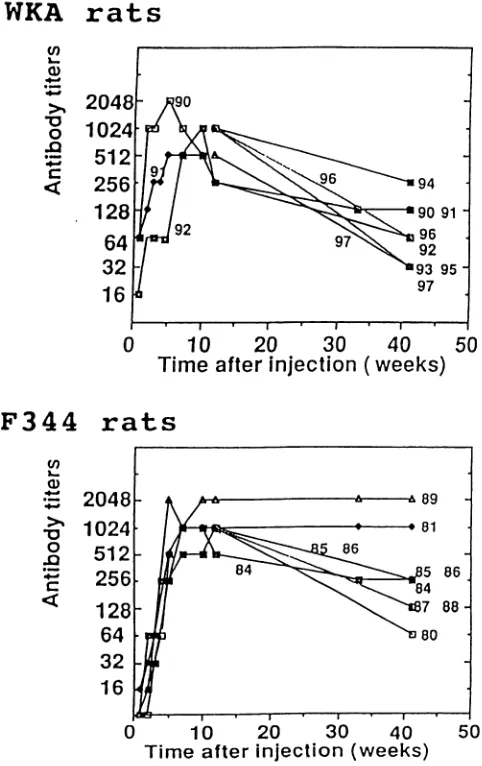
Serological analysis. Antibodiesagainst HTLV-1 Gag pro-teins were detected by the particle agglutination method in plasmaofallratsafterinjectionwithHTLV-1-producingcells
(Fig. 2). Titers of the antibodyincreased to reach a peak at about the 10th week after MT-2 cellinjection in both WKA and F344rats.Titers ofantibody against Gagin theplasmaof the five HAM/TSP-like rats ranged from 16- to 64-fold, and those in CSFwere32-fold in TW92 and TW93 and less than 16-fold in GW71 and TW97 at autopsy. By Western blot
analysis, antibodies against HTLV-1 Gag proteins p19, p24, p28, andp51werefound in theplasmaof WKA andF344rats injected with MT-2 cells at the 12th week after MT-2 cell
injection and those against p24 and p28 were detected at autopsy(data notshown).
Alltheratsinjectedwith MT-2cells had antibodies against
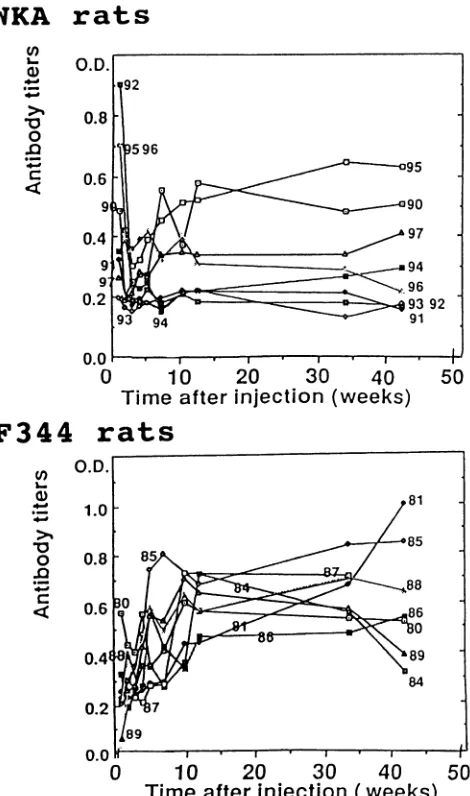
HTLV-1 envelopeproteins, N147 (Fig. 3) and C182 (Fig. 4).
Titers of the antibodies against these envelope proteins de-creasedrapidly bythesecondorthe third week after MT-2 cell injectionbutgraduallyincreasedthereafter. Titers in F344rats after the 10th weekfollowingMT-2cellinjectionwerehigher
than those in WKA rats (Fig. 3). There was no apparent
difference inthe titersofantibodyagainstC182 between WKA and F344rats (Fig. 4).
Un
L-.
a)
*-0 0
.0 ._
2048 1024 512 256 128 64 32 16
10 20 30 40
[image:3.612.55.296.76.238.2]Time after injection (weeks)
FIG. 2. Antibodyresponseagainst HTLV-1 Gagin WKAandF344
ratsinjected withMT-2cells.Numbers 90through97and80through 89areTWandTFratnumbers,respectively.
Pathological findings for HAM/TSP-like rats. The spinal
cords of the four HAM/TSP-like rats (TW91, TW92, TW93,
and TW97) showed symmetrical white matter degeneration
with vacuolation and gliosis which were prominent in the
internalposteriorfuniculi(Goll funiculi)andmarginal regions
of the anterior and lateralfuniculi, as wasobserved forGW71 (26). The grey matter was almost normal, and the neurons werewell preserved. Perivascularor subarachnoidal cell infil-trationwas absent. The degree ofdegeneration in the spinal
cordwas severe in thecervical andthoracic cords but varied amongtherats.We confirmed infiltration ofmacrophages by stainingwithantimacrophage antibodies, ED-1, and increase of reactive astroglia in the degenerated white matter by stainingwith anti-glial fibrillaryacidicprotein antibodies. We did notdetect lymphocytes in the spinal cords with antibody againstpan-T cells, R1-3B3. Noneuropathological findingsin the brain were made, except pituitary adenocarcinomas in TW92 and TW93 (7 by 8 mm in TW92 and 5 by 7 mm in TW93). Peripheralnerves-anteriorandposteriornerveroots,
the caudaequina,andthe sciatic nerve-in theHAM/TSP-like ratsshowedvacuolation and loss oflargeand smallmyelinated
b
1 2 3 4
F344
rats
on November 9, 2019 by guest
http://jvi.asm.org/
[image:3.612.317.558.79.462.2]WKA
rats
WKA rats
89
(I)
1.0 9295 96
L.
0
.0
0.8
0
10
20
30
40
50
Time after
injection ( weeks)
F344
rats
O.D
a)
-4._
0
.0
0 10 20 30 40 50
Time afterinjection (weeks)
FIG. 3. AntibodyresponseagainstHTLV-1envelope proteinN147 in WKA and F344 rats injectedwith MT-2 cells, as determined by ELISA.O.D., opticaldensityat492nm. Numbers 90through97 and
80through89areTW and TFratnumbers, respectively.
fibers. In sciaticnervesofTW91 andTW97,wefound
infiltra-tion offoamy macrophages and multinucleated giant cells in the areas exhibiting severe loss of myelinated fibers. These
pathological changes intheperipheral nerveswill bereported
elsewhere. Scatteredangularfibers andgroupedatrophywere
found in the psoasmuscle of the five HAM/TSP-like rats. Stomach ulcerswere foundinTW91 and TW92.Abscesses
were found in the space between the bladder and uterus in TW92 andTW93.
DISCUSSION
This study showed that the incidence of paraparesis was significantly higherin WKAratsinjected with MT-2 cells than
in F344ratsinjected withMT-2cellsorinuninjected control
WKArats.Thisresult indicatesthatthe geneticbackgroundof thehost andHTLV-1 infectionareimportantfor the
appear-anceofHAM/TSP-likesymptomsin rats.
Several characteristics ofHAM/TSP-like rats are similarto those of HAM/TSP patients. First, HTLV-1 provirus was
detected in PBMC andthe spinal cord, and antibody against
HTLV-1proteinswasfound inplasma and CSF. Althoughthe continuing presence of MT-2 cells was not completely
ex-(1)
a1)
~0
10
.0
C0
O.D.
0.8
0.6 9
0.4 9
92 0.2
0.0I
0
10
20
30
40
Time after
injection (weeks)
50
F344
rats
a)
4._
0
.0
C
:-0
10
20
30
40
[image:4.612.327.562.75.473.2]Time after
injection
(weeks)
50FIG. 4. AntibodyresponseagainstHTLV-1envelope proteinC182 in WKA and F344 rats injected with MT-2 cells, as determinedby ELISA. O.D., opticaldensity at492nm.Numbers90through97 and 80through89areTWand TFratnumbers, respectively.
cluded,thelong-lasting antibody against HTLV-1,which lasted formorethan 1 to -1.6years, suggests theproductive infec-tion of HTLV-1. This is consistent withourprevious observa-tions(43). Second,thegenetic backgroundseemstobe related totheoccurrenceof the disease.Themajorhistocompatibility complexinrats,RT-1,isof the khaplotypeinWKArats,while that of F344 rats is of the lvl haplotype (14). Usuku et al.
reported HLA haplotype-linked high-level immune respon-siveness against HTLV-1 in HAM/TSP patients (47). The incidence ofHAM/TSP would be muchhigher ifweselected HTLV-1carriers withaspecific genetic background.Third,the
main symptoms are paraparesis. The neuropathological changes are pronounced in cervical and thoraciccords, and
they are mainly demyelination with vacuolation and gliosis.
The peripheralnerve lesions and muscleinvolvements,which
were frequently found in the HAM/TSP-like rats, were re-cently reportedtobenotuncommoninHAM/TSP patients (5, 40).
Recently, Ishiguroet al. reportedHAM/TSP-like myelopa-92
5 96
95
C MA, _~~~~~~~9 92
k
on November 9, 2019 by guest
http://jvi.asm.org/
[image:4.612.65.307.76.436.2]thy rats without anti-HTLV-1 antibody in the blood (17). They described the presence of HTLV-1 provirus in PBMC, the cerebrum, and the spinal cord of one of the three paraparetic WKA rats 16 months after MT-2 cell injection. The other organs were mostly negative. We also found the presence of HTLV-1 provirus in PBMC of all MT-2-injected WKA rats and in the brains, spinal cords, and lymph nodes of three of the seven paraparetic WKA rats. These findings agree well with the report by Ishiguro et al. (17). Moreover, we observed that the pXregion of the provirus in the spinal cord was found in the two most severely affected rats. HTLV-1 provirus was detected from the spinal cords of HAM/TSP patients by PCR (6, 24). However, the target cell in which HTLV-1 provirus integrated remains to be identified for the spinal cords of both the patients and the HAM/TSP-like rats. By in situ PCR,
HTLV-1-infected cells may be identified in organs, as with
humanimmunodeficiency virus (HIV) (10, 36).
Immune responses are involved in HAM/TSP (18, 21). Titers ofantibody against HTLV-1 Gag in plasma and CSF in HAM/TSP patients are higher than those in HTLV-1 carriers (31, 33, 42). However, the titers of antibody against Gag did not differbetween WKA and F344 rats. On the other hand, titers of antibody against N147 of the Env product were lower in WKA rats than in F344 rats. N147 contains the C-terminal
147-amino-acidhalf of the gp46 external envelope glycoprotein
of HTLV-1 (44). The putative neutralizing epitopes of gp46 (35, 45) are included in N147. Therefore, a low humoral immunity response to the gp46 envelope protein may be involved in the pathogenesis of HAM/TSP-like symptoms in WKA rats. Ishiguro et al. have reported HAM/TSP-like rats without antibody against HTLV-1 Gag in plasma (17). How-ever, theantibodies against the HTLV-1 gene products other than Gag, or the antibodies against self antigens which are induced byHTLV-1 antigens, might have some role in patho-genesis of HAM/TSP. It should be noted that the transgenic miceexpressing the env gene of Cas-Br-E murine retrovirus in the spinal cord showed spongiform degeneration of the spinal cord,causing hind-limb paresis (23).
Immunostaining and histochemical staining revealed the
infiltration of macrophages and increase of astroglia in the degenerative nervous tissues of the HAM/TSP-like rats, as in HAM/TSP patients (20). The infiltration of macrophages and theappearance of multinucleated giant cells in the spinal cord observed inHAM/TSP-like rats are also observed in patients
with HIV encephalopathy (7). HTLV-1 Tax protein induces
release of tumor necrosis factor alpha (TNFa) from macro-phages (1), and TNFot causes white matter degeneration by injury to oligodendrocytes (41). Astrocytes might present antigens such as myelin basic protein (11) or release factors cytotoxic foroligodendrocytes (37). Lymphocytes were found inthespinal cords ofHAM/TSPpatients at the early stage but were not found at the late stage (20). Lymphocytes might be found at anearlier stage in our HAM/TSP-like rats.
Most oftheHAM/TSP patients were given steroid therapy, and some of thepatients have another disease, such as cancer (20). The drugs andtreatments for HAM/TSP and those for coexistent diseases could modify the virological and
neuro-pathological findings for HAM/TSP patients (9, 15). Our
HAM/TSP-likeratsshould be a useful small-animal model to
analyze the roles ofHTLV-1 and various other factors involved
in thewide diversity ofneuropathological changes associated with HAM/TSP. Involvement of genetic background in the
neuropathogenesisofHAM/TSP should be clarified by
exper-iments with congenic rats. It would be interesting to know whether otherspecies of the major histocompatibility complex (RT-1) k genotype display a susceptibility to HAM/TSP-like
paraparesis similar to that of the WKA rats. Furthermore, this rat model should be helpful to develop effective measures for prevention and treatment of
HAM/TSP.
ACKNOWLEDGMENTS
We thank K. Fujii for histological examination and helpful com-ments, T. Yoshizawa for clinical examination and helpful comcom-ments, and T. Mogi for histological preparations. We also thank A. Saitou for statistical analysis and thank M. Kobayashi for autopsy of rats.
This work was supported in part by a grant-in-aid from the Ministry of Health and Welfare for the Comprehensive 10-Year Strategy for Cancer Control, Japan.
REFERENCES
1. Albrecht, H., A. N. Shakhov, and C. V. Jongeneel. 1992. trans activation of the tumor necrosis factor alpha promoter by the human T-cell leukemia virus type I
Tax,
protein. J. Virol. 66:6191-6193.2. Albretsen, C., B.-I. Haukanes, R.Aasland, and K.Kleppe. 1988. Optimal conditions for hybridization with oligonucleotides. Anal. Biochem. 170:193-202.
3. Ami, Y., S. Kushida, M. Matsumura, Y. Yoshida, T. Kameyama, Y. Sugiyama, K. Yagami, M. Uchida, K. Uchida, K. Koiso, and M. Miwa. 1992. Vertical transmission of HTLV-1 in HTLV-1 carrier
rat. Jpn. J. Cancer Res. 83:1241-1243.
4. Bartholomew, C., F. Cleghorn, W. Charles, P. Ratan, and L. Roberts, et al. 1986. HTLV-1 and tropical spastic paraparesis. Lancet ii:99-100.
5. Bhigjee, A. I., P. A. Bill, C. A. Wiley, I. M. Windsor, D. A. Matthias, T. Amenomori, W. Wachsman, and D. Moorhouse. 1993. Periph-eral nerve lesions in HTLV-I associated myelopathy. Muscle Nerve 16:21-26.
6. Bhigjee, A. I., C. A. Wiley, W.Wachsman, T. Amenomori, D.Pirie, P. L.A.Bill, and I. Windsor. 1991. HTLV-I-associated myelopa-thy: clinicopathologic correlation with localization of provirus to spinal cord. Neurology41:1990-1992.
7. Budka, H. 1989. Human immunodeficiency virus (HIV)-induced disease of the central nervous system: pathology and implications for pathogenesis. Acta Neuropathol. 77:225-236.
8. Burnette, W. N. 1981. Western blotting: electrophoretic transfer of proteins from SDS-polyacrylamide gels to unmodified nitrocellu-lose and radiographic detection with antibody and radioiodinated protein A. Anal. Biochem. 112:195-203.
9. Chad, D. A., and L. D. Recht. 1991. Neuromuscular complications of systemic cancer. Neurol. Clin. 9:901-918.
10. Embretson, J., M. Zupancic, J. L. Ribas, A. Burke, P. Racz,
K.
Tenner-Racz, and A. T. Haase. 1993. Massive covert infection of helper T lymphocytes and macrophages by HIV during the incubation period of AIDS. Nature (London) 362:359-362. 11. Fontana, A., W. Fierz, and H. Wekerle. 1984. Astrocytes present
myelin basic protein to encephalitogenic T-cell lines. Nature (London) 307:273-276.
12. Furukawa, Y., J. Fujisawa, M. Osame, M. Toita, S. Sonoda, R. Kubota, S.Ijichi,and M. Yoshida. 1992. Frequent clonal prolif-eration of human T-cell leukemia virus type 1 (HTLV-1)-infected T cells in HTLV-1-associated myelopathy (HAM-TSP). Blood 80:1012-1016.
13. Gessain, A., F. Barin, J. C. Vernant, 0. Gout, L. Maurs, A. Calender, and G. de The. 1985. Antibodies to human T-lympho-trophic virus type-I in patients with tropical spastic paraparesis. Lancet ii:407-409.
14. Gill, T. J.,III,H. W. Kunz, D. N. Misra, and A. L. Cortese Hassett. 1987. The major histocompatibility complex of the rat. Transplan-tation43:773-785.
15. jichi, S., N. Eiraku, M. Osame, S. Izumo, R. Kubota, I. Ma-ruyama, M. Matsumoto, and S. Sonoda. 1989. In vitro modulation of lymphocyte proliferation by prednisolone and interferon-alpha in patients withHTLV-I-associatedmyelopathy (HAM).J. Neu-roimmunol. 23:175-178.
16. Ikeda, M.,R.Fujino, T. Matsui, T. Yoshida, H. Komoda, and J. Imai. 1984. A new agglutination test for serum antibodies to adult T-cell leukemia virus. GANN 75:845-848.
on November 9, 2019 by guest
http://jvi.asm.org/
17. Ishiguro, N., M. Abe, K. Seto, H. Sakurai, H. Ikeda, A. Wakisaka, T. Togashi, M. Tateno, and T. Yoshiki. 1992. A rat model of human Tlymphocyte virustype I(HTLV-I) infection. 1.Humoral antibody response, provirus integration, and HTLV-I-associated myelopathy/tropical spastic paraparesis-like myelopathy in sero-negativeHTLV-I carrier rats.J.Exp. Med. 176:981-989. 18. Itoyama, Y., J. Kira, N. Fujii, I. Goto, and N. Yamamoto. 1989.
Increases in helper inducer T cells and activated T cells in HTLV-1-associated myelopathy. Ann.Neurol. 26:257-262. 19. Itoyama, Y., S. Minato, L. Goto, K. Okochi, and N. Yamamoto.
1988. Elevated serum antibody titers to Epstein-Barr virus in HTLV-Iassociatedmyelopathy (HAM). Neurology 38:1650-1653. 20. Iwasaki, Y. 1990.Pathologyof chronicmyelopathyassociatedwith
HTLV-1 infection(HAM/TSP). J.Neurol. Sci. 96:103-123. 21. Jacobson, S., A. Gupta, D. Mattson, E. Mingioli, and D. E.
McFarlin. 1990.Immunologicalstudies in tropical spastic parapa-resis. Ann. Neurol.27:149-156.
22. Jacobson, S., H. Shida, D. E. McFarlin, A. S. Fauci, and S. Koenig. 1990. Circulating CD8+ cytotoxic T lymphocytes specific for HTLV-1 pX in patients with HTLV-1 associated neurological disease. Nature(London) 348:245-248.
23. Kay, D.G., C. Gravel, F. Pothier, A. Laperriere, Y. Robitaille, and P. Jolicoeur. 1993. Neurological disease induced in transgenic miceexpressingthe envgeneof the Cas-Br-E murine retrovirus. Proc.Natl. Acad. Sci. USA 90:4538-4542.
24. Kira, J., Y. Itoyama, Y. Koyanagi, J. Tateishi, M. Kishikawa, S. Akizuki, I. Kobayashi, N. Toki, K. Sueishi, H. Sato, Y. Sakaki, N. Yamamoto, and I. Goto. 1992. Presence of HTLV-1 proviral DNA in central nervous system of patients with HTLV-1 associated myelopathy.Ann. Neurol.31:39-45.
25. Kira, J., Y. Koyanagi, T. Yamada, Y. Itoyama, I. Goto, N. Yamamoto, H. Sasaki, and Y. Sakaki. 1991. Increased HTLV-I proviral DNA in HTLV-I-associated myelopathy: a quantitative polymerase chainreaction study. Ann. Neurol. 29:194-201. 26. Kushida, S., M. Matsumura, H. Tanaka, Y. Ami, M. Hori, M.
Kobayashi,K. Uchida,K. Yagami, T. Kameyama, T. Yoshizawa, H.Mizusawa,Y.Iwasaki, and M. Miwa. 1993.HTLV-1-associated myelopathy/tropical spastic paraparesis-like rats by intravenous injection ofHTLV-1-producing rabbit or human T-cell line into adult WKArats. Jpn. J. Cancer Res. 84:831-833.
27. Luna, L. G. 1968. Manual of histologic staining methods of the Armed ForcesInstituteof pathology, 3rd ed. McGraw-Hill Book Co.,NewYork.
28. Miyoshi, I.,I.Kubonishi, S.Yoshimoto, and Y. Shiraishi. 1981. A T-cell line derived from normal human cord leukocytes by co-culturingwith human leukemicT-cells. GANN 72:978-981. 29. Miyoshi,I., S. Yoshimoto, H. Taguchi,I.Kubonishi, M. Fujishita,
Y.Ohtsuki, Y. Shiraishi, and T. Akagi. 1983.Transformation of rabbitlymphocytes withT-cellleukemia virus. GANN 74:1-4. 30. Moore,G.R.,U.Traugott, L. C. Scheinberg, and C. S. Raine. 1989.
Tropical spastic paraparesis: amodel ofvirus-induced, cytotoxic T-cell-mediateddemyelination?Ann.Neurol. 26:523-530. 31. Mori, M., K. Kinoshita, N. Ban, Y. Yamada, and H. Shiku. 1988.
ActivatedT-lymphocyteswithpolyclonal gammopathy in patients with humanT-lymphotropic virus type I-associated myelopathy. Ann.Neurol.24:280-282.
32. Nyunoya,H.,T.Ogura, M. Kikuchi, H. Iwamoto,K.Yamashita, M. Maekawa, Y. Takebe, K. Miyamura, S. Yamazaki, and K. Shimotohno. 1990. ExpressionofHTLV-1envelope protein fused tohydrophobicamino-terminal peptide ofbaculovirus polyhedrin in insect cells and itsapplicationfor serological assays. AIDS Res. Hum. Retroviruses 6:1311-1321.
33. Osame, M., M. Matsumoto, K. Usuku, S. Izumo, N. Ijichi, H. Amitani, M. Tara, and A. Igata. 1987. Chronicprogressive my-elopathyassociated with elevatedantibodies toHTLV-1and adult
T-cell leukemia cells.Ann. Neurol.21:117-122.
34. Osame, M., K.Usuku, S. Izumo, N.Ijichi,H.Amitani,A.Igata,M. Matsumoto, and M. Tara. 1986. HTLV-1 associatedmyelopathy, a newclinical entity. Lancet i:1031-1032.
35. Palker, T. J., E. R. Riggs, D. E. Spragion, A. J. Muir, R. M. Scearce, R. R. Randall, M. W. McAdams, A. McKnight, P. R. Clapham, R. A. Weiss, and B. F. Haynes. 1992. Mapping of homologous, amino-terminalneutralizing regionsofhuman T-cell lymphotropic virus type I and II gp46 envelope glycoproteins. J. Virol. 66:5879-5889.
36. Pantaleo, G., C. Graziosi, J. F. Demarest, L.Butini,M.Montroni, C. H. Fox, J. M. Orenstein, D. P. Kotler, and A. S. Fauci. 1993. HIV infection is active and progressive inlymphoid tissueduring the clinically latent stage of disease. Nature (London) 362:355-358.
37. Robbins, D. S.,Y. Shirazi, B.-E. Drysdale, A. Lieberman, H. S. Shin, and M. L. Shin. 1987. Production of cytotoxic factor for oligodendrocytesby stimulated astrocytes. J. Immunol. 139:2593-2597.
38. Rodgers-Johnson, P., D.C. Gajdusek, 0.S.C. Morgan, etal.1985. HTLV-I andHTLV-III antibodiesand tropical spastic parapare-sis. Lancet ii:1247-1248.
39. Rosner, B. 1990. Fundamentalsof biostatistics, 3rded., p. 336-342. PWS-Kent Publishing Co., Boston.
40. Said, G., C. Goulon-Goeau, C. Lacroix, A. Feve, H. Descamps, and M. Fouchard. 1988.Inflammatorylesions of peripheral nerve ina patient with human T-lymphotropic virus type I-associated my-elopathy. Ann.Neurol. 24:275-277.
41. Selmaj, K., C. S. Raine, M. Farooq, W. T. Norton, and C. F. Brosnan. 1991. Cytokine cytotoxicity againstoligodendrocytes. J. Immunol. 147:1522-1529.
42. Shinzato, O., S. Kamihira, S. Ikeda, H. Kondo, T. Kanda, Y. Nagata, E. Nakayama, and H. Shiku. 1993.Relationship between the anti-HTLV-1 antibody level, the number of abnormal lympho-cytes and the viral-genome dose in HTLV-1-infected individuals. Int. J. Cancer 54:208-212.
43. Suga, T., T. Kameyama, T. Kinoshita, K. Shimotohno, M. Mat-sumura, H. Tanaka, S. Kushida,Y. Ami, M. Uchida,K. Uchida, and M. Miwa. 1991. Infection of rats withHTLV-1: a small animal model for HTLV-1 carriers. Int. J. Cancer 49:764-769.
44. Tanaka,Y., M. Yasumoto, H. Nyunoya, T. Ogura, M. Kikuchi,K. Shimotohno, H. Shiraki, N. Kuroda, H. Shida, and H. Tozawa. 1990. Generation and characterization of monoclonal antibodies against multiple epitopes on the C-terminal half of envelope gp46 of human T-cell leukemia virus type-I(HTLV-I). Int. J. Cancer 46:675-681.
45. Tanaka,Y., L. Zeng, H. Shiraki, H. Shida, and H. Tozawa. 1991. Identification of a neutralization epitope on the envelope gp46 antigen of human T cell leukemia virus type I and induction of neutralizing antibody by peptide immunization. J. Immunol. 147: 354-360.
46. Towbin, H., T. Staehelin, and J. Gordon. 1979. Electrophoretic transfer of proteins from polyacrylamide gels to nitrocellulose sheets: procedure and some applications. Proc. Natl. Acad. Sci. USA 76:4350-4354.
47. Usuku,K., S. Sonoda, M. Osame, S.Yashiki, K. Takahashi, M. Matsumoto, T. Sawada, K. Tsuji, M. Tara, and A. Igata. 1988. HLA haplotype-linked high immune responsiveness against HTLV-1 in HTLV-1-associated myelopathy: comparison with adult T-cell leukemia/lymphoma. Ann. Neurol.23:143S-150S. 48. Vernant, J. C., L. Maurs, A. Gessain, F.Barin, 0. Gout, J. M.
Delaporte,K.Sanhadji, G. Buisson, and G. de The. 1987. Endemic tropical spastic paraparesis associated with human T-lymphotropic virustype-1:a clinical and seroepidemiological study of 25 cases. Ann.Neurol. 21:123-130.