SOCIALIZATION EXERCISE ON GLOBAL
FUNCTIONING AMONG ELDERLY WITH
MILD COGNITIVE IMPAIRMENT AT
SELECTED OLD AGE HOME,
ERODE, 2011.
DISSERTATION SUBMITTED TO
THE TAMIL NADU DR.M.G.R.MEDICAL UNIVERSITY
CHENNAI.IN PARTIAL FULFILMENT OF REQUIREMENT FOR THE DEGREE OF MASTER OF SCIENCE IN NURSING
SOCIALIZATION EXERCISE ON GLOBAL
FUNCTIONING AMONG ELDERLY WITH
MILD COGNITIVE IMPAIRMENT AT
SELECTED OLD AGE HOME,
ERODE, 2011.
Certified that this is the bonafide work of
Ms.M.JOTHIMANI
OMAYAL ACHI COLLEGE OF NURSING, 45, AMBATTUR ROAD,
PUZHAL, CHENNAI – 600 066.
COLLEGE SEAL
SIGNATURE: _________________
Dr.(Mrs).S.KANCHANA
B.Sc.(N)., R.N., R.M., M.Sc.(N)., Ph.D., Research Director & Principal,
Omayal Achi College of Nursing,
Puzhal, Chennai – 600 066, Tamil Nadu.
Dissertation Submitted to
THE TAMIL NADU DR.M.G.R.MEDICAL UNIVERSITY,
CHENNAI.In partial fulfilment of requirement for the degree of
MASTER OF SCIENCE IN NURSING
SOCIALIZATION EXERCISE ON GLOBAL
FUNCTIONING AMONG ELDERLY WITH
MILD COGNITIVE IMPAIRMENT AT
SELECTED OLD AGE HOME,
ERODE, 2011.
Approved by the Research Committee in December 2010. PROFESSOR IN NURSING RESEARCH
Dr.(Mrs).S.KANCHANA ______________________
B.Sc.(N)., R.N., R.M., M.Sc.(N)., Ph.D., Research Director & Principal,
Omayal Achi College of Nursing, Puzhal, Chennai – 600 066, Tamil Nadu. CLINICAL SPECIALITY - HOD
Prof.CIBY JOSE ________________________
B.Sc.(N)., R.N., R.M., M.Sc.(N), Head of the Department.
Mental Health Nursing Department, Omayal Achi College of Nursing, Puzhal, Chennai – 600 066, Tamil Nadu.
CLINICAL SPECIALITY – RESEARCH GUIDE
Ms.HEMALATHA. J ______________________
B.SC.(N)., R.N., R.M., M.SC.(N).,
Reader, Mental Health Nursing Department, Omayal Achi College of Nursing,
Puzhal, Chennai – 600 066, Tamil Nadu. MEDICAL EXPERT
Dr.HEMALATHA.P
MBBS, DPM
Consultant Psychiatrist, Southern Railway Hospitals,
Perambur – Chennai, 600 023, Tamil Nadu.
Dissertation Submitted to
THE TAMIL NADU DR.M.G.R.MEDICAL UNIVERSITY,
CHENNAI.In partial fulfilment of requirement for the degree of
MASTER OF SCIENCE IN NURSING
I thank God Almighty for giving me the courage, endurance and abundant blessings throughout my career and personal life.
At the outset, I, the investigator of this study would like to express my heartfelt thanks and gratitude to The Managing Trustee, Omayal Achi College of Nursing for giving me an opportunity to pursue my post graduate education in this esteemed institution.
I accord my sedulous gratitude and immense thanks to Dr.Rajanarayanan, B.Sc., M.B.B.S., FRSH [London], Research Coordinator, ICCR and Honorary Professor in Community Medicine for the valuable suggestions and guidance throughout the study.
I express my deep sense of indebtedness to Dr.(Mrs).S.Kanchana, the Principal, Omayal Achi College of Nursing and Research Director, ICCR for her exquisite guidance, constant inspiration and encouragement throughout the study.
I pay tribute to Prof.(Mrs).Celina.D, Vice Principal, Omayal Achi College of Nursing for her flawless guidance and thought stimulating valuable advices throughout the study.
I am thankful to the ICCR Executive Committee Members for their suggestions during the Research proposal and Mock viva presentations.
Mental Health Nursing Department for her splendid emotional support, patient corrections, unsurpassed wise ideas throughout the study.
I extend my grateful endless thanks to Mrs.Jeayareka, Mrs.Jayanthi.P, Mrs.Darjilin.M and Mrs.Kalaiyarasi, faculty of Mental Health Nursing department who stimulated, moderated and refined the ideas of research.
A bouquet of thanks to our class coordinators Mrs.M.Sumathi and Mrs.Manonmani.K who constantly supported, guided and motivated for completion of the study.
I acknowledge my sincere gratitude to Mr.Venkatesan, Biostatistician for his help in statistical analysis of the study.
I immensely thank all the Medical and Nursing Experts in the field of Mental Health who gave constructive criticisms, modified, refined and validated the content of the tool.
A memorable note of gratitude to the The Director, and Staff of Dignity foundation, Chennai and Sister Rose, Mother Superior, and all Staff of Little Sisters For the Poor, Erode for their concern and co-operation during data collection period.
I specially thank all the Participants, the baby boomers who enthusiastically participated in the study without whom this piece of work would not have come true.
editing this manuscript and tool in English and Tamil respectively.
A special note of gratitude to Mr.G.K.Venkataraman, Elite Computers and Mr.Suresh Babu.M and Mr.Asokan, for their effort in executing the manuscript.
I thank all my classmates, The Charismians especially Ms.R. Eureka and my peer evaluators for their endless help and constructive ideas, which helped me to mould my study in a better way.
Words are beyond expression for the meticulous, untiring efforts of my dearest parents Mr.K.Mariappan and Mrs.M.Parvathi, my beloved sisters Mrs.V.Radha and Mrs.K.Abirami and all my family members for putting up with me while the dissertation has pre occupied my thoughts and preempted my time and for their care, support, unending love, special prayers, constant encouragement and strength which made my study, a dream come true.
I extol my profound thanks to my dear friend Ms.K.Priya, my cousin Ms.K.Logambal whose assistance was unfailing and invaluable in many ways during the study and I thank all well wishers for their unconditional love and support in every step of my life.
I extend my sincere thanks to every soul who helped me in making this study a successful one.
CHAPTER CONTENTS PAGE NO.
I
II
III
ABSTRACT INTRODUCTION Background of the study Need for the study Statement of the problem Objectives of the study Operational Definitions Assumptions
Null hypotheses Delimitation
Conceptual framework Outline of the study report REVIEW OF LITERATURE Review of related literature
RESEARCH METHODOLOGY Research design
Variables
Setting of the study Population
Sample Sample size
IV
V VI
Development and description of the tool Content validity
Pilot study
Reliability of the tool
Procedure for data collection Plan for data analysis
DATA ANALYSIS AND INTERPRETATION Organization of data
Presentation of data DISCUSSION
SUMMARY, CONCLUSION, IMPLICATIONS, RECOMMENDATIONS AND LIMITATIONS BIBLIOGRAPHY
TABLE
NO. TITLE
PAGE NO.
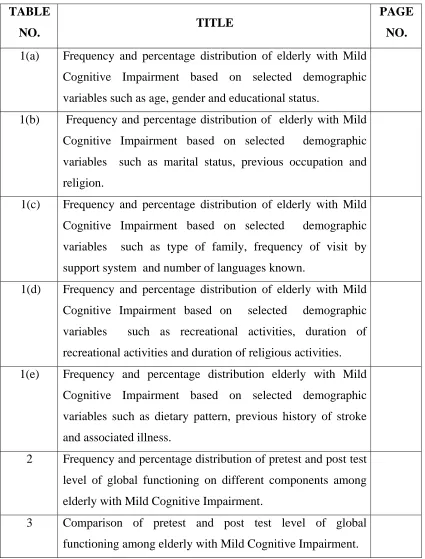
1(a) Frequency and percentage distribution of elderly with Mild Cognitive Impairment based on selected demographic variables such as age, gender and educational status.
1(b) Frequency and percentage distribution of elderly with Mild Cognitive Impairment based on selected demographic variables such as marital status, previous occupation and religion.
1(c) Frequency and percentage distribution of elderly with Mild Cognitive Impairment based on selected demographic variables such as type of family, frequency of visit by support system and number of languages known.
1(d) Frequency and percentage distribution of elderly with Mild Cognitive Impairment based on selected demographic variables such as recreational activities, duration of recreational activities and duration of religious activities. 1(e) Frequency and percentage distribution elderly with Mild
Cognitive Impairment based on selected demographic variables such as dietary pattern, previous history of stroke and associated illness.
2 Frequency and percentage distribution of pretest and post test level of global functioning on different components among elderly with Mild Cognitive Impairment.
[image:9.612.102.527.116.675.2]NO. NO.
[image:10.612.109.524.66.200.2]FIGURE NO. TITLE PAGE NO. 1 Cognitive continuum from normal aging through Mild
Cognitive Impairment to Alzheimer’s disease. 2 Conceptual framework
APPENDIX TITLE PAGE NO. A Ethical clearance certificate i
B Acknowledgement letter for conducting the main
study ii
C
Content validity
i. Letter seeking experts’ opinion for content validity
ii. List of experts for content validity iii. Certificates of content validity
iii
iv v D Certificate of Achievement of Language Enriched
Exercise for Alzheimer’s Disease xi E Certificate of English editing xii
F Certificate of Tamil editing xiii
G
Informed consent
(i) Informed consent request form (ii) Informed written consent form -English
-Tamil
xiv
xv xvi H Copy of the tool for data collection
-English with scoring key xviii
I Plagiarism report xxvi
J Coding for the demographic variables xxvii
K Blue print for the tool xxxi
L Intervention tool xxxii
CHAPTER – I
INTRODUCTION
BACKGROUND OF THE STUDY
Cognitive vitality is essential to quality of life and survival in old age. With normal aging, cognitive changes such as slowed speed of processing are common, but there is substantial inter individual variability, and cognitive decline is clearly not inevitable. Maintaining cognitive health in late life has important implications for overall well-being and independence, health services utilization and costs, long-term institutional care, and caregiver burden, as well as personal and societal resources.
There has been a truly remarkable demographic transition that has dramatically increased the numbers and percentage of adults living until over the age of 65 years throughout the world. This New longevity shows no signs of abating, creates major challenges for the society. There is a clear need to optimize cognitive and emotional functioning in this aging population.
Mild Cognitive Impairment is an intermediate stage between the expected cognitive decline of normal aging and the more pronounced decline of dementia where individuals experience cognitive deficits that are greater than expected for their age but do not fulfill the diagnostic criteria for dementia. It involves problems with memory, language, thinking and judgment that are greater than typical age-related changes. (Winblad B et al.,2010).83
Significant cognitive decline is very common in the elderly population. Individuals with cognitive decline are at much greater risk for having dementing disorders. Evidences have indicated that cognitive function begins to decline from the age of 50 years and accelerates after age of 65 years.
World Health Organization (2009)89 reported that the older population is growing throughout the world and by 2020, it is estimated that the elderly will exceed 1 billion and 700 million of them will be in the developing countries. It also stated that the number of persons aged 60 years and older will increase two-fold to 1.2 billion people by 2025. This finding has important healthcare and caregiver implications as the prevalence of cognitive impairment is positively related to advancing age.
The World Population of Aging (2009)92 estimated that by the year 2050, the number of older persons is expected to be more than 3/4th from 600 million to almost 2 billion.
According to The World Fact Book of Central Intelligence Agency (2011)103 as of July 12, 2011 the life expectancy at birth in India is 66.8 years.
According to 2001 Census87 the elderly population in Tamilnadu were forty four lakhs seventy six thousand four hundred and eighty one(44,76,481).
National Institute on Aging, USA (2010)88 along with Mayo’s clinic found that 12 percent of 70- to 89-year-olds have Mild Cognitive Impairment. The prevalence of Mild Cognitive Impairment increased with age, affecting 9 percent of those 70 to 79 years old and nearly 18 percent of those 80 to 89 years old. The prevalence of Mild Cognitive Impairment also varied according to years of education, ranging from 25 percent in those with up to eight years of education, 14 percent in those with nine to 12 years, 9 percent in those with 13 to 16 years, and 8.5 percent in those with greater than 16 years.
Statistics Canada (2009)93 reports that in Canada persons aged 65 years and older represent the fastest growing population, with an 11.5% increase in prevalence between 2001 and 2006 and dementia and cognitive impairment not meeting the criteria for dementia are estimated to affect 8% and 16.8% of Canadians aged 65 years and older, respectively.
Das SK et al (2007)34 conducted a cross-sectional study among an urban population in kolkatta, India comprising individuals who were non demented and non depressed aged 50 and older and estimated that the overall prevalence of Mild Cognitive Impairment was 14.89%. Prevalence of the amnestic Mild Cognitive Impairment was 6.04% and that of the multiple domain Mild Cognitive Impairment was 8.85%. The amnestic type was more common among men and the multiple domain type among women with advancement of age. Rates differed considerably with educational attainment. Hypertension and diabetes mellitus were the major risk factors for both types of Mild Cognitive Impairment.
There is both popular and scientific interest in keeping the brain young and avoiding cognitive impairment through increasing ‘cognitive reserve’ by staying physically and mentally active. Older adults may be able to enhance their cognitive health status through certain health behaviors such as language enrichment and enhanced socialization.
NEED FOR THE STUDY
The increasing number of the older people has imposed a huge health impact on the society, as longer survival is also accompanied by the greater decline in health and different domains of function. The WHO estimates that by the year 2020, 70% of the world’s population aged 60 years and above will live in developing countries, with 14.2% located in the Indian subcontinent.92
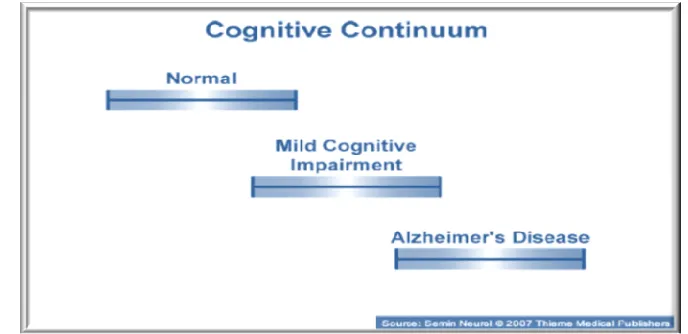
Mild Cognitive Impairment is a less-than-benign diagnosis because it is associated with an elevated risk of incidence of Alzheimer’s disease and more rapid cognitive decline. The rate of conversion from Mild Cognitive Impairment to Alzheimer’s disease is 10% -12% per year. (Burke D., 2009).86 Neuropathologically Mild Cognitive Impairment appears to be a transitional state of evolving Alzheimer’s disease. As a result of the growing global Alzheimer’s epidemic, Mild Cognitive Impairment needs to receive increasing attention as the first clinical presentation of Alzheimer’s and a potentially pivotal opportunity for intervention.
Fig.1: Cognitive continuum from normal aging through Mild Cognitive Impairment to Alzheimer’s disease.
The Center of Disease Control and Prevention, USA (2010)102 through the healthy brain initiative examined the current state of knowledge regarding the promotion and protection of cognitive health. This National Public Health Roadmap to maintaining cognitive health recognized current social trends and other factors that affect cognitive health from a public health standpoint. The factors identified were an aging population which is increasing and the potential risk of loss of cognitive functioning as people age, increasing societal burden & a continued lack of awareness among the public.
Willis GL et a.,(2008)81 conducted a study to assess the set of complex tasks of daily living that involved global cognitive processes and higher order executive functions among older adults using the Everyday Problems Test for the Cognitively Challenged Elderly (EPCCE). The results showed that 45% of the EPCCE tasks were solved with significant differences in scores by disease severity and in particular to executive functions.
Pandav R et al., (2003)57 conducted a cross-national epidemiological study to evaluate the relationship between blood pressure and cognitive impairment in elderly populations in India and the United States using standardized cognitive screening and blood pressure measurements. 4810 subjects who were 55 years and older, of whom 595 were 75 years and older, from India, and 636 subjects who were 75 years and older from USA were examined and the investigators concluded that for every 10 mm Hg increase in systolic blood pressure there was a 10% reduction and with every 10 mm Hg increase in diastolic blood pressure there was a 13% reduction in cognitive impairment.
Gutierrez Perez .C et al., (2009)43 reported a high frequency of cognitive dysfunction before stroke among older people in their comparative study between patients with early phase after stroke and healthy controls. Cognitive status before stroke-onset was investigated using Cognitive Impairment Questionnaire. The results showed that cognitive impairments were present in 96% of older patients after stroke onset using the battery of neuropsychological tests but in only 9% of controls. It was also found that 76% exhibited reduced executive function and 75% reduced psychomotor tempo. Cognitive dysfunction was present in 52% before stroke onset without any impact on the frequency of impairment in the various cognitive areas in early phase after stroke.
therefore more effective therapies are continually developed for clients such as memory and language enrichment.
STATEMENT OF THE PROBLEM
A pre-experimental study to assess the effectiveness of language enriched socialization exercise on global functioning among elderly with Mild Cognitive Impairment in a selected old age home, Erode.
OBJECTIVES OF THE STUDY
1. To assess the pre test level and post test of global functioning among elderly with Mild Cognitive Impairment
2. To assess the effectiveness of language enriched socialization exercise on the level of global functioning among elderly with Mild Cognitive Impairment
3. To associate the mean differed global functioning score among elderly with Mild Cognitive Impairment with their selected demographic variables.
OPERATIONAL DEFINITIONS
Effectiveness
It refers to the outcome of language enriched socialization exercise on global functioning of elderly with Mild Cognitive Impairment which was measured by using a revised scale of mental status examination and an observation checklist devised by the investigator.
Language Enriched Socialization Exercise
I. Activities to improve non-cognitive functioning. 1.Walking
2.Dance
3.Flexibility exercises 4.Volunteer activities
II. Activities to improve cognitive functioning. 1.Proverb completion and interpretation 2.Picture description
3. Object description. 4. Story recall and quiz
5. Category fluency -naming quiz. 6.Similarities
7.Sentence completion 8.Word association
Global Functioning
It refers to the level of cognitive functioning and non-cognitive functioning such as physical functioning and social functioning of the elderly with Mild Cognitive Impairment which was measured by a revised scale of mental status examination and an observation checklist devised by the investigator.
Elderly with Mild Cognitive Impairment
It refers to elderly, aged 55 years and above and were residing at little sisters of the poor, Home for the aged, Erode who scored less than 20 in Montreal Cognitive Assessment and between 20-24 in Mini Mental Status Examination and also diagnosed as having Mild Cognitive Impairment by a psychiatrist.
ASSUMPTIONS
2. Provision of structured and regular “language enriched socialization exercise” may enhance global functioning among elderly with Mild Cognitive Impairment.
NULL HYPOTHESES
NH1: There is no significant difference between pre and post test level of global
functioning among elderly Mild Cognitive Impairment at p<0.05.
NH2: There is no significant association of the mean differed global functioning
score with the selected demographic variables of the elderly with Mild Cognitive Impairment at p<0.05.
DELIMITATION
The study was delimited to a period of 4 weeks.
CONCEPTUAL FRAMEWORK
A conceptual framework or model is made of concepts, which are the mental images of the phenomenon. A conceptual framework provides guidelines to proceed the study and to obtain the objectives of the study based on the theory. It is
the schematic representation of the activities, steps and action of the study. A conceptual framework is used in the research to outline the possible course of
action or to present a preferred approach to an idea or thought.
In view of explaining the concepts of the study, the investigator has adopted Hildegard E Peplau’s interpersonal relationships model to conceptualize the research.
The four phases of interpersonal relationship are Orientation phase, Identification phase, Exploitation phase and Resolution phase. During these phases, the investigator assumes various roles such as teacher, Resource person, counselor, leader, technical expert & guide.
The phases are conceptualized as follows:
In the Orientation phase, the participants express a felt need. The investigator conducts the mental health screening. The investigator and the participants then collaboratively clarify and define the existing problem. In this phase the investigator collects the demographic variables and assesses the pre test level of global functioning of the elderly with Mild Cognitive Impairment by using revised scale of mental status examination and an observation checklist.
In the Identification phase, the investigator and the participants set the goal mutually. To meet the goal of enhancing global functioning, the investigator introduces a language enriched socialization exercise and the participants understand the intervention and responds by having an interdependent or dependent relationship with the investigator. The investigator assumes the roles such as teacher, resource person, and guide.
In the Exploitation phase, the investigator and the participants actively participate in language enriched socialization exercise. The investigator conducts sessions for cognitive stimulation, demonstrates physical exercise and encourages socialization. The investigator assumes the roles such as guide, counselor, leader and technical expert.
enriched socialization exercise and the negative outcome is retention of pre intervention level of global functioning which would be further reinforced.
OUTLINE OF THE STUDY
CHAPTER I : Deals with the background of the study, need for the study, statement of the problem, objectives, operational definitions, null hypotheses, assumptions, delimitations and conceptual frame work.
CHAPTER II : Focuses on review of literature related to the present study. CHAPTER III : Enumerates the methodology of the study and plan for data
analysis.
CHAPTER IV : Presents the data analysis and data interpretation. CHAPTER V : Deals with the discussion of the study
CHAPTER VI : Gives the summary, conclusion, implications, recommendations and limitations of the study.
CHAPTER – II
REVIEW OF LITERATURE
The review of literature is an extensive systematic selection of potential sources of previous works, facts and findings with reference to the problem under study.
This chapter deals with related literature review which includes a written state of existing knowledge on the research problem. The review of literature includes a broad comprehensive, in depth systematic and critical review of scholarly publications, unpublished scholarly print materials, personal communication on the study topic.
An extensive review of literature was done by the investigator to lay a broad foundation for the study. The literature search has been classified into various sections as follows:
Section A: Literature related to impairment in global functioning among elderly with Mild Cognitive Impairment.
Section B: Literature related to effectiveness of physical exercises on cognitive and non cognitive functioning in Mild Cognitive Impairment.
Section C: Literature related to effectiveness of memory, language and cognitive stimulation exercises on cognitive and non cognitive functioning in Mild Cognitive Impairment.
Section A: Literature related to impairment in global functioning among elderly with Mild Cognitive Impairment.
Mild Cognitive Impairment by using Alzheimer's disease Assessment scale, cognitive subscale (ADAS-cog) for the assessment of cognitive functions, Alzheimer's disease Cooperative Study scale for Activities of Daily Living in Mild Cognitive Impairment (ADCS-MCI-ADL) for the assessment of impairments of complex ADL. The study concluded that Impairment in Activities of Daily Living was present in Mild Cognitive Impairment.
Van der Linde, R., et al., (2010)76 conducted a two-phase longitudinal study to assess the behavioural and psychological symptoms among the older population without dementia and their relationship with domains and severity of health and cognitive impairment at England and Wales. A subsample of 1781 participants without a study diagnosis of Mild Cognitive Impairment was included based on the Mini-Mental State Examination and criteria for subtypes of Mild Cognitive Impairment. The results highlighted that behavioural and psychological symptoms were prevalent in the cognitively impaired older population and subjective memory complaints were the strongest independent predictor of reported symptoms.
Weniger, G., et al., (2011)80 conducted a true experimental study to assess egocentric and allocentric memory as by virtual reality among 29 patients with amnestic Mild Cognitive Impairment. using neuropsychological investigation and MRI volumetry. Results indicated that amnestic Mild Cognitive Impairment patients had significantly reduced size of the hippocampus bilaterally and the right-sided precuneus and inferior parietal cortex. The study concluded that amnestic Mild Cognitive Impairment patients were severely impaired in learning the virtual park and the virtual maze.
of daily living than those with single domain Mild Cognitive Impairment, mild instrumental activities of daily living changes can be predictive of future cognitive decline and the ability to manage finances may be among the earliest changes in Mild Cognitive Impairment and a strong predictor of conversion to dementia.
Hall, JR., et al., (2011)44 stated in an article on performance on a measure of category fluency in cognitively impaired elderly that the performance on tasks of language fluency differed between normal and cognitively impaired elderly across specific time intervals. The investigation on semantic fluency across 15-second intervals in an animal naming task using retrospective chart review in 97 elderly with Mild Cognitive Impairment and 45 cognitively intact elderly revealed that the normal controls produced significantly more exemplars than the cognitively impaired elderly.
Srinivasan., et al., (2010)68 conducted a descriptive study to assess the prevalence of health related disability in 356 elderly residents in Bangaluru, using the international classification of functioning Disability and Health (ICF). The findings revealed that disablement was associated with age above 75 years and impairment in cognitive and sensory function. The study concluded that restriction in participation in activities of daily living was more influenced by increasing age and impairment cognitive functions and not current health status.
Wadley, VG., et al., (2009)79 conducted a comparative study to evaluate the impairment in driving performance between 46 participants with Mild Cognitive Impairment and 59 cognitively normal controls. The findings revealed that participants with Mild cognitive impairment demonstrated significantly lower performance than controls on ratings of global and discrete driving maneuvers.
Banerjee, TK., et al., (2008)29 conducted a prospective study to analyze the group of patients with Mild Cognitive Impairment. Annual assessment of cognitive function was undertaken among 21 elderly individuals with memory complaints. The study found that Mild Cognitive Impairment remained static or converted to dementia or reverted to normality and there was also transition from one subtype of Mild Cognitive Impairment. to another.
Lonie, JA., et al.,(2010)54 conducted a prospective cohart study for 4 years among 44 individuals with amnestic Mild Cognitive Impairment to investigate the measures that best predicts the fate of people with amnestic Mild Cognitive Impairment. The findings revealed that 41% of participants had progressed to dementia with a mean annual conversion rate of 11%.
Tales, A., et al.,(2005)70 conducted a comparative study to examine the status of visual attention-related processing among 13 patients with Mild Cognitive Impairment and 20 healthy older adults. The findings revealed that patients with Mild cognitive impairment exhibited a significant detriment in Visual search performance when compared to the older adult controls.
trauma & a family history of dementia and history of hypertension were the risk factors identified for dementing disorders.
Section B: Literature related to effectiveness of physical exercises on cognitive and non cognitive functioning in Mild Cognitive Impairment
Geda, et al., (2011)41 conducted a meta analyses of prospective studies and documented that there was a significantly reduced risk of Mild Cognitive Impairment and dementia associated with midlife exercises. Randomized control trials among patients with Mild Cognitive Impairment documented better cognitive scores after six to twelve months of exercise compared with sedentary controls. One year of aerobic exercise in a large randomized controlled trials of elderly was associated with larger hippocampal volumes and better spatial memory.
Ahlskog, JE., (2011)27 reported in an article that there was an exercise related protection from dopaminergic neurotoxins, mediated by brain neurotrophic factors and neuroplasticity. Similarly exercise consistently improved cognition and linked to enhanced neuroplasticity and increased neurotrophic factor expression whereas immobilization had the opposite effect.
Smith, JC., et al.,(2011)66 conducted an experimental study to assess the effectiveness of physical activity on semantic memory activation among 52 patients with amnestic Mild Cognitive Impairment at Ireland using event-related functional magnetic resonance imaging during fame discrimination. The findings revealed that significantly greater semantic memory activation occurred in the left caudate of high versus low physical activity patients as the P value was 0.03, suggesting physical activity may enhance memory-related caudate activation in amnestic Mild Cognitive Impairment.
a low-intensity activity program (LI-AP, n = 75) for community-dwelling older adults with Mild Cognitive Impairment in Netherlands. The aerobic fitness was assessed using percentage of heart-rate reserve and the Borg scale. The findings supported the proposal that regular moderate-intensity walking improves aerobic fitness in adults with Mild Cognitive Impairment.
Scherder, EJ., et al., (2005)64 had conducted a study to determine the effect of physical activity on cognitive functioning and executive functions using a neuropsychological test battery among 43 frail, advanced elderly with Mild Cognitive Impairment. This study also compared the effectiveness of two types of interventions, with varying intensities: walking and hand/face exercises. All subjects received individual treatment for 30 minutes a day, three times a week, for a period of six weeks. The results showed significant improvement in tasks appealing to executive functions was observed in both the walking group and the hand/face group compared to the control group.
Liu Ambrose, T., et al.,(2010)52 conducted a single-blinded randomized controlled trial of aerobic exercise training among 70 older adults with sub-cortical ischaemic vascular cognitive impairment. Aerobic based exercise training lasted for 6 months and participants were followed for an additional six months after the cessation of exercise training. The study concluded that Aerobic based exercise training may be of specific benefit in delaying the progression of cognitive decline among seniors with vascular cognitive impairment by reducing key vascular risk factors associated with metabolic syndrome.
laboratory conditions. He also stated that variety of scheduled physical exercise caused brain vascular angiogenesis and subtle changes at molecular, neuronal, vascular and epigenetic levels which caused notable consequences at functional expression.
Rochester, L., et al., (2009)61 conducted an experimental study to determine the feasibility and effectiveness of auditory cues to improve gait in Mild Cognitive Impairment. 9 participants aged 74 years with Mild Cognitive Impairment walked with and without auditory cues using two different strategies: Cue with temporal instruction to "step in time to the beat," and Cue with spatiotemporal instruction to "take a big step in time to the beat." Gait was assessed and walking speed, stride amplitude, step frequency, and variability of step and double limb support time were measured. Data analysis revealed that the cue that focused attention on both temporal and spatial parameters of gait significantly improved single and dual-task walking speed and stride amplitude. This study provided an evidence for the potential of cueing to improve gait in Mild Cognitive Impairment.
Section C: Literature related to effectiveness of memory, language and cognitive stimulation exercises on cognitive and non cognitive functioning in Mild Cognitive Impairment.
Kurz, AF., et al., (2011)50 conducted a systematic review of randomized controlled trials to reveal the clinical significance of cognition- focused interventions for cognitively impaired older adults. Meta analytic strategies were used to calculate the effect size. The gains on general cognitive ability were in comparable with those of current antidementia drug treatments. Convincing evidence of clinical significance was obtained from single trials in terms of delay of cognitive decline, improvement in activities of daily living, or enhanced attainment of personally relevant goals.
Gates, N., et al., (2010)39 critically reviewed the clinical researches that had evaluated different forms of cognitive exercises on protection against cognitive decline in elderly with Mild Cognitive Impairment. The article revealed that complex mental activity and multidomain cognitive training had the potential to improve cognitive function in healthy older adults and slow decline in affected individuals.
Logsdon, RG., et al.,(2009)53 reported in an article that elderly with Mild Cognitive Impairment can significantly benefit from an exercise program specifically designed to address their cognitive needs, such as The Resources and Activities for life long independence (RALLI) program. RALLI used behavioural principles and exercises were broken into small steps, sequenced and linked with clues to help participants remember them, Memory-aids easy-to-follow instructions were given to enhance training and compensate for memory loss.
dementia, The study found that previously known associations were learned significantly faster than new associations.
Troyer, AK., et a.,l(2010)74 conducted a randomized controlled trial to evaluate the effectiveness of a multidisciplinary group-based intervention programme which included memory training and life style education in changing everyday memory behaviour among 44 individuals with amnestic Mild Cognitive Impairment. The study concluded that the individuals with Mild Cognitive Impairment can acquire and maintain knowledge about memory strategies and can change their everyday memory behaviour by putting this knowledge into practice.
Belleville, S., et al.,(2006)31 conducted a true experimental study to assess the efficiency of cognitive training on episodic memory among 28 individuals with Mild Cognitive Impairment and 17 healthy older adults. The intervention consisted of teaching episodic memory strategies such as list recall, face – name association and text memory. The results of the analysis revealed that the provision of cognitive training improved the performance of individuals with Mild Cognitive Impairment on episodic memory.
Savorani, G., et al., (2004)63 conducted a study to assess the global efficacy of the "new identity" reality orientation therapy (ROT) among 34 outpatients, 13 men and 21 women, with the age range 67-88 years with mild dementia and Mild Cognitive Impairment in a geriatric day hospital at Italy. After 20 sessions of formal and complementary activities, a comprehensive improvement of cognition, language, memory and affective functions was observed. The findings revealed that the semantic fluency improved with high statistically significant difference and the immediate recall, free or cued, appeared more sensible to stimulation than the delayed one.
that after training, patients with Mild Cognitive Impairment improved significantly both in overall functioning and overall self ratings. The analysis revealed that patients with Mild Cognitive Impairment obtained moderate benefits in language, self rated anxiety and functional ability and received mild benefits in episodic memory, visuo- spatial ability, attention, processing speed, self rated memory problem, quality of life and activities of daily living.
CHAPTER – III
RESEARCH METHODOLOGY
This chapter consists of research approach, research design, variables, setting of the study, population of the study, sample size, sampling technique, criteria for selection of samples, description of tool, procedure for data collection and plan for data analysis.
RESEARCH APPROACH
Quantitative Research Approach was adapted to accomplish the aim of the study.
RESEARCH DESIGN
The research design undertaken for this study was a Pre experimental one group pretest and post test design. Based on Polit & Hungler(2011)19 the framework for the study was done as
Group O1 X O2
Pretest Intervention Post Test
Elderly with Mild Cognitive Impairment.
Assessment of the pretest level of global functioning among elderly with Mild Cognitive Impairment. Language enriched socialization exercise among elderly with Mild
Cognitive Impairment.
Assessment of post test level of global functioning among elderly with Mild
VARIABLES
Independent Variable
The independent variable in this study was Language enriched socialization exercise.
Dependent Variable
The dependent variable in this study was Global functioning of elderly with Mild Cognitive Impairment.
Extraneous Variables
The extraneous variables were Age, Gender, Educational status, Marital status, Previous Occupation, Religion, Type of family, Frequency of visit by Support system, Number of languages known, Type of recreational activities, Duration of recreational activities, Duration of religious activities, Dietary pattern, previous history of stroke, Associated illness.
SETTING OF THE STUDY
The setting of the study was ‘Little sisters of the poor’, Home for the aged at Dhindal, Erode which had 243 inmates and 42 elderly with Mild Cognitive Impairment. It is a nongovernmental organization which provides residential care to elderly people.
POPULATION
The study population comprised of all men and women aged 55 years and above, having Mild Cognitive Impairment residing at ‘Little sisters of the poor’, Home for the aged, Dhindal, Erode.
SAMPLES
SAMPLE SIZE
A total of 40 elderly with Mild Cognitive Impairment were selected for the study.
CRITERIA FOR SAMPLE SELECTION
Inclusive Criteria
1. Elderly with Mild Cognitive Impairment
2. Men and women who can understand Tamil and / or English.
3. Elderly with Mild Cognitive Impairment who are willing to participate in the study.
Exclusive Criteria
1. Elderly with Mild Cognitive Impairment who are differently abled.
2. Elderly with Mild Cognitive Impairment with a co- morbid major physical illness.
3. Elderly with Mild Cognitive Impairment with chronic psychiatric illness.
SAMPLING TECHNIQUE
Non-probability purposive sampling technique was used to select the samples who fulfilled the sample selection criteria.
DEVELOPMENT AND DESCRIPTION OF THE TOOL
Section A:
Data collection tool to collect the demographic variables of elderly with Mild Cognitive Impairment such as Age, Gender, Educational status, Marital status, Previous Occupation, Religion, Type of family, Frequency of visit by Support system, Number of languages known, Type of recreational activities, Duration of recreational activities, Duration of religious activities, Dietary pattern, previous history of stroke, Associated illness.
Section B:
Data collection tool to assess the global functioning includes 2 parts,
Part I: Assessment of cognitive functioning
Cognitive functioning was assessed by a revised scale of mental status examination devised by the investigator. It included various components such as memory, attention and concentration, orientation, judgement, abstractibility and language measured as Fair, Very good, Good and Impaired level of functioning.
Part II: Assessment of non- cognitive functioning
Non-cognitive functioning was assessed by an observation checklist devised by the investigator. It included 2 components namely physical functioning and social functioning.
SCORING KEY
The revised scale of mental status examination to assess the cognitive functioning consisted of 6 components such as memory, orientation, attention and concentration, judgement, abstractibility and language measured as fair, very good, good and impaired level of functioning and scored 4, 3, 2 & 1 respectively.
24-18(>75%) - Adequate cognitive functioning
12-17(50%-75%) - Moderately adequate cognitive functioning 6-11(<50%) - Inadequate cognitive functioning
The observation checklist to assess the non cognitive functioning consisted of 2 components namely physical functioning and social functioning. For every desirable activity present in each component a score of 1 was given otherwise a score of 0 was given.
The maximum non cognitive functioning score was 12 and minimum score was 0. The level of non cognitive functioning was categorized as follows
12-9(>75%) - Adequate non cognitive functioning
8-6(50%-75%) - Moderately adequate non cognitive functioning 0-5(<50%) - Inadequate non cognitive functioning
The maximum global functioning score was 36 and the minimum score was 6.
The over all global functioning score was categorized as follows
Score Percentage Level of global functioning
36-27 18-26 6-17
>75% 50%-75%
<50%
Adequate Moderately adequate
Inadequate
Section C: Intervention Tool
Language enriched socialization exercise consisted of 2parts:
Part I. Activities to improve non-cognitive functioning included Walking for in the immediate surroundings for 10 minutes, Flexibility exercises such as flexion and extension of extremities for 10 minutes, Dance with rhythmic and gentle steps for 5 minutes and Volunteer activities such as reading newspaper for others, serving at food kitchen, helping in activities of daily living of other inmates.
participants. The activities consisted of Proverb completion and interpretation, Picture description, Object description, Story recall and quiz, Category fluency naming quiz, Similarities and differences, Sentence completion and Word association.
CONTENT VALIDITY
The content validity of the data collection tool and intervention tool was ascertained by opinion of the following field of expertise.
Psychiatric nursing specialists -3 Psychiatrists(Clinical) -1
Psychiatrists(Academic) -1 Clinical psychologist -1
The modifications were made in the tool for the assessment of cognitive functioning as per the suggestions of the experts and the data collection tool and the intervention tool were finalized.
ETHICAL CONSIDERATIONS
1. BENEFICENCE &NONMALEFICENCE
The study benefitted the study participants by preventing further cognitive decline and conversion of Mild Cognitive Impairment to Dementia.
Study participants were protected from harm and discomfort of performing the language enriched socialization exercise by obtaining physical fitness exercise to incorporate activities to improve non cognitive functioning. Informed written consent was obtained from the participants.
2. RESPECT FOR HUMAN DIGNITY
3. JUSTICE
Samples were selected using non probability purposive sampling who fulfilled the sample selection criteria. The language enriched socialization exercise was taught to every elderly with Mild Cognitive Impairment in the study setting at the end of the data collection.
PILOT STUDY
Pilot Study Setting
The pilot study was conducted in Karanam Ketkathey Old age home, Dignity foundation, Palavakkam, Chennai.
Sample Size
The sample consisted of 6 elderly with Mild Cognitive Impairment who fulfilled the sample selection criteria.
Sampling Technique
Non probability purposive sampling technique was adapted to select the samples.
Pilot Study Procedure
The pilot study was conducted in the month of June 2011, for a period of 14 days. Formal permission was obtained from the Principal, Omayal Achi College of Nursing, the ethical clearance was obtained from the International Centre for Collaborative Research and written permission was sought from the Director, Karanam Ketkathey, Old age home, Dignity foundation, Palavakkam, Chennai for conducting the pilot study.
A brief explanation was given about the intervention and purpose of the study to the participants and the family members of the elderly with Mild Cognitive Impairment who fulfilled the inclusive criteria & the signed consent was obtained. Pretest was done on 08/06/11. Participants were made to sit comfortably in a well ventilated room with adequate lighting. On an individual basis demographic variables were collected by a structured interview schedule and the pretest level of global functioning was measured using the revised scale of mental status examination for cognitive functioning and the observation checklist for assessing the sub components of non cognitive functioning namely physical functioning and social functioning.
The intervention was given from 09/06/11 to 20/06/11 for all the 6 participants in a group. The activities to improve non cognitive functioning such as walking, flexibility exercise, dance and volunteer activities were provided at the beginning of the sessions followed by activities to improve cognitive functioning such as Proverb completion and interpretation, Picture description, Object description, Story recall and quiz, Category fluency naming quiz, Finding Similarities and Differences, Sentence completion, and Word association focusing each activity in a day. Post test was done on 21/06/11. Privacy was maintained during the process of data collection. Confidentiality was maintained through out the study by assigning identification numbers to each participant and ID numbers were attached to the actual data. Access to participants’ information was restricted only to the investigator and the psychiatric social worker.
RELIABILITY OF THE TOOL
Reliability denotes the degree of consistency of the tool. The reliability of the data collection tool was ascertained by inter rater method. The reliability score ‘r’ obtained was 0.99 by using Karl Pearson correlation coefficient method. The ‘r’ value indicated a highly positive correlation. Hence the tool was found to be highly reliable to proceed with the main study.
PROCEDURE FOR DATA COLLECTION
The main study was conducted after obtaining formal permission from the Principal of Omayal Achi College of Nursing and Department of Psychiatric Nursing, ethical committee clearance from International Centre for Collaborative Research (ICCR) and authorities of ‘Little Sisters For The Poor’, Home for the aged, Erode for conducting the study. Confidentiality was maintained throughout the study by assigning identification numbers to each participant and ID numbers were attached to the actual data. Access to participants’ information was restricted only to the investigator and the consultant physician.
After giving a brief introduction about the study and obtaining the consent, participants were made to sit comfortably in a well ventilated room with adequate lighting. On an individual basis demographic variables were collected by a structured interview schedule and the pretest level of global functioning was measured using the revised scale of mental status examination for cognitive functioning and the observation checklist for assessing the sub components of non cognitive functioning namely physical functioning and social functioning.
The scheduled intervention was administered for 16 days. The participants were divided into four groups and each group comprised of ten participants. The activities to improve non cognitive functioning were administered in the beginning of the sessions. Participatory observation approach was followed throughout the intervention. The investigator guided the participants to walk in the immediate surroundings for ten minutes, demonstrated flexibility exercises and encouraged active participation by the participants for ten minutes, guided and lead the participants to dance with rhythmic and gentle movements for five minutes. The investigator encouraged the participants to read newspapers for others and to do other volunteer activities. These activities were given on a daily basis.
The activities to improve cognitive functioning were provided for a duration of 45 minutes for each group comprising of ten participants. The activities included were Proverb completion and interpretation, Picture description, Object description, Story recall and quiz, Category fluency naming quiz, Finding Similarities and Differences, Sentence completion, and Word association. A single activity was focused for 2 days and was continuously reinforced during the subsequent days at the beginning of the session.
After the scheduled intervention period of 16 days, the post test level of global functioning was assessed similar to pretest. Participants were thanked and an informal oral feedback was obtained from the participants.
PLAN FOR DATA ANALYSIS
Descriptive Statistics
1. Frequency and percentage distribution was used to analyse the demographic variables of elderly with Mild Cognitive Impairment.
2. Mean and standard deviation was used to assess the pretest and post test level of global functioning among elderly with Mild Cognitive Impairment
Inferential Statistics
1. Paired ‘t’ test was used to compare the pre and post test level of global functioning among elderly with Mild Cognitive Impairment.
2. One way ANOVA and unpaired ‘t’ test was used to associate the mean differed global functioning score with the selected demographic variables of elderly with Mild Cognitive Impairment.
CHAPTER – IV
DATA ANALYSIS AND INTERPRETATION
This chapter deals with analysis and interpretation of data collected from 40 elderly with Mild Cognitive Impairment. The data was organized, tabulated & analyzed according to the objectives. The findings based on descriptive and inferential statistical analysis are presented under the following sections
ORGANIZATION OF DATA
Section A: Description of demographic variables of the elderly with Mild Cognitive Impairment.
Section B: Assessment of the pretest and post test level of global functioning among elderly with Mild Cognitive Impairment.
Section C: Comparison of the pretest and post test level of global functioning among elderly with Mild Cognitive Impairment.
Section D: Association of mean differed global functioning score with selected demographic variables of elderly with Mild Cognitive Impairment.
SECTION A: DESCRIPTION OF DEMOGRAPHIC VARIABLES OF THE ELDERLY WITH MILD COGNITIVE IMPAIRMENT
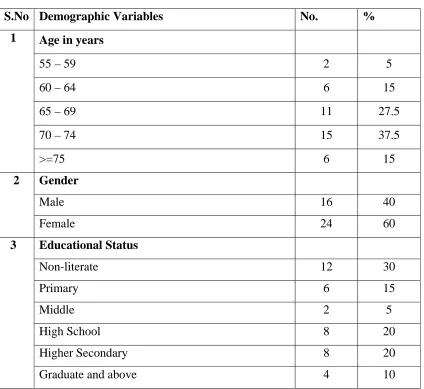
Table 1(a) : Frequency and percentage distribution of elderly with Mild Cognitive Impairment based on selected demographic variables such as age, gender and educational status
n = 40
S.No Demographic Variables No. %
1 Age in years
55 – 59 2 5
60 – 64 6 15
65 – 69 11 27.5
70 – 74 15 37.5
>=75 6 15
2 Gender
Male 16 40
Female 24 60
3 Educational Status
Non-literate 12 30
Primary 6 15
Middle 2 5
High School 8 20
Higher Secondary 8 20
Graduate and above 4 10
Table 1(a) depicts the frequency and percentage distribution of elderly with Mild Cognitive Impairment based on selected demographic variables such as age, gender and educational status.
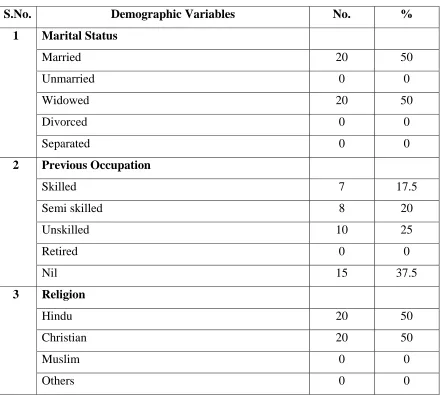
[image:48.612.103.527.186.575.2]Table 1(b): Frequency and percentage distribution of elderly with Mild Cognitive Impairment based on selected demographic variables such as marital status, previous occupation and religion.
n = 40
S.No. Demographic Variables No. %
1 Marital Status
Married 20 50
Unmarried 0 0
Widowed 20 50
Divorced 0 0
Separated 0 0
2 Previous Occupation
Skilled 7 17.5
Semi skilled 8 20
Unskilled 10 25
Retired 0 0
Nil 15 37.5
3 Religion
Hindu 20 50
Christian 20 50
Muslim 0 0
Others 0 0
Table 1(a) depicts the frequency and percentage distribution of elderly with Mild Cognitive Impairment based on selected demographic variables such as marital status, previous occupation and religion.
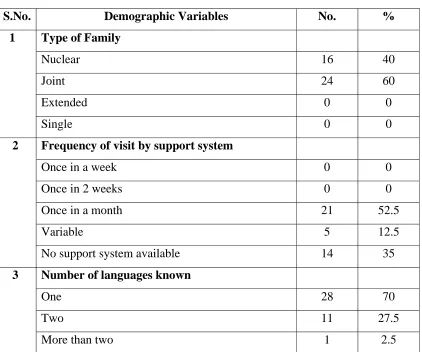
[image:49.612.83.524.146.541.2]Table 1(c): Frequency and percentage distribution of elderly with Mild Cognitive Impairment based on selected demographic variables such as type of family, frequency of visit by support system and
number of languages known. n = 40
S.No. Demographic Variables No. %
1 Type of Family
Nuclear 16 40
Joint 24 60
Extended 0 0
Single 0 0
2 Frequency of visit by support system
Once in a week 0 0
Once in 2 weeks 0 0
Once in a month 21 52.5
Variable 5 12.5
No support system available 14 35
3 Number of languages known
One 28 70
Two 11 27.5
More than two 1 2.5
Table 1(c) reveals the frequency and percentage distribution of elderly with Mild Cognitive Impairment based on selected demographic variables such as type of family, frequency of visit by support system and number of languages known.
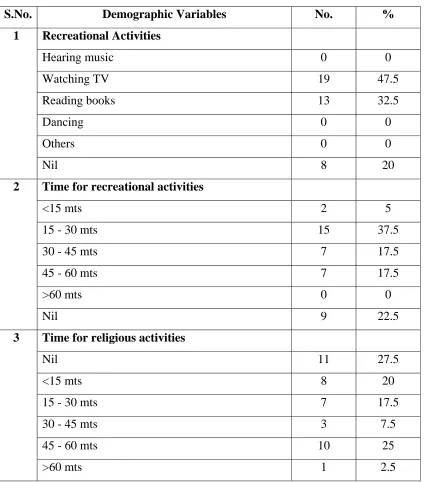
[image:50.612.104.526.165.517.2]Table 1(d): Frequency and percentage distribution of elderly with Mild Cognitive Impairment based on selected demographic variables such as recreational activities, duration of recreational activities and duration of religious activities.
n = 40
S.No. Demographic Variables No. %
1 Recreational Activities
Hearing music 0 0
Watching TV 19 47.5
Reading books 13 32.5
Dancing 0 0
Others 0 0
Nil 8 20
2 Time for recreational activities
<15 mts 2 5
15 - 30 mts 15 37.5
30 - 45 mts 7 17.5
45 - 60 mts 7 17.5
>60 mts 0 0
Nil 9 22.5
3 Time for religious activities
Nil 11 27.5
<15 mts 8 20
15 - 30 mts 7 17.5
30 - 45 mts 3 7.5
45 - 60 mts 10 25
[image:51.612.103.528.167.649.2]Table 1(d) reveals the frequency and percentage distribution of elderly with Mild Cognitive Impairment based on selected demographic variables such as recreational activities, time for recreational activities and time for religious activities.
Table 1(e): Frequency and percentage distribution of elderly with Mild Cognitive Impairment based on selected demographic variables such as dietary pattern, previous history of stroke and associated illness.
n = 40
S.No. Demographic Variables No. %
1 Dietary Pattern
Vegetarian 0 0
Non vegetarian 40 100
2 Previous H/O Stroke
Present 0 0
Absent 40 100
3 Associated Illness
HT 8 20
DM 6 15
Thyroid Disorders 1 2.5
Others 0 0
Nil 25 62.5
Table 1(e) portrays the frequency and percentage distribution of elderly with Mild Cognitive Impairment based on selected demographic variables such as dietary pattern, previous history of stroke and associated illness.
[image:53.612.102.526.161.454.2]SECTION B: ASSESSMENT OF THE PRE AND POST TEST LEVEL OF GLOBAL FUNCTIONING SCORE AMONG ELDERLY WITH MILD COGNITIVE IMPAIRMENT.
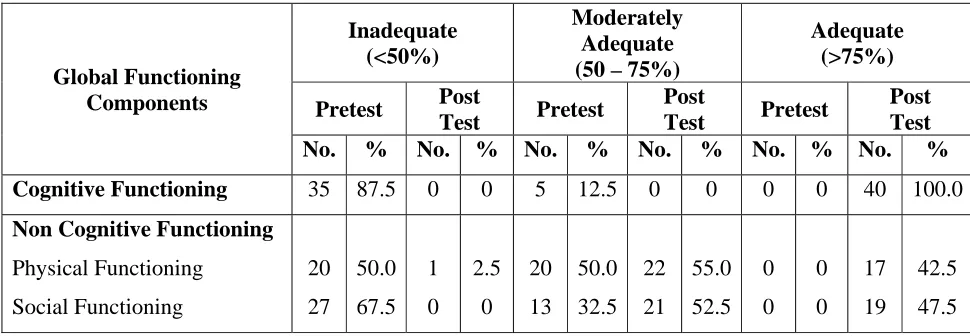
Table 2 : Frequency and Percentage distribution of pretest level of global functioning on different components among elderly with Mild Cognitive Impairment
n = 40
Global Functioning Components Inadequate (<50%) Moderately Adequate (50 – 75%)
Adequate (>75%)
Pretest Post
Test Pretest
Post
Test Pretest
Post Test
No. % No. % No. % No. % No. % No. %
Cognitive Functioning 35 87.5 0 0 5 12.5 0 0 0 0 40 100.0
Non Cognitive Functioning
[image:54.612.82.567.214.382.2]Physical Functioning Social Functioning 20 27 50.0 67.5 1 0 2.5 0 20 13 50.0 32.5 22 21 55.0 52.5 0 0 0 0 17 19 42.5 47.5
Table 2 depicts the frequency and percentage distribution of pretest and post test level of global functioning on different components among elderly with Mild Cognitive Impairment.
With respect to cognitive functioning, in the pre test 35(87.5%) had inadequate functioning, 5(12.5%) had moderately adequate functioning and none of them had adequate functioning where as in the post test all 40(100%) had adequate level of cognitive functioning.
(47.5%) had adequate social functioning, 21(52.5%) had moderately adequate social functioning.
The present study revealed that the improvement in the level of cognitive functioning was significantly higher than the improvement in the level of non cognitive functioning after the administration of the intervention for a period of 16 days. Hence, the investigator felt that the improvement in non cognitive functioning such as physical functioning and social functioning may be best observed after administering the intervention for a longer duration than the present study.
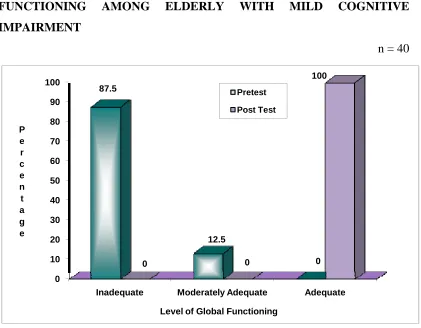
OVERALL PRETEST AND POSTTEST LEVEL OF GLOBAL FUNCTIONING AMONG ELDERLY WITH MILD COGNITIVE IMPAIRMENT
n = 40
0 10 20 30 40 50 60 70 80 90 100
Inadequate Moderately Adequate Adequate 87.5 12.5 0 0 0 100 P e r c e n t a g e
Level of Global Functioning
Pretest
Post Test
[image:56.612.109.530.90.418.2]
Fig.3: Percentage distribution of overall pretest and posttest level of global functioning among elderly with mild cognitive impairment
Fig.2 illustrates the percentage distribution of overall pretest and posttest level of global functioning among elderly with mild cognitive impairment.
In the pretest majority 35(87.5%) of elderly with Mild Cognitive Impairment had inadequate level of global functioning, 5(12.5%) moderately adequate level of global functioning.
SECTION C: COMPARISON OF THE PRE AND POST TEST LEVEL OF GLOBAL FUNCTIONING SCORE AMONG ELDERLY WITH MILD COGNITIVE IMPAIRMENT.
Table 3 : Comparison of pretest and post test level of global functioning score among elderly with Mild Cognitive Impairment.
n = 40 Global
functioning Mean
Mean improvement
score
SD Paired ‘t’ Value
Pretest
Post test
14.40
33.05
18.65
2.69
1.55
58.770*** (S) *** p<0.001, S- Significant
Table 3 reveals the effectiveness of language enriched socialization exercise on global functioning by comparing the pretest and post test mean global functioning score among elderly with Mild Cognitive Impairment.
SECTION D: ASSOCIATION OF MEAN IMPROVEMENT OF GLOBAL FUNCTIONING SCORE WITH SELECTED DEMOGRAPHIC VARIABLES OF ELDERLY WITH MILD COGNITIVE IMPAIRMENT.
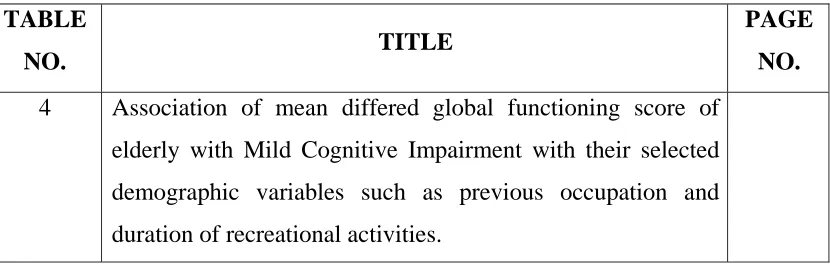
Table 4 : Association of mean differed global functioning score of elderly with Mild Cognitive Impairment with their selected demographic variables such as previous occupation and duration of recreational activities.
n = 40 Demographic Variables Pretest Post Test Mean Diff ANOVA
(F) Value Mean S.D Mean S.D Mean S.D
Previous Occupation
F = 3.286* (S) Skilled 17.28 2.49 34.00 0.00 16.71 2.49
Semi skilled 14.25 1.75 33.00 1.07 18.75 1.39 Unskilled 13.30 1.49 32.70 1.49 19.40 1.95
Retired - - -
Nil 13.87 3.02 32.87 2.03 19.00 1.65
Time for recreational activities
F = 2.923* (S) <15 mts 14.00 4.24 34.00 1.41 20.00 2.83
15 - 30 mts 14.33 2.02 33.20 0.86 18.87 1.68 30 – 45 mts 15.57 1.72 33.14 1.46 17.57 1.13 45 - 60 mts 16.00 3.21 33.28 1.70 17.28 2.56
>60 mts - - -
Nil 12.44 2.83 32.33 2.34 19.89 1.69
*p<0.05, S- Significant
The one way ANOVA revealed that there was a low significant association of mean differed global functioning score with previous occupation of the elderly with Mild Cognitive Impairment and the duration for recreational activities at p <0.05 level.
The present study revealed that the previous occupation involving linguistic tasks played a vital role in improving the global functioning. The investigator felt that the higher the duration spent for recreational activities is found to be a significant factor in providing cognitive stimulation to the elderly with Mild Cognitive Impairment.
CHAPTER – V
DISCUSSION
This chapter deals with the discussion of the findings of the statistical analysis based on the objectives and hypotheses of the study.
The first objective was to assess the pre test level of global functioning among elderly with Mild Cognitive Impairment.
Findings of pre intervention analysis revealed that 35(87.5%) had inadequate global functioning, 5(12.5%) had moderately adequate global functioning. When considering the non cognitive functioning 20(50%) had inadequate physical functioning, 20(50%) had moderately adequate physical functioning and 27(67.5%) had inadequate social functioning, 13(32.5%) had moderately adequate social functioning.
The second objective was to assess the effectiveness of language enriched socialization exercise on the level of global functioning among elderly with Mild Cognitive Impairment.
The findings revealed the effectiveness of language enriched socialization exercise on global functioning by comparing the pretest and post test mean global functioning score among elderly with Mild Cognitive Impairment.
The overall mean improvement for global functioning was 18.65 with a standard deviation of 1.14. The calculated ‘t’ value was 58.770 which showed a high statistical significance at p<0.001 level. Hence, there was a significant improvement in overall global functioning among elderly with Mild Cognitive Impairment after the administration of language enriched socialization exercise.
Hence the null hypothesis NH1 stated earlier that “there is no significant
difference between pre and post intervention level of global functioning among elderly with Mild Cognitive Impairment at p<0.05” was rejected.
The findings were consistent with several studies conducted to assess the effectiveness of cognitive training and physical activities in enhancing cognitive functioning and non cognitive functioning of patients with Mild Cognitive Impairment.
5 years post intervention for basic mental activities, health related quality of life, and improved ability to perform instrumental activities of daily living.
The third objective was to associate the mean differed global functioning score among elderly with Mild Cognitive Impairment with their selected demographic variables.
The one way ANOVA revealed that there was a low significant association of mean differed global functioning score with previous occupation of the elderly with Mild Cognitive Impairment and with the duration for recreational activities at p <0.05 level.
The present study revealed that the previous occupation involving linguistic tasks played a vital role in improving the global functioning. The investigator felt that the higher duration spent for recreational activities is found to be a significant factor in providing cognitive stimulation to the elderly with Mild Cognitive Impairment. The involvement in recreational activities may increase cognitive reserve by offering long term potentiation induced neuroprotection.
The other demographic variables were not found to be statistically significant.
Hence the null hypothesis NH2 stated earlier that “there is no significant
CHAPTER – VI
SUMMARY, CONCLUSION, IMPLICATIONS,
RECOMMENDATIONS AND LIMITATIONS
This chapter presents the summary, conclusion, implications, recommendations and limitations of the study based on the objectives selected.
SUMMARY
The objectives of the study were
1. To assess the pre test and post test level of global functioning among elderly with Mild Cognitive Impairment
2. To assess the effectiveness of language enriched socialization exercise on the level of global functioning among elderly with Mild Cognitive Impairment
3. To associate the mean differed global functioning score among elderly with Mild Cognitive Impairment with their selected demographic variables.
The study was based on the assumptions that
1. Elderly with Mild Cognitive Impairment may have impairment in global functioning.
2. Provision of structured and regular “language enriched socialization exercise” may enhance global functioning among elderly with Mild Cognitive Impairment.
The null hypotheses formulated were
NH1: There is no significant difference between pre and post intervention level of
global functioning among elderly with at p<0.05.
NH2: There is no significant association of the mean differed global functioning
The review of literature was derived from primary and secondary sources, along with professional experience and expert’s guidance from the field of mental health nursing which provided a strong foundation for the selection of problem. It also strengthened the ideas for conceptual framework, aided to design the methodology and develop the tool for data collection.
In view of explaining and relating various aspects of the study, the investigator had adopted Hildegard Peplau’s Interpersonal theory to conceptualize the research.
The researcher adapted quantitative research approach and the design used was pre experimental one group pretest post test design to assess the effectiveness of language enriched socialization exercise on the l