R E S E A R C H A R T I C L E
Open Access
Implementation of an interprofessional
medication adherence program for HIV
patients: description of the process using
the framework for the implementation of
services in pharmacy
Mélanie Lelubre
1,2,3, Olivier Clerc
4, Marielle Grosjean
4, Karim Amighi
3, Carine De Vriese
3, Olivier Bugnon
1,2and Marie-Paule Schneider
1,2*Abstract
Background:The community pharmacy center of the Department of Ambulatory Care and Community Medicine
of the Policlinique Médicale Universitaire (PMU), Lausanne, Switzerland developed and implemented an interprofessional medication adherence program for chronic patients (IMAP). In 2014, a project was launched to implement the IMAP for HIV patients in a public non-academic hospital with the collaboration of community pharmacists in the Neuchâtel area (Switzerland). This article aims to describe the different implementation stages and strategies of the project.
Methods:A posteriori description of the implementation process, including the conceptualization strategies and stages (exploration, preparation, operation, sustainability) using the Framework for the Implementation of Services in Pharmacy (FISpH).
Results:In 2014, an attending infectious disease physician and a nurse at a public hospital (Neuchâtel, Switzerland) contacted the PMU to implement the IMAP in their setting in collaboration with community pharmacies. Five volunteer community pharmacies in Neuchâtel were trained to deliver the program. Three factors were found to be essential to the successful launch and progress of the implementation project: the experience of the community pharmacy center of the PMU with the IMAP, the involvement of the PMU research team, and collaboration with an external start up (SISPha) to train and support pharmacists. During the operation stage, the most important strategy developed was that of regular meetings between all stakeholders. These allowed healthcare professionals to discuss the implementation progress, to address each stakeholder’s expectations, and to exchange experiences to facilitate interprofessional collaboration and program delivery. Structural changes allowed the formalization of the activities at the hospital and in a community pharmacy. This formalization was identified as the transition step between the operation and the sustainability stages.
(Continued on next page)
* Correspondence:[email protected] 1
Community Pharmacy, School of Pharmaceutical Sciences, University of Geneva, University of Lausanne, Geneva, Switzerland
2Community Pharmacy, Department of Ambulatory Care and Community Medicine, University of Lausanne, Lausanne, Switzerland
Full list of author information is available at the end of the article
(Continued from previous page)
Conclusions: The transfer of the IMAP for HIV patients to a non-academic setting and its implementation are
feasible. However, implementation of a new model of pharmacy service such as IMAP implies a deep change in practice. A transitional external support and the allocation of sufficient resources to carry out the IMAP are essential for its long-term sustainability.
Keywords: Implementation process, Implementation strategies, FISpH, Medication adherence, IMAP, Community
pharmacy service, Interprofessionality, HIV patients
Background
An innovative interprofessional medication adherence program (IMAP) was developed and implemented in the community pharmacy center of the Department of Ambulatory Care and Community Medicine at the Policlinique Médicale Universitaire (PMU), Lausanne, Switzerland [1]. In 2004, the program was developed in collaboration with the infectious diseases service of the University hospital (CHUV, Lausanne, Switzerland) and focused on HIV-positive patients. In Switzerland, around 20′000 persons live with HIV [2]. In the context of a transmitted disease with potential development of treat-ment resistances, support of adherence to antiretroviral treatments takes on its full meaning. Initially, this program was confined to the community pharmacy of the PMU. In 2008, its research team attempted to implement its medi-cation adherence program for hypertensive, diabetic and/ or dyslipidemic patients in community pharmacies in the French-speaking part of Switzerland [3]. The study failed and detected four major barriers to implementation: a) lack of pharmacist-patient communication, which led to insufficient promotion of the program; b) insufficient col-laboration between pharmacists and physicians; c) difficul-ties in integrating the program into the routine activity of the pharmacy; and d) lack of motivation among pharma-cists. In 2014, at the request of an infectious disease phys-ician and a nurse, a project was launched to implement the IMAP at the public hospital ‘Hôpital neuchâtelois Pourtalès’, in collaboration with community pharmacists in the Neuchâtel area (Switzerland). Compared to the CHUV, Pourtalès hospital is a non-academic state hospital with around 190 beds that serves the entire county (178,434 inhabitants in 2016). The hospital infectious dis-eases outpatient ward manages about 200 HIV-infected patients [4].
Implementation research in the field of pharmaceutical care has become essential to ensure transfer of phar-macy services in the real world, program effectiveness and fidelity of the service delivery. Several implementa-tion frameworks exist in the literature, for example the Re-AIM (Glasgow [5]), the Consolidated Framework for Implementation Research (Damschroder [6]), the Proc-tor Conceptual Model for Implementation Research (Proctor et al. [7]), and the Exploration, Preparation,
Implementation, Sustainment Model (Aarons et al. [8]). They are, however, not specific to pharmaceutical care interventions.
In 2015, a new implementation framework specifically designed for community pharmacists emerged in the litera-ture. This was the Framework for the Implementation of Services in Pharmacies (FISpH) developed by Moullin et al. [9]. The FISpH was based on a literature review of existing frameworks, from which a qualitative study was conducted to contextualize and advance the concept framework devel-oped for pharmacy services [10,11]. The framework states that implementation is a complex multi-stage process in-volving an innovation, a multi-level context (individuals, pharmacy(s), local setting and system), influenced by a range of factors, strategies, and evaluations [9].
In Switzerland and worldwide, implementation studies are scarce and new pharmaceutical services encounter difficulties to be implemented in community pharma-cies, hence inhibiting their uptake [10,12]. Implementa-tion science is developing and there is a need for data in the field of community pharmacy services, particularly concerning implementation processes and used strat-egies [12]. Therefore, this article aims to describe, the different stages and the implementation strategies devel-oped to implement the IMAP in a new clinical setting using the FISpH.
Method
Study design
This is a descriptive, observational study, focusing on the a posteriori description of the implementation process to conceptualize strategies and stages used during the study, using the FISpH framework [10]. In this project, the re-search team was involved in both the development of strategies to support the implementation process and in the prospective observation of the implementation results. Quantitative and qualitative results of the prospective ob-servational study for this implementation project will be described separately in another article.
Framework used for describing the implementation process
literature was adapted in a unique way for community pharmacy services [10]. It divides the implementation process into five stages: exploration, preparation, testing, operation, and sustainability. These stages are preceded by development of the innovation and by communica-tion about it.
Described stages
In this paper, the context and strategies have been inves-tigated in relation to four FISpH stages out of the five: 1) exploration (whereby the end users appraise the innovation and decide to either accept/adopt or reject it); 2) preparation (the course of preparation prior to innovation use), 3) operation (innovative use of services and their process of being integrated into routine prac-tice through active and planned approaches), and 4) sus-tainability (process of maintaining the innovation that has been integrated as routine practice through contin-ued innovation, ongoing capacity and supportive envir-onment, and persistence of innovation benefits) [10]. The testing phase, which in this project could be consid-ered as the inclusion of the first patients, is not de-scribed because no real transition from the testing to the operation phase was planned.
The dissemination of the program, defined as the“ ac-tive approach using planned strategies via determined channels to persuade the target audience to adopt new innovations” [10], is part of the communication. This is described in both the preparation stage and the last stage of this project. Hence, communication strategies allow each new professional who wishes to adopt the intervention to enter a new implementation cycle at the exploration stage, and then to implement it at his or her individual level.
Description of the implemented intervention
The IMAP medication adherence program was initially developed at the community pharmacy center of the PMU. In 2004, the program became a routine pharmacy intervention when the collaboration with the infectious diseases service of the Lausanne University Hospital (CHUV) was launched. The program aims to support and to reinforce medication adherence through multifac-torial and interprofessional intervention. Motivational interviewing is combined with medication adherence electronic monitoring and feedback to the patient (MEMS™ monitors, Aardex MWV, Switzerland), while the core content of the pharmacist’s intervention is reported to the patient’s physician and nurse. Patient-pharmacist interviews last approximately 15 min. They are repeated over time according to the patient’s needs [1]. The intervention is based on socio-cognitive theory, especially the information-motivation-behavior
skills model [13]. The program and its development have been fully described elsewhere [1].
SISPha, a Swiss startup active in the development of interprofessional programs dedicated to chronic care management, scaled up the IMAP. SISPha trains com-munity pharmacists and pharmacy teams. It developed an interprofessional web platform for collecting patients’ data related to medication adherence [14]. In the French-speaking part of Switzerland, all pharmacies can subscribe to the SISPHA program, be trained in it and receive a toolbox to support their patients’ medication adherence. In Switzerland, community pharmacist activ-ity to support medication adherence in chronic patients who are prescribed at least three concomitant chronic drugs are reimbursed by a fee defined by the Swiss healthcare system [1].
Results
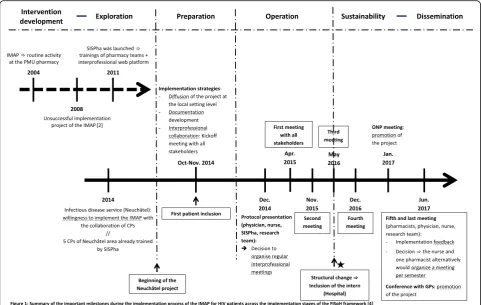
Figure 1 summarizes the timeline and important mile-stones that drove the project forward across the imple-mentation stages.
Exploration
In 2014, the attending infectious disease physician (named physician in the manuscript) and a nurse work-ing together in the district hospital Hôpital neuchâtelois, Pourtalès (Neuchâtel, Switzerland) contacted the PMU community pharmacy center. Both professionals were confronted with non-adherent patients in their practice and expressed their willingness to implement the IMAP in their hospital with the collaboration of community pharmacists in Neuchâtel (Switzerland).
When the project was launched, five community phar-macies in Neuchâtel had already decided to adopt the practice innovation supported by SISPha and were ready to deliver the program. Unlike the PMU community pharmacy center, these pharmacies are not affiliated to a research or academic structure.
Preparation
Key stakeholders were identified and engaged in the im-plementation of the project from its early stage. These were a physician, a nurse, five pharmacists and SISPha collaborators.
SISPha training courses are described in Table1. They are not mandatory to deliver the program. However, all five pharmacists had at least followed the two-day initial course“Medication adherence program: first steps at the pharmacy– parts 1 & 2” and received the in-situ train-ing at the pharmacy before or durtrain-ing the project. One pharmacist attended all available courses.
Fig. 1Summary of the important milestones during the implementation process of the IMAP for HIV patients across the implementation stages of the FISpH framework [12]. This figure describes all important events and strategies developed to implement the IMAP at the hospital and in community pharmacies. Events are enumerated on a timeline and separated by dotted lines on the basis of the implementation stages
Table 1Description of SISPha training courses and pharmacist participation during the preparation stage
Title Course objective Who can attend
the course?
Course duration
Number of trained pharmaciesa
Medication adherence program: first steps at the pharmacy (part 1)
Understanding medication adherence and related issues–defining and developing strategies to implement the program in the pharmacy setting
Pharmacists 1 day 5/5
Medication adherence program: first steps at the pharmacy (part 2)
Building up competencies in presenting the program to patients and physicians
Pharmacists 1 day 5/5
The medication adherence interview Initiation in motivational interviewing; learning about available tools for monitoring and supporting medication adherence
Pharmacists 2 days 3/5
Proposal and follow-up interviews Building up competencies in engaging patients in the program and in conducting medication adherence interviews
Pharmacists 1 day 1/5
What is the role of the pharmacy technician?
Training in uploading and managing EMbdata on SISPha web platform
Pharmacy technicians
4 h 0/5
A team story In-situ entire team training at the pharmacy Pharmacy team 2 h30 5/5
a
Among the pharmacies involved in the project (n= 5) b
[image:4.595.63.538.536.716.2]hospital about the project and to prepare the necessary documentation (Table 2 and Fig. 1). To start the oper-ation stage officially and to develop an interprofessional collaboration, a kickoff meeting between the physician, the nurse, the five pharmacists, SISPha and the research team was organized.
Operation
The IMAP started in Neuchâtel in November 2014 (Fig. 1). The roles of each stakeholder are described in Table 3.
During this stage, it was decided to organize meetings every six months between all involved stakeholders. These meetings were held to discuss the implementation progress and each stakeholder’s expectations, and to ex-change experiences to facilitate the interprofessional col-laboration and the program delivery. As the PMU research team was also involved in these sessions, it was an opportunity to exchange experiences and share the IMAP guidelines as implemented at the PMU. The con-tent of these meetings was adapted according to the im-plementation progress and the healthcare professionals’ feedback and needs. Each issue detected during the dis-cussion was addressed and then reviewed during the next meeting. The research team also supported the physician and the nurse in the patient inclusion process
through a monthly teleconference with the nurse to evaluate the inclusion process and related issues.
The nurse spontaneously took the lead at the hospital. She identified eligible patients with the physician and was in charge of the administrative work related to the project. A structural organizational change in the hos-pital lengthened the stay of the ward’s visiting intern, an infectious disease fellow, to six months. This allowed the physician and the nurse to include the intern in the pro-gram. To do so, the nurse developed local procedures and started to train the new intern. Analysis of the pro-ject by the research team found that this improvement was the pivotal event in the transition between the oper-ation and the sustainability stages. Among the pharma-cists, only one pharmacist reorganized internal activity, which she did upon the arrival of a new pharmacist dur-ing the project. This team organization allowed the par-ticipating pharmacist to enter a routinization phase and then to move to the sustainability stage.
Sustainability
[image:5.595.61.539.98.288.2]During the sustainability phase, the nurse and the phys-ician extended the program to hepatitis C patients. A fourth meeting with all stakeholders was organized two years after the first patient was included to discuss the sus-tainability of the program. To reinforce this sussus-tainability, the healthcare professional team decided to hold an
Table 2Description of the strategies developed during the preparation stage of the IMAP implementation
Interventions Provision level Developed strategies
Dissemination of the project Local setting (pharmacies) Identification of trained community pharmacists and encouragement of new pharmacists to receive training in medication adherence (e.g. SISPha program)
Local setting (hospital) Presentation of the medication adherence program to inform all healthcare professionals (physicians and nurses) at the local hospital
Development of the documentation by the research team
Organization (hospital) “Descriptive document of the program”for the physician and the nurse to help them present the program to patients, including the list of trained pharmacists
Organization (hospital) A check-list for the physician and the nurse for collecting patient inclusion data. Collected data were: 1) proposal date; 2) acceptation or refusal of inclusion; 3) reason for proposal; 4) reason for refusal or chosen pharmacy for the program, whichever applies
Organization (research) The study protocol elaborated by the research team to evaluate the implementation outcomes; this was reviewed and approved by the physician, the nurse and SISPha
Development of the interprofessional collaboration
Organization (pharmacists, physician, nurse, SISPha, research team)
Organization of a kickoff meeting between all stakeholders to discuss and align the expectations of all stakeholders, and to present the study protocol
Table 3Respective roles of each involved stakeholder during the operation stage of the IMAP implementation process
Stakeholders Roles
The physician and the nurse Include patients in the program and refer them to a pharmacist, who delivers the IMAP
Pharmacists Deliver the IMAP and send the medication adherence report to the physician and the nurse
SISPha Train pharmacists and provide the necessary tools (web platform and electronic monitors)
[image:5.595.55.540.654.733.2]interprofessional meeting at the hospital each semester, to be organized alternately by the nurse and one pharmacist. Here, the pharmacists would present one or two complex clinical cases. These cases would be discussed with the physician and the nurse to agree on an interprofessional follow-up of the patient. The first interprofessional meeting – without the research team – took place in November 2017. Two physicians, one nurse and four pharmacists took part.
Dissemination
The program and the first results of the implementation study were presented to the board of the local pharma-cists’association (Ordre Neuchâtelois des Pharmaciens– ONP) two years after the first patient was included. This meeting was organized to promote the project and en-courage more pharmacists to provide the IMAP in their practice. A letter summarizing the implementation re-sults was sent to all pharmacists in the Neuchâtel area through the ONP. At the hospital, the research team presented the results of this project to the general prac-titioners in the Neuchâtel area at a conference in order to enhance the program’s adoption.
Discussion
This project aimed to implement the IMAP in the infec-tious diseases department of the local hospital of Neu-châtel area with the collaboration of community pharmacists. The experience of the PMU community pharmacy with the IMAP program, the involvement of the PMU research team –who supported and evaluated the implementation process–and the collaboration with SISPha– who trained and supported the pharmacists– were essential to launch and push the implementation project forward. Two important strategies allowed stake-holders to move the project forward: 1) regular meetings between stakeholders to develop interprofessional col-laboration and teamwork; and 2) the formalization of the activity at the hospital and in one pharmacy through the involvement of new colleagues, made possible thanks to structural changes (e.g. the infectious disease fellow’s six-month internship). Importantly, our results also show that such a process takes time as two years were needed to reach structural changes.
In the literature, different strategies are described to facilitate the implementation of new services. Powell et al. published a compilation of 75 implementation strat-egies [15]. Some of these were used during the prepar-ation stage of our IMAP implementprepar-ation: 1) develop an academic partnership; 2) assess for readiness and identify barriers and facilitators; 3) conduct education meetings; and 4) develop and organize quality monitoring. Other strategies were used during the operation and sustain-ability stages of the IMAP implementation: 1) build a
coalition (recruit and cultivate relationships with part-ners in the implementation effort); 2) provide feedback in implementation team meetings; and 3) remind clini-cians to deliver the medication adherence program. Ac-cording to the Watkins et al. study, the most effective strategies for implementing clinical guidelines in com-munity pharmacies are educational interventions and computerized decision support [16]. In this project, the courses and the web software developed by SISPha helped pharmacists implement the program in their pharmacies. However, based on our observations, the most useful strategy to develop interprofessional collab-oration, exchange experiences and align expectations, and give feedback on the implementation progress was the organization of regular meetings with all stake-holders. These meetings helped to create a positive at-mosphere and nurture the climate for change. The implementation climate is defined by Klein and Sorra as “the extent to which intended users perceive that innovation use is expected, supported, and rewarded” [17]. In our program, the future challenge for the in-volved healthcare professionals is to maintain the estab-lished dynamic.
Sustainability is the least described stage in the litera-ture and many projects have failed to continue to deliver a new intervention on the long term [18]. In Neuchâtel, the sustainability stage was reached, and the project con-tinued to be delivered after the end of the study. The two-year support provided by the research team was es-sential for this project and generated information about the program’s sustainability. This support is not feasible in the long run and was therefore transferred to the healthcare professionals. Long-term monitoring, without research support, has been put in place by the research team to assess the capacity of healthcare professionals to maintain the program in their practice.
team to assess and overcome barriers in a timely and ef-ficient way. In the future, the feasibility of these regular meetings should be investigated on a larger scale. The dissemination of the IMAP to a larger scale started with the communication of the information to other health-care professionals and by addressing another pathology than solely HIV (i.e. hepatitis C). A larger study is cur-rently being supported by the national government in Switzerland to implement an integrated chronic care management model combining the IMAP with the treat-ment plan reconciliation in patients with diabetes type 2 [19]. This study should bring more results on IMAP im-plementation in daily routine. Pharmacists involved in the HIV IMAP implementation project also started this new study in diabetes.
Conclusion
The transfer of the IMAP for HIV patients to a non-academic setting and its implementation are feas-ible. The implementation of a new model of pharmacy service such as IMAP implies a deep change in practice, e.g. organizational changes, development of communica-tion between healthcare professionals, and changes in mentalities. Moreover, the medium-term external support of an implementation research team and the al-location of sufficient resources are essential for the long-term sustainability of such a project.
Abbreviations
CHUV:Centre Hospitalier Universitaire Vaudois (Lausanne University Hospital), Lausanne, Switzerland [20]; FISpH: Framework for the Implementation of Services in Pharmacy; IMAP: Interprofessional medication adherence program; ONP: Ordre Neuchâtelois des Pharmaciens, pharmacist association of Neuchatel county (178,434 inhabitants at the end of 2016) [21]; PMU: Policlinique Médicale Universitaire); Department of Ambulatory Care and Community Medicine (Lausanne, Switzerland) [22]
Acknowledgments
We would like to thank Joanna Moullin for her scientific advice and discussions on this project and for having shared with us her expertise in the field of implementation science. We also would like to thank the“Fonds Van Buuren & Fondation Jaumotte Demoulin”which offered a grant to M. Lelubre for the final part of her research and thesis.
Availability of data and materials
All raw, qualitative data are available in French by contacting the senior author by email.
Authors’contributions
ML and MS designed the study, collected and analyzed data. OC and MG participated in the development of the protocol and in implementation of the project in the hospital. ML drafted the manuscript and MS assisted in preparation of the manuscript. KA, CDV and OB revised the manuscript critically and give final approval of manuscript. All authors read and approved the final manuscript.
Ethics approval and consent to participate
As medication adherence services are part of the pharmacists’role in Switzerland, the Ethics Committee of the Canton of Vaud (Switzerland) stated that an authorization was not necessary for this implementation project.
Consent for publication
Not applicable.
Competing interests
O. Bugnon is a member of the advisory board of SISPha. The other authors declare that they have no competing interests.
Publisher’s Note
Springer Nature remains neutral with regard to jurisdictional claims in published maps and institutional affiliations.
Author details
1Community Pharmacy, School of Pharmaceutical Sciences, University of Geneva, University of Lausanne, Geneva, Switzerland.2Community Pharmacy, Department of Ambulatory Care and Community Medicine, University of Lausanne, Lausanne, Switzerland.3Department of Pharmacotherapy and Pharmaceutics, Faculté de Pharmacie, Université libre de Bruxelles (ULB), Brussels, Belgium.4Department of Internal Medicine and Infectious Diseases, Pourtalès Hospital, Neuchâtel, Switzerland.
Received: 2 March 2018 Accepted: 29 August 2018
References
1. Lelubre M, Kamal S, Genre N, Celio J, Gorgerat S, Hugentobler Hampai D, et al. Interdisciplinary medication adherence program: the example of a university community pharmacy in Switzerland. Biomed Res Int. 2015;2015. https://www.ncbi.nlm.nih.gov/pubmed/26839879.
2. Federal Office of Public Health - FOPH. Statistics and ananlysis concerning HIV. 2016. https://www.bag.admin.ch/bag/fr/home/themen/mensch-gesundheit/uebertragbare-krankheiten/sexuell-uebertragbare-infektionen/ hiv-sti-statistiken-analysen-trends.html. Accessed 13 Jul 2018.
3. Marquis J, Schneider MP, Spencer B, Bugnon O, Du Pasquier S. Exploring the implementation of a medication adherence programme by community pharmacists: a qualitative study. Int J Clin Pharm. 2014;36:1014–22. 4. [Neuchâtel - Population].http://www.ne.ch/autorites/DEAS/STAT/
population/Pages/accueil.aspx. Accessed 27 Nov 2017.
5. Glasgow R, Vogt T, Boles S. Evaluating the public health impact of health promotion interventions: the RE-AIM framework. Am J Public Health. 1999; 89:1322–7.https://doi.org/10.2105/AJPH.89.9.1322.
6. Damschroder LJ, Aron DC, Keith RE, Kirsh SR, Alexander JA, Lowery JC. Fostering implementation of health services research findings into practice: a consolidated framework for advancing implementation science. Implement Sci. 2009;4:50.https://doi.org/10.1186/1748-5908-4-50. 7. Proctor EK, Landsverk J, Aarons G, Chambers D, Glisson C, Mittman B.
Implementation research in mental health services: an emerging science with conceptual, methodological, and training challenges. Adm Policy Ment Heal Ment Heal Serv Res. 2009;36:24–34.
8. Aarons GA, Hurlburt M, Horwitz SM. Advancing a conceptual model of evidence-based practice implementation in public service sectors. Adm Policy Ment Heal Ment Heal Serv Res. 2011;38:4–23.https://doi.org/10.1007/ s10488-010-0327-7.
9. Moullin JC, Sabater-Hernández D, Benrimoj SI. Model for the evaluation of implementation programs and professional pharmacy services. Res Soc Adm Pharm. 2016;12:515–22.
10. Moullin JC, Sabater-Hernández D, Benrimoj SI. Qualitative study on the implementation of professional pharmacy services in Australian community pharmacies using framework analysis. BMC Health Serv Res. 2016;16:439. https://doi.org/10.1186/s12913-016-1689-7.
11. Moullin JC, Sabater-Hernández D, Fernandez-Llimos F, Benrimoj SI. A systematic review of implementation frameworks of innovations in healthcare and resulting generic implementation framework. Heal Res Policy Syst. 2015;13:16.https://doi.org/10.1186/s12961-015-0005-z. 12. Patwardhan PD, Amin ME, Chewning BA. Intervention research to enhance
community pharmacists’cognitive services: a systematic review. Res Soc Adm Pharm. 2014;10:475–93.https://doi.org/10.1016/j.sapharm.2013.07.005. 13. Fisher JD, Fisher WA, Amico KR, Harman JJ. An
information-motivation-behavioral skills model of adherence to antiretroviral therapy. Health Psychol. 2006;25:462–73.https://doi.org/10.1037/0278-6133.25.4.462. 14. SISPha.www.sispha.ch. Accessed 16 Nov 2017.
16. Watkins K, Wood H, Schneider CR, Clifford R. Effectiveness of
implementation strategies for clinical guidelines to community pharmacy: a systematic review. Implement Sci. 2015;10:151.https://doi.org/10.1186/ s13012-015-0337-7.
17. Klein KJ, Sorra JS. The challenge of innovation implementation. Acad Manag Rev. 1996;21:1055–80.
18. Wiltsey Stirman S, Kimberly J, Cook N, Calloway A, Castro F, Charns M. The sustainability of new programs and innovations: a review of the empirical literature and recommendations for future research. Implement Sci. 2012;7: 17.https://doi.org/10.1186/1748-5908-7-17.
19. Federal Office of Public Health FOPH. Reinforcement of existing activities -Pharmacists in the coordination of basic care.https://www.bag.admin.ch/ bag/fr/home/themen/strategien-politik/nationale-gesundheitspolitik/ koordinierte-versorgung/verstaerkung-bestehender-aktivitaeten-koordinierte- versorgung/rolle-der-apotheken-in-der-grundversorgung-postulat-humbel-koordinierte-versorgung.html. Accessed 26 Jan 2018.
20. CHUV [Centre hospitalier universitaire vaudois]. http://www.chuv.ch/fr/chuv-home/.Accessed 26 Jan 2018.
21. ONP [Ordre Neuchâtelois des Pharmaciens].http://www.onp.ch/. Accessed 26 Jan 2016.