MEASURING UP:
INTERNATIONAL
CASE STUDIES
ON THE TEACHING
OF QUANTITATIVE
METHODS IN THE
SOCIAL SCIENCES
John MacInnes, Maddie Breeze,
Maite de Haro, Mor Kandlik
+44 (0)20 7969 5200
Registered Charity: Number 233176
britishacademy.ac.uk
© Published March 2016
Measuring up:
International case
studies on the teaching
of quantitative methods
in the social sciences
John MacInnes, Maddie Breeze, Maite de Haro, Mor Kandlik and Martina Karels
We are extremely grateful to the following people who gave their time to help us with this research:
Contents
Acknowledgements 2
Foreword 5
Executive summary 6
1 Introduction 10
2 Teaching quantitative skills in university social science: The challenge 12
3 The case study research: Leading universities 18
Levels of achievement 19 Teaching methods and pedagogy 21
4 Opportunities and barriers to developing similar teaching in the UK 24
5 What can UK universities learn from these case studies? 28
The case studies 30
University of Auckland, First year statistics course 31 University of Bern, BAs in sociology and politics 32 University of Bergen, Department of Sociology 33 Harvard College, Department of Government 35 Jacobs University Bremen, BA integrated social science 36 University of Köln, BAs in sociology and politics 37 University of Lausanne, BAs in political science and social science 39 University of Leuven, BAs in politics, sociology, and communications 40 University of Mannheim, BAs in sociology and politics 41 University of Melbourne, School of Social and Political Sciences 42 Princeton University, Department of Politics 43 Vrije Universiteit, BA sociology 44 University of Stockholm, BAs in sociology and applied social science 46 University of Utrecht, BA sociology 47 Yale University, BA sociology 49 Columbia University, MA in quantitative methods in the social sciences 50
Glossary 52
Foreword
The UK is in the enviable position of having one of the world’s most successful higher education systems. The social sciences are central to this hard-earned reputation in research excellence, and are internationally recognised as as one of the UK’s top research strengths. Furthermore, the social sciences are a crucial instrument in the UK’s toolbox for addressing some of the most pressing societal challenges of the 21st century: an ageing population, rising obesity, climate change, energy security, migration and wealth inequality can only be understood through investment, and insight from, the UK’s social science base.
In its Society Counts (2012) statement however, the British Academy drew attention to long-term vulnerabilities within the UK’s higher education curriculum. It uncovered a long-standing lack of emphasis on quantitative methods in many courses and programmes of study, and an insufficient attention in degree programmes to methodology and the systematic organisation and production of empirical evidence. Moreover, it found the teaching of quantitative methods failed to relate adequately to the course, skills and research interests of students. Arguing that UK universities suffer from a poverty of aspiration in relation to their students’ quantitative ability, the Academy calls on decision makers to intervene in its recent report Count Us In (2015), to ensure the UK moves to a situation where it is normal for science, social science and humanities students to have developed quantitative skills at every stage of education. Following on from this, the Academy has commissioned the Measuring Up report, as a resource specifically for the higher education community.
Measuring Up is a review of social science departments, identifying the quantitative
methods that departments embed in their courses, how they do this, and the effects this has on their students in terms of enhancing their quantitative skills. Looking at 16 different departments across three continents, the report offers an insight into what works in other departments, and the many opportunities for UK higher education leaders to learn from the lessons of other departments across the world. Changes to the funding landscape of higher education – an increasingly marketised environment where the choices of students whilst still at school will govern the behaviours of university departments – makes the challenge more urgent. How do we embed into our curricula training in those higher level skills that employers and the research world require, but which students fear, or historically have not chosen to pursue? This will require creative solutions, and I urge leaders in higher education to read this report closely, and explore the ways in which they may implement changes in their own departments, in order to ensure the UK retains its position as a global leader in the social sciences.
Professor Sir Ian Diamond FBA FRSE FAcSS
British Academy // Measuring up: International case studies on the teaching of quantitative methods in the social sciences 7
Undergraduate social science
students in many universities
in Europe, North America
and Australasia reach much
higher levels of achievement
in quantitative skills than even
their best UK counterparts.
They are able to do this because
their degree programmes
University teaching staff are
much more likely to have advanced
quantitative skills than in the UK,
but substantial amounts of teaching
and support are also provided
by post docs and postgraduates.
There is no ‘one best way’ to teach
quantitative skills to undergraduates
but small group work, working
British Academy // Measuring up: International case studies on the teaching of quantitative methods in the social sciences 9
If UK universities are to reach
Introduction
In spring 2015 the British Academy asked the University of Edinburgh to review the provision of quantitative skills (QS) training in social science degrees in leading universities around the world. The aim was not to carry out a survey, given that Parker (2008) had undertaken such a review, but rather to gather examples of best practice and consider their implications for QS training in UK university social science. This report therefore presents and reviews brief case studies of best practice and innovation in the teaching of quantitative methods (QM) and statistics to under-graduate social science students in 16 universities around the world. It focuses on sociology, social policy, politics and international studies and related disciplines (such as organisation studies, management, education, communications studies). It does not cover economics and experimental psychology given that the approach to teach-ing in both these disciplines is rather different, both in the UK and elsewhere, so that quantitative skills are generally well developed in degree programmes.
It is not a study of any representative, ‘average’ or general approach to such teaching in the countries concerned. Nor is it a study of the ‘top ten’ universities or courses. There is no general survey of QM provision in higher education around the world that would allow us to make such a judgment, even if agreement could be reached on the criteria by which such a judgement could be made, which is doubtful.
Teaching quantitative skills
in university social science:
The challenge
Several reports over the last decade have highlighted the fragile position of quantitative skills teaching (QS)1 in UK social science university degree
programmes. The problem is long standing. Seventy years ago the Clapham report on UK university social science noted ‘there was a chronic struggle […] for the services of a supply of statisticians’ (1946: Para. 18). Rosenbaum (1971) made similar observations and noted the lack of numeracy among social science graduates and the ‘disappointingly low’ standard of quantitative work in research grant applications.
The British Academy (BA) together with Economic and Social Research Council (ESRC), Higher Education Funding Councils (HEFCE, WFC, SFC) and Nuffield Foundation have tackled the problem recently in a number of ways including:
• Ensuring that all social science postgraduate training includes QS.
• The ESRC Quantitative Methods Initiative including the Secondary Data Analysis research programme, and the website quantitativemethods.ac.uk
• The ESRC Curriculum Innovation/Researcher Development Initiative
programme to produce teaching support materials and training for QM teachers.
• The British Academy policy statement Society Counts, together with statements of support from the leading social science professional associations.
• The Nuffield, ESRC, and HEFCE Q-Step programme, establishing 20 centres of excellence in undergraduate QM teaching to secure the ‘pipeline’ to postgraduate quantitative research.
• Establishing the British Academy’s High Level Strategy Group (HLSG) on Quantitative Skills bringing together key stakeholders to coordinate activity around the quantitative skills agenda.
• The 2015 British Academy report on data skills and the economy:
Count Us In.
The essence of the issue is straightforward to describe, if less easy to remedy. Students in the UK arrive at university to study social science with a range of maths and basic numeracy skills, but only a minority (around 20%) will have A-Level maths while many will have had two or three years without doing any maths in school (after taking GCSEs), or in some cases, no maths qualifications
at all. Whatever students’ level of maths skill, previous teaching will be unlikely to have had much focus either on statistics or on the application of maths (although revisions to the A-Level curriculum and the introduction of Core Maths may improve this state of affairs).
Once at university the average undergraduate social science curriculum devotes little space to QS, usually in stand-alone methods options that are not always well integrated with the substantive elements of the degree, and can cover only a very limited amount of material in the curriculum time available. This is not the case is economics, demography, psychology and some other areas, where quantitative skills are central to degree programmes. Outside these subjects, only a small minority of academic staff are competent in QS, they devote proportionately more time to externally funded research (reducing their availability for teaching) and there is no necessary link between competence and teaching ability (MacInnes, 2009). Thus departments could find it difficult to expand the amount of curriculum time devoted to QS, even if they wanted to do so. As a result practical research project work by students tends to be qualitative or theoretical, and QS are rarely integrated into or developed by substantive courses.
Students graduate without developing extensive QS, experience in applying them or confidence in using them. This influences the methodological choices postgraduates make at Masters and Doctoral levels, so that the imbalance in faculty skills, skewed towards qualitative work, is reproduced. Thus students not only arrive at university with little exposure to statistics or quantitative skills, but typically are given little encouragement, opportunity or requirement to develop these skills in their undergraduate programmes. If they progress to postgraduate study, they are ill prepared to develop QS there, while if they enter the graduate labour market, they do so with weak quantitative and even numeracy skills.
This weakness is important not only for academic but also for practical
economic reasons. The range of high quality quantitative data available to social scientists is increasing exponentially, so that keeping up with new knowledge in any discipline requires the ability to understand quantitative evidence and the techniques used to analyse it. Teachers or students without these skills cannot understand or follow an ever increasing proportion of the literature in their fields of study.
British Academy // Measuring up: International case studies on the teaching of quantitative methods in the social sciences 15
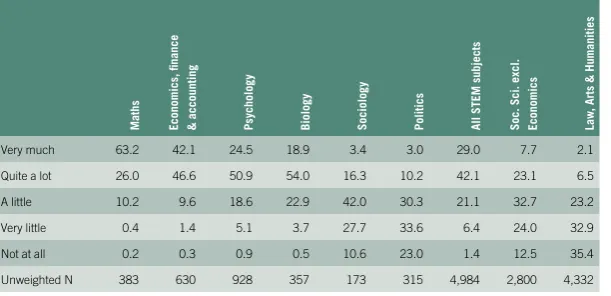
Table 1 Third/Final year students’ views of their degree: development of ability to use numerical data
Maths Economics, finance & accounting Psychology Biology Sociology Politics All STEM subjects Soc. Sci. excl. Economics Law
, Arts & Humanities
Very much 63.2 42.1 24.5 18.9 3.4 3.0 29.0 7.7 2.1 Quite a lot 26.0 46.6 50.9 54.0 16.3 10.2 42.1 23.1 6.5 A little 10.2 9.6 18.6 22.9 42.0 30.3 21.1 32.7 23.2 Very little 0.4 1.4 5.1 3.7 27.7 33.6 6.4 24.0 32.9 Not at all 0.2 0.3 0.9 0.5 10.6 23.0 1.4 12.5 35.4 Unweighted N 383 630 928 357 173 315 4,984 2,800 4,332 Source: HECSU Futuretrack survey
A key question that arises is therefore how universities elsewhere approach the teaching of QM and the development of QS in their undergraduates. Understanding those universities which are most successful in delivering much higher levels of achievement by their students ought to help us design better undergraduate curricula and pedagogy, and make best use of the resources that have been made available to tackle the QS deficit in UK higher education. This report thus describes the key features of successful approaches elsewhere. Two things stand out clearly. First, students from these universities become proficient in a range and level of quantitative skills that are far superior to those of graduates from even the best UK undergraduate programs. UK universities set their expectations unacceptably low. Second, any UK university that wished to could emulate what the universities we examine here do. All that is needed is suitably qualified staff, good teaching and adequate curriculum time.
competitive in the labour market would encourage departments to embrace QS. Unfortunately neither of these pressures (although there is ample evidence of their existence) has been strong enough to stimulate change. Evaluating the performance of the social sciences and humanities is often more difficult than in the natural sciences because little of the knowledge produced takes a cumulative form within an agreed paradigm: rather there is continuous discussion not only about what approaches are appropriate, but about their value and merit. For example submissions to the last REF Sociology panel were published in over 800 separate journals. The evaluation of teaching and research within higher education is driven by peer review. However, if there is disagreement about what constitutes the core of a discipline or the methods it employs, the danger is that peer review acts to reproduce the prevailing majority view and institutionalise inertia in the system. Given the weakness of quantitative approaches in the UK, peer review together with hiring decision autonomy, has entrenched this weakness.
This report makes it clear that a major reason for the achievements of the universities studied here is that they devote much more curriculum time to the development of quantitative skills, and that, while they use specialist methods modules, the skills learnt there are practised and reinforced in students’ substantive modules. Following this model in the UK will require extensive staff training or professional development, since it is not only necessary to staff the specialist quantitative skills modules, but also those other modules where skills are applied and practised. It will also require department to take a more strategic view of their teaching and skills development. Teaching tends to follow the research interests of staff, yet these may map poorly on to the skills needs of students.
The case study research:
Leading universities
The project set out to review examples of best practice and innovation in the teaching of quantitative methods and statistics to undergraduate social science students in universities around the world. It focuses on sociology, social policy, politics and international studies and related disciplines (such as organisation studies, management, education, communications studies). It does not cover economics and experimental psychology given that the approach to teaching in both these disciplines is rather different, both in the UK and elsewhere. It considered four questions
1. What is the range of achievement in QS of degree programmes elsewhere? 2. How far, if at all, do the best approaches exhibit common teaching
methods, curricula, assessment or other features, that might form a core of best practice in delivering QS?
3. How far are these approaches translatable to a UK context, or
alternatively, do they depend upon special factors inhibiting such transfer? 4. What can UK universities do to reach the standards achieved in the case
study universities?
Levels of achievement
It is important to consider five distinct skills in social science quantitative methods:
• Research design (how to carry out empirical research systematically so that the research can address a social science issue, problem or theory).
• Data analysis (how to organise and use quantitative evidence to draw conclusions about society, institutions and social process).
• Statistics (sets of rules and formulae for describing and summarising data, drawing inferences from it and quantifying uncertainty, including when data is drawn from samples and used to make statements about target populations).
• Using computers (how to use computer software to handle data and implement statistical procedures).
• Understanding the relationship between methods, theory and substantive issues in a discipline (how to recognise and evaluate the methodological component of social science knowledge).
the best undergraduate programmes in the UK. The gap is perhaps greatest in data analysis and statistics, where students gain much more experience of multivariate analysis and data reduction techniques, and in the integration of methodology with substantive knowledge. The level of achievement expected of students is much higher than in the UK.
UK students will typically learn basic descriptive statistics, elementary
conditional probability, the production and interpretation of contingency tables, simple graphical presentation of results, some measures of association for two variables, and some introduction to questionnaire design, survey methods and sampling. They may learn the basics of inference, hypothesis formulation and significance testing, and perhaps, in some of the more advanced courses, an introduction to regression. More rarely they may learn about secondary data analysis, controlling for prior variables, and enough about linear regression to use it as a tool of analysis rather than only being able to understand the meaning of regression coefficients in published work.
In the universities we reviewed students went far beyond these basics. Perhaps more important than the detailed content of the quite diverse curricula offered by our case study universities, was their common commitment to giving students the skills they needed to critically interpret multivariate analyses in substantive research literature, and to aspire to undertake similar analyses themselves. This standard of achievement comprised five main components. 1. Students become proficient in a data analysis package, sometimes
SPSS using the Graphical User Interface (a menu driven system of commands) but more usually learning either SPSS syntax or a command language based package such as Stata or R, where statistical and data analysis functions are driven by a programming language. The use of syntax or programming languages both requires and reinforces a deeper understanding of the statistical theory underpinning data analysis. 2. Rather than dealing only in single variables, students go much farther
in multivariate analysis, where several indicators are used to measure an underlying variable, through data reduction techniques such as factor analysis.
3. More time and attention is devoted to a deeper understanding of different types of regression analysis for both continuous and discrete variables, including the production and interpretation of diagnostics, the elaboration and testing of models, and the consideration of time series and longitudinal data. In some cases this extends to multi level models, hierarchical data and the treatment of causality through, for example, structural equation modelling.
British Academy // Measuring up: International case studies on the teaching of quantitative methods in the social sciences 21
5. Students are given far more exposure to working with a variety of quantitative data, rather than working through practice exercises or material specifically designed with teaching in mind. Sometimes this is extended to the process of primary data collection, but with more attention given to the design of survey instruments, survey methods and sampling design, at a level students would normally only encounter at postgraduate level in the UK.
Teaching methods and pedagogy
Developing these skills takes time. This was made possible by devoting a much larger proportion of study time, usually in a range of courses across all three or four years of the degree. In most universities in our study the proportion of curriculum time devoted to quantitative methods was at least three times the UK average and often much more than this. The case studies cover many different approaches to pedagogy. Individual programmes varied widely in the specific way they balanced generic versus discipline specific teaching, the relationship of theory to practical application, the sequence and timing of skills taught, the balance of large lecture classes and small group teaching, and forms of assessment. Large, sometimes very large, generic classes with students from several disciplines, were not necessarily a barrier to good teaching. We did identify at least five common features however:
1. All the universities start teaching QS early in the degree, usually in the first semester and always within the first year.
2. They devote much more curriculum space to methods teaching in general and QS in particular than is typical in the UK. While the volume of contact hours and balance between lectures and smaller group teaching varied across universities it was everywhere higher than is common in the UK. 3. Most used intensive forms of continuous assessment to support students,
given that knowledge and skills were cumulative in character, and frequent practice was seen as fundamental to sound learning.
4. All universities had a clear sense of progression in the teaching with more advanced skills building on earlier knowledge, although this certainly did not obviate the need for revision and consolidation of earlier work. 5. The diverse set of skills that comprise QS were often brought together in
the standard structure of a scientific paper (literature review, identification of a research problem, research design, hypothesis formulation, analysis and testing, results and conclusion). In most programmes students gain experience of writing and presenting several such papers not only in ‘methods’ courses but in substantive courses too. This also affects how they are taught ‘theory’ which is seen as something tested by and elaborated through empirical research. This contrasts with the dominance of the essay in student work in UK social science degrees.
with material such as the European Social Survey or World Values Survey or other datasets, rather than rely on primary data collection.
Most universities continued to rely upon courses that were primarily about methods, albeit many would link this to a variety of substantive issues to make clear the relevance and application of the methods taught. Many universities continued to use generic lecture courses (where students from different social science degree programmes would follow the same course) with large class sizes (of up to several hundred students) however this was always accompanied by smaller group teaching or practical work where teaching would be more focused on individual disciplines. Almost all the universities used postdoctoral or postgraduate tutors to facilitate smaller group teaching, and many used different forms of peer learning where students work in groups. This not only reduced the volume of teaching done by faculty, but had pedagogical advantages insofar as students learned from each other as well as staff, and learned to work in groups.
There were no common answers to how to balance the formal statistical and mathematical theory underpinning QM with its practical application within a discipline, or on whether to develop a practical understanding first, and learn the general theory later, or move from theory to practical understanding. In both Auckland and Harvard, teachers set out to capture students’ interest via ‘intuitive’ approaches to data analysis and visualisation, before proceeding to examine the formal statistical ideas on which a more developed interpretation might be based. However there was a universal concern to avoid ‘point and click’, where students rote learnt procedures using data analysis software without a secure understanding of the concepts underpinning it.
Forms of assessment were also varied, from traditional ‘pencil and paper’ exams to individual or group project work and presentations. However
a common feature was the use of frequent or continuous assessment of various kinds, both as a stimulus to learning and as a way to monitor student progress and understanding, given the essentially cumulative character of much quantitative knowledge.
Beyond the differences in approach there was a general concern to develop innovative or imaginative forms of teaching that would transform student apprehension about maths and statistics (which was common in almost all universities) into a ‘sense of achievement’ once these skills were mastered. Some of this innovation was in response to poor student evaluations of ‘unpopular’ methods courses. There was a consensus that there is no reason why proper attention to QS should be problematic for ‘the student experience’ or, in a UK context, National Student Survey (NSS) ratings.
British Academy // Measuring up: International case studies on the teaching of quantitative methods in the social sciences 23
school maths education in the UK, especially in England, it may well be that the case study universities reviewed here could assume a higher level of maths competence from their incoming students. Our respondents did not see either student attitudes or skills as a barrier to students successfully progressing to much higher levels of technical achievement than are typical in the UK. Many also felt that any such student resistance has declined in recent years. Four important means of overcoming it that they cited included:
1. To stress that quantitative (and qualitative) methods are fundamental and basic tools that any social scientist needs to possess.
2. To ensure that students not only see the relevance of methods to the substantive issues that interest them, but also to show how curiosity and imagination are central to good data analysis (as opposed to ‘number crunching’).
3. To show the relevance of these skills to the labour market, and to progress to further study, usually through alumni accounts of their career experience.
4. To show that rigorous qualitative methods skills are usually even more challenging for students to develop.
Opportunities and barriers
to developing similar teaching
in the UK
The case studies allow us to consider what kinds of changes would be needed for universities to follow the kind of approaches to teaching QM that we found and whether there are factors specific to UK university social science that might facilitate or impede such change. There appear to be two main changes that would be required.
The first is a very substantial increase in the proportion of a degree programme that is devoted to research methods (quantitative or qualitative) compared to substantive knowledge and theory. This could be achieved either by increasing the contact hours and volume of teaching on degree programmes, or shifting the balance between methods and other topics, or some combination of the two. UK university social science has generally followed the humanities model of teaching, in which students spend less time in class and more time in independent study, given the volume of reading that is required compared to a typical natural science course. It is not clear that this model is appropriate for methods teaching where the skills to be learnt are highly structured and require guided practice to develop.
Changing the balance of curriculum content is not easy and takes time. It needs careful thought to maintain the intellectual rigour and coherence of a degree programme. It requires consensus over the direction and nature of change, it requires staff to revise or change teaching material, as well as fulfilling the requirements of academic governance (boards of studies, exam boards and so on). However these forces of inertia should not stand in the way of innovation and change where it is clearly needed.
The National Centre for Research Methods also provides a range of training opportunities for staff and postgraduates. Resources range from teaching data sets and associated work-books and exercises for students to podcasts about QM pedagogy, to complete ‘off the shelf’ online courses on QM. It has never been easier for departments who wish to do so to substantially expand the methods teaching that they deliver.
The third facilitating factor is the increasing supply of postgraduates and post-doctoral researchers competent in QM as a result of changes over the last decade in postgraduate training. The case studies showed them to be a valuable asset to teaching, allowing departments to manage the heavier contact hours load that methods teaching entails.
What can UK universities learn
from these case studies?
The clear message from these case studies is that the standard of achievement in quantitative skills for students is simply in a different league to that in the overwhelming majority of universities in the UK. It appears that UK universities set their expectations far too low.
Given the rising importance of data skills to economy and society, as highlighted in the British Academy’s recent report Count Us In, UK university social science education risks failing to give students the skills they need in their professional and public lives and risks its reputation as a world leading provider of higher education.
British Academy // Measuring up: International case studies on the teaching of quantitative methods in the social sciences 31
University of Auckland,
First year statistics course
Professor Chris Wild
The University of Auckland’s Department of Statistics has a long history of teaching a non-mathematical, conceptual introduction to statistics, and particularly statistical data analysis to upwards of 4,500 students per year. Approximately two out of every three undergraduate students who enter the university will take this course at some stage during their undergraduate studies. Its teachers are extremely highly rated by the students. Some of the students are there because their other courses require it but a majority have opted in. It caters to an extraordinarily diverse student body – diverse in academic background, diverse in disciplinary destination, and diverse in age and social background. The course is taught by a team who work as a team, developing and using a common set of materials. The team won a national tertiary teaching award in 2003. They have a record of innovation and of being early adopters. For example, recorded lecture videos and on-line forums have been in use for over 15 years, audience response systems for five.
This course is currently gearing up for a step change motivated by the fact that the universe of data, big and otherwise, is growing explosively – in volume, in the areas it reaches into, in how it is constituted, and in what you can do with it. In this context they believe that the traditional introductory statistics course has passed its use-by date and are seeking ways to get much further, much faster facilitated by visualisation approaches to both understanding data and understanding inferential concepts. The latter are introduced using modern data-resampling approaches which have the advantage of building off a very small number of ideas that generalise fast to a wide spectrum of applications. A second advantage is an internal logic that is easy to convey visually. This is all made possible by building software aimed at enabling learners to experience a lot quickly
with minimal learning curves using a small number of graphical metaphors that, in combination, are very powerful for investigating multivariable relationships. The new approaches were prototyped in a MOOC entitled “Data to Insight” that first ran on FutureLearn in the closing months of 2014. It is a hands-on data-analysis course that accepts beginners and takes them to working with up to five numeric and categorical variables simultaneously in the same analysis over the first four weeks (and a total of two “teaching” hours). Almost all of the content-delivery is via 42 five-minute videos which have been made freely available on Youtube (see http://tinyurl.com/4StatEducators for a linked index). For motivational reasons, it gets students caught up in the potential of data analysis for discovery before getting bogged down in “limitations”. Serious consideration of systematic biases, lurking variables and random error doesn’t come until after the mid-way point which also forms the bridge to measurement and study design issues, confidence intervals, and experimentation and significance tests (randomisation tests). In addition to radical rewriting there is ongoing work on lifting the current active-engagement levels in class, with more extensive use of audience response systems and introducing in-class computer-based data-analysis in lecture-streams of upwards of 300 students.
Auckland is also unusual in having a long history of teaching a large number of practical courses in an almost entirely nonmathematical way. Even many “majors” have predominantly studied practical, nonmathematical, computer-based applied statistics courses. After a second applied statistics course which emphasizes linear and generalised linear modelling to establish some modelling-idea foundations, the undergraduate curriculum fans out into many parallel courses including design and analysis of surveys and experiments, advanced statistical modelling, multivariate analysis, time series analysis, statistical programming and modelling in SAS, data technologies, statistical computing, and a minimally mathematical Bayesian course. Part of the reason for this is to provide courses that are accessible to students outside of statistics, picking up skills that will be useful for their later research, as well as providing solid practical training for those who will work as statisticians.
Key points
• Teaching focused on data visualisation
• Innovative use of online resources
• Taught to a majorty of undergraduates
University of Bern,
BAs in sociology and politics
Professor Axel Franzen
Approximately 500 students studying politics, sociology, business and economics do a common first year curriculum in methods which comprises a mathematics and statistics course in each semester:
Mathematics I (five hours per week Lectures and exercises) Mathematics II (four hours) which cover the maths needed for a thorough understanding of statistics, including algebra and game theory, Statistics I
(four hours) and Statistics II (four hours) which cover descriptive and inferential statistics. These courses follow a common format of lectures plus set exercises.
Introduction to Empirical Research Methods (two hours per week) introduces subjects such as research design, data collection and sampling. Given their generic character these courses focus more on statistical theory and the maths necessary to understand it than on application in a specific disciplinary context. Assessment is by exam. Potential students may be aware of the maths and statistics focus in the first year curriculum and have alternative universities to choose from so that student entry has a degree of self-selection.
In year two sociology and politics students must take
Introduction to Statistics for Social Scientists (4 hours) and
Applied Research Class I and II (two semesters, together 4 hours per week) and also a mandatory qualitative methods option. These courses use Stata and focus on multiple linear and logistic regression and related techniques including factor analysis and data reduction with an emphasis on practical application rather than the more theoretical approach in year one. Students are introduced to secondary data analysis using the Swiss Household Panel Survey. These classes have smaller student numbers as they are specific to sociology and politics students.
In years two and three students can also follow elective courses, some of which are shared with the Masters programme, on more advanced approaches such as time series analysis, event history analysis MLM and SEM. Approximately one fifth of teaching in the degree is thus on quantitative methods courses. Students also complete a Bachelor’s thesis and around one third follow a quantitative approach based on secondary data analysis or experiments. The thesis is supported by lectures and seminars with student presentations, and takes the standard scientific paper format. Both second year courses and the production of the thesis include elements of revision to consolidate knowledge learned earlier and translate knowledge of statistics into its practical application in empirical research.
Key points
• Early focus on maths and statistical theory
• QS courses = 20% of curriculum + dissertation
British Academy // Measuring up: International case studies on the teaching of quantitative methods in the social sciences 33
University of Bergen,
Department of Sociology
Professor Johannes Hjellbrekke
Students are taught a one semester course in quantitative methods in year one which takes up 50% of their workload for that semester (15 ECTS) for around 150 students. There are four hours of lectures (presented by faculty) and four hours of seminar or practical work (also undertaken by postgraduate or post-doc assistants) each week. Teaching starts with univariate descriptive statistics and goes up to a thorough introduction to multiple linear regression and brief coverage of logistic regression. The teaching avoids the mathematical or statistical theory, or formulae underlying different procedures and focuses instead on ‘nuts and bolts’ of statistical procedures: when it is appropriate to use them, the correct interpretation of results and diagnostics as used in research literature, and the underlying assumptions they require. The course uses a textbook, as well as resources produced by teaching faculty. Statistical ideas are currently implemented in SPSS but the teaching is moving over to Stata. Students also study research design, data collection, qualitative methods, documentary analysis, and ethics.
Assessment has two stages: students must first successfully complete four compulsory tasks, the most complex of which is an OLS multiple regression exercise, but students are not expected to be able to carry out
logistic regression. Students are allowed three attempts to successfully pass these exercises (managed by about 90%) and if they do so, then sit a six hour examination which all but a small percentage pass. Performance levels are similar to other courses within the degree. There is no formal system in place of support for weaker students. Students arrive with different maths skills levels (there is no specific maths entrance requirement) and can often be apprehensive about the quantitative methods teaching, however student evaluations are very positive at the end of the course, with a sense of achieving something they expected to find difficult.
There is no formal teaching of methods in years two and three of the degree, and any connections made to the methods teaching elsewhere is the responsibility of those teaching courses and electives. The proportion of staff with good quantitative skills is higher than in the UK, but there are also staff whose skills are mostly qualitative. Students write a 20 page dissertation/extended essay as part of their final degree assessment but would not normally undertake any original or secondary quantitative analysis as part of it. Further study of QM takes place only at masters and doctoral level. Here, around 30% of students will use a quantitative approach.
Although the University of Bergen is also the base of the European Social Survey there are no formal links to the ESS and its educational outreach activities. While access to survey data from the Norwegian data archive is straightforward the cost of access to increasingly important register data from Statistics Norway (administrative data facilitated by unique personal identifiers) has become too expensive for anything but research purposes.
Key points
• Students master OLS regression in year one
British Academy // Measuring up: International case studies on the teaching of quantitative methods in the social sciences 35
Harvard College,
Department of Government
Professor Arthur Spirling
Until 2012, in keeping with the general principle of the strong tradition of what comprises a liberal arts education in the USA, there were few specific methods requirements for those pursuing a BA degree. While students were required to take one or more courses with a quantitative focus, this might be fulfilled by taking a course provided by maths, economics or statistics departments, such as introductory statistics or calculus, without any specific social science or research methods context.
Since 2012 students reading for a BA in Government are required to take the course Introduction to Political Science Research Methods, usually in their second year. About 80–100 students take the course. This reflected faculty’s views that students should have better quantitative skills given the increasing importance of these approaches in political science. However, another part of the rationale for introducing the course came from students’ perception that having more quantitative skills in their degree programme was desirable because of their relevance in the graduate labour market where students may go on to jobs with companies such as Google or Facebook.
The course comprises 22 lectures: two per week over a 14 week semester. One week is used to take the midterm exam, this gives teaching assistants a couple of ‘study lectures’ to help revise before exams, plus a weekly small group (12–15 students) teaching session led by teaching fellows (PGs or post-docs) which is in a computer lab when required and teaches students how to implement the ideas presented in the lectures in SPSS. The course is a comprehensive introduction to methodology, although its focus is quantitative. It uses SPSS, but with the GUI rather than syntax. The course covers research design as well as data analysis and interpretation:
• Theory (parsimony; falsifiability, testability) and evidence (operationalisation; quantitative and qualitative; levels of measurement; validity; reliability; error)
• Survey and sampling strategies; randomisation and inference; bias
• Causality and correlation; observation and experiment
• Descriptive statistics and distributions
• Hypothesis construction and testing (Chisq; T)
• Regression: estimating and interpreting coefficients; goodness of fit; prediction
• Comparison and case study methods, many variables, small N
Assessment is intensive to ensure that students practice suf-ficiently to gain a secure command of the principle concepts introduced, with assessed homework or practical exercises (30%), a midterm (30%) and final (40%) exams. Statistics is presented within a disciplinary context (so that research literature from the subject is used) and also uses topical ex-amples drawn from the media or other sources to emphasise the broad relevance of the statistical concepts studied. In their third year students intending to write a final (year four) thesis take Research Practice in Quantitative Methods
or an equivalent qualitative methods course. This course uses Stata and builds on GOV50 by looking at multiple regression (linear, binary ordinal multinomial logistic, Poisson, survival, event history, Cox models) and the linear model in greater depth (bias, efficiency, error distributions; panel observation; unobserved heterogeneity; fixed and random effects; logit and probit models; maximum likelihood estimation) and considers selection effects and reverse causality. Students write a short scientific paper using an appropriate procedure to report original results (40%) and are also assessed by homework and quality of presentation and participation in class (60%). Approximately half the students writing a senior year thesis will use a quantitative approach.
In both courses the emphasis is on the ‘intuitive’ rather than formal mathematical understanding of the relevant statistics, and on being able to understand the methods considered sufficiently well to make informed decisions about their use and evaluation of their application by others, from design through to interpretation of results. Students are typically highly motivated and capable of intensive study to supplement the material delivered in class teaching.
Key points
• Compulsory methods course breaks with liberal arts tradition
• Intensive assessment to ensure students ‘learn by doing’
Jacobs University Bremen,
BA integrated social science
Professor Adalbert Wilhelm
In the first semester of year one all students (approx. 100, including psychology and economics students) do an introductory course Introduction toEmpirical Research and Research Design that gives an overview of empirical research, covering both quantitative and qualitative methods, including field studies, case studies, longitudinal research, cross-cultural comparisons, and non-reactive studies. The course also discusses sampling strategies and research techniques, including surveys, observation, experiments, and narrative interviews.
In semester two students take Statistical Concepts and Data Analysis. Using SPSS (the GUI rather than syntax) or R the course covers univariate descriptive statistics and graphical presentation of results up to simple multiple OLS regression, ANOVA and significance testing including nonparametric tests. Its objective is to make students ‘intelligent users’ of univariate and multivariate statistical techniques including selection of appropriate procedures, knowledge of the assumptions made in their use, interpretation, presentation and discussion of results. The textbook used is Field, but the course also uses its own resources. The emphasis throughout is on intuitive and practical understanding of statistical procedures rather than theory, but with attention to understanding the constraints and limitations of each method and the proper use of diagnostics.
Both courses comprise five ECTS and three hours teaching per week divided between lectures and labs with support from PG and post-doc teaching assistants. Students work in groups, submitting group assignments so that stronger students support weaker ones. Jacobs is a campus based university with an emphasis on inter-disciplinarity and on students developing their learning skills in group work. Assessment is by assignments and assessed lab exercises
(where students work on their own laptops in a class environment but with a limited time period to complete a task) and a formal exam on theory.
‘Fear of maths’ is an issue with some students, which is addressed by an emphasis on practical work and the use of ‘real’ data, stressing the link to substantive issues within a discipline. There is some sense that ‘opposition’ to QM on the part of students has declined. They may not always be enthusiastic, but they are more likely to recognise the value of QM and see it as a necessary and relevant skill in their subject.
In year two students follow a further two courses which extend and deepen their knowledge of multivariate statistics including factor analysis, principal component analysis, and cluster analysis. A course on the logic of comparative research ranges from questionnaire design to issues of reliability, dimensionality and the construction of variables from indicators.
In years two and three students also choose from a range of electives including Meta Analysis, (effect sizes and their analysis using meta-regressions based on random- and fixed-effects models); Econometrics (which is not only taken by economics students), Structural Equation Modelling and Secondary Data Analysis (a lecture and lab based course training students in the practical methodological and analytical skills needed for secondary data analysis). In year three students also complete a Bachelor’s thesis, which typically takes the form of a scientific paper. The majority of students use empirical data of some kind with a roughly equal split between quantitative and qualitative approaches.
Substantive courses will use quantitative material (e.g. journal articles using various kinds of regression analysis) which students would be expected to understand and use either in essays or in group presentations. Most faculty have some quants expertise, and all would endorse their value: the choice of particular methods is seen as a question of the research question and research design rather than any prior theoretical or epistemological preference.
Key points
• Interdisciplinary focus
• Moving to R as platform
British Academy // Measuring up: International case studies on the teaching of quantitative methods in the social sciences 37
University of Köln,
BAs in sociology and politics
Professor Marita Jacob
In semester one around 300 students take Introduction to Methods of Empirical Social Research (four ECTS; two hours lectures, two hours exercises and tutorials per week) which covers the research process, research design, deriving hypotheses from theory, operationalization, measurement and types of data and scientific explanation. In semester two they take Statistics for Social Sciences I
(eight ECTS; two hours lectures, two hours exercises and tutorials per week), which covers both descriptive and inferential statistics, randomisation and sampling, probability distributions, confidence intervals and
hypothesis testing and data analysis using Stata. The focus is on application in the social sciences. Both courses are assessed by formal exam, in part because of regulatory constraints on assessment, but it is planned to introduce an e-learning component to teaching to facilitate more continuous assessment. Previously students attended statistics courses taught from the economics department with less of a social science content and more focus on the formal and mathematical aspects of statistical theory, which students struggled to integrate with their other studies. Lectures are used to promote active learning by having students respond to questions and problems within the lecture. Students submit work beforehand so that lecturers can focus on aspects student find most difficult.
In year two students take a new course, Statistics for Social Sciences II (eight ECTS; two hours lectures, two hours exercises and tutorials per week) again replacing one previously taught by the economics department. It focuses on multiple regression, both linear and logistic including data reduction and factor analysis, but may also include other procedures, depending on the rate of student progress. This is still a large course with around 200 students and uses a similar teaching format to the year one courses. Evaluations of these courses by students are improving as they bed in. In contrast to Mannheim, where students who enter will typically expect a substantial quantitative component to their degree, this is less the case in Köln and effort is made to demonstrate the relevance and importance of quantitative methods and the benefits these skills bring. Student attainment and performance is similar to Mannheim however.
In their third year students do their own research project (16 ECTS) in which they use secondary data analysis of an existing data set?. It is usually necessary to revise skills taught in earlier years so that students can successfully apply them. Results take the form of a standard scientific paper. Extensive support is given to students throughout this process. Students are also taught qualitative methods in two eight credit courses, one of which is elective. Most students follow a quantitative path in their research project. They also have the opportunity to take elective courses in advanced quantitative methods shared with the Masters programme (which can include causal inference, time series, fixed and random effects models, MLM and other approaches).
Key points
• Large (approx. 200 students) second year course delivers advanced techniques
British Academy // Measuring up: International case studies on the teaching of quantitative methods in the social sciences 39
University of Lausanne,
BAs in political science and social science
Dr Dominique Joye
A revised system was introduced two years ago, in part in response to dissatisfaction with approaches to teaching quantitative methods that did not ground them sufficiently within a social science context.
All students (around 200) are required to study both quantitative and qualitative methodology in a generic first year methods course Introduction to Research and two second year courses Quantitative Methods and Qualitative Methods. Courses comprise two hours lectures and two hours seminars (25–30 students) over a 14 week semester (six ECTS; 56 hours). The first year course covers problem formulation, hypothesis construction, research design, data collection, research instruments, questionnaires, observation, interviews, documentary analysis, surveys, as well as some epistemological issues). The second year course covers descriptive and inferential statistics up to linear and logistic regression using SPSS. Teaching includes both statistical ideas and their practical implementation in labs, as well as the study of their use in published sociological or political science studies.
However, students also study and apply both quantitative and qualitative methods in all their other year one study through substantive topics in seminar courses (also six ECTS; 56 hours over 14 weeks): Introduction to Research: Family Interactions and the Life Course; Introduction to Research: Individuals Groups and Social Institutions; Introduction to Research: The Social Construction of the Body; Introduction to Research: Gender Research and the Life Course; Introduction to Research: Migration and Globalisation. In year two and three a wide range of seminar courses (six ECTS; 56 hours) are open to students, some of which are compulsory, and all of which combine teaching in different aspects of quantitative methods with study of a substantive topic or problem. These include: Life Course Analysis Comparative Survey Analysis: Social
Consequences of Labour Market Change (which use R);
Measuring Social Attitudes; Mixed Methods (which studies professional training and focuses on questionnaire design and interviewing); Big Data (using logistic regression to undertake sentiment analysis), Electoral Campaigns (using SPSS to undertake secondary data analysis on some aspect of an election campaign), Missing Data (re-weighting, imputation and other methods for handling missing data),
Social Demography (analysis of sex-ratio at birth in a large Indian survey using logistic regression), Elections and Voting in Switzerland (secondary analysis of survey data), Large Population Surveys, Empirical Analysis I and II (lab based seminar analysis of longitudinal Swiss Household Panel, including data reduction techniques and data management) and Logics of Collective Action (which includes QCA). Teaching includes lectures, small group work, practical exercises, computing lab sessions and presentations. Individual and group work, as well as practical exercises are assessed, in addition to formal exams. Students gain experience of the whole process of research including the development and use of different research instruments, primary data collection and secondary data analysis, report writing and presentations, and the evaluation of others’ research. Throughout the degree teaching integrates methodology and consideration of the origin and interpretation of empirical evidence with the substantive and theoretical topics normally covered in a social science degree programme.
Students are exposed to both SPSS (with an emphasis on syntax rather than the GUI) and R (with R Studio), with more courses using the latter in years two and three. By the end of their third year students will have encountered MLM and SEM, PCA and Factor Analysis. They will have learned to review literature, formulate problems and hypotheses, develop an appropriate research design, analyse relevant data and present results in the form of a scientific paper and to present and defend it in front of peers.
This is achieved despite the fact that in Switzerland, as in other countries, it is expected that school pupils who are strong at maths will tend to study the natural sciences. Students come to accept that both quantitative and qualitative methods are fundamental tools necessary to master in order to understand the subject, or to progress to Masters level study. This is helped by almost all faculty having a good command of the basics of both approaches, and good relations between those specializing in ‘quant’ or ‘qual’.
Key points
• Quantitative and qualitative methods skills embedded in all substantive modules
• Students use both SPSS and R and master wide range of advanced procedures
University of Leuven,
BAs in politics, sociology, and communications
Dr Bart Meuleman
Around 600 politics, sociology and communications students take a generic course Social Statistics over two semesters (four + four ECTS; 52 teaching hours) with lectures and labs (staffed by teaching assistants) covering descriptive and inferential statistics including simple probability and a brief introduction to Bayes theorem, distributions, graphical representation, parameter estimation, confidence intervals, significance tests and hypothesis testing. Agresti & Franklin is used as a textbook supplemented by bespoke teaching material, with an emphasis on practical application of statistical theory. SPSS (the GUI) is used in computer labs and assessment is based on a practical computer exercise (20%) and a traditional format exam (80%). In their first semester students also take a course in methodology, Methods and Techniques of Social Research (six ECTS; 52 teaching hours), which covers research design, operationalization, sampling methods, the concepts of validity and reliability, modes of data collection, induction and deduction, covering both quantitative and qualitative approaches, but with some emphasis on the former. Finally, within their individual disciplines they follow a practical course over two semesters, Research Practice (four ECTS; 27 teaching hours), based around the skills needed to prepare a scientific paper, searching, evaluating and processing information and literature, and formulating a research question potentially using secondary data analysis. Assessment is through group work exercises and presentation of a paper. Student failure/dropout is substantial but this is common to all courses and reflects the ease of access to university degree programmes and low fees. In the course of the first year a proportion of students decide not to continue with their studies. There are no specific maths requirements for the social science courses and the limited maths knowledge of students has prompted the introduction of a week long course before the start of the semester to review relevant maths skills.
In their second year students take one qualitative and one quantitative course (an elective for political students but compulsory for sociology students). The Data Analysis
course (six ECTS; 52 teaching hours) focuses on linear and logistic regression models including interaction effects and ANOVA, with lectures and six labs based on secondary analysis of a range of data sets which also introduces students to using syntax. Students also do a Practicum
(six ECTS; 52 teaching hours) over two semesters which is based on a substantive topic within the discipline where students work in groups focusing on research design, with special attention to the design of survey instruments in order to produce a piece of original empirical research. In year three students take a course in social statistics
Data Analysis: Data Reduction (compulsory for sociology students, and elective for politics students giving a class size of around 60), which focuses on data reduction, missing data and scale construction (PCA, exploratory and confirmatory factor analysis, cluster analysis, (six ECTS; 52 teaching hours) SEM and correspondence analysis) with lectures and around six lab sessions. Assessment is by exam and oral. The latter is used to check that students understand the data analysis and interpretation they produce, rather than simply mastering as set of technical procedural steps. They also follow a Sociology Seminar
(seven ECTS; 52 hours) over two semesters. The seminar is based on a substantive topic and has students go through all stages of the quantitative research process from specifying a research question, operationalization and research design through data collection and analysis to the reporting of scientific results. The paper that results from the seminar can form the basis of a Masters research proposal for students who proceed to further study. The faculty was the home of the EPOS project (Educational Project Overcoming Statistics anxiety) funded by the university, to stimulate the embedding of methodology teaching in substantive courses (five courses at
undergraduate level within the political science curriculum; further details are available at http://soc.kuleuven.be/ web/staticpage/9/48/eng/696). Developing embedding remains the prerogative of individual course teachers. The faculty continues to review methodology teaching and there is debate and discussion about the desirable balance between methodological skills and substantive knowledge, and between understanding methodology theory and skill in the application of methods.
Key points
• University curriculum project reviewed how to tackle statistics anxiety
• Several short methods modules across each year of study
British Academy // Measuring up: International case studies on the teaching of quantitative methods in the social sciences 41
University of Mannheim,
BAs in sociology and politics
Dr Shaun Bevan, Dr Henning Best
Because of its strong reputation in the social and political sciences Mannheim is able to be somewhat selective in its intake of school students each year, and assume that all first year students have an above average level of maths ability.
In year one (two semesters of 14 weeks each) students study a range of statistical methods, up to linear and logistic regression, in generic lecture classes (1.5 hours) across subject areas focusing on research design, data analysis and the presentation of results in the form of standard scientific papers. Lab sessions run by PGs or post-docs focus more on the application of ideas taught in the generic lectures to specific disciplines. Theory is taught separately from implementation in software, which is usually R or Stata, however there is less emphasis on the underlying mathematics than on the logic of the statistical procedures used (e.g. ‘walking the students through’ the relevant R/Stata code or syntax), on when it is appropriate to use them, their assumptions and constraints, and the proper use and interpretation of diagnostics. There is a heavy emphasis on students taking responsibility for their own intensive and advanced learning and it is assumed that students will be highly motivated to study hard. As an institution driven more by research than teaching there is less attention given to teaching quality assessment, content control, or specification in terms of learning
objectives, pedagogy and progression than in the UK, although faculty can take courses in pedagogy and courses are evaluated using a standard student questionnaire. The inter-connections between courses are mainly driven by staff research interests. Support is offered through staff ‘office hours’. Marking in assessments is strict, with GPAs well below the national average (such that work credited with a bare pass at Mannheim might achieve a first class mark elsewhere) but there is little systematic feedback on performance beyond grading. There is a substantial attrition rate at the end of Year One with students who find the programme too intense (as many as 20%) going elsewhere.
Electives in years two and three have smaller class sizes (15–25 students) and include methods courses, but there is also an expectation that substantive courses include a substantial methods component insofar as discussion of the methods and evidence used is as important as the substantive conclusions of the material discussed. In both methods and substantive courses reading is almost exclusively journal articles (since this is where the latest developments in any field are to be found) and students would be surprised to be asked to read material that did not rely to some extent on the application of advanced statistical methods. Student papers for assessment in electives would typically take the form of a scientific paper rather than an essay format and statistical content would normally be expected to form a substantial part of the paper. As such methods infuses every course except some core lectures in year one. There is a final year dissertation that will almost always use analysis of some kind of statistical material in the form of a scientific paper. In addition to formal teaching, undergraduate as well as PG students often gain experience by working as research assistants on professors’ research projects.
Key points
• Emphasis on autonomous study for highly motivated students
• Very high standards of achievement expected
University of Melbourne,
School of Social and Political Sciences
Dr Aaron Martin
Social science students (including criminology, political science and sociology) now do a compulsory ten week QM course in year three (qualitative methods are covered by a similar course in year two) which accounts for one quarter of their workload that year. Each week comprises 1.5 hours lectures and 1.5 hours computer labs, supported by teaching assistants (normally PG students or post-docs) with extra support if need be for weaker students. Elsewhere in Australian social science HE, QM courses, if taught, are electives. There are no specific maths skills requirements for entry to an Arts degree. Maths aptitude and skills of students varies, so that the course focuses on giving students an intuitive grasp of the main concepts, avoiding formulae or algebra where possible and emphasizing practical skills by using SPSS (GUI rather than syntax) in order to produce descriptive statistics, contingency tables, correlation and simple regression. There is also some attention to the logic of experiments and mixed methods. The World Values Study is used as a teaching dataset, to keep the study of statistical ideas grounded in a social science context, and examples
are also drawn e.g. from health risk studies relevant to everyday experience.
There are three components to assessment. Students do three practical SPSS based in-class assignments (which also help ensure that students keep up with the course). Students write a research proposal based on data from the WVS; they then carry out and write up the proposed research using the techniques covered in the course. Students who progress to a fourth, Honours year of their degree write a Bachelor’s thesis (15,000 words) but the majority use qualitative or non empirical approaches. The small proportion who use quantitative methods are steered towards secondary data analysis given the difficulties of good quality primary data collection. Demonstrating to students the relevance of quantitative methods to the rest of the degree programme is a challenge, given the preponderance of qualitative approaches in social science in Australia, and an emphasis on the debate and interpretation rather than assessment of empirical evidence and methodology. This can also mean that finding sufficient teaching assistants with the necessary quantitative skills and confidence to teach them can be difficult. However student attitudes that may be negative at the start of the course improve as they come to understand the relevance and importance of quantitative evidence and gain some confidence in their ability to master the skills involved, which is reflected in student evaluations of the course.
Key points
• Few compulsory QS modules in Australian system
• Many students start with few maths skills but evaluations are very positive