A Dissertation On
“EFFECT OF ACUPUNCTURE IN PRIMARY DYSMENORRHOEA – A PILOT RANDOMIZED CONTROL TRIAL”
Submitted By
Dr. M. KALPANADEVI, B.N.Y.S (Reg. No. 461413001)
Under the Guidance of
Prof. Dr. R. S. HIMESWARI, N.D. (OSM), MSc (Yoga), D.M.T, D.Ac
Submitted to
The Tamilnadu Dr. M. G. R. Medical Univeristy, Chennai
In partial fulfillment of the requirements for the award of degree of
DOCTOR OF MEDICINE IN
BRANCH – III: ACUPUNCTURE & ENERGY MEDICINE
POST GRADUATE DEPARTMENT OF ACUPUNCTURE & ENERGY MEDICINE
GOVERNMENT YOGA AND NATUROPATHY MEDICAL COLLEGE AND HOSPITAL, ARUMBAKKAM,
LIST OF ABBREVATIONS USED
PD Primary Dysmenorrhoea
EG Experimental Group
CG Control Group
VAS Visual Analog Scale
WHOQOLBREF World Health Organization Quality of Life BREF Questionnaire
TCM Traditional Chinese Medicine
ACTH Adrenocorticotropic Hormone
CA Clinical Acupuncture
BMI Body Mass index
OCP Oral Controseptive Pills
TENS Transcutaneous Electrical Nerve Stimulation
CBM Chinese Biomedical Medicine
CNKR China National Knowledge Infrastructure
RCT Randomized Control Trial
ELISA Enzyme Linked Immuno Sorbent Assay
ER Estrogen Receptor
PR Progesterone Receptor
RT-PCR Reverse Transcription Polymerase Chain Reaction
AA Auricular Acupressure
SF-MPQ Short Film MCGILL Questionnaire
MSQ Menstrual Stress Questionnaire
ADSCS Adolescent Dysmenorrheic Self Care Range
NSAID Non-Steroidal Anti-Inflammatory Drugs
TABLE OF CONTENTS
S. NO. INDEX PAGE NO.
1. INTRODUCTION 1
2. AIMS & OBJECTIVES 8
3. REVIEW OF LITERATURE 9
4. MATERIALS & METHODS 34
5. RESULTS 62
6. DISCUSSION 69
7. SUMMARY 76
8. CONCLUSION 77
9. BIBILIOGRAPHIC REFERENCES 78
LIST OF TABLES
TABLE
NO. TOPIC PAGE NO.
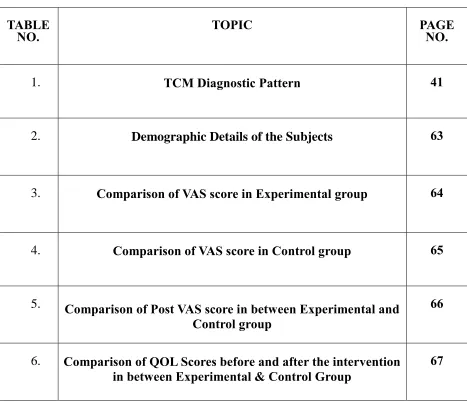
1. TCM Diagnostic Pattern 41
2. Demographic Details of the Subjects 63
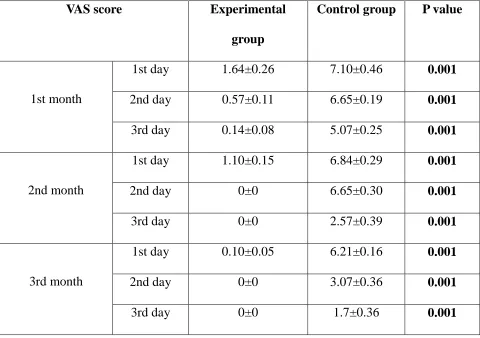
3. Comparison of VAS score in Experimental group 64
4. Comparison of VAS score in Control group 65
5. Comparison of Post VAS score in between Experimental and
Control group
66
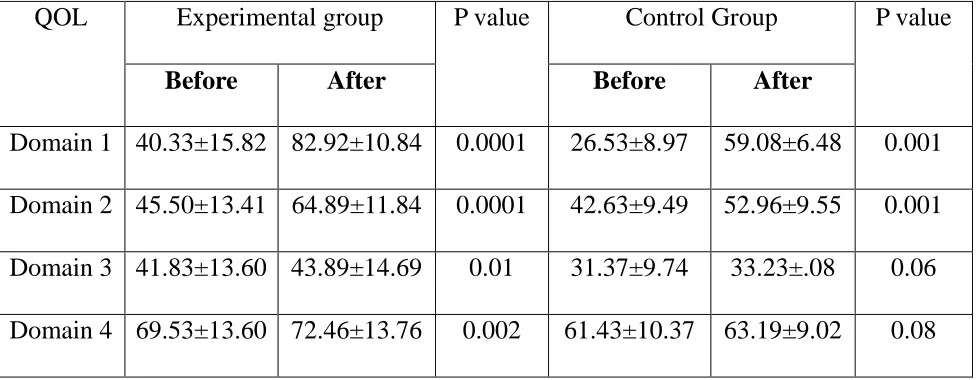
6. Comparison of QOL Scores before and after the intervention
in between Experimental & Control Group
[image:12.612.87.554.140.542.2]LIST OF FIGURES
FIGURE NO. CONTENTS PAGE NO.
1. Data collection procedure 37
2. Trial profile of the study 38
ABSTRACT
Background: Primary dysmenorrhea (PD) is one of the common medical problems
among the adolescent girls and young women. According to modern medicine, PD is
painful menstruation without any underlying pathologies. Whereas in Acupuncture PD
refers to menstrual pain that occurs due to blockage or deficiency of chi, heat retention,
liver, and kidney imbalance, dampness of wind. Acupuncture has good impact in case of
pain and hormonal problems. Hence, acupuncture can be a good choice of intervention
for PD.
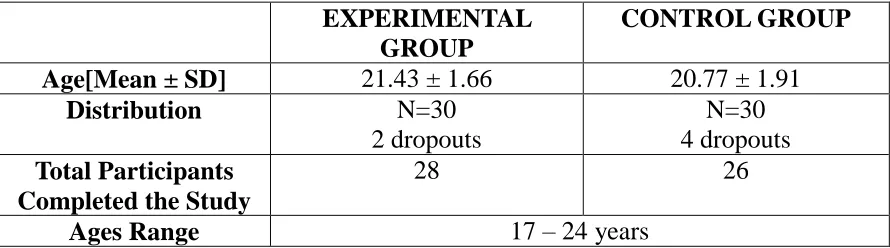
Methods: A total of sixty subjects, mean aged (21.1 ± 1.81) were randomly assigned into
two groups after satisfying the inclusion and exclusion criteria. Experimental group (EG,
n=28, dropouts 2) and control group (CG, n=26, dropouts 4). Both groups were assessed
at baseline and after 6 months with WHOQOL BREF questionnaire. With the help of
VAS (Visual Analog Scale) the pain was assessed during the menstrual phase prior to the
acupuncture intervention and post intervention periods on the first, second, third and after
6 months. The intervention was during the menstrual phase for 3 consecutive months.
Follow up was conducted after 6 months. 28 subjects of experimental group and 26
subjects of control group completed the study successfully.
Results: The experimental group showed significant improvement in the pain (p) and
Interpretation and Conclusion: TCM based acupuncture given for 3 months during the
menstrual phase showed pain reduction in the consecutive follow up months and thereby
it also showed improvement in the quality of life.
Key Words: Primary Dysmenorrhea, Acupuncture, TCM Acupuncture, Clinical
1.0 INTRODUCTION
Primary dysmenorrhea is defined as a menstrual pain in the lower abdomen, in the
absence of any other diseases associated with the reproductive organ of female like
endometriosis, fibroids, adenomyomas, use of intra uterine contraceptive device etc.
When the pain becomes severe, it may lead to absenteeism from the school or workplace,
or restrictions from any activities.
Dysmenorrhea is one of the common gynecological problem where there will be
painful cramps of uterus during mensus1. There are two categories of dysmenorrhea,
primary and secondary. Primary dysmenorrhea (PD) is termed as painful menstruation
without any organic pathology. Although the cause of PD is unknown, elevated
endometrial prostaglandins and its metabolites are said to be the causative factor2. Nearly
about 50% of the menstruating women are facing PD around the world. PD is not only a
clinical problem, but also a biggest social issue for the menstruating women3.
The clear cut prevalence of PD is not yet established in India. There exist very limited
studies to estimate the prevalence of PD in India. The PD prevalence studies showed that
certain associated factors for the causation of PD like smoking, body mass index (BMI),
psychological disturbances and prolonged menstrual flow. The commonest symptoms
faced by the PD women are lethargy, tiredness, depression and inability to concentate in
work. Few studies on PD showed that the PD is very common among the adolescent girls4.
As per the reports of Nag RM, the incidence of dysmenorrhea is 33.5% among the
about 50% of the women expereincing some discomfort during their menstruation6. A
senior obstetrician reports that probably 5% to 10% of the women suffers from severe
spasmodic dysmenoorhea in their late teen age which interrupts their social and education
life7.
PD is a very common condition which almost affects 50% of the adolescent young
girls and also married women at the age group of 14 to 25. This affects the quality of life
and increases the absenteeism in the college students and working women. Till now there
is no evident found for the possible mechanism for the etiology of the PD. Current
research states that the excess or imbalance of the prostanoids and the eicosanoids which
is released from the endometrium during the menstruation is the possible cause of the
pain.
Evidence from research states that the uterine hyper contractility reduced uterine
blood flow, increased peripheral hypersensitivity induces the pain8.
Prostaglandin is found to be involved in the hyperactivity of the myometrium.
There are also other possible mechanisms such as the cervical factors, ovarian hormones,
vasopressin, nerve and psychological factors also act through prostaglandin release.
Sometimes an action directly on the myometrium and blood flow may also occur. 9
The clinical features of PD are,
Onset shortly after menarche
Low abdominal pain or pelvic pain usually associated with onset of menstrual flow
Back and thigh pain
Headache
Nausea and vomiting may be present
No abnormal findings on examination10
Conventional medicine suggests that PD responds to the ovulation inhibition11.Oral
contraceptive pills (OCP), estrogen are generally used in the management for the PD.
These pills work by the suppression of the ovulation and also the reducing the
endometrial lining of the uterus. This leads to the decrease in the menstrual volume and
there by the amount of prostaglandin production is reduced. This helps in the reduction in
the uterine contractility.
Vitamin E 200 units twice a day was found to reduce the pain severity and the
blood loss in the PD was observed in a study.12
The use of minor analgesics have also become very common in PD. Drugs like
Naproxen, ibuprofen, mefenamic acid and aspirin are found to be very effective in
reducing the pain in PD. Acetaminophen is found to be less effective when compared to
the other drugs.13
The girls who did not respond to the OCP are generally prescribed with a
prostaglandin synthetase inhibitor to reduce the pain in PD.14
for the pain during the PD. It is found that the high frequency TENS is much effective
than the low frequency TENS in reducing the pain in the PD.15
Another study suggest that cyclooxygenase inhibitors reduce the amount of the
prostanoids which are released which lead to the reduction in the contractility of the
uterus.16
Acupuncture is one of the best treatment measure for reducing pain17. Acupuncture
is held to have originated in China. Acupuncture is the medicine where fine needles will be
inserted in the specific points of the meridian corresponding to the ailment. The various
strands of classical acupuncture theories and practice were brought together into a single
strand called Traditional Chinese Medicine (TCM). The theoritical basis of TCM comprises of “meridian” and the vital energy “Qi”18.
TCM views the menstrual cycle as the function of the chongmai, liver and kidney
channels. The uninhibited flow of energy in these channels will lead to the proper
menstrual cycle19.
TCM categorizes the dysmenorrhea patients into different categories according to the
clinical manifestations. The following are the patterns based on the theories of the
TCM.20
i. Qi and blood stagnation Abdominal distension
Pain in lower chest region
Dark flow with clots
Depression
Anger
Increased flow.
ii. Kidney and liver qi deficiency Pain during the flow.
Pressure relieves the pain
Weakness
Muscle pain
Pale tongue with thin coating
iii. Accumulation of dampness Burning sensation
Pain during the flow and duration is prolonged
Fever sometimes
Yellow purulent vaginal discharge
iv. Qi and blood deficiency
Pain during and after the flow.
Palpitation
Insomnia
Dream disturbed sleep
v. Cold stagnation
Warmth relieves the pain
Scanty flow
Aversion to cold.
Cold sensations in limbs
This view of TCM enables us the understanding the importance of TCM in the
management of the PD. This concept of TCM allows the differentiation of the PD in each
individual, which helps in designing the individual acupuncture point selection according
to the pattern diagnosed. This helps the correction of the root cause and there by effective
relief from the symptoms.21, 22,23,24,25
In recent decades acupuncture has become a subject of interest in the field of pain
management in the western countries. Even though it is used as a complementary and
alternative medicine, acupuncture is effectively used for pain management. From western
perspectives it was difficult for them to neither identify any anatomical relationship of the
meridians nor understand the TCM concepts. Through repeated experiments they have
found that the analgesic effects of the acupuncture is because of stimulation of the
sensory nerves in the muscle. Such stimulus stimulates three possible areas in brain
which are the spinal, midbrain and pituitary. This leads to the release of the
neurotransmitters (endorphin, serotonin and nor-epinephrine) which help in the blocking
the pain26.
acupuncture initiates the release of ACTH from the pituitary. This in turn stimulates the
production of cortisol which is a powerful anti-inflammatory agent27.
There being many challenges in the acupuncture research, there is a challenge in the
basic definition of the acupuncture itself. There are two common types of the acupuncture
intervention followed around the world.
Traditional Chinese acupuncture or the Classical acupuncture
Western acupuncture or the Clinical Acupuncture (CA)
The results of the most trials with acupuncture have found that classical acupuncture
gives most profound effect to most of the conditions28.
Traditional Chinese medicine (TCM) is the traditional medical practice in china which
is being used as the primary care in almost many Asian countries, whereas in western
countries this is used as the complementary or alternative medical system. TCM is a
complex system of medicine which was originated through the careful observation of the
nature, the cosmos and the human body. The understanding of disease and the human
body is based on the understanding of the universe. This is called as the Daoism. TCM
relates the Yin-yang theory, Qi and Blood theory, Zang-Fu organ theory and five element
theory in the clinical diagnosis and the treatment of the diseases. This is based on the
2.0AIM OF THE STUDY
2.1 Aim:
The aim of this study is to compare the effectiveness of Traditional Chinese Medicine
3.0 INCLUSION AND EXCLUSION CRITERIA
3.1 Inclusion Criteria
The following criterions were used to select the subjects into the study. Age group: 15 to 25 years.
Adolescent girls and Young women with Primary Dysmenorrhea.
The diagnostic tool used in this study for confirming primary dysmenorrhea is Menstrual
Symptom Questionnaire (MSQ) developed by Margaret A. Chesney and Donald L. Tasto,
Department of Physiology, Colorado state university, USA, 197430.
MSQ is established as standard tool for differentiating the primary and secondary
dysmenorrhea. MSQ was administered after the general case taking in regular outpatient
department of the Government Yoga and Naturopathy Hospital, Chennai. A sample of the
MSQ is enclosed as Annexure II.
3.2 Exclusion Criteria
People with underlying pathological condition along with PD Pregnancy
Use of oral contraceptives Intrauterine devices Lactating Mothers
History of abdominal surgery
4.0MATERIALS AND METHODS
4.1Material
4.1.1 Subjects:
A total of 60 subjects of female gender with age group ranging between 15 to 25 years
participated in the study. They were divided into two groups as Group-A & Group-B.
TCM treatments were administered to Group-A subjects and Western acupuncture
treatments were administered to Group-B subjects.
4.1.2 Description of the subjects including the selection of samples:
The study subjects were randomly recruited from the outpatient department and college
of Government Yoga and Naturopathy Medical College and Hospital, Arumbakkam,
Chennai, Tamilnadu, India. The subjects were recruited from the above mentioned
college cum hospital through screening done to assess inclusion criteria, exclusion
criteria and diagnostic criteria. Sixty participants were screened through a routine medical
check-up and those satisfying the diagnostic criteria for Primary dysmenorrhea were
recruited for the study.
4.1.3 Ethical Clearance:
Ethical clearance was sought from the Institutional Ethics Committee prior to the start of
4.1.4 Written Informed Consent:
Subjects who fulfilled inclusion criteria were apprised about the purpose of the study and
their rights as the research subjects. Informed consent form was administered in English.
As all the subjects understood and spoke English, there was no requirement of translating
the informed consent form into the native language i.e., Tamil. Adequate time was given
to each patient to go through the information sheet and their queries were answered. The
information sheet and the consent form were also once well explained to the subjects.
Their right to withdraw anytime from the study at any point of time during the study and
the need for willingness to participate voluntarily in the study was explained. All the
subjects expressed their willingness to participate in the study in the study by giving a
signed informed consent. (A sample informed consent sheet is enclosed as Annexure I)
4.2Methodology
4.2.1 Type of the Study
A Randomized Controlled Trial.
4.2.2 Randomization
Randomization was done using the online randomization tool at a website
www.sealedenvelope.com Block randomization method was used. 6 Blocks with 10 units
in a block was generated and subjects were taken into the study according to that. The list
generated is also enclosed as Annexure 5.
4.2.3 Allocation of Patient into Study and Control Groups
the investigator nor the patients were blinded to the intervention. The subjects were not
informed of the group they were taken in. 69 subjects were initially screened and sixty of
them were recruited and randomly assigned to two groups based on the block
randomization list retrieved from the online source as Experimental group(Group
A)(n=30) and Control Group (Group B)(n=30).
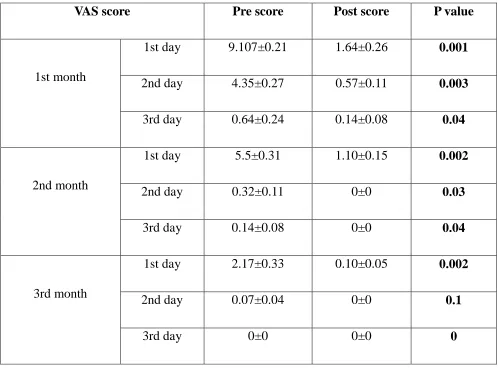
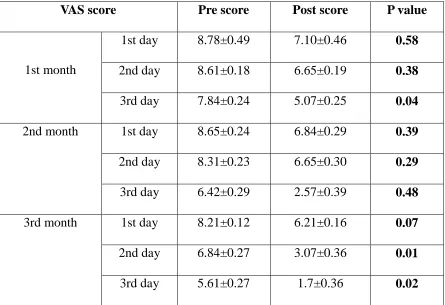
The data collection was done at different phases. After screening the subjects,
WHO-QOL was given to each of the individual in both the groups. After this the subject
was asked to come at the day 1 of their next menstrual phase. At the day 1, day 2 and day
3 of the menstrual phase of the first, second and third months the pre and post VAS scores
were obtained from each of the subject. The follow up data was collected on 6th month at
the day 1 of their menstrual phase after the initiation of the study. Both VAS and
WHO-QOL was obtained at this stage.
4.3 Assessments
The baseline and post-intervention assessments consisted of: VAS - Visual Analog Scale (Subjective score)
WHO QOL BREF (Subjective Score)
4.3.1 VAS (Visual Analog Scale)
The Visual Analogue Scale (VAS) is a simple and most commonly used tool for the
measurement of the pain in the subjects. This is considered the effective tool to assess
the efficacy of any intervention in clinical practice31.
pain. It was found that the measurement of pain through VAS is internally consistent and
hence it is valid for the regular use in clinical practice and studies32.
It was found that the VAS is the sound tool for the quantitative assessment of the acute
abdominal pain and also for any such clinically important changes in the pain
experienced by the patient. It is also described that VAS is best tool for traumatic and
many other types of acute pain33.
The VAS was also found to be advantageous than the Verbal Rating scale (VRB). The
VAS was found to measure the actual experience of the patient with respect to the change
in the pain intensities. From this study it was found that it did not create any artificial
result and gave the exact experience of the patient after the intervention. This could be
widely used in the clinical practice also34.
4.3.2 WHO-QOL BREF
This is developed by the WHO-QOL team who has previously developed the WHO-QOL
100. The project was initiated in 1991. It is developed with fifteen international field
centers with an aim to develop the quality of life that can be applied cross-culturally.
WHO-QOL BREF is said to be the abbreviated version of the WHO-QOL 100. The
quality of life (QOL) assessment was developed by the World Health Organization
(WHO) for multiple reasons. They had found that apart from morbidity and mortality
there are other areas that has to be observed when assessing the health status of any
individual as states the definition of health-
absence of disease or infirmity.”
The quality of life was found to be the missing parameter in the assessment of the
health35. This was considered the measurement of the well-being of the patient.
Quality of life is defined as “Individuals’ perception of their position in life in the
context of the culture and value systems in which they live and in relation to their goals, expectations, standards and concerns”.
From this definition one can understand that the QOL is a subjective evaluation of
the respondents. Rather than measuring the detailed aspect of the health, this serves to be the measure of the respondents’ perception of their life36
. In WHO-QOL BREF, 4
domains are variably measured.
Domain 1 - Physical Health,
Domain 2 - Psychological Health,
Domain 3 - Social Relationships, and
Domain 4 – The Environment they live in.
The WHO-QOL BREF is available in 19 different languages. The proposed uses
of the WHO-QOL BREF states that this can be used in the assessment of the disease
prognosis. This can be used in clinical trials where the baseline scores can be taken and
post interventional scores may assess the change in quality of life over the course of the
interventions. This would assist the clinicians in making judgement about the areas in
which the patient is more affected by the disease and sometimes also in making the
4.4 Intervention
Acupuncture is a challenging system of medicine around the world. There are two
common methods of acupuncture practised around the world. One being the western
acupuncture called the Clinical Acupuncture (CA), another being the TCM acupuncture.
CA has a list of points listed for various diseases or conditions whereas the TCM has
many methods of diagnosis and the points are selected based on the individual pattern of
the disease or condition.
The TCM acupuncture group will be diagnosed according to the diagnostic
patterns and points will be prescribed to each subject in the experimental group
accordingly. Maximum of seven points was given to each subject. The following table
explains the diagnostic patterns:
TCM
Patterns
Symptoms or Clinical Features presented by
patient
Points Prescribed
Qi and blood
stagnation
Abdominal distension
Pain in lower chest region
Breast distension
Dark flow with clots
Depression
Anger
Increased flow
Liv 3, Sp 4, Sp 6,
Sp 10, LI 4, Ren 3,
Kidney and
liver qi
deficiency
Pain during the flow.
Pressure relieves the pain
Weakness
Muscle pain
Pale tongue with thin coating
St 36, Sp 6, Ren 4,
Ren 3, UB 17, UB
18, UB 23, K 3.
Qi and blood
deficiency
Pain during and after the flow.
Palpitation
Insomnia
Dream disturbed sleep
Scanty flow
St 36, Sp 6, Sp 8,
Ren 3, Ren 4, UB
17, UB 20, UB 32.
Stagnation of
Cold
Warmth relieves the pain
Scanty flow
Aversion to cold.
Cold sensations in limbs
UB 23, Ren 3, Ren
4, Ren 6, Lu 7, K 6,
Du 4, St 36
Accumulation
of dampness
Burning sensation
Pain during the flow and duration is
prolonged
Fever sometimes
Yellow purulent vaginal discharge
Sp 12, St 32, LI 11,
4.4.1 Location of Acupuncture Treatment for Group-A
Qi and Blood stagnation
Liv 3:
On the dorsum of the foot, between the 1st and 2nd metatarsal bones, in the depression
proximal to the metatarsophalangeal joints and the proximal angle between the two
bones.
From the web between the 1st and 2nd toes, palpate proximally past the
metatarsophalangeal joints and along the groove between the 1st and 2nd metatarsal
bones, until you reach the widest and deepest part of the groove. There, locate LIV-3,
which is often sensitive to pressure. To double-check: When continuing to palpate along
Sp 4:
In the depression distal to the base of the 1st metatarsal bone, on the border of the red and
white skin.
When palpating along the border of the red and white skin (sole/dorsum of the foot) on
the medial aspect of the midfoot from proximal towards medial, the base of the 1st
metatarsal bone forms a distinct bony prominence. SP-4 is located in the depression distal
to this prominence, at the junction of the shaft and the base of the bone.
Sp 10:
With the knee flexed, SP-10 is located 2 tsun proximal and slightly medial to the medial
superior border of the patella, in a depression on the vastus medialis muscle.
Measure 2 tsun proximal to the medial superior border of the patella and locate SP-10 by
patellar border and the extended fingers pointing in a superior direction. With the thumb
and index finger forming an angle of 45°, the tip of the thumb will point to SP-10.
Ren 6:
On the anterior midline, 1.5 tsun inferior to the umbilicus or 3.5 tsun superior to the
upper border of the pubic symphysis.
The distance between the centre of the umbilicus and the upper border of the pubic symphysis is divided into 5 tsun, which can vary considerably from the patient’s finger
tsun. Therefore, only proportional tsun measurements should be used here. Ren-6 is
located on the midline, 1.5 tsun inferior to the umbilicus or 3.5 tsun superior to the upper
UB 32:
Over the second posterior sacral foramen.
LI 4:
On the dorsum of hand, between the 1st and 2nd metacarpal bones, in the middle of the 2nd
metacarpal bone in the radial side.
Kidney and Liver Qi deficiency
Ren 4:
On the anterior midline, 2 tsun superior to the upper border of the pubic symphysis or 3
tsun inferior to the umbilicus.
The distance between the centre of the umbilicus and the upper border of the pubic symphysis is divided into 5 tsun, which can vary considerably from the patient’s finger
tsun. Therefore, only proportional tsun measurements should be used here (helpful
device: elastic tape. Ren-4 is located on the midline, either 2 tsun superior to the
midpoint of the upper border of the pubic symphysis or 3 tsun inferior to the umbilicus.
UB 17:
1.5 tsun lateral to the posterior midline, on the level of the lower border of the spinous
The spinous process of the T7 is approximately on the level of the inferior angle of the
scapula . BL-17 is located on the level of the lower border of its spinous process and 1.5
tsun lateral to the midline at the highest point of the paraspinal musculature.
Or: Use the spinous process of the T3 for reference (generally on the level of the medial
end of the scapular spine)
Or: Use C7 as a reference point.
UB 18:
1.5 tsun lateral to the posterior midline, on the level of the lower border of the spinous
process of the 9th thoracic vertebra (T9).
In a standing position with the arms hanging down, the spinous process of T7 is
approximately on the level of the inferior angle of the scapula. From there, count down
two spinous processes to the spinous process of T9. BL-18 is located on the level of the
lower border of its spinous process and 1.5 tsun lateral to the midline at the highest point
Or: Use the C7 as a reference point. From there, count down nine spinous processes to
T9 and locate BL-18 1.5 tsun lateral to the lower border of its spinous process.
UB 23:
1.5 tsun lateral to the posterior midline, on the level of the lower border of the spinous
process of the 2nd lumbar vertebra (L2).
For orientation in the lumbar region, first, determine the Tuffier’s line (a line connecting
the highest points of the iliac crests), which in most cases intersects with the spinous process of L4 (note: this varies depending on the patient’s position. From there, count
upward to the lower border of the spinous process of L2 and, on this level, locate BL-23
K3:
In the depression between the highest prominence of the medial malleolus and the
Achilles tendon.
Locate the highest prominence of the medial malleolus. From there, palpate horizontally
towards the Achilles tendon. KID-3 is located in a depression that can be palpated
anterior to the tendon.
St 36:
On anterior aspect of the lower leg, 3 tsun below St-35, 1 finger breadth from the anterior
crest of tibia.
Qi and Blood deficiency
Sp 8:
3 tsun distal to the junction of the shaft and the medial condyle of the tibia (➞ SP-9), at
the posterior border of the medial crest of the tibia.
Measure 1 handbreadth directly inferior to the medial condyle of the tibia (➞SP-9). SP-8
is located 3 tsun distal to ➞SP-9 on the posterior border of the medial crest of the tibia,
on a line connecting
➞SP-9 and the highest prominence of the medial malleolus.
UB 20:
1.5 tsun lateral to the posterior midline, on the level of the lower border of the spinous
process of the 11th thoracic vertebra (T11).
In a seated position with the arms hanging down, the spinous process of T7 is
four spinous processes to the spinous process of T11. BL-20 is located on the level of the
lower border of its spinous process and 1.5 tsun lateral to the midline at the highest point
of the paraspinal musculature.
Or: Locate the articulation of the most inferior rib (T12) and palpate in a superior
direction to T11.
St 36, Sp 6, Ren 3, Ren 4, UB 17 and UB 32 whose locations are mentioned above.
Stagnation of cold
Lu 7:
On the radial aspect of the forearm, directly above the styloid process of the radius,
approximately 1.5 tsun proximal to the wrist joint space (wrist crease) in a V-shaped
groove.
Place the palpating forefinger on the anatomical snuffbox (➞L.I.-5). From there, glide
proximally over the styloid process of the radius and locate LU-7 where the finger can
Or: ‘Tiger mouth grip’ - spread the thumb and forefinger of both hands, crossing them so
that the forefinger of one hand comes to rest on the styloid process of the other, but
avoiding bending the wrist. LU-7 is located directly below the tip of the forefinger in a
V-shaped groove
K 6:
Approximately 1 tsun inferior to the highest prominence of the medial malleolus, over the
joint space between the talus and the calcaneus.
From the highest prominence of the medial malleolus, palpate distally, until the
palpating finger can feel the depression of the joint space between the talus and the
calcaneus. (KID-6 is often located between the tendons of the tibialis and flexor
digitorum longus muscles.) Directly distal to this point, you can palpate a small bony
prominence, the sustentaculum tali. With the patient’s foot in a supinated position, a
regarding the exact location of this point. However, the determining aspect for its
location is not the tsun measurement but the joint space below the prominence.
Du 4:
On the posterior midline, below the spinous process of the 2nd lumbar vertebra (L2). For orientation in the lumbar region, first, locate the Tuffier’s line by placing both hands
directly superior and lateral to the two highest points on the iliac crest, joining the thumbs
on the midline. The line will generally intersect with the spinous process of L4. (Note:
Orientation on the lumbar region depends on the patient’s position; for more detail on
differential orientation
Accumulation of damp:
Sp 12:
3.5 tsun lateral to the midline, at the level of the upper border of the pubic symphysis,
lateral to the femoral artery.
From the upper border of the pubic symphysis (➞Ren-2), measure 3.5 tsun in a lateral
direction. There, you can feel the pulsation of the femoral artery. SP-12 is located in a
depression immediately lateral to the artery.
St 32:
On the thigh, on a line connecting the lateral patellar border and the anterior superior iliac
spine, 6 tsun superior to the upper, lateral border of the patella.
Divide the distance between the tip of the greater trochanter and the lateral upper border
of the patella into three sections. ST-32 is located at the junction of the lower and the
LI 11:
With the elbow flexed, on the lateral end of the elbow crease, in a depression between the
end of the crease and the lateral epicondyle of the humerus, on the extensor carpi radialis
P4:
5 tsun proximal to the anterior space of the wrist joint (most distal wrist crease), between
the tendons of the palmaris longus and flexor carpi radialis muscles.
Spreading hands technique. Place the little fingers in the centre of the anterior wrist joint
space and the cubital crease respectively (➞P-3). From the midpoint of this distance,
measure 1 tsun in a distal direction. On this level, locate P-4 between the two tendons,
which become more pronounced when the fingertips are pressed together. If only one
tendon is visible, this will be the tendon of the flexor carpi radialis muscle. P-4 is located
on its ulnar aspect.
4.4.2 Location of Acupuncture Treatment for Group-B
In this study, CA is used in the control group being the Group A and TCM acupuncture is
used in the Experimental group being the Group B.
Point pre-selected for the CA group are, Sp-6, LI-4, Ren-2, Ren-3, St-36 and P-6.
The location for the above mentioned points are:
Sp-6: 3 tsun above the highest prominence of the medial malleolus, in a superior
direction. The point is located in a depression at the posterior border of the medial crest
of the tibia. This point is often sensitive to pressure.
LI-4: On the radial aspect of the hand, between the 1st and 2nd metacarpal bones, closer to
the 2nd metacarpal bone and approximately at its midpoint.
When pressing the thumb and index finger together, the adductor pollicis and the
interosseus dorsalis muscles will form a bulge. Needle L.I.-4 at the highest point of the
bulge and push it further towards the inferior aspect of the second metacarpal bone.
The point can also be located by this method: Spread the thumb and forefinger and place
the distal phalanx of the thumb of the other hand on the webbed border. When flexing the
thumb, its tip will point to L.I.-4.
Or: Insertion on the angle bisector between the 1st and 2nd metacarpal bones, needling in
Ren-2:
On the anterior midline, on the upper border of the pubic symphysis.
In the pubic area, locate the upper border of the pubic symphysis. Ren-2 is located
directly superior to its upper border, on the anterior midline.
Located on the same level are ➞ KID-11 (0.5 tsun lateral to the midline), ➞ ST-30 (2
tsun lateral to the midline) and ➞SP-12 (3.5 tsun lateral to the midline).
Ren-3:
On the anterior midline, 1 tsun superior to the upper border of the pubic symphysis or 4
tsun inferior to the umbilicus.
The distance between the centre of the umbilicus and the upper border of the pubic
symphysis is divided into 5 tsun. As these can vary considerably from the patient’s finger
tsun, only proportional tsun measurements should be used here (helpful device: elastic
tape ➞ 2.3.1). Locate Ren-3 on the midline, 1 tsun superior to the midpoint of the upper
border of the pubic symphysis.
Located on the same level are ➞ KID-12 (0.5 tsun lateral to the midline) and ➞ ST-29
(2 tsun lateral to the midline).
St-36: 3 tsun distal to the St-35(lateral eye of the knee) and 1 finger breadth lateral to the
anterior crest of tibia, on the tibialis anterior muscle.
finger breadth towards lateral by placing the middle finger adjacent to the tibial crest.
There st-36 is located in a depression, which can be palpated dynamically.
The point can also be located by palpating the lower border of the tibial tuberosity and
dynamically locating the st-36 1 finger breadth lateral to it.
P-6:
2 tsun proximal to the anterior wrist joint space (‘most distal wrist crease’), between the
tendons of the palmaris longus and flexor carpi radialis muscles.
As the location of the wrist crease varies, the wrist joint space is a more reliable reference
point (➞ 3.3.3). It can easily be palpated by moving the patient’s hand in a relaxed way.
From the centre of the wrist joint space (➞ P-7), measure 2 tsun in a proximal direction
and locate P-6 between the two tendons, which become more pronounced when the
fingertips are pressed together. If only one tendon is visible, this will be the tendon of the
flexor carpi radialis muscle. P-6 is located on its ulnar aspect.
Or quick method: From the centre of the wrist joint space, glide in a proximal direction
between the two tendons. The skin will begin to form a bulge in front of the sliding
4.5 Analysis
The data was collected using VAS & WHO QOL BREF. The assessments were done on
the first day, second day and third day of the menstrual phase of first, second and third
months (baseline data) and on sixth month, first day of the menstrual phase (post data).
The data was organized in Microsoft Excel Sheets (Version 2010).
Data expressed as Mean and SD. Inter group and intra group comparison of mean
difference was done by paired and unpaired t test using R statistical software version
5.0 REVIEW OF LITERATURE
Acupuncture continued to be one of the best treatments for the pain management in the
primary dysmenorrhoea since decades. In a study the trial was conducted by using electro
acupuncture where electrical stimulation was given to subjects with acupuncture
needling. The electrical stimulation was given different frequencies and the differences
were observed. The observed differences revealed that there is minimal difference only
existed in the groups where the intensities were differed. The group which was applied
the greater intensity of stimulation the pain relief was more when compared to the group
in which the intensity applied was minimum38.
SP 6 is used for the primary dysmenorrhoea patients in almost about 72
potential studies. It is found that Sp 6 serves to be effective in reducing the pain intensity.
The reduction in the pain intensity was observed immediate and lasted around three hours
after the intervention. Multiple monthly follow up visit helped for the persistent pain
relief. In these studies it was also observed that only when the point is administered by
the trained individuals39.
A study conducted by Prof. ZHAO used the assessment of tenderness
along the meridian including the ashi points and acupoints for primary dysmenorrhoea.
The points to be assessed differed each in the stage of attack and stage of remission. The
points to be assessed during the stage of attack are SP 6, SP 8 and SP 9. The points to be
with these points spleen meridian has to be assessed on whole during the stage of attack.
The treatment was designed according to the presenting symptoms of the patients and
special attention was also given to the timing of the treatment. This served to be the keys to relieving the patient’s pain40.
A study was done on observing the influence of sharp pain induced by the
acupuncture needle stimulation on the pain reduction in primary dysmenorrhoea subjects.
It was observed that the immediate effect of SP 6 stimulation had a great pain relief when
compared to the pain relief obtained after 10 mins of acupuncture needle stimulation on
the point SP 641.
The impact of the relationship between a physician and the subject on the
reduction of the menstrual symptoms was observed in a study. Here in addition to the
acupuncture point prescription a special TCM self-care advice was provided to each
subject. This has shown to give positive outcome on the symptoms of dysmenorrhea. It is
discussed that the focus of the subject on her internal health might be a reason for the
improvement in the health status of the subjects42.
A cohort study was conducted to elucidate the difference in the
moxibustion treatment based on the different sensation of the patients. One group was the
heat sensitivity group and another group was the warm sensations group. The regular
moxibustion treatment was given at the GV 4 point for the warm sensation group. Heat
point. It was found that the heat sensitive group had greater improvement as compared to
the warm sensation group in primary dysmenorrhea43.
A literature review was conducted by the data mining method to select the
acupoints for moxibustion in the primary dysmenorrhea subjects based on the point
character. The literatures were collected from comprehensive retrieval in Chinese
Biomedical Medicine (CBM), China National Knowledge Infrastructure (CNKI), VIP
and PubMed. A total of 35 points was evolved from this study. These points were grouped
into following categories like, points with higher frequency, crossing acupoints, front mu
points, He-sea points and the lower he sea points. The selected points include Guanyuan
(CV 4, 90 times), Sanyinjiao (SP 6, 47 times), Shenque (CV 8, 43 times), Zhongji (CV 3,
3 times) and Qihai (CV 6, 28 tirmes). The ratio of yin-meridian acupoints to1
yang-meridian acupoints was approximately 341; the utilization of the specific acupoints
accountedfor68. 6% (24/35); the crossing acupoints were used mostly (203 "times),
featured with high acupoints selected, especially Guanyuan (CV 4), Sanyinjiao CSP 6)
and Zhongji (CV 3); the front-mu points (130 times), he-sea points (19 times) and lower
he-sea points (18 times) were frequently used44.
Effect of acupuncture in the pain intensity of primary dysmenorrhea was
studied using the VAS and pulsograph changes. The investigator had 4 phases of
recording the changes during the intervention period. It was 7 days before the menstrual
cycle, maximal pain during the menstruation, immediately after the acupuncture
bilaterally for all the subjects. This study was not consistent, as it is difficult to say that
pulsographic changes during the pain can be a form of an indicator45.
In a meta-analysis to find the aspect of quality of life after the acupuncture
intervention for primary dysmenorrhea subjects, it was found that chemotherapies was
not so effective for PD. Menstrual Pain intensity and the quality of life was used as the
tool of measurement to find the efficacy of the intervention. Twelve electronic databases
were used for this data search. It was found that acupressure was very effective in
improving the quality of life and also reducing the pain intensity. From his study it was
concluded that physiotherapist may use acupressure or acupuncture with their treatment
protocols to improve the quality of life in PD patients. It was also discussed that high
quality RCT may be required to find the efficacy of the therapy46.
Deqi is the most important sensation which is felt after needling. This is
considered the most important for obtaining the desired results. The sensation is produced
during the retention of the needles. This is believed to produce the desired therapeutic
results for the subjects. Deqi can be in in simple terms described as the grabbing or
pulling sensation after the needle s inserted. This is also said to differ with the quality of
the needles by the western medicine. The aim of the study was to find the influence of
deqi in reducing the pain and anxiety of the primary dysmenorrhea subjects and also to
assess the temperature changes in the SP 6 and CV 4. This study helps in the assessment
In a study conducted by Chen.S et al, it was found that the acupoints may
vary in subjects with different physiologic and pathologic status. This is found by
assessing the tenderness of the point using the finger pressing method or the algometer in
two different groups. This tenderness was also measured by the VAS48.
Another study was conducted to assess the principles of point selection
and characteristics of points for primary dysmenorrhea subjects from the studies
conducted from January 1978 to April 2014, also to assess the efficacy of acupuncture in
primary dysmenorrhea49.
A meta-analysis was conducted to compare the effects of different
acupoint stimulation and moxibustion in the subjects with Primary dysmenorrhea. The
various acupoint stimulation therapies which were already studied were sandwich
moxibustion, moxibustion, eye of floating needle, acupoint application and similar other
methods. The sources used for this study were PubMed, The Chinese Biomedical
Literature database, Chinese Journal Full text database, Chinese science and technology
Journal full-text database, Chinese wanfang data and web of science. The target studies
were the RCTs. It was concluded from this analysis that moxibustion and acupoint
stimulation both served as effective therapy for relieving pain in the subjects with PD50.
Another data-mining based literature review was done by Yu S et al, which
found that acupoint stimulation and moxibustion was effective in reducing the pain
points observed through this review. Other noticeable point is that the points selected for
the primary dysmenorrhea was based on the traditional Chinese medicine philosophy51.
Another study was done to establish the effect of phylloquinone acupoint
injection for the reduction in pain. Previous to this study there was a little evidence for
the vitamin K injection on the acupoint SP 6 in pain reduction for primary dysmenorrhea
subjects. In similar way philloquinone was injected to 4 female subjects and the
difference in pain intensity was observed. Higher concentration was found with low pain
intensities52.
A comparative study was conducted to check whether the electrical skin
resistance reflects the pain during the menstrual cycle. 4 impedance electrodes were used
at 10 acupuncture points bilaterally during day 1 and day 3 of the menstrual cycle for 48
healthy volunteers and 46 Primary dysmenorrhea subjects. The electrical skin resistance
imbalance during the menstrual cycle was almost similar on day 1 and day 3 among the
healthy volunteers. In Primary dysmenorrhea subjects, imbalance in the electrical skin
resistance in some points (uterine related points) was observed. The imbalance was
observed to be either lower or higher. The higher or lower ratio was found to be the
difference between the first and third day of the menstrual cycle in primary dysmenorrhea
subjects. Again this was concluded that more research is needed to prove the efficacy and
A systematic review was conducted to assess the effect of physiotherapy treatments in
relieving the pain in the primary dysmenorrhea subjects. There were different
interventions applied in physiotherapy treatments modalities. Few of them were, TENS,
electrical stimulation, exercise therapy, heat therapies etc. yoga was also used as a part of
intervention by the physiotherapists. It was found to give relief from the pain. But still
strong and optimal studies must be focused on54.
A randomized controlled trial was conducted to compare the effect of needle
embedment therapy and fen bid in the reduction of the pain in primary dysmenorrhea
patients. The sample size was 70, where 35 subjects were enrolled in each group. In the
acupuncture group the treatment was given for three menstrual cycles consecutively after
which the difference in pain intensity was noted. The second point of recording the
improvement was after three months of the intervention. The intervention for the
acupuncture group was given twice in each menstrual cycle which was considered as one
session. One treatment was three days before the actual bleeding phase and another was
during the 12 -14 days of menstrual cycle. The points given three days before
menstruation are CV 4, BL 32, SP 8 and EX CA -1. BL 23, BL 18, BL 20 was used on the
12th to 14th days of the menstrual cycle. To the fen bid group, oral administration of fen
bid of 0.3 g was given from three days before the actual bleeding phase till the pain was
completely gone. Short term and long term efficacies were assessed in both the groups.
The improvement was 91.4 % in the embedment group which was better than the 74% in
the fen bid group. This study signified that acupoint embedment therapy proved better
A comparative study was conducted to find the effect of chongmai meridian stimulation
on reducing the pain in primary dysmenorrhea subjects. Here sham acupuncture was used
as the comparative group and the control group was the third group did not receive any
kind of acupuncture treatments. All the groups were allowed to take the non-steroidal
anti-inflammatory drugs for their pain relief. Acupuncture points given in the chongmai
group were P4, P6, Sp 4, St 30 and BL 30. It was found that the pain reduction was
significant in all the groups. The persistent of the pain relief effects was not significant in
the sham acupuncture group, whereas it was significant in the Chongmai group56.
To assess the analgesic effect of acupuncture, a study was conducted in china with
a large sample size. They randomized 501 subjects into three groups. One group received
a single classical point needling at SP 6(n=167), second group received an un-related
acupoint at GB 39(n=167) and non acupoint (n=167). Subjective measurement of VAS in
100mm scale was measured; cox retrospective symptom scale to measure the difference
in the symptoms and 7 point verbal rating scale was used as the tool to measure the
subjective differences. The measurements were done at 0, 5, 10, 30 and 60 mins after the
first session. Secondary outcomes were measured after three months of the intervention
period. In addition to that, pain total time, additional in bed time and the average use of
the pain killers was measured. Significant difference was found in the VAS scores
between the acupuncture and the other groups. No significant results were observed in the
cox symptom scale and the verbal rating scale. So it was concluded that specific acupoint
acupuncture therapy produced a statistically significant result and not a clinical
Deqi is a sensation which is obtained after the needling the acupuncture points.
There are many studies which record the effect of the deqi on the pain relief. Prominent
sensation of deqi includes the holding of the needles which is felt by most of the subjects
who take acupuncture treatment. In this study three groups were made as acupoint group,
non acupoint group, un related acupoint group. The acupoint specific for dysmenorrhea
was selected as SP 6. The unrelated acupoint selected was GB39. A random point which
was not an acupuncture point was given to the third group. Like other studies subjective
pain was measure using the visual analogue scale. There was no significant difference
found between the three groups. The effect of deqi was similar in all the three groups58.
Electro acupuncture is one of the methods of stimulation in the acupuncture
treatment. The acupoints are needled and then stimulated using the electrical patches.
Here a study is conducted to find the effect of electro acupuncture and electro
acupuncture plus Tao hong si wu wan in treating the primary dysmenorrhea. A
comparative study was made. Two groups was randomized and both the group was given
electro acupuncture. Along with the electro acupuncture placebo were given to a group
and Tao hong si wu wan was given to another group. 2 sessions of treatment was given
for each menstrual cycle and consecutive three menstrual cycles the treatment was given.
A reference group was taken and ibuprofen was administered 600mg twice daily for their
5 menstrual cycles. It was found that the reference group had no much significant pain
reduction than the other two groups. Group 1 and Group 2 have comparatively better
effect than the reference group which was given ibuprofen drug. Among these groups,
A study was conducted to find the efficacy of the manipulation method in
acupuncture over the clinical analgesic effect of acupuncture. Clinical analgesic effect is
the regular acupuncture group where needles are inserted, retained for a particular
duration of time and then withdrawn. In manipulation method, the needles after insertion,
it will be stimulated counter clock wise and clock wise directions. In this study (fight of
dragon and tiger) both re-inforcing and reducing methods are used. They are
characterized with nine counter clockwise a six clockwise rotations and even
manipulations. Sixty two patients were randomized into two groups, 32 in observation
group and 30 in control group. The observation group was administered with longhu
jiaozhan manipulation, while the control group was given a normal even manipulation.
The difference was measured by (VAS) Visual analogue Scale in both the groups. The
result of VAS in same group was significant that the subjects experienced lesser pain in
observation group. The VAS scores were measured from 5 minutes to 120 min after the
needling. The VAS score was also found to be significant at the 20 minutes after needling
and 30 minutes after needling. The scores were also found to be significant in the
observation group as compared to the control group. It was also recorded that the effects
which were obtained after the needling in both the groups were able to be maintained for
about 2 hours. So finally here it was concluded that both the methods of acupuncture
stimulation was effective in giving an analgesic effect. But there was a profound
difference in between the control and observation al group where the observational group
Wrist-ankle needle therapy is another method in acupuncture which is commonly
used in practice. A study was conducted to find the efficacy of this method over other
common body acupuncture and the sustained release ibuprofen. 95 subjects were
randomized into three groups, in which wrist-ankle therapy group consisted of 32
subjects, body acupuncture group with 31 subjects and ibuprofen group with 32 subjects.
The point chosen in the wrist ankle group was the lower 1 and lower 2, SP 6 and CV 4 in
the body acupuncture group and ibuprofen sustained release tablets for the third group.
The time chosen for the treatment was three days before menses until the pain was
relieved for three continuous menstrual cycles. Ibuprofen was given the same time till the
pain was relieved. The efficacy in three groups was observed. The significant rates were
more in the wrist ankle group than the other two groups. Body acupuncture was
comparatively better than the ibuprofen group. It was found that the wrist and ankle
specific points had a significant analgesic effect than the regular body acupuncture and
the ibuprofen drug intake61.
An interesting study , cross over design was conducted by Chao et al, where the
Vitamin K injection and saline solution was given at the SP 6 point. For one group
vitamin K injection was given and for the other group saline injection was given at the
same point as the first method of intervention. The primary dysmenorrhea subjects were
selected and randomized into two groups to receive the treatment. A two month medicine
wash out period was given for the vitamin K injected group. Then the group was given
changes were measured using the pain rating scale which is called the numerical pain
rating scale. It was observed that the pain intensity was comparatively better in the
vitamin K injected group than the saline injection group. Even though their significance
differences were meager. The significance of the vitamin K period was 0.0001, whereas
the significancy of the saline injected period was 0.001. After this treatment among 94%
of the participants 77% of them were agreeable to receive the injection each month of
their menstrual cycle. So from this point of proof it was also suggested that there is high
acceptability for an acupuncture point injection therapy of vitamin K. so, this could be
designed as an effective treatment method for the primary dysmenorrhea patients in san
Francisco. This finding is consistent with the outcome from the Obstetrics and
gynecology hospital in shanghai, china where the protocol was initially developed62.
Dysmenorrhea being a common problem gives mental distress to most of the
females during their reproductive age. This has a negative impact in the quality of life
and the academic performances. Auriculotherapy was found to be one of the good
methods to reduce the stress in young adults. The study used both subjective and
objective measurements to analyze the Heart rate variability, questionnaires to assess the
psychological parameters, blood pressure etc. was measured. A single group was taken
and the results were measured before, during and after intervention period in the same
group. The heart rate variability was checked at low and high frequencies. Effect was
pronounced in high frequency than in the low frequency group. There was a significant
increasing the parasympathetic activity to maintain the autonomic function in young
women. It was also concluded that further studies is essential for evaluating the efficacy
of the auricular therapy in primary dysmenorrhea63.
This study was conducted to find the efficacy of SP 6 and GB 39 on the primary
dysmenorrhea patients. Electrical stimulation was given at both the points. Another third
group was given a non acupoint. Subjects was selected and randomized into three groups
and the treatment was given as mentioned above. The degree of pain was measured by
the cox retrospective symptom scale, visual analogue scale before and after the
intervention for all the three groups. The visual analogue scale scores and the RSS COX
2 scores was significantly lower in all the three groups. This has suggested that the
electrical stimulation had significant results among all three groups. It was found that the
cumulative analgesic effect was pronounced in all the three groups. This was
considerably noted in the visual analogue scale and RSS COX-2 scale scores64.
An animal study was conducted among 100 rats and grouped into 5 groups. The
five groups were control, model, acupuncture, medication and moxibustion groups.
Primary dysmenorrhea model was recognized by subcutaneous injection of Benzestrofol
for 10 days and intraperitoneal injection of Oxytocin for 1 day. Rats of the medication
group were given with extractum leonuri inspissatum (8 g/100 g) and those of the
moxibustion group treated with drug-paste separated moxibustion at "Mingmen" (GV 4).
For rats of the acupuncture group, a filiform needle was inserted into GV 4. This was
acupuncture and medication group were conducted once daily for 7 days. The rat's
body-writhing latency and times during 30 min were recorded. The contents of serum E2 and P
were detected by ELISA, and the expression of estrogen receptor (ER) mRNA and
progesterone receptor (PR) mRNA in the endometrium was determined by quantitative
real-time (RT)-PCR. The body-writhing latency was shorter and the writhing times were
more in the model group when observed. This was more than in the control group (P <
0.01). The body-writhing latency was significantly increased when it is compared with
the model group, and the writhing times were visibly decreased in the medication,
acupuncture and moxibustion groups (P < 0.01). There were no significant differences
among the medication, acupuncture and moxibustion groups in the body-writhing latency
(P > 0.05), but the body-writhing numbers of the acupuncture and moxibustion groups
were markedly lower when compared to that of the medication group (P < 0.01).
Compared with the control group, serum E2 content and endometrial ER mRNA
expression level were pointedly increased, and serum P content and endometrial PR
mRNA level unmistakably decreased in the model group (P < 0.01, P < 0.05). Serum E2
contents and endometrial ER mRNA expression levels were considerably
down-regulated, when compared with model group and serum P contents and endometrial PR
mRNA expression levels markedly up-regulated in the medication, acupuncture and
moxibustion groups (P < 0.01, P < 0.05). The effects of the moxibustion group were
significantly greater to those of the acupuncture and medication groups, and those of the
acupuncture group were also significantly greater to those of the medication group in
600 patients with essential dysmenorrhea were arbitrarily doled out to the single point
group (n=200) including group A (treating before the period, n=100) and group B
(quickly regarding when torment event, n=100), the multi-point group (n=200) including
group C (treating before the feminine cycle, n=100) and a group D (instantly regarding
when torment event, n=100), or the control group, group E (n=200, no treatment). The
restorative impacts were broke down after treatment for three menstrual cycles and met
for three follow-up periods. Needle therapy could viably diminish menstrual torment for
primary dysmenorrhea compared with the control group (P<0.05, P<0.01). Quick torment
alleviation happened following needle therapy inside 5 min in groupB (P<0.01) and
group D (P<0.01), and the two groups clearly soothed menstrual torment for VAS scores.
Both group A and Group C clearly mitigated menstrual torment (P<0.01), and group C
was superior to group A (P<0.05). Compared with group D, Group C was greatly
improved for CMSS scores in cycle 1.
Treating before the period is superior to instantly regarding when torment event at
the change in manifestations of dysmenorrheal at multi-point What's more, single point is
superior to multi-focuses when quickly regarding when torment event. The present trial
propose Shiqizhui (EX-B8) ought to be picked as a helpful point65.
Primary dysmenorrhea is prevalent in children and young women. Menstrual pain
and discomfort causes poor university performance and physiological harm. Auricular
adaptable way of communicating and delivering the relevant information. This study
investigates the effects of auricular acupressure (AA) by themselves and coupled with an
interactive Internet-based (II) involvement for the management of menstrual pain and
self-care of adolescents with primary dysmenorrhea. This study adopts a pretest/posttest
control research design with a convenience sample of 107 members. The outcomes were
measured using the short-form McGill pain questionnaire (SF-MPQ), aesthetic analogue
scale (VAS), menstrual stress questionnaire (MDQ), and adolescent dysmenorrhea
self-care range (ADSCS). Significant variations were within ADSCS scores between the
categories, and in SF-MPQ, VAS, MDQ, and ADSCS ratings for each and every group.
Finish. Auricular acupressure together and a combo of auricular acupressure and
interactive Internet both reduced menstrual pain and problems for primary dysmenorrhea.
Auricular acupressure coupled with interactive Internet instructions is better than
auricular acupuncture alone in improving self-care behaviors66.
A meta-analysis was done to assess the viability of needle therapy or pressure
point massage at the Sanyinjiao (SP6) acupoint in calming torment related with primary
dysmenorrhea. The essential result was obtained through visual analogue scale (VAS)
torment score. Three needle therapy and four pressure point massage trials were
incorporated into the meta-analysis. For the needle therapy examination, there was no
distinction in the mean VAS score decrease between the SP6 acupoint and control (GB39
acupoint) group (- 4.935; bring down point of confinement = - 15.757, maximum farthest
distinction in the mean VAS score after intercession between the SP6 acupoint and
control (rest/light touch at SP6/nonacupoint pressure point massage) gatherings,
supporting the SP6 acupoint amass (- 1.011; bring down cutoff = - 1.622, furthest utmost
= - 0.400; P = 0.001). Affectability examinations showed great dependability of the
meta-investigations discoveries. These discoveries propose that needle therapy at SP6 is not
more successful than needle therapy at an inconsequential acupoint in the alleviation
from essential dysmenorrhea. Pressure point massage at SP6 might be viable in the help
from essential dysmenorrhea. Superb randomized controlled trials are expected to affirm
these discoveries67.
A study was conducted to find the efficacy of the acupuncture over the
non-steroidal anti-inflammatory drugs (NSAID) in primary dysmenorrhea. Thirty five young
women were selected for the study. The severity of the pain was assessed with the visual
analogue scale (VAS) once they enter the study group. They were then randomized into
two groups, group 1 and group 2. One group was given acupuncture treatment and the
other group was given the NSAID drug the following month of the entry into the study.
After a month’s intervention course the visual analogue scale scores were again obtained
from the subjects. It was found that the pain scores were significantly lowered in both the
groups. The significancy was as observed; the pain was decreased about 52.2% in the
NSAID group and 69.5% in the acupuncture group. This gave a substantial proof that the
acupuncture therapy was as effective as the NSAIDs. As this was a pilot study further