R E S E A R C H
Open Access
Research capacity building integrated into
PHIT projects: leveraging research and
research funding to build national capacity
Bethany L. Hedt-Gauthier
1,2*, Roma Chilengi
3,4, Elizabeth Jackson
5, Cathy Michel
6, Manuel Napua
7,
Jackline Odhiambo
1, Ayaga Bawah
5,8and with input from the AHI PHIT Partnership Collaborative
Abstract
Background:Inadequate research capacity impedes the development of evidence-based health programming in sub-Saharan Africa. However, funding for research capacity building (RCB) is often insufficient and restricted, limiting institutions’ability to address current RCB needs. The Doris Duke Charitable Foundation’s African Health Initiative (AHI) funded Population Health Implementation and Training (PHIT) partnership projects in five African countries (Ghana, Mozambique, Rwanda, Tanzania and Zambia) to implement health systems strengthening initiatives inclusive of RCB.
Methods:Using Cooke’s framework for RCB, RCB activity leaders from each country reported on RCB priorities, activities, program metrics, ongoing challenges and solutions. These were synthesized by the authorship team, identifying common challenges and lessons learned.
Results:For most countries, each of the RCB domains from Cooke’s framework was a high priority. In about half of the countries, domain specific activities happened prior to PHIT. During PHIT, specific RCB activities varied across countries. However, all five countries used AHI funding to improve research administrative support and
infrastructure, implement research trainings and support mentorship activities and research dissemination. While outcomes data were not systematically collected, countries reported holding 54 research trainings, forming 56 mentor-mentee relationships, training 201 individuals and awarding 22 PhD and Masters-level scholarships. Over the 5 years, 116 manuscripts were developed. Of the 59 manuscripts published in peer-reviewed journals, 29 had national first authors and 18 had national senior authors. Trainees participated in 99 conferences and projects held 37 forums with policy makers to facilitate research translation into policy.
Conclusion:All five PHIT projects strongly reported an increase in RCB activities and commended the Doris Duke Charitable Foundation for prioritizing RCB, funding RCB at adequate levels and time frames and for allowing flexibility in funding so that each project could implement activities according to their trainees’needs. As a result, many common challenges for RCB, such as adequate resources and local and international institutional support, were not identified as major challenges for these projects. Overall recommendations are for funders to provide adequate and flexible funding for RCB activities and for institutions to offer a spectrum of RCB activities to enable continued growth, provide adequate mentorship for trainees and systematically monitor RCB activities.
Keywords:Research capacity strengthening, Research policy, Research funding, Africa, Health programs, Ghana, Mozambique, Rwanda, Tanzania, Zambia
* Correspondence:[email protected]
1Partners In Health, Kigali, Rwanda
2Department of Global Health and Social Medicine, Harvard Medical School,
Boston, MA 02115, USA
Full list of author information is available at the end of the article
© The Author(s). 2017Open AccessThis article is distributed under the terms of the Creative Commons Attribution 4.0
Background
Given limited human, financial and infrastructure resources, maximizing effectiveness of health programs in sub-Saharan Africa requires that policies and practice are based on evidence [1–6] and that interventions are monitored, evaluated and adjusted accordingly [3]. Des-pite this need for data-driven health programming, the corresponding knowledge production is limited and dis-proportionate in relation to the health burden the region bears [7–9]. Between 2003 and 2009, only 10% of health policy and systems research publications came from low- and middle-income countries (LMICs) [7]. A sur-vey of research output of 847 health research institutions from 42 countries in sub-Saharan Africa in 2009 found an average of one peer reviewed publication per institu-tion [10]. Inadequate research capacity in sub-Saharan Africa impedes the development and use of research to guide program implementation [3], heightening inequi-ties in global health [11–14].
Despite the 1998 World Health Organization (WHO) call for the development of research policies and strat-egies to build national health research capacity in sub-Saharan African countries, research capacity building (RCB) efforts have faced numerous challenges [3, 13]. Most RCB activities in the region lack sufficient funding and thus are limited in depth and breadth [3, 11, 15]. Increasingly, agencies funding either research or pro-gram implementation with an evaluation component acknowledge the value of building national research cap-acity [16, 17]. However, funding from these agencies is often restricted, both in amount and timelines [18] and misaligned with national priorities [13], limiting an insti-tution’s ability to develop RCB activities that address current needs.
In 2009, the Doris Duke Charitable Foundation’s (DDCF) African Health Initiative (AHI) began support-ing the Population Health Implementation and Trainsupport-ing (PHIT) Partnership projects [19]. The PHIT Partnership projects aimed to develop and implement interventions that linked implementation research and training to the delivery and evaluation of health care services. Projects in five countries – Ghana, Mozambique, Rwanda, Tanzania and Zambia – received funding for various activities, including RCB. In contrast to traditional restrictive funding mechanisms, PHIT projects included RCB funding in their budgets based on their program needs and goals. Throughout the five-year period covered in this paper, country projects had access to additional funding to promote more research capacity in the clinical and programmatic work. In this paper, leaders of RCB efforts in each of the five countries describe how their PHIT projects leveraged AHI funding for RCB activities, the achievements in RCB under this support, ongoing challenges, and lessons learned.
Methods
Description of the five PHIT projects
The five AHI-funded PHIT projects have been described in detail in other papers: Ghana [20], Mozambique [21], Rwanda [22], Tanzania [23] and Zambia [24]. In sum-mary, PHIT projects were similar in their core principles but different in their specific activities, coverage and implementation partnerships [25, 26]. The primary goal for each project was strengthening the district-level health system [24–26]. However, focus on clinical and data quality improvement [25, 27], strengthening the health facility management [21, 22] and focus on the community-level of implementation [20, 22, 23] varied across countries. Further, the size of the implementation areas varied from Rwanda’s project covering two districts with 23 facilities to Mozambique’s project covering 13 districts with 146 facilities. Partnerships included Ministries of Health, local and international academic institutions and other non-governmental organizations.
RCB was a common denominator across the five coun-try proejcts, strengthened by DDCF’s emphasis on imple-mentation research and program evaluation [28]. However, each country differed on the amount of research already happening prior to the start of the PHIT project. A short description for each project’s research and RCB activities prior to AHI funding is provided below.
TheGhanaPHIT project was implemented in the Upper East region, which had a long history of health
systems research. Prior to PHIT’s Ghana Essential
Health Intervention Program (GEHIP), the Navrongo Health Research Centre had worked in the Upper East region for close to three decades, established a Navrongo Demographic Surveillance System and had successfully implemented a Community-based Health Planning and Services (CHPS) Program, which was adopted as a national blueprint for health delivery in Ghana. While other health system intervention
programs had taken place in this region, PHIT’s
GEHIP was the first comprehensive region-wide intervention that was anchored on the WHO health systems framework to assess the impact of the intervention on maternal and child health.
TheMozambiquePHIT project was implemented in the 13 districts of Sofala Province with support from Health Alliance International. Part of the
implementation was to support the Beira Operations Research Center (CIOB). Created in 2005, CIOB is one of the three research centers of the
TheRwandaPHIT project was implemented in two districts where health care services had been managed by the Ministry of Health with support from a Boston-based non-governmental organization Partners In Health (PIH) since 2005. Prior to 2005, there was some research on health outcomes and service delivery in these two districts. However, the research was limited in scope, was primarily led by academic and clinical faculty from Harvard Medical
School or Brigham and Women’s Hospital
(institutional partners for PIH) and was without particular focus on national capacity building. The first coordinated efforts to establish research infrastructure and RCB activities began in 2010, catalyzed by AHI funding.
InTanzania, AHI funded a project called Connect that trained and deployed a new, paid cadre of community health workers, called Community Health Agents (CHAs), according to the Tanzanian
Ministry of Health’s guidelines and policies. CHAs
were deployed in three districts in two regions with existing health and demographic surveillance systems (HDSS) run by the Ifakara Health Institute (IHI). Prior to PHIT, IHI was already a successful research institution that utilized HDSS sites to make important contributions to public health through, for example, population-based research in malaria
prevention and health systems strengthening. IHI’s
HDSS in Morogoro and Pwani regions were deemed ideal platforms to conduct a randomized controlled trial on the impact of CHAs on child mortality. The Connect project began in 2011 with an AHI-funded posting of a demographer who provided continuous research mentoring to local junior scientists.
InZambia, the PHIT project was implemented by the Centre for Infectious Disease Research in Zambia (CIDRZ), a non-governmental research organization that was established in 2001. Before AHI funding, CIDRZ had established research in HIV and systems strengthening in support of the antiretroviral therapy (ART) program. The PHIT project used an integrated systems strengthening approach to improve the overall quality of 42 public
facilities’outpatient departments in three districts
utilizing lessons learned from the ART work.
Compiling information on PHIT-supported research capacity building activities
For this manuscript, each PHIT project nominated one to two member(s) of their team who led or coordinated the RCB activities completed using AHI funding. These indi-viduals are all included as co-authors on this paper. For cohesion, we used Cooke’s framework to synthesize details about PHIT project activities specific to RCB [29]. This
framework includes six dimensions of RCB: 1) building skills and confidence, 2) developing linkages and partner-ships, 3) ensuring the research is “close to practice,” 4) developing appropriate dissemination, 5) investing in infrastructure, and 6) building elements of sustainability and continuity. The representatives responded to how much each of the RCB domains was a priority for AHI-funded RCB activities and provided a list of their specific activities that were linked to these domains via a semi-structured questionnaire (see Additional file 1). Co-authors Bethany Hedt-Gauthier, Jackline Odhiambo and Ayaga Bawah compiled responses, with follow-up skype interviews and emails to clarify questions arising from the completed survey. Responses from PHIT projects’ RCB leaders were collected and refined between September and December 2015.
In addition, respondents provided data on RCB activity inputs, outputs and outcomes indicators synthesized from other articles describing RCB monitoring and evaluation [29–31]. There were no standardized metrics for RCB activities across the five projects and projects only reported on RCB indicators when the data had been routinely collected during the implementation of the PHIT project. For this reason, projects at times had no data available for some specific indicators. When available, data could correspond to the overall PHIT project or to a specific RCB-activity implemented as part of the project. For each indicator, we report how many countries are represented and whether the countries are reporting for the combined project or single activity. The indicators were reported in aggregate for the 5 years of PHIT implementation as totals and averages.
Finally, each project key informant provided informa-tion on the degree to which common RCB challenges, as listed in a systematic review of non-academic RCB programs [30], persisted for their project and described any innovative activities made possible by AHI funding to alleviate these challenges. For each challenge, RCB leaders reported whether the challenge was a major challenge (score = 2), minor challenge (score = 1) or not a challenge (score = 0) and we reported the average response across the five PHIT projects.
Ethics statement
This paper includes program descriptions from co-authors and data that is routinely collected through PHIT project monitoring and evaluation systems. As such, this paper falls under non-human subjects research.
Results
PHIT country projects’approaches to research capacity building
AHI funding and these activities were either expanded or catalyzed using the AHI funding (Fig. 1). Further, each program prioritized all five domains for RCB activ-ities, and most country projects reported that each domain was a high priority (Fig. 1).
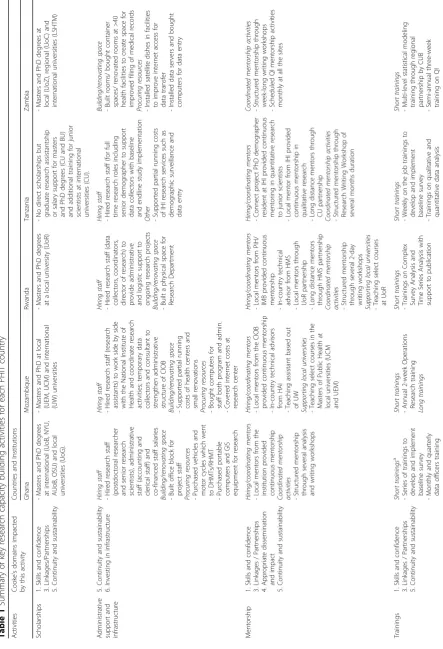
Specific RCB activities varied country-by-country. However, there were common themes to the types of activities supported using AHI funds (Table 1). Four country projects reported using AHI funds to pro-vide scholarships for Masters and PhD degrees either at local or international institutions. All five projects used AHI funding to increase research administrative support and infrastructure. Four countries hired either research or administrative staff and four coun-try projects used funding to construct or renovate spaces used for data collection, research and/or research training.
All five country projects reported using funding to support mentorship activities (Table 1). Four PHIT projects used funding to hire mentors or facilitate mentorship from national researchers, from inter-national researchers locally based or from interinter-national researchers using a distance-mentorship model. For the distance-mentorship model, approaches ranged from exclusively relying on email exchanges with periodic calls to a blended model that included these distant exchanges complemented with occasional face-to-face meetings, most often when the international researcher was visiting the project to support other aspects of the work. Four PHIT projects offered writing workshops to consolidate mentorship activities and accelerate dissem-ination. Finally, two PHIT projects used AHI funding to provide support to local universities by teaching courses within their academic programs.
All PHIT projects used AHI funding to implement research trainings to build skills. The target competen-cies, length and style of training varied by program (Table 1). Often PHIT projects implemented multiple
training activities of increasing complexity to allow an emerging researcher’s skills to grow over the training series. Finally, all five country projects used AHI funding to support research dissemination, including scholar-ships for conferences (four projects) and writing work-shops with the goal of producing scientific publications (four projects).
Outputs, outcomes and impacts of PHIT research capacity building activities
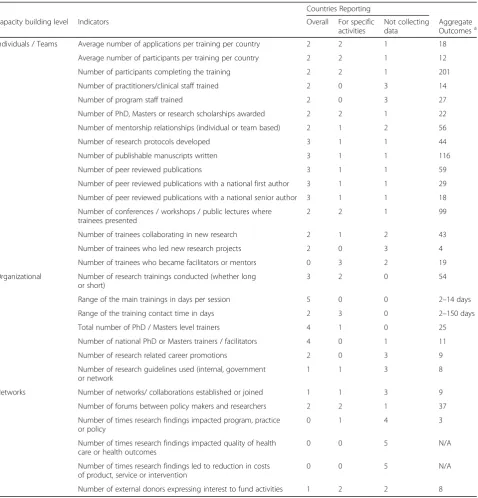
Table 2 synthesizes indicators across the five PHIT projects, indicating how many projects had data avail-able and the scope of that data. A country project-level summary is available in an online supplementary table (see Additional file 2). Over the 5 years, there were 201 participants in RCB-related trainings (Table 2). Though rarely documented, 14 of these were known to be practitioners or clinical staff and 27 were programmatic staff. For the four PHIT pro-jects with data available, 22 PhD, Masters or research scholarships were awarded using AHI funds. Three country projects had recorded data relevant to research mentorships, documenting 56 research mentor-mentee pairings. Forty-four research protocols were documented, and 116 manuscripts were attrib-uted to the PHIT projects. Over the 5 years, for the four country projects that tracked this data, there were 59 peer-reviewed publications, of which 29 (49.2%) were first authored by a national researcher and 18 (30.5%) had a national senior author. Four PHIT projects reported that trainees presented at 99 conferences, workshops, or public lectures. Although very few PHIT projects systematically recorded this information, 43 trainees were documented to collab-orate on new research projects, 4 trainees were docu-mented to be leading new research projects and 19 trainees went on to become facilitators for a training course or mentors.
[image:4.595.60.540.552.718.2]Table 1 Summary of key research capacity building activities for each PHIT country Activities Cooke ’ s domains impacted by this activity Countries and Institutions Ghana Mozambique Rwanda Tanzania Zambia Scholarships 1. Skills and confidence 3. Linkages/Partnerships 5. Continuity and sustainability -Masters and PhD degrees at international (UoB, NYU, AUoB, OSU) and local universities (UoG). -Masters and PhD at local (UEM, UCM) and international (UW) universities -Masters and PhD degrees at a local university (UoR) -N o direct scholarships but graduate research assistantship or salary support for masters and PhD degrees (CU and BU) and additional training for junior scientists at international universities (CU). -Masters and PhD degrees at local (UoZ), regional (UoC) and international universities (LSHTM) Administrative support and infrastructure 5. Continuity and sustainability 6. Investing in infrastructure Hiring staff -Hired research staff (postdoctoral researcher and senior research scientists), administrative staff (accounting and clerical staff) and co-financed staff salaries Building/renovating space -Built office block for project staff Procuring resources -Purchased vehicles and motor cycles which went to DHMTs/RHMT -Purchased portable computers and GIS equipment for research Hiring staff -Hired research staff (research assistants) to work side by side with the National Institute of Health and coordinate research activities; temporary data collectors and consultant to strengthen administrative structure of CIOB Building/renovating space -Supported partial running costs of health centers and small renovations Procuring resources -Bought computers for staff both program and admin. -Covered internet costs at research center Hiring staff -Hired research staff (data collectors, coordinators, director of research) to provide administrative and logistic support to ongoing research projects Building/renovating space -Built a physical space for Research Department Hiring staff -Hired research staff (for full time research roles including senior demographer to support data collectors with baseline and endline study implementation
Other -Supported
partial running costs of IHI research services such as demographic surveillance and data entry Building/renovating space -Built rooms/ bought container spaces/ renovated rooms at >40 health facilities to create space for improved filing of medical records Procuring resources -Installed satellite dishes in facilities to improve internet access for data transfer -Installed data servers and bought computers for data entry Mentorship 1. Skills and confidence 3. Linkages / Partnerships 4. Appropriate dissemination and impact 5. Continuity and sustainability Hiring/coordinating mentors -Local mentors from the institution provided continuous mentorship Coordinated mentorship
activities -Structured
mentorship through several analysis and writing workshops Hiring/coordinating mentors -Local mentors from the CIOB provided continuous mentorship -In-country technical advisors from HAI -Teaching assistant based out of UW Suppor ting loc al universities -Teaching select courses in the Masters of Public Health at local universities (UCM and UEM) Hiring/coordinating mentors -Local mentors from PIH/ IMB provided continuous mentorship -In-country technical advisor from HMS -Local mentors through UoR partnership -Long distance mentors through HMS partnership Coordinated mentorship
activities -Structured
[image:5.595.60.504.92.742.2]Table 1 Summary of key research capacity building activities for each PHIT country (Continued) Activities Cooke ’ s domains impacted by this activity Countries and Institutions Ghana Mozambique Rwanda Tanzania Zambia -Knowledge management trainings through DDCF small grants Long trainings b -Cross-country PHIT led trainings on multilevel modelling and economics -Annual data validation study led by junior researchers with on the job training -Training by doing on select data analysis techniques (qualitative and quantitative), research grant application and abstract writing workshops -Several 2-day scientific writing workshops Long tr ainings -Some related projects sent for an 8 months Operations Research training run by PIH/IMB Long tra inings -Research writing workshops for several months -A 3-week training on leadership and management at UoA, USA Long tr ainings -Lean Six Sigma QI training and QI champions training through partnership with CGLUNC Dissemination support 1. Skills and confidence 2. Research is close to practice 4. Appropriate dissemination and impact Dissemination trainings -Training on dissemination to policy makers Conference/Workshop s -Communications workshop Pub lic ations -Peer reviewed journals -Monthly publication on what works/what fails series Dissemination trainings -Training on presentation for national and international audiences Conference/Work shops -Conference scholarships -Writing workshops for publication Pub lic ations -Peer reviewed journals
Conference/Workshops -Conference
scholarships -Writing workshops for publication
Publications -Peer
At the organizational level, 54 research trainings were held using AHI funding, ranging from 2 to 14 in-person training days with 2–150 days of additional contact (practicums with additional mentorship). Twenty-five PhD- or Masters-level trainers were available for RCB trainings, of whom at least 11 were national trainers. Re-search promotions were rarely tracked, and only nine promotions were documented and attributed to the PHIT-related trainings. Only two PHIT projects
reported eight different guidelines developed or used as part of the AHI funding.
[image:7.595.61.540.97.596.2]In terms of using the AHI funding to build research networks, for the two PHIT projects with data available, 9 new networks and collaborations were established. Four PHIT projects reported holding 37 forums between policy makers and researchers. Only one country had routinely collected data on the number of research pro-jects that impacted policy and no PHIT propro-jects had Table 2Metrics of outputs, outcomes and impacts of PHIT research capacity building activities
Countries Reporting
Capacity building level Indicators Overall For specific
activities
Not collecting data
Aggregate
Outcomesa
Individuals / Teams Average number of applications per training per country 2 2 1 18
Average number of participants per training per country 2 2 1 12
Number of participants completing the training 2 2 1 201
Number of practitioners/clinical staff trained 2 0 3 14
Number of program staff trained 2 0 3 27
Number of PhD, Masters or research scholarships awarded 2 2 1 22
Number of mentorship relationships (individual or team based) 2 1 2 56
Number of research protocols developed 3 1 1 44
Number of publishable manuscripts written 3 1 1 116
Number of peer reviewed publications 3 1 1 59
Number of peer reviewed publications with a national first author 3 1 1 29
Number of peer reviewed publications with a national senior author 3 1 1 18
Number of conferences / workshops / public lectures where trainees presented
2 2 1 99
Number of trainees collaborating in new research 2 1 2 43
Number of trainees who led new research projects 2 0 3 4
Number of trainees who became facilitators or mentors 0 3 2 19
Organizational Number of research trainings conducted (whether long
or short)
3 2 0 54
Range of the main trainings in days per session 5 0 0 2–14 days
Range of the training contact time in days 2 3 0 2–150 days
Total number of PhD / Masters level trainers 4 1 0 25
Number of national PhD or Masters trainers / facilitators 4 0 1 11
Number of research related career promotions 2 0 3 9
Number of research guidelines used (internal, government or network
1 1 3 8
Networks Number of networks/ collaborations established or joined 1 1 3 9
Number of forums between policy makers and researchers 2 2 1 37
Number of times research findings impacted program, practice or policy
0 1 4 3
Number of times research findings impacted quality of health care or health outcomes
0 0 5 N/A
Number of times research findings led to reduction in costs of product, service or intervention
0 0 5 N/A
Number of external donors expressing interest to fund activities 1 2 2 8
a
Calculated as total for countries that reported the indicator unless the indicator specifies“average”and then is an average across countries.
documentation on the frequency that research findings impacted quality of care or outcomes or reduced costs of programs/service. For the three PHIT projects report-ing, eight additional external donors had expressed interest to fund research and/or RCB activities.
Ongoing challenges and novel solutions for research capacity building
Common challenges for RCB activities were grouped into five categories – trainee background; mentorship, teaching and trainee support; infrastructure and logistics; institutional support and buy-in; and sustainability and funding (Table 3). For trainee background, the most noted challenge was ability to publish in international journals, which respondents linked to the fact that trainees were best suited to produce research close to practice, which is often difficult to publish. In addition, for several PHIT projects, English was not the first lan-guage for trainees, hence a lanlan-guage barrier in research writing, and few had any previous experience in scien-tific writing. The PHIT projects addressed these challenges by identifying journals that published oper-ational and implementation research, providing language and writing support to trainees, and “co-producing” research, with writing teams including implementers and researchers. While PHIT projects reported having mismatches between trainees’ skills and initial training goals, they also noted the importance of tailoring train-ing goals to the abilities of the trainees, offertrain-ing a range of activities to enable different levels of skills building and using advanced trainees to provide support to less experienced trainees.
All PHIT projects reported that the demand for mentorship exceeded the mentorship resources available (Table 3). The pool of available mentors for each PHIT project was small. Leveraging long-distance mentors expanded the number of mentors available, but introduced additional challenges of providing adequate support to new researchers when language and communication infrastruc-ture barriers existed. Trainee drop-out due to inadequate mentorship was an ongoing challenge. Respondents noted that provision of mentorship was a high priority for AHI-funding and most PHIT projects used formal group skills-building activities, such as writing workshops, to efficiently spread the mentorship resources.
Many of the infrastructure and logistics challenges reported in RCB activities in other settings were not challenges to the AHI-funded projects. All respondents attributed the absence of these barriers to the ability to flexibly target funds from AHI to strengthen or build research infrastructure and procure necessary research materials where gaps were anticipated or emerged during the grant period. The most common challenge in this domain was poor internet. While many of the PHIT
projects found work-arounds such as cell-phone modems, all PHIT projects noted that internet availability limited the effectiveness of RCB activities. Similarly, many of the institutional buy-in challenges for RCB activities seen in other settings were not reported by PHIT projects. Respondents attributed the ease of buy-in to the fact that PHIT projects were collaborative across all institutions, including local research institutions, and that research was closely linked to the trainee’s work and identified priorities. However, competing work demands was a noted challenge for trainees and an area where no novel solutions were pro-vided by respondents.
PHIT projects reported sustainability and funding of RCB activities as the largest ongoing challenge (Table 3). Trainees dropped out, during or after the training, due to changing employment especially when the AHI fund-ing was comfund-ing to an end and new fundfund-ing for research or RCB had not been secured. PHIT projects did not identify donors not wanting to fund RCB activities as a large issue; however, dependence on external funding for RCB activities was a major challenge. PHIT projects are currently trying to expand their funding sources for research and RCB activities to continue after the end of the AHI grants and to continue to link RCB activities to existing institutions in-country and at the US partners’ home institutions. All respondents commended DDCF for the level of funding and the flexibility of funding for RCB activities and recommended that other granting organizations follow suit.
Discussion
In synthesizing the RCB experiences across the five PHIT country projects, messages for two key stakeholders emerged. The first is for the programs implementing RCB activities on how to strategically leverage funds to address common challenges through innovative solutions. The second message is to the funders of RCB activities on how their funding can best support a culture of effective and country-focused RCB. In the process, six key lessons emerged across all PHIT projects.
Key lesson 1: For RCB to occur, funders need to provide support and the support needs to be flexible to reflect context and local capacity.
Table 3Challenges faced by country RCB programs and recommended solutions
Challenges Level of challengea Solutions
Trainee backgrounds
Language barriers 1.0 Develop/strengthen internal resources:
- Strong English speakers on the team to review/edit materials - Work with trainees/ teams to improve English skills
- Support groups / workshops e.g. writing workshop, analysis clinic Adjust according to trainee background:
- Re-orient training priorities to match trainee baseline skills - Have a spectrum of activities for different skills levels so trainees can
start at appropriate levels and grow in the program
- Use those with advanced in skills as Research / Training Assistants or trainers
Increase publication success:
- Seek journals that welcome operational research - Increase writing mentorship to get to publication quality - Pair trainees with mentors for intensive support - Publish in local language then translate to English Mismatch between participants capabilities and
training priorities
1.2
Difficulty managing groups of different academic levels 0.8
Difficulty for participants to publish in international journals
1.6
Mentorship, teaching and trainee support
Inability of mentors to follow-up due to high need of mentorship
1.4 Prioritize mentorship:
- Recruit and fund mentors primarily for RCB activities - Build mentorship into RCB activities
- Leverage long distance mentors through phone / skype meetings and email reviews but ideally still have periodic face to
face mentorship Make mentorship efficient:
- Encourage group mentorship e.g. writing retreats
- Project managers/coordinators to track mentorship needs to reduce stalling of projects that need further help
Participant drop out due to lack of mentorship 1.0
Poor communication between participants and supervisors
0.6
Infrastructure and logistics challenges
Difficulty in securing adequate space for RCB activities 0.0 Prioritize funding infrastructure / logistics
- Rent training space/ build training center - Pay for participants transport
- Budget for necessary materials e.g. portable internet modems, satellite internet installation, data analysis software
Difficulty for participants in accessing training location 0.0
Inadequate materials for participants to complete research
0.8
Poor internet for participants 1.2
Poor internet for facilitators/mentors 0.4
Institutional support and buy-in
Difficulty getting buy-in for RCB activities from institutions
0.6 Make RCB integrated with a budget line and dedicated staff
Cultivate RCB as organizational core ethos
- Develop research guidelines that outline capacity building as a component for all research activities
- Train leaders to be consumers of research
Seek support from the Ministry of Health for increased collaboration and support of employee participation
RCB initiatives blocked by leadership 0.0
Competing work responsibilities for participants 1.4
Sustainability and funding challenges
Participant drop out due to changing employment 1.6 Employ trainee retention strategies
- Invest in professional development such as scholarships - Allow continued involvement despite attrition as long as trainee
stays meaningfully engaged Use trainee involvement strategies - Pay for percent time for research - Align research to be seen as part of work Broaden network of support / funding
- Seek and advocate for government support/funding - Develop training programs within established institutions such
as universities
- Seek for specific funding pools that support RCB - Plan for long-term training programs
Dependence on external institutions or donors for funding
1.6
Donors don’t want to fund these types of activities 0.8
a
flexible resources available for each program to develop the most appropriate plan for their current research landscape. Further, funding timelines should span years to reflect that RCB requires a long term commitment to be most effective.
Key lesson 2: Effective research capacity building programs should include a continuum of activities. Funding restrictions and limited number of trainers also encourage isolated RCB training programs that target only one skill [30, 32, 33]. This model fails to facilitate the translation of research skills into research projects after the training [30, 34]. Flexible DDCF funding through AHI allowed the PHIT projects to implement a spectrum of RCB activities, in parallel and sequentially, which reflected local context and range of baseline capacities. Individuals started with trainings appropriate for their skill levels and continued to develop skills until research independence. This also created an environ-ment where individuals more advanced in the training spectrum could support and provide mentorship to the more junior trainees, increasing the quantity of training and mentorship possible with limited resources.
Key lesson 3: Use research and research capacity building funds to strengthen existing research institutions when possible.
For four PHIT projects, existing national research insti-tutions were at the core of their projects’research. These projects noted that building on existing infrastructure accelerated the initiation of projects and enabled the continuation of research implementation and develop-ment of research skills outside of the scope of PHIT-specific projects. Building on existing institutions has been a noted RCB challenge [35]; however, it promotes the sustainability of research capacity [8, 36] and can ensure the continuation of activities even after the initial funding has ended.
Key lesson 4: Research that is a focus of capacity building activities should be closely linked to health program implementation.
Linking PHIT-related research to implementation, pro-gram evaluation and quality improvement enhanced the commitment of trainees to the training process until the completion of the training deliverables (most often, a research paper). The connection between research and challenges and priorities encountered during work also increases the likelihood of the research influencing policy and practice [1, 29, 37, 38]. For the PHIT projects, it also reduced the perception that the research training was in competition with the individual’s work, making the trainees and their host institutions more willing participants. While trainees faced publication and time
constraint challenges, solutions such as identifying implementation research focused journals and having pro-tected research and writing time have been proposed [29].
Key lesson 5: Mentorship is critical, but provision of mentorship may need to be creative.
Mentorship is critical for developing capacity [39, 40]; however, it is often lacking in RCB activities in LMICs [38, 41, 42]. While each PHIT project noted the essential role of mentorship for their RCB activities, mentorship resources were limited requiring creativity in supporting trainees. All PHIT projects used some form of“ learning-by-doing”, including“deliverable-driven”training models that provided trainees opportunities to learn and imme-diately apply concepts while receiving mentorship, resulting in tangible products such as a protocol or paper. This hands-on mentorship fosters confidence with the key research concepts and skills [39, 40]. PHIT projects also created mentorship groups, pairing teams of trainees with one dedicated mentor to complete a deliverable, expanding mentorship resources and facili-tating peer-to-peer learning. Finally, many PHIT projects used e-mentoring, linking in-country trainees with inter-national researchers within their network.
Key lesson 6: Measure and monitor research capacity building outputs and impacts.
Ongoing measuring and monitoring of RCB activities is vital to ensure effective implementation of RCB activities [29, 34, 36]. All PHIT projects monitored some aspects of their RCB work and many noted that the ability to report on these helped advocate for additional resources. How-ever, a weakness of the RCB implementation was that metrics were not standardized and what was collected var-ied from site-to-site. To date, no internationally agreed upon metrics exist and we recommend that a standardized tool of RCB indicators be developed and required by fun-ders for future grants with an emphasis on RCB. This standardized tool should include clear indicator defini-tions and modes for data collection, particularly for more abstract concepts, such as “number of research projects that impacted policy.” PHIT projects also suggested that more of these indicators of RCB activities assess long-term impact and sustainability.
Conclusion
major challenges for these projects. The overall design of the PHIT projects, which mandated close partnership with local institutions, also set a culture which included RCB at the local institutional as well as individual level. These partnerships also ensure the sustainability of the research and research capacity building initiatives as the individuals with increased skills will continue to exist and grow within these local institutions.
However, some common challenges persisted, most notably the challenge of adequate mentorship capacity to meet demands. As RCB programs mature, more national mentors will be available to expand this work. In the meantime, other programs with some funding for RCB can look at the successes and challenges of these five PHIT projects for inspiration on how to maximize RCB using creative mentorship models and how to pro-vide a myriad of training activities to ensure continuous skills growth on teams.
Additional files
Additional file 1:PHIT Cross-site paper on Research Capacity Building Data Collection Form Round 1 of Data Collection. (DOCX 36 kb)
Additional file 2:Metrics table outlining each country’s indicator measurement. (DOCX 32 kb)
Abbreviations
AHI:African Health Initiative; ART: Anti-retroviral therapy; CHAs: Community Health Agents; CIDRZ: Center for Infectious Disease Research Zambia; CIOB: Beira Operations Research Center; DDCF: Doris Duke Charitable Foundation; GEHIP: Ghana Essential Health Intervention Program; HDSS: Health and demographic surveillance system; HIV: Human immunodeficiency virus; IHI: Ifakara Health Institute; LMICs: Low and middle income countries; PHIT: Population Health Implementation and Training partnerships; PIH: Partners In Health; RCB: Research capacity building; WHO: World Health Organization
Acknowledgements
This work was supported by the African Health Initiative of the Doris Duke Charitable Foundation in Ghana (Grant # 2009058B), Mozambique (Grant # 2009059), Rwanda (Grant # 20090); Tanzania (Grant # 2009058A EFJ) and Zambia (Grant # 2009060). Zambia received additional support from Comic Relief (Grant # 146781). Bethany Hedt-Gauthier received support from the Global Health Research Core at Harvard Medical School. We would also like to thank the members of the AHI PHIT Partnership Collaborative for their contributions to this manuscript. Members include: Ahmed Hingora, Dominic Mboya, Amon Exavery, Kassimu Tani, Fatuma Manzi, Senga Pemba, James Phillips, Almamy Malick Kante, Kate Ramsey, Colin Baynes, John Koku Awoonor-Williams, Ayaga Bawah, Belinda Afriyie Nimako, Nicholas Kanlisi, Elizabeth F. Jackson, Mallory C. Sheff, Pearl Kyei, Patrick O. Asuming, Adriana Biney, Roma Chilengi, Helen Ayles, Moses Mwanza, Cindy Chirwa, Jeffrey Stringer, Mary Mulenga, Dennis Musatwe, Masoso Chisala, Michael Lemba, Wilbroad Mutale, Peter Drobac, Felix Cyamatare Rwabukwisi, Lisa R. Hirschhorn, Agnes Binagwaho, Neil Gupta, Fulgence Nkikabahizi, Anatole Manzi, Jeanine Condo, Didi Bertrand Farmer, Bethany Hedt-Gauthier, Kenneth Sherr, Fatima Cuembelo, Catherine Michel, Sarah Gimbel, Bradley Wagenaar, Catherine Henley, Marina Kariaganis, João Luis Manuel, Manuel Napua, and Alusio Pio.
Funding
The publication cost of this article was funded by the African Health Initiative of the Doris Duke Charitable Foundation.
Availability of data and materials
All data generated or analyzed during this study are included in this published article [and its supplementary information files].
About this supplement
This article has been published as part ofBMC Health Services Research
Volume 17 Supplement 3, 2017: Implementation science as an essential driver for sustainable health systems strengthening interventions: Lessons learned across the five-country African Health Initiative. The full contents of the supplement are available online at https://bmchealthservres.biomed-central.com/articles/supplements/volume-17-supplement-3.
Authors’contributions
All authors have read and approved the final manuscript.
Authors’information
Bethany L. Hedt-Gauthier, PhD; Roma Chilengi, MD, Msc; Elizabeth Jackson, PhD, MHS; Cathy Michel, MPH; Manuel Napua, MD, MPH; Jackline Odhiambo, BSc; Ayaga Bawah, PhD.
Ethics approval and consent to participate
This paper includes program descriptions from co-authors and data that is routinely collected through PHIT project monitoring and evaluation systems. As such, this paper falls under non- human subjects research.
Consent for publication Not applicable
Competing interests
The authors declare that they have no competing interests.
Publisher’s Note
Springer Nature remains neutral with regard to jurisdictional claims in published maps and institutional affiliations.
Author details
1Partners In Health, Kigali, Rwanda.2Department of Global Health and Social
Medicine, Harvard Medical School, Boston, MA 02115, USA.3Centre for
Infectious Disease Research in Zambia, Lusaka, Zambia.4University of North
Carolina at Chapel Hill, Chapel Hill, USA.5Heilbrunn Department of
Population and Family Health, Mailman School of Public Health, Columbia
University, New York City, USA.6Health Alliance International, Beira,
Mozambique.7Beira Operational Research Center, National Institute of
Health, Beira, Mozambique.8Regional Institute for Population Studies,
University of Ghana, Accra, Ghana.
Published: 21 December 2017
References
1. Yamey G, Feachem R. Evidence-based policymaking in global health–the payoffs and pitfalls. Evidence-Based Med. 2011;16(4):97–9.
2. Birbeck GL, Wiysonge CS, Mills EJ, et al. Global health: the importance of evidence-based medicine. BMC Med. 2013;11:223.
3. Kirigia JM, Wambebe C. Status of national health research systems in ten countries of the WHO African region. BMC Health Serv Res. 2006;6:135. 4. Pang T, Sadana R, Hanney S, et al. Knowledge for better health—a
conceptual framework and foundation for health research systems. Bull World Health Organ. 2003;81(3):815–20.
5. Bissell K, Lee K, Freeman R. Analysing policy transfer: perspectives for operational research. Int J Tuberc Lung Dis. 2011;15(9):1140–8.
6. Uneke CJ, Edeoha AE, Ndukwe CD, et al. Research priority setting for health policy and health systems strengthening in Nigeria: the policy makers and stakeholders’perspective and involvement. PanAfrican Med J. 2013;16:10. 7. Adam T, Ahmad S, Bigdeli M, Ghaffar A, Røttingen JA. Trends in health
policy and systems research over the past decade: still too little capacity in low-income countries. PLoS One. 2011;6(11):e27263.
9. Langer A, Díaz-olavarrieta C, Berdichevsky K, Villar J. Why is research from developing countries underrepresented in international health literature, and what can be done about it? Bull World Health Organ. 2004;82(10):802–3.
10. Kebede D, Zielinski C, Mbondji PE, et al. Research output of health research institutions and its use in 42 sub-Saharan African countries: results of a questionnaire-based survey. J R Soc Med. 2014;107(15):105–14. 11. Lansang MA, Dennis R. Building capacity in health research in the
developing world. Bull World Health Organ. 2004;82(10):764–70. 12. Airhihenbuwa CO, Shisana O, Zungu N, et al. Research capacity building: a
US-south African partnership. Glob Health Promot. 2011;18(27):28–35. 13. Nuyens Y. 2005. No Development Without Research: A challenge for capacity strengthening. Global Forum for Health Research. [Online]. http://announcementsfiles.cohred.org/gfhr_pub/assoc/s14828e/s14828e.pdf. Accessed 4 Mar 2016.
14. Tugwell P, Sitthi-Amorn C, Hatcher-Roberts J, et al. Health Research profile to assess the capacity of low and middle income countries for equity-oriented research. BMC Public Health. 2006;6:151.
15. Masukume G. A 54 year analysis of articles from Mpilo central hospital, Bulawayo, Zimbabwe - 168 articles cited 999 times. Malawi Med J. 2012; 24(2):36–8.
16. National Institute of Health. 2010. RePORT: Building Global Health Research Capacity. [Online]. https://www.niehs.nih.gov/research/assets/docs/building_ global_health_research_capacity_508.pdf. Accessed 8 Dec 2015.
17. Medical Research Council. 2015. Funding: Health systems initiative research call 3. [Online]. https://www.mrc.ac.uk/funding/browse/hsri-call-3/health-systems-research-initiative-call-3/. Accessed 8 Dec 2015.
18. Bennett S, Corluka A, Doherty J, Tangcharoensathien V. Approaches to developing the capacity of health policy analysis institutes: a comparative case study. Health Res Policy Syst. 2012;10(1):7.
19. African Health Initiative. Population Health Implementation and Training Partnerships. [Online]. http://www.ddcf.org/what-we-fund/african-health-initiative/. Accessed 22 Dec 2015.
20. Awoonor-Williams JK, Bawah AA, Nyonator FK, et al. The Ghana essential health interventions program: a plausibility trial of the impact of health systems strengthening on maternal & child survival. BMC Health Serv Res. 2013;13(Suppl 2):S3.
21. Sherr K, Cuembelo F, Michel C, et al. Strengthening integrated primary health care in Sofala Mozambique. BMC Health Serv Res. 2013;13(Suppl 2):S4. 22. Drobac PC, Basinga P, Condo J, et al. Comprehensive and integrated district
health systems strengthening: the Rwanda population health implementation and training (PHIT) partnership. BMC Health Serv Res. 2013;13(Suppl 2):S5. 23. Ramsey K, Hingora A, Kante M, et al. The Tanzania connect project: a cluster
randomized trial of the child survival impact of adding paid community health workers to an existing facility-focused health system. BMC Health Serv Res. 2013;13(Suppl 2):S6.
24. Stringer JSA, Chisemble-Taylor A, Chibwesha CJ, et al. Protocol-driven primary care and community linkages to improve population health in rural Zambia: the better health outcomes through mentoring and assessment (BHOMA) project. BMC Health Serv Res. 2013;13(Suppl 2):S7.
25. Hirschhorn LR, Baynes C, Sherr K, et al. Approaches to ensuring and improving quality in the context of health system strengthening: a cross-site analysis of the five African health initiative partnership programs. BMC Health Serv Res. 2013;13(Suppl 2):S8.
26. Bryce J, Requejo JH, Moulton L, et al. A common evaluation framework for the African health initiative. BMC Health Serv Res. 2013;13(Suppl 2):S10. 27. Mutale W, Chintu N, Amoroso C, et al. Improving health information
systems for decision making across five sub-Saharan African countries: implementation strategies from the African health initiative. BMC Heal Serv. 2013;13(Suppl 2):S9.
28. Bassett MT, Gallin EK, Adedokun L, Toner C. From the ground up: strengthening health systems at district level. BMC Health Serv Res. 2013; 13(Suppl 2):S2.
29. Cooke J. A framework to evaluate research capacity building in health care. BMC Fam Pract. 2005;6:44.
30. Mugabo L, Rouleau D, Odhiambo J, et al. Approaches and impact of non-academic research capacity strengthening training models in sub-Saharan Africa: a systematic review. Health Res Policy Syst. 2015;17:8.
31. Banzi R, Moja L, Pistotti V, Facchini A, Liberati A. Conceptual frameworks and empirical approaches used to assess the impact of health research: an overview of reviews. Health Res Policy Syst. 2011;9:26.
32. Ajuwon AJ, Kass N. Outcome of a research ethics training workshop among clinicians and scientists in a Nigerian university. BMC Med Ethics. 2008;9:1. 33. Mbuagbaw L, Wiysonge CS, Nsagha DS, Ongolo-Zogo P, Pantoja T. An
introduction to systematic reviews and meta-analysis: a workshop report on promoting evidence based medical practice through capacity building in research synthesis. Pan Afr Med J. 2011;8:15.
34. Bates I, Akoto AYO, Ansong D, et al. Evaluating health research capacity building: an evidence-based tool. PLoS Med. 2006;3(8):e30299. 35. Bates I, Taegtmeyer M, Squire SB, et al. Indicators of sustainable capacity
building for health research: analysis of four African case studies. Health Res Policy Syst. 2011;9:14.
36. Minja H, Nsanzabana C, Maure C, et al. Impact of health research capacity strengthening in low- and middle-income countries: the case of WHO/TDR programmes. PLoS Negl Trop Dis. 2011;5(10):e1351.
37. Zachariah R, Harries AD, Ishikawa N, et al. Operational research in low-income countries: what, why, and how? Lancet Infect Dis. 2009;9(11):711–7. 38. Zachariah R, Reid T, Srinath S, et al. Building leadership capacity and future leaders in operational research in low-income countries : why and how? Int J of Tuberc Lung Dis. 2011;15(10):1426–35.
39. Ramsay A, Harries AD, Zachariah R, et al. The structured operational research and training initiative for public health programmes. Public Health Action. 2014;4(2):79–84.
40. Harries AD, Marais B, Kool B, et al. Mentorship for operational research capacity building: hands-on or hands-off? Public Health Action. 2014;4(s1): S56–8.
41. Zachariah R, Reid T, Ford N, et al. The 2012 world health report“no health without research”: the endpoint needs to go beyond publication outputs. Tropical Med Int Health. 2012;17(11):1409–11.
42. Ghaffar A, Ijsselmuiden C, Zicker F. 2010. Changing Mindsets: Research capacity strengthening in low- and middle-income countries. Council on Health Research for Development, Global Forum for Health Research, Special Programme for Research & Training in Tropical Diseases. [Online]. http://www.who.int/tdr/publications/tdr-research-publications/changing_ mindsets/en/. Accessed 19 Oct 2015.
• We accept pre-submission inquiries
• Our selector tool helps you to find the most relevant journal
• We provide round the clock customer support
• Convenient online submission
• Thorough peer review
• Inclusion in PubMed and all major indexing services
• Maximum visibility for your research
Submit your manuscript at www.biomedcentral.com/submit