
RESEARCH
The central role of national programme
management for the achievement of malaria
elimination: a cross case-study analysis of nine
malaria programmes
Cara Smith Gueye
1*, Gretchen Newby
1, Jim Tulloch
2, Laurence Slutsker
3, Marcel Tanner
4,5and Roland D. Gosling
1Abstract
Background: A malaria eradication goal has been proposed, at the same time as a new global strategy and imple-mentation framework. Countries are considering the strategies and tools that will enable progress towards malaria goals. The eliminating malaria case-study series reports were reviewed to identify successful programme manage-ment components using a cross-case study analytic approach.
Methods: Nine out of ten case-study reports were included in the analysis (Bhutan, Cape Verde, Malaysia, Mauritius, Namibia, Philippines, Sri Lanka, Turkey, Turkmenistan). A conceptual framework for malaria elimination programme management was developed and data were extracted and synthesized. Findings were reviewed at a consultative workshop, which led to a revision of the framework and further data extraction and synthesis. Success factors of implementation, programme choices and changes, and enabling factors were distilled.
Results: Decentralized programmes enhanced engagement in malaria elimination by sub-national units and com-munities. Integration of the malaria programme into other health services was also common. Decentralization and integration were often challenging due to the skill and experience levels of newly tasked staff. Accountability for programme impact was not clarified for most programmes. Motivation of work force was a key factor in maintaining programme quality but there were few clear, detailed strategies provided. Different incentive schemes targeted vari-ous stakeholders. Training and supervision, although not well described, were prioritized by most programmes. Multi-sectoral collaboration helped some programmes share information, build strategies and interventions and achieve a higher quality of implementation. In most cases programme action was spurred by malaria outbreaks or a new elimination goal with strong leadership. Some programmes showed high capacity for flexibility through introduc-tion of new strategies and tools. Several case-studies described methods for monitoring implementaintroduc-tion quality and coverage; however analysis and feedback to those implementing malaria elimination in the periphery was not well described. Political commitment and sustained financing contributed to malaria programme success. Consistency of malaria programmes depends on political commitment, human and financial resources, and leadership. Operational capacity of the programme and the overall health system structure and strength are also important aspects.
Conclusions: Malaria eradication will require adaptive, well-managed malaria programmes that are able to tailor implementation of evidence-based strategies, founded upon strong sub-national surveillance and response, with adequate funding and human resources.
© 2016 The Author(s). This article is distributed under the terms of the Creative Commons Attribution 4.0 International License (http://creativecommons.org/licenses/by/4.0/), which permits unrestricted use, distribution, and reproduction in any medium, provided you give appropriate credit to the original author(s) and the source, provide a link to the Creative Commons license, and indicate if changes were made. The Creative Commons Public Domain Dedication waiver (http://creativecommons.org/ publicdomain/zero/1.0/) applies to the data made available in this article, unless otherwise stated.
Open Access
*Correspondence: [email protected]
1 Malaria Elimination Initiative, Global Health Group, University
of California, San Francisco, 550 16th Street, 3rd Floor, San Francisco, CA, USA
Background
Global goals for malaria control, elimination and even-tual eradication have evolved rapidly in the last year. A global goal of malaria eradication by 2040 was recently proposed [1], and at the same time, a new Global Tech-nical Strategy for Malaria (GTS) was launched by WHO in 2015 and endorsed by all member states, providing the operational framework for achievement of elimination and stating an elimination goal of 35 countries by 2030 [2]. The overarching implementation and action frame-work, Action and Investment to Defeat Malaria (AIM) by Roll Back Malaria, was also launched in 2015 [3]. Many malaria programmes around the world are considering or committing to malaria elimination and are working to integrate the GTS and AIM principles into their national malaria programme strategy and framework. It is also likely that during this process, countries are consider-ing the internal and external factors that may propel or impede progress towards elimination.
There are important challenges to address for both the long-term goal of global malaria eradication, as well as national elimination efforts. As highlighted in the GTS, countries must ensure political commitment and financ-ing, and address major technical challenges, such as drug and insecticide resistance [2]. An overarching challenge at the national level is the inadequate performance of health systems. Deficiencies in health system structure may take the form of weak surveillance, inadequate tools for diagnosis and treatment, poor management of supply chains, an unregulated private health sector, weak moni-toring and evaluation, and lack of adequate technical and human resource capacity. Ensuring that national malaria programmes have personnel with the appropriate level of programme management skills and tools to supervise and coordinate high quality implementation and evalua-tion is essential to achieving eliminaevalua-tion, and, ultimately, eradication [2].
Today’s eradication goal is not the first effort to rid the world of malaria. The first attempt was made dur-ing the Global Malaria Eradication Programme (GMEP) (1955–1970). However, there are some major differences between that programme and present day efforts. The GMEP was based on vertical, time-limited interventions deployed through mainly centralized health systems, where authority was held mostly at the national level. In contrast, today’s health systems are mainly decen-tralized and malaria programmes are integrated into vector-borne disease control programmes [4]. While verticality brought some benefits, such as greater control
and potential for motivation of staff, it also meant that activities were often not integrated with broader com-municable disease activities, and lacked a clear, strategic component of surveillance with effective response pack-ages, which created major challenges for achieving effec-tiveness and sustainability. Attrition of professional staff was increasingly a problem as GMEP progressed; the work became rote and routine and less about problem-solving. Without strategies in place to maintain motiva-tion, trained staff left country programmes [4]. In some cases, national programmes following GMEP guidance did not adequately build up systems in country for cap-turing epidemiological data that could identify changing transmission patterns, or failed to evaluate the impact of interventions, leading to campaigns that became unable to reorient or adapt to changing contexts [4]. In addition, there was no agenda for research and development to accompany the GMEP. Therefore, as technical challenges such as drug and insecticide resistance arose, solutions were not forthcoming [5]. As financing for malaria eradi-cation was withdrawn in the 1970s and 1980s, progress toward eradication stalled.
The lessons from the GMEP, as well as the framework of the GTS and the AIM and the new eradication goal, all speak to the importance of strong programme manage-ment as a central component for the success of countries aiming to achieve malaria elimination. The Eliminat-ing Case-Study Series by the WHO Global Malaria Pro-gramme and UCSF Global Health Group was developed to detailed comparatively describe, analyse and discuss examples of national malaria programmes that are cur-rently eliminating or have eliminated malaria. Thus, the case studies series offered an opportunity to review programme management strategies and contexts across countries to identify success factors along the road to elimination. In this paper, the authors report the findings of this cross case-study analysis, which is the first of its kind to examine countries in different socio-economic, political and ecological contexts. This analysis focuses on the way in which countries have implemented elimi-nation programmes, have developed and adapted their malaria elimination strategies, and how they have oper-ated within the context of different political, financial and human resources.
Methods
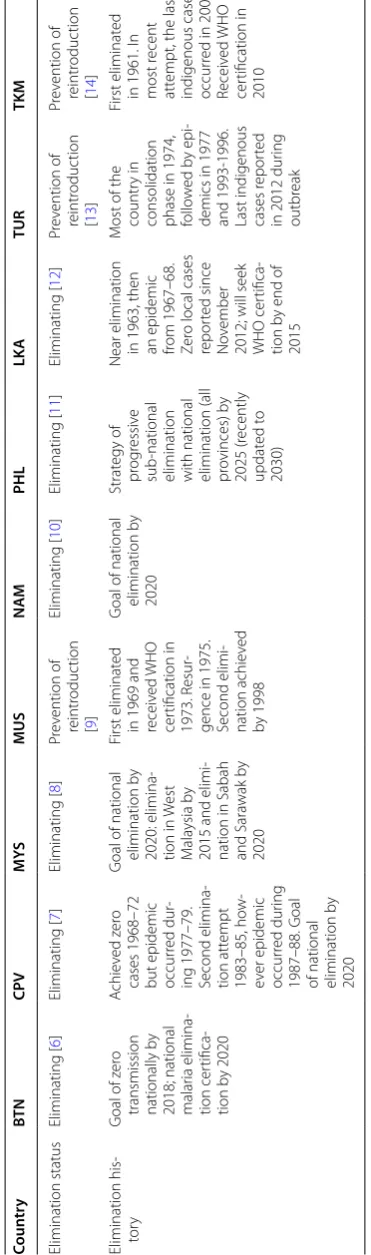
Malaria Programme and the Global Health Group, Uni-versity of California San Francisco. Case-studies were included in the cross case analysis if they were in final English language draft at the time of analysis (November 2014). Case-studies included in this cross case analysis are Bhutan [6], Cape Verde [7], Malaysia [8], Mauritius [9], Namibia [10], Philippines [11], Sri Lanka [12], Turkey [13], and Turkmenistan [14]. Case studies from La Reun-ion and Tunisia were not included in this review because the report from La Reunion was not finalized nor trans-lated into English at the time of analysis, and a draft of Tunisia was not yet available by the time the analysis was underway. Three of the nine case-studies represented countries in the prevention of reintroduction phase (Table 1), which have reached zero locally acquired cases and are actively preventing reintroduction of malaria [15].
An initial conceptual framework for programme man-agement in malaria elimination was developed to pro-vide structure for the cross case analysis (Additional file 1). This framework was based on a document review of malaria elimination guidelines, reports, consultations and manuals to identify historical and current policy and research on management strategies, tools, and opera-tional research. The document review took place in 2013 and 2014. The documents reviewed for the development of the initial conceptual framework were found using the following search terms: “program management,” “supervision,” “decentralization,” “vertical,” “integra-tion,” “health systems,” “incentives,” “training,” “financ-ing,” “costs,” “human resources” and “malaria,” “malaria control,” “malaria elimination” in Pubmed and Google Scholar (English only). A list of these documents can be found in Additional file 2. The framework was formatted in Excel as a matrix (Additional file 1). Using the frame-work components, two researchers (CSG, GN), reviewed each case study report for information (e.g., examples, synthesis or analysis) on program experience for each concept. If there were examples for a given concept, the experience was summarized in detail in the correspond-ing matrix cell. If there were no examples, the cell was left blank. After reviewing a given report across all concepts, a summary of the experience with a note as to how strong of an example it was (by subjective assessment) was writ-ten into the cell. After all of the reports were reviewed and cells filled in, main challenges and weaknesses of each programme experience were summarized by the researchers.
A two-day workshop was held in 2014 to review the matrices on programme management and other themes. Malaria elimination researchers and experts con-ducted an in-depth review of case-study reports. Each reviewer read two reports and compared the information
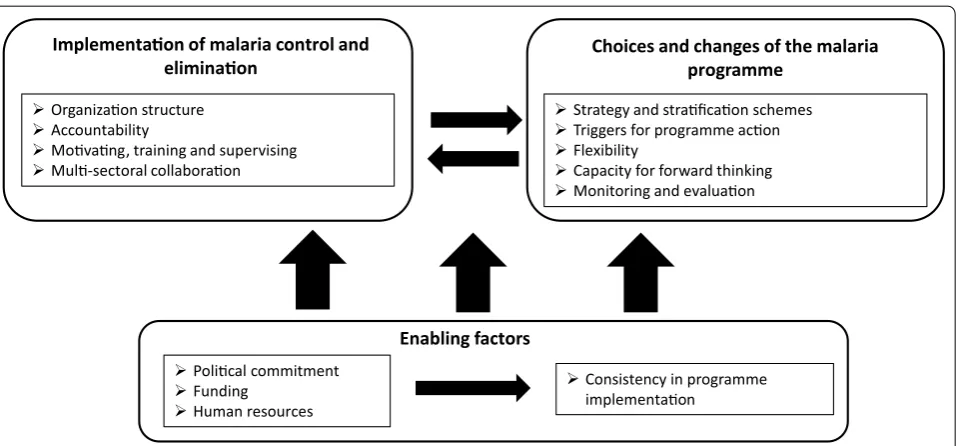
presented in the reports against the qualitative descrip-tions of experience, synthesis and analysis entered into the programme management matrix and summaries by CSG and GN to ensure that the data captured in the matrix were comprehensive, and to debate the lessons learned across the case-study experience. One of the results of the workshop was consensus that the frame-work needed revision to better capture the available data and draw firmer conclusions of major programme strengths and weaknesses. CSG combined the inputs from the workshop and additional documents collected (see Additional file 2) and re-reviewed to develop the new framework. The final conceptual framework for the anal-ysis can be seen in Fig. 1. The framework was structured as follows: (1) Implementation-how malaria elimina-tion is made to happen; (2) Malaria programme choices and changes; (3) Enabling factors, and how these factors affect the consistency of implementation. Using this new framework, CSG conducted a second round of in-depth review of the nine case-study reports, data extraction, summary and analysis. Ministry of Health, malaria pro-gramme personnel or other stakeholders were not inter-viewed for this analysis; however, data collection for the original case-study reports was based on extensive key informant interviews in addition to the quantitative data collection.
Results
Implementation
The ways in which malaria programmes were imple-mented were defined by several factors, including the level of decentralization and integration of the malaria programme, the health system in which the malaria pro-gramme operated its organizational structure and the accountability of the programme.
Decentralization is defined as the transfer of author-ity or dispersal of power and responsibilauthor-ity in public planning, management and decision making from the national level to subnational levels [16]. Most general public health programmes operated within a centralized structure until the early 1980s, when budget crises and recognition of inefficiencies led to widespread reforms [17].
Table 1 C ase -study c oun tries and elimina tion sta tus BT N Bhutan, CPV C abo V er de , M YS M ala ysia, M US M aur itius , NAM Namibia, PHL P hilippines , LK A Sr i Lank a, TUR T ur key , TKM T ur kmenistan Coun tr y BT N CPV M YS MUS N AM PHL LK A TUR TKM Elimination status Eliminating [ 6 ] Eliminating [ 7 ] Eliminating [ 8 ] Pr ev ention of reintr oduc tion [ 9 ] Eliminating [ 10 ] Eliminating [ 11 ] Eliminating [ 12 ] Pr ev ention of reintr oduc tion [ 13 ] Pr ev ention of reintr oduc tion [ 14 ] Elimination his -to ry G
oal of z
er
o
transmission nationally b
y
2018; national malar
ia elimina -tion cer tifica -tion b y 2020 A chie ved z er o
cases 1968–72 but epidemic occur
red dur
-ing 1977–79. Second elimina
-tion att empt 1983–85, ho w -ev er epidemic occur red dur ing 1987–88. G oal
of national elimination b
y
2020
G
oal of national elimination b
y 2020: elimina -tion in W est M ala ysia b y
2015 and elimi
-nation in Sabah and Sara
wak b
y
2020
First eliminat
ed
in 1969 and receiv
ed WHO cer tification in 1973. R esur
-gence in 1975. Second elimi
-nation achie
ved
by 1998
G
oal of national elimination b
y 2020 Strat egy of pr og ressiv e sub -national
elimination with national elimination (all provinces) b
y 2025 (r ecently updat ed t o 2030)
Near elimination in 1963, then an epidemic from 1967–68. Zer
o local cases
repor
ted since
No
vember
2012; will seek WHO cer
tifica
-tion b
y end of
2015
M
ost of the countr
y in
consolidation phase in 1974, follo
w
ed b
y epi
-demics in 1977 and 1993-1996. Last indigenous cases r
epor
ted
in 2012 dur
ing
outbr
eak
First eliminat
ed
in 1961. I
n
most r
ecent
att
empt, the last
indigenous case occur
red in 2004.
Receiv
ed WHO
cer
tification in
[image:4.595.207.393.96.725.2]by the national government, whereby malaria cases were diagnosed and treated in the national network of pri-mary health care facilities. However the management and operations of the other malaria programme activities were often less clear. Some programme elements, such as surveillance and response approaches or prevention strat-egies through vector control, were conducted in a semi-vertical fashion by sub-national malaria-only units run by malaria regional officers or malaria technicians in basic health units. In other countries, integration with other vector-borne diseases translated to sub-national offices that coordinated vector control for all vector-borne dis-eases, using the same funding and personnel to conduct vector control for dengue, malaria and other diseases. Refer to Table 2 for a summary of the key learnings from implementation of malaria elimination programmes.
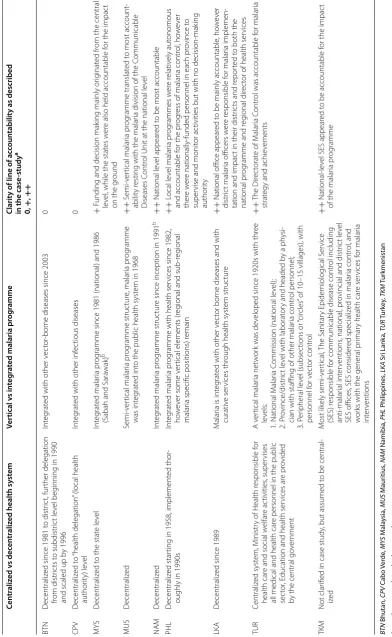
Table 3 shows the type of organization and level of integration of disease control within each country with
estimated time frame of when these processes were underway. Table 3 also includes a measure of the clarity of accountability within each malaria programme, which was an assessment based on the information in the case-studies on the responsibility for progress or impact, deci-sion-making, and funding flow structure of each malaria programme.
In addition to the role of integration, decentralization and accountability, implementation was also impacted by the motivation package for malaria workers, structure of incentives, training programmes, and supervisory struc-ture offered by malaria control programmes. The role of intersectoral collaboration and its impact on malaria elimination was further explored.
Impact of decentralization on malaria programmes
Overall there were numerous examples of the decentrali-zation process creating challenges for the implementation Implementaon of malaria control and
eliminaon
Organizaon structure Accountability
Movang, training and supervising Mul-sectoral collaboraon
Choices and changes of the malaria programme
Strategy and straficaon schemes Triggers for programme acon Flexibility
Capacity for forward thinking Monitoring and evaluaon
Enabling factors Polical commitment
Funding Human resources
Consistency in programme implementaon
Fig. 1 Final conceptual framework
Table 2 Key learnings from implementation of malaria elimination programmes
• Most programmes operated in a decentralized health system, which in some cases led to greater engagement in malaria elimination by subnational health offices and communities
• Most programmes were integrated, where malaria programme services were delivered through the system of general health services. Integration was overall a negative experience for most malaria programmes because staff were often given too many roles and responsibilities that were not clearly defined
• During the early period of transition to decentralized and/or integrated programs, challenges were faced in maintaining quality and execution of interventions
• Accountability for programme impact was not clear for most programmes
• Motivation is important to maintain quality of interventions and different groups are and can be incentivized in different ways • Sustained capacity building and strong supervision are key to successful elimination
[image:5.595.61.542.86.309.2] [image:5.595.58.535.608.726.2]Table 3 L ev el of dec en tr aliza tion, in tegr ation and clarit y of line of ac coun tabilit y aff ec
ting the na
tional malaria pr
ogr
ammes of
the nine c
oun tries , with year of dec en tr aliza tion and in tegr ation if a vailable BT N Bhutan, CPV C abo V er de , M YS M ala ysia, M US M aur itius , NAM Namibia, PHL P hilippines , LK A Sr i Lank a, TUR T ur key , TKM T ur kmenistan
0 not clear
, + moder at ely clear , ++ clear
a T
he measur
e of the clar
ity of ac
coun
tabilit
y within each malar
ia pr
og
ramme w
as an assessmen
t based on the inf
or
ma
tion in the case
-studies on the r
esponsibilit
y f
or pr
og
ress or impac
t, decision mak
ing
, and funding
of each malar
ia pr
og
ramme
b No fur
ther inf
or
ma
tion pr
ovided in case
-study r
epor
t as t
o the t
ype of in
teg
ra
tion of the malar
ia pr og ramme Cen tr aliz ed v s dec en tr aliz
ed health sy
st em Ver tical v s in teg ra
ted malaria pr
og
ramme
Clarit
y of line of ac
coun tabilit y as described in the case -study a 0, + , ++ BTN D ecentraliz
ed since 1981 t
o distr ic t, fur ther delegation from distr ic ts t o subdistr ic t le vel beg
inning in 1990
and scaled up b
y 1996
Int
eg
rat
ed with other v
ec
tor
-bor
ne diseases since 2003
0 CP V D ecentraliz ed t o “health delegation
” (local health
author ity) le vel Int eg rat
ed with other inf
ec tious diseases 0 M YS D ecentraliz ed t
o the stat
e le vel Int eg rat ed malar ia pr og
ramme since 1981 (national) and 1986
(Sabah and Sara
wak)
b
+
F
unding and decision mak
ing mainly or
ig
inat
ed fr
om the central
le
vel
, while the stat
es w
er
e also held accountable f
or the impac
t
on the g
round MUS D ecentraliz ed Semi-ver tical malar ia pr og ramme struc tur e, malar ia pr og ramme was int eg rat ed int
o the public health syst
em in 1968
++ S emi-ver tical malar ia pr og ramme translat ed t
o most account
-abilit
y r
esting with the malar
ia division of the C
ommunicable
Diseases C
ontr
ol Unit at the national le
vel N AM D ecentraliz ed Int eg rat ed malar ia pr og ramme struc tur
e since inception in 1991
b
++
National le
vel appear
ed t
o be most accountable
PHL
D
ecentraliz
ed star
ting in 1958, implement
ed thor
-oughly in 1990s
Int eg rat ed malar ia pr og
ramme with health ser
vices since 1982,
ho
w
ev
er some v
er
tical elements (r
eg
ional and sub
-r
eg
ional
malar
ia specific positions) r
emain ++ L ocal le vel malar ia pr og rammes w er e r elativ ely aut onomous
and accountable f
or the pr
og
ress of malar
ia contr ol , ho w ev er ther e w er
e nationally-funded personnel in each pr
ovince t
o
super
vise and monit
or ac
tivities but with no decision-mak
ing author ity LK A D ecentraliz
ed since 1989
M
alar
ia is int
eg
rat
ed with other v
ec
tor bor
ne diseases and with
curativ
e ser
vices thr
ough health syst
em struc
tur
e
++
National office appear
ed t
o be mainly accountable
, ho w ev er distr ic t malar
ia officers w
er e r esponsible f or malar ia implemen
-tation and impac
t in their distr
ic
ts and r
epor
ted t
o both the
national pr
og
ramme and r
eg
ional dir
ec
tor of health ser
vices TUR Centraliz ed syst em, M inistr
y of Health r
esponsible f
or
health car
e and social w
elfar
e ac
tivities
, super
vises
all medical and health car
e personnel in the public
sec
tor
, E
ducation and health ser
vices ar
e pr
ovided
by the central go
ver nment A v er tical malar ia net w or
k was de
veloped since 1920s with thr
ee
le
vels:
1. National M
alar
ia C
ommission (national le
vel); 2. P ro vince/distr ic t le
vel with laborat
or
y and headed b
y a ph
ysi
-cian with staffing of other malar
ia contr ol personnel; 3. P er ipheral le vel (subsec tions or “cir cles
” of 10–15 villages), with
personnel f or v ec tor contr ol ++ T he Dir ec torat
e of M
alar
ia C
ontr
ol was accountable f
or malar
ia
strat
egy and achie
vements
TKM
Not clar
ified in case study
, but assumed t
o be central
-iz ed M ost lik ely semi-ver tical , T he Sanitar y Epidemiolog ical S er vice (SES) r esponsible f
or communicable disease contr
ol including anti-malar ial int er ventions , national , pr
ovincial and distr
ic
t le
vel
SES offices
, SES consider
ed specializ
ed in malar
ia contr
ol
, and
w
or
ks with the general pr
imar
y health car
e ser vices f or malar ia int er ventions ++ National-le
vel SES appear
ed t
o be accountable f
or the impac
t
of the malar
ia pr
og
[image:6.595.84.477.89.727.2]and quality of malaria control, with possible contribution to increases in incidence during the transition period when decentralization was first implemented. However, once in place, and roles and responsibilities were clearly assigned, in most cases decentralization increased local level capacity of the malaria programme as well as com-munity access to health services. Across the case-studies, vertical programmes operating in a centralized health system (such as Turkey and Turkmenistan) appeared to have the clearest lines of accountability and assignment of roles and responsibilities, as there was one level respon-sible for both elimination strategy development and outcome measurement. However, in more complicated settings, some case-studies clarified well which office or person was ultimately accountable for programme opera-tions and impact (Table 3). In Malaysia, decentralization was seen as benefiting elimination. While the malaria programme at the national level developed policy, pro-vided technical expertise, and controlled the finances, each state and district had a vector-borne disease pro-gramme office which managed, coordinated and imple-mented malaria activities. The programme engaged state offices in the elimination planning by holding elimina-tion workshops. Addielimina-tionally, the malaria programme believed that the development of sub-sector offices, or malaria offices in remote localities in Sabah State had a substantial impact on reducing malaria morbidity by facilitating integration of the malaria programme into communities. Through engagement with the local level, there was a greater level of accountability sub-nationally for implementation of the malaria programme and its impact on the ground. However, funding and decision-making appeared to mainly rest with the national level.
In contrast, decentralization in Cape Verde appeared to impede malaria programme progress, mainly because capacity was low at the health delegation (local health authority) level and there were few resources or capacity for the central malaria programme to supervise or imple-ment activities in the peripheral areas. Accountability for the quality and impact of programme activities was not clear.
Decentralization led to both positive and negative out-comes for the malaria programmes. In the Philippines, the process of decentralization led to a seemingly cha-otic malaria programme environment in the 1980s and 1990s. At certain points, provincial and municipal level authorities were not able to lead malaria control efforts because of insufficient training and resources. There was a high degree of variation across provinces in quality and extent of implementation, NGO involvement, and exter-nal funding. In Laguna Province, for example, devolution in malaria free areas disrupted progress as malaria per-sonnel were reassigned to other activities. This led to a
disruption of the surveillance-response system and cre-ated a vacuum of experience when an outbreak occurred, which then threatened to spread into other receptive, malaria-free provinces where capacity was also inade-quate. However, the positive impacts of decentralization included an increase in provincial, municipal and com-munity ownership of malaria, eventual growth in staff and skills based in the field and a tailored approach to malaria control and elimination. Department of Health (national level) staff were positioned in each province to supervise and monitor activities, but they were not given decision-making authority. Local, sub-national staff appreciated this autonomy and turned to higher levels only when in need of technical guidance.
Bhutan’s decentralization process was also relatively disorganized in the early years, when districts began managing the delivery of basic services. Malaria inci-dence rose from 5213 cases in 1983 to 18,368 in 1984. The increase in cases was believed to be the result of a decline in indoor residual spraying (IRS) coverage and quality. However, once the process was more estab-lished, decentralization may have contributed to longer term reductions in malaria cases through an expansion of facilities and deployment of malaria workers in health centers in endemic areas, boosting surveillance activities.
In Sri Lanka, decentralization may have also contrib-uted to an initial rise in malaria-related incidence and deaths. From 1990–99, when the system was undergo-ing the transformation, confirmed infections rose from 142,294 (1995) to 264,549 (1999). Then, from 2000 onward, incidence declined. The national programme formulated malaria control policy, monitored national malaria trends, provided technical guidance, and under-took entomological and parasitological surveillance. District-level offices coordinated parasitological and entomological surveillance, vector control, and con-ducted supervision and M&E activities. Even with the initial challenges, decentralization may have contributed to stronger leadership at the district level and local adap-tion of the programme. Accountability mainly rested with the national office; however, district malaria officers were also held accountable to the national programme.
Turkey’s centralized health system may have contrib-uted to the consistent approach of the public health ser-vices, and the maintenance of skills, capacity and malaria control activities over time. Challenges included staff shortages for active case detection in certain parts of the country. Staff were often transferred from areas where transmission had been interrupted to areas with current transmission, leaving malaria-free areas vulnerable in the event of resurgence.
accountability at the national level, and political sup-port. However there were challenges in the programme, including delays in diagnosis, treatment and reporting in rural areas.
In Namibia, the national malaria programme provided funding, trainings and commodities to the regional level, which coordinated district activities. Due to the fact that donor funding for malaria almost exclusively moved through the national programme, accountability rested mainly at the national level.
The Mauritius case-study described its malaria pro-gramme as semi-vertical and the bulk of malaria per-sonnel sat in the national office. Accountability for programme implementation and impact rested mainly at the national level.
Impact of integration on elimination progress
The impact of integration on malaria control efforts was overall considered negative, mainly due to over-burdening staff with often-undefined roles and respon-sibilities. There was also a risk that the integrated programme would dedicate fewer resources to malaria when cases were reduced. The potential positive outcome of increased programme efficiencies and cost savings through integration (e.g., with all vector-borne diseases) was not documented in the case-studies.
Bhutan, Sri Lanka and Cape Verde provided clear examples of malaria programme integration with the transition from single-disease to multi-purpose techni-cians. In Bhutan and Sri Lanka the impact of integration was just occurring at the time of data collection and its impact was not described. Before integration, malaria technicians in Bhutan posted in hospitals and basic health units were responsible for all malaria diagnosis, treatment, and parasitological and entomological surveil-lance and vector control. Sub-national Health Delegates in Cape Verde became overloaded as they were respon-sible for clinical and administrative duties in addition to supervising the team of health technicians responsible for coordinating interventions and surveillance.
In Mauritius, the immediate integration of malaria con-trol into the general public health services once the last indigenous case was detected in 1968 was likely a con-tributing factor in the resurgence of cases in the 1970s. Medical officers were newly responsible for malaria in their districts. These rapid transitions contributed to poorer quality passive case detection, lack of participa-tion by health workers in malaria screening programmes, and financial constraints after integration.
In Namibia, integration similarly presented logistical and bureaucratic hurdles: one example was that drivers were not available for malaria related activities because they were busy with other Ministry-related tasks.
Malaysia’s integration of the malaria programme occurred after 1981, when elimination was declared infeasible. The malaria programme was integrated with other vector borne diseases at the central and state-based offices. Since dengue was the most common notifi-able disease in 2010, it is likely that integration diverted resources away from malaria programme activities.
Turkey provided a contrasting example of a vertical malaria programme. It appeared that the programme’s verticality led to a greater level of consistency in pro-gramme activity and resources, and translated to clear accountability at the national level for malaria strat-egy and achievements. However, during the epidemics recorded in the 1970s and 1990s, a contributing factor was waning interest in malaria control as the caseload became very low. It is theoretically possible that an inte-grated programme would been more flexible and cost-effective, able to shift staff or resources as needed across programmes.
The Philippines and Turkmenistan reports were not specific about the level of integration of the malaria programme.
Motivation and incentives
Maintaining a high level of motivation in implementers is important to sustain consistency and quality of interven-tions. Staff motivation is an important aspect of human resource capacity, and depends on a number of factors: working conditions, financial incentives, correct and prompt compensation, management of staff and possibil-ities for professional advancement [20]. This basic moti-vation package is often the key to a successful malaria programme. As malaria cases decline, different strategies must be employed to keep staff committed, and prevent turnover and loss of institutional knowledge. Incentives may be used if specific and predetermined milestones are achieved. Incentives are the “rewards and punishments that [service] providers face as a consequence of the organizations in which they work, the institution under which they operate and the specific interventions they provide” [20]. Community level and political motivation is also a key predictor of malaria elimination success, and can be significantly enhanced by including elimina-tion targets and legislaelimina-tion. The case-studies described structures and mandates that motivated and incentiv-ized communities or other sectors to engage in malaria elimination. Professional incentives were in place for vol-unteer health workers, but not described for malaria pro-gramme workers.
often recruited from the PHCV pool, offering the possi-bility of a future paid position. Similar to the Sabah pro-gramme, the Philippines used incentives for the work of the paid Barangay (i.e., village) Health Workers. In addi-tion to earning a small wage and an important role in the community, their microscopy skills and responsibilities were highly regarded among the primarily uneducated women who participated in the programme, who other-wise had limited employment opportunities.
The structure of external grant funding in the Philip-pines inadvertently led to a shift in non-financial as well as financial motivation in municipal staff. When the Global Fund grant support began in Apayao Province, the grant was structured such that municipality offices were given responsibility for planning and management, which trans-lated to an increased level of motivation of municipal staff to take initiative and ownership of malaria control, with the positive affect of an increase in level of confidence for managing the malaria programme activities.
External grant funding increased the level of motiva-tion to conduct comprehensive field work in Sri Lanka, because that funding covered travel costs and per diems for intensive entomological surveillance and supervision. However, delays in payment for the overtime or traveling claims counteracted the potential beneficial impact of these incentives.
The Sabah State malaria programme’s collaboration with private sector plantations (e.g., palm oil planta-tions) showed the motivating factors for plantations to get involved in malaria control. Plantation owners provided malaria diagnosis and treatment and some also provided vector control (either directly or through support to the district malaria programme office) because they believed the benefits of the collaboration to be an increase in plan-tation worker productivity and reduction in worker health care costs, an increase in their profile as a good place to work by providing access to health care and prevention on site, and abiding by expectations in Malaysia for corporate social responsibility and adherence to the labour laws.
Mauritius programme staff considered their public health laws enforcing environmental management and access to homes to conduct vector control to be motivat-ing factors for community acceptance and participation in the malaria programme’s vector control activities.
Certification schemes kept motivation at higher lev-els in Turkmenistan and the Philippines. Turkmenistan created a certification for laboratory quality, for which every laboratory participated in a scoring system for diagnosis, and labs exceeding an 80 % score received a 1-year certification. One example of an overarching elim-ination-friendly structure is the Philippines subnational elimination certification process, where provinces were
reviewed and validated as “malaria free.” This structure was thought to have motivated provincial staff and com-munity participation in malaria control.
Bhutan and Cape Verde did not report on incentives. Namibia’s programme found difficulty in recruiting sup-port to and engagement of communities because their health volunteers were not motivated through financial or professional incentives.
Training
Training is an important component of a malaria elimina-tion and POR programme. While there was very limited information in the case-studies on the coverage and con-sistency of trainings, several country experiences showed the risk of weakening the malaria programme when training programmes became infrequent or inadequate. Conversely, programme activities were strengthened when training was increased with the injection of exter-nal funding or if an outbreak occurred. The content and format of trainings were not well described and appeared to be weakly structured in the case-studies, and there was very little information on surveillance and response training. Most programmes did not describe on-the-job training formats, so it is assumed that they were large, seminar-style trainings.
There were several countries with inadequate train-ing programmes and resultant operational challenges. Because training in Namibia was insufficient, quality of diagnosis and treatment services, record keeping, coordi-nation, time management and communication were sub-optimal. These problems were exacerbated by poor job descriptions. In the Philippines, lack of training and fol-low up when a new drug policy was rolled out meant that some staff were unaware of the new policy and how to implement it. Inadequate surveillance training in Turk-menistan weakened the programme in the 1990s and contributed to the outbreak of 1998–99. The problem was exacerbated by understaffing, in that many Russian specialists left the country after independence in 1991. Post outbreak, the programme increased capacity with the development of a continuous education programme (2004–10), reaching more than 1400 personnel. In 2010, 11–20 % of the government malaria budget was spent on staff training.
Global Fund grants provided funds to increase the number of trainings in Bhutan, Philippines and Sri Lanka. Sri Lanka held regular trainings to maintain engagement in elimination. Philippines’ trainings led to improvements in planning and delivery of interventions.
Supervisory structure
Supervision of malaria control activities is conducted to ensure the quality of interventions and to increase or maintain a high level of motivation in the workforce [21]. Effective supervision should include regular visits to the periphery and activities to check information and sup-plies, problem-solving with the employee, and a feedback mechanism to encourage improvement [21]. In the case-study reports, supervision of intervention quality, timing, coverage and measurement of impact were not described. Resource constraints in some programmes limited staff time and transportation to carry out supervision of field activities.
In some case-studies the planned (though not neces-sarily executed) supervision structure was reported. In Bhutan, the malaria technicians supervised village health workers and health centers. The Sanitary Epidemiologi-cal Service (SES) of Turkmenistan, which was overseen by the Deputy Minister of Health, monitored coverage and performance of all interventions. In both Bhutan and Turkmenistan, the quality assurance process and supervi-sion of microscopy were highlighted as key activities.
In the Philippines, Department of Health representa-tives at the provincial level were reluctant to supervise as the local staff worked autonomously. Thus, provin-cial authorities viewed health workers and local staff as partners and supervision in the traditional sense did not occur.
The Namibia and Sri Lanka programmes provided timeframes for supervision. In Namibia, national staff planned to conduct annual regional supervisory visits, regional staff conducted quarterly district visits, and dis-trict staff visited clinics on a monthly basis. Sri Lanka’s Regional Malaria Officers aimed to visit all district ento-mological surveillance, IRS programmes, and up to two active case detection activities each month.
In Sabah State of Malaysia, state and district level entomologists supervised insecticide treated net (ITN) and IRS programmes conducted by district and sub-district offices. The national level laboratory supervised all microscopists and provided retraining for those who committed frequent mistakes. District level malaria offic-ers supervised health volunteoffic-ers.
In Mauritius, IRS activities by public health staff were “strictly” supervised by the team. IRS was conducted for 2 years within 500 m of a case’s residence.
In some countries, resources were not sufficient to maintain adequate supervision. Lack of transpor-tation and limited staff in Sri Lanka cut down the amount of field supervision in recent years. There was little funding or time available for Cape Verde’s 17 Health Delegates to supervise the network of pri-mary health facilities and health technician teams. In
Namibia, a supervisory structure existed but was not followed due to time constraints and unreliable trans-portation. In Sri Lanka and Namibia, the injection of Global Fund grant funding increased the resources for supervision.
Multisectoral collaboration
The case-studies provided examples of multisectoral collaboration, where malaria programmes worked or planned to collaborate either with other Ministries in the government, such as the Ministry of Labour or For-eign Affairs, or other, non-health sectors including pri-vate sector health facilities or extractive industries. This type of approach is different from programme integra-tion with naintegra-tional curative or preventive services, but can work well within that structure. Resurgences in several countries may have been prevented by identifying risks, sharing information and collaborating on malaria edu-cation and control with other ministries and the private sector. Contracting out services to private entities, which was done by some countries, may be cost-effective and increase quality and coverage. There were no experiences documented of programmes working with small enter-prises or local chambers of commerce.
The Bhutan malaria programme reported a need to involve other Ministries because of economic develop-ment activities and related migrant labour entering the country. Cape Verde developed collaborations with the Ministry of Agriculture and Environment, to improve agricultural practices and the management of rural water sources.
Some programmes outsourced malaria control imple-mentation to NGOs. Namibia and Angola launched the Trans-Kunene Malaria Initiative (TKMI) in 2009 to mon-itor cross-border importation and coordinate commu-nication, activities and policies. An NGO provided the funding and support for long-lasting insecticide-treated net (LLIN) distribution and monitoring along the border area. An NGO in the Philippines became the Principal Recipient of the Global Fund grant in funded provinces. In Sri Lanka, LLIN distribution in the conflict-affected areas of the country relied upon local NGOs, as they had community based ties to the region and were able to operate in areas that presented major challenges for the malaria programme.
plantations. Plantation owners contributed resources by building subsector offices or clinics for malaria pro-gramme workers and contracting out or conducting IRS for plantation structures. Leaders of Apayao Province in the Philippines worked with local mine and mill opera-tors and dam construction companies to identify pro-jects that would increase the flow of migrant labour in high malaria risk areas and to develop joint screening and reporting systems. In Turkey, the malaria programme monitored irrigation systems.
Turkmenistan had a similar challenge, where there was an increase in vulnerability to malaria transmission due to military training activities and migrant worker mobil-ity, both of which contributed to the outbreaks of malaria in 1998–99 and 2002–2003. Vulnerability is the proxim-ity to malarious areas or resulting from the frequent influx of infected individuals or groups or infective anophelines [15]. In response, in 2005, the Chairman of the Cabinet of Ministers of Turkmenistan approved several documents calling for intersectoral collaboration and implemented plans including collaborating with the Ministry of Defense to share information, immigration services, and construc-tion and oil companies that import labor to provide health information, free access to diagnosis and treatment.
Malaria programme choices and changes
Most case-studies documented the development of stra-tegic plans and strategies for targeting interventions. Some programmes showed a high degree of flexibility and forward thinking. Surges in action by programmes were often reactionary and not a result of robust planning, and there were gaps in many programmes in monitoring and evaluation, particularly in the provision of feedback to the lower levels of the health system. Table 4 provides key learnings for programme choices and changes.
Strategic plans
The case-study reports had limited information on pro-gramme strategies and activities, and how they were designed. Five case-studies reported on the national stra-tegic plan objectives and planned interventions (Bhutan, Cape Verde, Philippines, Turkey and Turkmenistan). It is assumed that all countries had strategic plans for con-trol and elimination, but these plans were not described in the case-study. Most reports did not indicate whether
the specific strategies were followed, or whether there was 100 % compliance in coverage and timing. This is dis-cussed in the M&E section.
Stratification
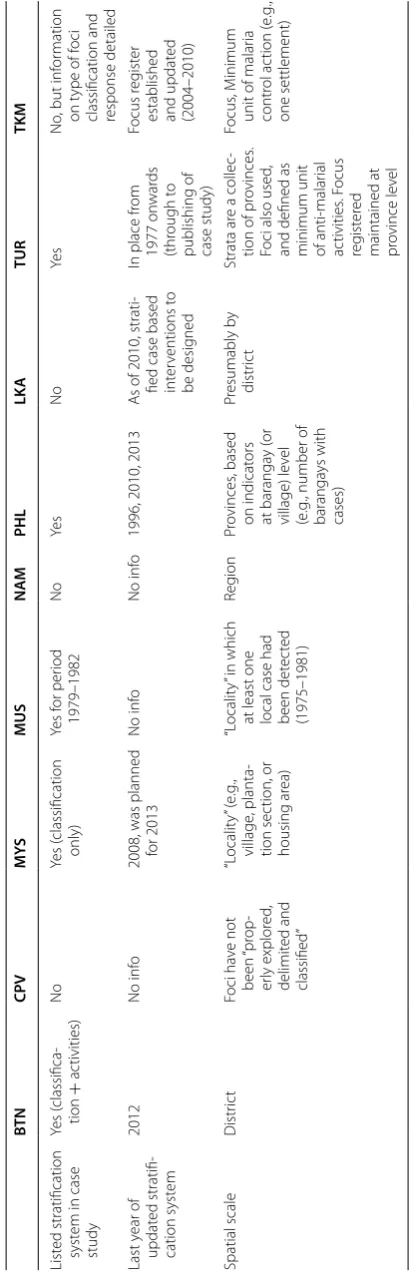
Stratification plans assist malaria programmes in tar-geting interventions and managing threats of increased receptivity or vulnerability. Receptivity means there is presence of anopheline vectors and existence of other factors favoring malaria transmission [15], while vulner-ability describes the risk of malaria importation. Strati-fication plans may be based on disease epidemiology, entomological data, and socio-economic and develop-ment factors, such as developdevelop-ment projects or population movement. Five case-studies included a recent stratifica-tion system (Table 5). Although the spatial scale and cat-egories used in the stratification systems varied greatly, these systems identified priority areas for programmes to dedicate resources and response activities. Overall, a major gap in stratification plans across the case-studies was the surveillance and response strategies developed to mitigate the threat of vulnerability.
The spatial scale used in the stratification systems var-ied across the countries. Some countries used the WHO foci classification system, which is currently comprised of seven categories of transmission foci (new potential, new active, endemic, residual active, residual non-active, cleared up, pseudo focus) [15]. The POR countries of Mauritius, Turkey, and Turkmenistan reported using the foci system. Bhutan used a district-level stratifica-tion system, but in 2012 adapted the foci-based system using six categories (endemic, residual active, residual non-active, new active, new potential, cleared-up). Mau-ritius used three categories (active residual foci; active new foci with more than three cases; active new foci with less than three cases). Other countries employed differ-ent spatial or descriptive scales. “Localities” in Malay-sia were described as a village, section of plantation or housing area. Other countries used district or regional administrative units. In the Philippines, the unit of administration was the province, but the category of risk was defined at the barangay (village) level and aggregated up to the province level.
Only the Malaysia and Turkmenistan reports described how the programmes developed their stratification
Table 4 Key learnings from malaria elimination choices and changes
• Strategic plans and stratification strategies are an important part of programme planning
• In most cases, programme action occurred as a result of an increase in malaria cases or deaths. In a few cases, a new elimination goal or leadership drove action
• Some programmes showed a high degree of flexibility and adoption of new strategies and tools
Table 5 S tr atific ation sy st ems
, last y
ear of up da te , and spa tial sc ale BT N Bhutan, CPV C abo V er de , M YS M ala ysia, M US M aur itius , Namibia, PHL P hilippines , LK A Sr i Lank a, TUR T ur key , TKMNAM T ur kmenistan BT N CPV M YS MUS N AM PHL LK A TUR TKM List
ed stratification system in case study
Yes ( classifica -tion + ac tivities) No Yes ( classification only) Yes f or per iod 1979–1982 No Ye s No Ye s No
, but inf
or
mation
on t
ype of f
oci
classification and response detailed
Last y ear of updat ed stratifi -cation syst em 2012 No inf o
2008, was planned for 2013
No inf
o
No inf
o
1996, 2010, 2013
A
s of 2010, strati
-fied case based inter
ventions t
o
be desig
ned
In place fr
om 1977 on war ds (thr ough t o
publishing of case study)
Focus r
eg
ist
er
established and updat
ed (2004–2010) Spatial scale Distr ic t Foci ha ve not been “ pr op -er ly explor ed , delimit ed and classified ” “L ocalit y” (e .g ., village , planta -tion sec tion, or housing ar ea) “L ocalit y” in which
at least one local case had been det
ec ted (1975–1981) Reg ion Pr ovinces , based on indicat ors at baranga y ( or village) le vel (e .g
., number of
baranga ys with cases) Pr esumably b y distr ic t Strata ar
e a collec
-tion of pr
ovinces
.
Foci also used
,
and defined as minimum unit of anti-malar
ial ac tivities . F ocus reg ist er ed
maintained at province le
vel
Focus
, M
inimum
unit of malar
[image:12.595.196.401.88.729.2]system. Malaysia reviewed incidence over 3 years, vector receptivity, and access to the health system. Turkmeni-stan reviewed case investigation and surveillance data combined with the malaria foci record “passports”, which included mapping. Programmes updated their stratifica-tion systems from every 3 years up to every 30 years or more.
The stratification strategies in Mauritius, Philippines and Turkey outlined response activities to be applied in each strata. The malaria programmes with clear strati-fication criteria, indicators and vector control targets appeared to benefit from these systems. Stratification was viewed as extremely helpful by the Philippines pro-gramme and in Turkey was believed to have facilitated appropriate decision making for the application of vector control. Namibia’s stratification system allowed for tar-geting of resources to priority areas; however the risk of importation and onward transmission in some areas was likely underrepresented. In Sri Lanka, epidemic forecast-ing based on entomological surveillance identified areas for mobile surveillance clinics and focal IRS.
Programme action
Some malaria programmes were spurred to action in response to increasing transmission, an outbreak or an increase in mortality. In most cases, these events were caused by waning surveillance or control, precipitated by a weakening of the surveillance and response system, which subsequently required a ramp up of resources and programme intervention. In other cases, surges in action were the result of leadership at the national or subna-tional level.
In several countries, a gradual decline in programme efforts led to outbreaks, which in turn encouraged pro-grammatic action. Turkey did not plan for potentially increasing transmission when major irrigation projects were underway and increases in migration were expected. These factors contributed to an outbreak in 1977. In response, the programme was given a larger allocation by the government, surveillance agents and microsco-pists were hired, and laboratories received more funding. Turkmenistan saw an increasing level of vulnerability to malaria importation along the border with Afghanistan, and this risk was compounded by delays in diagnosis, treatment and reporting of malaria cases in some rural areas. These factors led to an outbreak in 1998–99, the response for which was an immediate increase in con-sumables for diagnosis and chloroquine and primaquine for radical treatment and chemoprophylaxis. A reduc-tion in transmission followed. In Cape Verde, multi-ple outbreaks have occurred after IRS was reduced or halted; each outbreak triggered a surge in IRS coverage. The efforts, though, were not maintained as evidenced by
the locally acquired cases recorded nearly every year. In 2006, an increase in mortality to eight deaths led to an investigation by the Cape Verde Ministry of Health and development of a new national goal of malaria elimina-tion by 2020. In Malaysia, outbreaks in plantaelimina-tion areas of Sabah State stimulated several inter-sectoral private– public partnerships with plantations which included sur-veillance and vector control activities.
In several countries, endorsement of an elimination goal by government leaders led to programme action. When malaria elimination was adopted in the 1940s and re-adopted after its resurgence in 1975, the Government of Mauritius organized a military-like offensive. Philip-pines provided a similar example, but in a highly decen-tralized context, where in certain provinces motivated leaders augmented malaria screening and other control efforts by increasing staff and funding for the activities. In Namibia, action was spurred by the leadership of the former Minister of Health.
In some countries, programme activities continued consistently, without such surges in action. After expe-riencing resurgence in the 1970s, Sri Lanka maintained entomological and parasitological surveillance activities, which informed programme activities and response strat-egies. Bhutan also had relatively consistent programme implementation.
Flexibility of malaria programme strategies and approaches to problem‑solving
Several countries showed a high level of flexibility by introducing new or adapting strategies, from insecticide rotation to lessen the risk of insecticide resistance, to an increase in parasitological screening in development areas to curtail the risk of transmission, to collaborations with the private sector. The case-studies did not have detailed information on the process undertaken to evalu-ate or adapt new strevalu-ategies.
of changes to its parasitological surveillance programme were introduced. Bhutan similarly instituted a series of surveillance and response activities, including parasi-tological surveillance, mapping and response measures starting in 2013.
The malaria programme of Sabah State of Malaysia also showed flexibility. In the mid-1990s, Sabah State responded to the need at the community level for better access to diagnosis and treatment by recruiting and train-ing primary health care volunteers. In 1995, volunteers collected 14 % of the blood slides taken in the state.
Adoption of an elimination goal spurred the design and scale up of surveillance activities and integrated vector management (IVM) in Turkey, to be used in active foci and in emergency situations. The Ministry of Health sup-ported these new strategies through decrees, regulations and guidelines.
Turkmenistan showed adaptive capacity in its response to two outbreaks that occurred post-elimination. A suite of epidemiological, treatment and entomological surveil-lance interventions and policies were rapidly executed in response to the 1998–1999 outbreak, along with monitoring and supervision by the national programme. However another outbreak occurred within 3 years (2002–2003), meaning that these measures were likely not sustained. The outbreak of 2002–2003 led to a similar scale up of interventions and surveillance, and also led to sweeping changes to strengthen the whole malaria con-trol system starting in 2004.
The programme in Mauritius appeared to stay consist-ent over time. During the period of resurgence, the pro-gramme showed flexibility in that it was able to mobilize a large number of staff. The Cape Verde and Namibia case-studies did not contain specific examples of flexibil-ity in the malaria programme.
Programme capacity for forward thinking
Malaria programmes in the case-study series did not show a high level of capacity for anticipation of threats to elimination. There are many examples of major develop-ment projections that combined a potential for increased receptivity and vulnerability. In general programmes either did not identify these challenges in advance there-fore did not have adequate or timely responses to these threats, or they were unable to secure funding to miti-gate the impact. In either case, there appeared to be a lack of coordination with other sectors. In the few exam-ples where programmes did work with other sectors, it appeared to help avoid outbreaks or epidemics.
Several malaria programmes did not anticipate the increased risk of malaria transmission posed by irri-gation and reservoir projects. In Sri Lanka, dam con-struction and forest clearing for rice cultivation in the
malaria-endemic eastern part of the country likely increased receptivity and led to the epidemic of 1987. There was no documented action by the malaria pro-gramme, nor was there evidence in the case-study that resources were increased, to offset these risks, and the epidemic grew to 687,599 cases by 1987. Reservoir con-struction in the 1980s and 1990s in Turkmenistan also led to increases in receptivity as the filtration ponds increased anopheline breeding habitat. At the same time (1980s), the dissolution of the Union of Soviet Socialist Republics (USSR) increased population movement into the country from Afghanistan, where malaria endemicity was higher. These developments contributed to the out-breaks in the 1990s.
The epidemic of 1977 in Turkey, which took place only 3 years after the country reported its last indigenous malaria case, was caused in part by an extensive irrigation project which increased breeding habitat and the level of internal migration from higher transmission areas in the eastern part of the country. However, the programme did not increase its surveillance efforts and by 1977 there were 115,512 recorded Plasmodium vivax cases. A sec-ond epidemic occurred in 1991, even though the irriga-tion canals were covered to prevent mosquito breeding. The programme did not adequately respond to large-scale internal migration from remote, endemic rural areas into the irrigation project zone, nor account for the flow of migrants from neighbouring countries, many of which were not politically stable and some of which were experiencing P. vivax epidemics. There were an inade-quate number of malaria personnel in the affected areas and it is unclear whether additional resources were made available to the programme to stymie the risks. Subse-quently, there was an increase from less than 15,000 cases in 1991 to more than 84,000 by 1994.
case detection started in these development zones where migrants live and work. The programme also piloted Community Action Groups in the southern, receptive districts that have larger migrant flows from India. These groups enlisted community support in prevention and control of malaria.
The number of migrant workers originating from high transmission neighbouring countries propelled Malay-sia’s Sabah State to begin collaborations with private sector plantations in the early 2000s to implement and surveillance of malaria to anticipate and avoid outbreaks.
The Philippines planned for malaria elimination by developing a certification process for subnational elimi-nation in 2011, believed to be necessary because of the geography of the country, which is composed of many islands with different malaria potential.
The Namibia case-study did not provide specific exam-ples of anticipation of threats.
Monitoring and evaluation
Monitoring and evaluation (M&E) includes monitoring programme outputs, such as whether intervention cover-age and quality was achieved, and evaluation of impact. Most case-studies described evaluation of case data while some included vector control or surveillance data. Only two programmes emphasized the quality or coverage of interventions. An important part of M&E is analysis and swift feedback to the periphery, which should theo-retically stimulate effective programme response, clearly M&E needs to be undertaken with a spirit of surveillance and response.
Only two case-studies highlighted the results of moni-toring and showed that the programme did not achieve the coverage or quality targets. No case-studies included information on M&E of inputs and outputs. The Malaysia case-study gave the most comprehensive results of inter-vention monitoring, showing the difficulty in achieving coverage and timeliness of case investigation, diagnosis, vector control, and the intensive passenger screening programme.
For other countries, case reporting appeared to be the main tool for evaluation. Bhutan checked weekly case reports from the health facilities. The malaria programme followed up with health facilities for missing or incom-plete reports, and if an increase in cases was reported, the respective health center was alerted. Namibia also reviewed weekly case reporting. In recent years, roll out of better diagnostic tools and coverage improved data quality and representation of the malaria burden. In addi-tion, IRS quality was monitored after quality declined. A weakness cited in the Namibia case-study was the lack of data and limited feedback to the sub-national programmes.
Malaysia developed a web-based surveillance database in 2000 for M&E, which facilitated first the reporting of malaria cases, then included case investigation and vec-tor control intervention data which could be monivec-tored. Also in 2000, a separate online case notification system for health providers was introduced, where private and public health facilities rapidly reported all notifiable infectious diseases. The malaria programme regularly reviewed data from both systems and identified and con-tacted the hospitals, clinics, and private providers that failed to notify cases. The use of two parallel systems could have been cumbersome, but the report stated that the national and state programme officers used both databases to drive management decisions.
The monitoring and evaluation of malaria activities in Sri Lanka was coordinated by the Regional Malaria Officers (at district level) and by the AMC Directorate (national level). Sri Lanka built a web-based case infor-mation system in 2009, separate from the national health information system, to ensure reporting within 24 h. The malaria programme planned to integrate the malaria reporting system into the national health information system after reaching elimination. In 2010, the malaria programme introduced a toll free hotline for private sector case reporting. In 2009, to increase data analysis, review and improve the feedback loop to the sub-national programme offices the malaria programme instituted case review meetings. These meetings were attended by Directorate and regional malaria programme officers, where details of each case and follow up measures were reviewed, and they provided an opportunity for feedback to the regional malaria officers, who then relayed infor-mation back to the districts. These meetings showed an openness to review, evaluation and change by both the national and regional levels.
There was a lack of information on the tools and pro-cesses used in Cape Verde and the Philippines for M&E.
For Turkey and Turkmenistan, resurgences demon-strated the weaknesses in monitoring and evaluation. In Turkmenistan, while transmission decreased when funding was available and activities were well-organized, delays in diagnosis, treatment and reporting fueled the outbreaks of 1998–99 and 2002–03. Case reporting did not flow to the central level in time for evaluation. Simi-larly, in Turkey, the delayed reporting to the provincial and national level contributed to the 1998–99 outbreak.
Enabling factors
consistency of malaria programme implementation. Table 6 provides key learnings on enabling factors for malaria programmes.
Political commitment
Depending on the country’s level of decentralization and its health system structure, political commitment at the national or local level was a driving factor for malaria programme success. Political commitment took many forms, including enacting mandates or laws that sup-port vector control activities and surveillance, ensuring adequate domestic funding and leadership and vision for elimination by national or local level leaders. Turk-menistan provides an example of the deleterious impact of waning political commitment when malaria incidence declines.
In Mauritius, there was a high degree of political com-mitment at the national level, evidenced by the con-sistent domestic financing of the programme. National policy was supportive to elimination, contributing to a high level of participation by residents in malaria con-trol activities. There were penalties for non-compliance and health inspectors had legal power to inspect dwell-ings. Similarly in Malaysia, national policies and legisla-tion were enacted to support eliminalegisla-tion; for example, the malaria programme could engage in IRS and ITN distribution on private property and all foreign workers had to undergo screening for malaria before receiving a work permit. Sabah and Sarawak States had addi-tional state-level ordinances to support malaria control activities.
Turkey’s first elimination attempt was successful in part due to steady political commitment. Turkey experienced an epidemic in 1977, then signed the Tashkent Declara-tion in 2006, which outlined the strategy to achieve elimi-nation in nine countries of the WHO EURO Region by 2015. With the Declaration, the malaria programme had the necessary political support to transition toward elim-ination in 2008.
The Bhutan malaria programme also had the support of the Ministry of Health—outbreak reports reached the President’s office. Namibia’s elimination programme had the support of the Minister of Health, who was the for-mer manager of the malaria programme and an advocate for regional elimination. In Cape Verde, an increase in malaria mortality (to eight deaths) in 2006 led to a greater
level of attention of government leaders and the develop-ment of a new elimination goal of 2020.
National-level political commitment for elimination in Turkmenistan waned in the years leading up to the outbreak in Mary Province (2002–2003). In response, commitment was strengthened from 2004 onwards, as evidenced by the government financing dedicated to malaria in preparation for the certification process in 2010. The country then drew up a comprehensive national plan for prevention of reintroduction with sup-port and commitment from the Ministry of Health and Medical Industry, Finance, and intersectoral cooperation.
In other case-studies, commitment at the local level was considered to be a driving factor for success. Malay-sia’s Sabah State developed and presented to the national programme a 5 years action plan for malaria control, which built the case for an increase in funding, human resources and development of subsector outpost offices in remote areas, in addition to scaling up of vector con-trol, surveillance and community-based activities. The plan was successful and the state obtained funding from the national government for 100 additional positions. As a result, the proportion of cases investigated increased from 40 to 87 % and malaria offices in remote localities were opened to provide microscopy, vector control, mass blood surveys, and health education.
Philippines also provided an example of the strength of commitment at the local level. Municipalities and com-munities participated and developed civic duty and pride through malaria programme activities, such as environ-mental clean-up events. The level of commitment and malaria experience of provincial managers had a large influence on the success of the programme. For example, Apayao and Laguna Provinces were highlighted in the case-study as having strong, knowledgeable, dedicated, well-liked and respected leaders, which drove action and success in their provinces.
Sri Lanka’s malaria programme had commitment to malaria at both national and local levels. The malaria programme and Ministry of Health showed commitment through the maintenance of surveillance and vector con-trol in the conflict zone. Commitment by the Ministry of Health continued even with very low malaria cases, evi-denced by the maintenance of specialized malaria screen-ing in health facilities and continuation of entomological surveillance.
Table 6 Key learnings on enabling factors of malaria elimination programmes
• Political commitment at the regional, national, provincial, district, and community levels took many forms and contributed to programme success • Sustained and long-term financial commitment to the malaria programme is a key to success
![Diagnosing plant diseases: what do we ask and why do we ask for it? [Online community]](data:image/gif;base64,R0lGODlhAQABAIAAAP///wAAACH5BAEAAAAALAAAAAABAAEAAAICRAEAOw==)