This is a repository copy of Human factor security: evaluating the cybersecurity capacity of
the industrial workforce.
White Rose Research Online URL for this paper:
http://eprints.whiterose.ac.uk/140844/
Version: Accepted Version
Article:
Ani, U.D., He, H. and Tiwari, A. (2018) Human factor security: evaluating the cybersecurity
capacity of the industrial workforce. Journal of Systems and Information Technology. ISSN
1328-7265
https://doi.org/10.1108/JSIT-02-2018-0028
© 2018 Emerald Publishing Limited. This is an author produced version of a paper
subsequently published in Journal of Systems and Information Technology. Uploaded in
accordance with the publisher's self-archiving policy.
[email protected] https://eprints.whiterose.ac.uk/
Reuse
Items deposited in White Rose Research Online are protected by copyright, with all rights reserved unless indicated otherwise. They may be downloaded and/or printed for private study, or other acts as permitted by national copyright laws. The publisher or other rights holders may allow further reproduction and re-use of the full text version. This is indicated by the licence information on the White Rose Research Online record for the item.
Takedown
If you consider content in White Rose Research Online to be in breach of UK law, please notify us by
Human Factor Security:
Evaluating the Cybersecurity Capacity of the Industrial Workforce
Uchenna Daniel Ani
1, and Hongmei He
2, and Ashutosh Tiwari
3!1,2Manufacturing Informatics Centre, Cranfield University, UK
3Department of Automatic Control and Systems Engineering, University of Sheffield, UK.
Purpose - As cyber-attacks continue to grow, organisations adopting the internet-of-things (IoT) have continued to react to security concerns that threaten their businesses within the current highly competitive environment. Many recorded industrial cyber-attacks have successfully beaten technical security solutions by exploiting human-factor vulnerabilities related to security knowledge and skills, and manipulating human elements into inadvertently conveying access to critical industrial assets. Knowledge and skill capabilities contribute to human analytical proficiencies for enhanced cybersecurity readiness. Thus, a human-factored security endeavour is required to investigate the capabilities of the human constituents (workforce) to appropriately recognise and respond to cyber intrusion events within the industrial control system (ICS) environment.
Methodology - A quantitative approach (statistical analysis) is adopted to provide an approach to quantify the potential cybersecurity capability aptitudes of industrial human actors, identify the least security-capable workforce in the operational domain with the greatest susceptibility likelihood to cyber-attacks (i.e., weakest link), and guide the enhancement of security assurance. To support these objectives, a Human-factored Cyber Security Capability Evaluation approach is presented using conceptual analysis techniques.
Findings - Using a test scenario, the approach demonstrates the capacity to proffer an efficient evaluation of workforce security knowledge and skills capabilities, and the identification of weakest link in the workforce.
Practical Implications - The approach can enable organisations to gain better workforce security perspectives like security-consciousness, alertness, and response aptitudes, thus guide organisations into adopting strategic means of appropriating security remediation outlines, scopes, and resources without undue wastes or redundancies.
Originality/value – This work demonstrates originality by providing a framework and computational approach for characterising and quantify human-factor security capabilities based on security knowledge and security skills. It also supports the identification of potential security weakest links amongst an evaluated industrial workforce (human agents), some key security susceptibility areas, and relevant control interventions. The model and validation results demonstrate the application of action research. The study demonstrates originality by illustrating how action research can be applied within socio-technical dimensions to solve recurrent and dynamic problems related to industrial environment cyber security improvement. It provides value by demonstrating how theoretical security knowledge (awareness) and practical security skills can help resolve cyber security response and control uncertainties within industrial organisations.
Keyword:
Cybersecurity Evaluation, Workforce Security Capacity, Industry Control Environment, Human-Centred Security,
1! Introduction
Cybersecurity in industry control system (ICS) environments has become a growing issue of both national and global security over the last decade. The evolving information technology – operation technology (IT-OT) convergence now implies that organisations, firms, industries, and factories, embracing the much-acclaimed industry 4.0 and industrial internet-of-things (IIoT) paradigms, are reliant on IT infrastructures, open standards and technologies, and the internet (Knowles et al., 2015). It also means that these organisational platforms are susceptible to cyber threats, vulnerabilities, and attacks. ICS is an all-purpose (common) term used to describe various types of automated industrial systems that control, monitor, and manage industrial processes (Macaulay and Singer, 2012; Stouffer et al., 2015). An Industrial Control System Environment (ICSE) refers to a domain where industrial control operations and processes are performed. The basic functions of an ICS involve: sensor measurements, hardware control for actuators (breakers, switches, monitors), human-machine interfacing, and remote diagnostics and maintenance utilities (Amin and Sastry, 2015) (Nicholson et al., 2012). The modern ICS and it’s development trends enable great business and operational profitability, an inevitable array of security susceptibilities are as well introduced, which threaten the functional reliability of operations in the industrial domain (Abe et al., 2016). Over the last years, records continue to show an alarming increase in cyber threats and attacks against ICSs globally.
security control may well be easily subverted by intelligent adversaries who can easily deceive unaware, unskilled, and unsuspecting ICS operators and users into undertaking actions and activities that can grant the attackers easy access and high privilege capacities to execute their malicious intents. These are often also undetectable by security alert systems until serious damages and anomalies begin to emerge (Johansson, Sommestad and Ekstedt, 2009; Fan et al., 2015).
As cyber-attacks exacerbate, organisations have become concerned about how to react to security trends that threaten their business and operational relevance within the current highly-competitive business environment. Many recorded industrial cyber breaches have effectively beaten technological security solutions through exploiting human-factor limitations in knowledge and skills. These attack patterns have manipulated human elements into unintentionally conveying access to critical industrial assets. Cyber security has indeed become a necessary objective to achieve uninterrupted industrial functions in a changing operational technology environment. One way of defining cyber security is ‘the harmonisation of capabilities in people, processes, and(or) technologies; to secure and control both authorised and/or unlawful access, disruption, destruction, or modification of electronic computing systems (hardware, software, and networks), the data and information they hold’ (Ani, He and Tiwari, 2016). However, most current security solutions are technology-inclined. People and process security contexts and requirements are often not considered (Ramakrishnan and Testani, 2011), often resulting in lopsided security that are malignantly exploited by malicious intelligent actors.
An ICS is a system of industrial technologies and infrastructures built and(or) operated by people (workforce) for the execution of processes towards attaining target products or services. It implies that securing technology (hardware and/or software) alone resolves only a fraction of the larger security problem. A technology is often as weak and vulnerable as the people (workforce) that develop and(or) operate it, and the process(es) designed and structured to use it. For example, suppose Alice is a process engineer that operates an engineering workstation asset of an ICS, and employs technology ‘A’ firewall and technology ‘B’ Intrusion Detection System (IDS) to protect her workstation from security compromise. Assuming Alice is unaware and unable to recognise various forms and signatures of social engineering attack schemes. Bob as an intelligent and predetermined attacker employs a deceptive spear-phishing means unknown to Alice and deceives her into clicking or running links or attachments on her workstation that literally enables a backdoor (entry point) into Alice’s system and network via a direct remote access. This happens seamlessly despite the presence and functionalities of techs ‘A’ and ‘B’ security features. Alice’s security ignorance, her uninformed and unskilled state in relations to evolving ICSE security trends such as confronted her, and her consequent actions or inactions undervalues techs ‘A’ and ‘B’; opening the door to an enemy attacker Bob.
The above theoretical scenario highlights the importance of human-factors in ICSE cyber security assurance, especially emphasising the significance of security knowledge (awareness) and practical skills. Human-factor is as important as technical factors in ICSE security. Real scenarios also consolidate this viewpoint. Probably, the agents of the 2013 Stuxnet attack had the challenge of penetrating the Iranian Nuclear Power plant network since the network was air-gapped from external networks. Thus, the attackers used infected USB drive parking lot attack technique on a third party maintenance organisation, and relied upon human actors connecting the infected devices to their industrial network and provide means for reaching and delivering Stuxnet to the nuclear plant network (Murphy, 2015). Earlier works on the concept of security competence (capability) by Workman et al (2008), which investigated the “knowing-doing” gap in individuals showed that such individuals can have appropriate security skills and knowledge yet not apply these skills in consistent manner. Also, based on the analysed results of 588 workforce members of a technology service company, Workman et al (2008) concludes with the recommendation that security technology should be user-centred to avoid assessment tensions that can affect responses.
Probable motivations for these attacks may have stemmed from the perception that: (i) most ICSE workforce (personnel) are often unfamiliar with advanced digital (cyber) security concepts, and (ii) Information Technology security workforce are often unfamiliar with ICSE operational concepts, and (iii) intelligent attackers now consider human actors (workforce) within the industrial environment as weak attractive exploit targets into operational system and networks (Howarth, 2014). The bid improve security in the ICSE through plugging the holes enumerated above provides motivation for engaging this research direction. Updated security awareness and training can increase security capabilities, thus, presents a viable solution to this issue. However, engaging proper security capabilities hinges on an adequate understanding of recurrent security capacities of the workforce, and a clear outline of areas of weaknesses and strengths. Effectively improving security capacities of a workforce will typically require building strengths in the identified weak areas.
elements can be most effective following an understanding of the current security capability and vulnerability levels. This will support informed control applications.
This work aims to provide a human-centred security capability and vulnerability evaluation method whichcan be used to evaluate the security aptitude of human agents within ICSE. This evaluation approach complements traditional technical capability and vulnerability analysis, thus enables a wider view of vulnerability assessment of an industrial environment where both technology and human agents are involved. More specifically, it explores how to understand and attribute quantitative ratings to security aptitudes of human agents in ICSE, and use such information to drive a robust industrial cyber security responsiveness and resilience. The approach and measures can be useful to security auditors, analysts, managers and industrial system owners in carrying out human-level threats and vulnerabilities assessments, identify most vulnerable human agents, as well as the areas where security is low. Responding to these, can significant influence improvement of overall organisational security. The contribution of this article includes; providing a novel approach for characterising and quantifying human-factor security capabilities based on security knowledge and security skills. It also supports the identification of potential security weakest links amongst an evaluated industrial workforce (human agents). It involves concept description and capability evaluations was associated with defined security standards, guidelines, and baseline requirements. The methodology then prescribed control interventions that are based on discovered weak links and weak security areas.
The rest of the paper is outlined as follows: Section 2 discusses human-factor security issues and requirements, and statistical justifications for the need of human-factored approach to ICS security. Section 3 presents a review of related works in capability evaluations relating to contexts, methods, and tools. Sections 4 presents an overview of the proposed workforce capability evaluation model. Section 5 discusses the validation scenario adopted, the corresponding outcome and discussions. Sections 6 presents the conclusion and future work in the research.
2 Human-Related Security Issues and Requirements
As cyber-attacks continue to evolve, businesses and organisations have not ceased to express and react to security concerns that threaten their business and operational relevance within the currently highly-competitive business domain (Ralston, Graham and Hieb, 2007; Mirashe and Kalyankar, 2010). Many organisations keep updating technologies equipped with defensive capacities to protect automation processes from cyber intrusions or breaches. Notwithstanding, cyber-attacks and incidents against industrial control environments have continued to rise for couple of reasons. The most important is the reality of a drastic change in targeted vectors of attacks (Knowles et al., 2015). While organisations continue to invest heavily on technology security, attackers have strategically side-tracked attack concentration from technology to people (human) assets (IRM, 2015), since humans (users) typically need to interact with technologies to initiate, implement, and/or manage industrial processes. Somehow, recorded events clearly demonstrate that the analytical proficiencies of the human constituents through the exploitation of cognitive capacities are still crucial for effective security in ICS environment (Chen et al., 2012; Gonzalez et al., 2014; Ben-Asher and Gonzalez, 2015). This is enabled by the existence and expression of easily exploited human weakness in the system process interaction loop. For instance, the analysis of the 2013 data breach against Target Corporation showed that Target’s security technology was capable of detecting the breach, but the people (leaders and general employees) who should have been able to take appropriate responses to control the attack impacts, lacked the necessary skills and knowledge (Hershberger, 2014). The attack caused a disaster that cost Target about $148 million, and other financial institutions about $200 million (Tobias, 2014). If Target had proactively evaluated the cybersecurity capability of its workforce and understood the potential knowledge and skills strengths and weaknesses much earlier, such episteme would have spurred the corporation to improve security capability of their workforce in relations to cyber-security awareness, self-protection, organisational preservation, and a security conscious and cultured attitude, and cyber incident response.
Weak cybersecurity knowledge and skills in the workforce and leadership have become apparent to top the list of several human vulnerabilities in the minds of corporate decision makers, governments, and academic researchers (Adams and Makramalla, 2015). These have been quite dominant in the list of successful attack drivers in the industry. A study indicates that 20% of frightful security breaches in 2015 were attributed to decisive misuse of infrastructure assets, and 31% due to human errors (IRM, 2015). Stolen credentials through phishing accounts for 80% of data breaches (Debo, 2015). Spear Phishing attacks have also topped security concerns for enterprises, accounting for an average loss of $1.6 million, impacting loss of employee productivity (43%), financial losses (32%), damage to company reputation (29%), damage to brand reputation (27%), and loss of intellectual property (25%) (CLOUDMARK, 2016). Such precarious situations continue to press on industries and organisations due to a lack of inadequate understanding of the security capacities of operational workforce, and failure to provide operational staff (humans) with effective and up-to-date cybersecurity knowledge and skills capability to defend against cyber-attacks (Ashford, 2016).
security (PA Consulting Group, 2015). Eventually, a system or an organisation is as weak as its weakest link asset (Russell, 2002; Navarro, 2007). In the ICS environment, these weak links are characterised by industrial control system personnel, such as operators, technicians, experts, and enterprise/corporate users, whose population often outnumber the population in a security and non-security-oriented classification of the workforce (Robert, 2015). These people are typically unfamiliar with digital security concepts, and less keen about the importance of cybersecurity trends and practices, but more on operational performance trends (PA Consulting Group, 2015). This often puts greater demand/responsibility for assuring security on a relatively fewer numbered cybersecurity professionals, compounding their workload. The volumes, variety, and target multi-directivity of attacks patterns also down-plays the capability of cybersecurity professionals to directly and completely exert control on all forms of attacks that target the industrial environment. Besides, the non- security-savvy ICS workforce seem to be predominantly targeted than the security experts. The former often lack adequate skill capacity for effective response, and sometimes lack updated knowledge as well. Thus, cybersecurity knowledge and practical security response skills are two key attributes of workforce security capability, considered invaluable for achieving a secure industrial operating environment. However, the effective input of security knowledge and skills should be built on; a clear understanding of existing measures of capability, and the identification of capability shortfalls that reveal user vulnerabilities (weaknesses) to cyber attackers. This can only be achieved through evaluations.
A human-involved approach is required to supplement existing technical-based security approaches towards an overall cyber security assurance. Badie and Lashkari (2012) categorised the factors that affect the security of computing systems into two: (i) human factor and, (ii) organization factor. According to the researchers, earlier works indicated that of these two categories, the human factor seemed the most important. A human-factored security endeavour is required that can improve the capabilities of the operational technology human constituents, so that they can appropriately recognise and respond to cyber intrusion events within the ICS environment. Quantitative analysis could provide an easy approach to evaluating the security capability of a user in relations to cyber-attacks, as it can help both senior managers and general infrastructure users to intuitively understand the status of their cybersecurity capability. Quantitative approach also simplifies result presentation and interpretations. Quantitative approaches allow for consistent results, the production of trend interpolations and forecasts, quicker situational understanding for decision-making, and the further representation of results in better understood formats like charts, graphs, and tables for time-critical decision-making. These are necessary to improve security posture and assurance within the industrial operating environment, without which top management is unable to retain high degrees of confidence about the security of their industrial asset (Evans et al., 2016).
3. Related Works
The assessment of cyber security capability of human agents (workforce) is quite helpful towards achieving an efficient workforce security consciousness (Navarro, 2007). There are few researches which explored this area to propose schemes for assessing cybersecurity postures from the workforce perspectives.
A Human Factor Vulnerability Analysis (HFVA) framework is presented by Kraemer & Carayon (Kraemer and Carayon, 2003). The framework presents a three-stage process (identification, analysis, and solution) for determining human-factor vulnerabilities connected to technical vulnerabilities. The framework is presented as a process that follows a system/network-wide technical audit conducted after the discovery of technical vulnerabilities that bear human-factor underpinning. The HFVA model is limited in that it depends on the existence of technical vulnerabilities, and evaluates how well human network administrative experts are able to classify and appropriate respond to technical security vulnerabilities. Thus, it assumes human-factor vulnerabilities to be solely dependent on technical vulnerabilities. This is not entirely true with changing attack patterns, where social engineering attacks forms are employed to exploit and compromise systems and networks even when clear technical vulnerabilities have not been identified. The human agent itself is an asset that can have exploitable vulnerabilities, and can be independent of any technical vulnerabilities.
Human agents with varied levels of knowledge and experience in cyber security can demonstrate different perceptions of cyber security. Typically, higher security proficiencies imply better capability as experience can influence decision-making capability levels (Asgharpour, Liu and Camp, 2007). Advanced knowledge and previous experience could enhance the sensitivity to security threats and the performance of incident response. The researchers in (Goodall, Lutters and Komlodi, 2009) highlighted that domain knowledge in information and network security, as well as situated environmental knowledge grounded in an analyst’s unique environment; are required to boost the expertise for effective intrusion detection by an analyst. The domain knowledge includes: theoretical knowledge acquired through formal education, training, or certification (Chi, 2006), and practical knowledge cultured through hands-on practice and experience with tools, methods of operation, and work- flows. The situated environmental knowledge is acquired through continued interactions with a specific operating environment (Goodall, Lutters and Komlodi, 2004). Researchers have used interviews and questionnaires to drive easy understanding of both mental models and security workforce workflows (D’Amico and Whitley, 2008; Paul and Whitley, 2013).
answers and self-assessment responses. Wang (2013) also recommended security training and assessment tools surveys and questionnaires.
The Cybersecurity Capability Maturity Model (CCMM) (Christopher et al., 2014) describes an assessment framework, consisting of a set of characteristics, indicators or patterns that embody capability and progression which can be contextualised to various disciplines. CCMM provides a flexible guide to help organisations establish and enhance their security capability using corporate-level abstractions. More common studies focus on the impacts of human perception (Bulgurcu, Cavusoglu and Benbasat, 2010; Siponen, Adam Mahmood and Pahnila, 2014), attitudes, and behaviour (Parsons et al., 2014; Evans et al., 2016) to organisational security capacities, and policy implementations. These works have emphasised the relevance of social human attributes to effective security outcomes and performances. While these attributes are quite relevant and influential in deriving security conclusions in terms of capacities and controls, security knowledge and skill levels of individuals can influence the outcome of each attribute. Thus, it is rational to consider the primary influencing factors and how they impact resulting security capacities and controls.
Beautement et al (2016) argued that effective security management required that security managers were able to evaluate the effectiveness of prescribed policies, as well as the impact of employee behaviour. They proposed a Productive Security (ProdSec) methodology for aggregating huge datasets on employee behaviour and attitudes using scenario-based surveys. The approach was designed to ensure repeatable and scalable data collection, from which better insights can be deduced about security-related issues facing employees, their response behaviours, and attitudes. Results indicated that that business area, age, and geographical location, all provide axis of differentiating response maturity levels of employees, as well as intra-population group of employees. Details as these can influence efficient planning of future trainings, communications, and policy-making. It can also support proactive targeted interventions (remediation) on specific employees, which can save from inclusions in non-targeted interventions and reduce the expense on employee compliance budgets (Beautement, Sasse and Wonham, 2009).
Ben-Asher and Gonzalez (2015) investigated the security capacity differences between security experts and novices within an organisational setup. The study evaluated the expertise of cyber security analysts with specific application to intrusion detection, and the use of intrusion detection systems (IDS). Using emulated scenarios, the researchers used the IDS response approach to evaluate the general performance of both expert and novice security analysts outside conventional operational environments. The outcome showed that experts performed slightly than novices. Results also suggested that theoretical knowledge as being completely independent of practical knowledge. The dissociation was more noticeable in the expert analysts’ group than in the novice group.
Generally, the use of quantitative tools and measures of performance relating to intrusion detection scenarios provided an effective means of evaluating and characterising security control capacities of the expert groups as desired (Ben-Asher and Gonzalez, 2015). Quantitative analysis could provide an easy approach to evaluating the security capability of a user in relations to cyber-attacks, as it can help both senior managers and general infrastructure users to intuitively understand the status of their cyber security capability. A quantitative approach also simplifies result presentation and interpretations. Quantitative approaches allow for consistent results, the production of trend interpolations and forecasts, quicker situational understanding for decision-making, and the further representation of results in better understood in formats like charts, graphs, and tables for time-critical decision-making. These are necessary to improve security capacity and assurance within the industrial operating environment, and without which top management is unable to retain high degrees of confidence about the security of their industrial asset (Evans et al., 2016). This work provides the baseline for our research and contribution.
Some clear points picked from the above reviews include security capabilities can be evaluated through interviews (structured and semi-structured) (D’Amico et al., 2005), questionnaires (Botta et al., 2007), observations and gamifications (Paul and Whitley, 2013; Adams and Makramalla, 2015; Ben-Asher and Gonzalez, 2015), penetrations testing (Aloul, 2012), etc. While a body of works exists around understanding the security posture of organisations, there is little research that has proffered a clear quantitative scheme for evaluating and attributing security capacities to individuals within an organisation, and use such individual aggregations to derive overall organisational security capability. The CCMM scheme focuses on organisation-wide dispositions rather than workforce-focused dispositions.
4. Proposed Evaluation Model
The lack of familiarity with digital security concepts observed in ICS workforce opens a great deal of security vulnerabilities that could be easily exploited through social engineering by intelligent intruders. These adversaries exploit human characteristics and attitudes, such as ignorance, desire for gain, rewards, being helpful and responsible to coax actions, and (or) inactions from targeted workforce, to enable non-resistant access to systems and infrastructures, which could otherwise yield resistance when and if accessed directly. The number and capability of organisation-resident cybersecurity professionals, who have responsibility for system security in an enterprise is typically inadequate to completely protect the organisation. Every single ICS OT personnel presents an equal access point to the ICS, and the defence capacity of each ICS personnel contributes to an overall security status.
4.1 Security Capability
In this study, workforce security capability is considered as the combined, normalised, and (or) harmonised expression of security proficiencies in knowledge (domain and situational) and practical skills of a human agent (user) for appropriate actions, reactions, and (or) inactions for effective security of operational systems. Thus, industrial workforce security capability is modelled in terms of their knowledge and skill levels. These two attributes are considered as dominant factors in the security proficiency of operators in the ICS environment. Security knowledge level is defined as the measure of theoretical information that an individual has about cyber threats, vulnerabilities, attack patterns and impacts on a host system. Skill level outlines the ability to use accrued hands-on techniques and(or) tools to detect or recognise cyber-attack attempts, patterns and techniques, and to respond timely with appropriate countermeasures. Knowledge and skills in digital security concepts, evolving threats, vulnerabilities, attack intelligence, and the practical security response skills of each ICS personnel, allow a better understanding of the inherent security level of the entire workforce in an industry enterprise. This will help create the essential threshold of organisational security.
ICS workforce typically include IT security experts, IT operations personnel, and OT personnel (field operators, automation engineers, SCADA and telemetry engineers, corporate management, etc). All of them contribute directly and (or) indirectly, actively or passively in control system process activities, and their individual security capabilities contribute directly and indirectly to the threshold of general workforce security capacity. The threshold of general workforce security capability refers to the harmonised security status-derivative in relations to all evaluated workforce security capabilities in the organisation. Thus, the commitment of workforce to protecting an organisation and operational infrastructure is a critical factor of a strong cybersecurity defence. The approach of appraising and enhancing workforce cybersecurity capabilities as a means of emphasising a positive security culture is necessary. As knowledge levels indicate the degree of awareness to potential cybersecurity threats, vulnerabilities, attacks patterns, and damaging impacts, the evaluation of knowledge seeks to verify if, and how much an individual is acquainted with prevailing ICS security trends and intelligence in a specific working environment. It is an attempt to ascertain (and to what degree) if the industrial workforce knows what to do, and (or) what not to do to guard against successful breaches from cyber-attacks.
In contrast, skill levels can help build the ICS personnel some degree of practical social and technical strengths for hands-on, efficient and appropriate actions and reactions to potential security attacks, such that industry workforce is able to prevent cyber-attacks or mitigate attack impacts. Thus, cybersecurity capability evaluation should encompass information gathering in all aspects of security relating to ICS safety, availability, integrity, confidentiality, and accountability. Assessment scopes should cover typical areas such as personnel security responsibilities, prevalent attack patterns, signatures, and appropriate response modes, adherence to adopted security policies, standards, and best practice solutions, samples of ICS security failures and impacts, updated security threat and vulnerability intelligence, and observed/discovered capability gaps in individual personnel, security initiative, and adherence to global standards (Parsons et al., 2010; PA Consulting Group, 2015).
4.2 The Weakest Link
The statistics enumerating the successes of cyber incidents influenced by the ability of attackers to easily con human actors to behave or respond inappropriate to attack and compromise scenarios within their work domains add to the evidence that suggests that human actors are potentially the weakest links (Ashford, 2016). Clearly, all other things being equal including well instituted technical security measures, the record of cyber incidents described in section 2 also demonstrate facts that intelligent attackers motivated by potential financial gains tend to direct their malicious effort toward less-protected targets (Pan, Zhong and Mei, 2015). The attackers aim to compromise potential targets (human actors) with poor or weak abilities to defend infrastructure and information systems from attacks. “The weakest link” refers to the most poorly protected asset. “The weakest link” asset has become a key factor to determine the security level of the chain. If these corporations want to improve the security level of the whole information systems and optimize security chain integration, they must improve the security level of “the weakest link” (Pan, Zhong and Mei, 2015) . The question left to be answered remains; how to find the weakest link?
An attempt to address this is demonstrated in a previous work (Ani, He and Tiwari, 2016) from a human-factor security perspective. An approach is proffered for identifying the weakest link in security capability of ICS human workforce.
2015). A weakest link refers to the personnel with least knowledge and practical proficiency in security for the implementation of ICS security objectives. Essentially, the weakest link is the least security-capable individuals in the operational domain, who demonstrate the highest likelihood of becoming victims of cybersecurity attacks (Aloul, 2012; Vishwanath, 2016). Such human elements represent the easiest attack vectors, and provide the weakest penetrable entry point to a system irrespective of whatever other safeguards in place. Identifying these weakest points through evaluation presents an essential line of action towards security assurance. Identifying and strengthening weakest links is equivalent to raising the bar of security capability of an organisational workforce. This work explores further this concept of human security capability evaluation (Ani, He and Tiwari, 2016), and proposes a quantitative approach to characterising workforce security capability, and identifying potential weak-links in an ICS operational domain. It also explores how the security weaknesses of the workforce members can influence the implementation of a priority-driven control strategy.
4.3 The Model
As an extension of prior work on human cybersecurity capability evaluation (Ani, He and Tiwari, 2016) where organisational security level is derived from the combined average for knowledge and skills security capacity for all human actors within an evaluation context. Further research has proffered more clarity and rational against initial assumptions that capabilities in individuals are interdependent such that average values can be used to represents a harmonised overall security capacity. It is more rationale to view each user as independent and a potential entry point into the system irrespective of the presence of others. Thus, an improvement in the weakest link attribute is introduced to the capability evaluation process where harmonised security capability ratings implicitly express measures of weakness or susceptibility to attacks. The collection of varied values in a set of capability ratings is indicative of the varied, independent susceptibilities or weak points that can allow successful cyber-attacks. The multiplicity of capability values indicates the variety of potential attack surfaces, and implies the multiplicity of corresponding human vulnerability weak-points for possible initiation and (or) accomplishment of cyber-attacks. In a set of capability rating scores, higher values suggest higher defensive surfaces and lesser vulnerable surfaces in relations to a defined security baseline, and vice versa.
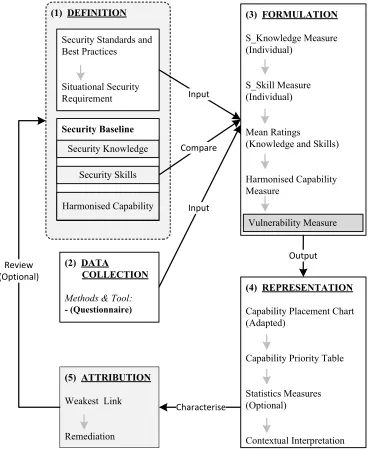
The concept of security defence combined with vulnerability baselines, and the quantitative representation could support easy and clear identification, articulation, and attribution of potential weak-links. The least capability value together with its corresponding vulnerability rating suggests the most vulnerable surface, and points to an associated human actor (user) with the greatest likelihood of successfully falling for a human-factor cyber-attack event. Hence, represents the weakest link. The new evaluation scheme presents a five-stage activity process of evaluating workforce cybersecurity capability, which include: definition, data collection, formulation, representation, and attribution as presented in Figure 1. Each stage provides a list of sub-stages, which form an overall security capability evaluation of ICS workforce.
4.3.1 Definition
This involves the definition of knowledge and skills security capability requirements, and the outline of desirable security capability baselines.
A.! Security requirements
Workforce security evaluation should be built upon defined security policies and requirements, compliant with relevant standards and best practices, and contextual objectives of the specific operational environment. There exist several standards focusing on security in the ICSE, most of which are domain-specific, and do not cover all ICS types, security functionalities and requirements. For instance, the UK ‘10 Steps to Cyber Security’ guideline (UK-Cabinet-Office, 2012), NIST SP 800-53 Revision 4 - guidance on security and privacy controls for systems and organisations (NIST, 2013), NIST SP 800-82 Revision 2 - guide on industrial control system security, etc., all have sections that advise on requirements and guidelines regarding personnel security awareness and training. Combining recommendations from these standards can provide a better reference for situational security requirements to guide capability evaluations considering the specific features of the system/environment under consideration.
B.! Security Baseline
Security baseline defines desirable the status of the metrics/measures, representing varied capabilities and their corresponding attribute ratings from security requirements. It can be considered as the point of ideal capabilities of all workforce members. Any status lower than this ideal capability is considered a non-ideal capability.
Figure 1: Human Workforce Security Capability Evaluation Scheme
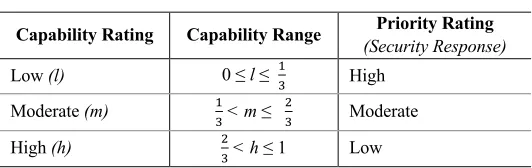
This is not adopted as a closed scheme, but rather, it represents a way of achieving categorisations for security capabilities. Following a similar approach, other grouping schemes may be adopted with a t-level categorisation, where t can be 2, 3, 4, or 5, and defining the number of capability categorisation desired from an evaluation scheme. Depending on the value of t, the number of PSC, ratio, fractional limits, capability range, and priority ratings would be proportionate to t, and will corresponding number of classifications to represent dispersed or closely-related security capacities of human agents under evaluation. For instance, if t=5, it means 5-level classification is used. Upper bounds for the classes include; 1/5, 2/5, 3/5, 4/5, and 5/5, which is still between 0 and 1. The values for capability variables (knowledge and skills) will then be spread among the 5 groups. In comparison with t=3, using t=5 will imply that workforce capabilities are classed into 5 groups instead of 3. The 3 groups will break off to form independent groups to make up the 5 groups. The implication is that the specific capability value for each workforce would remain unchanged since the same range [0,1] is used, and the evaluation tool (questionnaire) characteristics (questions, multichoice answers and score allocations) also remain unchanged. Only the values’ classification in capability range and priority ranking may change. The capability ratings are applied to knowledge, skills, and harmonised capability metrics accordingly, and the range is used for ranking the level of workforce capabilities. A priority order for security response/control is defined which is the reverse order of the security capability levels for security arrangement.
(1) DEFINITION
Security Standards and Best Practices
Situational Security Requirement
(2) DATA COLLECTION
Methods & Tool: - (Questionnaire)
(4) REPRESENTATION
Capability Placement Chart (Adapted)
Capability Priority Table
Statistics Measures (Optional)
Contextual Interpretation (5) ATTRIBUTION
Weakest Link
Remediation
Characterise Input
Compare
Review (Optional)
Security Baseline
Security Knowledge
Security Skills
Harmonised Capability Input
(3) FORMULATION
S_Knowledge Measure (Individual)
S_Skill Measure (Individual)
Mean Ratings
(Knowledge and Skills)
Harmonised Capability Measure
Output
Table 1: Capability - Priority Range Table
Capability Rating Capability Range Priority Rating
(Security Response)
Low (l) 0 ≤ l ≤ !
∀ High
Moderate (m) !
∀ ˂ m ≤ #
∀ Moderate
High (h) #
∀ ˂ h ≤ 1 Low
4.3.2 Data Collection Methods and Tools
To determine the status of an entity in the light of prescribed security requirements, it is necessary to extract the information of the entity. It is pertinent for the workforce security capacity evaluation to aggregate the data of the response or reactions of ICSE workforce members to cyber threats, attacks and/or incidents through active and/or passive, direct and/or indirect security capability investigation. The investigation should reflect prescribed ICSE security policy guidelines, objectives, evaluation timeline, a targeted workforce size, and quality of expected feedback.
For this evaluation, the test-based questionnaire tool is used for data collection following similar approaches observed in related literatures. This approach is typically used to determine if a tested subject qualifies in relations to certain prescribed standards as in this case; the UK Cyber Security Essentials (10 Steps to Cyber Security). Feedback data are collected and characterised to clearly represent attributes of individuals in the evaluated group. Score ratings are attributed based on the coded response/feedbacks in relations to the organisation’s view of the security risk implications of each response to the security objectives. These quantitative feedback data then serve as inputs to the computation stage of the evaluation model.
4.3.3 Formulation
At this stage, mathematical procedures are applied on collected data to determine possible workforce capability values. Following the description of workforce security capability as a function of security knowledge and skills of a workforce, two groups of data corresponding to security knowledge and skills evaluations are derived.
Assuming p is an element in set P of ICS workforce personnel, whose security capacity will be evaluated, and N implies the total number of members in the set. Depending on the evaluation technique, let K = {k1, k2,…, kN} represents the set of evaluation questions (from capability data collection tool which can be a survey) for knowledge capability. Every element in K contains a multi-choice list of evaluation (survey) response options each having a corresponding score allocation based on expert judgment on the implications of the choice to an overall assurance of security of the ICS. A response knowledge score allocation (x) range of 1 to 5 is proposed, 1 implying a lower potential and 5 implying a higher potential of resistance to the prescribed security scenario. Each response to an element in K therefore has a value range: {x| 1≤ x ≤5}. The variety of feedbacks in K will yield varied occurrence of x during the data aggregation. Hence, the cumulative knowledge capacity (CKC) for every p ∈ P, as the measure of the total quantitative knowledge capability (Kc) scores of a single workforce member. This is represented in equation 1. Note that equation 1 represents the computational model for deriving the security knowledge capability score of a single workforce (human agent) obtained from the score allocations associated to the individual’s responses in the evaluation tool.
��∋= ���∗= ,−(�. �2) 4
25!
6
∋
, ∀ � ∈ � (1)
where nx is the number of occurrences of respective response allocation x (i.e., 1-5)
Similarly, the cumulative skill capability (CSC) of � ∈ � can also be derived from a set S of skills capability evaluation questions (from capability data collection tool which can be a survey), using similar scheme and range for skill score (y) as in knowledge score (x), i.e. 1-5. The total quantitative skill capability (Sc) rating of a single workforce member p can be denoted as equation 2. This represents the computational model for deriving the security skill capability score of a single workforce (human agent) also obtained from the score allocations associated to the individual’s responses in the evaluation tool.
��∋= ���∗= =−>�. �≅Α 4
≅5!
Β
∋
Equations 1 and 2 can be used to compute corresponding knowledge and skill capabilities of each workforce member p
in the group P of the workforce under evaluation. The harmonisation of Kc and Sc values yields a personalised security capability (PSC) computed via a Geometric Mean (GM) technique of the knowledge and skills capability score associated with a single individual. This is presented as Equation 3. GM offers the strength of being less submissive to the vast skewness influence of a very large values in a range of distribution (Manikandan, 2011), through normalising quantities to ensure that no singular quantity alone perpetually dominates the weighing of a final result. A set of PSCs will be generated, corresponding to all members, � ∈ �, and fed into the representation stage of the evaluation process.
���∋= >��∋ × ��∋Α! #Ε, ∀ � ∈ � (3)
4.3.4 Representation
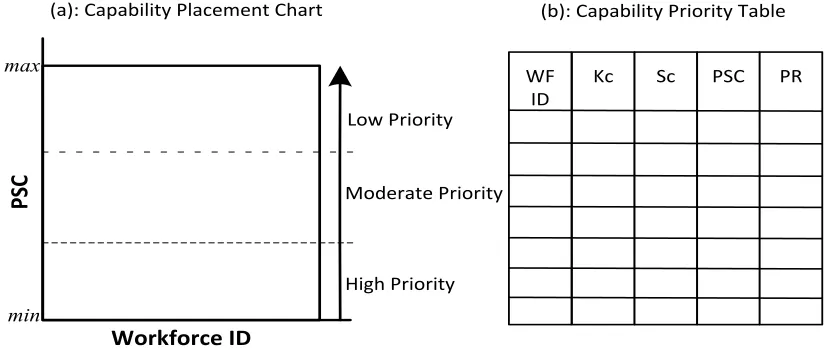
The visualisation of workforce capacity should drive easy and better understanding of security perspectives, especially by top management and decision-makers who are often less technically savvy. To achieve this visualisation, Capability Placement Chart (CPC) and Capability Priority Table (CPT) are proposed as effective methods that can be used as shown in Figure 2 (a) and (b), respectively.
The CPC embodies a scattered diagrammatic representation and placement of a set of derived PSC values. The values would typically be between the potential minimum and maximum capability ratings for the group of workforces, and which depict the status of security capacity for workforce members evaluated. High capability value would mean a high knowledge and skills potentials with respect to outlined security baseline. A range of priorities attributed to each PSC
outline the magnitude of security attention and concern that should be attributed to each PSC value in line with the capability-priority rating range outlined in Table 1. The order of priority for security control effort is in the reverse order of security capacity. Workforce members with high PSC values retain a relatively high degree of security awareness and practical proficiencies, implying a higher likelihood to respond appropriately to potential security incidents, at least within the scope defined in the evaluation tool. PSC values that fall within the moderate capability ratings imply a moderate priority rating, and those within the low capability rating imply a high priority rating. These particularly indicate low level security awareness and (or) skills, and thus a higher need for security control measures that can improve their capacities to an acceptable level and within the prescription of the evaluation objectives.
[image:11.595.98.510.454.629.2]The CPT presents PSC values alongside corresponding Kc and Sc values; helping to provide a holistic detail and comparative provisioning for the evaluation process. It provides a means of easily identifying both initial and successive weakest links in an array of PSC values. In the case where further or deeper insights are required about each metric or the harmonised format, capability priority table also provides a means for the optional analysis of derive measures using conventional statistical paradigms, such as measures of central tendency and dispersion. It can also support a test of hypothesis where necessary to compare or consolidate on findings and conclusion from initial evaluation results.
Figure 2: Capability Representation Formats
The interpretation of result involves a contextualised mental clarification of the significance of the results in the representation stage. This tie real meanings and implications to derived quantities and measures in both knowledge and skills evaluations in relations to security threats, vulnerabilities, attacks capability gaps in the ICS workforce. Such interpretations simplify the understanding of the points of high risk, the scale of risks and potential impacts from workforce perspective. It contributes to an understanding of what is expected of workforce members towards an overall operations security of ICS.
Workforce ID
P
S
C
High Priority Moderate Priority Low Priority
min max
WF ID
Kc Sc PSC PR
4.3.5 Attribution
This involves the clear identification of the weakest link attribute to a relative workforce member or group in line with a prescribed attribute function. In the approach proposed, the weakest link attribute implies the workforce or group with the least possible capability rating value and highest possible priority rating value in the capability priority table (CPT). The focus is typically on the PSC array, however, depending on the targeted objective, Kc and Sc arrays can also be used to attribute weakest link. Assuming Z represent the set of PSC values in the CPT, the weakest link (WL) attribute can be determined with simple mathematical minimum function as;
�� = ���(�) (3)
The characterisation of the weakest link also guides the process of determining the specific security vulnerabilities demonstrated by workforce members, and potential control solutions as a means of remediating identified capability gaps. The results and inferences from the evaluation process gives an understanding of the security incidence response and control measures that can be engaged. This typically tilts towards security capability areas where workforce members demonstrate a low degree of knowledge and skills.
5 Scenario-Based Testing
A scenario-based testing and validation technique is used to explore the usability and workability of the proposed approach.
5.1 Evaluation Tool (Survey) Design
An online questionnaire evaluation tool is adopted as a means towards achieving scalable collections of evaluation data. The reason for this validation was to assess the suitability of the proposed method for achieving efficient quantitative evaluations of ICSE workforce cybersecurity capability. To ascertain its effectiveness towards the identification of; potential weakest link(s), predominant security vulnerability areas, and relevant control measures. The defined security objectives for the assessment included: (i) evaluate the knowledge and skills security capability of the industrial workforce in relations to prescribed security guides, (ii) ascertain the weakest link from computed workforce personalised security capability values, and (iii) identify possible weak capability security themes and control areas in the workforce.
The purpose for adopting an online questionnaire approach was to efficiently reach large numbers of industrial workforce respondents, while allowing for participation in the assessment from any geographical location. This way, the demand constraints for participation is reduced, and response rates likelihoods potentially increased. It was also meant to create more realistic unsupervised assessment scenarios that will yield realistic data collection. The assessment questionnaire was circulated via email links to forum members of the UK IoT Security Foundation. It was opened to those who shared concerns about human-factor security vulnerabilities, and desired a way of determining specific security capabilities of respective workforce member within their industrial organisations, to support security decision-making. The evaluation contents shared contained clear description of the security capability evaluation questionnaire and its purpose.
In line with the model approach proposed, the evaluation was made following some recommended security control attributes and requirements for enabling cyber-attack defence, effective security within a digital system like ICS, as contained in NIST SP 800-82 v2 (Stouffer et al., 2015), and UK 10 steps to Cybersecurity (UK-Cabinet-Office, 2012) good practice guide. Specific areas considered include: privacy and access control, system/network security monitoring, user awareness and training, secure configurations, removable media protection, personnel/credential security, home and mobile security, email security, malware protection, incident response, updates and patch management.
5.2 Capability Evaluation Tool (Survey) Testing and Refining
Survey questions were designed to evaluate the level of respondents’ knowledge and skills in relations to the above-listed security themes. The broad security themes outlined in 5.1 also reflected similar security focus areas enumerated by Parson et al (2014) that provide valid themes for evaluating human aspect of information security. Questions were designed in scenario-based formats to evaluate the level of respondents’ knowledge and skills in relations to these varied security theme. Initial assumptions included that the workforce members involved already had prior awareness and guidance on adherence to the prescribed security guides and essentials. The assessment was thus to ascertain the extent to which workforce members are holding up or improving on the security knowledge and skills already imparted by organisations. In structuring the questions, the design objectives were to: (i) present realistic and familiar security scenarios to participants, and (ii) proffer answer options that are realistic and familiar to the participants.
provide ranking score allocations to the multiple-choice answers in each question based on the expert’s perceived severity or implication of each response to an overall cyber-attack susceptibility.
In response to recommendations from the expert on the survey evaluations, significant and necessary improvements were achieved. The number of questions for each security theme was reduced to 2 for both the knowledge and skills sets. For each security theme, the top two most relevant questions identified by experts were selected. This reduced the number of questions in each set from 30 to 20. Following expert recommendations, a third set (comprising of 6 questions) was introduced to capture additional respondent demographic data (gender, age, work group, and possession of security certification) and a security self-evaluation rating. Score allocations for each of the multiple-choice answers were obtained by taking the average of the scores for each choice allocated by the experts. Where there were ties, further interaction was engaged with the experts to understand their viewpoints and use that to resolve score allocation ties amongst choice answers.
Thus, the capability evaluation tool (survey) output of this testing yielded 3 sets of questions: set A for respondents’ demographics and self-evaluations (6 questions), set B for respondents’ security knowledge evaluations (20 questions), and set C for security skills evaluations (20 questions). Each question in sections B and C has 5 multiple-choice answers with respective score allocations, corresponding to the perceived severity or implication of each answer to an overall cyber-attack susceptibility and potential risk posed. The accompanying multi-choice answers is to represent varied security susceptibility levels (from high to low) for a respondent. The score allocation range is from 1 to 5, where an answer that implies a least security implication has a highest score of 5, while that with a highest implication has a least score of 1. A respondent’s (knowledge or skills) capability is inferred from the choice answer for every question by the respondent.
The revised evaluation tool was pilot-tested with a team of six researchers at the manufacturing informatics centre in Cranfield University undertaking a research project for the development of a similar physical demonstrator of cyber security in manufacturing. The pilot test was built on the assumption: (i) the team represents a small-scale industrial (manufacturing) workforce, (ii) all the members of the team had equal action potentials to ensure the attainment of prescribed objectives of the project. The revised evaluation tool was administered to each team member and responses analysed using the workforce capability evaluation approach. The corresponding knowledge and skills capability ratings were derived using the appropriate evaluation functions as prescribed in the model. For this, the capability priority rankings include: 20.00 ≤ h ≤ 33.33 for high, 33.33 < m ≤ 66.67 for moderate, and 66.67 < l ≤ 100.00 for low. The low
priority range of scores represented the ‘Ideal state’ I of the metric quantities. The evaluation yielded different levels of capabilities for knowledge, skills, and normalised capability ratings for the team members. The evaluation provided quantitative value reflections of the team members security capabilities, from which the weakest link can be identified. Based on the model description, the weakest link capability is attributed to the team member ID WF03(Kc = 23, and Sc = 48) with a normalised capability rating CR = 33.23. A further look into the demographic profile of WF03: not having any form of security certification, product development process designer (not belonging to a security workgroup), and not having any form of work experience; all combine to suggest an element of true representation of the security state of the weakest link in comparison with others in the team.
The revised survey tool was again passed through the experts for another testing for quality in terms of identifying poor question wording and ordering, as well as errors in rationale layout, multichoice answers and associated score allocations to improve the quality and credibility of response and results. With minimal alterations, the final evaluation tool was used for the actual evaluation with real external target audience. Security knowledge capability survey was captured through structured questions that query respondent’s awareness relative to their work environments and trends about certain threats, vulnerabilities, attacks or control details or features. For example, the question below is one of the knowledge capability questions that queries on ‘system/network monitoring’:
‘The risk of your industrial process/operational environment becoming a victim of a cyber-attack has increased in the past year, and you are conscious of this while undertaking your routine duties in the workplace. To what extent do you agree or disagree with the following statement?’
A.! Totally agree [5]
B.! Tend to agree [4]
C.! Tend to disagree [3]
D.! Totally disagree [2]
E.! Don’t Know [1]
Rational for score allocations
capability. This is followed by those who tend to agree, choosing “B” with a “4” score allocations. Depending on the response chosen, the potential knowledge capability of the respondent can easily be assumed.
Security skills capability survey was captured through structured questions that query the practical actions or reactions of respondents in the face certain cyber compromise conditions. For the skills example:
‘Outside the scheduled/planned maintenance period, you receive an email or pop-up notification on your workstation to urgently initiate a ‘critical’ security update or patch that you are not sure has been tested but addresses certain security flaws on your ICS node. How would you respond to this?’
A.! Do not install the update/patch, and leave the security flaw [4]
B.! Quickly install the update/patch to enhance the security of your ICS node. [2]
C.! Test the acceptability of the patch yourself, and install when satisfied [3]
D.! Seek and verify the approval and accountability for the update/patch from technical support [5]
E.! Neither install or verify patch since your system is not breached and is working normal [1]
Rational for score allocations
Employees who choose "E” obviously bear careless security attitude, pose higher cyber-attack exposure, and highly unlikely to respond appropriately to cyber-attacks. Those that choose “B” also retain significant likelihood susceptibility to malware or Trojan attacks. Those that choose “D” might present the best likelihood of reaching appropriate solution by their actions, as their actions can ensure proper verification and response. Those with option “A” bear slight security risk, especially when the updates are genuine but ignored. for appropriate and timely response to cyber-attack potential. Those with choice “C” offers a slight cyber-attack risk doing the job themselves without formal reporting that could be helpful to others, but might proffer a better and suitable operational solution for the company. Similarly, depending on the response chosen, the potential skill capability of the respondent can easily be assumed.
Note that the score allocations are not directly included in the questionnaire, but only coded in the internal setup, captured from responses and used to evaluate security capabilities after responses are collated. They are only included here for clearer understanding of the evaluation scheme and process proposed. Table 2 presents the summary of baseline definitions in line with earlier discussed capability classification ratios and groups. A minimum capability rating is feasible assuming that all responses for one workforce member have the same least allocation score of 1. A maximum capability rating is derivable if all the responses each have the highest allocation score of 5. Response bias is a typical issue attributed to online surveys and questionnaires. It exemplifies a phenomenon where respondents provide answers they consider most acceptable, or expected from them, rather than a true expression of their personal views. To avert this, short and precise scenario-based questions with close-ended Likert-style answers were used to avoid potentials response biases that can emerge from too long and unclear questions. The interval scale (1-5) implied coding of responses was designed to help the acquisition of more accurate responses. The answer options were mostly structured into short and concise sentences to forestall the difficulty of evaluating their meanings by respondents. Response bias from incomplete set of answers was resolved through introducing answer options. For example, the answer option “Don’t Know” was used to cover other possible response options not included in the interval list, to avoid getting ‘false-positive’ answers due to the absence of desirable options.
Table 2: Scenario Baseline Definitions
From Response Allocation Score, min = 20.00, and max = 100.00
Priority Class Range
Capability Priority Rankings
High Priority Range (h) 20.00 ≤ h ≤ 33.33
Moderate Priority Range (m) 33.33 < m ≤ 66.67
Low Priority Range (l) 66.67 < l ≤ 100.00
5.3 Results Presentation
A total of 37 industrial professionals participated in the evaluation with each having a unique identifier. The feedback data were collected and used to compute the knowledge, skills, and harmonised capabilities of corresponding workforce members using Equations (1), (2), and (3), respectively.
5.3.1 Demographics and Reliability Testing Results
The ages of the respondents were grouped into three: Group 1 (20-35 years), Group 2 (36-50 years), and Group 1 (51-66 years). There were 18 respondents in Group 1, 18 in Group 2, and 1 respondent in Group 3. The average age of the respondents was 36. More than half of the respondents (workforce) were between ages 30 and 40. More precisely, 48.6% of the sample workforce were under 35 years of age, and over three quarters (91.9%) are under 45 years of age. These suggest that that most of workforce evaluated were mid-age range. There were more male (33) than female (4) respondents, which suggests that there are potentially eight times more male than female human workers in operational ICS domains. Similarly, there were more OT personnel (34) than IT personnel (3), which provides an indication that that there are potentially more OT personnel than IT in the ICSE.
Initial validity and internal consistency reliability test of the measurement scale for knowledge capability (Kc) yielded Cronbach’s α = 0.868, which suggests a good measure of reliability. However, a good measure of reliability for the Skills capability (Sc) - Cronbach’s α = 0.803 was achieved in response to the need to remove one of the questions/assessment case items from the skills measurement scale. This item affected the reliability of the scale, and needed to be excluded to achieve the minimum recommended level of reliability. A Pearson’s r data analysis of the modified data revealed a low positive correlation, r = 0.018 between PSC and workforce Age with significantly highly chances (0.914) of occurrence. This indicates a slight convergent validity, and suggests that although workforce PSC and workforce Age were two separate constructs that measured distinct properties about the workforce, there existed high likelihood of slight increase in PSC as Age increases. This means that older industrial workforce personnel were more likely to be more knowledgeable and skilled in security response and incident management in the ICSE. Possible influences on this correlation could be attributed to years of experience working within the ICS domain and the corresponding incidents that may be encountered, resolved, and learnt over the years.
The above results coincides with the findings by Beautement et al (2016) about a positive influence of Age on employee security maturity levels. Other measures that indicated slightly positive correlations to PSC include: Workforce Group
with r = 0.130, and Capability Group with r = 0.416. The likelihoods of occurrence for both measures were quite lower than that of Age. The results generally aligned with Wang’s (Wang, 2013) conclusion of a positive correlations between directly evaluated (computational) and self-evaluated responses of workforce security evaluations. This suggested that measures derived from directly evaluating capabilities most often follows similar results pattern as measures from self-evaluated responses of the same workforce.
5.3.2 Direct Evaluation Results
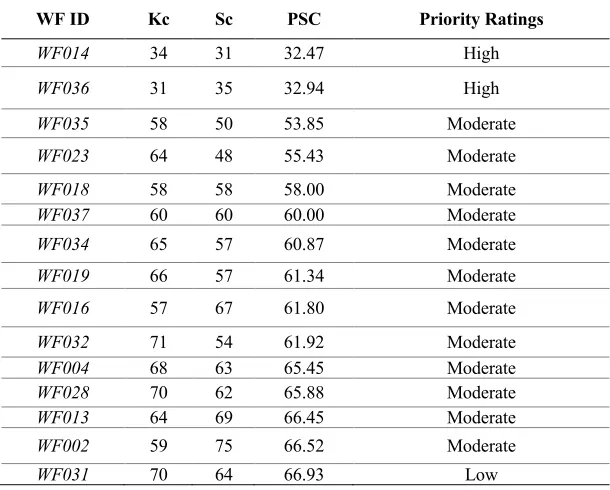
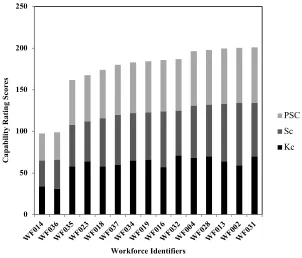
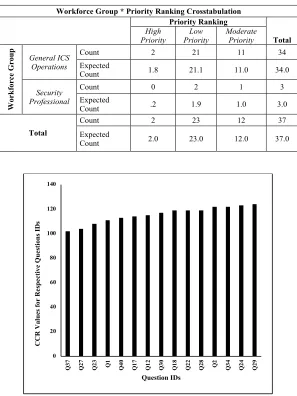
As shown in Figure 4, results indicated only 3 (8.1%) respondents from the ‘security professional’ group, and 34 (91.9%) came from the ‘general ICS operations group’. This potentially reflects the typical rationing of workforce members in the industrial environment, where there is by a greater proportion of the industrial workforce, engaging general process operations, than that working for the maintenance of security. The result of the normalised individual security capability scoring of sampled respondents, in line with the priority grouping ratios prescribed in the capability evaluation model, indicates that more than half of the respondents (23) representing 62.2% were classed to be of ‘low priority’ regarding their combined knowledge and skills conforming to the prescribed security standards and best practices. 12 (32.4%) respondents fell onto the ‘moderate priority’, and 2 (5.4%) fell in the ‘high priority’ group. The latter group identifies the respondents with high-risk weaknesses in cyber security, and which needed a quite urgent attention in terms of education and security capacity building. Contextually, the weakest link (WL) typically emerges from this group, and is attributed to the personnel with workforce ID WF014 with an approximate harmonised capability rating of 32.47 ( �. �. , �� = ���(�) = ���(���!… ���Ν) = 32.47). This workforce individual had a knowledge capability rating of 34, and a skill
capability rating of 31.
Table 3: Capability-Priority Classification for Test Scenario
Cap. Priority Freq Percent Valid Percent
Cumm. Percent
Low High 2 5.4 5.4 5.4
High Low 23 62.2 62.2 67.6
Moderate Moderate 12 32.4 32.4 100.0