0022-538X/97/$04.0010
Copyright © 1997, American Society for Microbiology
The Sequence and Structure of the 3
9
Arm of the First Stem-Loop of
the Human Immunodeficiency Virus Type 2
trans
-Activation
Responsive Region Mediate Tat-2 Transactivation
CATHERINE BROWNING,1JOHN M. HILFINGER,2SHIRLEY RAINIER,2VIVIAN LIN,2SARA HEDDERWICK,2MICHAEL SMITH,2
ANDDAVID M. MARKOVITZ2*
Department of Internal Medicine, Division of Infectious Diseases,2and Department of Microbiology and Immunology,1
University of Michigan Medical Center, Ann Arbor, Michigan 48109-0642
Received 3 March 1997/Accepted 19 June 1997
Human immunodeficiency virus type 2 (HIV-2) causes AIDS, but generally after a much longer asymptom-atic period than that which follows infection with HIV-1. At the molecular level, HIV-2 is much more closely related to the simian immunodeficiency viruses than to HIV-1 and our previous studies have demonstrated that HIV-2 and HIV-1 enhancer stimulation is mediated by different sets of cellular proteins following T-cell activation. Similar to HIV-1, HIV-2 encodes a transactivating protein, Tat, which appears to be necessary for viral replication and stimulates viral transcriptional initiation and/or elongation. While Tat-1 binds to the RNA of thetrans-activation responsive (TAR) region of HIV-1 and HIV-2, cellular factors that bind to the RNA transcript are also necessary for Tat to function in vivo. Since almost all previous investigations of cellular cofactors for Tat had focused on HIV-1, we undertook studies aimed at understanding the interaction between the TAR RNA region of the HIV-2 promoter (TAR-2) and cellular proteins. By using extension inhibition analysis (toeprinting) and RNA electrophoretic mobility shift assays, we demonstrated binding of a nuclear factor(s) in T cells to the base of the promoter-proximal stem-loop structure. Mutational analysis of this region revealed that both the sequence of the 3*arm and the stem structure itself are important for activation of the promoter by Tat-2. In contrast, the structure is necessary for activation of TAR-2 by Tat-1 but the sequence is less important. These results suggest that a cellular factor interacts with the 3*arm of the proximal stem-loop structure of TAR-2 and mediates Tat-2-induced increases in the level of HIV-2 transcripts.
Tat, the virally encoded transactivator protein of the human immunodeficiency viruses (HIVs), is a key factor in a complex network of transcriptional regulation. This protein, which is essential for viral replication (1, 8), interacts with the nascent RNA transcript at the trans-activation responsive (TAR) ele-ment, located immediately downstream of the transcriptional start-site, and stimulates viral transcription through a poorly understood mechanism that has been the topic of intense study in recent years.
Although both HIV type 1 (HIV-1) and HIV-2 share mech-anisms of transactivation and are similar in genetic organiza-tion, the two viruses show substantial differences at the clinical and molecular levels (reviewed in reference 30). Patients in-fected with HIV-2 generally have a clinically asymptomatic period which is much longer than that following HIV-1 infec-tion, and HIV-2 is transmitted at a much lower rate perinatally and sexually than is HIV-1 (22). While both viruses encode almost the same set of proteins, HIV-2 has only approximately 40% similarity to HIV-1 at the nucleic acid level. Whereas activation of the HIV-1 enhancer following T-cell stimulation is mediated largely by the twokB sites (28, 29, 32), with some contribution from the proximal Sp1 site (34), activation of the HIV-2 enhancer in T cells is mediated by four distinct DNA elements: a single NF-kB binding site, two purine-rich sites (PuB1 and PuB2) which bind the ets protooncogene family member Elf-1, and the peri-ets (pets) site (16, 17, 25, 27, 29), which binds the human autoantigen DEK (10). In addition, in monocytic cells, a fifth functional site, termed peri-kB, is
present (7, 19). Therefore, it is clear that regulation of HIV-2 transcription by cellular factors in activated T cells shares sim-ilarities with that of HIV-1 but also demonstrates definite differences.
In HIV-1, the TAR site is located between nucleotides11 and144 (reviewed in reference 14). Chemical and enzymatic analyses have revealed a single stem-loop RNA which is thought to function as a tether for the Tat-1 protein, properly positioning it for further action with the transcriptional com-plex. The trinucleotide pyrimidine bulge located in the pro-moter-proximal arm of the stem structure at nucleotides123 to125 and a few of the bases immediately flanking this bulge provide the site of interaction between TAR-1 and the Tat-1 protein. The TAR element of HIV-1 also contains an internal RNA site, termed the initiator sequence, that appears to be necessary for efficient transcriptional initiation (42).
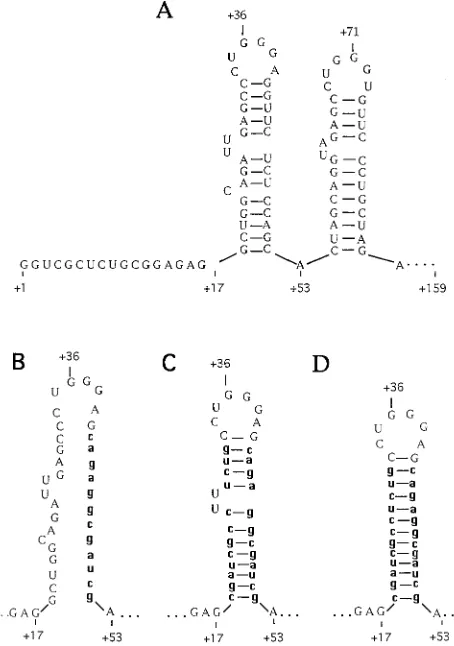
In contrast to that of HIV-1, the TAR region of HIV-2 (Fig. 1) has a more complex structure, containing three stem-loop regions extending from the cap site to position1123 relative to the start of transcription (39). However, only the first two stem-loop structures appear to play a role in transactivation by Tat (39). Fenrick et al. found that complete transactivation by Tat-2 requires only stem-loop 1 of the TAR-2 region and that when loop 1 is altered, loop 2 can mediate transactivation, albeit at a reduced rate (9). It was suggested that the limited transactivation mediated by loop 2 was due to its distance from the cap site, since decreasing the distance by deletion signifi-cantly increased transactivation by Tat-2 mediated through this element. Each of the first two stem-loop structures contains a dinucleotide pyrimidine bulge in a position similar to that of the trinucleotide bulge found in HIV-1 (40). In one study, removal of the bulge of the promoter-proximal stem-loop * Corresponding author. Mailing address: 6301 MSRB III, 1150 W.
Medical Center Dr., Ann Arbor, MI 48109-0642. Phone: (313) 647-1786. Fax: (313) 936-9220. E-mail: [email protected].
8048
on November 9, 2019 by guest
http://jvi.asm.org/
structure reduced Tat-2 transactivation to about 30% of that of wild type TAR-2, while removal of the bulge of the distal stem-loop had little effect on Tat-2-mediated transactivation (40). However, efficient Tat-2 transactivation of an HIV-2 pro-moter with a deleted Tat-2 binding bulge on the first stem-loop structure was recently demonstrated in vitro, further suggest-ing that other interactions are involved in the recruitment of Tat-2 to TAR-2 (12). Removal of either bulge simplified the in vitro Tat-2 protein–TAR-2 RNA binding pattern without re-ducing the overall affinity for Tat-2 (40). Deletion of both pyrimidine bulges resulted in a marked reduction of Tat-2 binding in vitro and largely abolished Tat-2 transactivation in transient transfection assays (40). Taken together, these results suggest that the first stem-loop structure is the preferred site of interaction between Tat-2 and the TAR-2 region, and the second, distal stem-loop structure can function in the absence of the first stem-loop, albeit at a lower efficiency (9, 12, 40). The degree of importance of the pyrimidine bulge in Tat-2– TAR-2 interactions remains unclear.
As suggested by the very different TAR structures of HIV-1 and HIV-2, there are key differences in the direct interactions between the Tat proteins and TAR RNA regions of HIV-1 and HIV-2. While Tat-2 is not able to efficiently transactivate an HIV-2 promoter in which the dinucleotide bulges have been deleted from both of the first two stem-loop structures, Tat-1 is still able to mediate transactivation through this mutant TAR-2 structure (41). Also, the Tat-2 protein is unable to transactivate the wild-type HIV-1 promoter unless a second TAR stem-loop is added in tandem within the TAR-1 element (3). The Tat-1 protein, however, is able to effectively transac-tivate the wild-type HIV-2 promoter. Tat-1 is not simply a stronger transactivator than Tat-2, as fusion protein experi-ments suggest that Tat-2 is actually the more potent transac-tivator if it can be adequately recruited to the promoter (39). While earlier studies focused on the direct interactions be-tween Tat and TAR in HIV-1 and HIV-2, it has become increasingly clear that activation of both HIVs by Tat proteins is also dependent on human cellular factors that interact with it and the nucleic acid components of the HIV promoter (re-viewed in references 14 and 33). In addition to the DNA-protein and DNA-protein-DNA-protein interactions in this system, the TAR RNA in the nascent transcript of HIV is able to recruit cellular RNA binding proteins that may interact with the Tat protein, the RNA polymerase II holoenzyme complex, or other cellular factors that are recruited to the vicinity of TAR.
Several human cellular factors have been described which bind to specific regions of TAR-1, although in most cases their effect on Tat function is unclear. Due to the requirement of the loop region for Tat-mediated transactivation to occur, much effort has been devoted to the identification of loop binding factors, such as the 185-kDa TRP-1 protein (48, 51), and ac-cessory proteins for loop binding factors such as elongation factor 1a, polypyrimidine tract binding protein, and the stim-ulator of RNA-binding proteins, which stimulate binding of TRP-185 and the RNA polymerase machinery to TAR-1 (52). The lupus-associated autoantigen Ku has also been shown to bind to the loop (21). Whether all of these factors bind the loop simultaneously, cooperatively, or competitively is not known.
Other factors bind to non-loop regions of TAR-1 RNA, such as the bulge binding factors TRP-2 (48) and TARBP-b (38) and the 38-kDa bulge binding protein, which also requires sequences in the upper stem (2). A 140-kDa T-cell protein binds specifically to the 59 arm of the stem, and binding is increased when T cells are activated with mitogen (43, 44). The stem of TAR-1 is also the site of specific binding for the TAR RNA binding protein (TRBP), which has binding preference for G1C-rich double-stranded RNAs (13). The integrity of the stem structure is important for the binding of the 68-kDa interferon-induced protein (45) and the human autoantigen La, the binding of which is also partially dependent on the A-U richness of the lower stem (5). Of the TAR-1 binding proteins, only TRP-185 has been shown to bind to TAR-2 and this interaction is mediated by the loop sequences (12).
[image:2.612.64.291.70.393.2]Few of the TAR-1 binding proteins have been proven to be functionally important. TARBP-b appears to function in stim-ulation of HIV-1 by both Tat and Rev. The loop binding factor TRP-1 has been shown to increase basal and Tat-1-mediated HIV-1 long terminal repeat promoter activities (48, 51) and has recently been shown to enhance RNA polymerase II elon-gational efficiency in in vitro transcription assays (12). Tat-SF1, another functionally important protein with an apparent mo-lecular mass of 140 kDa, was recently identified by Zhou and Sharp and shown to interact with TAR-1 RNA and a cellular kinase, which phosphorylates Tat-SF1. This protein and its
FIG. 1. TAR region of HIV-2. (A) The first 86 nucleotides of the 59 untrans-lated region of HIV-2rodRNA encoding the first two stem-loop structures of the
TAR region are shown. (B) Sequence of the first stem-loop region, in which 12 nucleotides (in boldface and lowercase) are altered to form theDstem mutation. APvuI site (CGATCG) is found between nucleotides147 and152. (C) Se-quence of the first stem-loop region, showing the compensatory mutation (Comp1) between118 and131 which restores the base pairing of the stem and includes the UU pyrimidine bulge sequence, which is thought to be important in Tat-TAR interaction. To include thePvuI site between nucleotides118 and
123, which was needed for identification during site-directed mutagenesis, it was necessary to remove the C at position123. (D) Comp2mutation, retaining the base pairing of the stem but containing none of the bulges present in the first stem of the wild-type TAR-2. The original numbering system was retained in the labeling of these diagrams.
on November 9, 2019 by guest
http://jvi.asm.org/
associated kinase may be necessary for transactivation by Tat-1 (55). Also, the gene which codes for TAR binding 2 protein maps to human chromosome 12 (23), which suggests that it is functionally important because human chromosome 12 is needed for optimal Tat transactivation in rodent cells (re-viewed in reference 14). The autoantigens La and Ku have also been shown to be functionally important. The loop-binding Ku autoantigen has been shown to affect initiation and elongation of RNA polymerase II (21), and the stem-binding factor La has been shown to increase the level of translation of TAR-con-taining transcripts (49).
As noted above, several laboratories have characterized bio-chemical and sometimes functional interactions between cel-lular factors and HIV-1 TAR. However, very little is known about the interaction of cellular proteins with HIV-2 TAR or that of the closely related simian immunodeficiency virus (11). Therefore, we undertook studies aimed at understanding the interaction between TAR-2 and cellular proteins which might act as cofactors in the HIV-2 Tat-TAR system. We looked first for cellular factors binding to TAR-2 by using methodology not previously used to examine these interactions. By using extsion inhibition analysis, a technique which can screen the en-tire TAR-2 region for protein-RNA binding, and RNA elec-trophoretic mobility shift assays (EMSAs), we have defined a region of the 39arm of the proximal stem-loop structure which binds a cellular factor(s). Mutational analysis of this region reveals that both the sequence and structure of the stem are important for transactivation by Tat-2, but only the structure is crucial for transactivation by Tat-1. Primer extension and RNase protection assays show that the TAR-2–Tat-2–host fac-tor interaction functions to increase expression at the RNA level.
Survey of cellular TAR-2 binding proteins by toeprinting.As a first step in investigating the functionally significant regions of TAR-2 and interaction of host factors with the TAR-2 region, we employed the extension inhibition assay (toeprint-ing). Extension inhibition analysis was originally utilized to examine ribosomal protein binding to prokaryotic RNA (18). This technique can delineate the 39boundary of the protein-RNA complex by measuring the inhibition of reverse transcrip-tase (RT) extension by the protein-RNA complex along a template RNA and has the advantage of monitoring the entire TAR structure for multiple potential sites of interaction. Toe-printing was performed as described by Hartz et al. (18). RNA was synthesized from the PTZ18R expression vector encoding TAR-2, linearized with HindIII, by using the Riboprobe kit (Promega). The technique is performed in three stages: (i) a 59-end 32P-labeled oligodeoxyribonucleotide complementary
to positions1158 to1136 of the HIV-2 long terminal repeat promoter is annealed to a purified TAR-2 transcript, (ii) the RNA-DNA hybrid is incubated with Jurkat T-cell nuclear ex-tract, and (iii) the mixture is analyzed by primer extension by using RT. Protein binding to the RNA results in termination of cDNA synthesis at the 39 end of the site of protein-RNA interaction, and the termination site can be noted on polyac-rylamide-urea denaturing gels by observing a strong stop. As shown in Fig. 2, Jurkat T-cell nuclear extracts were found to inhibit RT extension immediately downstream of the promot-er-proximal stem-loop structure in the TAR-2 region. In this particular assay, inhibition of RT extension (a strong stop) is visualized as a band of intermediate size compared to the full-length cDNA. RT is often unable to read through certain RNA sequences, presumably due to RNA secondary structure. Therefore, to ensure that a strong stop is not a result of the RNA structure, a buffer control, in which only the buffer of the nuclear extract is added to the RNA, was included in the
extension analysis. The multiple corresponding light bands in both lanes are presumably due to the RNA structure. The only strong stop visible in the Jurkat nuclear extract lane and not in the control lane, and hence likely due to RNA-protein inter-actions, is visible at the base of the 39end of the first stem-loop (marked with an arrow in Fig. 2). The strong stop indicated by the arrow was consistently observed in five independent exper-iments. The RT strong stop suggested that a Jurkat nuclear factor(s) was binding to the 39end of the proximal hairpin, but this technique does not allow us to locate the 59 end of the binding site.
A T-cell nuclear factor binds specifically to the TAR-2 first stem-loop.To further examine the host factor interaction with the proximal hairpin, we performed RNA EMSA reactions using a modification of the procedure described by Sheline et al. (48). The probe, containing the first stem-loop structure of TAR-2 (nucleotides11 to153), was prepared from aBfa 1-linearized pTZ18R-TAR-2 vector by using the Promega Ribo-Probe kit and [a-32P]GTP. Unlabeled competitor RNA was
[image:3.612.338.533.65.362.2]generated by this method by using unlabeled nucleotide triphosphates. As shown in Fig. 3, nuclear factor binding to the
FIG. 2. Extension inhibition analysis of the TAR-2 region revealing binding of a T-cell factor(s) to the first stem-loop. An RNA transcript encoding the first 159 nucleotides of the 59untranslated region of HIV-2 was subjected to exten-sion inhibition analysis with 15mg of nuclear extract prepared from Jurkat T cells or with buffer alone. The strong stop, or toeprint, associated with protein factor binding is marked with an arrow. For orientation, an RNA sequence ladder was run and used to generate a schematic of the TAR-2 RNA, which is shown on the right with the strong stop marked by an arrow. The schematic depicts the first two stem-loop structures of TAR-2, the first (59) of which spans nucleotide positions
117 to152 relative to the start of transcription and the second of which (39) occurs between nucleotides154 and185. The strong stop occurs around posi-tion152 relative to the start of transcription, suggesting that extension was stopped at the base of the 39arm of the first stem-loop of HIV-2. The loop, which is the binding site of the only previously known TAR-2 binding cellular protein (TRP-185), is marked with a circle on the diagram. Similar results were obtained in more than five separate experiments using different Jurkat T-cell extracts.
on November 9, 2019 by guest
http://jvi.asm.org/
first stem-loop structure was evident (lane 1). The binding was specific, as an RNA competitor containing the intact proximal stem-loop virtually eliminated protein binding to the labeled probe (lanes 2 to 4) while an RNA competitor containing a mutation in the promoter-distal arm of the first hairpin (Dstem; Fig. 1 shows the sequence) did not compete efficiently with binding of the wild-type probe (lanes 5 to 7). A band similar in mobility and specificity was observed when nuclear extracts prepared from peripheral blood T cells were used (data not shown).
The structure and sequence of the 3*arm of the first TAR-2 stem-loop are required for efficient Tat-2 transactivation, while the structure is needed for Tat-1 transactivation but the sequence is less important. The protein-RNA binding data indicated that a cellular factor(s) can bind to the 39 stem portion of the proximal hairpin of TAR-2, implying that this element might be important in mediating transactivation by Tat-2. To examine the functional role of this element in HIV-2 transactivation, we synthesized Dstem, Comp2, and Comp1 HIV-2rod/CAT, which contain mutations in the first stem-loop
of the HIV-2 TAR region (Fig. 1), by site-directed mutagenesis using the oligonucleotide-directed gap heteroduplex technique (32). The HIV-2rod/CAT and HIV-1/CAT constructs are the
same as those used in our previous study (27). The Dstem mutation in the 39 arm of the stem-loop altered bases in the first stem, thereby disrupting the sequence and the hairpin structure. The Comp2 compensatory mutant should restore the stem structure, albeit with a different sequence and without
the UU dinucleotide pyrimidine bulge thought to be important in Tat-2–TAR-2 binding. The Comp1mutant also should re-store the stem structure but include the dinucleotide element. We tested these mutants in transient transfection assays of Jurkat T cells by using the chloramphenicol acetyltransferase (CAT) gene as a reporter. Cells were cotransfected with 5 to 10
mg of a promoter-CAT plasmid and 1 to 2mg of a Tat-1 or Tat-2 plasmid or a control plasmid by the DEAE-dextran method (35). At 20 h after transfection, certain cells were treated with 16 nM phorbol 12-myristate 13-acetate (PMA) for an additional 16 to 20 h. The cultures were harvested, and CAT activity was measured (15). The transfection experiments were normalized for protein content by using the Bio-Rad reagent.
As shown in Fig. 4A, in cotransfection experiments with a Tat-2 expression vector, theDstem mutation greatly reduced Tat-2 transactivation compared to the wild-type TAR region, with a 42-fold drop in transactivation. The transactivation by Tat-2 was only partially restored by the compensatory mutants, regardless of the presence of the dinucleotide bulge, signifying that both the structure and the sequence of the 39portion of the stem are important for transactivation by Tat-2. To inves-tigate whether the mutants disrupted promoter function in general or were Tat specific, the transfectants were stimulated with PMA, which acts upon upstream promoter elements. Sig-nificantly, the mutants retained PMA responsiveness (Fig. 4A), demonstrating that the 39 arm of the proximal stem-loop is specifically necessary for Tat-2 activation and not for promoter function in general.
Tat-1 has been shown to be effective at transactivating the HIV-2 wild-type promoter, whereas Tat-2 has generally been reported to much more efficiently transactivate its own pro-moter than that of HIV-1. Therefore, we examined whether the Tat-1 protein was able to efficiently transactivate the TAR-2 mutant structures. Although Tat-1-mediated transacti-vation of theDstem construct was considerably lower than that of the wild-type HIV-2 promoter, Dstem was clearly more responsive to Tat-1 than to Tat-2 (Fig. 4B). Interestingly, Tat-1 was able to transactivate both the Comp2and Comp1mutants almost as efficiently as it was able to stimulate wild-type TAR-2 (Fig. 4B). This suggests that whereas both the structure and sequence of the proximal stem-loop of TAR-2 are important in the Tat-2 response, only the structure is necessary for Tat-1 responsiveness.
The ability of the mutant RNA structures to bind to the HIV-2 Tat protein was tested in RNA EMSAs by using a full-length TAR-2 probe as previously described (12) and Tat-2 recombinant protein generously provided by Richard Gaynor and Leon Garcia-Martinez. There was no apparent difference in Tat-2 binding ability between wild-type and the compensatory mutant RNAs, while the Dstem RNA gave re-sults that were somewhat variable, but in general indicated a slightly lower affinity for Tat-2 (data not shown). These data suggest that, while the inability of theDstem mutant to respond to Tat-2 may be partially due to decreased affinity for Tat-2, the markedly diminished response to Tat-2 still seen in the compensatory mutants is not due to decreased Tat-2 binding. Mutation of the 3*arm of the promoter-proximal stem-loop affects gene expression at the RNA level. The RNA-protein binding experiments suggest that the 39arm of the stem of the promoter-proximal hairpin is an important site of interaction for cellular factors. Further, our data indicate that a mutation in this portion of the stem-loop greatly diminishes Tat-2 trans-activation. This loss in reporter gene expression could be due to either a decrease in the level of RNA transcripts or a difference in processing and translation of the
mutation-con-FIG. 3. RNA EMSA showing binding of a Jurkat nuclear factor(s) to TAR-2 that is dependent on the 39arm of the first stem-loop. An RNA probe corre-sponding to the first stem-loop of the TAR-2 region (bases11 to155) was incubated with 4mg of Jurkat T-cell nuclear extract to determine protein-RNA binding (lane 1). Unlabeled TAR-2 RNA (lanes 2 to 4) and unlabeledDstem RNA (lanes 5 to 7) were included in the reaction mixtures at the indicated amounts to assess specificity of binding. The arrow marks the specific protein-RNA complex. No shift was noted with the probe in the absence of extract (data not shown). The spot in the upper portion of lane 1 is a gel-drying artifact.
on November 9, 2019 by guest
http://jvi.asm.org/
taining transcripts. If the lack of transactivation by Tat in the
Dstem mutants is a result of impaired transcriptional activa-tion, little reporter RNA would be produced in the Jurkat cells cotransfected with Tat-2 and theDstem mutants compared to the wild-type HIV-2 promoter. To examine this possibility, the reporter RNA levels in the cotransfectants were determined by primer extension analysis (29). While cotransfection of Tat-2
with HIV-2 CAT generated a large boost in detectable RNA over basal levels, only a slight boost was detected in theDstem construct (data not shown), indicating that Tat-2-stimulated activity is clearly diminished at the RNA level in the Dstem mutant. Tat has been purported to function by increasing tran-scriptional initiation and/or by increasing the efficiency of RNA polymerase II elongation in different studies (55, re-viewed in reference 14), and therefore theDstem mutant could affect either of these possible functions of Tat.
[image:5.612.57.300.77.484.2]To further ensure that the loss of transactivation is shown at the RNA level and to examine whether this decrease was due to a decrease in RNA production or a decrease in processivity of the RNA polymerase II holoenzyme complex on theDstem template, we performed an RNase protection analysis on RNA isolated from Tat-TAR cotransfectants. RNase protection as-says, which can be used to detect prematurely terminated tran-scripts, were carried out by previously described methods (4, 46, 53). The probes were prepared from wild-type and mutant HIV-2 fragments cloned into pSP64 (Promega). The Pvu II-linearized templates were used to generate 356-nucleotide-long riboprobes, of which 159 nucleotides were complementary to the 59end of the reporter RNA, which contains the entire TAR-2 region. In the absence of Tat-2 stimulation, neither the wild type nor the Dstem construct generated significant full-length transcripts (Fig. 5, lanes 1 and 3). In neither case were
[image:5.612.397.475.339.645.2]FIG. 4. Site-specific mutational analysis of the 39end of the proximal stem-loop structure of the TAR-2 region. (A) Cotransfection of plasmid constructs containing the intact or mutated TAR sequences, which are illustrated in Fig. 1, positioned upstream of the CAT gene, into Jurkat T cells with an expression vector containing the Tat-2 gene or a control plasmid. The phorbol ester PMA was added to certain samples at a final concentration of 16 nM as a positive control for promoter function. The results shown are averages of two experi-ments and are representative of at least four separate experiexperi-ments. The value above each bar is the fold activation representing the percent conversion of PMA-treated (stippled bars) or Tat-2-treated (striped bars) cells divided by the percent conversion of the respective untreated samples (dark bars). (B) Cotrans-fection of the wild-type and mutant CAT reporter constructs with expression vectors for either Tat-1, Tat-2, or a control plasmid. Unstimulated (basal) activity is represented by the open bars, Tat-1-stimulated activity is represented by the solid bars, and Tat-2-stimulated activity is represented by the striped bars. The value above each bar is the fold activation of the Tat-stimulated sample over the respective basal level. These results are averages of two experiments and are representative of four separate experiments.
FIG. 5. RNase protection analysis of RNA derived from Jurkat T cells trans-fected with HIV-2/CAT constructs. RNase protection analysis was used to ex-amine RNA isolated from Jurkat T cells transfected with HIV-2/CAT (wild-type TAR-2 region) (lane 1), HIV-2/CAT plus RSV–Tat-2 (lane 2),Dstem/CAT (lane 3), orDstem/CAT plus RSV–Tat-2 (lane 4). The upper arrow marks the location of the undigested probe, and the lower arrow marks the band corresponding to the full-length transcripts. The bracket marks the region from approximately position140 to position180 (Fig. 1), where transcripts terminating at the site of theDstem mutation would be expected to migrate. These results are represen-tative of four separate experiments.
on November 9, 2019 by guest
http://jvi.asm.org/
the short transcripts predicted by the elongation model de-tected. When the Tat-2 expression vector was cotransfected with the wild-type promoter construct, there was a marked increase in detectable full-length transcripts (Fig. 5, lane 2). In agreement with the CAT assay and primer extension data, the
Dstem construct produced far fewer full-length transcripts than did the wild type following stimulation with Tat-2. This could be due to either a decrease in the ability of theDstem element to mediate Tat-2 transactivation of transcriptional initiation or an increase in the rate of stalling and disengagement of the RNA polymerase holoenzyme complex at the mutant TAR region (31), which would cause short transcripts to occur. Such prematurely terminating transcripts have been detected by RNase protection assays by using similar or longer probes in the HIV-1 (24, 26) and c-mycsystems (54). However, no short mRNA species were detected in the RNA derived from the
Dstem transfectants in the absence or the presence of Tat-2 stimulation (Fig. 5, lanes 3 and 4) or in the unstimulated wild-type promoter (Fig. 5, lane 1), even after long-term ex-posures of the gels. It is possible that the riboprobe preferen-tially annealed to the longer RNA transcripts. However, results from the HIV-1 system suggest that although shorter ribo-probes allow better resolution of prematurely terminated tran-scripts, these transcripts are still visible in RNase protection assays with longer probes (26). While we cannot exclude the possibility that smaller transcripts orDstem-containing RNAs are less stable, and therefore preferentially degraded prior to or during RNA harvesting, these data suggest that under these conditions Tat-2 does not appear to function primarily by elon-gation of nascent transcripts from the HIV-2 promoter. The absence of TAR-2-mediated short RNA transcripts is further supported by experiments using an inducer of short transcripts construct (discussed below).
Conclusions.While a number of studies have examined in-teractions between cellular factors and the HIV-1 TAR se-quences, the interactions of cellular proteins with the HIV-2 TAR sequence have not been well defined. The present work provides evidence that a cellular factor(s) binds to the 39arm of the proximal stem-loop structure of TAR-2 RNA and that this element is crucial to the Tat-2 response. Extension inhi-bition analysis revealed binding at the 39stem portion of the proximal hairpin but did not detect any binding to the distal stem-loop (Fig. 2). This is consistent with the finding of others (9, 40) that in the setting of wild-type TAR-2, the second stem-loop structure does not appear to play a significant role in transactivation. Our finding that the second stem-loop is un-able to compensate for the mutation in the 39stem portion of the proximal stem-loop structure (Dstem), at first glance, ap-pears to contradict earlier findings (9, 40). However, in the
Dstem mutation, the base pairing which leads to the first stem-loop structure is gone and this likely leads to the location of the second stem-loop at a greater linear distance from the 59end of the nascent transcript. This could render the second stem-loop unable to efficiently compensate for the loss of the prox-imal stem-loop. Our finding would thus be compatible with that of Fenrick et al. that the distance of a given stem-loop in TAR-2 from the start site influences its function (9).
The extension inhibition assay has previously been used pri-marily to study RNA-protein interactions in prokaryotes (18). Here, we have used this method to survey the entire TAR-2 region for sites of RNA-protein interaction. These studies demonstrate interaction of the 39 arm of the first stem-loop structure with a T-cell nuclear factor(s). RNA EMSAs also suggest that the interaction of the cellular factor involves the 39 arm of the stem-loop. While our extension inhibition results cannot rule out the possibility that the strong stop seen in the
stem is caused by distortion of the TAR structure following binding of a cellular factor to the loop, the EMSA and func-tional data obtained with compensatory mutants which restore the stem suggest that sequences present in the 39stem of the proximal stem-loop structure interact with a cellular factor(s) and mediate Tat-2 function. Our transfection data suggest that both the specific RNA stem sequence and the integrity of the stem-loop structure are important mediators of Tat-2 function. This is similar to findings obtained with RNA stem-loop struc-tures in bacteriophage systems (6). However, while the se-quence and structure of the cellular factor binding site are required for optimal transactivation by Tat-2, Tat-1 was able to cause an almost wild-type boost in the reporter gene activity of the compensatory mutants. Thus, it appears that Tat-1 requires only the intact structure of TAR-2 to function. Tat-1 may either provide the function of the cellular factor that binds to the base of the hairpin or have an intrinsic affinity for this factor, and the recruitment of it by the sequence component of the RNA element is therefore unnecessary. The fact that Tat-1 is able to efficiently transactivate the compensatory mutants argues that these mutations do not disrupt the integrity of the TAR-2 superstructure and supports our EMSA finding that the Tat-2 protein is able to bind to the mutant constructs. The results of the experiments comparing Tat-1 and Tat-2 also support prior observations that Tat-2 is unable to effectively transactivate the HIV-1 promoter (39), an effect that has been questioned in the literature (50).
There has been much debate concerning whether Tat func-tions by increasing transcriptional initiation or the elongation of nascent transcripts. Most of the studies thus far published address this issue with HIV-1. At least three groups have seen evidence for a role of Tat-2 as an elongator of transcripts (12, 20, 54). These latter studies involved the use of in vitro tran-scription or frog oocyte systems. In contrast, our RNase pro-tection studies show no evidence of short transcripts which decrease in the presence of Tat-2 (Fig. 5). Other transfection studies employing an HIV-2 construct (gift of M. Sheldon and N. Hernandez) similar to that used to demonstrate the pres-ence of an inducer of short transcripts in HIV-1 (37, 47) also showed no evidence of directing the formation of short tran-scripts which decrease in the presence of Tat-2 (data not shown). While short transcripts may be preferentially degraded in transfection assays as opposed to in vitro transcription or frog oocyte microinjection assays, our transfection data ob-tained by using the wild-type promoter construct and one spe-cifically designed to show short transcripts have not demon-strated any short transcripts or elongation effect of Tat-2. Therefore, our studies support the role of Tat-2 more as a transcription stimulatory factor than as an elongator of nascent transcripts, although further studies are clearly needed to ad-dress the mode of action of Tat-2 and contrast it to that of Tat-1 (also, see discussion below).
In our functional studies, we were surprised to find that the presence or absence of the pyrimidine bulge in the first stem-loop structure did not seem to have an effect on Tat function. This could be due to some inadvertent alteration in TAR structure in the compensatory mutants. However, there are suggestions in the literature that Tat binding to TAR-2 and activation of transcription mediated by TAR-2 are not as de-pendent on the presence of a pyrimidine bulge as in the HIV-1 system. For example, Tat-1 can bind to a TAR-2 construct in which the pyrimidine bulge has been deleted from both stem-loop structures and this mutant TAR can mediate Tat-1 trans-activation (41). However, this study did not find the bulges to be dispensable for Tat-2 transactivation. Recent in vitro tran-scription studies suggest that the pyrimidine bulge of the first
on November 9, 2019 by guest
http://jvi.asm.org/
stem-loop of TAR-2 contributes to Tat-2 activation, but its loss still allows substantial response to Tat-2 (12). The lack of difference in reporter activity between the compensatory mu-tant containing the bulge (Comp1) and the mutant without the bulge (Comp2) in the present studies gives further support to these in vitro findings that the pyrimidine bulge may not be essential for mediation of Tat-2 transactivation. Our data also show that not only the pyrimidine bulge but also the cellular factor binding sequence in the 39 arm of the proximal stem-loop is largely unnecessary for Tat-1-mediated transactivation of TAR-2. How the Tat proteins interact with the TAR struc-tures in the absence of the putative Tat-binding site is unclear. Taken together, the findings from several laboratories suggest that TAR-2 interactions with Tat-2 and cellular factors are more complex than those of the HIV-1 system and that further study is needed to understand how Tat-2 docks with TAR-2 and interacts with the cellular factors that have been impli-cated in the Tat response.
This report, the first to specifically examine the interactions of novel cellular factors with the TAR region of HIV-2, dem-onstrates that the 39arm of the proximal stem-loop of TAR-2 is essential to the Tat-2 response and binds a cellular factor(s). Both specific sequences in the 39arm and the stem structure itself are important to the Tat-2 response. We know of no other reports implicating specific sequences in the 39stem of the promoter-proximal stem-loop of HIV-2 TAR in Tat-2 function. These data suggest that the 39arm of the first stem-loop of TAR-2 is important, not just for structural integrity, but also because it is necessary for the binding of a T-cell nuclear factor(s) which may cooperate with Tat. Northwestern blotting of Jurkat nuclear extracts with a TAR-2 first-stem-loop riboprobe have demonstrated a band of approximately 50 kDa that binds even under the stringent conditions of 1 M urea and 150 mM KCl with 500mg of yeast tRNA per ml. However, we have been unable to confirm the specificity of this interac-tion (data not shown). Further characterizainterac-tion of this factor, which appears to be necessary for Tat-2, but not necessarily for Tat-1 to transactivate through TAR-2, should yield insight into the differences between the mechanisms of action of Tat-1 and Tat-2 and into how the crucial Tat transactivators function in general. In view of recent reports that HIV-2 inhibits HIV-1 expression (50a), an effect perhaps mediated by TAR (36), an understanding of TAR-2-mediated transactivation may suggest therapeutic modalities for HIV-1, as well as for HIV-2.
We thank Richard Gaynor, Gopi Mavankal, and Leon Garcia-Mar-tinez for advice and for the generous gift of Tat-2 protein, David Engelke for helpful discussions, and Michael Sheldon and Nouria Hernandez for plasmids.
This work was supported by grants to D.M.M. from the National Institutes of Health (AI30924 and AI36685). C.B. was supported by the Cellular Biotechnology Training Program of the University of Michigan (5 T32 GM08353) and the Cancer Biology Training Program of the University of Michigan (T32 CA09676).
REFERENCES
1.Arya, S. K., C. Guo, S. F. Josephs, and F. Wong-Staal.1985. Transactivator gene of human T-lymphotropic virus type III (HTLV-III). Science229:69– 73.
2.Baker, B., M. E. Muckenthaler, A. Vives, M. Blanchard, W. Braddock, A. J. Nacken, A. J. Kingsman, and S. M. Kingsman.1994. Identification of a novel HIV-1 TAR RNA bulge binding protein. Nucleic Acids Res.22:3365–3372. 3.Berkhout, B., A. Gatignol, J. Silver, and K.-T. Jeang.1990. Efficient trans-activation by the HIV-2 Tat protein requires a duplicated TAR RNA struc-ture. Nucleic Acids Res.18:1839–1846.
4.Bordonaro, M., C. F. Saccomanno, and J. L. Nordstrom.1994. An improved T1/A ribonuclease protection assay. BioTechniques16:428–430.
5.Chang, Y.-N., D. J. Kenan, J. D. Keene, A. Gatignol, and K.-T. Jeang.1994. Direct interactions between autoantigen La and the human immunodefi-ciency virus leader RNA. J. Virol.68:7008–7020.
6.Cheng, S.-W. C., C. Lynch, E. C. Leason, D. L. Court, B. Shapiro, and D. I. Friedman.1991. Functional importance of sequence in the stem-loop of a transcription terminator. Science234:1205–1207.
7.Clark, N., M. C. Hannibal, and D. M. Markovitz.1995. The peri-kB site of the human immunodeficiency virus type 2 enhancer is active in monocytes but not T cells. J. Virol.69:4854–4862.
8.Dayton, A. I., J. G. Sodroski, C. A. Rosen, W. C. Goh, and W. A. Haseltine.
1986. Thetrans-activator gene of the human T cell lymphotropic virus type III is required for replication. Cell44:941–947.
9.Fenrick, R., M. H. Malim, J. Hauber, S.-Y. Le, J. Maizel, and B. R. Cullen.
1989. Functional analysis of the Tattransactivator of human immunodefi-ciency virus type 2. J. Virol.63:5006–5012.
10. Fu, G., G. Grosveld, and D. M. Markovitz.1997. DEK, an autoantigen involved in a chromosomal translocation in acute myelogenous leukemia, binds to the human immunodeficiency virus type 2 enhancer. Proc. Natl. Acad. Sci. USA94:1811–1815.
11. Gao, F., L. Yu, A. T. White, P. G. Pappas, J. Barchue, A. P. Hanson, B. M. Greene, P. M. Sharp, G. M. Shaw, and B. H. Hahn.1992. Human infection by genetically diverse SIVSM-related HIV-2 in West Africa. Nature
(Lon-don)358:495–499.
12. Garcia-Martinez, L., G. Mavankal, P. Peters, F. Wu-Baer, and R. B. Gaynor.
1995. Tat functions to stimulate the elongation properties of transcription complexes paused by the duplicated TAR RNA element of human immu-nodeficiency virus 2. J. Mol. Biol.254:350–363.
13. Gatignol, A., A. Buckler-White, B. Berkhout, and K.-T. Jeang.1991. Char-acterization of a human TAR RNA-binding protein that activates the HIV-1 LTR. Science251:1597–1600.
14. Gaynor, R. B.1995. Regulation of HIV-1 gene expression by the transacti-vator protein Tat. Curr. Top. Microbiol. Immunol.193:51–77.
15. Gorman, C. M., L. F. Moffat, and B. B. Howard.1982. Recombinant ge-nomes which express chloramphenicol acetyltransferase in mammalian cells. Mol. Cell. Biol.2:1044–1051.
16. Hannibal, M., D. M. Markovitz, N. Clark, and G. J. Nabel.1993. Differential activation of human immunodeficiency virus type 1 and 2 transcription by specific T-cell activation signals. J. Virol.67:5035–5040.
17. Hannibal, M., D. M. Markovitz, and G. J. Nabel.1994. Multiple cis-acting elements in the human immunodeficiency virus type 2 enhancer mediate the response to T cell receptor stimulation by antigen in a T cell hybridoma line. Blood83:1839–1846.
18. Hartz, D., D. S. McPheeters, L. Green, and L. Gold.1991. Detection of
Escherichia coliribosome binding at translation initiation sites in the absence of tRNA. J. Mol. Biol.218:99–105.
19. Hilfinger, J., N. Clark, K. Robinson, M. Smith, and D. M. Markovitz.1993. Differential regulation of the human immunodeficiency virus type 2 in mono-cytic cells at varying stages of differentiation. J. Virol.67:4448–4453. 20. Jones, K. A.1989. HIV trans-activation and transcription control
mecha-nisms. New Biol.1:127–135.
21. Kaczmarski, W., and S. A. Khan.1993. Lupus autoantigen Ku protein binds HIV-1 TAR RNA in vitro. Biochem. Biophys. Res. Commun.196:935–942. 22. Kanki, P.1991. Biological features of HIV-2: an update, p. 18–38.InP. Volberding, and M. A. Jacobson (ed.), AIDS clinical review. Marcel Dekker, Inc., New York, N.Y.
23. Kozak, C. A., A. Gatignol, K. Graham, K. T. Jeang, and O. W. McBride.
1995. Genetic mapping in human and mouse of the locus encoding TRBP, a protein that binds the TAR region of the human immunodeficiency virus (HIV-1). Genomics25:66–72.
24. Laspia, M. F., A. P. Rice, and M. B. Mathews.1989. HIV-1 Tat protein increases transcriptional initiation and stabilizes elongation. Cell59:283–292. 25. Leiden, J. M., C.-Y. Wang, B. Petryniak, D. M. Markovitz, G. J. Nabel, and C. B. Thompson.1992. A novel Ets-related transcription factor, Elf-1, binds to human immunodeficiency virus type 2 regulatory elements that are re-quired for inducibletransactivation in T cells. J. Virol.66:5890–5897. 26. Lu, X., T. M. Welsh, and B. M. Peterlin.1993. The human immunodeficiency
virus type 1 long terminal repeat specifies two different transcription com-plexes, only one of which is regulated by Tat. J. Virol.67:1752–1760. 27. Markovitz, D. M., M. Hannibal, V. L. Perez, C. Gauntt, T. M. Folks, and
G. J. Nabel.1990. Differential regulation of human immunodeficiency vi-ruses (HIVs): a specific regulatory element in HIV-2 responds to stimulation of the T cell antigen receptor. Proc. Natl. Acad. Sci. USA87:9098–9102. 28. Markovitz, D. M., M. C. Hannibal, M. J. Smith, R. Cossman, and G. J.
Nabel.1992. Activation of the human immunodeficiency virus type 1 en-hancer is not dependent on NFAT-1. J. Virol.66:3961–3965.
29. Markovitz, D. M., M. Smith, J. Hilfinger, M. C. Hannibal, B. Petryniak, and G. J. Nabel.1992. Activation of the human immunodeficiency virus type 2 enhancer is dependent on purine box andkB regulatory elements. J. Virol.
66:5479–5484.
30. Markovitz, D. M.1993. Infection with the human immunodeficiency virus type 2. Ann. Intern. Med.118:211–218.
31. Mavankal, G., S. H. I. Ou, H. Oliver, D. Sigman, and R. B. Gaynor.1996. Human immunodeficiency virus type 1 and 2 Tat proteins specifically interact with RNA polymerase II. Proc. Natl. Acad. Sci. USA93:2089–2094. 32. Nabel, G., and D. Baltimore.1987. An inducible transcription factor
on November 9, 2019 by guest
http://jvi.asm.org/
vates expression of human immunodeficiency virus in T cells. Nature (Lon-don)326:711–713.
33. Ou, S.-H. I., F. Wu, D. Harrich, L. F. Garcia-Martinez, and R. B. Gaynor.
1995. Cloning and characterization of a novel cellular protein, TDP-43, that binds to human immunodeficiency virus type 1 TAR DNA sequence motifs. J. Virol.69:3584–3596.
34. Perkins, N. D., N. L. Edwards, C. S. Duckett, A. B. Agranoff, R. M. Schmid, and G. J. Nabel.1993. A cooperative interaction between NF-kB and Sp1 is required for HIV-1 enhancer activation. EMBO J.12:3551–3558. 35. Queen, C., and D. Baltimore.1983. Immunoglobulin gene transcription is
activated by downstream sequence elements. Cell33:741–748.
36. Rappaport, J., S. K. Arya, M. W. Richardson, G. Baier-Bitterlich, and P. E. Klotman.1995. Inhibition of HIV-1 expression by HIV-2. J. Mol. Med.
73:583–591.
37. Ratnasabapathy, R., M. Sheldon, L. Johal, and N. Hernandez.1990. The HIV-1 long terminal repeat contains an unusual element that induces the synthesis of short RNAs from various mRNA and snRNA promoters. Genes Dev.4:2061–2074.
38. Reddy, T. R., M. Suhasini, J. Rappaport, D. J. Looney, G. Kraus, and F. Wong-Staal.1995. Molecular cloning and characterization of a TAR-binding nuclear factor from T cells. AIDS Res. Hum. Retroviruses11:663–669. 39. Rhim, H., and A. P. Rice.1993. TAR RNA binding properties and relative
transactivation activities of human immunodeficiency virus type 1 and 2 Tat proteins. J. Virol.67:1110–1121.
40. Rhim, H., and A. P. Rice.1994. Functional significance of the dinucleotide bulge in stem-loop1 and stem-loop2 of HIV-2 TAR RNA. Virology202:202– 211.
41. Rhim, H., and A. P. Rice.1995. HIV-1 Tat protein is able to efficiently transactivate the HIV-2 LTR through a TAR RNA element lacking both dinucleotide bulge binding sites. Virology206:673–678.
42. Rittner, K., M. J. Churcher, M. J. Gait, and J. Karn.1995. The human immunodeficiency virus long terminal repeat includes a specialised initiator element which is required for Tat-responsive transcription. J. Mol. Biol.
248:562–580.
43. Rothblum, C., J. Jackman, J. Mikovits, R. R. Shukla, and A. Kumar.1995. Interaction of nuclear protein p140 with human immunodeficiency virus type 1 TAR RNA in mitogen-activated primary human lymphocytes. J. Virol.
69:5156–5163.
44. Rounseville, M. P., and A. Kumar.1992. Binding of a host cell nuclear
protein to the stem region of human immunodeficiency virus type 1trans -activation-responsive RNA. J. Virol.66:1688–1694.
45. Roy, S., M. Agy, A. G. Hovanessian, N. Sonenberg, and M. G. Katze.1990. The integrity of the stem structure of human immunodeficiency virus type 1 Tat-responsive sequence RNA is required for interaction with the interfer-on-induced 68,000-Mrprotein kinase. J. Virol.65:632–640.
46. Saccomanno, C. F., M. Bordonaro, J. S. Chen, and J. L. Nordstrom.1992. A faster ribonuclease protection assay. BioTechniques13:846–850.
47. Sheldon, M., R. Ratnasabapathy, and N. Hernandez.1993. Characterization of the inducer of short transcripts, a human immunodeficiency virus type 1 transcriptional element that activates the synthesis of short RNAs. Mol. Cell. Biol.13:1251–1263.
48. Sheline, C. T., L. H. Milocco, and K. A. Jones.1991. Two distinct nuclear transcription factors recognize loop and bulge residues of the HIV-1 TAR RNA hairpin. Genes Dev.5:2508–2520.
49. Svitkin, Y. V., A. Pause, and N. Sonenberg.1994. La autoantigen alleviates translational repression by the 59leader sequence of the human immunode-ficiency virus type 1 mRNA. J. Virol.68:7001–7007.
50. Tong-Starksen, S. E., A. Baur, X.-B. Lu, E. Peck, and M. Peterlin.1993. Second exon of Tat of HIV-2 is required for optimaltrans-activation of HIV-1 and HIV-2 LTRs. Virology195:826–830.
50a.Travers, K., S. Mboup, R. Marlink, A. Gue`ge-Ndiaye, T. Siby, I. Thior, I. Traore, A. Dieng-Sarr, J.-L. Sankale´, C. Mullins, I. Ndoye, C.-C. Hsieh, M. Essex, and P. Kanki.1995. Natural protection against HIV-1 infection provided by HIV-2. Science268:1612–1615.
51. Wu, F., J. Garcia, D. Sigman, and R. Gaynor.1991.Tatregulates binding of the human immunodeficiency virustrans-activating region RNA loop-bind-ing protein TRP-185. Genes Dev.5:2128–2140.
52. Wu-Baer, F., W. S. Lane, and R. B. Gaynor.1996. Identification of a group of cellular cofactors that stimulate the binding of RNA polymerase II and TRP-185 to HIV-1 TAR RNA. J. Biol. Chem.271:4201–4208.
53. Xie, W. Q., and L. I. Rothblum.1991. Rapid, small-scale RNA isolation from tissue culture cells. BioTechniques11:324–327.
54. Yankulov, K., J. Blau, T. Purton, S. Roberts, and D. L. Bentley.1994. Transcriptional elongation by RNA polymerase II is stimulated by transac-tivators. Cell77:749–759.
55. Zhou, Q., and P. A. Sharp.1996. Tat-SF1: cofactor for stimulation of tran-scriptional elongation by HIV-1 Tat. Science274:605–610.