Project no. SSPE-CT-2004-502397
Project acronym:
EEC 2092/91 (ORGANIC) Revision
Project title:
Research to support revision of the EU Regulation on
organic agriculture
Instrument: Specific Targeted Research Project (STREP)
Thematic Priority: Research for Policy Support
D21: Focus groups of value concepts of organic producers and other stakeholders
Susanne Padel With contributions from
T. Baars, A. Bodini, J. Deane, E. Fromm, V. Gonzalves, R. Kilchsperger, J. Langhout, G. Plakolm, R. Roviglioni, O. Schmid and H. Verhoog
Due date of deliverable: June 2005
Actual submission date: 30 November 2005
Start date of project: 01.03.2004 Duration: 36 Months
Organisation name of lead contractor for this deliverable:
University of Wales, Aberystwyth UWA
Revision : Final 16.12.2005
Project co-funded by the European Commission within the Sixth Framework Programme Dissemination Level
PU Public X
The Organic Revision project was funded by the EU with the aim of supporting the further development of the EU Regulation 2092/91 on organic production. The technical annex to the project contract argues that it is important in this process to improve the understanding, knowledge and communication of the basic ethical values of organic agriculture. The project aims to provide an overview of values held among organic stakeholders, and of similarities and differences among the various national and private organic standards. The work presented in this report contributes to these objectives. It summarises focus group discussions about values among organic and converting producers and other stakeholders that were conducted in five European countries during 2004 and early 2005. It then contrasts these results with other findings, in particular with work about values of organic consumers.
A total of 25 focus groups were conducted, and the results were summarised and analysed at national level. These national reports will be made available on the project website in the near future, some of them in the original language. This report draws the findings together and compares and contrasts them. It would not have been possible without the substantial effort in preparing, carrying out, analysing and reporting the discussions at a national level and without the many that helped in the process.
I would like to thank the farmers and other participants who contributed their ideas and gave up their valuable time. I would also like to thank
Gerhard Plakolm, Elisabeth Fromm and Thomas Lindenthal from BAL-Gumpenstein and for their work in Austria;
Raffaella Roviglioni from AIAB in Italy;
Ton Baars, Jos Langhout and Henk Verhoog from the Louis Bolk Insituut in the Netherlands;
Otto Schmid, Rahel Kilchsperger and Antonella Bodini from FIBL in Switzerland; Joane Deane and Pip Nicholas from the University of Wales, Aberystwyth in the UK; Victor Gonzalves and Alex Beck from the IFOAM EU group;
Stephanie Otto for her input in training the moderators and the preparation of the discussion guide;
Hugo Alrøe and Otto Schmid for their critical comments and Steve Lowman for editing and proof reading this report.
Finally, I would like to acknowledge financial support from the 6th Framework
programme of the EU. The views expressed here are those of the author and not of the commission.
Table of contents
Executive summary...1
1 Introduction ...6
1.1 Background...7
1.1.1 Development of organic farming in the focus group countries...7
1.1.2 Organic producers’ motives and values...10
1.1.3 The context of the decision to convert ...13
1.2 Objectives of the focus group work ...14
1.3 Structure of the report...14
2 Methodology...16
2.1 Moderation and the Discussion Guide ...17
2.2 Recording, transcription and analysis...19
2.3 Participants and locations of the focus groups...20
2.4 Summary of methodology ...23
3 Summary of results of each section of the Discussion Guide ...25
3.1 First associations with the word organic...25
3.2 The participant’s own “organic history” and further development ...29
3.2.1 Austria ...29
3.2.2 Italy...30
3.2.3 Netherlands...30
3.2.4 Switzerland...31
3.2.5 UK ...32
3.2.6 IFOAM EU Group ...33
3.3 Further discussions on the values and their importance ...33
3.3.1 Austria ...33
3.3.2 Italy...34
3.3.3 Netherlands – clustering of values...35
3.3.4 Switzerland...37
3.3.5 UK ...39
3.3.6 IFOAM EU group...41
3.3.7 Scoring of the an earlier draft of IFOAM principles ...41
3.4 Value conflicts and priorities...41
3.4.1 Austria ...42
3.4.2 Italy...42
3.4.3 Netherlands...43
3.4.4 Switzerland...43
3.4.5 UK ...44
3.4.6 IFOAM EU group...45
3.4.7 Summary of value conflicts...45
3.5 What values will be important in the future? ...47
4 Further analysis of the meaning of core values and comparison with the new IFOAM Principles of Organic Agriculture ...49
4.1 The IFOAM Task Force and the four new principles of organic agriculture ...49
4.2 Values related to the principle of health...52
4.2.2 Food quality ...54
4.2.3 Eco-systems health and cycle of health ...57
4.2.4 Value conflicts related to the principle ofhealth ...58
4.2.5 Summary of discussions relating to the principle of health ...59
4.3 Values related to the principle of ecology...60
4.3.1 Closed production cycles, resource use and re-cycling...62
4.3.2 Soil fertility ...63
4.3.3 Diversity, environmental protection and conservation...64
4.3.4 Naturalness ...65
4.3.5 Conflicts involving organic farming values related to the principle of ecology ...66
4.3.6 Summary and conclusions on the principle of ecology ...68
4.4 Values related to the principle of fairness...69
4.4.1 Securing farm income ...70
4.4.2 Fair and transparent prices...72
4.4.3 Reducing input costs and achieving independence from agro-chemicals ...73
4.4.4 Rural employment and lifestyle ...74
4.4.5 Conflicts between the principle of fairness and other organic values.75 4.4.6 Summary of values related to the fairness principle...77
4.5 Values related to the principle of care...78
4.5.1 Sustainability ...79
4.5.2 Responsibility and taking care...80
4.5.3 Value conflicts related to the principle of care...82
4.5.4 Summary of values directly related to the principle of care ...82
4.6 Discussions about other important values ...83
4.6.1 Animal health and welfare ...83
4.6.2 Proximity and the importance of local networks ...86
4.6.3 Holism and systems thinking ...90
4.6.4 Professional pride about being a good organic farmer ...94
4.6.5 Summary of other important values ...98
5 Comparing and contrasting results... 100
5.1 Comparison of the importance of motives and values ... 100
5.1.1 Differences in the importance of values between countries... 100
5.1.2 Contrasting the personal motives for organic conversion and involvement of different types of producers... 103
5.1.3 Differences in importance of values among various types of participants ... 105
5.1.4 Differences in the importance of current and future values... 106
5.2 Comparison of the values of producers and consumers... 107
5.2.1 Comparing first associations ... 107
5.2.2 Comparing values ... 108
5.3 Representation of the values related to each organic farming principle among different stakeholders... 110
5.3.1 Values related to the principle of health ... 110
5.3.2 Values related to the principle of ecology ... 111
5.3.3 Values related to the principle of fairness ... 112
5.3.4 Values related to the principle of care ... 112
5.3.5 Animal health and welfare ... 113
5.3.6 Proximity and local networks ... 114
6 Conclusions and recommendations ... 116
6.1 Conclusions... 116
6.2 Recommendations for revision of the EU Regulation 2092/91... 118
7 References ... 121
List of Tables
Table 1: Categories of motives for conversion ...12Table 2: Factors influencing the decision to convert to organic farming...14
Table 3: Countries and participants of the focus groups ...21
Table 4: First associations with the word organic among producers and other stakeholders in each country ...27
Table 5: Importance of values in the focus groups in Austria...34
Table 6: Importance of values to focus groups participants in Italy...35
Table 7: Clusters of values in the Netherlands focus groups ...36
Table 8: Importance of values to focus group participants in Switzerland ...38
Table 9: Values important to producers in the UK focus groups ...40
Table 10: Results of the scoring of an earlier draft of IFOAM principles ...41
Table 11: Value conflicts discussed in the focus groups in Austria...42
Table 12: Further examples of value conflicts ...46
Table 13: Coverage of values related to the principle of health in all countries ...52
Table 14: Coverage of values related to the principle of ecology in all countries ...62
Table 15: Concepts and values related to the principle of fairness ...69
Table 16: Values related to the principle of care ...78
Table 17: Comparison of important values in focus groups between countries* .... 101
Executive summary
Objectives
The overall objective of the research project Organic Revision (EEC 2092/91; FP6-502397) is to provide recommendations for development of the EU regulation for organic agriculture. The work reported here is part of a work package (WP2)
identifying basic values and value differences related to organic agriculture in Europe and developing a procedure for balancing and integrating the basic values in the development of the EU regulation 2092/91. The empirical work for WP2 consisted of focus groups that aimed to identify the range of value-related attitudes among organic producers, to explore differences among the regions and between
established and more recently converted producers, and to contrast the results with studies of other organic stakeholders, especially the values of consumers from the OMIaRD1 project.
Methodology and approach
Focus groups are carefully prepared discussions of 90 to 120 minutes, with 6 to 15 participants focusing on the topic of interest. A total of 25 groups with 182
participants were held in five countries: eleven groups (40% of participants) involved established organic producers, five groups (25%) consisted of recently converted producers, seven groups (25 %) were of researchers and staff of organic
organisations, and there were two groups (10%) of policy makers and students. There was a common Discussion Guide for the focus group meetings, which lasted for approximately 2 hours. The Discussion Guide started with introductions and continued with participants’ first associations with the word organic, and then their personal involvement with the organic sector. This led on to a discussion of values important for the organic sector, potential value-conflicts, and prospective values of organic farming in the future. Each focus group was fully recorded and transcribed. The analysis was carried out in three stages. First, the key findings and most important observations from each focus group were summarised in the order of the sections in the Discussion Guide. These summaries were then condensed into a series of national reports. In the third stage, the transcripts were coded using a common codebook (available as a separate document at Organic-Revision.org). The codes were formulated to represent values. They were based on the literature, on some of focus groups summaries, and on an early draft of principles of the IFOAM Task Force on the review of Principles of Organic Agriculture. New codes could be added when necessary. For the analysis, the statements relating to each code were retrieved and summarised, and differences in the meanings and importance of values were explored. Finally, the values were contrasted with those represented in the four new IFOAM Principles of Organic Agriculture, which were recently approved by the IFOAM General Assembly.
1
Description of key findings in the same order as in the group
discussions
When asked for their unprompted first associations with organic farming, producers in all the countries mentioned health, sustainability and professional challenge. In most of the countries, these first associations also included farming naturally and minimal use of external inputs.
Producers’ motives for becoming involved in organic farming were broad ranging, and reasons for farm conversions seemed to have been influenced by a mixture of internal and external factors. Motives for organic farm conversion frequently mentioned in each country were as follows:
Austria Ecological and environmental freedom from GMOs2, food quality and health;
Italy Concern for the environment and for sustainability, followed by product quality, and not having to work with chemicals;
Netherlands Sustainability, the lifestyle and working environment, working with nature, self-sufficiency, personal freedom, and social issues; Switzerland Sustainability, health of the systems, social justice for all partners
including fair returns for producers;
UK Concerns with the direction of conventional agriculture, personal health, passing on the farm to the next generation, and personal challenge. The widely held view that new entrants convert only for financial reasons and do not engage with the values of organic agriculture could not be confirmed. There were few differences in the motives and values discussed by the recently converted and more established organic farmers. However, the longer-established producers seemed be more familiar with “organic farming” theories such as the cycle of health or ecosystems health. This suggests a challenge to the organic sector to ensure that all new entrants have access to these ideas.
The subsequent section of the Discussion Guide explored the meanings of the values and investigated which of them were more important to the participants. Values attributed the greatest importance in the focus groups of various countries were as follows.
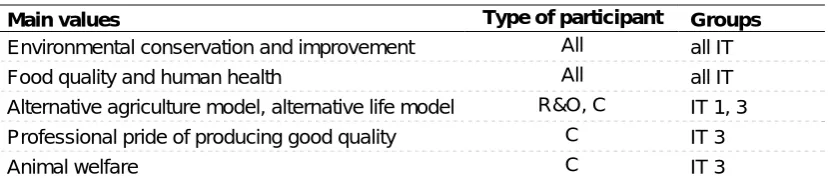
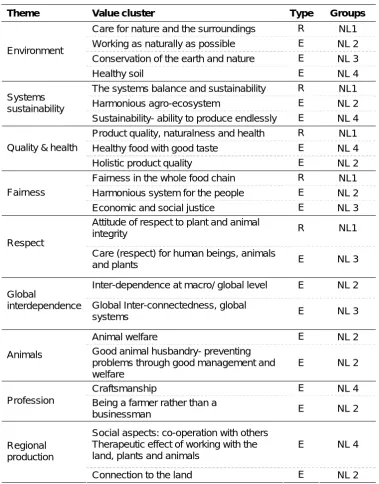
In all countries, food quality and health, environmental protection, and limiting resource use were among the important values. In addition, the following values were discussed as important in individual countries: in Austria, health, independence, and closed production cycles; in Italy, an alternative organic life model; in the
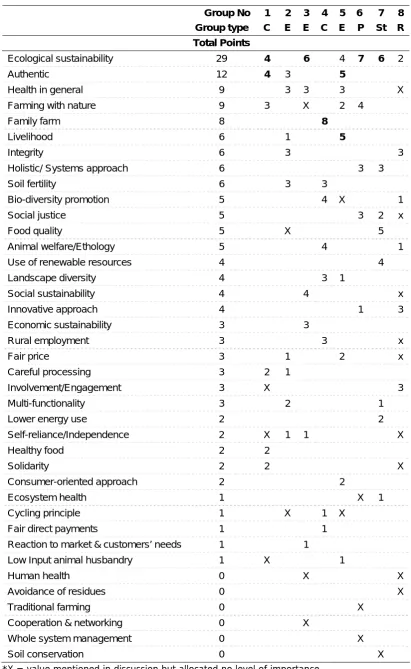
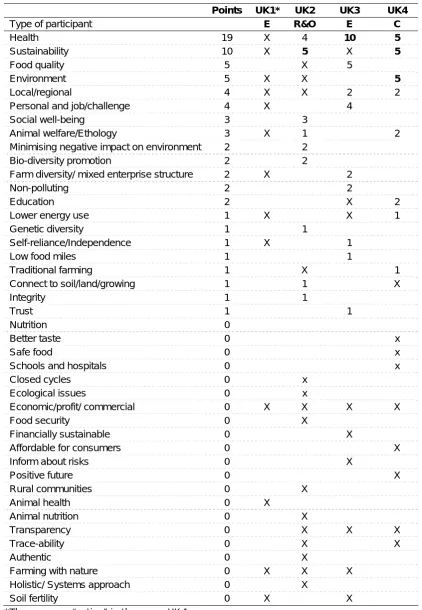
Netherlands, a systems approach, sustainability, fairness, and regional production; in Switzerland, sustainability, authentic production, and farming with nature; and in the UK, health, sustainability, professional challenge, and local production.
Economic pressures and a downward trend for organic prices were seen as preventing producers from realising all of their organic values, especially in larger trading structures and globalised markets. This was illustrated by examples from many areas of production, such as diversity or specialisation, crop rotations in the
2
greenhouse, tractors and their impact on the energy balance, and the costs of improved animal welfare. There was a similar reference to the lack of a level playing field for organic producers in relation to energy use and ecological issues.
Values expected to be important in the future of organic farming were: • Limiting the use of non-renewable resources, particularly energy sources • Avoiding contamination with GMOs
• Fair or cost-covering prices • Solidarity among farmers • Local and regional production
• Closer links between producers and consumers
• Openness, communication and trust throughout the whole organic food chain
Further analysis of the values and contrasting with the new IFOAM
principles of health, ecology, fairness and care
A comparison of the results with consumer studies shows that many stakeholders tended to associate organic farming with health, low residues and healthy products. This is substantiated by the producers’ concerns for the health of consumers. Established organic producers and researchers referred further to a concept of systems health or a cycle of health similar to the IFOAM principle of health.
Environmental and ecological values were important to all stakeholders. Established organic producers emphasised closed production cycles to minimise resource use, similar to the emphasis on balanced agro-ecosystems in the IFOAM principle of ecology. Environmental protection and biodiversity conservation were among the values expected to become more important in the future; they were also of greater importance to new entrants and to consumers.
Values represented in both the IFOAM principles of fairness and care were frequently mentioned and intensively discussed. The participants strongly associated organic farming with the sustainability of agriculture, and they considered that social justice will become a more important value in the future.
Values concerned with animal welfare and health were particularly important to some converting producers and other stakeholders. They recognised how important animal welfare is to consumers and expected it to become more important in the future. Animal welfare and health are divided in the two separate IFOAM principles of fairness and health.
Both producers and consumers preferred regional organic networks for reasons including product traceability and freshness, direct producer-consumer
communication and trust building, and reduced transport, but they recognised the limitations of local trade.
Recommendations for revision of the EU Regulation 2092/91
Values very similar to those contained in the four IFOAM Principles of Organic Agriculture were expressed by producers and other stakeholders and should be considered in the drafting both of the overarching principles and of the area-specific working principles in the revision of the EU Regulation 2092/91 on organic
production. Principle of health
The idea of a core principle of health for organic farming to cover product quality, animal and human health, and the health of the system,
appeared well-supported by the values expressed in these focus groups and by consumers, and it should be included in the EU Regulation. Principle of ecology
Three areas of values are related to this principle: limitation in the use of non-renewable resources; working with nature or in a natural way; and conservation of diversity in crops, species and landscape. Values relating to all three areas appeared well-supported by all types of participants. Principle of fairness
The desire for fairness in the whole food chain was an important value shared by organic producers and other stakeholders across the countries studied. It therefore seems justified to establish a fairness principle and to consider social justice in the further development of standards and
regulations. Principle of care
The values of sustainability, and of care for the production process, product quality, and the environment were well-supported by the organic producers and other stakeholders of the focus groups and should,
therefore, be considered for inclusion in the principles of the EU Regulation. The IFOAM principle of care emphasises the precautionary principle, which is to be exercised when choosing new production technologies or inputs, and prefers processing technologies that are careful to maintain the quality and integrity of the product.
Some values of great importance to producers and other stakeholders in these studies are not covered in detail by the new IFOAM principles or are split between two or more of the principles. These topic areas should also be considered for inclusion in the statements of principles of organic production in the EU Regulation for organic agriculture. They include the following categories of values:
Environmental protection and bio-diversity conservation
The contribution of organic farming to conservation and environmental protection emerged as an important value both to producers and to consumers, and they expected these concerns to become even more important in the future. Given this broad and growing support from a range of stakeholders, a direct mention of the value of nature
Animal welfare and animal health
There seemed to be a mismatch of expectations between consumers and producers in relation to animal welfare. This may be related to the fact that the EC organic standards for animal husbandry were introduced much later than for crops. Representing all issues related to animals in a principle of animal health and welfare in the EU Regulation could
encourage more active engagement of all stakeholders with these issues, especially with animal welfare as an area of key importance to consumers and of wider societal benefit.
Local/regional production
Both producers and consumers expressed a preference for local and regional organic networks but they also acknowledged the necessity for larger-scale trade. Further work in the project will aim to clarify how these issues may be considered in future development of standards, while recognising the limitations of an exclusive focus on local trade, especially for producers in the more marginal areas.
Whole systems or holistic approach of agriculture
Many participants considered that the approach of organic agriculture is holistic, and so involves the need to consider the impacts of any practice on the whole farming system. They thought organic producers need to learn that problems are best dealt with by prevention through identifying the causes within the system and through respecting and learning from natural processes instead of relying on external inputs.
Professional skills, independence and responsibility
1 Introduction
The recent development of organic agriculture was characterised by fast growth, large-scale production, involvement of large conventional companies, and global trade. At the end of 2003, organic and in-conversion land area in the enlarged EU (25 countries) reached an estimated 5.8 million hectares (ha) on 155,100 holdings, amounting to 3.5% of the utilisable agricultural area (UAA). This represents
substantial growth compared with the middle of the 1980’s. In 1985 certified and policy-supported organic production accounted for 103 000 ha in the EU, or less than 0.1% of the UAA on approximately 6 000 holdings. The market for organic products in Europe grew from an estimated 900 million Euros retail sales value in 1989 to approximately 12 billion Euros in 2004.
There is a concern that this fast growth threatens the effectiveness of organic agriculture to function as an alternative, more sustainable development path and as a source of inspiration for mainstream agriculture and for the development of
environmental and rural development policies. They may also have a negative impact on offering alternative choices for politically motivated consumers. There is,
therefore, renewed interest in values and principles that can guide the future development of organic farming. Existing definitions are not always, in themselves, adequate as a guide for the dynamic development of organic agriculture in a globalising world and in responding to new challenges. The regulations and standards have become more complicated, and changes may be implemented without any firm connection to the values of the organic movements because these common values are not clearly stated.
The overall objective of the research project Organic Revision (EEC 2092/91; FP6-502397) is to provide recommendations for development of the EU regulation for organic agriculture. In setting up the project, the team proposed to include a study of the principles and basic ethical values of organic production in Europe (WP 2), which would entail the following tasks:
• identifying basic ethical values of organic agriculture;
• providing recommendations concerning use of basic ethical values in evaluation and revision of organic standards;
• identifying value differences among different organic stakeholders;
• suggesting a procedure for balancing and integrating basic ethical values and value differences in the development of organic standards; and
• identifying value-based conflicts in the organic regulations.
Some of these aims were addressed by a series of focus groups on current organic values. The participants included organic and converting producers and other
1.1
Background
1.1.1 Development of organic farming in the focus group countries
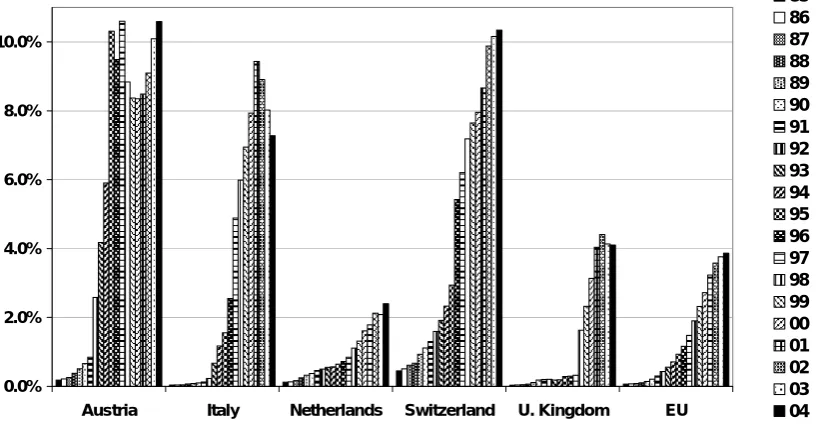
The countries where focus groups were conducted exhibit some differences in relation to the development of their organic sectors. Austria, Switzerland, Italy, and the UK have higher than average uptake of organic farming; whereas the
Netherlands is below the EU average (see Figure 1).
0.0% 2.0% 4.0% 6.0% 8.0% 10.0%
Austria Italy Netherlands Switzerland U. Kingdom EU
[image:12.595.96.505.213.428.2]85 86 87 88 89 90 91 92 93 94 95 96 97 98 99 00 01 02 03 04
Figure 1: Organic and in-conversion land areas in five countries (% of UAA)
Austria has a long tradition of organic and biodynamic farming, and approximately 10% of total UAA is currently organic or in-conversion. Individual organic farms (mainly biodynamic) date back to the 1920’s and 1930’s. From the 1970’s a slow but steady growth in the number of organic farms continued throughout the 1980’s. The movement had close contacts with Dr. Hans Müller in Switzerland, the founder of organic-biological agriculture. He visited Austria regularly, and many Austrian farmers attended courses at his school in Switzerland. In the last 15 years, the sector has experienced alternating periods of stagnation and rapid growth. After the
introduction of subsidies in the early 1990’s, rapid increases in organic land area took place mainly in the grassland and mountain areas, where conversion aid was higher than other no-input programmes in the agri-environment schemes. Until 2000, this was followed by a period of stagnation and decline partly because some farms discontinued organic management after the first 5-year conversion-support period was over. In 2002/03, there was a new period of growth in organic land area with growth rates higher than EU average. This was driven mainly by arable producers in the Eastern provinces of Austria, who were probably influenced by a decline in prices for conventional cereals.
farming and other agri-environment subsidies from 1993 to 1996 in the various regions of Italy with EC Reg. 2078/92 (Michelsen et al., 2001).
In 2004, there were approximately 36 000 farmers certified as organic on a land area of nearly 950 000 ha, and around 25% of all EU organic producers were in Italy. However, the number of farms had fallen by 7 500 since 2003, and the land area had reduced by nearly 100 000 ha. Italy has the fourth largest retail market for organic products in Europe.
The Netherlands has a strong tradition of biodynamic farming, as well as ecological or organic farming. In 2003, organic land area in the Netherlands was 2.2% of UAA, which was below the EU average. This land area declined by 2% from 2002 to 2003 but then increased to 48 155 ha in 2004. The earlier decline was probably a result of policy changes in 2002, when conversion support was suspended in favour of a task force for organic market development (maintenance support continues).
Approximately 50% of the Netherlands organic land area was grassland in 2003 with the rest in arable and horticulture production. In contrast to a decline in land area, the market for organic produce continues to increase, especially in the multiple retailer outlets, which account for nearly 50% of all organic sales. Consumers associate organic with fresh food, and most organic sales are of dairy products, fruit and vegetables, meat, and bread.
In Switzerland organic farming has a long tradition. The first Swiss biodynamic farm was founded in 1928. In the same year, Minna Hofstetter, inspired by the ‘Reform’ movement and vegetarianism, started to publish on the subject of organic gardening. After the Second World War, Hans and Marie Müller developed the bio-organic movement, working together with the soil scientist Hanspeter Rusch. They helped to establish the first farmers’ marketing cooperative in 1946, mainly for vegetables. By the 1970’s, farming practices similar to modern organic farming had evolved (Vogt, 2000).
Over the last ten years, the number of organic farms has increased almost five-fold, but growth is currently stagnating at only 2.3% per year. In early 2005, 11.2% of farms were organic (6 420 farms) on 10.5% of the land area (112 000 ha). The majority of these farms are in the mountains and hills, and produce milk and meat, while fruit, berry, vegetable, and wine production are under-represented due to production difficulties. The average size of organic farms is still small at between 15 and 20 ha, but there is a strong tendency among both organic and other farms for this average size to grow. Originally, most organic products were sold directly by the farmers themselves or in health food stores. The sales volume increased strongly when Coop and Migros, the two large supermarket chains, began to sell organic products in the 1990’s. The Swiss Federal Government has supported organic farming with direct payments since 1993. Organic farmers achieve price premia of 20% to 100% compared to conventional farm products. Together with the subsidies, this results in incomes for organic farmers similar to those of conventional farmers (Rudmann and Willer, 2005).
The history of organic farming in the UK goes back to Lady Eve Balfour and the founding of the Soil Association in 1946. After many years of trailing behind other European countries, the UK experienced a sharp increase in the number of farmers interested in organic conversion from 1997, shortly after the introduction of
farmed organically, rising to 4 000 producers on nearly 700 000 ha at the end of 2003. However a decline in land area was reported in 2003 and 2004.
The results of a survey of UK farming community representatives, agricultural policy specialists, and food market experts suggest that increased conversion aid was not the only driver causing rapid development in the 1990’s. Other possible drivers included the crisis in conventional agriculture, increased consumer demand for organic food, good organic prices,a relatively high profitability of organic farming, and increased government promotion and support for organic farming under the Labour administration (Michelsen et al., 2001). This period of growth in organic production in the late 1990’s was followed by a period of consolidation: there were problems of supply exceeding demand in some key markets, such as milk and red meat, resulting in reduced farm gate prices.
The distribution of organic farms in England and Wales is skewed towards livestock production, and the predominantly grassland regions in the South and West have a relatively large proportion of organic producers (SA, 1999). Compared to
conventional agriculture, more mixed farms and fewer specialist dairy and arable farms are managed organically. The reasons for this are not fully understood but are probably mainly technical (e.g. enterprise mix and farm type).
The UK organic food market has historically been quite dependent on imports. In the market as a whole, import dependency has reduced as more UK farms have
converted to organic production, but there remains a mismatch between consumer demand and domestic production for some goods such as fruit and vegetables. An above average rate of growth has been noted in direct sales, especially farmers markets. However, the most important outlets for organic food in the UK remain the multiple retailers (approx 80% of all organic sales), and there is significant
competition among the supermarkets in organic food retailing. Major retail chains report increasing organic sales and continued investment in expanding their organic ranges, but they have narrowed their focus onto brands and lines that have proven successful. All supermarkets state a commitment to procure domestically produced organic food. However, Firth et al. (2004) conclude that price pressure will perhaps be the main threat to the UK organic vegetable industry. The high retail prices are a barrier to consumers purchasing, but lower returns to growers could threaten organic integrity and the livelihoods of producers.
In summary, Austria and Switzerland’s history of organic agriculture began with the first biodynamic farms in the 1920’s. The roots of the organic-biological agriculture of Mueller and Rusch go back to Switzerland, but these ideas have also significantly influenced the organic movement in Austria. As a result of policy support for organic and sustainable agriculture, both countries have experienced significant growth since the early 1990’s. Italy has a relatively young organic sector with dramatic growth since the early 1990’s and very strong regional differences. The Netherlands has a strong tradition of biodynamic farming alongside ecological agriculture, but growth since the 2002 has been moderate compared to other countries. The UK has strong and long tradition of organic farming, going back to Lady Eve Balfour and Sir Albert Howard in the mid-1940’s. Growth in the 1990’s started late compared with other EU countries, but now the UK is above average in percentage land-area farmed
1.1.2 Organic producers’ motives and values
According to a survey of 47 organic farmers in Austria, conducted in 1980/81, original motives for converting to organic farming were ecological (such as improving efficiency by reducing inputs) and concerned with health problems in animal housing or in the family, while higher prices and increased income were less important (Plakolm, 1987). In a survey of 114 livestock producers, Omelko and Schneeberger (2003) found that the main reasons for conversion were related to family health, food quality, soil fertility, and problems with conventional methods on the farm. Accession to the EU and the introduction of subsidies caused a sharp increase in the number of organic farms mainly in the grassland regions. There is a suggestion that farmers’ attitudes have changed due to the official recognition of organic farming and the introduction of subsidies. For example Darnhofer et al. (2005b) created a typology of farmers and differentiated between “pragmatic” and “committed” organic producers. Several Austrian farms have left the organic programme. The three most important reasons for their reversion were the high cost of organic grain for feed, the lack of price premia for organic products (mostly beef and milk), and the frequency of changes in organic standards, as well as technical reasons (Darnhofer et al., 2005a). Recently the number of organic farmers has risen in areas
characterised mainly by arable farming, which could be related to the organic price premia for arable crops.
A number of Italian sources indicate that the average age of organic producers is younger than that of conventional producers; the majority of organic farmers are under 45 years old. A few studies have attempted to classify organic producers according to their commitment to organic values. Organic producers seem more educated than conventional farmers, and most of them had moved from urban areas to follow what they commonly perceived as an “alternative life model”. These studies classify the organic producers as belonging either to first or second generations. In this classification system, the first generation producers chose to go into organics to experiment with a more natural and sustainable alternative production model, using farm-based resources and paying more attention to environmental issues. The authors argue that a second generation of producers decided to switch from conventional to organics without a real commitment to its principles but just to pursue a new market.
Piani (1993) carried out socio-economic analysis of organic farms in Friuli region (north-eastern Italy). She classifies the organic producers in three main categories: the traditional producers, the intellectual producers, and the pragmatic producers. Farmers in the traditional category had not really chosen to be organic producers; they were always “organic” without even knowing it because of their close
In a qualitative research project carried out in southern Italy, Scardigno (2001) and Pugliese (2001) identify categories similar to most authors but suggest an additional category. The so-called eco-sly producers are seen as only interested in EU subsidies and as non-professional in their activities. However, the authors consider that
farmers in this group could be persuaded to change their attitudes to organic production.
A regional study conducted in Tuscany by Arsia (1992) shows that many organic producers came originally from other professional sectors and had decided to invest their money in agricultural activities, and that 15% of organic producers came from foreign countries. The average age of organic producers in the region was 42 years old. From Umbria, Chiorri (1993) reports that 23.5% of organic farmers in the region appeared to have a university degree but not in agricultural sciences or related subjects, and almost 40% of the others had a high school diploma. The author concludes from this data that organic producers are motivated by personal ethical values and not by technical considerations.
One of the first sociological studies of motives for conversion was carried out in Switzerland. Fischer interviewed 100 pioneer organic farmers in 1982 and concludes that although the motives and opinions of organic farmers varied considerably, they shared common basic characteristics. Decisions by farmers to change to an organic system were motivated principally as follows: (1) external factors, such as negative experiences in applying conventional methods, disease in humans and animals on the farm, and contacts with successful organic farmers; (2) internal factors, such as psychological predisposition, or the search for a new way of life. Fischer also notes that one of the farmers believed that organic farming systems would become widespread in a short time because of the required change of
occupational consciousness. However, it appears now that economic motivation to convert has become much more important with the development of markets and conversion aid.
In the first survey of 70 organic farmers in the UK (in England and Wales), farmers’ most frequently mentioned motivation was improvement of husbandry
(approximately 75%), followed by concerns about food quality for the health of humans and livestock (38%), debt reduction (28%), and the risks associated with agro-chemicals (24%) (Vine and Bateman, 1981). Ashmole (1993) reports similar motivations but finds that environmental concerns were more dominant: several farmers and growers mentioned the desire to go “back to the land”. In a comparison of five Scottish and ten French organic producers, economic considerations were the main motive for the Scottish producers, whereas the interviewees in France were also attracted by the values attached to organic farming (Marshall, 1999). In contrast and more in-line with older surveys, Burton et al. (1997) finds that non-economic aspects were dominant among the considerations on whether to go organic among 237 horticultural producers, of whom 151 were conventional and 86 organic. With the help of factor analysis applied to responses from a survey of 122 organic producers in Scotland, McEachern and Willock (2004) identify their underlying motives as environmental, ethical and societal. Important factors that explain variations in attitude were named as attitude to naturalness, market demand and policy. The study also reports that half of the surveyed producers thought the organic sector might loose its high ethical status in the future because new entrants to the industry were believed not to have the same ethical values as more
Ramsden and Rodgers (1999) attempted to cluster 59 organic producers based on attitudes, and they found differences in attitudes between those producers who supplied supermarkets and those who were only involved in other supply chains. The producers who supplied supermarkets were more business-oriented, whereas the non-supermarket producers were concerned about loss of independence and the lack of compatibility of the supermarket outlets with the organic farming ethos.
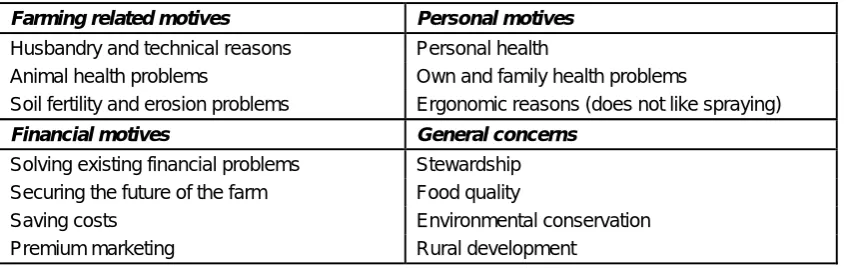
[image:17.595.91.515.251.385.2]An number of studies have looked at farmers’ motives for converting to organic production. Based on a review of literature, Padel (2001) summarises motives for conversion to organic farming in four categories: farming related motives, financial motives, personal motives, and general concerns (see Table 1).
Table 1: Categories of motives for conversion
Farming related motives Personal motives
Husbandry and technical reasons Personal health
Animal health problems Own and family health problems
Soil fertility and erosion problems Ergonomic reasons (does not like spraying)
Financial motives General concerns
Solving existing financial problems Stewardship Securing the future of the farm Food quality
Saving costs Environmental conservation
Premium marketing Rural development
Source: Padel (2001)
In the literature there is some indication that motives for conversion in earlier studies differ from those observed in later ones, a trend which would be expected according to the adoption diffusion model (Padel, 2001). Michelsen and co-workers (Michelsen, 2001, Michelsen and Rasmussen, 2003) compare responses from three large-scale surveys in Denmark of organic farmers who converted at different times, and they confirm that there was a shift from more idealistic to utilitarian motives; a higher proportion of respondents in the later surveys mention economics and protecting the environment as important reasons. The later converters were also less critical of conventional agriculture but saw organic farming as a professional challenge. The authors note that the proportion of full-time producers was greater among the later converters, and that despite the observed differences in attitudes between them, both groups strongly identified with organic values.
In contrast, Lund et al. (2002) found differences between the values of organic farming pioneers and those of later entrants in semi-structured interviews with 11 organic producers in Norway. The pioneers expressed a more eco-centric view emphasizing a holistic perspective and interpreting questions in larger frameworks, whereas economic reasons appeared more important for later entrants. Although the later entrants appeared to have a more superficial relationship to organic principles, the authors highlight that this could have been a reflection of the shorter time of their exposure to such principles.
to organic agriculture). Vartdal compares the latter group with the early majority in the adoption diffusion model and comments on differences between the Reformists and the others regarding the proportion who came from a farming background. A number of studies indicate a shift in the motives for conversion, in which recently converted producers are more motivated by economic reasons. There is concern that newer converters are less committed to core organic values, although the direct empirical evidence for this remains weak. The literature further indicates that a wide range of other factors influences motivation for organic conversion.
In relation to all agricultural producers, Gasson (1973) classifies values into four categories:
• Instrumental values, such as making an income, safeguarding the future • Social values, such as family tradition, belonging to the community • Expressive values in farming, such as pride and creativity
• Intrinsic values, such as enjoyment of work
Based on the review of studies looking at personal motives (see 1.1.2 Organic producers’ motives and values), these categories seem to hold true for organic producers, but a further category of altruistic values may be needed to represent some of the important motives of farmers converting to organic production. These include environmental protection, food quality, food security, social justice, resource-use conservation, and regionalisation of trade.
1.1.3 The context of the decision to convert
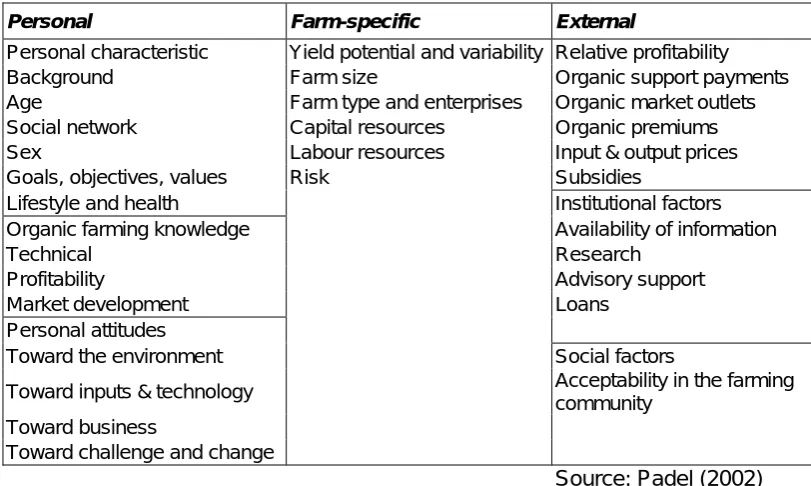
It is important to note that the decision to convert and the conversion process are complex and are influenced by a broad range of factors. Apart from personal characteristics and attitudes, a range of farm-specific and external factors, mentioned in the literature as influencing the conversion decision and change process, were reviewed by Padel (2002). These include the following:
• availability of organic support payments • yield variability
• resource use constraints (such as mortgage payments and labour demand) • farm size
• farm type (and enterprise structure, with conversion more likely on mixed and low intensity farms)
• relative profitability and future market development
• social and institutional contexts (although less important in later surveys) • availability of information about: weed and pest control, yield development,
organic standards requirements, and relative profitability of organic farming compared with conventional
• costs of conversion
Table 2: Factors influencing the decision to convert to organic farming
Personal Farm-specific External
Personal characteristic Yield potential and variability Relative profitability
Background Farm size Organic support payments
Age Farm type and enterprises Organic market outlets Social network Capital resources Organic premiums Sex Labour resources Input & output prices Goals, objectives, values Risk Subsidies
Lifestyle and health Institutional factors
Organic farming knowledge Availability of information
Technical Research
Profitability Advisory support
Market development Loans
Personal attitudes
Toward the environment Social factors
Toward inputs & technology Acceptability in the farming community
Toward business
Toward challenge and change
Source: Padel (2002)
1.2
Objectives of the focus group work
The work reported here was carried out as part of Work Package 2 (WP2) of the Organic Revision project. The main aims of WP2 are to identify the basic values and the differences in values relating to organic agriculture in Europe and to develop a procedure for integrating these values into further developments of the EU organic regulation.
Specific objectives for the Sub-Work Package 2.3 (Focus Groups) are:
o To identify the range of values and related attitudes among organic producers
o To explore differences of values among different groups of organic producers (particularly early and more recently converted) and among different regions o To explore differences in value-related concepts between producers and
other organic stakeholders in particular through comparison with work on organic consumers in the OMIaRD project.
A further aim was to contrast the stakeholders’ values with the more general principles of organic production. The work referred to the process of revising the principles of organic production, which has been initiated by IFOAM and was carried out in close cooperation with the Organic Revision Project.
1.3
Structure of the report
Chapter 2 presents some methodological considerations about the method of focus groups, which was used to study the values of organic producers in this project, including a summary of the procedures for recruitment, moderation and analysis. Chapter 3 describes the main results from each country, following the same order as the questions discussed in the focus groups, based on the national reports. Sections cover first associations with the word organic, the personal organic history,
discussion of important values for organic sector now and in the future, and value conflicts.
Chapter 4 presents further analysis of the results, which was conducted using a coding procedure. A common codebook was developed based on the literature review and first summaries of the results in the national reports. Codes were
attached to individual values. Each statement from the focus group transcripts could then be assigned codes to reflect the values expressed. The chapter contains
summaries of the participants’ values. The values are grouped according to the four new IFOAM Principles of Organic Agriculture.
2 Methodology
This chapter sets out some key theories addressing the link between values and behaviour which have influenced the development of the approach in this study. This is followed by a short introduction to the implementation of the focus groups method in this project, including the common procedures for moderation (including the Discussion Guide), recording and analysis. This is followed by a short description of the recruitment, the locations, and the participants of the focus groups conducted for this study.
The main aim of this empirical work was to get a better understanding of the range of values held by organic producers and other stakeholders and of their value differences. Values influence behaviour and much research has been carried out to understand how the influence takes place. In relation to market research in particular two models are of interest.
The Theory of Reasoned Action (TORA) by Fishbein and Ajzen (1975) and Ajzen and Fishbein (1980) provides some background on how values and the perception of outcomes are linked to behaviour through behavioural intent. TORA is based on the assumption that decisions are rational and are determined by four factors: the perception of outcome(s), the importance attributed to a particular outcome, which is reflected in the persons attitude, a social referent, and the importance of this referent. The first two factors lead to the formulation of attitude and the latter to subjective norms or values. Both attitudes and subjective norms influence
behavioural intent which is considered to be good predictor of behaviour. This theory was developed to predict behaviour through the study of attitudes rather than in the context of studying values themselves. It is, therefore, only of limited relevance to the work here but illustrates that behaviour can provide an indication of underlying values.
The Means-End Chain (MEC) Model forms the basis for study of the values involved in consumer choices by eliciting links between values and product attributes. A means-end chain (or ladder) links consumers’ knowledge about product attributes with their knowledge about the consequences of their purchasing choices and with their own values. A means-end chain can be understood as a problem-solving
process: the consumer selects a course of action to attain a particular objective, or a means to achieve an end. Product attributes provide a means for consumers to obtain desired ends through the consequences or benefits yielded by purchasing the products (Gutman and Reynolds, 1979; Gutman, 1982). The method proposes a clear procedure on how to study consumers values through one-to-one interviews that follow a particular format of probing questions. However, the model deals with consumption rather than production choices. The simple form of the ladder does not appear to correspond to the complex array of factors identified in the literature as relating to the producer’s decision to convert to organic farming.
Both models provide some interesting insights but do not give clear guidance on how to study the values involved in such a complex strategic decision as farming
In this project, we chose the method of focus groups to study the values of producers and other stakeholders. Alternative methods to study values could have included questionnaire-based surveys with larger samples or in-depth interviews with individuals, for example using the laddering technique. All methods are problematic in studying values because they are often unconscious.
Focus groups are carefully prepared discussions of 90 to 120 minutes with 6 to 15 participants, aiming to learn about the perceptions, feelings, attitudes, values and ideas of the group participants with respect to a defined area of interest (Calder, 1977, cited by Kahan, 2001, Zanoli, 2004). The main advantage of the focus group is that the relaxed atmosphere reduces people’s level of discomfort about expressing things that they might withhold in other situations (Anon, 1999). In contrast, the laddering interview may allow deeper probing of cognitive structures of individuals (see Zanoli, 2004), but this deep probing may intimidate interview participants and cause them to answer in a defensive way. Quantitative surveys are often answered at a very superficial level, pressing answers into false categorisations, so they may not be suited to explore the values and value concepts of respondents (Anon, 1999). A further advantage of the focus group method for this project was it has also been used to study the values of organic consumers in the OMIaRD project (Zanoli, 2004), with which these results were to be compared. Choosing the same method with one identical question in the Discussion Guide allowed a close comparison of the two studies.
Historically, focus groups can be traced back to Merton in the 1930’s, who worked with non-directive group interview techniques and soon found that people were most revealing when they found themselves in a safe, comfortable place with individuals like themselves. He is associated with the beginning of the development of
qualitative social science research (Saumure, 2001). After that time the method of focus groups was almost exclusively used in market research, but since the mid 1980’s it has become more widely used in academic social science research and accepted once again as a valuable method even in policy research (Saumure, 2001; Kahan, 2001).
Differences between academic and market research largely reflect two separate traditions. In academic social science, the use of focus groups is clearly a qualitative method, which gives importance to each individual voice and encourages group dialogue and listening to individual concerns (Saumure, 2001), but it does not aim to obtain statistically representative data.
In focus groups, the interaction among the participants follows the structure outlined by the moderator. Focus groups are not group interviews, nor participant
observation, nor a debate (Kahan, 2001). The value of the technique lies in discovering the unexpected, which emerges naturally from a free-flowing group discussion (Calder, 1977, cited by Zanoli (2004) P5. ).
2.1
Moderation and the Discussion Guide
Switzerland. This was attended by all the focus group moderators from the five countries involved and by the work package co-ordinator. To assist with the workshop, an external expert was subcontracted to assist with the training of the moderators in general focus group techniques and in using the common Discussion Guides, which had been prepared for use in all these focus groups.
The aim of the training was to highlight he role of the moderator in the focus group process in stimulating an honest exchange of views among the participants (Anon, 1999). The moderator should ask questions appropriate to the project objectives, guided by the discussion guide, and should make the participants feel comfortable, and so stimulate an honest exchange. The moderator needs to help generate a situation that favours respect for diverging views and to avoid situations that make participants feel defensive. The moderator may probe further if the discussion is not flowing, using different angles if necessary, but should give all the participants enough space to express their opinion and not rush them through too many questions. In addition to the moderator, each focus group had an observer, whose role was to note the order in which participants spoke and to help with the technical arrangements for each group.
The common Discussion Guide was designed to reveal the range of values among organic producers and other stakeholders, and to establish which values were most important to the participants. The main aims were to explore values through the discussion of personal experiences and past behaviour and to allow a more abstract discussion of the shared values in the organic movement. Two versions of the Discussion Guide were developed, reflecting the different backgrounds of producers and other stakeholders.
The Discussion Guides document was very detailed to assist the less experienced moderators. Each section included an explanation of the aim, a key question to be asked by the moderator, a selection of further probing questions, and an indication of how long the section should take. The sections were ordered as follows:
• Round of personal introductions
• First associations with the word organic
• Reasons for personal involvement with organic sector
• Discussion of meaning of values and value conflicts
• Important values of organic sector in the future
• Closing round of issues not covered
The personal introductions were intended to make the participants feel comfortable, get to know one another and the moderator, and to introduce them to the topics. The next section of first associations with the word organic was intended to reveal top-of-mind associations. In many groups, participants were asked first to write down two or three keywords before sharing them in the discussion with the others. This question had also been asked in focus groups with consumers as part of the OMIaRD project.
In the next section, participants were asked to share with others their personal involvement in the organic sector. This question was asked to get a better
organic production, but for other participants the question was not so specific. The motives and personal values mentioned in this section were written down so that they could be referred to in the subsequent discussions of more abstract values of the organic food and farming sector. Most participants found it very interesting to hear from others about their reasons to get involved.
The participants were then asked to discuss which of the values they considered more personal and which of them were more relevant to the whole organic sector. The aims of this section were to move from the personal level to the organic sector as a whole, to understand the wider meaning of various values and motives, and to hear about their importance to the participants. This was followed by a section on potential conflicts, which aimed to improve the understanding of the relative importance between values and to find further examples of inherent value conflicts for other work in this work package. In the final section, participants were asked what basic values of organic farming they expected would become more important in the future. This section provided another way of revealing the importance of values to the participants. In the closing round, participants were able to add any further points they wished to make and to ask other questions about the project.
The full Discussion Guide is available in the as a separate document on Organic-Revision.org. Key questions asked in each section are shown in Chapter 3, where a summary of the results is presented following the order of the sections in Discussion Guide. The Discussion Guide was tested and discussed in the moderators’ training workshop and amended where necessary. The modified version was pre-tested by researchers at FiBL, Switzerland, and then by groups of researchers and staff of organic organisation in each participating country. As there were no major changes to the Discussion Guide resulting from these pre-tests, these have been included in the analysis.
2.2
Recording, transcription and analysis
Each discussion was recorded and then fully transcribed after the meeting. During the meeting, the observer noted the order of speech so that each statement could be ascribed to an individual speaker in the transcription. The moderator and observer met shortly after each focus group to share their views and observations in a short debriefing session. They then prepared a short summary to outline the main discussion points and observations.
The second stage of a substantive analysis was based on coding. In essence, coding is used to associate each statement to one or more values and so to enable
comparisons of various views on each topic. Coding is an effective method of organising the data into common themes, which introduces an element of rigour to the process and allows the researchers to analyse the full transcriptions in a
methodical way.
A common codebook was developed to ensure a consistent approach among the various researchers involved in the analysis. A codebook is a list of terms or
concepts, in this case a list of values and related concepts. The common codebook for this work was based on the literature review, the work of the IFOAM Task Force to revise the Principles of Organic Agriculture, and the results of the first stage of the analysis. It contained a list of motives and values likely to be mentioned by organic producers and other stakeholders and relevant value conflicts. The codes were grouped, according to a draft of the organic principles proposed by the IFOAM Task Force, to allow a comparison of the stakeholders’ values with principles of organic production.
Each national team coded its own data using the common codebook. The teams were encourage to use computer software to help with the analysis of unstructured data (such as N vivo or Max QDA). Each team could add new codes if values or concepts occurring in the discussion had not been included in the common codebook.
The next step of the analysis was a summary and a further examination of all the statements related to each coded value (and/or group of coded values). At this stage, it is often necessary to split or merge material.The second part of the national reports presented the findings for each code, summarising the range of views expressed and the meaning of each value to the focus group participants, and contrasting the views of different types of participants. These results were illustrated by selected quotes.
These national reports formed the basis for the final stage of analysis across countries, which is presented in Chapter 4 (Further analysis of the meaning of core values and comparison with the new IFOAM Principles of Organic Agriculture). This provides a deeper analysis of meaning of values to the participants and how these relate the principles of organic production. However, it is important to note that the participants did not discuss the proposed IFOAM principles of organic production, but expressed their own individual and shared values in an unprompted way. The
comparison with the IFOAM principles was carried out during the analysis.
2.3
Participants and locations of the focus groups
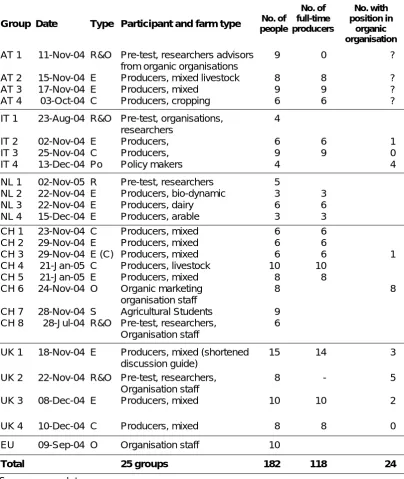
Between August and December 2005, 26 focus groups were conducted in six countries (see Table 3). The project partnership selected a range of countries with well-developed organic sectors, ensuring an even spread around the EU15 region. However, there is no suggestion that the results are statistically representative for Europe or the EU as a whole.
contacts in organic sector organisations to identify suitable regions and potential participants. The aims of recruitment in each selected region were to bring together groups of mainly full-time producers with a mixture of locally typical farm types and to avoid long travelling distances. Wherever possible in each of the regions, an additional, separate group of other (non-producer) stakeholders was convened. Table 3: Countries and participants of the focus groups
Group Date Type Participant and farm type peopleNo. of
No. of full-time producers
No. with position in
organic organisation
AT 1 11-Nov-04 R&O Pre-test, researchers advisors from organic organisations
9 0 ?
AT 2 15-Nov-04 E Producers, mixed livestock 8 8 ?
AT 3 17-Nov-04 E Producers, mixed 9 9 ?
AT 4 03-Oct-04 C Producers, cropping 6 6 ?
IT 1 23-Aug-04 R&O Pre-test, organisations, researchers
4
IT 2 02-Nov-04 E Producers, 6 6 1
IT 3 25-Nov-04 C Producers, 9 9 0
IT 4 13-Dec-04 Po Policy makers 4 4
NL 1 02-Nov-05 R Pre-test, researchers 5
NL 2 22-Nov-04 E Producers, bio-dynamic 3 3 NL 3 22-Nov-04 E Producers, dairy 6 6 NL 4 15-Dec-04 E Producers, arable 3 3 CH 1 23-Nov-04 C Producers, mixed 6 6 CH 2 29-Nov-04 E Producers, mixed 6 6
CH 3 29-Nov-04 E (C) Producers, mixed 6 6 1
CH 4 21-Jan-05 C Producers, livestock 10 10 CH 5 21-Jan-05 E Producers, mixed 8 8 CH 6 24-Nov-04 O Organic marketing
organisation staff
8 8
CH 7 28-Nov-04 S Agricultural Students 9 CH 8 28-Jul-04 R&O Pre-test, researchers,
Organisation staff
6 UK 1 18-Nov-04 E Producers, mixed (shortened
discussion guide)
15 14 3
UK 2 22-Nov-04 R&O Pre-test, researchers, Organisation staff
8 - 5
UK 3 08-Dec-04 E Producers, mixed 10 10 2
UK 4 10-Dec-04 C Producers, mixed 8 8 0
EU 09-Sep-04 O Organisation staff 10
Total 25 groups 182 118 24
Among the 25 focus groups, there was the following representation of stakeholders: • 16 consisted of producers
o 11 groups of participants coming mainly from well-established organic farms (E3)
o 5 groups of producers from recently converted holdings (C) • 19 groups contained other stakeholders in the organic movement
o 7 groups of people working in research and organic organisations (R&O), including one IFOAM EU group
o 1 group of policy makers (Po) was held in Italy o 1 group of agricultural students (S) in Switzerland
Another focus group, involving processors in Germany, has not been included in this report. In total, 182 participants attended the focus group meetings, 118 of whom were full-time agricultural producers. 41% of all participants were established
organic producers who had converted before their nations’ organic payment schemes were introduced; another 25% were from farms that had converted recently. The rest were groups of other stakeholder: 24% were researchers and people working in organic organisations, and 10% were policy makers or students.
The Austrian focus groups were held in three regions of different land types: grassland areas, mixed grassland/arable areas, and arable areas. The pre-test group (AT 1) in Austria took place in Vienna and was made up of advisers and researchers. Groups AT 2 and AT 3 consisted mainly of producers from grassland areas or arable-grassland areas who had been practising organic farming for many years, and AT 4 was mainly of producers from recently converted farms without livestock. In total, 32 people took part. Their ages ranged between 29 and 70 years (average 45), and 25 of them were male. The majority of participants in Austria had agricultural training, ranging from practical courses to degrees at agricultural university; three had undergone other (non-agricultural) training.
24 participants were (or had been) active farmers (18 full-time and two part-time); four of them were retired. Three participants were active in advisory services, four in research and one in an agricultural (mainly organic) interest group. Three farmers had had a leading function in organic associations. Three of the four advisers were employed by organic associations.
The pre-test in Italy (IT 1) was conducted in Rome and involved the staff of an organic organisation and one researcher. IT 2 was held in Rome among established producers from the Lazio region who had converted their farms between 1990 and 2000. These included cattle and pig farmers, horticultural and fruit producers, and olive tree and oil producers. IT 3 was held in Tuscany with newly converted
producers. Half of these participants had only recently started farming, and all had started their conversions since 2001. Two large cereal producers with some cattle had converted in 2004, and the others were variously involved in producing cereals for bread and pasta, vegetables, aromatic herbs, honey, extensive beef, and some processing. IT 4 (also in Rome) included policy makers from institutions that collaborate with the Organic Department in the Italian Ministry of Agriculture, and some researchers.
3
The pre-test group in the Netherlands (NL 1) included only female organic farming researchers from the participating institutions. NL 2, involving well-established bio-dynamic dairy farmers, turned out to be smaller than intended because some farmers sent late apologies. Those present had converted between 1988 and 1991. NL 3 consisted of established organic dairy farmers, who were all male and had converted their farms between 1987 and 1994. NL 4 was made up of organic arable farmers and again had to be run as a small group, in this case because of poor response to the initial contacts. The group represented a mix of organic and
biodynamic farmers who had converted between 1989 and 1995. It was not possible to recruit newly converted producers to a Netherlands focus group.
In Switzerland the pre-test (CH 8) was held among staff of the project partner’s research institute. Five focus groups involving producers (CH 1-5) were held in three locations. All these groups contained producers with a range of enterprises
(livestock, arable crops, and horticultural crops) and a range of farm sizes. The groups were formed of producers who had converted their farms either before or after 1993, the year when nationwide grants were introduced in Switzerland. CH 1 and CH 2 in the Zuerich region consisted mainly of the pre-1993 converters. The majority of the participants of CH 3 in the town of Olten had converted since 1993. CH 4 and CH 5 were held in the mountainous canton of Grison. CH 4 involved only pre-1993 converting producers, and CH 5 included only post-1993 converters. There were two additional groups in Switzerland: CH 6 included the staff of the nationwide producer organisation and certification body (Bio Suisse), and CH 7 consisted of agricultural university students who were relatively new to the subject of organic farming.
In the UK, the first group (UK 1) was conducted as part of a regular 6-monthly meeting of a group of experienced organic producers and demonstration farms in England. The meeting was held on a participating farm in Gloucestershire, and the Discussion Guide had to be shortened to fit in with the larger meeting. The
producers came from a wide variety of farms throughout England with arable enterprises, horticulture, and dairy and other livestock. A further focus group with recently converted producers in the same region had been planned, but it proved impossible to recruit because there is no contract database of such producers in the area. UK 2 was held at the project partner institution in Wales and included
researchers and organic sector professionals. UK 3 involved established organic producers, and UK 4 consisted of producers who had converted their farms after 1999; both these groups were in South Wales, with a mixture of farm types including arable, livestock and horticulture.
2.4
Summary of methodology
Each group lasted approximately 2 hours and covered the following topics: • Introduction followed by first associations with the word organic
• Personal involvement with the organic farming and food sector • Discussion of motives, values and potential value conflicts • The basic values of organic farming in the future
The focus group discussions were recorded and transcribed, and a first summary of the data was prepared shortly after each meeting. Analysis of the data was