•
State
Responsibility
•
for the
Global Ecosystem
The Case of the Polar Regions
by
Julia Ann Green BA, Grad.Dip.ASOS (Hons)
Submitted in fulfilment of the requirements for the degree of Doctor of Philosophy
DECLARATION
This Thesis contains no material which has been accepted for a degree or diploma by the University or any other institution, except by way of background information
and duly acknowledged in the Thesis, and to the best of my knowledge and belief, no material previously published or written by another person, except where
due acknowledgment is made in the text of the Thesis .
. . . . . . .. . Ju l i a A Gr e e n
AUTHORITY OF ACCESS
This Thesi s may be ma d e available for loan an d lim ited copying in accordance with the Copyright Act 1968.
· · · ·· Jul ia A Green
ABSTRACT
A new sense of state responsibility for the global ecosystem has emerged over the last three decades. It embraces doctrines such as sustainable development, the 'polluter-pays' principle, the precautionary principle, intergenerational equity and the common heritage of mankind. When coupled with international security and economic
considerations, the development of these concepts heralds the emergence of a new international environmental order and its attendant circle of interdependence which binds all states.
The emergence of shared concerns about humanity's impact on the global environment has its roots in a series of environmental crises which have served to confirm the planet's vulnerability and underscored the need for joint responsibility towards the global ecosystem. However, the acceptance by states of this responsibility has not been pervasive as inter-state cooperation from within the traditional framework of sovereign independence has always been problematic. But this study argues that endorsing the reality of our common ecological bonds means that state political boundaries are becoming increasingly insignificant as multilateral environmental policies and laws are pursued. This should not be interpreted as an abrogation of the rights of sovereign states, per se. Rather, it should confirm the transboundary character of environmental issues and the need for rethinking the traditional doctrines of sovereignty to emphasise cooperative approaches to dealing with environmental issues.
One area where this has been successfully attempted is the Antarctic, which is now the subject of one of the most comprehensive environmental regimes ever established. The counterfactual region is the Arctic, where the eight sovereign states have made only little progress towards sharing responsibilities for the ecosystem. Case studies of these two regions illustrate that in the Antarctic, the existence of a legal regime which redefines traditional notions of sovereignty has been instrumental in facilitating a substantial environmental management regime. By contrast, the absence of any re-development of the concept of sovereignty in the Arctic has impeded the progress of a comprehensive pan-Arctic regime for environmental management. However, in recent times there have been positive indications of a willingness by the Arctic states to redefine their traditional sovereign approach to common environmental issues, albeit in cautious terms.
There are obvious fundamental differences between the Arctic and the Antarctic. In any case, given the peculiarities of Antarctica one must necessarily be cautious in using it as a basis for general assumptions and policies for ecosystem management in other areas. This notwithstanding, developments in the Antarctic and the growing trend of internationalization of environmental issues in other regions call for transboundary approaches similar to the Antarctic experience. The Arctic would seem to be adopting this approach. Furthermore, this study argues that the new international environmental order requires such an approach to global ecosystem management.
ACKNOWLEDGMENTS
I acknowledge the assistance of my supervisors at the University of Tasmania: Associate Professor Bruce Davis, Institute of Antarctic and Southern Ocean Studies, and Associate Professor Sam Blay, Faculty of Law.
Thanks must be expressed to Dr Robert Hall, Professor Bill Budd, Professor Chris Joyner and Honorary Research Professor Roy Harden Jones, as well as to my
colleagues at the Institute of Antarctic and Southern Ocean Studies, for their assistance or comments on this work.
The author acknowledges the generous contributions from the Law Society of Tasmania, which funded travel to Scandinavia, the United Kingdom and Canada. Thanks must be expressed to Michael Pretes, formerly of the Arctic Centre, Rovaniemi, Finland and Professor Clive Archer, University of Aberdeen, for providing accommodation and support; the staff of the Fridtjof Nansen Institute in Oslo, particularly Willy Ostreng for opening so many doors into Norwegian Government departments; Terry Fenge, Ottawa, for his invaluable assistance and contacts; and Mike Robinson, University of Calgary, for his support and for the use of resources at the Arctic Institute of North America.
The polar maps were modified and reproduced by Doug Watson of Harding and Associates, Hobart from originals in Stonehouse (1990).
CONTENTS
List of FiguresList of Acronyms Introduction
Ph
i
losoph
ica
l
Ra
t
iona
le
4
Research
Ob
jec
t
ive
5
Ana
lyt
ica
l
Rat
iona
le
6
Thes
is
Structure
8
Sources
9
L
im
i
ta
t
ions
9
Chapter I Evolving Paradigms of Responsibility forthe Global Ecosystem
In
troduc
t
ion
11
1
.1
A
Carouse
l
of
Env
ironmen
ta
l
Cr
ises
13
1
.2
Key
Actors
23
1
.3
Key
Concep
ts
and
Pr
inc
ip
les
o
f
Respons
ib
i
l
i
ty
44
1
.4
Re
-Exam
in
ing
T
rad
i
t
iona
l
App
roaches
to
Sove
re
ign
ty
52
1
.5
Imp
l
ica
t
ions
for
the
Po
lar
Reg
ions
59
1
.6
Conc
lus
ions
64
Chapter 2 The Geography and Geopolitics ofthe Polar Regions
In
troduc
t
ion
67
2
.1
The
Antarct
ic
68
2
.2 The Arct
ic
70
2
.3
An
tarc
t
ica
:
From
My
th
to
Rea
l
i
ty
73
2
.4
The
Par
t
i
t
ion
ing
of
the
An
tarc
t
ic
74
2
.5
An
tarc
t
ic
Sovere
ign
ty
:
a
modus vivendi86
2
.6
Conc
lus
ions
90
2
.7
The
Geopo
l
i
t
ics
of
the
Arc
t
ic
91
2
.8
The
Sovere
ign
S
takeho
lders
92
2
.9
Pan-Arc
t
ic
H
is
tory
97
2
.10
Modern
Mu
l
t
id
imens
iona
l
Geos
tra
teg
ic
A
l
l
iances
102
2
.11
The
Sec
tor
Pr
inc
ip
le
and
Jur
isd
ic
t
iona
l
Issues
107
2
.12
Non-S
ta
te
Ac
tors
as
S
takeho
lders
108
2
.13
Conc
lus
ions
119
Chapter 3 The Antarctic Treaty System
In
troduc
t
ion
123
3
.1
The
An
tarc
t
ic
Trea
ty
Sys
tem
125
3
.2
The
Mad
r
id
P
ro
toco
l
on
Env
i
ronmen
ta
l
P
ro
tec
t
ion
144
3
.3
Ques
t
ions
of
Leg
i
t
imacy
158
3
.4
Ques
t
ions
of
Effec
t
iveness
162
3
.5
Ques
t
ions
of
Accoun
tab
i
l
i
ty
164
3
.6
The
P
ro
toco
l
and
Respons
ib
i
l
i
ty
fo
r
the
G
loba
l
Ecosys
tem
165
Chapter 4 Towards an Arctic Eco-Management Regime
Introduction 168
4.1 Existing Institutional Framework 169 4.2 Existing Legal Framework 171 4.3 Arctic Scientific Cooperation 171 4.4 Towards a Regional Scientific Organization 174 4.5 Common Environmental Problemsinthe Arctic 184 4.6 A New Era of Optimism 189 4.7 The Rovaniemi Initiative 193 4.8 Towards An Arctic Eco-Management Regime: The AEPS 196 4.9 Questions of Legitimacy, Effectiveness and Accountability 211 4.10 The AEPS and Responsibility forthe Global Ecosystem 213
4.11 Conclusions 214
Chapter 5 Comparative Analysis and Conclusions
Introduction 217
5.1 Regional Idiosyncrasies and Polar Environmental Law-Making 219 5.2 The Re-examination of Sovereignty: Some Conclusions 225 5.3 The Future Agenda of Polar Ecosystem Management Regimes 232 5.4 Lessons of Experience 239
5.5 Conclusions 242
Endnotes 243
Appendices
1 Antarctic Claims 2 Antarctic States 3 Antarctic Treaty 4 Arctic States
LIST
OF
FIGURES
1
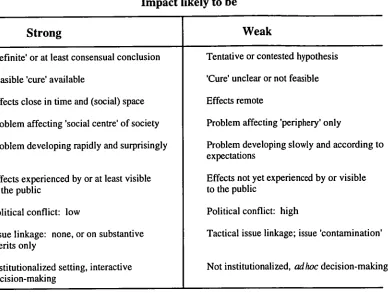
. Cond
i
t
ions
A
f
fec
t
ing
the
Impac
t
o
f
Sc
ien
t
i
f
ic
Inpu
t
36
2
.
Ana
ly
t
ica
l
Temp
la
te
fo
r
Leg
i
t
imacy
,
E
f
fec
t
iveness
,
Accoun
tab
i
l
i
ty
and
G
loba
l
Ecosys
tem
Respons
ib
i
l
i
ty
62
3
.
The
P
lacemen
t
o
f
the
An
ta
rc
t
ic
T
rea
ty
Sy
s
tem
W
i
th
in
the
In
terna
t
iona
l
Lega
l
Sys
tem
125
4
.
Phased
Imp
lemen
ta
t
ion
o
f
AMAP
and
Necessa
ry
Tasks
206
LIST OF ACRONYMS
AAT ABC ACF AGSO AJIL AMAP APP ASOC ATCM ATCM/WP ATS BANZARE BAS BIOMASS CAI CAPP CARC CCAMLR CCAS CEE CEMP CEP CFC CFSP CITES COMECON COMNAP CRAMRA CSAGI EARP EC ECOSOC EEA FEZ EFTA EIA FAO MD FoE GEF GIUK GNP GOSEAC HILBIO IAEA IASC ICC ICES ICRWAustralian Antarctic Territory
Australian Broadcasting Corporation Australian Conservation Foundation Australian Geological Survey Organisation Australian Journal of International Law Arctic Monitoring & Assessment Programme Arctic Pilot Project
Antarctic & Southern Ocean Coalition
Antarctic Treaty Consultative [Party] Meeting ATCM working paper
Antarctic Treaty System
British, Australian and New Zealand Antarctic Research Expedition British Antarctic Survey
Biological Investigation of Marine Antarctic Systems and Stocks Comite Arctique International
Canadian Association of Petroleum Producers Canadian Arctic Resources Committee
Convention on the Conservation of Antarctic Marine Living Resources Convention for the Conservation of Antarctic Seals
comprehensive environmental evaluation CCAMLR Ecosystem Monitoring Programme
Committee on Environmental Protection (Madrid Protocol) chlorofluorocarbon
common foreign and security policy [of Maastricht Treaty]
Convention on International Trade in Endangered Species of Wild Fauna and Flora
Council for Mutual Economic Assistance
Council of the Managers of National Antarctic Programs
Convention for the Regulation of Antarctic Mineral Resource Activities Comite Speciale de l'Annee Geophysique Internationale
Environmental Assessment and Review Process European Community
Economic and Social Council (UN) European Economic Area
exclusive economic zone (LOSC) European Free Trade Association environmental impact assessment
Food and Agriculture Organization (UN) Falkland Island Dependencies
Friends of the Earth
Global Environment Facility
Greenland - Iceland - United Kingdom [Gap] gross national product
Group of Specialists on Environmental Affairs and Conservation (SCAR)
Effects of Human Activity on High Latitude Biodiversity project International Atomic Energy Agency
International Arctic Science Committee Inuit Circumpolar Conference
ICSU International Council of Scientific Unions IRE initial environmental evaluation
IG intergenerational equity
IGY International Geophysical Year(1957-8) ILM International Legal Materials
IMF Interim Multilateral Fund(ofthe Montreal Protocol) IMO International Maritime Organization
IPCC Intergovernmental Panel on Climate Change IPY International Polar Year(1882-3, 1932-3)
IUCN International Unionforthe Conservation of Nature and Natural Resources
IWC International Whaling Commission
LC London Convention(formerly London Dumping Convention) LNG liquefied natural gas
LNTS League of Nations Treaty Series LOSC Law ofthe Sea Convention
LRTAP Convention on Long-Range Transboundary Air Pollution MAB Man andthe Biosphere Programme
MARPOL International Conventionforthe Prevention of Pollutionfrom Ships NAFTA North American Free Trade Association
NATO North Atlantic Treaty Organization NGO non-governmental organization NS R Northern Sea Route
NWT North-West Territories
OECD Organizationfor Economic Cooperation and Development OPEC Organizationfor European Economic Cooperation
PCB polychlorinated biphenyl
PCIJ Permanent Court ofInternational Justice RIAA Report ofInternational Arbitration Awards RSA Republic of South Africa
SBS Special Broadcasting Service(Australia)
SCALOP Standing Committee on Logistics and Operations(SCAR/COMNAP) SCAR Scientific Committee on Antarctic Research
SCOPE Scientific Committee on Problems ofthe Environment(EC) SMA specially managed area(Madrid Protocol)
SPA specially protected area(Madrid Protocol)
TEWG Transitional Environmental Working Group(Antarctic Treaty System) UK United Kingdom
UN United Nations
UNCED United Nations Conference on Environment and Development UNCLOS III United Nations Conference onthe Law ofthe Sea #Jill UNDP United Nations Development Programme
UNEP United Nations Environment Programme
UNESCO United Nations Educational, Scientific & Cultural Organization UNGA United Nations General Assembly
UNTS United Nations Treaty Series US United States
USSR Union of Soviet Socialist Republics
WCED World Conference on Environment and Development WCIP World Council of Indigenous Peoples
Introduction
This is a study of the world system of states and their rights and duties with regard to the making of international environmental policy and law, with a particular focus on the polar regions - the Arctic and the Antarctic.
The study is both normative and descriptive. It is also multi-disciplinary in the sense that a variety of social science disciplines including legal studies, political science, international relations theory and policy analysis are employed to help shed light on the issues.
This work investigates the ability of the world society of states to develop a cohesive and compatible approach to ecosystem management and protection within the
prevailing and evolving politico-legal order of state sovereignty. In this context an ecosystem is defined as:
a dynamic complex of plant, animal and micro-organism
communities and their non-living environment interacting as a functional unit)
The global ecosystem, which includes humans, is composed of a diversity of regional ecosystems. Together they are woven into the complex fabric which is the global biosphere — that part of the earth which sustains all life. Taking responsibility for regional ecosystems is the fundamental step towards integrating respect for the global ecosystem in policy and law.
accountable for unacceptable environmental degradation. Responsibility may be found in the first instance at a regional level and then, because the invasion of the legal interests of a neighbouring state may have far wider effects, at a global level. But this study argues that responsibility can also be seen as moral duty which may not
necessarily involve a breach of legal duty, particularly in view of the fact that legal rules may only be emerging.
The most profound acknowledgment to be made is that responsibility for the global ecosystem, in a comprehensive and enduring form, is beyond the political, physical and financial resources of the world's states, and is therefore likely to prove elusive. What is possible, however, is a new kind of regional response and value-system which will bring all of the components of regional ecosystems under review when the various levels of government decide on matters of policy. Policies can intentionally become ecosystem-orientated, not only for the purposes of restoring fragile or vulnerable areas, but also in a bid to prevent unacceptable levels of harm from occurring in any area within the jurisdiction of affected states. Appropriate regional responses may meld together to form a matrix of global responsibility in
acknowledgment of the common ecological interdependence of the world's states. This is because the fate of one state is inextricably linked to the fate of others, particularly its trading partners and military allies.
The point of departure for this study is the fact that political emancipation or individual freedom which is an attribute of state sovereignty, is being challenged by a perceived need for states to address, in concert, the world's environmental ills.2 These calls for unprecedented inter-state cooperation at once both embrace the state and venture beyond it. This study does not advocate the dismantling of the state system in some kind of altruistic pogrom; on the contrary, it canvasses the thesis that global ecological interdependence will require a re-examination of the traditional notions of sovereignty, to induce a more fundamental sensitivity to the ecological common good. That sensitivity is seen as the first step along the road towards environmental problem-solving through international cooperation, legitimate and effective law-making and a demonstrated measure of accountability to the rest of the world.
The central proposition underlying this study is that such a minimalist approach has tended to circumscribe international cooperation in the field of the environment in the past. This is not to say that cooperation does not take place, but rather that in environmental terms, states are often reluctant to cooperate when it appears that they have more to lose and little to gain, particularly economically and in the short-term.
International security, the global economy and the global environment are the three major issues in world politics today (Porter & Brown 1991:2). (It might also be argued that international human rights too is a major issue, but this appears to have direct links to security, the economy and the environment.) The newest of these three issues to rise to prominence is the global environment which, from a position of low politics only a decade or two ago, is now fixed high on the political agenda of many states, certainly the developed, industrialized ones. While this may demonstrate growing recognition that the viability of all states is either directly or indirectly affected by the degradation of the biosphere, it does not demonstrate a consensual approach to the issue. The addition of the global environment to the world political agenda merely completes the circle of complex interdependence between all states. The existence and nature of trade agreements between states illustrates this point. Domestic
environmental conditions and legally binding environmental protection standards will '...constitute a significant component of the terms [of trade]...'between states because of the potential for artificial trade barriers to be erected through
subsidized pollution control measures (Gaines 1991:464). In addition, the world's money-lenders and aid-givers have the power to make their business deals with environmentally-recalcitrant states conditional upon certain environmental
considerations. Interdependence is also underscored by the fact that transfrontier effects of environmental bad-practice can be seen as a breach of an affected state's sovereign integrity and hence possibly its security and economic viability. But such linkages as these present enormous difficulties when states try to balance their desires for security, economic prosperity and environmental harmony: difficulties which no state can deal with on its own.
The regions selected for examination in this study are the Arctic and the Antarctic. While it may be argued that these areas of the planet are unique, especially in terms of inhospitable climate and relative lack of habitation, there are a number of reasons why they are strategically, politically and scientifically significant.4 Moreover, each offers possibilities of contrast in terms of the formation, operation, evolution and
effectiveness of environmental management regimes. They also offer useful
sovereignty displayed by Arctic as opposed to Antarctic states is one justification for the selection of these regions as case studies. Furthermore, the choice may be even more appropriate considering that some sovereign Arctic states are also major actors in the Antarctic and therefore their application of the principles of sovereignty may prove to be malleable according to the regional context in which they are applied.
Philosophical Rationale
In a world characterised by increasing political and economic interdependence, it is no surprise that ecological factors would one day play an enhanced role in future global relations. Our common ecological destiny is not a new concept, but until recently imperatives to protect the biosphere had largely been subsumed by the desire for peace and economic prosperity in a discordant world. A new world order is emerging, and some see it as being characterised as much by ecological as by economic or social or political interdependence.5
The 1992 United Nations Conference on Environment and Development (UNCED) implied that a new global environmental agenda is emerging and will require states to adopt a distinctly new type of diplomacy in their dealings with one another (United Nations 1992:Preamble). This poses as serious a challenge to the widely-held doctrine of the mutually-respected independence of states as, for example, wars do, in this modern time of complex economic and strategic interdependence.
Another proposition central to this study, which has direct links to the UNCED process, is that a symbiotic relationship between the ecosystem and development will become a necessary condition for planetary survival. Furthermore, such a relationship will require the reshaping of international cooperation so that eco-management regimes more closely reflect the environmental, political, legal, economic and social realities and challenges faced by the states, both as independent entities and as members of the global community, in the 21st century. Planetary rights and obligations will need to be fulfilled without prejudice to, or if necessary by redefining sovereign rights, the common good and resource security. This is the axis of the work's thesis: that global ecological interdependence will require a re-examination of the traditional approach to sovereignty. These concepts are further discussed, and their usefulness validated, in Chapter 1.
amount which is pro-environmental. Lewis (1992) considers that the global environment faces two profound ideological threats: one, the more serious, comes from anti-environmentalists who would have us believe that the ecological crisis is a mirage; and another comes from radical environmentalists who would have us tear down all liberal democratic constructs and re-invent a better society.6 This work lies somewhere between the two extremes and is based simply on the belief that reality will overcome radicalism and that cooperative, integrated management of the world's resources is essential for a healthy future. This is not only a personal view, but one shared by many environmentalists, the United Nations and policy and law-makers throughout the world. This study will show that no matter what the motivating force, cooperation between states can only be beneficial. Whether cooperation will be cost-effective in the sense that the cost of the benefits will be worthwhile, is another issue entirely and one not pursued within the scope of this work.
Research Objective
The research objective is to identify factors which have enhanced or inhibited the capacity of the polar states to plan appropriate environmental policy and to carry it out effectively by making environmental law, within the general ambit of their competence as states in international law. By identifying such factors it will be possible to
illustrate the thesis that state coexistence is necessarily undergoing a transformation, with more of an emphasis on the common good and less on the inviolability of state sovereignty, in the context of the polar regions at least. It is suggested that this transformation may not be occurring particularly because states want it that way, but rather because ecological interdependence dictates that it should be so.
Finally,this study seeksto discoverif anylessons can belearnt fromthe
environmental management of polarregions which might be usefully appliedto other areas ofthe globe.
Ana
lyt
ica
l
Rat
iona
le
In developingthe analyticalrationaleforthis study,it was necessaryto decide atthe outset whatthe aim of ecosystem management was, and hence what state
responsibility forthe global ecosystem might entail. In other words,it was necessary to have a benchmark by whichto measurerealistic goals of eco-management ofthe polar regions, primarily becauseindividual values vary so greatly.
History has witnessedthe head-on clash between all oftheideological and
philosophical colours ofthe environmental spectrum which represent, at one end,the radicals and atthe other,the ultra-conservatives.7 As a result oftheir differing values, disparate groups have often had difficulties finding common ground on whichto begin meaningful negotiation about environmentalissues. Chapter 1 describesthe evolution and progression of a new environmental agendainterms of both social behaviour and internationallaw. Itillustratesthatthere has never been, andlikely never will be, consensus on ecosystem values andindeedthisis part ofthe problem of determining whatis appropriate with regardto polar eco-management. Chapter 1 also showsthat, in alegal sense,three ofthefundamental objectives of eco-management are:
i) to deal with existing causes of damageto ecosystems; to minimize or prevent additionalforms of damage; and iii) to preserve and use ecosystems rationally and sustainably.
These objectives are attempted by statesthrough combinations ofregional, national andinternational arrangements,includinglegal sanction.
balanced and integrated approach to environmental and developmental questions is therefore crucial for the polar regions because:
much of the world's weather is generated in the northern and southern polar regions;
essential sciences are conducted in these natural laboratories and will lead to a better understanding of global processes;
the nature of the polar ecosystems is such that they can provide early warning of process changes;
both are locations where traditional notions of security have been, or are in the process of being, re-defined and where Cold War hostilities are being replaced by attempts at multilateral scientific, economic and environmental cooperation. But do those states with responsibility for the polar regions see their obligations in this light? The study attempts to answer this, in addition to raising fundamental questions about the role and position of the sovereign state in a world order more concerned than ever before with environmental issues.
In order to carry out this assessment, it is essential to focus not only on the spectrum of activities constituting ecosystem management but also to place such factors in the broader context of the relationship between state sovereignty and collective action, particularly with respect to international environmental regimes. To what degree are the polar regions becoming arenas of regional cooperation? Is de facto
internationalization occurring? To what extent is customary practice or tentative experiment giving way to substantive environmental law? What kind of institutional arrangements are proposed or in place to give effect to these provisions? In general, can it be argued that a new international environmental order, as distinct from a new strategic or political order, is emerging?
The study's methodological approach is to first identify both the basis and nature of state responsibility for the global ecosystem in order to construct an analytical template for application to the case studies. Three criteria will be used to assess the level of responsibility: legitimacy, effectiveness and accountability. Each criterion has clearly-defined features and when combined with the emerging concepts and principles
making up the generic notion of responsibility, they provide a solid analytical tool which is relative to both the restorative and proactive features of polar environmental management.
and places such factors in the broader context of state sovereignty and international
cooperation. Since it cannot be claimed that the author has expertise in the internal
relations of polar states, the study is based on the best available official and unofficial
reports and writings of polar bureaucracies and commentators.
Thesis Structure
The multi-disciplinary nature of this work tended to make the information appear
dissonant at times. Therefore it has been necessary to carefully construct a
chronological sequence of events which in the first instance is broad-ranging, setting
the conceptual and analytical paradigms. The study becomes more focussed in its
presentation of the case studies. Finally the information is treated in general terms as
the relevance of the thesis emerges.
Chapter 1 is concerned with identifying evolving paradigms of global ecosystem
responsibility. It defines the work's parameters by describing the historical
development of this ethic which has led to the thesis that traditional approaches to
sovereignty need re-examining. This section describes environmental crises and the
roles and behavioural responses of key actors. The Chapter proceeds by determining
that existing limits to state sovereignty imposed by international law, together with
natural limitations imposed through the complex interdependency between sovereign
states, has led to attempts to reconsider the notion of sovereignty. The work then
seeks to establish the appropriate roles and practises of governments in the light of
new ideas about sovereignty and proposes an analytical template with appropriate
application to the case studies - the polar regions.
Chapter 2 continues the contextual paradigm by describing the particular geographical
and geopolitical idiosyncrasies of the polar regions. It elaborates further on their
significance in the global context and hence justifies their utility to the study.
Chapters 3 and 4 contain the descriptive case studies of the Antarctic Treaty System as
a mature regime, and queries whether the present Arctic situation is that of an
emerging regime. Both Arctic and Antarctic states have begun to address the issue of
ecosystem management in a more holistic way than previously. With regard to the
Antarctic, this is a substantial departure from the desire of some of those same states to
exploit the non-living resources of the region. For the Arctic states, the current
legislatures. There is general optimism that the Protocol will survive the ratification process to enter into force. Conversely, the Arctic states still have a long road ahead before they reach the same theoretical level of control. This may not even be possible, given that the politics of the region are complicated and unpredictable in this early stage of the dissolution of the former Soviet Union.
The concluding Chapter 5 makes a comparative analysis of the regions. It seeks to answer such questions as: on what basis did the states negotiate a quite
comprehensive regulation of human activity in the Antarctic territory when they had no legally proven sovereignty there? Given that there is an Antarctic ecosystem
management instrument of law passing through the ratification process, can it be concluded that state sovereignty has impeded the progress of transboundary,
multilateral or global environmental law pertaining to the Arctic, where sovereignty is a primary condition and where no such substantive ecosystem management regime exists? What implications, if any, can be drawn from the case studies for international cooperation, global ecosystem responsibility and the concept of state sovereignty as we approach the 21st Century?
Sources
The reference sources used for this study include formal government reports; other secondary sources such as books, research publications and conference proceedings; and some primary materials collected by the author during structured and informal interviews in Finland, Norway, Scotland, England, Canada and Australia.
Limitations
The principal limitations of the study are that because regime dynamics continue to operate, many aspects of Arctic politics remain in transition; similarly in the Antarctic, the agenda is by no means complete. It was necessary therefore to establish a cut-off date, after which no further information would be sought or included. That date was 30 April 1995.
1
Evolving Paradigms of
Responsibility for the
Global Ecosystem
Introduction
The 1992 United Nations Conference on Environment and Development (UNCED) - the most recent international conference with the global ecosystem on its agenda - was attended by officials from the majority of the world's states. It was, in fact, the largest gathering of world leaders in contemporary history. A concurrent meeting also held in Rio de Janeiro, the Global Forum, was attended by thousands of non-governmental organization (NGO) representatives. While there was genuine concern displayed by some who attended in Rio, others would no doubt have treated the venue as another forum for public posturing. Notwithstanding, the unprecedented attendance at these two conferences, together with the fact that they were thought necessary in the first place, points to some fundamental problems with the existing international political, economic, legal and social orders and their nexus to the maintenance of global environmental integrity.
We are confronted daily with statistics regarding the state of the planetary ecosystem: degraded air and water quality; artificially-induced climate change and the enhanced greenhouse effect; ozone depletion; species extinction; poverty and unsustainable population growth; terrestrial degradation by necessity- and profit-driven agricultural practices; disease epidemics; and the constant collapse and rebuilding of empires, states, economies, institutions and social infrastructure. Debates rage
ad infinitum
on the causes, effects and remedies. In the case of, say, the disappearance of a particular species of hunted animal, both the cause and remedy may be obvious. But in other cases there are complex linkages to a range of behaviours with cumulative effects and 'risk spirals9 neither easily recognisable nor easily reversible over a shortphysically uncontrollable beyond their point of origin, but politically uncontrollable as well (Caldwell 1984:224). To complicate matters, there is little consensus either on the nature of the problems, their remedies, or whether for that matter, some problems actually exist.
Therefore, despite debates about the accuracy of statistics, and also because of them, this study advances the thesis that global ecological interdependence requires a re-examination of traditional notions of sovereignty in order to promote responsibility for the global ecosystem. The thesis has been arrived at in light of mounting evidence, principally from the UNCED, that the integrity of our global ecosystem is being dangerously eroded. This has occurred especially since the Industrial Revolution and more recently, the post World War II growth in the number of sovereign states. Various actors have vigorously campaigned for both universal awareness of global environmental problems and increased international cooperation in solving them. Their actions have sometimes challenged the traditional perceptions of both sovereign independence and what is often described as unsustainable economic development. Other actors have resisted such efforts at imposing limitations upon their activities. A re-examination of sovereignty will, therefore, involve the juxtaposition of international law with evolving perceptions of nature, changing geopolitical circumstances and current environmental concerns.
This Chapter identifies some of the major environmental crises which have driven contemporary environmental politics, tracing the emergence and clarifying the roles of key actors and the subsequent development of the intellectual foundations of a re-thinking of traditional approaches to state sovereignty.
Three core components can be identified. The first concerns the carousel of environmental crises which has been powered by the existence of independent sovereign states and their desire for economic enrichment and equality. On board the carousel are such factors as human population growth and poverty; food production and consumption patterns; depletion of non-renewable resources and species diversity; resource security; and the massive 20th century industrial and technological expansion with their accidental by-products of ozone depletion, acid rain, potential global climate change and the like. Each of these factors is in some way or another linked to the others and each has provided a degree of political and economic input in attempts to halt or reverse the destructive cycle - assuming, of course, that we are heading down that road.
United Nations andits organs, scientific communities andthe global environmental movement. Bothindividually and collectivelythese actors have beeninvolvedinthe advancement of what some see as a new global environmental agendaforthe 21st century.
Thethird componentidentified and defmedinthis Chapteris are-thinking of governanceinlight ofthis developing agenda ofresponsibilityforthe global
ecosystem. Are we headinginto atrendtowards permeable sovereignty, an expansion onthetraditional approach, as a more efficient means of managing our global
ecosystem?
Totestthis proposition about permeability,the Chapter concludes byidentifyingfive key principles which have evolved duringthe past several decadesinto paradigms of responsibilityforthe global ecosystem and which areinextricably boundtothe notion of sovereignty. These five principles, underthe general rubric of ecosystem
responsibility, arethen used as part of atemplatefor analysis ofthe polar eco -management arrangements. The analysis will showthe nature and extent ofthe erosion of sovereigntyin favour ofinternational regime formation, andthusthe template also requires parameters by which regime function can be measured. Three variables:legitimacy, effectiveness and accountability, fulfilthis role. It will be shownthatthese variables accord withthe broader notion of responsibility forthe global ecosystem.
1
.1
A
Carouse
l
of
Env
ironmenta
l
Cr
ises
Reconciling human behaviour withindiscriminate andindifferent natural processes, withthe aim of designing and maintaining a sustainable coexistence between all elements ofthe biosphere,is provingto be an enormously difficult exercise —politically,technologically and morally. The challenges may be commonto all butthe cause/effectlinkages are problematic. Whilethis work deals specifically withthe polar regions, some statements can be made about global environmental crisesin general terms.
1
.1
.1
The
Human
D
imens
ion
:
Popu
lat
ion
and
Poverty
Many of our problems began around 5000 BC when hunter-gatherers and herders discoveredthe utility of agriculture and groupedinto'...settled, complex,
considered small in the extended timeframe of nearly 7000 years of social history.lo
From post-Industrial Revolution times, however, no such disclaimer can be made for
today's global society.
One of the most crucial characteristics of 20th century life is the rapid expansion of
population numbers. The planet's human population has doubled between 1950 and
1987 and is estimated to reach 6.25 thousand million by the year 2000, with over 90%
of the projected increase to take place in developing countries. 11 It is also estimated
that in the corresponding period the amount of arable land will have declined by nearly
50% (Porter & Brown 1991:3). It has been stated that:
'Overpopulation and rapid population growth are intimately connected with most aspects of the current human predicament_'. 12Thisisbecausetheformula:total
population multiplied by its per capita consumptioncan be used as one means of
determining the rate of ecosystem disruption (Porter & Brown 1991:5).
Furthermore, while it is considered that the world's food resources can - theoretically -
feed 40 thousand million people, of the current 5.3 thousand million human population
an estimated 14.6 million children die annually from hunger-related diseases. 13 No
matter how accurate the statistics are, it is plain that poverty - a social and political
problem - has the potential to be a major factor in environmental stress, as both a cause
and an effect.
This is because in many regions of the world, developed and developing alike, poor
agricultural and land management practices like urban degradation, deforestation,
overgrazing and overcropping have become a means to an end — the survival of the
human species and the perpetuation of economic prosperity. Paradoxically these
practices have also become ends in themselves by jeopardizing the carrying capacity of
the particular ecosystems. This in turn puts other ecosystems and ultimately the whole
biosphere into peril. The conjunction is based on the potential for these scenarios to
undermine the political and social security of developing countries in particular, but of
developed countries too, because of the expanding and intricate economic and strategic
interdependence of states (Hurrell & Kingsbury 1992:3).
Agriculture is one case in point. The use of highly mechanised equipment,
sophisticated irrigation techniques, soil enhancing fertilizers and pesticides and
million people in Africa's Sahel region were at risk of starvation as their lands became deserts (WCED 1990:75). It is difficult to know how, or indeed if, these problems can or should be rectified.
So-called natural disasters like drought and flood take their toll on land weakened by human abuse. 14 For example, in some cases the natural consequences of flooding have been aggravated by a cycle of overgrazing, overcropping and forest clear-felling, which all loosen the top soil and alter the earth's ability to hold moisture, resulting in erosion, the silting up of river systems and altered local ecosystems. This can interrupt the resource base and hence the ability of primary producers to manage their resources sustainably.
Consequently, for one reason or another, there may be as many as 300 million so-called environmental refugees whose homelands can no longer support them. 15 Recent examples are parts of Haiti, Chad, Ethiopia, Uganda and Somalia. It may be simply that there are too many people; or that the soil is in poor condition; that drought and flood have contributed to crop failures; that flood and wind have eroded top soil; that river topography and resources have been significantly altered; that forests have been cleared but the nutrient-poor land cannot sustain agriculture; or that the general disaffection of the population has contributed to conflicts resulting in mass refugee migration, revolution and war. As Ehrlich and Ehrlich point out, food shortage is not the only consequence of overpopulation (1990:20).
The UNCED process recognized poverty as a'co mplex, multidi mensional problem' ranging acrossthe state andintotheinternational realm (United Nations
1992:Ch.3). Aninherently difficult facet of povertyisthe needto balancethe conservation and preservation of resources withthe dependence bythe population on these resources for survival. One position whichthe UNCED arrived"atinvolved participation at everylevel,fromtheindividualto globalinstitutions, empoweringthe poor atthe mostfundamentallevel oftheir existencetotakeresponsibilityfor
preservation and enrichment ofthe resources oftheirlivelihoods. However,thisis very difficultto achieveif you and your children are starving.
As contributingfactorsto environmental crises, population and poverty are inextricablylinkedto consumption patterns developed duringthe 20th century.
1
.1
.2
Acc
identa
l
By-Products
of
the
Industr
ia
l
Revo
lut
ion
Whilethe 20th century pattern ofindustrial expansion and economic growth has had a profound effect onthelives of millions of people, some ofits accidental by-products like air and water pollution havethe potentialtorender primaryresourcesunusable.18 Large-scaleinternational environmental problemslike potential global climate change, ozone depletion and acidrain have beentagged with producingthis consequence. Theirinfluence can betraced backtotheIndustrial Revolution buttheir effects are only now becoming better understood. Three ofthese by-products are discussed below and areindicative ofthe kinds of global environmental problems which are now out ofthe hands of states asindependent entities and ontothe global agenda.
Potential Global Climate Change
Thetermsgreenhouse effectandclimate changetendtoinduce confusion becausetoo littleis genuinely understood aboutthe possible, orindeedthe probable, consequences of human activity on climate. The scientific communityreadily admitsthatthethreat of artificially-induced,irreversible climate changeis problematic and whilethe physical basisis fairly well understood,the more complex feedback mechanisms are not (Zillman 1992:26). This does not meanthat we should not be concerned about potential global climate change, however.
that it may be decades before quantitative, detailed proof is available.
19
These kinds of
questions have led to uncertainty about the policies and legal actions required to
satisfactorily address the problems.
The physical basis for climate change may have been discovered as early as 1827,
when French mathematician Fourier discerned the role of carbon dioxide in the
atmosphere as having a 'hothouse' effect (Lunde 1992:54). Since that time there
was very little scientific interest in such theories until much more conclusive evidence
was found less than four decades ago. This study does not attempt to chronicle the
complete development of the greenhouse and climate change theories.
20
However,
because this is one issue which has particular relevance to the polar regions, some time
will be spent here examining the issues.
The greenhouse effect is a popular euphemism for increased warming of the earth's
surface, but it neither resembles the process which occurs in garden greenhouses, nor
takes account of the earth's natural greenhouse effect (Zillman 1992:14).
The mechanisms of global climate are dynamic, involving solar radiation; the spherical
shape of the earth which causes the temperature to decrease from the equator to the
poles; the natural greenhouse condition which causes temperature to decrease upwards
from the earth's surface; the exchange of mass, energy and momentum between the
atmosphere and other components of the climate system; and the earth's rotation
(Zillman 1992:13). The atmosphere is a thin shell of air bound to the earth by gravity
and is composed primarily of nitrogen (78% by volume) and oxygen (21%). Water
vapour and argon are the next largest components, with carbon dioxide and methane
making up the bulk of the remainder, albeit in trace quantities only. The latter are
collectively referred to as radiatively active trace gases or, popularly,
greenhousegases.
The surface warming of the earth is essentially determined by the radiative properties
of the so-called greenhouse gases. While the atmosphere is virtually transparent to the
incoming shortwave radiation (heat) from the sun, it is almost opaque to the longer
wavelength infrared radiation emitted by the solar heated earth, thereby trapping some
of the outgoing heat (Zillman 1992:14). In lay terms this exchange of heat is in
approximate equilibrium, thereby keeping the earth's temperature relatively constant.
But the addition of small amounts of greenhouse gases to the atmosphere reduce the
loss of heat and a new equilibrium is set up at a higher temperature.
identify natural climatic changes. Alterations in the earth's shape and rate of rotation, the amount of radiation emitted from the sun, land and ocean floor topography, continental drift and the internal processes of the climate system all effect global climate processes and are considered natural occurrences. Alterations not considered natural are anthropogenic and include changes in land use patterns and atmospheric composition, which have the potential to cause irreversible trends in climatic conditions (Zillman 1992:21-3).
When the earth's natural greenhouse condition is disturbed, say by significant alteration to the atmospheric concentration of carbon dioxide, a new equilibrium in heat exchange will be created. In the 1950s, the scientific community began to have concerns about the prospect of artificially induced and escalated changes to global climate via a disequilibrium of the earth's natural greenhouse condition. Their concerns were based on two simple premises:
physical arguments which suggested that the greater the concentration of carbon dioxide in the atmosphere, the greater would be the surface warming; and
the expectation that the burning of fossil fuels which had been going on since the Industrial Revolution would eventually lead to significant build-up of carbon dioxide in the atmosphere (Zillman 1992:23).
Monitoring of the upward trend in average atmospheric carbon dioxide from the late 1950s on revealed that the new temperature profile was likely to be warmer.
Unprecedented scientific research has since indicated that global warming will have an effect on global climate processes (Zillman 1992:23-4).
The links between major greenhouse gases and their anthropogenic sources and uses have been fairly well established. Carbon dioxide primarily comes from fossil fuel burning, deforestation and cement production; methane from rice paddies, ruminants, biomass burning, gas and coal fields, land fills and the tundra; chlorofluorocarbons, non-existent in nature, come from industrial and consumer goods, refrigeration and solvents; and nitrous oxide comes from biomass burning, agriculture and fossil fuel burning. These four gases together are thought to account for about 95% of the enhanced greenhouse effect (Zillman 1992:25).
The major consequences of an enhanced greenhouse effect, given all the uncertainties, are likely to be:
• that there will be a general global temperature warming; and • that there will be a general global sea level rise.
•
These two consequences are a primary motivation for presenting the polar regions as case studies in this work, as the polar regions are both global weather factories and repositories of a significant proportion of the earth's fresh water, contained within their ice. If the current trends continue, an average global temperature rise of between 1.5° and 4.5° C may occur during the next 50 years or so. A consequential sea level rise of as much as 1.5 metres may also occur.21 The implications for the polar regions, and ergo the rest of the world, may be enormous despite the lack of understanding about the potentially mitigating feedback processes. Even though we do not know enough about the potential for enhanced climate change to satisfy all the critics and disbelievers, can we afford not to take it seriously? What is needed, despite the uncertainty, is precautionary and preventative action to both halt the anthropogenic climate alterations and to protect the polar laboratories which supply essential scientific information and warning indicators.
Ozone Depletion
Ozone depletion is a separate though related problem. Ozone (03) is an atmospheric gas found in the stratosphere. It is created by solar radiation and it in turn absorbs ultraviolet radiation, screening out UV-B wavelength rays which are harmful to living tissues (Schneider 1976:11). Ozone depletion may have the potential to severely undermine the primary resource base which sustains humanity and indeed may have health consequences for humans themselves. The causes and consequences are far from certain, however.22
Ozone depletion was first reported by atmospheric scientists, and its consequential effects on living systems predicted by biological scientists, as early as 30 years ago. At that time however, realistic long-term funding for effects research was not forthcoming (SCOPE 1992:7).
thickness of the protective layer (Massey 1992:176). The fluorine released by the breakdown of CFCs is also thought to interact with ozone (Schneider 1976:11).
In the mid 1980s, confirmation of the severity and potential consequences of this reduction of the ozone layer was a catalyst of unprecedented import to the development of international environmental law for the atmosphere.23
Importantly, proactive polar eco-management will preserve the polar laboratories which figure prominently in ozone research, especially since ozone depletion has been identified over Antarctica and to a lesser extent over the Arctic.
The two scenarios discussed above are, to some degree, still not quantifiable. Speculation about the accuracy of computer modelling techniques has meant that almost as much activity today is concerned with the science of methodology as it is with the science of prediction. Indeed, some scientists query whether the generalized trend of global warming is, in fact, a natural phenomena of climate variability rather than artificially-induced (Paltridge pers.comm.). There is little speculation about acid rain, however.
Acid Rain
Acid rain is a generic term used to describe a variety of compounds in the atmosphere which, when they come into contact with moisture, fall as acidic gases and particles (Porter & Brown 1991:8). Sulphur dioxide emissions from industry are currently around 180 million metric tons annually. When combined with nitrogen oxide from automobiles and the agricultural burning of forests, for example, the emissions are diluted in the atmosphere into sulfuric and nitric acid. The resulting precipitation falls as rain with a higher than normal acidic content.24
Since the late 1970s, acid rain has been identified as being a widespread phenomena affecting North America and Europe, where the increased acidity of precipitation has been declared responsible for the killing of forests, the damaging of inland waterway ecosystems and for the accelerated decay of buildings. The extent of damage by acid rain to soils is unknown (WCED 1990:2).
international cooperation. The 1979 Convention on Long Range Transboundary Air Pollution(LRTAP)is a directresult oftheidentification of and concern over acid rain.25
Together boththe population/poverty scenario andthe accidental by-products of industrial expansion arethought by someto havetakentheirtoll onthe earth's natural resource base. This may or may not bethe case; notwithstanding,the depletion of natural resourcesis worthy of considerationinlight ofthe developing stream of protectiveinternationallaw.
1
.1
.3
Threats
to
the
Natura
l
Resource
Base
Humans co-exist with unknown millions of other animal and plant speciesin a biosphere richinliving and non-livinglife-sustaining commodities. These all belong inthe category ofnatural resources. The UNCED determinedthat development cannot proceedindependently ofrational conservation and management oftheseresources — living and non-living,renewable and non-renewable — becauseinthelongrun, all resources are finite (United Nations 1992:Ch.2). Even so-called renewable resources like plants and animals are onlyrenewableinsofar astheir genetic material and habitats remain viable.
What has happenedin recent historyisthatin our struggle for survival we have intervenedinthe natural cycle oflife and death. Human clevernessin using and manipulating our environment hasinstigated what some see as an unprecedented accelerationinthe depletion of natural resourcesto a point,in some cases, beyond replenishmentlevels.26 Myers, forinstance, suggeststhat we are probablylosing between 50 and 200living species a day (Myers 1993a:179). Despite debate about the accuracy ofthese kinds of statistics, what can be saidisthat untilthe value ofthese resources andtheir placeinthe global ecosystemis better understood, allowingtheir depletion beyondreplenishmentlevelsis morally unacceptableto many people.
Humaningenuity has also facilitatedtheinvention of substitutes and alternatives, but three primalresources- clean air, arable soils and uncontaminated water- cannot be syntheticallyreplicatedtothe same degree as other materials.
The disappearance of natural resources orthe depletion of species diversityis not simply an aestheticloss;it has far more wide-ranging effects. The UNCED process took uptheissue of speciesloss with some seriousness, culminatinginthe conclusion of a framework protection andtradetreaty,the UN Convention on Biological
1993.27 The Preamble to the Convention reaffirms states' rights to own and
obligations to conserve their biological resources for the good of all humankind of this generation and beyond. It also promotes sustainable use of these resources so that the whole world can retain the benefits of species diversity.28 A range of other
international environmental law aims to protect wildlife and their habitats.29
The disappearance of species diversity may not reversible, unlike other examples of environmental harm described above. Notwithstanding, the ecological
interdependence evidenced in the preceding discussions has stimulated a growing realization that we are all part of one Earth, although sequestered in our human domain it is often very difficult to see the world as a whole, of which we - as individuals - are only small, insignificant units. The factor which best determines that the circle of interdependence includes environmental issues is the asymmetrical distribution of costs and benefits between states from such transboundary environmental problems as these. When environmental problems become transboundary in nature, they gain the potential to threaten both the security of states and their economic viability (Carroll
1988:3).
The examples of environmental stresses given above also illustrate how insignificant state borders are in containing problems, both physically and politically. Not only have independent political units often been unable to take full responsibility for the harm that escapes their custody, but also they are becoming increasingly critical of other states which abuse their own resources. The global debate about deforestation practices in the Amazon is one case in point.30
This study has begun from a position which is distinctly idealistic in a deliberate attempt to show that while international protective laws have grown out of just such a position, they ultimately reflect concerns about human impact on the global