PROCESSES IN ALKALINE PEROXIDE BLEACHING
OF PINUS RADIATA TMP
Yos Adiguna Ginting, B.Sc. (Hons.)
Submitted in fulfilment of the requirements for the degree of
Doctor of Philosophy
May 1996
To the best of my knowledge, this thesis contains no material previously published or written by another person, except where due reference is made in the
text of the thesis.
ABSTRACT
The response of Pinus radiata thermomechanical pulp to alkaline peroxide has been studied. Factors influencing the maximum brightness attained for various bleaching conditions have also been examined and the concepts of 'reagent limited' and 'pulp limited' have been related to the observation of limiting brightness on repeated bleaching.
Further observations were carried out on the kinetic behaviour during constant reagent concentration. Several previously reported kinetic models have been tested and found to be inadequate to describe the observed kinetic behaviour in terms of a minimum of chemically meaningful parameters.
From the experimental evidence, a new kinetic model which is defined in terms of first order processes has been proposed. This model assumes the existence of a single class of chromophores which reacts to give colourless products and potential chromophores. The process of the elimination of chromophores is opposed by a colour formation process from the conversion of potential chromophores to chromophores in an equilibrium type reaction.
means of computational methods. From these calculations, it was found that the epoxidation of cinnamaldehyde is exothermic with an overall activation energy close to zero. The experimental presence of two epoxide isomers with the trans isomer as the preferred product agrees with the results of our calculations.
Good agreement between the results of the less sophisticated PM3 calculations and the more sophisticated ab initio calculations at RHF/6- 31G(d) suggest that PM3 can be used for further studies without sacrificing significant accuracy of the results. PM3 is also computationally preferred since it generally requires less computation time to perform.
ACKNOWLEDGMENTS
I would firstly like to express thanks to my supervisors Dr. Brian Yates and Dr. Adrian Wallis for their guidance, insight and eagerness to see this work progress. Their advice were always worthwhile and without them this work would not have been possible.
Without the support and encouragement of Dr. Karen Stack and Dr. Phillip Wright, this would not have been possible, both in terms of providing motivation and advice which were essential for the completion of this work. I am indebted to Dr. John Abbot for the guidance and support during the early stage of this work. I am also appreciative of the help provided by Dr. Michael Whitbeck of the Desert Research Institute at Reno, Nevada USA in helping with the computer programming. I am also grateful to Ms. Catherine Rowland and Ms. Katrina Frankcombe for their proof reading of sections of this thesis.
Funding of a Postgraduate Award by the Indonesian Institute of Sciences and the Australian Newsprint Mills is gratefully acknowledged. I also thank the University of Tasmania Supercomputing Facility for access to their facilities.
I would like to thank Prof. Allan Canty, Prof. Paul Haddad and the entire staff of the Chemistry Department for ensuring the adequacy of facilities and supports. To my fellow students, Rhitu Rao, Vicky Barnett, Daniel Finnegan, Damien Blackwell and George Heard, who provided a terrific atmosphere for both work and play, I offer my thanks.
CHAPTER 1 PULP AND PAPER: AN OVERVIEW 1
1.1 Introduction 1
1.2 Structure of Wood and Wood Pulping Processes 6
1.2.1 The Structure of Wood 6
1.2.2 Thermomechanical Pulping 8
1.2.3 Kraft Pulping Process 11
1.3 Newsprint and Mechanical Pulp 11
1.4 Bleaching of Pulp 13
1.4.1 Dithionite Bleaching 15
1.4.2. Hydrogen Peroxide Bleaching 16
1.5 Colour of Pulps, Brightness and Light
Absorption Coefficient 21
1.5.1 Measurement of Colour in Lignin Rich Pulps 21
1.5.2. Kubelka - Munk Theory 23
1.5.3 Kubelka-Munk Equations 25
1.6 Methods for Studying Kinetic and Reaction Mechanisms 27
1.7 Parameters That Affect Bleaching 28
1.7.1 Effect of Peroxide and Alkali Concentration 30
1.7.2 Effect of Pulp Consistency 34
1.8 Formation and Removal of Chromophores 35
1.9 Kinetic Models and Reaction Mechanisms 39
1.10 Computational Models and Model Chemistries 41
CHAPTER 2
EXPERIMENTAL METHODS
53
2.1 Pulp Samples 53
2.2 Chemicals Used 53
2.3 Chelation of Pulps 54
2.4 Determination of Transition Metal Contents 54
2.5 Differential Method Bleaching 56
2.6 Constant Conditions Bleaching 57
2.7 Measurement of Brightness 59
2.8 Measurement of Light Absorption Coefficient 60
2.9 UV-Visible Difference Absorption Spectra 60
2.10 Computational Chemistry Method 61
2.11 References 63
CHAPTER 3
3.1
MODELLING METHODS
Kinetic Modelling
65
65 3.1.1. Fitting a Mathematical Model to Experimental Data 66 3.1.2. Methods for Determining The Best Value for Model
Parameters 69
3.1.3. The Simplex Algorithm 70
3.1.4. Computer Fitting Program Description 72
3.2 Computational Chemistry Methods 74
3.2.1 Molecular Mechanics 74
3.2.3 Single Point Energy Calculations 78
3.2.4 Geometry Optimisations 78
3.2.5 Potential Energy Surfaces 78
3.2.6 Locating Minima 81
3.2.7 Convergence Criteria 83
3.3 References 85
CHAPTER 4 DEVELOPMENT OF KINETIC
MODELS
86
4.1 Literature Review 86
4.1.1 Empirical Models 88
4.1.2 Application of Empirical Models to Alkaline Peroxide
Bleaching 89
4.2 Introduction 94
4.3 Experimental 95
4.4 Results 96
4.4.1 Limits to Brightness Achieved 96
4.4.2 Chromophore Creation by The Action of Alkali 110
4.4.3 Equilibrium Model 114
4.5 Conclusions 120
4.6 References 122
CHAPTER 5 TESTING OF THE EQUILIBRIUM
KINETIC MODEL
124
5.2 Peroxide Bleaching of Pinus radiata Under
Constant Conditions 125
5.2.1 Fitting of Experimental Data 125
5.2.2 Testing of Model Response 129
5.3 Chemical Significance of The Equilibrium Model
for Peroxide Bleaching 132
5.4 Explanation of Reaction Mechanisms When CLo = 0 134 5.5 Explanation of Reaction Mechanisms When CL0 = 400 138
5.6 Conclusions 142
5.7 References 143
CHAPTER 6
6.1
MOLECULAR ORBITAL
CALCULATIONS
Literature Review
144
146 6.1.1 Existence of a,13-Unsaturated Aldehydes in Lignin 146 6.1.2 Amount of a,13-Unsaturated Aldehydes in Lignin 149 6.1.3 Effects of Alkaline Peroxide on a,3-Unsaturated
Aldehydes 150
6.1.4 Reaction Mechanisms of a,13-Unsaturated
Aldehydes with Alkaline Peroxide 151
6.2 Introduction 153
6.3 Methods 154
6.4 Results 155
6.4.1 Cinnamaldehyde Ground State 156
6.4.2 Positions of the Nucleophilic Attack 161
6.4.3 The Intermediate Structure 163
6.5 Discussion 170
6.6 Conclusions 177
6.7 References 179
CHAPTER 7 CONCLUSIONS AND DISCUSSION 182
7.1 Directions For Future Work 183
7.2 References 186
APPENDIX A
Computer Spreadsheet Program for Calculations of Physical Properties of PaperAPPENDIX B
Computer Program for Controlling Varian DMS100 UV-Vis SpectrometerAPPENDIX C
APPENDIX D
APPENDIX E
Analytical Solution for The Differential Equations of Equilibrium Kinetic Models
Listing of The Simplex Curve Fitting Program
Supplementary Table for The Molecular Orbital Calculations
CHAPTER 1
Pulp and Paper: An Overview
1.1 In
The use of paper is always on the increase. The current development in the use of electronic media and computer technology does not even slow down the demand of paper. In fact, it is predicted that the demand of paper will increase dramatically. In the past decade, an increase of 20% in the total world production of paper was observed', and with many developing countries emerging, the increase in demand will almost be a certainty.
In Australia, the pulp and paper industry is one of its largest manufacturing sectors. Australia is a major exporter of unprocessed wood chips and there exists considerable scope for expansion in this sector with the availability of large scale forest resources. Even so, Australia remains a net importer of paper products as well as pulp for conversion to finished products and it appears that this will continue in the foreseeable future.
The current growing concern in the forestry and environmental
protection areas, together with the fact that Australia is still a paper
importer, makes the development of technology for low pollutant levels
and high efficient usage of fibre resources a very important subject. The
objective of this study was to develop a suitable kinetic model for the
alkaline peroxide bleaching of Pinus radiata thermomechanical pulp and having done so, to use the model to partially unravel the underlying
chemical processes which occur during the bleaching process. The
alkaline peroxide bleaching of Pinus radiata thermomechanical pulp was
selected for the following reasons.
Firstly, thermomechanical pulping is one of the most efficient processes
for the utilisation of fibre. Using this process, lignin and other
non-cellulosic materials in the original wood are almost entirely retained. In
contrast to this, chemical pulping removes almost all of the lignin. On a
dry basis, mechanical pulping yields approximately 95% of the weight of
wood as pulp, while the yield of bleached kraft pulp (a chemical pulp) is
45-50% of the weight of wood used 2 . Secondly, Pinus radiata used for
pulp production is easily obtainable from plantation forests. The
relatively short period of harvesting (15 years) makes Pinus radiata a
practically inexhaustible source of fibres which can be utilised without
the destruction of native forests. Lastly, peroxide is an environmentally
sound reagent for bleaching in comparison with chlorine-based reagents,
Chapter Pulp and Paper: An Overview
There have been numerous studies on bleaching of mechanical pulps
with alkaline hydrogen peroxide in which the resulting brightness of
pulps are reported as a function of time and reagent concentration 3-7 .
Most investigations have been carried out under conditions where the
concentrations of hydrogen peroxide and hydroxide ion fall significantly
during the course of the bleaching process. Although such conditions
simulate industrial practice, the results are difficult to interpret in terms
of kinetic phenomena associated with individual reaction processes.
Over the past decade there have been some kinetic investigations
reported under conditions where the total peroxide concentration and pH
have been maintained at constant levels 8-1 I, to facilitate interpretation of
rate processes. These studies have usually been carried out at relatively
low pulp consistencies, so that the rate of consumption of reagents is
reduced to low levels, allowing monitoring and continuous readjustment
to initial concentration values, as the bleaching process continues under
isothermal conditions.
Recently a kinetic model based on the assumption of two distinct
chromophore types was reported from the study of the bleaching of a
Eucalyptus stone groundwood (SGW) 11 . In that study, Wright and
Abbot 1 I have examined changes in the light absorption coefficient (K)
under constant conditions of pH and peroxide concentration, as K is
found to show a better correlation with chromophore concentration than
the more standard measurement of brightness 9 . The objective of this
concentrations of reacting species (both chromophores and reagents), rather than formulate models which are limited to empirical formulation 12, 13 . For the purpose of kinetic model development carried out in this study, several previously reported studies on alkaline peroxide bleaching of Pinus radiata TMP have been examined 10, 12, 13 in the context of various kinetic models. Brightness has been used as an indicator of chromophore content as they are concerned with trends which reflect the validity of proposed kinetic models, rather than accurate determination of exact kinetic parameters. It has been shown, however, that the general behaviour of brightness gain with time closely parallels changes in K for peroxide bleaching of Pinus radiataTMP 14 .
Several studies in kinetic phenomena during alkaline peroxide bleaching of mechanical and chemimechanical pulps have been reported811, 15-20• Kinetic expressions have been formulated to describe brightness gain under normal process conditions, where the concentration of peroxide
-1
Chapter I Pulp and Paper: An Overview
phenomenon when bleached pulps are exposed to light, particularly at wavelengths in the ultra-violet region 21 . It is also known that bleached mechanical pulps and lignin model compounds can undergo darkening processes when exposed to alkaline hydrogen peroxide under certain conditions 12, 22, 23 .
1.2 Structure of Wood and Wood Pulping Processes
1.2.1 The Structure of Wood
The raw material required to make paper is wood. It is a complex matrix of fibres composed of several constituents as follows :
The first component of wood is cellulose. It is the main constituent of any woody plant and comprises approximately 40-45% of the dry substance in most wood species3. Cellulose is a linear homopolysaccharide with a degree of polymerisation of about 10,000 glucose units. In wood, individual cellulose molecules undergo intra and intermolecular hydrogen bonding to form bundles of cellulose molecules called micro fibrils24. In turn, micro fibrils aggregate to form fibrils and finally cellulose fibres3. As a result of its fibrous structure, cellulose has a high tensile strength and is insoluble in most solvents24.
The second component of wood are the hemicelluloses which are a group of heterogeneous polysaccharides which, like cellulose, provide physical support for the plant. In contrast with cellulose, hemicelluloses have a much smaller degree of polymerisation of about 200 units and are extensively branched. Hemicelluloses generally comprise between 20 and 30% of the dry weight of wood24.
Chapter I Pulp and Paper: An Overview
compression and bending 25 . During the pulping process, this bonding
effect is broken and the wood is disintegrated into individual fibres.
Such disintegration can be achieved either by mechanically rupturing the
lignin-bonded structure, or by chemically removing the lignin 2 .
Softwoods generally contain between 26-32% lignin while hardwoods
have a slightly lower lignin content of 20-28% 26 . Lignins have been
found to consist of polymers of phenyl propane (C6 - C3) which are
divided into two classes according to their main structural elements.
Softwood lignin is often referred to as 'guaiacyl lignin' since lignin of
this type is largely a polymerisation product of guaiacyl monomers such
as coniferyl alcohol24 (Figure 1.1).
Hardwood lignins are co-polymers of syringyl and guaiacyl units which
vary in ratios from 4 : 1 to 2 : 1. Despite steady progress in lignin
characterisation over the last fifty years, the exact nature of lignin still
remains unclear as a result of its great structural complexity. This
complexity is a result of the elaborate manner in which the phenyl
propane units in lignin are linked, and is further complicated by the fact
that the phenyl propane units are not structurally identical 27 .
Nevertheless, detailed studies on isolated lignin preparations have
clarified the main structural features of lignin, including the major
functional groups and types of linkages, and this work has been
Figure 1.1 The basic building blocks of lignin: (a) the guaiacyl monomer and (b) the syringyl monomer. 24
Extractives, a mixture of lower molecular weight compounds, are the least abundant component of wood and may be divided into three sub-groups comprising aliphatic compounds (fats and waxes), terpenes and terpenoids, and phenolic compounds 24, 26 . The content and composition of extractives varies considerably among wood species and also within different parts of the same tree 24, 26 • Extractives are characterised by their ready extractability in organic solvents such as ethanol, acetone and dichloromethane, although a smaller proportion of extractives (eg. tannins) may be extracted with water 24.
1.2.2 Thermomechanical Pulping
Chapter I Pulp and Paper: An Overview
short period at relatively low pressure with the purpose of softening the
lignin. This is followed by refining after the lignin has softened.
The chips are heated to a temperature that does not exceed the glass
transition point of the lignin so that the lignin remains in the glassy
state28. This preheating softens the lignin and makes the chips less
brittle. This in turns allows easier fibre separation without fibre
breakage or splintering, creating more long fibres, less debris and fewer
shives28. If this chip reduction is carried out without presteaming as in
ordinary refiner mechanical pulping, the chips are brittle and tend to
break under the impact, thus resulting in a large percentage of fines and
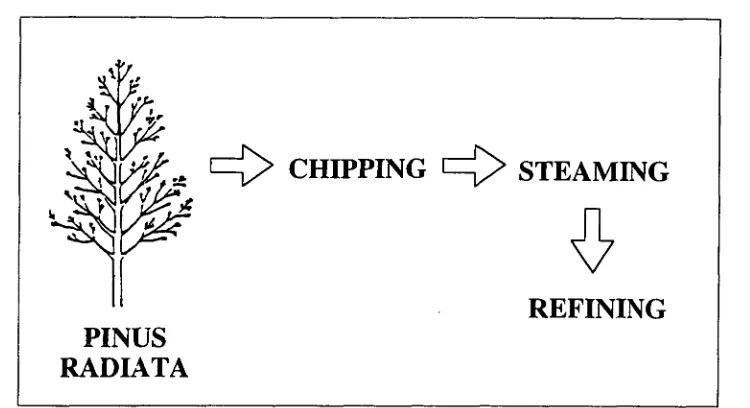
debris in the puip28. A simplified representation of thermomechanical
pulping is shown in Figure 1.2.
The colour of mechanical pulp is primarily introduced in the defibration
stage. Figure 1.3 shows how the colour of mechanical pulp changes after
pulping and bleaching. This colour has been reported to depend on
several factors such as wood quality, wood storage, barking efficiency
bleached mechanical pulp —2
—4 wood
—6
—8
Lig
ht Abso
rp
tion
Co
effic
ie
nt
[image:20.548.102.477.100.304.2]unbleached mechanical pulp
Figure 1.2. Thermomechanical pulping process of Pinus radiata.
Figure 1.3 Changes in the colour of pulp made from spruce wood (as represented by
[image:20.548.111.463.385.619.2]Chapter I Pulp and Paper: An Overview
1.2.3 Kraft Pulping Process
The kraft process is one of the most common chemical pulping methods. It involves cooking the wood chips at 170"C-180°C in a solution of sodium hydroxide and sodium sulfide to solubilize the lignin. The dissolved lignin is removed by washing with water. This 'unwanted' lignin is normally collected by evaporation and burnt to provide process energy and to recover the sodium based cooking chemicals2.
During cooking, the lignin content of the solid material is reduced from around 50% to 3-4%, and this residual lignin is the material that gives the characteristic brown colour to kraft pulp. This residual lignin cannot simply be removed by continuing the cooking process, because the remaining lignin is unreactive and the cellulose fibres become prone to significant damage. This residual lignin may also become more highly coloured2.
1.3 Newsprint and Mechanical Pulp
The major components of newsprint are high yield mechanical or chemi-mechanical pulps. These pulps are distinct from the chemical pulps used to produce fine papers.
achieve the high brightness levels required for these grades28. The
objective in bleaching chemical pulps is to remove traces of residual
lignin in the pulp which remain after pulping. These are processes which
can give rise to highly toxic organo-chlorine compounds2, 28.
In contrast, mechanical pulps, which are produced through physical
separation of the wood fibres (or after mild chemical treatment as for
chemimechanical pulps), as used in paper grades that do not require the
same high levels of brightness, can use bleaching agents which are
environmentally not so harmful. The objective in bleaching (or
brightening) these high yield pulps is to chemically change the structure
of the coloured materials or chromophores present in the pulp so that
colourless substances are produced. For thermomechanical pulp, the
bleaching reagents can be divided into two classes, reducing agents
(sulfite, dithionite, and borohydride) and oxidising agents (peroxide).
Among these classes dithionite and peroxide are the most commonly
used commercially26. Their reactions during bleaching process will be
described in section 1.4.
It is forecast that bleached mechanical pulps will find greater acceptance
as a suitable substitute for expensive bleached chemical pulps in paper
grades such as liquid packaging board, fine writing papers, tissues and
fluff'. With today's stricter pollution control regulations, hydrogen
peroxide has gained its popularity as the bleaching agent for brightening
Chapter I Pulp and Paper: An Overview
hydrogen peroxide in bleaching of deinked waste papers and as a partial
replacement for chlorine and chlorine dioxide in the bleaching of
chemical pulps in the first and second extraction stages29. However
peroxide is a relatively expensive chemical which tends to decompose
during the bleaching process into products with little or no bleaching
effect29. The actual mechanisms of peroxide reactions during bleaching
are also not well understood. As a result, research in this area is of
considerable interest for both the industrial and scientific communities.
1.4 Bleaching of Pulp
The main purpose of bleaching is to improve the optical properties of
paper. First and foremost among these properties is its brightness or
whiteness, however, other properties such as opacity and receptivity to
printing inks are normally also affected by bleaching2.
In the production of chemical pulps, bleaching involves the almost
complete removal of residual lignin. In contrast to this, bleaching of
mechanical pulps such as TMP is lignin retaining, that is, the lignin is
modified to reduce the colour but not removed from the fibre30. In this
way the high yield of mechanical pulps is maintained while the optical
properties are improved30.
The residual lignin in fibres can affect their surface properties, their
the residual lignin is largely responsible for 'ageing' of paper, that is, deterioration of colour on storage, especially on exposure to light2. For this reason, it is virtually impossible to use unbleached paper for archival material or even for record-keeping over periods of years.
Bleaching to a high brightness is an expensive task and there is no incentive for pulp and paper manufacturers to undertake this if the market does not require it. However, the market demand for higher brightness paper products has increased significantly in recent years, due partly to the enormous increase in consumption of various kinds of printing papers. This market growth no doubt reflects rising living standards and increasing literacy and communication facilities.
Chapter I Pulp and Paper: An Overview
Figure 1.4 Some structural groups representative of chromophores in lignin. (a) a—ii• unsaturated aldehydes, (b) a- carbonyl structures, (c) ortho quinones. L = Lignin. 31
1.4.1 Dithionite Bleaching
For some quinone structures, the standard redox potentials are probably of the order
E° =
0.7- 0.9 V28 . The standard reduction potential for dithionite is given in Equation 1.1.2 S023- + 2 H20 + 2 e- S202,- + 4 HO- (El= -1.12V) (1.1)
From the standard potential value shown in Equation 1.1, it can be seen that dithionite is capable of reducing quinone structures, thereby decreasing the colour of lignin in pulp and producing a bleaching effect. In addition to its decomposition through oxidation into hydrogen sulfite or sulfite as in Equation (1.1), dithionite may also disproportionate into thiosulfate and hydrogen sulfite as in Equation 1. 2 26.
Chapter I Pulp and Paper: An Overview
It is also known that dithionite is oxidised in the presence of air (Equation 1.3).
S2042- + H20 + 02 HSOi + HSO; (1.3)
In theory the maximum bleaching effects for dithionite will be reached at pH 8 - 9 and at a temperature of 20° C - 60° C, however a pH in the region of 5-6 is normally used in practice to avoid the oxidation of dithionite by any oxygen which cannot be excluded from the system26.
1.4.2. Hydrogen Peroxide Bleaching
Hydrogen peroxide bleaching is carried out under conditions where concentrations of both hydrogen peroxide and hydroxyl ions are significant, however it is probably only the perhydroxyl anion (HOD which is active in bleaching.
In order to understand and mathematically describe peroxide bleaching processes in terms of the active bleaching reagent (HOD, it is essential to know the equilibrium constant for the equilibrium between hydrogen peroxide (H202) and the perhydroxyl anion ( HO,- ). The hydrogen peroxide equilibrium can be written as
H+ + 00H- (1.4)
H202
Chapter I Pulp and Paper: An Overview
H20 +
Consequently, two
Ka
and
Kb =
(1.5)
(1.6)
(1.7) -+
00H OH H202
equilibrium constants may be derived: [H+][00H - ]
[1-1 20 2]
[0H - ][-1202] [00H - ]
These two equilibrium constants are related to each other via the ionic product of water.
Ka =
K b (1.8)
where
= [H+ ][0H - ] (1.9)
All these equilibrium constants can be expected to be dependent on temperature and ionic strength. Since peroxide bleaching is carried out under alkaline conditions and hydroxide ions can take part in other reactions of importance, the hydroxide ion form of the equilibrium, i.e. the constant IS, is more relevant in studies of peroxide bleaching 32 .
pKb = 1330 —2.13 T = absolute temperature (K) (1.10)
It should be noted that alkaline peroxide is also susceptible to a decomposition reaction under strong alkaline conditions to give oxygen (Equation 1.11).
2 HO •-2- 02 + 2 HO -
A base-catalysed decomposition mechanism (Figure 1.5) involving hydroxyl and superoxide anion radicals has also been reported 33 .
H 202 + HO- —> H0-2- + H 20
H 20 2 + HO i HO + 02 ± H 20
HO + 02 02 + HO
H 202 + H0 2 —> 0 2 + HO + H 20
Figure 1.5 Base-catalysed free radical mechanism of peroxide decomposition.33
Chapter 1 Pulp and Paper: An Overview
M + H202
-
M+ + HO + HO - M+ + HO-2- + HO- —) M + 02- + H20
M -) M +02
02- + HO
-
02 ± H0
Figure 1.6. Transition metal ion-catalysed free radical mechanism of peroxide decomposition. M = transition metal ion.34
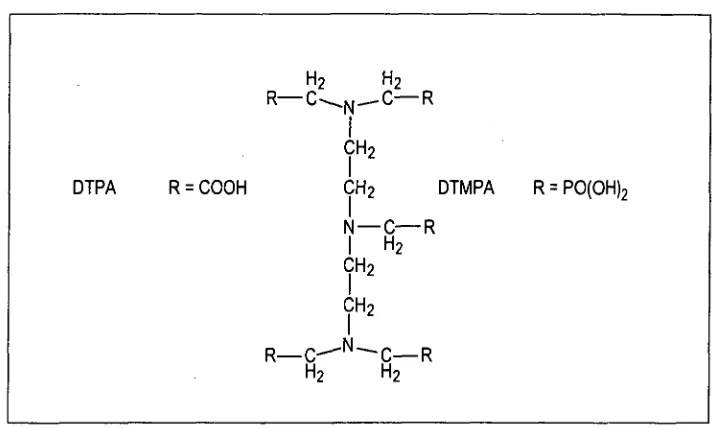
H2 H2
R— C C— R CH2
DTPA R = COOH CH2 DTMPA R = PO(OH)2 N — C— R
I H2
CH2 CH2
C— R
[image:30.548.107.463.101.315.2]H2 H2
Figure 1.7 Structures of chelating agents DTPA and DTMPA. Additives used to reduce
the decomposition of peroxide by chelating trace metal ions present in the pulp.
'Decomposition PrOducts
Reactions
With
Pulp
Bleaching
Darkening + Catalyst
to- Path A
Bleaching 0-1001
Non-bleaching Reactions
Darkening
H202
Path B
[image:31.548.108.463.89.388.2]Chapter I Pulp and Paper: An Overview
Figure 1.8 Reactions of hydrogen peroxide.
1.5 Colour of Pulps, Brightness and Light Absorption Coefficient
1.5.1 Measurement of Colour in Lignin Rich Pulps
Bleaching is concerned with the removal of colour from pulps. For
chemical pulps, the bleaching process results in the removal of residual
lignin, hence the decolouration of bleached chemical pulp is reflected by
measuring the decrease in the concentration of lignin in the pulp (the so
called Kappa number determination). For high yield mechanical pulps
such as TMP, decolouration is achieved without delignification,
concentration of chromophores contained in the pulp using optical techniques. To estimate the chromophore concentration in the fibres, the light absorption coefficient (denoted 1(457 or K) is normally used since this quantity is directly proportional to the concentration of light absorbing groups in lignin at any wavelength36.
In the pulp and paper industry, a more common measure of the concentration of coloured material in paper is the brightness. Its popularity is due to the simplicity of the measurement itself, but it suffers from the drawback of being dependent not only on the chromophoric content but also on the physical structure of the pulp (i.e. the light scattering properties). Since light scattering properties of pulp may be affected by bleaching, the more fundamental property of light absorption coefficient (K) is generally preferred to brightness as a method for monitoring changes in pulp colour.
Chapter I Pulp and Paper: An Overview
1.5.2. Kubelka - Munk Theory
Although brightness is a useful parameter for specifying the end use properties of paper, it is not a fundamental quantity but rather a complicated function of two more basic phenomena, light scattering and light absorption. Light scattering occurs when incident light strikes an internal or external fibre surface in paper while light absorption arises from the absorption of light by chromophoric substances.
When studying the chemistry of bleaching, the primary phenomenon of interest is light absorption because changes in this property are directly related to the removal of chromophoric structures8, 36, 37• For this reason, brightness is an unsuitable quantity for studying bleaching chemistry since it contains an additional component which describes the scattering properties of a paper sheet.
and paper, since they provided a direct method for monitoring absorption of light by chromophoric structures.
Derivation of the Kubelka-Munk equations is based on the scattering and absorption of light in successive thin layers of homogeneous materia136,
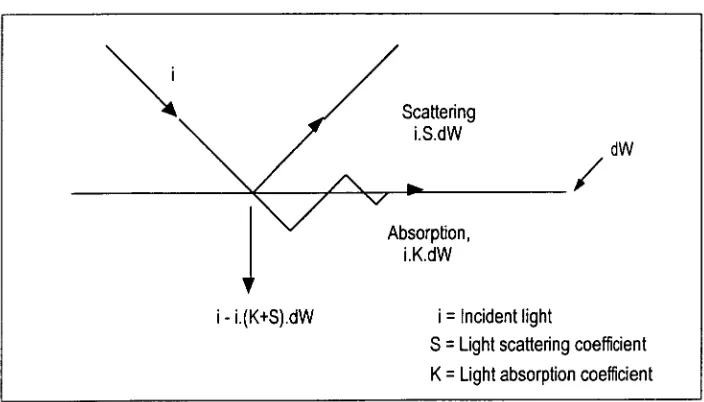
38-40, (Figure 1.9). The material is assumed to have a mass per unit area (or 'grammage') of W kg/m2 and each thin layer has a grammage of dW kg/m2. Two quantities, S and K, representing light scattering and light absorption phenomena respectively are defined so that if the surface layer of material is exposed to light of intensity i, a fraction of light i.S.dW is scattered while the amount i.K.dW is absorbed in the layer. The so-called light scattering (S) and light absorption (K) coefficients are both expressed in units of (grammage)- I ie. m2/kg. The remaining light not absorbed or scattered in the surface layer continues through to the next layer where the absorption and scattering processes are repeated.
Scattering i.S.dW
dW
Absorption, i.K.dW
i - i.(K+S).dW i = Incident light
[image:35.548.111.463.103.304.2]S = Light scattering coefficient K = Light absorption coefficient Chapter I Pulp and Paper: An Overview
Figure 1.9 Diagram showing the physical basis for derivation of the Kubelka-Munk equations. K and S represent light absorption and scattering coefficients respectively (units m2/kg) and W represents the mass/unit area of the surface (units kg/m2).
1.5.3 Kubelka-Munk Equations
SW= R— I n (1---11R2_ 1—R1 1—S2
K 11 1+— =
+R-
1 1 _ FR
R_ Va 2 -1 (1.14)
where R. = reflectance of an infinitely thick pile of sheets Ro = reflectance of a single sheet on a black background
= opacity = Ro/R oc,
W = grammage = mass/unit area (kg/m2) = absorption coefficient (m2/kg)
= scattering coefficient (m2/kg)
When measuring the light absorption coefficients of paper sheets using
the Kubelka-Munk equations, care must be taken to ensure that the (1.12)
sheets conform to three 'rules' arising from theoretical considerations during derivation of the equations38-40 . The three rules are:
• that the optical density of the sheet must not be too low (eg. a thin specimen or
poorly scattering material)
• that light must not be substantially absorbed before scattering (eg. a very dark material)
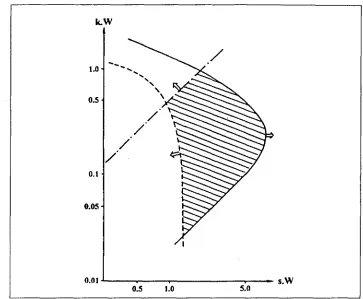
• that light scattering must not dominate over light absorption (eg. a very light material)
Chapter 1 Pulp and Paper: An Overview
Figure 1.10 The limits of applicability of the Kubelka-Munk equations as calculated by Teder and Tormund.40
1.6 Methods for Studying Kinetic and Reaction Mechanisms
The advantage of this method is that it is easy to isolate the effect of each
variable. The condition also resembles the technique commonly used for
bleaching chromophore model compounds. This makes a comparison
between bleaching of pulp and bleaching of chromophore model
compounds easier. It is also an established technique for kinetic
investigation of pulp bleaching and thus facilitates comparison with the
kinetics of other processes. The disadvantage of this method is the
divergence from mill conditions. This is especially pronounced in the
case of pulp consistency and the chemical concentration profile during
the bleaching9.
The differential method on the other hand resembles mill bleaching
conditions. That is, the bleaching chemicals are charged to the pulp at
the start, and the concentration of peroxide and alkali then decrease as
the bleaching proceeds. The advantages and disadvantages of the
differential method are exactly the opposite to those of the constant
conditions method9.
1.7 Parameters That Affect Bleaching
The bleaching effect is the result of many simultaneous reactions,
including the removal of some chromophores and the creation of others
-Ak , — m2
kg Brightness, ISO
5 80
4 75 3 70
2
5 10 15 30 60 120
Time, min
-9
•
-
• •
.
Chapter I Pulp and Paper: An Overview
characterised by a rapid initial phase and a slower final phase as shown in Figure 1.11.
Figure 1.11 Decrease in light absorption coefficient (-AK) and increase in brightness
versus bleaching time for a typical conventional (differential) bleaching. The bleaching response is characterised by a rapid initial phase and a slower final phase. 42
Bleaching conditions:
peroxide charge = 4% on o.d. pulp initial pH = 11.1
pulp consistency = 15 °A) temperature = 50°C
1.7.1 Effect of Peroxide and Alkali Concentration
Under constant conditions, the bleaching rate is increased as the alkali concentration is increased as shown in Figure 1.12. It has also been reported that there is a maximum in the bleaching rate corresponding to increase in alkali which varies with temperature9. A more detailed study has indicated that increasing alkalinity increases the bleaching rate up to p0H = 2.5 (pH = 11.5 at 24°C and 10.5 at 60°C) where the rate passes through a maximum. A further increase leads to a decreased bleaching rate42. At p0H =2 (pH=12 at 24°C) the bleaching rate is of the same order as at p0H 3.5 (pH 10.5 at 24°C and 9.5 at 60°C). This is shown in Figure 1.13.
Figure 1.12 Light absorption coefficient versus bleaching time at different p0H levels
Chapter 1 Pulp and Paper: An Overview
Figure 1.13 The light absorption coefficient versus bleaching time at different p0H levels under constant conditions. Alkali concentrations higher than p0H =2.5 (pH 11.5 measured at 24°C) results in decreased bleaching rate.42
Bleaching conditions: [H202]total = 0.176 mo1/1, temperature = 60°C
According to Sjogren et a/.42 the observation of a maximum bleaching rate with pH is due to the presence of two counteracting reactions, one the bleaching itself and the other one involving colouring reactions. It is known that addition of pure alkali to mechanical pulp decreases the pulp brightness. The addition of alkali to the bleaching liquid therefore can give :
1. Accelerated formation of chromophores.
2. Increased peroxide anion concentration resulting in an accelerated destruction of chromophores.
I [H02]
100 • 100, 0/0 80 - [H202] tot
60 - 40 -
20-
4 -
2-
60°C
1- 0.8 -
0.6 - I. 3 2 p0H
6 80_2 [OH] M 6 810' 2 4 6 810
Chapter I Pulp and Paper: An Overview
equilibrium. Figure 1.14 shows the degree of peroxide dissociation versus the alkalinity.
Figure 1.14 The degree of peroxide dissociation versus hydroxyl anion concentration. Temperature 60°C. At p0H > 2.5 perhydroxyl anion produced is less than required to counteract chromophore formation caused by the increase in alkali concentration.42
Chapter I Pulp and Paper: An Overview
The assumption that alkali creates chromophores and perhydroxyl anions
eliminate chromophores has been confirmed by showing that the
bleaching rate is decreased by increased alkalinity at a given peroxide
anion concentration42. The concentration of the peroxide anion may be
increased either by adding more alkali or by adding more hydrogen
peroxide. The effects on the reaction rate of these two methods are
compared in Figure 1.15.
Bleaching rate
1/tk.3
0.10-
0
variable
0.05- [14202Lot constant
0.95
C p0H constant
0.02- [H202] variable
tot
0.002 0.005 0.01 0.02 0.03 [H021 M
Figure 1.15 The bleaching rate versus peroxide anion concentration. The bleaching rate
is of first order with respect to the peroxide anion if p0H is constant (continuous line). The reaction order is lower (about 0.4), if the peroxide concentration is increased by means of alkali, showing the counteracting, colouring action of added alkali (broken line).42
Both methods of increasing the peroxide anion concentration lead to an
increase in the bleaching rate. If more peroxide is added while the
the peroxide anion. This is also in agreement with results obtained from the bleaching of model compounds29. If more alkali is added while the total concentration of hydrogen peroxide is kept constant a lower reaction order is observed showing the counteracting alkali induced reaction. The conclusion is that the bleaching rate is affected by both peroxide anion and alkali concentrations.
In a recent study, Garver et a/.43 published the first results from an investigation of the molecular weight distribution of the soluble products in the alkaline hydrogen peroxide liquor by size-exclusion chromatography. They concluded that maximum bleaching efficiency, in terms of the highest brightness gained for peroxide consumed, occurs at low alkaline pH, low temperature, low peroxide charge and with multistage bleaching and produces fewest soluble products
1.7.2 Effect of Pulp Consistency
Chapter I Pulp and Paper: An Overview
et al. suggest that the effect is due to the effective chelation of metal ion decomposition catalysts by the pulp at high consistencies 46 , while Hagglund and Lindstrom suggest that the increased dewatering necessary to produce high consistency pulps results in less carry over of dissolved substances and heavy metals into the bleaching process 47 . Recently, it was suggested that the production of hydroxyl radical which is partly responsible for the pulp darkening reactions is reduced at higher consistency and thus result in a brighter pulp".
1.8 Formation and Removal of Chromophores
It can thus be concluded that, in addition to the native wood chromophores, new quinones of various types are created during defibration due to the auto-oxidation of phenolic compounds in lignin. The presence of transition metal ions may further increase the colour by catalysing the reactions and forming complexes with the products.
Up to this time, due to the inherent chemical complexity of pulp, almost all chromophore studies have been performed on chromophore model compounds. One possible reaction mechanism during peroxide bleaching of mechanical pulps49 is shown in Figure 1.17.
Figure 1.16 Examples of auto-oxidative processes leading to the formation of quinone
Chapter I Pulp and Paper: An Overview
Figure 1.17 Possible mechanism in peroxide bleaching of mechanical pulp. 49
Figure 1.18 Reactions between alkaline hydrogen peroxide and cinnamaldehyde like structures.29
Figure 1.19 Mechanism for the cleavage of cinnamaldehyde like structures by alkaline
Chapter I Pulp and Paper: An Overview
1.9 Kinetic Models and Reaction Mechanisms
There has been recent interest in developing kinetic models which describe the response of mechanical pulps to alkaline peroxide under mill conditions 15-18 . Various complex polynomial expressions have been formulated to represent relationships between the brightness of a pulp and process variables including the consistency of the pulp, and applied dosages of peroxide and alkali. For example, a 5-parameter model has been suggested 16 as a kinetic representation for conventional one-stage alkaline peroxide bleaching.
Brightness = Ao + Ai * p + A2 * p2 + A3 * (c) + A4 * (c)2 + A5 * (c)* p (1.15)
where p = [ H202) and c = consistency
meaning. For example, there may be no fundamental significance in finding a term dependent on the square of consistency in the above expression. The term is included with its associated coefficient, A 4 , because this combination results in the calculated brightnesses lying closer to the experimental values. Because these types of expression are not based on a series of terms which have individual significance, they cannot be expected to yield fundamental information concerning chemical processes which occur during bleaching processes.
Another approach in describing kinetic phenomena during peroxide bleaching is based on the assumption that even complex phenomena can be described and understood using the same approaches as applied to simpler chemical processes. This approach assumes that the rate of loss or formation of a particular chemical species depends on its concentration in the system, as well as the concentration of other species with which it reacts. Analysis of kinetic phenomena is greatly simplified by reducing the number of variables in a particular experiment. For alkaline peroxide bleaching this can be achieved by maintaining the pH and peroxide concentration at constant levels8-11, 19•
Chapter 1 Pulp and Paper: An Overview
depends on light scattering properties as well as light absorption. Results
relating changes in absorption coefficient with time under constant
conditions have been reported for spruce SGW pulp 9 , Pinus radiata
TMP 10 and Eucalyptus regnans SGW I 19 • Despite the differences in
the species being studied, the general form of these K-time profiles under
constant reagent conditions is the same in all cases, with initial rapid
decline in K, followed by a much slower rate of chromophore reduction
at long bleaching times.
1.10 Computational Models and Model Chemistries
Models are inseparable from chemists. For example, the use of plastic
models is inarguably one of the best ways in helping to understand and
visualise the structure of molecules for both beginning chemistry
students and researchers. With the wide acceptance and availability of
computers, these students and researchers have also begun to use
computer visualisation programs to obtain the same information 50, 51•
Computational chemistry, like other model chemistry, uses a set of
predefined objects and rules to approximate real chemical entities and
processes. In more detail, computational chemistry simulates chemical
structures and reactions numerically, based in full or in part on the
phenomena can be studied by running calculations on computers rather than by examining reactions and compounds experimentally. In fact some of the reactions which are difficult to be studied experimentally such as short-lived molecules and molecules which have unstable intermediates can be studied computationally like stable molecules. The capability of computational chemistry however does not end here. Information about transition states which are nearly impossible to obtain experimentally can also be collected by using appropriate methods of computational chemistry. Because of these reasons, computational chemistry is therefore both an independent research area as well as a vital adjunct to experimental studies 51 .
Despite all the advantages mentioned above, there has been very little application of computational methods by researchers concerned with the chemical analyses of wood and its components. One of the earliest reports on research of this type was the examination of the physical chemistry of lignin precursor using the Mickel, the Pariser-Parr-Pople and complete neglect of diatomic overlap (CNDO) molecular orbital theories 52 . Other studies have involved a systematic examination of hydrogen bond strengths in lignin model compounds 53-55 and study of spin densities 56 .
Chapter I Pulp and Paper: An Overview
dehydrogenation of coniferyl alcohol and the electronic structure of the reactive free radicals which form the lignin polymer. The technique was applied to study the first steps of the polymerisation of coniferyl alcohol to form softwood lignin which forms a reactive free radical. There are two possible mechanisms by which this reaction may proceed: by the loss of neutral hydrogen to form the free radical directly, or via the loss of a charged proton, thus forming a phenolate ion which loses a single electron to give a free radical as shown in Figure 1.2058.
Figure 1.20 Possible routes for the formation of coniferaldehyde radical.58
coniferyl alcohol ground state as expected. Although the energy of the ion was subsequently found to be 62.5 kcal mol-I lower than the radical, a definitive conclusion about the favoured path was unable to be obtained due to the unavailability of the experimental value of electron affinity for the coniferyl radical. Nevertheless, the value of electron affinity of the coniferyl radical obtained from the calculation (2.71 eV), was in good accord with a previous study undertaken by Dewar and Rzepa on phenoxy radical59.
Chapter I Pulp and Paper: An Overview
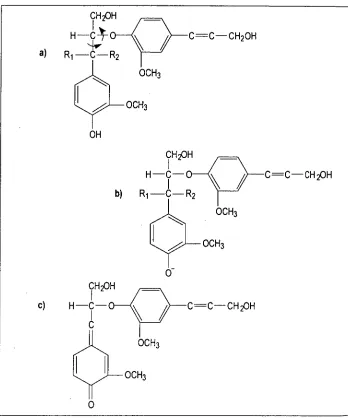
Figure 1.21 Structures for a) free phenol, b) phenolate anion, c) quinone methide
intermediates of guaiacylglycocerol-b-coniferyl alcohol as studied by Elder60. The
arrows indicate the bonds about which rotations were performed. Where: RI = H, R2 = OH is the erythro isomer, and R1 = OH and R2 = H for the threo isomer.
The structural determination was carried out using Assisted Model
Building with Energy Refinement (AMBER)61 while the molecular
orbital calculations were accomplished with the semi-empirical,
[image:55.551.113.461.104.522.2]results from this study were reported to be in support of the mechanism
proposed by experimental work.
A more recent application of molecular orbital theory to bleaching
reactions was reported by Garver 62 where semi-empirical methods were
used to calculate electron populations, frontier orbital properties, and
geometries and energies of molecules to define lignin reactivity in terms
of bleaching reactions. Peroxide and chlorine substitution have been
used as examples of nucleophilic and electrophilic reactions respectively.
From this study, it was indicated that chlorination and methoxyl
substitution reduce the energy of arenium intermediates which, together
with the highest occupied molecular orbitals on the lignin structures,
control the substitution reaction. The rate of chlorine bleaching of
hardwoods is higher because of the greater frequency of methoxyl
oxygen sites for oxidation.
In the reaction of peroxide with acetoguaicone, it was concluded that the
rate limiting step is the formation of the epoxide intermediate and that
increasing the nucleophilicity of the hydrogen peroxide may have little
effect on the reaction rate.
Recently, Shevchenko 63 presented a critical review of the applications of
theoretical methods to the studies of the structure and chemical reactivity
of lignin which included simulation of macromolecular properties,
Chapter 1 . Pulp and Paper: An Overview
structure, spectra and chemical reactivity. The review also discussed modern concepts of spatial organisation and chemical reactivity of lignins.
1.11 References
1. Coleman, M. J., Cooperative Editorial Feature from Tappi Journal and Pulp and Paper Journal 10 (1990).
2. Barker, G. J. and Cullinan, H. T., Search 20 (6) :195 (1989).
3. Andrews, D. H. and Singh, R. P., In The Bleaching of Pulp, "Chapter 8 : Peroxide Bleaching", Singh, R. P. (Eds.), Tappi Press, Atlanta, 1979.
4. Strunk, W. G., Pulp and Paper 54 (16) :156 (1980).
5. Dence, C. W. and Omori, S., Tappi J. 71 (10) :120 (1986).
6. Moldenius, S., Svensk Papperstidning 85 (15) :R116 (1982).
7. Colodette, J. L. and Dence, C. W., J. Pulp Paper Sci. 15 (3) :J79 (1989).
8. Lundqvist, M., Svensk Papperstidning 82 (1) :16 (1979).
9. Moldenius, S. and Sjogren, B., J. Wood Chem. Technol. 2 (4) :447 (1982).
10. Allison, R. W. and Graham, K. L., J. Pulp Paper Sci. 15 (4) :J145 (1989).
11. Wright, P. J. and Abbot, J., J. Wood Chem. Technol. 11 (3) :349 (1991).
12. Allison, R. W., Appita 36 (5) :362 (1983).
Cltapter I Pulp and Paper: An Overview
14. Abbot, J., Brown, D. G., Hobbs, G., Jewell, I. and Wright, P., Appita Conf. Proceedings, 1 :223 (1991).
15. Bergman, E. K. and Edwards, L. L., Pulp and Paper (1986).
16. Braller, P., Kappel, J. and Resch, F., Tappi Pulp. Conf. Proceedings, 299 (1990).
17. Meyer, K. A., Kappel, J. and Petschaller, F., Tappi Pulp. Conf. Proceedings, 291 (1990).
18. Meyrant, P. and Dodson, M., Tappi Pulp. Conf. Proceedings, 669 (1989).
19. Wright, P. J., Ginting, Y. A. and Abbot, J., J. Wood Chem. Technol. 12 (1) :111 (1992).
20. Abbot, J. and Ginting, Y. A., J. Pulp Paper Sci. 18 (3) :J85 (1992).
21. Heitner, C. and Schmidt, J. A., Int. Symp. Wood Pulp. Chem., 1 :131 (1991).
22. Pero, R. W. and Dence, C. W., J. Pulp Paper Sci. 12 (6) :J192 (1986).
23. Kutney, G. W. and Evans, T. D., Svensk Papperstidning 88 (9) :R84 (1985).
24. Wright, P. J., PhD Thesis, Department of Chemistry, University of Tasmania (1993).
25. Sarkanen, K. V., In Lignins - Occurrence, Formation, Structure and Reactions., "Chapter 1: Definition and Nomenclature", Sarkanen, K. V. and Ludwig, C. H. (Eds.), Wiley-Interscience, New York, 1971.
27. Wardrop, A. B., In Lignins - Occurrence, Formation, Structure and Reactions., "Chapter 2: Occurence and Formation in Plants", Sarkanen, K. V. and Ludwig, C. H. (Eds.), Wiley-Interscience, New York, 1971.
28. Casey, J. P., In Chemistry and Chemical Technology, Volume 1: Pulp and Paper, Wiley-Interscience, New York, 1980.
29. Gellerstedt, G., Petterson, I. and Sundin, S., 1st Int. Symp. Wood and Pulp. Chem., II :120 (1981).
30. Smook, G. A., In Handbook for Pulp and Paper Technologist, "Overview of Pulping Methodology", Kocurek, M. J. (Eds.), Joint Textbook Committee of the paper Industry, Canada, 1988.
31. Gellerstedt, G. and Agnemo, R., Acta Chem. Scand. B34 (4) :275 (1980).
32. Teder, A. and Tormund, D., Svensk Papperstidning 83 (4) :106 (1980).
33. Roberts, J. L., Morrison, M. M. and Sawyer, D. T., J. Am. Chem. Soc. 100 (1) :329 (1978).
34. Isabel!, H. S., Parks, E. and Naves, R. G., Carbohydr. Res. 45 197 (1975).
35. Burton, J. T., J. Pulp Paper Sci. 14 (4) :J95 (1986).
36. Robertson, G. J., In Fundamentals of Paper Performance, "Chapter 9: General and Theoretical Concepts of the Optical Properties of Paper.", APPITA Technical Association, 1985.
37. AxegArd, P., Moldenius, S. and Olm, L., Svensk Papperstidning 82 (5) :131 (1979).
38. Kubelka, P., J. Opt. Soc. Am. 38 (5) :448 (1948).
Chapter I Pulp and Paper: An Overview
40. Teder, A. and Tormund, D., Trans. Tech. Assoc. CPPA 3 (2) :TR41 (1977).
41. Robinson, J. V., Tappi 58 (10) :152 (1975).
42. Sjogren, B. and Moldenius, S., 1st Int. Symp. Wood and Pulp. Chem., 2 :125 (1981).
43. Garver Jr., T. M., Maa, K. J., Xu, E. C. and Holah, D. G., Res. Chem. Intermed. 21(3-5) :503 (1995).
44. Reichert, J. S. and Pete, R. H., Tappi 32 (2) :97 (1949).
45. Strunk, W. G., Pulp and Paper 54 (6) :156 (1980).
46. Ali, T., McArthur, D., Stott, D., Fairbank, M. and Whiting, P., J. Pulp Paper Sci. 12 (6) :J166 (1986).
47. Hagglund, T. and Lindstrom, L., Int. Pulp Bleaching Conf Proceedings, 163 (1985).
48. Been, J., Tappi J. 78 (8) :144 (1995).
49. Reeves, R. H. and Pearl, I. A., Tappi 48 (2) :121 (1965).
50. Clark, T., In A Handbook of Computational Chemistry, John Wiley and Sons, New York, 1985.
51. Foresman, J. B. and Frisch, it., In Exploring Chemistry with Electronic Structure Methods: A Guide to Using Gaussian, Gaussian Inc., Pittsburgh, PA 15213, 1993.
52. Lindberg, J., Henriksson, J. and Heriksson, A., Fin. Kemists. Medd. 79 (2) :30 (1970).
53. Remko, M. and Polcin, J. , Chem. Zvesti (30) :170 (1976).
55. Remko, M., Adv. Molec. Relax. Interact. (14) :315 (1979).
56. Martensson, 0. and Karlsson, G., Arkiv Kemi 31 (2) :5 (1968).
57. Elder, T. J. and Worley, S. D., Wood Sci. Technol. 18 (4) :307 (1984).
58. Sarkanen, K. V., In Lignins - Occurrence, Formation, Structure and Reactions., "Chapter 4: Precursors and Their Polymerization", Sarkanen, K. V. and Ludwig, C. H. (Eds.), Wiley-Interscience, New York, 1971.
59. Dewar, M. J. S. and Rzepa, H. S., J. Am. Chem. Soc. 100 784 (1978).
60. Elder, T. J., McKee, M. L. and Worley, S. D., Holzforschung 42 (4) :233 (1988).
61. Weiner, P. K. and Kollman, P. A., J. Comput. Chem. 2 (3) :287 (1981).
62. Garver Jr., T. M., Int. Pulp Bleaching Conf. Proceedings, 5 (1994).
63. Shevchenko, S. M., Croatica Chemica Acta 67 (1) :95 (1994).
64. Hayns, M. R., Int. J. Quantum Chem. (21) :217 (1982).
CHAPTER 2
Experimental Methods
2.1 Pulp Samples
The Pinus radiata thermomechanical pulp was provided by Australian Newsprint Mills from TMP unit 2 at their Boyer mill. The pulp was stored at 8% consistency and 4°C until used.
2.2 Chemicals Used
Hydrogen peroxide (30%) and sulphuric acid (98%) were supplied by Ajax Chemicals. Semi-conductor grade sodium hydroxide (99.99%) obtained from Aldrich Chemicals was used as the alkali source to minimise the introduction of transition metal impurities. Diethylenetriamine-pentaacetic acid (DTPA) (97%) was also obtained from Aldrich Chemicals.
Chapter 2 Experimental Methods
Potassium iodide (laboratory grade), sodium thiosulfate (Aldrich, 99%), dilute sulfuric acid, saturated ammonium molybdate and 1% starch solution were used for iodometric determination of hydrogen peroxide 1.
2.3 Chelation of Pulps
In some cases pulps were pretreated with DTPA prior to bleaching. The required amount of pulp, generally 5 or 10 gram oven dried (g.o.d.), was added to Milli-Q water to give a pulp slurry of 2.5% consistency, and maintained at 20°C. To this slurry, 0.5% on o.d. pulp of DTPA was added and the mixture stirred occasionally during 15 to 30 minutes treatment time. The slurry was then filtered to approximately 20% consistency and washed with two 200 mL portions of Milli-Q water. Atomic absorption results show that metal ion concentrations, particularly copper and manganese are reduced using this treatment.
2.4 Determination of Transition Metal
Contents 2
Chapter 2 Experimental Methods
gently after the initial violent reaction had subsided. The reaction was
continued until no pulp was visible. Perchloric acid (5 mL) and boiling
beads were then added. The mixture was then heated on the hotplate
until a clear solution was obtained. On occasions, when the solution
darkened, more concentrated nitric acid was added. The final solution
obtained was colourless or straw coloured. The solution was then cooled
and transferred to a 100 mL volumetric flask and diluted up to the mark
using Milli-Q deionised water.
The manganese (Mn), copper (Cu) and iron (Fe) contents were then
determined on a Varian spectrAA-10 spectrophotometer with an
acetylene-air flame. Solutions of manganese, iron and copper were
prepared by standard methods and used for calibrating the
spectrophotometer prior to sample analysis. Typical values of metal ion
contents for unchelated pulp are listed in Table 2.1.
Table 2.1 Transition metal contents of the unchelated Pinus radiata thermomechanical
pulp taken from Australian Newsprint Mills at Boyer as used in this study.
Metal Ion Content (ppm)
Iron 5.99
Manganese 32.1
NaOH &H202
Discharged at the beginning of
bleaching
Pulp
4% Consistency
500 C Water Bath
Stirrer
Capped Polyethylene Bottle
2.5 Differential Method Bleaching
Bleaching studies were carried out using polyethylene or Teflon vessels maintained at either 50°C or 95t in a constant temperature water bath (Figure 2.1). The vessel was tightly capped, however, oxygen was not purged. The pulp suspensions were rapidly stirred during the course of the bleaching reactions. The bleaching experiments were performed by mixing the appropriate amounts of pulp, hydrogen peroxide and sodium hydroxide with the required volume of Milli-Q water to give a consistency of 4%. Sodium silicate was reported to have small influence on the reaction rates3 and therefore it was not introduced in the bleaching experiments. The pulp was not pre-treated by chelation. The pulp and dilution water were heated to reaction temperature before addition of reagents.
Figure 2.1 Experimental setup for the differential bleaching experiments.
Chapter 2 Experimental Methods
at the end of each cycle. The pulp was then filtered and washed with Milli-Q water, before addition of fresh hydrogen peroxide and sodium hydroxide (at the required reaction temperature) to begin the next cycle.
Residual peroxide concentrations were determined on filtrates by iodometric titration with standard sodium thiosulfate, after acidification and addition of potassium iodide and a few drops of saturated ammonium molybdate solution 1.
Pulp samples were withdrawn at intervals to determine the brightness of the pulp and consumption of hydrogen peroxide. All pulp samples were thoroughly washed with deionised water.
2.6 Constant Conditions Bleaching
Figure 2.2 Experimental setup for the constant reagent concentrations bleaching
experiments.
Bleaching was initiated by simultaneously adding enough alkali and hydrogen peroxide to reach the target conditions. Subsequently, constant pH was maintained by adding alkali from a pH controller supplied by Cole-Parmer. The concentration of peroxide was maintained at constant levels by occasional addition of the necessary amount of hydrogen peroxide calculated from iodometric titrationl of the bleaching liquor.
Chapter 2 Experimental Methods
at room temperature and were then allowed to equilibrate at constant temperature (25°C) and humidity (50%) so that conditioned basis weights could be obtained.
These so called 'constant conditions' is a well established technique for investigating peroxide bleaching kinetics and has the following advantages4, 6, 8:
• The effects of each variable are easily isolated and mathematical treatment of
data is straightforward.
• The reaction conditions resemble those used in the bleaching of model chromophore compounds, enabling simple comparison of the bleaching of pulp and model compounds.
• The influence of diffusion on kinetic behaviour is minimised since each fibre is effectively surrounded by bleaching solution under the low pulp consistencies employed.
2.7 Measurement of Brightness
Chapter 2 Experimental Methods
2.8 Measurement of Light Absorption Coefficient
After drying, black-backed and self-backed reflectance measurements were made on each sheet, at a wavelength of 457 nm, using an Elrepho 2000 reflectance spectrometer. Individual opacity (W), scattering coefficient (S) and light absorption coefficient (K) properties were calculated from the Kubelka-Munk equation9-11 using a computer spreadsheet program (Appendix A). These properties were reported as the average per group of 3 handsheets.
2.9 UV-Visible Difference Absorption Spectra
The ultraviolet and visible spectra of the bleached and unbleached sheets were measured on samples 15 mm x 15 mm in the diffuse reflectance mode by using a Varian DRA diffuse reflectance accessory with a Varian model DMS100 ultraviolet-visible spectrophotometer.
The difference spectra were collected in absorbance at a spectral bandwidth of 2nm and at a rate of 100 nm/min between 260 and 540 nm. Whatman 40 filter paper was used as a reference.
Chapter 2 Experimental Methods
2.10 Computational Chemistry Method
Geometry optimisations of minima and transition structures at the semi-empirical level were carried out using MOPAC 93 using the MND0 12 and PM3 13 hamiltonians. For each minima, an approximation to the desired geometry was used as input for the calculation. For each transition structure, the calculation was performed using the TS option of the Eigenvector Following routine. The input for a transition structure calculation is approximated from the two minima on its left and right hand side of the reaction coordinate (involving a slight modification of one or more of a combination of bond length, bond angle and dihedral angle of the optimised minima).
Based on the starting geometry of the input file as described above, MOPAC 93 calculates the forces acting on the system, changing the geometry so as to lower the total energy. Internally, the SCF iterations of MOPAC 93 are stopped when two tests are satisfied. These are 14:
1. when the difference in electronic energy, in eV, between any two consecutive iterations drops below the adjustable parameter, SELCON, and
2. the difference in density matrix elements on two successive iterations falls below a preset limit, which is a multiple of SELCON.
SELCON is set initially to 0.0001kcal/mol. In this work, this value has been made 100 times smaller by the use of the keyword PRECISE.
Chapter 2 Experimental Methods
2 . 11 References
1. Vogel, A. I., In Quantitative Inorganic Analysis, Longmans, Green and Co., London, 1947.
2. Hobbs, G. C. and Abbot, J., J. Wood Chem. Technol. 11 (3) :329 (1991).
3. Lundqvist, M., Svensk Papperstidning 82 (1) :16 (1979).
4. Moldenius, S. and Sjogren, B., J. Wood Chem. Technol. 2 (4) :447 (1982).
5. Heitner, C. and Schmidt, J. A., Int. Symp. Wood Pulp. Chem., 1 :131 (1991).
6. Sjogren, B. and Moldenius, S., 1st mt. Symp. Wood and Pulp. Chem., 2 :125 (1981).
7. Wright, P. J. and Abbot, J., J. Wood Chem. Technol. 11 (3) :349 (1991).
8. AxegArd, P., Moldenius, S. and Olm, L., Svensk Papperstidning 82 (5) :131 (1979).
9. Robertson, G. J., In Fundamentals of Paper Petformance, "Chapter 9: General and Theoretical Concepts of the Optical Properties of Paper.", APPITA Technical Association, 1985.
10. Kubelka, P., J. Opt. Soc. Am. 38 (5) :448 (1948).
11. Kubelka, P., J. Opt. Soc. Am. 38 (12) :1067 (1948).
12. Dewar, M. J. S. and Thiel, W., J. Am. Chem. Soc. 99 (15) :4899 (1977).
14. Stewart, J. J. P., In MOPAC 93 Manual, Fujitsu Limited, Tokyo, Japan, 1993.
15. Hariharan, P. C. and Pople, J. A., Chem. Phys. Lett. 66 217 (1972).
CHAPTER 3
Modelling Methods
3.1 Kinetic Modellingl
In the kinetic modelling of a reaction such as the one studied in this project, the first task was to superimpose the response of a proposed model to the experimental data by finding the parameters contained in the model equation which give the best fit. This can sometimes be done manually, although it generally requires considerable amount of time and sometimes, when the model equation has more than one minima, this method can lead to inaccurate solutions. A computerised method which uses an established algorithm in finding these parameters is generally preferred since it can be justified mathematically and also it normally requires much less time and effort.