AN ALL-SOLID-STATE OPTICAL PARAMETRIC
OSCILLATOR FOR THE INFRARED
Jonathan A.C. Terry
A Thesis Submitted for the Degree of PhD
at the
University of St Andrews
1994
Full metadata for this item is available in
St Andrews Research Repository
at:
http://research-repository.st-andrews.ac.uk/
Please use this identifier to cite or link to this item:
http://hdl.handle.net/10023/15032
y
An all-solid-state
optical parametric oscillator
for the Infrared
%
A thesis submitted by Jonathan A. C. Terry to the University of St. Andrews
in application for the degree of Doctor of Philosophy
ProQuest Number: 10166818
All rights reserved
INFORMATION TO ALL USERS
The quality of this reproduction is dependent upon the quality of the copy submitted.
In the unlikely event that the author did not send a com plete manuscript and there are missing pages, these will be noted. Also, if material had to be removed,
a note will indicate the deletion.
uest
ProQuest 10166818
Published by ProQuest LLO (2017). Copyright of the Dissertation is held by the Author.
All rights reserved.
This work is protected against unauthorized copying under Title 17, United States C ode Microform Edition © ProQuest LLO.
ProQuest LLO.
789 East Eisenhower Parkway P.Q. Box 1346
%
i
'g
Declarations
I Jonathan A. C. Terry hereby certify that this thesis has been composed by myself, that it is a record of my own work, and that it has not been accepted in partial or complete fulfilment of any other degree of professional qualification. I was admitted to the Faculty of Science of the University of St. Andrews under Ordinance General No 12 as a candidate for the degree of Ph.D on 1st October 1989.
In submitting this thesis to the University of St. Andrews I understand that I am giving permission for it to be made available for use in accordance with the regulations of the University Library for the time being in force, subject to any copyright vested in the work not being affected thereby. I also understand that the title and abstract will be published, and that a copy of the work may be made and supplied to any bona fide library or research worker.
J.A.C.Terry Sept 1993
I hereby certify that the candidate has fulfilled the conditions of the Resolution and Regulations appropriate to the Degree of Ph.D.
Abstract
A low threshold, efficient optical parametric oscillator (OPO) based on the material Potassium Titanyl Phosphate (KTP) and pumped by a diode-laser-pumped, Q-switched Nd:YLF laser has been demonstrated and investigated. This all-solid-state device was operated in a non-critical phase match (NCPM) geometry converting the 1 )am pump light to output wavelengths of 1,54 and 3.28 [xm, and has potential as an ‘eyesafe’ laser source with scaling to higher powers. A major contributing factor to the success of this work was the extension of the steady state theory of the singly resonant OPO to include the build-up time effects that are dominant in the pulsed regime.
A number of diode pumped lasers were constructed, allowing a comparison to be made between side- and end-pumping geometries, and also between the materials Nd: YAG and Nd:YLF. The end-pumping geometry in conjunction with the higher absorption and longer upper state lifetime in Nd: YLF made it the design of choice for the case of low pump pulse energies ('- 1 2 mJ at 797 nm). Anamorphic expansion of the laser mode in
the plane parallel to the diode laser junction was employed to achieve TEMqo operation of this laser. Subsequent Q-switching with a polariser and LiNbOg Pockels cell combination produced 2.2 mJ at 1.047 |xm in an 18 ns pulse. Investigation of the dynamic loss of the Q-switch (which is due to the elasto-optic effect) allowed improvement of laser performance.
The established model for a pulsed singly resonant OPO which describes the case for a plane-plane resonator was inappropriate in this work and so the steady state focused beam theory was extended to include time dependence. Fair agreement was found between the computer model and the experimental results, where the effects of pump and signal focusing, and output coupling were investigated.
The high conversion efficiency of 30% for converting the 1 pm pump light to the eyesafe wavelength of 1.54 pm is superior to the present alternative source of the Er:glass laser. Pump energy thresholds of less than 0.5 mJ were obtained, along with internal conversions approaching 50 %. An empirical relation describing pump depletion was derived which showed good agreement with experiment.
Acknowledgements
First, and foremost, I would like to thank my research supervisor, Professor Malcolm Dunn, for it was his enthusiasm and encouragement that facilitated the completion of this work. I would also like to thank my joint supervisor, Professor Wilson Sibbett, for obtaining the funding for both the research project itself and also my studentship. I therefore also wish to acknowledge said financial support from the Science and Engineering Research Council and the DRA (Fort Halstead), who jointly funded the project and myself through a CASE studentship.
Early collaboration on the construction of one of the lasers built in this work with CaUum Norrie, and also help from Bruce Sinclair, is acknowledged, as is later help and collaboration, again with construction of a pump laser, with Cameron Rae. Still with regards to the work side of things, many thanks are expressed to the technical staff of the mechanical and electrical workshops, too numerous to mention, but in particular to Jimmy Lindsay for his helpful suggestions about redesign of mechanical components (!).
Many friendships were made at St. Andrews, and I thank the boys at 172 (Neil, Gordon and Jason) and also Angus, Sarah, Gordon, Malcolm and Christian for making my time at St. Andrews the most enjoyable period of my life, as far as I can remember.
List of publications
Y.Cui, M.H.Dunn, CJ.Norrie, W.Sibbett, B.D.Sinclair, Y.Tang and J.A.C.Terry "All-solid-state optical parametric oscillators tunable in the visible spectral region" paper CTuRl, in Conference on Lasers and Electro-Optics 1992. vol. 12 OSA Technical Digest Series (Optical Society of America, Washington, DC 1992), pl98
Y.Cui, M.H.Dunn, C.J.Norrie, W.Sibbett, B.D.Sinclair, Y.Tang and LA.C.Teiry "All-solid-state optical parametric oscillator for the visible"
Opt. Lett. 17 (1992) 646
C.F.Rae, J.A.C.Terry, B.D.Sinclair, M.H.Dunn and W.Sibbett
"Single frequency, end-pumped Nd:YLF laser excited by a 12 mJ diode-laser array" Opt. Lett. 17 (1992) 1673
J.A.C.Terry, C.F.Rae and M.H.Dunn
"Low threshold operation of an all solid state KTP OPO"
paper 133, in Technical Digest of 11th UK National Ouantum Electronics Conference 1993. Belfast
J.A.C.Terry, Y.Cui, Y.Tang, W.Sibbett and M.H.Dunn "Low threshold operation of an all solid state KTP OPO"
Contents
Chapter 1 : Introduction
1.1 Why are tunable, coherent light sources required ? 1 1.2 How can tunable light be obtained ? 2
1.3 The OPO : a brief history 3
1.4 This work 7
1.5 References 9
Chaper 2 ; Theory of Parametric Interactions
2.1 Introduction 12
2.2 The non-linear susceptibility 12 2.3 The coupled amplitude equations 15
2.4 Parametric amplification 17
2.5 Phase matching and acceptance parameters 20
2.5.1 Phase matching 20
2.5.2 Angular acceptance 22
2.5.3 Poynting vector walk-off 23
2.5.4 Spectral acceptance 24
2.6 Focused gaussian beams 24
2.7 Parametric oscillation 30
2.7.1 Spontaneous parametric emission 30
2.7.2 CW or steady-state parametric oscillation threshold 31 2.7.3 Double resonance and the cluster effect 32 2.8 Parametric oscillation threshold for a pulsed pump 34
2.9 Conversion efficiencies 41
2.10 Summary 42
2.11 References 43
Chapter 3 : Non-linear Optical Materials
3.1 Introduction 45
3.2 Considerations for material selection 45 3.2.1 Crystal symmetry and non-linear coefficients 46
3.2.2 Tuning range 47
3.2.3 Calculation of deff for the principal planes 50
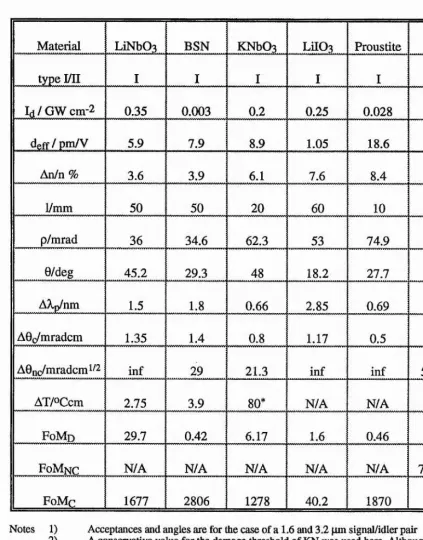
3.2.5 Figures of Merit 53 3.3 Materials for use in the near infrared 55
3.4 Selection of material for OPO 57
3.5 Potassium Titanyl Phosphate (KTP) 59 3.5.1 Crystal symmetry and non-linearity 59
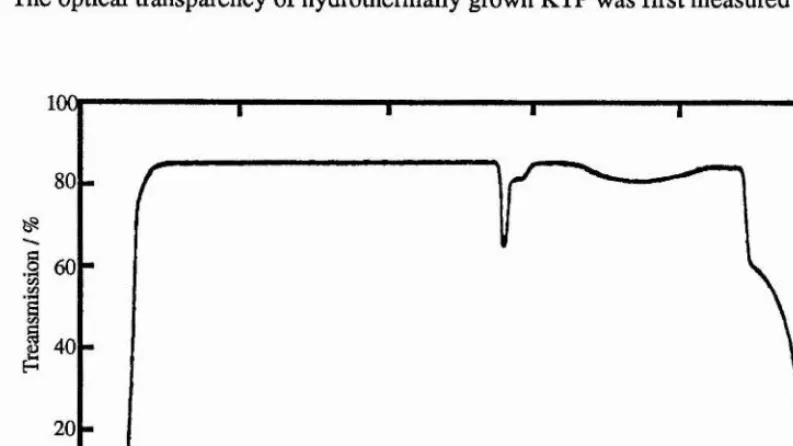
3.5.2 Transmission 60
3.5.3 Birefringence and dispersion 61
3.5.4 Thermal behaviour 64
3.5.5 Tuning 64
3.5.6 Optical damage threshold 6 6
3.6 Summary 67
3.7 References 6 8
Chapter 4 : The Pump Laser
4.1 Introduction 72
4.2 Laser diode pump sources 72
f 4.3 Laser diode pumped solid state lasers 74
4.4 Laser ions and solid-state hosts 76
4.4.1 Solid-state laser ions 76
4.4.2 NdiYAG 77
4.4.3 NdiYLF 78
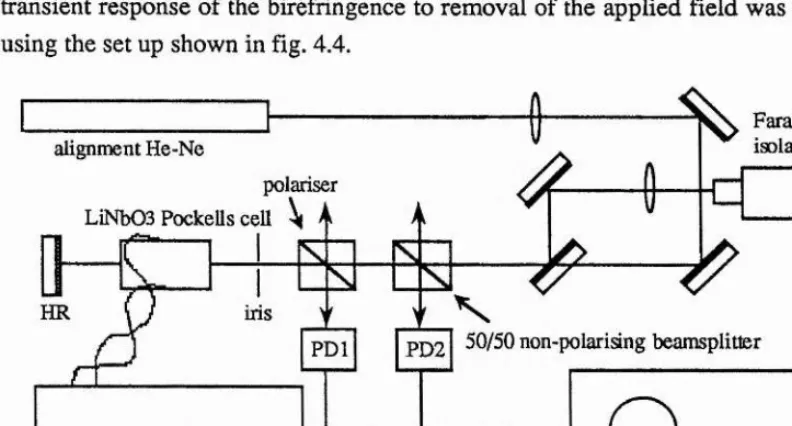
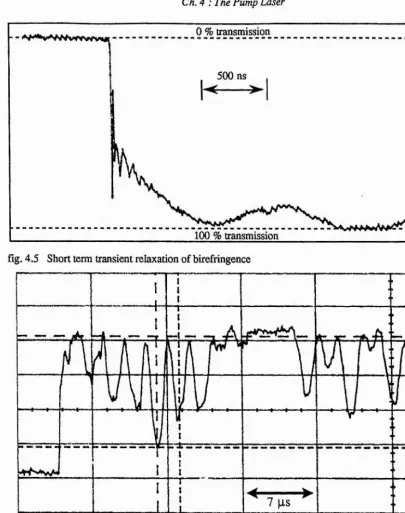
4.5 Electro-optic Q-switching 78
4.5.1 General theory of Q-switching 79 4.5.2 Electro-optic Q-switcing 79
4.6 Side-pumped NdiYAG lasers 82
4.6.1 Nd: YAG laser side-pumped by a single diode laser array 82 4.6.2 Double side-pumped Nd:YAG laser 85
4.7 End-pumped Nd lasers
89
4.7.1 Introduction
89
4.7.2 End-pumped Nd:YAG laser 90
4.7.3 End-pumped Nd:YLF laser 94
4.8 Comparison of side- and end-pumping and Nd:YAG and YLF 98
4.9 Summary 100
4.10 References 101
Chapter 5 : KTP OPO
5.1 Introduction 104
5.2 Design considerations 104
5.3 5.4 5.5 5.6 5.7 5.8 5.9 5.20 Early experiments Zero-power mirrors 5.4.1 Mirror design 5.4.2 Mirrors obtained KTP crystals
Experimental set-up and measurements 5.6.1 Pump lasers
5.6.2 OPO configuration 5.6.3 Experiments
Results for threshold, efficiency and transverse modes 5.7.1 Optical damage
5.7.2 OPO threshold 5.7.3 Efficiency
5.7.4 Transverse mode Spectral Properties
5.8.1 Output wavelength 5.8.2 Spectral structure Summary
References
Chapter 6 ; Conclusions
Appendices
Appendix A : Non-linear M aterials
A .l Introduction
A.2 Lithium Niobate (LiNbOs) and MgOtLiNbOs
A.3 Barium Sodium Niobate (Ba2NaNb5 0i5, BSN, BNN)
A.4 Potassium Niobate (KNbOg, KN) A.5 Lithium lodate (LilOg)
A.6 Proustite (AgsAsSg)
A.7 References
Appendix B : Com puter program s
B. 1 Program to evaluate hg from Guha, Wu and Falk B.2 Program to evaluate pulsed thresholds
106 108 108
110
111
1121 1 2
CHAPTER 1
Introduction
1.1 Why are tunable, coherent light sources required ?
Spectroscopy has for a long time been one of the most powerful analytical tools available for probing matter and gaining information about the world in which we live. By examining the absorption and emission properties of atoms and molecules, we can attempt to experimentally verify theories of atomic structure. As different species have resonances at different frequencies, a light source is required which provides access to the range of wavelengths of interest. This can be achieved with appropriate arc lamps and filtering of the effective black-body radiation, but these sources are only capable of producing a limited amount of power per unit wavelength per unit area per steradian. In order to provide higher resolution in the spectroscopic measurements a source of greater intensity is required. This boost was given originally when Schawlow and Townes [1] proposed the extension of maser techniques, by which intense, coherent radiation is produced in the microwave region of the spectrum, to the infrared and visible regions. The first 'optical maser', or laser, was successfully demonstrated in 1960 [2] by Maiman when a ruby rod was optically pumped by the emission from a flashlamp to produce an intense, coherent pulse of light with a wavelength of 694.3 nm. This starting point led to the diverse and world wide exploitation of laser technology that is available today.
Ch. 1 : Introduction
1.2 How can tunable light be obtained ?
Techniques for achieving the high intensity and coherence properties available from lasers in a tunable source can be split into two main areas ; the tunability is provided :
1) by the laser itself, or 2) by some non-linear optical technique which maintains, and
even relies on, the coherence of the original laser.
If the levels between which the laser transition occurs are almost continuous manifolds due to broadening of vibrational and rotational sublevels by interaction with the host then absorption and emission spectra can be very wide (10s to 100s of nm). One of the traditional ways to obtain a tunable output is the use of an organic dye dissolved in a suitable solvent [9]. A large number of such dyes are available over the range 300 - 1200 nm, with tunability from each dye restricted to a few 100s of nm or less. The short upper state lifetime (~ ns) precludes energy storage and effectively limits the use of dyes to the cw and short pulse regimes where pulses of a few 1 0s of femtoseconds have
been generated, e.g.[10]. Dyes have a number of disadvantages. As well as the limited spectral coverage mentioned above, exposure to the intense light fields involved results in degradation of the dye and so the dye must be replaced on a regular basis. This requires the operator to be exposed to messy, harmful chemicals.
An alternative technique for obtaining tunable output is that of the colour centre laser. If an alkali-halide crystal is treated in a certain way (e.g. electron bombardment) then the resulting removal of electrons or atoms from the lattice results in the creation of defect centres. These defect, or colour, centres act like a particle in a box with lower transition energies (i.e. longer wavelengths) than the dyes mentioned above. The wide bandwidths of these systems are suitable for ultrashort pulse generation, especially around the technologically important wavelength of 1.55 |xm [11]. A major disadvantage of these systems is that they generally have to operated in dewars at cryogenic temperatures.
Recently there has been substantial interest in the use of so called 'vibronic lasers' which are created by the doping of a transition metal ion into a suitable crystal host. The strong coupling of the outer shell 3d electrons with the crystal field results in broadening of the vibrational levels to produce a wide bandwidth of absorption and emission [12], which in the case of the Ti3+:Al2 0 3 (Tirsapphire) laser stretches from
Ch. 1 : Introduction
centres that they are robust, can operate at room temperature and do not chemically degrade.
However, although we have seen from the examples above (there are others) that tunable output can be obtained directly from lasers, the region of the spectrum that can be covered by any individual source is limited, and more importantly, is fixed in a particular region of the spectrum. In order to be able to obtain laser light in regions of the spectrum where no lasing transition exists we turn to some of the techniques of non linear optics.
A number of non-linear techniques are available which allow frequency shifting of an input laser beam, e.g. stimulated Raman scattering, harmonic generation, sum and difference frequency mixing, and optical parametric amplification and oscillation. In Raman scattering, the input pump field is shifted by a discrete amount which is equal to the energy difference between two vibrational levels. This technique can be made to be efficient, in fact a conversion efficiency of 80 % has been reported [15]. Harmonic generation increases the frequency by an amount depending on which harmonic is generated. Equally sum and difference frequency generation can also alter the frequency of the pump laser. Any of these processes can be made more efficient by resonant enhancement, but in order to obtain a tunable output one of the input beams is generally required to be tunable. This does allow regions of the spectrum to be accessed which may not normally have been available, but perhaps at the expense of complexity.
Optical parametric amplification (or generation) and oscillation allow a tunable output where only one input frequency is required. In parametric generation, an intense pump beam is incident on a non-linear crystal and different frequencies, as determined by phase-matching considerations, build up from parametric noise. The resulting cone of generated wavelengths can be spatially filtered to produce a desired output. However, if the gain is not sufficient, only a small amount of power will be produced in the parametrically generated waves. By placing the non-linear crystal in a resonant cavity, an optical parametric oscillator can result where resonance of one or both of the generated waves enhances their growth and allows more control of their spatial and spectral properties. The optical parametric oscillator is the main topic of this thesis and in the next section we introduce some of its properties along with a brief history and some more recent results.
1.3 The OPO : a brief history
detail in chapter 2.
Ch. I : Introduction
(2)
fig. 1.1 Schematic of an OPO
When the pump is incident on the crystal it couples with the vacuum fluctuations at the signal and idler frequencies (sometimes referred to as parametric noise) and transfers power to these fields. The pump can interact with any two frequencies which satisfy the energy conservation relation given by
0)p = 0), + Û), (1.3.1)
However, only the fields which also satisfy the momentum conservation relation given
(1.3.2)
will receive an appreciable amount of gain. As the wavevector is affected by the refractive indices, by controlling the refractive indices we can control the frequencies which will see maximum gain and hence tune the output wavelengths. As most of the crystals which are used 2nd order non-linear experiments are also anisotropic, the
refractive indices can be controlled by a number of means, usually by adjusting the angle of propagation into the crystal, or the crystal temperature.
Resonating the signal and/or idler enhances these fields in the cavity and increases the conversion from the pump field. We now present a brief history of the OPO, with more emphasis on recent work of note.
Ch. I : Introduction
Although the theoretical predictions were very promising, until recently the poor optical quality and low optical damage thresholds of non-linear crystals have resulted in OPOs not living up to their high expectations. The recent revival in OPOs has been fuelled by new and improved materials (e.g. MgOLiNbOg, AgGaSe2, Ba2B0 4 and LiB3 0 5)[2 6-
29] and crystal growth techniques. The other major factor in OPO development has been the development of new pump sources, such as excimer [30] and laser diode pumped solid-state lasers [31]. These improvements have led to new horizons and applications for the new breed of OPOs, such as laser ranging, airborne communications, lidar, and spectroscopy, which were not open to the relatively unstable, inefficient OPOs of the past.
A short review of some more recent work is now presented. This introduces the context within which the work presented in this thesis can be set.
Most of the early work on OPOs concerned the use of pulsed IR lasers with tunable output in the near IR. Today, with suitable choice of non-linear material and pump laser, virtually any wavelength in the range near UV to 4.5 pm is available, with likely extension out to 10 pm and beyond. Pulsed lasers are still used in a fair proportion of situations, but output is now available in the ps and fs temporal regimes, as is true cw output. Due to the photon pair generation of the signal and idler outputs, OPOs are also being pursued as sources of squeezed light. As can be seen from the quick summary above, a large amount of effort is presently been put into development of OPOs and so the short review to follow is only intended to present some of the highlights and give a flavour of the variety and range of work being undertaken.
The renaissance of the OPO has, in the main, been materials led. In the time scale of ns pulsed OPOs, a major advance was the attainment of high quality crystals of the organic material urea. A continuous tuning range of 0.5-1.23 pm when pumping with the third harmonic of a Nd:YAG laser was achieved by Tang and co-workers [32], while when pumping with a XeCl excimer laser at 308 nm, Ebrahimzadeh et al demonstrated a peak efficiency of 65 % for 90^ phase matching [33]. Despite the high single shot damage limit, urea suffered from long term damage problems and was superseded by p- BaB2 0 4 (BBO), one of a host of borate crystals developed by Chen
Ch. 1 : Introduction
throughout the range 372 nm to 1.8 pm when pumped with a XeCl excimer laser [36], making use of type II and non-critical phase matching. Pumping with the 3rd and 4th harmonics of a NdiYAG laser have allowed tuning over the range 540 nm to 1.03 pm for 355 nm pumping [37] and low threshold, non-critically phase matched output at 314 nm and 1.74 pm for 266 nm pumping [38].
KTi0 P0 4 (KTP) has been another material which has found wide spread applications.
It is the material of choice for doubling 1 pm radiation and has been used in a number of OPO set ups. It also has excellent potential as a converter of 1 pm light to the eyesafe region of 1.54 pm in an all-solid-state configuration, as demonstrated in this work, and elsewhere, researchers at Fibertek achieved an impressive 64 % pump depletion [39]. Unfortunately, its IR transmission does not extend to 4.5 pm as originally thought, but an isomorph of KTP, KTi0 As0 4 (KTA) [40], which has a
transmission out to 5 pm is currently under investigation for use in OPOs to provide tunable light in the technologically important region of 3-5 pm. Other materials offer the promise of tunability further out into the IR. AgGaSe2 has produced tunable output
continuously over the range 2.5-12 pm [41]. Similar performance is also available with AgGaS2 [42]. Parametric superradiance in ZnGeP2 and GaSe has produced output in
the ranges 4-10 and 3.5-18 pm respectively when pumped with a 2.94 pm Er:YAG laser [43].
The broad linewidth of the output obtained from OPOs can be a problem in some applications. This area has been tackled by a number of groups with single longitudinal mode outputs obtained by intra-cavity methods either by using grazing incidence gratings [44] or by insertion of étalons [45]. Injection seeding is another useful technique, where a system which uses the output of one single frequency OPO to seed a higher power OPO is now available as a commercial product [46].
Although OPOs pumped by ns pulsed lasers were the most common form of OPO in the early experiments and are still a focus of current research, the temporal regime has been extended somewhat in recent years. OPOs pumped by modelocked lasers have the advantage that the high peak pump powers available can produce high gains while at the same time the damage thresholds of non-linear crystals are higher for these short pulses. Synchronous pumping of a KTP OPO with 70 ps pulses was demonstrated [47] and a reported tuning range of 0.6-4 prh was achieved when pumping with the 2nd harmonic of a mode-locked Nd:YLF laser [48]. Notable performance has been achieved with mode-locked diode pumped laser sources where 79 % pump depletion has been achieved with a singly resonant device utilising KTP [49], while temperature tuned LBO has been made to tune over the range 0.65-2.65 pm [50].
Ch. 1 : Introduction
research in this area is currently a ‘hot topic'. Of particular note is the pioneering work of the groups led by van Driel and Tang with both externally pumped and intracavity operation demonstrated, and even intracavity doubling of the OPO output [51-53]. To date, only KTP has been used in these systems, but other materials are sure to follow.
In the opposite time extreme work has progressed on cw OPOs. These lasers have developed from the unstable, intermittent operation of the early experiments to the achievement of true cw operation. Byer's work using the second harmonic of a monolithic MISER diode-pumped Nd:YAG laser achieved low thresholds with doubly resonant monolithic MgOrLiNbOs OPOs [54], and the same group has recently announced the achievement of cw singly resonant operation using KTP. Single resonance is ensured by the use of an intracavity prism, with an output power of 1.07 W at the non-resonant idler for 3.2 W incident [55].
Another area of research which is currently being actively pursued is the use of OPOs in quantum optical and squeezing experiments. Operating at degeneracy produces a beam of highly correlated subharmonic photons which are quantum noise limited and allow experiments to be carried out which were previously impossible [56,57].
1.4 This work
The brief summary above of the work that has been carried out on OPOs demonstrates the diversity that the OPO is now capable of. Early optimism was dampened due to material shortfalls, but the advances that have taken place in pump lasers and particularly in materials has brought the OPO to its current prominence as a practical source of tunable, coherent radiation.
The aim of the work described in this thesis was to achieve operation of an OPO using the high quality beams that are available from diode pumped solid-state lasers. In particular, the low threshold operation of a singly resonant OPO based on KTP pumped by the low energy output from a diode pumped Nd:YLF laser demonstrated the achievement of that aim. Sub 0.5 mJ thresholds were obtained with internal efficiency close to 50 %, with a conversion efficiency to the signal at 1.54 p,m as high as 30 %. This efficiency of generation of this 'eyesafe' wavelength is superior to that of the usual source of this wavelength, i.e. the Er:glass laser.
Ch. 1 : Introduction
rough procedure by which a material, KTP, was chosen is presented followed by a comparative study of the optical properties of KTP. The properties of some of the other materials considered are presented in Appendix A. Chapter 4 describes the advantages of using laser diodes as pump sources for solid-state lasers, and goes on to describe the lasers built in this work, and their characterisation. Chapter 5 is the main experimental chapter, which describes the steps undergone to obtain operation of the OPO, followed by description of its threshold, efficiency, spatial and spectral properties. The conclusions of this work are presented in chapter 6, which discusses the achievements
Ch. 1 : Introduction
1.5 References
[1] A. L. Schawlow and C. H. Townes, 'Infrared and optical masers', Phys. Rev. 112 (1958) 1940
[2] T. H. Maiman, 'Stimulated optical radiation in ruby', Nature 187 (1960) 493
[3] D. Briiggemann, J. Hertzberg, B. Wies, Y. Waschke, R. Noll, K.-F. Knoche and G. Herziger,
'Test of an optical parametric oscillator (OPO) as a compact and fast tunable Stokes source in coherent anti-Stokes Raman Spectroscopy (CARS)’, Appl. Phys. B 55 (1992) 378
[4] M. J. Kavaya, S. W. Henderson and C. P. Hale, 'Solid-state progress supports coherent laser
radar technology’, Laser Focus World, Aug 89,83
[5] E. Desurvive, Erbium-doped fiber amplifiers for new generations of optical communication
systems', Opt. Phot. News, Jan 9 1,6
[6] M. D. Kyzer, A. S. Aly, J. M. Davidson, L. Reinisch, R. H. Ossoff, Sub ablation effects of the
KTP laser on wound healing'. Lasers in Surgery and Medicine 13 (1993) 62
[7] J. R. Lesh and M. D. Rayman, "Deep-space missions look to laser communications'. Laser Focus
and Electro-optics, Oct 88, 81
[8] B. Dance, "NdiYAG lasers mark ICs and packages’. Laser Focus World, June 89,44
[9] P. P. Sorokin, 'Organic lasers', Sci. Am. 220 (1969) 30
[10] J. A. Vladmanis, R. L. Fork and J. P. Gordon, Generation of optical pulses as short as 27
femtoseconds directly from a laser balancing self-phase modulation, group-velocity dispersion, saturable absorption and saturable gain'. Opt. Lett. 10 (1985) 131
[11] G. T. Kennedy, R. S. Grant and W.Sibbett, 'Self-mode-locking of a NaCl:OH‘ colour-centre
laser', Proc. 11th Nat. Qu. Elec. Conf., Belfast Aug 93, paper 106
[12] B. Henderson and G. F. Imbusch, Optical Spectroscopy o f Inorganic Solids, Oxford University
Press, New York, 1989
[13] P. F. Moulton, Tiisapphire lasers : Out of the lab and back in again'. Opt. Phot. News, Aug 90,
20
[14] L. L. Chase and S. A. Payne, "New tunable solid-state lasers', Opt. Phot. News, Aug 90,16
[15] P. Frey and F. Padère, 'High-efficiency, narrow-linewdith Raman amplification and spectral
compression'. Opt. Lett. 5 (1980) 374
[16] C.C.Wang and G.W.Racette, 'Measurement of parametric gain accompanying optical difference
generation', Appl. Phys. Lett. 6 (1965) 169
[17] J.A.Giordmaine and R.C.Miller, Tunable coherent parametric oscillation in LiNbOg at optical
frequencies', Phys. Rev. Lett. 14 (1965) 973
[18] D.A.Kleinman, Theory of second harmonic generation of light', Phys. Rev. 128 (1962) 1761
[19] D.A.Kleimnan, A.Ashkin and G.D.Boyd, 'Second harmonic generation of light by focussed laser
beams' Phys. Rev. 145 (1966) 338
[20] G.D.Boyd, A.Ashkin, J.M.Dziedzic and D.A.Kleinman, 'Second harmonic generation of light
with double refraction’, Phys. Rev. 137 (1965) A1305
[21] A.Ashkin, G.D.Boyd and J.M.Dziedzic, 'Resonant optical second harmonic generation and
mixing', IEEE J. Qu. Elec. QE-2 (1966) 109
[22] S.E.Harris, 'Tunable optical parametric oscillators', Proc. IEEE 57 (1969) 2096
[23] R.G.Smith 'Optical Parametric Oscillators', in Lasers : A series o f advances, A.K.Levine and
Ch. 1 .'Introduction
[24] R.L.Byer, 'Optical parametric oscillators', in Quantum Electronics : A treatise voll part B,
H.Rabin and C.L.Tang, Eds, Academic Press 1973
[25] M.Ebrahimzadeh, 'Optical parametric oscillators pumped by excimer lasers', Ph.D. Thesis 1989,
U. St.Andrews, unpublished
[26] N.P.Barnes, K.E.Murray, J.R.Heitenen and R.A.Ianinni, 'Low threshold, stable, AgGaSe2
optical parametric oscillator' ,CLEO 90, paper CWE5
[27] D.A.Bryan, R.Gerson and H.E.Tomaschke, 'Increased optical damage resistance in lithium
niobate', Appl. Phys. Lett. 44 (1984) 847
[28] D.Eimerl, L.Davis, S.Velsko, E.K.Graham and A.Zalkin, Optical, mechanical and thermal
properties of barium borate', J. Appl. Phys. 62 (1987) 1968
[29] C.Chen, Y.Wu, A.Jiang, B.Wu, G.You, R.Li and S.Liu, 'New nonlinear-optical crystal :
LiB30g', J. Opt Soc. Am. B 6 (1989) 616
[30] M.Ebrahimzadeh, M.H.Dunn and F.Akerboom, 'Highly efficient visible urea optical parametric
oscillator pumped by a XeCl laser'. Opt. Lett. 14 (1989) 560 ;
[31] C.D.Nabors, R.C.Eckardt, W.J.Kozlovsky and R.L.Byer, 'Monolithic Mg0 :LiNb0 3 optical
parametric oscillator pumped by a frequency doubled diode laser pumped NdiYAG laser', CLEO 88, paper FK2
[32] See, for example, L.K.Cheng, M.J.Rosker and C.L.Tang in Tunable Lasers, L.F.Mollennauer
and J.C.White, Eds.,Berlin, Germany: Springer-Verlag, 1987
[33] A.J.Henderson, M.Ebrahimzadeh and M.H.Dunn, 'Characterization of urea optical parametric
oscillators pumped by excimer lasers', J. Opt. Soc. Am. B 7 (1990) 1402
[34] C.Chen, B.Wu, A.Jiang and G.You, 'A new-type ultraviolet SHG crystal |3-BaB2 0 4', Sci. Sin.
Ser. B 28 (1985) 235
[35] L.K.Cheng, W.R.Bosenberg and C.L.Tang, 'Broadly tuneable optical parametric oscillation in
(3-BaB2 0 4', Appl. Phys. Lett. 53 (1988) 175
[36] M.Ebrahimzadeh, G.Robertson, M.Dunn and A.Henderson, 'Optical parametric oscillation from
LiBgOg optical parametric oscillators', CLEO '90, post deadline paper CPDP 26, Anaheim, CA, May 1990
[37] Z.Xu, D.Deng, Y.Wang, B.Wu and C.Chen, 'Optical parametric oscillation from LiBgOg
pumped at 355 nm', presented at CLEO '90, Anaheim, CA, May 1990
[38] Y.Tang, Y.Cui and M.H.Dunn, 'Lithium triborate optical parametric oscillator pumped at 266
nm', Opt. Lett. 17(1992) 192
[39] L.R.Marshall, Alex Kaz and RJL.Bumham, 'Eyesafe laser with 2 % electrical efficiency', CWQ2
presented at CLEO '92, Anaheim, CA, May 1992
[40] J.D.Bierlein, H.Vanherzeele and A.A.Ballman, Linear and nonlinear optical properties of
flux-grown KTiOAsOa', Appl. Phys. Lett. 54 (1989) 783
[41] G.J.Quarles, C.L.Marquardt and L.Esterowitz, '2 |im pumped AgGaSe2 with continuous tuning
2,49-12.05 |im', paper ELT7.1 presented at LEGS '90, Boston, Mass., 1990
[42] H.J.Bakker, J.T.M.Kennis, H.J.Kop and A.Lagendijk, 'Generation of intense picosecond pulses
tunable between 1.2 and 8.7 jim', Opt. Comm. 86 (1991) 59
[43] K.L.Vodopyanov, L.A.Kulevskii, V.G.Voevodin, A.I.Gribenyukov, K.R.Allakhverdiev and
T.A.Kerimov, 'High efficiency middle IR parametric superradiance in ZnGeP2 and GaSe crystals pumped by an erbium laser', Opt. Comm. 83 (1991) 322
[44] W.R.Bosenberg and D.R.Guyer, 'Single-frequency optical parametric oscillator', Appl, Phys.
Lett. 61 (1992) 387
Ch. 1 : Introduction
barium borate optical parametric oscillator pumped by an excimer laser', Appl. Phys. Lett. 62 (1993) 123
[46] The MOPO 700 series from Spectra-Physics, Mountain View, CA
[47] LJ.Bromley, A.Guy and D.C.Hanna, 'Synchronously pumped optical parametric oscillation in
KTP', Opt. Comm. 70 (1989) 350
[48] H.Vanherzeele, 'Picosecond laser system continuously tunable in the 0.6-4 pm range', App. Opt.
29 (1990) 2246
[49] M.J.McCarthy and D.C.Hanna, 'Continuous-wave mode-locked singly resonant optical
parametric oscillator synchronously pumped by a laser-diode-pumped Nd:YLF laser', Opt. Lett. 17(1992)402
[50] M.Ebrahimzadeh, G.J.Hall and A.LFerguson, 'Broadly tunable, all-state, visible and infrared
picosecond optical parametric oscillator'. Opt. Lett. 18 (1993) 278
[51] E.S.Wachman, D.C.Edelstein and C.L.Tang, 'Continuous wave mode-locked and
dispersion-compensated femtosecond optical parametric oscillator', Opt Lett 15 (1990) 136
[52] G.Mak, Q.Fu and H.M.van Driel, ’Externally pumped high repetition rate femtosecond infrared
optical parametric oscillator', Appl. Phys. Lett. 60 (1992) 542
[53] RJ.Ellison and C.L.Tang, 'High-power, high-repetition-rate femtosecond pulses tunable in the
visible’. Opt. Lett. 18 (1993) 438
[54] C.D.Nabors, R.CEckardt, WJ.Kozlovsky and R.L.Byer, 'Efficient, single-axial-mode operation
of a monolithic MgOiLiNbOg optical parametric oscillator'. Opt. Lett. 14 (1989) 1134
[55] S.T.Yang, R.C.Eckardt, R.L.Byer, 'Continuous-wave singly resonant optical parametric
oscillator pumped by a single-frequency doubled NdiYAG laser', Opt. Lett. 18 (1993) 971
[56] L.-A.Wu, M.Xiao and H.J.Kimble, 'Squeezed states of light from an optical parametric
oscillator', J. Opt. Soc. Am. B 1465 (1987) 1465
[57] J.G.Rarity, P.R.Tapster, J.A.Levenson, J.C.Garreau, I.Abram, J.Mertz, T.Debuisschert,
CHAPTER 2
Theory of Parametric Interactions
2.1 Introduction
Shortly after the demonstration by Franken et al [1] that the intense fields available from laser sources were of sufficient intensity to produce the second harmonic of the incident radiation, a number of authors [2-5] proposed the extension of the technique of parametric generation, which was already established in the microwave region [6], to
the optical region. The first experimental observation of parametric gain [7] was followed closely by the first demonstration of an optical parametric oscillator (OPO) [8]. The period following this saw intensive experimental and especially theoretical
work. Summaries of this early work can be found in a number of review articles [9-12].
This chapter both introduces and extends the background theory which is relevant to the operation of a pulsed optical parametric oscillator (OPO). The chapter consists of three aspects of the theory. Firstly, the basic theory of OPOs is introduced, in a tutorial manner, with regard to parametric amplification and the concepts of phase matching and acceptance parameters (spatial and spectral). The effect of interactions between focused, gaussian waves is introduced at an early stage as that is the regime of the work involved here. The difference between single and double resonance is emphasised with regard to steady state threshold calculations and spectral properties. Secondly, an in- depth review is presented concerning the earlier model for a pulsed singly resonant oscillator (SRO) due to Brosnan and Byer [13]. This model is only directly applicable to unfocused beams and so the theory of a SRO involving focused beams, as developed by Guha et al [14], is introduced and extended. A computer programme was written which reproduced the results of Guha as they applied in this instance. Thirdly, the theory was further extended by a computer model which was written to include build-up time effects so that the steady state theory of Guha could be used to predict OPO performance in the pulsed regime. The theoretical results produced here are compared, in chapter 5, with the experimental results.
Firstly a concise definition of the non-linear susceptibility will be given as there are different conventions adopted in the literature relating to this.
2.2 The non-linear susceptibility
Ch. 2 : Theory of Parametric Interactions
smaller than the intra-atomic field, the response of the induced polarisation will be linear in the electric field, and can be expressed as
P = go%E (2.2.1)
where Eq is the permittivity of free space, and % is termed the electrical susceptibility. The electrical susceptibility is a frequency dependent, complex quantity, of which the real part is related to the refractive index, and the imaginary part is related to the absorption properties of the material, and is only significant close to an atomic resonance. This is referred to as the regime of linear optics. However, when the electromagnetic wave in question has an electric field strength comparable to the intra- atomic field, the response to the field can no longer be described by the linear relation of (2.2.1). We therefore expand the induced polarisation in powers of E, using a perturbative approach [5]. The relation between electric field and polarisation can now be expressed as
P = ...) (2.2.2)
where %(D, %(^), %(3), etc. are referred to as the first-, second-, third-, etc. order susceptibility and are in fact, despite the scalar notation, second, third, fourth, etc. order tensors. We adopt the scalar notation as it simplifies the notation, although we always bear in mind their tensor properties (this will be resolved more satisfactorily later).Thus we naturally refer to the regime where the response of the polarisation to the field is no longer linear as non4inear optics. As we are interested in this non-linear response of the media, it will prove useful to split the polarisation into linear and non-linear parts. We define this as
P = £„;);We + P”'' (2.2.3)
The non-linear effects due to the quadratic and cubic response of the polarisation have been widely studied. The quadratic effect which involves the mixing of three frequencies gives rise to, amongst others, second harmonic generation, sum and difference frequency mixing, and optical rectification. The cubic term gives rise to third harmonic generation, Raman scattering, the Kerr effect, phase conjugation, and others. In the work described here, we are dealing with materials which possess a substantial second order non-linear susceptibility and we can therefore afford to neglect the higher order terms which will be considerably weaker.
Ch. 2 : Theory o f Parametric Interactions
The second order non-linear polarisation is therefore defined here as, in tensor notation,
(2.2.4)
The frequency dependence of the non-linear susceptibility is also included, about which more will be said shortly. Only materials which are non-centrosymmetric can possess a second order non-linearity and therefore the susceptibility is best described by a tensor (third order for %(^)). This tensor is seen to obey the symmetry properties of its crystalline structure [16], and also some additional symmetries. The fact that satisfies permutation symmetry [5] means that the non-linear susceptibility is the same regardless of the three frequency mixing process. Additionally, if all three frequencies which are involved in the mixing are within the transmission bandwidth of the crystal, then according to Kleinman's conjecture [17], is real, independent of frequency and invariant to any permutation of the indices ijk.
As the non-linearity is almost invariably determined by second harmonic generation (SHG) experiments, it is convenient to express the equations in terms of non-linear coefficients, dijk, instead of As these d coefficients obey the same crystal symmetry as the piezoelectric coefficients, it is also convenient to use the condensed notation [16] that is applied to the piezoelectric coefficients. This condensed notation takes the form
^ijk
-where
/(1,1) = 1 , /(2,2) = 2 , /(3,3) = 3 , /(2,3) = 4 , /(1,3) = 5 , /(1,2) = 6
The non-linear polarisation equations in terms of the d tensor for three frequency interactions are now given by [1 1]
P(6)J = eo2(/:E'(G)jE(û)J (2.2.5a)
P(û}2) = £o2û?:E*(û>Je(<Ü3) (2.2.5b)
P(û)3) = £o2^/:E(û)i)E(û)2) (2.2.5c)
Ch. 2 : Theory o f Parametric Interactions
An additional point of note here is with regard to the dispersion of the non-linear coefficients. It was noted by R.C.Miller [18] that although the non-linear coefficients measured for materials were seen to vary by over two orders of magnitude, multiplication of these coefficients by the linear susceptibilities of the three frequencies involved resulted in a coefficient, S, which, within a factor of two, was seen to agree for all materials. This empirical rule is known as Miller's rule or Miller's delta. This rule has helped in the search for new materials in that it basically states that materials with high linear susceptibilities should also possess high non-linear susceptibilities. The rule also allows for calculation of the non-linear coefficient which is applicable when the frequencies that are involved differ from the frequencies involved at which the coefficients were reported. This additional factor can be expressed as [19]
M _ N ( ^ 3 ) - 1)(”; ('^2)~ (^1 ) ~^) , , 2 6 1
where n^j^k are the refractive indices, '^1,2,3 are the wavelengths of interest, Ai,2 ,3 are
the reference wavelengths, and the contracted index 1 is related to j and k as mentioned
above. When working in the visible and near-IR, Miller's delta scales the non-linear coefficients with wavelength by an amount comparable to the measurement accuracy of the coefficients themselves, 5-20 %, and may therefore be considered almost an optional parameter. This tends to then agree with the Kleinman conjecture that the dispersion of the non-linearity in a region of transparency is negligible. However, Miller's delta has also been seen to give good agreement when scaling the non-linear coefficients to IR wavelengths, even near high absorptions, where Kleinman's conjecture doesn't hold.
2.3 The coupled amplitude equations
Now that the non-linear polarisation has been defined, we can describe how this allows for transfer of energy between waves of different frequency. Using equation 2.2.3 in the Maxwell wave equation gives
V^E = /fgcy— jT, (2.3.1)
where the first term on the right side allows for absorption, and the other two are the source terms for wave propagation, which shows clearly that the non-linear polarisation acts as a source term in the wave equation. This is the general solution to the problem of waves propagating in a material with a quadratic non-linearity. To proceed further we must consider specific cases, and appropriate approximations.
Ch. 2 : Theory of Parametric Interactions
demonstrate how energy can be transferred between waves. These only apply to the case of infinite extent, plane waves, however, most of the interesting properties of parametric amplification can be obtained from this formalism. In a later section, we show how the case of focused, gaussian waves, which is of interest in this work, can be dealt with by using a Green's function approach.
The coupled amplitude equations for plane waves, which give the dependence on propagation distance through the non-linear crystal of the amplitudes of the interacting waves, have been derived and considered extensively in many publications [2 0,2 1] and
as such no derivation is reproduced here. The quadratic nature of the non-linearity allows for interaction between any three frequencies which satisfy the energy relation
© 3 = û>2 + 0)i (2.3.2)
For the case of parametric generation, the interaction is such that energy is transferred from a strong pump wave at C0 3, to two other waves of lower frequency o>i and C0 2,
which satisfy the energy relation above. We will see shortly that another constraint determines which pair of waves from the infinite set of pairs which satisfy (2.3.2) will in fact be generated.
It is appropriate at this point to spell out the convention for naming of the waves coi and
0)2. In this work, we refer to coi as the signal wave and 0 )2 as the idler, where the
relation is Cûi>Cû2- This appears to be a generally accepted convention, but not a
universally accepted one, so it is appropriate to define the convention adopted to avoid ambiguity.
We can therefore consider an electric field which has components at the three frequencies introduced above, and is assumed to be propagating in the z-direction. The plane wave assumption allows for the derivatives with respect to x and y to be set equal to zero. If we also apply the 'slowly varying envelope assumption' (i.e.
kdE /dz » d^E/dz^ ) and sort out the resulting terms into their frequency components,
the equations of interest are therefore
^ + a,E, = iK ,E X exp(iAfa:) (2.3.3a)
dz
^ + a,E, = ik.eX exp(iAfa) (2.3.3b)
dz dE
= iKpE^E. exp(-zMz) (2.3.3c)
Ch. 2 : Theory of Parametric Interactions
M = k ^ -{ k , + k,) (2.3.4)
is the phase mismatch term. We assume negligible absorption of the pump.
The phase mismatch term is of prime importance and the effect that it has on parametric generation will be discussed in detail shortly. An omission from the above equations is the initial relative phasing of the waves, A0 = ^ 3 - . In fact, this relative phasing
determines which non-linear process ensues. For the case of a phase matched interaction, i.e. Ak = 0, maximum conversion from pump to signal and idler will occur if A(|)=-7t/ 2 [22]. Equally if the relative phase term is A(j)=7t/ 2 then the direction of
energy flow will be reversed, and energy will flow from signal and idler to pump. For an intermediate value of A(|> power flows simultaneously in both directions and the net flow is determined by the wave magnitudes. If only two components are incident on the crystal, e.g. pump and signal, then the idler will automatically be generated with the correct phase to result in maximum power transfer to itself and correspondingly the signal. If all three waves are present, but with non-optimum phase, the signal and idler will decay until one of them is totally depleted and can take on the optimum phase which allows growth again. Equally, if at any point the pump were to become completely depleted, then it would start to be generated with the phase that transferred power back to itself from the signal and idler. This situation is referred to as back conversion.
2.4 Parametric Amplification
The coupled amplitude equations presented above describe the interaction between three waves. Exact solutions to these equations have been derived [5] which involve Jacobian elliptic functions and are therefore cumbersome and do not in themselves produce insight into what are the important parameters for the interaction. A commonly used approximation which allows solution of the amplitude equations is to assume that the pump beam is not substantially depleted by conversion to signal and idler waves. This 'undepleted pump' approximation reduces the three coupled equations to two (i.e. 2.3.3a and b), allowing solution with appropriate boundary conditions, and is valid for situations where conversion to signal and idler is small. The equations are therefore perfectly valid at threshold where pump depletion is negligible.
The resulting two amplitude equations have been solved for the general case of input waves at both signal and idler (as well as pump, of course), where the commonly used simplifying assumption of equal signal and idler absorption has not been made [23]. By using the substitution
Ch. 2 : Theory of Parametric Interactions
the coupled equations for signal and idler which describe the case of a parametric amplifier with input at both signal and idler can now be written as
A,(z) - lYA' (z)exp(-/A*z)
= -■Y^'Cz) + irA,{z)ex.p(i&kz)
(2.4.2a)
(2.4.2b)
where ag,i is now the signal/idler power absorption coefficient and y, the gain coefficient, is given by
(2.4.3)
where K- — - is the non-linear interaction coefficient, and/^ =~npCSQ\El\ is
n^n^npS^c
the pump intensity. Further manipulation of these equations allows a general form of solution to be achieved [23]. As the work described in this thesis deals mainly with singly resonant oscillators (SROs), rather than consider the general solution we adopt the limiting case where only one wave, which we take to be the signal, is present at the input to the amplifier. The resulting amplification of the signal is then given by
4 (z). exp(-gz). , {A a /2 f+ {A k )‘
W ~ cosh(j3z) +
{Aa/2) + {&kf
\2bt cos(&)
+1 I [(^ Acf/2 + 6AA:)sinh()3z) + ( 6 A a/2 - pAk)sin{0z)\ I (2.4.4)
where
\2bf = ((27/ + { A a /2 f - ( A k f ) + ( A k f ( A a ÿ ‘A V4
P = [ ( 2y f + ( A a / 2 f - ( A k f ) + { A k f { A a )
X cos iarg({2 7)^ + { A a / 2 f - (Ai)^ + iAkAaj
5 = [^({2y)^ + ( A a / 2 f - { A k f f + ( A k f i A c c f
Ch. 2 : Theory of Parametric Interactions
Equation 2.4.4 is therefore the solution to the problem of parametric amplification in the limits of infinite extent plane waves, negligible pump depletion, unequal signal and idler absorption, and input at only one of the parametrically generated waves (the signal here). We will show later how this equation, once modified, can be used in calculating the threshold energy for a SRO when the pump is only weakly focused.
Due to the number of terms involved in eqn 2.4.4 it does not grant an immediate insight into what the important parameters are in a parametric interaction. By limiting ourselves to the case of equal signal and idler absorption a solution for the gain at signal can be derived which allows a number of important ideas to be ascertained.
Again assuming that only the signal is incident on the parametric amplifier, the signal gain is then given by [1 1]
(2.4.5)
where Ic is the crystal length, and g is the gain coefficient allowing for a phase mismatch, which is given by
<? = (2.4.6)
In the above expression for gain the effect of absorption is not included, as, with equal absorptions, they can be removed from the expression and will have the usual exponential form. This demonstrates clearly that the phase mismatch term reduces the gain that is available, and that the maximum gain, for the plane wave case, occurs for Ak = 0. As the gain decreases with phase mismatch we can therefore define a gain bandwidth within which the gain is half of that of the peak. The shape of the gain curve also depends on the magnitude of the peak gain (see Harris [9]) but to a good approximation we can define the FWHM gain bandwidth by
N = f (2.4.7)
Note that although the calculations so far have been for the gain experienced by the signal wave, application of the Manley-Rowe relations [24] allows calculation of the idler. Every time a pump photon is 'split' to create a signal and idler pair, one photon is added to each of the signal and idler beams. The splitting ratio in terms of energy or power is simply the ratio of the signal and idler frequencies, i.e. the signal wave increase in energy is that of the idler.
Ch, 2 : Theory of Parametric Interactions
which satisfies the phase matching condition given by the requirement
(2.4.8)
and that we can define a gain bandwidth for the interaction. The next section describes how phase matching is achieved, and the effect the gain bandwidth has both in terms of the output properties of a parametric amplifier and in placing restraints on the pump.
2.5 Phase matching and acceptance parameters
2.5.1 Phase matching
Phase matching is the term used to describe processes by which the momentum or phase mismatch term, Ak, can be made equal to zero. The name phase matching arises because in this way the free electromagnetic waves propagate with the same phase
velocity as the non-linear polarisation waves which give rise to them. This is necessary to allow the waves to grow continuously. A number of ways of achieving phase matching have been achieved, of which the most common is the use of the birefringence of the material.
As given previously in section 2.4. the phase match relation is defined as
(2.4.8)
Using the relation ki = 27tniAi, where ni are the refractive indices and X[ are the free space wavelengths (i =p,s,i), we can re-express the phase matching condition in the more useful form of
Xp Xi (2.5.1.1)
In normally dispersive materials, the refractive index decreases with increasing wavelength, and the condition given by eqn 2.4.8 cannot generally be met. However, in
s,k
s,k
X
Ch. 2 : Theory o f Parametric Interactions
anisotropic crystals, which most materials used in second order non-linear experiments are, the refractive index depends additionally on the direction of propagation with respect to the dielectric axes and on the polarisation of the wave [25]. This behaviour is shown schematically in fig. 2 . 1 which shows an example of the optical indicatrix, or
index ellipsoid, and the axial convention for describing it.
Theory shows that two waves, with orthogonal polarisations, can propagate independently in the crystal. These waves must satisfy the Fresnel equation which determines the dependence of refractive index with propagation direction, and can be written as [26]
sin^ Qcos^ (p , sin^ 6sin^ tp , cos^ ^ _ n ^ ^
The two orthogonal polarisations experience different refractive indices, except in the case where the direction of propagation is along an optic axis. Thus by propagating through the crystal at a specific angle with a specific polarisation we can control the refractive index, and hence the k values, and in certain circumstances we can satisfy eqn 2.4.8, the phase matching condition. Because eqn 2.4.8 is a vector relation, it is possible to achieve phase matching for waves which are either collinearly or noncollinearly propagating.
Angular phase matching, as described above, is not the only means by which phase matching can be achieved. The refractive indices can also be changed by controlling the temperature of the crystal, though the dependence on temperature is stronger in some crystals than in others. If adjustment of the temperature allows phase matching to be achieved for propagation along one of the principal axes of the optical indicatrix, then this has advantages in terms of angular and spectral properties which will shortly be described.
Ch.2 ; Theory of Parametric Interactions matching by biréfringent techniques.
2.5.2 Angular acceptance
As mentioned previously, the gain that can be obtained depends on the intensity of the interacting beams. Thus it is obviously advantageous to have as high an intensity as possible in the crystal to maximise the gain. The limit to this being that at some point the crystal will start to damage [27]. If the pump source is of limited energy then it is likely that to approach the damage threshold, the beam will have to be focused. Focusing of the beam inherently means that different parts of the beam will propagate through the crystal at different angles, and it will therefore become impossible to satisfy the phase match condition for the whole beam simultaneously. It is therefore appropriate to define a degree of focusing that can be utilised before the deviation away from phase matching negates the effect of the focusing. This is commonly referred to as the angular acceptance of the crystal, and it is defined to be the angular deviation from perfect phase matching at which the magnitude of the mismatch is no greater than tc/1
[28].
Generally the direction through the crystal at which phase matching occurs is specified by two angles, 9, the angle between the k vector and the z-axis and, (|), the angle between the projection of the k vector in the xy plane and the x-axis. This means that an acceptance angle can be defined with respect to both these planes. The derivation applies to both. If we expand the k-vector, to second order, about one of the phase matching angles, say 0, this can be represented by
+ (2.5.2.1)
Inserting this in eqn. 2.3.4 and applying the condition that the centre wavelengths are matched, kp^ - k^^ - = 0, we get
Ak - 2n
dQ A. dQ <50+ 7T
1 1 1 d% Se^
(2.5.2.2)
where the derivatives are evaluated at 9.
For phase match angles greater than 5°, expansion to first order is sufficiently accurate [29]. If propagation is close to one of the principle dielectric axes of the crystal, i.e. 9 =
0 or 9Q0, then the first term vanishes and the remaining second order term means that
Ch. 2 : Theory of Parametric Interactions 'critical phase matching’.
If the condition on the maximum magnitude of the allowable angular phase mismatch, Ak = 7t/l, is applied then an acceptance angle can be calculated from the resulting linear
(critical) or quadratic (non-critical) equation in 6 6, which is normally quoted in
mrad.cm for critical and mrad.cm^ for NCPM.
2.5.3 Poynting vector walk-off
Critical phase matching does have a major disadvantage. In order to achieve phase matching, at least one of the waves must be of extra-ordinary or e- polarisation [25]. Because of the angular dependence of the refractive index, as described earlier, e-waves propagate with elliptical rather than spherical wavefronts. This results in the direction of energy flow, referred to as the Poynting vector, differing from the direction of the wave front normals. This means that although an e- and an o-wave may start off in the same direction, the e-wave will follow the Poynting vector and 'walk off from the direction of the o-wave. This effect is seen to have a dramatic effect on amplification and oscillation thresholds as it results in a decoupling of the waves.
This effect is closely related to angular acceptance in that focusing of the interacting beams beyond a certain point reduces the coupling between the beams despite the fact that higher intensities are available due to the effects of focusing. In the case of angular acceptance, larger spot sizes, and hence less divergent beams, results in less phase mismatch across the wavefront. Larger spot sizes also reduce the effects of walk-off as for a given amount of walk-off, specified by the walk-off angle p, the fraction of the beams still overlapping after a distance, Ic, will be larger for larger spot sizes. This is perhaps more easily explained with the use of a diagram, see fig. 2.2, in which the rule
of thumb of w = pic, as a minimum spot size is illustrated.
I
wfig. 2.2 Effect of walk off on the interaction of two beams
Ch. 2 : Theory of Parametric Interactions
match geometry where all wavefronts approximate to circular and the wavevector and poynting vector are collinear for all three waves (assuming collinear phase matching).
2.5.4 Spectral Acceptance
Obviously the phase mismatch condition can only be satisfied exactly for one set of pump, signal and idler wavelengths. It is of interest to know by how much these can vary before the gain is reduced by the resulting phase mismatch. This is completely analogous to the calculation of angular acceptance previously carried out. An equation similar to eqn S.2.2 . 2 can be derived where the k-vector is expanded in terms of ScD or
dX. The pump spectral acceptance is calculated by holding the signal and idler frequencies fixed, and equally the bandwidth of signal and idler can be calculated by holding the other two frequencies constant, remembering that the additional relation
5co^ = -ÔÛ). is required for energy conservation. The actual expression for the signal
bandwidth for the case of o-oe phase matching in KTP is given in section 5.8.1.
2.6 Focused gaussian beams
Till now we have only considered the case of parametric interaction between infinite, uniform, plane waves. The equations relating to this brought out some of the salient points with regard to parametric amplification and were useful in that context. However, the laser beams that are used in practice are of finite spatial extent, have a non-uniform transverse structure and are usually focused to some degree. It is therefore necessary here to introduce the modifications and changes to the theory that allow us to assess the interaction which actually occurs in practice.
The electric field of an incident TEMqo pump beam can be given by
(l + ITp) (2.6.1) where
= " ^ 2 , T^ = 2( z - / /2)/^p , bp = wl^kp
where Pp is the pump power, Wpo is the 1/e waist radius, bp is the confocal parameter
and the spot is focused at the centre of the crystal.
Ch. 2 : Theory of Parametric Interactions
the work here involves a SRO, we present only some of the important points from these analyses and refer an interested reader to the original papers.
The interaction of two waves with gaussian transverse properties results in a polarisation wave with a gaussian transverse spatial extent described by
where is the signal polarisation radius with identical equations for idler and pump polarisations obtained by permutation of the indices. A coupling coefficient [31] can be calculated which allows for the coupling between electric field and driving polarisation. These coupling coefficients take the form
and should be included in the coupled amplitude equations. Boyd and Ashkin [30] showed that maximisation of coupling, for fixed wi and Wg, requires
In their near field analysis, they ignore walk off and so maximisation of the gain requires wi and Wg as small as possible, which, when restricted to the constraint of a near field analysis, corresponds to the case of confocal focusing, giving the maximum parametric gain as
G = - f (2.6.5)
where coq is the degenerate frequency, Ô is the frequency deviation from degeneracy and
the other terms have their usual meaning.
The case of arbitrarily tight focusing allowing for poynting vector walk off and diffraction was considered by Boyd and Kleinman [15]. Because of the more complicated z dependence of the electric field, this problem is not analytically solvable and can only be solved by numerical techniques. The power gain experienced by an incident gaussian mode may be found by evaluating a volume integral of the form
JE .Pdv. The effective single pass gain so derived differs from the above expression
Ch. 2 : Theory of Parametric Interactions
\yzr„ \V2
(2.6.6)
The reduction factor is a complicated function and its variation with focusing is reproduced from Boyd and Kleinman in fig. 2.3.
It is seen that an optimum focusing can be defined depending on the walk off, and that for large walk off, the reduction factor is less sensitive to the degree of focusing. The maximum value of is 1.07, and this occurs for the case of B = 0, i.e. no walk off, at an optimum focusing of Ç = 2.84. It can be seen from fig.2.3 that although the optimum focusing is considerably tighter than the confocal case, the increase in gain obtained is not great, approximately 2 0%.
B« 0
IjC
«or»
H>*
10* «0-* 10" »
fig. 2.3 hffi (5, ^ ) as a function of focusing parameter for different values of walk off parameter B
The gaussian beam analysis so far has assumed that both the signal and idler (and pump) can be described by a well defined radial variation. This is not necessarily correct in the case of a SRO. If only one of the beams, say the signal, is resonated then the other beam, the idler, will not be constrained to follow the modes of the resonator and will propagate freely with the radial variation of its driving polarisation. A general solution to this problem is first presented for arbitrary focusing, followed by the limiting case of weak focusing.
Ch. 2 : Theory of Parametric Interactions
The Guha analysis calculates the steady state threshold of a SRO using a Green’s function approach, allowing for diffraction, walk-off and focusing. It follows a similar approach to that of Boyd and Kleinman for the DRO [15], but does not make the assumption that the confocal parameters of all the waves are the same, and carries out a Green's function derivation as opposed to the heuristic ray-path approach adopted by Boyd and Kleinman, which was justified elsewhere [33].
The power gain in the signal is [14]
Im
J
£* (P^dxdydz (2.6.7)In the derivation produced here, we differ slightly from Guha in that the non-linear interaction is type II o-oe and allowance is made for the pump focus being displaced from the centre of the crystal. The incident pump wave and TEMqo resonated signal wave can then be written as eqn 2.6 . 1 with the change for the pump
■z^ = 2 [ z - f / ) j b , (2.6.8)
Allowance is made for the pump wave being focused away from the centre via the variable fp, such that fp = 0 puts the focus at the input face and fp = 1 puts it at the exit
face.
The idler wave is not resonated and takes its form from the driving polarisation due to the interaction of the pump and signal fields. Following the convention of Boyd and Kleinman [15], the non-linear polarisation at the idler frequency is given as
Using this polarisation as a source term in the Maxwell wave equation gives the idler electric field as
E.{r) = ï>.(r')G ,(r,r')dr' (2.6.10)
where the external Green's function for an e-wave idler is given by
((•Ï - Pi - z')) - + { y - y ' f
a .l.r .n - 2mc \ 2 J z - z ik; 2 [ z -z ') I
and a} and pi are the absorption coefficient and walk-off angle respectively.