
Performance appraisal: a potential site of conflict? : a case study of the implementation and development of performance appraisal in four New Zealand primary schools : a thesis presented in partial fulfilment of the requirements for the degree of Master
160
0
0
Full text
(2) PERFORMANCE APPRAISAL: A POTENTIAL SITE OF CONFLICT?. A Case Study of the Implementation and Development of Performance Appraisal in Four New Zealand Primary Schools. A thesis presented in partial fulfilment of the requirements for the degree of Master of Educational Administration at Massey University. Betty Irons. 1994.
(3) '3701 · \\J.Jr-1.f O"\C\3;,. lro.
(4) CANDIDATE'S STATEMENT. I certify that the thesis entitled 'Performance Appraisal: A Potential Site of Conflict? A Case Study of the Implementation and Development of Performance Appraisal in Four New Zealand Primary Schools' submitted for the degree of Master of Educational Administration is the result of my own work, except where otherwise acknowledged, and that this thesis (or any part of the same) has not been submitted for a higher degree to any other University or institution.. __.___ Signed: ___rS_._\_n_~ Date: _ _ _,_"=_ - _r_V\ _c..-...._· _<...._L__I c ,(\ J4..
(5) MASSEY UNIVERSITY LIBRARY THESIS COPYRIGHT FORM. Title of Thesis: 'Performance Appraisal: A Potential Site of Conflict? A Case Study of the Implementation and Development of Performance Appraisal in Four New Zealand Primary Schools' 1.. ~. I give permission for my thesis to be made available to readers in Massey University Library under conditions determined by the Librarian.. (b). I do not wish my thesis to be made available to readers without my written consent for six months.. 2.. C~ I. agree that my thesis, or a copy, may be sent to another institution. under conditions determined by the Librarian. (b). I do not wish my thesis, or a copy, to be sent to another institution without my written consent for six months.. 3.. @ (b). I agree that my thesis may be copied for Library use. I do not wish my thesis to be copied for Library use for six months.. Signed. _g_~_\_~ _-,,..--, ___. Date. \. le. YV\ C..... - (_,L. ) C/; }-!_. The copyright of this thesis belongs to the author. Readers must sign their name in the space below to show that they recognise this.. They are asked to add their. permanent address.. NAME AND ADDRESS. DATE.
(6) 1. ABSTRACT This thesis was motivated by a minor conflict over a teacher's performance appraisal in the researcher's own school. The introduction details how this minor conflict-within a school might reflect, as (Bates 1988, 35) claimed, a wider conflict in society. In this research, that wider conflict is considered to be whether education is seen as a public good, where teachers are treated as professionals, or as a market commodity, where teachers are treated merely as workers.. A case study of four New Zealand primary schools was undertaken, to describe how their performance appraisal systems were implemented and developed. The research is undertaken from a critical-theoretical perspective so the review of the literature is widened to include the changes to educational administration, both internationally and in New 'Zealand. The legal requirement for performance appraisal is examined and the critical stages of the process established.. Questions of accountability and control,. teachers' professionalism and different types ofperformance appraisal are examined and linked to the wider conflict in society stated above.. In setting out the research design, the research objective and questions are followed by a detailed description of the selection of the participant schools, how access was negotiated, the fieldwork (questionnaires and sample interviews), the analysis of the results and the writing of the report. The analysis of the results includes charts and figures to reflect the quantitative data collected and quotes from the questionnaires and interviews are used to substantiate this data.. In the discussion of the results, the researcher acknowledges that although the schools in this small survey were just starting their performance appraisal schemes, there was a small percentage of teachers who had concerns about aspects of these schemes. These concerns indicate a potential for conflict. Reasons are discussed for this conflict and the main points of the discussions are then listed to show how they reflect the wider debate about the place of education as a public good or a market commodity. These points were:.
(7) 11. 1.. there were concerns about the true purposes of performance appraisal;. 2.. there is evidence that teachers were insufficiently trained for performance appraisal and are, therefore, disempowered;. 3.. some teachers are reasserting their rights as professionals, by using selfevaluation and peer appraisal, to improve their teaching;. 4.. teachers were willing to be professionally accountable, rather than contractually accountable.. Recommendations are given which it is hoped will help all schools who are implementing and/or developing their performance appraisal schemes and suggestions made for further research which could be undertaken on this topic..
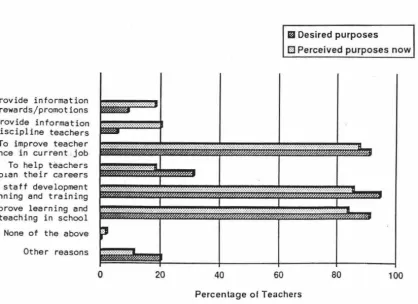
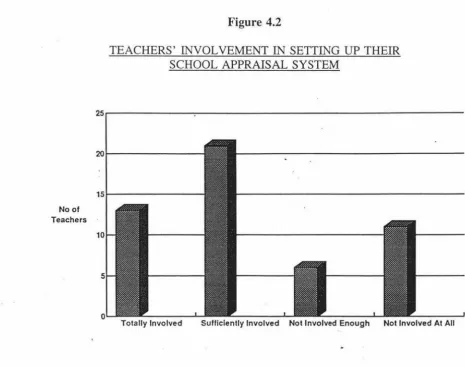
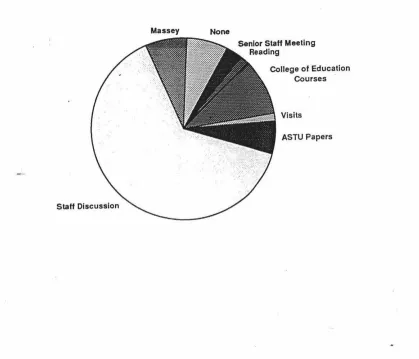
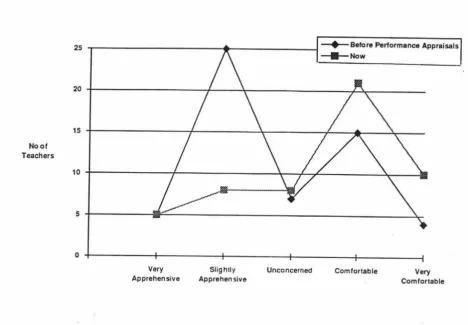
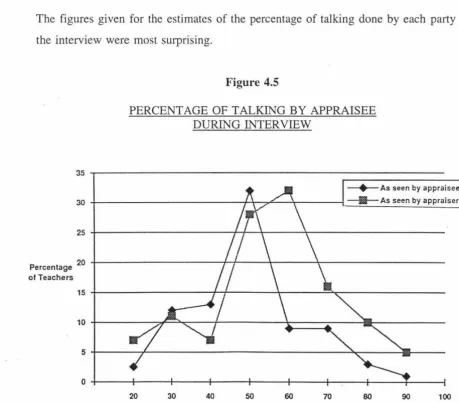
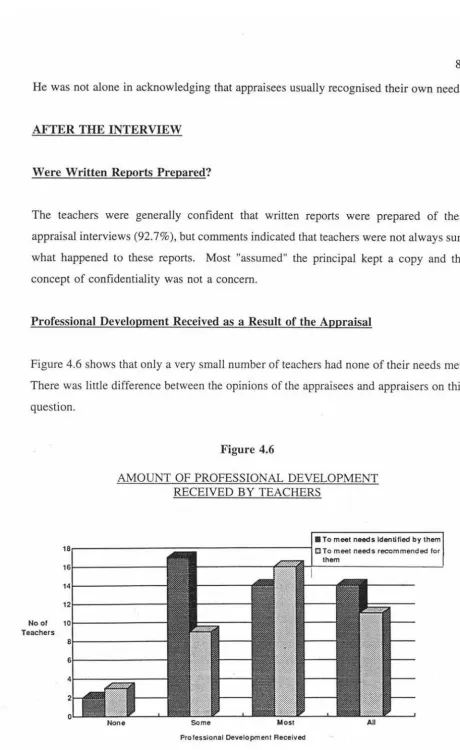
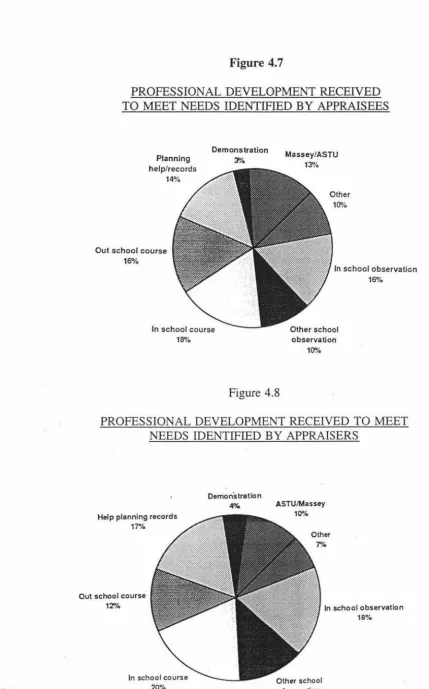
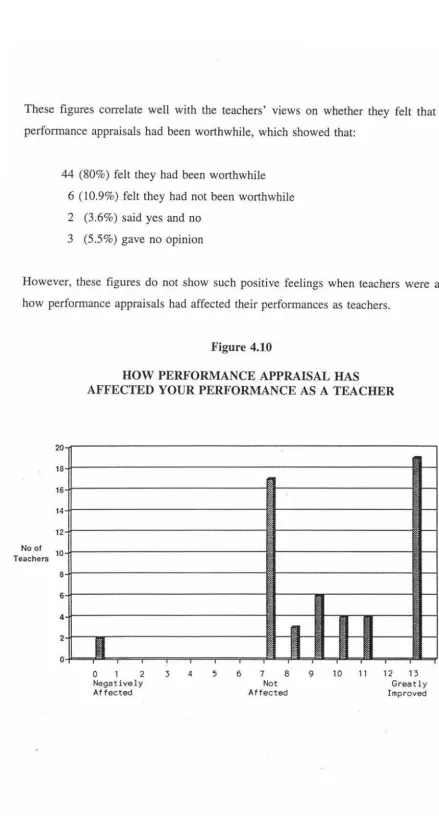
(8) lll. ACKNOWLEDGEMENTS I should like to thank the principals and staff of the four schools who took part in this study. Their integrity, professionalism and willingness to contribute to this research was greatly appreciated.. The fieldwork for this study was carried out in the first half of 1993 under the Research Affiliateship Scheme at Massey University. I am most grateful for the Ministry of Education funding which supports this Scheme.. The staff and Board of Trustees of Roslyn School in Palmerston North have been totally supportive and encouraging, not only during this research but throughout the whole of my studies for the Master of Educational Administration degree at Massey University. I should especially like to thank the Principal, Harold Bailey, for his encouragement and help.. The help and guidance of Dr Wayne Edwards and Ms Marian Court of the Education Department at Massey University have been greatly appreciated.. My sincere thanks to Tania McGilchrist for her cheerful willingness in typing out thi s report.. Finally, to my husband, family and friends - my sincere thanks for your patience and encouragement..
(9) IV. CONTENTS Page Abstract . . . . . . . . . . . . . . . . . . . . . . . . . . . . . . . . . . . . . . . . . . . . . . . . . . . . 1 Acknowledgements . . . . . . . . . . . . . . . . . . . . . . . . . . . . . . . . . . . . . . . . . . .. 111. Table of Contents . . . . . . . . . . . . . . . . . . . . . . . . . . . . . . . . . . . . . . . . . . . .. 1v. 1.. INTRODUCTION. . .......................... .......... .. . . 1. 2.. REVIEW OF THE LITERATURE . . . . . . . . . . . . . . . . . . . . . . . . . . . . . . 9 Changes to Educational Administration . . . . . The Performance Appraisal Process . . . . . . . . (a) Deciding the purposes of performance (b) Introduction to, and training of, staff. ........... ........... appraisal . . . ....... ..... . . . .. . . . .. . . . .. . . . .. . . . .. . . . .. . . . .. . . . .. . . . .. . . . .. . 9 18 18 35. Development of the appraisal scheme . . . . . . . . . . . . . . . . . . . . . . . . . . . 39 Is the system effective and worthwhile? . . . . . . . . . . . . . . . . . . . . . . . . . 45 3.. RESEARCH DESIGN. . . . . . . . . . . . . . . . . . . . . . . . . . . . . . . . . . . . . . 46. Case Study . . . . . . . . . . . . . . . . . . . . . Research objectives and research questions Methodology . . . . . . . . . . . . . . . . . . . . Triangulation . . . . . . . . . . . . . . . . . . . . 4.. ANALYSIS OF RESULTS. . . . .. . . . .. . . . .. . . . .. . . . .. . . . .. . . . .. . . . .. . . . .. . . . .. . . . .. . . . .. . . . .. . . . .. . . . .. . . . .. . . . .. . . . .. . . . .. . . . .. . . . .. . . . .. . . . .. 46 48 49 57. . . . . . . . . . . . . . . . . . . . . . . . . . . . . . . . . . . 59. Appraisal systems in operation . . . . Responses to Part A of questionnaire Summary of Part A responses . . . . Responses to Part B of questionnaire Summary of Part B responses . . . . Responses to Part C of questionnaire Summary of Part C responses . . . . 5.. . . . .. .. . .. . .. . ... DISCUSSION AND CONCLUSIONS. . . . . . . .. . . . . . . .. . . . . . . .. . . . . . . .. . . . . . . .. . . . . . . .. . . . . . . .. . . . . . . .. . . . . . . .. . . . . . . .. . . . . . . .. . . . . . . .. . . . . . . .. . . . . . . .. . . . . . . .. . . . . . . .. . . . . . . .. . . . . . . .. . . . . . . .. . . . . . . .. . . . . . . .. . . . . . . .. . . . . . . .. . . . . . . .. . . . . . . .. . . . . . . .. 60 66 77 79 93 94 97. . . . . . . . . . . . . . . . . . . . . . . . . . . 98. The implementation of performance appraisal . . . . . . . . . . . . . . . . . . . . (a) Deciding the purposes of performance appraisal . . . . . . . . . . . . (b) The introduction to, and the training of, the staff . . . . . . . . . . .. 100 101 103. The effectiveness and worth of performance appraisal . . . . . . . . . . . . . . Is educati~_n a public good or a commodity in the market place? . . . . . . .. 105 108.
(10) v Recommendations . . . . . . . . . . . . . . . . . . . . . . . . . . . . . . . . . . . . . . . Suggestions for further research . . . . . . . . . . . . . . . . . . . . . . . . . . . . . .. 109 110. REFERENCES. 112. APPENDICES. 120.
(11) Vl. LIST OF FIGURES Page 3.1. Teaching experience of staff in survey . . . . . . . . . . . . . . . . . . . . . . . . . 40. 4.1. Teachers' views of purposes of performance appraisal . . . . . . . . . . . . . . 67. 4.2. Teacher's involvement in setting up their school appraisal system . . . . . . 74. 4.3. Training received by teachers for performance appraisal. 4.4. Teachers' feelings about performance appraisal . . . . . . . . . . . . . . . . . . . 77. 4.5. Percentage of talking by appraisee during interview. 4.6. Amount of professional development received by teachers. 4.7. Professional development received to meet the needs identified by appraisees86. 4.8. Professional development received to meet the needs identified by appraisers67. 4.9. Teachers' feelings after the appraisal . . . . . . . . . . . . . . . . . . . . . . . . . . 87. 4.10. How performance appraisal has affected your performance as a teacher . . 88. . . . . . . . . . . . . 75. . . . . . . . . . . . . . . . 82 . . . . . . . . . . . 84. APPENDICES A. Introductory letter to schools. 120. B. Guidelines for interview questions . . . . . . . . . . . . . . . . . . . . . . . . . . .. 122. c. Research questionnaire on performance appraisal. 128. D. Reasons for performance appraisal and comments. 141. E. Primary Teachers' Collective Employment Contract (1992/4 (5.4.2). 143. -. Primary Principals', Deputy and Assistant Principals' Collective Employment Contract 1992/4 (5 .11.1). 144. F. Teachers' definitions of performance appraisal. G. Letter to Principals with draft Affiliateship Report. ................... 145 149.
(12) 1. INTRODUCTION. 1.. This thesis began in a primary school classroom after school on a Friday afternoon in the winter of 1992. As the Assistant Principal (Junior Classes) in a large urban primary school in Palmerston North, the researcher was responsible for appraising eight teachers each year and was herself appraised by the Principal. The teacher being appraised on this particular occasion burst into tears at the start of the interview and claimed she felt her job in the school was under threat.. The performance appraisal process m the researcher's school was drawn up using guidelines from a variety of sources. Seminars run by the local Principals' Association, one course for senior managers in schools early in 1990 by Metanoics Ltd., a consultancy firm which was holding management training courses, and a senes of evening seminars organised for sen ior staff by the Palmerston North College of Education were all attended by one or other of the senior staff. The researcher's studies at Massey University for a Master of Educational Administration degree also proved valuable and the staff consulted a variety of books and journals which might help define a satisfactory process for their school.. The first attempts in 1990 concentrated on confidence building in the procedure itself. These were entirely successful.. Later attempts directed teachers towards a self-. assessment of their needs for development and again proved uncontroversial. The latest \. attempts, in that July 1992 round, tried to identify some areas of concern noted by the appraiser.. This change in the process, away from total self-evaluation to partial. assessment by the appraiser, was met with mixed reactions by the appraisees. Some teachers were very positive and took the concerns of the appraiser as a challenge. Others, understandably, were surprised and shaken by what they perceived to be criticism of their performance. The researcher's school was able to resolve the conflict, due mainly to the respect and trust they had built up as part of the culture of their school.. It became obvious that the future direction of performance appraisal in the. school would need careful research and reference to the literature, if further conflict was to be avoided or used productively when it did occur..
(13) 2. The potential for conflict in performance appraisal. The potential for conflict over performance appraisal, which manifested itself in such a small way in the researcher's school, became the dominant theme when a review of the literature (Chapter 2) was carried out. Folger and Poole (1984, 4) quote Frost and Wilmot (1978) when they define conflict as being the "interaction of interdependent people who perceive incompatible goals and interference from each other in achieving those goals" . This definition has two key points;. (a) conflict involves interaction, and (b) the parties perceive they have incompatible goals, regardless of whether they actually are so.. Bates ( 1988, 35), looking at conflict within the school situation, took a broader perspective when he wrote:. While some of the conflicts that arise in schools are due to their particular characteristics as worksites, many of them are the result of conflicts within the wider society. In many respects schools can be seen as arenas in which the struggles of society are partially fought out.. It became necessary, therefore, to undertake this research from a critical theoretical. perspective, so that it takes into account the "historical-ide?logical moment we live in and the influence it has on us" (Soltis, 1984, 7). The literature review was broadened to include the changes to educational administration over the past two decades both in New Zealand and overseas, to examine the ideology behind them and how performance appraisal in the schools reflects this. The research which began in such a small way took on, therefore, a much wider perspective as the researcher "dug deeper" for a better understanding..
(14) 3 Research into performance appraisal. Unlike other countries, such as Australia and Britain, which introduced similar reforms of educational administration, the New Zealand Government did not fund pilot studies or research in New Zealand schools before introducing major changes in the way schools are administered.. For example, only now, four years after "Tomorrow's. Schools", is information, from the small amount of centrally funded research into setting up performance appraisal schemes trickling down to schools. The research undertaken by the Educational Leadership Centre at the University of Waikato (1992) is an example.. Schools can now, if they wish and have sufficient funds, purchase an. appraisal kit and video developed as a result of the Development Contract the Educational Leadership Centre implemented in 1992, which "outlines the process of implementing formative appraisal processes in schools" (Educational Leadership Centre, 1992, 10). If they have more funds , they may send their staff to seminars organised by the Educational Leadership Centre to support their kit.. In most schools, performance appraisals were either put in the "too hard basket" or undertaken with little or no training available for either appraiser or appraisee. More importantly, there is often no clear understanding of the meaning of performance appraisal or the purposes for which it is undertaken.. The introduction of performance appraisal into New Zealand schools. The last five years have seen momentous changes in education in New Zealand. Principals, teachers and the communities they serve are still trying to cope fully with the increased burden of administration which has devolved to the local level of the school since 1 October 1989, when "Tomorrow's Schools" (Lange, 1988), the Government' s statement of its policies for the change of educational administration, came into operation. The first year or so of these tumultuous times found the Boards of Trustees, principals and staff focusing on their Charters and Mission Statements and setting up financial accounting systems to cope with the day to day running of their schools..
(15) 4. But the Board of Trustees found they had also acquired legal obligations as employers. They were required, among other tasks, to carry out performance appraisals. Before the introduction of "Tomorrow's Schools" in October 1989, decisions regarding primary teachers' competence and development were made by the Department of Education inspectors. Since that date, these decisions have been the responsibility of the school.. What is performance appraisal in an educational setting? Battersby (1991, 15) considers it to be "a school-wide programme by which qualitative judgements are made about an individual's job performance".. Bollington et al. (1990, 4) query such a "narrow". definition as raising a number of issues, the most important being "to what end?". Bell ( 1988, 238) attempts to define performance appraisal in the context of the primary school.. Simply stated appraisal is an opportunity for both the appraisee and the appraiser to stand back and take stock of performance over, say, the last year, to examine how far targets which were agreed at the last appraisal have been realised, and to identify new targets for the next year.. The Principals' Implementation Task Force (1990, 31) defined appraisal as "a developmental, supervisory, and evaluative activity". These three characteristics of appraisal are challenged by Fidler and Cooper ( 1988, 2) when they differentiate between staff appraisal and staff development:. Staff appraisal is the term used in this book for the process by which an employee and his or her subordinate meet to discuss the work performance of the employee . ... Staff development, on the other hand, as the name implies, is wholly concerned with the increase of knowledge, skill or experience without the evaluative connotation associated with appraisal.. The purposes of performance appraisal. It appears, therefore, that difficulties arise in defining performance appraisal because the. purpose of the process controls, to some. ext~nt,. its meaning. A report by the OECD.
(16) 5 ( 1988, 19) of the appraisal systems of the public service in some two dozen countries identified three main categories of reasons underlying those systems:. to provide information for personnel management decisions, e.g. promotions, discipline, rewards; to improve performance in the current job; and to assist staff development, training and career planning.. Teachers themselves would see performance appraisal as being only for the last two reasons mentioned by the OECD. In fact, the New Zealand Educational Institute states. The purpose of appraisal is to improve teaching and learning in schools through a structured professional approach of shared reflection and collaborative planning within the school's organisational goals. (NZEI Rourou, Vol.2, No.13, 1991). This conflict between the purposes of appraisal became relevant during the dispute between the Minister of Education and the teacher unions during 1991 and 1992 concerning the introduction of bulk funding for schools, with its implications of merit pay and dismissal of staff.. It also became of concern when the Primary Teachers. Collective Employment Contract 199211994 and the Primary Principals', Deputy and Assistant Principals' Collective Employment Contract 1992/94 were signed in September 1992. In the former, the progression of basic scale teachers on steps 01 -09 of their basic scale of remuneration is "dependent on competent performance as attested by the principal" (Section 5.4.2, p.15). In the latter, salary rates are dependent upon annual. performance reviews .(in accordance with Section 5.11.1). (Appendix E.). The conflicting roles of principals. But under "Tomorrow's Schools" principals, as members of the Boards of Trustees, found themselves facing a conflict of roles; that of professional leader working in collaboration with the staff of the school and that of manager of a business. The Picot Committee, the Government Taskforce which began the formal review of the.
(17) 6. administration of New Zealand schools, saw the principal as both a collaborative manager and leader (Administering for Excellence: Effective Administration in Education, 1988, pp.45-53).. However, when the Picot Committee's report was translated into Government policy with the publication of "Tomorrow's Schools", these ideas of collaboration were dropped. As Codd ( 1990, 6) noted. It is stated in "Tomorrow's Schools" that the "principal will be the professional leader of the institution" and that "principals will be expected to work in a collaborative relationship with their staff' (pp.10-11 ), but all the clauses that define what principals are to actually do, emphasise their managerial functions. As board members, principals will be legal employers of staff, involved in appraisal, salary determinations, and decisions relating to conditions of employment.. This emphasis on managerialism was further stressed by the "Lough Report" (1990, 18). This report was produced by a Committee set up by the Government to review the progress, after six months, of the reforms advocated in "Tomorrow's Schools". It's report, entitled "Today's Schools" bemoaned the fact that principals primarily identified themselves as "professional leaders rather than managers".. The discussion thus far has briefly introduced the issues and conflicts surrounding performance appraisal in schools as identified during this research. The final section of this Introduction outlines the research process and the structure of this thesis.. Research process. The researcher began by conducting a review of the literature on performance appraisal, beginning with the changes to educational administration both overseas and in New Zealand.. As the details of this review, . in Chapter 2, will show, the New Zealand. changes paralleled those in other countries, only at a greater speed. The literature on the performance appraisal process itself established that there were critical stages in introducing a system into a school, and particularly in deciding the purposes it was to.
(18) 7 serve. Conflict could arise over the purposes for which it was to be used and the questions of accountability and control, teachers' professionalism and different types of performance appraisal are examined in this chapter. The links are then made between these questions and a wider conflict in society, over whether education is to be seen as a "public good", where teachers were treated as professionals, or as a "market commodity" with teachers treated simply as workers. The literature on the introduction to, and the training of, the staff for performance appraisal and the development of the process is also reviewed in this chapter. These aspects of performance appraisal form the basis of the fieldwork in this research.. This review of the literature then led to the construction of a research design, which is detailed in Chapter 3. It was decided that case study would be undertaken for this research and the reasons for this choice are discussed in that chapter. The research objective of this study was to describe the implementation and development of performance appraisal in four New Zealand primary schools, and the relevant stages of the study are detailed; selecting the participant schools, negotiating access, the fieldwork, the organisation of the results, and, finally, the writing of the report.. The results of the research are analysed in Chapter 4 , which begins with a description of the performance appraisal systems operating in each of the four schools in the study and details of how they were introduced to the staff. The questionnaires are then analysed question by question, with the quantitative results being supplemented by quotations from the interviews and questionnaires.. From these results, the researcher was able to conclude, in the final chapter of this thesis, that this survey in fact showed that in only one school was performance appraisal recognised as a cause for concern and conflict by the school itself. But the research did show that there was a potential for conflict in all four schools. Furthermore, this conflict over performance appraisal is linked in this research to the fundamental conflict in society itself; that is, is education a "commodity in the market place" where teachers are merely workers, or is it a "public good", provided by teachers who are treated as professionals? It was concluded that:.
(19) 8 1.. There were concerns about the true purposes of performance appraisal in schools. Are they to help the teacher as a professional improve her/his performance, working in a collegial relationship with the principal or are they to control the teachers as workers, where the principal is a manager employed by the Board of Trustees to manage the business of the school?. 2.. There was evidence that teachers are insufficiently trained for performance appraisal, so that they are unable to understand what performance appraisal is about and are unable then to assert their role in the process. This lack of training stems from a basic lack of funding by the state, so teachers are disempowered.. 3.. Some teachers indicated they were re-asserting their rights as professionals. They not only claimed they had not changed their teaching performance as a result of performance appraisal (30%) but cited other means by which they had improved their performance, such as self-evaluation and working with their peers.. 4.. Although the staff were generally positive towards performance appraisal and were willing to be accountable, the type of accountability they were proposing was professional accountability, rather than contractual accountability.. The researcher has made recommendations both for the implementation and development of performance appraisal into primary schools and for further research into this topic. It is hoped that this research and these recommendations will not only help the researcher' s own school, which initiated the study, but more importantly, all other sc~ools. which have to develop worthwhile schemes for performance appraisal.. Between February and June 1993, the researcher was undertaking a project for the Ministry of Education under the Research Affiliateship Scheme administered by Massey University. This project (Irons, 1993) was also based on the fieldwork used in this t~esis. but, as required by the Ministry, was only a brief summary of results. This thesis. has been a comprehensive analysis of the research results, from a critical theoretical viewpoint. It is therefore, substantially different from the research project..
(20) 9. 2.. REVIEW OF THE LITERATURE. This review of the literature begins with the changes to educational administration internationally and the parallel changes in New Zealand. The legal requirement for peiformance appraisal is outlined and the process is discussed. The critical stages ofpeiformance appraisal (deciding its purposes, how it is introduced to staff. what training is given and how the system develops) are detailed, both from overseas literature and the New il;aland experience. Questions of accountability and control, teachers' professionalism and different types of peiformance appraisal are examined to show how they are linked to conflict in the school and the broader controversy of whether education is a public good, where teachers are professionals, or a market commodity where teachers are workers.. CHANGES TO EDUCATIONAL ADMINISTRATION. The International Scene. Teachers are part of a public sector which is reeling from the radical changes effected by the last Labour and National governments. New Zealand is not alone in introducing such massive reforms into its government agencies.. Worldwide, governments are. committed to the introduction of a corporate management style into the administration of their state sectors. Teachers, along with doctors and nurses and all other public servants, have been . confronted with management techniques and phrases such as "managing by objectives", "outcomes and outputs", "performance indicators" and of course, "performance appraisals".. These changes have been identified, by these governments, mainly as a cost cutting measure because of extreme monetary problems. But it is also claimed (OECD, 1988, 9) that a change to a more managerial style for the human resource management of the public sector will make it more efficient and effective. The common perception of the.
(21) IO. public service, and that includes teachers, has been of a workforce resisting change and lacking the motivation and drive necessary to meet the challenges of the changing world environment.. There is seen to be a need to stimulate and motivate staff and the. introduction of performance appraisal techniques has formed an integral part of the changes.. Schools in Australia, Canada, USA, the Netherlands, Belgium and Britain, as well as New Zealand, have been changed into units self-managed as businesses at the local level in the belief that the community can increase the efficiency and effectiveness of its own local institution.. It can be seen that New Zealand's reforms to educational. administration have paralleled those in other countries.. In the United Kingdom, the process of change began earlier than in New Zealand, and took longer to effect; the appraisal of teachers played a large part in the development process.. Back in October 1976, the then Labour Prime Minister, James Callaghan,. started what has become known as the "Great Debate". Day et al. (1987, 2) report that Callaghan "asserted that the public's interest and concern in education was legitimate in view . of the financial investment made in education and that it would be to the advantage of all involved in the education field if these concerns were aired and the shortcomings righted or the fears put to rest". From then on debate about standards, accountability and curriculum took centre stage.. The devolution of central management to local schools was spread during the 1980s as different LEAs (Local Education Authorities) pioneered different initiatives. The two earliest, in 1981, were in Cambridgeshire and Solihull, but in 1988, the Government took up the reins with the Education Reform Act. The Act included arrangements for the introduction of a National Curriculum and National Assessment, maximum delegation of financial and managerial responsibilities to governing bodies and the opportunity for maintained schools to opt out of local authority control.. In Australia, different processes for change have been implemented in the six states and two territories, but Hill et al. (1990, 13) note a remarkable C0?1ffionality of reforms.
(22) 11 across the country. In New South Wales for example, the "Scott Report" of 1989 was set up with the aim of "making schools more educationally effective and efficient organisations".. Macpherson (1993, 41) confirms that this report recommended that. Government schools be empowered by decentralising administrative functions and discretion over resources, by giving them new support structures and encouraging the development of School Councils.. He notes that "they are phasing in merit based. selection and performance appraisal".. In Queensland, a similar report published in October 1990 was titled "Focus on Schools". Bennett ( 1992, 25) reflects apropos this Queensland report,. The approach to the implementation of these recommendations is remarkable by its speed and lack of consultation, which exceeds even that experienced in New Zealand.. Hill et al. (1990, 14) report that the political desire to devolve responsibility to the school level is strongest in the Northern Territory, where schools have a high degree of control over resources including hiring of staff.. In Tasmania, the Effective Resource Allocation in Schools Project (ERASP) began in December 1982 by trying to identify the effective school. One of the purposes of the project was to identify examples of effective resource allocation with a view to establishing a training programme that would enable others to gain similar skills. The "winner" of the project was Rosebery District High School and its principal, Jim Spinks, became the torch bearer for introducing the New Zealand system, being brought here by Government to publicise the devolution of schools to local management.. In the USA the management of schools has traditionally been at local district level, rather than at site (school) management level, but Johnstone (1990, 113) reports a greater move to more self management for schools as the cry for educational improvement grows louder in that country too. Caldwell and Spinks ( 1988, 17) report that this renewal of interest in school-site management has been generated by reports.
(23) 12 such as that of the National Governors' Association which believed that such management would give schools "a major incentive to improve".. The stated intention of all these governments, in undertaking these massive reforms of education, was to devolve management and control of education from central government to the local communities served by the various educational institutions, thereby improving efficiency and effectiveness. It is very important to note that critics of the process dispute these intentions. They claim that whereas management of the resource is handed over to local communities, the control of resources and policies remain firmly with central government. Evans and Davies (1990, 65) warn. But these freedoms will be exercised only within the parameters set by the curriculum guidelines, objectives, systems of testing (in the UK), and financial allocations and they will be subject to considerable scrutiny, monitoring and control by central government.. Bennett ( 1992, 27), writing of the changes in Australia, writes .. In summary these have resulted in greater central control of schools through increased power of Ministers over funding and policy making while at the same time school management at local level becomes more responsible for keeping schools functional within these constraints.. Caldwell, Smilanich and Spinks (1988, 1) writing in the "Canadian Administrator" also noted that control is still located with central government.. There have been simultaneous shifts in the centralization/decentralization continuum in many countries in recent years. In a centralizing trend, governments at the national, state/province, and local levels have adopted a more powerful role in formulating policies, setting priorities, specifying outcomes, and establishing frameworks for accountability. At the same time, major responsibility for achieving these outcomes, including authority to make decisions on the deployment of allocated resources, is shifting to schools..
(24) 13 Smyth (1989, 53) believes the reforms of the education system have been made to harness schools to the economy by ensuring that what goes on inside schools is directly responsive to economic needs. He claims. In part this has meant deliberately constructing the MISCHIEVOUS MYTHOLOGY that somehow schools and teachers are the 'cause' of the economic failure, but that if certain narrowly prescribed forms of action are adopted, then schools can be magically restored to their rightful role as servants of the economy.. Gordon and Pearce (1993, 177) claim that these changes worldwide have really "little or nothing to do with education, despite being made to appear as though they do". In fact, they claim that the educational reforms occur across nations within "a larger shift from Keynesian to neo-liberal state forms" whereby the state has a minimalist role. They claim that, under this neo-liberal policy, new management theories have been introduced into the state sector and have been used to "make many state workers redundant, reduce state services, sell off parts of the state to the private sector and contract state services out to the private sector".. The New Zealand Experience. Concerns about the real reasons for the changes to educational administration internationally were echoed by critics of the New Zealand reforms. Grace (1990, 27) stated. In New Zealand, as in the United Kingdom and elsewhere, there is a major cultural, ideological, and political struggle in progress, a central element of which revolves around the question, is education a public good which should be mediated through a publicly provided service or is it a commodity in the market-place which should be mediated by the normal operation of market forces?. Codd (1990, 191) wrote that the reforms were not only the result of the economic crisis besetting the New Zealand governments in the 1970s and 1980s, but also a political legitimation crisis, where there is a "tendency of state institutions to lose popular.
(25) 14 political support and sometimes provoke widespread opposition and resistance". Schools are "blamed for youth unemployment, higher crimes and other signs of social unrest". He summarised the concerns about the reforms when he wrote:. The New Zealand school system has recently undergone the most radical restructuring in one hundred years. This has involved a decentralisation of certain decision-making functions combined with increased self management at the school level. The legitimating rhetoric proclaimed that these reforms would produce greater flexibility and responsiveness but in reality they have produced a structure in which decisions are more effectively controlled. (Codd, 1992, 1). Until the 1960s, the New Zealand education system had been based on what Beeby (1986, xvi) called the 'myth' of equality based on Peter Fraser's famous statement of 1939.. The Government's objective, broadly expressed, is that every person, whatever his level of academic ability, whether he be rich or poor, whether he live in town or country, has a right as a citizen, to a free education of the kind for which he is best fitted, and to the fullest extent of his powers.. But research in the 1970s and 1980s had brought attack from left wing critics that education in fact reproduced social inequalities and structures, ahd public confidence in the education system began to decline. Another attack, from the direction of the New Right, arose in the 1980s. It followed overseas tendencies for claims for quality and excellence in education and coincided with the rise of the influence of Treasury on all aspects of government spending and policy.. The Treasury paper to the incoming. government in 1987 (Government Management: Brief to the In-coming Government Vol 11: Education Issues) was an example of this. Teachers were under attack from all sides with demands for more accountability and claims of provider capture.. Whereas _the changes to the structure of educational administration in the United Kingdom took over a decade to come into legislation, in New Zealand the reforms were effected with, what most educationalists protested was, indecent haste.. In fact,. Holdaway (1990, 8) wrote that "New Zealand has taken the "earthquake approach" to.
(26) 15. its radical changes, as all have been introduced within one year"! In October 1987, David Lange, the then Prime Minister, who had also appointed himself as Minister of Education, set up a taskforce under the chairmanship of Brian Picot to review the administration of education.. The taskforce produced its report "Administering for. Excellence: Effective Administration in Education" in April 1988. The Government allowed eight weeks for submissions to be made on this document and then in, August 1988, published "Tomorrow's Schools", setting out the Government's policies for change.. The reforms took place from 1 October 1989, so that schools were self. managing ready for the school year beginning in January 1990.. The schools became self managing as from 1 October 1989 and the Boards of Trustees were elected by local communities to govern the school through the manager, the principal. They were not responsible for the salaries of teachers, even though they became the legal employers of the staff in their schools. As employers they are bound by the State Sector Act of 1988 and acquired a legal responsibility to undertake performance appraisals.. Section 79 of the State Sector Act 1988 states:. Every employer in the education service shall operate a personnel policy that complies with the principles of being a good employer.. The definition of "good employer" contained in Section 77 A of the Act included provisions for employers to provide "opportunities for the enhancement of the abilities of individual employees". In order to meet this requirement the employer would require an appraisal process which enables the identification of the current and future needs of the employee.. Furthermore the State Sector Amendment Act 1989, Section 77c, stated that the Ministry of Education may, with the agreement of the State Services Commission, "prescribe matters to be taken into consideration by employers in assessing the performance of teachers". The Ministry established a working party to fulfil its legal obligation to.
(27) 16 consult with the Teachers' Registration Board, the Education Review Office, the School Trustees Association and the teacher unions. The working party has met and produced a report, but it has not, at this time, been published.. This legal requirement for performance appraisal, under the State Section Act 1988, is in line with the thinking of the Picot Committee, the Government Taskforce, which began the formal review of the administration of New Zealand schools. Their Report, "Administering for Excellence: Effective Administration in Education" (1988) defined the role of the Principal.. The allocation of duties and detailed objectives among the staff, and the development of performance objectives and measures to assess that performance, are also the principal's responsibility. (5.3.1 Administering for Excellence). However, this Report was really ambiguous concerning the role of the principal, as it also emphasises the collaborative nature of successful educational leadership .. ... the teachers and the principal participate regularly in reviewing the quality of the institution's educational performance. The process is a collaborative one which almost invariably generates high levels of enthusiasm and commitment and high levels of learner success. (5.3.5 Administering for Excellence). As was explained in the Introduction to this thesis, these ideas of collaborative management and leadership were later lost in the publication of "Tomorrow's Schools" and the "Lough Report". There, the principal became a business manager.. This conflict of roles was an early warning of the conflict that could arise over performance appraisal. As a result of the "Lough Report", the Minister of Education established a taskforce of seven experienced practising principals to develop administrative models in key areas of management, which would "offer assistance to those principals who feel they would benefit from additional guidance". The members of the taskforce addressed the question of staff appraisal which they saw (A Guide tq.
(28) 17. Personnel Management, 1990, 31) as a "developmental, supervisory and evaluative activity, which is the responsibility of the principal".. Finally, performance appraisal appeared, in the Primary Teachers' Collective Employment Contract for 1992/4 and the Primary Principals, Deputy and Assistant Principals Collective Employment Contract 1992/4 (Appendix E).. Under these. amendments to the previous contracts, which were agreed between the New Zealand Educational Institute and the Government with little public debate by the members of the union, a summative performance appraisal becomes a necessity for all teachers in their first 9 years of employment, for all assistant and deputy principals and for all principals.. Therefore, as Cardno ( 1990, 51) states. ... the responsibility the principal owns for appraising and supervising the performance of staff is non-negotiable ..... The performance appraisal process itself will be discussed in the next section..
(29) 18. THE PERFORMANCE APPRAISAL PROCESS The review of the literature on performance appraisal both overseas and in New Zealand indicates there are two critical stages to the implementation of the process;. (a) deciding the purposes of the process, (b) the introduction to, and training of, the staff.. The development of the process is dependent upon the decisions taken during these critical stages.. The literature suggests that the process itself poses three important. questions:. (a) Who does the appraisal? (b) How is it carried out? (c) How is it followed up?. THE IMPLEMENTATION OF THE PROCESS (a) Deciding the purposes of performance appraisal. Performance appraisals have been a management tool in private organisations for many years. Zepke (1991, 34) commented. Performance appraisals: nobody likes them, everybody does them and few are confident of the results.. Long ( 1986) surveyed 306 business organisations, 82 % of which carried out performance appraisals. Only 40% of these linked performance appraisal with the assessment of salary increases.. Everard (1986, 143) in his review of the Institute of Personnel. Management surveys of practice in the 1970s reported that the most frequently mentioned purpose of appraisal (96%) was to assess training and development needs..
(30) 19 He noted that whereas 92% of employers reported appraisals were also to help improve current performance, only 39% used them to assess new levels of salary.. The OECD ( 1988, 19) Survey of the Public Service appraisal schemes in nine different countries cited a variety of purposes, which fall into three main categories:. 1.. Provision of information for personnel management needs, including promotions, reassignments, salary increases, disciplinary actions, etc;. 2.. Improvement of performance in the current job;. 3.. Staff development, training and career planning.. Category 1 makes performance appraisal a summative, judgemental exercise, where performance is assessed and evaluated.. Categories 2 and 3 make the appraisal a. formative process, and the appraiser needs to take a counselling role, working with the employee to improve their performance. It is this conflict between the summative and formative purposes of performance appraisal which can not only cause controversy but apprehension and, sometimes, resistance to schemes put in place.. The purposes of performance appraisal in overseas education systems. The purpose of teacher appraisal became a contentious issue in Britain throughout the "Great Debate". Bell (1988, 233) reports. ... One of the most damaging of the justifications (for performance appraisal) was its proposed use to identify incompetent teachers .... The most outstanding example of this position can be found in Sir Keith Joseph's speech at the North of England Education Conference in January 1984 in which he argued that it was vital for incompetent teachers in our schools to be identified and moved.. Marland ( 1986, 169) stresses that although Sir Keith Joseph, the Secretary of State for Education, later withdrew "the inexorable link between pay and appraisal .... the earlier message had its priorities clear, and has persisted beyond Sir Keith Joseph's period of office"..
(31) 20 Day et al. ( 1987, 5) stress the conflict which existed between Government and teachers in England when they say:. The publication of the Government White Paper "Teaching Quality (DES 1984)" added a significant dimension to the "Great Debate" for this first gave the Government's view that "formal assessment of teacher performance is necessary and should be based on classroom visiting by the teacher's head or head of department and an appraisal of both pupils' work and the teacher's contribution to the life of the school". The walls surrounding the 'secret garden' of the teacher' s classroom were about to be breached. The more recent White Paper "Better Schools" reaffirmed the Government's view that" ... all teachers need help in assessing their own professional performance in building on their strengths and working on their limitations so identified" (DES 1985).. Bollington et al. ( 1990, 2) cite the reasons for the introduction of performance appraisal into schools in Britain as:. 1.. a desire by the government and public for more accountability,. 2.. to improve the professional development of teachers,. 3.. to develop the management of schools.. These reasons parallel the OECD criteria and the call for more accountability was given further weight in the DES (1985) White Paper "Better Schools" . It called for. "systematic performance appraisal, designed to bring about a better relationship between pay, responsibilities and performance, especially teaching performance in the classroom".. Bennett ( 1992, 2), in fact, claimed that two different routes to appraisal were developing in Britain, which gave rise to two "philosophically different models of appraisal; the control model and the development model".. In Britain, the question of appraisal became enmeshed in the negotiations between Government and teachers for pay and conditions. Despite this, the Government funded a pilot study carried out by the Suffolk LEA, the results being published as "Those.
(32) 21. Having Torches" (1985) and "In the Light of Torches" (1987). These studies and an investigation of overseas developments, particularly in North America, enabled the Suffolk team to make recommendations to the next group looking at performance appraisal in the UK. This was the Appraisalffraining Working Group set up by the ACAS (the Advisory Conciliation and Arbitration Service). The first report of this working group, made up of representatives of the teacher unions, the DES and the LEAs, was published in June 1986 and presented the principles and practicalities of a good appraisal scheme. Hewton (1988, 63) listed their main points:. Appraisal should be a continuous and systematic process intended to help individual teachers with their professional development and career planning and also ensure that the inservice training and deployment of teachers matches the complementary needs of individuals and their schools.. The Working Party, therefore, had definitely taken a formative, developmental approach to appraisal rather than a 'summative' judgemental one. It recommended the setting up of a pilot study and the DES funded the study in which six LEAs took part - Croydon, Cumbria, Newcastle, Salford, Somerset and Suffolk. The report of this pilot study was made to ·the successor of the ACAS Appraisalff raining Working Group, the National Steering Group (NSG).. The NSG produced their report in the Autumn of 1989 (School Teacher Appraisal - a National Framework). West and Bollington (1990, 7) claim the NSG report endorsed the aims and purposes put forward by the ACAS (apart from including the induction of new teachers in the process) and in particular, singled out the following seven aims for any teacher appraisal scheme:. improving the confidence and morale level of teachers, improving communications and professional relations within schools, improving the planning and delivery of the curriculum, increasing participation in in-service training, improving the targeting of inservice training, helping teachers with career planning,.
(33) 22 contributing to better informed references.. They finally quote a report released in 1989 by HMI, "Developments in the Appraisal of Teachers" which identified three major aims for teacher appraisal. the professional development of teachers improving the management of the school or college improving classroom performance.. West and Bollington ( 1990, 8) claim "there are significant areas of agreement within these reports. The appraisal of teachers is seen as essentially a developmental process, not a narrow checking activity ....".. However, in an abridged version of the last report (Moon, Isaac and Powney 1990, 129) the DES itself puts a different interpretation upon the identified purposes of appraisal:. There is general agreement in both the pilot and non-pilot authorities that two principal aims of appraisal are to facilitate the professional growth of the individual teacher and to effect institutional improvement. These broad aims subsume a wide range of other more specific purposes, which include the deployment of staff; institutional and curriculum change; implementation of policy; and career development. Essentially, however, appraisal is about the judgement of performance. Consequently, one aim of a national system of appraisal might be to use such judgements to measure the performance of individual teachers against what is expected of them, and to inform decisions about what action is appropriate to meet their needs. Inevitably, a spectrum of teacher performance will emerge from any such activity and poor as well as exceptionally good performance will be identified. It is not clear how far such judgements might be used also to inform decisions about rewards or measures affecting teachers experiencing difficulties. The effective operation of a national system will require clarity about such matters.. The British do not appear to have advanced over the six years! This was illustrated even more clearly when the "The Education (School Teacher Appraisal) Regulations (1991 )" came into force on 14 August 1991. Regulation 4 lists the Aims of Appraisal, and whilst sub-sections 1 to 3 concentrate on the development and career planning of teachers and tiie improved management of schools, Regulation 4.4 is different. It states:.
(34) 23 Appraisal procedures shall not form any part of any disciplinary or dismissal procedures, but appraisal statements may be used for the purposes specified in Regulation 14.. Regulation 14 then states:. 14 - ( 1) Relevant information from appraisal records may be taken into account by head teachers, Chief Education Officers or any officers or advisers specifically designated by a Chief Education Officer under Regulation 13 (1) (b) or (2) (a) in advising those responsible for taking decisions on the promotion, dismissal or discipline of school teachers or on the use of any discretion in relation to pay.. Furthermore, the DES circular, No.12/91, "School Teacher Appraisal", sent to all schools to give guidance on the Regulations, specifically states in paragraph 56:. The Regulations permit those who have access to appraisal statements to draw on relevant information from them in talking, or advising others on, decisions about pay, promotion or disciplinary matters. The head teacher in grantmaintained schools or in schools with delegated budgets, to the CEO (or designated officer or adviser) in all other cases may therefore draw on relevant information from statements in making their own decisions or in advising the LEA or governing body as appropriate. The regulations do not confer on LEA members or members of governing bodies (other than the chairman) a right of access to appraisal statements themselves.. Bennett (1992, 6) claimed that Regulation 14 (a) was "presumably designed by a civil servant on the way to work on a train making surprisingly good time, (and) manages to make catch 22 appear stark raving sane"! Many LEAs did, in fact, emphasise that appraisal is not to be used for performance-related pay. Nottinghamshire, for example, stated on their "Scheme for the Appraisal of Teachers" (1992):. The Regulations and DES Circular make it clear that the Scheme to be introduced is for appraisal and not performance related pay. The Education Committee supports this view and performance related pay will not be a feature of the Nottinghamshire Appraisal scheme in any of the schools it maintains..
(35) 24 However, Leech (1991, 13), a member of the National Steering Group on Teacher Appraisal, warned in a letter to the "Times Educational Supplement" that the new regulations would "make it (performance appraisal) a much more negative, punitive and menacing innovation in schools".. The many manuals and guides which have been written in Britain to assist schools in setting up appraisal systems appear to agree with Marland (1986, 175) who says "Teacher appraisal is a tool of in-school planning and individual career development. I doubt its practicality for salary purposes". Bollington et al. (1990, 10) in their manual "An Introduction to Teacher Appraisal" examined in depth the numerous pilot studies and the American literature on appraisal and concluded that among the six key principles in performance appraisal was the "need for the scheme to be developmental, constructive and positive". Day, Whitaker and Wren (1987, 13) stresses that "appraisal must be centred upon professional development if it is to achieve success" . Hewton (1988, 69) reported that as most schools with performance appraisal schemes in place put "staff development as the main aim of the scheme, he preferred to call the formal appraisal staff development review instead" .. Everard (1986, 145) reminds us that while some business firms have tried to link judgements about performances with salary decisions, it is "an unpromising avenue for the education service to explore" . Instead, he believes the most important purpose is to "balance the needs of the organisation against the contributions of the people in it". Paisey and Paisey ( 1988, 81) and Bell ( 1988, 235) also recommend a developmental, formative approach in their school management manuals.. Conflict over the purposes of appraisal was not restricted to Britain. Smyth ( 1989, 54) quotes an Australian example:. In New South Wales in 1985 government bureaucrats produced (without consultation) a report on "Teacher Efficiency" (Nay 1985) which was to dramatically alter the manner in which teachers were to be evaluated, with a view to purging the system of allegedly incompetent and malcontent teachers. It was such a naive attempt that its perpetrators were forced to beat a hasty.
(36) 25 retreat in the face of vigorous and widespread teacher and community reaction against it, particularly because of the absence of consultation in its formulation.. Much of the suspicion attached to the introduction of performance appraisal has been due to the perceptions, true or otherwise, of the American experience. It has been seen, particularly outside of the USA, as a device for judging teachers using lists of the criteria of effective teaching. There has been considerable work on the purposes of performance appraisal in America, but Bollington et al. ( 1990, 109) urge caution when using the American literature, as they feel it represents a "story of what not to do"! They state:. A number of North American writers, in particular Arthur Wise and Milbey McLaughlin (Wise and Darling\\11-Hammond, 1984; Wise et al., 1985; McLaughlin, 1986, 1988) and the contributors to the edition of "Educational Leadership" (44, 7) devoted to teacher appraisal, drew attention to the failure of many appraisal schemes to lead to school or individual development. These writers present a critique of schemes designed to provide checklists to assess rrunimum competence. They argue that such accountability models of performance appraisal quickly degenerate into bureaucratic rituals.. Milner ( 1991, 464) condemns that use by many American districts of teacher evaluation instruments. He maintains that:. "An "objective" instrument cannot measure the "subjective" dimension of a classroom - that dimension which gives teaching its creative force. Teachers generally feel that mandates from national, state or local authorities undermine, rather than promote, high quality education.. McLaughlin (1986, 164) also supports the developmental model for performance appraisal in America, noting that the traditional (summative) approaches have often been seen as "a waste of time and resources". As Bollington et al. (1990, 5) sum it up "In other words, the contemporary advice from North America is to go for a developmental appraisal system"..
(37) 26 This emphasis on a developmental model was also supported by the WCOTP (World Confederation of Organisations of the Teaching Profession) European Conference meeting in Dublin in 1988 which defined appraisal as follows:. (a). For the clarity of this Recommendation, the term "appraisal" means a continuous process of analysis of the teaching system, enabling its operation to be constantly reviewed.. (b). Its purpose is to improve the overall quality of the educational system and to make it more responsive to the needs of all pupils, in particular by assisting the process of staff development.. (c). The appraisal of teachers is accordingly only one element in the appraisal of the efficiency and quality of teaching.. (d). Appraisal should not be used as a means of encouraging competition between teachers nor lead to a reduction in each individual teacher's independence and responsibility in the classroom. It must on no account be linked with disciplinary measures which might lead to the reduction of status or salary of the individual teacher. Similarly, appraisal should not lead to the classification of schools.. The purposes of performance appraisal in New Zealand education. The massive changes to the education system in New Zealand have happened in a relatively short time, just over three years. Despite seeming at times to be sinking under a sea of paper as policies, memos, guidelines, Acts etc flooded into their offices, schools have realised that detailed guidelines or directions for setting up appraisal systems have not been easy to find.. Schools were obliged to spend their first self-managing year. drawing up their Charters, developing policies and setting up financial systems to enable them to function under the new regulations. Alcorn ( 1990, 8) reported that, one year on from October 1989:. Few schools appear to have implemented formal schemes of staff appraisal since last October though some had already incorporated peer supervision or classroom monitoring. Most principals report that they have shelved the issue for the time being or that they are sending key staff to courses to absorb or get used to the concept. In justifying this they cite the volume of change and staff.
(38) 27 suspicion of the idea, their fear that staff appraisal will become tied to salaries and promotion.. The New Zealand Educational Institute had, at their 1989 Annual Meeting, addressed the question of performance appraisal, which they saw as a professional activity and agreed to specific activities being pursued within NZEI policy.. These activities. included:. That appraisal should reinforce the idea of teaching as a profession, in which there needs to be collaboration between teachers and administrators to develop a common understanding of evaluation. That appraisal schemes should take account of the subtlety and complexity of the teaching and learning process. That appraisal should dovetail with the whole school review to the enhancement of both. It should enable schools to improve the motivation of staff to match talents and tasks more effectively. That appraisal must be an integral part of the process of professional development. Where it identifies training needs or alternative professional experience it must be able to provide it. That appraisal must be properly resourced. That the credibility of appraisal depends upon everyone within the service being appraised. Any scheme must apply, and must be seen to apply, fairly to everyone involved. That appraisal must be non-threatening. Disciplinary and dismissal procedures must be separated from it completely. That appraisal shall not lead to merit pay for it is unlikely that teachers will admit to problems or constraints or engage in constructive criticism of their management of their schools if their financial prospects are at stake. (Rourou, Volume 2, No. 13, 1991). The Institute was clearly taking the view that performance appraisal was a formative process, and an article "Appraisal for Effective Teaching" in the above journal began with the statement:.
(39) 28. The purpose of appraisal is to improve teaching and learning in schools through a structured professional approach of shared reflection and collaborative planning within the school's organisational goals.. This view was also endorsed in the Ministry of Education's "Report of the Ministerial Working Party on the Assessment for Better Learning" (1990, 61) which stated:. Teacher appraisal is the on-going peer monitoring of classroom performance. It takes place within the context of the school's professional development programme, is the internal responsibility of school managements, and a vital part of school development plans. Procedures for the appraisal and professional development of teachers must be supportive and continuous.. However, the suggestion of conflict inherent in differing perceptions of the purposes of performance appraisal is seen when the "Guide to Personnel Management" (1990, 31), produced by the taskforce set up by the Ministry of Education in 1990 to develop management models for principals, is examined.. The Guide covered performance. appraisal and identified its two main purposes:. professional development - this includes goal achievement; individual development and growth; and improvement of the institution; a management function - appraisal relates directly to the school's accountability in terms of individual performance, and its achievement of its charter objectives.. Other help and guidance for schools as they sought to establish the purpose and appropriate process for appraisal was fragmented. Local teacher centres organised workshops, run either by their own staff or by management consultants, such as Metanoics Associates Ltd, but they too emphasised, in their training manuals ( 1990, 2), the formative, developmental aspect of appraisal. Teachers and principals seeking help, in implementing performance appraisal, from the literature were reliant mainly on the overseas experience, although Cardno ( 1990) did produce a small book "to share workable ideas and theories with colleagues who are determined to make a collaborative commitment to improve the learning teaching process which is, and must be, central to any undertaking to improve the institution and its management"..
(40) 29 '-. Research into performance appraisal systems in schools is sparse, unlike the British scene, and the results are not well disseminated.. Battersby (1991, 15) researched. school-based appraisal at an Auckland primary school for a thesis submitted in partial fulfilment of the requirements for the degree of Master of Arts in Education.. She. defined staff appraisal as a term "to denote a school-wide programme by which qualitative judgements are made about an individuals job performance".. Her study revealed that when the purposes of performance appraisal were discussed (with the teachers) more emphasis was placed upon its professional development goals than upon its accountability goals. This concept of accountability will be discussed later, but Battersby reported that:. ... the work (word?) accountability appeared to be regarded with some distaste. Principals may need to help their teachers to overcome such perceptions and to analyse carefully precisely for what and to whom they are accountable. (Battersby, 1991, 205). In August 1991 the Educational Leadership Centre at the University of Waikato won a contract With the Ministry of Education for a programme that "would support principal and senior management development and curriculum leadership in primary and secondary schools". One strand of their research was using an outside consultant to facilitate the development of a full-school system of appraisal.. They identified the. "ultimate goal of this process is enhanced teaching and learning through curriculum development". The research showed that one of the major tasks in getting an appraisal scheme started in a school was ensuring that the teachers realised the link between the appraisal process and the delivery of professional development.. The Educational. Leadership Centre's final report to the Ministry (1992, 10) also notes that a comprehensive kit is being compiled that "outlines the process of implementing formative appraisal processes in schools". This kit can now be purchased by schools who can afford it.. Bailey (1992) undertook a study of appraisal with 110 teachers in the Waikato entitled "Teacher Appraisal: the Awareness of and·Attitudes Towards Teacher Appraisal and the.
(41) 30 Development of Appraisal Schemes amongst Primary and Intermediate Teachers'. He found that there were:. ... gaps in teacher understanding of the real purpose of appraisal and this is reflected in statements by teachers which indicate anxiety. Material sent to New Zealand schools from official sources has presented a formative approach to appraisal with an emphasis on staff development with the aim of improving children's learning through an improvement in the quality of teaching. There is evidence that teachers believe there are other agendas. While the number of teachers expressing these anxieties are in the minority, such a group cannot be ignored.. Accountability or control?. Teachers did have good reason to be apprehensive about the reasons for performance appraisal, particularly during 1991 and 1992 when they were under pressure to accept the bulk funding of teachers' salaries. As stated earlier, the changes to their collective employment contract for 1992/4 did nothing to lessen this apprehension. The British experience of connecting performance appraisal with pay/promotion and discipline was not reassuring.. Critics of the purely developmental, formative approach highlighted a major point of controversy, that of accountability. Hewton (1988, 66) quotes Eraut's (1986) view that there should be a distinction between teacher appraisal and teacher development, with the former being:. ... associated with accountability and demands a major review of performance every five years. · This should provide an agreed appraisal of performance for the file which would note the achievements of the previous five years and provide an explicit demonstration of the teacher's and the school's commitment to teaching quality and their continuing desire to improve it.. Accountability, in a broad sense, means being answerable for one's . actions to a particular person or persons. In an educational sense, Clift, Nuttal and McCormick ( 1987) gave three dimensions to accountability:.
(42) 31 moral accountability, where the teacher is answerable to the students and the community professional accountability, where the teachers are answerable to themselves and professional colleagues contractual accountability, where the teacher is answerable to the employer, the political masters or funders.. Kogan (1986, 25) defines educational accountability as "a condition in which individual role holders are liable to review and the application of sanctions if their actions fail to satisfy those with whom they are in an accountability relationship". It is just such a contractual accountability which is receiving so much public support and legal justification. Caldwell and Spinks (1993, 141) refer to this accountability as "a right to know" by individuals, groups, organisations and levels of government.. Codd ( 1990, 23), in his examinations of the reforms to the New Zealand education system and what he termed "the Cult of Efficiency", wrote:. The cult of managerialism and efficiency, with its emphasis on role definition, planning and control, treats teacher as workers rather than professionals and thereby diminishes their commitment to the values and principles which define the field of educational practice.. Teachers consider themselves to be professionals, a group which Trim (1991,. ) defines. as. ... individuals whose choice of work requires at least tertiary education giving them specific knowledge and skills to be applied under supervision for a period of time at the end of which they are entitled to a label which carries credentials for independent activity.. Teachers, as professionals, were used to working under what Child (1984, 163) identified as a cultural strategy of control, and the idea of being assessed on their perceived ability to be "good teachers" can cause conflict. The extensive research on.
(43) 32 what constitutes a "good teacher" is not relevant in this research. The point at issue is whether performance appraisal should even attempt to make any such judgement.. The concept of teacher professionalism returns us to the question of control inherent in any appraisal scheme.. Gordon (1992, 23) argues that the reforms of the education. system have, in fact:. ... aimed to remove teachers from their professional role in all aspects of the education system, and to proletarianise them into a reduced role, merely as classroom teachers.. In a detailed analysis of the changes to the reforms in New Zealand education, Gordon concludes that whereas teachers, through the two large unions, the NZEI and the PPT A, were previously in the forefront of educational change of policy, under the recent reforms they have been excluded from the decision making process. Therefore, they have been cast as workers, employees of the Boards of Trustees. Gordon claims this is particularly so in the document "Today's Schools" or "The Lough Report" as it was called ( 1990) and in the State Services Commission report on the education sector to the incoming Minister of State Services (1990).. Gitlin and Smythe ( 1989, ix) link this exclusion of teachers from policy changes in teacher evaluation to a way of "deliberately reproducing existing social relations and cultural capital" . Apple ( 1986, 32) calls the decreasing professionalism of teachers "proletarianization" and sees it as a way for the state of extending its control of the work of teachers.. Ker (1992, 32) maintains the "appraisal systems are one of the means by which management power is exercised".. He argues that both summative and formative. appraisal systems at present disempower teachers. He pleads, too, for teachers to be given the opportunity to engage in critical thinking, examining their practice within its historical, social and political context..
Figure
+6

Related documents
As such, the surveillance and control of religious belief fell not to the bakufu political institutions, but to religious institutions and those involved in terauke seido..
Physical mapping studies were carried out using somatic cell hybrids, fluorescence in situ hybridization and pulsed field gel electrophoresis.. The markers used
Model 3
All this has led to a focus on the development, validation and utilisation of academic literacies diagnostic tools and assessment processes to better identify students’ needs,
Inhibition effects 136 of a synthesized novel 4-aminoantipyrine derivative on the corrosion of mild steel in 137 hydrochloric acid solution together with quantum chemical
coronary heart disease risk factors for male and female students from a university. In addition,
We listed the top three items of every category: (A) agricultural products and food: tea, flowers, fruits and vegetables; (B) communications Products: smartphone, wireless
The pre- dicted key breaching parameters (i.e., final breach size, fail- ure time, and peak outflow rate) considering the variations in the soil erodibility along depth agree well
