Learning Behaviour, Team Contexts and Team Performance
Peter A. Murray and Bruce Millett Faculty of Business
University of Southern Queensland Toowoomba. Queensland 4350
Australia.
[email protected]; [email protected]
Abstract
Multiple contexts shape team activities and how they learn (Day, Gronn, and Salas, 2006), and group learning is a dynamic construct that reflects a repertoire of potential behaviour (Wilson, Goodman, and Cronin, 2007; Murray et al., 2009). The purpose of this developmental paper is to examine how better learning behaviours in different types of teams improves the level of team adaptability and performance. The discussion posits that learning behaviour enables the team to deal with critical uncertain contexts which in turn influences team performance. The paper discusses the important relationship between team performance and learning behaviour and develops a number of hypotheses. The need to understand the link between multiple uncertainty contexts, team adaptability and team learning is important in improving team performance indicating a significant research gap.
Keywords: Emergent learning, contexts, team performance
Introduction
The purpose of this paper is to explore how the level of team adaptability (TA) is enhanced by learning behaviours that better enable teams to deal with critical contexts. Three different contexts are discussed: knowledge sharing, conflict and leadership. Also, TA is examined in respect of semi-autonomous (S-A) teams as distinct from other functional type teams not expected to display the same level of adaptability across work tasks and contexts. The relative merit of learning behaviour that accelerates team performance is not well understood (Salas, Cooke, and Rosen, 2008), and research related to how contexts increase uncertainty (e.g. conflict, leadership) in team design and performance is scarce (Stewart, 2006; O‘Connell, Doverspike, and Cober, 2002). There is an expectation that S-A teams will more likely adopt better team learning when influenced by flexible structures, systems, and processes (Macy, Farias, Rosa, and Moore, 2006), enabling them to more effectively deal with context. While the traditional approaches to team effectiveness have focused on improving team performance (Peelle, 2006; Kirkman and Rosen, 2000; Hackman and Walton, 1986; Nieva, Fleishman, and Rieck, 1978), how to achieve social and group cohesion (Cummings, 1978; Janis, 1972; Trist and Bamforth, 1951), and methods to improve team effectiveness (Jordon, Field, and Armenakis, 2002; Hackman and Oldham, 1980; Steiner, 1972), (among others), there has been a relative lack of attention on how to develop improved TA through superior learning behaviour. Some research has dealt with specific contexts and team learning (e.g. Edmondson, 2003) however specific learning behaviours have not been examined. In recent times, research involving individual and team -level adaptability as a performance construct is gaining momentum (Han and Williams, 2008; Day, Gronn and Salas, 2006) and most of these studies acknowledge cross-level relationships (Dansereau, Cho, and Yammarino, 2006). Similarly, studies on learning climate have found a moderating effect between the transfer of training and individual characteristics (Tracey et al., 1995) and the ability of team members to benefit from a team learning climate learned in one situation and applied to another context has been noted (Mathieu and Martineau, 1997; Schneider et al., 2000). Very little research however has examined the level of adaptability within a team based on learning and the link to context. The relationship between learning and team performance in semi-autonomous teams has been restricted to a meta-analysis by Macy et al., (2006) and contextual studies are scarce.
Second, different contexts are discussed. The expectation is that better team learning will result in a stronger ability of the team to deal with specific contexts which in turn increases team performance. The discussion explores the mediating effects of contexts on learning behaviour and team performance. The level of analysis is at the team with an emphasis on its autonomy. Third, following this exploratory approach, the paper discusses implications for future research.
Conceptual Framework Semi-autonomous Teams
According to Macy et al. (2006), S-A team members perform ―between 5-7 multi-skilled tasks….. [including]…. 5-7 different formalized leadership roles‖ (p.18), while some supervision is evident from time to time. In recent research, S-A teams reflected an ability to change their systems and processes to include wider spans of control and greater decision making (Macy et al., 2006: 18). Given the type of processes that govern S-A teams, it is expected that they embody more fluid and flexible work structures that emanate from a broader learning and greater team adaptability.
Team Adaptability (TA) and Learning Behaviour
Previous literature suggests that learning flows back and forth between different levels within the organization from individual to team to organisation (Crossan and Berdrow, 2003) with team learning providing a bridge between individual and organisation For some, team learning climate concerns the type of support provided by a team that influences the extent to which team members participate in learning opportunities and apply what they have learned in one situation to another context (Han and Williams, 2008; Mathieu and Matineau, 1997; Schnedier et al., 2000). The type of learning climate created refers to the level of adaptability of the team or team adaptability (TA). The literature suggests that team learning or team adaptability is via a composition model, that is, where individual learning represents at the group level a sum or composite of team member contributions (Chan, 1998). Similarly, team learning can also be conceived via a compilation model of a continuous series of socialization, dyadic role negotiation, and network repertoire phases where adaptability at the individual level is considered compatible to, but different from team adaptability (Kozlowski et al., 1999). The latter approach is preferred. This is because team learning as the former (a composition model) will come under attack since a team‘s ability to apply what they have learned and demonstrate adaptability will be almost always influenced by surrounding contexts. Also, any team may not possess the ability to apply equally the collective good of its individuals.
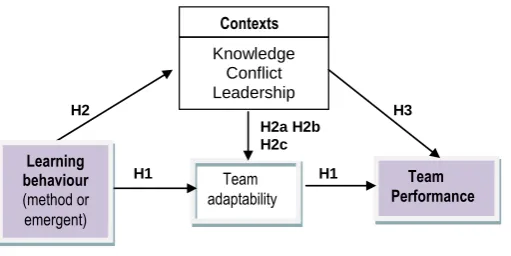
Figure 1: Learning Behaviour, Team Adaptability and Team Performance
Team adaptability in Figure 1 can be expressed through the dimensions of determinism and voluntarism (Miller, 1996). Whether people and their institutions are restricted in action and cognition on the one hand (determinism), or intelligent and autonomous on the other (voluntarism), concerns the capacity of the firm to learn and change over time. Determinism may explain more bureaucratic and restricted processes leading to constrained behaviour whereas voluntarism more flexible processes and choice for organisational actors (Ansoff, 1979; Cyert and March, 1963; Pawar and Eastman, 1997). Hence, TA in relation to dealing with difficult tasks and contexts may be restricted through determinism and a range of cognitive, ideological, and political structures (Mintzberg, 1983; Lindblom, 1959) that impose restraints on actors. Training and procedures needed to exploit what has been learned over a long period of time forms the basis of method-based learning. Method-based learning consists of structured, analytical, and experimental behaviour. Structured behaviour arises from strict procedures, processes, and systems (Hedberg, 1981), whereas analytical behaviour is the basis of procedures for common forms of analysis such as analysing a firm‘s external/internal environment (Miller, 1996). Experimental behaviour by comparison refers to changes made on a piece-meal basis (see Miller, 1996). Out of these, structured behaviour is perhaps the most restrictive for teams since what a team does and how it does it is pre-ordained in advance of action allowing only for small-scale improvements (Murray et al., 2009).
Team adaptability based on voluntarism allows for more flexibility and unconstrained actions that are more intuitive (Mintzberg, 1983). That is, team members would need to be open to new ideas and new innovations (Salas et al., 2008; Wilson et al., 2007), that over time challenge traditions and conventions, so that what is not known might become known. Emergent learning forms the basis of synthetic, interactive, and institutional behaviour (Miller, 1996). Synthetic behaviour combines different pieces of a puzzle in the forming of novel relationships where concepts can be redefined to achieve greater fit, consistency, and harmony (Mintzberg, 1989), where rich traditions and assumptions are challenged on a continuous basis. It is envisaged that this type of behaviour is invaluable in semi -autonomous teams who are often left to their own devices in making decisions (Salas et al., 2008; Macy et al., 2006). In interactive behaviour, bargaining and trading is common such as deciding on the best alternatives made by the team and how to communicate them in the best light. Better interaction and synthetic behaviour enables higher interpretation by the team of its environment avoiding costly mistakes and reworks (Crossan et al., 1993). Institutional behaviour, while emergent, is the most restrictive in terms of influencing the balance between thought and action (Miller, 1996), since behaviours are imposed by external institutions (such as governments, powerful banks, stakeholders) with politicised or financial agendas; while institutional change may be radical, it is arguably less evident/imposed in S-A teams since decisions are less constrained in these team types (Langfred 2005; O‘Connell et al., 2002).
H3 H2
H1 Team adaptability
Team Performance Knowledge
Conflict Leadership Contexts
Learning behaviour (method or emergent)
It is reasonable to conclude that a predominance of method-based learning over time and the constraints imposed leads to less TA and lower team performance since not enough behaviours exist to challenge traditional wisdom and convention. The level of team adaptability would be threatened over time. Conversely, fewer constraints coupled with more interaction and better learning allows teams to demonstrate more emergent learning leading to higher team performance since more behaviours are in place to challenge tradition, and update continuously decisions that ultimately influence team performance (Figure 1). The level of team adaptability would be stronger especially in dealing with both task and context. Therefore,
Hypothesis 1a: More evidence of method-based learning leads to reduced TA in semi-autonomous teams and lower team performance.
Hypothesis 1b: More evidence of emergent-based learning leads to enhanced TA in semi-autonomous teams and higher team performance.
Contexts
Scholars suggest that understanding context is critical for equality, consistency, and decision control providing team members an opportunity to voice their views and opinions (Colquitt and Jackson, 2006). Similarly, researchers cannot afford to ignore the context that shapes teams nor divest it from theory, research, and practice (Day et al., 2006: 213). The importance of studying context is consistent with Rousseau and Fried‘s (2001) suggestion that contextualizing involves ―linking observations to a set of relevant facts, events, or points of view‖ (p. 1). Team processes for instance are subject to many uncertain contexts that influence team adaptability and team performance. While many contexts lie outside the scope of this paper, three have received critical attention in the literature: knowledge sharing, conflict, and leadership (Detert and Burris, 2007; Day et al., 2006; Macy et al., 2006; Edmondson et al., 2003; Jordon et al., 2002; O‘Connell et al., 2002; Amason, 1995). This paper follows tradition by restricting the discussion to these three. Consistent with the approach taken by Edmondson and colleagues (see Edmondson et al., 2003), critical context uncertainties (CCUs) need to be carefully managed. From a detailed review of the literature, CCUs are situations that cause the team to make sub-optimal performance decisions for two main reasons: 1) a lack of ability to manage the uncertainty, and 2) poor team learning behaviour (Salas et al., 2008; Day et al., 2006; Carmeli and Schaubroeck, 2006; Gibson and Vermeulen, 2003). Accordingly, team adaptability would be less visible when both these variables are in play. Next, we explore which issues may be more prevalent for team adaptability in each of the critical context uncertainties of knowledge, conflict, and leadership. Critical Contexts Uncertainties
Knowledge Sharing
Organizations have difficulty in dealing with knowledge sharing and knowledge participation (Spender, 2008; Nonaka and Takeuchi, 1995), or even understanding what knowledge actually is and how it should be defined (Cook and Brown, 1999). Yet, knowledge accumulation, knowledge sharing, and knowledge conversion is a key resource of an organisations capacity to turn capabilities into competencies and skills that make a difference in practice (Byosiere and Luethge, 2008; Eisenhardt and Martin, 2000). It is one thing to capture and store knowledge, but it is quite another to share it so that a teams‘ practical application is more evident. While explicit and tacit knowledge is possessed by people, knowing is not about possession but about ‗practice‘ and about interacting with the things of the social and physical world (Vera and Crossan, 2003: p. 126).
Berdrow, 2003; Miller, 1996; Mintzberg, 1984). So, a direct link can be made between stronger TA and the actual functions performed in S-A teams (Jordon et al., 2002). While better LB is needed for knowledge participation to occur, simple or basic behaviour may not be enough to facilitate the knowledge participation process. The latter can become a CCU when not enough advanced behaviours are in place to convert knowledge into practice.
S-A teams will benefit by members sharing knowledge freely as distinct from a more bureaucratic learning climate, or one which emanates from a more structured learning process. To externalise knowledge and make it available for sharing, there has to be some way for team members to convert tacit knowledge to explicit knowledge since semi-autonomous teams may have more goals and tasks to perform on the basis of delegated autonomy and cross-level functions (Macy et al., 2006). This might be achieved by many joint activities and face-to-face interactions over time (Byosiere and Luethge, 2008: p. 68). It can be suggested that these participation strategies are needed in far greater quantity in S-A teams because of the increased expectation on end-results due to greater shared cognition (Salas et al., 2008), and an increased expectation of creativity in process decisions. What is understood intuitively needs to be translated into a form that can be understood. While method-based learning is clearly invoked where one learns the knowledge to the point where it becomes s econd nature (Byosiere and Luethge, 2008), different behaviour through the use of metaphor, dialogues or analogies will be more useful for participation. In S-A teams where there is more freedom in thought and action and a stronger level of adaptability is required, it is reasonable to suggest that knowledge participation processes will be enhanced by more rather than less emergent learning. Therefore:
Hypothesis 2a. More evidence of emergent learning in contexts where team member‘s deal with shared knowledge leads to enhanced TA (Figure 1).
Conflict
Scholars suggest that team members should be engaged in strategic assessments and decision making by feeling psychologically safe in their surroundings to express divergent ideas (Edmondson et al., 2003; Carmeli and Schaubroeck, 2006). Psychological safety is particularly important in the prevailing situational consensus of organizational norms. The natural tendency for teams is to become more risk averse and narrower in their scope of analyses and solution search especially team adaptability is based on a compilation model of individual adaptability and skill. Consequently, teams tend to escalate their commitment to existing courses of action and therefore have a psychological stake (Moon et al., 2003). Edmondson and colleagues (2003) observed that teams are especially unwilling to speak openly and share information when the team's power is highly centralized in the CEO or other leadership position. Power asymmetries reduce psychological safety by undermining accurate and comprehensive situational assessments potentially threatening to the organization. Recent research has found for instance that employees fear significant loss from speaking up (such as restrictive career mobility, loss of support), and as a result are likely to choose defensive silence (Detert and Burris, 2007: Van Dyne et al., 2003). Yet, empirical evidence suggests individuals who ―experience high-quality team-member exchange relationships are more likely to contribute by assisting one another and to share information, ideas, and feedback within work teams‖ (Tse et al., 2008: p. 196). Hence, the level of TA is enhanced as a result.
more beneficial for teams as it leads to trust, support, and mutual respect leading to greater collaboration (Hoegl and Gemuenden, 2001). In the greater sharing of power, it is suggested that the LBs will reflect increases in synthetic and interactive behaviour described earlier. Consequently, in S-A teams, a poor capacity of members to practice cognitive conflict may lead to lower-run performance and too much method-based learning may ultimately discourage the sharing of ideas leading to reduced team adaptability. Therefore:
Hypothesis 2b: More evidence of emergent learning in contexts where team member‘s deal with continuous conflict leads to enhanced TA (Figure 1).
Leadership
Shared leadership in organizations rather than a focus on a single leader of organizations (Boal and Hooijberg, 2000) has been a subject of increasing interests for scholars (Day et al., 2006). While leadership studies might extol the benefits of transformational, instrumental, and functional leaders, scholars suggest that ‗leadership might also encompass both vertical and shared facets in order to capture a fuller view of leadership processes‘ (Day, Gronn, and Salas, 2006: p. 218). This aspect of leadership is consistent with emergent learning. Shared leadership can be described as ―a dynamic, interactive influence process among individuals in groups for which the objective is to lead one another to the achievement of group or organizational goals or both‖ (Pearce et al., 2008: p. 354). Sharing leader activities equates to shared cognition as a collection of task and team related knowledge related to team members‘ collective understanding of the current situation (Cooke et al., 2000).
It can be considered that shared leadership is particularly suited to S-A teams because of the focus on autonomy, shared insights, and greater responsibility over team tasks. Shared leadership is a mutual ongoing process where leaders emerge in an official and unofficial capacity (Pearce and Sims, 2002). S-A work teams for instance seldom possess a dominant functional leader (Macy et al. 2006). Rather, leadership and discussion is distributed by those with relevant knowledge, skills, and abilities which are then acted on by the team (Ensley, Hmieleski, and Pearce, 2006), so that leadership is ongoing and simultaneous; a mutual influence process involving the serial emergence of official as well as unofficial leaders (Pearce and Conger, 2003).
Shared leadership is also strongly related to team effectiveness in previous studies (Pearce and Sims, 2002; Shamir and Lapidot, 2003). For instance, in most self-managed new venture teams, there are no standard operating procedures and structured team tasks. This is the case also with new product development teams who need to create a new set of designs and innovations replacing the old ones. In this situation, founding members lead in the absence of structures that normally guide traditional functional roles (Ensley et al., 2006), and a higher level of creativity and employee input is required (Detert and Burris, 2007). In relation to the previous contexts discussed, shared leadership would be useful in situations where affective conflict is evident and when knowledge participation leads to higher team outputs. Sharing leader activities in highly autonomous teams would be consistent with emergent learning since less structure and rules guide what is shared; it is not limited by a learning climate based on determinism and restrictive beliefs and practices (March, 2006); rather, emergent learning underpins team functions and team adaptation would be less restricted. Hence, shared leadership will have a greater influence on team performance since all members are encouraged to input into leadership arrangements. Therefore:
Hypothesis 2c: More evidence of emergent learning in contexts where team member‘s deal with shared leader activities leads to enhanced TA (Figure 1).
Discussion
the expense of understanding the relationship between team learning, team adaptability and team performance. Similarly, many team studies seem to generalise across all team types yet there are clear differences. Semi-autonomous teams for instance demonstrate greater autonomy and decision making. They will be much different to strictly functional teams influenced by higher levels of determinism in team design.
Another focus of past research is that group composition (characteristics of individual team members), task design (differentiation of work activities), and organizational context (support from organization), are critical in team design (Stewart, 2006). The argument is that more effective design leads to increased performance; what is often lost in these debates is the focus on context and the required level of adaptability of the team to deal with many different contexts. This would be the same for all teams however the focus of research in this paper is S-A teams. In support of a stronger focus for the latter, Stewart found in a recent meta-analysis of ninety-three studies of design features that teams perform better when members ―have higher levels of cognitive ability and expertise‖ and that ―the task design factors of greater autonomy and intra-team coordination likewise facilitate team performance‖ (2006: p. 47). While this developmental paper does not discuss at length team effectiveness or team design, it is posited that better team adaptability (and team performance) is demonstrated by higher emergent learning across different contexts. As indicated earlier, this is particularly so when faced with greater task complexity and context-specific factors. That is, relationships between team members are more likely to be enhanced as a result of better learning behaviour and members‘ experience is more likely to be positive since all members share cognitive knowledge and systematically work to reduce knowledge sharing problems, leadership issues and workplace conflicts. The set of hypotheses proposed will be tested in field research and a subsequent paper. It is likely that a compilation of team adaptability variables underpinned by learning allows a semi-autonomous team to more effectively deal with each of the contexts or CCUs described.
We suggest however it would be difficult to prove that team performance would be increased simply on the basis of more emergent behaviour, without considering the mediating effect of each context. Although we expect a relationship between learning behaviour and team adaptability, it is more likely that each context plays a mediating role in influencing performance. Knowledge, conflict, and leadership contexts will influence team member adaptability particularly if past decisions are embedded and reinforced in existing systems (Murray et al., 2009). Consistent with organisational change literature, organisations with a strong commitment to existing resources, those who are strongly embedded and reliant on old systems find it difficult to change (Herold et al., 2007; Newman, 2000). While teams may be semi-autonomous in scope and purpose, they may be restricted by old knowledge processes or old leadership practices arising from a deterministic environment (discussed earlier) that impose restraints on the level of adaptability achieved. Ultimately, that team performance is strongly influenced, either positively or negatively, by mediating contextual factors is important in determining the overall influence of learning behaviour on team performance. Therefore,
H3. Contexts related to knowledge, conflict, and leadership positively or negatively mediate the relationship between learning behaviour and team performance (Figure 1).
Implications for Future Research
Subsequent research should examine the proposed relationship between learning behaviour and team performance by examining the mediating relationship between specific contexts and team performance. That is, it would be useful to explore gaps in research not previously examined in any great detail apart from more single-dimensional studies of learning and team performance. Contexts remain critical to studies of learning and performance which at its most basic measures the influence of one phenomenon (learning behaviour) on another (team contexts) by taking into account the change that occurs (increased team performance). Scholars have recently noted the importance of context in cross-level linkages related to organisational change which for our purposes here can easily include teams:
as they might shape change responses or team outputs such as performance (Herold et al., 2007: 942). (emphasis added)
References
Amason, A.C., Thompson, K.R., Hochwarter, W.A., & Harrison, A.W. 1995. Conflict: An important dimension in successful management teams. Organizational Dynamics, 24: 20-35.
Antonakis, J., Avolio, B., & Sivasubramaniam, N. 2003. Context and leadership: An examination of the nine-factor full-range leadership theory using the Multifactor Leadership Questionnaire. The Leadership Quarterly, 14: 261–295.
Argyris, C. 1993. Education for leading-learning. Organizational Dynamics, 21: 5-17.
Arthur, J.B., & Huntley, C.L. 2005. Ramping up the organizational learning curve: Assessing the impact of deliberate learning on organizational performance under gainsharing. Academy of Management Journal, 48(6): 1159-1170.
Bassi, L. 1999. Harnessing the power of intellectual capital. In J. Cortada and J. Woods (Eds), The knowledge management yearbook 1999-2000. Boston: Butterworth Heinemann: 422-31. Benner, M.J., & Tushman, M.L. 2003. Exploitation, exploration, and process management: The
productivity dilemma revisited. Academy of Management Review, 2: 238-256
Boal, K.B. & Hooijberg, R. 2000. Strategic leadership research: Moving on. The Leadership Quarterly, 11: 515-550.
Brown, J.S. & Duguid, P. 1991. Organizational learning and communities of practice: Toward a unified view of working, learning, and innovation. Organizational Science, 2: 40-57.
Brown, S.L., & Eisenhardt, K.M. 1997. The art of continuous change: Linking complexity theory and time-paced evolution in relentlessly shifting organizations. Administrative Science Quarterly, 42: 1-34.
Byosiere, P. Luethge, D.J. (2008), Knowledge domains and knowledge conversion: An empirical investigation. Journal of Knowledge Management, Vol. 12 No. 2. pp. 67-78.
Carmeli, A., & Schaubroeck, J. 2006. Top management team behavioural integration, decision quality, and organizational decline. The Leadership Quarterly, 17: 441-453.
Clegg, S. R. 2000. Frameworks of Power and Resistance, London: Sage
Cohen, S.G. Bailey, D.E. (1997), What makes teams work: Group effectiveness research from the shop floor to the executive suite. Journal of Management, 23: pp.239-290.
Colquitt, J., & Jackson, C. 2006. Justice in teams: the context sensitivity of justice rules across individual and team contexts. Journal of Applied Social Psychology, 36: 868-899.
Cook, S., & Brown, J.S. 1999. Bridging epistemologies: The generative dance between organizational knowledge and organizational knowing. Organizational Science, 10: 381-400.
Cook, N.J. Salas, E. Cannon-bowers, J.A. Stout, R.J. (2000), Measuring team knowledge. Human Factors, 42, pp. 151-173
Crossan, M., Lane, H.W., & Hildebrand, T. 1993. Organizational learning: theory to practice. In J. Hendry, G. Johnson, & Newton (Eds), Leadership and the management of change, Wiley & Sons.
Crossan, M., Lane, H.W., & White, R.E. 1999. An organizational learning framework: from intuition to institution. Academy of Management Review, 24: 522-537.
Cummings, T. 1978. Self-Regulating work groups: a socio-technical synthesis. Academy of Management Review, 3: 625-634.
Day, D., Gronn, P., & Salas, E. 2006. Introduction - Leadership in team-based organizations: on the threshold of a new era. The Leadership Quarterly, 17: 211–216.
Denison, D., Hart, S., & Kahn, J. 1996. From chimneys to cross-functional teams: developing and validating a diagnostic model. Academy of Management Journal, 39: 1005-1023.
Detert, J.R., & Burris, E.R. 2007. Leadership behaviour and employee voice: Is the door really open? Academy of Management Journal, 50(4): 869-884.
Dopson, S. Fitzgerald, L. Ferlie, E. (2008), Understanding change and innovation in Healthcare settings: Reconceptualizing the active role of context. Journal of Change Management, Vol. 8, Nos. 3-4, pp. 213-231.
Easterby-Smith, M. Lyles, M.A. (2003). The Blackwell handbook of organizational learning and knowledge management. Blackwell Publishing: London.
Edmondson, A. 2003. Speaking up in the operating room: How team leaders promote learning in interdisciplinary action teams. Journal of Management Studies, 40: 1419–1452.
Eisenhardt, K.M., & Martin. J.A. 2000. Dynamic capabilities: What are they? Strategic Management Journal, 21: 1105-1121.
Ensley, M.D. Hmieleski, K.M. & Pearce, C.L. 2006. The importance of vertical and shared leadership within new venture top management teams: Implications for the performance of start ups. The Leadership Quarterly, 17: 217-231.
Espedal, B. (2008), In the pursuit of understanding how to balance lower and higher order learning in organizations. The Journal of Applied Behavioural Science, Vol. 44 No. 3. pp.365-390. Fleishman, E.A. Zaccaro, S.J. 1992. Towards a taxonomy of team performance functions. In R.W.
Swezy & E. Salas (Eds) Teams: Their training and performance: 31-56. Norwood, NJ: Ablex. Gibson, C. B., & Vermeulen, F. 2003. A healthy divide: subgroups as a stimulus for team learning.
Administrative Science Quarterly, 48: 202-239.
Gordon, R. Grant, D. 2006. Corridors of power. In P. Murray, D. Poole, & G. Jones (Eds), Contemporary issues in management and organisational behaviour. Sydney: Thomson Learning .Gupta, A.K. Smith, K.G. & Shalley, C.E. 2006. The interplay between exploration and exploitation. Academy of Management Journal, 49(4): 693-706.
Hackman, J.R. & Walton, R.E. 1986. Leading groups in organizations. In P. Goodman et al. (Eds), Designing effective work groups. London: Jossey-Bass Publishers
Hackman, J.R., & Oldham, G. 1980. Work redesign. Reading, Mass: Addison-Wesley.
Hackman, J.R. (1987), The design of work teams. In J. Lorsch (Ed). Handbook of Organizatonal Behaviour. Englewood Cliffs, NJ: Prentice Hall.
Hall, D., Paradice, D., & Courtney, J. 2003. Building a theoretical foundation for a learning-oriented management system. Journal of Information Technology Theory and Application, 5(2): 63-85. Hambrick, D.C. (1998). Corporate coherence and the top management team. In D.C. Hambrick, D.A.
Nadler, & M.L. Tushman (Eds), Navigating change: How CEOs, top teams, and boards steer transformation: 123-140. Boston, MA: Harvard Business School Press.
Herold, D.M. Fedor, D.B. Caldwell, S.D. (2007), Beyond change management: A multilevel investigation of contextual and personal influences on employees‘ commitment to change. Journal of Applied Psychology, Vol 92, No. 4, 942-951.
Hoegl, M., & Gemuenden, H.G. 2001. Teamwork quality and the success of innovative projects: a theoretical concept and empirical evidence. Organization Science, 12: 435-439.
Janis, I.L. 1972. Victims of teamthink. Boston: Houghton Mifflin.
Jordan, M.H. Field, H.S. Armenakis, A.A. (2002), The relationship of group process variables and team performance. Small Group Research, Vol. 33 No 1. pp. 121-150.
Kirkman, B.L., & Rosen, B. 2000. Powering up teams. Organizational Dynamics, Winter: 48-64. Kontoghiorghes, C. Awbrey, S.M., & Feurig, P.L. 2005. Examining the relationship between learning
organization characteristics and change adaptation, innovation, and organizational performance‘. Human Resource Development Quarterly, 16 (2): 185-211.
Leonard-Barton, D. 1992. The factory as a learning laboratory. Sloan Management Review, Fall. Lowe, K.B., & Gardner, W.L. 2000. Ten years of The Leadership Quarterly: contributions and
challenges for the future. The Leadership Quarterly, 11: 459-514.
Macy, B. Farias, G. Rosa, J. Moore, C. 2006. Built to change: High performance work systems and self-directed work teams: A longitudinal Quasi-experimental field study. Texas Technology University: August.
March, J.G. 1991. Exploration and exploitation in organizational learning. Organization Science, 2: 71-87.
March, J.G. 2006. Rationality, foolishness, and adaptive intelligence. Strategic Management Journal, 27: 201-214.
Marks, M.A. Mathieu, J.E. & Zaccaro, S.J. 2001. A temporally based framework and taxonomy of team processes. Academy of Management Review, 26(3): 356-376
McGrath, J.E. 1984. Groups: interaction and performance. Englewood Cliffs, N.J.: Prentice Hall. Miles, M.B., & Huberman, A.M 1994. Qualitative data analysis. 2nd Edition, London: Sage.
Miller, D. 1996. A preliminary typology of organizational learning: synthesizing the literature. Journal of Management, 22: 485-505
Millitello, L.G. Kyne, M.M. Klein, G. Getchell, K.& Thordsen, M. 1999. A synthesized model of team performance. International Journal of Cognitive Ergonomics, 3 (2): 131-158.
Mintzberg, H. Ahlstrand, B. & Lampel, J. 1998. Strategy safari: A guided tour through the wilds of strategic management. Free Press: New York.
Murray, P., & Blackman, D. 2006. Managing innovation through social architecture, learning and competencies: A new conceptual approach. Knowledge and Process Management. 13(3).
Murray, P. Syed, J. Roberts, Z. (2009), Structures of learning for dynamic markets. Management Decision. Vol. 47, No. 2, 271-288.
Newman, K.L. (2000), Organizational transformation during institutional upheaval. Academy of Management Review. Vol. 25, No. 3 602-619.
Nieva, V.F., Fleishman, E.A., & Rieck, A. 1978. Team dimensions: Their identity, their measurement, and their relationships. Final Technical Report for Contract No. DAHC1978-C-0001,
Washington, D.C.: Advanced Research Resources Organizations.
Nonaka, I., & Takeuchi, H. 1995. The knowledge creating company. Oxford: Oxford University Press. O‘Connell, M.S. Doverspike, D. Cober, A.B. (2002), Leadership and semiautonomous work team
performance. Group and Organization Management, Vol. 27 No. 1. pp. 50-65
Orlikowski, W.J. 2002. Knowing in practice: Enacting a collective capability in distributed organization. Organization Studies, 13: 249-273.
Oswick, C., Anthony, P., Keenoy, T., Mangham, I., & Grant, D. 2000. A dialogic analysis of organizational learning. Journal of Management Studies, 37 (6): 887-901.
Pawar, B.S., & Eastman, K.K. 1997. The nature and implications of contextual influences on transformational leadership: a conceptual examination. Academy of Management Review, 22: 80-109.
Pearce, C.L. & Sims Jnr, H.P. 2002. Vertical versus shared leadership as predictors of the effectiveness of change management teams: An examination of aversive, directive,
transactional, transformational, and empowering leader behaviours. Group Dynamics: Theory, Research, and Practice, 6: 172-197.
Pearce, C.L. Manz, C.C. Sims, H.P. (2008), The roles of vertical and shared leadership in the enactment of executive corruption: Implications for research and practice. The Leadership Quarterly, 19, pp. 353-359.
Peelle, H.E. 2006. Appreciative inquiry and creative problem solving in cross-functional teams. The Journal of Applied Behavioural Science. 42(4): 447-467
Petigrew, A.M. Ferlie, E. McKee, L. (1992), Shaping strategic change: Making change in large organizations: The case of the National Health Service. London: Sage.
Polanyi, M. 1967. The tacit dimension. London: Routledge.
Poole, M.S. 1983a. Decision development in small groups II: a study of multiple sequences in decision making. Communication Monographs, 50, September.
Rousseau, D.M., & Fried, Y. 2001. Location, location, location: contextualizing organizational research. Journal of Organizational Behaviour, 22: 1-13.
Salas, E. Cooke, N.J. Rosen, M.A. (2008), On teams, teamwork, and team performance: Discoveries and developments. Human Factors, Vol. 50, No. 3. pp. 540-547.
Shamir, B. Lapidot, Y. 2003. Shared leadership in the management of group boundaries: A study of expulsions from officers‘ training courses. In C.L. Pearce, & J.A. Conger (Eds), Shared leadership: Reframing the hows and whys of leadership. Thousand Oaks, CA: Sage. Steiner, I.D. 1972. Team process and productivity. New York: Academic Press.
Stewart, G.L. (2006), A meta-analytic review of relationships between team design features and team performance. Journal of Management, Vol. 32 No. 1. pp 29-54.
Taylor, A. & Greve, H.R. 2006. Superman or the fantastic four? Knowledge combination and experience in innovative teams. Academy of Management Journal, 49(4):.723-740 Trist, E.L., & Bamforth, K.W. 1951. Some social and psychological consequences of the long-wall
methods of coal-getting. Human Relations, 4: 3-38.
Tse, H.M. Dasborough, M.T. Ashkanasy, N.M. (2008), A multi-level analysis of team climate and interpersonal exchange relationships at work. The Leadership Quarterly, 19, pp. 195-211. Van Dyne, L. Ang, S., & Botero, I.C. 2003. Conceptualizing employee silence and voice as
multidimensional constructs. Journal of Management Studies, 40: 1359-1392.
Vera, D. & Crossan, M. 2003. Organizational learning and knowledge management: Toward an integrative framework. In M. Easterby-Smith and M. Lyles (Eds), The Blackwell handbook of organizational learning and knowledge management. Blackwell. London. 123-130.
Wilson, J.M ., Goodman, P.S., & Cronin, M.A. 2007. Group learning. Academy of Management Review, 32(4): 1041-1059.