Compass Service
Evaluation Report
July 2017
Ana Calderón, Julian Edbrooke-Childs,
Jessica Rees, Chloe Edridge, Marjolein
Mass, and Miranda Wolpert – Anna
Freud National Centre for Children and
Families
Jodie Finch and Joseph Cassidy –
Compass service
Contents
List of figures 5
List of tables 6
Executive summary 7
Summary of the project and evaluation 7
Methodology of the evaluation 7
Key findings 8
What were the barriers and facilitators to implementing and sustaining the Compass
service? 10
Implications and recommendations for policy and practice 11
Overview of the project 12
Referral pathway 14
What the project was intending to achieve 16
What the project was intending to do to achieve these outcomes 16
Relevant existing research relating to this innovation 16
Changes to the project’s intended outcomes 18
Context within which this innovation has been taking place 18
Overview of the evaluation 20
Evaluation questions 20
Methodology used to address these questions 21
Focus groups with staff and interviews with parents or carers and young people 22
Changes to evaluation methodology from the original design 23
Key findings 24
Characteristics of the service provided by COS 24
COS service data 24
Does the Compass service reduce the number of young people becoming engaged in
statutory social care service? 25
COS service data 25
Focus Groups 26
Does the Compass service improve young people’s emotional, behavioural and family
Parents 27
Young people 28
Outcome measures 29
Does the Compass service improve young people’s academic attainment? 33
Parents 33
Young people 33
What might be the mechanisms by which the Compass service improves young
people’s outcomes? 34
Focus Groups 34
Parents 34
Young people 36
What is staff’s experience of the Compass service? 37
Focus Groups 37
What is the experience of young people and parents or carers of staff at the Compass
service? 38
Parents 38
Young people 39
What are the barriers and facilitators to implementing and sustaining the Compass
service? 40
Facilitators 40
Barriers 41
How can Compass be sustained in the long-term? 43
What are the results of COS’ cost-benefit analysis? 44
Assumptions and Limitations 44
Compass Outreach Support 45
Costs 45
The Benefits: Removal of Adverse Outcomes 46
Estimating Outcomes 46
Monetised Outcomes: LAC 47
Recommendations 49
Limitations of the evaluation and plans for the future 51
Limitations of the evaluation 51
Appropriateness of the evaluative approach 52
Capacity built for future evaluation and the sustainability of the evaluation 53
Recommendations for future evaluation 53
Implications and recommendations for policy and practice 54
Capacity and sustainability of the innovation 54
Conditions necessary for this innovation to be embedded 54
Consideration of future development of the innovation and wider application 55
References 56
Appendices 58
Appendix A: Components of the Compass service once fully implemented 58
Appendix B: Compass service delivery model 59
Appendix C: Compass Outreach Service (COS) data (May 2015 to July 2016) 60
Appendix D: Routinely collected data 63
Achenbach System of Empirically Based Assessment (ASEBA) 63
SDQ 64
List of figures
Figure 1: Compass referral pathway 15
Figure 2: Number of cases admitted to COS by month and their status by July 201624 Figure 3: Number of months that discharged young people were seeing by COS (n=92)
List of tables
Table 1: Legal status at referral and discharge for discharged cases (n=99) 25 Table 2: Accommodation status at referral and discharge for discharged cases (n=99)
26 Table 3: Frequency and percentage of CGAS scores at T1 and T2 30 Table 4: Frequency of young people who were in the clinical and non-clinical group according to young people, parents and teachers in Total Difficulties SDQ Scale 32 Table 5: Clinical change (CC) and Reliable clinical change (RCC) in young people reported by young people, parents and teachers in Total Difficulties SDQ Scale 32 Table 6: Number and frequency of young people in each reason for referral 45
Table 7: Monetised outcomes: LAC 47
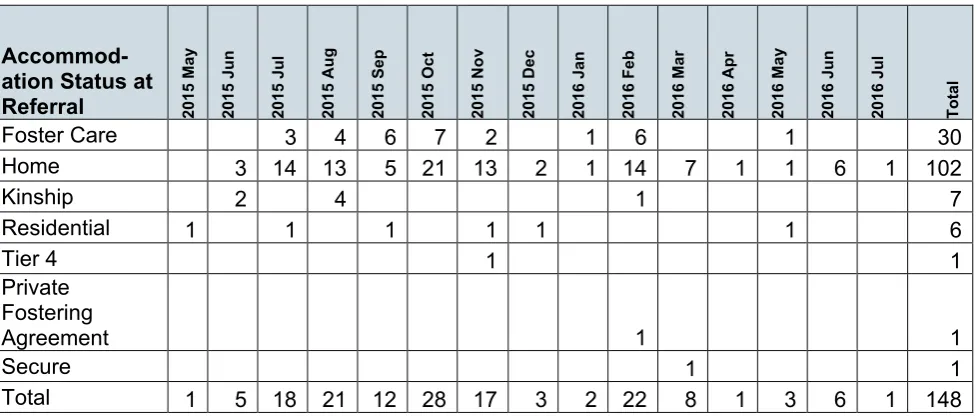
Table 8: Monetised outcomes attributable to Compass Outreach Service 48 Table 9: Number of cases admitted to COS by month and their status by July 201660 Table 10: Number of young people by reason for referral and by months 61 Table 11: Number of young people by accommodation status at referral and by months
61 Table 12: Number of young people by legal status at referral and by months 62 Table 13: Descriptive statistics of ASEBA Internalising, Externalising, and Total problems scales as reported by young people, parents and teachers 63 Table 14: Descriptive statistics of all the SDQ sub-scales and Total Difficulties Scale
reported by young people, parents and teachers 64
Table 15: Frequency of young people who were in the clinical and non-clinical group according to young people, parents and teachers in all the SDQ subscales and the
Total Difficulties Scale 65
Executive summary
Summary of the project and evaluation
The aim of the Compass service was to build upon the success of a therapeutic
education service in Norfolk (the Compass School) through a bespoke multidisciplinary package of care that supported young people who were Looked After Children (LAC) or are at risk of being taken into care, to ensure that they could remain with the family wherever possible and be reunified at the earliest opportunity. This comprised developing the Compass Outreach Service (COS), the Virtual Residential School
(VRS), and the Family Development Unit. This allowed families to receive individualised care designed around their needs. At the time this report was written, the full Compass model had not been implemented (the Family Development Unit was estimated to become operational in January 2017) so the evaluation focused on COS and VRS. The overarching aim of the evaluation was to examine whether, and by what means, the Compass service (COS and/or VRS) was effective at improving young people’s wellbeing.
Methodology of the evaluation
A quantitative driven, multilevel mixed methods design was used, with a qualitative component to triangulate the quantitative data (Teddlie & Tashakkori, 2008). It
comprised the following strands: COS service data (n= 152 cases, 53 (35%) of which were open and 99 (65%) had been discharged by July 2016); routinely collected
outcome data completed when young people joined the Compass service (T1) and 4 to 6 months later (T2) including measures completed by young people, parents or carers, teachers, and clinicians; and qualitative data consisting of interviews with young people (n=22, 5 from COS and 17 from VRS) and parents or carers (n=17, 13 from COS, 1 from VRS and 3 with missing information), and focus groups with professionals (n=5 with 24 Compass staff from COS and VRS).
The evaluation questions were:
• does the Compass service reduce the number of young people becoming engaged in statutory social care service?
• does the Compass service improve young people’s emotional, behavioural and family functioning?
• does the Compass service improve young people’s academic attainment?
• what is staff’s experience of the Compass service?
• what is the young people’s and parents or carers’ experience of staff at the Compass service?
• what are the results of the cost-benefit analysis?
Key findings
Evidence suggested that the COS was associated with a reduction in the use of statutory social care services: 9 cases who were admitted to COS with a legal status were discharged from COS without one, and only 3 children could not be prevented from becoming LAC from admission to discharge. Furthermore, COS data showed that out of the 16 young people who were living in foster care at referral, 5 were successfully returned to their homes. Data also showed that 11 out of 70 young people who were living at home at referral could not be prevented from going into foster care.
In the focus groups, staff described sustained long-term work with children, young people and families as helping to stabilise home environments, reducing out-of-county placements or children becoming looked after, and increasing reunifications. Some staff noted the potential cost-saving of the Compass service by reducing placement
breakdowns, out-of-county placements, or children becoming looked after, or by increasing reunifications and educational engagement. Even though the dataset for COS cases is of high-quality and captures a range of data items, as the Compass approach aims to be holistic, it might be useful for a future evaluation to add items about the particular aspects of the Compass service that the young person is attending (for example, COS only, COS plus VRS, etc.).
According to most parents and young people, the Compass service provided a more holistic approach compared to other services, as it focused, not only on the child, but also on the family. Within this context, both parents and young people reported that Compass supported young people in their emotional wellbeing (especially their
confidence and self-esteem) and their behavioural difficulties (especially with anger and aggressive behaviour). Parents and young people also reported that Compass
supported the family by improving parental skills and by reunifying relationships between parents and their young people; between siblings, and with extended family. However, some young people reported uncertainties about any changes in themselves or their families since accessing the Compass service.
reported that, as a group, young people had a better level of functioning 4 to 6 months after entering Compass. The results presented were mostly descriptive and our
confidence in the findings is very likely to change when a bigger sample is obtained. In addition, a longer follow-up of those who access the Compass service is necessary to examine the long-term effects of the service.
Parent reports of COS improving academic attainment were mixed, due to the varied involvement of COS in educational provision. Parents with experience of the VRS described their involvement through feedback to education staff during meetings. Parents with no experience of VRS described not needing such support as this domain was stable, or because parents felt that this work had not commenced. Two parents whose young people accessed the VRS described the negative aspects of these
services as including the lack of information about the provision, and the upper age limit of 14. On the other hand, almost half of interviewed young people described
improvements in their school work and abilities within their education provision. Further evaluation of the impact of Compass on academic attainment could be conducted using academic data from pupils in VRS.
The majority of staff described the key mechanism by which Compass was effective was through working with the whole family to empower children, young people and families to better manage emotional and behavioural difficulties in the home, which reduced the need to engage with services as well as preventing the escalation of difficulties to the point of crisis. Compass support of the whole family was also reported by young people as a key mechanism. Furthermore, the ability to work flexibly to meet the individual needs of children, young people and families was described by Compass staff as the lynchpin to this innovation. Young people independently reported the same – that is, the positive effect of the service’s flexibility. Another mechanism reported by staff was the multidisciplinary team work which, according to them, provided the right mix of skills to meet the individual needs of children, young people and families; gave staff the opportunity to learn from, and support, colleagues; and to come together to share knowledge and experience about a case.
According to parents, a key means to improving outcomes was in increasing their confidence (both in themselves and as parents), and an increase in their parental abilities and knowledge. Providing parents with a different perspective during a crisis situation was another mechanism which was reported to improve outcomes for young people.
conducted, the volume of work, in terms of engaging with multiple individuals across a large geographical area; and administrative or information sharing difficulties, were described as challenges which, according to the Compass team, have now been addressed. Building on the success of the cross-sector working and the
multidisciplinary team, cross-sector training would be recommended to further integrate staff across both health and social care.
Regarding parents’ experiences of staff at Compass, they were overall positive. Staff members were described as genuine, non-judgemental, supportive, down-to-earth and approachable. When compared to other services, Compass staff were reported to respond immediately to issues. The home visitation service provided by COS was reported by parents to make it easier to talk about difficult situations. Young people described staff as “open”, “friendly” and “lovely”, and reported having a positive relationship with them.
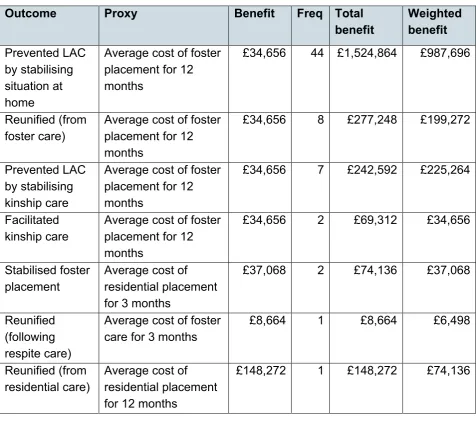
Finally, it was estimated by the cost-benefit analysis conducted by our partner York Consulting that, through the implementation of COS, the local authority costs were reduced. This is evidenced by the fact that COS supported their target group - most of the cases (49, 33%) were Child in Need; followed by 39 (26%) who were in Child Protection; 33 (22%) who were LAC, and 21 (14%) who were in Voluntary
Accommodation - and its Fiscal Return on Investment (FROI) was estimated to be 3.39. This demonstrates a positive cost benefit outcome equating to a saving of £3.39 for every £1 invested in the project. Data received from COS for the cost benefits analysis (CBA) was high-quality and, therefore, York Consulting was able to build a robust model. Although anything above a FROI of £1 is perceived to be a good result for this type of analysis (York Consulting), COS’ FROI of £3.39 indicates that COS is achieving greater value for money for local and central government. However, the CBA analysis was based on COS closed cases, in order to avoid the risk of double counting savings, meaning that it excluded open cases that might have been in COS for a long time, which in turn might have skewed results in favour of COS. In order to avoid this possible bias, the COS team is currently collecting data which can be used to measure savings in real time on a month-by-month basis. This was reported by the COS team as one of the positive legacies of the evaluation.
What were the barriers and facilitators to implementing and
sustaining the Compass service?
personalised and flexible than other services, as staff responded to the individual needs of the family; provided one-to-one support, and were able to offer a more bespoke package whilst maintaining a reliable and immediate response. In terms of barriers, some parents reported a slow referral process and a lack of communication between social workers and Compass about timeframes for the referral.
Implications and recommendations for policy and practice
In Norfolk, there is a need for Compass to provide appropriate care for young people and families in crisis, as indicated by the findings of this evaluation. In particular, parents reported that the Compass service supported young people in a range of difficulties (for example, exclusion from education, preventing the young person from being criminalised, and maintaining a child with complex difficulties within a placement); young people noted how Compass staff were attuned to their needs and appeared to understand their problems; and staff in focus groups described Compass as accessing children, young people, and families who would not necessarily be able to be seen by other services and stated that the MDT met their needs effectively.
Within this context, wider dissemination of information about Compass would help the innovation to be embedded and to reach a greater number of young people and parents. It will be crucial to maintain the level of care with larger numbers of service users. Dissemination would also mean that more young people and families would access Compass, and hence more resources would be needed in order to cope with future staffing and demand. Parents noted this, and described a need for the service to expand, as the demand for the service is growing while the capacity has remained the same. Currently, VRS has secured funding for 5 years and COS is on recurrent budget basis.
In addition, it is of particular relevance to expand Compass to include all the components of the model (such as the Family Development Unit). In that way a
Overview of the project
The first Compass School opened in 2009 as a response to the need for a therapeutic education provision for children who would otherwise have been placed in out-of-county placements, owing to their complex needs. This was recognised as an opportunity to invest in developing an innovative service to support these children within their families and communities. Through its success in preventing out of county placements, the Compass has grown to its current size. This innovation project had 3 components (please refer to Appendix A for a diagram of the full Compass model once fully implemented):
1. Virtual Residential School Model (VRS)
The project team wanted to build upon the success of their current therapeutic
education service, The Compass Centre, by creating a Virtual Residential School aimed at children and young people who required therapeutic foster care and a specialist education provision. This new service is offering training, consultation and supervision to foster carers in placements formally attached to the school’s education and therapy provision for children across Norfolk. The integrated approach seeks to encourage foster carers to feel part of a multi-disciplinary team, rather than becoming isolated and too often overlooked in the decision making about the children in their care.
The ‘virtual’ component of the VRS refers to the residential aspect of the school. The foster placements attached to the therapeutic education provision means that children have the benefits of a consistent approach across their home and school placements without the risk factors associated with institutionalisation. The additional training and supervision provided for carers also means that they are able to manage children with more complex needs who would otherwise end up in a traditional residential provision. This reassures foster and kinship carers that the child will not be repeatedly excluded. The project team aims for the VRS to become a series of hubs from where they are able to deliver education for their pupils, their families and the staff working with them. They provide therapy and social care interventions from within a fully integrated service that acts as a single point of access for families who would otherwise fall through the gaps between services.
The Compass therapeutic model is based on the clinical application of attachment theory. It aims to provide a similar emotionally regulated and emotionally literate relational environment for pupils both at home and at school, which acts as a secure base for pupils to develop their attachment security.
reflective and consistent relationships that are at the foundation of attachment security. VRS creates opportunities for pupils to feel safe; take appropriate risks; develop trust in others, and improve their emotional regulation, resilience and self-esteem. The Compass approach maintains a clear focus on 5 key areas: relationships, responsibilities, risk, reflective practice, and research.
Pupils attend the schools for their full 25 hours each week. In addition to their education, pupils access therapeutic interventions from the clinical teams in their
respective school. These include individual therapy, group workshops, activity sessions, psychoeducation and restorative approaches. Families are also offered systemic (family therapy) appointments, individual psychotherapy for parents, parenting skills training, video interactive guidance and family activity days.
The VRS is the most intensive level of support offered by the Compass Service. 2. Family Development Unit
Where families have received support in the community that has not been effective in helping reduce safeguarding concerns, the Family Development Unit will aim to provide more intensive support as an alternative to entering care proceedings. The Family Development Team will be able to undertake community based assessments of
parenting capacity and issues of risk. The Family Development Unit will also include the creation of a more intensive day service, in which family assessments can take place in a clinic setting. Using these interventions, the Family Development Unit will also be able to assess and support families working towards reunification.
3. Compass Outreach Service (COS)
As a result of the difficulties leading to the young people being placed in the Compass Centre, a number of the young people accessing the service are Looked After Children (LAC) or are at risk of being taken into care. Compass therefore developed an
innovative provision to support these young people, building on the success of the current therapeutic education service. The aim of this new service, COS, is to step up levels of support for families, foster carers and social care professionals, as a means to step down the levels of need. The service includes staff from Norfolk County Council, Norfolk and Suffolk NHS Foundation Trust (NSFT) and The Benjamin Foundation. The Benjamin Foundation is a charity that aims to help people face the challenges they encounter through 4 main services:
• homelessness: accommodation centres for young adults that provide support and a safe place to live while they get their lives back on track
• children: work with schools to support children with issues including bullying and also provide childcare with a day nursery and pre- and post- school clubs
• furniture store: 3 stores raise money to support the rest of the Foundation work by selling donated furniture and electrical goods.
COS follows a similar therapeutic model to the one implemented within the
schools. The clinical team works alongside colleagues from children’s services to provide direct interventions for children, young people and families where there is a risk of a child coming into care; or of placement breakdown; or in order to step a child down from residential to foster care, return from an out of county placement or reunify with their family of origin.
Clinicians provide individually tailored interventions based on specific objectives and intervention goals identified by the local authority at the single point of access (see below for a description of the referral pathway). Interventions available through the Compass Outreach team include systemic family therapy, art psychotherapy, individual therapy for children and/or parents, practical family support and parent skills training. These services are delivered to families in the community rather than expecting them to access traditional mental health clinics. The success of the approach is based upon achieving second order change, when families, professionals and services develop new ways of relating to one another based on fundamental changes in their values, beliefs and assumptions.
Referral pathway
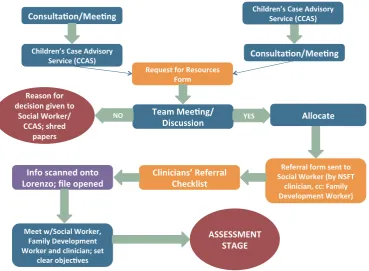
Figure 1: Compass referral pathway
COS team has reported that it has been important for them to sit on the NCC Children’s Case Advisory Service (CCAS) to discuss referrals and to inform decision making about the most appropriate cases to be seen within the service. It also ensures that there are shared discussions about service availability and resource implications, rather than holding a waiting list.
The VRS referral route has changed during the course of the implementation year. At the start, education placements were agreed at the Special Educational Needs
Placement Advisory Group (SENPAG) in NCC who identified those children in need of specialist education placements. There was then an assessment undertaken of their mental health needs and applications made to the Health Complex Cases Panel which agreed additional health funding from the Clinical Commissioning Group (CCG) for the therapeutic provision.
During Compass recommissioning discussions they were able to agree a more
needs and that they had previously been offered universal services which were not able to realise lasting change.
What the project was intending to achieve
The aims of the project were to reduce local authority costs of children entering or remaining in care, combined with an improvement in educational outcomes for looked after children.
By following this approach, and in producing the service, NSFT expected to:
• improve Norfolk’s local offer for looked-after children
• reduce the need for expensive out-of-county placements
• improve the education, mental health and social outcomes for some of the county’s most vulnerable children
• promote successful integration of education, health and social care services
• develop the ability of multi-agency staff to promote sustainable change for families
• share and manage risk more effectively so that services were both safe and inclusive
• develop and scale an innovation that could be replicated nationally
What the project was intending to do to achieve these
outcomes
The proposed innovation had 4 main elements: 1. the development of a VRS Model
2. developing COS
3. creating a Family Development Unit 4. scaling up the Compass approach
The relationship between the different elements of Compass can be seen in the Appendices.
Relevant existing research relating to this innovation
Research has shown that young people who were brought up in care are:
• 12 times more likely to leave school without any qualifications
• 4 times more likely to suffer from mental health problems
• 4 times more likely to be unemployed
• 60 times more likely to be homeless
• 50 times more likely to go to prison
• 66 times more likely to require social care for their own children (Warren, 1999) Children in long-term foster care do not tend to benefit from outpatient mental health services alone (Bellamy, Gopalan, & Traube, 2010). Research indicates that foster carer support (Bellamy, Gopalan, & Traube, 2010) and placement stability (Newton, Litrownik, & Landsverk, 2000) are crucial factors in determining mental health outcomes of LAC. Traditional Child and Adolescent Mental Health Services (CAMHS) struggle to meet the needs of LAC and those who have experienced neglect, developmental trauma or have social, emotional and behavioural difficulties. Children from these families frequently fall into the gaps between services, and problems in family
relationships, school attendance, youth offending and mental health needs escalate. When local placements break down, children end up being placed in increasingly expensive and distant provisions. Statutory guidance provided by the DfE (2010) states that children should live in their local community, where it is safe to do so, to ensure that they are able to access local services and maintain links with friends and family. Despite this guidance, in 2013 one in 10 looked after children were living more than 20 miles outside their local community (DfE, 2013).
Placement stability for children, either in care or with their families, often depends on the resilience of their education provision (Jackson and Thomas, 2000). Placement breakdown frequently occurs when children are permanently excluded from school and kinship or foster carers are reluctant to accept children who are not in full time
education.
Changes to the project’s intended outcomes
Even though implementation of VRS proved more difficult than expected, due to the difficulties encountered in finding enough foster parents to engage in the programme, there were no significant changes to the project’s intended outcomes. Specifically, COS has been fully operational since April 2015 and the VRS model has been fully
operational in Compass Schools in Norfolk (48 pupils), Great Yarmouth (24 pupils), Norwich (12 pupils) and King’s Lynn (12 pupils).
Nonetheless, the full Compass model was not fully operational as the Family Development Unit was not due to begin work until January 2017. In addition, fewer service users than expected were involved in the development and implementation of Compass services, which is an area the Compass team aims to address in 2017 by involving service users in the design and delivery of the service.
Context within which this innovation has been taking place
Norfolk County Council (NCC) is composed of 7 local government districts: Norwich City, Breckland District, Broadland District, Great Yarmouth Borough, North Norfolk District, King's Lynn and West Norfolk Borough, and South Norfolk. Its estimated mid-2015 population was 884,978 people, of whom 21.27% (188,231) were estimated to be under 19 years of age (ONS, 2016). Regarding gender of people under 19, 48.9% were female.
NCC was ranked 88th most deprived LA out of 152 LAs in England in 2015 (1st being
most deprived), with 14.8% of pupils in primary school and 11.9% of pupils in secondary school eligible for free school meals, compared to 15.6% and 13.9% in England, respectively, (GOV.UK, 2016). Of the young people aged 16-18 years, NCC had 4.2% not in education, employment or training in 2015, the same percentage as in England.
In 2016, NCC had 118,384 pupils in 456 schools, 124 academies and 53 Sure Start Children Centres; 10% primary pupils and 6.7% secondary pupils first language was other than English (compared to 20.1% and 15.7% in England, respectively).
England was 337.3 (GOV.UK, 2016). The Children’s Services LAC Benchmarking Club data indicates that Norfolk has a disproportionate number of LAC per head of the population when compared to its statistical neighbours. Of these children Norfolk has a significantly higher proportion in residential care (11.8%) compared to the national average (5.3%). Indeed Norfolk’s figure is higher than any other Local Authority nationally.
This contributes to the fact that Norfolk has a higher gross weekly spend on an average placement (£976) than the national figure of £832. These figures not only represent a significant demand on financial resources, but also mean that there is a cohort of children in Norfolk that are likely to be suitable for foster care placements, who are, unfortunately, in residential provision.
The financial gap for LAC placements in Norfolk is also widened by the fact that local health commissioners are currently investing less in providing for the health element of funding for this cohort (£109 per week) than the national average of £148 per week for each child. It is essential that health commissioners are made more aware of the mental health, attachment and developmental needs of looked after children, and that targeted investment when these children are young is the best way of reducing the burden they place on health and criminal justice services in future.
In relation to Norfolk’s fostering provision, a disproportionate number (22%) of children are in expensive (£450 - £500 p.w) placements compared to only 4.6% of the national cohort. This is likely to be a consequence of the lack of availability of foster placements locally and the extra resources that the local authority has to commit to attract carers. However, carers are also motivated and maintained by being offered the appropriate levels of support they required to meet the complex needs of these children.
Overview of the evaluation
Evaluation questions
The overarching aim of the evaluation was to examine whether and by what means the Compass service1 was effective at improving young people’s wellbeing. The secondary
outcomes were:
• to examine whether the Compass service was effective at improving young people’s emotional, behavioural and family functioning
• to examine whether the Compass service was effective at improving young people’s academic attainment
• to understand the mechanisms by which the Compass service was effective at improving young people’s outcomes
• to explore the robustness of data collection for economic analysis These outcomes were operationalised in the following research questions:
• does the Compass service reduce the number of young people becoming engaged in statutory social care service?
• does the Compass service improve young people’s emotional, behavioural and family functioning?
• does the Compass service improve young people’s academic attainment?
• what might be the mechanisms by which the Compass service improves young people’s outcomes?
• what is staff’s experience of the Compass service?
• what is the experience of young people, parents and carers of staff at the Compass service?
• what are the barriers and facilitators to implementing and sustaining the Compass service?
• what are the results of the cost-benefit analysis?
Methodology used to address these questions
An explanatory case study design was employed to explore and describe the Compass service and also to develop theories of causal mechanisms of the impact of Compass on young people’s outcomes (Yin, 2009). A quantitative, multilevel mixed methods design was used, with a qualitative component to triangulate the quantitative data (Teddlie & Tashakkori, 2008). Quantitative data was used to examine changes in young people’s outcome at admission and during Compass interventions. An embedded researcher, supervised by the evaluation team, played a key part in the evaluation. The evaluation was designed to maximise the use of existing data and data collection procedures to minimise burden on young people, parents, carers and staff. The evaluation comprised the following strands:
• COS service data was analysed to describe the service provided to parents and young people and to explore trajectories of young people seen by COS (n= 152 cases, 53 (35%) of which were open and 99 (65%) had been discharged by July 2016)
• outcome data was collected and analysed to explore how appropriately young people and families’ mental health needs were met by the Compass service. Measures were completed when young people joined the Compass service (T1) and 4 to 6
months later (T2). Some measures were not appropriate for some cases and, therefore, the measure was not used; reasons for not using measures were recorded but are not presented to preserve anonymity. Measures used were:
• Achenbach System of Empirically Based Assessment (ASEBA; Achenbach, 1991a, Achenbach, 1991b) that assesses adaptive and maladaptive functioning, and was completed by parents or carers, young people, and teachers (n=23 young people, 48 parents and 64 teachers regarding the functioning of 87 young people completed at T1; n=3 young people, 7 parents and 10 teachers completed at T2). Internalising, externalising and total difficulties scales were used in this evaluation
• Strengths and Difficulties Questionnaire (SDQ; Goodman 1997): that is a brief behavioural screening questionnaire, was completed by parents or carers, young people, and teachers (n=27 young people, 58 parents and 75 teachers at T1; n=8 young people, 7 parents and 19 teachers at T2). It is composed of 4 difficulties scales (Emotional Problems, Conduct Problems, Hyperactivity Problems and Peer Problems), and one strengths scale (Pro-social Behaviour). It also has an Impact scale, which provides a measure of the child’s distress and the impact of the child’s difficulties on
home life, friendships, classroom learning, and leisure activities
• Client Engagement in Child Protective Services Questionnaires (CECPS; Yatchmenoff, 2005) that is a multidimensional measure of client engagement in child welfare services and was completed by parents or carers and social workers (n=58 CECPS completed by parents and 70 by social workers at T1, and n=8 CECPS completed by parents and 7 by social workers at T2)
• Rosenberg Self-Esteem Scale (RSE; Rosenberg, 1965) that assesses the young person’s self-esteem, and was completed by young people (n=39 young people at T1 and 8 young people at T2)
• qualitative data consisting of interviews with young people (n=22) and parents or carers (n=17) involved in the Compass service, and focus groups (n=5) with
professionals (n=24) involved in both COS and VRS before and/or after the Compass service. As the evaluation was of an integrated model of service delivery, it sought to involve representatives from COS and VRS in order to explore their views and
experiences of the provision. By including service users and staff from each of the provisions, the evaluation provides the best possible coverage of the service. Data was analysed to understand how experience compares to other services that young people, parents and carers might have used in the past, and how service users’ and providers’ needs were met
• York Consulting led the cost-benefit analysis (CBA)
Under the supervision of the evaluation team, the embedded researcher prepared the documents for the ethics application, conducted interviews with young people and parents (and then transcribed and analysed them), arranged the focus groups with Compass staff and arranged collection of outcome measures at T1 and T2.
Focus groups with staff and interviews with parents or carers and
young people
All Compass staff were invited to participate in focus groups. Before conducting the focus groups, researchers explained the aims of the focus groups, provided information sheets to participants, and answered their questions. Staff consented for focus groups to be recorded and transcribed.
Twenty-four staff took part in 5 focus groups. Focus groups were conducted with a mixture of staff from COS and VRS and included 9 managers, 5 assistant
psychologists, 4 clinical psychologists, 3 family development workers, one social
years of experience in working with a similar population were 10 years (ranging from 4 months to 35 years).
Parents and young people were invited to participate in interviews by the embedded research assistant, who also provided them with an information sheet explaining the study. If parents of young people were interested in participating, they completed the “Expression of interest” form and agreed on a specific date and place for the interviews. A full explanation of the research was provided to parents and young people before the beginning of the interviews. Interviewees gave their informed consent to be interviewed, and for the researcher to record and transcribe the interview.
A total of 17 parents or carers were interviewed. Demographic information was
recorded for 14 of them. Out of those 14 parents, 13 were from COS service and one from VRS. All parents were white; 13 were female and 1 was male. The average age of parents was 42 (SD=11.44), with a range between 29 and 64 years. In terms of marital status, 4 were married, 3 were divorced, 2 had never been married or in civil
partnership, 3 were separated but still legally married or in civil partnership, and 2 were widowed. Regarding occupation, 2 were foster carers, 6 were homemakers, 2 worked in the service sector, 2 in the health sector, and one was unemployed.
Twenty-two young people were interviewed, 17 from VRS and 5 from COS. Ages ranged between 8 and 16 (average age=11, SD=2.81); 4 of them were female and 18 were male. All 22 young people were white.
Changes to evaluation methodology from the original design
There were no substantive changes to the evaluation methodology from the original design. However, a few minor modifications were:
• due to the extension of the implementation of COS and VRS, and the deadline for this report, data collection was extended until beginning of October 2016
• contextual data for Norfolk (the number of young people entering care in Norfolk) was not made available to the research team due to capacity issues in the council team
Key findings
This section presents a summary of the results obtained. For complementary results please refer to the Appendices, except for the qualitative analysis of the parents and young people’s interviews and of the focus groups which are available on request.
Characteristics of the service provided by COS
COS service data
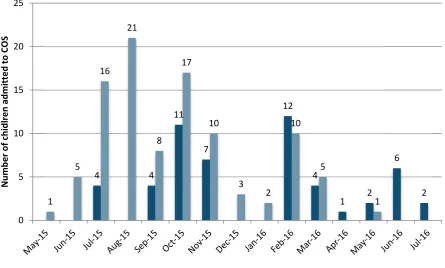
[image:24.595.71.517.382.650.2]A total of 152 cases were seen by COS between May 2015 and July 2016, 53 (35%) of which were open, and 99 (65%) of which had been discharged by July 2016. Figure 2 below shows the number of people admitted to COS per month and their status by July 2016. Closed cases were on average 8.8 months in the service (SD=2.8, n=92), with a range of 3.1 and 14.1 months, and a mode of 9-10 months.
Figure 2: Number of cases admitted to COS by month and their status by July 2016
Source: COS service data
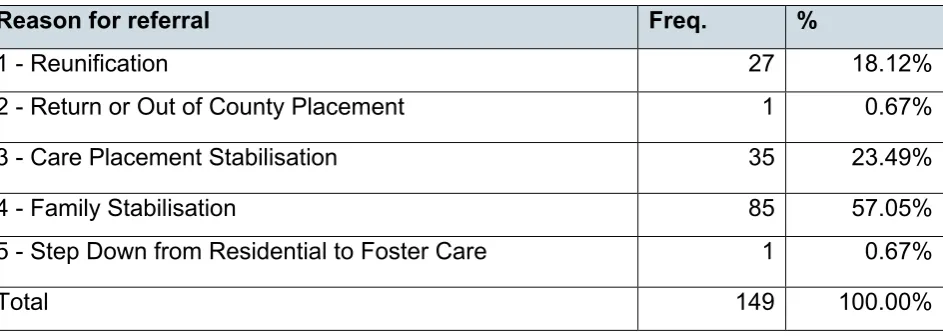
Out of the 152 cases, 87 (57%) were referred for family stabilisation, 35 (23%) for care placement stabilisation, and 28 (18%) for reunification.
4 4
11
7
12
4
1 2
6 2 1 5 16 21 8 17 10 3 2 10 5 1 0 5 10 15 20 25 N umb er of ch id lre n a dmi tt ed to COS
Does the Compass service reduce the number of young
people becoming engaged in statutory social care service?
COS service data
Evidence suggested that COS was associated with a reduction in the use of statutory social care services. Data regarding legal status at referral was available for 148 cases out of the 152. Most of the cases (49, 33%) were Child in Need, followed by 39 (26%) who were in Child Protection, 33 (22%) who were Looked After Children, 21 (14%) who were in Voluntary Accommodation, 2 (1%) were in Family Support Process, 1 was in the process of adoption, and 3 (2%) had no legal status.
[image:25.595.55.540.361.584.2]Regarding the legal status of discharged cases (n=99), 9 cases who were admitted to COS with a legal status were discharged from COS without one, and only 3 children could not be prevented from becoming “Looked After Children” from admission to discharge (see Table 1).
Table 1: Legal status at referral and discharge for discharged cases (n=99)
Legal status at referral
Legal status at discharge
Total at referral No legal status Family Support Process Child in Need Child Protection Plan Voluntary Accommo-dation Looked After
Children Adoption
Special Guardian-ship Order
No legal
status 3 3
Family Support
Process 2 2
Child in
Need 4 5 16 2 4 31
Child Protection
Plan 8 8 6 2 1 2 27 Voluntary
Accommo-dation 1 3 1 9 2 16 Looked After
Children 1 18 19
Adoption 1 1
Total at
discharge 16 8 27 7 13 21 1 6 99
Data regarding accommodation status at referral was available for 148 cases out of the 152 in COS dataset. Most of the cases (102, 69%) were living at home, followed by 30 (20%) who were in foster care.
Table 2: Accommodation status at referral and discharge for discharged cases (n=99)
Accommodation Status At Discharge
Accommodation
Status at Referral Foster Care Home Kinship Residential Secure Independent / Sheltered Living Total at referral
Foster Care 10 5 1 16
Home 11 55 3 1 70
Kinship 7 7
Residential 1 2 1 4
Secure 1 1
Tier 4 1 1
Total at discharge 21 61 10 5 1 1 99
Focus Groups
2The sustained long-term work with children, young people and families was described as helping to stabilise home environments, reducing out of county placements or children becoming looked after and increasing reunifications. Some staff noted the potential cost saving of the Compass service through reduced placement breakdowns, out of county placements, or children becoming looked after, or by increasing
reunifications and educational engagement. Moreover, the ability to sustain work with children, young people and families over the long-term was described as leading to enhanced outcomes for children, young people and families, as staff reported being able to develop robust relationships with children, young people and families and work with them to tackle entrenched problems, thereby helping children, young people and families to manage emotional and behavioural difficulties in the future, before they reached crisis.
In addition to providing care that would not necessarily be available from other services, focus group staff described Compass as accessing children, young people and families who would not necessarily be able to be seen by other services. Some staff noted how this gap had been explicitly identified by service users, the Care Quality Commission (CQC) and the Office for Standards in Education, Children's Services and Skills
(Ofsted). Multidisciplinary team (MDT) working was described as essential to achieving this.
Does the Compass service improve young people’s
emotional, behavioural and family functioning?
Parents
More than half of the parents (9 out of 17) reported that COS supported the emotional wellbeing of their children. This improvement was described to be related to the confidence and self-esteem of young people, and in the ability of COS to develop positive relationships:
“I think because of the work [clinician] and everybody is doing with her, she’d begun to realise that actually she’s a worthwhile person. She’s getting more self-esteem, she’s getting some confidence”3 (Parent)
Parents recognised the importance COS placed on improving functioning, describing it as one of the main goals of COS in addition to supporting the young person with various difficulties including exclusion from education; preventing the young person from being criminalised, and maintaining a child with complex difficulties within a
placement. Support in situations such as this was reported to have a positive impact on the emotional functioning of young people involved with COS:
“It’s about actually seeing that child smile, and actually be happy and not as anxious” (Parent)
In addition to improvements in emotional functioning, most of the parents (14 out of 17) reported vast improvements in the children’s behaviours. This improvement was
particularly evident where the young person had problems with anger and aggressive behaviour. Parents reported their children and young people to be calmer and more settled, with a reduction in violent behaviour:
“Over about 3 months she just went from being this hyperactive rocket to a calm little girl”(Parent)
Changes related to the happiness of young people were reported as one of the
unexpected changes by parents. Other unexpected changes included increases in self-confidence within the parents themselves:
“I think if I like rewound about 4 years ago, I don’t think I would think that we’d be in the position we are now… [person] is just a dream to have around you know…and I’ve always said to Compass that like, I’ll be forever grateful for what they’ve done and how they’ve helped us” (Parent)
Family functioning was another area found to improve as a result of the services provided by COS in 10 of the participating families. This improvement was related to reunifying relationships between parents and their young people, between siblings and with extended family:
“With their help, just got my family back hopefully, just gelled us as a family” (Parent) Skills such as improved parenting practice, developed through involvement with COS, was reported to be another factor in improving family functioning:
“They’re focused on how I was parented and how that impacts on how I parent my children…it’s about us getting the help we need to change what we do to then help [young person]” (Parent)
“keeping it consistent and having the same consequences and things like that really helped” (Parent)
Parents reported improvements in family functioning to the point where they had a
reduced need for service involvement, thus enabling the family to manage without COS: “Hopefully when it’s just me and [young person], and we can manage on our own you know” (Parent)
The service provided by COS was reported as being more holistic than other services, as other services were described as only focusing on the child and not the family: “They’re supposed to help me as well but they were not very good at all” (Parent) Parents were therefore more satisfied with COS, as they offered support for any problems experienced by parents or other family members.
Young people
Most of the young people (14 out of 21) described a reduction in their anger and aggressive behaviours, with fewer incidences of violence and aggressive behaviour than in the past. They described being able to manage their emotions better since accessing the service, by removing themselves from a situation or through discussing how they felt with others: “I haven’t been getting angry as much. I haven’t been
Young people also reported noticing improvements in their emotional wellbeing while working with the Compass service (8 out of 21). The young people described
improvements in their ability to discuss their problems with staff and other people. They reported feeling happier overall, with references to increased confidence, self-esteem, positive attitude and motivation to engage with others since accessing the Compass service:
“Being more happy. Just being happy, yeah” (Young person)
“I think that is just being more confident in myself and being more confident in other situations as well, and that, just change the way you think about things, yeah” (Young person)
In addition, improvements in family relationships since working with the Compass service were reported by young people (8 out of 22). The young people described feeling as though the Compass service had supported the whole family, and how this had strengthened the young person’s relationships with their parents or carers. In addition, 3 of the young people reported that, since using the Compass service, their family was arguing less, and had improved their ability to talk nicely to one another: “She just makes me feel more wanted at home really because ages ago I didn’t. I hated being here, like I hated it. So it’s just made me like realise a lot more, open my eyes a little bit. I feel more mine and mum’s relationship is doing better, yeah definitely so” (Young person)
However, 9 out of 21 young people reported uncertainties about any changes in themselves or their families since accessing the Compass service.
Outcome measures
Routinely collected data was used in order to make the evaluation sustainable beyond its end. Unlike in a randomised controlled trial (RCT), where random allocation of participants ensures homogeneity of groups at baseline, the methodology of this evaluation entails challenges when identifying a comparator group that is actually comparable (as in 2 groups without systematic differences at baseline). Hence, even where significant changes are reported the lack of a comparison group entails that they cannot be directly attributed to COS. Despite this limitation, routinely collected data was collected and analysed in order to explore how young people were (or were not)
changing after accessing COS.
• ASEBA
n=7 for parent and n=10 for teacher completed ASEBA at T2), non-parametric analyses were conducted. There were no significant differences in Internalising, Externalising or Total problems scales for all informants (young people, parents and teachers).
• RSE
• Regarding self-esteem, 39 young people completed the RSE at T1 and 8 at T2. As there were only 8 young people with paired RSE scores, non-parametric tests were used to explore the difference between T1 and T2. Even though at T2 the mean self-esteem score was lower (representing a better self-self-esteem), this was not statistically significant (T=3.5, z=0, p>.05).
• CGAS
[image:30.595.56.535.416.592.2]• Compass staff completed the CGAS for 81 young people at T1 and 39 young people at T2. As shown in Table 3 below, most of the young people at T1 (29, 36%) were in the “Some noticeable problems” category, whilst most of the young people at T2 (10, 26%) were one category up (which was “Some problems”). Importantly, only one young person (1.2%) was categorised in the “Doing well” range at T1, whilst 6 (15%) were at T2.
Table 3: Frequency and percentage of CGAS scores at T1 and T2
CGAS category T1 N % T2 N %
11-20: Very severely impaired 1 1.2% 0 0.0%
21-30: Severe problems 1 1.2% 0 0.0%
31-40: Serious problems 9 11.1% 2 5.1%
41-50: Obvious problems 23 28.4% 9 23.1%
51-60: Some noticeable problems 29 35.8% 9 23.1%
61-70: Some problems 12 14.8% 10 25.6%
71-80: Doing all right 5 6.2% 3 7.7%
81-90: Doing well 1 1.2% 6 15.4%
Total 81 100.0% 39 100.0%
The mean difference between CGAS scores T1 (M=51.95; SD=13.03) and T2
(M=61.23; SD=13.76) was statistically different, showing an increase of scores from T1 to T2 (t(38)=3.6, p=.001, r=.30). This showed that, as a group, young people improved, according to Compass staff, as higher scores in CGAS mean a better level of
functioning.
• CECPS
lacked positive engagement. When only looking at the cases that had paired data (n=7), all parents had a strong engagement at both T1 and T2.
On the other hand, social workers reported that at T1 2 (3%) parents had a strong positive engagement, 42 (60%) parents had marginal engagement or fluctuations, and 26 (37%) parents lacked positive engagement. When only the cases that had paired data (n=7) were taken into account, most of the families stayed in the same category of engagement in T1 and T2 (3 families in the “lacking positive engagement” and 2 in the “Marginal engagement or fluctuations”). One family, though, improved its level of engagement, from the “Lacking positive engagement” group to “Marginal engagement or fluctuations”.
• SDQ
Regarding the Strengths and Difficulties Questionnaire (SDQ), 27 young people completed it at T1 and 8 at T2; 58 parents completed the SDQ at T1 and 7 at T2; and 75 teachers completed the SDQ at T1 and 19 at T2.
Paired SDQ numbers were lower, with 8 completed by young people, 7 completed by parents, and 18 completed by teachers for the Total Difficulties scale. Non-parametric statistics were used, due of the low number of paired SDQs in all informants. For young people, hyperactivity and total difficulties levels were significantly higher at T1 than at T2 (Z=2.003; p<.05; Z=2.04; p<.05, respectively), and for SDQs completed by parents about their young person, peer problems and total difficulties levels were significantly higher at T1 than on T2 (Z=2.12; p<.05; and Z=2.21, p<.05). None of the SDQ scales presented a significant difference between T1 and T2 according to teachers.
The SDQ also has clinical cut-off points that divide young people in a clinical or non-clinical range for each sub-scale and the Total Difficulties Scale (Goodman et al. 2001). Clinical change (CC) refers to the young person crossing the clinical threshold.
However, a young person might have a big fluctuation in scores without crossing the clinical threshold, or might have a small change that crosses the clinical threshold. Reliable clinical change (RCC) is a measure of the minimum change in scores that a young person needs to have in order for that change not to be considered as not due to random fluctuations or measurement errors.
Table 4: Frequency of young people who were in the clinical and non-clinical group according to young people, parents and teachers in Total Difficulties SDQ Scale
Young People Parent Teacher
Non-clinical Clinical Non-clinical Clinical Non-clinical Clinical
Total
difficulties T1 T2 13 4 14 4 23 3 35 4 43 12 32 7
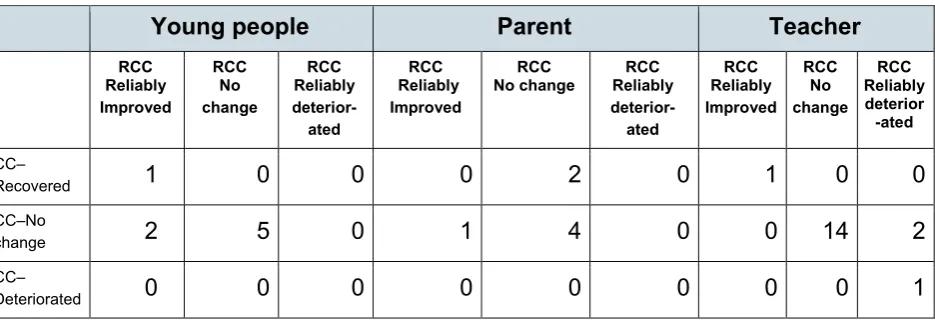
As shown in Table 5, out of the 8 young people who had paired Total Difficulties Scores completed by themselves, 1 recovered (moved from the clinical to the non-clinical group) and reliably improved (change in score was not due to random fluctuations or measurement error), 2 reliably improved whilst starting and finishing in the non-clinical group, and 5 neither recovered, nor had a reliable change in scores.
Out of the 7 young people who had a paired Total Difficulties Score completed by parents, 2 recovered but the change was not reliable, 1 reliably improved but stayed in the clinical group from T1 to T2, and 4 neither recovered, nor had a reliable change in scores.
[image:32.595.60.528.508.671.2]Out of the 18 young people who had a paired Total Difficulties Score completed by teachers, 1 recovered and reliably improved, 14 neither recovered, nor had a reliable change in scores, 2 reliably deteriorated of which one started and ended in the clinical group, whilst the other remained in the non-clinical group, and one reliably deteriorated (moved from the non-clinical to the clinical group).
Table 5: Clinical change (CC) and Reliable clinical change (RCC) in young people reported by young people, parents and teachers in Total Difficulties SDQ Scale
Young people Parent Teacher
RCC Reliably Improved RCC No change RCC Reliably deterior-ated RCC Reliably Improved RCC
No change Reliably RCC deterior-ated RCC Reliably Improved RCC No change RCC Reliably deterior -ated CC–
Recovered 1 0 0 0 2 0 1 0 0 CC–No
change 2 5 0 1 4 0 0 14 2 CC–
Does the Compass service improve young people’s
academic attainment?
Parents
Reports of COS improving academic attainment were mixed due to the varied involvement of COS in educational provision. Parents with experience of the VRS described their involvement in terms of feedback to education staff during meetings. Parents with no experience of VRS described not needing such support as this domain was stable, or because parents felt that this work had not commenced:
“School is sort of quite separate at the moment. He’s coping there and that’s working, and they’ve been very good and very supportive of him. So that’s not been an
involvement” (Parent)
Two parents whose young people accessed VRS described the negative aspects of these services to include the lack of information about the provision, and the upper age limit of 14. These may have an effect on VRS improving young people’s academic attainment:
“I think it’s just the way that they have to just leave, when they get to that age…they made him into this better person, and then I felt you’ve just abandoned us now” (Parent)
Young people
Almost half of the young people described improvements in their school work and abilities within their education provision (10 out of 21). In particular, 6 young people reported feeling supported in their academic work, and improving in their ability to complete work at school. Two of the young people accessing COS reported how COS staff would communicate with their mainstream education provision, to provide the school with advice on how to handle different situations with the young person. In
addition, one of the young people attending the VRS noted how other children had been able to successfully return to mainstream education as a result of accessing the
Compass service:
“Yeah I mean there’s a lot of examples that they’ve proved it, so… as in they’ve helped a lot of people in their future, like the people who’ve left only because their behaviour has become enough to be in a mainstream school” (Young person)
What might be the mechanisms by which the Compass
service improves young people’s outcomes?
Focus Groups
The majority of staff described the key mechanism by which Compass was effective as working with the whole family to empower children, young people and families to better manage emotional and behavioural difficulties in the home, thus reducing both the need to engage with services and the escalation of difficulties to the point of crisis. Bespoke and sustained long-term work with children, young people and families was described as key to establishing the relationships with children, young people and families necessary to promote such changes.
The ability to work flexibly to meet the individual needs of children, young people and families was described as the lynchpin to this innovation. However, it was also
acknowledged that developing a new, innovative service was time-consuming and challenging as new processes and systems had to be developed.
Another central mechanism by which the Compass service was effective was MDT work that provided – as reported by staff in the focus groups – the right mix of skills to meet the individual needs of children, young people and families; learn from and support colleagues, and come together to share knowledge and experience about a case. Some staff suggested there was scope to build on this further with cross-team supervision.
Parents
The most common change which parents reported to improve outcomes was an increase in their confidence, both in themselves and in their confidence as parents: “I feel definitely more confident”. Parents described an increase in their parenting abilities and their knowledge of young people’s difficulties and needs; for example, learning about psychological models and techniques. This included increased confidence in managing behaviour due to the additional support and information available from COS: “Yeah it’s given us like a help, with like information that we need for any like problems that we have. If there’s someone that we need to go and see or speak to, we can always go and see them” (Parent)
“I suppose with the kinds of tools that [clinician] gave me…because like that helps me with my stress and stuff, if I’m less stressed obviously I find it easier to deal with like the situation that have come up” (Parent)
Providing parents with a different perspective during a crisis situation was another mechanism which was found to improve outcomes for young people:
“It’s changed a great deal because I just see things differently, I don’t know, it’s like a lot better”; “I often ring [clinician]…that gives me time to calm down and it gives [young person] time to calm down” (Parent)
Parents noted feeling as though someone was there for them if they needed them: “Just to be able to phone someone up and go ‘ahhh’, and to know, well, that they’re there” (Parent)
This mechanism was found to improve emotional wellbeing, as it produced positive changes in parents:
“I’m a lot more positive than I used to be, and I suppose I’ve just got an outlet for me” (Parent)
Additionally, parents felt confident that the support they were receiving was making positive changes in their families and situations:
“Being able to talk to someone and basically if there’s a problem I know there’s
someone who’s going to listen and we’re going to work through the problem” (Parent) In addition to managing their children’s behaviour, parents felt better able to manage and understand their children’s emotional needs:
“…we can do it without someone else telling us…we can manage the outbursts” (Parent)
This enabled parents to spend more time with their children:
“I think sometimes it’s just awareness. Of my needs or his needs or what is happening in a situation. And I couldn’t have done that without the input from staff” (Parent)
Young people
One feature reported by young people (9 out of 22) was that Compass offers support for the whole family. This aspect was described by both young people accessing COS and those in the VRS.
Some young people (4 young people who were both from COS and VRS) described how Compass offered a flexible tailored approach, and how they felt as though they were not pressured to do anything that they did not want to do. The young people noted different areas that the Compass service had supported them in, including mental health and therapeutic support, and also more general areas such as support with education and employment:
“It’s more generalised. That’s more like, overall how I’m feeling if I’ve got any specific worries on my mind, if I need to talk about anything” (Young person)
The young people attending the VRS reported that their family members would often attend the schools for activity days and Christmas fairs, and one young person also described how VRS offered individual therapy for parents. A further 2 young people from the VRS described how Compass would visit the home to support their parents: “Someone’s organising for the whole family to go bowling and stuff”.
Eleven of the young people accessing VRS described positive aspects of the
environment within the schools and the activities offered by the provision. The young people described how some of the resources within VRS, such as the “target room”4
contributed towards their positive experience of the service. Two young people noted how the schedule allowed the pupils to have free time during the week, which they found more accessible than other education provisions that they had attended. In addition, 4 of the young people attending VRS reported the small class sizes to be a helpful aspect of the provision.
A further feature of COS which was reported to improve young people’s outcomes was the service’s consistency and reliability (2 young people). One of the young people noted how appointments were never cancelled, and if the clinician arranged to meet then they would always be there. In addition, 4 young people noted how working with
4 A “target room” is a room with a large target painted on the wall that pupils can access by meeting their targets set for that day. Targets are tailored to each pupil’s individual needs and current levels of
Compass enabled them to access additional support that they need from alternative services:
“They’ve been working along with my CAMHS team, difficulties that I have, like mental health problems” (Young person)
Flexibility of the service was also described by some young people (5 out of 22) as having a positive impact. Young people valued being able to go out with the clinicians and do activities that they enjoyed. In addition, young people reported that they valued the flexibility of the approach: for example, in that they were able to go out to different places and do different activities with the clinicians during their sessions, and in that appointments were home-based rather than located in a clinic setting:
“I enjoy it to be honest. It’s nice to get out and do things and just speak about things really, yeah” (Young person)
“Not like in a room… it’s like getting out and doing things” (Young person)
What is staff’s experience of the Compass service?
Focus Groups
All participants described high levels of job satisfaction from working with children, young people and families and witnessing positive changes in their lives (for example, helping to stabilise home environments, reducing out of county placements or children becoming looked after, preventing crisis, among others).
Furthermore, the Compass service staff described that high levels of supervision (including clinical, group and ad hoc phone support) were very effective for providing enhanced, safe care and reducing staff stress.
Other sources of staff’s job satisfaction can be found in other sections of the report; for example MDT work, the ability to work flexibly and to sustain work over a long-term, or the feeling that their work was filling an important gap in the care of young people and parents or carers.
However, when the focus groups were conducted, work volume in terms of engaging with multiple individuals across a large geographical area, and administrative or
What is the experience of young people and parents or
carers of staff at the Compass service?
Parents
Parents frequently described their experience of staff at COS compared to their experiences of other services. Comparatively, COS staff were reported to respond immediately to issues, and their action and care happened quicker:
“With Compass it just seemed that there was that immediate, once you’ve got the worker…there’s quite an immediate response” (Parent)
“If you get somebody that could come out to the homes and could get to befriend them through relationships, which is the approach [clinician] takes” (Parent)
COS staff were described as being assigned to a family at the beginning of the process, which was found to be more acceptable than in other services, such as CAMHS, where parents reported experiences of multiple staff members.
The home visitation service provided by COS was reported by parents to make it easier to talk about difficult situations:
“It feels much easier, it being here and doing it, because I’m on my own turf…and I can let go about how I feel” (Parent)
Home visitation also enabled staff to spend time with the young people and get to know them: as one parent described, this was facilitated by COS having a range of staff available to be matched to certain children, which in turn supported the development of relationships. It was also reported staff wouldn’t leave until the family was ready for them to do so; parents appreciated this level of dedication: “they’re willing to put their time in”.
Staff were described as genuine, non-judgemental, supportive, down-to-earth, approachable. They were regarded as knowledgeable and specialised in their management of children with behavioural problems:
“It is that knowledge and experience of the staff and knowing how to support his needs. The one-to-one as well I suppose, and the same classroom sizes” (Parent)
Parents described feeling listened to by staff, and also being able to talk to staff about emotional or difficult subjects because they trusted members of staff:
Overall, parents’ experiences of staff at COS were positive. However, this also presents an issue regarding the end of service as it evokes a sense