This is a repository copy of
Collaborative case management to aid return to work after
long-term sickness absence: a pilot randomised controlled trial
.
White Rose Research Online URL for this paper:
http://eprints.whiterose.ac.uk/136274/
Version: Published Version
Article:
Kenning, C, Lovell, Karina, Hann, M. et al. (14 more authors) (2018) Collaborative case
management to aid return to work after long-term sickness absence: a pilot randomised
controlled trial. Public Health Research. ISSN 2050-4381
https://doi.org/10.3310/phr06020
[email protected] https://eprints.whiterose.ac.uk/ Reuse
Items deposited in White Rose Research Online are protected by copyright, with all rights reserved unless indicated otherwise. They may be downloaded and/or printed for private study, or other acts as permitted by national copyright laws. The publisher or other rights holders may allow further reproduction and re-use of the full text version. This is indicated by the licence information on the White Rose Research Online record for the item.
Takedown
If you consider content in White Rose Research Online to be in breach of UK law, please notify us by
VOLUME 6 ISSUE 2 JANUARY 2018 ISSN 2050-4381
Collaborative case management to aid return to work
after long-term sickness absence: a pilot randomised
controlled trial
Cassandra Kenning, Karina Lovell, Mark Hann, Raymond Agius,
Penny E Bee, Carolyn Chew-Graham, Peter A Coventry,
return to work after long-term sickness
absence: a pilot randomised controlled trial
Cassandra Kenning,
1
* Karina Lovell,
2
Mark Hann,
1
Raymond Agius,
3
Penny E Bee,
2
Carolyn Chew-Graham,
4
Peter A Coventry,
5
Christina M van der Feltz-Cornelis,
6
Simon Gilbody,
5
Gillian Hardy,
7
Stephen Kellett,
7
David Kessler,
8
Dean McMillan,
5
David Reeves,
1
Joanne Rick,
1
Matthew Sutton
1
and Peter Bower
1
1
Division of Population Health, Health Services Research and Primary Care,
University of Manchester, Manchester, UK
2
School of Nursing, Midwifery and Social Work, University of Manchester,
Manchester, UK
3
Centre for Occupational and Environmental Health, University of Manchester,
Manchester, UK
4
Primary Care & Health Sciences, Keele University, Keele, UK
5Department of Health Sciences, University of York, York, UK
6
Social and Behavioral Sciences, Tilburg University, Tilburg, the Netherlands
7Department of Psychology, University of Sheffield, Sheffield, UK
8
School of Social and Community Medicine, University of Bristol, Bristol, UK
*Corresponding author
Declared competing interests of authors:none
Published January 2018
DOI: 10.3310/phr06020
This report should be referenced as follows:
Kenning C, Lovell K, Hann M, Agius R, Bee PE, Chew-Graham C,et al. Collaborative case
ISSN 2050-4381 (Print)
ISSN 2050-439X (Online)
This journal is a member of and subscribes to the principles of the Committee on Publication Ethics (COPE) (www.publicationethics.org/).
Editorial contact: [email protected]
The full PHR archive is freely available to view online at www.journalslibrary.nihr.ac.uk/phr. Print-on-demand copies can be purchased from the report pages of the NIHR Journals Library website: www.journalslibrary.nihr.ac.uk
Criteria for inclusion in thePublic Health Researchjournal
Reports are published inPublic Health Research(PHR) if (1) they have resulted from work for the PHR programme, and (2) they are of a sufficiently high scientific quality as assessed by the reviewers and editors.
Reviews inPublic Health Researchare termed‘systematic’when the account of the search, appraisal and synthesis methods (to minimise biases and random errors) would, in theory, permit the replication of the review by others.
PHR programme
The Public Health Research (PHR) programme, part of the National Institute for Health Research (NIHR), evaluates public health interventions, providing new knowledge on the benefits, costs, acceptability and wider impacts of non-NHS interventions intended to improve the health of the public and reduce inequalities in health. The scope of the programme is multi-disciplinary and broad, covering a range of interventions that improve public health. The Public Health Research programme also complements the NIHR Health Technology Assessment programme which has a growing portfolio evaluating NHS public health interventions.
For more information about the PHR programme please visit the website: http://www.nets.nihr.ac.uk/programmes/phr
This report
The research reported in this issue of the journal was funded by the PHR programme as project number 12/3090/05. The contractual start date was in April 2014. The final report began editorial review in January 2017 and was accepted for publication in August 2017. The authors have been wholly responsible for all data collection, analysis and interpretation, and for writing up their work. The PHR editors and production house have tried to ensure the accuracy of the authors’report and would like to thank the reviewers for their constructive comments on the final report document. However, they do not accept liability for damages or losses arising from material published in this report.
This report presents independent research funded by the National Institute for Health Research (NIHR). The views and opinions expressed by authors in this publication are those of the authors and do not necessarily reflect those of the NHS, the NIHR, NETSCC, the PHR programme or the Department of Health. If there are verbatim quotations included in this publication the views and opinions expressed by the interviewees are those of the interviewees and do not necessarily reflect those of the authors, those of the NHS, the NIHR, NETSCC, the PHR programme or the Department of Health.
© Queen’s Printer and Controller of HMSO 2018. This work was produced by Kenninget al.under the terms of a commissioning contract issued by the Secretary of State for Health. This issue may be freely reproduced for the purposes of private research and study and extracts (or indeed, the full report) may be included in professional journals provided that suitable acknowledgement is made and the reproduction is not associated with any form of advertising. Applications for commercial reproduction should be addressed to: NIHR Journals Library, National Institute for Health Research, Evaluation, Trials and Studies Coordinating Centre, Alpha House, University of Southampton Science Park, Southampton SO16 7NS, UK.
Public Health Research
Editor-in-Chief
Professor Martin White Director of Research and Programme Leader, UKCRC Centre for Diet and Activity
NIHR Journals Library Editor-in-Chief
Professor Tom Walley Director, NIHR Evaluation, Trials and Studies and Director of the EME Programme, UK
NIHR Journals Library Editors
Research (CEDAR), MRC Epidemiology Unit, Institute of Metabolic Science, School of Clinical Medicine, University of Cambridge; Visiting Professor, Newcastle University; and Director, NIHR Public Health Research Programme
Professor Ken Stein Chair of HTA and EME Editorial Board and Professor of Public Health, University of Exeter Medical School, UK
Professor Andrée Le May Chair of NIHR Journals Library Editorial Group (HS&DR, PGfAR, PHR journals) Dr Martin Ashton-Key Consultant in Public Health Medicine/Consultant Advisor, NETSCC, UK
Professor Matthias Beck Professor of Management, Cork University Business School, Department of Management and Marketing, University College Cork, Ireland
Dr Tessa Crilly Director, Crystal Blue Consulting Ltd, UK
Dr Eugenia Cronin Senior Scientific Advisor, Wessex Institute, UK
Dr Peter Davidson Director of the NIHR Dissemination Centre, University of Southampton, UK Ms Tara Lamont Scientific Advisor, NETSCC, UK
Dr Catriona McDaid Senior Research Fellow, York Trials Unit, Department of Health Sciences, University of York, UK
Professor William McGuire Professor of Child Health, Hull York Medical School, University of York, UK Professor Geoffrey Meads Professor of Wellbeing Research, University of Winchester, UK
Professor John Norrie Chair in Medical Statistics, University of Edinburgh, UK
Professor John Powell Consultant Clinical Adviser, National Institute for Health and Care Excellence (NICE), UK Professor James Raftery Professor of Health Technology Assessment, Wessex Institute, Faculty of Medicine, University of Southampton, UK
Dr Rob Riemsma Reviews Manager, Kleijnen Systematic Reviews Ltd, UK
Professor Helen Roberts Professor of Child Health Research, UCL Institute of Child Health, UK Professor Jonathan Ross Professor of Sexual Health and HIV, University Hospital Birmingham, UK
Professor Helen Snooks Professor of Health Services Research, Institute of Life Science, College of Medicine, Swansea University, UK
Professor Jim Thornton Professor of Obstetrics and Gynaecology, Faculty of Medicine and Health Sciences, University of Nottingham, UK
Professor Martin Underwood Director, Warwick Clinical Trials Unit, Warwick Medical School, University of Warwick, UK
Please visit the website for a list of members of the NIHR Journals Library Board: www.journalslibrary.nihr.ac.uk/about/editors
Editorial contact: [email protected]
Abstract
Collaborative case management to aid return to work
after long-term sickness absence: a pilot randomised
controlled trial
Cassandra Kenning,
1* Karina Lovell,
2Mark Hann,
1Raymond Agius,
3Penny E Bee,
2Carolyn Chew-Graham,
4Peter A Coventry,
5Christina M van der Feltz-Cornelis,
6Simon Gilbody,
5Gillian Hardy,
7Stephen Kellett,
7David Kessler,
8Dean McMillan,
5David Reeves,
1Joanne Rick,
1Matthew Sutton
1and Peter Bower
11Division of Population Health, Health Services Research and Primary Care, University of
Manchester, Manchester, UK
2School of Nursing, Midwifery and Social Work, University of Manchester, Manchester, UK
3Centre for Occupational and Environmental Health, University of Manchester, Manchester, UK
4Primary Care & Health Sciences, Keele University, Keele, UK
5Department of Health Sciences, University of York, York, UK
6Social and Behavioral Sciences, Tilburg University, Tilburg, the Netherlands
7Department of Psychology, University of Sheffield, Sheffield, UK
8School of Social and Community Medicine, University of Bristol, Bristol, UK
*Corresponding author [email protected]
Background:Despite high levels of employment among working-age adults in the UK, there is still a significant minority who are off work with ill health at any one time (so-called‘sickness absence’).
Long-term sickness absence results in significant costs to the individual, to the employer and to wider society.
Objective:The overall objective of the intervention was to improve employee well-being with a view to aiding return to work. To meet this aim, a collaborative case management intervention was adapted to the needs of UK employees who were entering or experiencing long-term sickness absence.
Design:A pilot randomised controlled trial, using permuted block randomisation. Recruitment of patients with long-term conditions in settings such as primary care was achieved by screening of routine records, followed by mass mailing of invitations to participants. However, the proportion of patients responding to such invitations can be low, raising concerns about external validity. Recruitment in the Case Management to Enhance Occupational Support (CAMEOS) study used this method to test whether or not it would transfer to a population with long-term sickness absence in the context of occupational health (OH).
Participants:Employed people on long-term sickness absence (between 4 weeks and 12 months). The pilot was run with two different collaborators: a large organisation that provided OH services for a number of clients and a non-profit community-based organisation.
Main outcome measures:Recruitment rates, intervention delivery and acceptability to participants were the main outcomes. Well-being, as measured by the Clinical Outcomes in Routine Evaluation Outcome Measure (CORE-OM), and return-to-work rates were also recorded.
Results:In total, over 1000 potentially eligible participants were identified across the sites and invited to participate. However, responses were received from just 61 of those invited (5.5%), of whom 16 (1.5%) were randomised to the trial (seven to treatment, nine to control). Detailed information on recruitment methods, intervention delivery, engagement and acceptability is presented. No harms were reported in either group.
Conclusions:This pilot study faced a number of barriers, particularly in terms of recruitment of employers to host the research. Our ability to respond to these challenges faced several barriers related to the OH context and the study set up. The intervention seemed feasible and acceptable when delivered, although caution is required because of the small number of randomised participants. However, employees’lack of engagement in the research might imply that they did not see the intervention as valuable.
Future work:Developing effective and acceptable ways of reducing sickness absence remains a high priority. We discuss possible ways of overcoming these challenges in the future, including incentives for employers, alternative study designs and further modifications to recruitment methods.
Trial registration:Current Controlled Trials ISRCTN33560198.
Funding:This project was funded by the NIHR Public Health Research programme and will be published in full inPublic Health Research; Vol. 6, No. 2. See the NIHR Journals Library website for further project information.
ABSTRACT
NIHR Journals Library www.journalslibrary.nihr.ac.uk
Contents
List of tables xi
List of figures xiii
List of boxes xv
List of supplementary material xvii
List of abbreviations xix
Plain English summary xxi
Scientific summary xxiii
Chapter 1Introduction 1
Background and rationale 1
Background 1
Policy and current initiatives 1
Current evidence on return-to-work interventions 2
Current approaches to the management of people with long-term conditions 3
Collaborative care in occupational health 4
Summary 4
Research objectives 5
Phase 1: development 5
Phase 2: internal pilot 5
Chapter 2Phase 1 7
Scoping review 7
Expert consultation 7
Development of materials 7
Summary of the results of the review 8
Developing the intervention 15
Intervention delivery 16
Case managers 17
Supervision 17
Chapter 3Phase 2 19
Internal pilot objectives 19
Trial methods 19
Design 19
Setting 19
Recruitment of sites: OH provider 19
Recruitment of sites: Fit for Work 19
Participants 19
Eligibility 20
Identification: occupational health provider 20
Identification: Fit for Work service 21
Screening for eligibility 21
Outcome measures 22
Randomisation 22
Intervention: collaborative case management 23
Care as usual 23
Follow-up measures 23
Nested qualitative study 23
Data management and analysis 24
Chapter 4Results 25
Phase 2 (internal pilot phase) 25
Recruitment to the trial 25
Evaluation of site recruitment: OH provider 25
Evaluation of site recruitment: Fit for Work 25
Evaluation of participant recruitment: OH provider 26
Delivery in an occupational health setting 26
Response rates 26
Key points from the action plan and how they were addressed 27
The effects of the implemented changes 28
Evaluation of participant recruitment: Fit for Work 29
Delivery by the Fit for Work team 29
Response rates 29
Key points from the action plan and how they were addressed 30
The effects of the implemented changes 31
Delivery of the intervention in an occupational health setting 32
Evaluation of recruitment of case managers 32
Adherence and acceptability among employees on long-term sickness absence 33
Completion rates 33
Missed/rescheduled appointments 33
Qualitative interviews 33
Client Satisfaction Questionnaire (CSQ-8) 34
Acceptability 34
Appropriateness of inclusion criteria and outcome measures 35
Inclusion/exclusion criteria 35
Outcome measures 35
Evaluation of the rate of return to work in those receiving collaborative case
management intervention compared with those receiving care as usual 36
Participants 36
Return to work 36
Well-being 37
Changes to the protocol 38
Substantial amendment 1 38
Substantial amendment 2 40
Substantial amendment 3 40
Substantial amendment 4 41
Chapter 5Discussion 43
Phase 1: development of the intervention 43
Phase 2: internal pilot 44
Recruitment 44
Recruitment process 44
Alternative recruitment methods 46
Eligibility criteria 48
CONTENTS
NIHR Journals Library www.journalslibrary.nihr.ac.uk
Patient and public involvement and engagement 48
Limitations 48
Consideration of the barriers 48
Research recommendations 49
Conclusions 50
Acknowledgements 51
References 55
Appendix 1Original patient documents 63
Appendix 2Modified patient documents (Occupational Health) 69
List of tables
TABLE 1 Occupational health-based interventions which were not case management 9
TABLE 2 Case management interventions which were not based in occupational
health 11
TABLE 3 Case management interventions which were based in occupational health 13
TABLE 4 Mailout numbers for occupational recruitment 27
TABLE 5 Patient recruitment by practice 30
TABLE 6 Client Satisfaction Questionnaire (CSQ-8) 35
TABLE 7 Participant demographics 36
TABLE 8 Return-to-work measures 37
TABLE 9 Descriptive data for the CORE-OM in both trial groups 37
List of figures
FIGURE 1 Usual sickness absence relationships 15
FIGURE 2 Collaborative care relationships 16
FIGURE 3 Intervention model 16
FIGURE 4 Overview of the intervention sessions 17
FIGURE 5 The Consolidated Standards of Reporting Trials (CONSORT)
flow diagram 1: occupational recruitment 29
FIGURE 6 The Consolidated Standards of Reporting Trials (CONSORT)
List of boxes
BOX 1 Key findings from the review 15
BOX 2 Inclusion and exclusion criteria 20
BOX 3 Search codes for general practice databases 21
List of supplementary material
Report Supplementary Material 1 Finalised Case Management to Enhance Occupational Support (CAMEOS) manual
Report Supplementary Material 2 Therapist manual to support intervention delivery and adherence to the model
Supplementary material can be found on the NIHR Journals Library report project page (www.journalslibrary.nihr.ac.uk/programmes/phr/12309005/#/documentation).
List of abbreviations
BOHRF British Occupational Health Research Foundation
CAMEOS CAse Management to Enhance Occupational Support
CBT cognitive–behavioural therapy CCG clinical commissioning group CI confidence interval
CORE-OM Clinical Outcomes in Routine Evaluation Outcome Measure CRF case report form
CRN Clinical Research Network CSQ-8 Client Satisfaction Questionnaire CTRW co-ordinated and tailored return
to work
DWP Department for Work and Pensions EAP Employee Assistance Programme FFW Fit for Work
GP general practitioner HR human resources
LCRN Local Clinical Research Network MAHSC-CTU Manchester Academic Health
Science Centre Clinical Trials Unit OH occupational health
PIC Patient Identification Centre PIS participant information sheet PPIE patient and public involvement
and engagement PRIMER Primary Care Research in
Manchester Engagement Resource RGFHS Research Governance Framework
for Health and Social Care SD standard deviation
Plain English summary
C
ommon health problems such as back pain, heart problems and depression are a frequent cause of sickness absence (time away from work off sick); significant periods of sickness absence can lead to long-term impacts on employment, health and quality of life.This research sought to develop a simple collaborative case management programme to support employees on long-term sickness absence.
This study had two phases:
1. In phase 1 (development) we worked with a wide team of people to adapt existing case management to make it more suitable for occupational health (OH). A participant handbook was developed, the use of which would be supported by a case manager (a specially trained OH worker).
2. In phase 2 (pilot study) we tested whether or not we could recruit employees to a study of the case management programme, and whether or not OH staff could deliver the intervention in a way that was acceptable to participants.
Results
The aim was to recruit 100 employed people on long-term sickness absence (between 4 weeks and 12 months). However, recruitment of organisations to host the research and of employees was lower than planned. From over 1000 mailed invitations to people absent from work, we received just 61 responses, of whom only 16 entered the study.
Conclusions
This study shows that it was not possible to recruit enough employees to make a larger trial feasible with the conventional recruitment methods used.
Scientific summary
Background
Despite relatively high levels of employment among working-age adults in the UK, there is still a significant minority who are off work with ill health at any one time (so-called‘sickness absence’). Figures for the UK show that 131 million days were lost as a result of sickness absence in 2013. Although this is down from around 175 million days before the turn of the century, sickness absence still has huge economic
implications.
More than 2.5 million people claim health-related benefits (Incapacity Benefit and Employment and Support Allowance–2013/14 data), costing the government £12B a year. Furthermore, employers pay around £9B per year in sick pay and associated costs.
Office for National Statistics figures show that, in 2013, minor illness (e.g. colds and coughs) accounted for around 27.4 million days lost, typically short-duration absences. The greatest numbers of days lost were attributable to musculoskeletal problems (30.6 million days of work lost) and mental health problems such as stress, depression and anxiety (15.2 million days of work lost).
People with long-term health conditions can and do work. Around one-quarter of the 28 million people in work in the UK have a long-term condition. Employees who suffer significant periods of sickness absence are at increased risk of longer-term problems, with profound implications for their long-term health, wealth and social inclusion.
The body of evidence for intervention with people on, or entering, long-term sickness absence is growing, but results appear mixed. There is good evidence for collaborative care models in the care for long-term conditions and, as stated previously, around 25% of the working population currently have long-term conditions. Collaborative care in an occupational health (OH) setting has been trialled in the Netherlands and the USA but a definitive trial has not taken place in the UK, which has a different health-care system. This study aimed to adapt a collaborative care model for use in OH, to conduct a pilot study to see how it might work in this setting, to determine if it is feasible to recruit and deliver the new model to working adults on longer-term sickness absence and to determine if it is acceptable to both employees and employers.
Objectives
1. Phase 1: development
Adapt a collaborative case management intervention to the needs of UK employees, in a range of occupations and organisations, who are entering or experiencing long-term sickness absence. 2. Phase 2: internal pilot
Conduct a pilot study to test:
i. recruitment of employees on long-term sickness absence to the trial ii. delivery of the intervention in an OH setting
iii. adherence and acceptability among employees on long-term sickness absence iv. appropriateness of inclusion criteria and outcome measures
Methods
Phase 1
A scoping review was conducted to look at current evidence on interventions for long-term sickness absence. Some of the key points from the review were that (a) most studies had been conducted with people with relatively short periods of sickness absence (i.e. 2–12 weeks), (b) studies that included a workplace component identified it as a key aspect for successful intervention, (c) most studies agreed on the need for consensus-based action/care plans and (d) many studies reported low adherence rates. These findings were taken to a consultation meeting to discuss intervention development and pilot trial methods. A collaborative care intervention was developed, comprising a client-centred approach which included partnership working and proactive follow-up with integrated communication and care between the case manager, client, general practitioner (GP) and employer. A participant handbook was developed, which contained manualised cognitive–behavioural therapy-based psychological interventions, as well as a supporting manual for the case managers.
Adapted from an existing psychological intervention trialled previously in primary care, the intervention is client defined and goal orientated to improve mental and physical health outcomes. Within this framework each employee was sent a specially developed workbook and offered a client-centred assessment followed by a choice of intervention(s), including the psychological intervention (manualised), signposting and/or workplace facilitation.
Phase 2
A pilot randomised controlled trial was conducted. Design
The study was a two-arm randomised controlled trial evaluating a collaborative case management intervention for employees who have been on long-term sickness absence. The collaborative care intervention was delivered by existing OH staff with supervision from the research team.
Setting
The trial was conducted with two collaborating sites in the UK. One was a large company providing OH support for a number of client companies. The second was a non-profit social enterprise providing free support and advice on sickness absence to the community.
Participants
Employees experiencing, or entering, long-term sickness absence were identified using routine recording systems in their employing organisations or through their GP. Employees with long-term sickness absence were defined as those who have been off work for at least 4 weeks or who have a fit note from their GP for at least 4 weeks and up to 12 months.
Participants had to report a minimum level of baseline distress, defined as a score of 11 or more on the Clinical Outcomes in Routine Evaluation Outcome Measure (CORE-OM) of general health and well-being. A minimum level of distress on the CORE-OM was required to ensure that there was significant room for improvement in outcomes associated with the intervention.
Recruitment
The OH provider was asked to recruit companies from the existing client list to take part in the study, and employees of those companies were then invited to take part in the trial. To recruit to the social enterprise [Fit for Work (FFW) team], primary care patients from the catchment area were invited to take part in the trial via their GPs.
Recruitment was via mailed invitation, with employees opting in by responding to the trial team.
SCIENTIFIC SUMMARY
NIHR Journals Library www.journalslibrary.nihr.ac.uk
Randomisation
Participants were randomised either to the collaborative case management intervention or to usual care. Participants were randomised by the research team via a central telephone-based system provided by a Clinical Trials Unit. The method of randomisation was permuted block within strata, with block sizes themselves varying randomly between prespecified limits. There were two stratification factors: partner organisation (OH provider, FFW team) and baseline CORE-OM score (11.0–17.9, 18.0–23.9 and 24.0–40.0). Intervention
Participants received the specially developed participant handbook, the use of which would be supported by the case managers. The intervention involved core aspects of published‘collaborative care’models, including:
l a 60-minute client-centred assessment by telephone
l collaborative goal-setting (to agree on what support is needed)
l evidence-based low-intensity interventions (such as behavioural activation, problem-solving and cognitive restructuring)
l effective liaison and information sharing with key health-care personnel such as GP and other primary care providers (where appropriate and with patient consent).
Following the assessment session, the intervention consisted of up to five 45-minute telephone sessions to assess progress and solve problems that may arise in achieving goals.
Outcome measures
Baseline data were collected by self-report questionnaires during a screening interview, ensuring that all participants met the inclusion criteria for the trial. Follow-up data were collected by self-report questionnaires 12 weeks after randomisation. The main outcomes were recruitment rates, well-being as measured by the CORE-OM and return-to-work rates.
Qualitative data were also collected by interview with all participants who received the trial intervention, to get feedback on their views, and experiences, of the intervention and trial participation.
Recruitment methods were also reviewed and revised part-way through the trial to try and improve recruitment rates. However, a number of aspects of the study context limited the changes that could be made.
Data management and analysis
Data were input into a database by the Clinical Trials Unit from case report forms completed by a researcher and questionnaires were completed and returned by participants. As a result of the limited number of data we were able to collect, analysis consisted of simple descriptive statistical analysis. All interviews were transcribed and analysed thematically.
All data handling and analysis were conducted in line with Research Governance Framework for Health and Social Care guidelines (Department of Health.Research Governance Framework for Health and Social Care.2nd edn. London: Department of Health; 2005) and the Data Protection Act 1998 (www.gov.uk/data-protection).
Results
Evaluation of site recruitment
Funding was agreed with Public Health England to support the clinical activity involved in delivering this intervention through the FFW organisation, as it is a non-profit social enterprise; therefore, there were no funding issues holding up recruitment. However, as we had designated a 6-month window for all recruitment, a decision was made to delay the start of recruitment until both sites were activated. Evaluation of participant recruitment
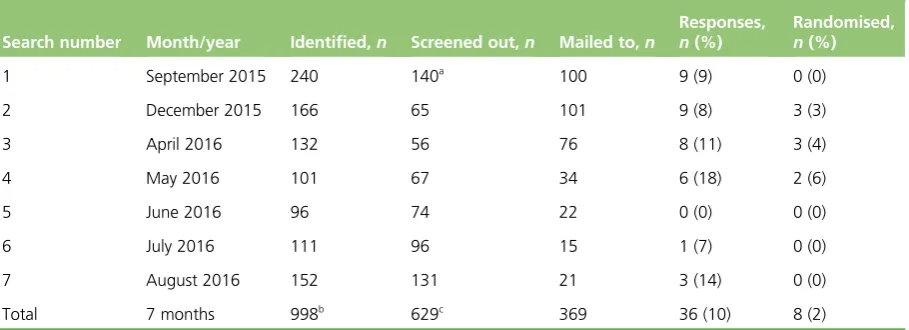
Although the aim had been to recruit 100 employees on long-term sickness absence, the study experienced response rates that were much lower than expected. Initial screening at the host employer site identified 240 employees (3.2%, below the projected 4.4–6.0%). To assess likely response rates, the initial mailout was restricted to 100 employees. From the 100 letters sent out to employees, only nine responses were received, a rate of just 9% (in comparison with the 20% normally experienced with primary care studies). Response rates remained consistently low in subsequent mailouts and so we held a consultation meeting with the full research group and collaborators to identify ways we could try to improve identification and response rates. A separate action plan was developed for each site.
Following changes made to the identification and recruitment procedures, further mailouts were conducted. However, little improvement in the response rates was achieved.
In total, over 1000 invitations were mailed out to potentially eligible participants and we received just 61 responses. Of those, only 16 potential participants were eligible and randomised to the trial: seven to the treatment arm and nine to the control arm.
Acceptability
From the data collected from participants in the intervention and case managers, the intervention was seen to be broadly acceptable and implementable by the organisations. However, acceptability as measured by the employees’willingness to engage in the research would suggest that the intervention was not perceived to be acceptable.
Return-to-work rates
After 12 weeks or on completion of the intervention, participants were contacted to find out if they had returned to work. Of those contacted (three did not complete any follow-up), only one person in the treatment group reported having returned to work. Five people in the usual-care group reported having returned to work. However, looking at the data provided in the World Health Organization’s questionnaire, at follow-up three people in the treatment group stated that they had worked some hours during the last 7 days. The fact that there was variation in responses between the two measures shows that consideration is needed when selecting the primary measure of return to work.
Conclusions
This study experienced a number of barriers to both the recruitment of organisations for participation in the research and also, more notably, the recruitment rates of employees on long-term sickness absence. Although over 1000 potential participants were identified across the two sites, a very small percentage responded to the invitation to find out more or take part in the trial. We were limited in the options for increasing recruitment, such as expanding to more sites.
Other trials in this field also experienced low recruitment rates ranging from a rate of 0.9% to 11.5%. These problems are also mirrored outside the research context. One key finding from the evaluation of the FFW service report [Department for Work and Pensions.Evaluation of the 2010–13 Fit for Work Service Pilots: Final Report. London: Department for Work and Pensions; 2015 URL: www.gov.uk/government/ publications/fit-for-work-service-pilots-2010-to-2013-final-evaluation-report (accessed November 2016)]
SCIENTIFIC SUMMARY
NIHR Journals Library www.journalslibrary.nihr.ac.uk
was that uptake was significantly lower than expected. In total, only 6726 people accessed the service offered, which was about 40% of the target 17,000.
It is, therefore, clear that substantially different recruitment methods are needed for the OH setting. Developing effective and acceptable ways of reducing sickness absence remains a high priority.
Recommendations for research
With the introduction of several schemes, such as fit notes and the FFW service, there are already a number of interventions being implemented and evaluations of these services remain important. A number of methods might overcome the recruitment challenges identified and could be evaluated. These might include incentives for employers, alternative study designs and further modifications to recruitment methods.
Even though we had patient and public involvement and engagement input throughout the study, it is clear that employees were not motivated to respond to the invitations. Whether this was because of the intervention, because it was a trial or for other reasons, it is important that this is explored. A consultation process to see what employees actually want would help to guide further research.
Trial registration
This trial is registered as ISRCTN33560198.
Funding
Chapter 1
Introduction
Background and rationale
Background
Despite relatively high levels of employment among working-age adults in the UK, there is still a significant minority who are off work with ill health at any one time (so-called‘sickness absence’). Figures for the UK show that 131 million days were lost as a result of sickness absences in 2013.1Although this is down from around 175 million days before the turn of the century,2sickness absence still has huge economic implications.
More than 2.5 million people claim health-related benefits (Incapacity Benefit and Employment and Support Allowance–2013/14 data), costing the government £12B a year.3Furthermore, employers pay around £9B per year in sick pay and associated costs.3
Office for National Statistics figures show that, in 2013, minor illness (e.g. colds and coughs) accounted for around 27.4 million days lost, typically short-duration absences. The greatest numbers of days lost were attributable to musculoskeletal problems (30.6 million days of work lost) and mental health problems such as stress, depression and anxiety (15.2 million days of work lost).1Although most absences are of 4 weeks or less, many absences last longer than they need to, and every year over 300,000 people fall out of work and claim health-related state benefits.3
People with long-term health conditions can and do work. Around one-quarter of the 28 million people in work in the UK have a long-term condition.3Employees who suffer significant periods of sickness absence are at increased risk of longer-term problems, with profound implications for their long-term health, wealth and social inclusion.
Policy and current initiatives
Dame Carol Black’s 2008 review of the health of Britain’s working-age population,Working for a Healthier Tomorrow,2cast light on the scale and impact of sickness absence on the economy, as well as the personal impact on individuals. The report outlined the changes in attitudes to work and health that were required to manage the problem of sickness absence more effectively, and the organisational and service delivery challenges that such changes would be likely to introduce.2
The report also listed a number of key priorities for the government. One of the recommendations from this review was the introduction of a new service to offer support for people in the early stages of sickness absence. Funded by the Department for Work and Pensions (DWP) and the Department of Health, a proof-of-concept pilot study was set up in 11 localities across the UK to test different locally determined models for delivering services to help employees to return to work. These were known as Fit for Work (FFW) services and the pilot ran from 2010 until 2013. The results of the pilot study were published by the DWP in June 2015.4
In all pilots, the client journey included five separate stages, but practice at each stage varied from site to site. The stages were (1) referral, (2) screening, (3) assessment and case management, (4) support and (5) discharge.
Another recommendation from the Black review2was the need to focus on the benefits of work for health and on getting away from the notion that a person needs to be 100% fit to work. Replacing the old‘sick note’system with a new‘fit note’system in 2010 was intended to encourage general practitioners (GPs) to include advice on how a person‘may be fit’to work with reasonable workplace adjustments.
Recommended by the Black–Frost review,3the FFW scheme is a new independent assessment and advisory service aimed at getting people back to work and away from long-term sickness benefits. It is proposed that the scheme will save employers up to £160M a year in statutory sick pay and increase economic output by up to £900M a year.5Currently, only 10% of employees in small firms have access to an occupational health (OH) service, compared with more than half of staff in larger firms. The new service will enable employers of all sizes to access expert advice to help them manage sickness absence in the workplace. Current evidence on return-to-work interventions
Research into the clinical effectiveness and cost-effectiveness of Employee Assistance Programmes (EAPs) commissioned by the British Occupational Health Research Foundation6(BOHRF) concluded that there was a lack of evidence about the clinical effectiveness of EAPs. Despite the prevalence of EAPs, no studies were found that could empirically demonstrate that EAPs were more effective than no intervention on a range of outcomes, including sickness absence. However, EAPs have continued to be used, and a more recent review by Mellor-Clarket al.7provides some evidence towards the efficacy of these programmes. Looking at clinical improvement, the study included a data sample of 17,520 clients. For all clients with valid pre–post therapy Clinical Outcomes in Routine Evaluation Outcome Measure (CORE-OM) data, the mean pre-therapy clinical score was 17.40 [standard deviation (SD) 6.01] and the mean post-therapy clinical score was 8.80 (SD 6.09) (pre–post effect size 1.43). The results provide some evidence that EAP
counselling provision may be an effective intervention for employees experiencing common mental health problems. However, this was a retrospective observational study with no comparator, so we cannot be sure how much of the observed effect was as a result of the intervention.
A review of long-term sickness absence interventions conducted for the National Institute for Health and Care Excellence (NICE)8to support public health guidance in this area identified 45 evaluations of the effectiveness of interventions, targeting mainly musculoskeletal interventions. The evidence base was heterogeneous but identified three intervention strategies that merited further investigation: early intervention, multifaceted approaches and interventions with a workplace component. Economic modelling based on this review found that any intervention which returns at least an additional 3% of employees to work and costs less than an additional £3000 per employee is likely to be considered economically attractive compared with usual care, relative to other interventions routinely funded by the NHS.9
A further review of the evidence for workplace involvement on return-to-work rates following long-term sickness absence10found that only a particular type of workplace involvement intervention was consistent in achieving positive return-to-work results. The evidence was limited to employees with back pain and found that active, structured consultation among employee, employer and OH practitioners, and agreements regarding subsequent, appropriate work modifications, appear to be more effective at helping employees on long-term sickness absence to return to work than those interventions which lack such components.11 This type of intervention was also more cost-effective than other workplace-linked interventions, including exercise. These findings are further confirmed in other reviews focusing on the characteristics of successful return-to-work interventions that highlight the importance of early intervention (i.e. in the first 6 weeks of absence) and the use of multifaceted interventions (particularly those including a workplace consultation component).12,13
A report on vocational rehabilitation suggested that a variety of responses were required to better manage different patterns of workplace absence and the needs of different groups. Simple, low-cost workplace interventions might be sufficient for those with short-term absence, with effective vocational rehabilitation programmes combining health and occupational assistance for those with longer-term absences.14
The delivery of a range of interventions of different intensity according to need echoes the adoption
INTRODUCTION
NIHR Journals Library www.journalslibrary.nihr.ac.uk
of‘stepped-care’services in the NHS to manage some long-term conditions, including depression.15 The report also highlighted the need for systematic adoption of‘basic principles’related to the management of these problems, irrespective of whether they were work related or comparable health conditions.14However, the significant challenges associated with effective implementation of such principles in routine practice were also highlighted.
Since the current study began there have been a number of new reports published in this area. A review by Nieuwenhuijsenet al.16focused on return-to-work interventions for people with depression. The authors reported that adding a work-directed intervention to a clinical intervention reduced the number of days on sick leave compared with a clinical intervention alone [effect size–0.40, 95% confidence interval (CI)–0.66 to–0.14]. Another Cochrane review, by van Vilsterenet al.,17assessed the impact of workplace interventions compared with usual-care or clinical interventions. They reported that workplace interventions reduce time to first return to work (hazard ratio 1.55, 95% CI 1.20 to 2.01), and that workplace interventions reduce the cumulative duration of sickness absence (–33.33 days, 95% CI–49.54 to–17.12 days). However, the authors also reported a single study demonstrating that workplace interventions increased recurrences of sick leave (hazard ratio 0.42, 95% CI 0.21 to 0.82).
Current approaches to the management of people with long-term conditions
The call for adoption of core‘basic principles’is in line with current thinking in chronic disease (or‘long-term condition’) management in health care.18,19There has been significant development in our understanding of the nature of long-term conditions. It is widely acknowledged that many long-term conditions raise common challenges for patients, and that the organisational and therapeutic interventions required involve the following common elements:
1. individualised assessment of behaviour 2. collaborative goal-setting
3. skills enhancement 4. proactive follow-up
5. self-management support for healthy behaviour change 6. access to resources.6
As noted previously, the bulk of long-term sickness absence relates to musculoskeletal or mental health problems, and both of these areas have proven themselves amenable to adoption of these‘basic principles’.20,21 Depression and distress are common features of long-term sickness absence. The application of the principles of chronic disease management in depression has been demonstrated through the literature on so-called
‘collaborative care’models.22–24
Collaborative care in occupational health
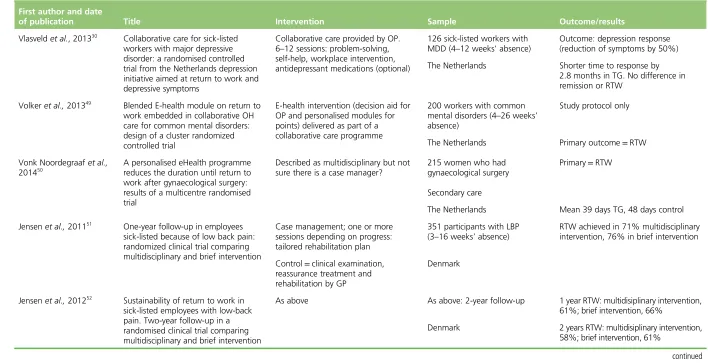
Although chronic disease management models and collaborative care for depression were developed in health settings, there is evidence for the relevance of these models in an OH context. Vlasveldet al.29 developed a version of collaborative care including many of the conventional elements described above (6–12 sessions of problem-solving treatment, manual-guided self-help, and antidepressant management monitored by an occupational case manager and supported by a mental health specialist). The programme also included elements specific to the OH context, including workplace assessments and adjustments, with the case manager mediating between employee and employer. The study randomised 126 patients with depression to either collaborative care or usual care, and reported a significant difference between four groups in the proportion of clients achieving a 50% reduction in depression symptoms (50% in the collaborative care group and 28% in the usual-care group; odds ratio 2.50, 95% CI 1.04 to 6.10). However, there was less evidence of benefit in measures of return to work.30
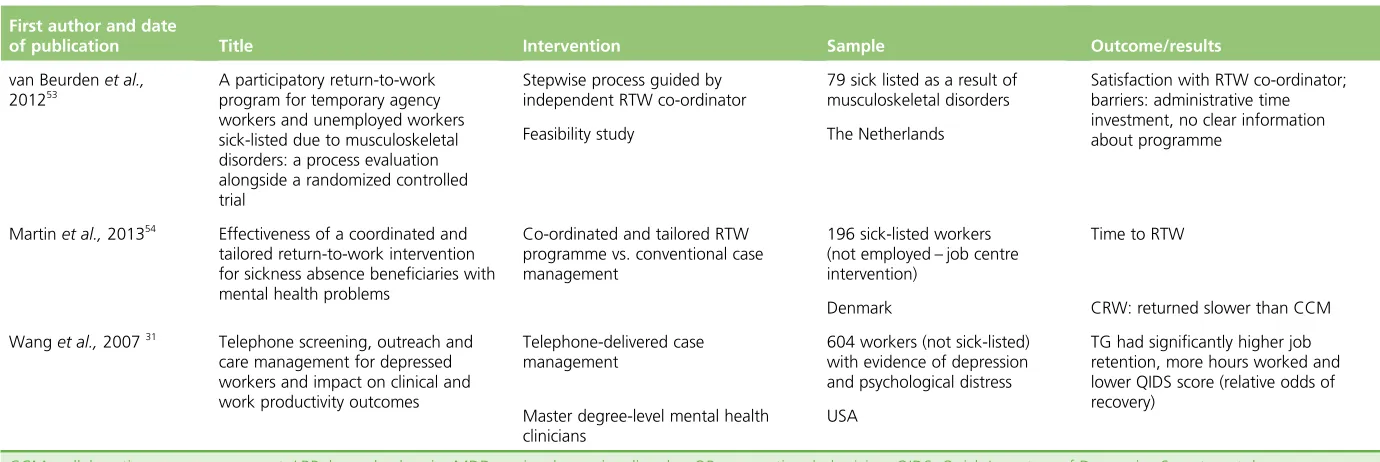
A second trial recruited 604 workers from diverse sectors of the US economy, and randomised them to a telephone-led case management programme or usual care (which included encouragement to enter existing treatment programmes). Case management included brief interventions direct from the case manager for patients who refused to seek help elsewhere, including eight sessions of cognitive–behavioural therapy (CBT) for those with persistent symptoms.31The results showed improvements in depression as a result of case management interventions similar in magnitude to existing evidence on collaborative care (approximately one-third of a SD), and better rates of recovery (31% vs. 21%) at 12 months. Patients in case management also reported two additional hours of work per week (approximately 2 weeks of additional work over a 12-month period). The potential of collaborative care models in OH has been demonstrated, but the case is far from proven. It is unclear whether or not these models will generalise to a UK OH context and whether or not the benefits found in patients with diagnosed depression will generalise to a broader mix of problems reported by employees currently on long-term sickness absence. A definitive trial of the potential of these models in the OH setting in the UK is thus indicated. The FFW pilot scheme also adopted a collaborative care model, the results of which were published during the course of this research. The findings are discussed later (seeChapter 5) in comparison with our own findings.
Summary
It is evident from the literature that employees who suffer significant periods of sickness absence are at increased risk of longer-term problems, with profound implications for their long-term health, wealth and social inclusion. Long-term absences also result in considerable financial implications for the government and for employers.
The body of evidence for intervention with people on or entering long-term sickness absence is growing, but results appear mixed. There is good evidence for collaborative care models in the care for long-term conditions and, as stated previously, around 25% of the working population currently have long-term conditions. Collaborative care in an OH setting has been trialled in the Netherlands and the USA, but a definitive trial has not taken place in the UK, which has a markedly different system.
Bringing this literature together, this study aims to adapt a collaborative care model for use in OH and conduct a pilot study to see how it might work in this setting. The pilot study will determine if it is feasible to recruit and deliver the new model to working adults on longer-term sickness absence and if it is acceptable to both employees and employers.
INTRODUCTION
NIHR Journals Library www.journalslibrary.nihr.ac.uk
Research objectives
Phase 1: development
1. Adapt a collaborative case management intervention to the needs of UK employees, in a range of occupations and organisations, who are entering or experiencing long-term sickness absence. Phase 2: internal pilot
1. Conduct a pilot study to test:
i. recruitment of employees on long-term sickness absence to a trial ii. delivery of the intervention in an OH setting
iii. adherence and acceptability among employees on long-term sickness absence iv. appropriateness of inclusion criteria and outcome measures
Chapter 2
Phase 1
T
his chapter describes phase 1 (development), which was conducted to meet the objective of adapting a collaborative case management intervention to the needs of UK employees, in a range of occupations and organisations, who are entering or experiencing long-term sickness absence.Scoping review
First, a scoping review was conducted to see what could be learned from previous trials. A database search was carried out using OVID and searching the following databases: CENTRAL (Cochrane Central Register of Controlled trials), MEDLINE, EMBASE and PsycINFO.
Search terms: the following broad search terms, key words and BOOLEAN operators were used in the searches: case management, collaborative care, co-ordinated care, collaboration, multidisciplinary care, employees, OH, workplace interventions, sickness absence, sick leave, return to work and absenteeism. Suitable studies were selected and data extracted on methods, results and, in particular, on barriers to, and limitations of, the research.
The review looked at key existing research in three areas: 1. OH-based interventions that were not case management 2. case management interventions that were not based in OH 3. case management interventions that were based in OH.
Similarities and differences from the identified trials were considered. Key points were identified from the literature and discussed in relation to the content and delivery of an intervention.
Expert consultation
Second, a full trial meeting was held with all co-applicants and collaborators, with patient and public involvement and engagement (PPIE) input. The results of the review were presented to the group along with the existing intervention model that we proposed using. These were then discussed by the group to see how the model might need amending to better fit an occupational setting, and how to best set up and run the trial in light of the findings and expertise of those in the group.
Development of materials
Following the initial work, we developed materials for the intervention, including the intervention manual and case manager training.
Manual development
Following the meeting, the existing case management intervention was adapted to focus more on work issues and to include the option for workplace facilitation. Example case studies were written, in consultation with the FFW team, as real-life stories for the manual to help participants engage in the intervention. The manual was designed and sent to our PPIE representative for their feedback, and then amended where needed. A copy of the finalised manual can be found inReport Supplementary Material 1.
Case manager training
The case managers took part in role play sessions to aid learning and were encouraged to ask questions. The course was based on similar courses run by applicant Karina Lovell for other trials,32but was
modified appropriately.
As well as training in the intervention, case managers also received training delivered by the Manchester Academic Health Science Centre Clinical Trials Units (MAHSC-CTU) (www.mahsc-ctu.co.uk/) in the trial methods and reporting procedures, and also completed Good Clinical Practice (GCP) training.
Summary of the results of the review
Occupational health-based interventions that were not case management
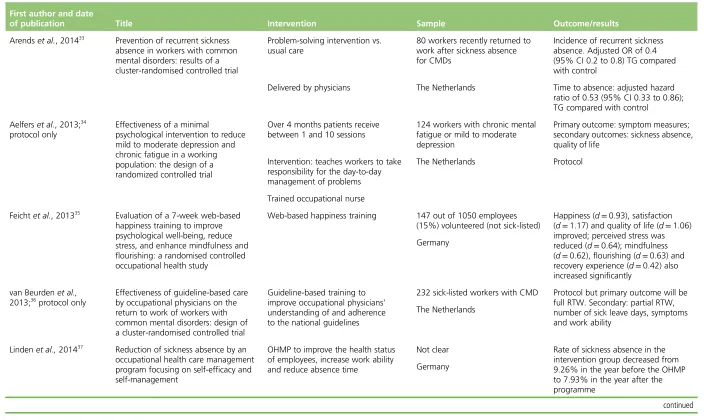
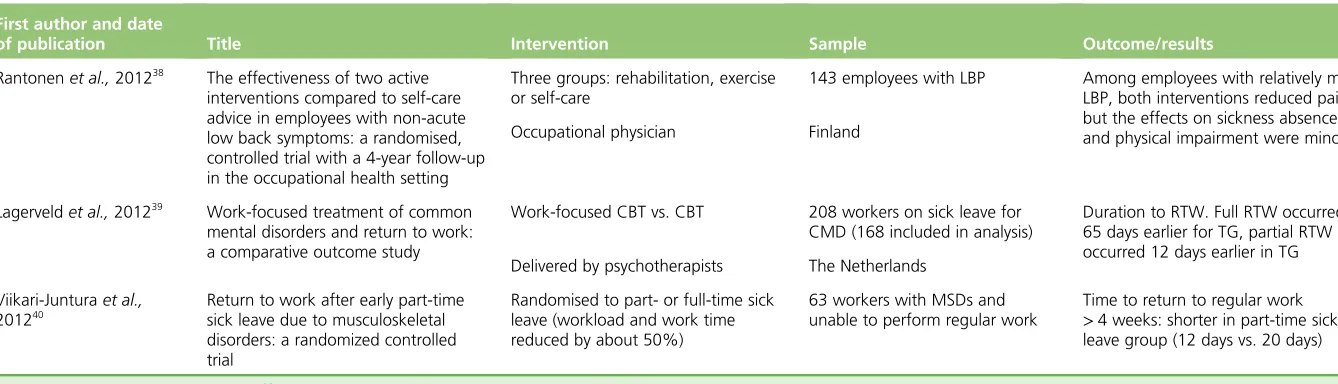
The studies carried out in OH settings33–40were heterogeneous. They encompassed a wide range of interventions from psychological interventions, problem-solving and return on reduced hours, to
interventions with occupational physicians and adherence to guidelines. The interventions were also aimed at a wide range of participants: some were sick-listed, some had recently returned from sickness absence, and other interventions were preventative and, therefore, not targeted to those on sickness absence. The index condition tended to be specific and aimed at common mental disorders or musculoskeletal disorders, with no studies targeting both, or other, conditions. Trial outcomes in those studies with sick-listed participants tended to focus on time to return to work, number of days’absence and quality-of-life measures (Table 1).
Case care interventions that were not based in occupational health settings
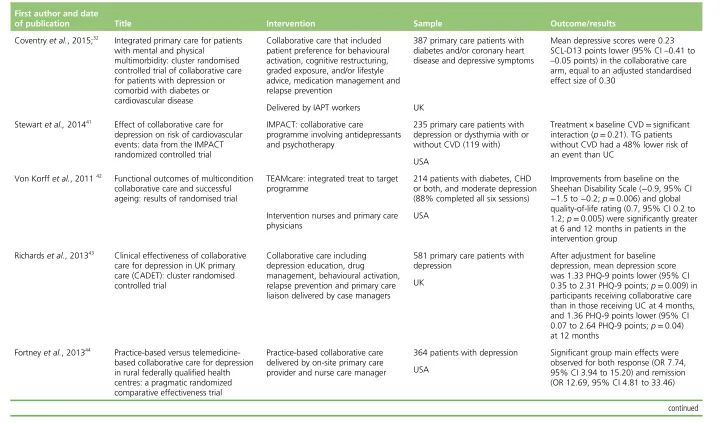
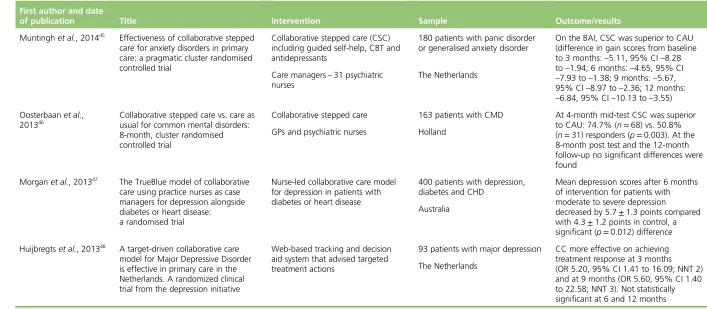
The majority of collaborative care trials have been carried out in a health-care setting and they tend to be targeted at depression and anxiety disorders32,41–48(Table 2). Accordingly, most outcomes were condition-specific measures. Although some looked at impact on disability and function, none reported on work-related outcomes.
Case management interventions that were based in occupational health
There have been a of number collaborative care interventions carried out in OH settings, although none in the UK30,31,49–54(Table 3). Interventions were generally targeted at specific conditions, including mental health problems such as depression30,31,49or musculoskeletal disorders.51–53One study focused on women after gynaecological surgery50and one study included people with a range of conditions.54Return to work was the primary outcome in most studies except for Vlasveldet al.,which had clinical outcomes.30Content of the interventions varied but often incorporated a brief psychological intervention along with medical intervention and, in some cases, workplace intervention.
The majority of studies reported positive outcomes for the intervention group compared with control. However, two studies51,52,54did not report improvement in primary outcomes for the intervention groups. Martinet al.54compared a co-ordinated and tailored return-to-work (CTRW) intervention to conventional case management, and reported that people in the conventional case management group returned to work more quickly than those in the treatment group. It may have been that, as the CTRW intervention was more in-depth, it took longer for employees to work through the different aspects of the intervention and return to work. It may have been useful if data had been collected on recurrent sickness absence in the groups to see if the CTRW intervention resulted in slower return to work but affected further sickness absence. The second study51,52also showed slower return to work in the treatment group at both the 1- and 2-year follow-ups. The case management intervention in the Jensenet al.52trial did not include workplace intervention or any liaison between the employer and employees, which may have affected return-to-work rates.
These case management trials had many elements in common, such as consensus-based care plans and access to brief interventions such as problem-solving, self-help, pain management and brief psychotherapy. Not all interventions included a fully collaborative model including the employee, a general practitioner (GP)/ occupational physician, employer and case manager. Another key point for many of the trials was the low adherence to the intervention by participants.
PHASE 1
NIHR Journals Library www.journalslibrary.nihr.ac.uk
First author and date
of publication Title Intervention Sample Outcome/results
Arendset al., 201433 Prevention of recurrent sickness
absence in workers with common mental disorders: results of a cluster-randomised controlled trial
Problem-solving intervention vs. usual care
80 workers recently returned to work after sickness absence for CMDs
Incidence of recurrent sickness absence. Adjusted OR of 0.4 (95% CI 0.2 to 0.8) TG compared with control
Delivered by physicians The Netherlands Time to absence: adjusted hazard ratio of 0.53 (95% CI 0.33 to 0.86); TG compared with control
Aelferset al., 2013;34
protocol only
Effectiveness of a minimal
psychological intervention to reduce mild to moderate depression and chronic fatigue in a working population: the design of a randomized controlled trial
Over 4 months patients receive between 1 and 10 sessions
124 workers with chronic mental fatigue or mild to moderate depression
Primary outcome: symptom measures; secondary outcomes: sickness absence, quality of life
Intervention: teaches workers to take responsibility for the day-to-day management of problems
The Netherlands Protocol
Trained occupational nurse
Feichtet al., 201335
Evaluation of a 7-week web-based happiness training to improve psychological well-being, reduce stress, and enhance mindfulness and flourishing: a randomised controlled occupational health study
Web-based happiness training 147 out of 1050 employees (15%) volunteered (not sick-listed)
Happiness (d=0.93), satisfaction
(d=1.17) and quality of life (d=1.06)
improved; perceived stress was reduced (d=0.64); mindfulness
(d=0.62), flourishing (d=0.63) and
recovery experience (d=0.42) also
increased significantly Germany
van Beurdenet al.,
2013;36protocol only
Effectiveness of guideline-based care by occupational physicians on the return to work of workers with common mental disorders: design of a cluster-randomised controlled trial
Guideline-based training to improve occupational physicians’ understanding of and adherence to the national guidelines
232 sick-listed workers with CMD Protocol but primary outcome will be full RTW. Secondary: partial RTW, number of sick leave days, symptoms and work ability
The Netherlands
Lindenet al.,201437
Reduction of sickness absence by an occupational health care management program focusing on self-efficacy and self-management
OHMP to improve the health status of employees, increase work ability and reduce absence time
[image:40.842.73.777.87.507.2]TABLE 1 Occupational health-based interventions which were not case management (continued) First author and date
of publication Title Intervention Sample Outcome/results
Rantonenet al.,201238 The effectiveness of two active
interventions compared to self-care advice in employees with non-acute low back symptoms: a randomised, controlled trial with a 4-year follow-up in the occupational health setting
Three groups: rehabilitation, exercise or self-care
143 employees with LBP Among employees with relatively mild LBP, both interventions reduced pain, but the effects on sickness absence and physical impairment were minor Occupational physician Finland
Lagerveldet al.,201239
Work-focused treatment of common mental disorders and return to work: a comparative outcome study
Work-focused CBT vs. CBT 208 workers on sick leave for CMD (168 included in analysis)
Duration to RTW. Full RTW occurred 65 days earlier for TG, partial RTW occurred 12 days earlier in TG Delivered by psychotherapists The Netherlands
Viikari-Junturaet al.,
201240
Return to work after early part-time sick leave due to musculoskeletal disorders: a randomized controlled trial
Randomised to part- or full-time sick leave (workload and work time reduced by about 50%)
63 workers with MSDs and unable to perform regular work
Time to return to regular work
>4 weeks: shorter in part-time sick
leave group (12 days vs. 20 days)
CMD, common mental disorder; d, effect size; LBP, lower back pain; MSD, musculoskeletal disorder; OR, odds ratio; RTW, return to work; TG, treatment group; OHMP, occupational health-care management programme.
PHASE
1
NIHR
Journals
Library
www.journalslibrary.nihr.ac.uk
First author and date
of publication Title Intervention Sample Outcome/results
Coventryet al., 2015;32
Integrated primary care for patients with mental and physical
multimorbidity: cluster randomised controlled trial of collaborative care for patients with depression or comorbid with diabetes or cardiovascular disease
Collaborative care that included patient preference for behavioural activation, cognitive restructuring, graded exposure, and/or lifestyle advice, medication management and relapse prevention
387 primary care patients with diabetes and/or coronary heart disease and depressive symptoms
Mean depressive scores were 0.23 SCL-D13 points lower (95% CI–0.41 to –0.05 points) in the collaborative care arm, equal to an adjusted standardised effect size of 0.30
Delivered by IAPT workers UK
Stewartet al.,201441
Effect of collaborative care for depression on risk of cardiovascular events: data from the IMPACT randomized controlled trial
IMPACT: collaborative care
programme involving antidepressants and psychotherapy
235 primary care patients with depression or dysthymia with or without CVD (119 with)
Treatment × baseline CVD=significant
interaction (p=0.21). TG patients
without CVD had a 48% lower risk of an event than UC
USA
Von Korffet al., 201142
Functional outcomes of multicondition collaborative care and successful ageing: results of randomised trial
TEAMcare: integrated treat to target programme
214 patients with diabetes, CHD or both, and moderate depression (88% completed all six sessions)
Improvements from baseline on the Sheehan Disability Scale (−0.9, 95% CI −1.5 to−0.2;p=0.006) and global
quality-of-life rating (0.7, 95% CI 0.2 to 1.2;p=0.005) were significantly greater
at 6 and 12 months in patients in the intervention group
Intervention nurses and primary care physicians
USA
Richardset al., 201343 Clinical effectiveness of collaborative
care for depression in UK primary care (CADET): cluster randomised controlled trial
Collaborative care including depression education, drug
management, behavioural activation, relapse prevention and primary care liaison delivered by case managers
581 primary care patients with depression
After adjustment for baseline depression, mean depression score was 1.33 PHQ-9 points lower (95% CI 0.35 to 2.31 PHQ-9 points;p=0.009) in
participants receiving collaborative care than in those receiving UC at 4 months, and 1.36 PHQ-9 points lower (95% CI 0.07 to 2.64 PHQ-9 points;p=0.04)
at 12 months UK
Fortneyet al., 201344
Practice-based versus telemedicine-based collaborative care for depression in rural federally qualified health centres: a pragmatic randomized comparative effectiveness trial
Practice-based collaborative care delivered by on-site primary care provider and nurse care manager
[image:42.842.68.788.92.515.2]TABLE 2 Case management interventions which were not based in occupational health (continued) First author and date
of publication Title Intervention Sample Outcome/results
Muntinghet al., 201445 Effectiveness of collaborative stepped
care for anxiety disorders in primary care: a pragmatic cluster randomised controlled trial
Collaborative stepped care (CSC) including guided self-help, CBT and antidepressants
180 patients with panic disorder or generalised anxiety disorder
On the BAI, CSC was superior to CAU (difference in gain scores from baseline to 3 months:–5.11, 95% CI–8.28 to–1.94; 6 months:–4.65, 95% CI –7.93 to–1.38; 9 months:–5.67, 95% CI–8.97 to–2.36; 12 months: –6.84, 95% CI–10.13 to–3.55) Care managers–31 psychiatric
nurses
The Netherlands
Oosterbaanet al., 201346
Collaborative stepped care vs. care as usual for common mental disorders: 8-month, cluster randomised controlled trial
Collaborative stepped care 163 patients with CMD At 4-month mid-test CSC was superior to CAU: 74.7% (n=68) vs. 50.8%
(n=31) responders (p=0.003). At the
8-month post test and the 12-month follow-up no significant differences were found
GPs and psychiatric nurses Holland
Morganet al., 201347 The TrueBlue model of collaborative
care using practice nurses as case managers for depression alongside diabetes or heart disease:
a randomised trial
Nurse-led collaborative care model for depression in patients with diabetes or heart disease
400 patients with depression, diabetes and CHD
Mean depression scores after 6 months of intervention for patients with moderate to severe depression
decreased by 5.7±1.3 points compared
with 4.3±1.2 points in control, a
significant (p=0.012) difference
Australia
Huijbregtset al., 201348
A target-driven collaborative care model for Major Depressive Disorder is effective in primary care in the Netherlands. A randomized clinical trial from the depression initiative
Web-based tracking and decision aid system that advised targeted treatment actions
93 patients with major depression CC more effective on achieving treatment response at 3 months (OR 5.20, 95% CI 1.41 to 16.09; NNT 2) and at 9 months (OR 5.60, 95% CI 1.40 to 22.58; NNT 3). Not statistically significant at 6 and 12 months The Netherlands
BAI, Beck Anxiety Inventory; CAU, care as usual; CC, collaborative care; CHD, coronary heart disease; CMD, common mental disorder; CSC, collaborative stepped care; CVD, cardiovascular disease; GP, general practitioner; IAPT, Improving Access to Psychological Therapies; IMPACT, Improving Mood-Promoting Access to Collaborative Treatment; NNT2, numbers needed to treat at 3 months; NNT3, numbers needed to treat at 9 months; OR, odds ratio; PHQ-9, Patient Health Questionnaire–9; SCL-D13, Symptom Checklist 90–depression component; TG, treatment group; UC, usual care.