Greater Return On
Women’s Enterprise
GROWE
The UK Women’s
1
1
Foreword
1. Executive Summary
2. Context: The Nature of
UK Women’s Enterprise
3. The Economic Case
4. Pillar One – Data and Research
5. Pillar Two – Business Support
6. Pillar Three – Access to Finance
7. Pillar Four – Procurement
8. Pillar Five – Strategic Influencing
and Awareness-Raising
Appendices
3
4
11
14
16
20
24
28
31
34
3
3
In 2006, Gordon Brown gave us the task of advising
how to increase the quantity, scalability and success
of women’s enterprise in the UK. Our remit was to
provide input to Government on key policy areas
affecting the ability of women’s enterprise to achieve
its full potential for the UK economy.
Over the past three years we have made the case that the under-representation of women in enterprise is primarily an issue of economics, not of equality. The statistics demonstrate that women entrepreneurs already make a significant contribution to the UK economy – some £130 billion in turnover. There is huge potential for them to achieve more, aiding economic recovery. Bridging this aspect of the productivity gap with the USA would add £23 billion in Gross Value Added to the UK economy each year, creating another 900,000 businesses.
This report sets out the progress and achievements the Women’s Enterprise Task Force has witnessed; the evidence of gaps still to be filled in the policy framework; and our recommendations to Government. We have brought together the available evidence that identifies which issues remain, and have set out the economic argument for supporting women’s enterprise by addressing these issues. The report also sets out key recommendations that the Task Force believes must be carried forward in order to support women entrepreneurs in achieving their economic potential. We have identified those bodies which we believe have the necessary influence to take forward this important agenda.
We highlight the critical need for commitment and drive from both public and private sector, in order to deliver these recommendations and ensure women-led businesses play a full part in driving UK plc forward to sustainable economic recovery.
It is an honour to have been involved in this Task Force on an agenda for which we share a strong personal passion. We would like to extend our heartfelt thanks to our fellow Task Force members, who have been energetic champions of women’s enterprise in their respective sectors. We also thank all those in the public and private sectors who have aided our work along the way. We have great confidence in passing to you the role of women’s enterprise champions and advocates, in order to take this vital agenda forward.
“ Over the past three
years we have
made the case
that the
under-representation of
women in enterprise
is primarily an issue
of economics, not
of equality.”
Foreword
Pam Alexander CEO
South East England Development Agency Co-Chair, Women’s Enterprise Task Force
Glenda Stone CEO
Aurora
4
1. Executive Summary
This Women’s Enterprise Task Force (WETF) report, Greater Return On Women’s Enterprise (GROWE), sets out the economic case for women’s enterprise and advises partners and stakeholders how to achieve a greater economic return from investment in women’s enterprise.
The Task Force has framed its recommendations to maximise existing investment and resources. We are mindful of the Government’s Business Support Simplification Programme and the effect the recession will continue to have on public spending, and so suggest that relevant Government departments and private sector organisations work together to streamline support and make best use of existing investment.
In providing thought leadership to increase the quantity, scalability and success of women’s enterprise in the UK, the WETF has informed the national agenda on women’s enterprise for the last three years, concentrating its efforts on five specific Pillars:
1. gender-disaggregated business data 2. female-friendly business support 3. access to finance and technology 4. supplier diversity and procurement
5. strategic influencing and awareness raising.
WETF highlights of the past three years include paving the way for a Business Link national data disaggregation methodology whilst influencing and shaping the establishment, direction and implementation of Aspire, a £12.5m women’s co-investment fund to support high-growth women-owned businesses. Alongside this, the WETF has played an important role in raising awareness of the economic case for women’s enterprise and the potential of female entrepreneurs in aiding the UK’s economic recovery. Perhaps most importantly, the WETF met with the Prime Minister and saw important policy developments taken forward in the Government’s Enterprise Strategy of March 2008.
In 2009 the WETF contributed to the enterprise knowledge bank by producing two research reports into women’s enterprise: Impact of the Recession on Women’s Enterprise and Myths and Realities of Women’s Access to Finance. The Task Force welcomes progress made by the Ethnic Minority Business Task Force (EMBTF) in the advocacy of complementary areas which include the need for access to finance, disaggregated data and supplier diversity.
5
Much of the groundwork for the WETF’s work was laid out in the Government’s 2003 publication,
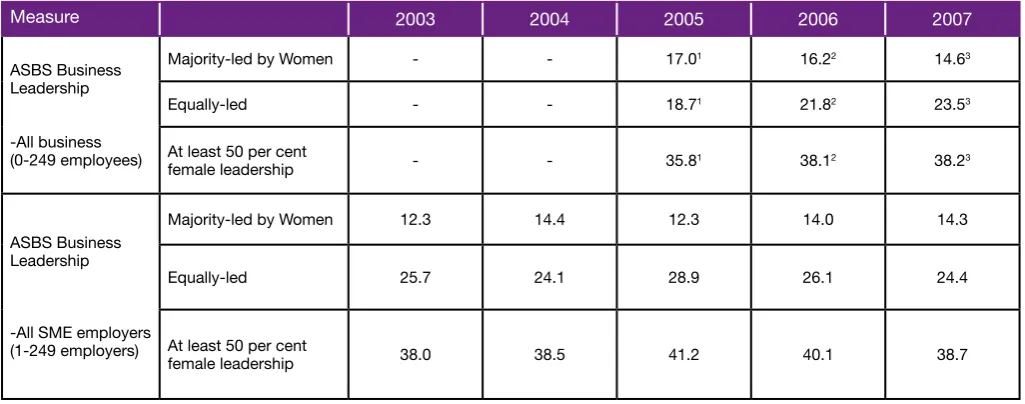
A Strategic Framework for Women’s Enterprise. In 2003, it was estimated that women constituted around 27% of self-employed people in the UK, and that only 12-14% of businesses were majority-owned by women (compared to 28% in the USA). Recent figures from 2009 show that women, who make up 46% of the workforce, now constitute nearly 29% of the self-employed in the UK (up 2 percentage points). 15% of the 4.8 million enterprises in the UK are now majority-led by women.
The longer-term quantitative targets outlined in the Framework included women accounting for 40% of customers using Government-sponsored business support services; and women-owned businesses accounting for 18-20% of the UK total. Government has gone some way towards achieving these targets. Today, women-owned businesses account for around one third of Business Link customers, a major increase on the 22.3% or nearly 150,000 women customers in Q1 of 2005/6.
However, overall progress has been very slow and neither of the Framework
targets set for completion by 2006 has yet been met. More work needs to be done to address this and the other issues facing women’s enterprise today.
From the Strategic Framework for Women’s Enterprise, to the establishment of the WETF and the Enterprise Strategy, Government has shown the importance that it attaches to women in enterprise and its recognition of the increased economic benefits women can contribute to UK plc. This must be even more important in emerging from recession.
Recently, Government has a produced a policy statement,
Building Britain’s Future: New Industry, New Jobs (NINJ), which sets out Government’s vision for economic recovery and growth by targeted intervention aimed at high-tech, high-growth firms. The WETF has several recommendations for how enterprising women can take advantage of these interventions. Enterprise has a significant role to help women remain economically active and increase the productivity and international competitiveness of the UK.
This report examines how to further increase the current £70 billion Gross Value Added (GVA) and £130 billion turnover annual contribution made by women’s enterprise to the UK economy.
Recent figures suggest that 900,000 more businesses would be created if the UK achieved the same levels of female entrepreneurship as in the US, resulting in an additional £23 billion GVA to the UK economy, thus largely closing the productivity gap with the US.1 In Britain alone, 150,000 extra
businesses would be created per annum if women started businesses at the same rate as men.2
This is especially pertinent in this time of recession. With effective, targeted support, increasing the number of women entrepreneurs will be an important factor in driving economic recovery.
Progress
Policy and
Economic Context
Justification
1 BIS Enterprise Directorate
Analytical Unit estimate
6
This GROWE report identifies the points at which women may need further targeting with existing business support initiatives. For example, in the very early stages of their business’s lifecycle, they may need to consider joining wider networks to benefit from contacts and business development; and when their businesses grow, they may need to look at finance options such as angel investment or equity funding.
This report advocates that business support providers should target provision to broaden women entrepreneurs’ options. This way, more women will be furnished with the appropriate skills to move from thinking about starting up a business to making it a reality; and those already running a business can be inspired and equipped to help their enterprise grow.
This report reviews, by WETF Pillar, what the Task Force has achieved post the Strategic Framework for Women’s Enterprise in 2003 and the Enterprise Strategy of 2008; what gaps remain; and what can best be done to close these gaps. The WETF recognises there is already much good practice being implemented around the country to support women’s enterprise. These recommendations seek to build upon both that and the achievements to date of the WETF.
In line with the WETF’s remit to provide thought leadership and advice to Government, these recommendations focus on policy and action. The recommendations aim to ensure that current initiatives such as business support products and procurement processes are monitored and evaluated effectively, so that sound and efficient policy interventions can be made based on evidence. WETF recommendations also provide new thinking and action for Government to address. The organisations identified to deliver WETF recommendations are listed in Appendix 8.
One of the most fundamental and longstanding issues facing us is the lack of gender-disaggregated data. Although there is an increased awareness of this issue which has led to some improvements, there remain no consistent and comparable data which have a time series element and which allow researchers and policy-makers to look specifically at entrepreneurial issues (such as finance) by gender. More recently, the lack of gender-disaggregated data has again been highlighted as a weakness in responding to the refreshed sectoral focus that forms part of the Government’s plan for recovery under New Industry, New Jobs (NINJ).
Recommendation: Better Analysis, Better Understanding
The WETF believes that these issues can be best addressed with greatest benefit through the following measures: • HMRC to add a tick-box to the
VAT Return form, and similarly Companies House to do likewise on the Annual Returns form, to capture gender- and ethnicity-disaggregated company ownership data. This should be done in time to capture business data in the 2010/11 financial year.
• The Equality and Human Rights Commission (EHRC) to use the Gender Equality Duty in the 2006 Equality Act to enforce the gender disaggregation of all publicly- funded businesses and enterprise data and research.
• Public-private partnership to come together to establish a women’s enterprise research centre that will cater to both public and private sector research needs and inform policy development.
See page 19 for more detail.
The Path to Getting
More Women Involved
in Enterprise
Summary by
WETF Pillar
Pillar One: Data
and Research
1. Executive Summary
7
It is vital that current business support services are appropriate, effective and accessible for all potential customers. Business Link (BL) has substantially increased its reach to female customers over the past three years. However, women do also prefer to get advice from family members, networks and other female entrepreneurs.3 Initiatives such as the Women’s Enterprise Ambassadors
and Women’s Business Centre pilots show that engaging women in ways which they value can be very effective in encouraging women into enterprise.
The recession has seen increased unemployment amongst women (although not at the same rate as men), so it is vital that effective structures are in place to enable women to consider self-employment as a viable career alternative. Existing women’s enterprise support must be better packaged and
communicated to women.
Recommendation: Enabling More Women to Join the Enterprise Economy The WETF believes that for more women’s businesses to be created and experience faster growth:
• Regional Development Agencies (RDAs) must ensure that Business Link further raises the level of participation of women-owned businesses (currently around 30% of their customer base) by using the Government’s initial target of 40% (as outlined in the Strategic Framework) as an aspirational goal.4 RDAs should achieve this by asking Business Link Providers (BLP),
as part of their annual delivery planning, to set out how their engagement strategies engage female customers and reach female markets; and reporting on their effectiveness under the Gender Equality Duty.
• Given the extensive opportunities offered by international trading, UK Trade & Investment must demonstrate how it encourages women to trade overseas by raising awareness amongst women of the opportunities on offer and the support available.
• Enterprise UK, with the support of the Department for Business, Innovation and Skills (BIS), should work with RDAs to build the capacity and focus of the 1000+ Women’s Enterprise Ambassadors, including enhancing online communities.
• The Department for Work and Pensions (DWP) and BL must work together to establish a strong link between outplacement, redundancy and business support services for women made redundant or wishing to become economically active. At least one Advisor in each JobCentre Plus office should be trained, ideally to SFEDI5 standard, to promote self-employment
to women as a route off state benefits.
See page 23 for more detail.
Pillar Two: Business Support
3 Delta Economics (2008), Challenges
and Opportunities for Growth Survey
4 Department for Trade and Industry
(now the Department for Business, Innovation and Skills) (2003), Strategic Framework for Women’s Enterprise
5 The Small Firms Enterprise Development
8
Access to finance is consistently identified as a barrier to the start-up and growth of businesses, particularly for women. In response to claims of discrimination by lenders, the WETF published a report on the Myths and Realities of Women’s Access to Finance. This report dispels the myth that women are charged more for bank loans than men – and in fact shows that women are often charged less, as their businesses may be seen as lower risk. However, there is an issue that women do not access adequate levels of finance from a variety of sources for their businesses. They need to access sufficient levels of both debt and equity finance, such as business angel investment, to open up pathways to growth.
Enterprising women can also help the UK to trade its way out of the recession by taking advantage of the opportunities offered by the NINJ strategy. In this strategy, Government is promoting specific industry sectors that it believes will have a major impact on economic recovery: specifically, low-carbon, digital, and creative industries; life sciences; advanced manufacturing and aerospace.
The WETF wants to ensure that women in these sectors benefit from Government’s focus and anticipated growth opportunities. Perhaps counter-intuitively, recent figures suggest that approximately one third of female self-employment may be within these sectors. A solid base of up to 360,000 women may therefore already be well-placed to take advantage of Government and other business support to achieve the high growth levels the economy needs.6 Women-owned businesses
can also position themselves to provide specialist and generic skills support to specific NINJ sectors, making the most of the procurement process and becoming part of larger companies’ supply chains.
Recommendation: Driving High Growth
The WETF believes that the environment for growth finance must be improved if women are to realise their economic potential and be enabled to contribute more GVA to help the UK through to recovery. Specifically we recommend that: • BIS set up an accreditation standard for expert investment intermediaries
connecting women entrepreneurs to suitable sources of growth finance. • Government’s Enterprise Finance Guarantee and its new £1 billion Innovation
Investment Fund contain a commitment to diversity, evidenced by collecting gender-disaggregated data. In the sectors identified in NINJ, emphasis should be placed on fund deployment that will help innovative women-owned and women-led businesses gain the capital they require to lead growth. • The Aspire women’s co-investment Fund should be better utilised by:
- having its management put out to the private sector by independent tender as soon as possible
- any Return on Investment (ROI) should be rolled back into the Aspire Fund or a subsequent female-focused fund(s)
- the progress and impact of investments should be evaluated to determine what value has been added to women’s business growth and to identify best practice
- when the current £12.5m is expended, a possible second round of funding should be made available, based on lessons learned.
• BIS should consider a programme to encourage high net worth women to become business angels and, with Business Link, continue to raise awareness of the benefits for small businesses of accessing business angel investment.
See page 27 for more detail.
Pillar Three: Access to Finance
9
Although women own 15% of British businesses, they win only 3% of public contracts. Generally, women-owned businesses, particularly in the micro and small sectors, are not benefiting from public sector procurement opportunities and are under-represented in this area. Their businesses are often younger, smaller and have less start-up capital than those of their male counterparts. These factors can significantly influence their success in winning public contracts that might help their business grow.
The Glover Review of SME access to public procurement, which was led by WETF member Anne Glover, aimed to improve SMEs’ access to public sector supply chains.7 The WETF supports
its recommendations and proposed reforms and seeks to find ways in which women can benefit from the improved streamlining, transparency and strategic procurement planning reforms proposed.
Recommendation: Business Readiness For Public Procurement The WETF endorses the drive for a single access portal to Government contracts and recommends that CompeteFor (the procurement portal developed by RDAs for 2012) should be used as a model for this as it has strong links to investment readiness and business support and captures gender- and ethnicity-disaggregated data. Current data suggests that women respond well and in disproportionately high numbers to this kind of online opportunity backed up by appropriate support. 18% of businesses registered on CompeteFor are owned by women.
See page 30 for more detail.
The WETF believes that it is vital to have a voice for women’s enterprise which can provide expert input into the policy-making process in Government, maintain a focus on specific targets, and encourage strong role models to inspire enterprising women. A dedicated forum is needed to keep this crucial issue at the forefront of the policy agenda if enterprising women are to reach their economic potential.
Recommendation: Keeping Up The Momentum
The WETF recommends that business membership organisations should work together to establish a national forum on women’s enterprise to advise on national policies and activities. Government should use this forum as a valuable source of business and enterprise expertise and to replace the WETF on the Small Business Finance Forum and the Small Business Forum.
See page 33 for more detail.
Pillar Four: Procurement
Pillar Five: Strategic
Influencing and
Awareness-Raising
6 Annual population Survey, October
2007-September 2008, Office for National Statistics
7 Accelerating the SME economic engine:
through transparent, simple and strategic procurement (November 2008)
These five recommendations set out the key actions the WETF believes still need to be addressed if the UK intends to make the most of women’s potential to contribute to the economy through enterprise. Appendix 8 shows more detail of how the WETF suggests these recommendations can be taken forward, and the benefits they will bring.
Helen Walshaw, All Tucked Up, Northern Ireland
10
Pillar One: Better Analysis, Better Understanding
To address the current gaps in our knowledge:
1. Companies House and HMRC to add tick-boxes to VAT Return and Annual Returns forms to capture disaggregated women-owned and ethnic minority-owned company data.
2. The Equality and Human Rights Commission (EHRC) to use the Gender Equality Duty to enforce the gender disaggregation of all publicly-funded businesses and enterprise data and research. 3. A public-private partnership to come
together to establish a women’s enterprise research centre that will coordinate and disseminate learning.
Pillar Two: Enabling More Women To Join The Enterprise Economy To encourage more women to start and grow businesses:
4. Business Link to further raise the level of participation of women- owned businesses and engage more female customers, and UK Trade & Investment to encourage more women to trade overseas by raising awareness amongst women of the opportunities on offer and the support available. 5. Enterprise UK to build the
capacity of the Women’s Enterprise Ambassadors and enhance female online communities.
6. At least one Advisor in each JobCentre Plus to be trained to promote self-employment to women as a route off benefits.
Summary of Recommendations
Pillar Three: Driving High Growth
To improve the environment for growth finance:
7. BIS to set up an accreditation standard for expert investment intermediaries to bridge women entrepreneurs to sources of growth finance.
8. Government’s Enterprise Finance Guarantee and its new £1 billion Innovation Investment Fund to contain a commitment to diversity, including collecting gender-disaggregated data. 9. The Aspire women’s co-
investment Fund to be privately managed through independent tender, assessed for impact and reinforced. 10. BIS to encourage more high net
worth women to become business angels and, with Business Link, to raise awareness of the benefits for small businesses of accessing business angel investment.
Pillar Four: Business Readiness For Public Procurement
To open up access to public contracts: 11. Fully implement the Glover
recommendations.
12. CompeteFor (the procurement portal developed by RDAs for 2012) to be used as a model for the new single access portal for public sector procurement. 13. Link business support to finance
and procurement opportunities.
The WETF has worked with the Government and partners to promote and discuss the GROWE Report over the past few months. This process has led to the development of the 15 recommendations contained in this summary to which Government has responded.
1. Executive Summary
Pillar Five: Keeping Up The Momentum
To maintain the currently high profile for this area and provide a focal point for action:
14. Business membership organisations to work together to establish a UK panel of women entrepreneurs to identify ways to deliver growth. Government to use this forum as a valuable source of business and enterprise expertise.
11
Over the past three decades there have been significant changes in the structure and composition of women’s participation in and contribution to the UK economy. Women have become more prevalent in the workplace and the employment gap is narrowing. Over time, one would also expect to see a corresponding increase in the number of women entering self-employment, yet the rate at which this is happening is still relatively lower.
Men are still more than twice as likely to start a business as women and, if a US comparison is made, the enterprise ‘gap’ in the UK is due to gender. Indeed, around 150,000 more businesses could be created in the UK per annum if women could match men’s business ownership levels. With the resulting impact on Gross Value Added (GVA), productivity and international competitiveness it is clear that developing women’s enterprise is an economic imperative for the UK.
Women in enterprise have become more visible in recent years, aided in part by a coordinated strategy to encourage women into business as well as national and regional initiatives clearly targeted at potential and existing female entrepreneurs. Nationally nearly 29% of the self-employed are women, however just 22% of business owners with employees are women.8 Female
self-employment has been increasing over the past few years, but slowly. Since 2003, female self-employment in the UK has risen by only one percentage point.
Research shows that some women tend to choose self-employment for independence and family.9 Around
a quarter of women who were self-employed in 2007 gave ‘increased independence’ or ‘for a change’ as a major reason for their self-employment, according to the annual Office for National Statistics (ONS) report
Regional Trends 2009. A fifth of females chose to work as self-employed to help combine ‘family commitments/ wanted to work at home’ and to enjoy ‘employment in a flexible manner’. Conversely, men were almost twice as likely as women to say that one of the reasons they became self-employed was to ‘make more money’. Nationally about 30% of self-employed women work at home.
In terms of sectoral breakdown, preliminary research suggests that roughly one third of female self-employment is within NINJ sectors - roughly 360,000 self-employed women in the UK. These sectors are advanced engineering, creative industries, energy, low carbon, construction, ICT and financial services. The WETF is very keen that these women should be empowered to take advantage of the opportunities offered by NINJ.10
Women make up 51% of the UK population and 46% of those
active in the labour market,
yet they remain heavily under- represented in business ownership. • In Q2 2009, there were 1.085
million self-employed women in the UK, which represents 28% of all self-employed people. This is a 17 percentage point increase since 2000.
• The current number of businesses majority-led by women is 700,000 which represents 15% of the UK’s 4.8 million enterprises.11
• HSBC data from 2009 shows that women’s business ownership rates decrease as businesses grow. Women are half as likely as men to be involved in start-up activity; own 27% of British businesses with a turnover of less than £500,000; and own only 5% of UK businesses with a turnover of more than £25 million.12
The US has actively addressed such under-representation over the past few decades. Proactive policies as early as 1979 in the US have helped move the case for women’s enterprise forward through critical structural, funding and legislative changes. In 1976, US levels of female self-employment stood at 26.8%.13 From 1982 to 1987, the number
of women-owned businesses in the US increased by 57.5% from 2.6 million to 4.1 million, more than twice the rate of all US businesses during the period. This progress clearly demonstrates how addressing the needs and issues of the women’s enterprise agenda can generate a real, significant and lasting economic return.
2.1 Women in
Economic Activity
2.2 Female Self-
Employment
2.2.1
Under-Representation
2. Context: The Nature Of UK Women’s Enterprise
8 ONS (2009), Regional Trends 41 9 Ibid.
10 Annual population Survey, October
2007-September 2008, Office for National Statistics
11
11 Definition of female majority-led businesses
as provided by BIS
12 HSBC Customer Insight, 2009
13 Carter, S (2005), The Role and Contribution
12
For women from minority ethnic communities, the picture varies, mostly due to the fact that often data samples cannot provide meaningful information as they are so small. However, the Global Entrepreneurship Monitor (GEM) tells us the following:
• Women from black communities are twice as likely to be entrepreneurially active as women from Bangladeshi communities; however, women from Bangladeshi communities are still over twice as likely to be entrepreneurially active as white women (although the sample size is small).14
• Women of mixed ethnicity are over two and a half times more entrepreneurial than white women.15
• Ethnic minority female entrepreneurship is clustered in areas of multiple deprivation, suggesting that ‘employment substitution’ is taking place with low-paid work being sub-contracted.16
The importance of data that is disaggregated by gender and ethnicity is vital to inform policy and measure outputs. Where there are synergies between barriers faced by members of ethnic minorities and women, a joined up approach should be utilised by both Government and delivery agents. The WETF is supportive of the work being carried out by the Ethnic Minority Business Task Force (EMBTF) and is keen to collaborate on issues that address particular barriers faced by minority ethnic women.
GEM has studied women’s entrepreneurship in 41 countries, dividing them into two country groups (low/middle-income and high-income) based on their per capita Gross Domestic Product (GDP) and GDP growth rate. Among the report’s key findings, GEM suggested that across all 41 countries:
• Women tend to be less optimistic and self-confident than men about starting a business.
• Fear of failure is higher for women in all country groups compared to their male counterparts.
• Women who are employed and have built a social network of entrepreneurs are more likely to become entrepreneurs. The social and economic benefits of working are driving women’s entrepreneurship more than increased education or household income.
• There is no gender difference in business survival rates in high- income countries.
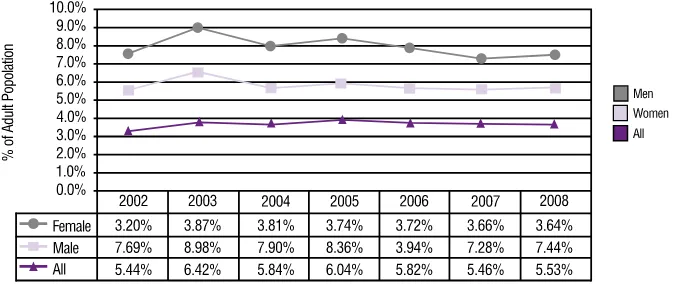
According to GEM 2008 data, the level of female early stage entrepreneurial activity in the UK was 49% that of males. In other words, 3.6% of women compared to 7.4% for men started a business. This is in line with other G7 countries, with the exception of the US and Germany where the gender gap is much narrower. Please see Appendix 3, Figure 6, on page 35 for further GEM data and analysis.
There has not been any major uplift in the level of female early-stage entrepreneurial activity in the UK over the period 2002-08 – it has remained constant at just under 4%. Government, Regional Development Agencies (RDAs) and Devolved Administrations (DAs) are promoting enterprise and entrepreneurship in the regions, but women seem to remain a largely untapped resource.
2.2.2 Women in Minority
Ethnic Communities
2.3 Female Entrepreneurship
14 GEM UK (2004) 15 Ibid.
16 Harding, R (2007), The State of Women’s
Enterprise in the UK, Prowess
13
HSBC Bank data shows that women-owned businesses have increased from 17% of total business stock to 34% in the past two decades. The participation of women in entrepreneurship is significant and rising globally, but there is no country in the world where women are more active than men. HSBC data also shows that:
• 1 in 4 businesses in the UK are female owned
• This figure is higher South England and Wales/South West but lower in London (where just 1 in 5 businesses are female owned)
• Female owned businesses are more likely to be involved in retail/ wholesale and hotels, and less likely to be in manufacturing/construction • Around 1 in 4 female business
owners have previously run a business, compared to around one third for men.17
In 2003 the UK Government published A Strategic Framework for Women’s Enterprise, which was the first policy response the UK had made to the economic opportunity offered by more women in business. The Framework
was developed in response to the pressing productivity requirement to encourage more women to start and grow businesses.
In 2004, a Women’s Enterprise Panel was appointed to form an action plan, advise Government and recommend an appropriate body to progress the women’s enterprise agenda. As a result, the Women’s Enterprise Task Force was announced by Government in November 2006. It was agreed that the Task Force should have a role that focused and guided action across the public and private sector to help Government increase the quantity, scalability and success of women-owned businesses in the UK.
2.4 Characteristics
of Women-Owned
Businesses
2.5
Government’s Response
“ The current number
of businesses
majority-led by
women is 680,000
which represents
15% of the UK’s 4.8
million enterprises.”
14
Business ownership or self-employment can offer women a career with strong potential for wealth and job creation, and attracting inward investment. Using both the available data (the patchy nature of which is an issue in itself) and the expertise of its members, the WETF has consistently advocated that the case for supporting women in enterprise is not just one of equality but is a strong economic argument.
Despite constituting just 15% of SME British business stock, women-owned businesses already contribute significantly to the economy, generating an estimated £70 billion GVA and £130 billion turnover annually. In the past few decades, women have contributed more to the world’s GDP than new technology or the emerging economies of
China and India.18
The Catalyst Report from 2007 found that on average, Fortune 500 companies with more women on their boards of directors turned in better financial performances than those with fewer women board directors.19 In addition, when
women represent 30% of a board of directors, the profitability of a company increases threefold.20
Business start-ups and self-employment, whether male or female, are crucial to employment and productivity growth. Government, RDAs and DAs are already dedicated to promoting enterprise and
entrepreneurship in the regions, but women still seem to remain an underdeveloped resource.
Recent estimates indicate that 900,000 more businesses would be created if the UK achieved the same levels of female entrepreneurship in the US, which would result in an additional £23 billion GVA to the UK economy.21 In Britain alone, 150,000
extra businesses each year would be created if women started businesses at the same rate as men.22
Women starting up in business will tend to provide a more immediate contribution to the economy (GDP). For example, just under two in five women come into self-employment from a previous position of economic activity (compared to about one in five men). They are therefore much less likely to be displaced from a position that already contributes to the economy. For these women, self-employment offers an important route back into the labour market (and in some cases, off state benefits, which represents a saving to Government expenditure).
3.1 Women
and Enterprise
3.2 Economic
Contribution of
Women’s Enterprise
3.3 Economic Potential
3. The Economic Case
18 Ernst & Young (2009), Groundbreakers Report 19 Catalyst (October 2007), The Bottom
Line: Corporate Performance and Women’s Representation on Boards
20 Gavurin Intelligence (February 2008), Women
14
executives in the UK
21 BIS Enterprise Directorate Analytical Unit
estimate
15
Entrepreneurship is at the heart of national advantage. The role of entrepreneurship (business start-up and development) in stimulating economic growth and its eminent importance for innovation and enhancing competitiveness is clear. New and thriving businesses generate jobs, wealth, new markets and serve as a vehicle for innovation.
Empirical literature clearly suggests that the number of self-employed people in a country (business owners) has an impact on subsequent growth. However, economic growth also depends on a set of dynamic processes including business culture incentives, an increase in the number of start-ups, easy entry into new markets and continuous innovation. Government needs to ensure that this set of conditions is present and that strategic choices are made to focus resource in areas and sectors where women show most potential.
In the short term, however, there can be considerable multiplier (or knock-on) benefits from businesses starting up, not simply because they grow themselves but because their dynamism stimulates competition and innovation and, in turn, increases productivity in the economy as a whole. According to Delta Economics’
Steady As She Grows report on growth companies, those owned and managed by women have roughly the same growth, both in terms of employment and turnover, as those owned and managed by men.
Female entrepreneurs are more innovative than their male counterparts; they are more likely to be providing a new product to the market, more likely to be using technology in their products or services
3.4 Impact on National Productivity Gain
and International Competitiveness
3.5 Next Steps
and are more likely to be offering a product that has been developed in the last year.23 Therefore, supporting
women’s enterprise could support more innovation in small and medium firms – which could be particularly pertinent with regard to NINJ. Female entrepreneurs are also more highly educated than male entrepreneurs, and are significantly more likely to have a PhD qualification.24 More highly qualified
entrepreneurs grow their businesses at a faster ratio.
Based on the economic case for women’s enterprise, the following chapters of this GROWE report set out the issues the Task Force has identified that must be addressed to enable women to fulfil their economic potential. These issues are grouped by WETF Pillar (data, business support, finance, procurement, and advocacy) and are followed by key recommendations for action. The WETF believes these recommendations must be carried out if enterprising women are to be empowered to contribute fully to the UK’s economic recovery.
23 Harding, R (2005), Achieving the Vision: Female
Entrepreneurship, British Chamber of Commerce
24 Ibid.
16
16
One of the most fundamental and long-standing issues is the lack of robust gender-disaggregated business data sets. The 2003
Strategic Framework for Women’s Enterprise highlighted the lack of baseline information regarding UK women in business. Key sources of business statistics were not disaggregated by gender ownership, which hindered development of evidence-based policy at the time.
This has improved but more needs to be done to ensure that key data sets are disaggregated. This is essential to fully measure and analyse the impacts of Government’s enterprise interventions, which in turn will enable Government to create efficiencies in its public spending.
Although increased awareness of the issues has since led to improvements (for example, surveys such as the Global Entrepreneurship Monitor now provide extensive gender-based information), there remains no consistent and comparable data which have a time series element and that allow researchers and policy-makers to look specifically at entrepreneurial issues, such as finance, by gender.25
Government and policy interventions need to be informed by a strong evidence base and the disaggregating of data by gender is essential for this to happen.
Women’s enterprise experts in the US have long argued that much of the progress made over the last three decades in the development of women’s business ownership and contribution to the US economy has been down to their ability to research, measure and compare business data by gender.26 The establishment of the
Center for Women’s Business Research in 1992 has ensured a consistent flow of gender-focused research and data which has successfully engaged the corporate and not-for-profit sectors, as well as Government.
4.1 The Importance
of Data
4.2 Impact
4. Pillar One – Data and Research
25 Delta Economics and Women’s Enterprise Task
Force (2009), Myths and Realities of Women’s Access to Finance
26 U.S. Small Business Administration Office of
Advocacy, Women in Business report, October 2001 - http://www.sba.gov/advo/stats/wib01.pdf
“ Much of the progress
made over the last
three decades in
the development of
women’s business
ownership and
17
Recently, the lack of such data has again been felt in the refreshed sectoral focus which forms part of Government’s plan for recovery under NINJ.27 The WETF
is keen to ensure that women-owned businesses should proportionately benefit from the initiatives, funding and support available as part of this new agenda. To achieve this, however, we need robust, substantive, regular and consistent business data which is gender-disaggregated to:
• Fully understand how women in these sectors start and grow their businesses, innovate and finance that innovation, and use technology and intellectual property (IP) to develop their ideas, products and services • Measure the progress of these
businesses in relation to economic recovery and the impact of NINJ measures. We know that women’s businesses contribute £70 billion GVA to the UK economy per annum, but we do not know the sectoral breakdown of this contribution. This makes it difficult to highlight the benefits to the NINJ agenda and potential for the future.
Ensuring that businesses have the right skills to drive the economy forward is a critical part of shaping the economic future of the UK and delivering NINJ. Women-owned businesses have an important role to play to ensure that their skills, strengths and needs are driving and contributing to the development of businesses in NINJ sectors as part of a skills activism agenda.
Government should fully commit to providing robust and consistent business data, including performance data, at regional and national levels (including Devolved Administrations) to inform both enterprise policy and activity, for example under NINJ. This should include
disaggregating existing data to provide insight into trends in women’s enterprise over time. Examples of specific areas where this data would be particularly valuable include the public provision of finance (eg. the Enterprise Finance Guarantee and the Innovation Investment Fund), grants and procurement
(ie to monitor supplier diversity), and UKTI activities.
The VAT dataset, held by Her Majesty’s Revenue and Customs (HMRC) is one of the main sources of Government data on currently trading businesses in the UK. Including gender of ownership on VAT returns is a relatively small step for Government, but one which will have enormous positive consequences for our understanding of women’s enterprise and, therefore, its future.
VAT-based gender-of-ownership data would enable us to understand trends of women’s enterprise (eg. growth in the number and size of women-owned firms, which policies work, etc.), the geography of women’s enterprise (eg. in which regions where women are doing well and why), the sectoral location and position of women’s enterprise (eg. sectors in which women-owned firms are operating and growing), and most importantly the overall economic contribution of women-owned businesses (eg. contribution to employment and sales turnover by women-owned firms).
In addition, Companies House (which holds annual returns from each company over 18 months old) asks the name of each of the directors. Although neither efficient nor completely reliable, it is possible to determine gender (to 70% accuracy). As Companies House information is collected annually, the data it holds is up-to-date, and changes are easily traceable over time. Another advantage is that this data is publicly
4.3 Informing Economic Policy and Action
27 Government recently published a policy
statement on Industrial Activism, called Building Britain’s Future: New Industry, New Jobs, which sets out which sectors the Government believes it should concentrate on to further economic
available and can be accessed via commercial databases. Whilst this information is useful, further analysis and streamlining of processes is required.
18
More needs to be done with existing gender disaggregated data. Research gaps have included: regional variations in female start-ups (now addressed by the ONS), whether banks discriminate against women (disproved by the WETF), international best practice in supporting female entrepreneurship, and performance differences in women- and men-owned businesses.
A report by Delta Economics commissioned by the National Policy Centre for Women’s Enterprise (NPCWE) identified areas which require further investigation to strengthen the economic case for women’s enterprise. These include:
• The growth path of female-owned or managed businesses (eg. access to finance, use of business advice, support from professional services, turnover and employee growth, capital invested).
• The barriers, challenges and issues that female-owned businesses have faced compared to male-owned as they have grown.
• The relative innovativeness and growth potential of female-owned businesses compared to male-owned businesses.
• The sectoral make-up of female-owned businesses.
• The returns on investment: if female businesses are in predominantly socially oriented sectors; would social return on investment be a more appropriate way of evaluating their performance than return on investment?29
• The productivity of female-owned businesses compared to male-owned and how this changes over time as their businesses grow.
• The total productivity factor and hence GVA of female-owned businesses compared to male-owned businesses and how this changes over time.
Furthermore, the WETF suggests that improved research is needed to better understand:
• Established and growing women-owned businesses, including for example an analysis by NINJ sector. This is to inform how women-owned business can benefit from the initiatives, funding and support available as part of this new agenda; including the £750m strategic fund announced in Budget 2009. • The impact of policy interventions through monitoring progress of existing
initiatives to get better value for money.
• The skills pool in NINJ sectors (such as low-carbon, advanced engineering, electronics and biosciences) – what women need and the role they play. • New and current markets in which women start and grow their businesses. • Why the attrition rate of women in the critical growth phase is high,
and how more clearly targeted support could encourage women to grow their businesses.
Understanding women’s enterprise in the UK is hampered by the lack of data, research and information available at all levels. Pillar One Recommendations suggest ways in which the WETF proposes this be addressed. Building on this, and existing centres of research excellence, a women’s enterprise research centre will provide a focal point for coordinating and improving current data sources whilst encouraging new and relevant research for the future.
4.5 Reducing the Research Gap
28 Intellect Submission to the Government Equality
Office, A consultation response to the Equality Bill: Making it work, September 2009. Intellect is the trade association for the UK technology industry.
29 Return on Investment is calculated by dividing the total investment in
company by the level of turnover in any one time period. Social return is more complex in that it relies on the company itself having a strong understanding of the financial value of its social, community or environmental impact.
4.4 Positive Steps
The WETF brought the case for gender-disaggregated data to the forefront of the agenda, and has worked with RDAs to secure a new Business Link national data disaggregation methodology.
Disaggregated client data is essential for tracking the effectiveness of business support for women-owned businesses across the English regions, as well as discerning what further interventions and support are required to improve the quality of service delivery and numbers of businesses being assisted.
19
Pillar One Recommendations:
Better Analysis, Better Understanding
The WETF believes that these issues can be best addressed with greatest benefit through the following measures:
• HMRC should add a tick-box to the VAT Return forms, asking what percentage of the company is male/female owned. Percent of ownership should be based on the rights, claims, interests or stock in the business. Similarly, Companies House should add a tick-box to section D1 of the AR01 form to capture the gender and ethnicity of company directors, to make disaggregated analysis simpler and easier. This should be done in time to capture business data in the 2010/11 financial year and should be auto-filled year on year to keep regulatory burden on businesses to an absolute minimum. • The Equality and Human Rights Commission (EHRC) should enforce the
gender disaggregation of all publicly-funded business and enterprise data and research under the auspices of the Gender Equality Duty. The EHRC should also ensure that all Government policy reports provide a gender analysis of their impact. The EHRC can then provide gender impact analyses and monitor results, producing annual reports based on available disaggregated data to monitor equalities, and highlight any relevant statistically significant changes to the figures being recorded. These reports should show the following:
- the number of women-owned businesses registered on their supplier databases supplying products and/or services
- the percentage of diverse suppliers on formal Preferred Supplier Lists (PSLs) - the number of deals and financial amount expended with diverse suppliers.
These reports should also contain a high-level analysis of the sectors (eg. by NINJ) in which these contracts were awarded together with commentary on any significant changes or issues arising from the data. • A public-private partnership should come together to establish a women’s
enterprise research centre that will cater to both public and private sector needs and inform policy development. This could be led by the Women’s Business Development Agency (WBDA) with the Economic and Social Research Council (ESRC).
The outputs from such a research centre would lead to a greater understanding and increased inclusion of women’s enterprise as a cross-cutting, mainstreamed theme across Government priorities. Subject to demand, private sector companies may commission pieces of research to help better understand the potential of women’s enterprise, female customers, female dominated markets and women’s investment patterns, to help them gain a competitive advantage. Private sector involvement would also help to ensure the centre’s financial stability in the medium term. Such a centre would utilise the better and more consistent data provided by carrying out the WETF’s recommendations. This would provide much-needed qualitative and quantitative research and analysis on how women-owned businesses can contribute and best benefit from policy-driven initiatives with subsequent impact on economic growth.
“ Improved research
is needed to better
understand how
women in
New
Industry, New Jobs
sectors start and
20
The 2003 Strategic Framework for Women’s Enterprise cited the lack of appropriate business support as one of the main barriers for women starting an enterprise. The WETF has worked hard to make business support appropriate and accessible to women and ensured that this was incorporated into Government’s Business Support Simplification Programme (BSSP) consultation and product development. The WETF has also ensured that diversity was included within the Small Firms Enterprise Development Initiative (SFEDI) Business Support Standard for all publicly-funded Business Advisors, and has provided feedback on the Business Link portal to maximise female interest in the website.
The results are strong, although there is still a way to go to reach the 40% target set by Government in 2003. Women’s take-up of publicly-funded business support has increased. This can to some extent be attributed to the rise in initiatives and standards particularly targeted at business support for women, including social enterprise. For example, the Business Link service rose from 10% in Q1
2002/3 to 32% in Q4 2007/8 (see
Figure 1). Following the publication of the Enterprise Strategy in 2008, the WETF has worked with BIS and RDAs to shape five Women’s Business Centre pilots, to further strengthen regional female-friendly business support offers. This has led to the development of a new Women’s Business Centre quality standard, currently being piloted in the North West region.
Existing women’s enterprise support must be better packaged and
communicated to women (eg. through their networks) to make them fully aware of the opportunities enterprise and business support offer, especially at this time of recession.
In the current context of a recession, when businesses need help to survive and seize new opportunities, we must ensure more than ever that current mainstream business support services continue to be appropriate, effective and accessible for all potential customers, including women.
There is a need for clear guidance to women about which business support products and services are available and best suited to them at all stages of their entrepreneurial journey. For example, in the Invest Northern Ireland Enterprise Development Programme, female participation increased from 34% in 2004 to 48% in 2009 as a result of targeting women.
Figure 1 shows that efforts to improve the reach of Business Link in making publicly-funded business support more accessible have reaped rewards. Since Q1 of 2002/3 the total number of female customers served by Business Link has increased by about 20 percentage points, marking an increase of around 100,000 female majority business owners using the service.
When comparing the usage rates in Figure 1, it is also worth noting that the satisfaction rate has increased by 13.5 percentage points as well. In summary, progress has been made because women are
gradually starting to seek Business Link advice more, and its reach has clearly improved with increasing numbers of women being satisfied with its services. However, further progress needs to be made in terms of usage and perceptions of
Government provision. Further awareness-raising with women regarding the help and support available to them is still required.
5.1 Ensuring an Effective
Business Support Offer
5.2 Business Link
Customer Reach
and Satisfaction
In this difficult economic climate, exporting offers UK companies the opportunity to find new markets and customers, and to gain a competitive edge. Many women, however, are not fully aware of the support available. For example, the London Women’s Enterprise Action Plan 2007-2010 suggested that a lack of technical knowledge on how to trade internationally was a primary challenge for women.30
UKTI is well placed to help women-owned businesses to become export-ready and identify lucrative international markets in which they can make the most of fluctuating exchange rates on the pound and thus increase their profits. UKTI already provides support for businesses looking for specific private sector opportunities, joint ventures, investment, and co-operative partnering opportunities, overseas tendering and public sector opportunities, and ways to exploit multilateral aid projects. These market pointers can open a variety of routes to new markets through contracting; and through licensing of intellectual rights to increase businesses sales and networks.
UKTI data shows that around a fifth of UKTI supported firms are classified as being female led and a third have at least one female owner, partner or director from an ethnic minority group. It is also the case that less experienced exporters are more likely to be majority led by female owners, partners and directors. This information indicates that not enough women are exploiting exporting opportunities and that those who do are not very experienced and may need targeted support.
5. Pillar Two – Business Support
30 London Development Agency, (2007) London
Women’s Enterprise Action Plan, 2007-2010
20
5.3 Business Support
– International
21
5.4 Valued Sources of Support
Amongst other evidence, data from Business Link also shows that women tend to prefer more intensive, personalised advice.
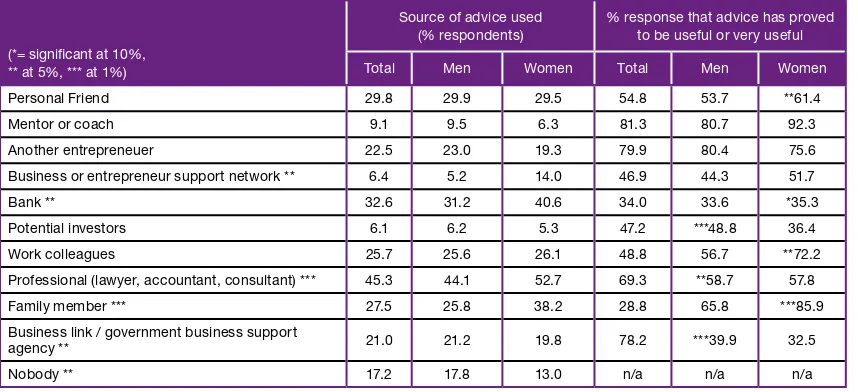
Figure 2 is taken from the Challenges and Opportunities for Growth Survey (COGS) of high-growth businesses and shows the gender differences in accessing sources of advice. This demonstrates that women value business and entrepreneurial support networks highly, as well as mentoring and coaching, with an impressive 92.3% finding this type of support valuable. Less formal ways of engaging with women, either at local level or online, must therefore be explored further. In contrast to men, 85.9% of women cited family members as useful or very useful sources of advice. Whilst this is not unsurprising given women’s motivations for start-up, one might question the objectivity, qualifications and expertise of family members in giving advice.
The Challenges and Opportunities for Growth Survey (Figure 2, page 22) also shows the high value (75.6%) women place on entrepreneurs as sources of advice. The WETF recognised this and played a key role in coordinating the establishment of a national Women’s Enterprise Ambassadors network that brings together successful entrepreneurs and enterprise champions across the UK to encourage increased entrepreneurial activity by women. A recent survey of Ambassadors by Make your Mark showed the value of positive role models who can engage with their local communities, whilst the impressive footfall at events demonstrated the appetite and demand for this sort of support.
Many women value the support given to them by Business Link, but also rely on the informal infrastructure offered by business and entrepreneurial networks, including business membership groups. Given women’s propensity to benefit from these networks, particularly in terms of business mentoring and coaching, it would be useful to enhance such networks to allow them to benefit even greater numbers of enterprising women.
2002/3 Q1 2005/6 Q1 2008/9 Q4
Total Business Link Customers 184,000 668,254 921,650 % Female Majority Owned Users
(Estimate) 10% 22.30% *25% Total Satisfaction rate of Female
[image:23.595.43.378.566.642.2]Majority Owned Users 76% 89.80% 89.50%
Figure 1: Business Link Customer Breakdown by Gender
*based on data from one quarter - Q4 2007-08 saw a figure of 32%. Source: Business Link
22
5.5 Growing
Unemployment
[image:24.595.43.472.519.715.2]5.5.1 Moving From
Economic Inactivity
to Self-Employment
Figure 2: Sources of advice used and their usefulness by gender.
Source: Challenges and Opportunities for Growth Survey, Delta Economics, 2008
As stated previously, the last 30 years have seen a significant increase in the number of women in the UK labour market. Although it appears that during this particular recession men are bearing the brunt of unemployment so far, women have also been affected.
Women’s employment has declined most noticeably in the Finance and Business Services, Manufacturing Industries, Agriculture and Distribution, Hotels and Restaurant sectors.31 It is
vital that appropriate employment and business support services are ready to provide advice and guidance for women on the path back to economic activity. See Appendix 3, Figures 8 and 9, on page 36 and 37 for further details.
The recession could offer the opportunity of self-employment to economically inactive women as well as women made redundant or who left their previous employment by choice. As conditions in the labour market tighten, there is a probability that more women will look towards self-employment or setting up a business as a career choice. Recession conditions could drive women into becoming necessity entrepreneurs, particularly if their partners’ jobs become less secure.
BIS and the DWP are already promoting the benefits of self-employment to
claimants, and need to take into account both the change in claimants’ demographic as a consequence of the recession as well as those not currently claiming. BIS and DWP also need to better understand how to reach women not captured by official statistics, often because they are not working nor claiming benefits, or because they have become part of the informal economy.
There is therefore an urgent need to communicate the opportunities and benefits which self-employment can hold for women. This communication should be present at (amongst others) local community organisations and amenities, to reach out to women who are not engaging with official unemployment or enterprise channels.
It follows that support structures within Business Link, professional advice networks and JobCentre Plus are geared towards offering self-employment as an opportunity to women, for example, through the provision of skills training, access to finance support and business planning support.32 This would ensure that the skills, talent
and experience these women have are not wasted, and would help prevent growth in long-term unemployment. Explicit links between JobCentre Plus, corporate human resource departments and Business Link would be an enabling mechanism towards ensuring that such women are able to fulfil their ambitions.
31 Workforce Series (May 2009), Office for
National Statistics
32 Delta Economics on Behalf of the Women’s
Enterprise Task Force (2009), Impact of the Recession on Women’s Enterprisev
(*= significant at 10%, ** at 5%, *** at 1%)
Source of advice used (% respondents)
% response that advice has proved to be useful or very useful
Total Men Women Total Men Women
Personal Friend 29.8 29.9 29.5 54.8 53.7 **61.4 Mentor or coach 9.1 9.5 6.3 81.3 80.7 92.3 Another entrepreneuer 22.5 23.0 19.3 79.9 80.4 75.6 Business or entrepreneur support network ** 6.4 5.2 14.0 46.9 44.3 51.7
Bank ** 32.6 31.2 40.6 34.0 33.6 *35.3
Potential investors 6.1 6.2 5.3 47.2 ***48.8 36.4 Work colleagues 25.7 25.6 26.1 48.8 56.7 **72.2 Professional (lawyer, accountant, consultant) *** 45.3 44.1 52.7 69.3 **58.7 57.8 Family member *** 27.5 25.8 38.2 28.8 65.8 ***85.9 Business link / government business support
agency ** 21.0 21.2 19.8 78.2 ***39.9 32.5
23
Pillar Two Recommendations: Enabling
More Women to Join the Enterprise Economy
The WETF believes that more women’s businesses will be created, bringing more GVA to UK plc, through the following measures:
• Firstly, RDAs must ensure that Business Link further raises the level of participation of women-owned businesses (currently around 30% of their customer base) by working towards the aspirational goal of Government’s initial target of 40% as outlined in the Strategic Framework.33 The WETF
suggests that RDAs could achieve this by asking Business Link Providers, as part of their annual delivery planning, to set out how their engagement strategies will engage female customers and reach female markets. BLPs can report on this using the robust disaggregated data resulting from the implementation of the EMBTF’s BL data strategy, as agreed by RDAs, and under the Gender Equality Duty. The WETF further recommends that Business Link runs a national enterprise awareness campaign to encourage more women to consider enterprise.
• In parallel, based on the huge opportunity offered by international trading, the WETF recommends that UKTI demonstrates how it encourages women to trade overseas, and raises awareness amongst women of the opportunities on offer and the support available. The WETF further recommends that UKTI considers flexing its offer (building on existing best practice) where possible to encourage women to access international markets. This could be done through clearly targeted training, facilitating women’s access to trade information; promoting networking and encouraging partner organisations to integrate a gender dimension into their business support provision. • The WETF recommends that Enterprise UK builds the existing capacity
and capability of the Women’s Enterprise Ambassadors and enhances female online communities to foster a more supportive environment for women entrepreneurs. This capacity-building should draw upon the current BIS review of women’s networks which aims to optimise use of resources. • To support potential entrepreneurs exiting employment (or from a period of
economic inactivity) in the recession, the WETF recommends that DWP and Business Link work together to establish a strong link between outplacement, redundancy and business support services. This will help ensure that skills, talent and experience are redeployed effectively and will in turn improve the support offer itself. The WETF therefore calls on DWP to ensure that an appropriate number of Advisors in each JobCentre Plus are trained (ideally to SFEDI standard) to sensitively and pro-actively promote self-employment to women (and men), both as a route off benefits and at the point of becoming unemployed. This should be supported by skills training and a focus on creating sustainable enterprises, and will further aid women to play an effective part in Britain’s economic recovery.
33 DTI (2003), Strategic Framework for
24
Access to finance was identified in the 2003 Strategic Framework as a particular barrier to business start- up and growth. A recent analysis of GEM data demonstrated that “being female increases the probability that an individual will perceive financial barriers to business start-up by around 7.5 percentage points. In turn, these perceptions reduce female start-up rates by between 1.7 to 3.8 percentage points.”34
Addressing this issue, the WETF provided guidance for the National Investment Readiness Framework in respect of female entrepreneurs and published its Myths and Realities of Women’s Access to Finance report. This report dispels the myth that women are charged more than men for bank loans – in fact, the research shows that women are often charged less, as their businesses are less highly geared and may be seen as lower risk.
The WETF’s Myths and Realities of Women’s Access to Finance report finds that women are more likely to fear debt or to see the cost of finance as too high (see Appendix 3, Figure 10, on page 37). These are two of the main elements underpinning their perception that access to finance is a barrier. However, women are significantly less likely than men to have failed to access finance because of inadequate business planning, which corroborates the discussions held with bankers as part of the research that suggested that women were often perceived as better prepared and a lower risk.
Funding is crucial to launching a successful venture, but on average women’s businesses commence with a third less capital than those of their male counterparts. Under-capitalisation during a business’s start-up phase has a long-term and negative effect on business performance and growth, and ultimately impacts on the ability of women’s enterprise to realise its potential contribution to the UK economy. Women are also far more likely to use bank finance for plugging the gap between what they will invest and what they need, while men make substantially greater use of private investors outside of their personal network.
The UK Survey of SME Finance 2007 aka Big Survey illustrates how a lack of financial education can undermine potential access to equity, and so can impact on the growth prospects for the enterprise involved. For example, 17% of female majority-led businesses did not know how to go about applying for equity finance compared to 4% of male majority led companies (see Appendix 3, Figure 11, on page 38). To achieve a step change in women’s attitude to financing businesses, financial skills need to be embedded in education at the earliest stages. For example, schools should play host to positive female role models from business who can demonstrate with practical examples how financial knowledge can benefit one’s business.
6.1 A Perceived Barrier
6.2 Fear of Debt
6. Pillar Three – Access to Finance
34 Roper, S and Scott, J (2009) “Gender
Differentials in Access to Finance for Business Start-Up in the UK – An Econometric Analysis of GEM data”, International Small Business Journal, Vol 27, No.2, 149-171