MUHAMMAD RIZUWAN BIN JAMALLUDIN
A report submitted
in fulfillment of the requirements for the degree of Bachelor of Mechanical Engineering
Faculty of Mechanical Engineering
UNIVERSITI TEKNIKAL MALAYSIA MELAKA
2018
DECLARATION
I declare that this thesis entitled “Integration of Topology Optimiation and 3D Printer in Designing a Bicycle Structure” is the result of my own research except as cited in the references. The thesis has not been accepted for any degree and is not concurrently submitted in candidature of any other degree.
APPROVAL
I hereby delcare that I have read this thesis and in my opinion this thesis is sufficient in terms of scope and quality for the award of Bachelor of Mechanical Engineering.
Signature : ………
Supervisor Name : DR. FAIZ REDZA BIN RAMLI
DEDICATION
To my beloved father, Jamalludin Bin Mazelan,
i ABSTRAK
Projek ini memberi penjelasan tentang pengoptimuman topologi ke atas tulang selangka basikal yang boleh dilihat pada bahagian depan tiub kepala pada sesebuah basikal. Perjalanan projek ini berkait rapat dengan tiga objektif yang sebelumnya dibina. Objektif pertama adalah untuk memastikan analisa beban berstruktur memperoleh nilai yang sejajar kepada beban yang dikenakan ke atas model. Seterusnya, objektif kedua untuk dicapai ketika menjalankan projek ini adalah pelaksanaan analisa tekanan static pada ke atas bahagian basikal tertentu yang disebut sebelum ini tadi. Tekanan static adalah bertujuan untuk memperoleh nilai faktor keselematan sekurang-kurangnya melebihi nilai
1.0. Manakala objektif terakhir adalah tentang pengoptimuman topologi yang secara
ii ABSTRACT
iii ACKNOWLEDGMENT
I would like to express my deep gratitude to Dr. Faiz Redza Bin Ramli, my research supervisor, for his patient guidance, enthusiastic encouragement and useful critiques of this research work, as well as exposing me with the exact valuable experiemces and knowledge sharing throughout my entire final year project.
Nevertheless, I would also like to extend my thanks to the technician, Mr. Mohd. Yusrin Bin Md Yacob, Head Technician of the Laboratory of the Undergraduate Bachelor Project, for his advice and personal opinions in keeping up with my progress during fabrication period.
iv TABLE OF CONTENTS
PAGE DECLARATION
DEDICATION
ABSTRAK i
ABSTRACT ii
ACKNOWLEDGEMENTS iii
TABLE OF CONTENTS iv
LIST OF TABLES v
LIST OF FIGURES vi
LIST OF APPENDICES vii
LIST OF ABBREVIATIONS iix
LIST OF PUBLICATIONS ix
CHAPTER
1. INTRODUCTION 1
1.1 Background of Study 1
1.2 Problem Statements 2
1.3 Objectives 3
1.4 Scope of Project 3
2. LITERATURE REVIEW 6
2.1 3D Modelling 5
2.1.1 3D Printing Advancement 5
2.1.2 Additive Manufacturing 7
2.2 Topology Optimization 8
2.2.1 History and Development 8
2.2.2 Theory of Topology Optimization 9
2.3 Open Source in Machine Learning 13
2.3.1 Open Source Software Claraification 13
2.3.2 3D Printing Process 15
2.3.3 Advantages of Open Source Software 16 2.4 3D Printing Bicycle Parts and Sturcture 16
2.4.1 Demands of Current Market 16
2.4.2 Material Satisfaction 18
3. METHODOLOGY 20
3.1 Introduction 20
3.2 Flow Process of PSM 20
3.2.1 Flow Process of PSM I 22
3.2.2 Flow Process of PSM II 24
3.3 Methodology Detailing 24
v
3.3.2 Project /development 24
3.3.3 Literature Review 24
3.3.4 Analysis 25
3.3.5 Toplogy Optimization Setup 26
3.3.6 3D Model Fabricating 28
3.3.7 Compare Tehoretical and Experiment Data 28
3.3.8 Report Writing 28
3.4 Summary 29
4. RESULTS AND DISCUSSIONS 30
4.1 Introduction 30
4.2 Theoretical Value Setup 30
4.3 Initial Project Setup 32
4.3.1 Initial Data 35
4.3.2 Load Implementation and Its Effects 36
4.4 Topology Optimization 38
4.4.1 Computation of Mass Reduction 38
4.4.2 Optimization of The Body Part 39
4.5 3D Printing 40
5. CONCLUSIONS AND RECOMMENDATIONS 45
5.1 Conclusions 45
5.2 Recommendations of The Future Work 45
REFERENCES 47
vi LIST OF TABLES
TABLE TITLE PAGE
2.4.2 Mechanical Properties of Substances 19
4.3 General Steps before Topology Optimization 33 4.3.1 Mechanical Properties o Original Bike Frame 35
4.3.2 Stress Analysis on Original Bike Frame 36
4.4.1 Generative Mass Reduction 38
vii LIST OF FIGURES
FIGURE TITLE PAGE
1.1 Broken Head tube 3
1.2 Broken Seat post 3
2.1 Extruder resolution 6
2.2 Bike frame 7
2.3 Heat tube rendering 8
2.4 Bike frame rendering 8
2.5 2006 NASA STS Spacecraft 9
2.6 Topology optimization examples 10
2.7 RepRap Version 11
2.8 Colour mixing nozzle of open source 12
2.9 Prototype of colour mixing FDM 13
2.10 Categories of software 14
2.11 3D printing process 15
2.12 Varibale printers available worldwide 16
2.13 World’s first 3D printed bicycle 17
2.14 Luna 3D Printed bike 18
3.1 Methodology Flow Chart of psm I 21
3.2 Methodology Flow Chart of psm II 23
viii 3.4 Instuction flow of shape optimization in fusion360 27 4.2 Illustration of bicycle riding and jumping from specific height 31
4.3.2(a) Structural loads against displacement 36
4.3.2(b) Structural loads against Von Mises and FOS 37
4.4.2 Design refurbished and optimized 40
4.5.1 Printed part using PLA filament 42
ix LIST OF ABBREVIATIONS
FOS Factor Of Safety
CAD Computer Aided Drawing
2D / 3D 2 Dimensions / 3 Dimensions
TO Topology Optimization
FEM Finite Element Method
EA Evolutionary Calculations
CNC Computer Numerical Control
FDM Finite Depsosition Modelling
FEA Finite Element Analysis
GPL General Publiclicense
PSM Projek Sarjana Muda
x LIST OF SYMBOLS
ρ Density
Ø Auiliary design variables
𝑥𝑒 Centroid of element
𝑔 Gravity
ℎ Height
𝑑ℎ 𝑑𝑡
⁄ Differentiation of height respect to time
1 CHAPTER 1
INTRODUCTION
1.1 BACKGROUND OF STUDY
Nowadays, with the help of current technologies in additive manufacturing or better known as 3D printing modelling, people from all around the world are quenching something to feed their knowledge thirst and implement 3D printing process into their production process. We are aware of additive manufacturing development throughout the day and somehow urge to innovate, modify, create and design into our own production and branding. This may help in creating a new design of a bicycle (3D printing the world’s first metal bicycle frame 2014)
However, the purpose of the study is not related to how this technology may benefit you from financial gains, yet to assist every mankind in this world for our better daily experience of our daily activities. These include in every existent industrial sector such as; food, tools, toys, clothes and many more you would not expect.
Hence, the purpose of this study is mainly aiming on two-wheeled transportation which is known as a bicycle. Bicycle are revolutionizing back to back throughout the centuries including topology optimization of a bicycle (Gaynor 2015). Many designs created by different manufacturers and founders are successful and ready to be marketed officially. In addition, each manufacturer or founder has its own characteristics and features on their respective findings. Literally, every design offers different advantage according to its own problem statement.
2 Follows are the aspects and scopes listed to be featured with additive manufacturing:
1) Customization – this is what a serious biker wants. With perfect size that feed biker needs in terms of comfort is what a bike all about.
2) Aesthetics – the look and feel when riding a bike is important when cruising down the streets with confident. Bike owner values so much of bike’s appearance, and its geometrically intricate design
3) Lose weight – a complex structural geometries of bicycle frame or parts often gets high demand from designers and rapid prototypers. It also enables us to use less energy, use less materials and produce products that pollute less. (3D printing of plastic and titanium parts for racing bicycles 2013)
Basic understanding of integration between bicycle structures and additive manufacturing is highly required to develop our current technologies, get used to all benefits offered by topology optimization (Pursche 2016) and improve our daily activities without producing any single negative effect neither to Mother Nature nor harming people.
1.2 PROBLEM STATEMENTS
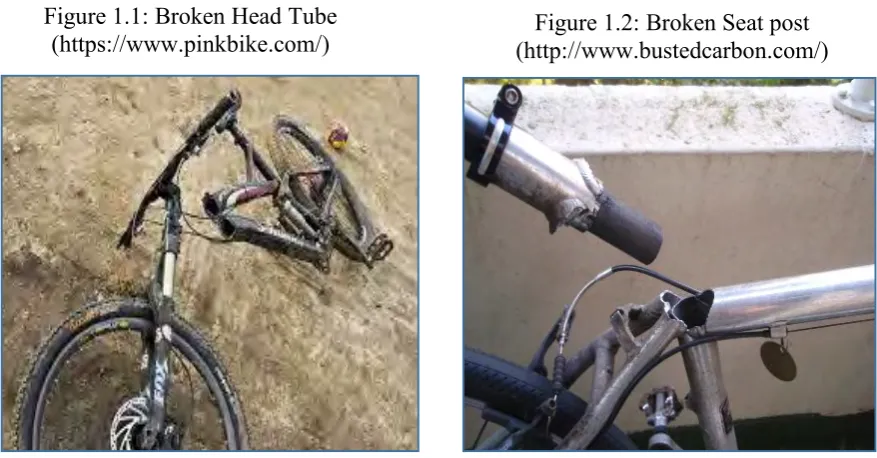
There are many types of bicycles as we obviously aware now. However, designing a bicycle part is somehow to be the most thrilling task. This is because of every single part or component attached to a bicycle frame must be very conducive and satisfy customer or consumer needs. In order to determine the ideal bicycle part, few problems have been identified. The problems are related to many aspects such as; riding comfort, sustainability, economical friendly, low cost and many others. Identified problems are as follow:
1) Weight – every single part and component are commonly heavy due to mechanical properties.
2) Streamlined – parts attached on bicycle occur to be less aerodynamic which contributing to air resistance and speed when riding a certain bike.
3 4) Sustainability – bicycle with less sustainability due to its design and mechanical properties of the substance to build a bike will tend to be broken and dangerous to a rider.
Problems stated often lead to critical damage as shown in Figure 1.1 and Figure 1.2:
1.3 OBJECTIVES
There are few objectives obtained from this project after considering all different aspects which are:
1) To construct a bicycle collarbone structural analysis using Fusion 360 CAD features by computing loads at most 3500 N
2) To construct static stress analysis with outcomes of at least 1. of factor of safety, FOS
3) To conduct topology optimization and stress analysis of the collarbone by utilizing Fusion360 CAD in-application features, with expected result of 30% mass reduction at least.
1.4 SCOPE OF PROJECT The scopes of this project are:
[image:17.595.84.523.199.428.2]1) Fusion360 CAD software will be used during project development Figure 1.1: Broken Head Tube
4 2) Creating only a model of an actual prototype because of limitation of
thermoplastics-based fused deposition material printer
3) Ratio of reduction of the model is expected to be 40% reduced from an actual prototype
5 CHAPTER 2
LITERATURE REVIEW
2.1 3D MODELLING
2.1.1. 3D PRINTING ADVANCEMENT
3D printing is best to visualize as a transformation of virtual 3D model into solid form one layer at a time. By contrast, a 3D printer can create an adjustable wrench in a single operation, layer by layer. The torque comes out of the printer completely gathered, counting all
its moving parts (Koff and Gustafson 2012). A layer is built on another layer before that can
be representing the virtual 3D model including model’s complexity and detail without additional forms of machining required and also a treatment necessary in conventional forms of manufacturing. 3D printing or additive manufacturing is a process of making three dimensional object from a digital file. The creation of a 3D printed object is achieved using additive processes. The idea in additive process is topping a layer before with another layer according to dimension and details of the structure from its digital file. Every one of the layers can be seen as a thinly sliced horizontal cross-section of the eventual object.
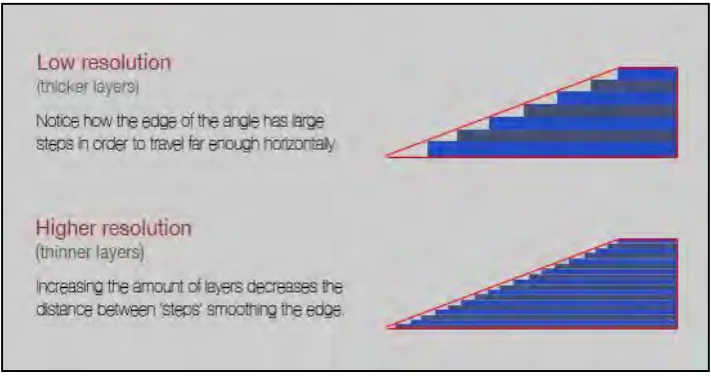
Somehow between that, should always remember that every printed objects is representing its resolution. The number of design factors included in certain topology optimization approaches is moderately huge, particularly for three-dimensional issues. The
higher the resolution, the more design variables (Mechanics and Elements 2016). Resolution of
6 Having even fundamental practice of how 3D printers work, it is simpler to understand the impact on quality of the models printed. Great details defined by thickness of layer printed in details, when given the current relatively small scale capacity of home 3D printers, might be more crucial now than in the future. Desire to print bigger and bigger may make resolution a lesser concern. However, it is important while building detailed objects that specified with complex coordination and geometry or connecting parts must be accurately printed, these are when high resolution most benefits. Additive manufacturing acquires us a least thickness of printed objects, Guest’s suggestion is to undergo a thickness-dependent projection of the density field, ρ. The projection effectively avoids the occurrence of smaller structures than the prescribed minimum thickness, 𝑑𝑚𝑖𝑛. It is achieved when auxiliary design variable Ø, of
which density 𝜌𝑒 is encoded as the weighted average of Ø in close proximity as:
𝜌𝑒 = ∑𝑖𝜖𝑆𝑒∅𝑖𝜔(𝑥𝑖, 𝑥𝑒) ∑𝑖𝜖𝑆𝑒𝜔(𝑥𝑖, 𝑥𝑒)
[image:20.595.130.486.69.257.2]Where 𝑥𝑒is the centroid of the element considered, while 𝑆𝑒 is the set of elements with
distance ||𝑥𝑖 − 𝑥𝑒|| smaller than one half of mentioned allowable thickness, 𝑑𝑚𝑖𝑛 (Wu, Dick,
and Westermann 2016).
7 2.1.2. ADDITIVE MANUFACTURING
Several factors are taken into consideration to decide the most accurate concept of appropriateness definition: shape/geometry, workflow and the rendering.
1. Shape/geometry of the model
The model optimal is crucial in determining how complex the geometry of the model could have. A simple bike frame as in Figure 2.2 is to have dimensions of the parts that is to be analysed. Besides from that, the technical quality is defined when the edge flow of the model is correct to avoid intensive problems of a hierarchical nature composites (El Said, Green, and Hallett 2014)and best to not need any cleaning up or retouch plus considerable improvement in efficiency to get a better topology optimization (Andreassen et al. 2011).
2. Workflow of the modelling technique
Number of steps to make the modelling according to modelling techniques.
3. The rendering
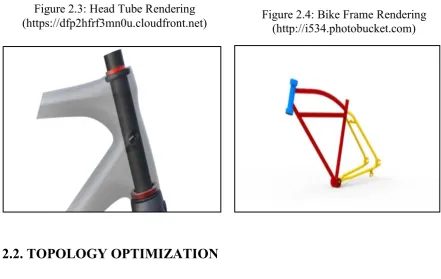
[image:21.595.154.451.338.540.2]Picture synthesis or more recognized as rendering is the programmed handle of creating a photorealistic or non-photorealistic picture from a 2D or 3D model (or models in what collectively could be called a scene record) by implies of computer programs. With help of
Figure 2.2: Bike Frame
8 features specified together with CAD software, as example the nXtRender Lighting Channel (Page n.d.), you are permitted to alter numerous angles of the lighting in your rendered picture in real-time, after the rendering has been delivered. The lighting on the model as shown in Figure 2.3 and 2.4 is considered as a technique to look for any artefacts. Artefacts are known as something observed in a scientific investigation or experiment that is missing naturally but occurs as a result of preparative or investigating procedure. Time range to render is also a sub to ensure the working flow is smooth without any of disturbances that might be a failure.
2.2. TOPOLOGY OPTIMIZATION
2.2.1. HISTORY AND DEVELOPMENTTopology optimization (TO) is a scientific strategy that optimizes fabric format inside a given plan space, for a given set of loads, boundary conditions and limitations with the objective of maximizing the performance of the system. TO is diverse from shape optimization and measuring optimization in the sense that the plan can accomplish any shape inside the plan space, instep of managing with predefined setups. The classic TO formulation uses a finite element method, FEM to evaluate the performance of the design. The design was then optimized using gradient-based mathematical programming techniques as example, method of moving asymptotes for gradient-based mathematical programming and genetic algorithms for gradient-based
[image:22.595.83.525.273.552.2]Figure 2.4: Bike Frame Rendering (http://i534.photobucket.com) Figure 2.3: Head Tube Rendering
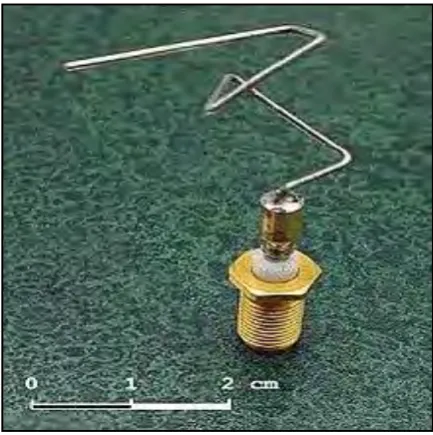
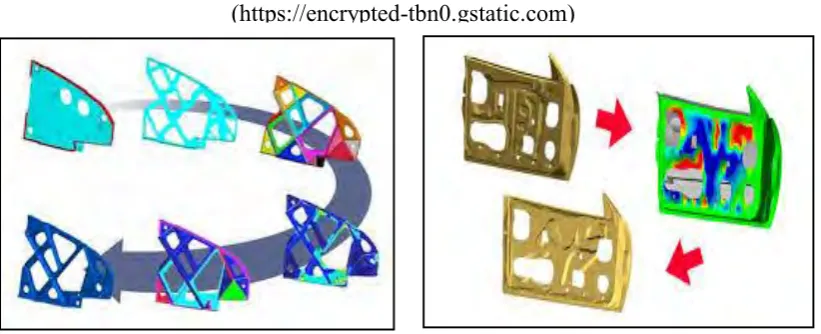
9 algorithms. In computer science and operations investigate, a genetic calculation (GA) is a metaheuristic motivated by the handle of common determination that has a place to the bigger class of evolutionary calculations (EA). Genetic calculations are commonly utilized to create high-quality arrangements to optimization and look for problems by depending on bio-inspired operators such as mutation, crossover and selection. Figure 2.5 is the actual example found by an evolutionary computer design program named 2006 NASA ST5 spacecraft antenna. The complexity of the shape helps in creating the best radiation pattern (Hornby et al. 2006)
Tremendous development all about topology optimization has reached its best phase since its introduction in the seminal paper by Bendsøe and Kikuchi in 1988 (Sigmund and Maute 2013). By now, several directions of this developing technology include “density”, “level set”, “topological derivative”, “phase field”, “evolutionary” and many others. Topology optimization method helps in solving fundamental engineering issues of distributing amount of material in a design space.
2.2.2. THEORY OF TOPOLOGICAL OPTIMISATION
[image:23.595.100.317.256.474.2]Designing a brand new part that needs to be fitted into a limited space, be lightweight, and long life cycle is a challenge because of only rough idea of what the part should be look like is interpreted by designer. In almost all cases, designed parts are to be improved. Dimensions or other design inputs are commonly defined as parameters (Hale, S. 2017). If the absence of existing design to work from, creating one or two conceptual designs are necessary. The conceptual design then defined parametrically, and standard optimization methods such as Design of Experiments is applied. The best alternate method if the absence of existing design to work from repeats, is by using topology optimization.
10 Figure 2.6 shows few examples of topological optimization. Simply start with a block of material and allow the optimizer to determine both shape and size of each design feature.
Replicating Rapid Prototyper
Also known as RepRap, Replicating Rapid Prototyper is an open-source which is costless adaptation from people who shares their paperwork in global network. RepRap is mainly designed to automatically be able to print out its own parts. Historically, self-replication could deliver the meaning of an imaginary Platonic process. It means that the machine is able to print out the exact copy of itself. (Jones et al. 2011). Referring to The Second Law of Thermodynamics and Shannon’s theorem (Shannon 1948), it indicates that data cannot be replicated without misfortune or blunder uncertainly, inferring that the thought of an exact replicator is an impossibility. (It is the mistakes, of course, that drive Darwinian advancement.) While it is logically and idyllically valuable to have words for outlandish thoughts, here we diminish the quality of the word replication to grant it an engineering definition: a prototype between specified tolerances and work well as the original
[image:24.595.101.512.150.317.2]In spite of the fact that ink-jet heads are generally low-cost, they are obliged by the truth that their producers all have a business model of reducing the printers that utilize the heads and putting an enormous mark-up on the heads themselves. They now and then moreover put chips in the heads to anticipate their being re-filled, and embrace other prohibitive methodologies that make ink-jet an ugly innovation for a machine expecting to replicate as openly as conceivable. These realities expelled ink-jet printing from thought.