Exploring the Interface: Negotiating
the boundaries between art and
craft
Submitted by
Susan M Jackson, MCA, GradDipTeach.
(Secondary), DipVisArt(Creative)
Submitted in partial fulfilment of the
requirements for the degree of
Master of Fine Art
University of Tasmania
October, 2011
Declaration of Originality
This thesis contains no material which has been accepted for a degree or diploma by the University or any other institution, except by way of background information and duly acknowledged in the thesis, and to the best of my knowledge and belief no material previously published or written by another person except where due acknowledgement is made in the text of the thesis, nor does the thesis contain any material that infringes copyright.
Susan Jackson
Signed:
Date:
Authority of Access
This thesis may be made available for loan and limited copying in accordance with the Copyright Act 1968.
Susan Jackson
Signed:
CONTENTS
List of Figures...iii
Acknowledgements ...vii
Abstract ... viii
Introduction... 1
Chapter One The Foundation Garment: Examining hierarchies... 4
Chapter Two Pattern Piece C – Interfacing – Cut 2: The boundary as metaphor ... 10
Chapter Three Cut from the Same Cloth: Exploring the mother/child dyad ... 16
Chapter Four Scraps, Off‐cuts and Remnants: Exploring the corporeal... 23
Chapter Five Gathering Threads: Memory and the construction of narrative ... 31
Conclusion ... 39
Reference List ... 42
Bibliography ... 44
Appendix 1 List of exhibitions ... 49
Appendix 2 Extract from Contemporary art and memory: images of recollection and remembrance ... 50
Appendix 3 Resolution of Space... 51
Appendix 4 Documentation of Exhibition ... 53
Appendix 5 Exhibition Layout ... 57
LIST OF FIGURES
Figure 1: Judy Chicago, Installation view, Wing Two from The Dinner Party, 1979, embroidery on linen and china paint on porcelain, Elizabeth A Sackler Center for Feminist Art, collection of the Brooklyn Museum.
Source: Judy Chicago 2011, Image gallery, viewed 12/04/2011,
<http://www.judychicago.com/wp‐content/gallery/the‐dinner‐party/wing‐2‐ first‐6‐placesettings‐installation.jpg>.
Figure 2: Suzumi Noda, Doll in restricted clothing, 1995, clothing labels, dimensions variable. Source: Suzumi Noda 2005‐2010, Label, viewed 03/06/2011,
<http:suzuminoda.com/html/works_label.html>.
Figure 3: Dave Cole, Knit Lead Teddy Bear, 2006, lead, 15.2 x 14 x 11.4 cm., Judi Rotenberg Gallery, Boston.
Source: McFadden, DR 2007, Radical lace and subversive knitting, Museum of Arts & Design, New York, p. 58.
Figure 4: Michelangelo Pistoletto, Venus of the Rags, 1967, 1974, marble and textiles, dimensions variable, Tate Modern.
Source: Tate Online n.d., Collection, viewed 03/06/2011,
<http://www.tate.org.uk/about/tatereport/2006/images/acquisitions/pistoletto. jpg>.
Figure 5: Fiona Hall, Medicine bundle for the nonborn child, 1993, aluminium, rubber, dimensions variable, Queensland Art Gallery.
Source: Perth Now, 2011, Galleries, viewed 03/06/2011,
<http://resources0.news.com.au/images/2009/09/11/1225771/871516‐fiona‐ hall‐039‐s‐creations.jpg.>
Figure 6: Doris Solcedo, Untitled, 1995, wood, concrete, cloth, glass, steel, 162 x 99.5 x 37 cm, New Museum of Contemporary Art, New York.
Source: Basualdo, C, Princenthal, N, Huyssen, A & Salcedo, D 2000, Doris Salcedo, Phaidon, London, p. 109.
Figure 7: Magdalena Bors, Cavern, 2007, pigment print, 70 cm x 70 cm, Off the Kerb Gallery, Melbourne.
Source: Magdalena Bors n.d., Homelands, viewed 03/06/2011, <http://www.magdalenabors.com/#!homelands/vstc8=page‐5>.
Figure 8: Sue Jackson, Restrained Memory (including detail), 2011, vintage cotton bra, thread, dimensions variable.
Figure 9: Sue Jackson, Primordial Vessel (including detail), 2011, thread, vintage lace, egg shells, dimensions variable.
Figure 10: Lindsay Obermeyer, Encircled, 1997, knitted mohair, 50.8 cm x 48.3 cm (x 2) with 213.4 cm sleeves.
Source: LBO Studio 2011, Gallery – women’s work, viewed 12/04/2011, <http://www.lbostudio.com/images/gallery/0043.jpg>.
Figure 11: Sue Jackson, Hysterics Bower (including detail), 2011, vintage lace, thread, egg shells, rabbit fur, glue, organic nest matter, dimensions variable.
Figure 12: Meret Oppenheim, Déjeuner en Fourrure, 1936, fur‐covered cup, saucer, and spoon, cup 10.9 cm in diameter; saucer 23.7 cm in diameter; spoon 20.2 cm long, overall height 7.3 cm, Museum of Modern Art.
Source: Museum of Modern Art 2010, The Collection, viewed 12/04/2011,
<http://www.moma.org/collection_images/resized/266/w500h420/CRI_2266.jpg >.
Figure 13: Sue Jackson, glove from Fits Like a Glove series (including detail), 2010, vintage glove, rabbit fur, thread, dimensions variable.
Figure 14: Sue Jackson, Surfeit (including detail), 2011, cotton crochet, thread, dehydrated strawberries, dimensions variable.
Figure 15: Sue Jackson, It’s not you! (including detail), 2011, human hair, cotton thread, dimensions variable.
Figure 17: Anne Wilson, Lost, 1998, cloth, hair, thread, leather cord, wood chair, 91.4 x 55.9 x 59.7 cm, Revolution Gallery, Detroit.
Source: Hixson, K 2003, Anne Wilson: unfoldings, Massachusetts College of Art, Boston, MA, p. 26.
Figure 18: Anne Wilson, Mendings, no. 13, 1995, cloth, hair, thread, wood and acrylic mount, 15.2 x 18.4 x 17.1 cm, private collection, New York.
Source: Hixson, K 2003, Anne Wilson: unfoldings, Massachusetts College of Art, Boston, MA, p. 27.
Figure 19: Magdalena Abakanowicz, Brown Abakans, 1969/1972, sisal weaving, 300 x 300 x 350 cm, collection of the artist.
Source: Magdalena Abakanowicz n.d., Abakans and ropes, viewed 13/04/2011, <http://www.abakanowicz.art.pl/abakans/img/BrownAbakans.jpg>.
Figure 20: Susan Jackson, glove from Fits Like a Glove series, 2010, vintage glove, dehydrated strawberries, thread, dimensions variable.
Figure 21: Jana Sterbak, Vanitas: Flesh Dress for an Albino Anorectic, 1987, flank steak, mannequin, salt, thread, dress size 38, Walker Art Centre, Minneapolis.
Source: Jana Sterbak n.d., Images, viewed 13/04/2011, <http://www.janasterbak.com/im%20jpg/vanitas.jpg>.
Figure 22: Susan Jackson, Untitled, 2011, dehydrated strawberries, thread, plastic mould, 16 x 10 x 9 cm
Figure 23: Susan Jackson, Memory Slip, 2010, buttons, nylon thread, wire, muslin, dimensions variable.
Figure 24: Sue Jackson, installation view from exhibition Sosueme (including detail), 2010, acquired items, dimensions variable.
Figure 25: Sue Jackson, Truisms (including detail), 2011, silk ribbon, embroidery thread, wooden reels, dimensions variable.
Figure 26: Jenny Holzer, Absolute submission can be a form of freedom and you are guileless in your dreams, golf balls from the Truisms series, 1977‐79, letterpress, golf balls, unlimited edition.
Source: Weserburg 2008, Archive – Jenny Holzer, viewed 15/04/2011, <http://www.weserburg.de/uploads/pics/Holzer_04.jpg>.
Figure 27: Sue Jackson, Stepping Out (including detail), 2011, vintage lace, leather, thread, fabric stiffener, wood, shoe heels, dimensions variable.
Figure 28: Louise Bourgeois, Cell VII, 1998, mixed media installation, variable, Friedrich Christian Flick Collection.
Source: Artnet 2011, Magazin, viewed 15/04/2011,
<http://www.artnet.de/Images/Magazine/features/glauner/glauner04‐04‐07‐ 12.jpg>.
Figure 29: Installation of assessment, 2011. Photograph: Mark Jackson.
Figure 30: Installation of assessment, 2011. Photograph: Mark Jackson.
Figure 31: Installation of assessment, 2011. Photograph: Mark Jackson.
Figure 32: Sue Jackson, views of first room installation (bedroom), 2011. Photograph: Jasper da Seymour.
Figure 33: Sue Jackson, views of second room installation (lounge room), 2011. Photograph: Jasper da Seymour.
Figure 34: Sue Jackson, views of third room installation (sewing room), 2011. Photograph: Jasper da Seymour.
ACKNOWLEDGEMENTS
I wish to thank my supervisors Penny Mason and Dr Wayne Hudson for their ongoing assistance throughout my theoretical and practice‐led research. Their knowledge, insight and support have been invaluable during the inception, development and resolution of this project.
I would like to thank Dr Deb Malor for her well‐organised coordination of the Graduate Research program and Jane Emery for her assistance in proofreading my exegesis. I am also appreciative of the financial assistance provided by the Australian Postgraduate Awards scholarship.
I am grateful to my peers and fellow research candidates at the University of Tasmania’s School of Visual and Performing Arts, Launceston, who have provided me with a supportive, professional and collegial atmosphere that has generated a creative, productive and dynamic learning environment.
I make special thanks to my support system at home. Firstly, to my cat Poppy for her companionship in the studio and at the laptop, even for her generation of creative text passages resulting from her furry footwork across the keyboard. Finally, to my husband Mark without whose love, support, patience and encouragement I would not have started, let alone finished, this project.
ABSTRACT
Exploring the Interface negotiates the boundaries between the often‐disparate practices of art and craft. The interface, as the point of interplay between these practices, is offered as a metaphor for the negotiation of the physical and psychical boundaries of self. This project asks how these practices can be navigated and if the interface can signify the spaces of one’s emotional and corporeal identities. It also questions how the maternal relationship and feminine and domestic archetypes contribute to the construction of gender.
The project aims to extend the traditional use of domestic craft while honouring the semiotic potential of its feminine associations. I endeavour to create an expressive device from mute craft materials and techniques using the language of the object and the poetics of metaphor. I seek to evoke memory and the senses by activating the gallery space in a series of narrative dramas that play out inside domestic constructs.
My artwork takes the form of a series of installations using various materials ranging from those traditionally associated with domestic craft to more ephemeral organic matter. Handcrafted objects reside with ready‐mades while garments and domestic artefacts nestle amongst furniture.
The project commenced with an investigation of various hierarchies pertaining to gender and practice. An exploration of traditional craft materials and techniques led to innovative approaches and a consideration of the maternal legacies of the craft tradition. The amassing of craft materials and objects suggested a wealth of memories, histories and untold narratives. The expressive potential of the craft object was explored and what emerged was the performative function of the artwork as a means of activating senses, memory and space.
Artists who extend craft beyond traditional application, including Judy Chicago, Fiona Hall, Freddie Robins, Anne Farren and Dave Cole, have influenced experimentation with the expressive potential of materials and techniques. The maternal relationship is explored through the work of Barbara Hanrahan, Lindsay Obermeyer and Kay Lawrence. Artworks by Anne Wilson, Jana Sterbak and Magdelena Abakanowicz inform body‐specific work that focuses on corporeal elements of gender. Mnemonic artworks by Louise Bourgeois, Tracey Emin, Magdalena Bors and Doris Salcedo provide a reference for memory, narrative and domestic based installations.
INTRODUCTION
The threading of a needle, natural to young, nimble fingers. The first awkward attempts at stitching clumsy monograms on gaudy fabric remnants. Naïve heartshaped samplers plumped with stuffing to make pincushions. The mysterious glyphs of the dress pattern that revealed to the enlightened an illuminated path to the garment. Gazing enviously upon an elder sister, possessor of curves, holder of all the acquired wisdom needed to make the quantum leap into womanhood. The women surrounding me imparted the domestic skills needed to make this transition. A grandmother treadling at an old Singer sewing machine, with a black patina that had long ago lost its lustre, a mother knitting the jumper you knew would sit at the bottom of a camphor chest, the older sister sitting on the floor amid a nest of gently rustling dress patterns. These are my memories, my female experience. Too young to understand the sociopolitical significance of what was occurring, I was ignorant of the gendering of these activities, the furtively powerful socialisation at play and the hardfought battles of women generations my senior. These activities were never a burden; on the contrary I delighted in the process of making something by hand. Craft tools resided comfortably in hands seemingly adept at intricate tasks. I soon discovered the same dexterity with a pencil, and a passion for art emerged. Now, many years later, am I able to reconcile my art and craft practice? Can I negotiate the boundaries that have fragmented practice and influenced aesthetic judgement and taste? Since childhood I sensed that I existed in a kind of gender borderland. Can this interface between art and craft become a metaphor for my identity?
of a symbolic position through visual language? How can the maternal legacies of domestic craft tradition and feminine archetypes inform gender and contribute to the construction of a personal narrative?
My research is informed by the hierarchical value systems that highlight dichotomies of gender and practice, drawing upon the writings of art historians and theorists, including Rozsika Parker, Griselda Pollock and Gill Perry who repudiate traditional canons. In Chapter One I explore some of the roles played by society and craft in establishing the status of women and ‘women’s work’. These gender constructs are highlighted by an investigation of male privilege, the barriers encountered by women and their consequent confinement to the domestic arts. This leads to a consideration of the reassessment of what was traditionally deemed ‘women’s work’ that occurred with the craft renaissances of the 1970s and 1990s. After centuries of ideological polarity, there is increasing dissolution of the categories of art and craft as the Modernist opinion that rejected craft as superficial and kitsch yields to reconsideration under postmodern practices.
My project widens the seams of the art/craft debate by reconciling the opposing denigration and inherent potential of domestic craft. In the current artistic climate when anything can be art, artists are coming to appreciate this boundless potential. I take up the recommendation of curators Robert Bell and David McFadden to explore the expressive and mutational possibilities of craft. By engaging the delicate, subtle and poetic aspects of the craft object, I seek to extend the eloquence of materiality.
to gaze upon a vertical wall, but to open, slide, unwind and rewind, smell, crouch, inspect and be within a space.
Identity, as one of the central issues in contemporary art, informs my research and its outcomes. Psychoanalytic and feminist theories provide an analysis of the social constructs of gender contributing to our notions of identity. Psychoanalytical and object‐relations theory highlights the significant role the mother plays in forming identity. My research is embedded in the mother‐daughter dyad with the works of Melanie Klein, DW Winnicott, Nancy Chodorow and Julia Kristeva providing important references. With Janice Doane’s and Devon Hodges’ From Klein to Kristeva as my primary source, in Chapter Three I explore this maternal relationship as a means of interrogating my subjectivity focusing on the role of motherhood as a cultural imperative which I have difficulty negotiating. Icons of fertility and maternity such as eggs, nests, vessels and the implication of menstrual blood are representative of this maternal relationship.
Chapter Four continues the investigation of subjectivity, addressing the work of Kristeva, Jacques Lacan, Luce Irigaray and Elizabeth Grosz and focusing on the body‐based artwork, the object or garment as a body surrogate and the inescapable corporeality of the body. As a representation of both physical and psychical spaces my work grapples with the inner and outer workings of self, including the mortal failings of the body. This manifests in the vulnerable and ephemeral materiality of my objects, some of which are constructed of organic matter that faces the inevitable march of time.
CHAPTER ONE
The Foundation Garment: Examining hierarchies
The hierarchical value systems that stratify art forms are ideological constructs that exclude particular artistic practices and practitioners from the established order of fine art. These value systems highlight dichotomies of gender and separate art from craft. Anthea Callen asserts that ‘ … such polarised binaries function … to constitute negative “others” within our patriarchal culture’ (eds Attfield & Kirkham 1989, p. 163).
Traditionally, painting and sculpture topped the hierarchical apex while the domestic arts were relegated to the sphere of lesser arts. This canon was sustained by a belief that the domestic arts required less intellectual input and were defined by manual skill and utilitarian function. Such polarised binaries highlight male privilege in the visual arts. Gill Perry emphasises the gendered separation of male‐dominated high art from the feminine pursuit of the applied or decorative arts (ed. Perry 1999, p. 24).
Domestic craft, while perceived as the badge of a woman’s gender and a measure of her worth, has often been patronizingly relegated to the lower echelons, dismissed as a trivial pastime. Art historians Rozsika Parker and Griselda Pollock argue that:
… it was by labelling certain aspects of artistic production ‘domestic’, by calling them crafts, that, in the evolution of the modern concept of art, the split between high art and the lesser arts was constructed: what distinguishes art from crafts … is … where these things are made, often in the home, and for whom they are made, often for the family (eds Attfield & Kirkham 1989, p. 154).
The Victorian era was a particularly influential epoch which intensified many aspects of our patriarchal society. Women became further disadvantaged and restricted by the roles and expectations by which they were defined. Catherine King observes that: ‘The lower status of women was related to the notion of women’s dependence on men and their supposed need to be cared for in the private sphere of the family and household…’ (ed. Perry 1999, p. 35). The Victorian woman was ideologically confined to a private domestic realm denied access to the privileged public world of men. The ideal woman was custodian of the home and all aspects of her upbringing and education were geared towards this domestic paradigm and a socially endorsed career of wifedom and motherhood (Unwin 2004, p. 246).
Women’s options were determined by prejudice and injustice in a society that believed creativity was the province of men. They encountered significant barriers limiting their art practice, including social restrictions, lack of academic training, limited access to the establishment, ‘ … conflicts with domestic duties … and perhaps most insurmountable their exclusion from the category of “genius” ’ (Unwin 2004, p. 246).
Women were excluded by canons of art established at an institutional level. Their exclusion from life classes and indeed from pedagogical foundations themselves meant that the prestige of history painting was out of reach. Women were confined instead to ‘lesser’ genres which became endowed with gender. A woman’s art was biologically determined, as if the subjects suitable for female practice were those that reflected society’s perception of her, subjects considered pretty and decorative, devoid of gravity or substance.
Anna Howitt (1799–1888) composed a heartfelt lament after attending a public lecture at the Royal Academy:
Oh! How terribly did I long to be a man so as to paint there … one seemed stepping into a freer, larger and more earnest artistic world – a world alas! Which one’s womanhood debars one from enjoying. Oh, I felt quite sick at heart … I felt quite angry at being a woman, it seemed to be such a mistake (ed. Orr 1995, p. 35).
In frustration born from the limitations of her own gender, Howitt longs to cast off the burden of her sex. A woman who wanted to be an artist was not only asking for access to all the same privileges as her male counterparts, but also asking to be free of her gender and social obligations.
Women appear to be, in large part, missing from art history. As Parker and Pollock assert, ‘ … modern art history produces a picture of the history of art from which women are not only absent, but identifies women artists as inevitably and naturally artists of lesser talent and no historical significance’ (1981, p. 45). As a teacher of secondary art, I remember awkward piles of textbooks in the classroom, covered in dust. Oddly juxtaposed with a white board, large‐screen computer and data projector, the fossil of a bygone era beside the shiny new hybrid car. I refer to Gombrich’s Story of Art, from which women artists are conspicuously absent. I braved the dust ever so rarely, only to be disappointed.
as long as they did not excel beyond the demure and self‐effacing conduct befitting a lady. Craft was an extension of a woman’s domestic duties and a socially acceptable outlet for her creativity. The Arts and Crafts Movement of the nineteenth century provided women with new opportunities for artistic practice.
Craft has not always occupied a lowly position. The ideological split between fine art and craft transpired during the Renaissance when intellectual activity was esteemed by learned men who dissociated themselves from the manual aspects of the guilds in deference to academic instruction (Lucie‐Smith 1981, p. 11). Craft has had a diverse history, enjoying periods of esteem. Embroidery enjoyed a high status during the Middle Ages when a woman’s needlework skills were the embodiment of virtue and gentility. Samplers, which I use as a feminine icon in my work (see Chapter Five), were a popular pastime and instructive tool bearing moral truisms of the day designed to shape a young girl’s behaviour. Needlework became a way for a mother to control her daughter’s socialisation and domestic training. The sampler was not so much a lesson in skill as one in femininity.
Because of its association with women, themselves dissociated from intellectuality, embroidery was deemed ‘women’s work’, manual work devoid of all superior intellectual or creative activity. Roszika Parker asserts: ‘… embroidery and a stereotype of femininity have become collapsed into one another, characterised as mindless, decorative and delicate; like the icing on the cake, good to look at, adding taste and status, but devoid of significant content …’ (1984, p. 6).
In reaction against the hierarchical canons of art, feminist historians such as Parker and Pollock have declared the value of women’s needlework, acclaiming embroidery as an emblem of women’s cultural heritage. In doing so they reject the distinction separating craft from art and call for reassessment of the value systems that denigrate the feminine pursuits of needle and thread: ‘In the face of trivialisation, it has been important to validate women’s domestic labour … and the craft traditions. These areas are important for women’s sense of themselves and their past’ (Parker & Pollock 1981, p. 158).
Since the 1970s there has been renewed interest in domestic craft. Today an increasing number of artists recognise the limitless potential in traditional craft techniques and materials. While there may always be prejudices, there has been a reassessment of what was traditionally considered ‘women’s work’ and once again craft is enjoying a more eminent status. A reaction against Pop Art’s preoccupation with the mass culture of consumerism, the craft renaissance of the 1970s resulted from historical and cultural research by feminists in an attempt to extricate the marginal and trivialised for consideration in mainstream art discourse and a desire to return to the virtuosity of the handmade (eds Attfield & Kirkham 1989, p. 2). Judy Chicago’s interdisciplinary The Dinner Party (1974‐79) (Figure 1) challenged established value systems and fuelled the art/craft debate. The 1990s saw craft revitalised once again as a rejection of the egocentric greed and the economic intemperance of the 1980s.
[image:16.595.129.478.325.600.2]
Figure 1: Judy Chicago, Installation view, Wing Two from The Dinner Party, 1979, embroidery on linen and china paint on porcelain, Elizabeth A Sackler Center for Feminist Art, collection of the Brooklyn Museum.
community, to our history, and to our shared aspirations is the sense of hand’ (2007, p. 8). Working with such materials and techniques provides me with an opportunity to engage with the tactile sensuality of surfaces and the delight of creating something by hand. In an age of technological supremacy the lure of manual virtuosity becomes particularly enticing. There is an intimacy in these processes, a re‐engagement with the ‘personal’ in a modern world where technology can erase the human touch.
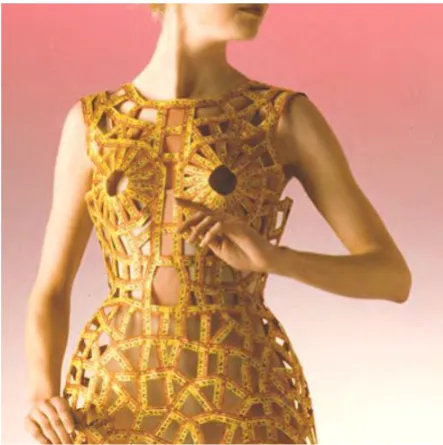
Artists now exploiting materials and processes traditionally associated with craft include Fiona Hall, Ilka White, Suzumi Noda (Figure 2), Rosemary O’Rourke, Freddie Robins, Anne Farren and Dave Cole (Figure 3). These are all contemporary artists who have used domestic craft techniques such as knitting, sewing, lace making and weaving to fulfil their artistic intent. The past five decades have seen an increase in practitioners using a diverse range of craft techniques in innovative ways to articulate the same broader social, cultural and political issues that concern contemporary artists. In doing so they lay bare common ground between art and craft as a means of creative expression. Work created at this junction signifies a change in visual art culture, indicating some collapse in established classifications.
[image:17.595.86.308.384.607.2]
Figure 2: Suzumi Noda, Doll in restricted clothing, 1995, clothing labels, dimensions variable.
Figure 3: Dave Cole, Knit Lead Teddy Bear, 2006, lead, 15.2 x 14 x 11.4 cm., Judi Rotenberg Gallery, Boston.
[image:17.595.324.517.384.609.2]
and activism includes a wave of practitioners enlisting craft techniques to voice their opinions and effect change.
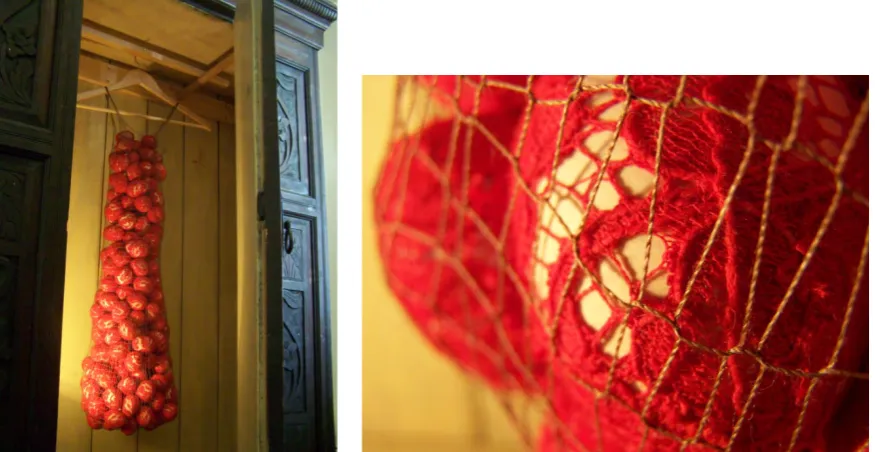
By exploiting the material and expressive potential inherent in craft I can activate the marginal, the trivial and kitsch. Recurrent feminine motifs in my work, such as sewing, embroidery, knitting, crochet, weaving and lace making, form a lexicon to be synthesised into constructs that, like beauty, can be delicate, ephemeral and vulnerable. Using stitching and embellishment as mutational tools, the humble strawberry becomes a shock of menstrual blood or an intricate swathe of cerise lace, the modest doily becomes the delicate couture of a woman’s clandestine undergarment.
Craft materials and processes possess tacit and persuasive languages, fertile with symbolic possibilities. The network of interweaving threads intrinsic to many craft practices is an evocative signifier of the far‐reaching scope of these approaches. Exploitation of this rich potential allows for successful interplay at the art/craft boundary and challenges stereotypes. It is my intention to transform often trivialised and mute craft objects and materials into articulate constructs.
CHAPTER TWO
Pattern Piece C – Interfacing – Cut 2: The boundary as
metaphor
Exploring the Interface centres on the concept of negotiating boundaries and how this intercession can become a metaphor for personal identity. My position at the interface between fine art and craft symbolises my negotiation not simply of the boundary between art and craft but also a range of boundaries that constitute the frayed edges of my inner and outer worlds. My work calls into play the concept of margins and how I negotiate those borderlands as I come to grips with my own femininity, subjectivity and corporeality.
In positioning myself, I was also confronted with the task of positioning the project. On numerous occasions throughout my research I was asked to categorise my practice. Past work has been realised through printmaking, but these processes do not play a role in my current work. Similarly, while dealing with traditional craft materials and processes, I do not perceive my work as textile. The classification of my work seemed laden with complications, defying taxonomy.
[image:19.595.139.471.431.686.2]
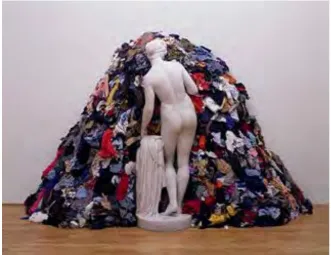
Figure 4: Michelangelo Pistoletto, Venus of the Rags, 1967, 1974, marble and textiles, dimensions variable, Tate Modern.
A focus on commonplace objects, hybridism, installation and ephemerality highlights parallels with the Arte Povera movement of the 1960s and 1970s (refer Figure 4). I am absorbed by the Povera artists’ focus, not only on expanding the gamut of art media, but also on the simple application of humble materials. Such lyrical simplicity that flies in the face of technology resonates with my handcrafted forms, prosaic objects and vulnerable or ephemeral installations. Arte Povera affirms a place for my work that does not fit neatly anywhere else. Richard Flood and Frances Morris write of Arte Povera:
Art could be made from anything … Art could be made in any way. It could be painted, handcrafted, industrially produced, gestured, spoken, written, acted, filmed, dreamed. It might exist as an object for time immemorial or as a momentary time‐based action (2001, p. 15).
According to Germano Celant, Arte Povera aimed at reformulating the object, using art practices that subverted the commodity of form and established canons, overcoming the barriers dividing ‘art’ and ‘life’ (Lumley 2004, p. 15). Through these subversions the concept of the boundary and the renegotiation of various established systems emerge. While I wish my objects to honour traditional craft techniques, I also desire for them a repositioning away from the craft object. My work relies on the recontextualisation of commonplace materials and objects in paradoxical ways, contradicting their innate qualities. Deconstruction through splitting the seams of the obvious wide open allows the object to be re‐read. The selection and positioning of those materials establishes a new symbolic order.
Simultaneously, I do not want to rely on the common strategy of many museums and galleries which (perhaps with the best of intentions) showcase the craft object as they would the sculpture, painting or artefact. I do not want my objects captives of a cabinet of curiosities but desire instead a space created as much by the objects within that space as by the walls that define its outer limits. Robert Lumley states:
For the [Arte Povera] artists, space and place were above all concerned with the relationship of the ‘virtual space’ of the work and the ‘real space’ of the gallery or site … this relationship underwent a series of radical transformations. The artwork changed in a number of respects as the traditional distinction between painting and sculpture gave way to hybrid solutions, installations and mixed media work. Ephemeral and time‐based works also challenged the dominance of the fixed object (2004, p. 20).
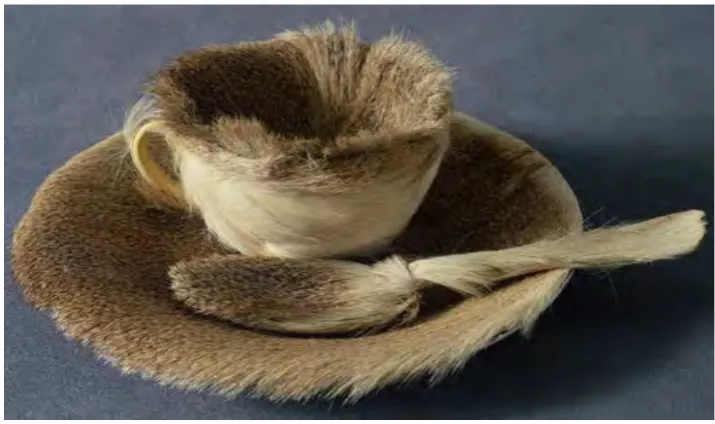
Here the concept of the ‘hybrid solution’ suggests a means of negotiating various boundaries and a point of collapse in traditional classifications of the art object. The interface between art and craft becomes a crucial point of interchange. Janis Jefferies explores Jacques Derrida’s classification of genre from his essay The Law of Genre which suggests a counter‐law to the law of purity, that of contamination (ed. Mitchell 2000, p. 44). Derrida refers to it as ‘a sort of participation without belonging – a taking part in without being part of …’ (1980, p. 59). By undermining the boundaries that define conventional practice, the rigid demarcation between one kind of practice and another becomes untenable. Jefferies suggests that this opens up the possibility for hybridised approaches defying categorisation and modifying the vernacular of visual language (ed. Mitchell 2000, p. 44). The hybrid form challenges many hierarchical structures and lays itself open to a range of coded meanings that can contaminate and cross‐pollinate the signifier. When a crafted or domestic object becomes art, when it is used to produce meaning, when it becomes a signifier, as in Anne Wilson’s heirloom linens or Fiona Hall’s knitted baby clothes (Figure 5), or Meret Oppenheim’s iconic fur teacup, then stereotypes, preconceptions and canons are subverted. By deconstructing the domestic object my work closes the gap between studio and home. My allusion to the past and to the women in my family establishes historical, social, economic and political connections between my work and ‘women’s work’, thus bringing to bear an exchange between the production of art and the day‐to‐day artefact of the domicile.
London artist Freddie Robins (McFadden 2007, p. 26) identifies knitting as an ideal instrument for challenging the boundaries between art and traditional craft practice. She explores this borderland with the object of undermining the viewer’s preconceptions of knitting as the province of the tea‐cosy‐wielding, stray‐cat‐collecting grandmother. Robbins challenges comfortable domestic associations of craft by rephrasing the presumably passive and mute domestic activity of knitting. Her knitted garb and installations intersect social and political issues to engage the viewer in dialogues that can be both humorous and disconcerting. Her invented items of clothing call into play the language of what we wear,
[image:21.595.88.294.284.548.2]13
evoking connotations of protection and constriction as well as the ever‐present intimation of corporeality and the body.
The garment is a metaphor in itself for some of the boundaries I explore, an aspect I will discuss in more detail in Chapter Four. As an outer skin for our bodies it is the membrane that separates us from the outside world, the interface that stands between inner and outer, our psychical and physical entities. It can be the threshold between the identity that we present to the world and those more private dimensions we keep for ourselves.
Concerned with the boundary between art and life, the domicile emerged as a possible site for my work. Although the gallery space remains a framing mechanism for my work, I question the dispassionate surface of the white wall within the gallery context. The work is meant to evoke a domestic space, thereby closing the distance between life and art. Intended to carry the stain of human occupancy in all its pedestrian banality, the work calls to mind the accumulated lint and detritus of those shameful corners, the carelessly discarded garment perhaps still warm, the stuffed‐full clutter of a world that is life’s third drawer. As Wim Beeren noted, ‘an exhibition … should be no more – and, above all, no less – than a “situation” ’ (Lumley 2004, p.
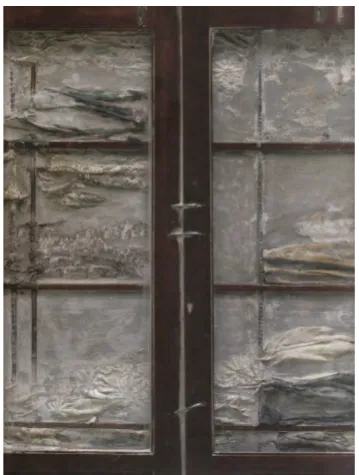
21). In Exploring the Interface the installations evoke domestic rooms rather than gallery spaces. Like Louise Bourgeois’ Cells cluttered with memory objects, Doris Salcedo’s furniture‐ filled chambers (Figure 6) or Magdalena Bors’ mystical realms that emerge from ordinary domestic spaces (Figure 7), the work inverts the hierarchical structure that privileges the well‐travelled realm of the public gallery over the intimacy of the floorboards and Persian rugs of our own private domain. Thus, the paradigm of value is shifted. The viewer is positioned as intimate participant, voyeur or guest, rather than detached spectator.
[image:22.595.341.521.228.466.2]
My work traverses paths between various dichotomous relationships exploiting the tensions of these liminal positions that can often result from a combination of binary opposition and shared signification. It unpicks the seams of these oppositional relationships and gathers up the broken threads to weave a personal narrative that explores my psychical and physical positions. The self is a construct of both public and private worlds, formed from societal input as well as the inner workings of our psyche, shaped by our inner and outer environments. Janis Jefferies highlights a correlation between the self and the edge, offering a metaphor for our defining margins:
An edge denotes a border, verge, boundary, frontier, margin, brink or limit … or a ridge where surfaces meet. The cut edges of some fabrics are particularly prone to fraying, thus running the risk of causing a falling apart at the seams or at the points of intricacy in the making up of the cloth. The same can be said of selves, or of other identities for which boundaries serve both to protect and form allegiances (ed. Mitchell 2000, p. 11).
In this project the interface has emerged as a device that strengthens or shores up the boundary between two surfaces, spaces or entities, symbolising the fortification of the self’s vulnerable edges that threaten to unravel.
In questioning my gender construct I have grappled with negotiating the social borderland I occupy, the interface of my inner and outer worlds. The process of making has made me more aware of my identity and gender construct. The act of working with cloth and thread becomes a metaphor in itself. Beyond the meditative rhythms of stitching, the remembering and forgetting that occurs while you work, is the process of constructing and deconstructing. You sew, you unpick and the marks of your actions are always visible. These threads become the things holding us together, the clothes we sew for ourselves, the monogrammed initials of another’s careless stitches, the steadfast cotton name tag sewn permanently into our skin by our mothers. My work has become a voicing of my ‘feminine’, my unique experience of my evolving gender.
Studio‐led research commenced with a consideration of objects, materials and pursuits associated with craft and femininity that soon led me down the rabbit hole of my childhood. School came flooding back to me in a torrent of memories. Bean‐filled frog toys cut from violent green gabardine hand‐stitched by awkward ten‐year‐old fingers. Frustrated boys looking longingly out windows, yearning instead for the game of rough and tumble. Girls
exuding understated smugness, quietly aware, even at this age, of the role society had appointed them.
Secondary school brought with it more pronounced gender delineation. The 1980s curriculum in country Queensland was strongly gender specific. Students exited the school gates on Friday afternoons, girls cradling still‐warm Pyrex casserole dishes full of macaroni and cheese, boys sporting handcrafted wooden spice racks; all, it seemed, was natural and right with the world. Never resentful of my time spent in the kitchen, I loved to cook, sew and knit, but I was keenly aware of the lack of boys around me.
At thirteen, in some odd rite of passage, girls and boys were separated. To this day I do not know what the boys did one day a week but the girls entered the sacred realm of mothercraft. For one session a week we were introduced to our role as the bearers of life. I had looked forward to this activity with anticipation and excitement. The accompanying scrapbooks my two elder sisters compiled were exquisite tomes, lovingly illustrated with precisely excised pictures from magazines and wrapping paper, decorated with glitter in alternating themes of pink and blue, that beckoned to a young girl promising the beautiful world of maternity. I believed that with this wisdom would come the appropriate maternal instincts that had eluded me thus far. This would be my lesson in how to be a woman. But, instead of enlightenment, I felt only the bitter sting of disparity and isolation. For the first time in my life I became acutely aware that there were social expectations of my gender and that I had no intention of meeting them.
CHAPTER THREE
Cut from the Same Cloth: Exploring the mother/child dyad
While exploring concepts of identity I became interested in the role of the mother/daughter relationship in shaping my own femininity. My inherited craft skills facilitated an investigation of my maternal relationships and how these associations contributed to my identity and gender construct. Many psychoanalytic and object‐relations theories suggest that subjectivity is formed with the rejection of the mother. This affords a greater understanding of my ambivalent maternal relationship. I traverse the borderland of the child/mother dyad, hovering at this antagonistic and reparative disjuncture, tormented by a desire to disconnect from the maternal and an undeniable bond with the one who gave me life.
This ambiguous state is explored by object‐relations theorist Melanie Klein (Doane & Hodges 1992, p. 10) who identifies two crucial phases in child‐development: the ‘paranoid‐schizoid position’, defined by a need to symbolically destroy the mother followed by anguish and remorse; and the ‘depressive position’, characterised by an innate readiness to love and repair the maternal object. Klein explains that this position is never resolved and therefore we are never completely done with the mother.
DW Winnicott has a similar but more romanticised view of child‐development, adding that maternity is a biological instinct reflected in the female child’s play with dolls (Doane & Hodges 1992, p. 19). My reading of Winnicott did nothing to allay my feelings of difference. I am troubled by his doll reference (I did not play much with dolls) and bewildered by the transcripts from his 1950s radio broadcasts outlining his maternal paradigm. Assertions such as the following left me confounded:
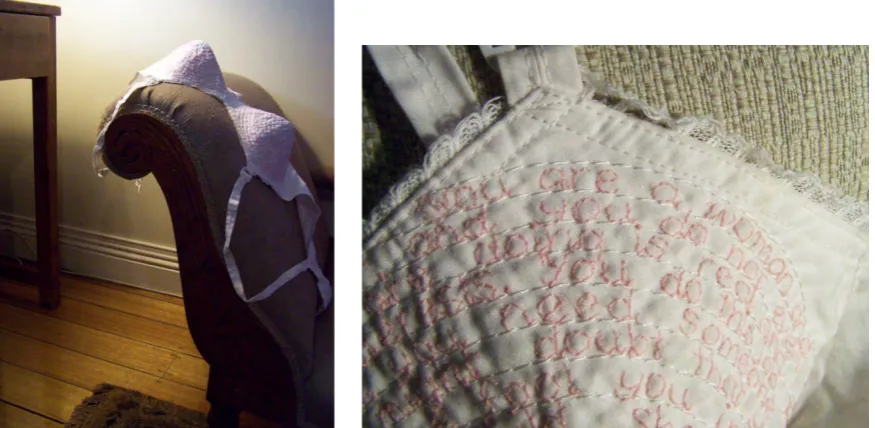
‘You’ are a woman and ‘the beauty of it is that you do not have to be clever, and you do not even have to think if you do not want to’. What you are doing is ‘real’ and ‘natural.’ It has led you to give up all other interests (Doane & Hodges 1992, pp. 23‐ 24).
These broadcasts took place, coincidentally, when my mother was a young woman embarking on her journey as wife and mother. Not that she would have heard these broadcasts but they say much about the social climate of the time.
Subsequently I was impelled to incorporate portions of these broadcasts into my work Restrained Memory (Figure 8). Pertinent tracts relating to the bonding process of breastfeeding were embroidered onto sturdy cotton foundation garments. The clarity of text and the bodily implication of the garment are intended to evoke the cultural imperative of motherhood. The proximity of this garment simultaneously alludes to the intimacy of the maternal relationship and the constriction of obligation.
[image:26.595.88.526.201.415.2]
Figure 8: Sue Jackson, Restrained Memory (including detail), 2011, vintage cotton bra, thread, dimensions variable.
Renee Baert (ed. Deepwell 1998, p. 176) explores Sigmund Freud’s identification of female subjectivity as problematic because of the difficulty women have separating from their mothers, with whom they identify closely. Freud posits the phallus as a signifier of the separation and individuation required for the formation of subjectivity. Without a penis, a woman’s subjectivity is structured around the lack or absence of a symbolic signifier. Baert cites Luce Irigaray who insists that the non‐existence that signifies woman – and which inevitably infects the mother‐daughter relationship – leaves women in a state of dereliction (ed. Deepwell 1998, p. 177). In this position women occupy either the role of object (of desire) or vessel (mother).
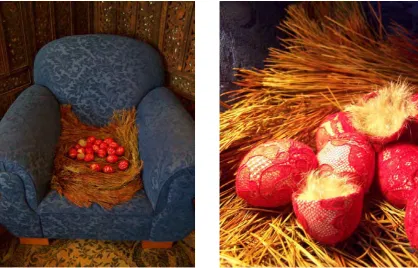
In my work Primordial Vessel (2011) (Figure 9) I aimed to create tension between the paradoxical conditions of maternity and infertility. Icons of fertility spill from an expectant vessel in a cascade that swings between lush fecundity and futile waste. The innocuous fillings of eggs hint at the redundancy of the otherwise fertile motifs.
Figure 9: Sue Jackson, Primordial Vessel (including detail), 2011, thread, vintage lace, egg shells, dimensions variable.
Nancy Chodorow (Doane & Hodges 1992, p. 38) explores the maternal relationship, also claiming that sexual difference allows for a son’s easier dislocation from the maternal whereas a daughter finds individuation more troublesome. Chodorow writes at length about the specific relationship between mother and daughter: ‘In this relational account of female identity many feminists have found the basis for a specifically female poetics that dramatises the fusion and separation of mother and daughter’ (Doane & Hodges 1992, pp. 42‐43). I allude to this relationship in my work through the juxtaposition of various pairs throughout my installation. Gloves along with garments and shoes of varying size reside together in constructs of mother and daughter. Chodorow’s work holds sway with me, going some way towards gathering up the threads of my frayed self and providing some rationalisation for ambivalent feelings.
Julia Kristeva (Doane & Hodges 1992, pp. 65‐66) agrees that all children must reject the mother in order to form a healthy subjectivity and that females find this task much more difficult than males. She equates this separation with metaphorically murdering the mother. This dead mother becomes a dysfunction of the woman until she is liberated by her own pregnancy, fulfilling the final stage in her femininity – her reproductive providence. True achievement and happiness comes only with the jouissance of motherhood.
altogether or to read into her theory the escape clause of artistic production (or similar) as a surrogate for childbearing. In fact many of the psychoanalytic and object‐relations theories become problematic for me, for if followed, I would be positioned as a dysfunctional, paranoid psychopath. I believe instead they provide firstly an opportunity for self‐ examination and, as Doane and Hodges suggest, an occasion for close scrutiny of overbearing theories that have either reinforced a patriarchal culture or done little to dispute it (1992, p. 78). My position on the ledge begins to look less precarious as the vertigo subsides.
John Lechte identifies Kristeva’s process of separation from the mother as essential to the formation of the ego. Kristeva also recognises it as a process tarnished by psychic pain and the vacuity of loss where there was once the comforting nurturance of union with the mother (eds Fletcher & Benjamin 1990, p. 29). These feelings reverberate on into adulthood and manifest themselves in my art. Here the mother becomes an ambivalent symbol hovering at the threshold between oneness and separation; between holding on and letting go, she embodies both nurturer and aggressor. This process of separation appears to be unconscious, an instinctive action on behalf of the child. Although it makes sense to us now, we have no recollection of this stage of our burgeoning egos. But what if this process were repeated consciously as an adult? Does such metacognitive awareness result in the production of art? This developmental process culminates in the child entering the realm of language, becoming a speaking being able to define self. Similarly, by exploring the body’s psychical and physical boundaries, can I adopt a symbolic position through visual language? Just as Kristeva’s child negotiates the spaces between subject and object, I explore some of the binary relationships that contribute to my identity.
Considering the work of women artists who explore the experience of motherhood, such as Lindsay Obermeyer and Kay Lawrence, I cannot help feeling like the only non‐English‐ speaking person in the room. Besides the common human denominators – joy, sorrow, pain, fear – I cannot relate. Obermeyer explores the relationship between mother and daughter through textile‐based works that draw from the traditional processes of knitting. Obermeyer’s Encircled (1997) (Figure 10) is an exaggerated sweater that joins two jumpers into one corpus, a perpetual loop bonding mother and daughter. This artwork raises ‘… questions that circulate around psychic boundaries, split subjectivities and the psychic residue of the complex negotiation for the feminine subject of her separation from the … maternal object’ (Jefferies 2001, p. 13).
Figure 10: Lindsay Obermeyer, Encircled, 1997, knitted mohair, 50.8 cm x 48.3 cm (x 2) with 213.4 cm sleeves.
I have never been a mother nor felt the instinct to which many women refer, that desire, either deep and eternal or slight and passing, to be a mother. I have but one foundation for connection, the indisputable position of daughter. The work of Barbara Hanrahan therefore provides a closer parallel with my position. Choosing not to have children, Hanrahan instead poured all her energy into her work. The ever‐present mother (or grandmother) in her etchings speaks of the maternal relationship depicting the love, tenacity and sacrifice of the mother from the perspective of a childless daughter. They also tell of the strong generational and communal bond between women.
community and history – a sense of ownership and responsibility for those things that define our gender, those things to be passed on from one generation to another, mother to daughter. When I needed wooden cotton spools my mother again flew into action, unwinding hundreds of metres of thread to provide me with naked reels. The network of local ladies was activated once more to donate to my artistic cause. It is important that my mother and I can have this connection, albeit a simple one. It is some small common ground that unites us, if only momentarily, in time.
I occupy the ambivalent position of one who desires a mother who fulfils all the social determinations of maternity, yet subverts the cultural obligation of motherhood herself. I yearn for the maternal archetype but simultaneously lament her lost opportunities and unrealised dreams. I also mourn the maternal void that may only be filled when I can empathise with my mother’s condition by becoming a mother myself. In negotiating this position I am keenly aware of the weight of social judgement. Although I function outside the boundaries of motherhood, I am still contained within the borders that partition gender roles. Despite biological impossibility I am constantly urged to adopt or foster as if motherhood was an imperative to be met at all costs.
[image:30.595.103.522.404.672.2]
Figure 11: Sue Jackson, Hysterics Bower (including detail), 2011, vintage lace, thread, egg shells, rabbit fur, glue, organic nest matter, dimensions variable.
(2010‐11) (Figure 15) and Truisms (2010‐11) (Figure 25), her body that houses the fertile surplus in Primordial Vessel (2010‐11) (Figure 9), Hysterics Bower (2011) (Figure 11) and Surfeit (2011) (Figure 14). Mothers are meant to personify the intrinsic qualities of nurturance, tolerance, endurance and love. The maternal object made material in my work is somewhat more inscrutable, perhaps because she is an amalgam of all the mothers in my life. She is also me. She is teacher, warden, nurse, tyrant. She stumbles and falters but always maintains her balance on the precipice that she negotiates between her inner and outer worlds, between culture and nature, between what is expected of her and what is inside her.
CHAPTER FOUR
Scraps, Offcuts and Remnants: Exploring the corporeal
This chapter addresses the interconnected concepts of corporeality, the body and identity. I exploit material vulnerability and ephemerality as a metaphor for the impermanence of the body and explore materials and garments as bodily surrogates and metaphoric representations of the physical and psychical boundaries of self. I also examine theories of abjection as a means of exploring these liminal spaces.
René Baert asserts that ‘Few objects… have the mnemonic force and bodily aura of clothing: it is the very tissue between self and the social, the psychic and social boundaries’ (ed. Mitchell 2000, p. 3). The garment first appeared in my work as an embodiment of the childhood memory of my mother donning layers of resolute undergarments, building to an ultimate husk. In a way she was piecing together an identity, one that I now understand was partly constructed for her by the social constraints of her gender.
The identification of gender through a simple garment such as a petticoat or slip became a paradigm to follow. Cloth and clothing are embedded with a range of historical, cultural and personal significances. I rely on the site of my work (both the domestic space and the garment) being predetermined, already entangled in a system of implications. My choice of objects and garments derives from culturally and mnemonically inherited stereotypes of gender. These are the commonplace, the undergarments of a woman’s day‐to‐day existence, the trappings of her reality. They are metaphors for my identity. They are pattern pieces to be stitched together into a gendered garment, leaving my fingers bleeding from the pinpricks suffered in the making.
The garment can not only stand for the body and the psyche, but can also carry a history symbolically embedded in fabric that possesses the potential to tell real stories of the known as well as imagined stories of the unknown. When selecting and working with garments – handling, smelling, washing and stitching – I engage with them on a sensory level. In this way I can dwell in their memory, calling to mind not only the implication of another’s life, narrative and body but also my own body, inciting a kind of corporeal awareness.
its interior becoming a metaphor for inward delving or withholding what you do not want seen or known. The insides of my gloves are embellished with incongruous lining that invites the investigation of touch and smell and alludes to some secret, sacred interior.
[image:33.595.125.483.132.344.2]
Figure 12: Meret Oppenheim, Déjeuner en Fourrure, 1936, fur‐covered cup, saucer, and spoon, cup 10.9 cm in diameter; saucer 23.7 cm in diameter; spoon 20.2 cm long, overall height 7.3 cm, Museum of Modern Art.
Figure 13: Sue Jackson, glove from Fits Like a Glove series (including detail), 2010, vintage glove, rabbit fur, thread, dimensions variable.
[image:33.595.152.455.413.642.2]
and subtexts beyond my control. A dominant reading of this work is as a Freudian fetish object: the fur becomes pubic hair, the cup a vagina and the act of drinking mirrors oral sex. My Fits Like a Glove series (2011) (Figure 13 & Figure 20) references female sexual or reproductive organs hanging limp to evoke a sense of impotence, loss and emptiness but also an air of anticipation and promise of fulfilment.
The psychoanalytic and feminist writings of theorists such as Jacques Lacan, Julia Kristeva and Luce Irigaray have informed artistic practice since the 1970s, giving rise to the body‐ based artwork. Kristeva’s theories on the abject are useful as a source of metaphoric representation. Elizabeth Gross (eds Fletcher & Benjamin 1990, p. 86‐87) summarises Kristeva’s theory of abjection, explaining that healthy subjectivity is formed by the expulsion of the improper, unclean and disorderly element of one’s corporeal existence. The abject normally takes the form of substances that enter and leave our bodies in the course of our various bodily cycles. Kristeva also claims that these things are never fully expelled from our selves but are held at bay, lingering on the borderlands of our social identity. I am drawn to the liminal aspects of the abject as a means of exploring notions of the physical and emotional body. Elizabeth Grosz (1994, pp. 192‐193) explores the polarised positions of inside and outside, identifying the abject as belonging to both and suggesting that we occupy the perilous interface between the two until death pushes us beyond this threshold.
[image:34.595.87.523.444.649.2]
Figure 14: Sue Jackson, Surfeit (including detail), 2011, cotton crochet, thread, dehydrated strawberries, dimensions variable.
feminine, the excess that escapes. The undergarment is encoded feminine by its lacy adornment and the physical sign of ‘other’.
An introspective meditation has led to the recognition of the abject as not only my bodily residue of fertility but also my psyche’s rejection of maternity. No longer able to expel my reproductive waste I have found an alternative means of symbolically vanquishing the unwanted and unnecessary. The egg, as a manifestation of the abject, is both rejected from and embraced by my body in an attempt to reconcile my physical and psychical self. My eggs have been pushed to the edge of this symbolic threshold. Unwilling to embrace these objects yet unable to fully renounce them, they occupy a tangible position on display. Symbolically they waver between acceptance and rejection, desire and denial, swinging between letting go and holding on, discretion and confession. The egg changes significance as it sways between inside and outside. Inside the body it is a condition of fertility, generation and potential, outside the body it becomes a symbol of death and waste.
[image:35.595.91.522.346.597.2]
Figure 15: Sue Jackson, It’s not you! (including detail), 2011, human hair, cotton thread, dimensions variable.