A professional development framework
for technology integration
A dissertation submitted by
Thomas L Otto
Dip.Teach.(Prim.), Grad.Dip.Ed.Admin., Grad.Dip.Ed.(Exceptional Chn.), B.Ed., M.Ed., Ed.D.
For the award of
Master of Philosophy
Faculty of Education
University of Southern Queensland
Abstract
A professional development framework emerged in a project to support teachers and school
administrators in the classroom implementation of ePortfolios. The framework is a checklist of
questions to guide the design, evaluation, and sustaining of a constructivist learning
Certification of Dissertation
I certify that the ideas, analyses and conclusions reported in this dissertation are entirely my
own effort, except where otherwise acknowledged. I also certify that the work is original and
has not been previously submitted for any other award, except where otherwise acknowledged.
____________________________
___________
Signature of Candidate
Date
Endorsement
____________________________
___________
Signature of Supervisor
Date
____________________________
___________
Acknowledgements
Sincere thanks to my supervisor, Associate Professor Peter Albion. Besides providing timely
advice, Peter helped make the journey to be meaningful and worthwhile. He encouraged me to
publish my work in a book chapter, to be involved in the delivery of relevant tertiary courses,
and to serve on the editorial board of the AACE journals. Peter‟s contacts and networking skills
opened a new world of sharing and learning. This is the second doctoral dissertation that Peter
has supervised for me, and I have enjoyed our conversations over the past eleven years.
I would also like to thank my associate supervisor, Dr Shirley Reushle, and Dr Henriette van
Rensburg for reading the final drafts. I acknowledge and thank the Dean and members of the
Faculty of Education, University of Southern Queensland for their encouragement.
I acknowledge and thank the many participants involved in the professional development
projects reported in this study. The enthusiasm and commitment of these teachers and school
administrators was energising, and their willingness to learn, experiment, and share their
perceptions and achievements is evident throughout the dissertation.
I thank my wife, Joanne, for her patience, understanding, and support throughout the project.
Thanks also to our parents and to our children, Ben, Elizabeth, Daniel, David, and Rebecca,
who each contributed in their own way.
Dedication
In memory of my son
Andrew Thomas Otto,
Table of Contents
CHAPTER 1: BACKGROUND TO THE RESEARCH PROBLEM ... 1
1.1 Professional Development for Technology Integration ... 1
1.2 Issue #1: What Constitutes Quality Professional Development? ... 3
1.2.1 Sustained and Rigorous with On-going Support ... 4
1.2.2 Promotes Collaboration ... 5
1.2.3 Meets Teacher Needs in a Specific Context ... 5
1.2.4 Supported by Supervisors ... 6
1.2.5 Multiplicity of Effects ... 7
1.3 Issue #2: Changing Teaching Practices and Improving Student Learning ... 7
1.3.1 Exemplary Teaching with Technology ... 8
1.3.1.1 Definition of knowledge ... 8
1.3.1.2 Traditional and constructivist-compatible approaches to teaching ... 9
1.3.2 Reconciling Constructivist and Objectivist Methods ... 10
1.3.3 Implications for Professional Development for Technology Integration ... 11
1.3.4 Student Outcomes ... 13
1.3.5 Measuring Change... 13
1.4 Issue #3: Changing Teachers’ Beliefs ... 14
1.4.1 Definition of Beliefs ... 15
1.4.2 Beliefs about Teaching ... 15
1.4.3 Teaching as an Ill-Structured Domain ... 16
1.4.4 Changing Teachers‟ Beliefs ... 18
1.4.5 Beliefs, Principles, and Practices ... 19
1.4.6 Self-Efficacy ... 19
1.4.7 Previous Study of Beliefs about Teaching with ICTs ... 20
1.5 Towards a New Approach ... 21
1.5.1 Constructivist Learning Environments ... 22
1.5.2 An ePortfolio Professional Development Project ... 23
1.6 The Investigation ... 23
1.6.1 Research Questions ... 24
1.6.2 Objectives of the Study ... 24
CHAPTER 2: LITERATURE REVIEW ... 25
2.1 Instructional-Design Theory ... 26
2.2 Constructivist Learning Environments ... 26
2.3 Instructional Design of the Project ... 28
2.3.1 Needs and Task Analysis ... 30
2.4 The Issue ... 31
2.4.1 ePortfolios ... 31
2.4.2 ePortfolios Defined ... 32
2.4.3 Old and New Pedagogies ... 33
2.4.4 Levels of Change in Teaching Practices ... 37
2.4.5 ePortfolios as a Continuum ... 39
2.4.6 ePortfolio Stages of Development ... 41
2.4.7 Authentic Pedagogy ... 44
2.4.8 Authentic Assessment ... 45
2.4.9 Computer Literacy and Computer Awareness... 47
2.4.10 Information Literacy ... 48
2.4.11 Multiple Intelligences ... 49
2.4.12 Content of ePortfolios ... 50
2.4.13 Hardware ... 51
2.4.14 Software ... 52
2.4.15 Evaluating ePortfolios ... 53
2.4.16 Issues with ePortfolios ... 54
2.4.17 Implementing ePortfolios ... 55
2.6 Performance Environment ... 57
2.6.1 Outcomes Approach to Education ... 57
2.6.2 The Queensland Curriculum ... 58
2.6.3 Essential Learnings ... 59
2.7 Community of Practice ... 60
2.7.1 Characteristics of Experts or Professionals ... 60
2.7.1.1 Innovativeness and openness to change ... 61
2.7.1.2 Motivation and self-regulation ... 61
2.7.1.3 Types of professional knowledge ... 63
2.7.2 The Role of School Administrators ... 63
2.7.2.1 Development and communication of a vision ... 64
2.7.2.2 Modelling the use of technology ... 64
2.7.2.3 Modelling the teaching of technology ... 65
2.7.2.4 Planning and implementation of policy... 65
2.7.2.5 Managing resources ... 65
2.7.2.6 Staff development ... 66
2.7.3 The Beliefs of Administrators ... 67
2.8 Representation of the Issue ... 67
2.9 Issue Manipulation Space ... 68
2.9.1 Metacognition and Reflection ... 68
2.10 Related Cases ... 70
2.10.1 Story ... 70
2.10.1.1 Stories in the workplace ... 71
2.10.2 Cases ... 72
2.10.3 A Case Library ... 73
2.10.4 Case-Based Reasoning ... 74
2.10.4.1 Case-based Reasoning in Education... 75
2.11 Information Resources ... 76
2.12 Tools ... 77
2.12.1 Cognitive Apprenticeship ... 78
2.13 Social and Contextual Support ... 79
2.14 Goals in the Experienced Cognition Framework ... 80
2.15 Similar Projects ... 81
2.16 Summary ... 82
CHAPTER 3: RESEARCH QUESTIONS AND METHODS ... 84
3.1 Research Questions ... 84
3.2 Research Plan for the Study ... 85
3.2.1 Similar Studies using the Learning Centred Evaluation Framework (LCEF) ... 86
3.3 Methodology ... 87
3.3.1 The Researcher as Participant ... 90
3.4 Data Collection ... 91
3.4.1 Instrumentation Description ... 92
3.4.2 Population and Sample ... 94
3.4.3 Data Collection Procedures ... 95
3.4.3.1 Surveys ... 96
3.4.3.2 Presentations and ePortfolios ... 96
3.4.3.3 Interviews ... 96
3.4.3.4 Online interactions ... 97
3.4.3.5 Documents ... 98
3.5 Data Analysis ... 98
3.5.1 Coding of the Data ... 100
3.5.2 Selection and Organization of Data ... 100
3.6 Controls for Threats to Internal Validity ... 102
3.7 Controls for Threats to External Validity ... 103
3.9 Summary ... 104
CHAPTER 4: RESULTS... 106
4.1 The Professional Development Framework ... 106
4.2 The ePortfolio Project... 108
4.3 ePortfolio Project Phase 1: Investigate and Plan Activities ... 108
4.3.1 The Issue ... 109
4.3.1.1 What is the issue? ... 110
4.3.1.2 Why is this issue important? ... 110
4.3.1.3 What data supports the importance of the issue? ... 112
4.3.2 The Changes ... 112
4.3.2.1 What are the new practices? ... 112
4.3.2.2 How are the new practices different from old practices? ... 113
4.3.2.3 How do the new practices fit the context? ... 113
4.3.3 The Learners ... 115
4.3.3.1 Who are the learners? ... 116
4.3.3.2 What beliefs do the learners hold? ... 116
4.3.3.3 What skills and experiences do the learners have and need? ... 118
4.3.4 Engaging the Learners ... 119
4.3.4.1 What is so compelling about the issue? ... 119
4.3.4.2 How will the learner be encouraged to engage with the issue? ... 119
4.3.4.3 How will learner engagement be sustained? ... 119
4.3.5 The Context of the Professional Development ... 119
4.3.5.1 Where will the learning take place? ... 120
4.3.5.2 What are the impacts of the learners‟ work places? ... 121
4.3.6 Related Cases ... 121
4.3.6.1 Woodcrest State College... 121
4.3.6.2 Pozieres State Primary School ... 122
4.3.6.3 Gatton State Primary School ... 122
4.3.6.4 Crow‟s Nest State P-10 School ... 123
4.3.6.5 Clifford Park Special School ... 123
4.3.6.6 Helidon State Primary School ... 124
4.3.6.7 Wilsonton State Primary School ... 124
4.3.6.8 Glenvale State Primary School ... 125
4.3.6.9 Centenary Heights State High School ... 125
4.3.6.10 Withcott State Primary School ... 126
4.3.6.11 How will learners access similar cases? ... 127
4.3.6.12 How will learners be encouraged to use Case-Based Reasoning? ... 127
4.3.6.13 How will the new cases be recorded, stored, and accessed? ... 127
4.3.7 Information Resources ... 128
4.3.7.1 What information will learners need? ... 128
4.3.7.2 How will learners access information? ... 129
4.3.7.3 What support will learners need to understand the information? ... 130
4.3.8 Tools ... 130
4.3.8.1 What physical tools will learners use? ... 130
4.3.8.2 How will learners develop skills in these tools? ... 132
4.3.8.3 What thinking tools will learners use? ... 132
4.3.8.4 How will learners develop skills in these tools? ... 132
4.3.8.5 What communication tools will learners use? ... 132
4.3.8.6 How will learners develop skills in these tools? ... 133
4.3.9 Social and Contextual Support ... 133
4.3.9.1 What factors will impact on implementation? ... 134
4.3.9.2 What support will learners need?... 134
4.3.9.3 Who will provide learner support? ... 134
4.3.10 Activity Planning... 134
4.4 ePortfolio Project Phase 2: Trial, Reflect, and Modify ... 135
4.4.1 Is the assessment of activities workable? ... 137
4.4.2 Are the activities workable and what changes need to be made? ... 137
4.4.2.1 Workshop sessions (after school and whole day) ... 138
4.4.2.2 Workshop evaluations ... 139
4.4.2.4 The Learning Place Project Room ... 143
4.4.2.5 All-in-One Sessions on ePortfolios ... 143
4.4.2.6 ePortfolio Playground ... 145
4.4.3 Will the activities achieve the desired learning outcomes?... 146
4.4.4 Is the assessment of learning outcomes workable? ... 146
4.4.5 Will the learning outcomes have the desired effect on practices? ... 146
4.5 ePortfolio Project Phase 3: Implement and Reflect ... 146
4.5.1 How effective was the project in changing practices? ... 146
4.5.2 How efficient was the project in changing practices? ... 148
4.5.3 What are the recommendations for planners of similar projects? ... 149
4.6 ePortfolio Project Phase 4: Sustain and Monitor ... 150
4.6.1 What needs to happen to sustain learning? ... 150
4.6.2 What needs to happen to sustain changes in practices? ... 150
4.6.3 What were the benefits to the organization? ... 151
4.7 Refining the Professional Development Framework ... 152
4.8 Success for BoysProject ... 153
4.8.1 The Issue ... 153
4.8.1.1 Design of the professional development ... 154
4.8.1.2 The context of the professional development ... 154
4.8.1.3 The changes... 155
4.8.1.4 The learners ... 156
4.8.2 Related Cases ... 156
4.8.3 Information Resources ... 157
4.8.4 Tools ... 157
4.8.5 Social and Contextual Support ... 157
4.8.6 Planning for School Projects... 158
4.8.7 Effectiveness of the Project ... 159
4.9 ICTs in Mathematics Project ... 160
4.10 Regional Professional Development ... 161
4.11 Summary ... 162
CHAPTER 5: CONCLUSIONS... 163
5.1 Research Question One ... 164
5.1.1 Issues with the Professional Development Framework ... 167
5.2 Research Question Two ... 168
5.3 Research Question Three ... 169
5.4 Conclusions about the Topics of the Projects ... 170
5.4.1 ePortfolios ... 171
5.4.2 Success for Boys ... 171
5.4.3 ICTs for Mathematics ... 172
5.5 Principles of Effective Professional Development ... 172
5.5.1 Principle 1: Content is Integrated with other Initiatives and Practices. ... 173
5.5.2 Principle 2: The Approach is Systematic ... 173
5.5.3 Principle 3: Teachers become Researchers ... 173
5.5.4 Principle 4: Teachers become Learners ... 174
5.5.5 Principle 5: Beliefs are Challenged... 175
5.5.6 Principle 6: The Focus is on Pedagogy ... 175
5.5.7 Principle 7: Learning is Contextualized ... 176
5.5.8 Principle 8: Learning Involves the Community of Practice ... 176
5.5.9 Principle 9: Technology is used ... 176
5.5.10 Principle 10: Learning is Undertaken in a Supportive School Culture ... 176
5.6 Features of the Research ... 177
5.6.1 The Researcher as Participant ... 177
5.6.2 Limitations of the Study ... 178
5.6.3 Significance of the Study ... 178
5.6.4 Implications for Leadership ... 178
5.6.5 Further Studies ... 179
References... 180
Appendix A: Sources of New Information to Confront Principals’ Beliefs ... 194
Appendix B: Professional Development Framework... 195
Appendix C: ePortfolio Project Instruments ... 202
Appendix D: ePortfolio Project Activities ... 205
Appendix E: ePortfolio Project Information Resources ... 250
Appendix F: ePortfolio Project Cases ... 271
Appendix G: Success for Boys Project ... 305
Appendix H: ICTs in Mathematics Project ... 316
Appendix I: Regional Professional Development Projects ... 319
[image:10.595.60.481.290.599.2]List of Figures
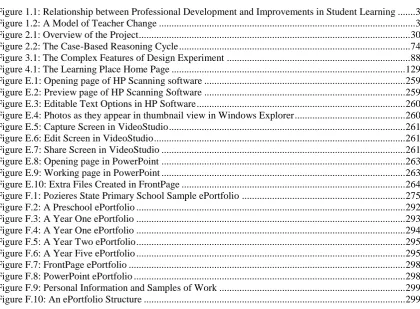
Figure 1.1: Relationship between Professional Development and Improvements in Student Learning ... 3Figure 1.2: A Model of Teacher Change ... 3
Figure 2.1: Overview of the Project ... 30
Figure 2.2: The Case-Based Reasoning Cycle ... 74
Figure 3.1: The Complex Features of Design Experiment ... 88
Figure 4.1: The Learning Place Home Page ... 129
Figure E.1: Opening page of HP Scanning software ... 259
Figure E.2: Preview page of HP Scanning Software ... 259
Figure E.3: Editable Text Options in HP Software ... 260
Figure E.4: Photos as they appear in thumbnail view in Windows Explorer ... 260
Figure E.5: Capture Screen in VideoStudio ... 261
Figure E.6: Edit Screen in VideoStudio ... 261
Figure E.7: Share Screen in VideoStudio ... 261
Figure E.8: Opening page in PowerPoint ... 263
Figure E.9: Working page in PowerPoint ... 263
Figure E.10: Extra Files Created in FrontPage ... 264
Figure F.1: Pozieres State Primary School Sample ePortfolio ... 275
Figure F.2: A Preschool ePortfolio ... 292
Figure F.3: A Year One ePortfolio ... 293
Figure F.4: A Year One ePortfolio ... 294
Figure F.5: A Year Two ePortfolio ... 295
Figure F.6: A Year Five ePortfolio ... 295
Figure F.7: FrontPage ePortfolio ... 298
Figure F.8: PowerPoint ePortfolio ... 298
Figure F.9: Personal Information and Samples of Work ... 299
List of Tables
Table 1.1: Preconditions for Success and Barriers ... 7
Table 1.2: Philosophy Index ... 9
Table 1.3: Fostering Knowledge Construction through Direct Instruction ... 11
Table 1.4: Well- and Ill-Structured Problems ... 16
Table 1.5: Principles of Learning in Complex and Ill-Structured Domains ... 17
Table 1.6: Implications for the Design of Situated Learning Environments ... 22
Table 2.1: Elements of a Constructivist Learning Environment ... 29
Table 2.2: Technology Supported Portfolios ... 32
Table 2.3: Views of Knowledge in Old and New Pedagogies ... 34
Table 2.4: Attributes of Traditional and Integrated Classroom Environments ... 35
Table 2.5: Instruction Types ... 35
Table 2.6: Level of Technology implementation (LoTi) ... 37
Table 2.7: Levels of Instructional Practices ... 38
Table 2.8: Changes in Instructional Strategies ... 39
Table 2.9: Positivist and Constructivist ePortfolios ... 40
Table 2.10: Deep Learning versus Surface Learning ... 41
Table 2.11: Levels of ePortfolio Implementation ... 41
Table 2.12: Developmental Stages of ePortfolios Designed with Generic Tools ... 42
Table 2.13: Portfolio and Multimedia Development ... 43
Table 2.14: Stages of ePortfolio Development ... 43
Table 2.15: Approaches to Learning ... 45
Table 2.16: ePortfolios to Support Assessment of and for Learning ... 46
Table 2.17: Levels of Technology Skills Required ... 47
Table 2.18: Multimedia Contribution to Gardener‟s Multiple Intelligences Theory ... 49
Table 2.19: Types of Evidence in ePortfolios ... 50
Table 2.20: Pedagogical Requirements of Paper-Based and Electronic Portfolios ... 51
Table 2.21: Applications of Software for ePortfolios... 53
Table 2.22: Levels of ePortfolio Software ... 53
Table 2.23: Evaluating ePortfolios ... 54
Table 2.24: Just Plain Folks, Student, and Practitioner Activity ... 56
Table 2.25: From Input-Driven to Outcome-Based Programs ... 58
Table 2.26: Types of Professional Knowledge... 63
Table 3.1: Evaluation Model ... 87
Table 3.2: Six Steps in the Analysis of Data ... 98
Table 3.3: Indexing Stories ... 102
Table 4.1: Phases of the Professional Development Framework ... 107
Table 4.2: Activities for Each Element of the Constructivist Learning Environment ... 109
Table 4.3: ePortfolios and System Imperatives ... 110
Table 4.4: Education Queensland ICT Pedagogical Framework ... 114
Table 4.5: Hardware ... 131
Table 4.6: Software ... 131
Table 4.7: Structure and Contents of the CD-ROM ... 142
Table 4.8: Success for Boys Resources ... 157
Table 4.9: Ten Principles of Effective Professional Development ... 161
Table A.1: Sources of New Information to Confront Principals‟ Beliefs ... 194
Table B.1: Facilitators Action Plan ... 195
Table B.2: Participant Action Plan ... 199
Table C.1: Workshop Survey ... 202
Table D.1: List of Named Participants ... 206
Table D.2: Workshop Evaluation Summary (October, 2004) ... 215
Table D.3: Workshop Evaluation Summary (February, 2005)... 230
Table D.4: Workshop Evaluation Summary (March, 2005)... 232
Table D.5: Workshop Evaluation Summary (April, 2005) ... 235
Table D.6: Workshop Evaluation Summary (August, 2005) ... 240
Table D.7: Workshop Evaluation Summary (October, 2005) ... 242
Table D.8: Funding Distribution ... 242
Table D.9: All-in-one Session Presentation ... 244
Table D.10: Darling Downs-South West Education Region Training Program ... 248
Table E.1: Philosophy Index ... 253
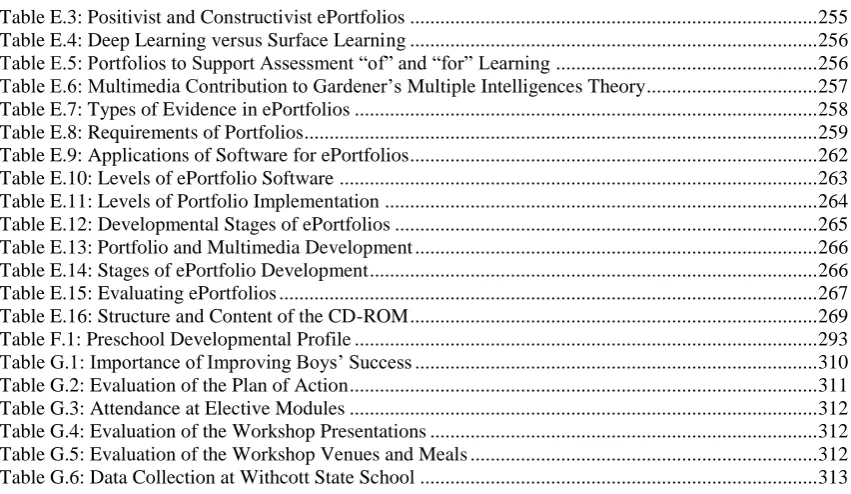
Table E.3: Positivist and Constructivist ePortfolios ... 255
Table E.4: Deep Learning versus Surface Learning ... 256
Table E.5: Portfolios to Support Assessment “of” and “for” Learning ... 256
Table E.6: Multimedia Contribution to Gardener‟s Multiple Intelligences Theory ... 257
Table E.7: Types of Evidence in ePortfolios ... 258
Table E.8: Requirements of Portfolios ... 259
Table E.9: Applications of Software for ePortfolios ... 262
Table E.10: Levels of ePortfolio Software ... 263
Table E.11: Levels of Portfolio Implementation ... 264
Table E.12: Developmental Stages of ePortfolios ... 265
Table E.13: Portfolio and Multimedia Development ... 266
Table E.14: Stages of ePortfolio Development ... 266
Table E.15: Evaluating ePortfolios ... 267
Table E.16: Structure and Content of the CD-ROM ... 269
Table F.1: Preschool Developmental Profile ... 293
Table G.1: Importance of Improving Boys‟ Success ... 310
Table G.2: Evaluation of the Plan of Action ... 311
Table G.3: Attendance at Elective Modules ... 312
Table G.4: Evaluation of the Workshop Presentations ... 312
Table G.5: Evaluation of the Workshop Venues and Meals ... 312