System-driven gaps in information transfer for
residents of aged care: A mixed method document
analysis
By
Briony Campbell
(BN (hons), GDip Emergency, GCert Research) Faculty of Health
Submitted in fulfilment of the requirements for the degree of Doctor of Philosophy
Declaration of originality
This thesis contains no material which has been accepted for a degree or diploma by the University or any other institution, except by way of background information and duly
acknowledged in the theses, and to the best of my knowledge and belief no material published or written by another person except where due acknowledgement is made in the text of the thesis, nor does the thesis contain any material that infringes copyright.
Name: Briony Campbell Signed:
Dated: 28/08/2018
Authority of access
This thesis may be made available for loan and limited copying and communication in accordance with the Copyright Act 1968.
Name: Briony Campbell Signed:
Statement of ethical conduct
The research associated with this thesis abides by the international and Australian codes on human and animal experimentation, the guidelines by the Australian Government’s Office of the Gene Technology Regulator and the rulings of the Safety, Ethics and Institutional
Biosafety Committees of the University. Ethics approval was granted by the Tasmanian Human Research Ethics Committee on 23 December 2013, reference no. H0013669.
Name: Briony Campbell Signed:
Abstract
Due to our ageing population, emergency departments (ED) in acute care facilities are dealing with increased transfers of residents from Residential Aged Care Facilities (RACF). These patients are at risk of acts of provision of unwanted treatments, omission of care, and adverse outcomes including increased mortality directly associated with gaps in transfer information. For at least 30 years, research has attempted to address this frequency of information gaps, which in general are thought to be stemming from RACFs. Research to date has largely focused on identifying and quantifying gaps to highlight the magnitude of the problem, and on developing localised transitional minimum datasets. Further attempts have been made to define the appropriateness of transfer and the subsequent impacts of transfer on ED length of stay. As a result, numerous paper and electronic information transfer tools have been introduced. New transfer forms and formats have led to some success in improving the amount of documentation transferred with residents to ED.
However, this has not been sustained over time, and there has been little agreement toward developing a uniform mandated transitional minimum dataset. Despite the focus on transfer documents and information gaps there is a dearth of research looking at clinician authorship or clinician documentation practices during transfer, and few studies include ambulance services and their role in information transfer. The aim of this study is to identify practice contributing to the stubbornness of information gaps in the transfer of aged residents from RACF to ED via ambulance. This study examined documents and clinician documentation practices as implemented across transfer from RACF via ambulance to emergency. A pragmatic approach guided the research design. Retrospective document review was used to examine the connection between documents, document content, the sites of practice and the practices of clinicians undertaking transfer of RACF residents. This approach acknowledged documents as collectively social products that represent organisations and users, and therefore also organisational work and work-practice complexities. Electronically scanned documents used across transfer by RACFs, the ambulance service and emergency triage were accessed via the study hospital’s digital medical record system. The digital medical record provided easy access to information from all three groups of interest. Collection of transfer documents and transfer narratives from the same sources and transfer episodes facilitated examination of the relationship of documents to documentation and vice versa, as well as of the trackability of episodic transfer
Samples were drawn from 89 transfers undertaken between 1 December 2013 and 31 January 2014. Eighty of these cases met the selection criteria. Data samples collected were: all transfer document types sent from RACFs, all electronic ambulance case records, and all ED triage documents, resulting in 240 cross-facility transfer episodes. From these, 199 verbatim free-text narratives authored by clinicians facilitating each transfer were collected. In addition, 48 yellow transfer envelopes used for transfer by RACFs (not available in the digital medical record) were also collected.
A mixed method convergent parallel study design was employed in which quantitative and qualitative data are collected in parallel, analysed separately and then brought together in discussion. Practice Theory was selected as the primary lens for qualitative analysis,
applying the concepts of doings, sayings and teleoaffectivity with the concepts of zooming in and zooming out to the overall interconnected web of transfer. Transfer narratives were quantitatively examined for standardisation of salient information using a common handover mnemonic, SBAR (Situation, Background, Assessment, Recommendation or Request). Results identified the foci of information and the presence or absence of salient information in transfer narratives, enabling theorisation of how information is cued by the design of tools and situational context in each of the three groups of interest.
The findings showed that consistency, availability and predictability of information were negatively affected by a lack of standardisation of RACF transfer information, despite ambulance and ED triage documents being reasonably standardised. The different contextual perspectives of the three organisations gave rise to different information foci: RACF staff focused on access to resources; ambulance staff focused on identifying a primary physiological concern; and ED triage staff focused on aligning physiological issues with numerical scales of urgency.
This thesis makes a novel contribution to understanding why information gaps from RACF to ED persist. All of the transfer tools in use were found to be predominately designed as records of care/event, rather than as information sharing tools that accommodate complex information. The results also show that socio-contextual practices narrowly focus narratives on the activities of the author, or on the context of the situation, to the exclusion of other relevant information. Information intended to avert risk is reliant on experiential prediction and subsequent experiential interpretation of the narrative.
Transfers fitting the popular expectations of acute ED services are carried out with
extensive justifications from RACFs to legitimise transfer, because the usual accepted services of the ED are pre-emptively broadened or strained. The detail of the narrative has little bearing on the type, completeness or availability of additional documents sent by RACF in transfer. Because each of these practices (mutuality and extensive narration and
argument) work (i.e. the goal of transfer is successfully enacted) there is little incentive for RACFs to standardise practice. Ambulance case narratives implied on-site verbal
exchanges between RACFs and paramedics, and generated content capable of filling some information gaps. This finding substantiated the value of the ambulance document and narrative and suggests that it may be a starting point on which to base an interdisciplinary information bridging tool.
Acknowledgements
Firstly, I would like to acknowledge and thank the residents of RACFs whom the findings of this study will benefit most. As an emergency nurse, I am mindful of the multiple challenges transfer across health services creates.
I acknowledge, with gratitude, my primary supervisor Christine Stirling for her unwavering enthusiasm and support, as well as for her skilful guidance, patience and advice.I also thank my second supervisor Elizabeth Cummings for her thought-provoking conversations and technical and practical advice. Together we made a great team.
Thanks, must also be given to Karen Reynolds and the Clinical Classification and
Information Team, who welcomed me to their office, provided me with multiple desk spaces over time, and introduced me to the daily impromptu conga line! I also acknowledge Walter Leggett whom proof-read this thesis assisting with formatting and grammar.
I am ever grateful to Tamara and Martin Gee, who not only provided a ready audience in the early stages of this journey, but also unwavering moral support and a generous and
welcoming second home.
I am indebted to Corinna Dwan for her ready ear, perspective and humour, which kept me grounded when I was on the verge of escalating despair. I also give thanks to my past and present student colleagues and friends Sara Asteljoke, who began this journey with me and whose chats I have missed, Sharon Bingham, whose level of organisation I can only aspire to, and Masuma Khanam and Maryam Rouhi for their unfaltering generosity. In particular, I give special thanks to Vibeke Høgh for her friendship, encouragement and support from both near and afar.
Table of contents
DECLARATION OF ORIGINALITY ... I AUTHORITY OF ACCESS ... I STATEMENT OF ETHICAL CONDUCT ... II ABSTRACT ... III ACKNOWLEDGEMENTS ... VI ABBREVIATIONS ... IX TABLES, FIGURES AND BOXES ... X
CHAPTER 1: ACCESS TO SPECIALIST SERVICES: PROBLEMS IN TRANSFER FOR AGED CARE RESIDENTS AND
HEALTH CARE CLINICIANS ... 1
INTRODUCTION ... 1
INTER-FACILITY TRANSFER AND RISK ... 4
THREE SERVICES, THREE BACKGROUNDS, THREE SYSTEMS ... 7
SIGNIFICANCE OF THE STUDY ... 17
RESEARCH DESIGN ... 18
THESIS STRUCTURE ... 20
CHAPTER 2: LITERATURE REVIEW ... 22
INTRODUCTION ... 22
SEARCH STRATEGY ... 22
SERVICE DELINEATION:A CHALLENGE TO EQUITABLE ACCESS ... 24
KEY INFORMATION EXPECTATIONS: PRACTICAL CONSIDERATIONS ... 29
RACF TO ED TRANSFER FORMS ... 33
VERBAL INFORMATION EXCHANGE ... 47
ELECTRONIC ‘E-HEALTH’ DOCUMENTATION ... 54
CHAPTER SUMMARY ... 62
CHAPTER 3: METHODOLOGY AND METHOD ... 66
INTRODUCTION ... 66
A PRAGMATIC THEORETICAL FRAMEWORK ... 67
RESEARCH APPROACH ... 75
LINKING METHODOLOGY AND METHOD ... 79
METHOD:STUDY DESIGN ... 83
QUANTITATIVE AND QUALITATIVE DATA ANALYSIS ... 94
CONCLUSION ... 100
CHAPTER 4: ZOOMING IN ON TOOLS ... 101
INTRODUCTION ... 101
DMR STUDY POPULATION CHARACTERISTICS ... 101
MATERIAL TOOLS USED ACROSS TRANSFER ... 102
NON-MATERIAL MNEMONIC TOOLS:SBAR ... 128
CHAPTER SUMMARY ... 133
CHAPTER 5: NARRATIVE PRACTICES ACROSS TIME AND SPACE ... 136
INTRODUCTION ... 136
PRODUCTION PRACTICES ... 138
EMBEDDED LEGITIMACY ... 157
LEGITIMACY AS A SOCIO-CULTURAL PROCESS ... 162
INFORMATION SHARING AND EXCHANGE ... 166
CHAPTER 6: DISCUSSION ... 170
INTRODUCTION ... 170
PRODUCING INFORMATION:THE EMBODIMENT OF FRAGMENTED HEALTH CARE ... 171
CONSUMPTION AND TRANSLATION:MNEMONICS AND INTER-FACILITY TRANSFER ... 176
CONSTRUCTIONS OF LEGITIMACY ... 186
CHAPTER SUMMARY ... 192
CHAPTER 7: CONCLUSION ... 194
INTRODUCTION ... 194
KEY FINDINGS ... 194
CONCLUSION ... 199
STRENGTHS AND LIMITATIONS OF THE RESEARCH APPROACH ... 200
DIRECTIONS FOR FURTHER RESEARCH ... 201
REFERENCES ... 203
APPENDICES ... 238
APPENDIX 1:AUSTRALASIAN TRIAGE SCALE ... 238
APPENDIX 2A:YELLOW ENVELOPE TYPE 1(OFFICIAL) ... 239
APPENDIX 2B:YELLOW ENVELOPE TYPE 2 ... 240
APPENDIX 2C:YELLOW ENVELOPE TYPE 3 ... 241
APPENDIX 2D:YELLOW ENVELOPE TYPE 4 ... 242
APPENDIX 3:DATA REDUCTION ... 243
APPENDIX 4:CASE MODELLING ... 245
APPENDIX 5:VACIS TEST CASE SHEET (FICTITIOUS PATIENT AND DATA) ... 247
APPENDIX 6:EDIS TRIAGE DOCUMENT ... 250
Abbreviations
ADHA Australian Digital Health Authority
ACFI Aged Care Funding Instrument
ATS Australasian Triage Scale
DMR Digital Medical Record
EMR Electronic Medical Record
e-PCR Electronic Patient Care Record
GP General Practitioner
HSO Health Service Organisation
NP Nurse Practitioner
PT Practice Theory
RACF Residential Aged Care Facility
RHH Royal Hobart Hospital
RN Registered Nurse
SBAR Situation, Background, Assessment, Recommendation/Request VACIS Victorian Ambulance Clinical Information System
Tables and figures
Tables
Table 2.1: Common reasons for transfer from RACF to ED ... 28
Table 2.2: Common information gaps ... 31
Table 2.3: Summary of articles on the use of transfer forms in RACF-to-ED transfer ... 35
Table 2.4: Concurrence of transfer form content ... 39
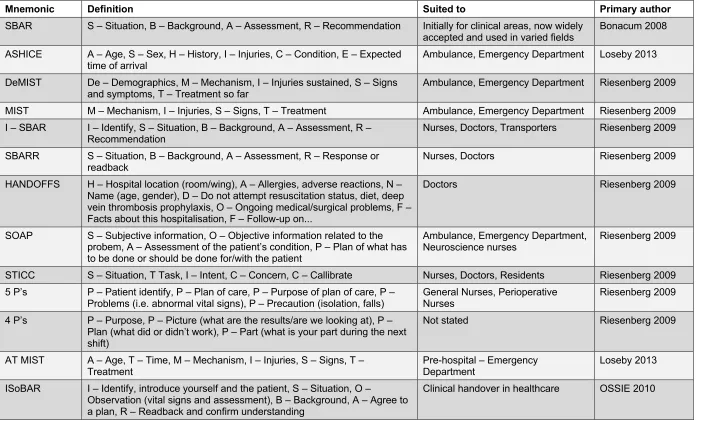
Table 2.5: Common mnemonics in health care ... 49
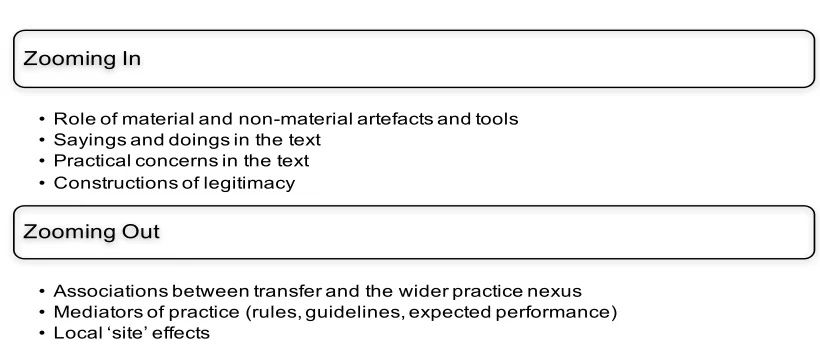
Table 3.1: A framework for zooming in and out ... 74
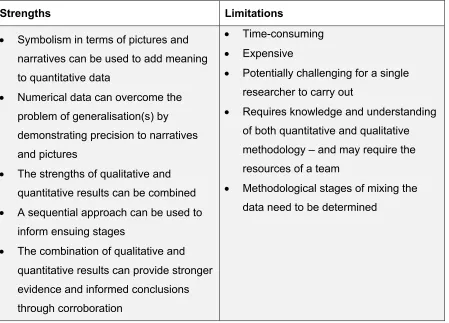
Table 3.2: Strengths and limitations of mixed method research ... 78
Table 3.3: Exclusion criteria ... 85
Table 3.4: Pre-defined categories by Yellow Envelope ... 92
Table 3.5: RACF identification of the problem or reason for transfer ... 94
Table 3.6: SBAR mnemonic and sub-elements ... 95
Table 3.7: Developing the basic category: Forwarding the reasons for transfer ... 99
Table 3.8: Basic categories to global themes ... 100
Table 4.1: Documents sent from RACF to ED ... 105
Table 4.2: SBAR sub-element inclusion by organisational group ... 131
Figures Figure 1.1: Triage of patients arriving to emergency ... 14
Figure 2.1: Transfer form use: Schematic representation ... 33
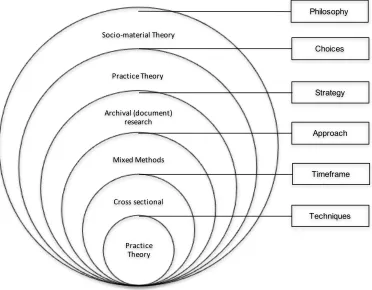
Figure 3.1: Layers of research ... 73
Figure 3.2: Methodological model of coherence ... 75
Figure 3.3: Practice Theory and research areas of interest ... 80
Figure 3.4: Linking Practice Theory to mixed methods ... 83
Figure 3.5: Convergent parallel variant mixed method study design ... 84
Figure 3.6: Distance from RACFs to ED ... 91
Figure 3.7: Mnemonic use in transfer by organisation ... 93
Figure 3.8: Case model schematic ... 98
Figure 4.1: Documented RACF contact with GP prior to transfer ... 106
Figure 4.3: e-PCR case/scene ... 113
Figure 4.4: e-PCR patient information ... 113
Figure 4.5: e-PCR past history ... 114
Figure 4.6: e-PCR case nature list ... 115
Figure 4.7: e-PCR patient complaints ... 115
Figure 4.8: e-PCR vital signs survey ... 116
Figure 4.9: e-PCR result – transport ... 117
Figure 4.10: e-PCR finalise/signature ... 118
Figure 4.11: Vital signs recorded by ambulance in the e-PCR ... 119
Figure 4.12: Ambulance e-PCRs of treatment/service ... 120
Figure 4.13: EDIS triage user interface ... 123
Figure 4.14: EDT vital signs recorded at triage ... 126
Chapter 1:
Access to specialist services: Problems in transfer for aged
care residents and health care clinicians
Introduction
Access to individual specialist services is one of the benefits of modern health care. The advantage of specialist care is expertise. Specialist expertise is, however, often only
accessible in locations geographically separate from mainstream points of care and through separate organisations (Rechel et al. 2009). In the context of aged persons living in
residential aged care facilities (RACF), referral or transfer in order to access specialist care is common. In particular, RACF residents are transferred via ambulance to emergency departments (ED) for urgent/emergent care or specialist consultation (Briggs et al. 2013). Accordingly, transfers require that health care information and knowledge passes between different clinicians, with differing skill-sets, different organisational boundaries, in different geographical locations (The Commonwealth Fund 2013). Following transfer, RACF residents have been at risk of acts or omissions in care, and of adverse outcomes, due to transfer information being marred by considerable variability, gaps andmisunderstandingsfor over 25 years (Hjortdahl 1992; Masso et al. 2015).
A major ongoing concern is how the ever-increasing ageing population (WHO 2015) and, by association, the specialist clinicians to whom the responsibility of care falls, share transfer information. Current information sharing practices in the Australian health care system are inadequate for inter-facility coordination and continuity (Banfield et al. 2013). Continuity across non-affiliated health services largely depends on the patient’s ability to participate in and share responsibility for communicating information (Haggerty et al. 2003; Reid,
Haggerty & McKendry 2002). However, if we consider that in 2011–2012, 247,290 people in Australia lived in RACFs (AIHW 2011-2012a), and that up to 75 per cent were identified as having dementia and/or other ageing-related conditions affecting their ability to communicate (AIHW 2012a, p. 58), it follows that the capacity of RACF residents who are transferred to provide accurate and complete information for themselves is limited, and that,
unsurprisingly, such residents are considered an unreliable source of information on which to base specialist care decisions (Arendts, Dickson, et al. 2010).
problems, numerous information sharing/transfer tools have been developed and
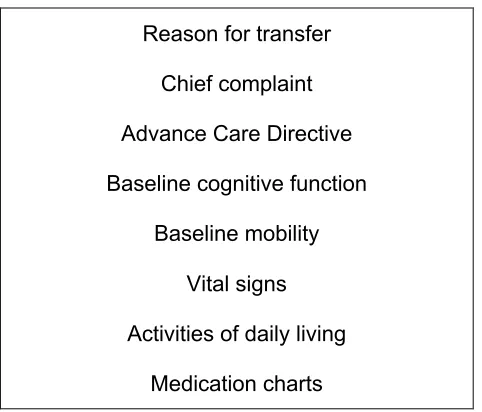
implemented over the last two decades (Griffiths et al. 2014; Hjortdahl 1992). Tools such as mnemonics and acronyms are intended to aid clinician recall when handing over information, and documents are specifically designed to ensure transfer of appropriate information in hard-copy (Haig, Sutton & Whittington 2006; Terrell et al. 2005). However, despite the implementation of these tools, information gaps have remained a stubborn feature of transfer documentation. Two information gaps that persist are lack of a reason for the transfer event and lack of baseline cognitive function (Morphet et al. 2014). Residents without a clear reason for transfer and lack of documented baseline cognitive function have been found to be more likely to have invasive testing, and x-ray and/or computed
tomography scans, than residents transferred with this detailed information (Morphet et al. 2014). Waiting for results in ED also adds to the risk of an adverse event, unnecessarily consumes ED resources and contributes to an increased hospital inpatient length of stay (Griffiths et al. 2014).
Aim of the study
The aim of this study is to identify practice contributing to the persistence of information gaps in the transfer of aged residents from RACF to ED via ambulance. This research will identify contributors to the persistence of transfer information gaps through an examination of documents and documentation practices for residents transferred from RACF to ED via ambulance. Information gleaned from this study will aid the development of better documentation, information sharing, and transfer practices. The rising numbers of RACF residents transferred to ED annually will benefit from a more complete transfer of information made on their behalf (AIHW 2012a). Clinicians responsible for their transfer and ongoing care will benefit from increased and more timely access to information, aiding decision-making. The overall outcome will reduce the risks of adverse events associated with transfer across services (Gruneir, Silver & Rochon 2011; Schnitiker et al. 2011). A potential further outcome will be the easing of pressure on clinical and physical resources caused by extended stays in ED.
Key terms
organisations providing care to the aged outside of their own homes will be referred to as residential aged care facilities (RACF) throughout this thesis, regardless of the level of care offered. In addition, terms describing service providers who work in emergency care, not inclusive of hospital emergency departments, are also used frequently, Including:
Emergency Medical Technician, Emergency Medical Service, Ambulance Service,
Ambulance Officer, Paramedic, Intensive Care Paramedic and Ambulance Nurse. Where not specifically identified as Paramedic or Intensive Care Paramedic, the terms ambulance service, and ambulance clinician/paramedic are used interchangeably to refer to persons or services fitting this role.
The word ‘triage’ has a French military origin, and refers to the process of sorting wounded soldiers into two groups: those for whom treatment would be attempted, and those with wounds so severe that successful treatment was either less likely or non-urgent (Robertson-Steel 2006). When applied to modern-day emergency nursing, triage is a term for clinical decision-making that categorises urgency on a numerical scale based on a timeframe. The outcome of triage determines the minimum timeframe that a patient can wait to receive medical assessment and treatment. Although different urgency timeframes exist, the term triage – referring to the process of categorisation – is internationally recognised.
Common terms describing information sharing and information transfer between clinicians and across clinical specialties and/or services are: handoff, handover, shift report, and sign-out. The degree of transfer of accountability and responsibility for patients these terms denote is variable, but for readability and ease of use, the terms ‘handover’ and ‘information transfer/transition’ are used interchangeably throughout this thesis.
The problems RACF residents and health care clinicians encounter when accessing specialist and geographically separate services, tools designed to address information transfer problems, and key terminology have been briefly introduced above, revealing risks faced by RACF residents transferred to ED, as well as the frustrations ED clinicians face when making decision for residents. The ease with which these problems have been
identified justifies the aim of the study. The remainder of Chapter 1 identifies and introduces current information handover concerns, the definition of ‘transfer’ relevant to this study, accepted information transfer recommendations, and the potential offered by electronic records in information sharing. The risks faced by RACF residents who are transferred to ED environments are also explained in further detail. Residential Aged Care, ambulance
Health Service Organisations (HSOs), after which a discussion of the collective
co-dependence of services reveals the importance of accurate and comprehensive information transfer. Lastly, Chapter 1 briefly details the study’s methodology and provides an outline of the thesis.
Inter-facility transfer and risk
This section describes concerns about adverse events associated with poor information transfer (otherwise termed ‘handover’), the terms used to define transfer processes, and recommendations for improving information exchange across transfer. The challenges of defining minimum requisite handover information for inter-facility transfer are also raised, and adverse outcomes for transferred RACF residents are further detailed.
Shifts in responsibility and accountability for care
Moving the responsibility for health care from one clinician to another, to another can be referred to as a ‘transition’ (The Joint Commission 2012). Transfer of a patient or resident from one service provider to another requires clinical handover. Handover is considered to be a time when patient information is at risk of being lost (Cohen & Hilligoss 2009; WHO 2006b; Wong, Yee & Turner 2017). In 2006, the World Health Organisation (WHO) listed improving information sharing through handover as a priority challenge. This was done as part of its ‘High 5s’ initiative on patient safety. Australia, leading part of that challenge, released a formal Clinical Handover Implementation Toolkit in 2007. The intention of the toolkit is to facilitate audit of current handover practices, to identify areas for improvement, and to implement sustainable change (ACSQHC 2012a). Outcomes from using the audit tool, and other independent and international studies, led to calls for a level of
standardisation in handover while retaining some flexibility to tailor information to the many unique work environments in health care (Turner, Wong & Yee 2009).
The definition of transfer informing the National Clinical Handover Initiative acknowledges the fragmentation of our health care services by being inclusive of inter-specialty, intra-site and inter-facility situations. Thus theirs is the definition of transfer used in this study:
transfer of professional responsibility and accountability for some or all aspects of patient care for a patient, or group of patients, to another person or
ensure coordination and continuity of care (ACSQHC 2012b). The ACSQHC (2012b) offers further recommendations aimed at minimising the risk of omissions or inadequacy in information exchange. These recommendations state that when transferring a patient to another facility handover may be undertaken by clinicians:
• Using face to face delivery with a checklist
• In the presence of the patient (at bedside)
• Face to face verbal only
• Using a checklist
• Via the telephone, and
• With the aid of mobile electronic tools.
In addition, the use of a single detailed transfer letter or audio recording for handover is clearly discouraged (ACSQHC 2012b, p. 15).
While the above recommendations outline what occurs during a transfer and what media and locations are appropriate for the transfer of information, discrepancies as to minimum requisite handover/information exchange across different services remain. Health Service Organisations (HSOs) are required to have and adhere to a structured handover policy inclusive of any procedures or process to be undertaken at the point of transition in care. HSOs are also expected to use tailorable minimum datasets in an effort to standardise information. Overwhelmingly it is inpatient transitions, such as shift to shift handover within a ward, between wards, from ED to an admitting/inpatient team, and from one inpatient team to another, that provide reference points for these recommendations (ACSQHC 2012b). However, the level of compliance required of distinctly separate services (such as RACF, ambulance and ED triage) during transfer encounters to use agreed transitional minimum datasets is surprisingly unclear.
Follow-on effects of a lack of agreed transitional minimum dataset
Transfer from RACF to ED increases the risk of adverse events for residents, who are often unable to clearly advocate for themselves, or to articulate accurate information on their own behalf (Arendts, Dickson, et al. 2010). It is well known that information gaps and/or
or extended care presentations (Briggs et al. 2013; Schnitiker et al. 2011; Taylor, Rush & Robinson 2015).
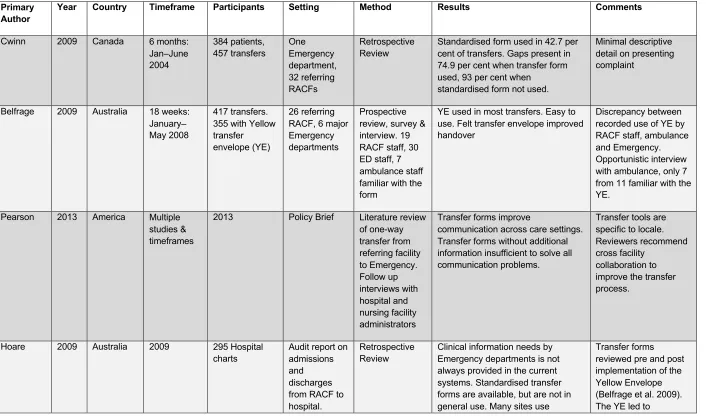
Lack of a standardised transitional minimum dataset potentially contributes to gaps in information that progress to adverse events. Many studies report consistently inadequate hard-copy information accompanying RACF residents to hospital (Cwinn et al. 2009; Hoare 2009; Nelson, Washton & Jeanmonod 2013; Pearson & Coburn 2013). One way that gaps in transfer information contribute to adverse events is through the time taken to chase up or undertake investigations to fill in missing information. For the RACF resident, delayed care, or management decisions made without adequate information, contribute to poorer
outcomes. Further risks of poor outcomes encountered in ED are caused by over-investigation (Girio-Fragkoulakis et al. 2011), onset of delirium (Boockvar, Fridman & Marturano 2005), infection, and fall-related injury (McCabe & Kennelly 2015). The time it takes to chase up information contributes to potentially deleterious events, an overall increased length of stay (LOS) in ED, increased overall hospital LOS (Morphet et al. 2014), and increased risk of mortality (Spirivulis et al. 2006).
Electronic health records: A future solution?
Electronically recorded and shared clinical files have been suggested as a way to overcome information loss in RACF Transfers (Gaskin et al. 2012; Zhang, Yu & Shen 2012). Electronic data storage and cross-facility transfer and/or access has the potential to improve timely access and availability of information when and where it is needed, with the flow-on effect of improving patient outcomes (Australian Digital Health Agency n.d.-b). Increased access to patient information has the potential to reduce unnecessary repetitions of investigative tests, support decision-making in complex patients, limit clinician reliance on patient memory, lessen clinician frustration, and, potentially, to reduce the overall hospital LOS (Australian Commission on Safety and Quality in Health Care 2017).
technology (IT) infrastructure aligned to different services (GP, hospitals, RACFs, and allied health), concerns about initial and ongoing IT support, and lack of linkage between aged care referral documents and clinical software (Stoyles 2017).
A practical (clinician user-oriented) limitations is that service provider uploads (i.e. episode summaries from GPs or ED presentations) to individual My Health Records are, at present, time-consuming. Records are first created in the service provider’s service-specific
electronic system and then uploaded (if compatible) verbatim to the patient’s My Health Record (Australian Digital Health Agency n.d.-a). This practice creates a dual documentation system in several already time-pressured work environments. In addition, each upload is a record of care specific to the uploading specialty, documented using specialty-specific contexts, inferences and terminology, including abbreviations. Therefore, interpretation within a limited context is necessarily required of future readers. This suggests that while basic information (e.g. pathology results, allergies, and current medications) will be clearly identifiable, complex information in a given context will, in many cases, continue to require the kind of clarity that comes from verbal discussion (Banfield et al. 2013).
Three services, three backgrounds, three systems
The following section briefly outlines the historical background and distinct roles of RACF, ambulance and ED triage, and demonstrates that each service has evolved to provide a variety of unique specialist functions. It also demonstrates that in order to function as part of a larger health care system, individual services must share resources and operate with a degree of co-dependency. In addition, dual purposes in clinical documentation, in terms of the integration of remittance data within document structure, is highlighted.
Residential aged care in Australia: Early evolution to today
In the mid-19th and early-to-mid-20th centuries, care for the elderly, sick and/or disabled was mainly undertaken by three groups: government’s laissez-faire social welfare system (which was poorly orchestrated across the country, most notably in the non-convict South Eastern states of South Australia and Victoria), voluntary charities/not-for-profit organisations,
primarily organised by the wives of leading colonists, who received government subsidies for their efforts on a dollar-for-dollar basis, and religious organisations which were partly funded by colonial governments (Hynd 2017).
On the premise of reducing government expenditure on social welfare, religious
range of Catholic, Protestant, and other services such as the St Vincent de Paul Society, The Salvation Army and Wesleyan Central Missions, to be implemented across the country. Some mutual connections between church agencies and government emerged throughout this process, but mixed interactions, particularly in relation to funding, along with an overall lack of formal government regulation continued. The end result was ‘a complex, multi-layered economy of welfare, with diverse ideological underpinnings and motivations, creating multiple strata of diverse practices and structures of charity’ (Hynd 2017, p. 8). Despite this seemingly ad hoc system of providing care, the government of the day did not want to commit to taking over the role of providing social welfare, and thus a Church-based welfare system continued until well after the Great Depression of the 1930s (Hynd 2017). At broadly the same time, state-funded income support, which was first set up in New South Wales and Victoria in 1900, following Federation, began to provide an alternative to
receiving charitable care from religious institutions. This alternative took the form of small, means-tested aged pensions. During and after the Great Depression, religious charities, like the government before them, began to change and re-mould some of their services to wage-based welfare. Targeted financial support from government continued, and religious
organisations developed an increased presence in care for the frail aged (Hynd 2017). Stricter involvement in and regulation of welfare services saw subsidisation of the
construction of homes for the aged in the 1950s under the Aged Persons Homes Act 1954. This subsidy eased the burden of accommodation shortages by alleviating the building costs of hostel-type accommodation, though it was not applicable to aged care homes
encompassing care of the sick elderly (Le Gruen 1993). In 1962, the Federal Government addressed this problem by introducing recurrent funding of nursing homes. The introduction of this benefit underpinned major changes for the aged requiring a higher level of care than was available in hostels. This led to a boom in the construction of homes and in bed
availability for nursing-home residents. In the first five years following introduction of the subsidy there was a 20 per cent increase in new nursing homes built, and a 48 per cent increase (to 12,348) in new nursing home beds (Le Gruen 1993, p. 2).
In 1966, the Holt Government introduced payments to eligible organisations towards meeting the costs of residents requiring continuous care. However, nursing homes were reluctant to admit persons highly dependent on nursing care. In response, the Federal Government introduced an additional supplementary benefit of $3.00 per day for residents requiring ‘intensive nursing care’ (Le Gruen 1993, p. 3). This contributed to a further
State Governments. Rather than a lack of available nursing home beds, the government of the day faced spiralling costs from the provision of subsidies totalling $17.5 million per year, and the proposition that at least 8,000 nursing home residents had been admitted
unnecessarily (Le Gruen 1993, p. 4).
In the early 1970s, the McMahon Government amended the National Health Act1953 to address exponential growth and spending in the nursing home sector, including excessive fees being charged by private providers. After the amendment, admissions to nursing homes had to be endorsed (or rejected) by a Commonwealth Medical Officer, any built extension or new premises had to be approved by the Director-General of Social Security, and private nursing homes could not charge residents fees in excess of those determined by the Department of Social Security.1 At this time, concerns were raised that nursing homes were retaining patients in higher levels of care than necessary in order to claim a larger subsidy (Le Gruen 1993, p. 6). The focus of subsidies shifted to facilitate moving persons
unnecessarily residing in nursing home accommodation into hostels, thereby alleviating government expenditure in the sector. However, these aims were not achieved, and in 1974 the Whitlam Government found it necessary to add further stimulus to encourage uptake of hostel accommodation services (Le Gruen 1993, p. 6).
In the late 1970s and early 1980s, government initiatives continued to shift the balance of nursing home beds from the private to the voluntary sector. One initiative, ‘deficit financing’, enabled the voluntary sector to increase its operation of nursing home beds, and, subject to availability, to purchase private sector facilities. Another initiative, introduced in the National Health Acts Amendment Act 1977 saw private health insurers obligated to contribute an equivalent benefit to the Commonwealth Nursing Home Subsidy to patients insured under their scheme. However, later review in 1981 found that the claiming process was
cumbersome, and that nursing homes had tended to continue to claim benefits from the Department of Health, because of the ease and simplicity of the government process, rather than from individual residents’ private insurance companies. Realising the ineffectiveness of the scheme, it was abolished in September of that year, and the Commonwealth resumed complete responsibility for the payment of nursing home benefits (Le Gruen 1993).
1 Responsibility for nursing home funding moved from the Department of Health (McMahon
The Hawke Government of the 1980s introduced further reforms. In 1986, the Nursing Home Standards Working Party, amongst other things, developed nursing home staffing standards, and new regulations governing the payment of subsidies. From 1988, theResident
Classification Index introduced needs-based staffing and resident needs-determined
subsidy. Under this system residents were grouped into categories attracting different levels of subsidy, which were reviewed on an annual basis. A categorisation of 1 indicated highest care need, while a categorisation of 5 indicated a high level of independence/no nursing care required (Le Gruen 1993). As nursing homes were paid by the government according to needs-and-means-testing assessments of individual residents (Cepar: ARC Centre of
Excellence in Population Ageing Research 2014, p. 12) there was an expectation that nursing home documentation would verify the funding received per resident (Cepar: ARC Centre of Excellence in Population Ageing Research 2014; Hamilton & Menzes 2011). Criticisms of the Resident Classification Index centred on the tool’s lack of responsiveness in cases of acute deterioration, which left residents and facilities disadvantaged until the
following year’s review, and concerns over the amount of documentation required to validate the tool (Le Gruen 1993).
The current incarnation of aged care services and subsidy in Australia continues a century of politically expedient reform. In 2008, the Aged Care Funding Instrument (ACFI) replaced the former Resident Classification Index as the care measurement tool (AIHW 2011). The ACFI has three domains that are used to determine the level of subsidy received. The first deals with ‘Activities of Daily Living’, which encompasses nutrition, mobility, hygiene and
continence; the second deals with ‘Behaviour’, and covers cognitive skills, wandering,
unusual verbal and/or difficult physical behaviour. The last is the ‘Complex Care’ supplement concerns medication and complex health-related procedures (DOHA 2013).
As before, nursing homes (now referred to as Residential Aged Care Facilities) are required to keep records which readily enable assessment of claims made against the ACFI.
Structured checklists are considered acceptable minimum datasets for the ACFI as they enable ease of monitoring, and, due to their checklist structure, ease of appraisal (DOHA 2013, p. 3). It is unlikely that the complexities of care for RACF residents with multiple comorbidity can be adequately communicated in either checklist- or flowchart-type
documents. However, ease of accurate appraisal is a documentation priority because 93 per cent of funding for Australian RACFs comes from the Commonwealth (Federal)
the three ACFI domains and finance. In addition, although the results of ACFI appraisal against RACF claims may generate funding upgrades, the opposite is also possible. Lack of, or unsubstantiated, links between task and finance may lead to finding downgrades. Thus, documentation and data logs, such as checklists generated by RACF staff, are of utmost importance to the financial viability of RACFs (Cepar: ARC Centre of Excellence in
Population Ageing Research 2014, p. 15) and cement a strong relationship between clinical documentation and financial security. Of concern is that documentation designed to verify subsidy funding alters the focus of documentation away from patient care and towards funding (Pelletier et al. 2002).
Ambulances in Australia: The cost of calling for help
Commencing in the late 19th and early 20th centuries, Australian ambulance services provided first aid and where necessary transport to higher medical attention (Ambulance Service of New South Wales n.d.; Auditor General Western Australia 2013; SA Ambulance Service 2017; Victoria Museum n.d.). By the 1980s, most states (bar the Northern Territory and Western Australia) had moved from private to State Government-regulated ambulance services (Auditor General Western Australia 2013). In Western Australia, the Northern Territory and South Australia, the definition of ‘ambulance’ is oriented towards provision of transport. In the eastern states, including Tasmania, the definition of ambulance is oriented towards pre-hospital first aid or emergency care, with the related but secondary function of transport to ED (Eburn & Bendall 2010).
Ambulance services are required to generate a record of each call-out event, regardless of whether transport to an ED occurs (Ambulance Service of New South Wales 2009). Each call-out event is documented in a standardised, state-based patient health record, known as the PHR or, if electronic, the e-PHR (hereinafter referred to as the e-PCR, or electronic patient care record). Regardless of private or state-based regulation, the provision of transport in terms of kilometres, in conjunction with the highest skill-set of the ambulance crew is commonly used to determine costs, and thereby remuneration associated with ambulance call-out events. Documentation that captures the call-out event enables a clear, auditable standard of service provision.
and the last captures the call-out’s service delivery statistics and billing information.
Captured data include: skill-level of the most senior clinician, odometer readings taken at the start and end of the job, time of call-out, time of arrival, time of assessment, time of
departure, time of arrival in ED, time to triage, and time to print-out of the e-PCR (Ambulance Victoria 2012).
Finance and remuneration information are documented separately from the call-out event and descriptive record, and from the call-out event assessment and treatment record. Ambulance services receive State Government funding, though, as above, some costs may be recuperated by billing users for service provision in terms of kilometres travelled over the course of the out event. Specifically, Tasmanian residents are not billed unless their call-out event meets particular criteria, such as those set call-out for work cover, or by the Motor Accidents Insurance Board or Department of Veterans Affairs (Tasmanian Government 2011). Non-Tasmanian residents without reciprocal arrangements are billed based on new call-out ‘round trip’ kilometres at a rate of 622.04 fee units for the first 15 kilometres or part thereof, and 5.07 fee units for each kilometre thereafter. Or, in the event of a routine ‘round trip’, road service, which attracts the lesser fees of 188.21 units for the first 15 kilometres or part thereof, and 4.66 fee units for every kilometre thereafter (Tasmanian Government 2011).
Finance and remuneration information is separate from the provision of tasks as it is linked to senior skill-set and distances travelled in terms of kilometres. Staffing of the ambulance for each ‘round trip’ attracts a separate unit fee depending on the skill-set of the attending clinician. For example, an ambulance staffed by an intensive care paramedic attracts a fee of 467.24 units for the first 15 kilometres or part thereof and includes a 137.13 unit fee for each hour or part thereof in excess of three hours, and attracts a 1.03 fee unit per kilometre for every kilometre in excess of 15 kilometres (Tasmanian Government 2011). Lesser unit fees, except for unit fees associated with distances after 15 kilometres, are applied to ambulance officers and volunteer attendants. To ensure appropriate billing, it is imperative that each format of the e-PCR records the unique login of the most senior attending clinician for the purpose of service audit and invoice.
Emergency triage: A timely endeavour
applied by the ambulance service in the pre-hospital setting (caller to ambulance dispatcher) and on-scene (clinician on site with patient) (Robertson-Steel 2006). The third phase, which uses different parameters from the ambulance service at the point of entry to ED, is of interest in this study.
In modern hospital systems emergency departments are frequently common entry points for patients. The triage process is the same for patients who self-present and for those who arrive by ambulance. Information provided by the ambulance crew or individual, in
conjunction with the assessment of a senior nurse, informs the triage. The aim is to use this information to make an informed decision and allocate a numerical category of urgency, correlated to a specified time-frame. The time-frame indicates how long the patient may safely wait before requiring medical assessment/intervention (Department of Health and Ageing 2009). The triage nurse generally applies the most common triage scale used in Australian public hospitals, the Australasian Triage Scale (ATS, see Appendix 1). The ATS is a numerical scale of 1 through 5, where 1 is time critical and seen immediately and 5 may wait up to 2 hours prior to medical assessment (Department of Health and Ageing 2009). Despite requiring the clinical skills of a senior Registered Nurse (RN) trained in triage, data intended for billing is not entered by the triage nurse. Instead, equitable access to the emergency health service provided by public hospital EDs is ensured by excluding administrative and related concerns from the triage process (Department of Health and Ageing 2009, p. 4).
Wait times to be seen and assessed by medical staff in Australian public EDs are frequently longer than ATS guidelines (Australian Medical Association 2017). Public emergency departments on a national scale are pressured to improve on lengthy wait times for patients exceeding their triage categories (Silk 2016). Introduced in 2011, the National Australian Partnership Agreement boosted funding for emergency departments and implemented National Emergency Access Targets, which provided reward-based funding to EDs in an effort to improve their performance (Council of Australian Governments (COAG) 2011; Silk 2016). Emergency departments reporting a pre-determined per centage of patients seen within ATS timeframes, and whom reported a disposition plan, i.e. admission or discharge, within a four-hour timeframe, received financial rewards (Sullivan et al. 2016). Similar to triage manipulation strategies that have evolved from long waits and environmental
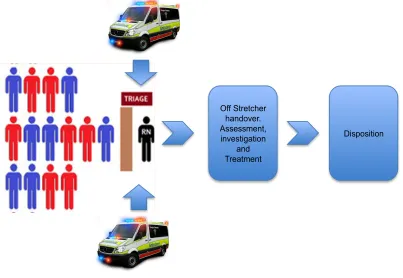
individual ED funding (Staib et al. 2016; Sullivan et al. 2016). However, the four-hour rule is still considered the benchmark (Silk 2016; Street, Marriott & Livingston, P 2012; Sullivan et al. 2016). A basic schematic of triage as patients arrive to ED is shown in Figure 1.1, below.
Figure 1.1: Triage of patients arriving to emergency
(Based on triage schematic www.etrihealth.com/history) Legal differences, co-dependency and hierarchical challenges
Differing legal descriptors between RACF, ambulance and ED affect the roles and responsibilities of clinicians. In Australia, RACFs are legally categorised as
social/accommodation services, not as Health Service Organisations (HSO) (National Health and Medical Research Council submission, 2007, cited in the Australian Government Law Reform Commission ALRC – 62 The Privacy Act). Yet RACFs employ nursing staff and actively participate in the ongoing care and transfer of residents to and from hospitals and clinics and other health services. While the difference in terminology is recognised, and some state-based submissions (NSW and Victoria) to update the Privacy Act to include RACFs as health services have been made, it is not yet clear if the recommendation has been processed (ALRC Recommendation 62-2 The Privacy Act).
Ambulance services are also not clearly defined as HSOs, yet interestingly they fall into the same categorisation as one afforded to businesses providing a health service where the attending clinician, not the ambulance vehicle, falls into the HSO category of service
(ALRC-Off Stretcher handover. Assessment, investigation
and Treatment
62 The Privacy Act; Health Information Issues Paper 31). This presents an interesting way of categorising an HSO, as RACF social accommodation services also have health care
clinicians on staff (i.e. Registered and Enrolled Nurses) yet are not subject to the same categorisation. Further, although considered outpatient departments with differing information requirements from inpatient units, EDs do fall into the HSO category. As previously stated, specialisation increases the level of complexity in health care. Specialist service provision creates finite access to resources within a given organisation, such as to the work force, clinical skill-set, and equipment (Levine & White 1961). In addition, individual organisations develop documentation and reporting systems specific to their agenda and fiscal orientation (Prior 2003), yet a limitation in the availability of resources in one organisation implies that health care cannot be comprehensively provided unless resources and information are shared. To function as a cohesive and inclusive system, services must therefore agree on a level of co-dependency that facilitates shared resources, cross-communication referrals, patient transfer and continuity of care (Prior 2003; Saidel 1991).
In spite of their unavoidable co-dependencies, specialist service agendas are understood and appreciated in contrasting ways, influenced not least by differing fiscal orientations and hierarchical social structures (Vincent 2008). Hierarchical social structures in health care are most visible in the operation of prestige, influenced by a number of perspectives, such as contributions to research (Austin Health 2012), the skills of clinicians in different areas (O'Connell et al. 2013), the population served (Finn et al. 2006; Ingarfield et al. 2009), and funding models (Oliver-Baxter & Brown 2013). Organisational structure and social hierarchy are therefore collectively and recursively products of and contributors to practice.
Therefore, an exchange of information that successfully facilitates continuity for the patient (Van Houdt, Heyrman & De Lepeleire 2013) and adequately enables exchange of
accountability for patient care requires collaboration on a number of organisational social and practice levels (Arendts, Dickson, et al. 2010). If, according to Levine and White (1961), researches are to understand information exchange interactions between different service domains, the function of an organisation (the organisational objectives and populations served), control of an organisation (external influences) and consensus on function, and allocatory control of an organisation (consensus which is socially accepted by other
Summary
Hospitals are only one component of a complex health care system (Rechel et al. 2009). Separating health care into primary, secondary and tertiary domains, and further narrowing those domains to encompass individualised specialist expertise/services, has had a global impact on the redistribution of some previously hospital-based services into alternative settings (Hudson, Weston & Farmer 2017; Saltman 2006). Far from its humble beginnings, aged care has developed as residential social accommodation in community settings, altogether separate from the acute care sector (Australian Law Reform Commission 2008; Department of Health 2016). In RACFs, residents have their general care needs and living requirements attended to on-site by Registered Nurses (RNs) with the support of care assistants, or vice versa, with additional input from visiting clinicians (i.e. General
Practitioners, podiatrists, physiotherapists) (Cepar: ARC Centre of Excellence in Population Ageing Research 2014; RACGP National Taskforce 2006). However, specialist consultation can be challenging to organise on-site. For a multitude of reasons, off-site transport to alternative specialist centre is sometimes necessary (Grbich et al. 2005; Tham & Hardy 2013).
Information management and, by association, continuity of care across multiple service providers, is a significant coordination challenge. Not only in terms of where records are stored, but also in terms of maintaining currency, and facilitating continuity and responsibility for follow-up (Gadzhanova 2007). Further clouding the grey-area of information transfer responsibilities are confusing legal definitions of health services and social accommodation services (ALRC Recommendation 62-2 The Privacy Act).
Significance of the study
Predictions indicate that more and more elderly persons will be cared for in RACF-type accommodation in the future. The per centage of the population aged over 65 has
increased, and there has been a corresponding decrease in the number of potential support persons to assist in their care (e.g. family members). In the 1980s, the potential support ratio per person over 65 years was 6.8. This figure is expected to drop to 2.7 by 2050 (United Nations 2015). As a result, there will be an increasing reliance on RACF organisations to care for the aged. At the end of June 2011, there were 169,001 permanent residents living in 185,482 of the available Residential Aged Care places in Australia. These residents were residing there for an average of 145.7 weeks. This is already a sharp rise from the 131.3 weeks reported in 1998/99 (AIHW 2012a, pp. 9,40), and confirms that not only are more persons living in RACFs, they are also living in RACFs for longer.
As with other members of the general population, RACF residents periodically receive treatment for illness and/or injury in an acute care setting. Many commence their acute journey after arriving in ED via ambulance unaccompanied by anyone who knows them well (Griffiths et al. 2014). Recent research has demonstrated that, over a two-year period, approximately 30 per cent of RACF residents spend time in acute care in the last month of life, and that 14 per cent die there (AIHW 2018). Absences from RACF, referred to
euphemistically as ‘leave’, to receive acute care in hospital were provided to 165,032
permanent residents between July 2010 and June 2011 (AIHW 2012a, p. 38). However, this figure does not include the number of permanent residents transferred to hospital and returned to RACF on the same day. Therefore, the figure stated is an under-representation of the frequency of transfer. Accurate transfer numbers are worthy of attention. Frequencies in transfer from RACF will undoubtedly rise as the population continues to age. This
suggests that more frail residents will be at risk of adverse events, and, as a consequence, also poorer health outcomes. A rise in the number of transfers to ED will add to workplace pressure through increased demands on resources, whether residents are returned to RACF on the same day as transfer or not.
Calls for standardisation in information transfer have resulted in checklist-type forms (Belfrage et al. 2009) and/or mnemonics and acronyms to help recall or document
been sustained (Hoare 2009). A recent review of the literature found that much of the research on mnemonics/acronyms focuses on intra-facility transfer (Hilligoss 2014) and paramedic handover in acute medical or trauma cases (Iedema et al. 2012; Loseby, Hudson & Lyon 2013). While other studies more broadly examine the theory of communicating for task integration (Gittell 2011), few studies focusing on inter-facility transfer from RACF to ED, inclusive of ambulance services, exist. This research on RACF to ED transfer, which specifically includes the ambulance service, will address some of the information gaps overlooked in previous studies.
In summary, numerous studies indicate that care is often marginalised for RACF residents transferred to an ED. Transfer communication is most often staged: verbal handover and transfer of RACF documents first occurs between RACF and ambulance clinicians, followed by a second verbal handover and transfer of the RACF and ambulance case report to emergency staff. Appropriate assessment, treatment, care planning and continuity in ED is reliant on accurate information. The majority of problems regarding information gaps are thought to stem from RACFs. The role of paramedics in transfer from RACF to ED has received little attention, and suggestions to improve triage processes for the aged in general are in their infancy. Inadequate transfer information contributes to adverse events that have the follow-on effect of a reduction in departmental flow and strain on ED system resources. Communication deficits need to be overcome to provide safe care and continuity for the ageing population, and to alleviate unnecessary resource utilisation in ED.
Research design
This research will explore transfer documentation2 for RACF residents transferred to ED via ambulance. The aim of this study is to identify practices contributing to the durability of information gaps in the transfer of aged residents from RACF to ED via ambulance. While the main focus is transfer documents and documentation, the wider functional objectives of documents and the organisations of origin are included in this discussion. This research posed the following questions:
• What common information transfer tools are in use in Tasmania, and how (if at all) do transfer tools affect the information about residents transferred from RACF to ED via ambulance?
• What documentation practices are common to the transfer of residents from RACF to ED via ambulance?
• What socio-contextual practices are evident in the transfer documentation of residents transferred from RACF to ED via ambulance?
This research will aid understanding of why information transferred about residents from RACF to ED is consistently inadequate. The findings/results will inform the re-development of information transfer systems for the benefit of RACF residents and the health care clinicians responsible for their care.
Research Methodology
This study is necessarily pragmatic, and thus is not bound to a single unified paradigm. The approach taken has been determined by the best fit to answer the research questions with the resources available. A mixed method approach was used to explore organisations from the perspective of information transfer. Qualitative and quantitative methods align well with this study because neither is treated in isolation; the quantitative phase enables patterns and the extent of the problem to be revealed, while the qualitative phases enables the underlying practices that account for the sustained phenomena to be drawn out (McEvoy & Richards 2006). Previous studies on information transfer from RACF to ED have predominately centred on information content counts and on identification of information gaps (Cwinn et al. 2009; Nelson, Washton & Jeanmonod 2013). However, identification and calculation of the extent of perceived information gaps has had little enduring effect on improvements in RACF to ED information transfer (Gillespie et al. 2010; Hoare 2009). Further comprehension of the problem, which may lead to improved practice, is gained from a mixed method approach that draws strength from the interplay between quantitative and qualitative phenomena.
addition, 48 officially recommended RACF-to-hospital transfer tools were collected separately, as these were found to be missing during the initial document review. After removal of dual copies, 38 of these were included in the study.
Quantitative analysis examined specific transfer documents’ structure and design. Quantitative data analysis also looked for standardisation of salient information in the content of free-text transfer narratives using a common handover mnemonic. SBAR
(Situation, Background, Assessment, Recommendation or Request) provided the deductive framework. Data clustering techniques, tabular and graphical display styles based on the material and non-material mnemonic tools were then applied. Results identified the foci of information and the presence or absence of salient information in transfer narratives. This enabled theorisation as to how the design of tools and situational context prompts
information for each of the three groups of interest.
Qualitative research methods enabled socio-contextual exploration of practice through examination of free-text transfer narratives (Nicolini 2009; Prior 2003). From 80 transfer episodes between RACF and ED via ambulance, consisting of 240 transfer document cases (80 RACF, 80 ambulance and 80 ED triage), 199 complete free-text transfer narratives were collected. These were predominately authored by RACF nurses, ambulance paramedics and ED triage nurses. Narratives were coded using words connoting action and subjective
references to action (Miles, Huberman & Saldana 2014; Prior 2003). Schatzki’s (2001, 2005a, 2005b) practice theory and site ontology enabled examination of the social actions of the groups of interest enacting transfer. Switching theoretical lenses to alternative paradigms at different stages of the study enabled tracing of the complexities and a more accurate and complete analysis (McEvoy & Richards 2006; Nicolini 2009). Acknowledging that socio-contextual practices are never performed in isolation from wider socio-material phenomena, Nicolini’s framework of zooming in and zooming out was used to draw the two paradigms together in discussion (Nicolini 2009).
Thesis structure
This thesis consists of seven chapters, culminating in new findings about RACF-to-ED transfer via ambulance. This chapter has provided background pertinent to information transfer issues, has established the significance of information transfer as relevant to
to an increased need for the provision of acute services in RACFs. Information gaps such as the lack of inclusion of ambulance services in RACF-to-ED transfer research, the design limitations of circulating transfer tools, and a focus on transfer information content analysis to the detriment of social research into transfer documentation practices are highlighted. The findings of the literature review verify the significance of this study and justify the research questions.
Chapter 3 outlines the pragmatic philosophical framing of this study, the utility of social theory to the mixed methodology, and the research design, including data collection and analysis. Chapters 4 and 5 present the results and findings of the study. Chapter 4 reports the results of quantitative data analyses on common material and non-material artefacts (tools) used in transfer, focusing on the significance of site-specific intentions behind structure, intended function and content in the context of a common handover mnemonic. Chapter 5 presents qualitative findings, focusing on links between practices and referential inference in the free-text narratives. Chapter 6 brings qualitative and quantitative data together in a discussion of the findings. This discussion synthesises positive and negative practices and theorises as to their contribution to the persistence of gaps in transfer
Chapter 2:
Literature review
Introduction
This chapter presents a review and summary of the relevant literature on transfer information sharing between RACFs, ambulance services and EDs. The literature has a historical pattern. Gaps in the provision of RACF Transfer information to hospitals have been a known problem in the literature for over 30 years. The inclusion of all articles in this
expansive timeframe was beyond the scope of this review, but a general overview suggests that from the mid-1980s to 1990s, identification of inadequate and or inappropriate
documentation from RACFs was a significant focus in the literature. Between the 1990s and into the 2000s, the literature connects RACF documentation standards to RACF funding classifications. From the late 1990s and more prominently into the 2000s, the focus shifts to development, implementation and use of information transfer tools.
More recently, researchers have investigated whether it is appropriate for RACF residents to attend emergency departments. While this review briefly discusses the appropriateness of transfer, it is not a primary concern. There have been numerous and ongoing attempts to reduce information gaps in the transfer and handover of information from one service to another spanning over three decades. The primary aim of this review is to focus on information transfer/sharing strategies used in the last 10 years, and to identify gaps and areas of interest within the research literature.
Search strategy
The following question guided this review: What is known about the transfer of information on RACF residents transferred to emergency departments via ambulance? Electronic databases were searched for published articles, and the broader Internet for grey-literature. The reference lists of articles fitting the search criteria were also scanned for inclusion. This contributed to a ‘snowball’ approach, used to identify further literature of relevance.
Documentation standards and policies were also accessed.
The databases PubMed, CINAHL, Google, Google Scholar and the Cochrane database were searched. Articles were included if they met the overall search criteria (see below). The search was constrained to articles from the years 2000 to 2013 to capture recent
background information, but to ensure currency, only articles published within the last 10 years were retained for this review. Articles selected remained in keeping with the inter-facility, cross-clinical specialty focus of the research.
Three separate searches, each building on the last, were conducted of each database. The terms in search (1) were: ambulance, paramedic, EMT ‘Emergency Medical
Technician’, ‘nursing home’, NH, ‘residential aged care’, ‘aged care’, ‘handover’, ‘handoff’, ‘information transfer’ and ‘communication’.
Search (2) included terms listed for aged care homes, as well as: ‘resident’, ‘patient’’, ‘geriatric’, ‘aged’ and ‘elder*’, ‘emergency department’, ‘ED’, ‘emergency medical service’ and ‘EMT’.
Search (3) included terms previously mentioned for ambulance staff, emergency departments and handover, combined with the more widely accepted term, ‘triage’. All searches utilised the Booleans AND or OR to link search descriptors.
The primary search yielded 528 articles. After abstracts were scanned for relevance, those not meeting the search criteria, and duplicates, were removed. Forty-six articles were included for full review. The later literature search repeated this process, while additionally including incidental article findings identified over the past four years. Further articles were found after scanning through reference lists, and a more general Google search.
The findings of this literature review draw attention to multi-structured applications and conventions of organisation-specific information collection and storage, and a lineal (sender-receiver) model of health information transfer. Potential for information exchange to be influenced by systems that contain rather than accommodate, inter alia, fluidity between social and acute care is highlighted, as well as the diversity of organisational and work-practice pressures impacting information system as a whole. Artefacts are identified as contributors to documentation and information transfer that both enable and constrain communication. There is a notable paucity of research inclusive of RACF, ambulance and ED transfer, and similarly scant research investigating documentation practices inclusive of all three services.
The literature from which these findings are drawn begins by examining matters of information transfer from RACF to hospital. As the primary focus of this review is
tools used across transfer are reviewed. Finally, before concluding the chapter, electronic data storage and information sharing is discussed.
Service delineation: A challenge to equitable access
Ideal health care systems should strive to provide consumers with equitable access to a comprehensive range of quality-driven and clinically effective services across the lifespan (Rechel et al. 2009). Fragmented access, driven by modern health system design, should be a catalyst for creating models of care, and models of communication, that reduce boundaries between geographically separate and non-affiliated services. This section identifies the importance of preserving EDs as primarily an acute service and the implied screening or exclusion from EDs of RACF population groups with non-urgent and/or end-of-life care concerns.
Potentially avoidable transfers
Codde et al. (2010) conducted a descriptive study on RACF-to-ED transfers to estimate the proportion of transfers that may have been avoidable with improved primary care in RACFs in Western Australia. Review of 1,350 presentations (4.6 per cent of all ED presentations in the 12-month data collection period) from RACF to ED found 603 were returned to RACF on the same day as presentation, 128 were admitted to the ED short stay unit, and 549 were admitted as inpatients. The remainder either died (12), were referred to another hospital (48), or left against medical advice (10). One hundred and sixty-one (31 per cent) of the total number of residents transferred were deemed to have been potentially avoidable transfers. Avoidable transfers were those classified as non-urgent symptom management, minor wound assessment and management, and minor injury – non-time critical radiology. The authors conclude that transfers may be avoided if access to primary care in RACF is increased (Codde et al. 2010).