Evaluating contestable grants in facilitating
NGO-Government collaborative projects to create safer,
peaceful communities: A case in Papua New Guinea
A research presented in partial fulfilment of the
requirements for the degree of Master
Of
International Development in Development Studies
At
Massey University
Palmerston North, New Zealand
Betty Camilus
i
Acknowledgement
At times when I felt low and at the point of giving up, I am constantly reminded of the fact that “Because He lives, I can face tomorrow” and complete this journey. All glory and praise to the Almighty God!
This research is dedicated to my family: my beloved husband for his patience, unending support and constant prayers to let me achieve my dream; my three precious children; and to my sisters-in-law, Teckla and Ruth who played mother to my children and kept the household going during my absence. I couldn’t thank you enough. Tampara Masika!
I sincerely thank Dr. Lawrence Kalinoe, the Chairman of the National Coordination Mechanism for the immediate authorisation to conduct research in the law and justice sector and the participants who so willingly and generously gave their time and shared information for this study.
I owe my heartfelt gratitude and thanks to my supervisor Associate Professor Glenn Banks for his patience and understanding, apart from his most valuable input and guidance in completing this research project. Secondly, a special thank you to Professor Regina Scheyvens and Dr Maria Borovnik for keeping me in your thoughts while I was unwell. To the other IDS and PEP staff, you were all wonderful and I thank you.
I also thank NZAID for the scholarship opportunity to study in Aotearoa/New Zealand. I’ve come to embrace the friendly people and the beautiful places, made lifelong friends and learned more than I could imagine. Special thanks to the wonderful International Student Support Team: Sylvia Hooker, Leuaina Vaai-Hatier and Jamie Hooper.
ii Finally, to my colleagues at IDS, the PNG community and other friends, I thank you all for your friendship. To Dora Kuir and Cynthia Yehimen, you have been my core
strength and support: “Ateu Oā”.
iii
Abstract
iv
Acronyms
AUSAID
Australian Aid for International Development
CJLU
Community Justice Liaison Unit
CS
Correctional Services
CSO
Civil Society Organisation
DIFID
Department for International Development
GOA
Government of Australia
GOPNG
Government of Papua New Guinea
JAG
Justice Advisory Group
LJS
Law and Justice Sector
LJSP
Law and Justice Sector Programme
MBCSA
Milne Bay Counselling Services Association Inc
M&E
Monitoring and Evaluation
MEF
Monitoring and Evaluation Framework
NGO
Non-Government Organisation
NLJP
National Law and Justice Policy
PMF
Performance Monitoring Framework
PNG
Papua New Guinea
RBM
Results-Based Management
SSF
Sector Strategic Framework
v
Table of Contents
Contents
Acknowledgement... i
Abstract ... iii
Acronyms ...iv
Table of Contents ... v
Figures and Tables ... vii
Chapter 1 – Introduction ... 1
1.1 Introduction and overview ... 1
1.2 Research Aim and Questions ... 4
1.3 Methodology and Ethical Considerations ... 4
1.4 Outline of the report ... 5
Chapter 2 Understanding the role of monitoring and evaluation in the development context ... 7
2.1 Introduction and overview ... 7
2.2 The Logframe ... 9
2.3 Results-Based Management ... 10
2.4 Critics of M&E in international development ... 12
2.5 Summary ... 13
Chapter 3 Evaluating NGO projects funded with contestable Grants ... 14
3.1 Introduction ... 14
3.2 Contestable grants funding ... 14
3.2.1 Significance of Contestable grants funding ... 16
3.3 Evaluating NGO projects funded with contestable grants: Issues and challenges ... 17
3.3.1 Grant Monitoring Issues ... 18
3.3.2 Evaluation challenges ... 18
3.4 The Kibung approach ... 21
Chapter 4 Context and case study ... 23
4.1 Introduction ... 23
4.2MBCSA training-of-trainer program for volunteer workers ... 23
4.3 CJLU and the evaluation process ... 24
vi
4.4.1 Kiriwina Culture ... 26
4.4.2 Network of volunteers and impact at the community level ... 26
4.4.3 Partnership and Networking ... 27
4.5 Summary ... 28
Chapter 5 Findings ... 29
5.1 Introduction ... 29
5.2 Research Findings ... 29
5.2.1 NGO-government partnership approach: Did it work? ... 29
5.3 Local perspectives and processes on successful community projects ... 32
5.3.1 Project success criteria ... 32
5.3.2 Local evaluation process ... 35
5.3.3 Local knowledge on the concept of M&E... 36
5.4 Summary of Findings ... 37
Chapter 6: Discussion and Conclusion ... 38
6.1 Introduction ... 38
6.2 M& E in the law and justice sector context ... 39
6.3 NGO-Government interface in the law and justice service delivery ... 40
6.3.1 Local knowledge on the National law and justice policy ... 42
6.4 Challenges of evaluating contestable grants projects ... 44
6.5 Towards building local evaluation capacity for long term development ... 45
6.6 Conclusion ... 46
6.7 Recommendation for policy and further research ... 47
References ... 49
Appendices ... 57
Appendix 1: Participants’ List and Organisations ... 57
Appendix 2: Participant Information Sheet ... 58
Appendix 3: Consent Form ... 60
Appendix 4: Questionnaire ... 62
... 62
Appendix 5: MUHEC Low Risk Notification ... 64
Appendix 6: Official Approval from the Law and Justice Sector to Undertake Research ... 65
vii
Figures and Tables
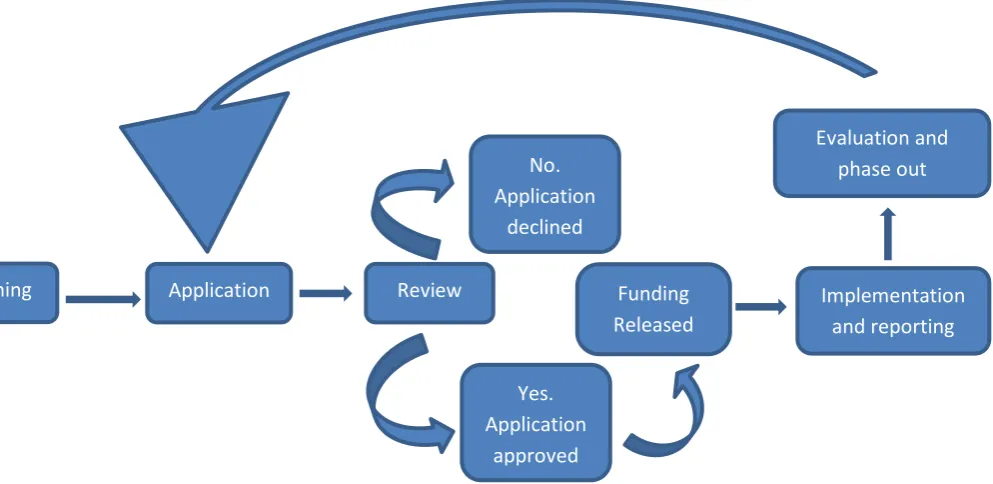
Figure 1 The contestable grant process. Adapted from AOK Foundation (2011) and Innovation Grants
(2013) ... 15
Figure 2 An example of a community mobilization in addressing restorative justice ... 27
Table 1 A sample of a logframe ... 9
Table 2: Project success criteria identified by the respondents ... 34
1
Chapter 1 – Introduction
1.1 Introduction and overview
Monitoring and evaluation is a key feature in contracting relationships between government, donors, private sector, NGOs and the wider civil society in the law and justice service provision. However, in the case of Papua New Guinea (PNG) it has become evident that less effort has been placed on evaluating the outcomes of NGO-Government collaborative projects aimed at creating safer and more peaceful communities, whilst funded using contestable grants. This research explores the role of monitoring and evaluation of joint NGO-Government projects funded using contestable grants administered by the then Community Justice Liaison Unit (CJLU) of the then Papua New Guinea Law and Justice Sector Program (PNGLJSP) between 2004 and 2008. It focuses on issues and challenges raised by an apparent lack of evaluation, and identifies a process or tool that a local community can apply alongside the conventional monitoring and evaluation processes and tools which define a successful local, collaborative NGO-Government project. This study evaluates the effectiveness of NGOs working in partnership with formal government agencies in the law and justice sector in PNG. My contention is that while the existing forms of evaluation of these NGOs whose programs are funded through a contestable grant mechanism are weak, there are potential pathways to improve this performance.
This chapter begins by outlining the legal system of Papua New Guinea (PNG) and the role of civil society in collaborating with government agencies in the law and justice service provision, with a specific focus on the NGO contestable grant scheme administered by the CJLU. It presents the issue under investigation and outlines the aim of the research followed by the key questions the research seeks to explore. The next section describes the methodology and the ethical procedures undertaken to accomplish the research project, while the last section provides the structure of this research report.
2 prior to (Morauta & Louis, 1984) and after the law and justice reform of 1999 (Dinnen, 2001 & 2003; MacDonald, 2008), is a subject of an on-going debate. Many of those who need legal services do not have access to them, let alone use them. Barriers such as limited and non-existent facilities at the rural level, limited awareness of available services (Akin Ojelabi, Fisher, Cleak, Vernon & Balvin, 2011, 2012), preference to use traditional justice methods over formal methods, high transaction costs, illiteracy, language difficulties (Akin et al., 2011), and dislike or fear of government agencies (McConnell, Derr, Burwick, Max, & Van Noy, 2006) have limited access to and use of public legal services. These barriers have created a service gap between the formal law and order agencies and the local communities in working together to address local problems. Thus, the role of the civil society organisations (CSOs)1, as advocates and service providers was
recognised as the vehicle to extend legal services where appropriate in the 1990s and early 2000 to fill up this gap.
Historically, CSOs, particularly non-government organisations (NGOs) have not been partners with government agencies (McConnell et al., 2006). However, in the PNG law and justice processes, it has been recognised that NGOs are in a better position to serve people who do not have access to, or use legal services. Ordinary citizens are likely to access and use the services of NGOs because local people in the communities and villages trust them, and perceive them to have a greater understanding of local needs. Moreover, local NGOs often provide “personal, flexible, and comprehensive services that are well suited to people who face barriers” (McConnell & Derr, 2006, p.1) to access and use legal services.
The formal government law and justice sector agencies in PNG, upon recognising this service gap have sought to better serve some of the neediest population at the community and village level both in the urban and rural areas. To do this, they have involved local NGOs’ expertise, viewing them as valuable partners who have the potential to facilitate the provision of, and enable better access to legal services. Apart from the wider locally established and registered civil society groups that partner with the government agencies in the justice processes, one NGO whose function focuses predominantly on justice-related matters have worked closely with the CJLU and other government agencies in several communities and villages in the Milne Bay Province since 2006. The Milne Bay Counselling Services Inc. serves as a specific case in point in this research to unpack the challenges of evaluation, explore how the NGO-Government
3 collaboration/partnership has played out in practice, and also understand how a local community identifies a successful project based on local evaluation processes and criteria.
Collaboration between the government and the NGOs in the provision of basic services is strongly advocated for in developing countries (Binkerhoff, 2002; McCloughlin, 2011). Although there are many challenges involved in such collaboration, there are also many benefits that can be achieved. McConnell & Derr (2006) identify some of these benefits:
Such collaboration could allow the government to leverage its funds by taking advantage of the volunteers, donated goods and services, and other resources that NGOs are often able to access; NGOs’ knowledge of the communities and their needs can also help government agencies plan and deliver services more effectively (p.1)
However, collaborations among government agencies and NGOs may not be easy. In many countries and local communities, government agencies and NGOs have very little experience working together (Thomas, Muradian, Groot, & Ruijter, 2010; Bano, 2011; Ejaz, Shaikh & Rizvi, 2011). McConnell and Derr (2006) also identify some of these challenges in government-NGO collaboration. They note, government agencies, on the one hand, may not know about the work of NGOs, and NGOs on the other hand, may not be aware of the ways that government agencies provide their services. In these cases, both may perceive each other’s missions as different from their own and may also be suspicious of each other’s motives. Furthermore, McConnelle et al. (2006) also observe that government agencies are more concerned about their clients’ rights and legal issues when services are provided by NGOs. In addition, the limited administrative and capacity of some NGOs may also restrict collaborative relationships (Brinkerhoff, 1999) because NGOs cannot respond to both the demands of the government partners and their clients.
4
1.2 Research Aim and Questions
This research, therefore, aims to understand the challenges and issues experienced in evaluating the effectiveness of NGO projects funded with contestable grants; identify whether the grant scheme has been able to create sustainable NGO-Government collaborations in service delivery; and explore how a local community identifies a successful project based on local evaluation processes and criteria. Specifically, the following research questions were explored:
i. What are the challenges of monitoring and evaluating projects funded using contestable grants?
ii. How does a local community evaluate projects? iii. Did the NGO-Government partnership work?
1.3 Methodology and Ethical Considerations
In this study, the Davidson and Tollich’s (1999) and Robert Yin’s (1989) qualitative methodological approach were selected using a case study to provide information for this research. Two reasons inform this choice. Firstly, qualitative research allows the researcher to investigate the thoughts of a small number of people within a context specific case in depth. Qualitative case studies focus on an in-depth interpretation and contextualisation where the results cannot be generalised in any systematic way. Therefore, it was necessary to use a context specific case study to enable a better and an in-depth understanding of this topic. Secondly, a qualitative study works well with small numbers. It is more practical in this sense because I am the sole researcher in this project who is familiar with, and close to some of the potential respondents, whom, I can talk to in depth. Thus, a case study was evaluated as appropriate for this research project.
5 consultants, and a number of the target beneficiaries at the community level. In the end, five semi-structured interviews2 were carried out.
Before collecting data for this research project, I went through the Institute of Development Studies internal ethics process to discuss and seek clarification on specific ethical issues that might arise while undertaking the research. One of the discussion points was on how I could avoid conflict of interest due to my previous role in the law and justice sector and my current role as a student doing research within the sector in Papua New Guinea. According to the Massey University Ethics procedure, my research project was identified as low risk and it did not pose any significant harm at any level to the participants. However, I was mindful of any ethical issues that might have arisen in the process.
Prior to interviewing participants over the phone/skype, I discussed with them relevant information on the research3, research consent4 and the questionnaire5. I also had to clarify and
stress that my research no connection with my previous role in the law and justice sector and it is part of my individual study towards fulfilling the requirements of Massey University’s qualification of a Master Degree in International Development. Upon their agreement, we proceeded with the interview. I also sought participants’ consent to record the interviews, which, they agreed to. The same process also applied to participants that completed the questionnaire via the email. This is an advantage of email survey compared with the interview face to face or in this case Skype. The participants could read the information themselves and then fill out the forms (in isolation from my explanations, as I did this once only when sending out emails). However, I managed to follow up on specific ideas and answers to ensure I understood what they meant by their responses. There were some issues with this methodology as I encountered several communication challenges: broken internet link, low mobile phone coverage, not enough time, and high cost.
1.4 Outline of the report
The study is divided into six (6) chapters. Chapters 2 and 3 provide a theoretical framework for understanding monitoring and evaluation in the development context and the challenges of evaluating contestable grants. Together these chapters provide a brief history on the evolution of evaluation, focusing on analysing the current types of approaches and practice used in
2 Participants’ list and their organisations 3 Participant information sheet
6 development programmes. This is followed by a critique of the western-oriented result-based management framework and an argument on the need for an appropriate context-based evaluation approach. Chapter 3 also highlights the broader challenges and issues of evaluating grants and opens up the discussion on the proposed local and appropriate evaluation tool for monitoring and evaluating community projects.
Chapter 4 presents the law and justice policy context and case study on CJLU’s evaluation of MBCSA’s counselling and training project in Kiriwina District of Milne Bay Province. The chapter highlights that while seeking to achieve the overall law and justice sector goals, the processes involved in monitoring and evaluating performance and impacts of NGO projects funded with contestable grants can be challenging and difficult. It has placed considerable strains on the relationships between key stakeholders.
7
Chapter 2 Understanding the role of monitoring and evaluation in
the development context
2.1 Introduction and overview
This chapter provides an understanding of the monitoring and evaluation (M&E) discourse by analysing the existing literature on the emergence, meaning, approaches, and the critiques of monitoring and evaluation from an international development perspective. Although the shift in aid modalities towards results-based management approach have been widely advocated and embraced in development efforts, with the aim of improving development outcomes, this approach is no longer solely appropriate. There have been greater calls for other methods that are culturally appropriate and relevant in NGO program evaluation.
Interest in monitoring and evaluation (M&E) began around the 1980s as a result of three basic factors (Uitto, 2004). Firstly, M&E was seen to assist with learning. Development community organisations and functions grew with complex knowledge as time passed by, thereby creating new and more complex ways to meet development objectives. Thus, M&E appeared to provide the framework for knowledge development. Secondly, the development community recognised that programs and projects were often poorly implemented or had poor outcomes. As such, M&E became the tool that was required to rectify the problems and provide learning opportunities for decision-makers to plan for the future. The third reason is the need to maximise quality development efforts and benefits using increasingly scarce resources. These three factors therefore prompted the rise and prominence of M&E as an important development tool.
8 are defined based on following definitions provided by the Department for International Development (DIFID, 2005). Relevance asks the question of whether the project was worth implementing in the given context and setting that is, whether it was the right project or intervention. Efficiency raises the question of whether or not the intervention is able to achieve maximum results with given resources. Effectiveness questions if the intervention achieved what it was intended to achieve. Results or Impact are used interchangeably in this study to refer to the expected outcomes or the overall effects; that is the changes, whether positive or negative. It seeks to identify what worked and what did not, and improvements can be made next time. Sustainability asks the question of whether the project is worth further funding and how it can be sustained outside of donor funding or when donor funding ceases.
Evaluation is usually conducted at all points in the life of a program or project: at the design phase, mid-project, and/or post-project. As complementary functions, evaluation complements monitoring in a sense. Kusek and Rist (2004, p. 13) describe that “when a monitoring system sends signals that the efforts are going off track, then good evaluative information can help clarify the realities and trends noted with the monitoring system”. As such monitoring cannot be isolated from evaluation or vice versa. They complement each other. Technically, M&E is best defined according to its application and use, which varies among diverse organisations and fields. For the purpose of this research project, the term evaluation is sometimes used to cover for both monitoring and evaluation (Bamberger, 2000).
9
2.2 The Logframe
M&E can be both quantitative and qualitative in nature, and can apply a broad range of methods to collect, analyse and report on a program or project’s information and data (Bamberger, Rao & Woolcock, 2010). The most common type of M&E uses the Logical Framework Analysis (LFA) or the Logframe approach. A logframe is a project management tool that links together the different elements or functions of a project (Bakewell & Garbutt, 2005). It assists with analysing a development problem, sets out a clear plan of a project, assists with program implementation, and most importantly, provides a benchmark for evaluating the project. Most international development agencies apply logframe to measure the outcome and overall effects of their programs and projects. For example, Care International uses logframes to evaluate 80 per cent of their activities (CARE, 2008, p. 98). In addition, DFID, requires that all of its projects that are valued over 1 million pounds apply logframe as the tool for measuring project outcomes (DFID, 2009, p. 4).
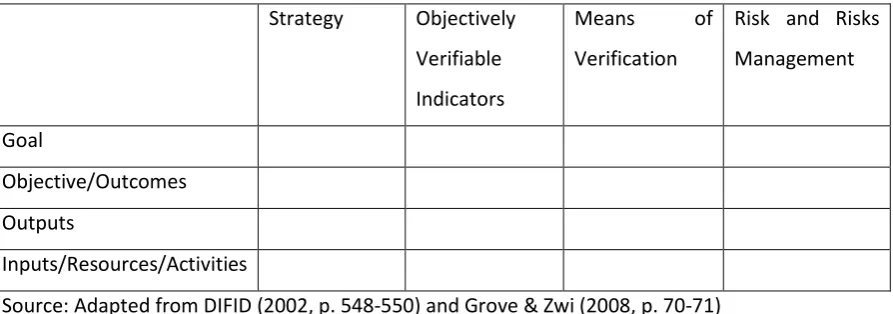
[image:18.595.70.517.545.702.2]The logframe or the LFA is usually shown in a form of a “matrix in which a project’s objectives and expected results are clearly identified, along with a list of indicators that are to be used in measuring and verifying progress toward achieving those objectives and results“(Ebrahim, 2003, p.817). As a four-by-four matrix, it consists of four rows and columns which describes the hierarchy of project objectives corresponding to the strategy, indicators, how to measure them and risk management tools respectively (Grove & Zwi, 2008). An example of a log frame matrix is shown in Figure 1.
Table 1 A sample of a logframe
Strategy Objectively Verifiable Indicators
Means of Verification
Risk and Risks Management
Goal
Objective/Outcomes Outputs
Inputs/Resources/Activities
Source: Adapted from DIFID (2002, p. 548-550) and Grove & Zwi (2008, p. 70-71)
10 is also used for implementation and reporting (DIFID, 2002). Most program and project funders prefer logframes for measuring tangible results such as the number of schools built, trees planted and land irrigated. In most cases, donor evaluations tend to focus on outputs or products, which are often short-term and emphasise results that are easy to measure or count instead of the harder-to-measure, less tangible goals (Ebrahim, 2002) such as development outcomes. The greater emphasis on result-oriented M&E also now embraces the results-based management (RBM) approach as another project management tool that intends to achieve the intended results of projects and programs. This is also emphasised by Holvoet and Rombouts (2008) who argued that the results-based management (RBM) approach is one of the principles now embraced as a result of the shift in the aid modalities instigated by the analyses of the effectiveness of the previous aid.
2.3 Results-Based Management
In the last ten years, development agencies have experienced more pressure to show that their work is having a positive impact (Giffen, 2009) on the communities and the lives of people they work with. This saw the increasing demand for monitoring and evaluation of programmes and projects (Fine, Thayer, & Coghlan, 2000; Mayhew, 2012). To demonstrate the results of development efforts, aid recipients are expected to build and strengthen results-oriented frameworks and arrangements for planning, implementation, monitoring and evaluation. With the shift in focus towards results and impacts of programs and projects and whether they are creating the intended changes; M&E then becomes the tool used to assist development actions move in the right direction, and to achieve intended objectives and outcomes in a measurable way.
11 RBM from the United Nations Development Program’s (UNDP) perspective focuses on “fostering a result culture within an organisation, enhancing capacity to make management decisions, and strengthens contributions to development results” (UNDP, 2007, p. i). This is also emphasised by Lahey and Nielsen (2013, p. 46), that RBM can lead to “improved management practices and the delivery of results, rather than processes.” Lahey and Nielsen (2013) further state that the results are being achieved through methods that are responsible and with accountability for all spending of funds. Moreover, Pont (2011), views RBM as “acting with the end in mind” (p. 38), as it occurs throughout the life cycle of a project. RBM is a process that facilitates the achievement of tangible results – from planning to achievement of results. During the planning phase, stakeholders are included, and solutions are targeted at the problems. The desired outcome is the central core of RBM which has to feature in the heart of the project design (logframe), with resources and time coordinated accordingly and captured in the work plan, and with key indicators to measure against performance. In the implementation phase, the RBM tracks the project’s progress and accommodates the amendments of plans as well as facilitates the demonstration of results.
Further, Pont (2011) identifies management autonomy and conviction as two key characteristics that facilitate effective implementation of RBM. Without autonomy, and the conviction that this approach will work, it is highly likely that RBM will be viewed as part of fulfilling bureaucratic purposes rather than achieving results. As observed by Lahey and Nielsen (2013), it is the responsibility of the program managers to put in place the necessary results-based monitoring systems, whilst the internal M&E unit plans and implements evaluations. RBM operates on the premise that insights from M&E would enhance design, planning and implementation efforts in RBM and strengthen sequential complementarity – where monitoring informs evaluation and vice versa. However, Lahey and Nielsen (2013) also acknowledged that coordinated M&E efforts in practice are the exception rather than the rule.
12 (2013) also observed that RBM will not highlight outcomes to initiatives or unexpected outcomes, especially ones, either positive or negative, that have not been foreseen in the project plan or RBM frameworks, as opposed to the process of Most Significant Change (MSC) for example, which is able to identify unforeseen circumstances during evaluation. As such, MSC can be used as a complementary tool with RBM in evaluation as RBM alone might lack the capacity to identify program and project outcomes.
In a report by UNDP (2007, p. viii) it also identify three broad criticisms of RBM: Firstly, from a political science perspective, in trying to set clear, concrete objectives and targets, RBM can “conflict with the need to keep objectives sufficiently imprecise to gain widespread support.” Secondly, many development results sought cannot be easily measured, and thirdly, as a consequence, RBM is viewed as forcing measurement and reporting of a much smaller range of results, especially outputs, and, when an organisation overemphasises any set of performance indicators and targets, the staff become preoccupied with those indicators and targets rather than the wider results. These criticisms of the recently embraced RBM approach point to the need for an appropriate M&E tool that can be used alongside the RBM in different contexts, especially in developing countries as RBM is still underdeveloped and needs to be further explored and refined. However, not only is RBM as an approach to M&E critiqued, but M&E in the general international development context has also received criticisms. Some of these criticisms are elaborated below.
2.4 Critics of M&E in international development
13 development intervention activities. However, as observed by Fukudar-Parr et al. (2002), most development aid projects focus on building individual and organisational capacity rather than the society’s capacity. As a result, conventional monitoring and evaluation lacks a contribution to building local evaluation capacity; either in developing evaluation systems in local organisations or continuing evaluation practice post-project completion for long term sustainability purposes. Local capacity building requires processes such as participation6 (Cousins & Earl, 1992; Cousins &
Whitmore, 1998) and empowerment7 (Fetterman, 1996; 2001) that are a common evaluation
approach in international development literature and are a key feature embraced by the potential pathway/framework as an evaluation tool for monitoring and evaluation. Crishna (2006) asserted that an evaluation that emphasises local feedback and learning, and a climate of reflection and self-assessment is essential. Thus, there is a need for a locally appropriate and locally-led participatory and empowerment evaluation approach.
2.5 Summary
Chapter 2 has introduced the concepts of monitoring and evaluation generally from its emergence to current debates in the international development literature. The most common approaches to M&E such as the Logframe and the recently embraced result-based management approach have been critiqued for not incorporating local contexts and inputs, especially indigenous approaches. The chapter concludes with a need for a potential local-oriented evaluation pathway.
6 Participation: In international development plans and programs, participation refers to the process by which stakeholders take part and affect decision-making in planning, implementing, monitoring and evaluating programmes and projects (Koasa-ard et. al, 1998). It is a process that empowers people and communities through the acquisition of skills, knowledge, and experience that leads to greater self-reliant and self-management (See also Karl, 2000).
14
Chapter 3 Evaluating NGO projects funded with contestable Grants
3.1 Introduction
Contestable grant funding, a competitive approach to funding is increasingly offered by funders who work in partnership with local NGOs of developing countries for basic service delivery and advocacy. However, tied to contestable grant funding is the increasing demand for monitoring and evaluation that feature in the grant agreements. This is very much the case with such funding in Papua New Guinea, where NGOs delivering law and justice services appeared to be the largest recipients of contestable grants from 2006-2008 receiving about up to $US3 million in total (CJLU Annual Report 2006-2008). This chapter argues that although increasing contestable grants are disbursed to local NGOs in the law and justice service delivery in PNG, less effort is placed on evaluating the outcomes. The chapter reviews contestable grants, identifies the evaluation challenges, and discusses a potential pathway to evaluating local projects.
3.2 Contestable grants funding
15 The first step in a contestable funding process is usually an invitation to apply. Contestable funding arrangement is often made by a written or an online application (Dawson, 2012); though online applications are not a common practice for small community-based groups or organisations that are located in the rural areas of developing countries like Papua New Guinea. Figure 2 shows the typical contestable grant making process.
Figure 1 The contestable grant process. Adapted from AOK Foundation (2011) and Innovation Grants (2013)
At the planning stage, the grantee identifies the project and the budget, puts together an application and submits to the potential funder. The funder reviews the application as per criteria and other requirements, and makes decision on the outcome, either positive or negative, and advises the applicant. The successful grantee’s application is approved and the funding is released. The grantee implements the project and submits report to the grantor. The grantor then reviews the reports and projects and closes off the one-off projects after evaluation, or follows through the process for multi-year programs. There could be other several procedures in between the key stages of the process such as a preliminary screening prior to the formal review.
According to Bray and Couchman (1992), the process is seen to be less efficient considering the amount of time involved in preparing bids; the peer review process may well be regarded as unfair and biased; the process may be overly bureaucratic, lacks accountability and transparency;
Planning Application Review Funding
Released
Yes. Application
approved No. Application
declined
Implementation and reporting Evaluation and
16 and there can be high costs of administering the contestable funding system. Despite the overwhelming process of grant seeking contestable funding, and other general critiques these funds are a key part of many development agencies implementing programs and projects in order to improve human well- being.
3.2.1 Significance of Contestable grants funding
Contestable grants have become a significant means by which local people can be given support to a project along with their local contribution, either in cash or kind or both. While interviewing for this research, several examples highlight this significance. A local leader of a successful contestable grant-receiving non-government organisation remarked:
Being awarded contestable grants gives the organisation a sense of belonging and ownership of the project. It enables the leaders and staff to work hard to see that the project achieve its objectives in meeting the needs of the target communities (CBO Leader)8.
Another volunteer working with a community-based group at the grassroots level also commented:
Some of the best innovative ideas that can drive development come from the local people at the grassroots level. The grants provided to the successful NGOs help them that work closely with these people to develop these ideas and see it to fulfilment (Volunteer Counsellor)9
Other project officers overseeing local women’s project said,
Local grants facilitate quantitative growth in programs and projects, such as increase in numbers of activities and of participants, thus, enlarging coverage and number of beneficiaries… grants facilitates the gaining of knowledge and skills by local participants involved (Community Project officer)10
These examples from local community perspectives demonstrate that contestable grants are significant. Friedman (2012, p.62) describes the significance of contestable grants as “oxygen”
17 that permits local community groups and organisations including NGOs to survive and thrive, thereby providing the platform to foster the health of local communities.
In the PNG law and justice sector, NGOs delivering law and order services appeared to be the largest recipients of contestable grants over the period 2004-2008, receiving up to $US3 million in total (CJLU Annual Report 2005-2008). These NGOs accept monitoring and evaluation as one of the key terms and conditions outlined in the partnership agreements. However, despite a huge sum of contestable funds received and implemented by the civil society organisations, and other development partners in the sector, very little is written about the effects of projects funded under this type of funding (Dalrymple and Rynn, 2009; Miller & Armytage, 2008; Armytage ,2010). Though the projects are regularly monitored on a short term basis, there is little to show for the long term impacts (Armytage, 2010), with limited local evaluation capacity development and institutional building in other projects (as observed by Hashimoto et al. 2011). This is a similar case in Papua New Guinea. The next section discusses issues and challenges of evaluating NGO projects funded with contestable grants.
3.3 Evaluating NGO projects funded with contestable grants: Issues and
challenges
18
3.3.1 Grant Monitoring Issues
Monitoring was noted as the complementary function of evaluation, whereby information is fed into the evaluation. Despite being a key tool, effective monitoring is a central part of the challenge in evaluating projects funded with contestable grants. Ekstrand (2002) argue that there is inconsistency in systematically documenting and monitoring project data. His work concerning M&E on a Violence Against Women Office (VAWO) discretionary grant program, a national effort that seeks to end crime and violence on women and provide support services to women victims in the United States of America, found that there is lack of requisite grant monitoring. Although, there are monitoring plans in place, grant overseers do not consistently document monitoring activities such as site visits, accordingly. He also noted that grant files did not contain sufficient progress and financial reports for the grant period. Further, there are delays in grantees’ submission of financial and progress reports. This situation is not only found in VAWO program as identified by Ekstrand (2002), but is also experienced in the Law and Justice sector program that I was once employed with. Grantees’ do not always submit narrative reports on time due to various reasons that results in delays in the release of subsequent tranche payments, and so forth. The lack of these monitoring documents results in organisation being unable to systematically determine “staff compliance with monitoring requirements and assess overall performance” (p. 2). Thus, insufficient monitoring data and other monitoring problems can affect the overall evaluation.
3.3.2 Evaluation challenges
19 Brandon, 2008, p. 12). Some evaluators prefer quantitative methods over qualitative methods of assessments, as they believe will give the best results, whilst others prefer to use qualitative approaches. Despite these differences in method, most evaluations combine qualitative and quantitative approaches in their assessments. However, in planning, designing, implementing, reporting and communicating evaluation information and in the use of the evaluation, several examples highlight competing evaluation methods and methodologies.
St. John (1999) contends that projects funded with grants are rarely evaluated due to lack of “workable approaches” for evaluating contestable grants. St. John raised the issues on what methods to use and on what criteria should these methods be based on, how should the study be designed, how should the data be collected, compiled, written and eventually disseminated. These issues might originally result from the fact that there were multiple and ambiguous evaluation objectives which affects the choice of indicators. Although, relevant indicators are chosen they may not be perceived as relevant by others. This can spill over to affect the choice of methods which is likely to complicate the data collection process. Moreover, as different stakeholders in the evaluation have different views and expectations of the results, are accountable to different citizens, makes the whole evaluation of the outcomes that grants buy becomes more complex. Professionalism in evaluation might perhaps guide this complex process, at least.
Ekstrand (2002, p. 5) noted “methodological rigor” in impact evaluations. Ekstrand’s report on three Violence Against Women Office (VAWO) discretionary grant programs within the Ministry of Justice in the United States, showed methodological issues that raised concerns on whether evaluation can produce definite results. He notes problems in both evaluation design and implementation. The three site participants in the evaluation did not fully represent their programs which limited the evaluators’ ability to generate results. Further, lack of involvement by non-program participants hindered evaluators’ ability to minimise the effects of factors that are external to the program and isolate the impact of the program alone. In addition, the evaluators’ lack of statistical knowledge and skills in collecting and analysing data led evaluators to draw inappropriate conclusions from the results.
20 carries a lot of methodological issues. For example, deciding the criteria and bases of criteria to judge the worth and value of various scientific research publications that were funded by the research grants. In addition, McCullough’s (1992, p. 99) study also found that the “evaluating agency must invest considerable time and expertise in communicating their own needs, shaping the project and presenting and critiquing the results”.
The issue of methodological problems is also emphasised by Savic and Rudolf (2012) when evaluating the obtaining and implementing of European Union grant funded projects. They noted this as a long and difficult process due to complex rules for applying and reporting. This is due to a lack of a systematic and comprehensive approach to programme rules; lack of knowledge management system on EU grants; and an inefficient reporting system based on periodic reports. They concluded that though there are solutions to address many of the main problems, the overall solution to these methodological problems remain partial.
Other reasons include inadequate M&E approaches of NGOs (Desai & Potter, 2008), low human resource base, with a lack of in-house skills and expertise required in undertaking credible monitoring and evaluation (Bitgood, 1996; Lunt & Davidson, 2003). McCollough (1992, p. 101) also emphasised the “long time needed to produce and integrate results, and the large investments in management skills, money and time required to mount and complete a credible evaluation”. Clareton-Hug and Hug (2010) and Bamberger et al., (2012) also identified lack of clearly stated program objectives at the outset of the projects and programme; the typically compressed time frame, inadequate data, and insufficient budget. Bitgood (1996) also noted factors such as evaluation being not seen as a priority activity together with concerns over negative consequences such as the evaluation might identify program’s ineffectiveness, inefficiencies and other weaknesses. Hence, all these factors also impede evaluation of projects funded with contestable grants.
21 documented studies in the context of evaluating project outcomes funded with contestable grants, as far as this research project is able to discern. To evaluate a full contestable funding process including the outcomes of projects funded at least in PNG, the need to develop a locally appropriate framework remains to be investigated. In addition, evaluating underlying local capacity development funded with contestable grants has not been researched and documented. Therefore, there is an obvious gap in the literature. Hence, this research aims to identify a potential evaluation approach that might be applied in monitoring and evaluating local projects.
3.4 The Kibung approach
Kibung11 means meeting or coming together to discuss issues of interest. As a new concept that is
interactive in nature, it was introduced into the academic literature fairly recently as a teacher professional development framework in the education context (Joskin, 2012, p.272). As an interactive process, it consists of a group of two or more people including family, extended relationships and others coming together to discuss issues of interest. As an interactive process, the aim is specifically to engage in dialogue, gather information, exchange ideas, where both parties can exchange and learn from each other. This approach creates room for individual as well as group learning in identifying challenges and opportunities for improvement. As a horizontal, give-and-take approach to learning, it critiques the top-down approach where parties, such as the international development funders determine the “how” of doing development and/or conducting evaluation and calls for greater use of local cultural processes and method in program evaluation and monitoring (Bell & Aggleton, 2012).
The processes and methods of the Kibung approach to evaluation are developed in association with people and cultures with their own customs, habits, and mutual differences, which are more grounded in the realities of practice and societal change as opposed to quantitative results-based that are often experimental or quasi-experimental methods advocated and imposed by funders (Eyeben, 2012). The approach basically takes into account the characteristics of community participation, local empowerment, cultural processes and contexts, and encourages greater local inputs. Generally, it can be applied as a qualitative approach to research and also as an M&E tool.
22 3.5 Summary
23
Chapter 4 Context and case study
4.1 Introduction
The Community Justice Liaison Unit’s (CJLU) Advisory Board approved Milne Bay Counselling Services Association’s (MBCSA) application under the Contestable Funding scheme for a total of approximately $US107, 000.00 and went into a contractual and partnership arrangement to support their program from 2006 to 2008 (CJLU Annual Report, 2008). The funds were disbursed in subsequent tranche payments for program implementation in communities that exhibit high levels of family and sexual violence issues based on the statistics from the Welfare Department, Community Based Corrections and Provincial Police. The intention is to contribute to the sector’s overall goal of reducing family and sexual violence in the local communities.
This chapter describes the evaluation exercise undertaken by the CJLU on MBCSA’s Training-of-Trainers program for the volunteer counsellors in the Kiriwina District. The focus is on the process of access and procedures of undertaking evaluation at a local community. The chapter presents the context and the evaluation approach applied by the CJLU and the challenges experienced on the field, highlighting that local involvement and participation, negotiating and applying culturally appropriate processes of access and gathering information are key factors in conducting local evaluation.
4.2
MBCSA training-of-trainer program for volunteer workers
24 the family and the traditional social controls that promote peace and good order among members of the communities and villages. Certain cultural practices such as the bride price payment also contribute to weakening the rights of women. These were some of the real issues that MBCSA in its counselling and awareness programs sought to address with the contestable grants awarded by the CJLU.
MBCSA staff and its previously trained network of volunteers started off with awareness on domestic violence; child rights, woman’s rights , HIV/Aids, and general human rights issues; including family law and the general PNG laws that protect women and children targeting schools, churches and villages. After the general awareness programs, MBCSA proceeded to conducting counselling training of trainers (TOT)12 for a targeted group of volunteers. The trained
participants included government district officers - Community Development/Welfare officer, the Senior Police Constable; active volunteer leaders identified by the Chief among the youth, women, church and men’s groups from various villages; and a couple of teachers from the High School and the primary schools. A total of 38 participants, 19 males and females attended the counselling training from the 10th -20th December 2007 and graduated with certificates after two
weeks. As part of fulfilling the grant agreement approved by the CJLU advisory board, the CJLU then carried out an evaluation in 2008.
4.3 CJLU and the evaluation process
The CJLU has an internal monitoring and evaluation framework that guides its evaluation (CJLU M&E Framework, 2008b; CJLU Contestable Funding Guidelines and Procedures, 2006). The monitoring information such as project submission, reports submitted by grantees, grant agreements, and other technical documents form the internal database and sets the basis for impact assessments. The CJLU framework is linked to the overarching Law and Justice Sector Performance Monitoring Framework 13 implying the evaluation process as an ordered linear
12 MBCSA is a certified training organisation accredited by the National Training Council (NTC) Board of Papua New Guinea. It was the lead NGO, together with the other key stakeholders, in developing, testing and piloting a Standardised Counselling Manual that was approved by the NTC. The NTC is a creation of Parliament that oversees short term training courses. It consists of a Board that oversees, approves and certifies specialised training providers in public and private sectors including NGOs responsible for imparting specific knowledge and skills to interested people and organisations (Koupere, 2008)
25 sequence, which is, unlikely to be followed through in a pragmatic sense. Things change in each process as something is learnt from the experience of an activity or task. This information is fed back into the different stages in the evaluation processes and the project. Generally, in any of CJLU’s evaluation exercise, an evaluation term of reference (TOR) is drafted and circulated to the key staff, development practitioners (DPs) and civil society partners for discussion and input. After the consultation an evaluation plan is jointly developed by the evaluation team and key representatives. Evaluation is then conducted firstly, by a desk review of project documents and other reports and internal interviews; and then together with the community representatives and other stakeholders in the field.
Although the CJLU applies different methods or tools of enquiries in data collection, participatory approaches are a key method in identifying relevant issues and appropriate measures (CJLU Contestable Funding Guidelines and Procedures, 2006). CJLU’s M&E exercises are done jointly with key partners and stakeholders including the target communities, with the key objective of learning from experience and improvement from program results. CJLU also organises and facilitates M&E forums for government, civil society and other key stakeholder partners to report on achievements, lessons learned and opportunities for improvement, as well as share information.
4.4 MBCSA evaluation results
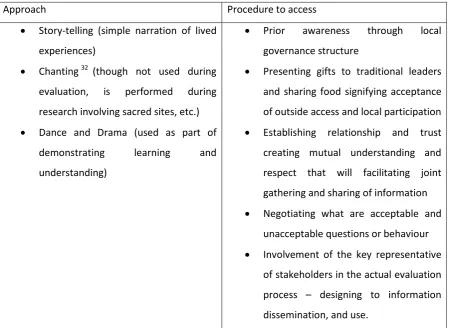
The evaluation team’s initial discussion with the MBCSA Executive Director revealed that Kiriwina Island is a highly hierarchically structured society; the Chief being the authoritative figure (Koupere, 2007). It is a cultural protocol that the Chief is advised and/or included in any programs or activities that occurs in the island. As such, communication either written or verbal messages need to be passed on to him regarding the evaluation exercise, followed by a courtesy visit. Gifts such as a bunch of betelnut14, sugar and tea were presented to the chief while conversations are
with the civil society in crime prevention and restorative justice initiatives is assumed to address the SSF Goal 2 of increasing access to justice and just results, the key performance measure being all people have greater access to justice services, with two sub-measures: (a) increase in the number of people receiving human rights awareness, and (b) increase in the number of people receiving legal, paralegal and/or advocacy services from civil society organisations and formal agencies. The tools for assessment would be NGO records, client data records from NGOs and service providers in paralegal and counselling services. In this way, the stakeholders in the sector may be able to know whether goals are being achieved.
26 held. This was done purposely to gain approval and support from the chief who has the power to mobilize the rest of the community, as well as keeping the chief informed of activities focusing on law and order issues happening within the District. Upon the Chief’s acknowledgement and approval, the team proceeded with the evaluation exercise conducting one–on-one interviews with the key stakeholders (Koupere, 2007). The trained counsellors, government officers, health centre staff and few teachers and students from the only High School were interviewed. The team also held focus group discussions with the villagers who have received counselling services (direct beneficiaries) from the trained counsellors; first in isolation from the counsellors and then together as a group. Young people, both men and women were also interviewed separately, and then together as a group. Key benefits and challengesand the implications on the overall law and justice sector performance at the community level (CJLU, 2008) are presented below.
4.4.1 Kiriwina Culture
The Kiriwina culture was seen by some as a barrier in the dissemination of information on family and sexual violence issues, such as rape within marriages, child abuse, and incest. For example, in some communities, the local people perceived such information as “taboo” and needed to be discussed privately with those concerned rather than the public. This also created some family disorder where women and children report cases or incidences and men were charged resulting in men retaliating against women, children and other family and community members (CJLU, 2007)
4.4.2 Network of volunteers and impact at the community level
MBCSA had trained a total of 200 volunteer counsellors throughout the province (CJLU, 2007). Of the 38 participants trained in Kiriwina, 17 had then become active in attending to their community issues solving minor cases such as stealing, land issues, general family disputes among others. Figure 2 below illustrates an example of the work that a local volunteer counsellor was able to do in his community.
27
Figure 2 An example of a community mobilization in addressing restorative justice
Kavataria Ward is the largest ward in Kiriwina, has its own community based laws that governs their community and has only one trained volunteer counsellor. The counsellor carries out awareness and disseminates basic information on human rights including CRC, CEDAW, HIV/Aids, and Juvenile Justice in the villages and schools. The Volunteer counsellor also does counselling and mediation on community problems. Youth disobedience happens to be the main problem and the major offences are stealing coconuts and drinking homebrew. After the training, the volunteer counsellors together with the chief of village mobilized the community and set community laws to guide and maintain peace. Whenever, the laws are disobeyed the volunteer counsellor punishes the offender by ordering Community work orders such as digging water wells, pit latrines, and cutting grass. The major challenge faced at the moment is networking with the District Community Development Officer, especially with referral cases that get clogged up at the District Office (MBCSA trained volunteer counsellor)15
Several interviews with participants during evaluation revealed that some volunteers were working well with local community authorities while others were not able to due to non-recognition of the counsellors and their responsibilities. Yet others such as the Church leaders took the view that these volunteer counsellors are taking over their responsibilities expected by the Church (CJLU, 2007). This caused tensions among the church leader and the volunteer counsellor and created divisions among community members.
4.4.3 Partnership and Networking
MBCSA had established networks with key government agencies such as the Department for Community Development at the province and the district levels, provincial law and order committee, international NGOs such as United Nations International Children’s Emergency Fund (UNICEF), the Provincial Aids council, the Alotau Hospital, and others (CJLU, 2007). In addition, MBCSA have a network of volunteers based at the community levels that work together with the community leaders, solving community problems. MBCSA and these partners have been involved
28 in joint awareness and training programs in schools, during public events such as Human Rights Day, World Aids Day, and others. MBCSA also receives referral cases from partners such as the provincial Department for Community Development for counselling, and refer on cases on maintenance/child welfare, recognised marriages, and others that require the attention of the Department, or the police, courts, juvenile justice and community-based corrections. One of the challenges, however, for MBCSA and its volunteer counsellors at the District and communities, is when criminal cases such as rape and murder are not followed up by the relevant law and justice authorities for prosecution.
4.5 Summary
29
Chapter 5 Findings
5.1 Introduction
Monitoring and evaluation forms the core of project management in international development. As a tool and method that identifies the successes and the challenges of a project, it should a vital activity in the law and justice service provision, specifically on projects funded with contestable grants that aim to facilitate NGO-government agency partnership at the project level. However, these partnership projects implemented at the community level are most often not assessed or evaluated due to issues and challenges highlighted in Chapter 3. Those projects that are evaluated such as the Milne Bay Counselling Services Inc, discussed as a case study pose further challenges like complying with cultural processes of access and gathering information in a locally appropriate manner. This research project aims to understand the challenges and issues experienced in evaluating the effectiveness of NGO projects funded with contestable grants. The other issues that were also examined include identifying whether the grant scheme has been able to create sustainable NGO-Government collaborations in service delivery at the community level; and explore how a local community identifies a successful project based on local evaluation processes and criteria. The information could help filling a gap in the literature as well as helping to improve donor’s monitoring and evaluation of contestable grant funded interventions by eliciting the views of various stakeholders in a law and justice project in Papua New Guinea.
This chapter presents the findings of this research in a thematic manner corresponding to the two sub-research questions by outlining whether the NGO-Government collaboration supported by the contestable grants actually work and then provides the local evaluation processes and criteria of assessment on the success or otherwise of the partnership approach.
5.2 Research Findings
5.2.1 NGO-government partnership approach: Did it work?
30 mixed results in different project locations. For example, an interview with a leader of a community-based group that received contestable grants for a law and order awareness activities, remarked that this did not encourage partnership or improve working relationship with their local authorities as they had never had a working relationship in the practical sense. Their relationships exist in words only and not actions:
Grants did not either increase or decrease local authority participation and commitment. Ignoring local communities has been part of local agency authority when it comes to service delivery. Although, in some sense, local community groups/NGOs open up to local authorities, try to share ideas and ask for assistance to work together the, local authority doesn’t seem to show any practical support. They only speak and pledge support through their words but not in their actions… in most cases, the local CBO/NGO does not receive government support and have no direct partnership in local project implementation 16 (CBO Leader)
The lack of partnership and working relationship between NGOs and government was also experienced by another community–based group that participated in the research. The Chairman claimed that:
the community and the local authorities had interests in the project in the beginning and were working together, …when the only source of funding was cut-off, the local
authorities were no longer interested in continuing the partnership17 (CBO Chairman)
While the provision of contestable grants to support local communities did not directly contribute to creating and sustaining local government-NGO partnership at the District and ward levels, there were successful partnership projects funded with contestable grants happening at the national and provincial levels. For example, a representative of the facilitating organisation and a funder/donor agency stated that as most NGOs are based at the national level, it was easier to involve them in government forums and workshops which created the opportunity for them to get to know the government agency partners to develop collaborative law and justice initiatives.
[The grants did fostered] better working relationships between NGOs and the formal law and justice sector [agencies]. In 2007/2008 a key contestable funding criteria was for the NGOs to link up with a relevant formal law and justice agency to deliver projects. This resulted in a number of joint projects such as prisoner rehabilitation program run by
16 Interview 2
31 several NGOs and the Correctional Services implemented at the national and provincial
levels18 (Former Funder Representative).
Another successful partnership and working relationship was between a well-established and well-known NGO who had an existing relationship with the various government agencies for a long time. Young Women’s Christian Association (YWCA) had been working closely with Community-Based Corrections and the Correctional Services in parole and probation services – supervising ex-prisoners undertaking community work orders outside of prison. With 12 years of experience in this role, the officer claimed that both partners have worked closely in all of their programs. She stated:
The grant funded projects only strengthened and deepen the working relationship and the connection to the greater law and justice priorities via the AUSAID/LJSP/CJLU government systems and processes. YWCA managed to maintain all relationships and contacts prior so it was much easier to continue on with grant funded projects 19(Former YWCA staff currently employed with Community-Based Corrections under Dept. of Justice & Attorney General)
The research findings pertaining to the NGO-Government interface in law and justice service delivery suggest then mixed results at different levels – both program and project level - in different locations; from rural to semi-rural communities at the district and ward levels, and at the national and provincial levels. While the community based groups, despite trying, do not really have close partnership and working relationship with their respective local authorities, the well-established and recognised NGOs have a closer partnership and working relationship with the donors and their counterpart government law and justice departments, and other development partners. This agrees with the broad findings in the literature that NGOs and government often have little to no effective working relationship (Bano, 2011; Ejaz, Shaikh & Rizvi, 2011; Pick, Rivaudan & Reich, 2008; Thomas, Muradian, Groot, & Ruijter, 2010).
32
5.3 Local perspectives and processes on successful community projects
The second sub-question was to identify how a local community defines a successful law and justice projects funded with the contestable grants and what processes do they use to do so. According to the law and justice performance monitoring framework, the donors through wider consultation with the key stakeholders and civil society had identified and listed several indicators that would show that the broader law and justice outcome of achieving a just, safe and secure society for all is achieved. Indicators of assessing civil society contributions to sector outcomes were broadly identified under the sectors strategic framework (SSF). However, whether this corresponds with the locals’ views and perspectives, and processes prompted further investigation and what is found in this research is outlined below under the sub-headings: project success criteria and process.
5.3.1 Project success criteria
As discussed in Chapter 2 DIFID (2005) identified five factors that form their evaluation criteria – Relevance; Efficiency; Effectiveness; Impacts/Outcomes; and Sustainability. Taking this into account, this research views project success criteria as the factors that the overall success or failure of the project will be evaluated against, but, coming from the local community’s perspective.
From the findings, all my respondents – representatives from the CBO; NGO; Government; and Funding agency staff, and management – have various and different interpretations of what constitutes a successful law and order project. Most mentioned sustainability of the project as a key criterion or the most visible evidence of success. Thus if the project is able to sustain itself after the funding ceases – then the project can be viewed as successful:
Apart from having key measureable outcomes [indicators] at the outset, while scoping the project and setting project goals, every project should ensure that sustainability
mechanisms are in place to carry the project through, and then we can say a project is successful 20(Former Funder Representative)
… most programs are funded on a one-off basis, a short-term approach, rather programs should be focused on long-term to really create the expected outcomes …, the government
33 should take initiative into absorbing good programs into its existing capacity to be catered for under the government budget, rather than depending on donors as external sources of funds as these donors support cannot be sustained for a longer period of
time 21(Government employee)
Local community-based organisations also held the same view. Two of them stated
[With only one funding source] when the programme (LJSP) phased out, we were not able to sustain our project. If we were able to sustain our project with other technical and financial support somewhere, our project might be successful 22(CBO Chairman)
As a one-off project, we did not consider the future of the project together with the funder. When the funding ended, the project also ended. It would be good to see donors working more closely with us [transferring skills and knowledge] to support our project into the future. When they leave we can carry on without them 23(CBO Leader)
This confirms the findings from the literature (DFID, 2005) that argues that sustainability, apart from being key evaluation criteria in assessing community projects, is also key visible evidence in the identification of successful local projects. From the two respondents (CBOs) located at the district and ward levels,24 their definitions of successful projects also generally constitutes delivery
on time and on budget which also corresponds to the criteria found in the literature (DIFID, 2005 criteria on Efficiency and Effectiveness). However, there are also other criteria that emerged from the findings as shown in Table 2.
21 Interview 1
22 Questionnaire Respondent No.1 23 Interview 2