COMPARTIVE STUDY BETWEEN EFFICTIVENESS OF TREADMILL
TRAINING WITH PARTIAL BODY WEIGHT SUPPORT AND
PHYSIOTHERAPY VERSUS TREADMILL TRAINING IN IMPROVING
GAIT ABILITY OF HEMIPARATIC PATIENTS
A Dissertation Submitted to
THE TAMILNADU Dr. M.G.R. MEDICAL UNIVERSITY
CHENNAI
in partial fulfillment of the requirements
for the award of the
MASTER OF PHYSIOTHERAPY
(ADVANCED PHYSIOTHERAPY IN NEUROLOGY)
DEGREE
Submitted by
Reg. No.
27102006NANDHA COLLEGE OF PHYSIOTHERAPY
ERODE – 638 052.
THE TAMILNADU DR.M.G.R MEDICAL UNIVERSITY
NANDHA COLLEGE OF PHYSIOTHERAPY
ERODE-638052
The dissertation entitled
“COMPARTIVE STUDY BETWEEN EFFICTIVENESS OF TREADMILL
TRAINING WITH PARTIAL BODY WEIGHT SUPPORT AND
PHYSIOTHERAPY VERSUS TREADMILL TRAINING IN IMPROVING
GAIT ABILITY OF HEMIPARATIC PATIENTS”
Submitted by
Reg.No. 27102006
Under the Guidance of
DR. V. VIJAYARAJ, M.P.T. (Neuro)
A Dissertation submitted to
THE TAMILNADU M.G.R.MEDICAL UNIVERSITY
CHENNAI
Dissertation evaluated on ---
CERTIFICATE BY THE HEAD OF THE INSTITUTION
This is certify that the dissertation entitled “
COMPARTIVE STUDY
BETWEEN EFFICTIVENESS OF TREADMILL TRAINING WITH PARTIAL
BODY WEIGHT SUPPORT AND PHYSIOTHERAPY VERSUS TREADMILL
TRAINING IN IMPROVING GAIT ABILITY OF HEMIPARATIC
PATIENTS ” is a
bonafide compiled
work, carried out by Register No. 27102006
, Nandha College of Physiotherapy Erode – 638 052, in partial fulfillment for the
award of Degree in Master of Physiotherapy as per the doctrines of requirements for
the degree of the TAMILNADU DR.M.G.R. MEDICAL UNIVERSITY CHENNAI –
32. This work was guided and supervised by DR. V. VIJAYARAJ, M.P.T.(Neuro)
PRINCIPAL
CERTIFICATE BY THE GUIDE
This is to certify that the dissertation entitled “ COMPARTIVE STUDY
BETWEEN EFFICTIVENESS OF TREADMILL TRAINING WITH PARTIAL
BODY WEIGHT SUPPORT AND PHYSIOTHERAPY VERSUS TREADMILL
TRAINING IN IMPROVING GAIT ABILITY OF HEMIPARATIC
PATIENTS ” submitted by (Reg No. 27102006 ) is a record of original and
independent work done by the candidate during the period of study under my
supervision and guidance. The dissertation represents entirely an independent work on
the part of the candidate but for the general guidance by me.
Guide
DR. V. VIJAYARAJ, M.P.T. (Neuro)
ASSITANT PROFESSOR
Nandha College of Physiotherapy
Erode-638052
ACKNOWLEDGEMENT
“AT THE VERY OUSET, I THANK THE ALMIGHTY FOR HIS
BLESSINGS TO ENABLE ME TO COMPLETE THIS PROJECT AND
I OFFER THIS PROJECT AT HIS FEET AS MY HUMBLE PRAYER”
I am grateful to our principal Prof.V.MANIVANNAN, M.P.T., M.I.A.P., for
granting me permission to do this dissertation in our institution.
I extend my sense of gratitude to my guide DR. V. VIJAYARAJ, M.P.T.
(Neuro) Nandha College of Physiotherapy for his valuable suggestion, exquisite
guidance and constant encouragement throughout the duration of my dissertation.
My sincere thanks to Dr. A. SABIYA M.P.T ( Neuro) Assitant Professor,
Nadha College of Physiotherapy and all faculty members , Dr.
SARAVANAKUMAR M.P.T,
Dr. MANIVANNAN M.P.T (Ortho) ,Dr. S. KASI
VISHWANATHAN P.T for rendering valuable suggestion for this project work.
I extend my gratitude to Mr. DHANAPAL M.Sc., for his valuable assistance
and patience.
I am also thankful to my friends and colleagues for their cooperation and
suggestions even in between their busy schedule.
Last but not least I thank all the subjects participated in this study for their
cooperation and patience shown towards me. Without their cooperation this study
would not be completed.
TABLE OF CONTENTS
CHAPTERS
CONTENTS
PAGE NO
CHAPTER - I
INTRODUCTION
1
STATEMENT OF PROBLEM
2
NEED FOR THE STUDY
2
AIM OF THE STUDY
2
OBJECTIVES OF THE STUDY
2
HYPOTHESIS
3
NULL HYPOTHESIS
3
ALTERNATED HYPOTHESIS
3
OPERATIONAL DEFINITIONS
3
CHAPTER-II
REVIEW OF LITERATURE
4
METHODS AND METHODOLOGY
7
RESEARCH DESIGN
7
STUDY SETTINGS
7
CHAPTER-III
DURATION OF THE STUDY
7
CRITERIA FOR SELECTION
9
SAMPLE SIZE AND SAMPLING
METHOD
9
MATERIALS USED IN THE STUDY
10
INTERVENTIONS
9
CHAPTER IV
DATA PRESENTATION AND ANALYSIS
11
CHAPTER V
RESULTS AND DISCUSSION
17
RESULTS
17
DISCUSSION
18
CHAPTER VI
CONCLUSION
19
CHAPTER VII
LIMITATION AND
RECOMMENDATIONS
20
BIBLIOGRAPHY
21
APPENDICES
INTRODUCTION
1.1
INTRODUCTION
Stroke refers to the sudden death of some brain cells due to a lack of oxygen when the blood flow to the brain is impaired by blockage or rupture of an artery to the brain.
Stroke may be manifested as Hemiplegia, which is the paralysis of muscles of one side of the body, contralateral to the side of the brain in which CVA occurred. Clinically a variety of deficits are possible including the changes in the level of consciousness, impairments of sensory, motor, cognitive, perceptual and language functions. The locations of lesion, the extent of lesion, and the amount of collateral blood flow and early acute care management determine the severity of neurological deficits.
The incidence of Stroke increase dramatically with age, doubling every decade after 55 years of age. 28 % of stroke occurs in individuals under the age of 65 years. The incidence of Stroke is about 19% higher for males than females.
Stroke can be classified by aetiological basis (Ischameic or Haemorrhagic), vascular basis (territory involvement), anatomical basis ( cortical or brainstem or capsular or cerebellar or spinal), severity basis ( minor or major) progression basis ( completed or evolving ) and onset basis
( infantile or young or elderly stroke)
STATEMENT OF PROBLEM
Study on Analysing the effectiveness of Treeadmil training with partial body weight support and physiotherapy in improving gait ability after stroke
1.2
NEED FOR THE STUDY
Locomotion is one of the commonest problems after stroke in terms of asymmetry and reduction of speed etc. The most often stated goal for stroke patients is to improve walking. For the improvement of walking, good strength of the lower extremity muscles is essential irrespective of the presence of spasticity because of growing evidence that muscle weakness rather abnormal reflex activity is a major limiting factor in physical function particularly for locomotor tasks following stroke.
Through this study I would like to find out the effectiveness of treadmill training with partial body weight support and physiotherapy in improving gait ability of stroke patients
1.3
AIM OF STUDY
To compare the effectiveness of treadmill training with partial body weight support and physiotherapy in improving gait ability of stroke patients . Treadmill training alone.
1.4
OBJECTIVES
• To determine the effect if treadmill training with partial body weight support and physiotherapy in improving gait ability of stroke patients in group A subjects
• To determine the effect of treadmill training alone in improving gait ability of stroke patients in group B
HYPOTHESIS
NULL HYPOTHESIS
The null Hypothesis states that there is no significant difference between effect of treadmill training with partial body weights support and physiotherapy in improving gait ability of stroke patients
ALTERNATE HYPOTHESIS
The alternate Hypothesis states that there is significant difference between effect of treadmill training with partial body weights support and physiotherapy in improving gait ability of stroke patients
OPERATIONAL DEFINITIONS
STROKE
Stroke is defined as ‘focal neurological ( or at times global) neurological impairment of sudden onset and lasting more than 24 hours (or leading to death) and of presumed vascular origin - By World Health Organization
HEMIPLEGIA
Hemiplegia is defined as partial paralysis or weakness on one side of the body and is the term most commonly used in stroke survivors – By Suzanne Ryan
Treadmill
A Treadmill is a low impact indoor Exercise machine that allows a person to walk, jog, run in place by providing a moving running belt over a deck.
A treadmill is an exercise machine for running and walkins stayings in one place. The word Treadmill traditionally refers to a type of will which was operated by a person trading steps of a wheel to grind grain where power was input into the mechanical system.
REVIEW OF LITERATURE
S. Hesse
The study intended to investigate its efficiency empared with gait training within regular physiotherapy in nonambulatory patients with chronic hemiparesis. Gait ability assessed by the Functional Ambulation Category, motor functions tested by the Rivermead Motor Assessment, Treadmill training was more effective with regard to restoration of gait ability (p < .05) and walking velocity (p<.05) Treadmill training therefore become an adjunctive tool to regain walking ability in a shorter period of time
Klinik Berlin, Department Neurological Rehabilitation, Charite – University
Medicine Berlin, Germany,
This study evaluated The influence of the degree of treadmill belt inclination for training of ambulatory patients with hemiparetic stroke. Twelve patients were instructed to walk at 5 different levels of inclination (0% - 8%) while harness – secured on the treadmill. The gait velocity was kept constant during all conditions Dependent variable were heart rate, gait cycle – dependent parameters, and electromyorgraphic activation patterns of the weight – bearing muscles. This protocol appeared to be safe in this selected group subjects.
A.R. Lindquist, PhD
Department of Physical Thearpy, Natal, RN, Brazil
This was a randomized, controlled study with a crossover design following an A-B- A versus a B-A-B Pattern. A consisted of 2 weeks of gait trainer therapy, and B consisted of 2 weeks of treadmill therapy. Thirty nonambulatory hemiparteic patients, 4 to 12 weeks after for 15 to 20 minutes for 6 weeks. The groups did not differ at study onset with respect to the clinical characteristics and effectors variables. During treatment, The FAC, giat velocity, and Rivermead scores improved in both groups,
A new gait training strategy for patients with stroke proposes to support a percentage of the patient's body weight while retraining gait on a treadmill. This research project intended to compare the effects of gait training with body weight support (BWS) and with no body weight support (no-BWS) on clinical outcome measures for patients with stroke. After a 6-week training period, the BWS group scored significantly higher than the no-BWS group for functional balance (P=0.001), motor recovery (P=0.001), overground walking speed (P=0.029), and overground walking endurance (P=0.018). The follow-up evaluation, 3 months after training, revealed that the BWS group continued to have significantly higher scores for overground walking speed (P=0.006) and motor recovery (P=0.039).
Matthias Konrad, MD
To Compare the gait of hemiparetic subjects walking on treadmill with various body weight supports and walking on the floor. Hemiparetic subjects walked on a treadmill, secured in a harness, with no body weight support and with 15% and 30% body weight relief, and walked on a floor. Treadmill training with partial body weight support in hemiparetic subjects allows them to practice a favorable gait characterized by a greater stimulus for balance training because of the prolonged single stance period of the affected limb, a higher symmetry, less plantar flexor spasticity, and a more regular activation pattern of the shank muscles as compared with floor walking.
Judy M. Simpson PhD.,
Pesi Katrak, MD
Louise Ada Catherine M Dean and Meg E Morris
It has been reported that only half of the non-ambulatory stroke patients admitted to inpatient rehabilitation in Australia learn to walk again (1). Treadmil walking with partial weight support via an overhead harness is a relatively new intervention that is designed to train walking. The mainonjective of this randomized controlled trial is to determine whether treadmill walking with partial weight support via an overhead harness is effective at establishing independent walking with partial weight support via an overhead harness is effective at establishing independent walking (i) more often, (ii) earlier and (iii) with a better quality of walking, than current physiotherapy intervention for non – ambulatory stroke patients.
Meg E Morris
MATERIALS AND METHODOLOGY
MATERIALS USED IN THIS STUDY :
• Treadmill
• Supporting Harness
• Set of pulleys
• Couch
• Pillows
• Towels
• Sand Bags
• Swiss Ball
• Parallel Bar
METHODOLOGY :
RESEARCH DESIGN :
The design that is used for this study is experimental study design
STUDY SETTING :
The study setting was conducted at the
• Nandha Colleage of physiotherapy out patient department, Perundurai, Erode
• Immanuvel Physiotherapy Clinic, Erode
STUDY SAMPLE :
A total Number of 30 patient with stroke were selected by random sampling method with consideration of inclusion criteria and exclusion criteria and they were divided in to Group A and Group B.
STUDY DURATION :
All patients participated in comprehensive 6 months Rehabilitation program
• A three week baseline study consisted of daily physiotherapy, occupation therapy, speech and neuro physiological therapy according to individual needs.
• During the subsequent 3 weeks of specific intervention
• Group A - Treadmill training with partial body weight support for 30 minutes 5 time a week plus single treatment session of physiotherapy for 40 minutes 5 times a week For 3 weeks
• Group B - Treadmill training with partial body weight support for 30 minutes 5 times a week for 3 weeks
EXPERIMENTAL GROUP(GROUP A)
It consists of 15 patients who underwent treadmill training and physiotherapy
CONTROL GROUP(GROUP B)
CERTERIA FOR SELECTION
INCLUSION CRITERIA :
• Patients with all types of stroke
• Age group between 29 – 40 years
• Patients of willingness of participate in the study
• Patients with both right and left hemiplegia
• Both genders
• Able to understand at least simple instructions
• No other orthopaedic or neurological diseases impairing mobility
EXCLUSION CRITERIA :
• Patients with other musculoskeletal disorder
• Medically unstable
• Non Co - operative patients
PARAMETER USED :
• Functional ambulation category (FAC)
INTERVENTIONS:
The purpose of the treatment and aim of the study were explained patients who are selected for the treatment.
All patient signed the consent form before undergoing treatment program
. Patients in group A was treated with treadmill training with partial body weight support and physiotherapy.
Patients in group B was treated with exclusive treadmill training with partial body weight support.
PROCEDURE :
¾ Patients were supported in a modified parachute harness suspended Centrally by a set of pulleys connected to a flexible spring.
¾ At the beginning of the therapy, two therapists provided manual help to correct gait deviations. One therapist sitting by the paretic side facilitated the swing of the paretic limb, determined that its initial ground contact was made with the heel, prevented knee hyperextension during midstance and encouraged symmetry of step length and stance symmetry.
DATE PRESENTATION AND ANALYSIS
For this pre and post and test experimental study, both paired and unpaired ‘t’ tests were used. Paired ‘t’ test was used for each parameter in an intra-group analysis to find out the significance of improvement achieved through intervention. Then unpaired ‘t’ test was used to find out the significance of the changes between two groups i.e. inter group analysis.
The statistical tests were performed by using the following formula
Mean 1
2
s n
/
X=
∑
X nx = Sum of observation n = Number of observation
To Compare the effects between two groups students ‘t’ test for paired values.
d t x n
s
=
d = Mean Difference
To compare the effects between two groups, students ‘t’ test for unpaired values 1 2 1 2 1 1 X X t t s n n ⎡ ⎤ ⎢ ⎥ − ⎢ ⎥ = = ⎢ ⎥ + ⎢ ⎥ ⎢ ⎥ ⎣ ⎦ 1 2
1 2 2 1 2
( 1) ( 1) / 2
S= n − S n − S n +n −
1
X - M.D of Group A
2
X - M.D of Group B
1
s - SD of group A
2
s - SD of group B
1
n - Number of observations in group A
2
4.2 DATA PRESENTATION AND ANALYSIS
TABLE : 1
MEAN AND MEAN DIFFERENCE VALUE FOR GROUP A AND
GROUP B
STUDY GROUP
WALKING ABILITY
MEAN MEAN DIFFERENCE
GROUP A
PRE POST
3 11 55
GROUP B 25 38 1
TABLE : 2
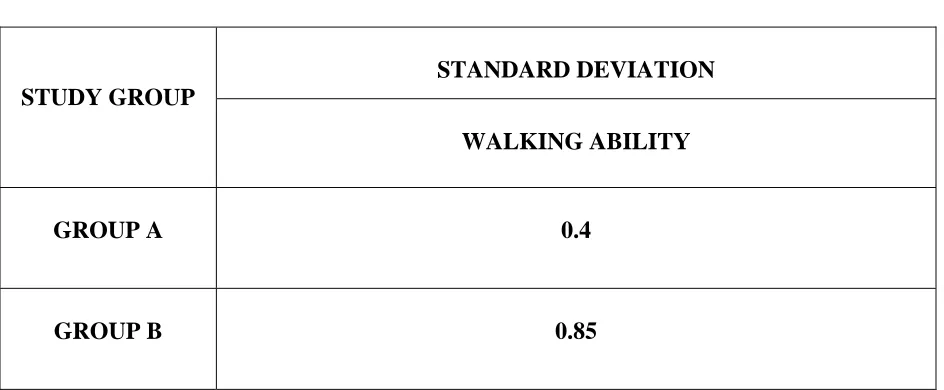
[image:25.612.72.544.140.335.2]STANDARD DEVIATION VALUE FOR GROUP A AND GROUP B
TABLE : 2
STUDY GROUP
STANDARD DEVIATION WALKING ABILITY
GROUP A 0.4
GROUP B 0.85
TABLE : 3
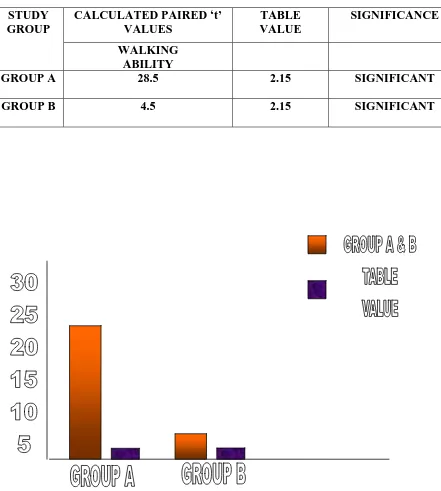
[image:26.612.79.520.153.644.2]PAIRED ‘t’ test VALUES FOR GROUP A AND GROUP B
TABLE 3:
STUDY GROUP
CALCULATED PAIRED ‘t’ VALUES
TABLE VALUE
SIGNIFICANCE WALKING
ABILITY
GROUP A 28.5 2.15 SIGNIFICANT
TABLE : 4
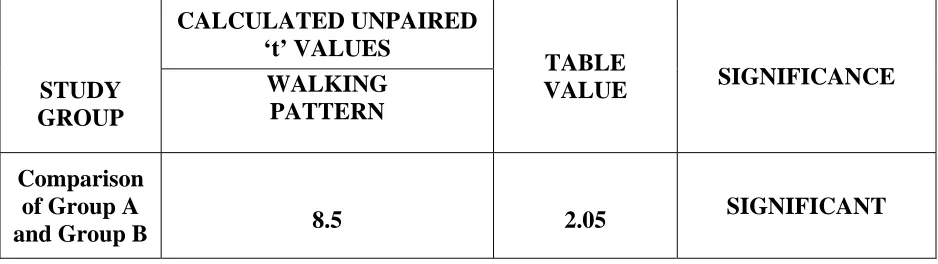
UNPAIRED ‘t’ test VALUES FOR WALKING ABILITY IN GROUP
A AND GROUP B
STUDY GROUP
CALCULATED UNPAIRED ‘t’ VALUES
TABLE
VALUE SIGNIFICANCE WALKING
PATTERN Comparison
of Group A
and Group B 8.5 2.05
RESULTS
The pre and post test values weres assessed for gait ability in Group A. the standard deviation was 0.4. the ‘t’ values were calculated for gait ability by paired ‘t’ test was 28.5 and it was more than table value 2.15 for 5% level of siginificnace at 14 degrees of freedom.
The pre and post test values were assessed for gait ability in Group B. the standard deviation was 0.85. the ‘t’ vales were calculated for gait ability by paired ‘t’ test was 4.5 and it was more than table value 2.15 for 5% level of siginificance at 14 degrees of freedom.
The calculated ‘t’ values by unpaired ‘t’ test was 8.5. The calculated ‘t’ values were more than the table value 2.05 for 5% level of significance of 28 degrees of freedom.
The paired ‘t’ values have shown that treadmill training with partial body weight support combined with physiotherapy are more effective for the improving gait ability of patients after stroke. The unpaired ‘t’ test values have shown that there is significant difference in showing improvement in gait ability of stroke patients.
DISCUSSION
This study has proved that The 3 week combination of treadmill training with BWS and physiotherapy effected a large improvement of a gait ability of non-ambulatory hemi paretic subjects than an exclusive 3- week treadmill therapy with BWS.
Recently, Kwakkelet al.(1999) reported that greater intensity of leg rehabilitation improved gait ability and activities of daily living in acute stroke victims. The key elements of their lower limb rehabilitation programme were comparable with the physiotherapy within the present study.
Richards et al (1993) had show that an additionally applied, task-specific programme including treadmill training without body weight support resulted In a larger gait velocity in acute stroke victims 6 weeks after study onset as compared with a conventionally treated group who received less therapy.
CONCLUSION
From the results of this study 3 weeks of treadmill training with BWS pulls physiotherapy accelerated the restoration of gait ability in chronic hemi paretic subjects; correspondingly, a focused and intense treatment regime including locomotion training seems most promising in gait rehabilitation after stroke.
LIMITATION AND RECOMMENDATIONS
LIMITAION OF THE STUDY :
1.
This Study has been conducted on small size sample only.
2.
The outcome of the study has been limited to improving gait ability only
RECOMMENDATIONS :
1. Further study may be extended with large sample
2. Other aspect of motor impairment such as balance,strenth may be considered
3. The patient ability to either improve or retain the regained functional capacity may be assessed at regular intervals over a period of time
4. The efficacy of this treatment may be found by altering the frequency and intensity
5. The extended efficacy of these exercise may also be found out by increasing the totaln duration of the treatment
BIBILOGRAPHY
1.Asanuma H,Keller A(1991).Neurobiological basis of motor learning and memory.concepts neuro sci 2:1-30.
2.Carr J,Shepherd R (1998).Neurological Rehabilitation.Butterworth & Heinemann, Oxford
3.Collen FM, Wade DT, Bradshaw CM (1990).Mobility after stroke:reliability of measures of impairment and disability,
4.Dietz V,Colombo G Jensen L,Baumgartner L (1995).Locomotor capacity of spinal cord in paraplegic patients.Ann Neurol 37:574-582.
5.Grilner S (1985), Neurologic basis of rhythmic motor acts in vertebrates. Science 228:143-149. 6.Hesse S, Berlet C, Schaffrin A,Malezic M, Mauritz KH (1994). Restoration of gait in non-ambulatory hemiparetic patients by treadmill with partial body weight support. Arch med rehabil 75:1087-1093.
7.Hesse S, Bertelt C, Jahnke MT et al. (1995).Treadmill training with partial body weight support as compared to physiotherapy in non-ambulatory heparetic patients.Stroke 26:976-981.
8.Hesse S, Malezic M, Schaffrin A, Maurtiz KH (1995b).Restporation of gait by a combained treadmill training and multichannel electrical stimulation in non-ambulatory hemiparetic patients.Scand J Rehabil Med 27:199-205.
10.Jorgensen HS,Nakayama H,Raaschou HO,Olsen TS (1995).Recovery of walking function in stroke patients:the Copenhagen stroke study.Arch Phys Med Rehabil 76:27-32.
11.Kwakkel G, Wagenaar RC,Twisk JWR,Lankhorst GL,Koetsier JC (1999).Intensity of leg and arm training after middle cerebral artery stroke:a randomized trail.Lancent 354:191-196.
12.Lovely RG,Gregor RJ,Roy RR,Edgerton VR (1986).Effects of training on the recovery of full weight bearing stepping in the adult spainal cat.Exp Neurol 92:421-435.
13.Visintin M,Barbeau H (1989).The effects of body weight support on the locomotor pattern of spastic paretic patients.Can J Neurol Sci 16:315-325.
14. .Visintin M,Barbeau H,Korner-Bitensky N,Mayo NE (1998).Anew approach to retain gait in stroke patients through body weight support and treadmill stimulation.Stroke 29:1122-1128.
APPENDIX
APPENDIX – I
CONSENT FORM
I ___________________________________ there by agree to cooperate for the dissertation work of __________________________ towards his post graduation in physiotherapy knowing the risk and benefits as explained to me by the same. All the details given by me will be kept strictly confidential and will be used for the research purpose.
Date : Place : Name :
APPENDIX – II
PATIENT EVALUTATION CHART
DATE OF ASSESMENT
:
SUBJECTIVE ASSESSMENT
:
AGE
:
SEX
:
OCCUPATION
:
CHIEF
COMPLAINTS
:
SIDE
OF
WEAKNESS
:
DURATION
OF
ONSET :
MEDICAL
HISTORY
:
-
PAST
:
-
PRESENT :
PERSONAL
HISTORY :
FAMILY
HISTORY
:
VITIAL
SIGNS
:
INVESTIGATIONS
:
HIGHER FUNCTION ASSESMENT
:
ORIENTATION
:
COGNITION
:
SPEECH
:
PECEPTION
:
CRANIAL NERVE EXAMINIATION
12 CRANIAL NERVES
:
PAIN ASSESSMENT (DURING EXERCISES)
OBEJCTIVE
ASSESSMENT
:
MOTOR
SYSTEM
:
APPERANCE
:
MUSCLE
TONE
:
REFLEXES :
SENSORY
ASSESSMENT
:
SUPERFICAL
SENSES :
DEEP
SENSES
:
APPENDIX III
0- Nonfunctional Ambulation - Patient cannot ambulate, ambulate in parallel bars
only, or requires supervision or physical assistance from more than one person to ambulate safely outside of parallel bars.
1.. Ambulator – Dependent for
Physical Assistance level II - Patient requires manual contact of no more than one person during ambulation on level surfaces to prevent falling. Manual contacts are continuous and necessary to support body weight as well as maintain balance and/or assist coordination.
2 - Ambulatory – Dependent for
Physical Assistance – Level I - Patient requires manual contact of no more than one person during ambulation on level surfaces to prevent falling. Manual contact consists of continuous or intermittent light torch to assist balance or coordination
3 -Ambulator – Dependent for
sub – pervision - Patient can physically ambulate on level surfaces without manual contact of another person but for safety requires standby guarding of no more than one person because of poor judgment, questionable cardiac status, or the need for verbal cuing to complete the task.
4- Ambulator – Independent
Level surfaces only - Patient can ambulate independently on level surfaces but requires supervision or physical assistance to negotiate any of the
following: stairs, inclines, or nonlevel surfaces.
APPENDIX III
OBSERVATION CHART
GROUP A
GROUP A: experimental group
S.NO AGE SEX HEMIPARESIS L=LEFT
R=RIGHT
PRE TEST POST TEST
1 63 M L 1 4
2 60 F L 1 4
3 51 F L 2 5
4 52 F R 0 3
5 77 M L 1 4
6 54 F L 0 3
7 67 M L 1 4
8 58 M L 1 3
9 43 M R 0 3
10 29 M R 1 4
11 72 M L 1 4
12 57 F L 1 5
13 54 M R 0 3
14 39 F R 1 4
GROUP B : Control Group
S.NO AGE SEX HEMIPARESIS L=LEFT R=RIGHT
PRE TEST POST TEST
1 61 F R 0 3
2 35 M L 3 4
3 47 M L 2 3
4 48 F R 1 2
5 57 M L 2 2
6 56 M R 3 3
7 57 F L 2 3
8 62 M L 2 2
9 46 F R 3 3
10 68 M L 1 2
11 57 F R 1 2
12 49 M R 2 3
13 55 M L 0 2
14 58 F R 2 2