Development and Validation of Optimization
Methods for the Design of Protein Sequences and
Combinatorial Libraries
Thesis by Benjamin D. Allen
In Partial Fulfillment of the Requirements for the Degree of Doctor of Philosophy
California Institute of Technology Pasadena, California
2009
© 2009
Acknowledgements
• My adviser: Steve.
• My committee: Steve, Doug, Dave, and Frances. • My lab-mates.
• My parents.
Abstract
To facilitate the design of protein sequences with desired properties, simulation techniques have been developed to allow large portions of amino acid sequence space to be evaluated by computer. These computational protein design methods apply optimization algorithms to sort through the enormity of sequence space and find desirable variants.
Simple modifications to the stochastic optimization algorithm FASTER enhanced its performance by two orders of magnitude without loss of accuracy, and rendered it more efficient than its major competitor by a factor of 10. These improvements allowed higher-quality amino acid solutions to be found more quickly, and accelerated the pace at which users could perform cycles of design and model adjustment.
This success prompted research into techniques for a protein design formulation that allows simulation in the context of multiple states simultaneously. This multi-state design can be used to wield explicit control over structural, binding, or catalytic specificity, and changes the scope of design goals that can be addressed by computation. Evaluation of multi-state FASTER indicated that it performed radically better than its major competitor in a variety of design contexts, and that in most cases it found solutions better than those that could ever be found using a lesser method.
TABLE OF CONTENTS
ABSTRACT iv
TABLE OF CONTENTS vi
LIST OF FIGURES xi
LIST OF TABLES xii
Chapter 1. Optimization Strategies for the Design of Protein
Sequences and Combinatorial Mutation Libraries
High-throughput protein engineering 2
Computational protein design by inverse folding 4
Beyond single-state inverse folding: multi-state design 6
Beyond pure computational protein design: library design 13
Conclusions 15
References 17
Chapter 2. Dramatic Performance Enhancements for the FASTER
Optimization Algorithm
Abstract 22
Introduction 23
Improvements to FASTER 24
Original FASTER 24
Improvement to sPR via selective relaxation 26
Methods 27
Results and discussion 29
Conclusions 35
References 36
Chapter 3. An Efficient Algorithm for Multi-State Protein
Design Based on FASTER
Abstract 39
Introduction 40
Results and discussion 42
Scoring functions 42
Multi-state Monte Carlo 45
Multi-state FASTER 48
Multi-state iBR 48
Multi-state sPR 49
Rotamer optimization (RO) algorithms 54
Test cases for multi-state design 56
Single-state design problems 56
SSD test cases: MSD-FASTER 57
SSD test cases: MSD-MC 61
Multi-state design of protein G 64
Negative design of calmodulin 68
Materials and methods 73
Design parameters: single-state design test cases 73
Design parameters: 1GB1 74 Design parameters: CaM 75 References 77 Chapter 4. Development and Validation of Methods for Multi-State Design and Combinatorial Library Design Abstract 81 Introduction 83 Results and discussion 89
Designed libraries 89
Experimental characterization of designed libraries 94
Origin of destabilizing mutations 101
Influence of the designed library selection method 103
The nature of approximation in computational protein design 105
Conclusions 109
Materials and methods 112
Input structural data 112
Sequence design specifications and energy functions 112
Sequence optimization 113
Combinatorial library design 114
Microtiter plate-based stability determination 116
Supplementary information 117
Combinatorial library design 117
Microtiter plate-based stability assay controls 123
References 127
Chapter 5. The Importance of Combinatorial Optimization in the Improvement of Models for Computational Protein Design Optimization in computational protein design 133
Characteristics of CPD as a tool for protein engineering 136
Appendix I. Combinatorial Methods for Small Molecule Placement in Computational Enzyme Design Abstract 142
Introduction 143
Results and discussion 146
General calculation procedure 146
Rotation-translation search 149
Targeted ligand placement 155
Sequence design 159
Conclusions 160
Methods 161
Structures and charges 161
Calculation parameters 165
Energy functions and optimization 166
LIST OF FIGURES
CHAPTER 3.
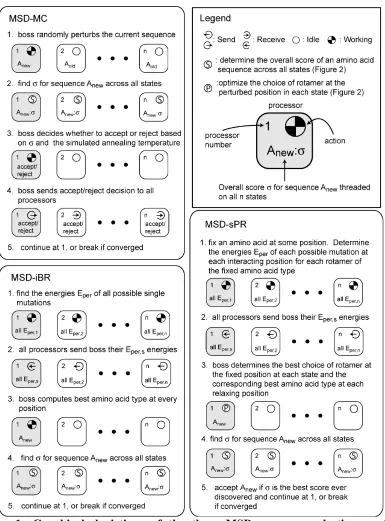
1 Graphical depictions of the three MSD sequence 47
selection routines described in the text
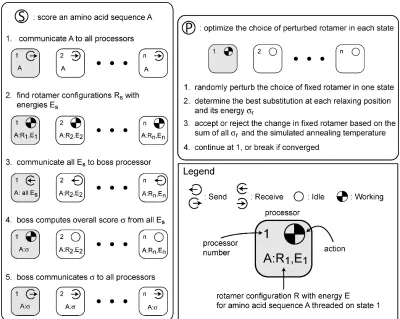
2 Subroutines used by the MSD sequence selection algorithms 53
CHAPTER 4.
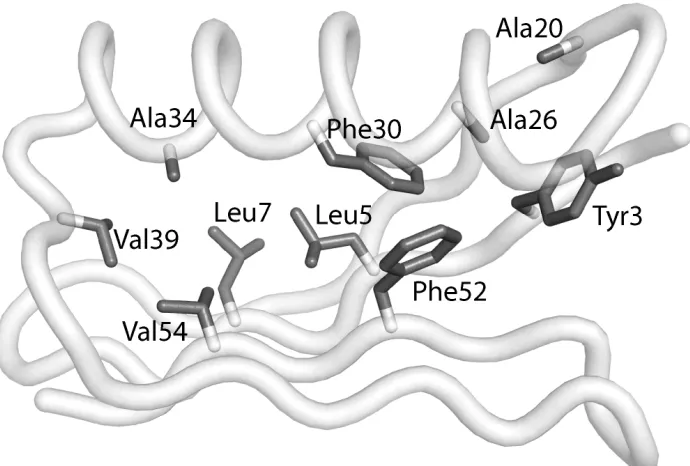
1 The core residues of Gβ1 designed in this study 91
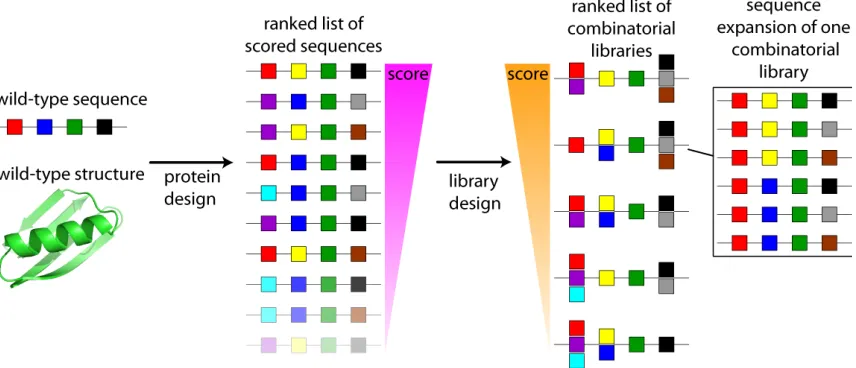
2 The general scheme used to design combinatorial mutation 92
libraries based on computational protein design calculations
3 Fraction-unfolded curves derived from the stability determination 96
of library xtal-1
4 Fraction-unfolded curves derived from the stability determination 97
of library NMR-1
5 Fraction-unfolded curves derived from the stability determination 98
of library NMR-60
6 Fraction-unfolded curves derived from the stability determination 99
of library cMD-128
7 Each library partitioned into three stability groups 100
8 Correlation between simulation energy and experimental stability 108
for the cMD-128 library
10 Denaturation gradient and elution buffer fluorescence profiles 124
11 Fraction-unfolded profiles between different modes of detection 125
12 Fraction-unfolded profiles between different protein preparations 126
APPENDIX I. 1 Contact geometries specified in small molecule pruning step 147
2 Sample results from test calculations presented in Table 1 150
3 Effect of rotational and translational step sizes 152
4 Targeted placement procedure 155
5 The three clustering moves 163
LIST OF TABLES
CHAPTER 2.
1 Test calculations illustrating performance enhancements for FASTER 30
2 Comparison of the improved FASTER to Monte Carlo 34
CHAPTER 3.
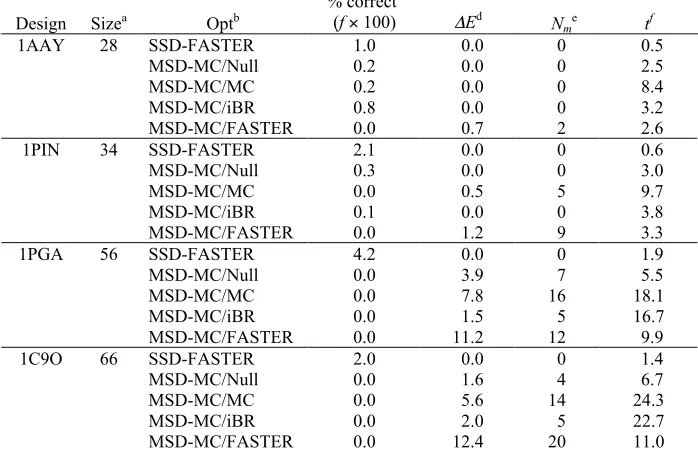
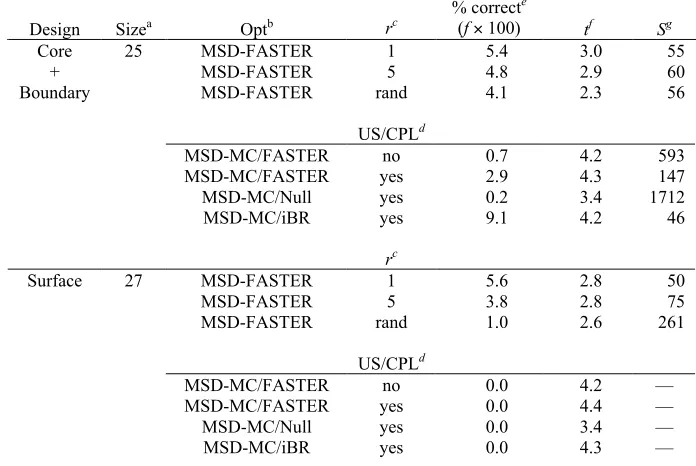
1 Performance of MSD-FASTER when applied to four difficult single-state 60
design problems
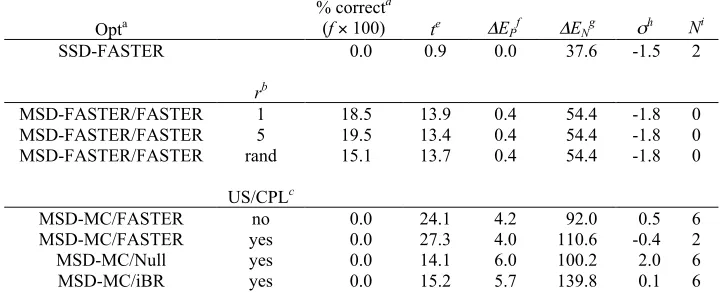
2 The performance of MSD-MC when applied to four difficult single-state 63
design problems
3 Multi-state design of 1GB1, a 60-member NMR ensemble of protein G 67
CHAPTER 4.
1 Combinatorial libraries designed from different sources of structural 93
information
APPENDIX I.
1 RMSD and number of wild-type contacts as a function of rotational 151
step size and rotamer library
2 RMSD and number of wild-type contacts as a function of rotational and 154
translational step sizes
3 Results from targeted placement procedure as a function of 158
1
Optimization Strategies for the Design of Protein Sequences and
Combinatorial Mutation Libraries
Some language in this chapter was adapted from manuscripts coauthored with Christina L. Vizcarra, Oscar Alvizo, and Stephen L. Mayo.
Alvizo, O.; Allen, B. D.; Mayo, S. L., Computational protein design promises to revolutionize protein engineering. Biotechniques 2007, 42 (1), 31–39.
High-throughput protein engineering
Proteins are linear heteropolymers, built from 20 standard amino acid monomers.
Synthesized inside cells, they perform a vast majority of the structural, catalytic, sensory,
and regulatory functions that characterize living systems as we understand them today.
These myriad roles are made possible by the ability of proteins to self-assemble into
well-defined structures specified by their amino acid sequences. Although only a small
fraction of all possible protein sequences can assume a folded, functional form,1, 2
the
modular nature of the protein platform allows existing functions to be altered and
enhanced for new or fluctuating requirements by selection for fitness from a
heterogeneous population. The requisite diversity develops though copying errors and
recombination of nucleic acid sequences that encode the proteins expressed by members
of the population. This process is slow and relies on serendipity to discover beneficial
variants. Nevertheless, it represents the only plausible description of how the complexity
of life we see today could have ultimately arisen from simpler chemical systems.
Before sufficiently powerful tools for genetic manipulation were even available, it
was postulated that existing biological systems for protein fabrication could be harnessed
to produce nano-scale molecular machines with designed functions.3
Major successes
along these lines have been achieved via directed evolution, in which screening or in vivo
selection is applied to isolate active variants from populations of 100
to 1015
members.
Molecular diversity for directed evolution can be produced, in vitro or in vivo, using methods including error-prone DNA polymerization, recombination, gene shuffling,
combinatorial libraries made using synthetic oligonucleotides, host organism mutator
strains, and the humoral immune system.4, 5
these pools with techniques such as screening with various levels of automation, selection
for survival in auxotrophic strains, and affinity-based or cytometric separation of
individual proteins linked to or compartmentalized with the nucleic acids that encode
them.4, 5 Notable protein engineering feats facilitated by directed evolution include
enhancement of the substrate specificity, thermostability, selectivity, and solvent
tolerance of enzymes,6–9
as well as the engineering of metabolic pathsteelyways.10
Despite the potential of laboratory evolution to cull through vast numbers of
sequences, experimental concerns, such a lack of appropriate high-throughput assays,
selection systems, or instrumentation, can dramatically limit the diversity that may
practically be addressed. Furthermore, the largest libraries that could conceivably be
approached by experimental methods are miniscule compared to the total possible
diversity of even modestly sized proteins. The inherent limitations of experimental
protein engineering methods, and the hope that sequence design might eventually be
completely automated, have motivated the development of computational tools for the
virtual screening of astronomical pools of diversity. In some cases, the use of
computational protein design (CPD) methods has allowed stable, well-folded, and
functional proteins variants with many mutations away from their wild-type counterparts
to be designed directly in silico and experimentally validated. In most situations, however, the successful design of proteins using CPD alone has been inconsistent.
This thesis describes the conception, implementation, and testing of optimization
methods meant to improve the frequency with which useful and interesting sequences can
be predicted by computational techniques. The initial goal was to facilitate the discovery
design. Such sequences are desirable to the extent that the design model is accurate, and
are expected to help suggest possible improvements when it is not. However, the
enhanced optimization methods also proved to be directly applicable to more
sophisticated design models that treat multiple conformational states simultaneously. In
order to better assess the utility of these more realistic methods, a method was developed
to allow the design of combinatorial mutation libraries to be driven by the results of
computational protein design calculations in a model-independent manner. The
synergistic application of the methods described here enabled the first experimental test
of computational design based on large structural ensembles.
Computational protein design by inverse folding
CPD was first conceived as the inverse of the protein-folding problem, since its
most basic goal is to generate amino acid sequences that preferentially adopt a specific
three-dimensional structure.11
At its core, the inverse-folding design model consists of a
search for optimal amino acid side chains at one or more positions in a fixed structural
model of the protein main chain. Various amino acid types are modeled at each designed
position, and potential mutations are evaluated based on their pairwise interaction
energies. The continuous flexibility available to each amino acid side chain is
approximated using a discrete set of low-energy conformations called rotamers.12, 13
The
goal is thus to find an optimal choice of rotamer, of any allowed amino acid type, at each
designed position. A configuration of the virtual protein system described by the inverse
folding model corresponds to a set of atomic coordinates for some particular amino acid
design model are appropriate, amino acid sequences specified by low-energy
configurations of the system are expected to stabilize the required fold and thereby
facilitate the desired activity.
Enthusiasm for computational protein design by inverse folding was piqued when
an algorithm for the generation of provably optimal solutions was reported. This method,
based on the dead-end elimination (DEE) theorem, specifies criteria by which rotamers at
particular positions can be definitively excluded from the global minimum energy
configuration (GMEC) of the system.14
The availability of a rigorous framework for
combinatorial optimization in the inverse folding model promoted confidence that protein
design was computationally tractable. Accordingly, many of the initial successes in
CPD were achieved via DEE-based optimization methods.15–19
A comparison of DEE
with stochastic optimization routines such as genetic algorithms (GA) and Monte Carlo
with simulated annealing (MC) indicated that the inexact routines often failed to find
GMEC solutions when applied with equivalent computational effort.20
During this time,
DEE-based methods were improved with a number of additional elimination strategies
and heuristics that rendered them amenable to CPD problems with more variable
positions and more rotamers per position.21
Despite these advances, the poor performance scaling of DEE has caused the field
to shift toward stochastic optimization methods such as MC22–24
and FASTER25
so that
larger and more complex designs, such as those involving enzyme substrates and
transition state models, could be attempted.23, 26–30
Rather than eliminate particular
rotamers from consideration until only a single sequence remains, these stochastic
configuration of the system, and accepting or rejecting the perturbations based on their
energetic consequences. Although these methods do not produce solutions that are
provably optimal in a global sense, they can be relied upon to find local minima quickly,
and their running times can be extended for as long as desired in an attempt to improve
existing solutions.
In Chapter 2, I describe enhancements to the FASTER optimization procedure
that dramatically improve its ability to converge to a single lowest-energy solution. In
every case tested, this FASTER-based solution was either identical to the solution
produced by DEE, or was the lowest-energy solution ever found (by any method) if DEE
was not able to converge. In some cases, these FASTER-derived optimal solutions could
not be found with extremely long runs of MC, suggesting that the improved FASTER
procedure is preferable to currently available alternatives. Our experiences with
FASTER strongly indicate that the combinatorial optimization problem for design by
inverse folding is essentially solved: FASTER is able to quickly converge to low-energy
solutions for any problem that could be meaningfully addressed with pure inverse folding
simulations.
Beyond single-state inverse folding: multi-state design
The inverse-folding design model has made practical the in silico screening of more than 10200
amino acid sequences in a single design. However, it also presents
significant challenges to the development of atomic scoring functions that accurately
predict the fitness of particular sequences. Although initial explorations of CPD
and bonded-term potentials used in molecular dynamics simulations,31, 32
researchers soon
introduced significant complications to the scoring model in an effort to make it
applicable to a broader range of design goals. Some of these supplementary energy
terms, such as orientation-dependent hydrogen bonding functions and implicit solvation
models, have clear physical justifications and are generally accepted in the wider protein
simulation community.23, 33–36
Others, such as penalties for the exposure of nonpolar
groups and unfolded state energies based on amino acid composition,23, 37
are seldom used
outside the realm of CPD. These heuristic negative design terms have been adopted
primarily to solve problems peculiar to the comparison of different sequences by their
molecular mechanics energies, and to overcome the rigidity of the inverse-folding design
model.
Ultimately, the viability of any particular sequence depends on the degree to
which it populates an entire ensemble of conformational states, including active/native
states, misfolded and unfolded states, and aggregated states. While native states can be
understood through high-resolution structures derived from experiment, general and
tractable atomic-resolution models of alternate conformational states have not yet been
developed. Implicit negative design terms like those mentioned above help the design
procedure to assess how potential amino acid substitutions might affect the tendency of a
sequence to assume poorly defined nonnative states. Nevertheless, these terms are often
insufficient to allow selection of reasonable sequences in the context of large designs.
For example, RosettaDesign, a CPD procedure based on a highly parameterized
forcefield with many heuristic and implicit negative design terms, cannot effectively
produce reasonable amino acid compositions when applied to the surfaces of β-sheets.23
For this reason, hydrophobic amino acids had to be excluded from β-sheet surface positions during the design of top7, a sequence successfully designed to assume a novel
fold.23
The inverse-folding paradigm can be extended to allow issues in negative design
to be explored in a more systematic manner and offer an alternative to the heuristic terms
discussed above. Most notably, Harbury and coworkers have applied explicit negative
design algorithms to directly engineer specificity into coiled-coil systems and recapitulate
sequences that bind small-molecule ligands with high affinity.38, 39
In each case, the
explicit modeling of alternate states, such as undesired associated and unbound states in
the coiled-coil case, and unbound and unfolded states in the ligand-binding case, was
crucial for the computational design of variants exhibiting the desired functional
properties. Computational multi-state design (MSD) procedures can also be used in a
purely positive-design sense to find sequences able to assume several distinct
conformations. For example, Ambroggio and Kuhlman used MSD to design a protein
switch that assumes completely different folds and association states in the presence
versus the absence of zinc.40
Given that specificity is crucial to the proper folding, stability, solubility, and
activity of proteins, it would seem natural for explicit multi-state modeling to be applied
frequently to structure-based computational protein design. Surprisingly, experience with
MSD in the CPD community consists essentially of only those investigations just
mentioned. Several complications have thus far limited the general utility of MSD in
The first major impediment to the application of MSD in CPD relates to how the
various relevant states are specified. In cases with well-characterized target and
competing states, one can use high-resolution experimental structures to model each of
the desired states. For example, competition between homodimer and heterodimer coiled
coils has been modeled by threading the relevant sequences onto identical main chain
models from a crystal structure.39
Similarly, the unbound state in a ligand-binding system
was modeled by removing the ligand from a crystal structure of the bound complex.38
Two different crystal structures were used to model the two target states in the molecular
switch design.40
In general, the astronomical range of conformations available to a
sequence must be approximated with a much smaller, computationally tractable set
devised to represent the entire ensemble. Unfortunately, methods for the construction of
general and accurate models for some important alternative states are not yet available.
Although aggregated and unfolded states have been treated in MSD using native
conformations in low-dielectric media and random chain ensembles, respectively,38, 39
the
degree to which these simplified models can realistically capture the relevant properties
of these states is unclear. Because unfolded and aggregated ensembles are likely quite
varied and diverse, explicit treatment of them in MSD will require accurate and efficient
methods to generate structural models that adequately represent them, as well as powerful
MSD optimization methods that can efficiently sample sequence space given a large
number of states.
The second major problem in the general application of MSD relates to how
sequences should be evaluated given an ensemble of structural states. Because a single
state, MSD methods require a two-level optimization procedure in which an outer routine
samples amino acid sequences and an inner routine evaluates the energy of a sequence in
the context of each state separately by rotamer optimization. The energies that result
from these individual rotamer optimization calculations must be combined to yield a
single fitness score that can be used to evaluate the sequence. No consensus has yet been
reached on what energy combination function should be used for this purpose; in fact,
different functions may be appropriate for different design goals. One attractive
approach is to assess fitness according to the probability, P, that one of the desired target
conformations would be fulfilled. P can be computed using basic statistical mechanics,
given a finite set of desired target states, undesired competing states, and their energies:
€
P
=
e
−Ei/RT i∈ST∑
e
−Ei/RTi∈(ST∪SC)
∑
(1)where ST is the set of target states, SC is the set of competing states, and Ei is the energy of
state i.38, 39
This strategy cannot be used when competing states are not explicitly modeled,
because the probability computed with equation 1 would always be unity in this case.
When competing states are not considered, one possibility would be to simply average or
sum the energies of a sequence on each state.40
This is appropriate when the design goals
require that all specified states be satisfied, as in the design of a protein switch; however,
biases can arise if the magnitudes of the energies in different states are significantly
different. One could also evaluate the fitness of a sequence by computing the free
energy, A, of the system based on all modeled states and their energies:
€
A
=
−
kT
log(
e
−Ei/kTi
This strategy is applicable when the target state ensemble consists of similar structures
intended to approximate realistic conformational flexibility, and the incompatibility of a
sequence with a small fraction of the available states is relatively inconsequential. MSD
scoring schemes like those based on equations 1 and 2 are expected to provide better
accuracy as the number of modeled states increases. Because each individual state relies
on energy calculations in the context of a rigid main chain, atomic clashes in a few states
can unrealistically effect sequence selection when the total number of modeled states is
small.
The final major issue in the wider adoption of multi-state design is simply that it
presents a more taxing optimization problem than standard single-state design (SSD). The
greater difficulty arises because a single amino acid sequence might assume completely
different conformations in each relevant MSD state. This prohibits the
amino-acid-ignorant rotamer optimization strategies that accelerate convergence in single state
design, and requires the two-level optimization procedure described above. Because
MSD must perform what essentially amounts to multiple small, independent design
calculations in order to assess the fitness of a single amino acid sequence, the diversity of
sequences that may be effectively sampled in MSD is dramatically limited relative to
SSD. Furthermore, whereas SSD sampling in the inverse folding model is made
significantly more efficient by precomputing all possible pairwise energies between
rotamers at different positions and using this energy matrix as a lookup table during
rotamer optimization, current limitations on physical memory render simple adaptations
of this strategy untenable for MSD problems with more than a few states. Unfortunately,
and the aggregation of state energies into a single fitness score should be better
ameliorated when the total number of modeled states increases. Thus, both technical and
scientific concerns necessitate more sophisticated and powerful optimization
methodologies for acceptable sampling performance in MSD to be achieved. Although
DEE-based methods have begun to be adapted to MSD problems,41
our experiences with
SSD suggest that such methods will not provide a “silver bullet” for MSD.
In Chapter 3, I present an optimization framework for multi-state CPD that can
easily handle hundreds of states, and whose running time scales linearly with the number
of states that are treated. Furthermore, I describe the development of an MSD-capable
version of the FASTER optimization algorithm within this framework. The test
calculations I report indicate that MSD-FASTER offers significant performance
enhancements compared to an MSD-enabled implementation of Monte Carlo with
simulated annealing (MSD-MC), that MSD-FASTER finds low-energy sequences more
quickly, and that, in some cases, the lowest-energy sequences found by MSD-FASTER
cannot necessarily be found at all by MSD-MC during a sampling run of reasonable
length. The simulation tools developed in Chapter 3 provide a robust framework on
which to base future investigations of ensemble design, explicit negative design, and new
atomic-resolution models of unfolded, misfolded, and aggregated states in CPD.
MSD might be used to help overcome the inaccuracies inherent to the application
of inverse folding to a single, fixed, main-chain structure. By designing sequences to
satisfy an ensemble of related main-chain conformations, a MSD procedure can account,
at least partially, for both the tendency of real proteins to relax in order to accommodate
obvious sources of input structural data for this purpose are nuclear magnetic resonance
(NMR) experiments, for which results are widely available in the protein data bank
(PDB), and molecular dynamics (MD) simulations starting from crystallographic
conformations, which can be performed using a variety of accessible commercial and
open-source software packages.
In Chapter 4, I describe the computational design and experimental stability
assessment of several combinatorial libraries based on different sources of input
structural information for the same protein. The input models include a crystal structure,
an NMR ensemble, a constrained, minimized average NMR structure, and constrained
and unconstrained MD ensembles. Experimental analysis of these libraries indicates that
the use of an MD ensemble may help to mitigate design failures that occur due to energy
function inaccuracies and the approximations of conformational discretization, but also
that care must be taken in constructing an ensemble to use for this purpose.
Beyond pure computational protein design: library design
Approximations in the molecular mechanics and heuristic energy functions used
in CPD, a lack of accurate structural models for all the relevant conformational states,
incomplete sequence and conformational sampling, and failures to model dynamics and
chemical transformations all contribute to render extremely challenging the direct in silico design of functional proteins. Towards this goal, progress in algorithms, physical chemical models, and computing hardware must be coupled with the frequent and
rigorous comparison of computational predictions with experimental reality.
current methods can facilitate or expedite real-world protein engineering efforts. For
these reasons, recent investigations in the field have begun to focus on the synergistic
coupling of CPD calculations with experimental screening and selection methods
developed for use in directed evolution.
The results of protein design simulations have been used to help determine
particular residues that might be especially amenable to site-saturation mutagenesis or
site-directed recombination,42–44
and have facilitated the creation of combinatorial
mutation libraries.45–47
Given appropriate laboratory automation hardware, lists of
CPD-derived sequences can also be individually encoded, expressed, and assayed in
high-throughput fashion.48
Laboratory evolution procedures have also been applied to improve
the lower levels of activity found in de novo computationally designed enzymes.28
For the purposes of validating and improving CPD, library design methods that
maintain a closer relationship between the sequences actually tested and the sequences
produced by the calculations are preferred. Thus, it might seem that simply constructing
the top n sequences produced by a design calculation would be ideal in this case. However, practical considerations often prohibit this strategy. Few academic researchers
have the resources necessary to construct and test more than tens of individual sequences
for a given design problem. Furthermore, the availability of an efficient high-throughput
screen or selection vastly increases the diversity that can be assayed far beyond what
would be possible through gene assembly of individual sequences at any cost. In these
cases, a designed combinatorial gene library can provide a more appropriate match,
because libraries with arbitrary numbers of members can be synthesized economically
Although several reported methods allow the results of CPD calculations to drive
the design of combinatorial mutation libraries,45, 47, 49
each suffers from several drawbacks
that limit its generality or reduce the clarity with which the libraries it produces reflect on
the predictions of the original design calculations. In Chapter 4, I describe the
development and implementation of a new algorithm for the computational design of
combinatorial mutation libraries based on arbitrary lists of scored amino acid sequences,
such as those generated by CPD. In contrast to any competing method suggested so far,
this method fulfills all of the following desired qualities: (1) it considers CPD energies
explicitly; (2) it allows the user to directly specify the range of viable library sizes; (3) it
allows complete control over which sets of amino acids can be considered; (4) it does not
rely on heuristics to reduce the computational complexity of the problem by eliminating
potentially viable libraries. This combinatorial library design algorithm was used to
generate the sets of sequences that we tested for each of the designs based on different
sources of structural information as described in Chapter 4.
Our results indicate that this method allows CPD to extend directly to the design
of combinatorial libraries that exhibit a high proportion of stable, well-folded members.
In addition to validating the new library design method, our results provide a stronger
basis on which to recommend library design than was allowed by previous reports, which
focused on larger libraries and displayed less obvious connections between the
Conclusions
The work described here illustrates how the development of enhanced sampling
and optimization procedures can crucially aid the progress of method refinement and
improvement in CPD. The discovery of more efficient optimization procedures,
originally intended for single-state design, prompted their application to multi-state
design methods that allow many conformational states to be modeled simultaneously.
The availability of these MSD methods and a general procedure for the automated design
of combinatorial mutation libraries together allowed an investigation of the dependence
of design results on the type and quality of input structural data. The results of these
experiments provide important clues about how CPD methodology improvements should
proceed. As CPD simulations become more realistic, we expect the development of more
efficient sampling methods to become more central to the success of CPD, and energy
function development to become less so. As more aspects of protein structure and
stability begin to be modeled explicitly, the implicit and heuristic negative design terms
intended to account for them can be discarded. With additional advances in
computational power, conformational sampling methods, multi-state design sequence
optimization algorithms, and general representations of alternate states, the set of
theoretically defensible energy functions used in other types of protein simulation may
References
1. Keefe, A. D.; Szostak, J. W., Functional proteins from a random-sequence library.
Nature 2001,410 (6829), 715–718.
2. Taylor, S. V.; Walter, K. U.; Kast, P.; Hilvert, D., Searching sequence space for protein catalysts. Proceedings of the National Academy of Sciences of the United States of America 2001,98 (19), 10596–10601.
3. Drexler, K. E., Molecular Engineering — an Approach to the Development of General Capabilities for Molecular Manipulation. Proceedings of the National Academy of Sciences of the United States of America 1981,78 (9), 5275–5278.
4. Bershtein, S.; Tawfik, D. S., Advances in laboratory evolution of enzymes.
Current Opinion in Chemical Biology 2008,12 (2), 151–158.
5. Jackel, C.; Kast, P.; Hilvert, D., Protein design by directed evolution. Annual Review of Biophysics 2008,37, 153–173.
6. Arnold, F. H., Combinatorial and computational challenges for biocatalyst design.
Nature 2001,409 (6817), 253–257.
7. Hult, K.; Berglund, P., Engineered enzymes for improved organic synthesis.
Current Opinion in Biotechnology 2003,14 (4), 395–400.
8. Krishna, S. H., Developments and trends in enzyme catalysis in nonconventional media. Biotechnology Advances 2002,20 (3–4), 239–267.
9. Turner, N. J., Directed evolution of enzymes for applied biocatalysis. Trends in Biotechnology 2003,21 (11), 474–478.
10. Chatterjee, R.; Yuan, L., Directed evolution of metabolic pathways. Trends in Biotechnology 2006,24 (1), 28–38.
11. Pabo, C., Molecular Technology — Designing Proteins and Peptides. Nature 1983,301 (5897), 200.
12. Dunbrack, R. L.; Cohen, F. E., Bayesian statistical analysis of protein side-chain rotamer preferences. Protein Science 1997,6 (8), 1661–1681.
13. Ponder, J. W.; Richards, F. M., Tertiary Templates for Proteins — Use of Packing Criteria in the Enumeration of Allowed Sequences for Different Structural Classes.
14. Desmet, J.; Demaeyer, M.; Hazes, B.; Lasters, I., The Dead-End Elimination Theorem and Its Use in Protein Side-Chain Positioning. Nature 1992, 356 (6369), 539– 542.
15. Bolon, D. N.; Mayo, S. L., Enzyme-like proteins by computational design.
Proceedings of the National Academy of Sciences of the United States of America 2001, 98 (25), 14274–14279.
16. Dahiyat, B. I.; Mayo, S. L., De novo protein design: Fully automated sequence selection. Science 1997,278 (5335), 82–87.
17. Dwyer, M. A.; Looger, L. L.; Hellinga, H. W., Computational design of a Zn2+ receptor that controls bacterial gene expression. Proceedings of the National Academy of Sciences of the United States of America 2003,100 (20), 11255–11260.
18. Looger, L. L.; Dwyer, M. A.; Smith, J. J.; Hellinga, H. W., Computational design of receptor and sensor proteins with novel functions. Nature 2003,423 (6936), 185–190. 19. Malakauskas, S. M.; Mayo, S. L., Design, structure and stability of a hyperthermophilic protein variant. Nature Structural Biology 1998,5 (6), 470–475. 20. Voigt, C. A.; Gordon, D. B.; Mayo, S. L., Trading accuracy for speed: A quantitative comparison of search algorithms in protein sequence design. Journal of Molecular Biology 2000,299 (3), 789–803.
21. Gordon, D. B.; Hom, G. K.; Mayo, S. L.; Pierce, N. A., Exact rotamer optimization for protein design. Journal of Computational Chemistry 2003,24 (2), 232– 243.
22. Kirkpatrick, S.; Gelatt, C. D.; Vecchi, M. P., Optimization by Simulated Annealing. Science 1983,220 (4598), 671–680.
23. Kuhlman, B.; Dantas, G.; Ireton, G. C.; Varani, G.; Stoddard, B. L.; Baker, D., Design of a novel globular protein fold with atomic-level accuracy. Science 2003, 302
(5649), 1364–1368.
24. Metropolis, N.; Rosenbluth, A. W.; Rosenbluth, M. N.; Teller, A. H.; Teller, E., Equation of State Calculations by Fast Computing Machines. Journal of Chemical Physics 1953,21 (6), 1087–1092.
25. Desmet, J.; Spriet, J.; Lasters, I., Fast and accurate side-chain topology and energy refinement (FASTER) as a new method for protein structure optimization.
Proteins 2002,48 (1), 31–43.
27. Lassila, J. K.; Privett, H. K.; Allen, B. D.; Mayo, S. L., Combinatorial methods for small-molecule placement in computational enzyme design. Proceedings of the National Academy of Sciences of the United States of America 2006, 103 (45), 16710– 16715.
28. Rothlisberger, D.; Khersonsky, O.; Wollacott, A. M.; Jiang, L.; DeChancie, J.; Betker, J.; Gallaher, J. L.; Althoff, E. A.; Zanghellini, A.; Dym, O.; Albeck, S.; Houk, K. N.; Tawfik, D. S.; Baker, D., Kemp elimination catalysts by computational enzyme design. Nature 2008,453 (7192), 190–U4.
29. Zanghellini, A.; Jiang, L.; Wollacott, A. M.; Cheng, G.; Meiler, J.; Althoff, E. A.; Rothlisberger, D.; Baker, D., New algorithms and an in silico benchmark for computational enzyme design. Protein Science 2006,15 (12), 2785–2794.
30. Shah, P. S.; Hom, G. K.; Ross, S. A.; Lassila, J. K.; Crowhurst, K. A.; Mayo, S. L., Full-sequence computational design and solution structure of a thermostable protein variant. Journal of Molecular Biology 2007,372 (1), 1–6.
31. Desjarlais, J. R.; Handel, T. M., De-Novo Design of the Hydrophobic Cores of Proteins. Protein Science 1995,4 (10), 2006–2018.
32. Hellinga, H. W.; Richards, F. M., Construction of New Ligand-Binding Sites in Proteins of Known Structure .1. Computer-Aided Modeling of Sites with Predefined Geometry. Journal of Molecular Biology 1991,222 (3), 763–785.
33. Dahiyat, B. I.; Gordon, D. B.; Mayo, S. L., Automated design of the surface positions of protein helices. Protein Science 1997,6 (6), 1333–1337.
34. Dahiyat, B. I.; Mayo, S. L., Protein design automation. Protein Science 1996, 5
(5), 895–903.
35. Kortemme, T.; Morozov, A. V.; Baker, D., An orientation-dependent hydrogen bonding potential improves prediction of specificity and structure for proteins and protein-protein complexes. Journal of Molecular Biology 2003,326 (4), 1239–1259. 36. Lazaridis, T.; Karplus, M., Effective energy function for proteins in solution.
Proteins—Structure Function and Genetics 1999,35 (2), 133–152.
37. Dahiyat, B. I.; Mayo, S. L., Probing the role of packing specificity in protein design. Proceedings of the National Academy of Sciences of the United States of America 1997,94 (19), 10172–10177.
38. Boas, F. E.; Harbury, P. B., Design of protein-ligand binding based on the molecular-mechanics energy model. Journal of Molecular Biology 2008, 380 (2), 415– 424.
40. Ambroggio, X. I.; Kuhlman, B., Computational design of a single amino acid sequence that can switch between two distinct protein folds. Journal of the American Chemical Society 2006,128 (4), 1154–1161.
41. Yanover, C.; Fromer, M.; Shifman, J. M., Dead-end elimination for multistate protein design. Journal of Computational Chemistry 2007,28 (13), 2122–2129.
42. Endelman, J. B.; Silberg, J. J.; Wang, Z. G.; Arnold, F. H., Site-directed protein recombination as a shortest-path problem. Protein Engineering Design & Selection 2004, 17 (7), 589–594.
43. Voigt, C. A.; Martinez, C.; Wang, Z. G.; Mayo, S. L.; Arnold, F. H., Protein building blocks preserved by recombination. Nature Structural Biology 2002,9 (7), 553– 558.
44. Voigt, C. A.; Mayo, S. L.; Arnold, F. H.; Wang, Z. G., Computational method to reduce the search space for directed protein evolution. Proceedings of the National Academy of Sciences of the United States of America 2001,98 (7), 3778–3783.
45. Hayes, R. J.; Bentzien, J.; Ary, M. L.; Hwang, M. Y.; Jacinto, J. M.; Vielmetter, J.; Kundu, A.; Dahiyat, B. I., Combining computational and experimental screening for rapid optimization of protein properties. Proceedings of the National Academy of Sciences of the United States of America 2002,99 (25), 15926–15931.
46. Mena, M. A.; Treynor, T. P.; Mayo, S. L.; Daugherty, P. S., Blue fluorescent proteins with enhanced brightness and photostability from a structurally targeted library.
Nature Biotechnology 2006,24 (12), 1569–1571.
47. Treynor, T. P.; Vizcarra, C. L.; Nedelcu, D.; Mayo, S. L., Computationally designed libraries of fluorescent proteins evaluated by preservation and diversity of function. Proceedings of the National Academy of Sciences of the United States of America 2007,104 (1), 48–53.
48. Cox, J. C.; Lape, J.; Sayed, M. A.; Hellinga, H. W., Protein fabrication automation. Protein Science 2007,16 (3), 379–390.
49. Mena, M. A.; Daugherty, P. S., Automated design of degenerate codon libraries.
21
Dramatic Performance Enhancements for the FASTER
Optimization Algorithm
The text of this chapter was adapted from a manuscript coauthored with Stephen L. Mayo.
Allen, B. D.; Mayo, S. L., Dramatic performance enhancements for the FASTER
Abstract
Introduction
Computer programs for protein design and structure prediction typically include a module used to optimize side-chain coordinates in the context of fixed backbone coordinates. To perform this type of calculation, side-chain conformations (rotamers) of one or more amino acid types are oriented onto each residue position, and all possible pairwise rotamer-backbone and rotamer-rotamer interaction energies are calculated using a molecular mechanics force field. This system of interactions is then optimized to find a rotamer configuration of low molecular mechanics energy. The difficulty of finding the lowest-energy configuration increases dramatically with the number of positions designed and the number of rotamers allowed at each position.1
Useful optimization strategies include Monte Carlo with simulated annealing (MC),1–4
methods based on dead-end elimination (DEE),5, 6 methods based on self-consistent mean field theory,1, 7 genetic
algorithms,1, 8, 9
and the FASTER method.10
The DEE-based methods have proven especially useful because they ensure that the global minimum energy configuration (GMEC) is identified when they converge.5
This feature allows researchers to conclude with certainty that any deviations between simulation and experiment are due to problems with the energy functions or simulation model, and are not the result of incomplete optimization. However, current DEE-based algorithms often fail to converge to a single solution when challenged with difficult optimization problems.6
For this reason, we have begun to favor the FASTER algorithm described by Desmet, Spriet, and Lasters10
for difficult designs.
However, FASTER discovers low-energy solutions far more efficiently, and frequently finds the GMEC as determined by DEE-based algorithms. In cases for which DEE does not converge, it cannot be determined whether or not the solution produced by FASTER is optimal. We typically treat these cases by running many FASTER trajectories in parallel with different random number seeds until the lowest-energy solution has been found multiple times. At this point the solution is considered satisfactory; we refer to such a solution as a FASTER-determined minimum energy configuration (FMEC). This procedure can be time-consuming for problems with many positions and many rotamers at each position. In this paper we present two simple modifications to the published FASTER algorithm that improve the efficiency with which it finds FMEC solutions by as much as two orders of magnitude. In our laboratory, this improvement has reduced the turnaround time for very large designs from days to hours, and has allowed us to begin developing new methods for force field parameterization and multiple state design.
Improvements to FASTER
Original FASTER
As originally described,10
interactions are ignored. iBR: At each position, find the best rotamer in the context of the input configuration at all other positions. Simultaneously update the rotamers at every position after all positions have been considered. Repeat until convergence or cyclic behavior is detected. ciBR: Proceed as in iBR, but randomly accept the new rotamer found at each position with 0.8 probability. sPR: One position at a time, perturb the structure by fixing a rotamer at that position, and allow all other positions to relax as in one round of iBR. The resulting configuration is accepted only if it has the lowest energy found so far. Pick positions for perturbation in random order. Repeat until convergence. dPR: Proceed as in sPR, but perturb pairs of rotamers at different positions together.
Improvement to starting configurations
Regarding the choice of initial rotamer configuration to use as input to FASTER, Desmet et al. noted that the positions of many side-chains can be accurately placed on the protein backbone without considering interactions with other side-chains.10
partially optimized solutions were generated and initial configurations drawn from that pool. Therefore, we replace the BMEC step at the beginning of each trajectory with a short Monte Carlo run starting from a random configuration. This procedure gives diverse starting solutions with energies significantly better than the BMEC at negligible computational cost.
Improvement to sPR via selective relaxation
performed with number cutoffs, so that our results might be more useful to researchers using different energy functions.
Methods
The performance of FASTER was tested on four full sequence designs using each method for generating initial configurations (BMEC and MC), and with the number of relaxing positions limited to various values of n. We calculated designs for a 28-residue DNA-binding domain of mouse zinc finger Zif268 (PDB code 1AAY, residues 133– 160),11
the 34-residue WW domain from human rotamase Pin1 (1PIN, residues 6–39),12
the 56-residue B1 domain of streptococcal protein G (1PGA),13
and the 66-residue cold-shock protein Bc-Csp from Bacillus caldolyticus (1C9O, chain A).14
These small, stable, monomeric domains have been the targets of several protein design and stability studies.15–18
For each of the four designs, all nonprotein atoms and residues outside the ranges given above were removed; hydrogens were added using REDUCE.19 All positions were
designated core, boundary, or surface as described previously.15
The amino acids Ala, Val, Leu, Ile, Met, Phe, Tyr, and Trp were allowed at core positions; Ala, Ser, Thr, Asp, Asn, His, Glu, Gln, Lys, and Arg were allowed at surface positions; amino acids from the combination of both sets were allowed at boundary positions. All positions were designed except those with proline or glycine in the wild-type sequence. We used the Dunbrack backbone-dependent rotamer library20
energies were computed using energy functions as previously described,6, 21
except the polar hydrogen burial term was omitted. The design choices reported here reflect the procedures typically used in our laboratory for full-sequence designs.
Optimizations with FASTER were performed as follows. First, rotamers with rotamer-backbone interaction energies greater than 20 kcal/mol or pairs with pairwise interaction energies greater than 50 kcal/mol were eliminated from consideration.6, 22
Then, simple Goldstein DEE singles elimination was applied until no further rotamers could be eliminated.6, 23
The input configuration for each trajectory was either the BMEC or the result of a short MC run. The MC was performed by starting with a random configuration and optimizing for 1 cycle of 1x10⁶
steps using a linear temperature gradient from 4500 K to 150 K, followed by quenching1
of the best-energy sequence that was found. iBR was applied to the input configuration until convergence, followed by 20 cycles of ciBR. Finally, sPR was run with a user-defined value of n until convergence. dPR was deemed too computationally expensive to use on all trajectories, and was only applied to the 10 best solutions from each calculation in order to assess whether the FMEC was optimal.
For comparison with FASTER, we also optimized the designs using Monte Carlo. The Monte Carlo optimization was performed according to the procedure described above for FASTER, except that the iBR, ciBR, and sPR passes were skipped, the number of Monte Carlo steps was increased to 2x10⁷
using our DEE-based hybrid exact rotamer optimization algorithm (HERO), according to the published procedure.6
Results and discussion
The four designs described above were each optimized using 10 different combinations of parameters. We tested values of n (the number of positions to relax) from the set (5, 10, 15, 20, N), where N is the total number of positions in the protein. For each n tested, we tried FASTER starting from the BMEC solution, and also starting from solutions generated by MC. Starting from the BMEC and setting n = N corresponds to FASTER as originally reported by Desmet et al.10
For each of the four designs, and for each of the 10 parameter combinations tested, we computed 2000 separate FASTER trajectories (8000 for 1AAY). The results of these calculations are presented in Table 1.
Table 1: Test calculations illustrating performance enhancements for FASTER
Design n a # FMECb % FMECc t (minutes)d
(((min(minute
s)
Se x f
BMEC MC BMEC MC BMEC MC BMEC MC BMEC MC
1AAY 5 4 29 0.05 0.36 0.24 0.25 485 69 14 98
10 5 42 0.06 0.53 0.38 0.41 604 79 11 86
15 5 41 0.06 0.51 0.53 0.59 848 114 8 59
20 4 23 0.05 0.29 0.69 0.74 1370 257 5 26
N=28 1 25 0.01 0.31 0.85 0.85 6780 273 1 25
1PIN 5 112 53 5.60 2.65 0.26 0.22 5 8 15 9
10 113 71 5.65 3.55 0.37 0.36 7 10 11 7
15 105 77 5.25 3.85 0.50 0.47 10 12 7 6
20 98 87 4.90 4.35 0.60 0.56 12 13 6 6
N=34 23 65 1.15 3.25 0.82 0.74 71 23 1 3
1PGA 5 0 9 0.00 0.45 1.9 1.7 378 16
10 10 73 0.50 3.65 3.1 2.8 620 77 10 78
15 10 110 0.50 5.50 4.6 4.0 920 73 7 83
20 21 110 1.05 5.50 6.2 5.2 590 95 10 63
N =56 4 116 0.20 5.80 12.0 14.0 6000 241 1 25
1C9O 5 0 12 0.00 0.60 1.3 1.4 233 99
10 1 26 0.05 1.30 2.0 1.8 4000 138 6 166
15 2 35 0.10 1.75 3.0 2.6 3000 149 8 155
20 1 36 0.05 1.80 3.9 3.2 7800 178 3 129
N=66 1 54 0.05 2.70 11.5 8.8 23000 326 1 71 a
The number of positions relaxed after every perturbation during sPR
b
The number of trajectories that found the FMEC
c
The percent of trajectories that found the FMEC. The total number of trajectories attempted was 8000 for 1AAY and 2000 for all others.
d
The time in processor-minutes required to compute a single trajectory, averaged over all trajectories in the run
e
The score S, representing the number of processor-minutes required, on average, to find the FMEC once. Calculated as S = t / f, where f is the fraction of trajectories that found the FMEC. Smaller values are better. “—” indicates that S is undefined because f = 0.
f
Each combination of parameters may be compared via the score S = t / f, where t
is the average number of processor-minutes required to compute a single trajectory, and f
is the probability that a trajectory would find the FMEC, estimated using the data in Table 1. Thus, S represents the number of processor-minutes it would take, on average, to find the FMEC once; smaller values are better. Using this score as our metric, an improvement in efficiency may occur due to an increase in the fraction of trajectories that find the FMEC, or a decrease in the average convergence time per trajectory, or both.
Table 1 clearly illustrates the utility of starting with an MC solution rather than with the BMEC; when n = N, the improvements in efficiency x observed on switching to MC range from a factor of 3 (1PIN) to a factor of 71 (1C9O). Improvements in this range are also observed for most other values of n we tested; notable exceptions are the 1PIN designs with smaller values of n, for which the BMEC was more effective. In each case, the observed improvements in efficiency when using MC were predominantly due to the greater fraction of trajectories that found the FMEC. For each trajectory, the running time was dominated by the sPR step, and the additional cost of MC was negligible.
smaller than 10. Although we have not systematically evaluated parameter combinations for designs larger than 66 positions, we do not anticipate problems using values of n in the range of 10–20 for larger designs.
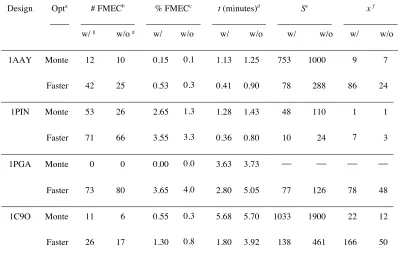
The overall performance of FASTER is dramatically improved when both enhancements are used together. When using MC instead of the BMEC and with n = 10, the computational efficiency S of the 1AAY calculation was improved compared to the original FASTER by a factor of 86. Optimizations for the other designs 1PIN, 1PGA, and 1C9O were improved by factors of 7, 78, and 166, respectively. We note that this improvement in efficiency is not only a convenience. Because users have limited time and computer resources, they will rarely be able to compute as many trajectories for a given design as we describe in this paper. Thus, the improvements allow protein designers to find solutions that are better than those they would have found with the original FASTER protocol, and not merely to find the same solutions more rapidly.
Table 2: Comparison of the improved FASTER to Monte Carlo
Design Opta # FMECb % FMECc t (minutes)d
(((min(minutes
)
Se x f
w/ g w/o g w/ w/o w/ w/o w/ w/o w/ w/o
1AAY Monte 12 10 0.15 0.1
3
1.13 1.25 753 1000 9 7
Faster 42 25 0.53 0.3
1
0.41 0.90 78 288 86 24
1PIN Monte 53 26 2.65 1.3
0
1.28 1.43 48 110 1 1
Faster 71 66 3.55 3.3
0
0.36 0.80 10 24 7 3
1PGA Monte 0 0 0.00 0.0
0
3.63 3.73
Faster 73 80 3.65 4.0
0
2.80 5.05 77 126 78 48
1C9O Monte 11 6 0.55 0.3
0
5.68 5.70 1033 1900 22 12
Faster 26 17 1.30 0.8
5
1.80 3.92 138 461 166 50
a
The optimization strategy that was used. Monte: pure MC trajectories as described in Methods. Faster: FASTER trajectories as described in Methods; the number of interacting residues in sPR was limited to 10, and the BMEC step was replaced with MC. The total number of trajectories attempted for both Monte and Faster was 8000 for 1AAY and 2000 for all other designs.
b–e
See Table 1.
f
The multiplicative factor of improvement compared to data for the original FASTER protocol reported in Table 1
g
Indicates whether or not Goldstein singles elimination was performed before the other optimization steps.
one case for MC. We conclude that the pre-elimination of singles by Goldstein DEE is a worthwhile enhancement to these optimization strategies.
Conclusions
References
1. Voigt, C. A.; Gordon, D. B.; Mayo, S. L., Trading accuracy for speed: A quantitative comparison of search algorithms in protein sequence design. Journal of Molecular Biology 2000,299 (3), 789–803.
2. Kirkpatrick, S.; Gelatt, C. D.; Vecchi, M. P., Optimization by Simulated Annealing. Science 1983,220 (4598), 671–680.
3. Kuhlman, B.; Dantas, G.; Ireton, G. C.; Varani, G.; Stoddard, B. L.; Baker, D., Design of a novel globular protein fold with atomic-level accuracy. Science 2003, 302
(5649), 1364–1368.
4. Metropolis, N.; Rosenbluth, A. W.; Rosenbluth, M. N.; Teller, A. H.; Teller, E., Equation of State Calculations by Fast Computing Machines. Journal of Chemical Physics 1953,21 (6), 1087–1092.
5. Desmet, J.; Demaeyer, M.; Hazes, B.; Lasters, I., The Dead-End Elimination Theorem and Its Use in Protein Side-Chain Positioning. Nature 1992, 356 (6369), 539– 542.
6. Gordon, D. B.; Hom, G. K.; Mayo, S. L.; Pierce, N. A., Exact rotamer optimization for protein design. Journal of Computational Chemistry 2003,24 (2), 232– 243.
7. Koehl, P.; Delarue, M., Application of a Self-Consistent Mean-Field Theory to Predict Protein Side-Chains Conformation and Estimate Their Conformational Entropy.
Journal of Molecular Biology 1994,239 (2), 249–275.
8. Desjarlais, J. R.; Handel, T. M., De-Novo Design of the Hydrophobic Cores of Proteins. Protein Science 1995,4 (10), 2006–2018.
9. Jones, D. T., De-Novo Protein Design Using Pairwise Potentials and a Genetic Algorithm. Protein Science 1994,3 (4), 567–574.
10. Desmet, J.; Spriet, J.; Lasters, I., Fast and accurate side-chain topology and energy refinement (FASTER) as a new method for protein structure optimization.
Proteins 2002,48 (1), 31–43.
11. Elrod-Erickson, M.; Rould, M. A.; Nekludova, L.; Pabo, C. O., Zif268 protein-DNA complex refined at 1.6 angstrom: A model system for understanding zinc finger-DNA interactions. Structure 1996,4 (10), 1171–1180.
13. Gallagher, T.; Alexander, P.; Bryan, P.; Gilliland, G. L., 2 Crystal-Structures of the B1 Immunoglobulin-Binding Domain of Streptococcal Protein-G and Comparison with NMR. Biochemistry 1994,33 (15), 4721–4729.
14. Mueller, U.; Perl, D.; Schmid, F. X.; Heinemann, U., Thermal stability and atomic-resolution crystal structure of the Bacillus caldolyticus cold shock protein.
Journal of Molecular Biology 2000,297 (4), 975–988.
15. Dahiyat, B. I.; Mayo, S. L., De novo protein design: Fully automated sequence selection. Science 1997,278 (5335), 82–87.
16. Kraemer-Pecore, C. M.; Lecomte, J. T. J.; Desjarlais, J. R., A de novo redesign of the WW domain. Protein Science 2003,12 (10), 2194–2205.
17. Malakauskas, S. M.; Mayo, S. L., Design, structure and stability of a hyperthermophilic protein variant. Nature Structural Biology 1998,5 (6), 470–475. 18. Perl, D.; Schmid, F. X., Electrostatic stabilization of a thermophilic cold shock protein. Journal of Molecular Biology 2001,313 (2), 343–357.
19. Word, J. M.; Lovell, S. C.; Richardson, J. S.; Richardson, D. C., Asparagine and glutamine: Using hydrogen atom contacts in the choice of side-chain amide orientation.
Journal of Molecular Biology 1999,285 (4), 1735–1747.
20. Dunbrack, R. L.; Cohen, F. E., Bayesian statistical analysis of protein side-chain rotamer preferences. Protein Science 1997,6 (8), 1661–1681.
21. Gordon, D. B.; Marshall, S. A.; Mayo, S. L., Energy functions for protein design.
Current Opinion in Structural Biology 1999,9 (4), 509–513.
22. DeMaeyer, M.; Desmet, J.; Lasters, I., All in one: A highly detailed rotamer library improves both accuracy and speed in the modelling of sidechains by dead-end elimination. Folding & Design 1997,2 (1), 53–66.
38
An Efficient Algorithm for Multi-State Protein Design Based on
FASTER
Abstract
Most of the methods that have been developed for computational protein design involve
the selection of side-chain conformations in the context of a single, fixed main-chain
structure. In contrast, multi-state design (MSD) methods allow sequence selection to be
driven by the energetic contributions of multiple structural or chemical states
simultaneously. This methodology is expected to be useful when the design target is an
ensemble of related states rather than a single structure, or when a protein sequence must
assume several distinct conformations to function. MSD can also be used with explicit
negative design to suggest sequences with altered structural, binding, or catalytic
specificity. We report implementation details of an efficient multi-state design
optimization algorithm based on FASTER (MSD-FASTER). We subjected the algorithm
to a battery of computational tests and found it to be generally applicable to various
multi-state design problems; designs with a large number of states and many designed
positions are completely feasible. A direct comparison of MSD-FASTER and
multi-state-design Monte Carlo indicated that MSD-FASTER discovers low-energy sequences
much more consistently. MSD-FASTER likely performs better because amino acid
substitutions are chosen on an energetic basis rather than randomly, and because multiple
substitutions are applied together. Through its greater efficiency, MSD-FASTER should
allow protein designers to test experimentally better-scoring sequences, and thus
accelerate progress in the development of improved scoring functions and models for